
Editor’s Note: To offer college readers a more structured reading experience, we dedicate one week each month to feature works under special themes. This week’s focus is on High-Quality Competition Entries. Today, we present an in-depth look at the award-winning projects from the 2019 Tianzuo Cup, highlighting the first prize winners.
The School of Architecture is currently running the “Creator Program” and inviting submissions for the “High-Quality Student Works” competition. If you have exceptional competition projects and are willing to document your design process and methodologies, we welcome your contributions. Each submitted article offers a reward ranging from 300 to 1000 yuan, depending on readership, with an annual prize of 10,000 yuan for the best entries. For more information, please leave a message in the background.
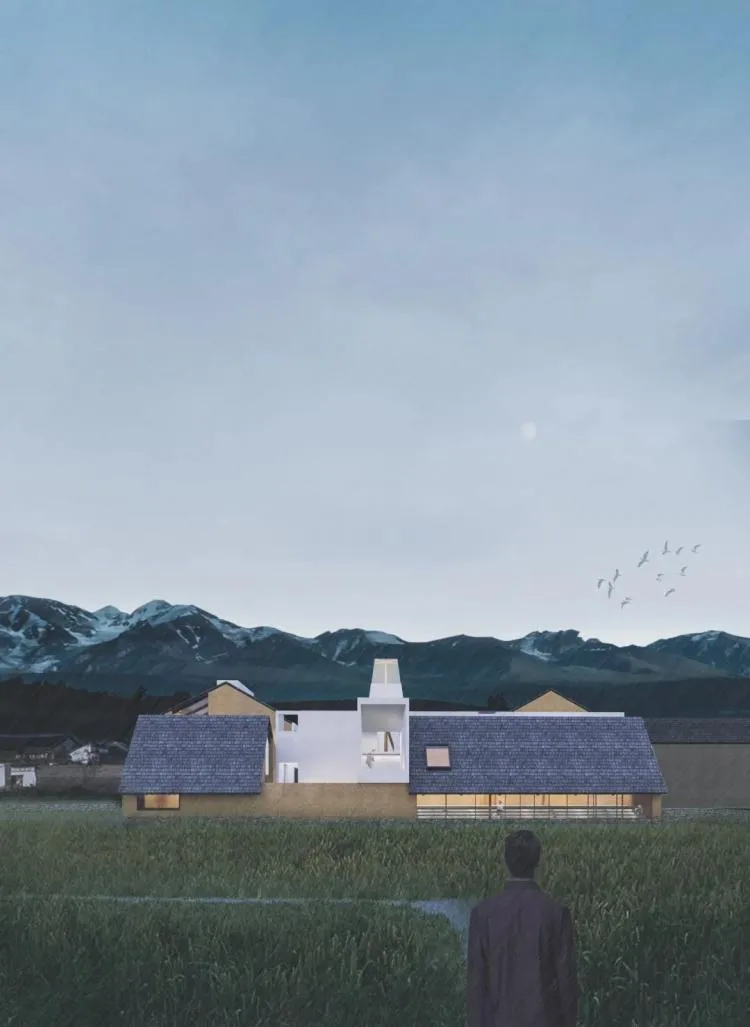
△ Vision of the “Five Senses Home”
Competition Theme
The 2019 “Tianzuo Award” International College Student Architectural Design Competition, featured in Architect magazine, centered on “The Urban and Rural Family”. Participating students responded to the challenges of modern living environments, inspired by the profound transformations in urban and rural areas, to envision their own “Peach Blossom Spring” — an ideal home. Out of 281 submissions, students proposed diverse possibilities for rural living, ranging from modern adaptations of traditional construction to innovative blends of architecture and automation, or nostalgic returns to simplicity.
Ultimately, the winning project, “Five Senses House,” was designed by Wang Linghao and Guo Haoran from Southeast University and Ma Zhiqiang from Politecnico di Milano. This article offers an interpretation of the project through insights from the designers, mentors, and competition judges.
Award-Winning Project
△ Wang Linghao (Southeast University); Ma Zhiqiang (Politecnico di Milano); Guo Haoran (Southeast University)
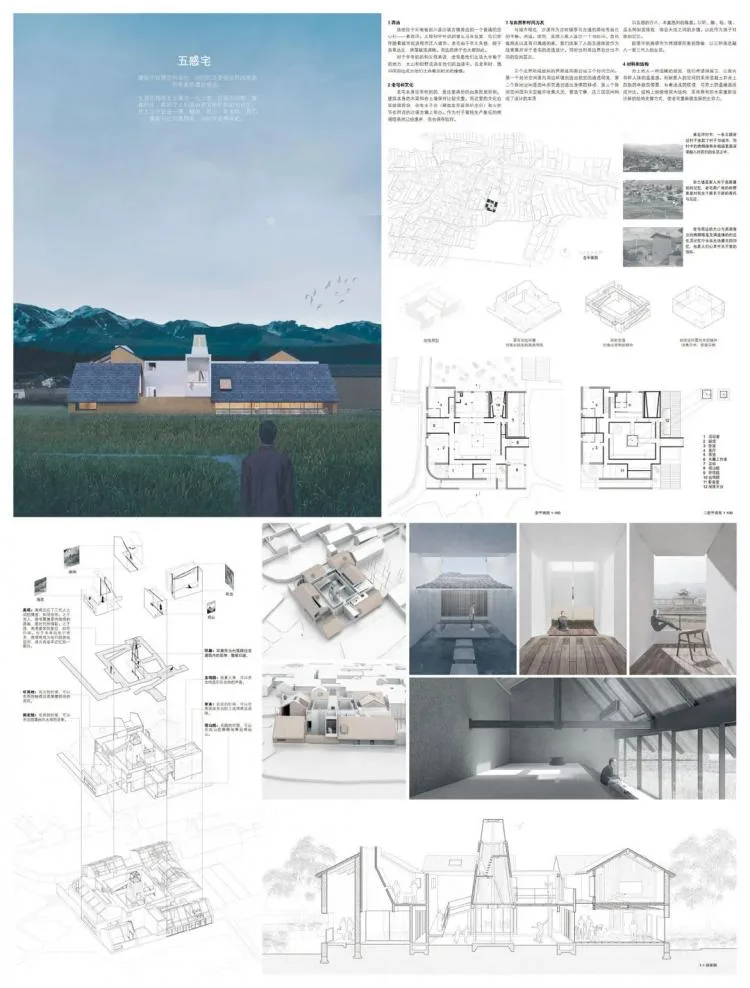
01. Design Concept
The site is located in Huanghuaping, a typical hollow village west of Shaxi Ancient Town in Jianchuan County, Yunnan Province. It was once home to parents and grandparents, but urbanization has drawn younger generations to the city. The old house, neglected for years, has become overgrown and dilapidated, much like the surrounding homes.
For the older generation, the old house holds lifelong memories, deeply connected to the mountains and fields. Returning to the countryside in their later years represents a heartfelt desire. For younger family members, these rural moments are cherished childhood memories. The old house serves as a symbol of “home” and a bridge linking urban life, rural roots, and generations. Thus, renovation is essential.
02. Context and Existing Structure
Despite Huanghuaping’s hollowing, its cultural traditions endure, aided by proximity to Shaxi Ancient Town. Festivals like the Crown Prince Festival (celebrating Shakyamuni Buddha’s birthday) and the Torch Festival are held in the town. The village’s tobacco towers, once bustling production centers, now stand abandoned but well-preserved, acting as tangible symbols of hometown identity.
The old house, situated on the village’s southeast edge near the fields, is a typical Bai ethnic residence with wooden beams and rammed earth walls, both well preserved.
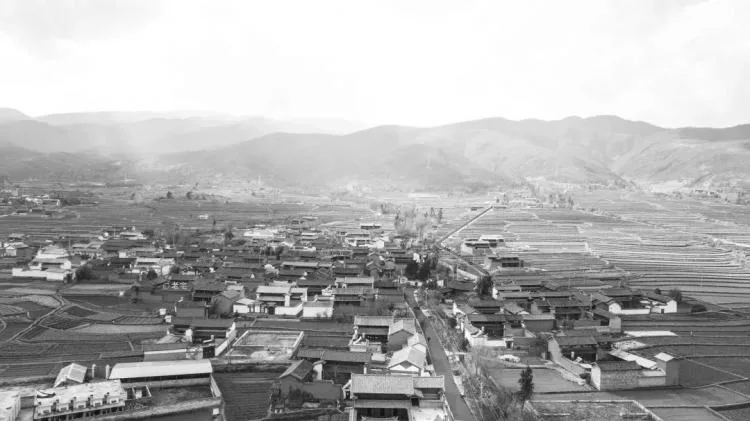
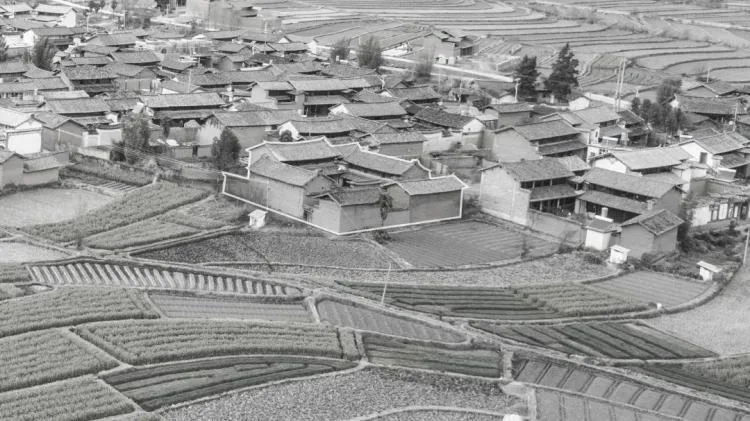
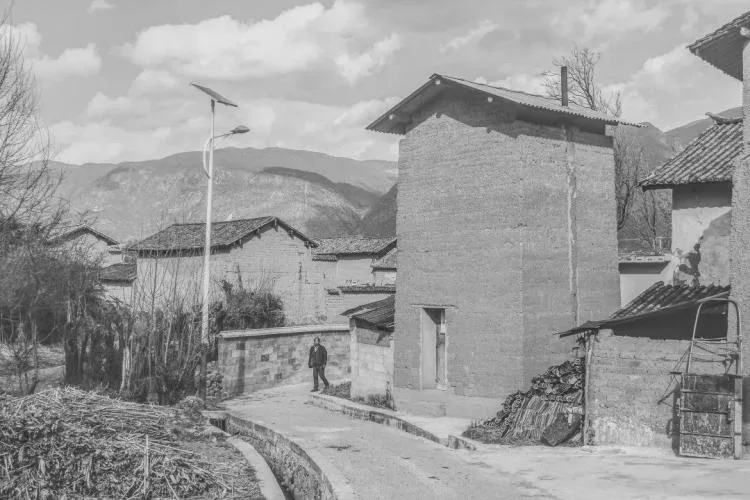
Current state of Huanghuaping Village and the old houses (top: aerial view of Huanghuaping Village; middle: location of the old house; bottom: remaining tobacco tower)
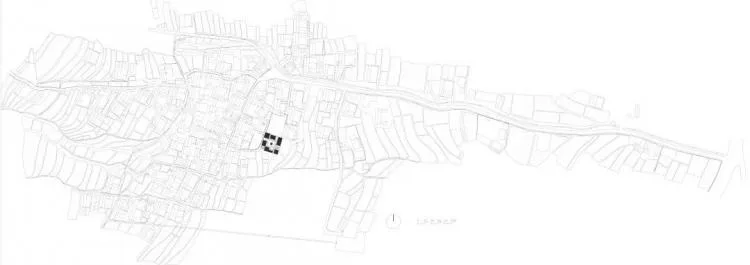
△ General plan of the “Five Senses House”
03. Living in Harmony with Nature and Time
Unlike bustling cities, Shaxi—an ancient post station on the Tea Horse Road—offers tranquility and leisure. The goal was to design a family home that respects nature and time, fostering a deep sense of belonging. How can family members experience nature and time within their home? Rural life scenes inspired the design: children playing in fields, elders chatting by the village entrance, lively family gatherings in the courtyard. These sensory experiences shaped the project’s core.
Boundary Definition
The old house’s wooden wall facing the courtyard was severely damaged, while the rammed earth walls remained usable. The design removed the courtyard-facing wall, introduced a new load-bearing structure, and extended it to form a triple boundary that defines three spatial layers:
- First boundary: visual transparency to the surrounding landscape;
- Second boundary: circular pathways facilitating physical movement;
- Third boundary: open to the sky, inviting daylight and creating a peaceful atmosphere.
Together, these three layers form the main structural framework of the renovated house.
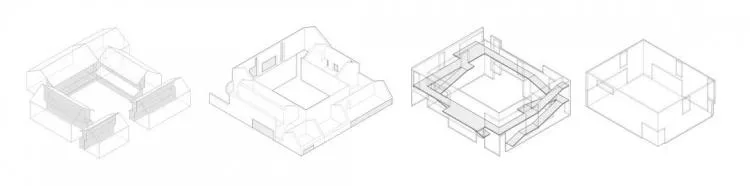
The triple boundary between the old and new house
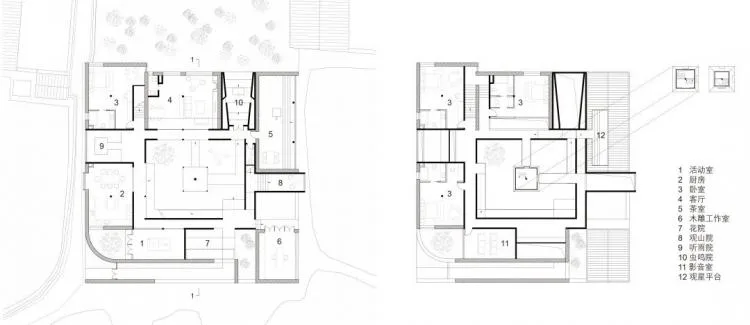
△ Floor plan of the “Five Senses House”
Perceptual Spaces
The new design occupies the old house’s vacant areas, introducing four volumes acting as “perception containers”:
- East side – Mountain Observation Courtyard: frames distant mountain views;
- North side – Insect Chirping Courtyard: shaped with expanded ends and a narrow middle, functioning as a sound box to capture insect sounds;
- West side – Rain Garden: layered tiled roofs and a fish pond collect rainwater, allowing residents to experience rainfall;
- South side – Flower Garden: summer southeast winds carry floral scents through openings into the interior; the adjacent tea room revives traditional tea roasting and tasting, evoking memories of home.
In autumn and summer, listen to nature’s insect chorus in the Insect Chirping Courtyard;
Feel the rain cascading in the Rain Garden;
On clear days, gaze at distant mountains from the Mountain Observation Courtyard;
Smell the flowers carried by summer winds in the Flower Garden;
Gather with friends in the tea room to enjoy tea and roasting.
While fulfilling basic residential needs, the project enriches sensory perception, transforming the concept of “home” into a tangible, multi-dimensional experience.
The courtyard’s tall tower symbolizes the emotional bond between grandparents and grandchildren. For elders, it evokes the tobacco towers, microcosms of a bygone era. For children, it becomes a playful landmark and a cherished piece of their childhood.
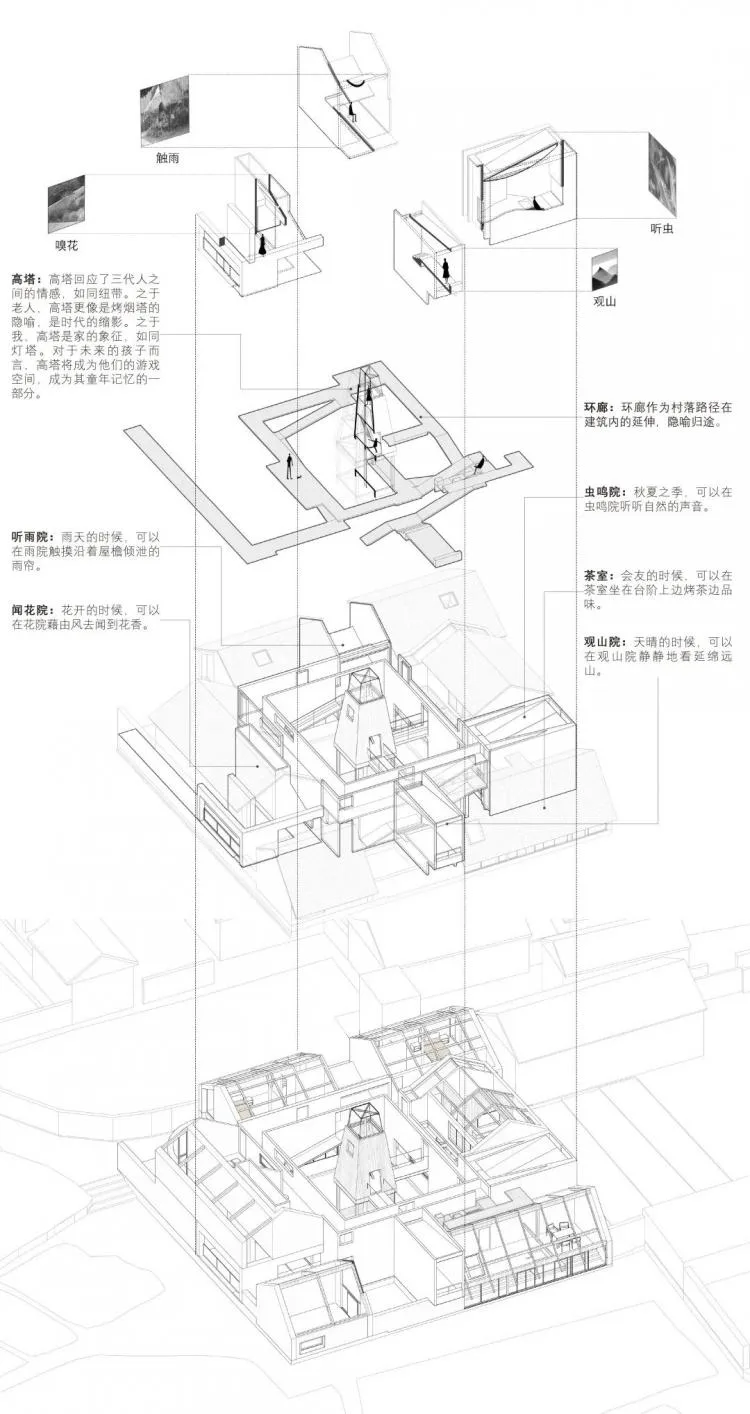
Spatial composition of the “Five Senses House”
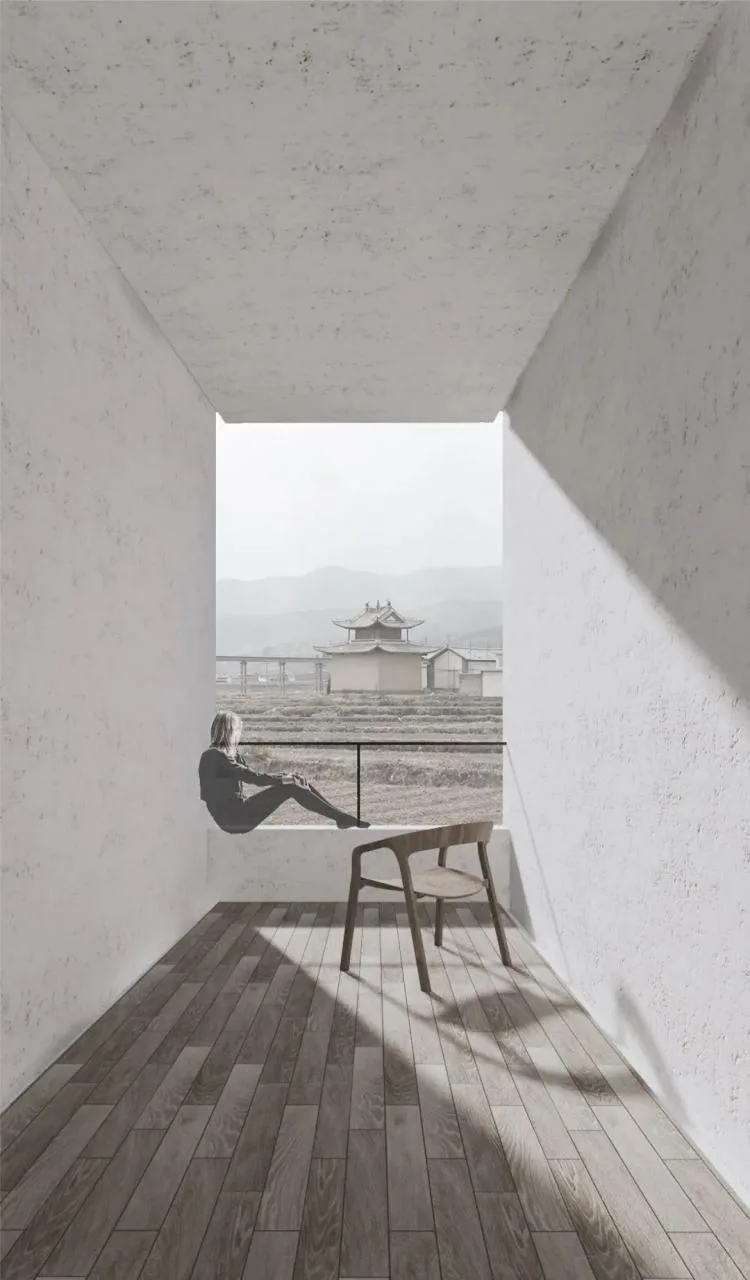
Perception Space of the “Five Senses House” – Mountain Observation Courtyard
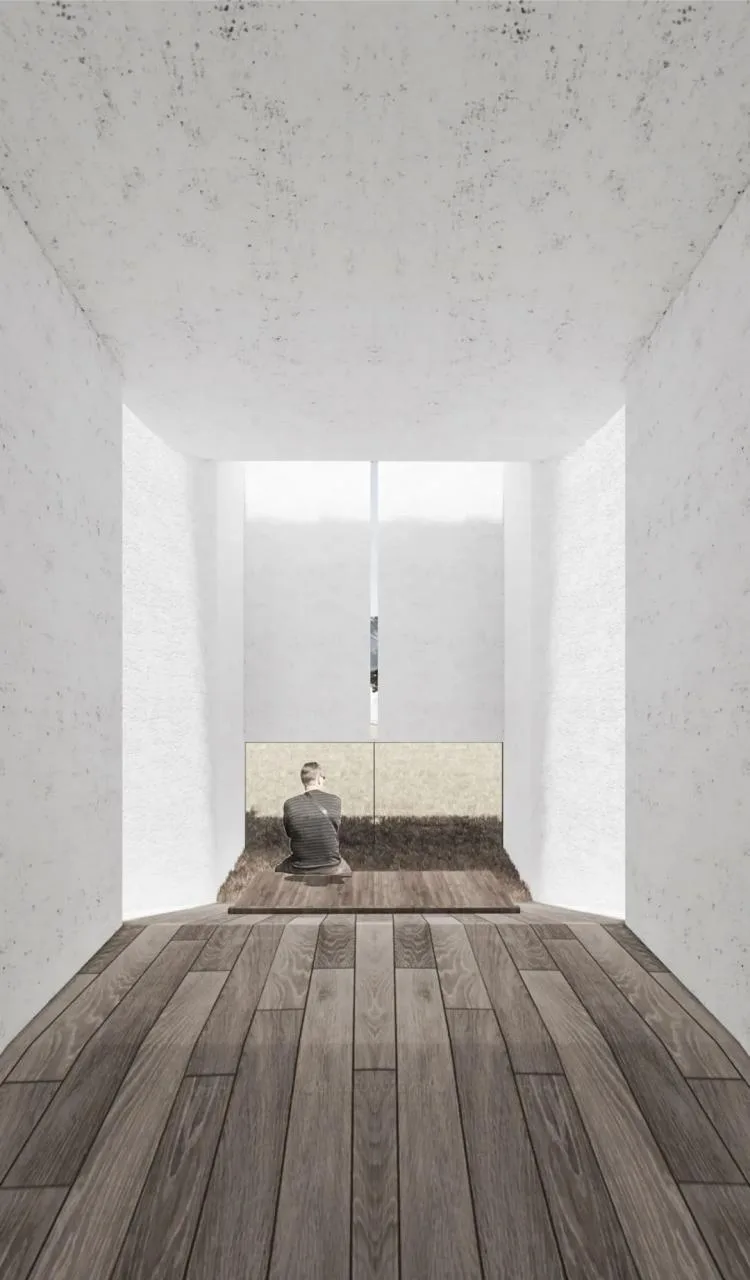
Perception Space of the “Five Senses House” – Insect Chirping Courtyard
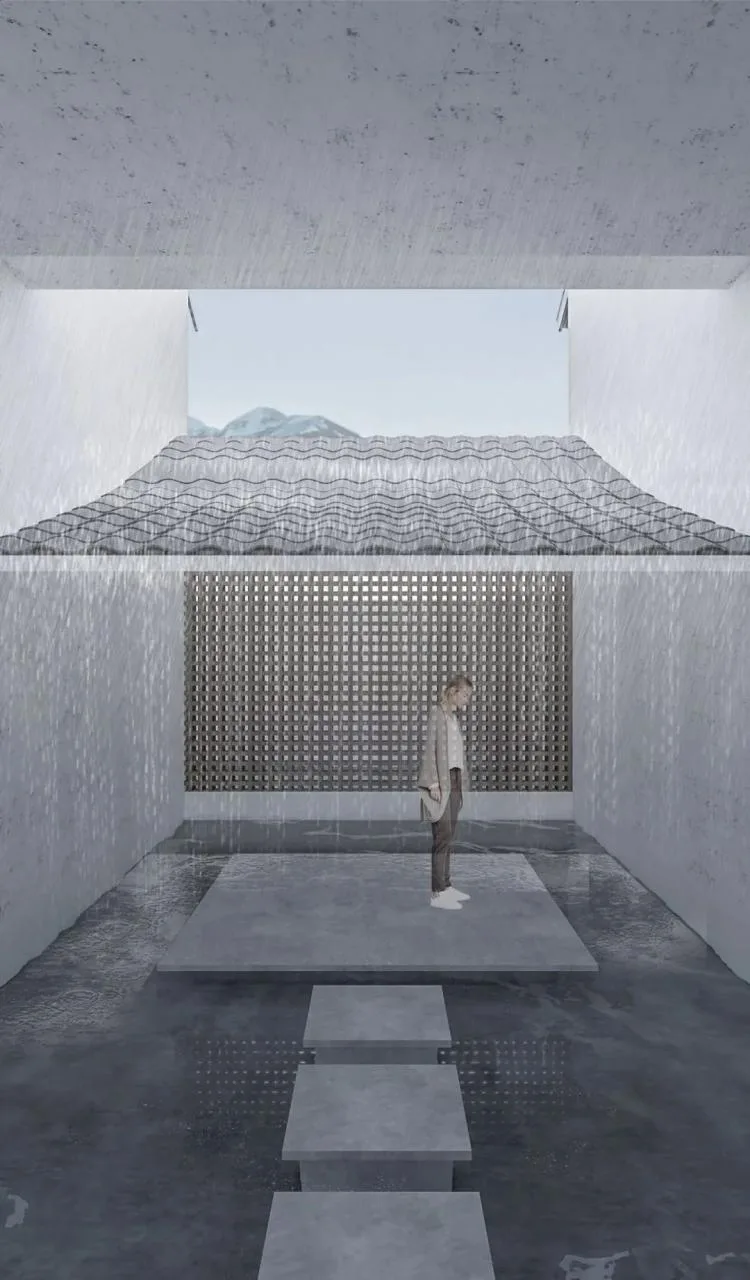
Perception Space of the “Five Senses House” – Rain Garden
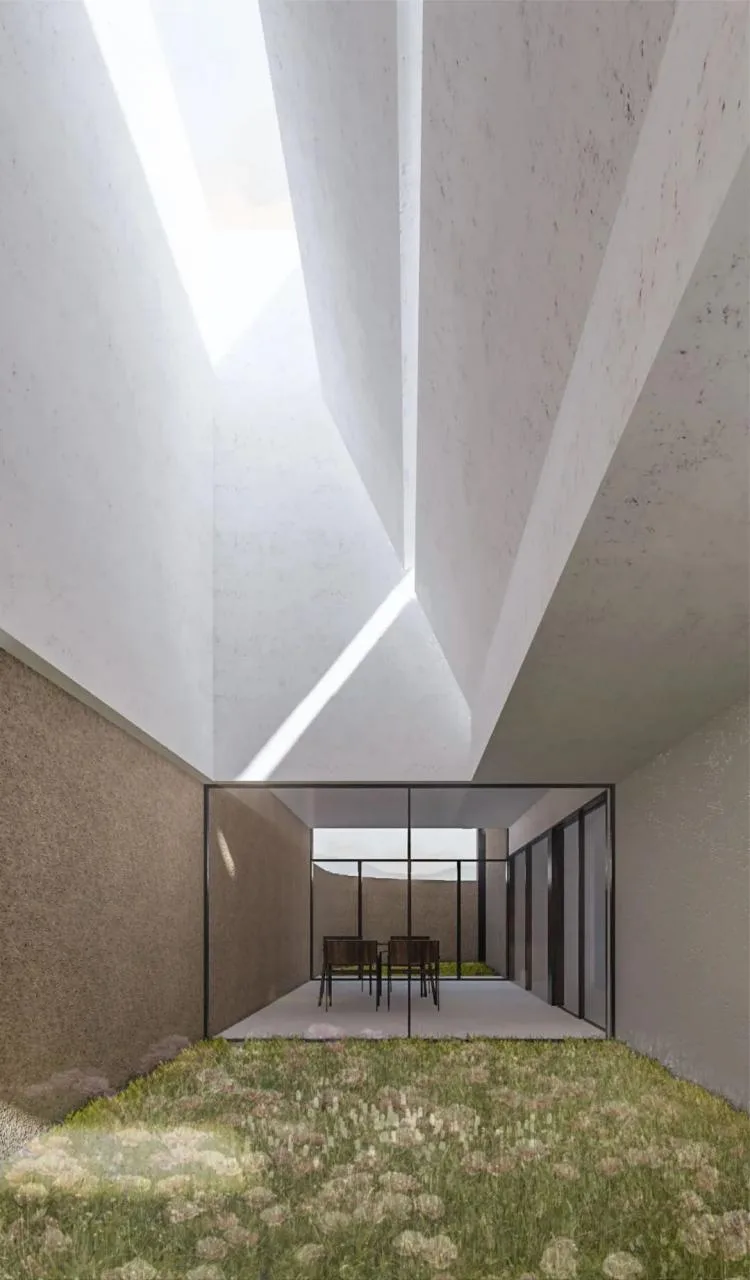
△ Perception Space of the “Five Senses House” – Flower Garden
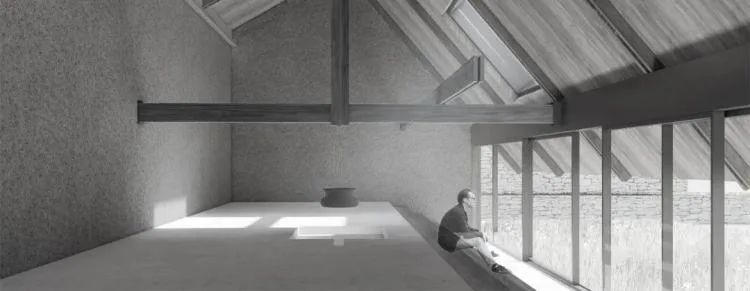
Perception Space of the “Five Senses House” – Tea Room
04. Materials and Structure
Rammed earth brings warmth and a human touch indoors, which the design preserves. The new spaces feature concrete structures clad with Bai ethnic grass-reinforced white veneer, adding subtle texture that contrasts the earth’s warmth. Existing wooden beams are reused and integrated into a redesigned structural support system, breathing new life into the old house.
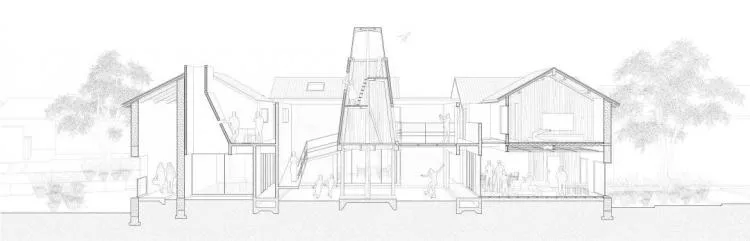
Imagined living scene at the “Five Senses House”
05. Conclusion
The “Five Senses House” is not just a renovation proposal but a thoughtful exploration of “hometown” and “home” meanings. In China’s ongoing urban-rural dual development, linking these spaces requires more than empty promises or simplistic investment. Rooted in Huanghuaping, this project aims to rekindle the perception of “home” through rural daily life. Integrating the five sensory spaces elevates the house beyond functional shelter to a vessel carrying emotional bonds and nostalgia, transforming “living” into true “dwelling”. While experimental, it serves as an important reflection on urban-rural relations and family ties in architectural design, encouraging a return to intimate human-nature connections.
Judges and Mentors’ Comments
Zhang Lei
The competition theme spans three dimensions: first, the authentic rural environment that ties homestead land, geography, and natural conditions into a coherent scene; second, the understanding of “one family,” focusing on the daily life of three generations to enrich the design; third, the architectural carrier itself, including accessibility for the elderly and attention to life details. Design must unite geography and human behavior.
We hope students immerse themselves emotionally in the family’s setting rather than designing abstractly for others or environments. The concept of “family” is fundamental; envisioning future rural family life leads to more robust designs. Though complex, focusing on specific issues like rural elderly care or vacant housing renovation can provide practical solutions. Ultimately, comprehensive insight into rural family life is key.
This project, located in a hollow village near Shaxi Ancient Town, renovates typical Bai ethnic dwellings with wooden and rammed earth structures, local symbols of temporality. By redefining the old courtyard space, the design forges strong connections between old and new. The five sensory spaces link interior and exterior, while the tower symbolically unites three generations, enriching the courtyard’s spiritual depth and family belonging. The concept is clear and powerful, showcasing refined, introspective design skills that leave a lasting impact.
—— Zhang Lei
Professor, School of Architecture and Urban Planning, Nanjing University
Director, Sustainable Rural Architecture Research Center, Nanjing University
Founder and Chief Architect, United Architecture Firm
This design exudes atmosphere created through multisensory experiences. In an era dominated by visual perception, the Five Senses House encourages sensing nature and architecture through all five senses. Each sensory theme shapes unique spaces, gently permeating residents’ spiritual worlds and closely integrating their living and emotional realms. The project also explores how traditional spatial forms evolve into new lifestyles. The gardens differ from traditional ones, especially the central garden, which combines movement and play within the tobacco tower form. Contemporary activities coexist with traditional imagery, blending life’s vitality with the passage of time and symbolizing the old house’s revival.
—— Liu Jie
Associate Professor and Master’s Supervisor, School of Architecture, Southeast University
Content Coordination: Chen Haijiao
WeChat Editor: Li Xue
Find our official account: architect
Sina Weibo: @ Architect Magazine Weibo














Must log in before commenting!
Sign Up