
Editor’s Note: To offer college readers a more structured reading experience, we dedicate one week each month to feature special topics. This week’s theme is Office & High-Quality Competition Works for Students. As one of China’s premier architecture student competitions, the Hope Cup continuously inspires us with its innovative prompts and outstanding projects. Today, Monday, we present a collection of remarkable first-prize-winning works from the Hope Cup over the past five years. Below are interpretations and evaluations of award-winning projects from 2016 to 2019.
Additionally, the School of Architecture is launching the Creator Plan & High-Quality Student Works Contribution. If you have exceptional competition entries and are willing to share your design process and methodologies in article form, we welcome your submissions. Articles are compensated with fees ranging from 300 to 1000 yuan, depending on readership, and the best works receive an annual award of 10,000 yuan. For more details, feel free to leave a message in the background.
– 2016 –
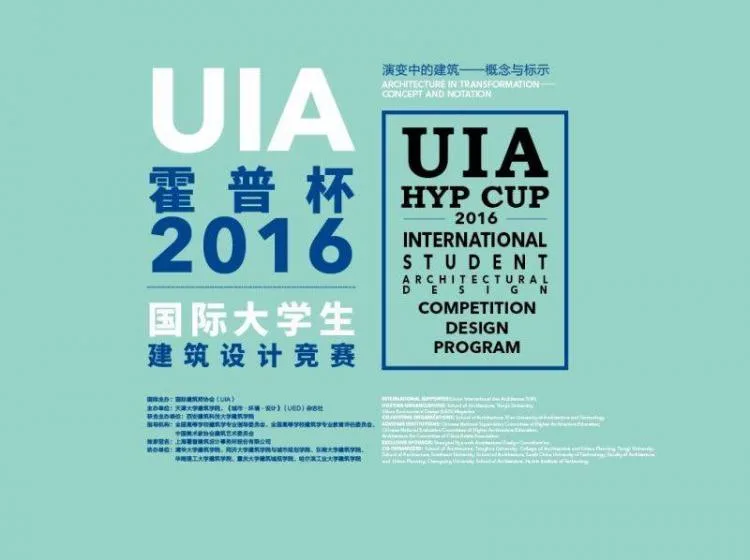
Concept and Notation
Question Setter:
Bernard Qumi, Chair of the Jury for the 2016 UIA Hope Cup
Renowned architect and founder of Bernard Quirrell & Associates
Work Interpretation:
Architecture represents the physical embodiment of concepts. What differentiates architecture from ordinary buildings is not merely form but the underlying concept. Competitors were tasked with creating a new signage system that captures human movement in space while introducing an architectural concept to guide the plan’s development. The goal was for submissions to act as catalysts for urban activities—nurturing, encouraging, and exploring unknown lifestyles.
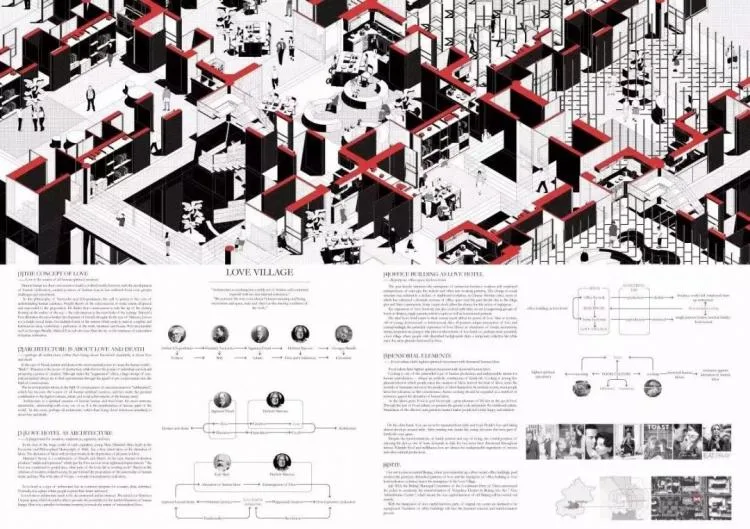
▲ Love Village © Qiu Yuxin, Zhao Yimeng / Tianjin University
Love hotels possess a unique architectural form shaped by their plot and the activities they accommodate. Typically, they serve as spaces for releasing desires and needs. This project advocates for deconstructing and reconstructing the love hotel concept. An ideal love hotel should be a utopian space offering possibilities for deeper human liberation.
Postmodern life has diversified expressions of love, which in turn generate diverse needs. Future love hotels should meet these varied requirements. This vision reimagines an office building transformed into a love hotel—a place where events, sports, stories, and plans ferment within its structure. More precisely, it becomes a settlement of love, an ideal space where people from diverse backgrounds share transient group lives and the joy sparked by universal love and desire.
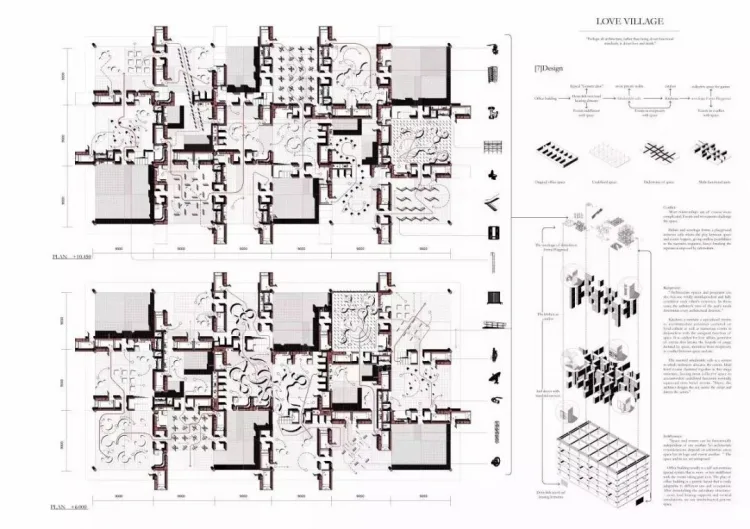
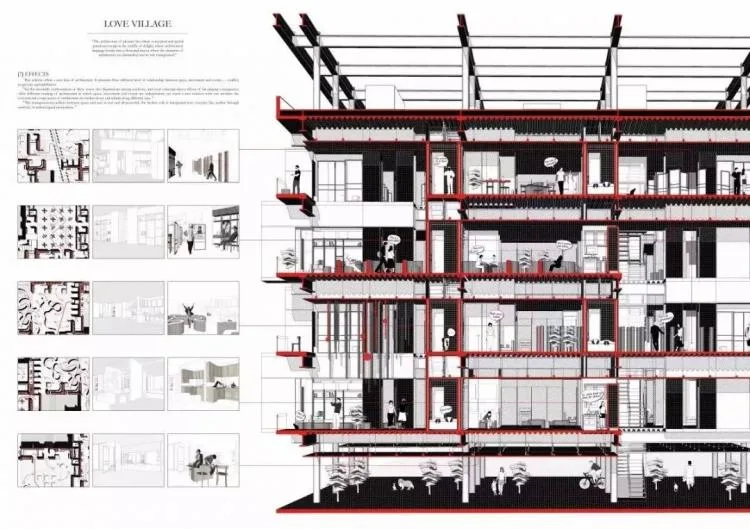
This theme can be understood as the materialization of architectural concepts developed under a signage system. It emphasizes the step-by-step expression of concepts rather than simple formal operations. Through various operational methods, the project explores the profound impact such an approach can have, demonstrating that the uncertain relationships between space, events, and movement can unleash infinite creativity under the influence of desire.
- Remove auxiliary structures (non-load-bearing supports and vertical circulation) from a typical office building.
- Integrate accommodation and kitchen units as signage systems to fulfill basic love hotel functions.
- Utilize leftover materials from renovation to create creative and recreational spaces within the remaining areas.
Bernard Qumi commented:
This project brilliantly merges the sensory experience of architectural grids with the functional requirements of love hotels, offering a fresh perspective on grid concepts.
Zhihu Question: How should we interpret the title of the 2016 Hope Cup?
Zhihu Author Mu Yixin’s Perspective:
- Building a quality structure requires extensive manpower, time, thought, and materials—essentially the crystallization of human knowledge.
- Concepts are crucial. A teacher once emphasized, “What is the purpose of your design? Technical aspects can always be solved.” This means the purpose shapes the design quality, as all challenges faced can then be addressed sequentially. The purpose should be practical and ideally elevated, considering human society and nature.
- Your building should tell a story.
- Functionality outweighs form, but both must be done well.
- Interaction and communication between people and space are vital.
– 2017 –
Change and Reshaping (Reclaiming)
Question Setter:
Jean Nouvelle, Chair of the Jury for the 2017 UIA Hope Cup
Renowned contemporary French architect and 2008 Pritzker Prize winner
Design Interpretation:
We must acknowledge the complexity of cities by reevaluating them through the lens of time—considering work, transportation, and leisure. Cities should be designed from a humanistic perspective rather than merely functional or infrastructural viewpoints. Today, urban evolution lacks humanists and poets, who are essential voices.
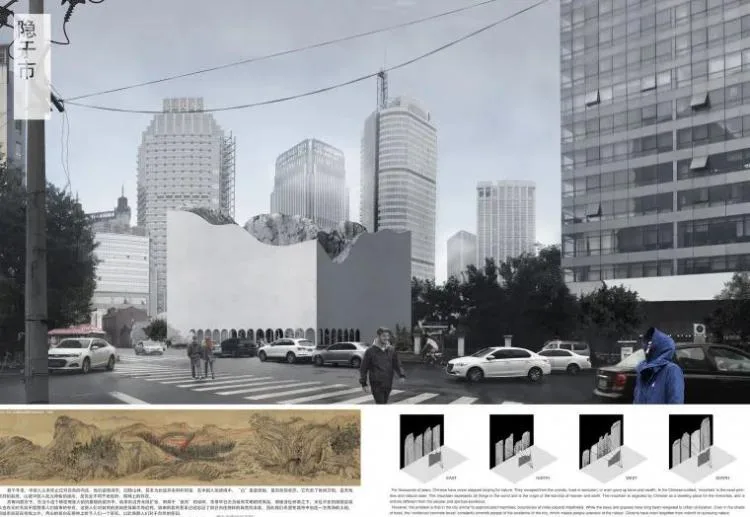
▲ Hidden in the World, Always an Escape © Chen Yimin, Zhang Shiyao, Bi Xuejiao / Tianjin University
As cities sprawl, natural landscapes like fields and forests become engulfed by high-rises, and city boundaries often blend into adjacent urban areas. This project redefines the boundary between city and nature—not as an edge but as isolated enclaves within the city itself. Even in endlessly expanding cities, numerous natural spaces can remain secluded.
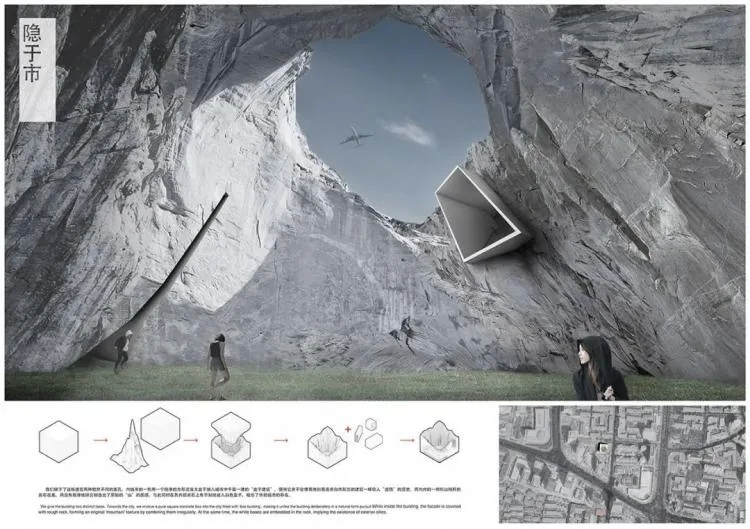
The project uses garden concepts as prototypes to shape these “boundaries.” However, traditional landscaping fails in modern high-rise cities. Therefore, the core idea of “isolating city from nature” is retained but expressed through concealment rather than typical landscaping. The design replaces the conventional notion of ‘nature’ with elemental ancestral symbols—heaven, earth, and mountains—to create a sacred, pure internal space that shields nature from urban intrusion.
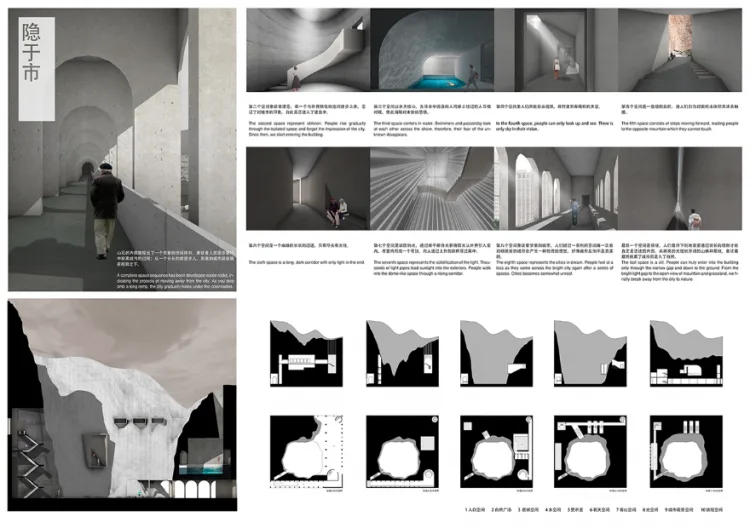
The architectural path weaves through rocks in three sequential stages, illustrating a dream of escaping the city. These stages correspond to evolving psychological states experienced when moving from urban life into the building, guided by the transition between artificial and natural environments.
- First stage – “Forgetting”: Visitors leave the city behind as they enter the building, experiencing alternating sequences of urban and natural elements.
- Second stage – “Meditation”: Composed of intangible abstract and pure spatial elements.
- Third stage – “Suddenness”: The core architectural space integrating artificial and natural surroundings.
Jean Nouvelle commented:
This project is not an immediately implementable plan but a meaningful vision for urban transformation. It embraces variation as the norm, creating a mysterious experience with no clear end. I find it intriguing and a fresh approach to urban design.
Zhihu Question: How should we understand the 2017 Hope Cup theme?
Carvel’s Perspective:
As populations grow, cities inevitably expand, but expansion brings challenges. Even if architects devise better growth models, public acceptance is uncertain. Resistance could lead to revolutions, which we want to avoid.
Can cities expand arbitrarily? Architects with visionary dreams prioritize enhancing life quality and removing constraints on freedom within cities and spaces, enabling people to live freely and joyfully. In this view, expansion is carried out by some, while others focus on development and improvement.
In this evolutionary process, as space users gain freedom, they adapt to changes by inventing new ways to use spaces. These adaptations undergo natural selection, leading to the emergence of more practical lifestyles.
Thus, architects facilitate sudden lifestyle changes via buildings and spaces that, in turn, reshape and reclaim the urban environment.
– 2018 –
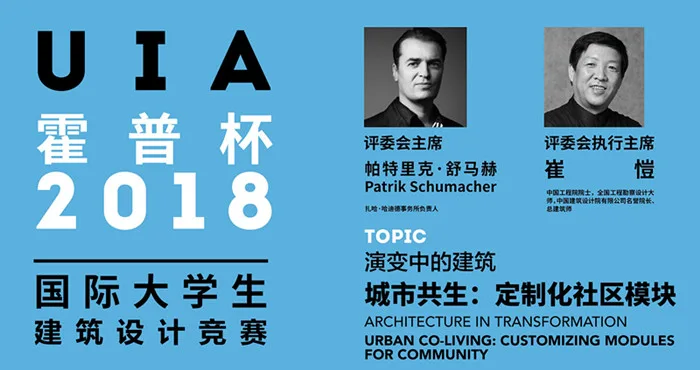
Urban Symbiosis: Customizing Community Modules
Question Setter:
Patrick Schumacher, Chair of Judges for the 2018 UIA Hope Cup
President of Zaha Hadid Architects
Work Interpretation:
The concept of “symbiosis” aims to cultivate genuine communities—not merely inclusive residential complexes with random populations. Urban centers face intense living demands and rising land costs. One solution is to reduce the size of living units to accommodate more residents. With modern lifestyle shifts, this approach becomes increasingly practical.
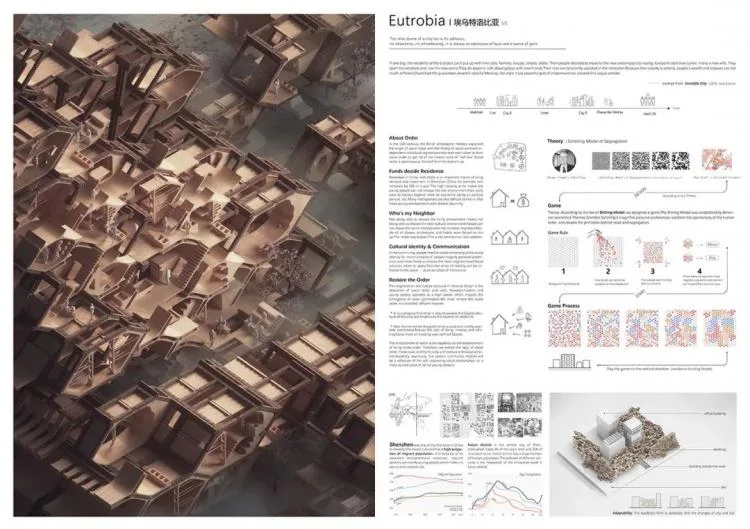
▲ Eutrobia © Ma Jieqian, Chen Fangbing, Chu Jianfei, Yang Nan / Southwest Jiaotong University, Architecture Alliance College, Xi’an Jiaotong Liverpool University
Urban communities now extend beyond residential functions to encompass multiple social roles. Forward-thinking proposals should be innovative yet grounded in viable technology. The chosen site for experimentation is Shenzhen. The design softens regional characteristics of second-tier cities and emphasizes research on residential pattern matrices, aiming for broader applicability.

Modern society’s fast pace disrupts traditional order, requiring efficient strategies to restore it:
- For young makers, reduce the capital value of residential properties and emphasize the essence of living.
- Design residences as everyday, accessible commodities, lowering costs for moving, relocating, and renovating, with a focus on user-defined spaces.
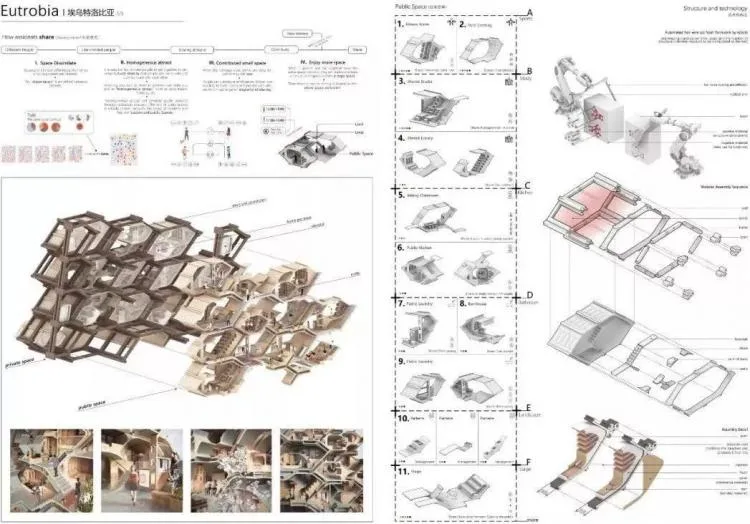
Residents enhance personal attributes—such as professional habits, functional needs, interests, and hobbies—via online platforms. These platforms analyze vast data to match users with optimal living locations. Afterward, residents customize their residences online, using simulators to plan materials and decorations. Factories produce modular building components based on orders, which are then delivered and installed at the chosen locations.
Patrick Schumacher commented:
This work powerfully illustrates the concept of modular urban symbiosis. The core idea of “customization” in community housing is realized through innovative online interaction. The variable modules cleverly integrate into urban fabric, resembling porous material cross-sections.
Zhihu Question: How should we evaluate the award-winning entries of the 2018 UIA Hope Cup International College Student Architecture Design Competition?
Zhihu Author Glinton Liao’s Perspective on the First Prize:
The work’s quote from “Invisible City” symbolizes the possibility of living in a communist society, where productive forces are highly developed, and basic needs like housing and food are abundant—akin to air. Life’s focus shifts from survival to self-actualization, contrasting sharply with current maker spaces or makers’ spatial needs. Ethiopia’s urban agglomeration thrives on constantly changing living environments; it’s not about like-minded groups moving in but repeated cycles of relocation driven by a subconscious dislike of monotony. Waking up to new scenery daily prevents life from becoming dull.
Finally, detachable modular buildings have been conceptualized since Kisho Kurokawa’s generation but face challenges, primarily drainage issues. Without unified drainage planning, modular systems are unreliable; exposed joints accelerate structural aging. Solving these problems would mark the day detachable modular buildings move beyond concept to everyday reality.
– 2019 –
Lehuo Space – Integrating Architecture and Environment
Question Setter:
Benatita Tagliab, Chair of the Jury for the 2019 UIA Hope Cup
Pritzker Prize judge, founder of EMBT firm
Work Interpretation:
As architects, we have vast potential. We strive to understand: what defines a high-quality building? What architecture best enhances life? What inspires longing and happiness?
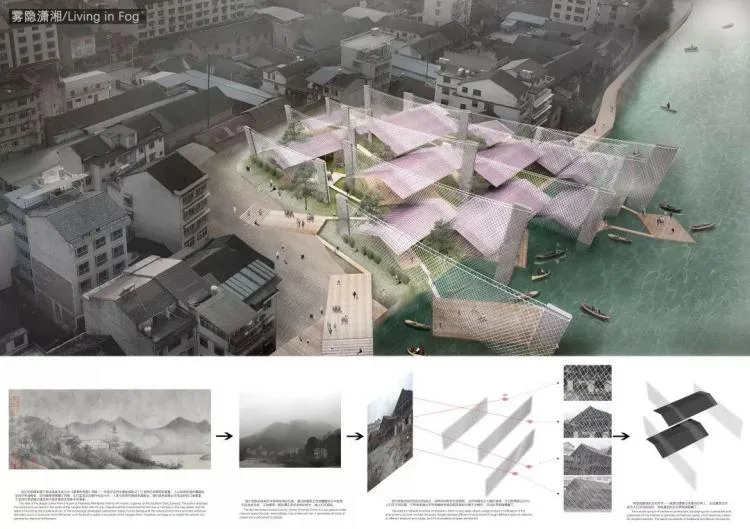
▲ Mist Hidden in Xiaoxiang, Living in Fog © Wu Ruoyu, Zhang Xiaoke, Liu Yaojia, Xin Zhiyuan / Dalian University of Technology
The concept of “Lehuo” (happy life) is rooted in emotional fulfillment—not just happiness but addressing people’s emotional needs.
Anhua County, Hunan Province, is renowned for black tea and its humid climate, often shrouded in mist. The scattered houses nestled among mountains and rivers reflect typical Xiaoxiang scenery. The town preserves some traditional through-bucket wooden structures that once supported its tea industry but now suffer from natural decay. These local wooden buildings physically resist moisture and corrosion to survive, while emotionally they embody a strong connection with the misty natural environment.
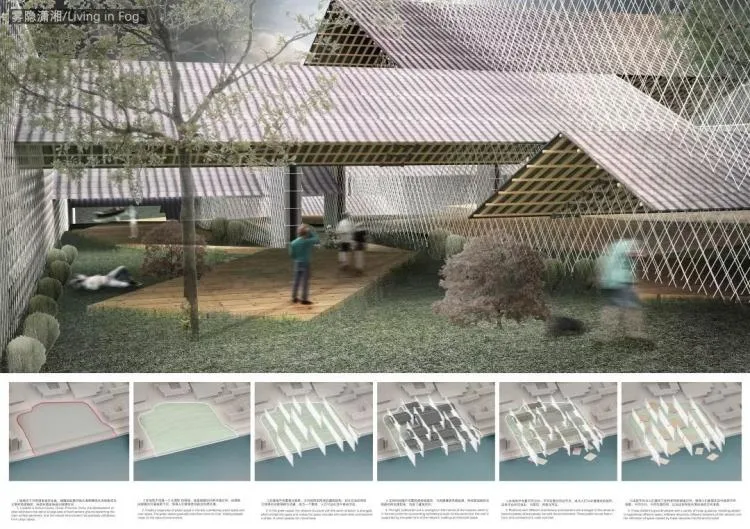
The design starts with the net as its core element, which acts as a delicate architectural structure in space. This net facilitates the gentle interplay of mist, rain, plants, and light, while also evoking subconscious emotions tied to the natural landscape without boundaries. The grid texture is designed with a tilted interwoven pattern to emphasize this relationship between humans and nature.
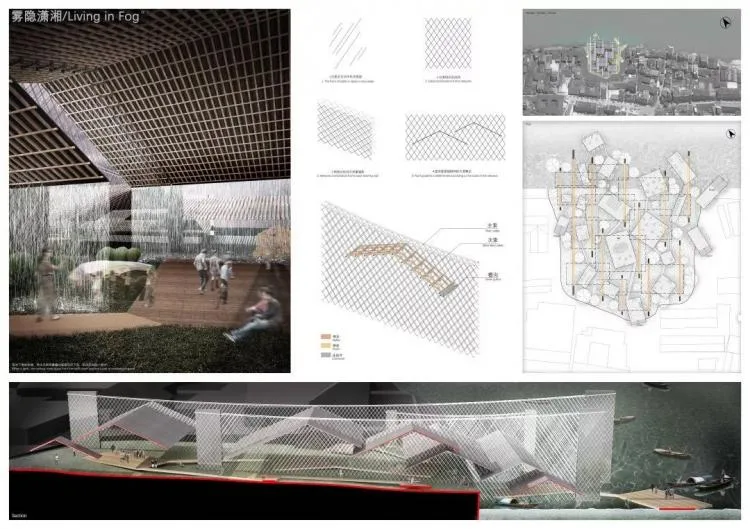
The roof design evolves toward a painterly quality, with sloping roofs interlocking and overlapping in varied positions to express emotional richness. These uneven roof clusters establish a dynamic dialogue between humans and nature, as rainwater flows down the layered roofs, becoming part of the building’s spatial experience.
Benatita Tagliab commented:
“Mist Hidden in Xiaoxiang” symbolizes a new connection between humans and the natural environment. Supported by poetic, innovative structural networks and traditional French-style sloping roofs, it creates a fresh public space.
Zhihu Question: How should we evaluate the 2019 Hope Cup first prize winner “Living in Fog”?
Excerpt from the author’s perspective on white sugar and sugar:
I disagree with the notion that architectural design stems from sudden inspiration. Instead, design concepts must follow clear theoretical and logical pathways. Architectural drawings serve as channels to express ideas with convincing logic. In this sense, architectural concepts are discovered and derived, distinguishing architecture as an engineering discipline from other artistic fields.
This competition challenges designers to define “living space” on urban fringes, considering sustainability, social engagement, and historical context—seemingly simple criteria that actually encompass rich layers of meaning.












Must log in before commenting!
Sign Up