
Editor’s Note: To offer college readers a more structured reading experience, we dedicate one week each month to feature our works as part of a special topic series. This week’s theme is Office & High-Quality Competition Works for Students. As one of China’s premier architecture student competitions, the Hope Cup continually inspires us with its thought-provoking challenges and outstanding projects. Today, Monday, we present the exceptional first-prize-winning entries from the past five years. Below, we offer an in-depth analysis and critique of the 2020 winning project.
Additionally, the School of Architecture is launching the Creator Plan & High-Quality Student Works Contribution initiative. If you have high-caliber competition projects and are willing to document your design process and methodologies in an article, we warmly invite your submissions. We offer a compensation ranging from 300 to 1000 yuan per article, depending on readership, and award 10,000 yuan annually to the best works. For further details, please feel free to leave a message through our background system.
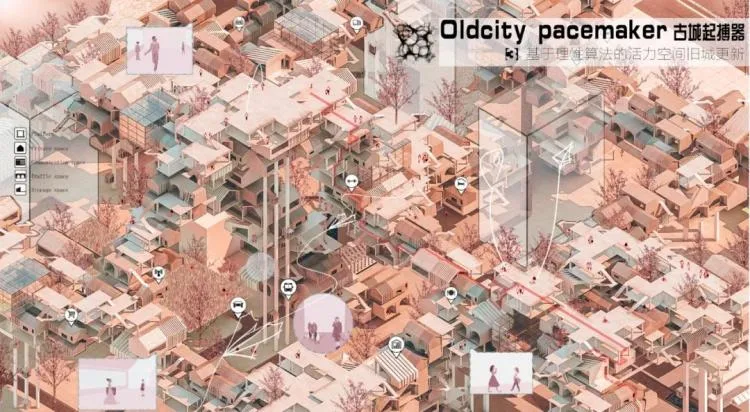
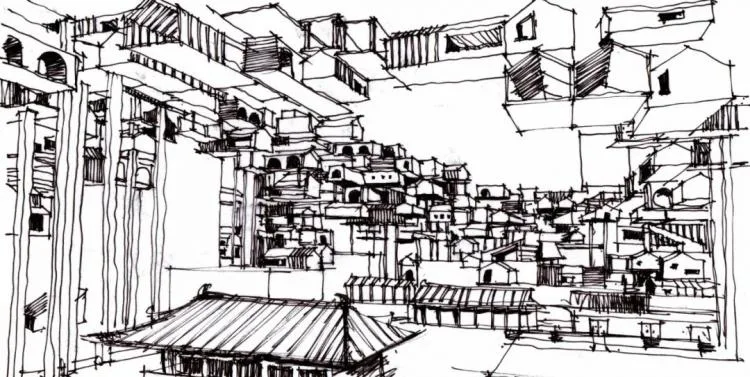
▲ Rendering and conceptual sketch © The Ancient City Pacemaker Team
Judges’ Comments: The design adopts a traditional urban planning approach but innovatively combines high-density and low-density structures within the city. The proposal highlights the potential evolution of future urban environments by enabling embedding and enhancing diversity within typically single-function urban settings. Notably, it also reflects elements of Yona Friedman’s utopian urban planning ideas.
— Wolf Di Pu Rui
Design Origin
01: Confused Chinese Cities
Amidst China’s rapid urbanization, many cities are quickly modernizing. However, this growth often leaves residents feeling disoriented due to several key issues:
- Top-down urban planning has transformed cities into single-function “islands,” limiting residents’ ability to experience vibrant urban life.
- Standardized urban design results in monotonous, repetitive spaces, neglecting the organic and historical development shaped by citizens themselves.
- Urban management frameworks prioritize administrative control from the top, sidelining the residents’ immediate needs and individual agency.
- Rapid development often leads to the loss of historic architecture and collective memory.
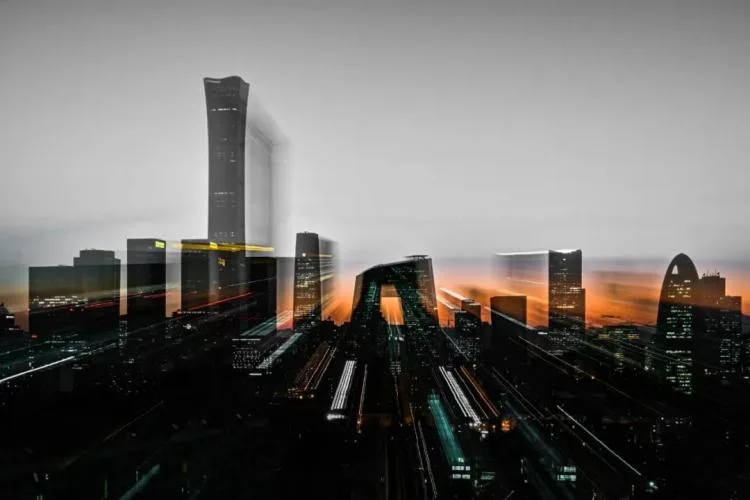
▲ Cold cityscape dominated by reinforced concrete © Nipic
02: The Xi’an Urban Development Puzzle

▲ Photos of Xi’an City © The Ancient City Pacemaker Team
Xi’an is evolving rapidly into a modern metropolis, yet its ancient city remains constrained by historical preservation regulations. Many residents unable to meet modern living standards are relocating, causing the once vibrant ancient city to lose vitality and become primarily a tourist attraction. The city’s historical protection laws also limit the full potential of its urban spaces.
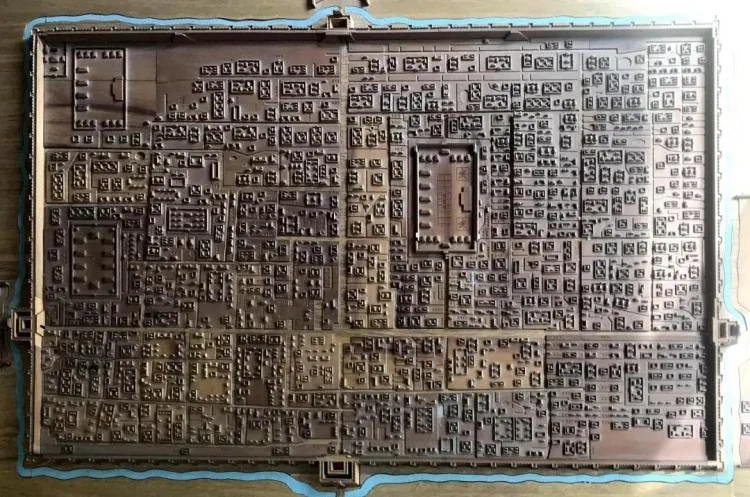
▲ Xi’an Ancient City and City Wall model © The Ancient City Pacemaker Team
The ancient city, characterized by high density but low plot ratio, is caught between urban expansion and landscape conservation. Finding a way to organically revitalize this area while accommodating diverse user needs poses a significant challenge.
Design Process and Plan
01: Searching for the “Cold and Warm” Ancient City
Urban complexity is often overlooked in design. Kamona’s “Dimensions of Urban Design” identifies six key aspects—social, visual, functional, temporal, morphological, and cognitive—that reflect urban complexity. Inspired by this, we conducted a multidimensional study of the entire ancient city of Xi’an, including surveys, pedestrian behavior simulations, and building function analyses.
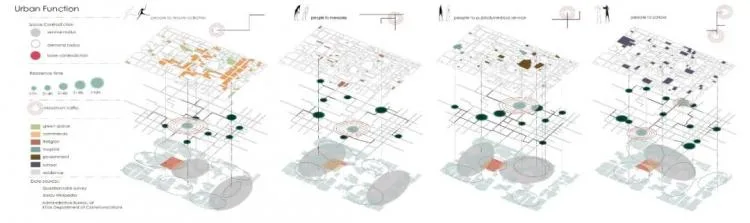
▲ Research based on urban functions © The Ancient City Pacemaker Team
Dimension 01: Crowd Activity Analysis
Key nodes in Xi’an’s ancient city were identified and categorized as: ① leisure spots (commercial areas, parks, food streets), ② cultural and religious sites (temples, sculptures, memorial halls), ③ service institutions (hospitals, government offices), and ④ educational facilities (schools).
Field research and duration-of-stay analysis produced a heat map revealing higher population activity on the eastern side, driven by commercial and service amenities.
Dimension 02: Transportation Network
Xi’an’s grid-style road layout facilitates efficient travel and industrial development but limits exploration of smaller paths, reducing recreational and private spaces for residents.
Dimension 03: Functional Zoning Reassessment
Rapid urban growth has rendered existing functional zones in the ancient city outdated, with service areas failing to meet residents’ needs.
02: Returning to Fang, Continued Research
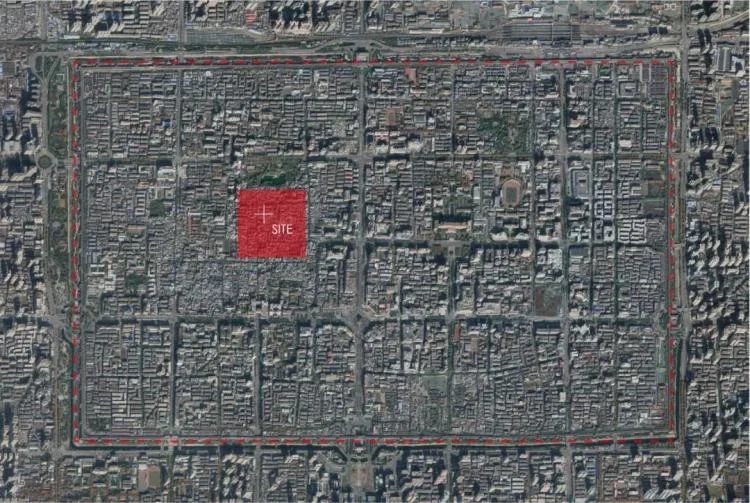
▲ Base location © The Ancient City Pacemaker Team
After extensive research, we selected the central area of “Huifang” in the west part of the ancient city center as our base for intervention.
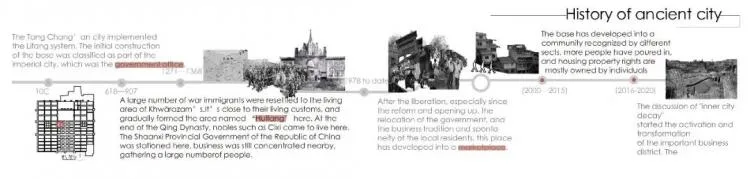
▲ Cultural context © The Ancient City Pacemaker Team
Huifang, originating in the Song Dynasty and shaped through the Yuan and Ming Dynasties, is home to approximately 50% Hui residents, giving it distinct religious and cultural traits. Despite this, it remains somewhat isolated within the broader ancient city.
The area functions almost like a city within a city—with minimal official governance and no standardized community structure. Population growth has led to unauthorized construction, reducing public spaces, greenery, and road width, while hygiene conditions have deteriorated.
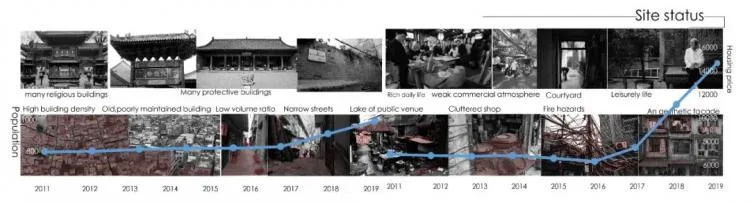
▲ Base research breakdown © The Ancient City Pacemaker Team
Interestingly, despite its lack of modernization, residents value the slower pace and strong community bonds fostered by this intimate, small-scale environment.
03: Base Analysis through Pedestrian Simulation

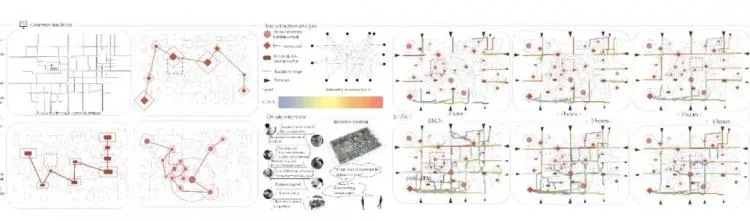
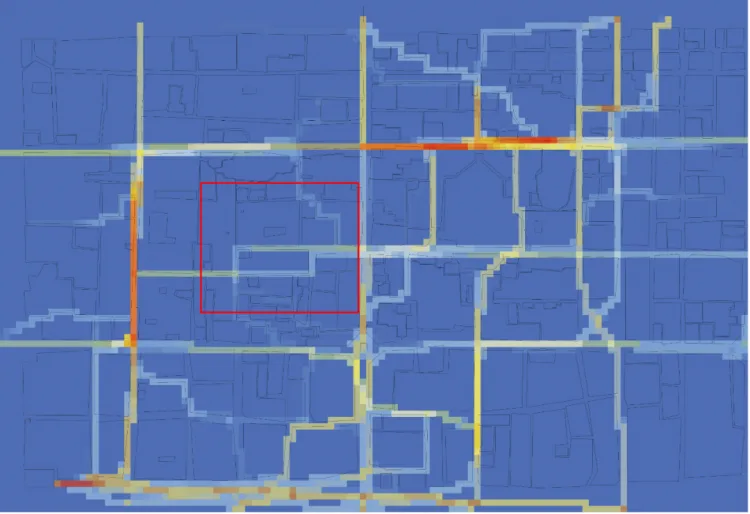
▲ Site analysis and road network heat map © The Ancient City Pacemaker Team
Given the enclosed high-density nature of Xi’an’s ancient city and its outdated transportation infrastructure, we proposed a partial renovation of the internal transport network.
We developed a pedestrian simulation system based on these rules:
- Pedestrians move from start points towards their destinations;
- Each pedestrian has a defined field of vision during movement;
- Pedestrians alter routes towards points of interest based on individual preferences;
- Pedestrians avoid collisions by maintaining distance.
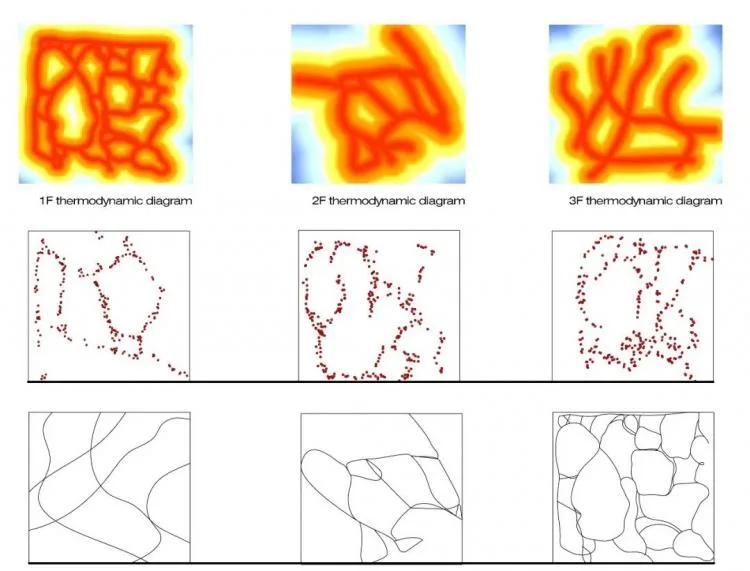
▲ Pedestrian pathways © The Ancient City Pacemaker Team
Simulation results generated a heat map of pedestrian movement frequencies, revealing sparse crowding in the streets surrounding our site. This aligns with field observations that the western part of the ancient city lacks significant municipal facilities, focusing mainly on tourism and dining, resulting in a limited and low-income economic model.
04: Ant Colony Algorithm
Stigmergy is a decentralized information coordination mechanism where individuals independently act and communicate indirectly, enabling collective adaptation and ecological improvement without central control.
▲ Ant colony simulation © The Ancient City Pacemaker Team
To avoid top-down design and emphasize resident consensus, we introduced the “ant colony algorithm” to organically shape the site’s internal flow lines.

▲ Ant colony experimental path generation © The Ancient City Pacemaker Team
Before computer simulations, we conducted a month-long observational study using experimental equipment to validate our approach.
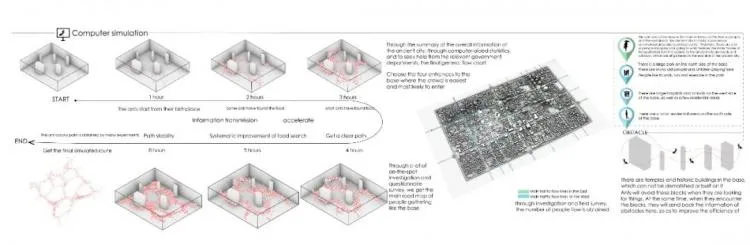
▲ Ant colony simulation paths generation © The Ancient City Pacemaker Team
The simulation first identified key functional spaces as “ant colony” starting points. Scenic and religious landmarks within the site were set as points of interest. The algorithm then connected these spaces to produce an organic circulation network that maximizes harmony between individual buildings, religious architecture, and surrounding landscapes.
05: Typological Study of Building Units
As cities rapidly develop, standardized design languages have caused a decline in spatial diversity and cultural identity. Despite urban pressures, Huifang’s courtyard style retains unique characteristics.
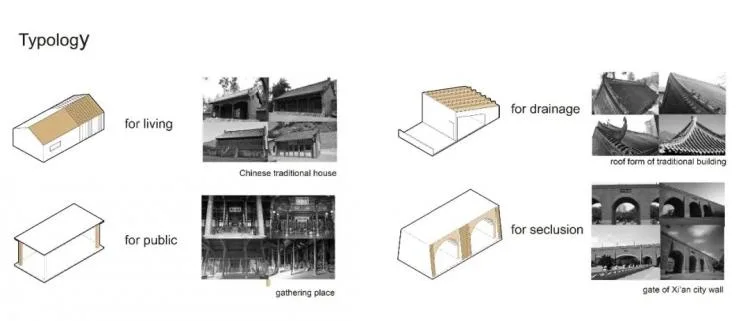
▲ Typological research © The Ancient City Pacemaker Team
By extracting representative courtyard building types and analyzing their morphological traits through architectural typology, we identified seven common building forms tailored to various uses, forming a distinct architectural vocabulary.
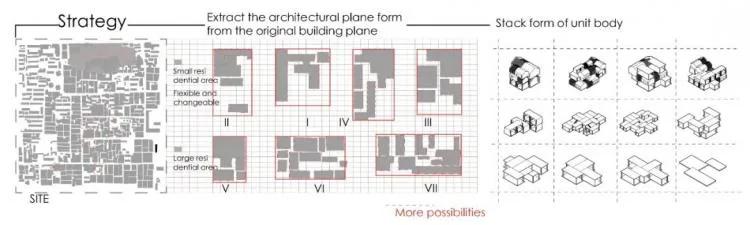
▲ Research on new and old textures © The Ancient City Pacemaker Team
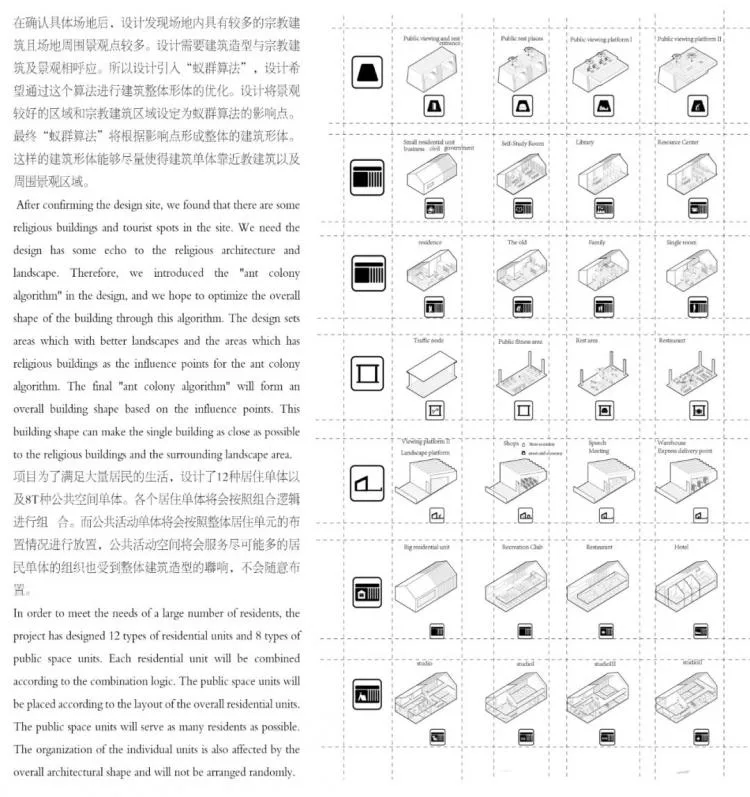
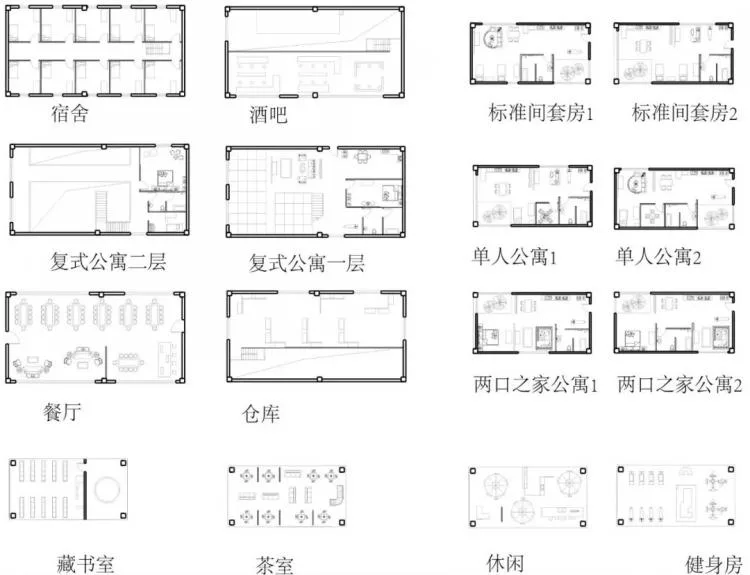
▲ Unit floor plans © The Ancient City Pacemaker Team
Our design aims to preserve Huifang’s original architectural fabric—including unique courtyard systems, blocks, and building clusters—while offering residents more functional spaces. We strive to restore a small-scale neighborhood atmosphere, safeguard communal architectural spaces, and create places that invite residents to “reminisce about the past.”
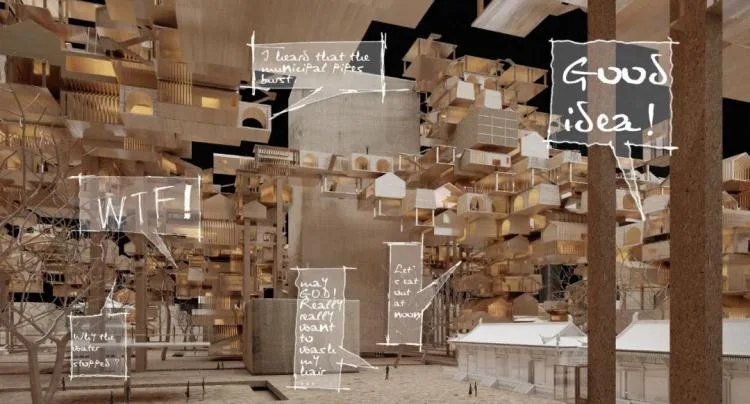
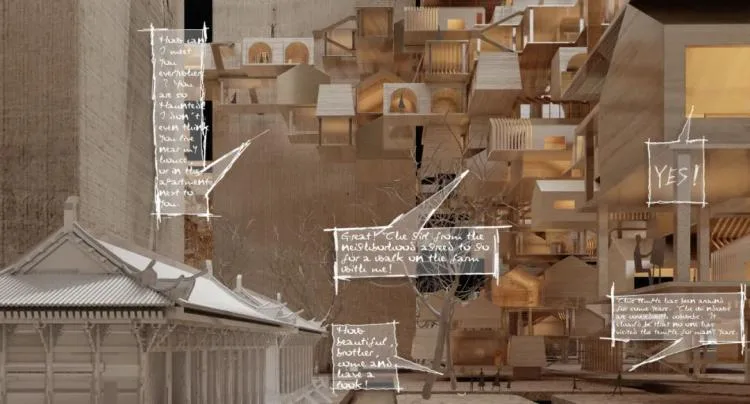
▲ Node renderings © The Ancient City Pacemaker Team
06: Bottom-Up Integration
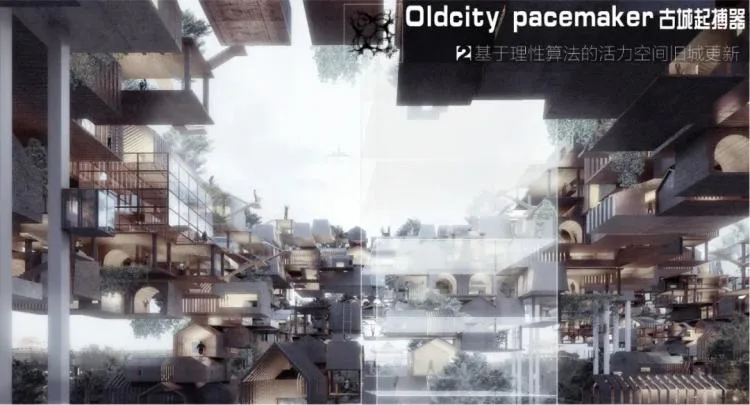
▲ Visualization of the Ancient City Pacemaker concept © The Ancient City Pacemaker Team
Traditional urban design often follows a top-down approach, neglecting the personal desires of residents. However, in the digital age, computers enable “autonomous coexistence” by simultaneously processing the diverse needs of many individuals.
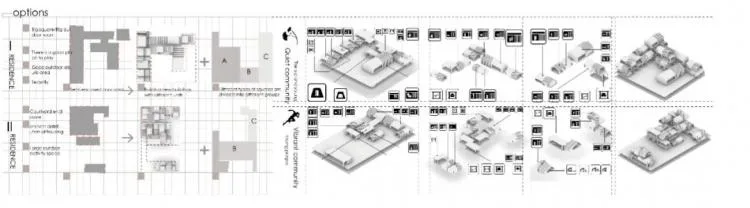
▲ Unit combinations © The Ancient City Pacemaker Team
The architectural units derived from typological analysis are numerous and have varying requirements. Each unit’s combination is independent, resulting in complex overall patterns. This complexity limits the effectiveness of a traditional top-down design methodology.
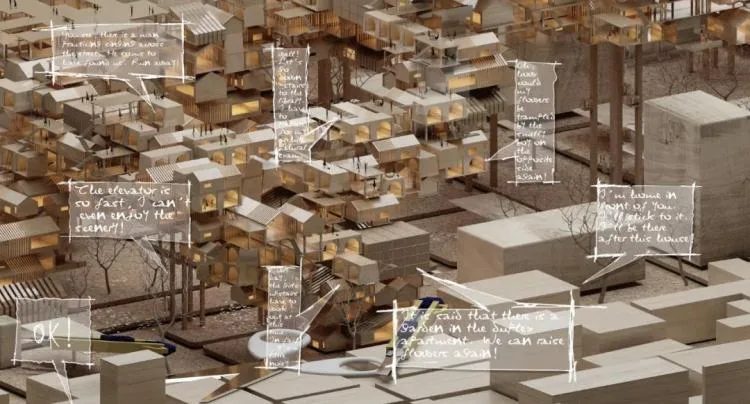
▲ Node rendering © The Ancient City Pacemaker Team
Using computer algorithms, we tested numerous combinations of classified building units, distilled the logic of their assembly, and translated this into a “vocabulary” to guide spatial organization digitally. Meanwhile, the overall circulation flow generated through the ant colony algorithm controls the spatial generation process.
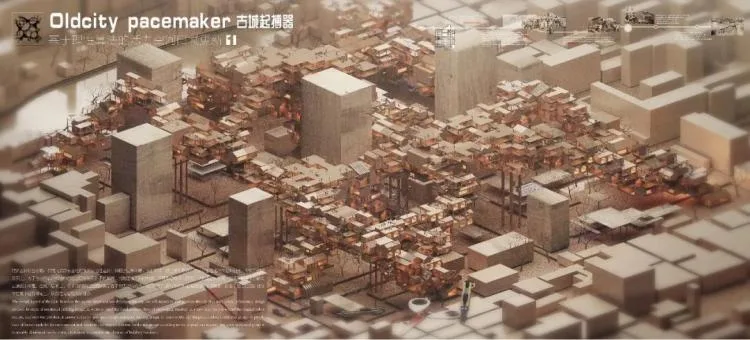
▲ Final rendering © The Ancient City Pacemaker Team
Ultimately, while ensuring individual buildings conform precisely to the combination “vocabulary,” the design produces an overall architectural form aligned with the ant colony algorithm.
Design Team
Over more than 1,000 hours, our team embarked on an ambitious, forward-thinking urban design journey that respects historical context. The process was challenging yet rewarding—despite obstacles and moments of doubt, we persevered and achieved meaningful results. This experience reinforced our belief that good design must be profound, rigorous, and guided by a global perspective.
We hope this project, which integrates multidimensional urban analysis, computational algorithm simulations, architectural typology, and bottom-up spatial generation, offers fresh insights and possibilities for future urban design.
Design Team Members: Huang Luyao (Wuhan University of Technology), Wang Jupeng (Henan University of Science and Technology), Liu Jixin (Hebei University of Engineering), Zheng Xiaoqi (Quanzhou Normal University)
Supervisors: Wang Shiliang, Li Jingyi

▲ Team photo © Mars
Review of the Competition Proposition













Must log in before commenting!
Sign Up