
In 2008, the KAIT Workshop at Kanagawa University of Technology, designed by Juniya Ishigami, was completed. That same year, Ishigami’s studio was commissioned to design a “universal” semi-outdoor square adjacent to the workshop, intended as an auxiliary space. This prompted Ishigami Haruna to explore the concept of “universal” and rethink semi-outdoor spaces within the context of the campus environment.
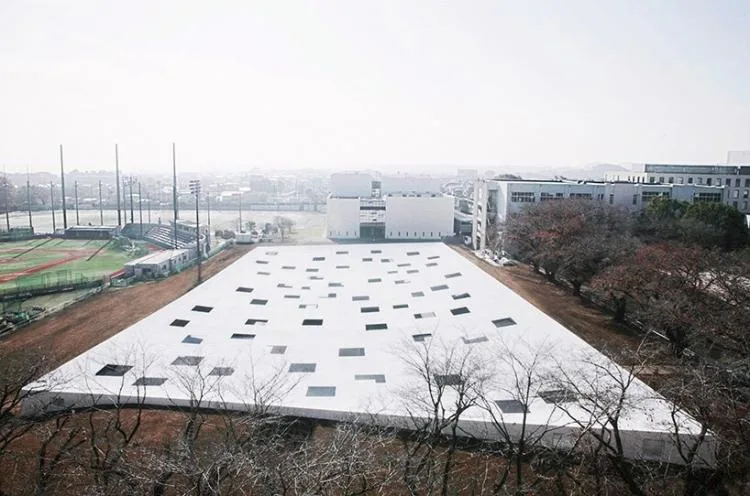
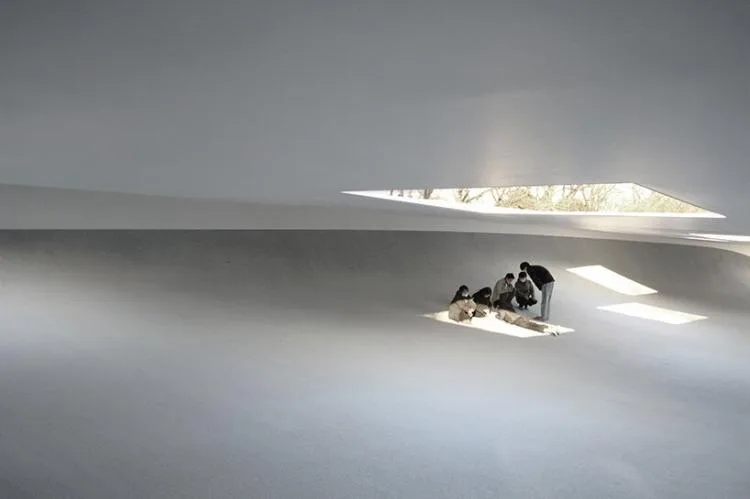
With limited leisure spaces available on the KAIT campus, Ishigami Chun aimed to create a versatile area that offers various ways for students to use it. For instance, students can sit on the square’s floor to chat or eat, or even lie down for a nap. The space also accommodates athletes warming up before sports events, serves as an exhibition area during university festivals, and can be transformed into an active marketplace with small stalls.
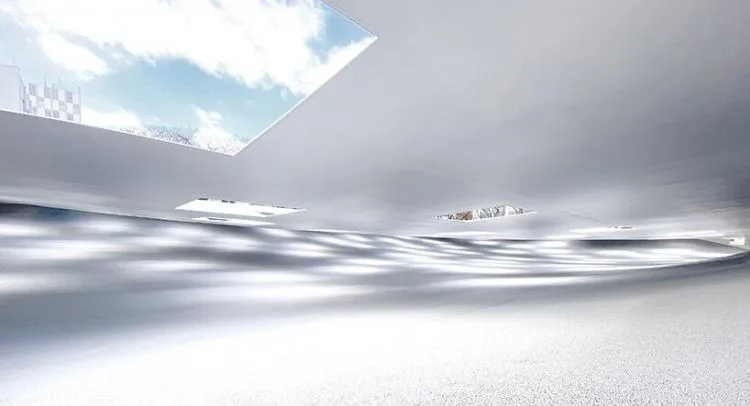
The design focus of the square is less about a specific physical space and more about how students spend their leisure time there. Shunya Ishigami explained that when a design centers solely on the use of a designated space, it is focused on fulfilling a specific purpose. However, when the emphasis shifts to how time is spent, the design prioritizes the bodily experience—although a relaxed sense of purpose remains.
The square is surrounded by tall academic buildings and lacks diverse landscapes. To address this, Ishigami Junichi integrated the environmental features of the surroundings with the square’s elements, combining architecture with an inspiring sense of “soto.” In Japanese, “soto” means “outside” or “other,” contrasting with “uchi,” which means “inside.”
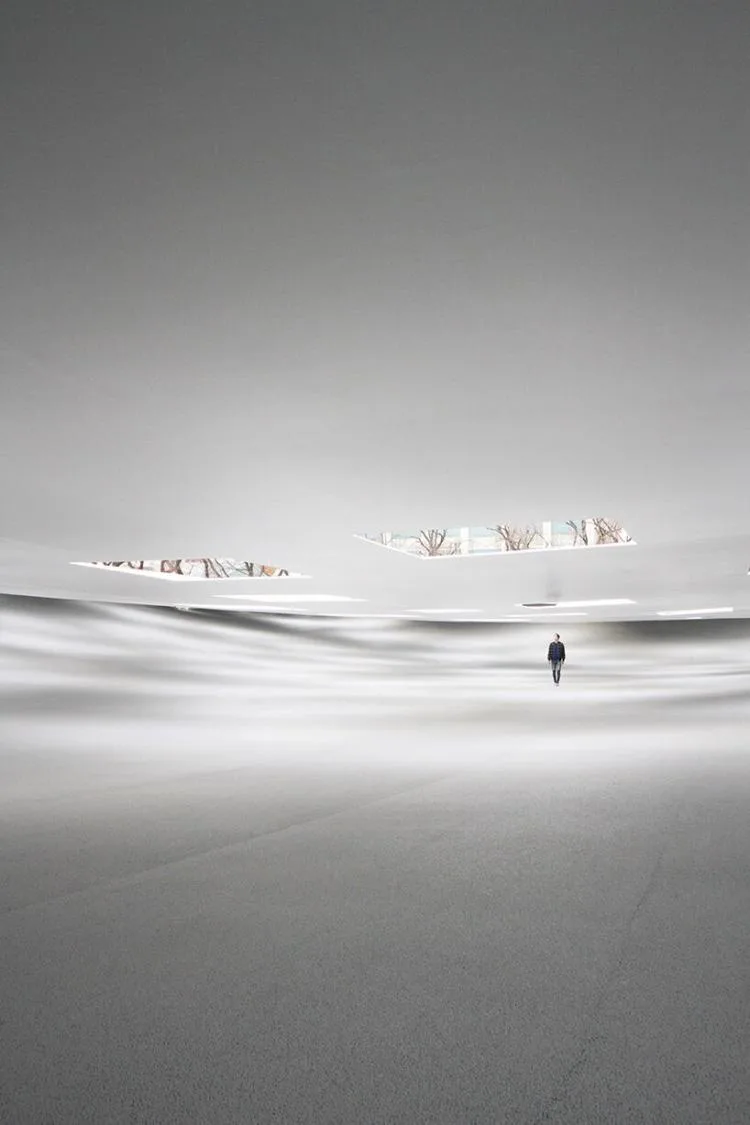
The square is conceived as an expansive landscape that subtly changes with the seasons and weather. It offers a sense of openness, allowing users to enjoy a peaceful, relaxing atmosphere without feeling confined by buildings. Ishigami transformed the square’s architecture into a landscape itself, with the sweeping curved roofs resembling the horizon—the boundary between earth and sky.
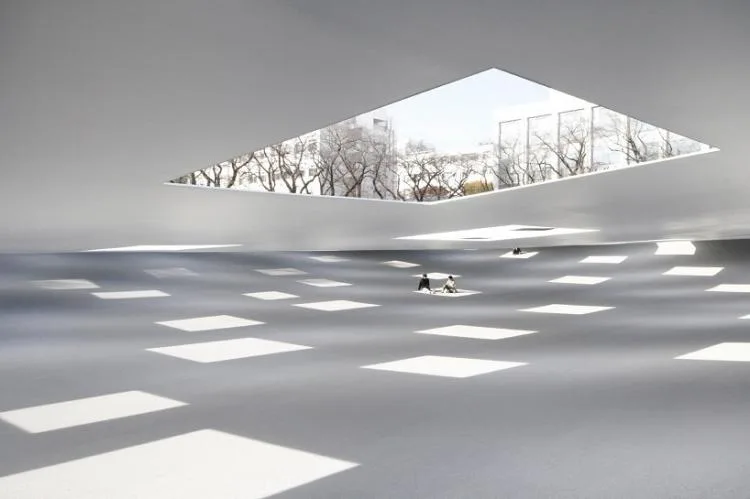
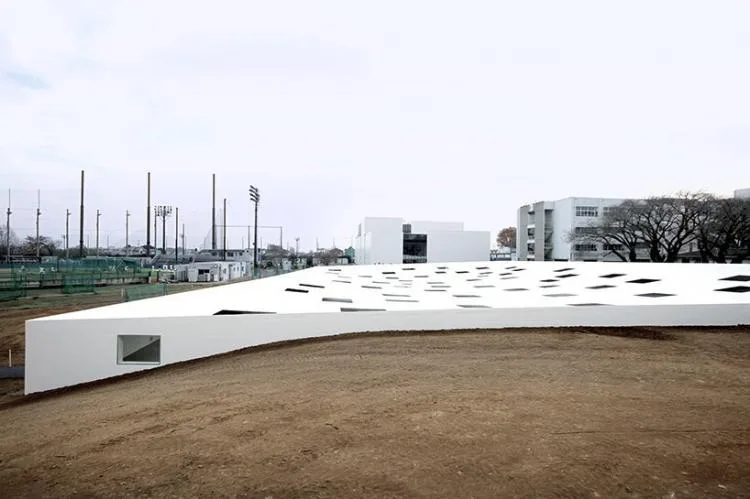
Despite the roof covering the entire site, the building takes advantage of a two-meter (six-foot) height difference between the plot and other campus areas. The ceiling height under the roof is kept as low as possible to conceal the structure within the landscape. The massive iron roof has no supporting pillars underneath; it rests on four walls surrounding the square. The curved roof aligns parallel to the ground at the deep wall recess, merging these elements in the distance to form an internal horizon.
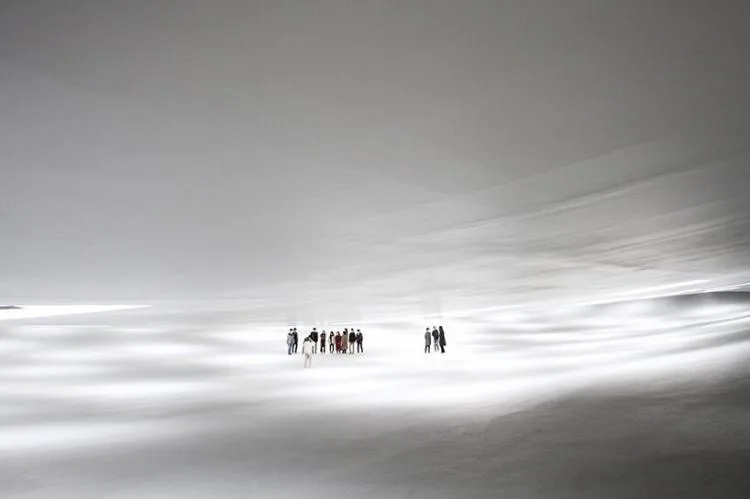
Similar to clouds floating above the ground, the low ceiling introduces natural light around the square, while other areas receive less illumination. The interplay of light and shadow shifts throughout the day and changes with weather conditions. The roof features 59 openings, all kept fully open. On rainy days, raindrops fall through these holes, forming rain columns and creating a misty ambiance. The sound of raindrops echoing indoors and the visual of falling rain highlight the square as a continually evolving landscape.

The roof is supported by 83 piles and 54 ground anchors as part of its reinforced concrete structure, described as akin to a suspension bridge. The roof spans up to about 90 meters (295 feet). Due to thermal expansion and contraction of the iron plates, the ceiling height can vary by approximately 30 centimeters (1 foot). Despite its large scale and complex structure, the architecture maintains a human scale: the ceiling height matches that of a residential building, and the roof’s thickness is comparable to household furniture.
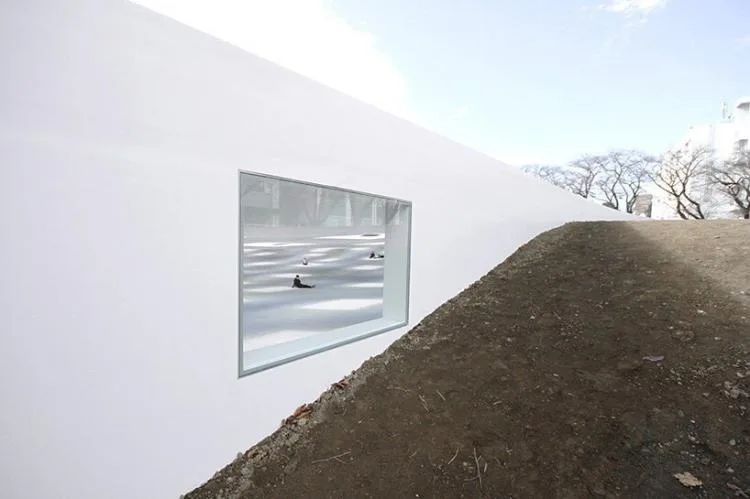
To alleviate the load on the four surrounding walls, additional reinforcement was applied along the roof’s outer edge. The ground is paved with permeable asphalt, which continuously absorbs rainwater and channels it underground, keeping the surface dry and comfortable for sitting. This asphalt can also be pressure-cleaned to remove paint thoroughly.
The design of the square begins with the posture of its users—particularly how people sit. Visitors often take off their shoes and sit freely on the ground or recline on gentle slopes, fostering a direct connection between body and environment, integrating them into the overall landscape.
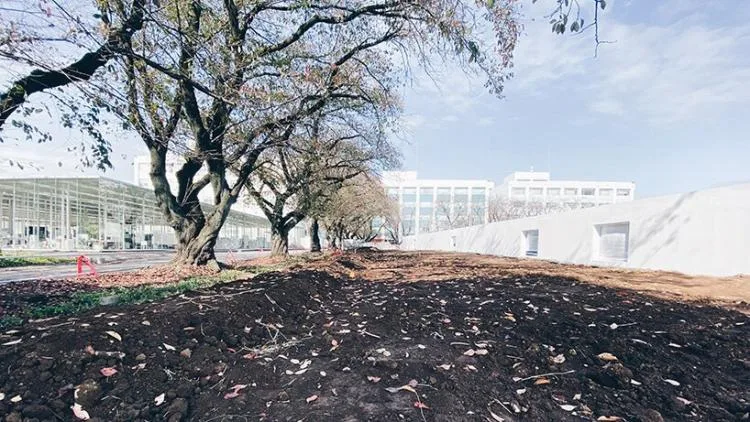
Being open to the surrounding environment, the square allows students to enjoy gentle breezes, listen to raindrops, and relax while spending time. Ishigami explained that the fusion of ground and ceiling to create a horizon generates a dual effect of spatial division and expansion. Inside the square, individuals can gather to experience a sense of community or find secluded corners for privacy. With the Kanagawa University of Technology Plaza project, Juniya Ishigami created a new “soto” landscape that invites everyone on campus to gather and unwind in an open space.
△ Project video
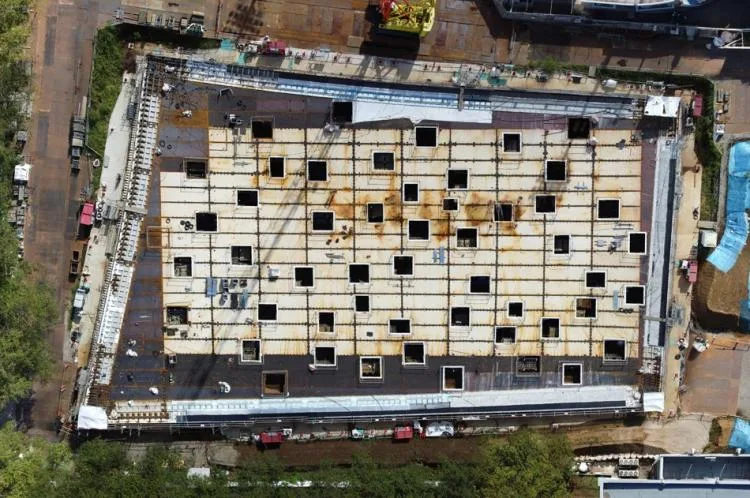
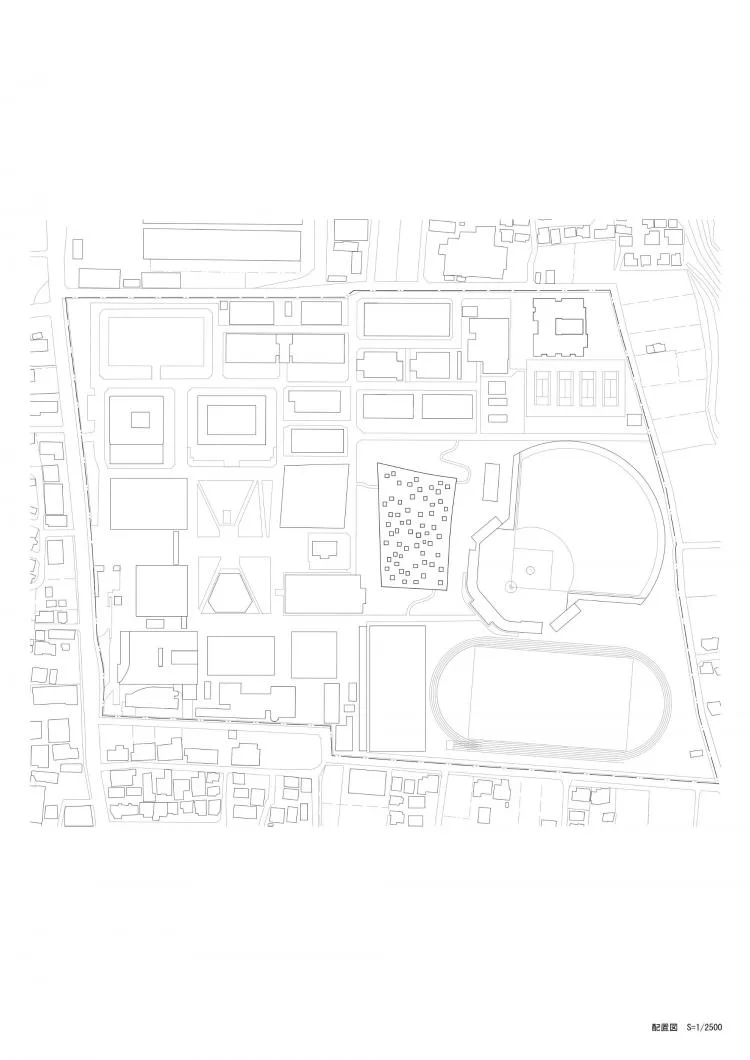
△ Plan view
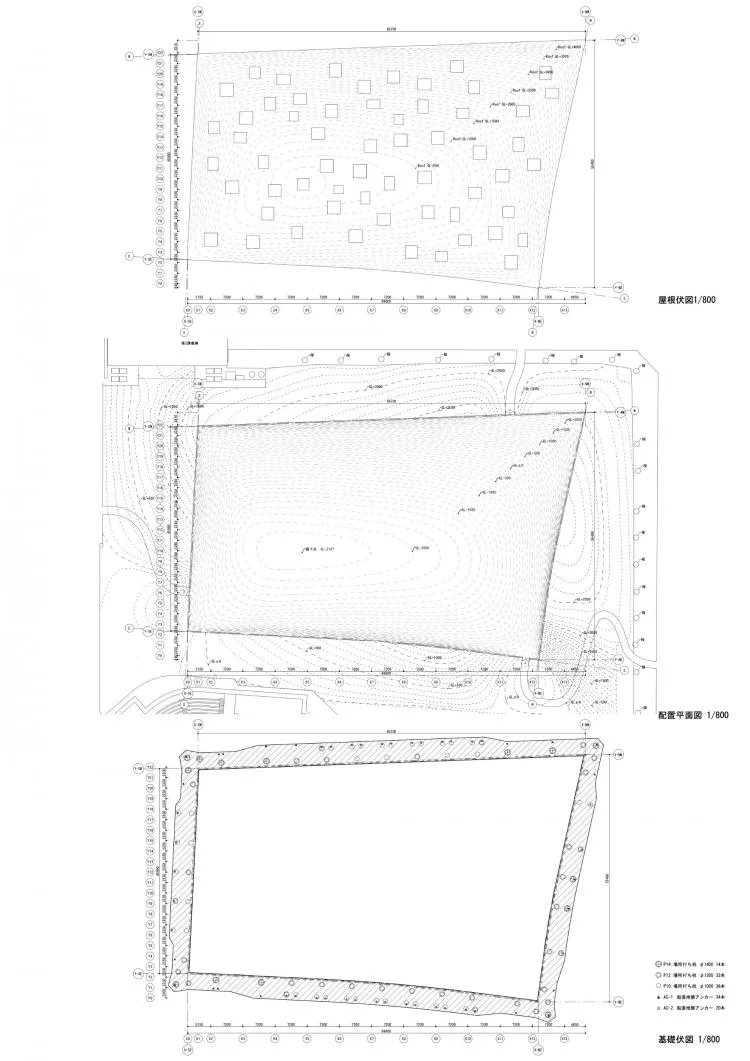
△ Plan view
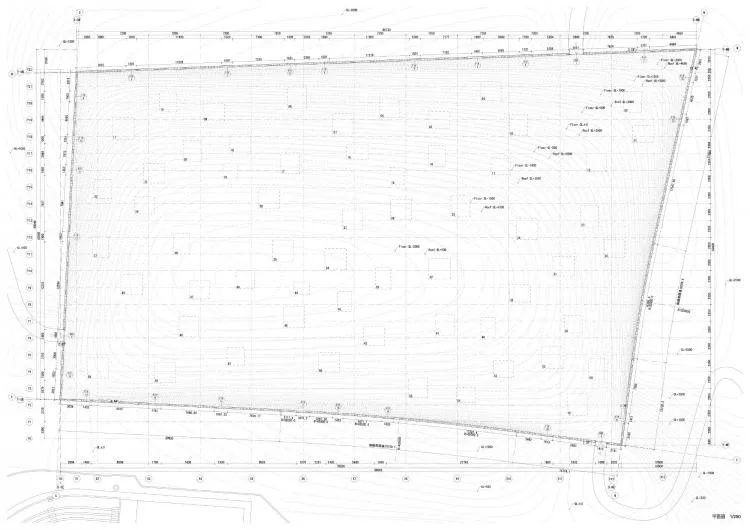
△ Plan view
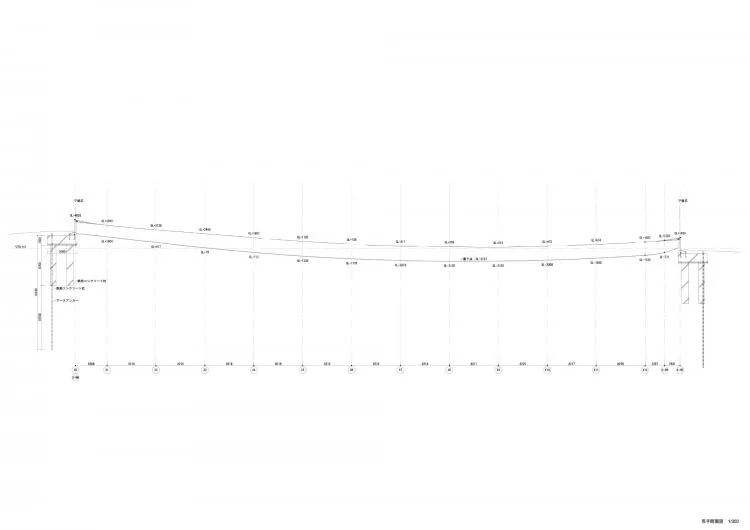
△ Section diagram
Project Information:
Name: Kanagawa University of Technology Square
Location: Kanagawa, Japan
Architect: Shunya Ishigami Architectural Design Firm
Lead Architect: Juniya Ishigami
Project Team: Taeko Abe, Shuma Tei, Motosuke Mandai, Sachie Morita, Toru Yamada, Masayuki Asami, Federico Lepre
Design and Construction Years: 2008–2020
Client: Ikutoku Gakuen / Kanagawa Institute of Technology
Structural Design: Jun Sato Structural Engineers
Construction: Kajima Corporation
Total Area: 4,109.78 sqm
Photography Copyright: Junya Ishigami + Associates












Must log in before commenting!
Sign Up