
Project Introduction
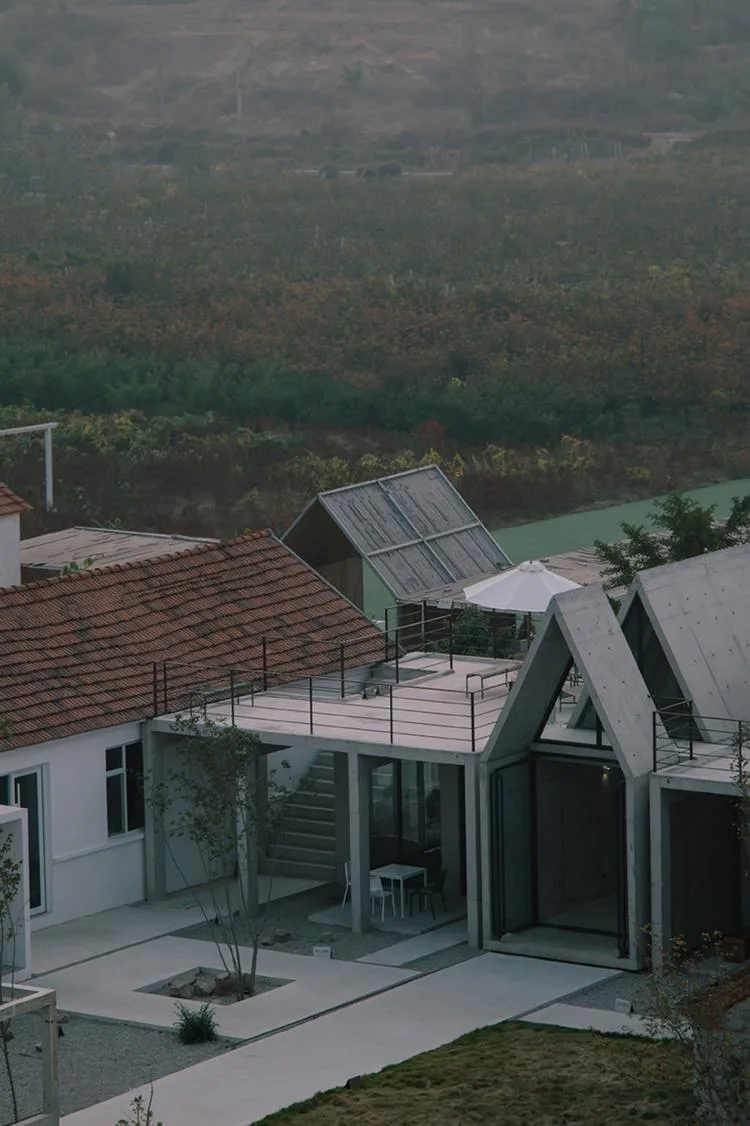
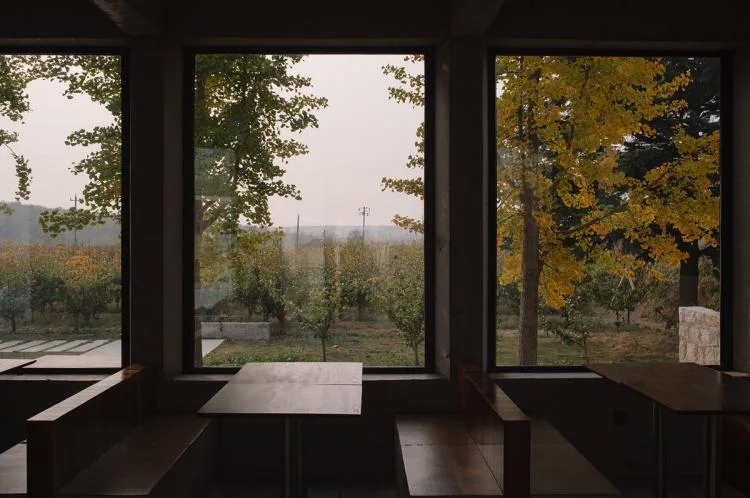
This project is situated at Yongzhi Farm in Yaqian Village, Laishan Town, Yantai. It represents the second phase of the farm’s household grain coffee initiative. Prior to renovation, the site was an unused courtyard. To the east lies the farm’s pear orchard, and several large ginkgo trees border the site. In the distance, rolling mountains stretch across the horizon, offering stunning sunsets and expanses of greenery.
The design’s core challenge was to honor every natural feature, enhance the connection between architecture and nature, and thoughtfully balance the relationship between nature, the built environment, and people.
Human / Architecture / Nature
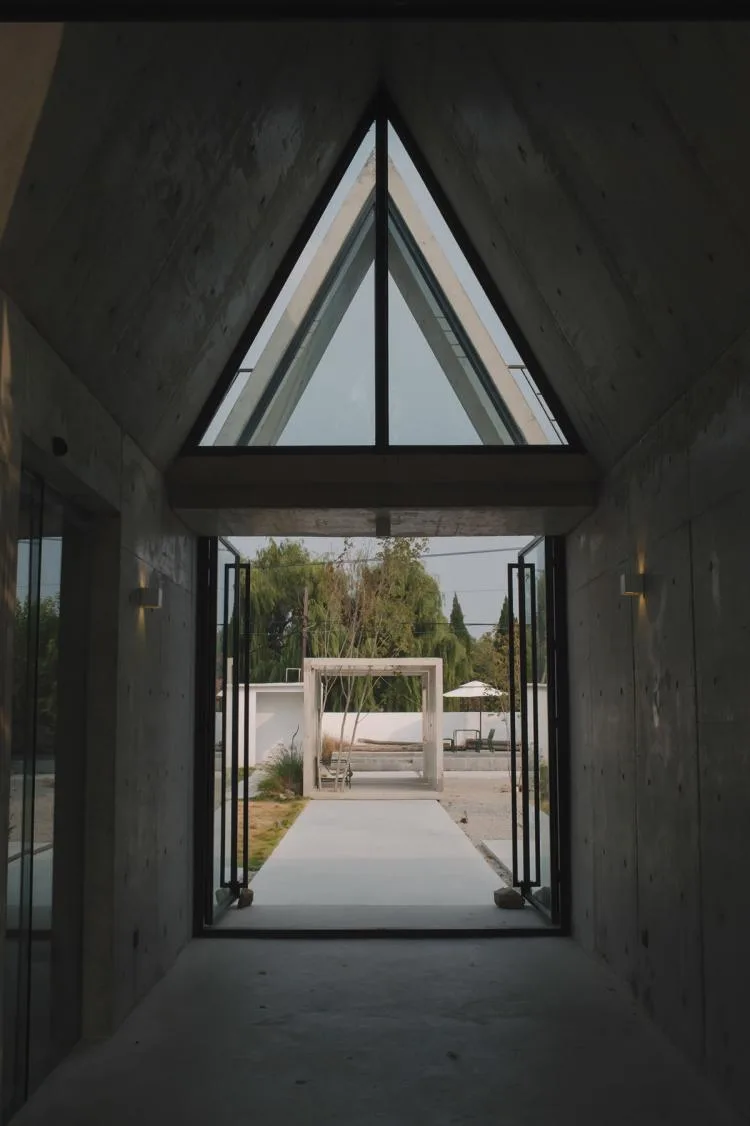
This project explores how architecture can heighten human awareness of nature’s presence. Although nature is always around us, the hustle of daily life often prevents us from noticing it. We miss the sight of trees and greenery, as well as the sounds of birds and cicadas. Through design, the architecture aims to become a vessel that amplifies our senses — making tranquility feel deeper, greenery appear more vibrant, and joy more profound.
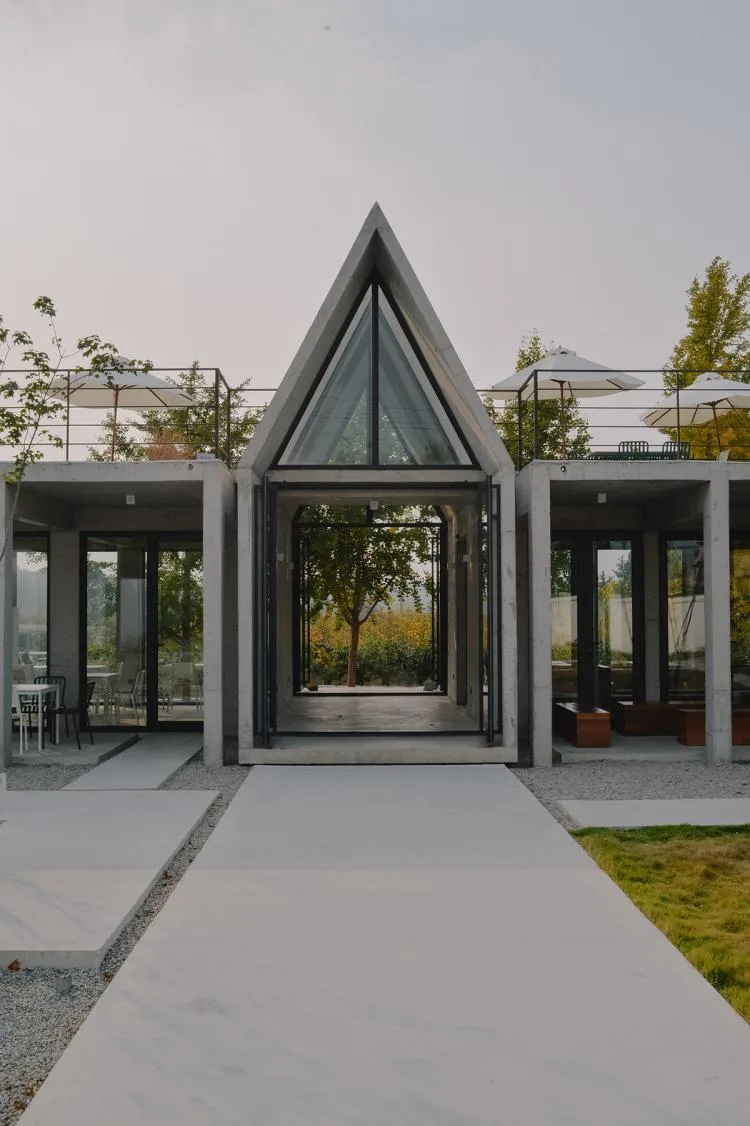
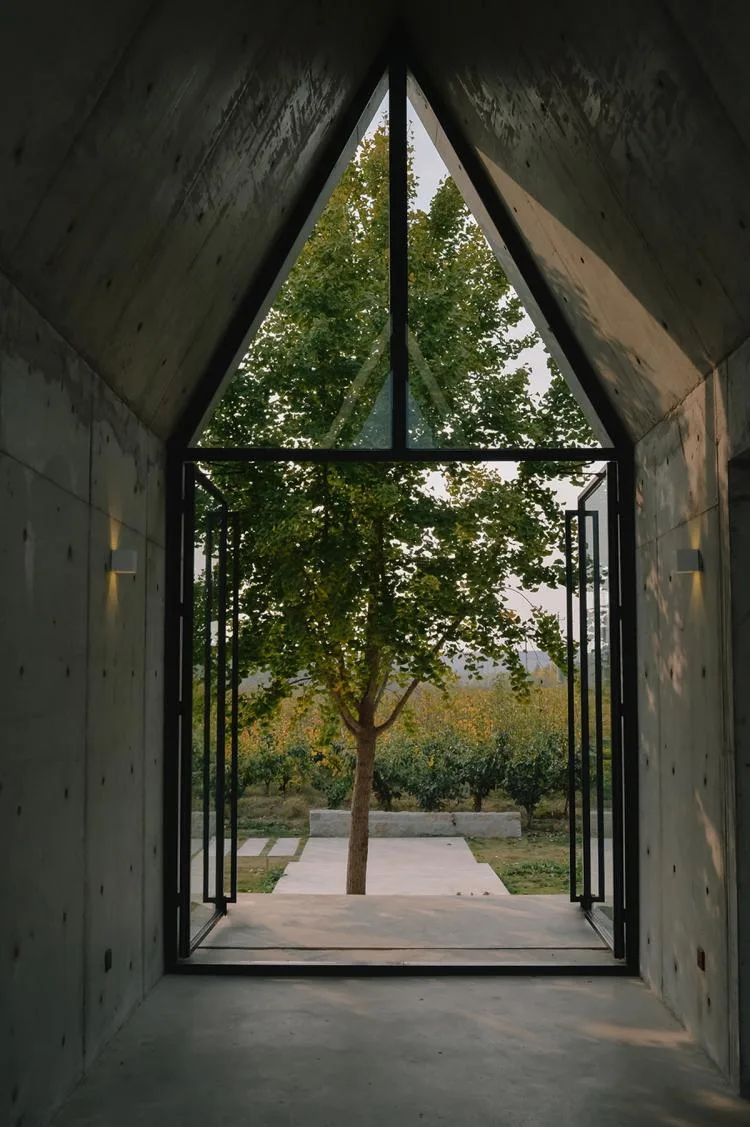
Through architecture, visitors can engage more deeply with nature and enjoy spaces designed for immersion, reflection, reading, and other spiritual experiences—not just practicality.
Inspired by nature and respecting its every detail, the design immerses individuals within mountains, forests, and wilderness. This connection fosters self-awareness, as plants and trees share their greenery, and worries dissipate like smoke. Nature’s call invites us to recognize our own existence and find true freedom.
New / Old
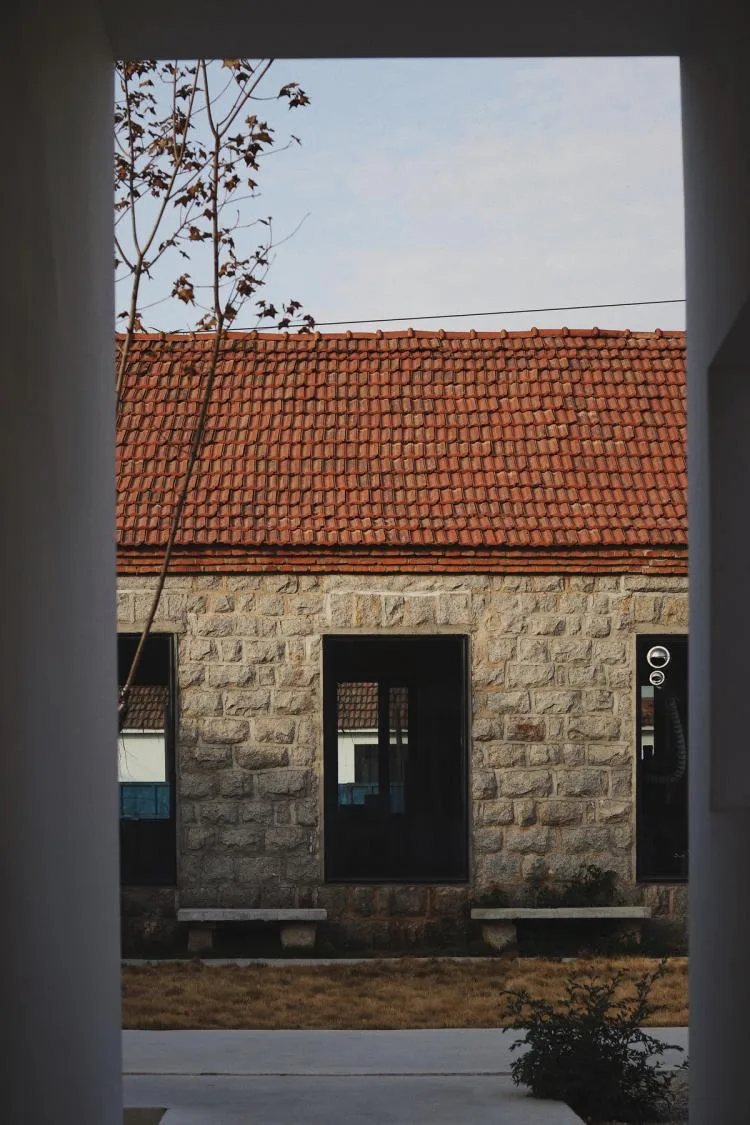
To the north of the site lies the first phase of the Hu Grain Coffee project, which remains operational. This area features rows of brick and tile houses topped with red roofs, alongside similar structures to the east. To the south, an old stone building and the western courtyard wall enclose the courtyard, which had been unused for many years before renovation.
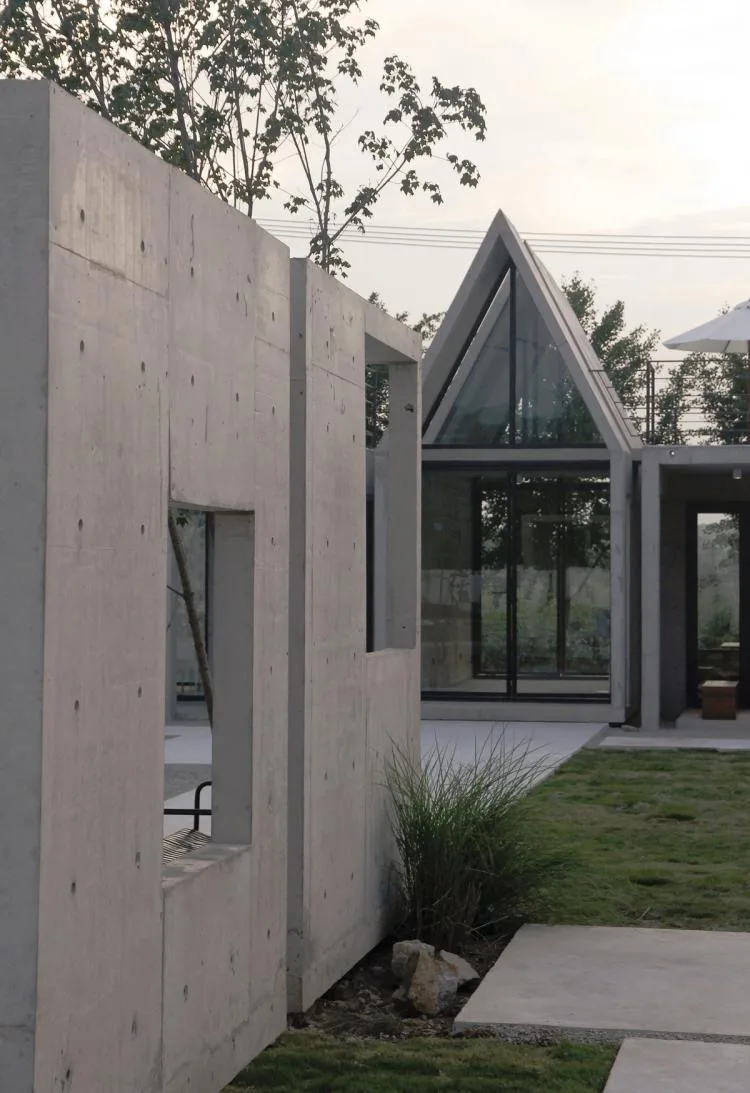
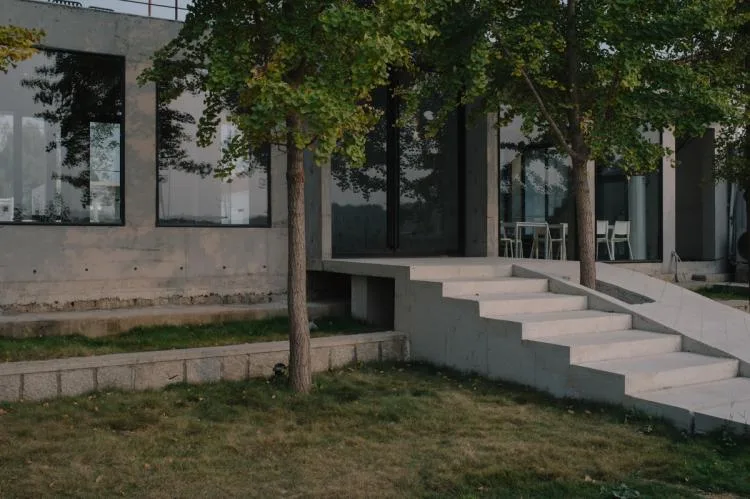
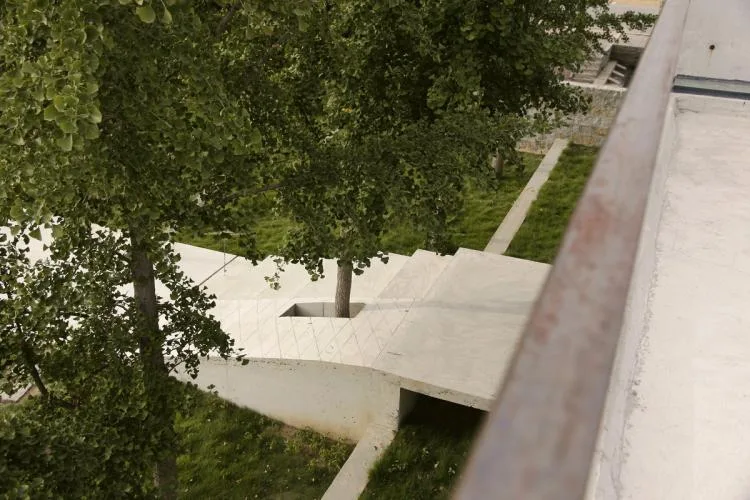
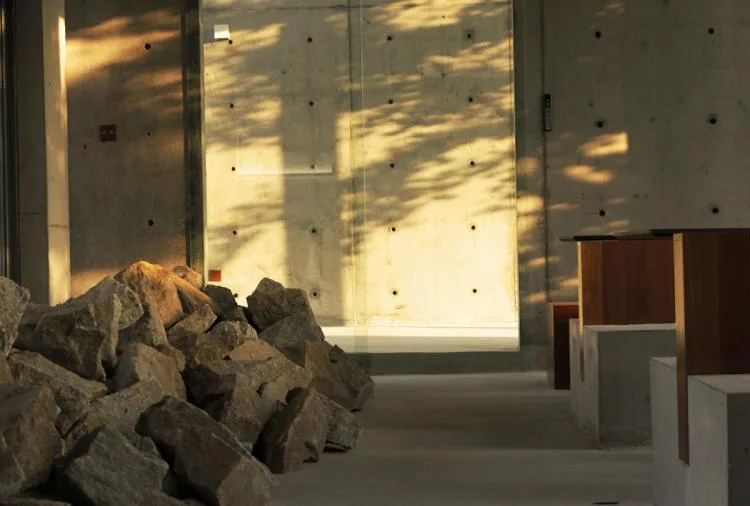
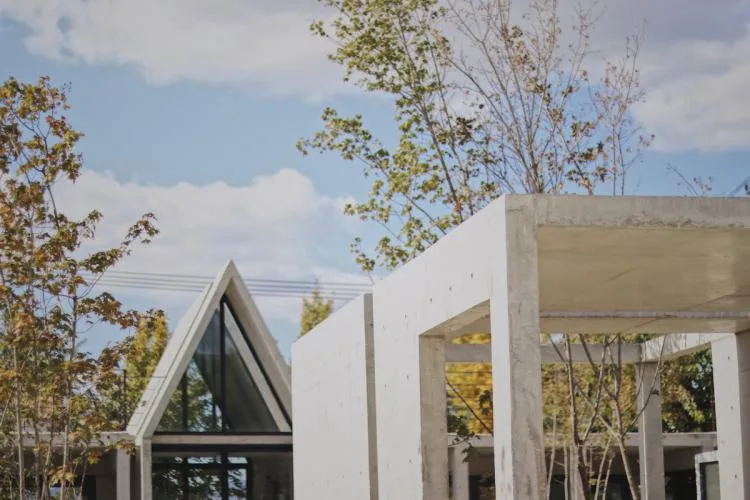
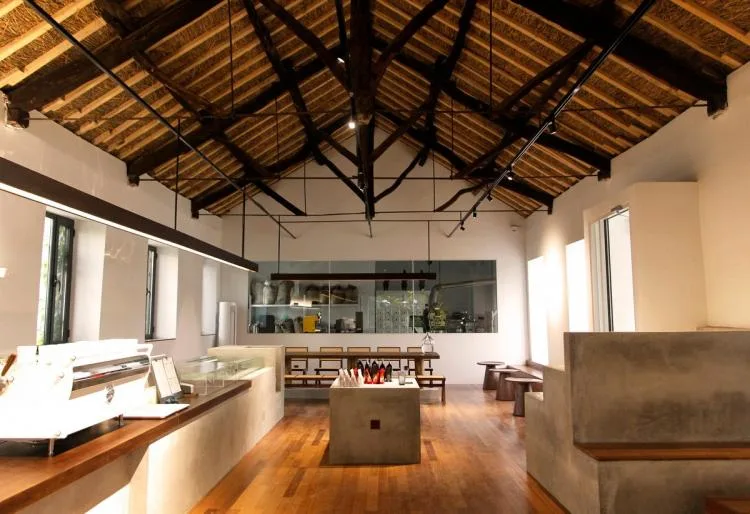
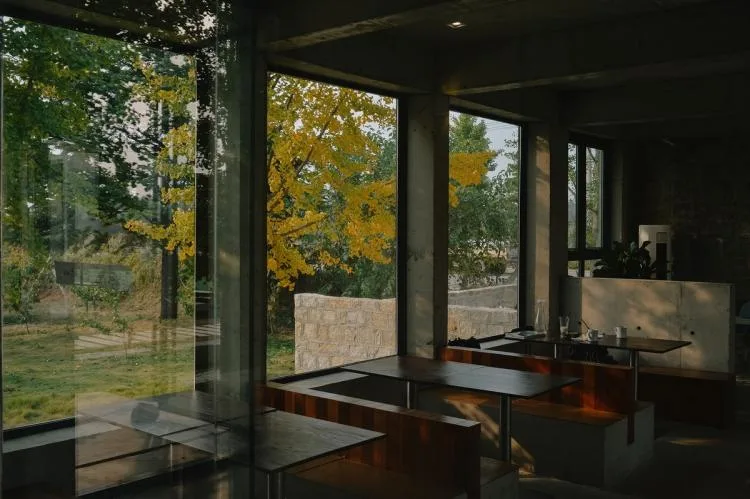
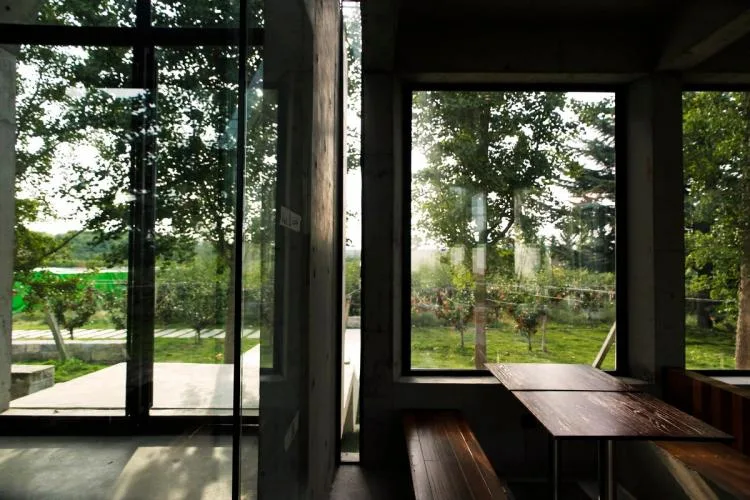
The site’s circulation and space usage were reconfigured. While the old buildings were restored to their original conditions, new structures were constructed using plain concrete. The natural texture of concrete allows the new buildings to blend seamlessly with the environment.
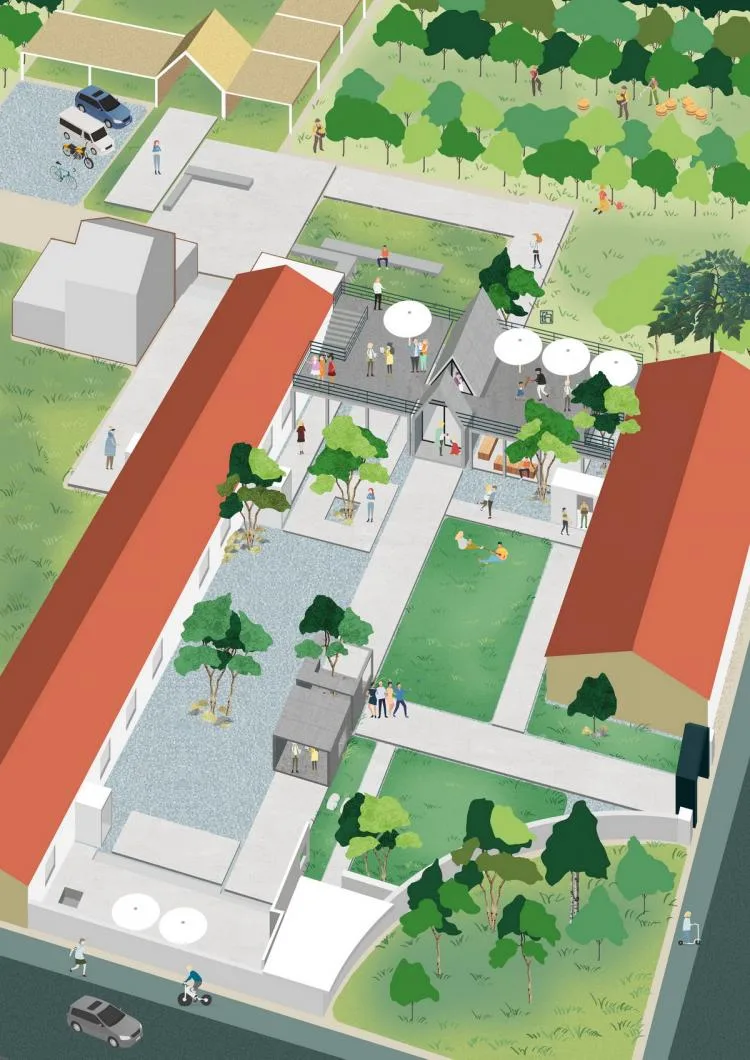
△ Aerial view of Yongzhi Farm buildings
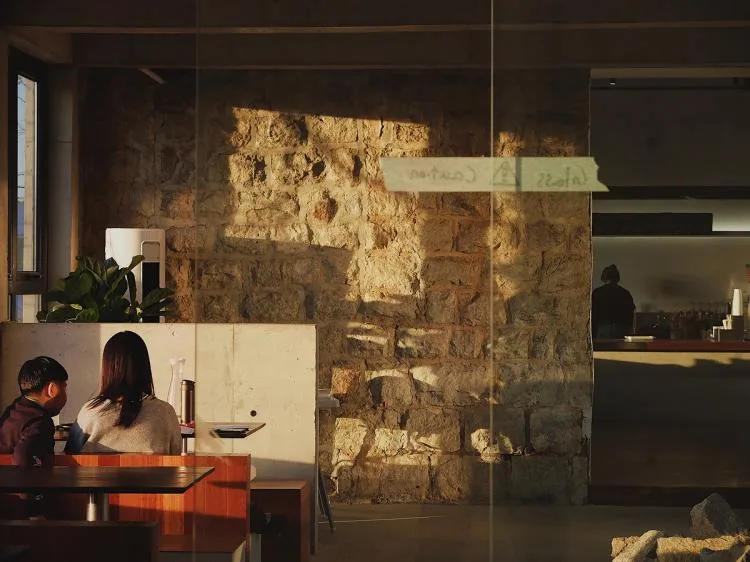
Each original building was repaired based on its damage condition. Using local materials, wooden beams and stones salvaged from the old eastern house were reused to repair the preserved old building. The eastern house, long in disrepair and unsafe, was ultimately demolished.
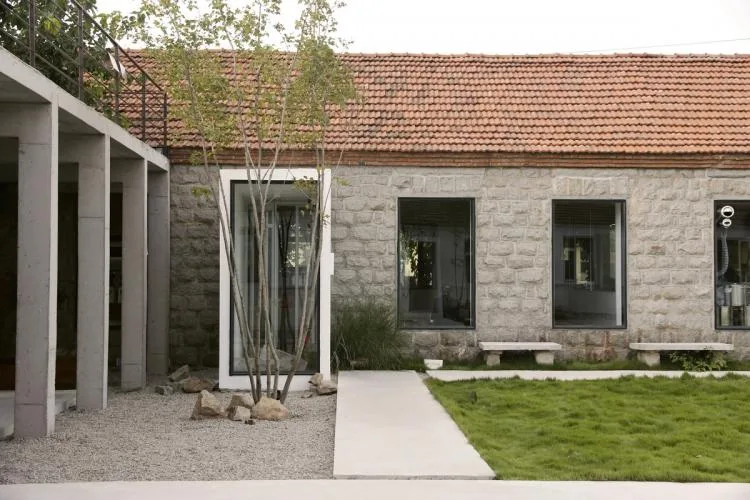
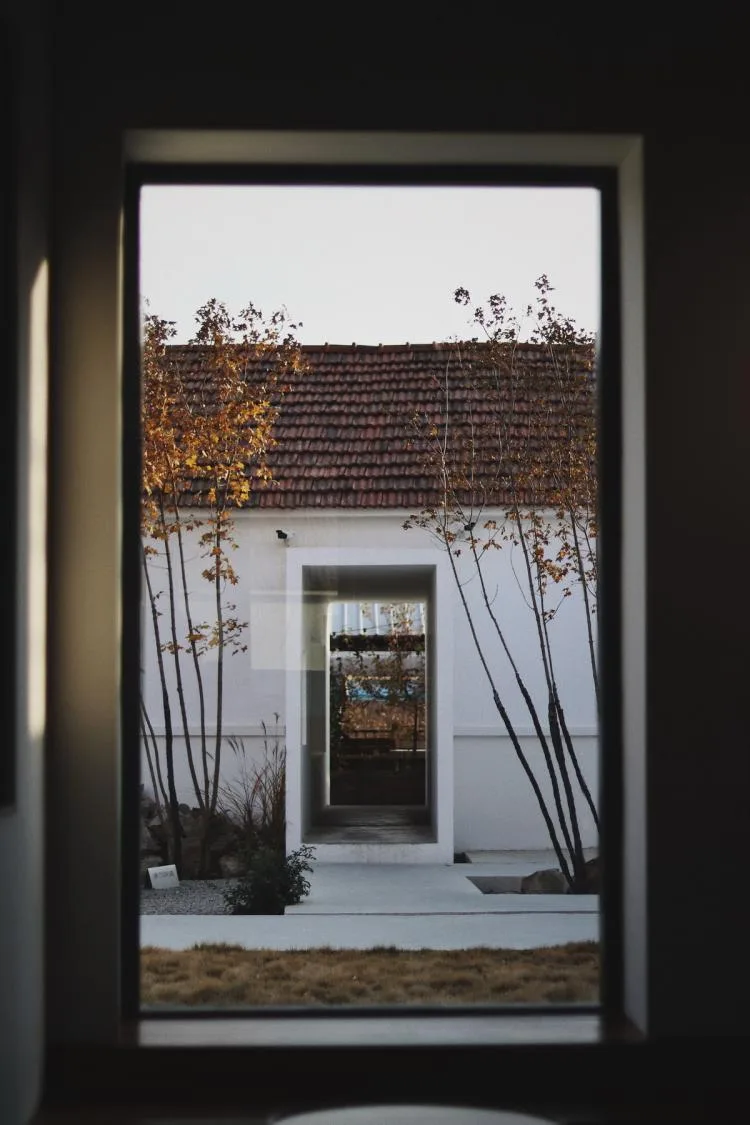
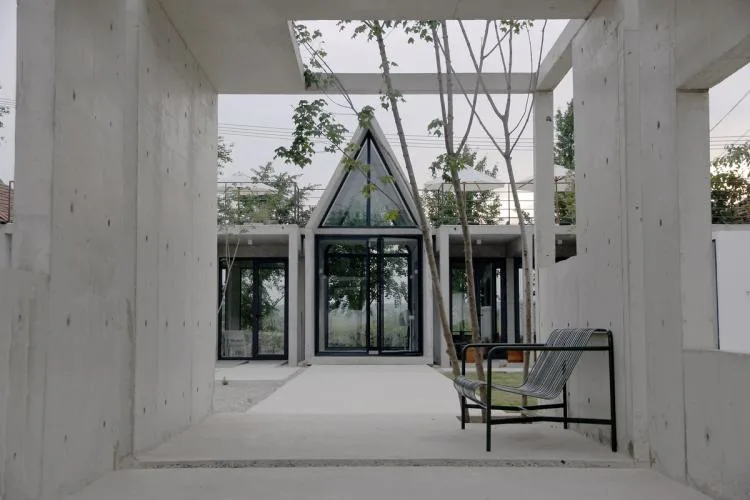
New buildings were inserted to accommodate modern functions. The new structure serves as the main entrance and guest area. Constructed from plain concrete and extensive glass panels, it offers a more open and transparent form, inviting nature into the courtyard and harmonizing with the landscape.
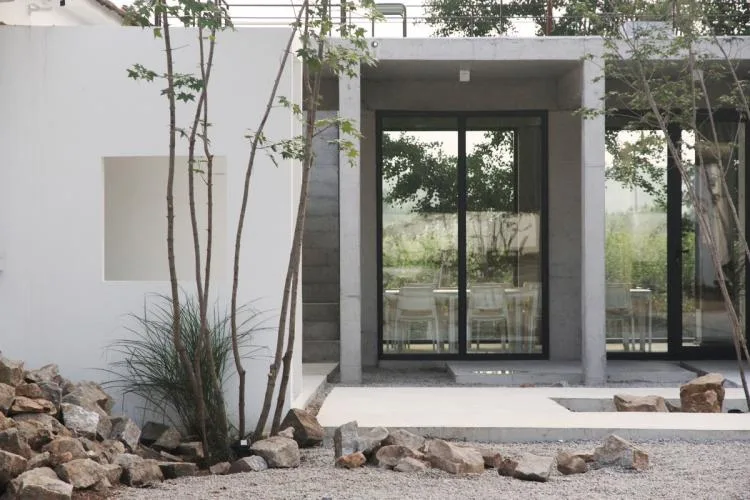
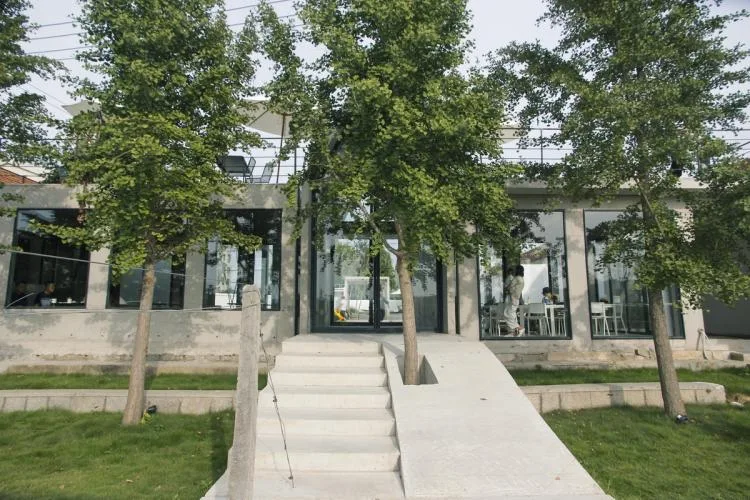
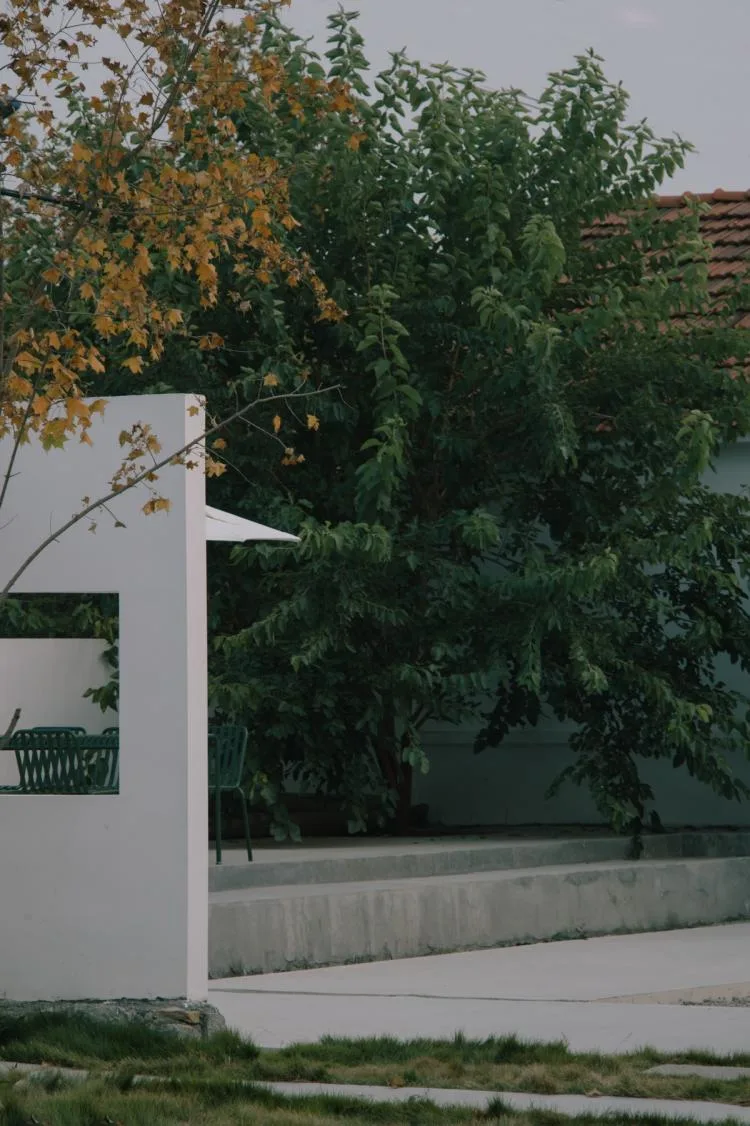
All existing courtyard trees were preserved, coexisting harmoniously with the new structures in a relationship of both fusion and independence. Stones excavated during demolition and courtyard clearing, combined with grasses, reeds, and the spreading leaves of five-cornered maples, were incorporated into the courtyard’s landscape design, allowing them to exist in a renewed form for years to come.
This approach blends existing buildings with new concrete structures, creating a diverse environment that bridges old and new, traditional and modern.
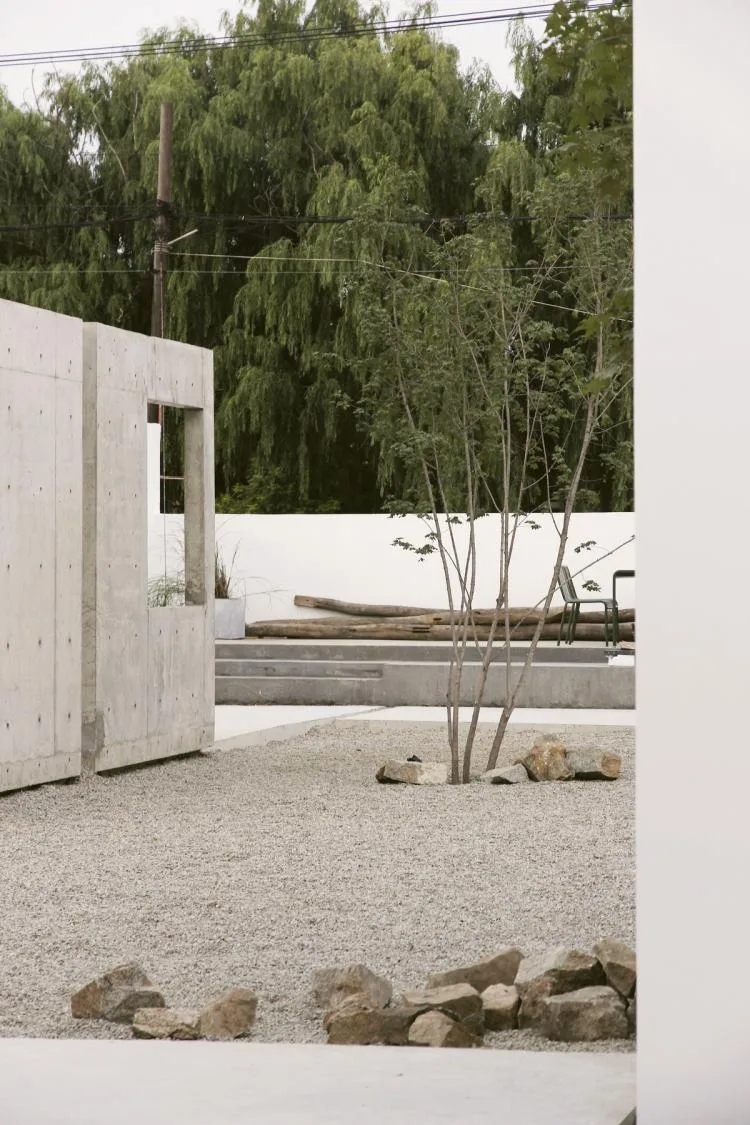
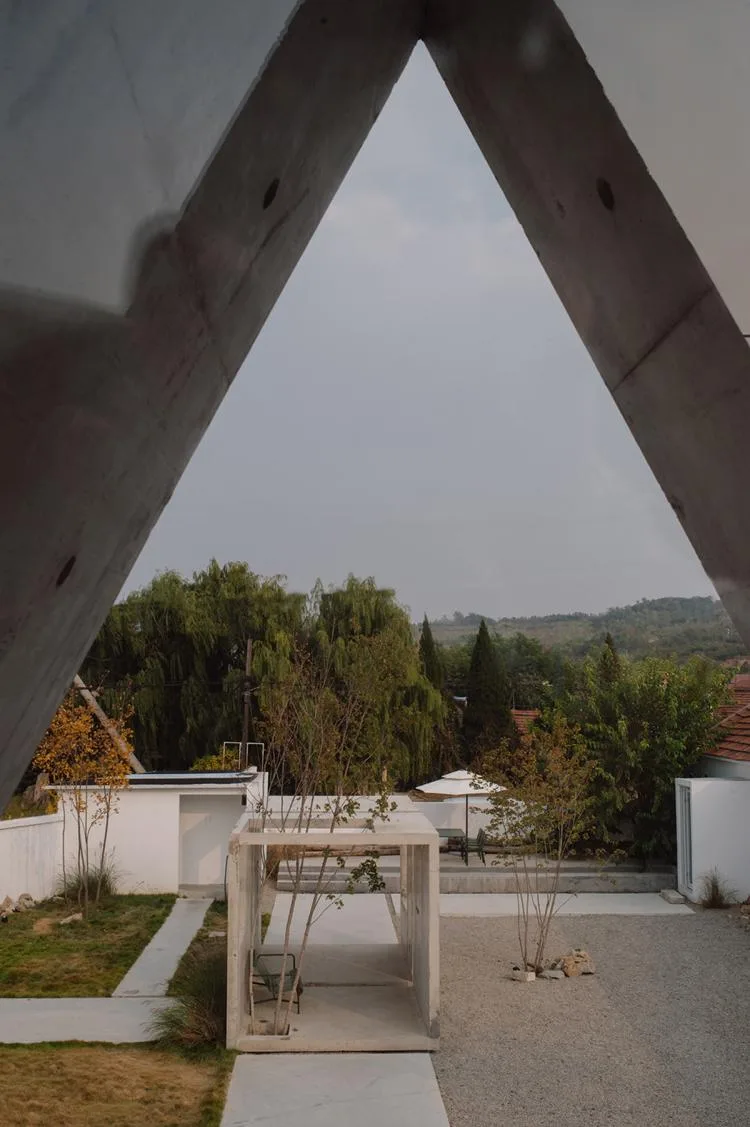
Stones, trees, and old houses serve as memories of time. Window views transform into human memories, where wind, rain, and the evening sun occasionally rest on a mountain-facing platform.
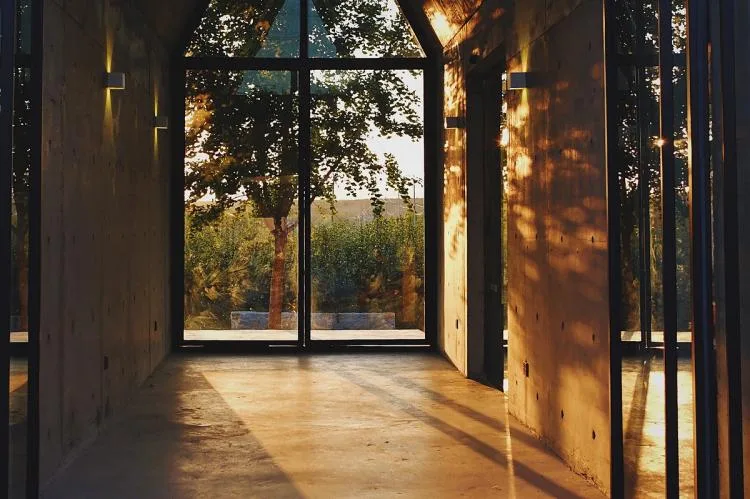
Connection / Distance
The first and second phases of the building, as well as the new structures and the pear orchard, are interconnected via corridors that break down boundaries. This design enhances interactions between buildings and between the architecture and nature. Previously isolated spaces become integrated yet retain their distinct characteristics.
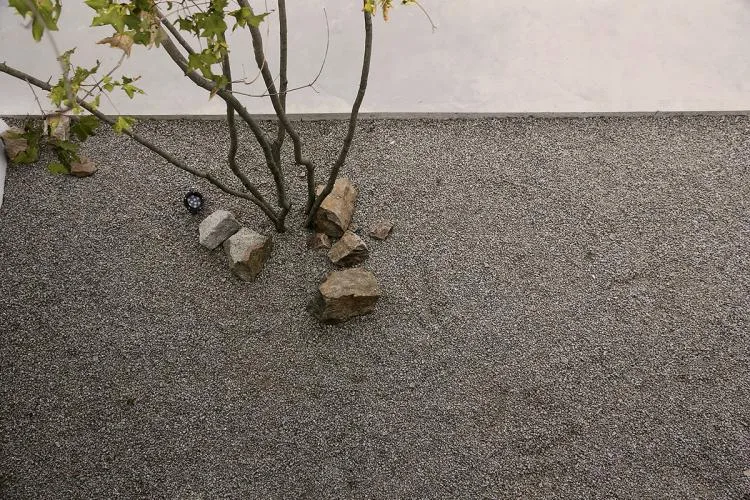
The new building maintains a respectful distance from the old structures on both sides, with a similar approach taken between new buildings. Landscape elements flow through the gaps, softening boundaries between buildings from different eras and encouraging harmony.
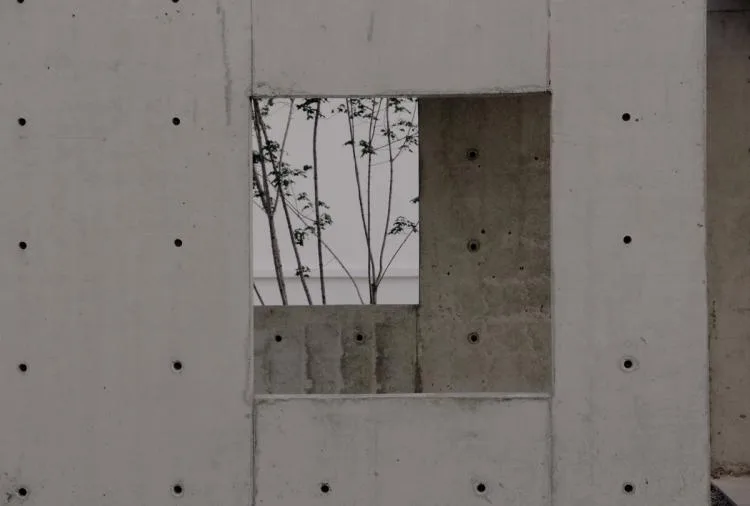
By using architectural connectors to link new and old buildings, light, and trees, the design integrates architecture with landscape, creating spaces that invite people to linger and enjoy.
Time is silent, and only the stones speak. Architecture reminds us of the presence of nature, the passage of time, and the essence of the human spirit.
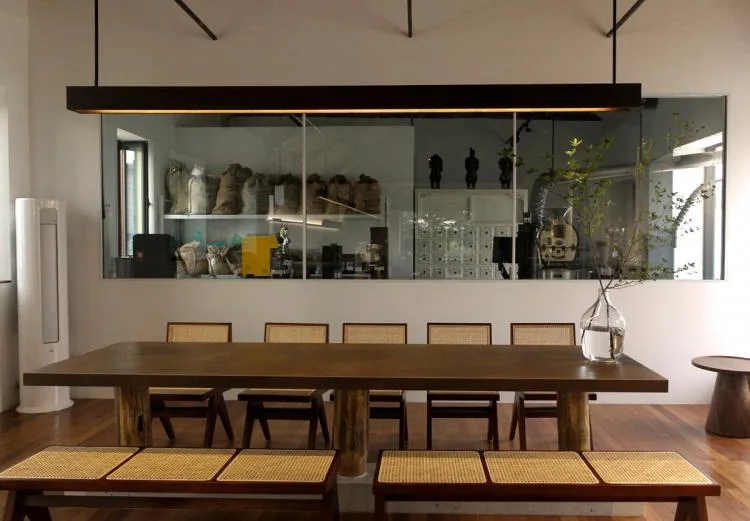
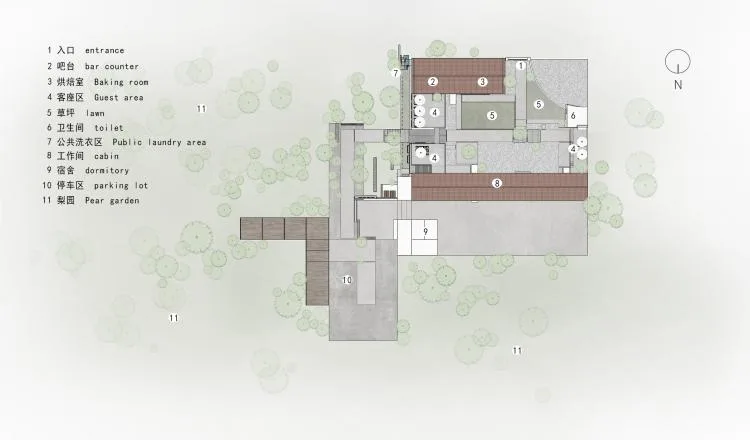
△ Plan view
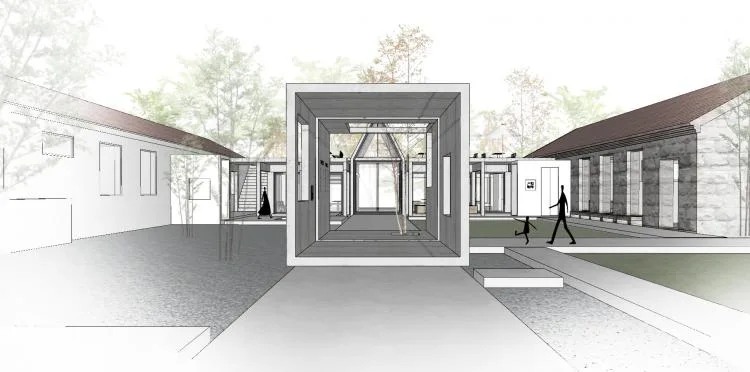
△ Elevation drawing
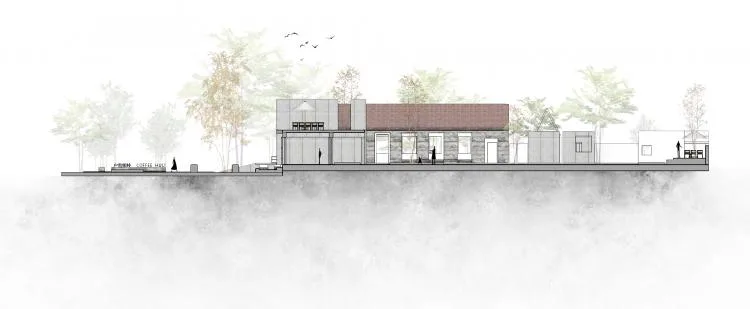
△ Elevation drawing
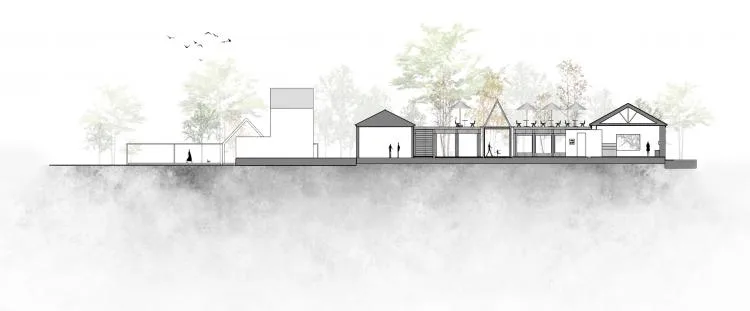
△ Section diagram
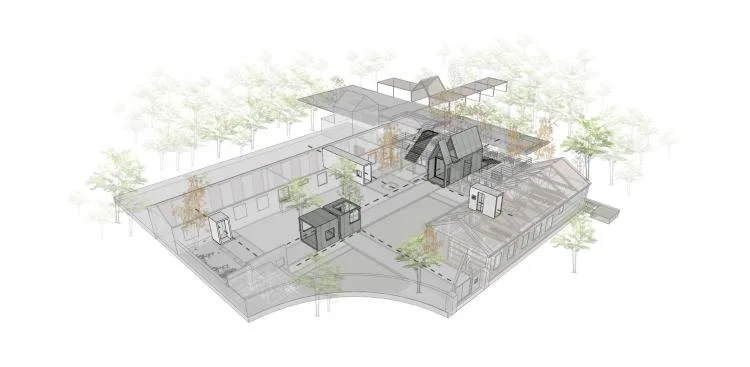
△ Axonometric diagram
△ Rendering animation
Project Information
Project Name: Yongzhi Farm & Household Grain Coffee Phase II
Location: Yaqian Village, Laishan, Yantai City
Client: Yongzhi Farm
Building Area: 300 square meters
Completion Date: July 2020
Main Materials: plain concrete, rubble, wood, metal
Architectural Design: Li Xiaosi
Design Team: Jiang Jiquan, Cao Rong, Yu Keke, Chang Xiaoying, Wang Heyu
Landscape Design: Existence of Landscape Research Laboratory
Construction Team: Regular Script Construction
Brand / Graphic Design: Nanwu Manufacturing
Space Photography: JNMU, Hu Yifei
Bird’s-eye View Illustration: Wang Luhan












Must log in before commenting!
Sign Up