
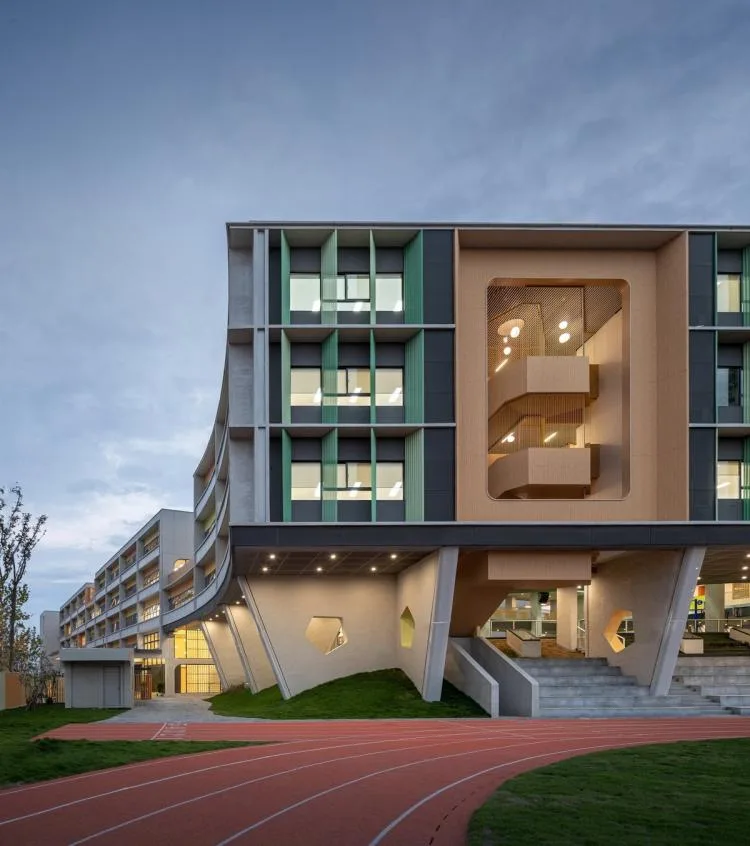
Northwest corner of the comprehensive building © Su Shengliang
Unique Layout
The Huazhan Campus of Gao’an Road No.1 Primary School is situated at the intersection of Longwu Road and Huazhan East Road in Shanghai’s Xuhui District. This newly constructed primary school accommodates 40 classes within a compact site, featuring a plot ratio of 1.4. Due to the narrow and elongated shape of the site, a 200-meter track is positioned on the west side, effectively shielding the campus from traffic noise along Longwu Road.
Considering technical requirements such as setbacks, fire protection, sunlight, and noise separation, the main teaching buildings are arranged in two rows on the east side. The comprehensive building sits between the playground and teaching area, housing multifunctional halls, covered playgrounds, sports halls, and other activity spaces.
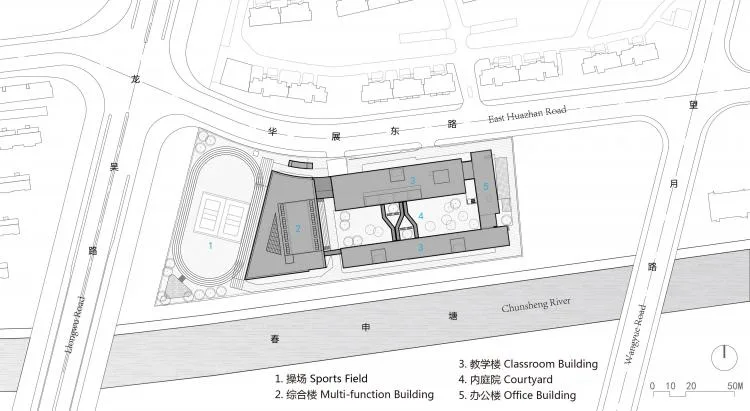
△ General layout plan
The site constraints, zoning indicators, and technical specifications define a fixed overall layout, leaving minimal room for modifications. The reduced scale of playgrounds and green areas has confined daily educational activities mainly to standard classrooms, with corridors and staircases serving mostly as single-use transit spaces. From the outset, the architects were concerned about the potential rigidity this layout might impose.
The challenge was to create a vibrant and dynamic educational environment within this almost “only solution” layout, making it the most meaningful aspect of the design.
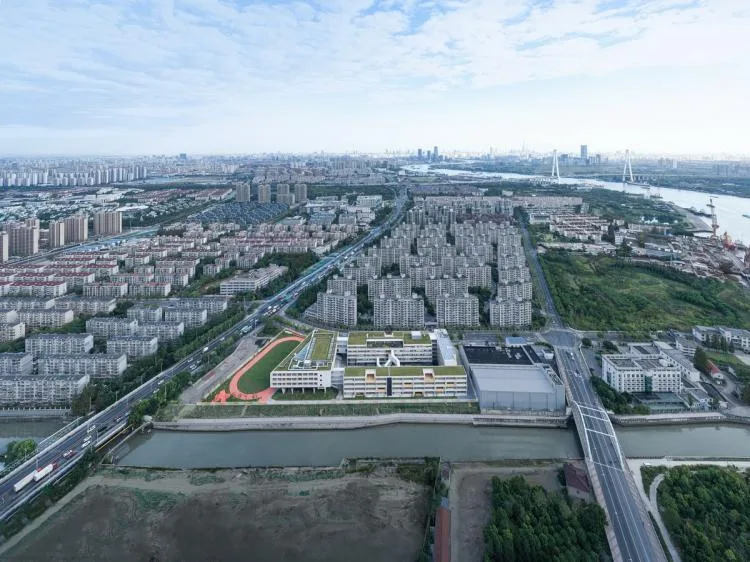
△ South side bird’s-eye view © Su Shengliang
Enclosure and Transparency
Within this compact layout, the combination of four- and five-story buildings naturally creates enclosed spaces. To improve the campus environment, local openings were introduced to enhance openness. The building is divided into four sections—southeast and northwest—with passageways and staircases connecting them. These allow students and teachers to experience views of different spaces both inside and outside the campus as they move through.
The comprehensive building acts as a separator between the playground and central courtyard. To soften its mass, the sports hall is elevated while the small theater is lowered. Sloping greenery and grandstands on all four sides face the playground, reducing the visual impact of the building through landscape design. Additionally, a covered “wind and rain” playground was created on the second floor.
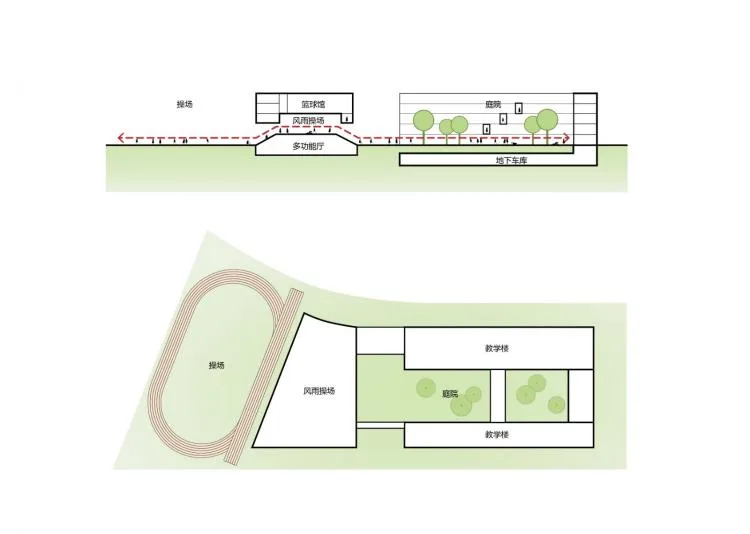
△ Design Concept
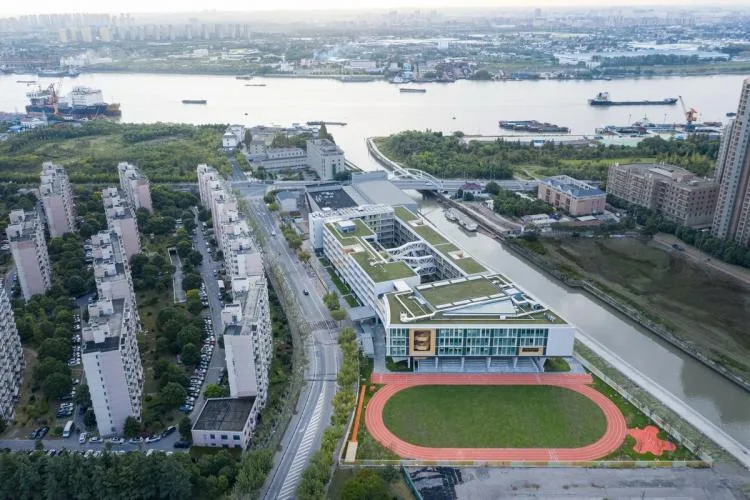
△ West side bird’s-eye view © Su Shengliang
This elevated semi-outdoor space connects vertically to the gymnasium atrium and horizontally to the playground and central courtyard. To counteract the narrow feeling of the elongated central courtyard, transparent bridges were introduced. These not only enhance north-south connectivity but also alter the courtyard’s proportions, introducing spatial layers to the forested green area.
Through these transparent design strategies, a clear hierarchy was established between the central courtyard, its surrounding spaces, and the external environment, expanding the perceived scale of the campus.
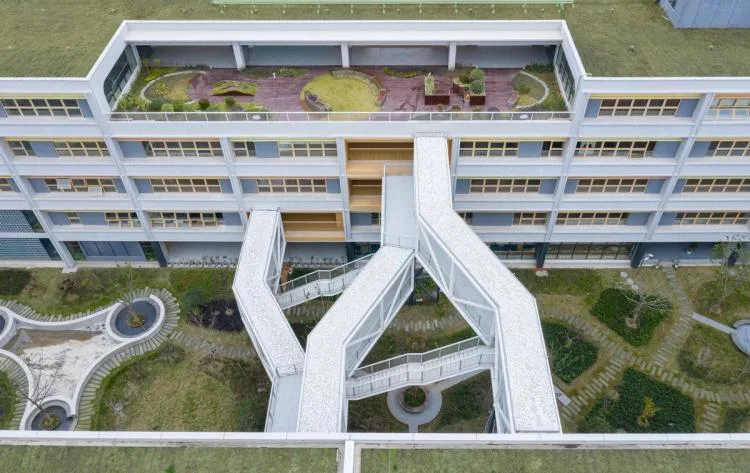
△ Courtyard and truss bridge © Su Shengliang
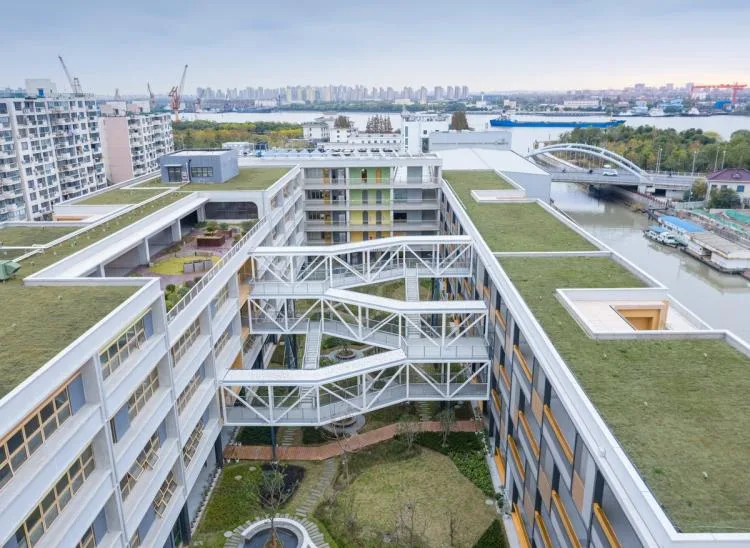
△ Courtyard and truss bridge © Su Shengliang
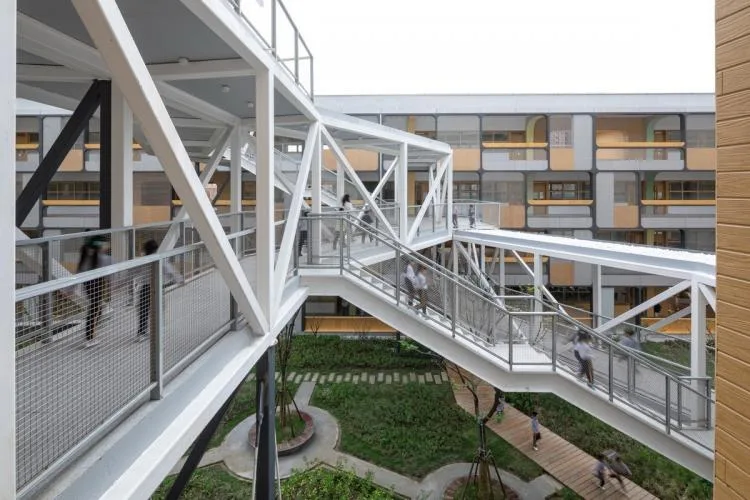
△ Truss bridge © Su Shengliang
Prefabricated Structures and Spatial Order
The sports hall and covered playground within the comprehensive building require large-span spaces. To optimize prefabrication and reduce structural height, a steel frame structure supports the main body, while steel-reinforced shear walls on the second floor provide overhead support.
The trapezoidal shear wall folds inward at the base, opening views to the playground stands and emphasizing the upper building’s suspended appearance.
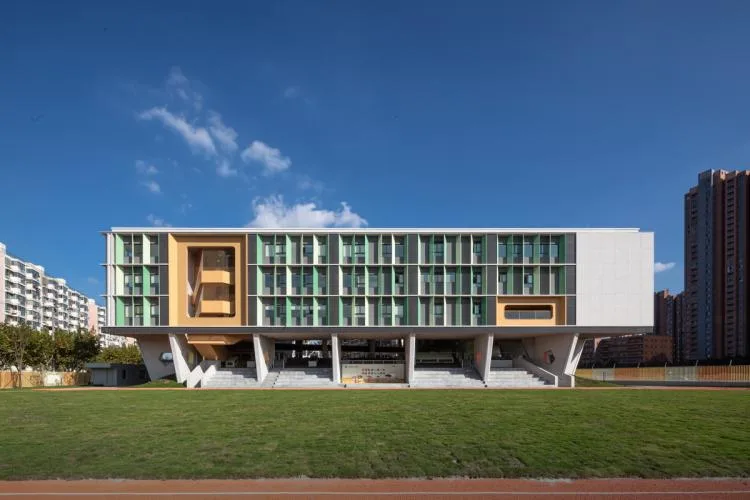
△ West facade of the comprehensive building © Su Shengliang
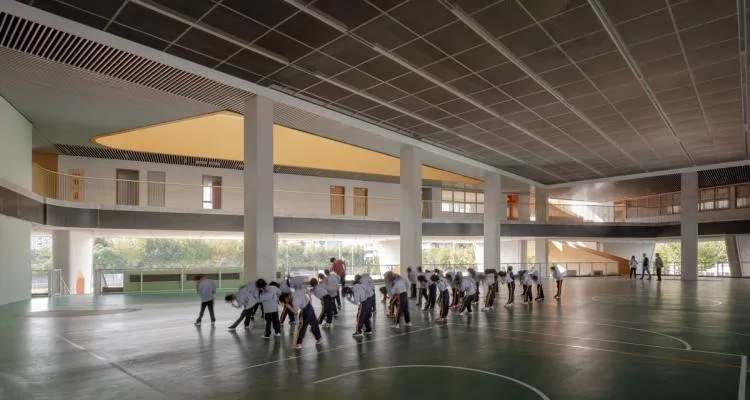
△ Covered playground © Su Shengliang
The varying apertures on the shear wall break up its monotony and create visual interest through light and sightlines.
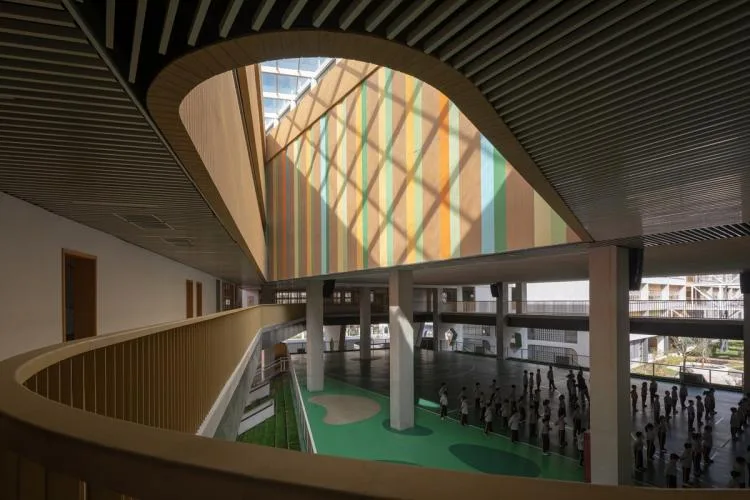
△ Comprehensive Building Courtyard © Su Shengliang
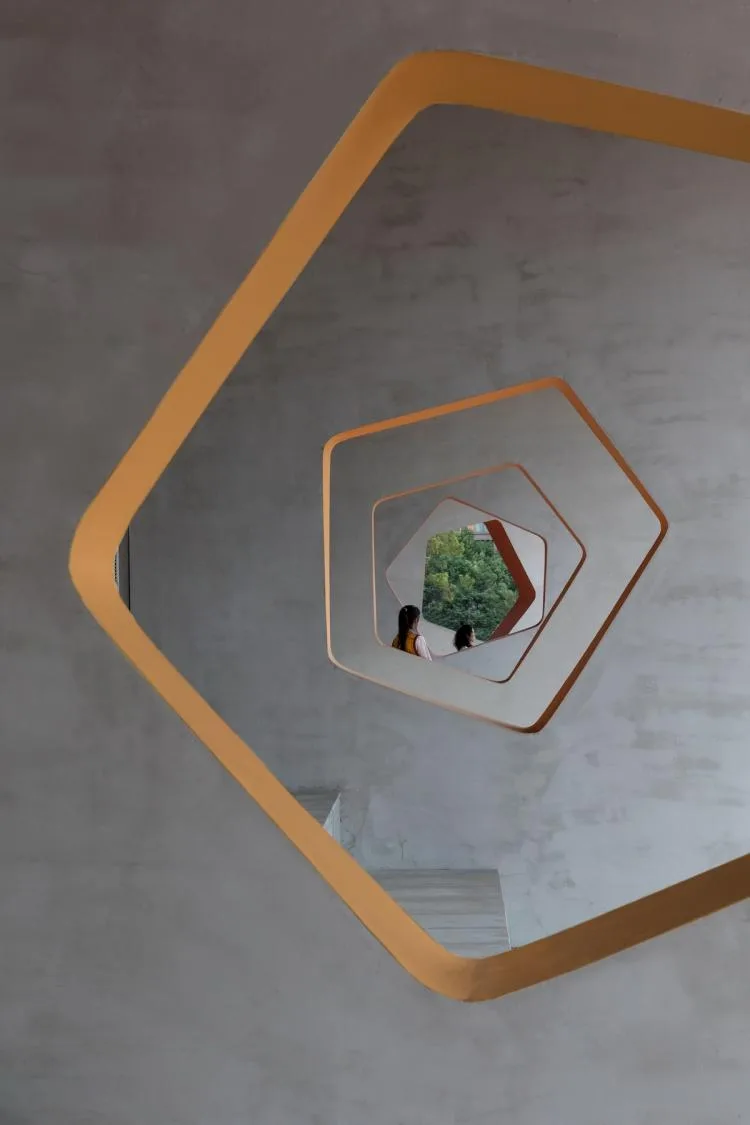
△ Shear wall openings © Su Shengliang
The first primary school on Gao’an Road is the alma mater of Yao Ming. The school places great emphasis on the indoor stadium located on the third floor. Instead of conventional truss or grid structures, slanted supports atop steel columns assist 800mm-high steel beams to span 23 meters.
The triangular spaces created by these slanted supports form semi-transparent areas for ventilation and natural lighting, giving the stadium an exposed structural skeleton that exudes architectural elegance.
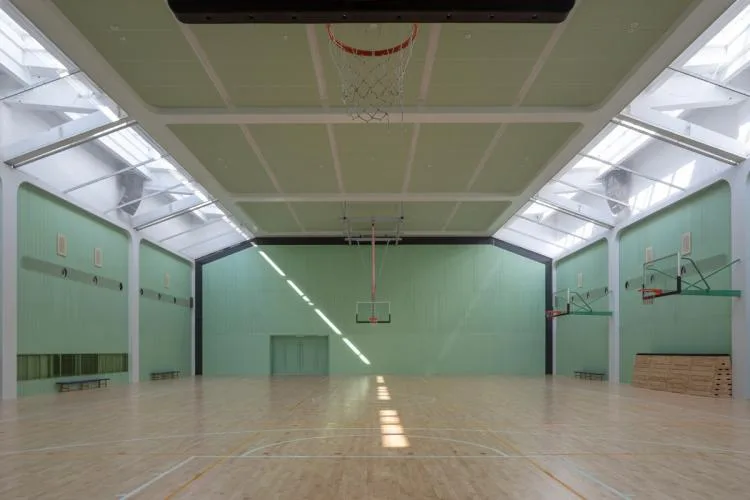
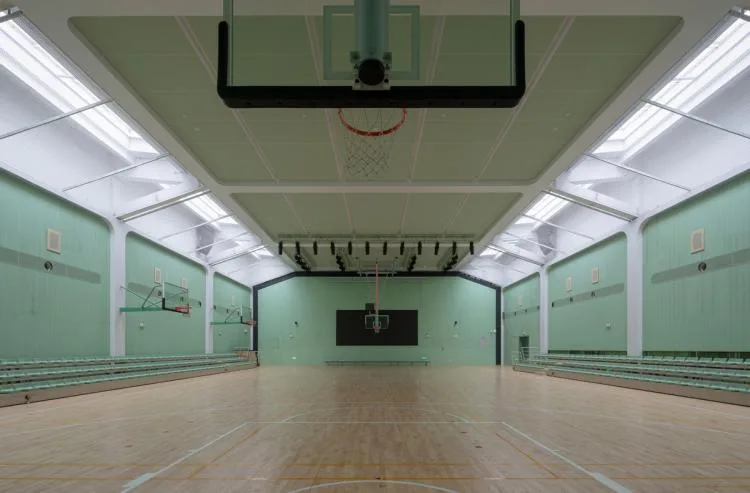
△ Sports center interior © Su Shengliang
To manage costs, the concrete frame structures of the teaching and office buildings employ a hybrid method combining prefabrication and cast-in-place construction. Compared to typical prefabricated systems, three innovative approaches were adopted.
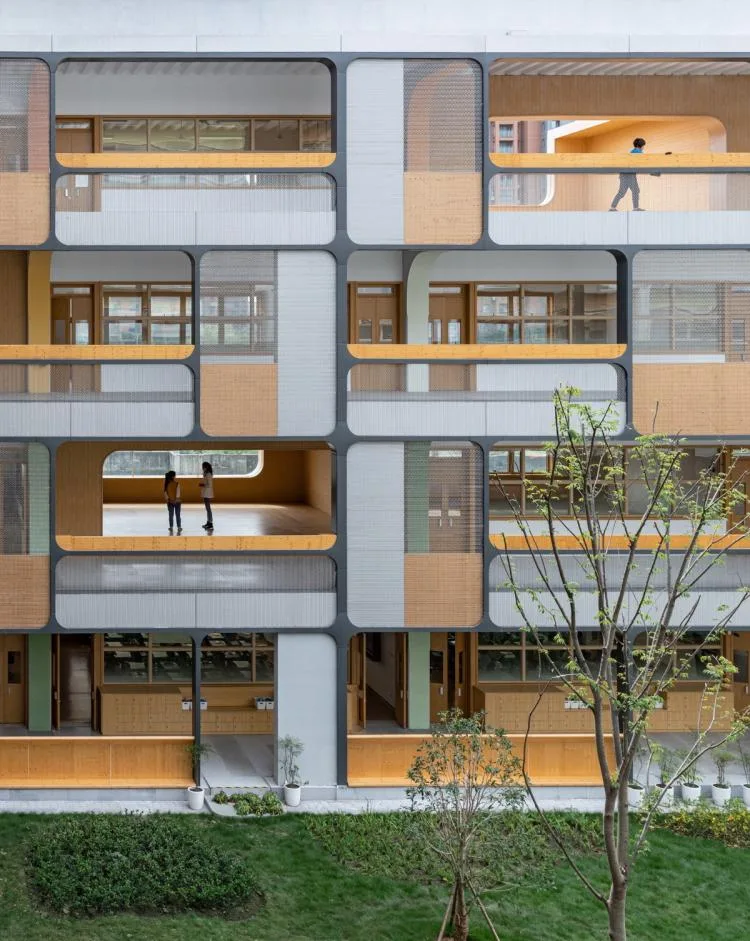
△ Facade of the teaching building’s outer corridor © Su Shengliang
First, cantilevered supports are used for the southern single-row classroom’s outer corridor, creating an unobstructed connection between the corridor and courtyard. The single-span challenge caused by this design is resolved by adding shear walls along the building’s depth.
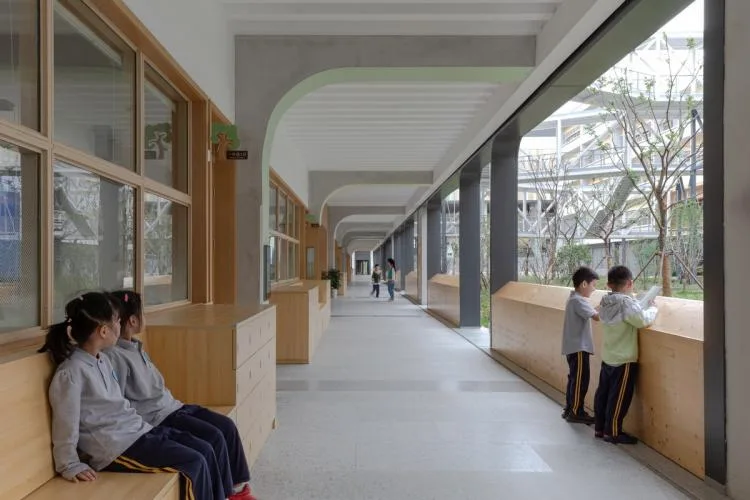
△ Teaching building external corridor © Su Shengliang
Second, prefabricated reinforced concrete trough plates eliminate secondary beams and most suspended ceilings. This allows electrical wiring and sprinkler systems to be concealed within the troughs, maximizing the net ceiling height and preserving the spatial integrity of the 7.5m by 9m classroom units.
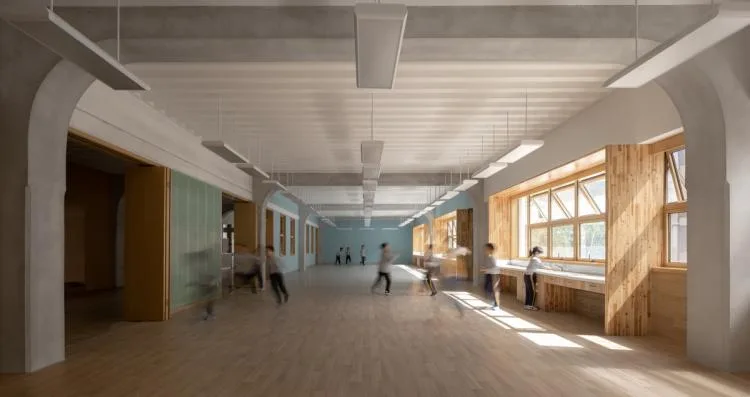
△ Future Laboratory © Su Shengliang
Third, the joints between prefabricated reinforced concrete beams and columns were enlarged in the building’s depth direction. By enhancing reinforcement and cast-in-place conditions at beam-column intersections, a semi-arched column head was introduced as a key structural element. This arch motif recurs throughout the campus—in the school gate, lobby, corridors, classrooms, small wooden house, library, and gymnasium—forming a consistent spatial theme.
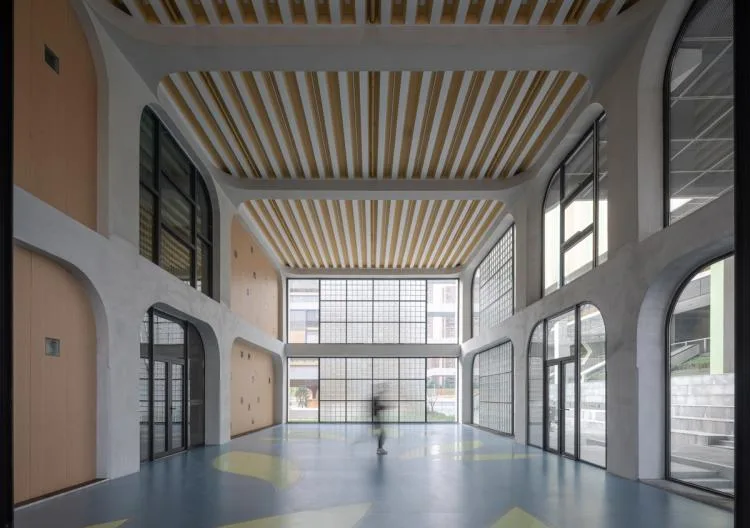
△ Lobby © Su Shengliang
Through meticulous integration of the structural system and prefabricated units, the design achieves a concise, regular, and hierarchical spatial order. This order satisfies functional norms for teaching spaces while enhancing flexibility within units, allowing the school environment to embody greater vitality and spirit.
Body, Mind, and Engagement
Engaging deeply with the school, we recognized its demand for diverse and differentiated teaching and social spaces, aligning with our vision to explore the essence of educational environments. To foster varied teaching methods and social interactions, we began with structural order and employed architectural strategies to stimulate these habits, creating new spaces that support quality education.
In the classroom units, the beam-column framework connected by semi-arched column heads emphasizes spatial orientation, framing the teacher’s area and smart blackboards, encouraging students to focus forward. The ceiling, formed by non-secondary beam grooved slabs, combined with symmetrically placed windows on north and south, and aligned doors and air conditioning units, contribute to a stable and orderly space flooded with warm, even light.
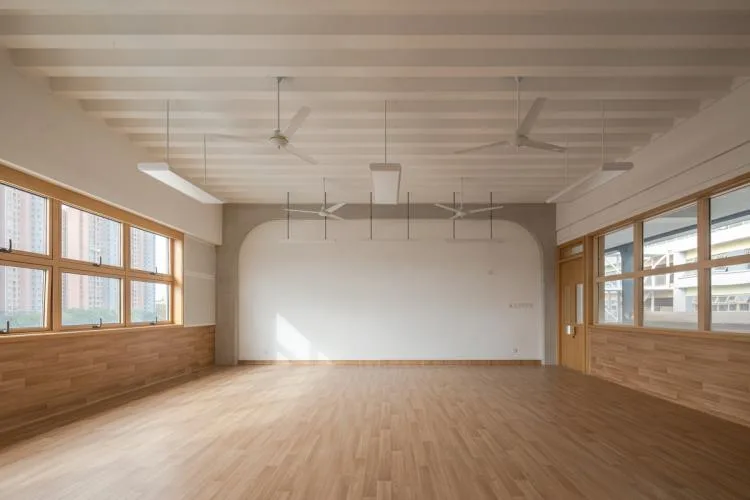
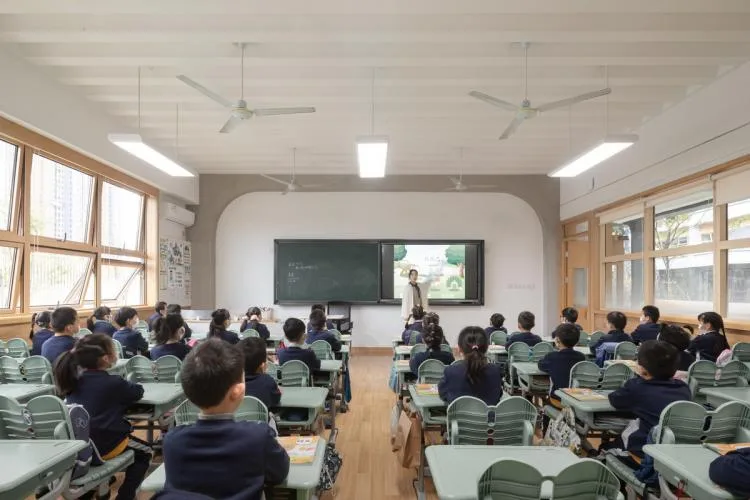
△ Standard classroom © Su Shengliang
Within the limited building footprint, the unique character and multifunctionality of circulation spaces help activate the otherwise rigid spatial order. The color-coded spiral staircase and deformation joint staircase in the integrated building, along with the three-dimensional courtyard formed by winding corridors between north and south buildings, exemplify this approach.
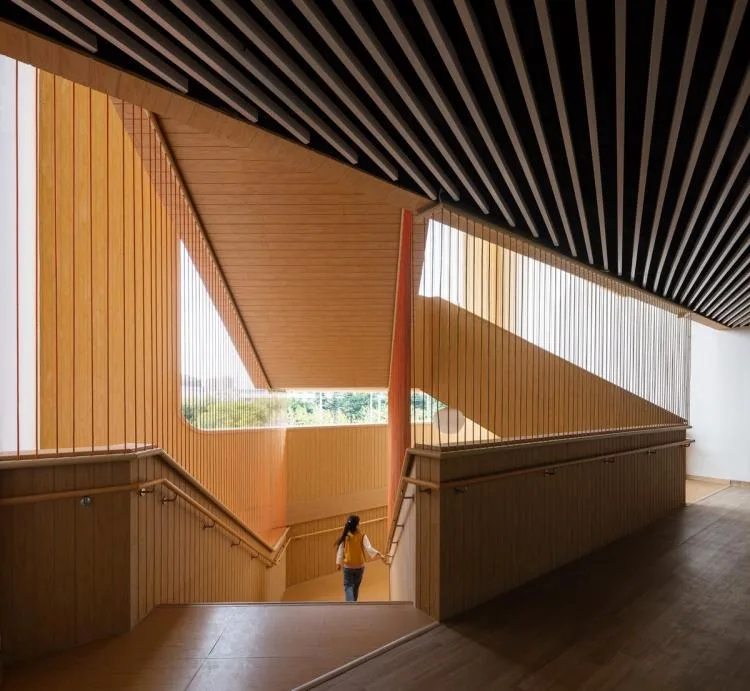
△ Comprehensive building staircase © Su Shengliang
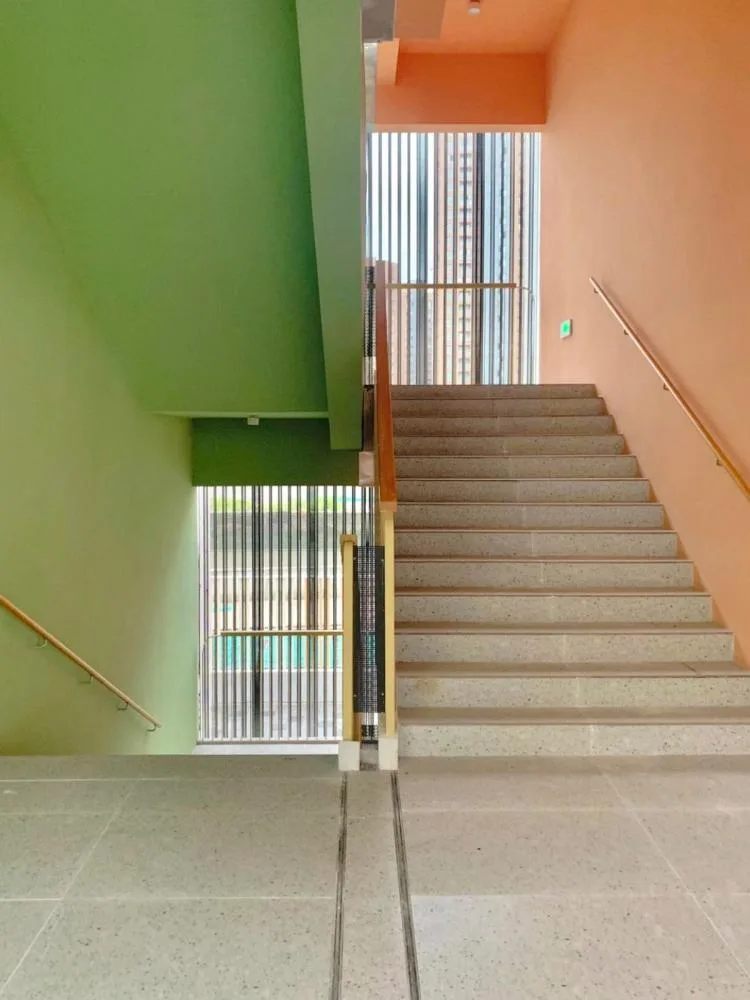
△ Deformation joint staircase © distribution
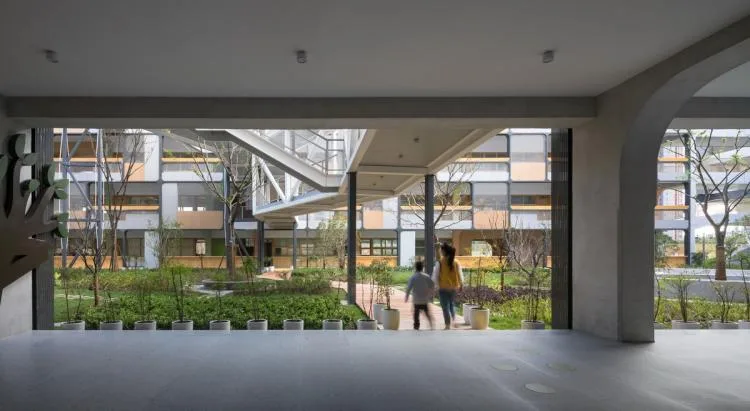
△ Grey space in the north building of the teaching building © Su Shengliang
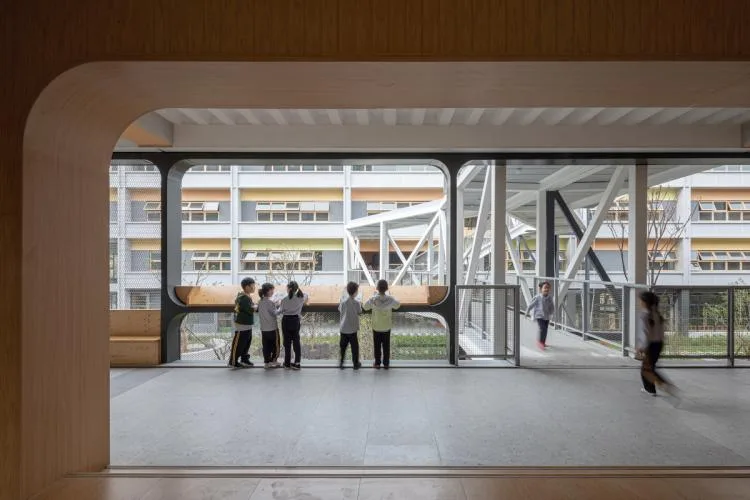
△ Corridor and truss bridge © Su Shengliang
In the corridors, the semi-arched cantilever structure creates a free zone along the exterior facade. A semi-transparent wall constructed from steel framing, metal mesh, and laminated wood encloses the corridor’s outer side, accommodating protective nets and fire hydrants while integrating benches and reading partitions.
Together with backpack lockers and benches on the corridor’s interior, these built-in furnishings encourage interaction with nature in the courtyard. They provide spaces for leisure, reading, conversations, and play, enriching the corridor’s spatial quality.
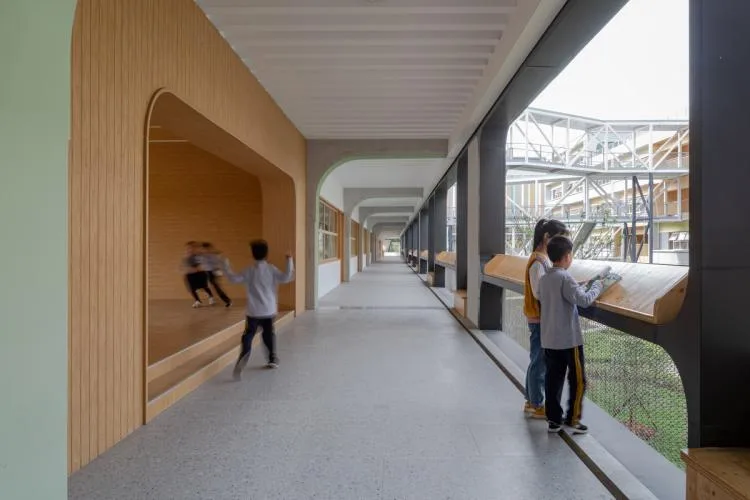
△ Teaching building external corridor © Su Shengliang
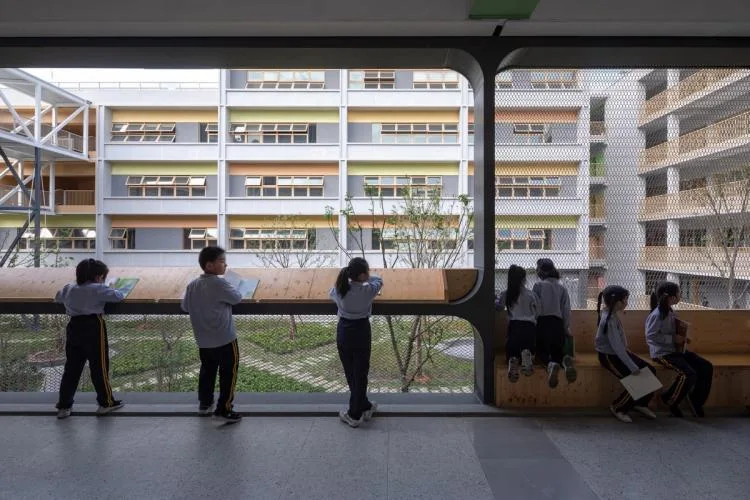
△ Teaching building external corridor © Su Shengliang
Multi-functional semi-outdoor “cabins” are installed on every teaching floor, equipped with amenities like water dispensers, work desks, and smart bookshelves. These cabins serve as nearby playgrounds during breaks and double as semi-outdoor elective classrooms and gathering spaces.
Neither fixed classrooms nor mere transit corridors, these semi-outdoor courtyards embedded within the building add diverse educational and social opportunities to the campus, awaiting further planning and decoration by the school.
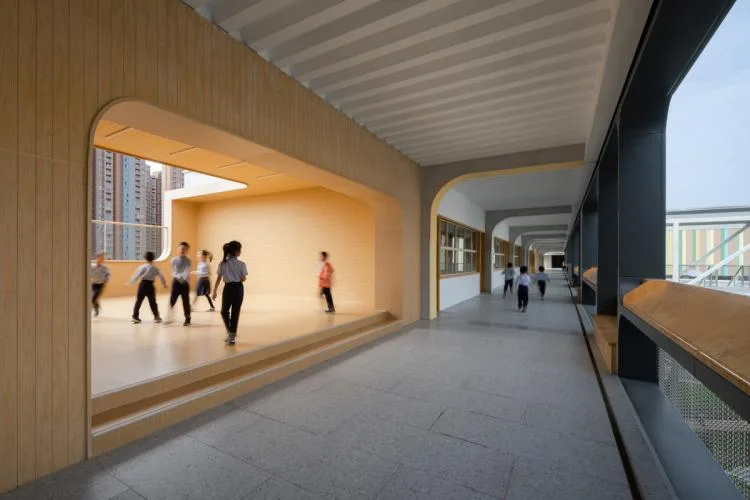
△ Teaching building external corridor © Su Shengliang
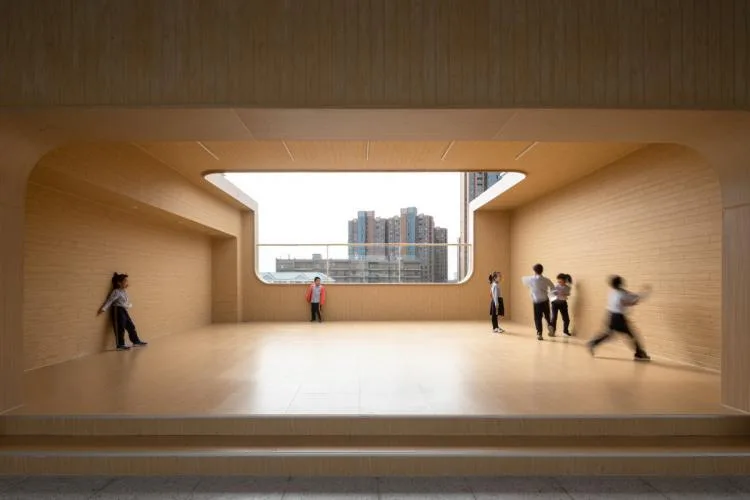
Top floor cabin space © Su Shengliang
Enlightenment of Order
The education system, site planning, and technical regulations together create the social order embodied in school buildings. By deeply interpreting these constraints, we aimed to transform them into the building’s intrinsic strengths—infusing the campus with care for body and mind, focused spirit, and lively communication.
Our hope is that the campus remembered by students will be more than just focused classrooms and orderly lines on the playground. It will also include the shifting sunlight in the gym, free discussions in the small wooden house, and moments of quiet reflection when picking up a book in the hallway facing the forest.
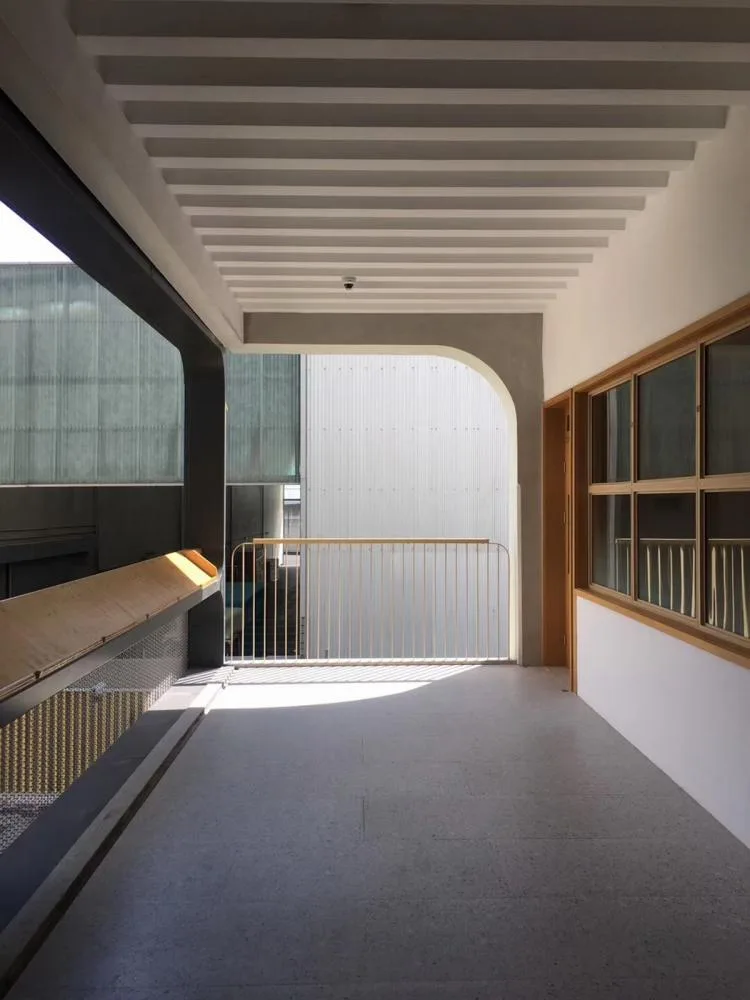
△ Teaching building external corridor © Zhu Xiaofeng
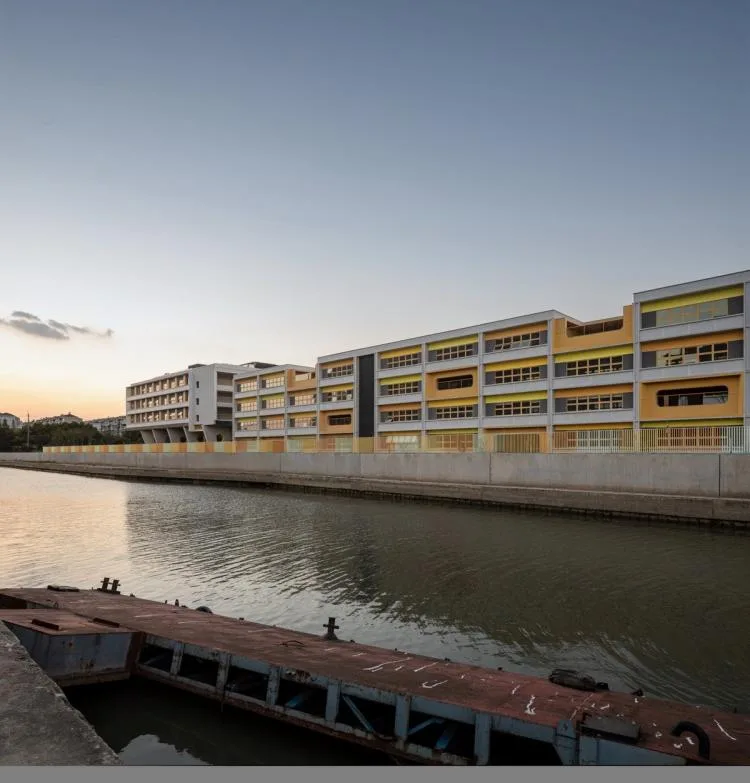
△ North side facade along the river © Su Shengliang
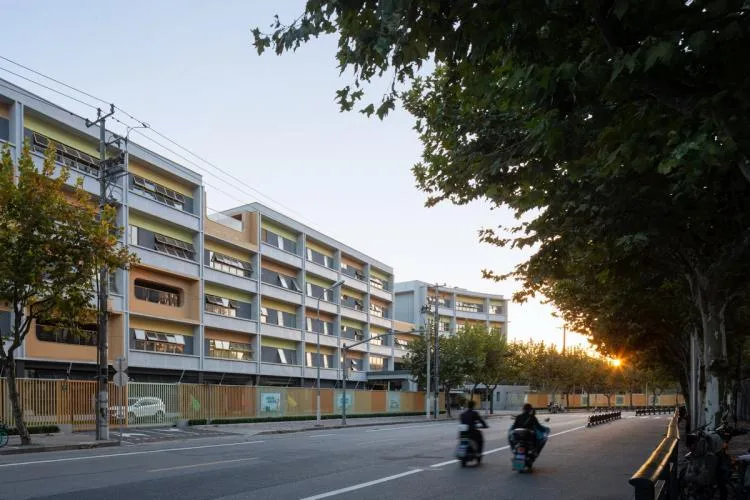
△ Facade along the north side of the road © Su Shengliang
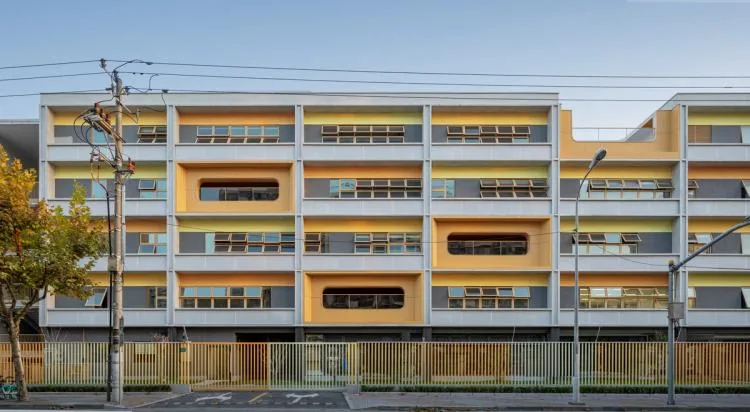
△ North side facade © Su Shengliang
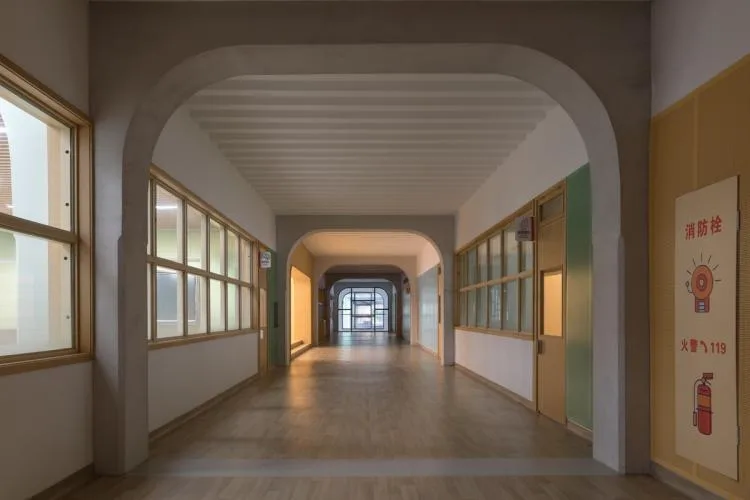
△ Middle corridor in the north teaching building © Su Shengliang
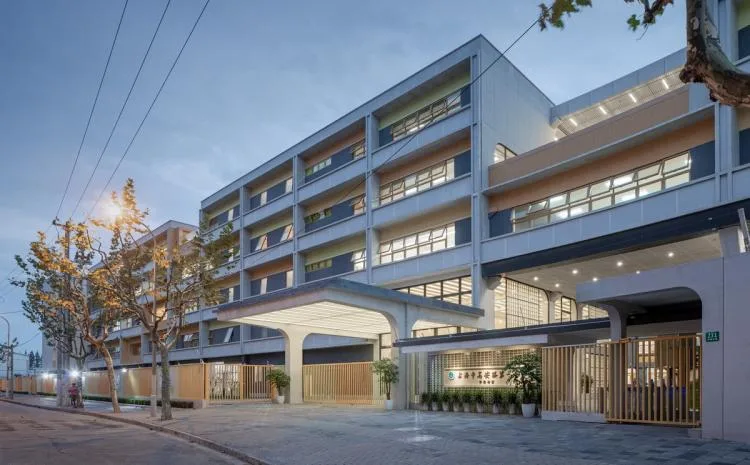
△ Main entrance of the campus © Su Shengliang
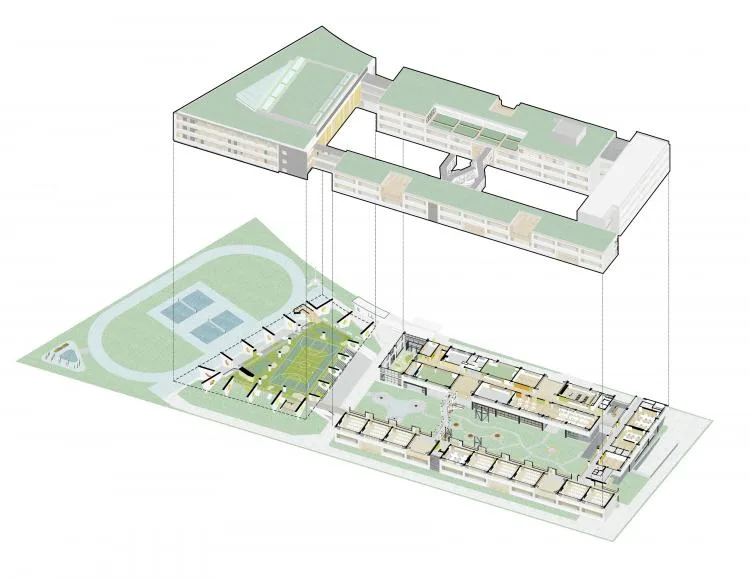
△ Axonometric diagram
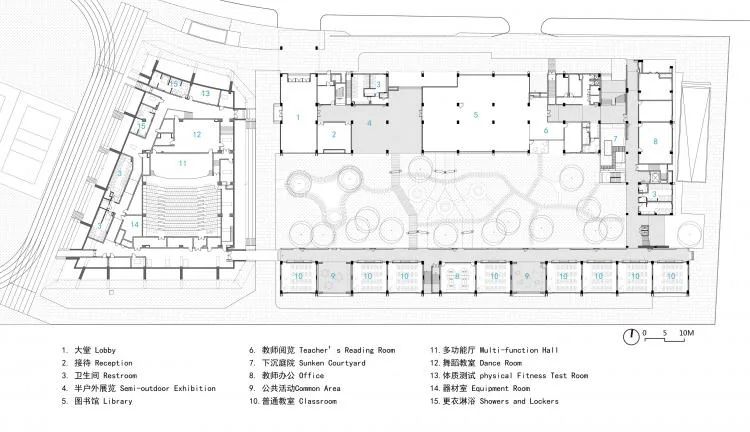
△ First floor plan
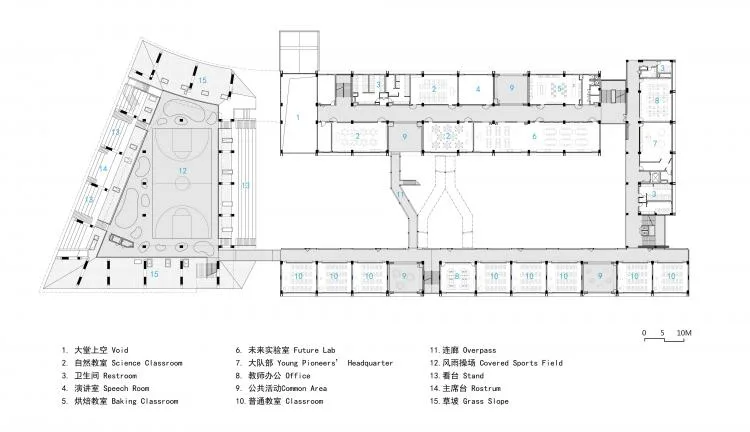
△ Second floor plan
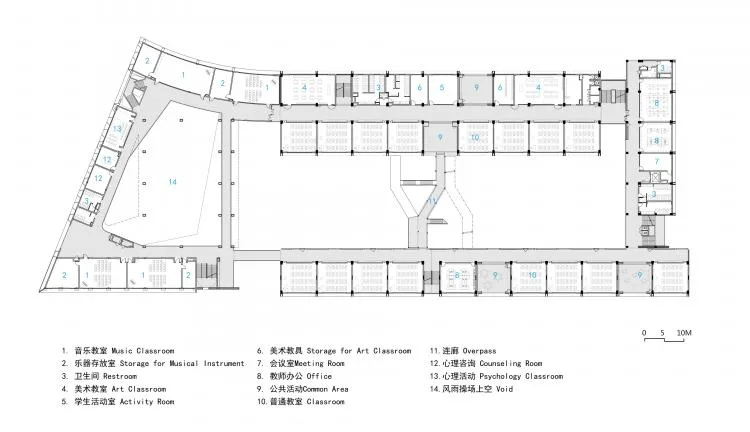
△ Third floor plan
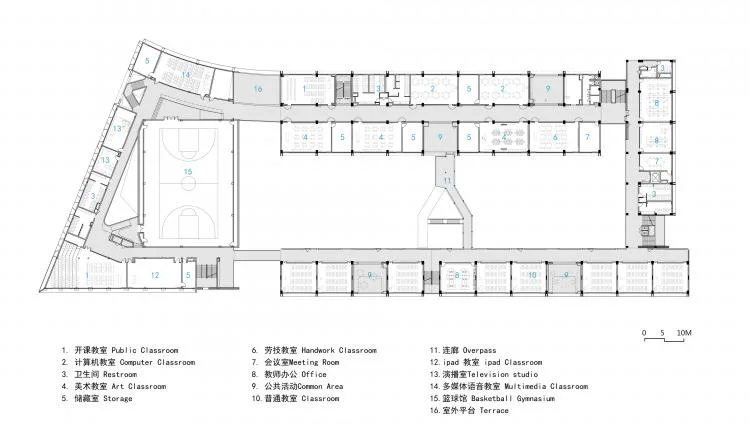
△ Fourth floor plan
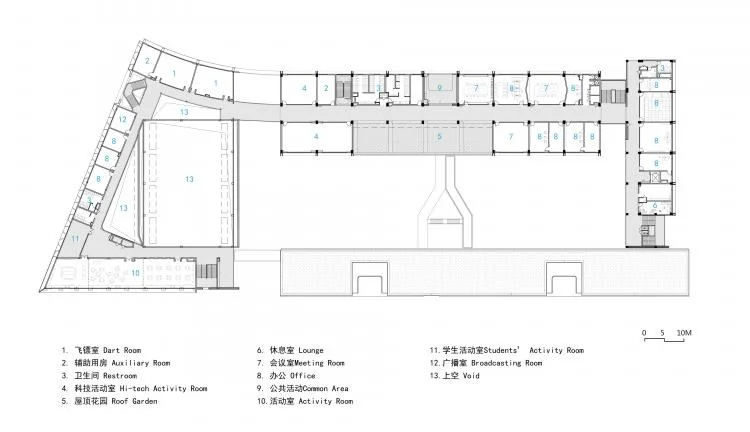
△ Fifth floor plan
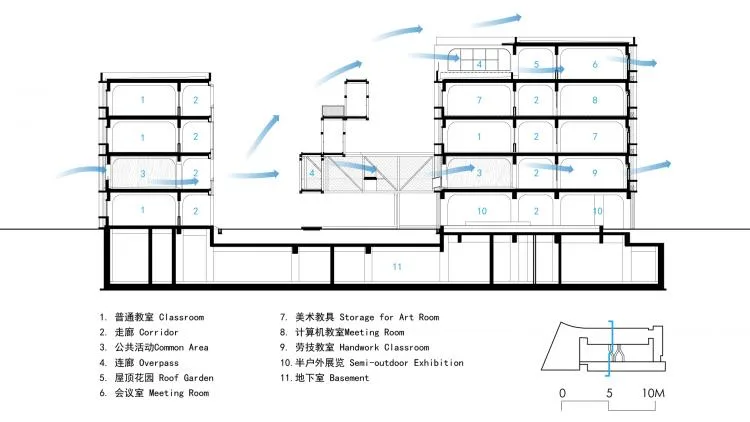
△ Section 1
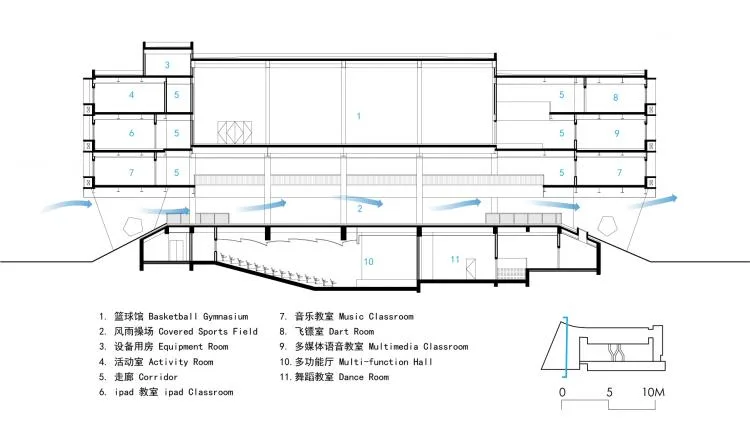
△ Section 2
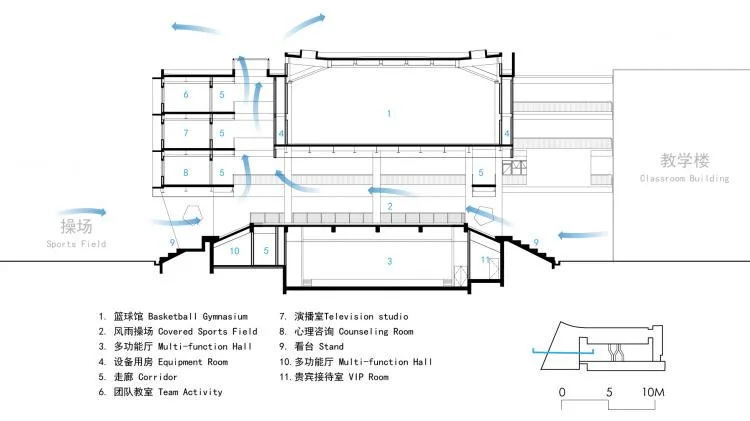
△ Section 3
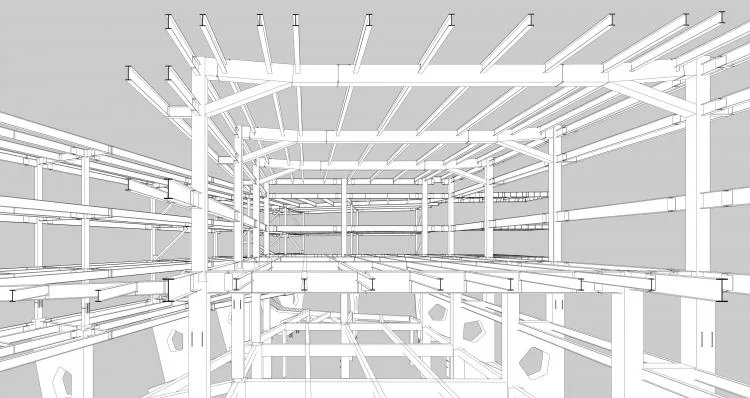
△ Comprehensive building structure
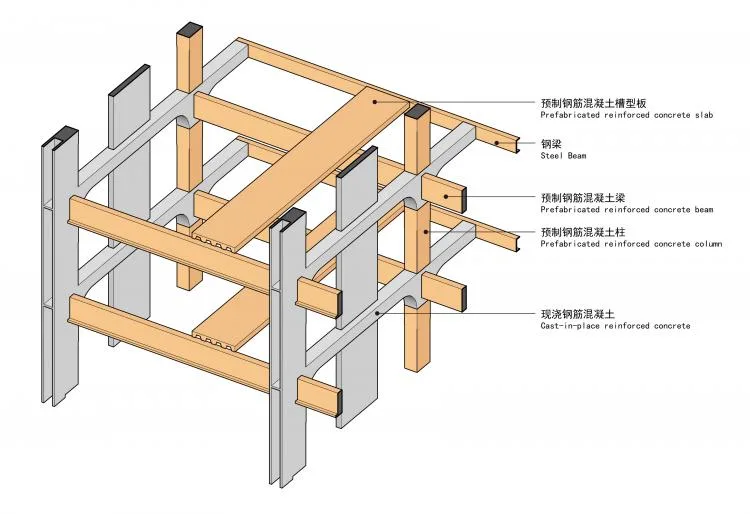
△ Teaching building structure
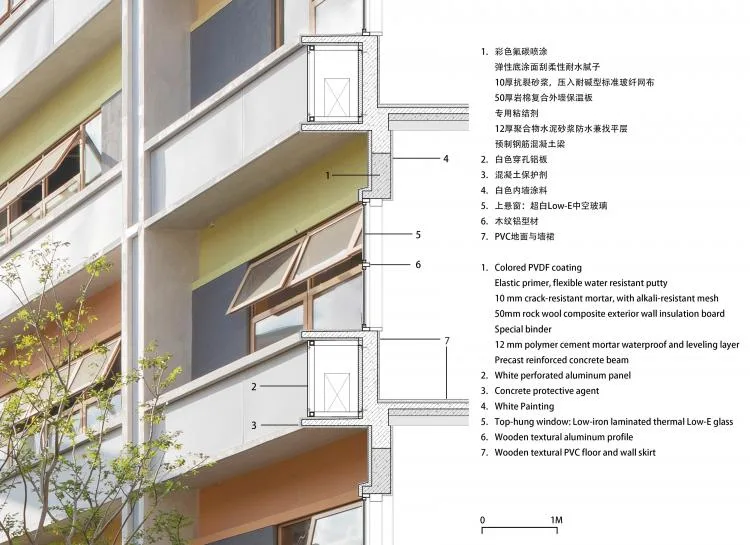
△ Classroom exterior wall details
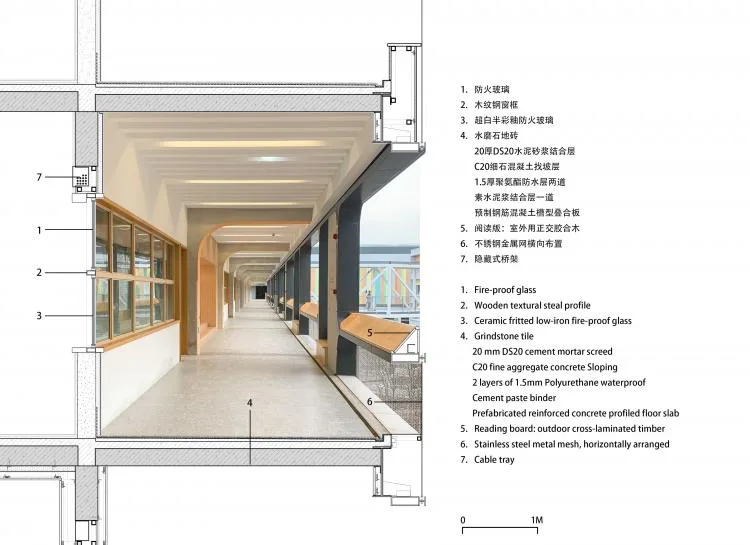
△ Detailed drawing of external corridor nodes
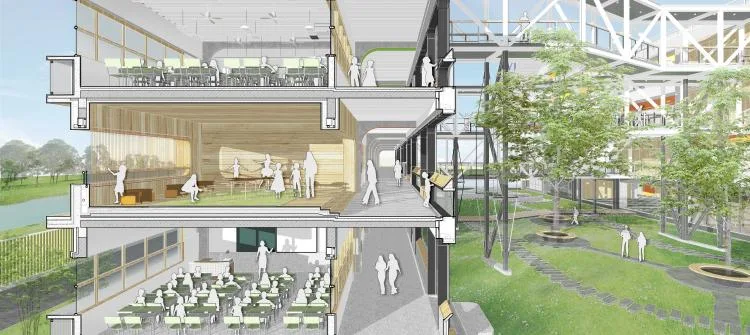
△ Sectional perspective
Project Information
Design Firm: Shanshui Xiu Architectural Firm
Design Team: Zhu Xiaofeng, Li Qitong, Zhou Yan, Zhang Xuan, Zhang Guohao, Hu Xianmei, Xu Linfeng; Interns: Heran, Huang Chunling
Location: Xuhui District, Shanghai
Function: Primary School
Design/Construction Period: 2017–2020
Site Area: 17,645 m²
Building Area: 30,406 m² (24,392 m² above ground, 6,014 m² underground)
Collaborators: Tongji University Architectural Design and Research Institute Group Co., Ltd
General Contractor: Shanghai Xufang Construction Industry Co., Ltd
Supervision: Shanghai Shangzi Construction Engineering Consulting Co., Ltd
Owner: Education Bureau of Xuhui District, Shanghai / Shanghai Xuhui Urban Renewal Engineering Consulting Co., Ltd
Structural System: Teaching and office buildings utilize prefabricated concrete frame structures; comprehensive building features concrete shear walls supported by a steel frame.
Materials: Plain concrete protective agent, textured coatings, wood finishes, colored and gray aluminum panels, perforated aluminum plates in white, dark gray, and colored variants, wood grain cement fiberboards, ultra-white hollow LOW-E glass, semi-transparent and colored glass bricks, wooden and dark gray aluminum window frames, aluminum square ceilings, white expanded aluminum ceiling panels, light gray terrazzo floor tiles, wood grain floor tiles, wood-colored flat steel railings, solid wood and wood-colored aluminum alloy handrails, sesame gray granite slabs, stainless steel mesh curtains, glued solid wood seating and reading racks.
Photography by Su Shengliang













Must log in before commenting!
Sign Up