
Understanding a greenhouse as a controlled environment where light, temperature, humidity, and wind are carefully regulated, it provides an ideal space for the growth of flowers and plants.
In this context, a garden center that depends on greenhouses for its sales can be seen as a place that captures natural light and order.
Garden Center
As a garden center with a strong sense of individual professionalism, the greenhouse often takes center stage, with flowers and plants as the true owners of the space. Unlike typical shopping malls, greenhouses focus on creating the optimal growth environment for plants, almost like a protective shelter.
The garden center is typically divided into three main areas based on plant cultivation needs: the shopping experience zone, the plant zone, and the material area. As a retail space, it values customer participation and hands-on experience. Balancing the coexistence of people and plants and harmonizing the connection between buildings and greenhouses is a critical design challenge. This approach transforms the space into a themed public venue for sales, leisure, and interactive experiences.
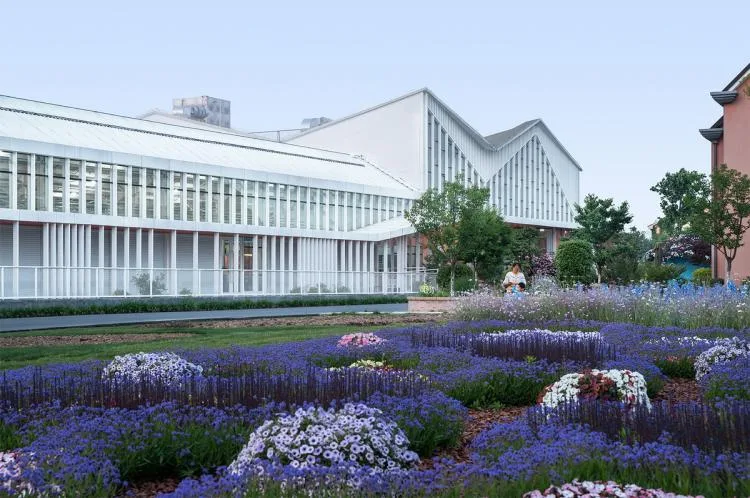
Greenhouse²
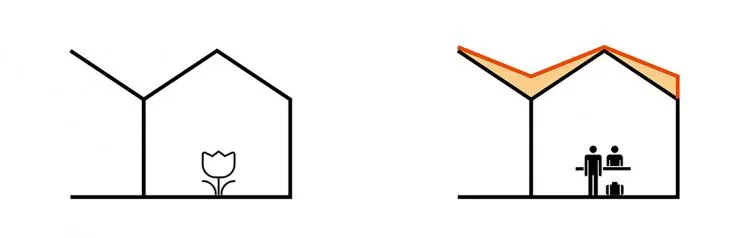
Different functions within a similar order
Starting with the greenhouse itself: its continuous roof truss and standardized height define its characteristic form. The need for light and air by plants restricts the materials used on the greenhouse facade. As a glass structure dedicated to cultivation, a greenhouse’s spatial form is difficult to alter or reorganize. It can be viewed as a developed area that regulates nature—controlling sunlight, wind, temperature, and humidity—to enable optimal plant growth.
Stacking greenhouses introduces a new dynamic. Unlike checkout areas in supermarkets or department stores, the transaction zone in a garden center also serves as a space for customers to relax and engage. As the closest commercial space to the greenhouse, it acts as a gateway for plants and a hub for human interaction and experience. By drawing parallels between gardening and everyday life, the cashier area naturally organizes the building’s structure, facade, and spatial experience, creating a warm, natural atmosphere for visitors.
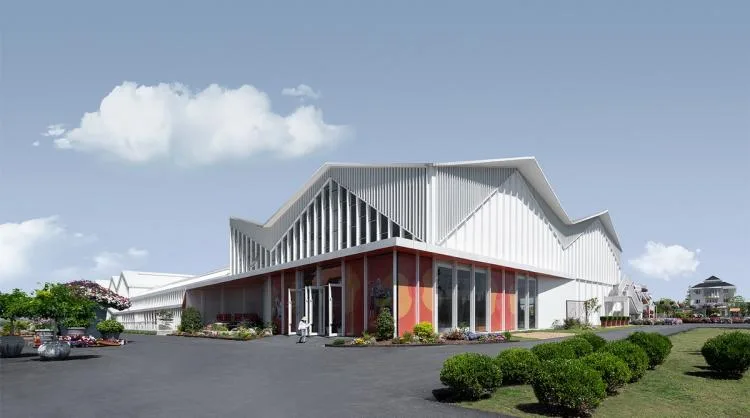
The layering and interplay of these two elements create an entirely new architectural order, advancing the structural arrangement of greenhouses. The combination of cast-in-place concrete with organic forms results in a space that promotes growth. The building’s overall rhythm aligns seamlessly with the layout of its functional zones.
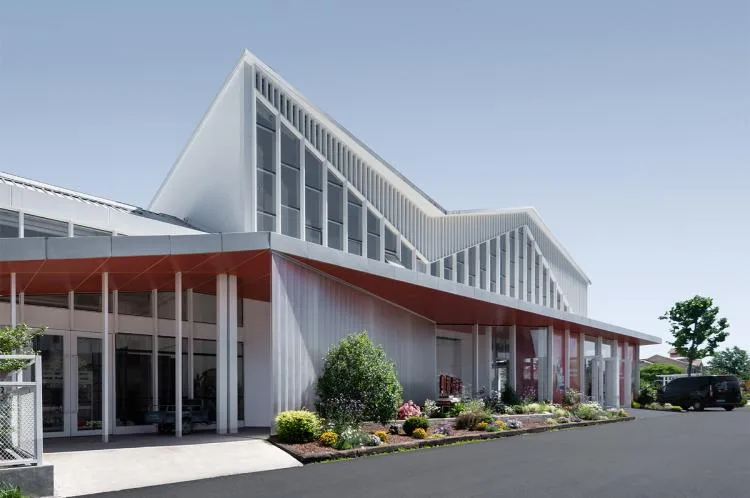
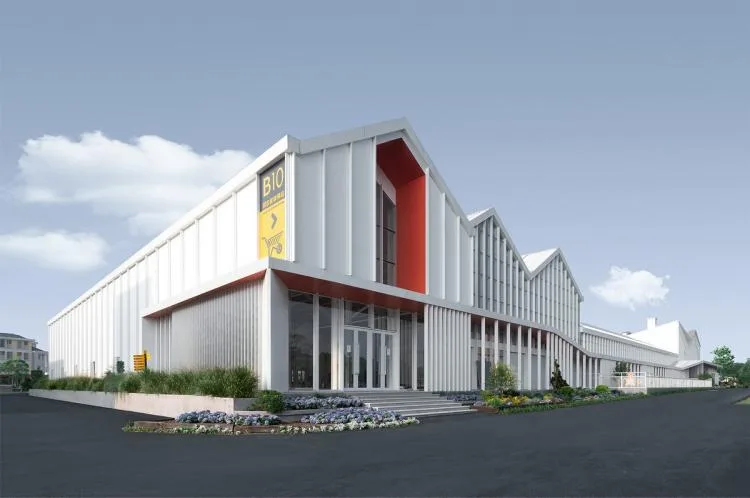
The Natural Order
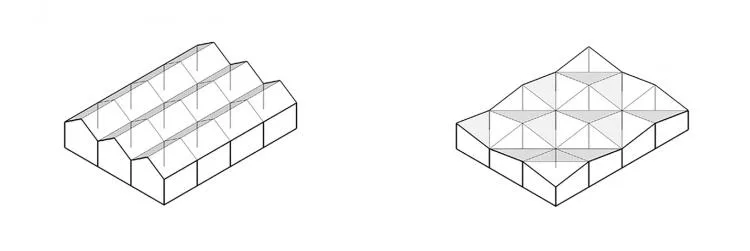
Order of △ Structure
The designer aims to establish a cast-in-place concrete framework that mirrors the double-slope roof of the greenhouse. Much like a greenhouse shelters plants from wind and rain, the canopy’s shading effect supports the natural order and enhances the spatial atmosphere. A tree-shaped concrete structure was chosen as the modular unit, organizing continuous elements resembling tree trunks and branches. The twisting, interwoven forms create undulations across the roof, evoking the sensation of strolling through a forest—admiring flowers and shopping—while fostering a free and relaxed spatial experience.
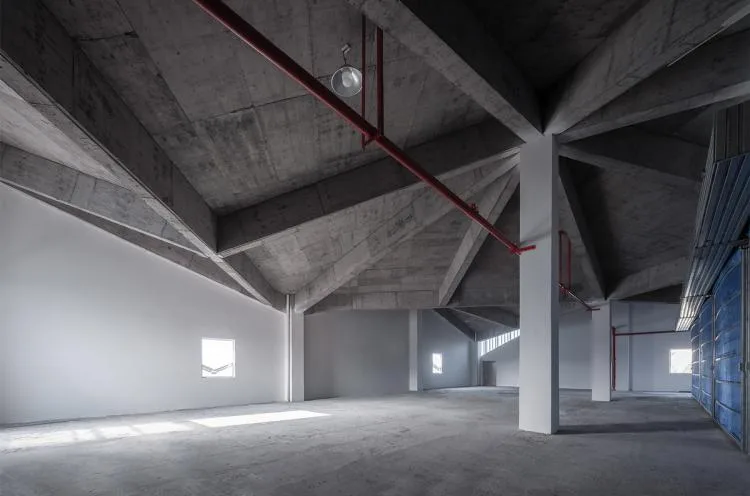
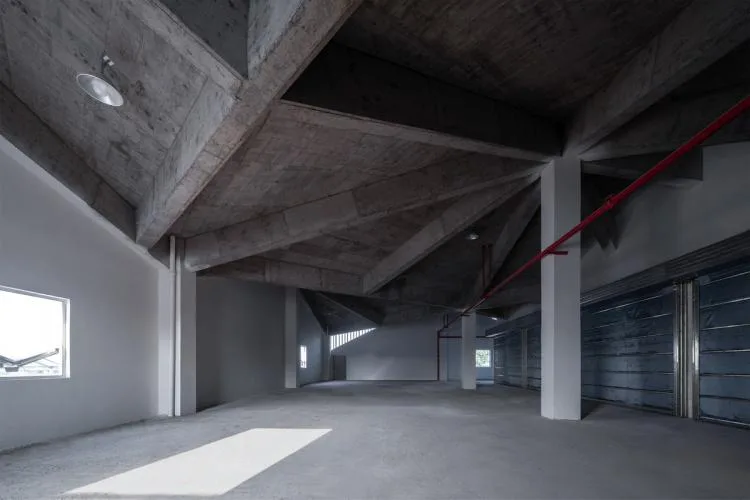
△ Crown Structure
The tree-structure unit features four sloping roofs. When these units are staggered and joined, they form a continuous folded roof. The intersection points create three different elevations, resembling an abstract tree crown. This design gradually descends from the center of the main building toward the edges, establishing a natural, orderly drainage system.
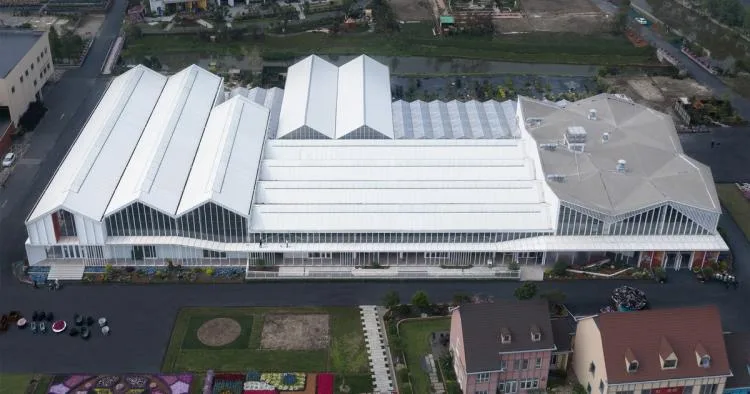
△ Aerial View of the Roof
The Rhythm of Light and Shadow
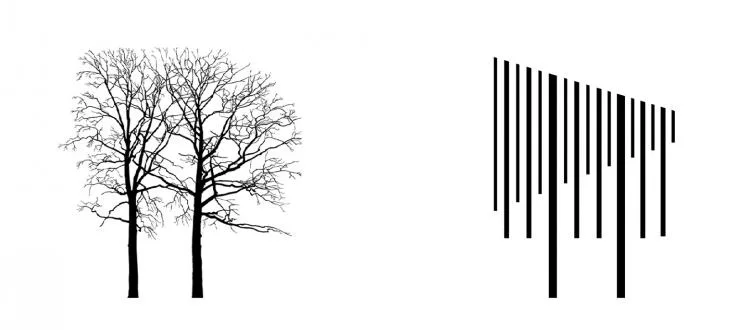
The Rhythmic Density of Tree Shadows
The facade’s design draws inspiration from tree elements, creating a natural, seemingly random pattern. The grid system protects plants from direct sunlight while evoking the imagery of tree crowns and shade. From trunk to crown, the filtering of light and shadow transitions from sparse to dense, mimicking the dappled sunlight through swaying branches.
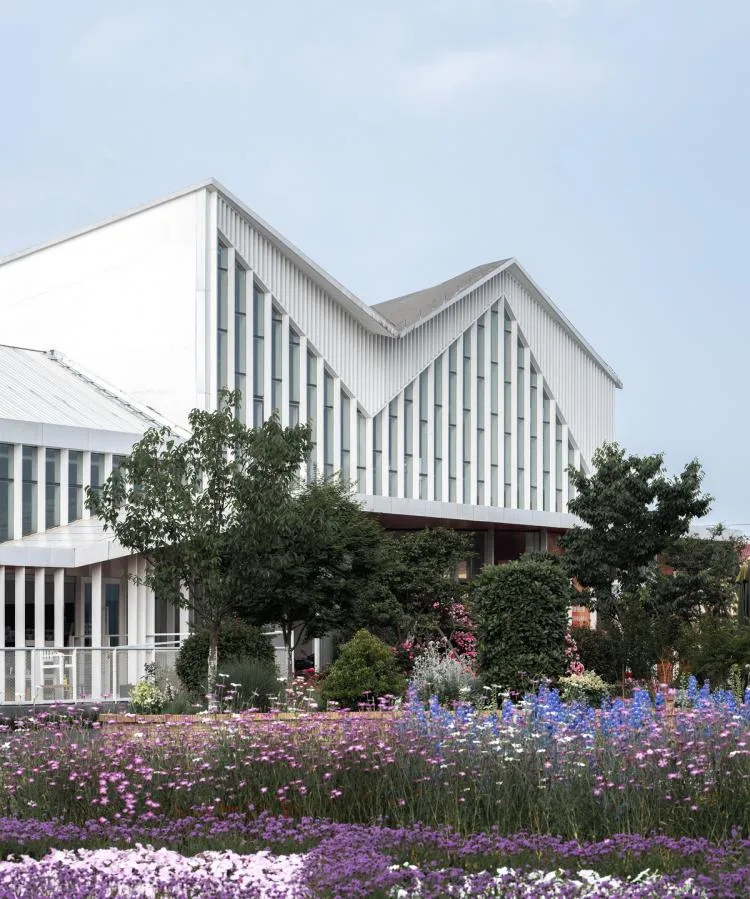
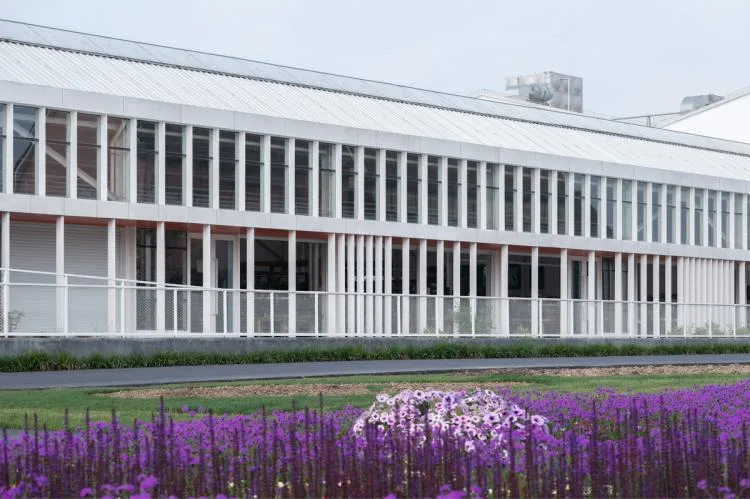
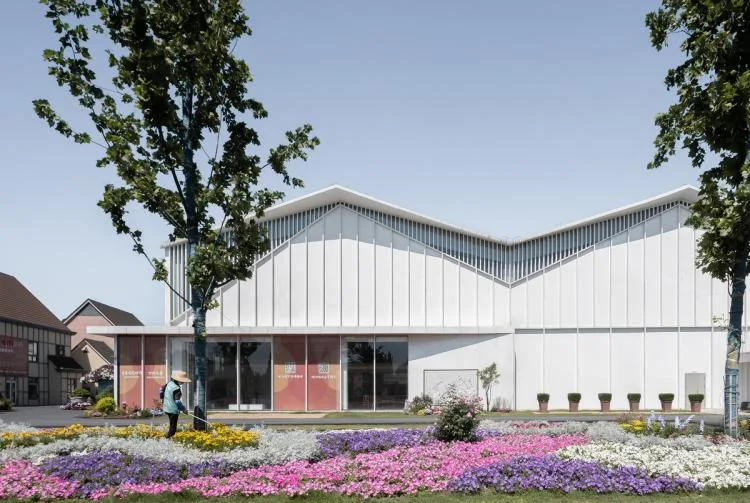
Relationship Between Facade and Natural Abstraction
The facade’s grille is organized into three modular layers from bottom to top. The lowest layer features the widest grille paired with a glass curtain wall, maximizing the integration of outdoor scenery and sunlight within the shopper’s view. The middle grille narrows, creating a more regular and structured facade. The topmost grille is the thinnest and densest, echoing the folded roof’s intricate twists and turns. It forms a continuous pictogram reminiscent of tree shade, filtering direct sunlight to the greatest extent.
This three-tiered modulation not only crafts a captivating play of light and shadow on the facade but also evokes in visitors the feeling of walking through dense forest light and shade.
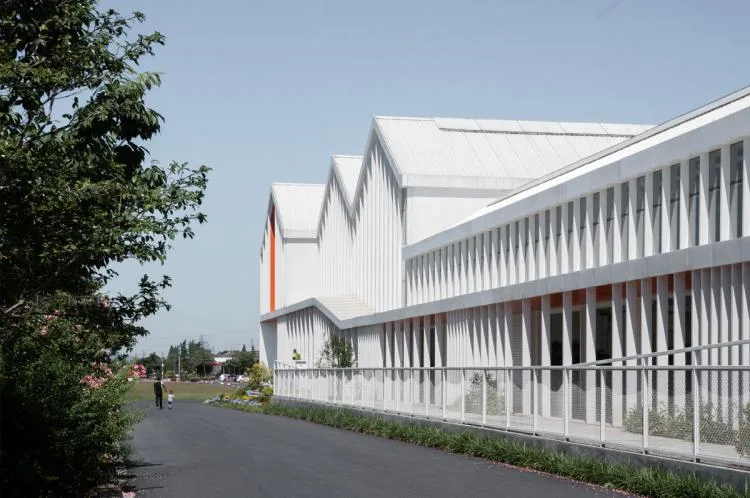
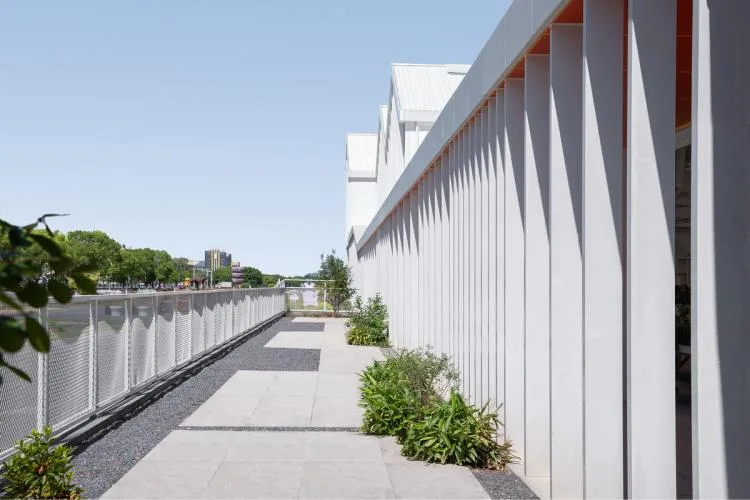
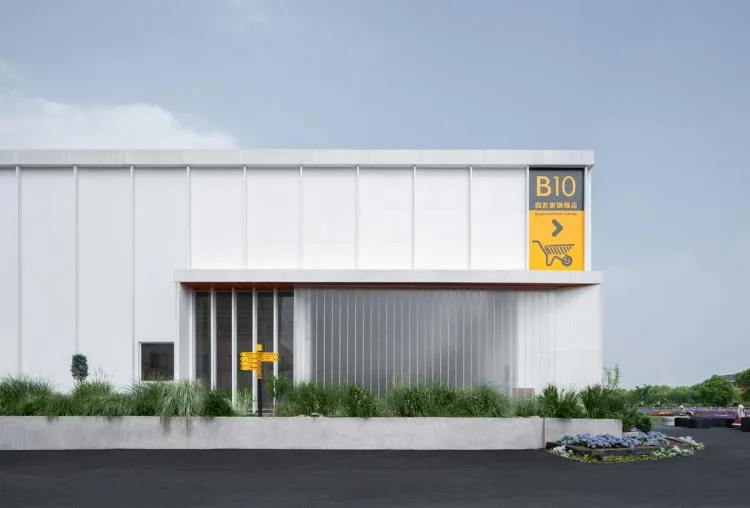
Serving as a flagship store, the Garden Center functions not only as a greenhouse retail outlet but also as the main exhibition hall for the annual World Garden Congress. It has evolved into a garden center that seamlessly integrates sales, exhibitions, and interactive experiences.
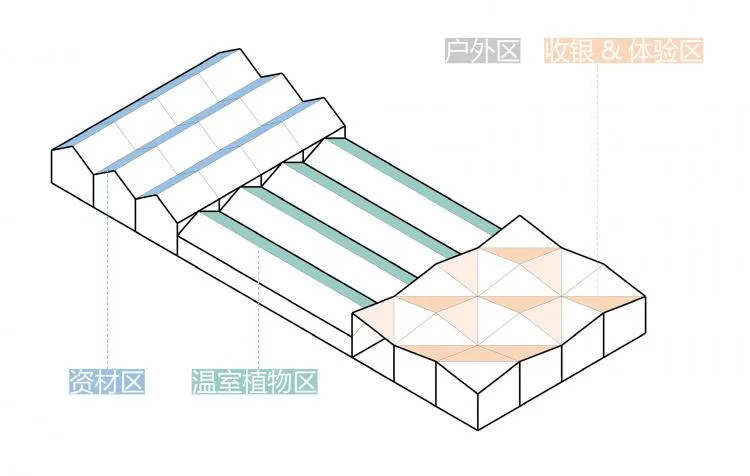
Functional Layout of the Garden Center
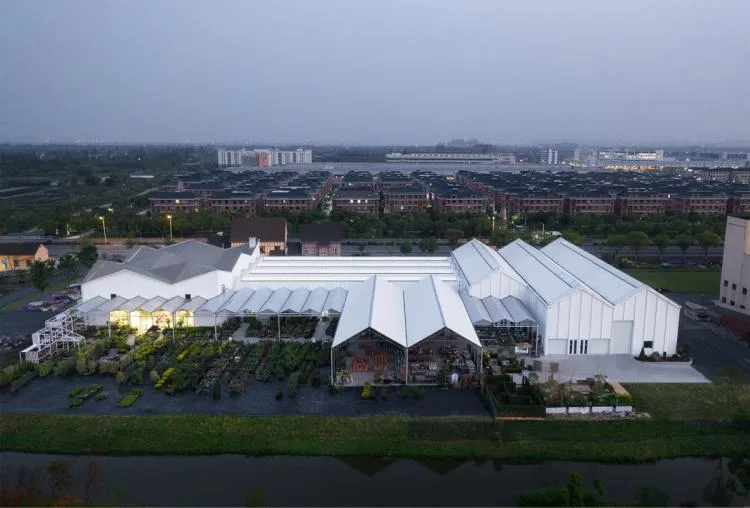
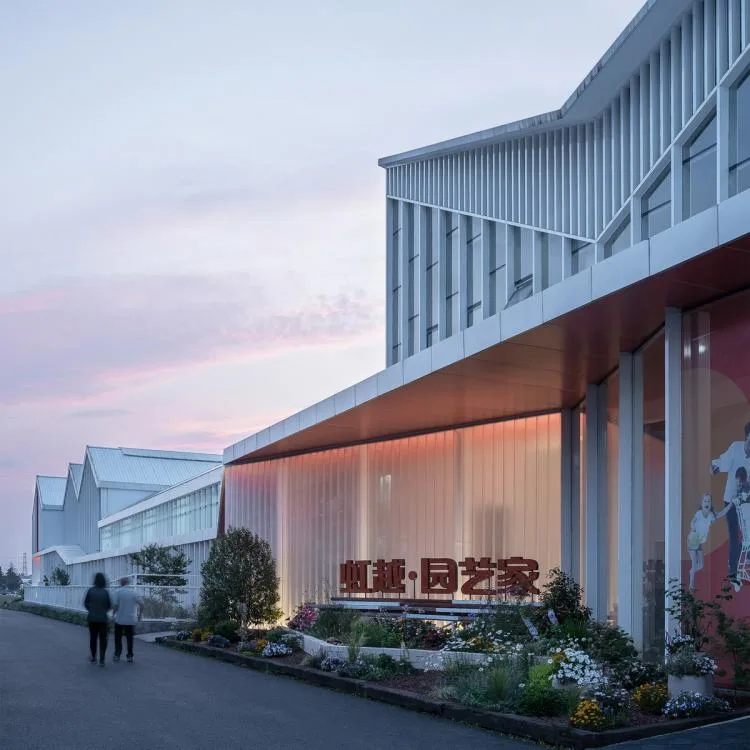
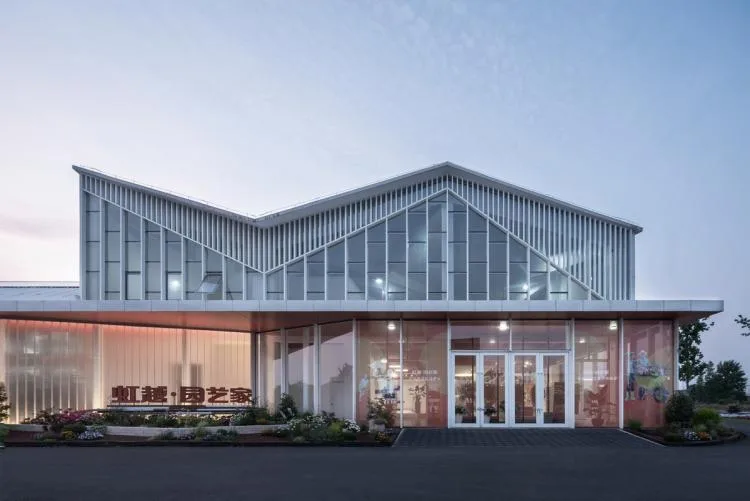
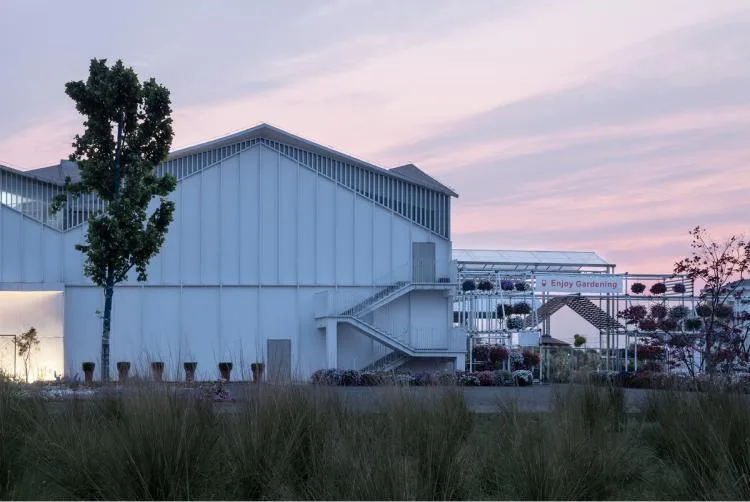
The Garden Center at Dusk
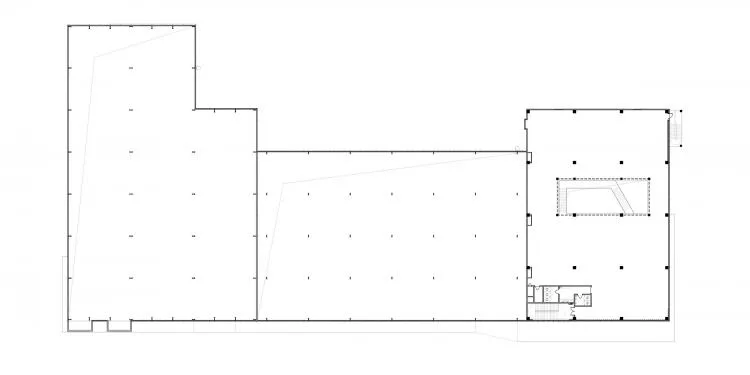
△ Plan View
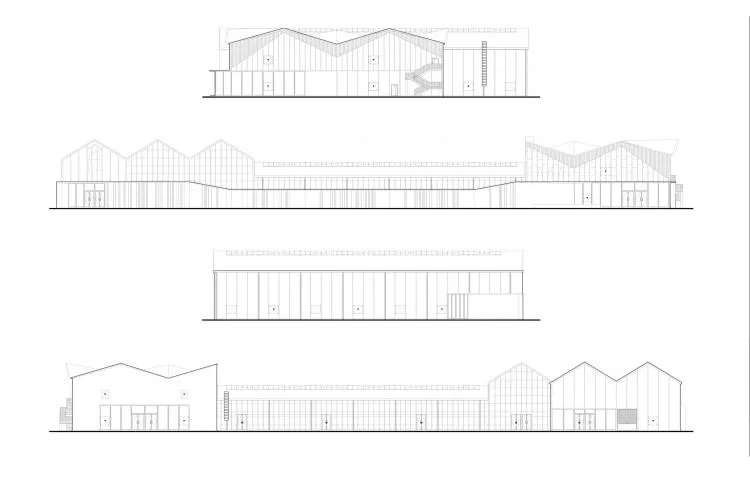
△ Elevation Drawing
Project Information
Project Name: Horticultural Flagship Store – World Garden Congress Center
Design Company: Forest Architecture Design
Official Website: www.senshangsheji.com
Contact Information: __AI_S_SC0__
Main Design Team: Zhang Juntian, Sun Hongfei, One Year Old
Collaboration Team: Zhejiang Huaheng Architectural Design
Client: Hongyue Flower
Project Location: Haining, Jiaxing, Zhejiang
Year of Completion: April 2019
Building Area: 7,500 square meters
Main Materials: Steel, aluminum panels, glass curtain wall
Photography by: Qiu Ripei












Must log in before commenting!
Sign Up