
Opportunity
On December 2, 2016, the World Industrial Design Conference successfully opened in Liangzhu Industrial Design Town. The visit of Vice Premier Ma Kai underscored the growing recognition of design’s economic value in Chinese society. Thanks to China’s strong emphasis and significant resource investment, the Industrial Design Town was designated as the permanent venue for this international exchange conference.
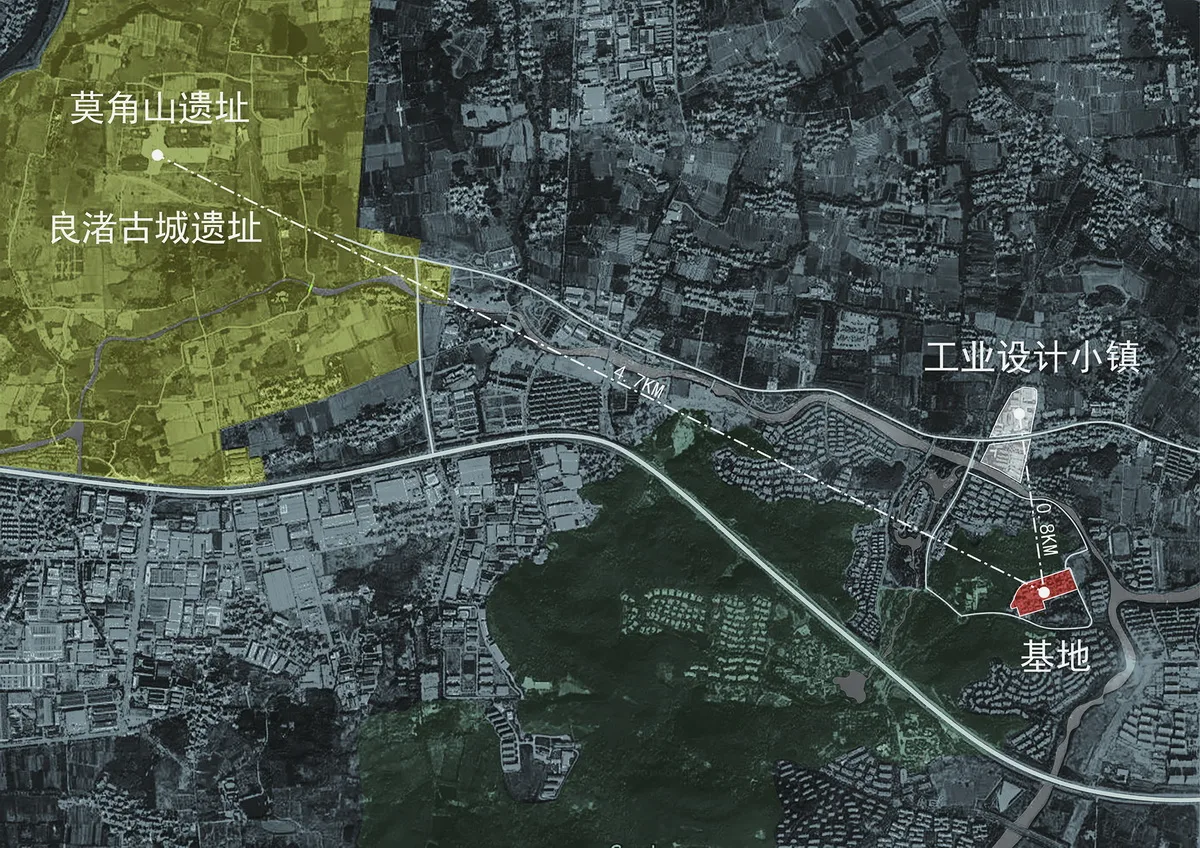
Simultaneously, the managing department needed to provide office and exhibition facilities for resident institutions representing industrial design associations from various countries. Following the principle of proximity to the design town to create a collective impact, the project site was ultimately chosen in Qiujiawu Village, located near the industrial design town.
Initial Intuition – The Village Below the Mountain
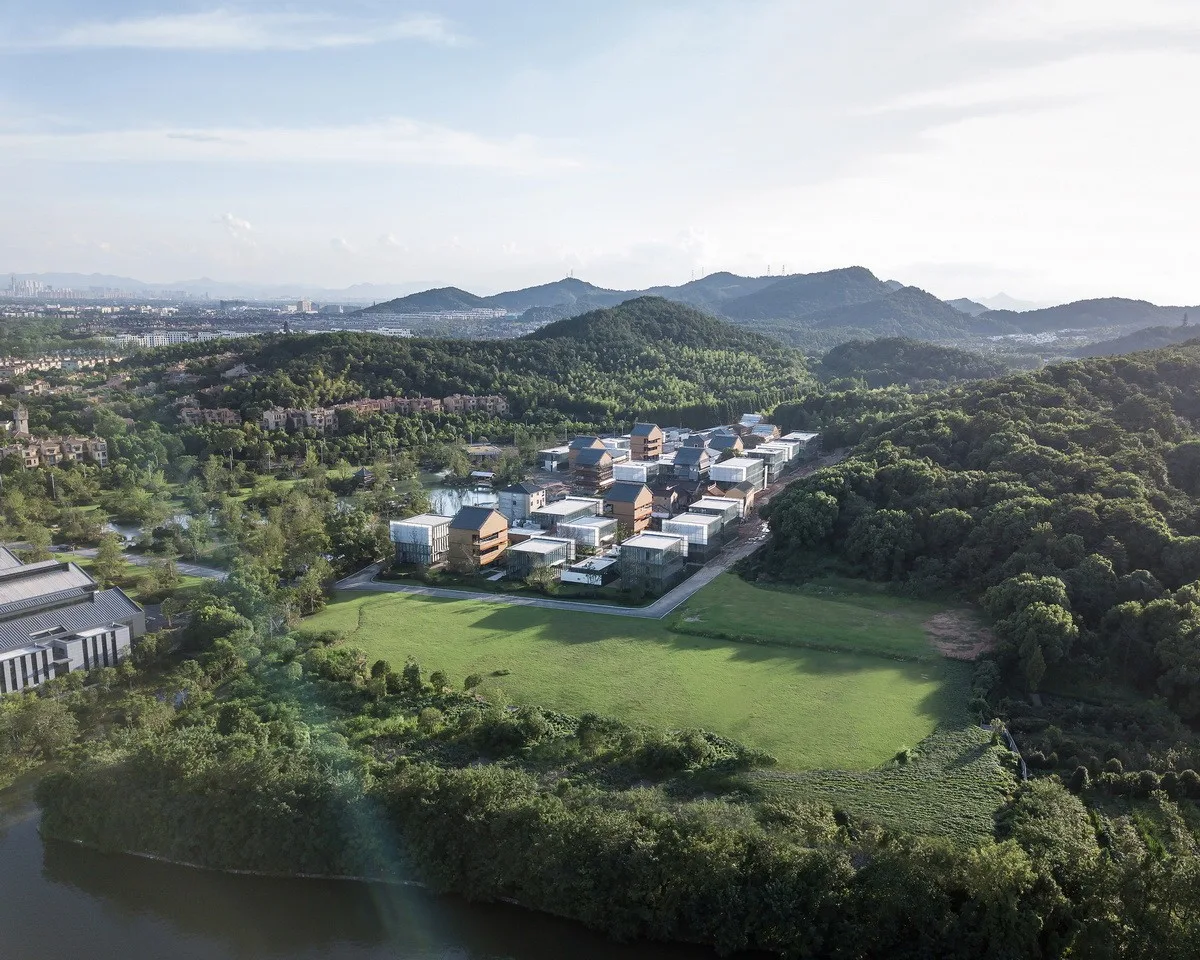
Qiujiawu, nestled at the foot of Pixian Mountain, is a suburban village gradually transforming into an empty nest due to urbanization. The village temple stands at its core, and from the square in front of it, one can overlook the pond and rice fields stretching ahead.
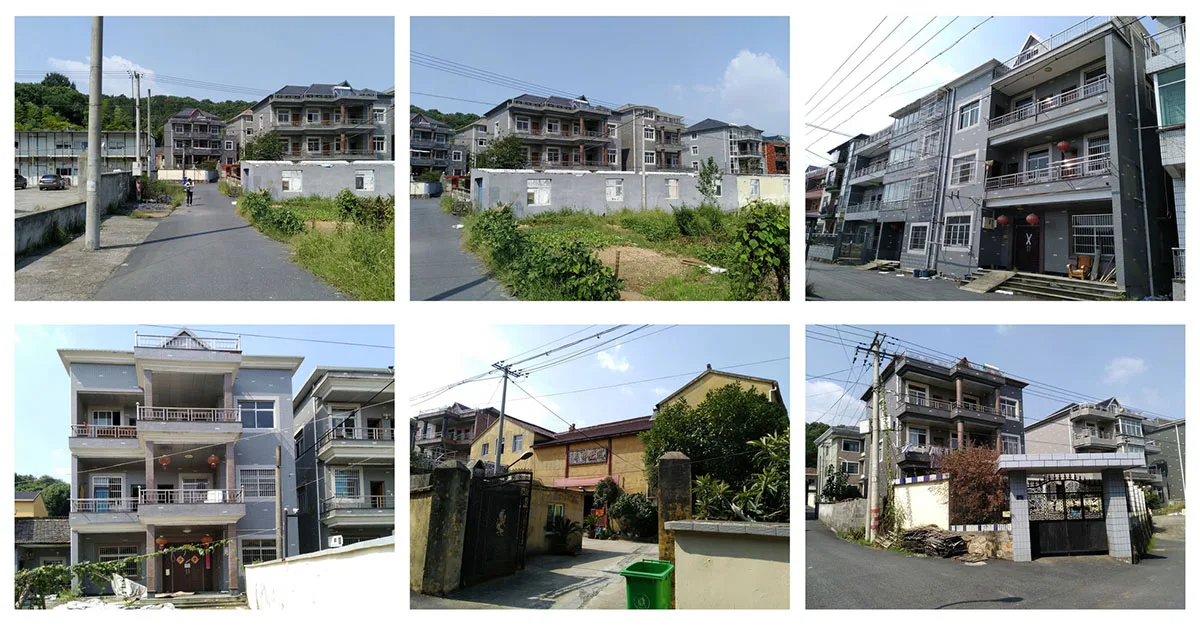
The village’s architecture—characterized by glazed tiles, ceramic tiles, white plastic steel windows, and a blend of Eastern and Western decorative styles—reflects the typical appearance of an eastern Zhejiang village built in the 1990s. At that time, rural kitchen smoke was seen as a mark of backwardness, and small brick buildings symbolized a better life.
The site slopes upward from the water on the south to the mountain on the north, with buildings staggered along this incline. The design respects the terrain, interpreting its gradual rise clearly and recognizably. By combining varied roof orientations, individual units express a spontaneous character while maintaining overall harmony and order. This captures the essence of a village beneath a mountain—our first impression of the site and the desired final state after project completion. The design’s “moves” and “strength” are repeatedly tested at this source, discarding “impure ideas” and preserving “loyalty to the land.”
Yingyuan Zaoguan – A Boundless Garden with 27 Museums
During that era, buildings’ masonry structures generally lacked columns and ring beams, and without construction blueprints, preservation and renovation were no longer feasible. However, the original spontaneous layout offered valuable reference.
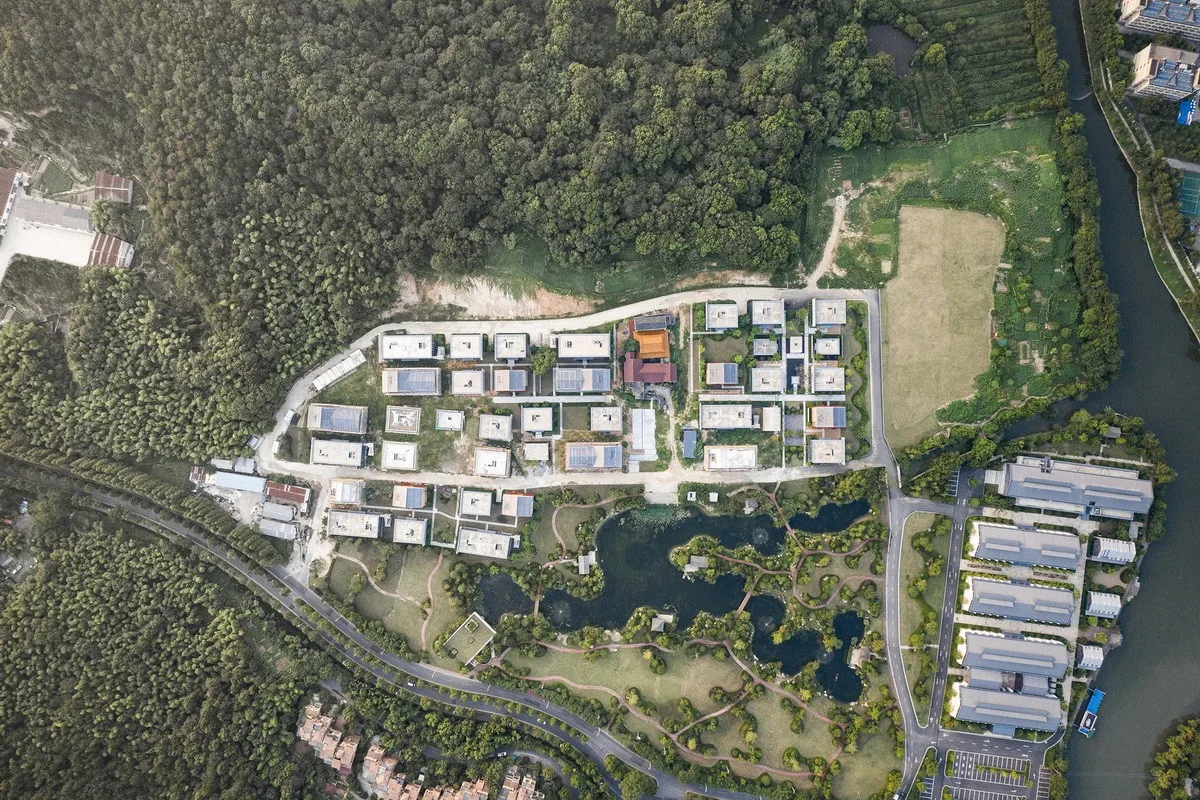
Building upon the original layout, ample gaps were organized, and grouped buildings arranged according to the site’s terraced elevation. The existing road network follows the terrain’s height differences, demonstrating practicality. Guided by this road framework and original map features, 27 independent courtyards for residential institutions were designed, with grouped buildings enclosing intimate internal courtyards.
These gaps balance density and intentionally establish relationships between interior and exterior spaces, courtyards and alleys, centers and homogeneous clusters within limited site resources.
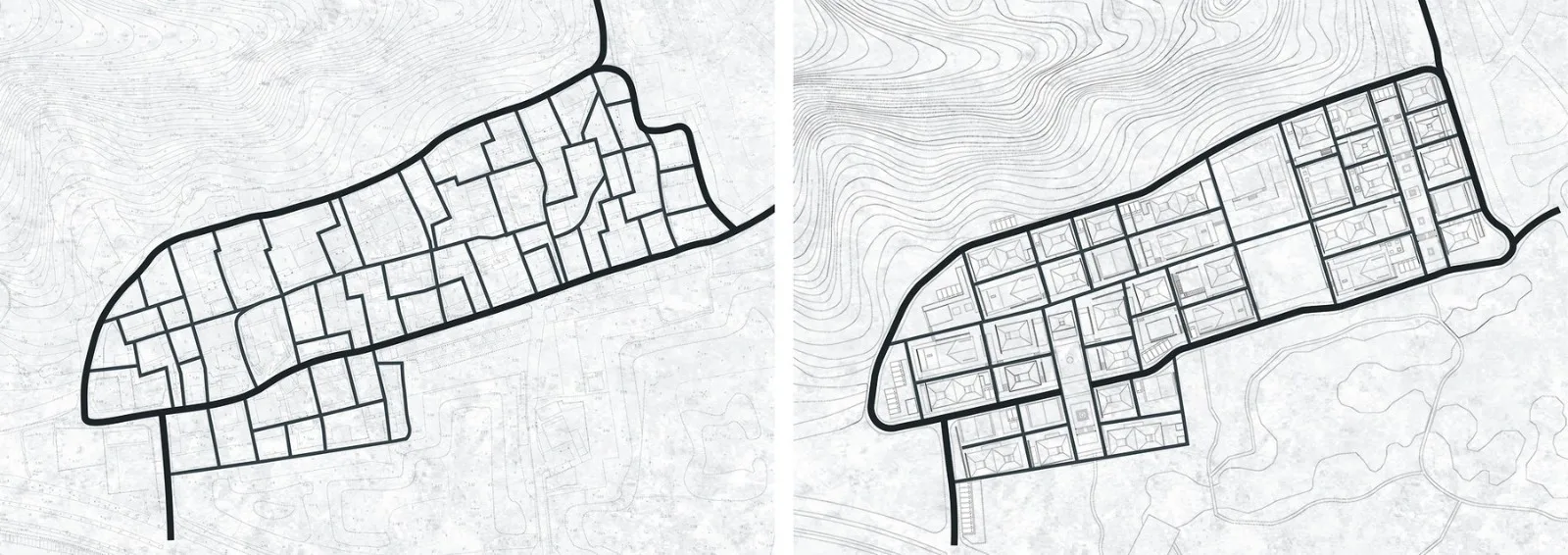
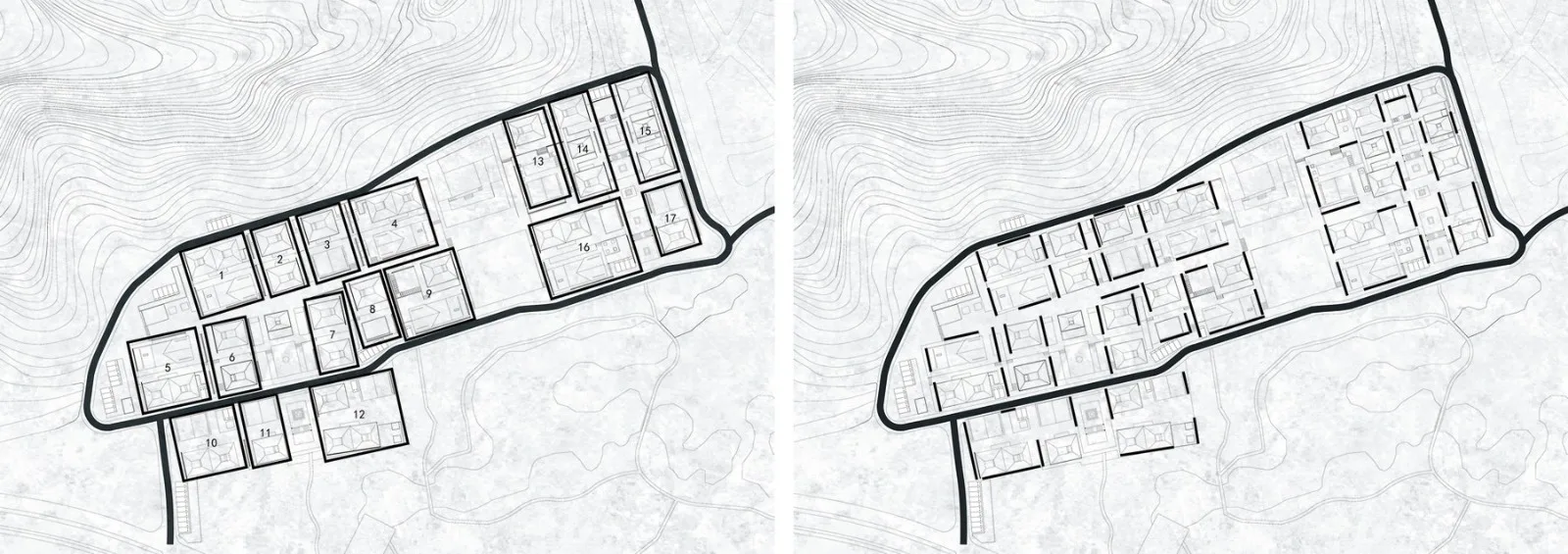
For operational safety, the client initially requested each institution’s courtyard to have independent walls and entrances. While this safeguarded exhibits and staff, the closed walls turned each courtyard into isolated ancient enclosures, creating a silent atmosphere that conflicted with the project’s required density.
We advocated for a more open, collective management approach—abandoning the idea of isolated institutions and instead treating the 27 courtyards as a unified industrial design museum.
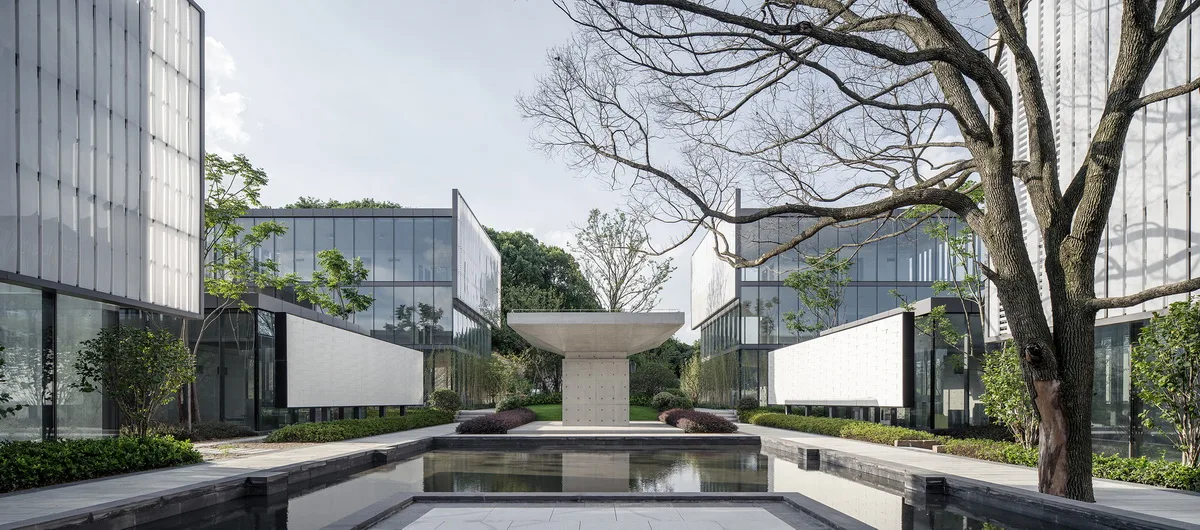
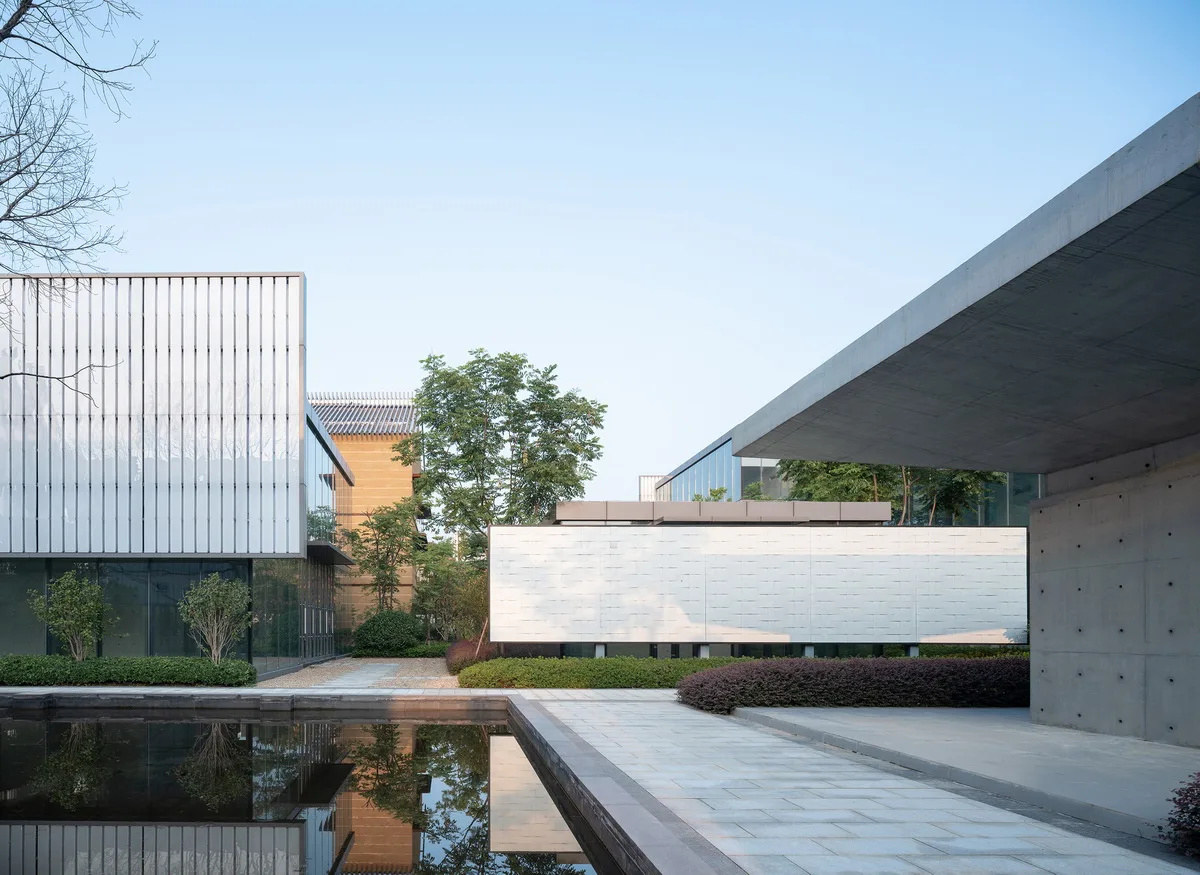
Through thoughtful design, the walls’ form and meaning evolved. While serving as fundamental boundaries to define each courtyard, the walls are also intentionally broken to dissolve horizontal barriers. Though aligned perpendicularly to the site’s longitude and latitude, these openings guide movement and views through the courtyards, creating a seamless flow within the expansive garden.
As a result, each small glass museum no longer stands isolated but merges into an open garden comprising 27 museums.
Spatial Prototype – The Extreme Contrast of Closed and Open
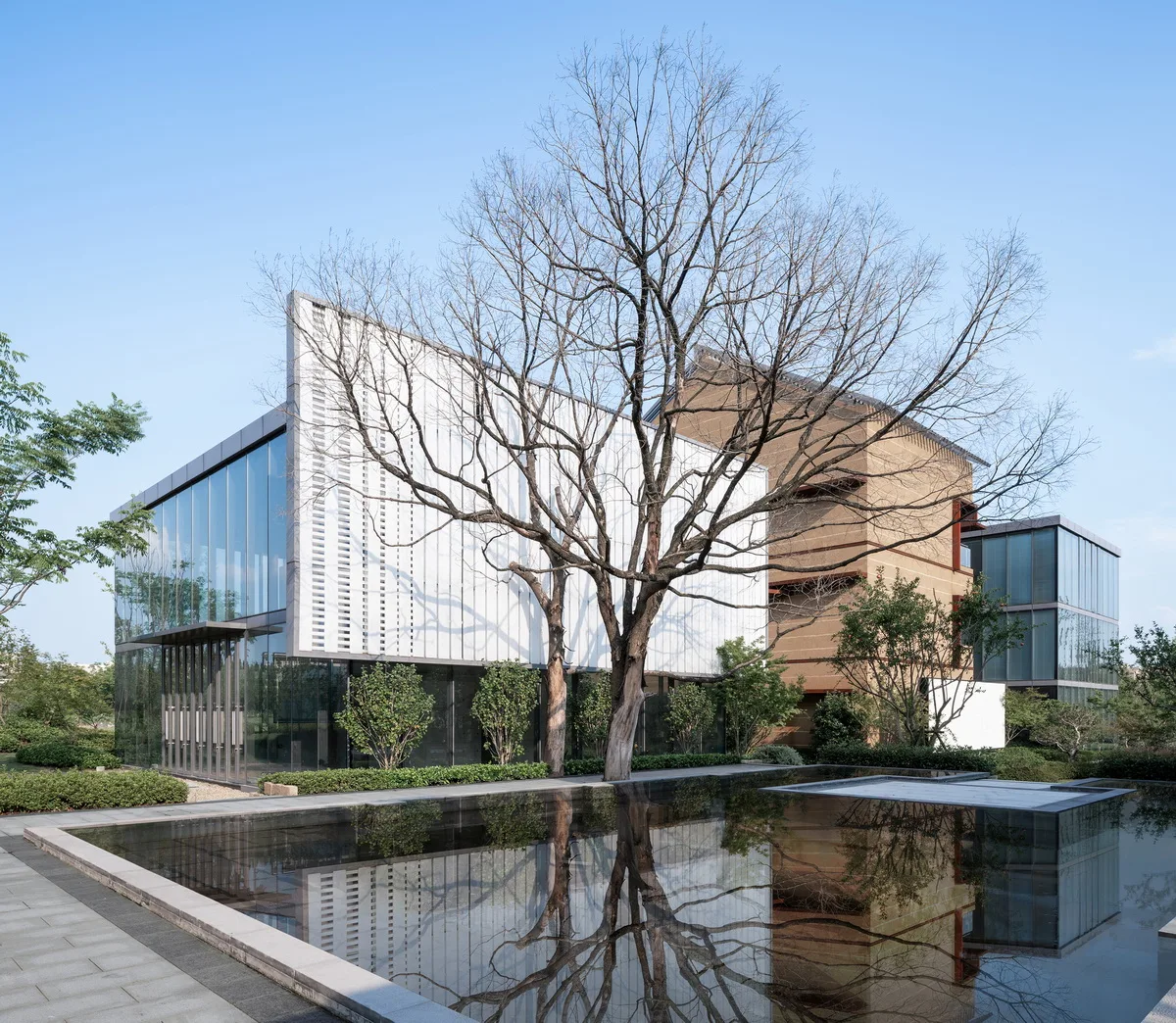
The program is organized around the vital binary relationship of closed versus open. The site’s density and village form make each courtyard ideal for two houses, enabling a clear separation between closed and open spaces.
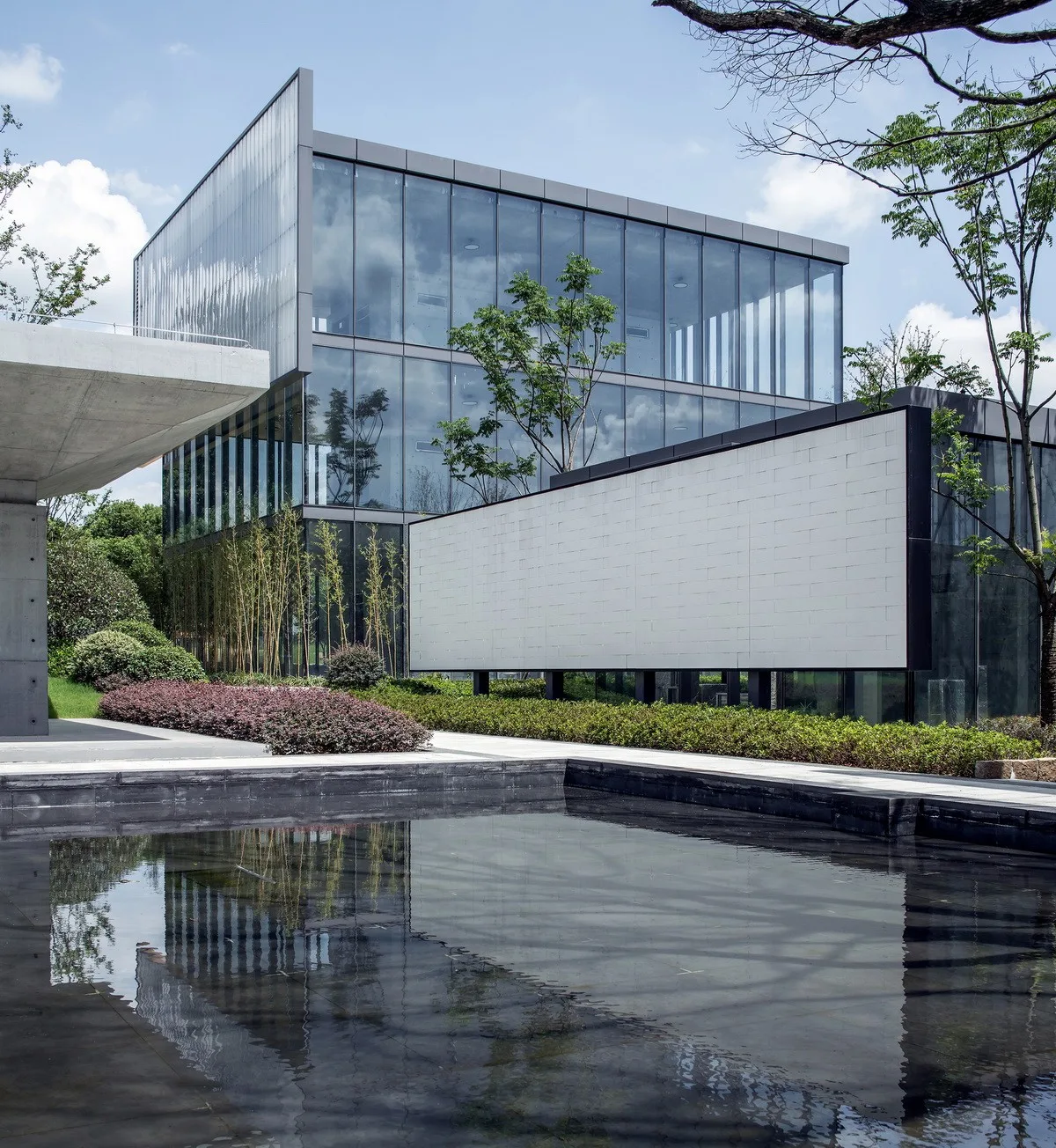
The open exhibition spaces follow a core tube high-rise building model, featuring umbrella-like structures that create column-free continuous spaces. In contrast, the closed auxiliary spaces take the form of residential buildings, ensuring privacy for offices and temporary residences.
This dramatic juxtaposition brings spatial tension to the limited courtyards. The pure glass, pillarless exhibition boxes and the residential buildings efficiently accommodate exhibition and non-exhibition functions within the balance of openness and enclosure.
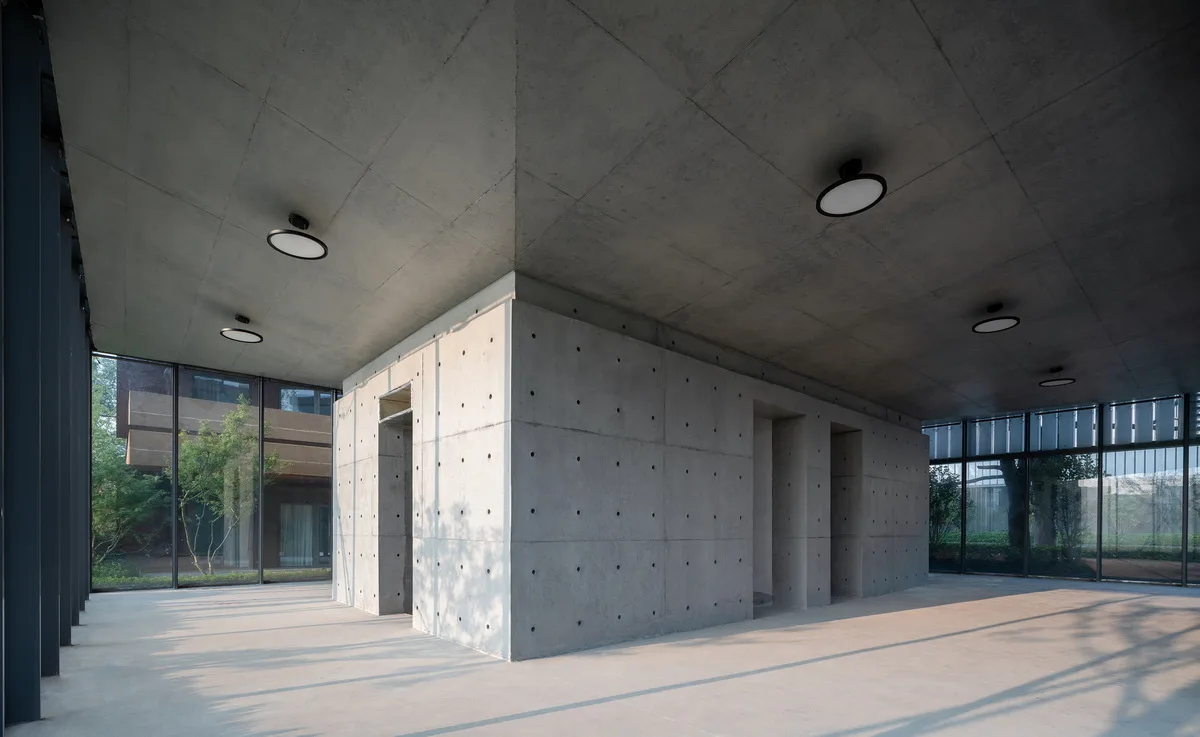
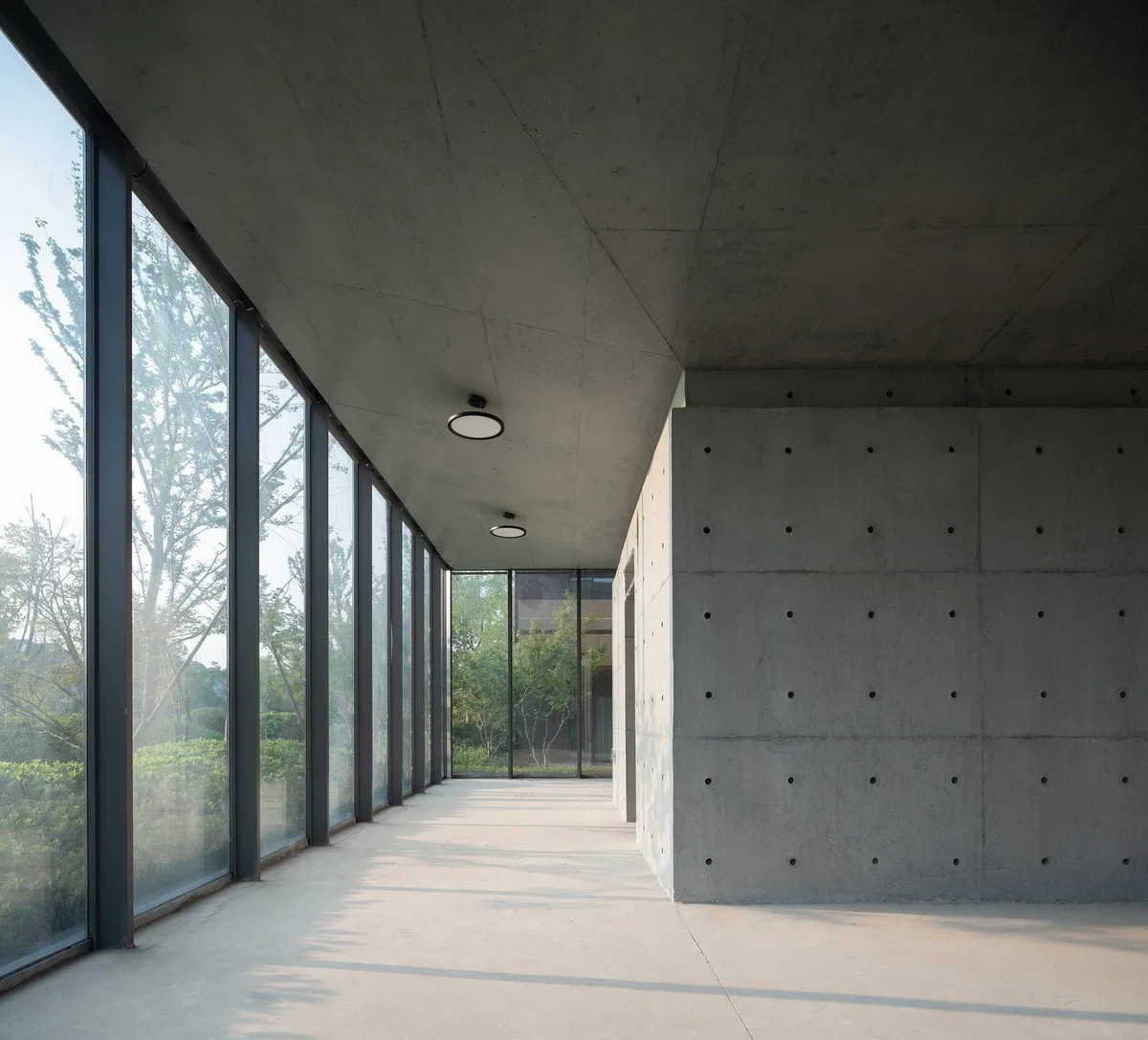
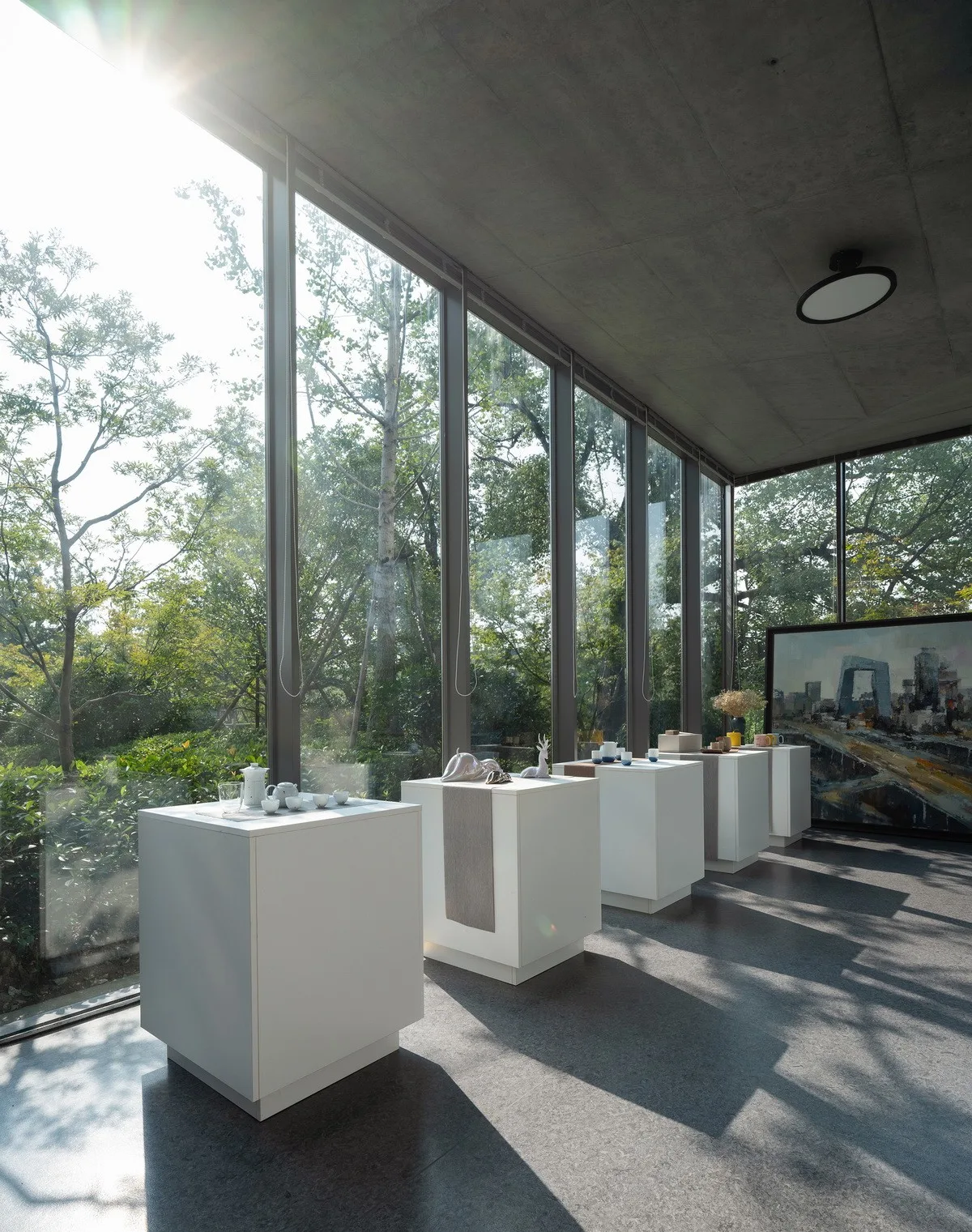
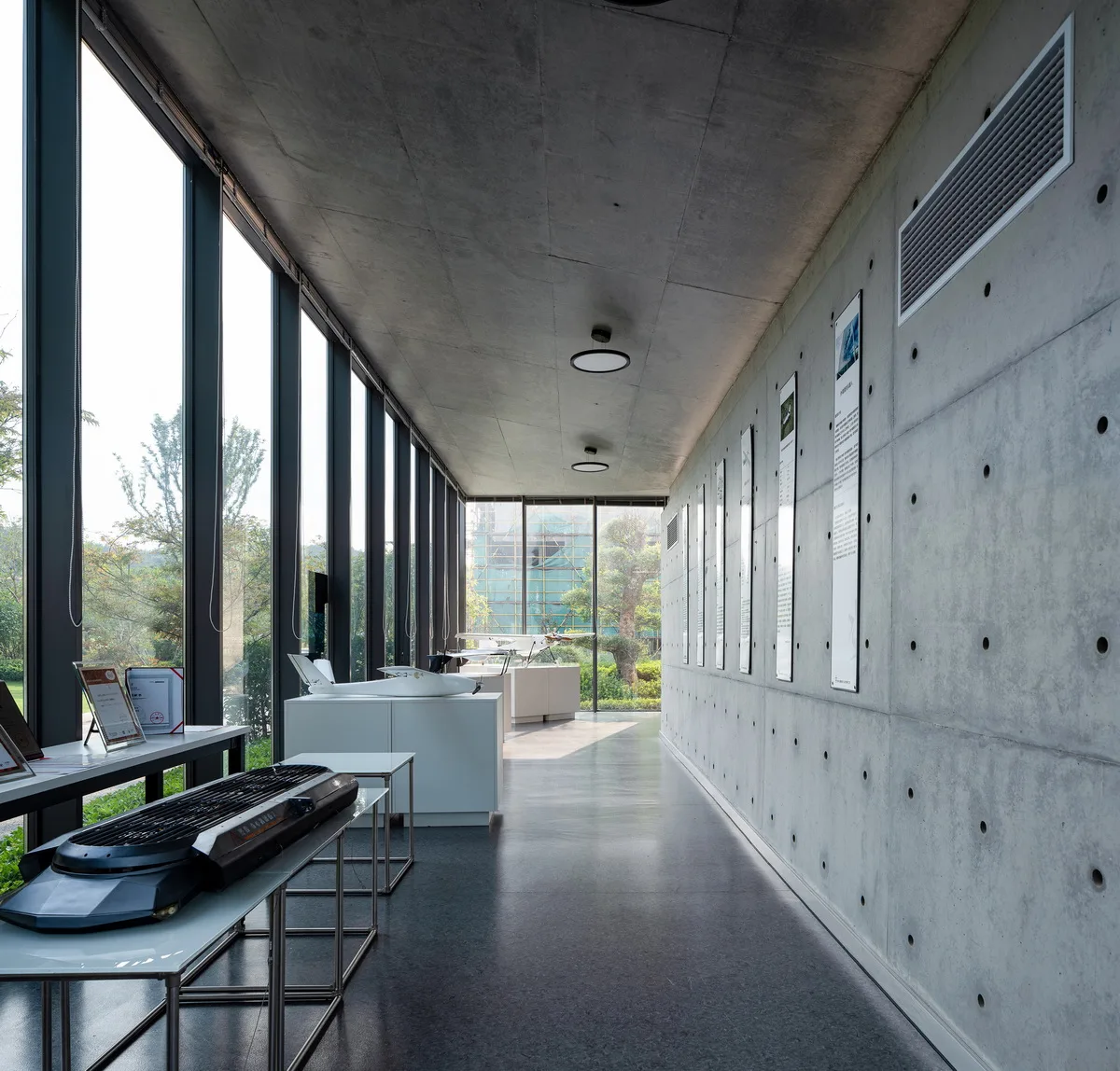
The umbrella-shaped core tube units can be combined both horizontally and vertically. Residential buildings achieve two standard unit sizes through combinations of sloping roofs. This modular approach allows flexible adjustment of floor area and stories to meet the needs of institutions of varying scale.
Constructing Translation: The Meaning of Form and Contemporary Creation
Over time, architectural elements can transcend their functional origins to embody cultural and aesthetic values. These symbols help establish the precise atmosphere the design seeks to evoke.
For architectural language reflecting Jiangnan, rural areas, and village life, features like sloping roofs, gables, eaves, and courtyard walls naturally come to mind. However, directly replicating traditional methods conflicts with modern construction techniques. Authentic local craftsmanship is costly today and doesn’t align with the industrial design theme.
Thus, the core principle for this design was to convey the essence of historical prototypes while employing contemporary construction systems.
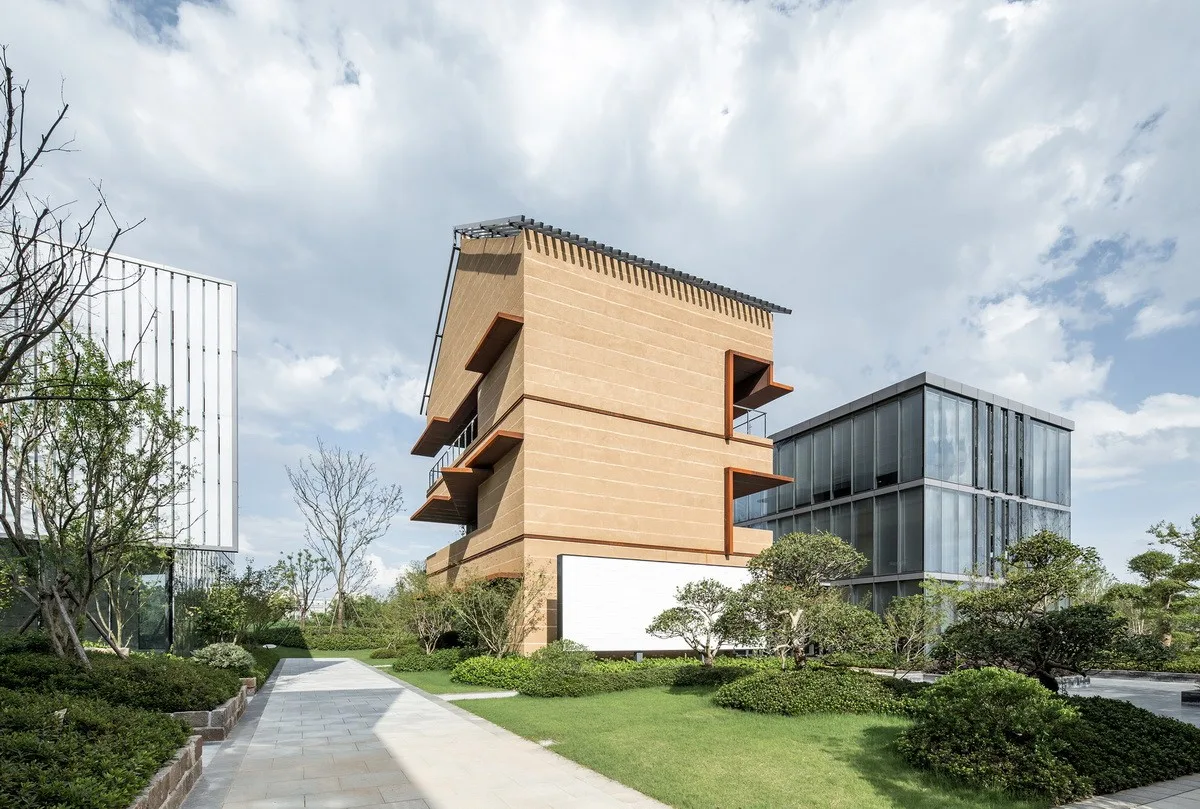
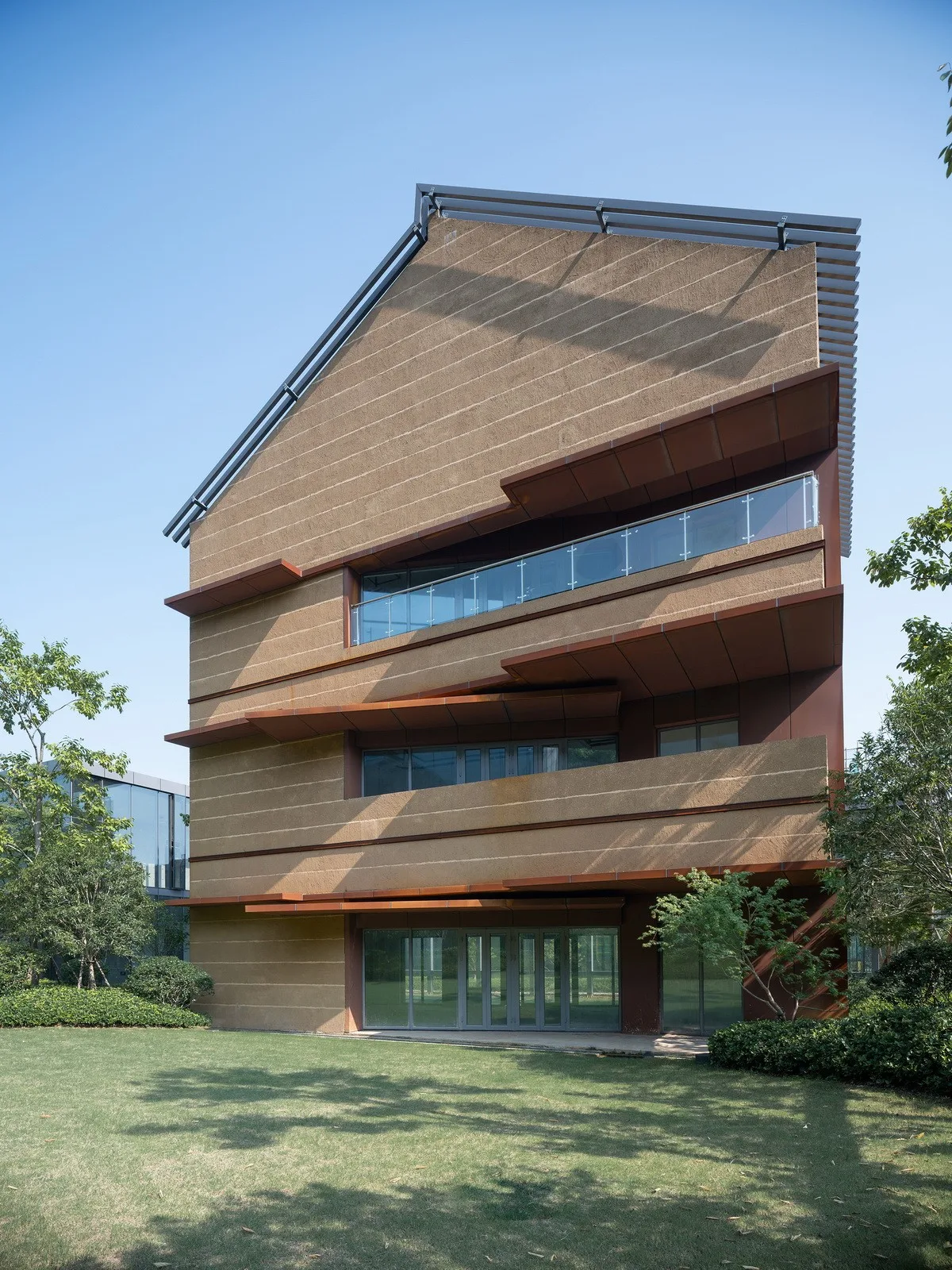
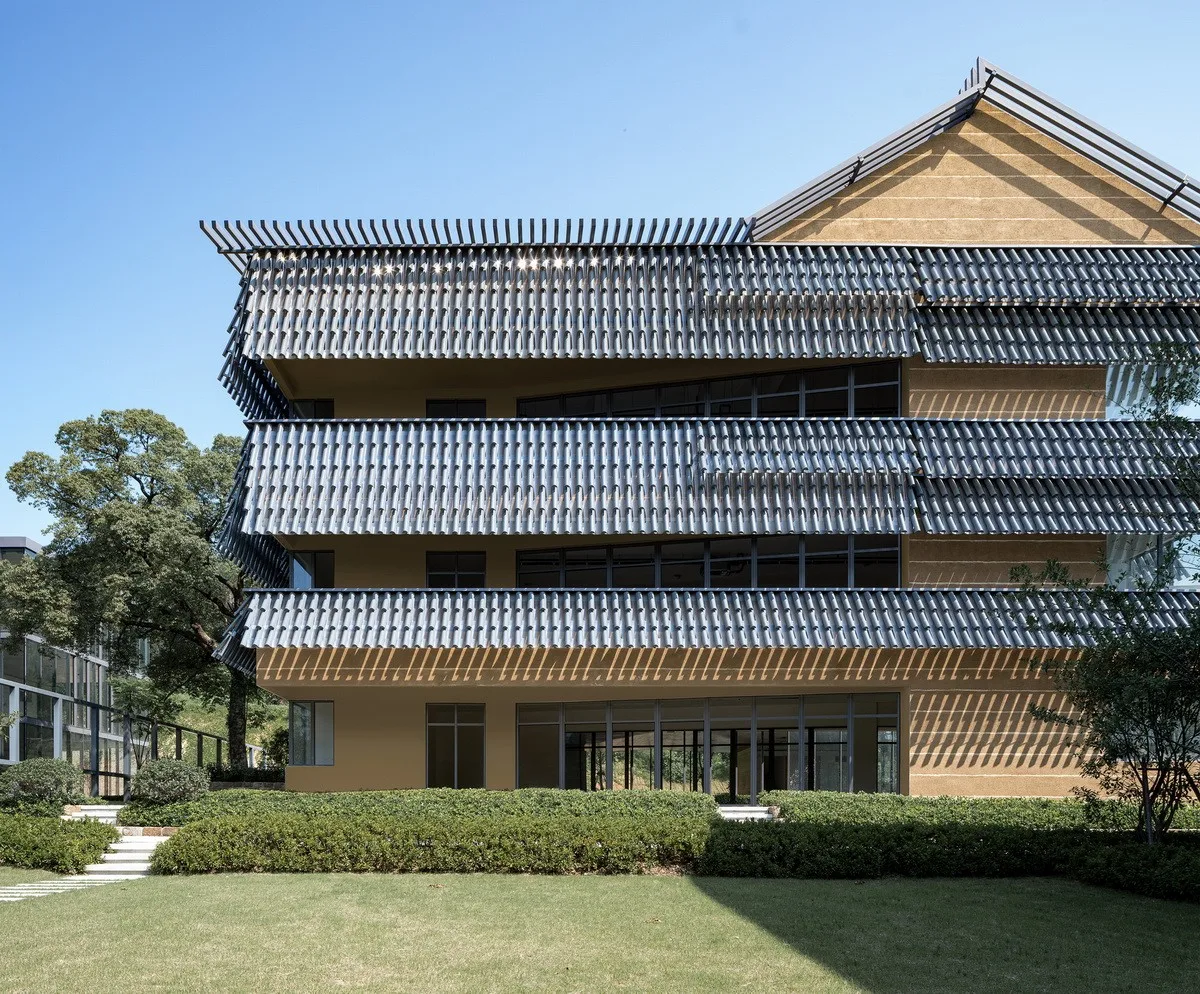
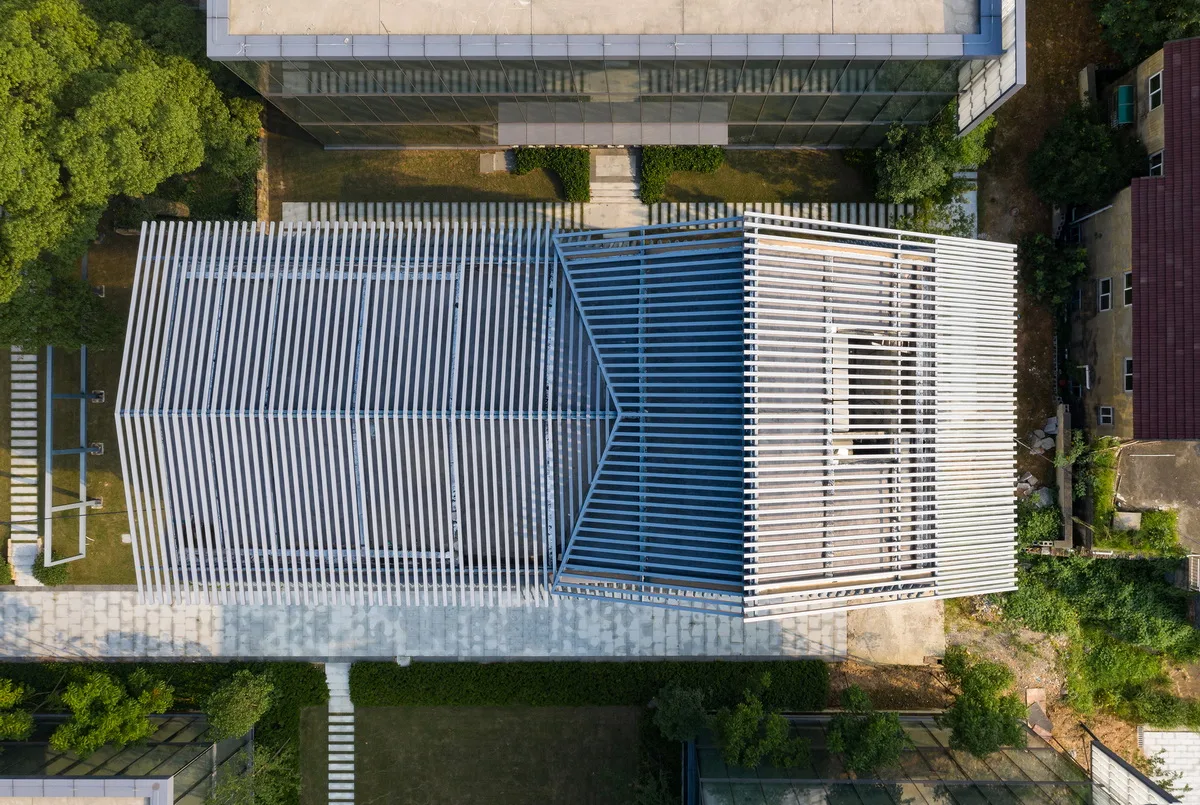
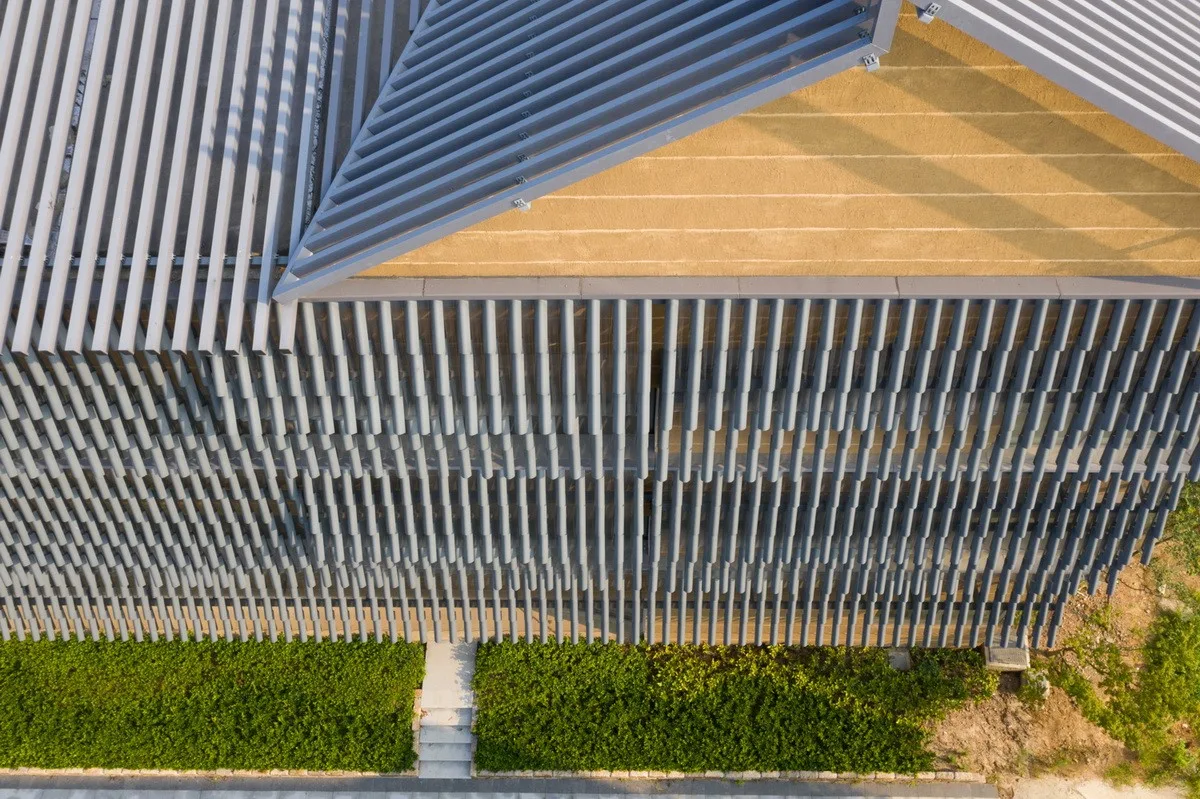
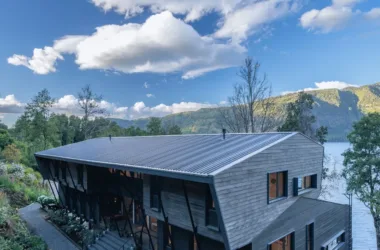
Sloping Roof: Combining sloping roofs to form “old houses” of two sizes, the metal profile suspended above provides excellent shading and reduces heat load when paired with insulation. These long metal profiles replace traditional tile textures with a delicate, streamlined appearance. The outward overhang makes the roof feel lightweight and floating.
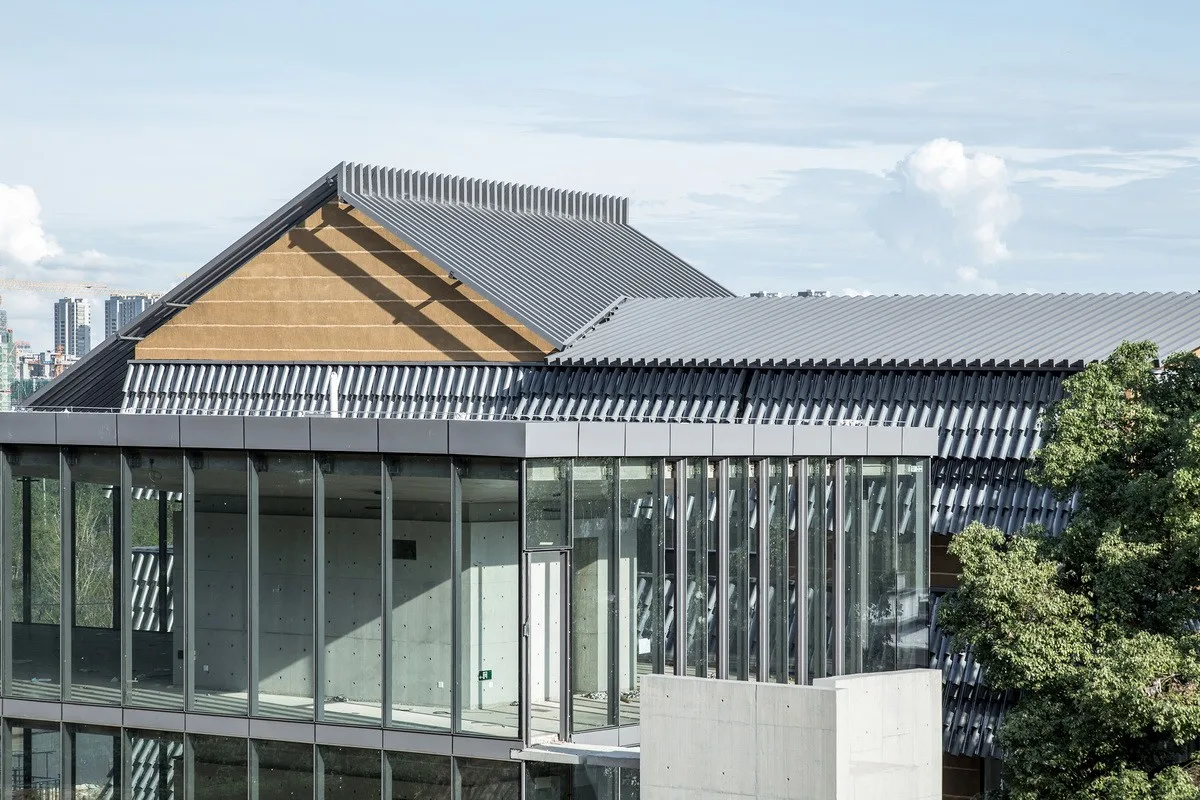
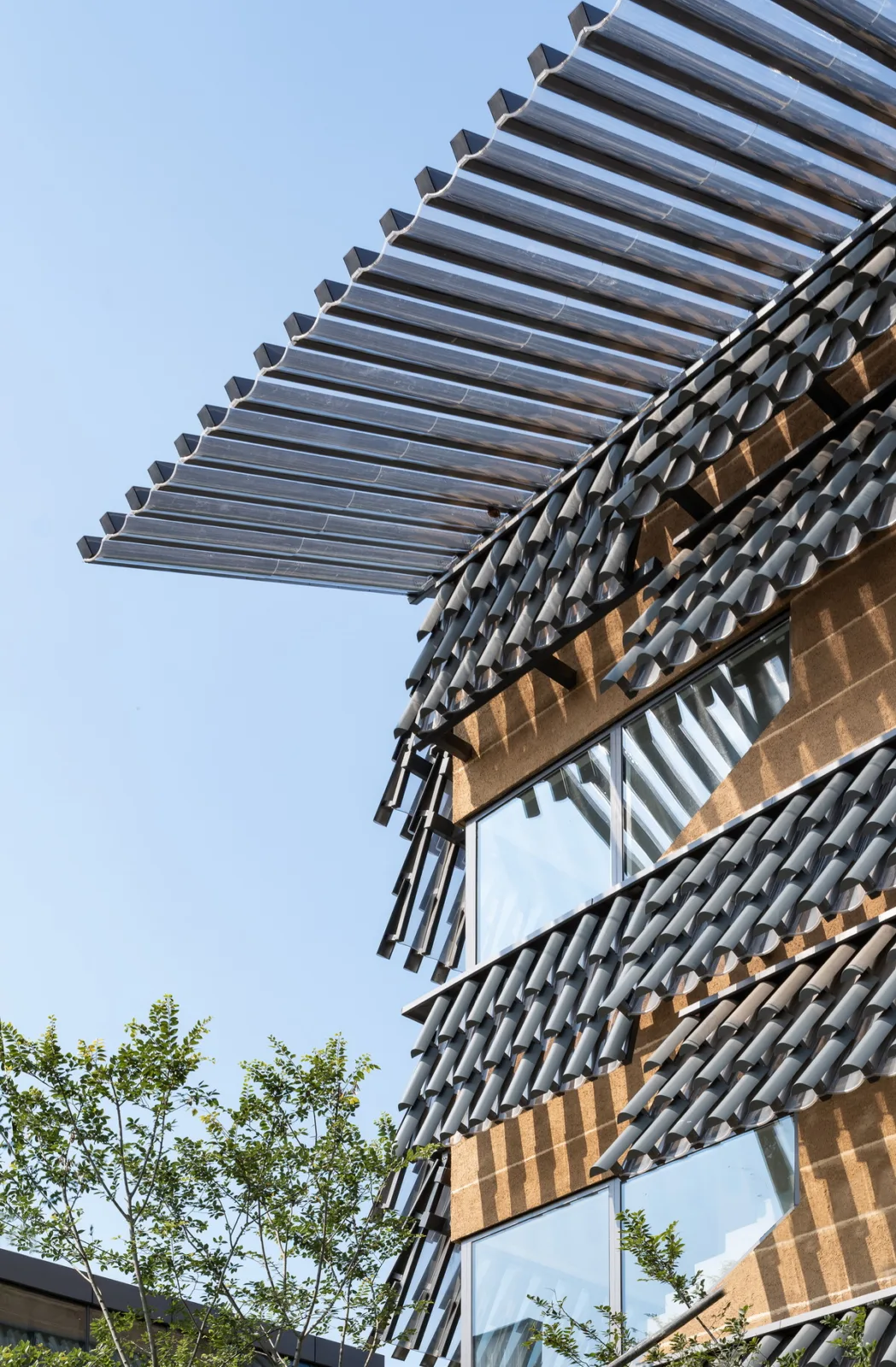
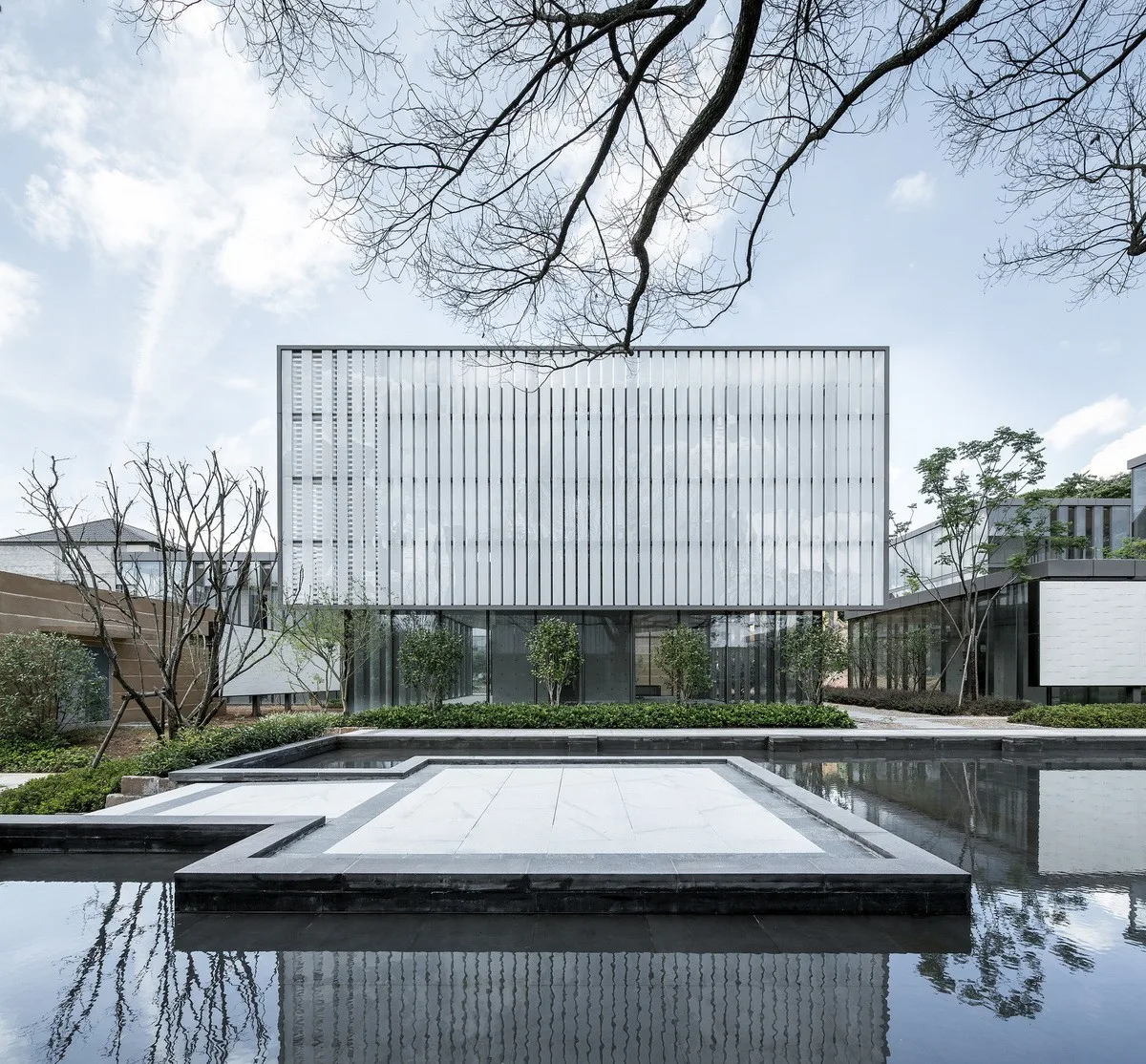
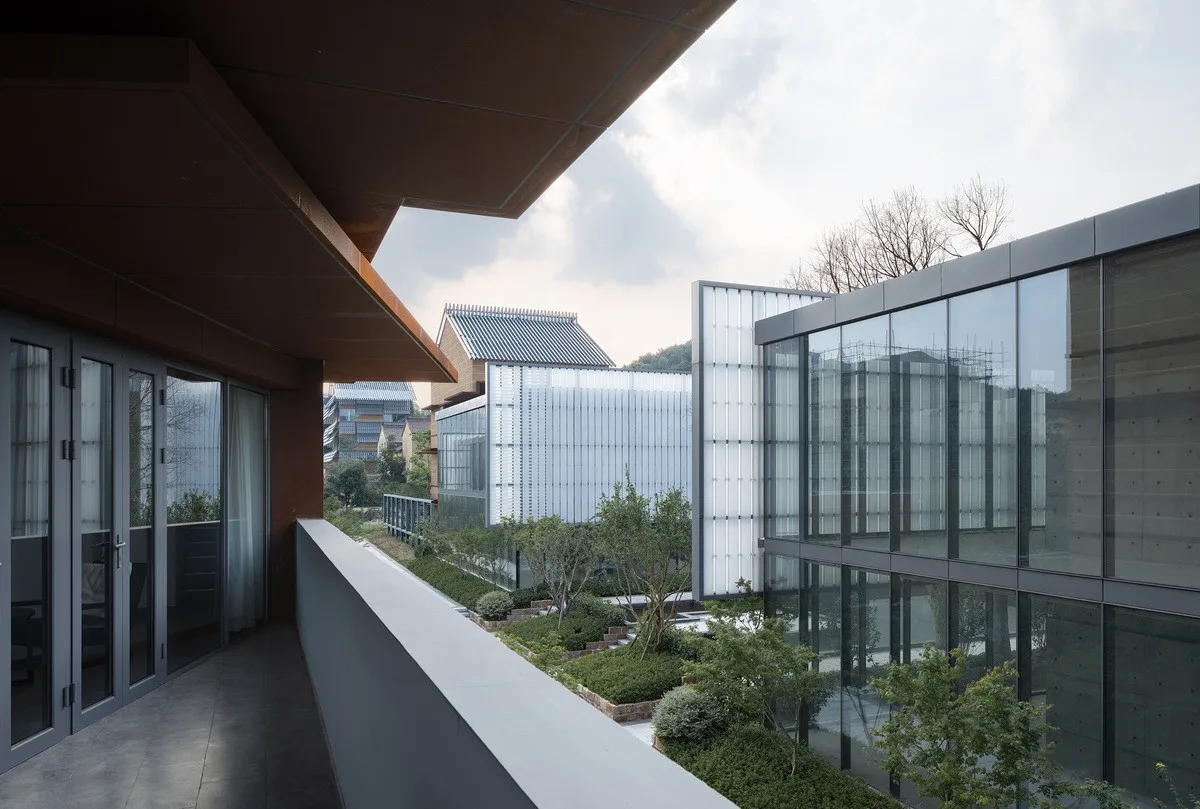
Gables: The suspended gables simplify traditional wind and fire gable forms, using 2.1m polycarbonate panels with a central gap. The milky white panels softly reflect surrounding structures and vegetation, harmonizing the compact outdoor space and creating a rhythm of light and shadow. Mimicking brick textures with hollowed ends that transition from sparse to dense, these gables evoke masonry while maintaining modern aesthetics.
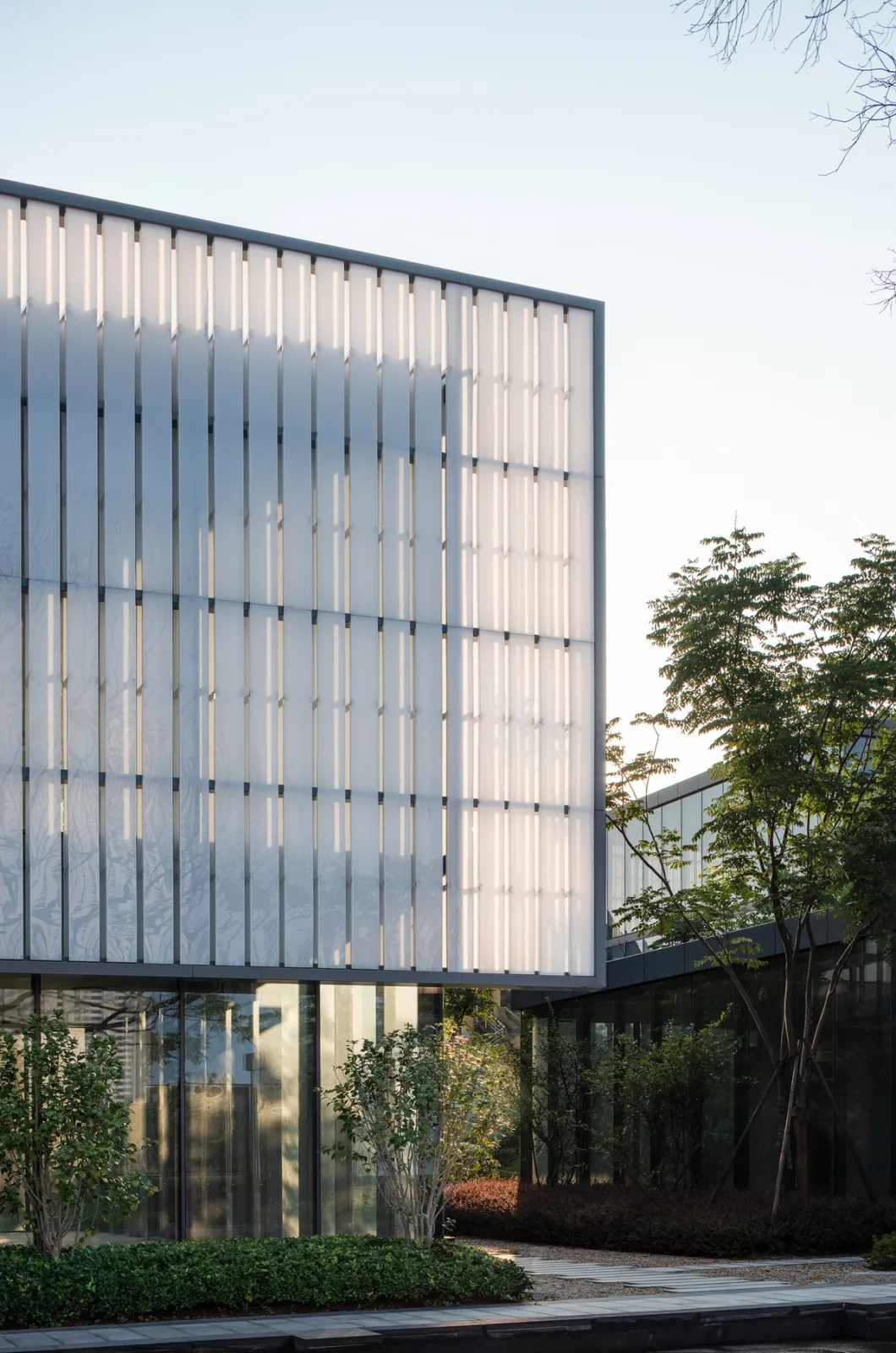
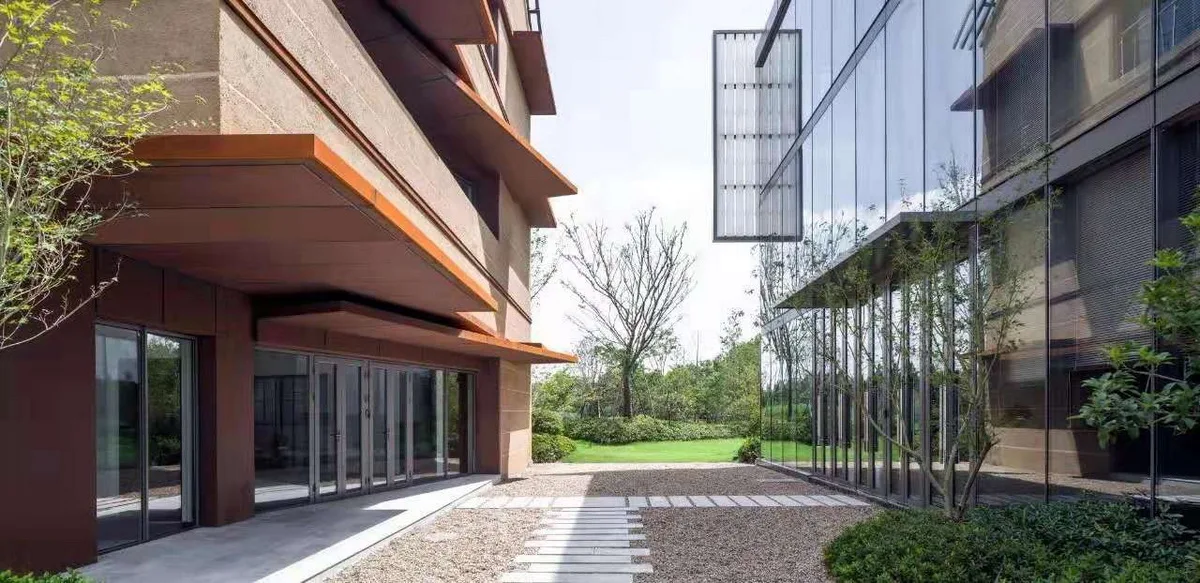
Eaves: Unlike traditional heavy, opaque eaves, the redesigned eaves use a U-shaped upright lock edge polycarbonate base. Aluminum cylindrical tiles are arranged from flat to raised, with angles adjusted by cushion blocks on metal purlins. Sunlight filters through gaps between tiles and purlins, casting dappled shadows on walls and enhancing outdoor transparency.
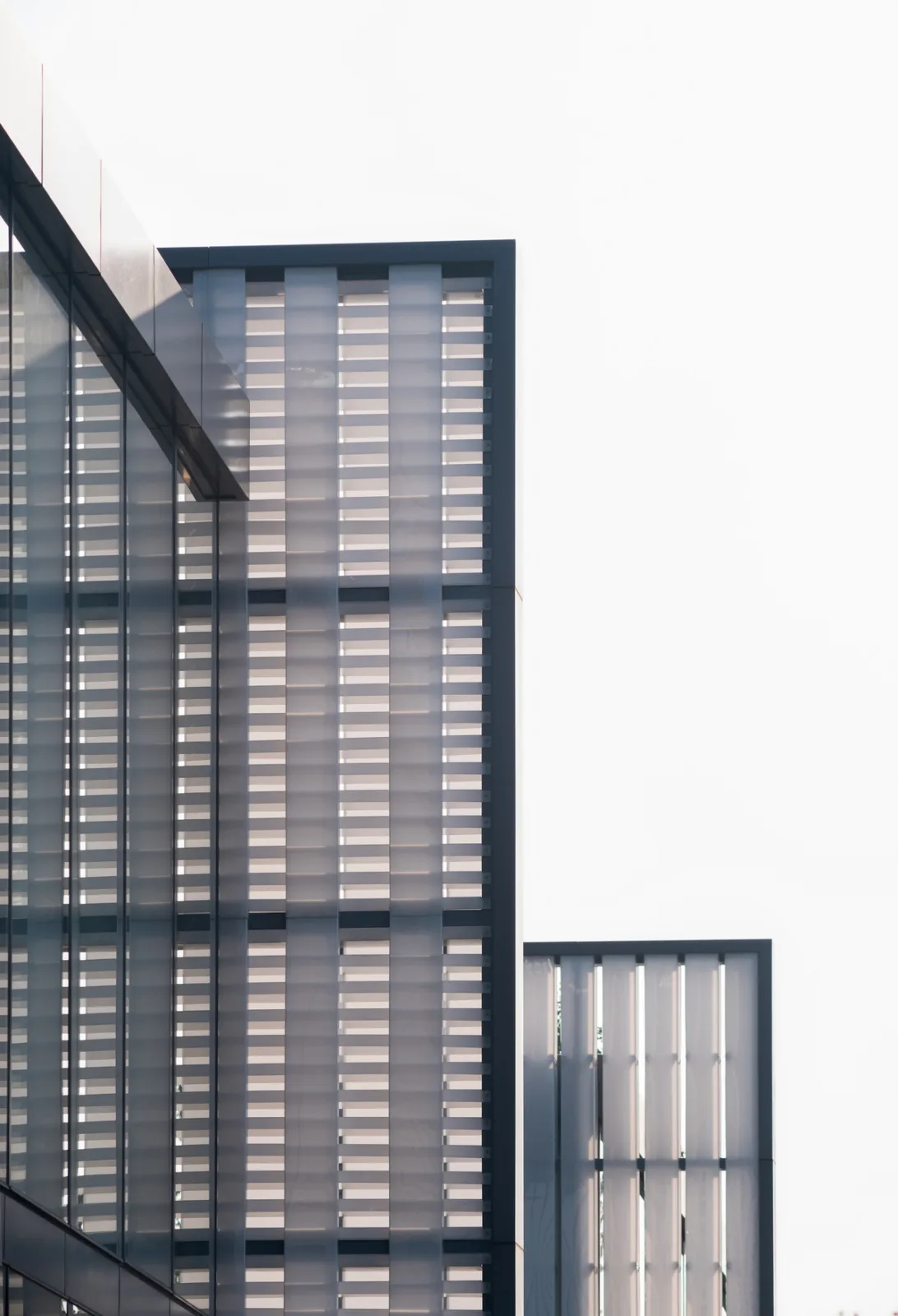
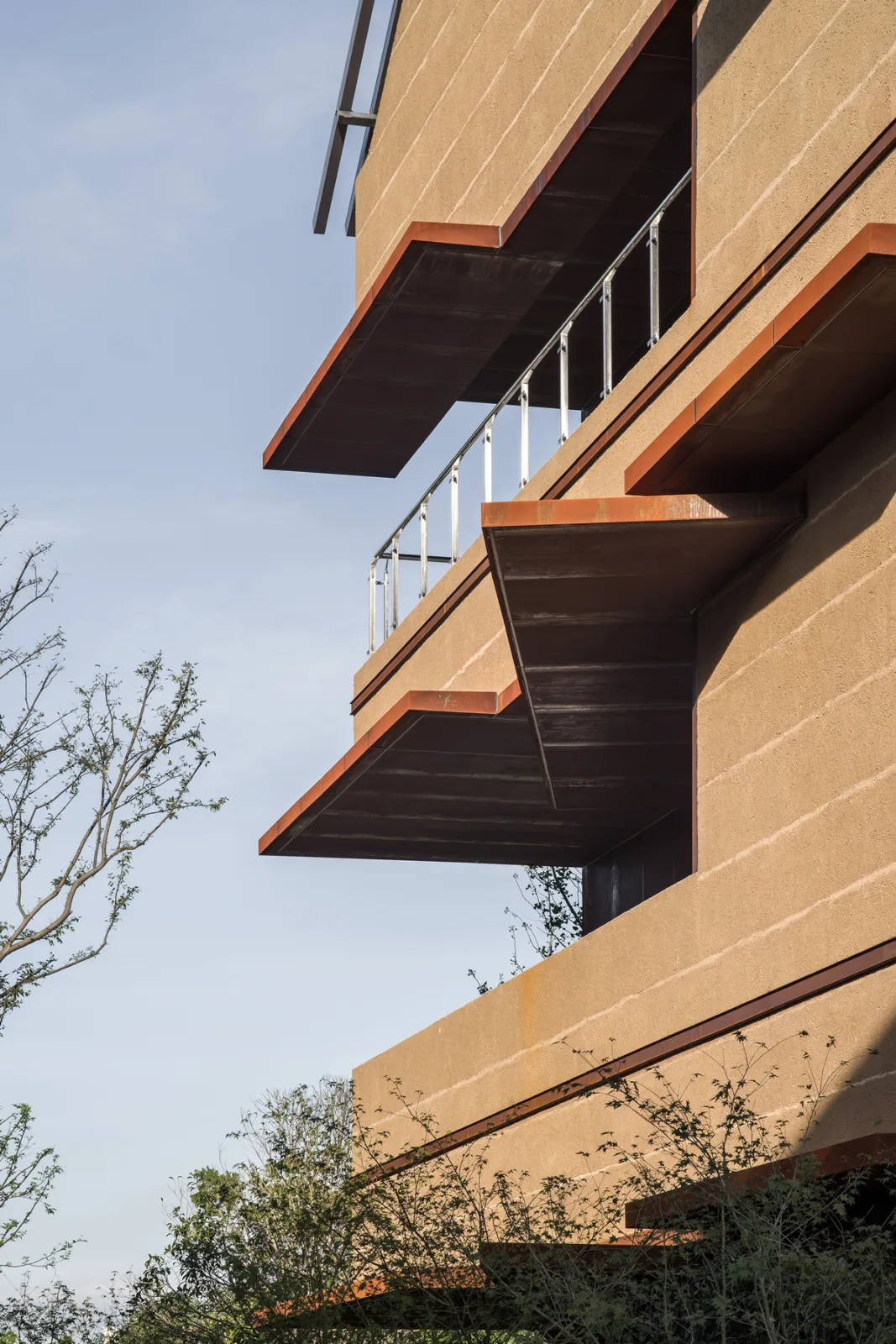
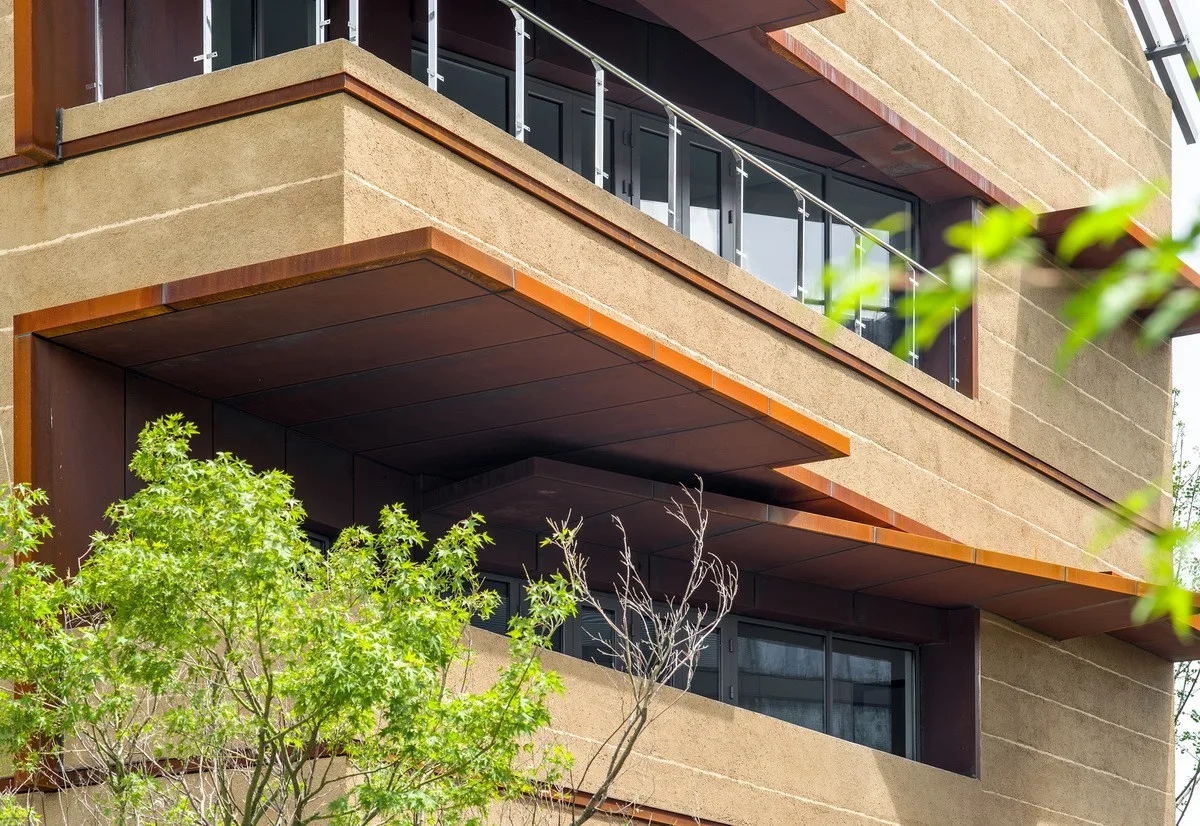
The smaller “old house” lacks a stretched facade; its multi-layered eaves are simplified into floating boards integrated with balcony facades. Viewed from below, it appears layered and staggered; from a distance, it resembles a wooden window supported by bamboo poles. Weather-resistant steel plate textures lend an antique feel.
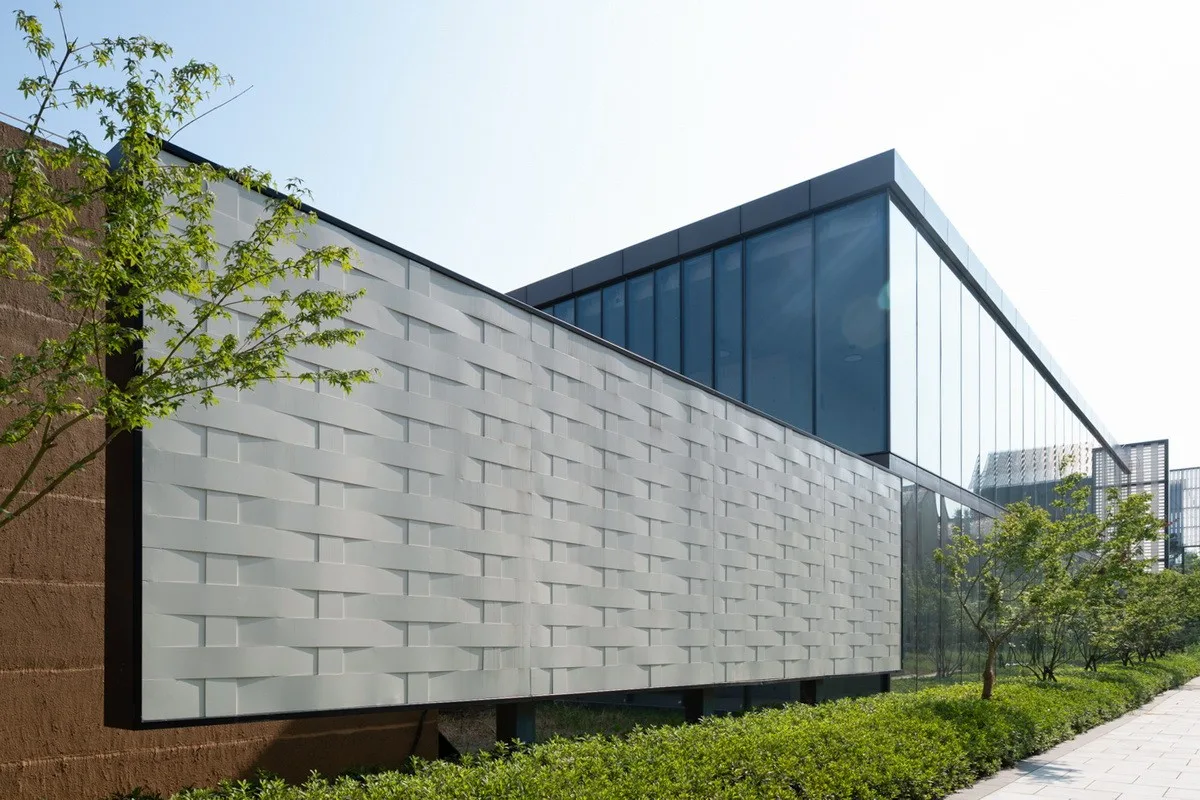
Courtyard Wall: The courtyard walls hover slightly above ground, woven with wide white aluminum plates to create a textured surface. The reverse side is coated with plastic metal mesh for future climbing plants. The gaps evoke the masonry texture of brick walls. Though pure white, the walls impart a sense of handcrafted warmth.
Spatiotemporal Clues Through Material Expression
Qiujiawu Village lies just 7 kilometers from the core area of the 5000-year-old Liangzhu Site, embedding rich historical layers that demand expression. The project’s core function—display—reflects industrial design as a product of modern social production modes.
To express both primitive and modern creation mechanisms, architectural materials serve as temporal and spatial markers. The private residential areas feature rammed earth paint surfaces, while the exhibition glass windows are supported by umbrella structures of plain concrete with variable cross-sections.
This dialogue between ancient ruins, rural dwellings, and modern architecture is realized through the contrast of rammed earth and plain concrete. The jade artifacts of the Liangzhu civilization are metaphorically represented by polycarbonate mountain walls and white aluminum woven courtyard walls.
Transparent eaves, metal purlins, and aluminum tube tiles employ form substitution, presenting an inherited beauty adapted to contemporary technology. Historical principles shape the forms, while materials construct their essence—writing the site’s historical changes and creating spatiotemporal clues to the evolution of modern construction systems.
The structure and spatial relationships are also materially unified, anchored in shear walls of rammed earth and core tubes of plain concrete. Qiujiawu remains a mountain village loyal to its land, offering foreign design teams an immersive experience of contemporary Eastern architectural language.
Design Drawings
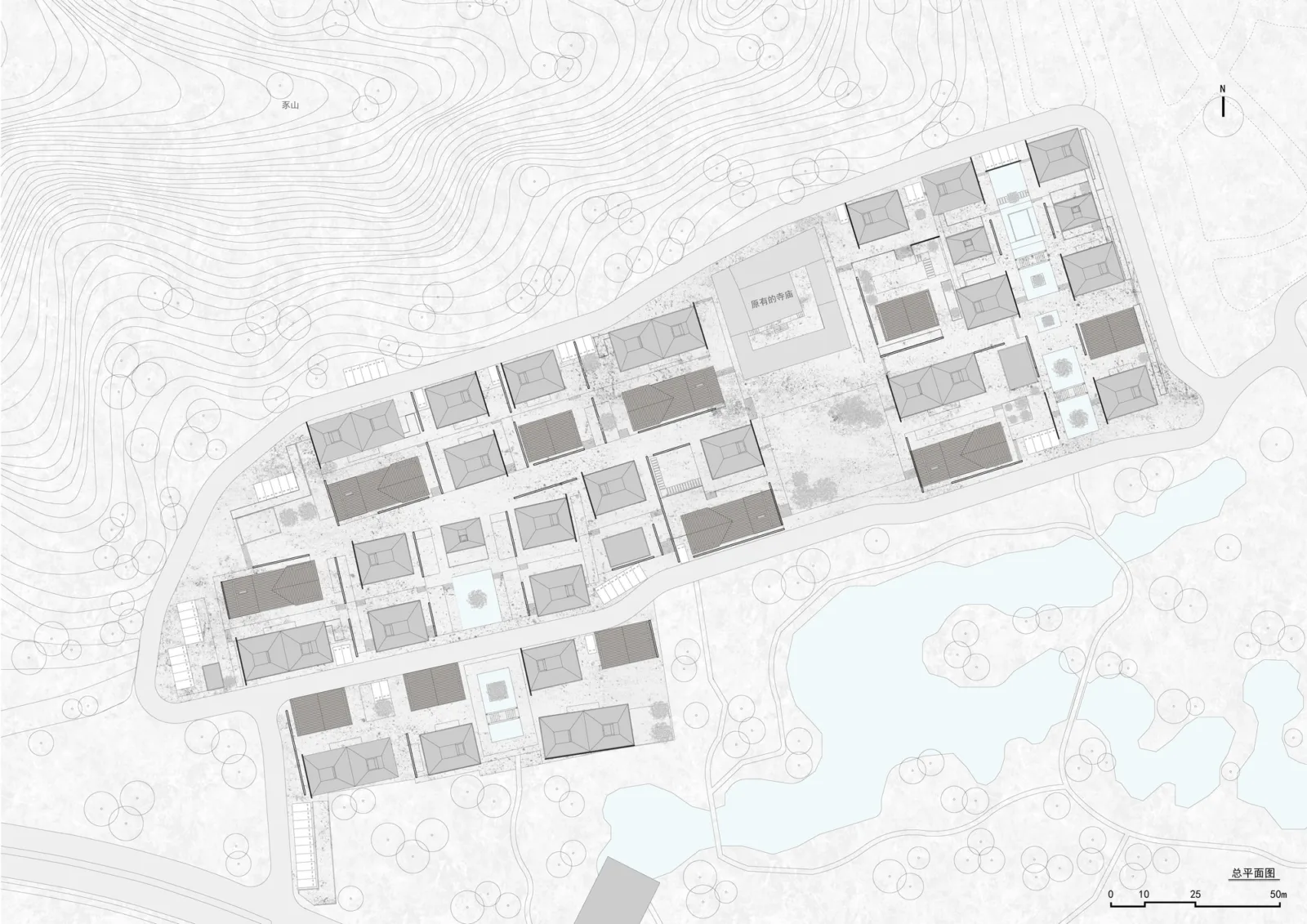
△ General layout plan
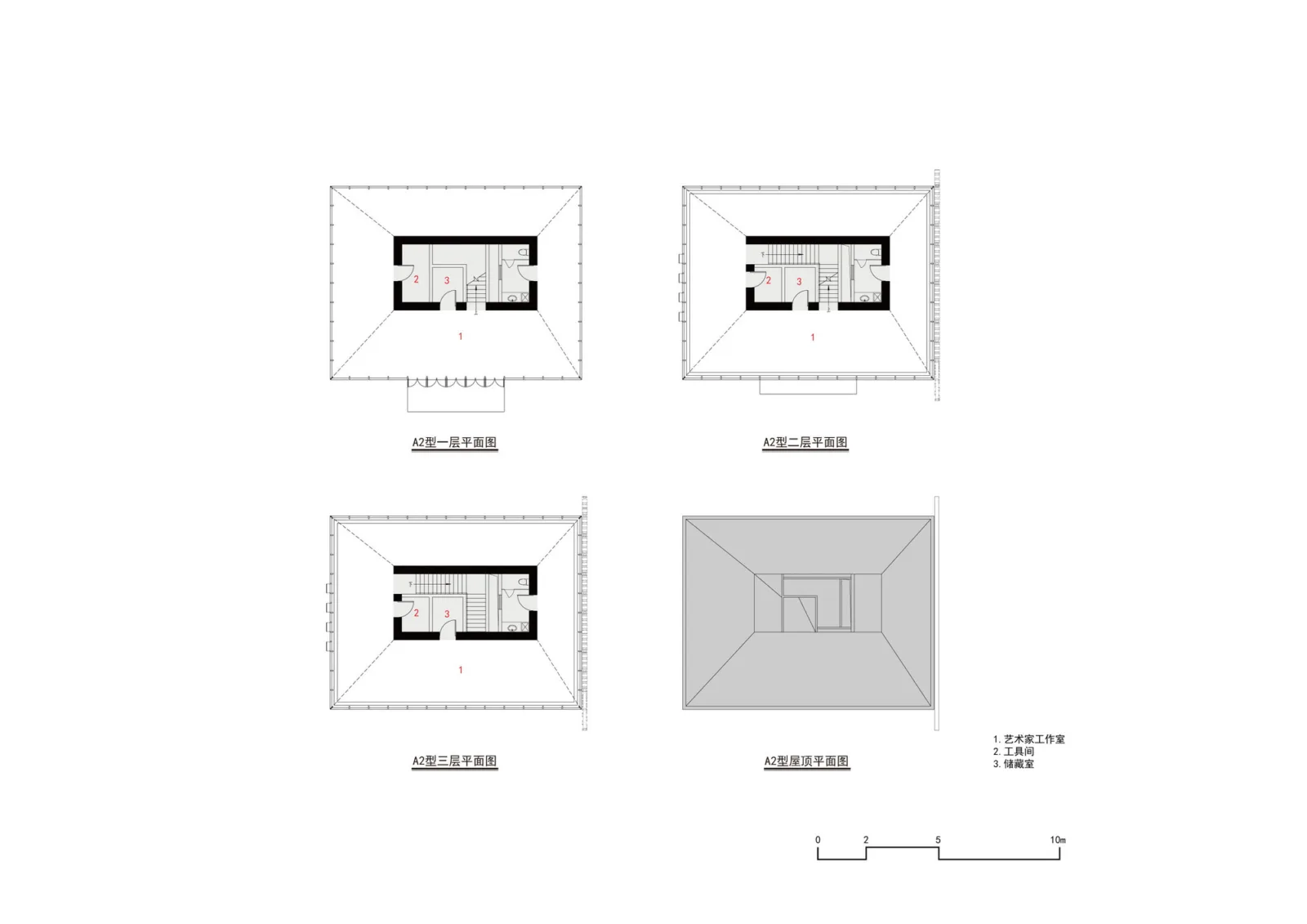
△ A2 Plan
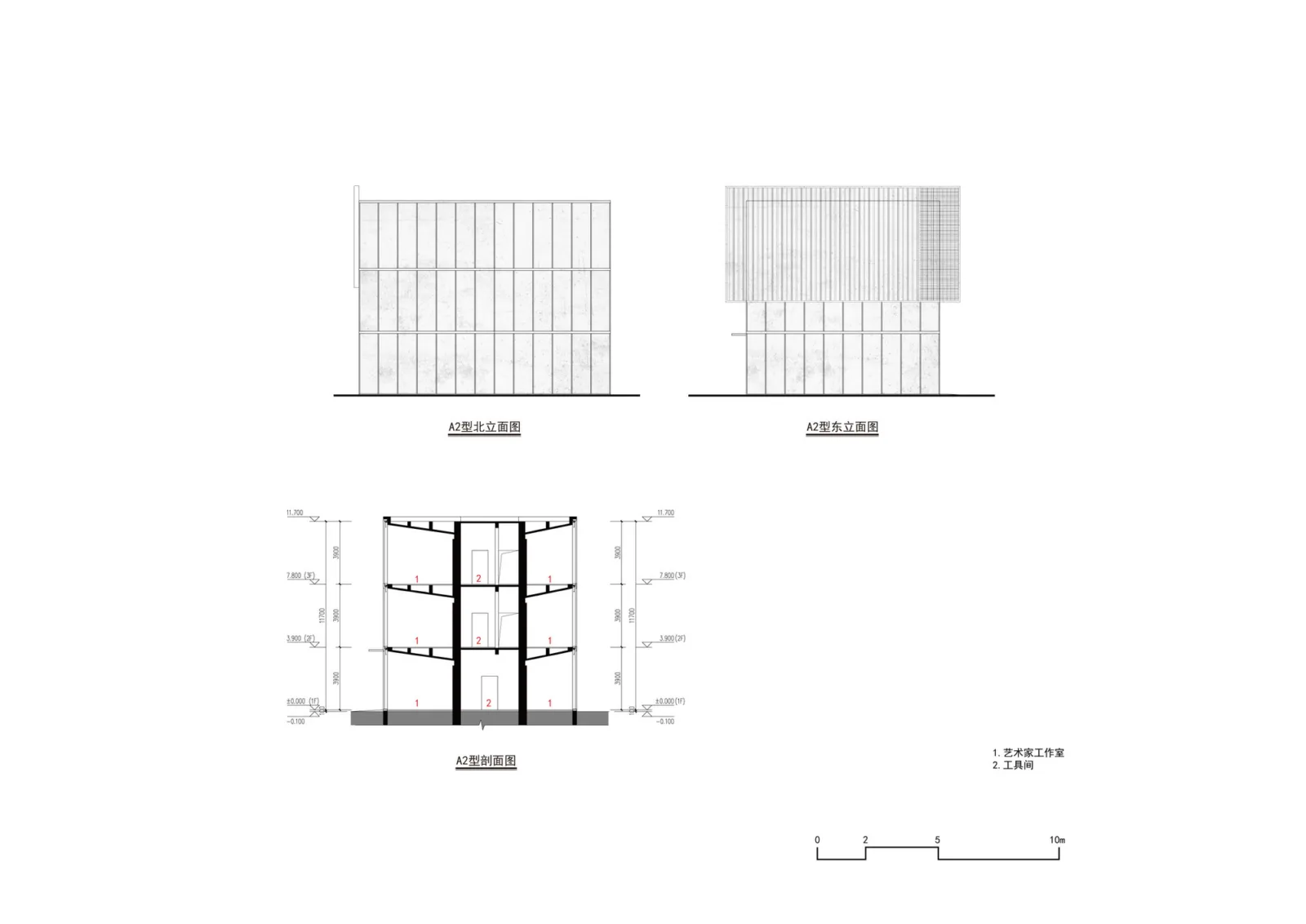
△ A2 type elevation and section diagram
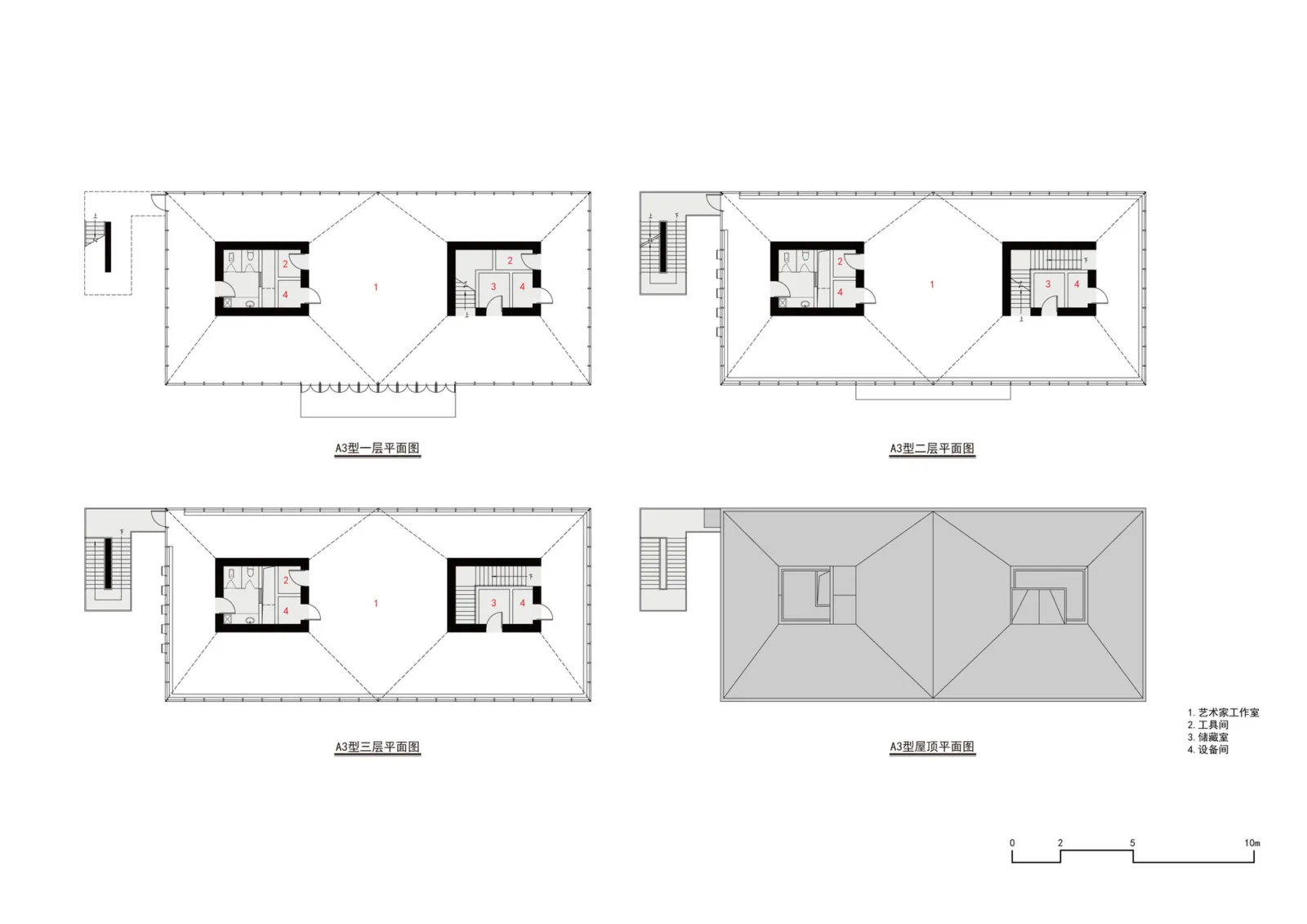
△ A3 Plan
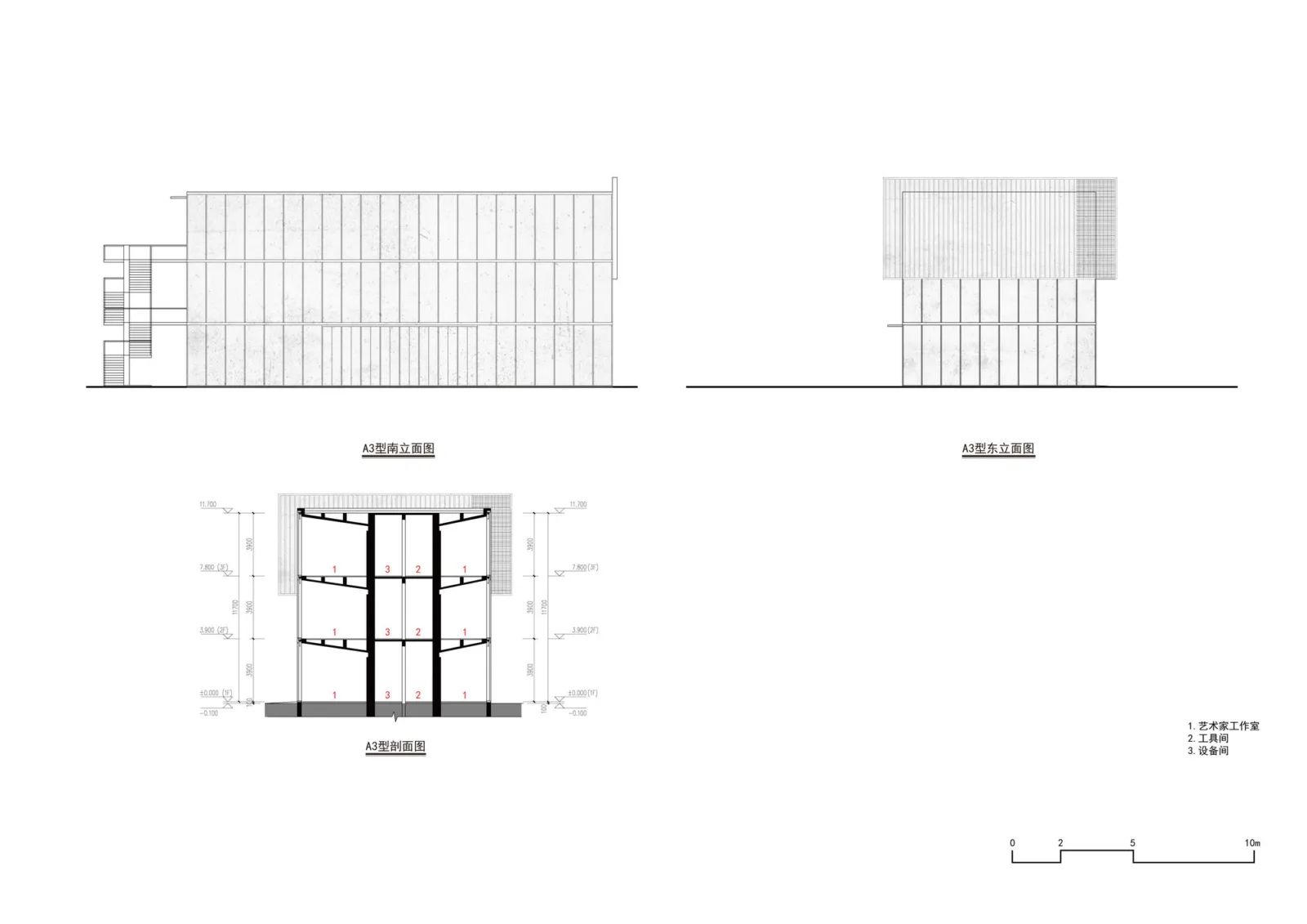
△ A3 type elevation and section diagram
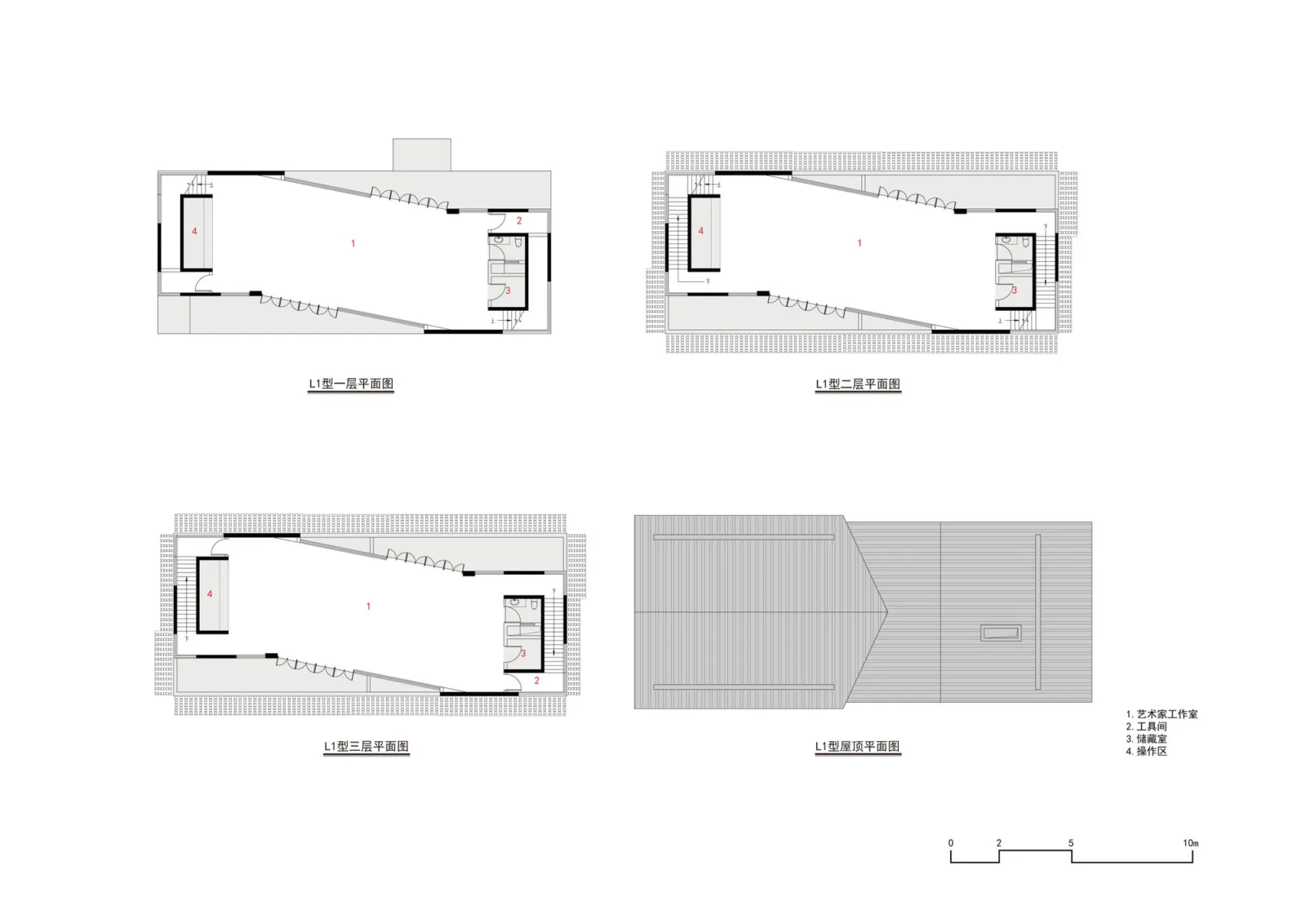
△ L1 type plan view
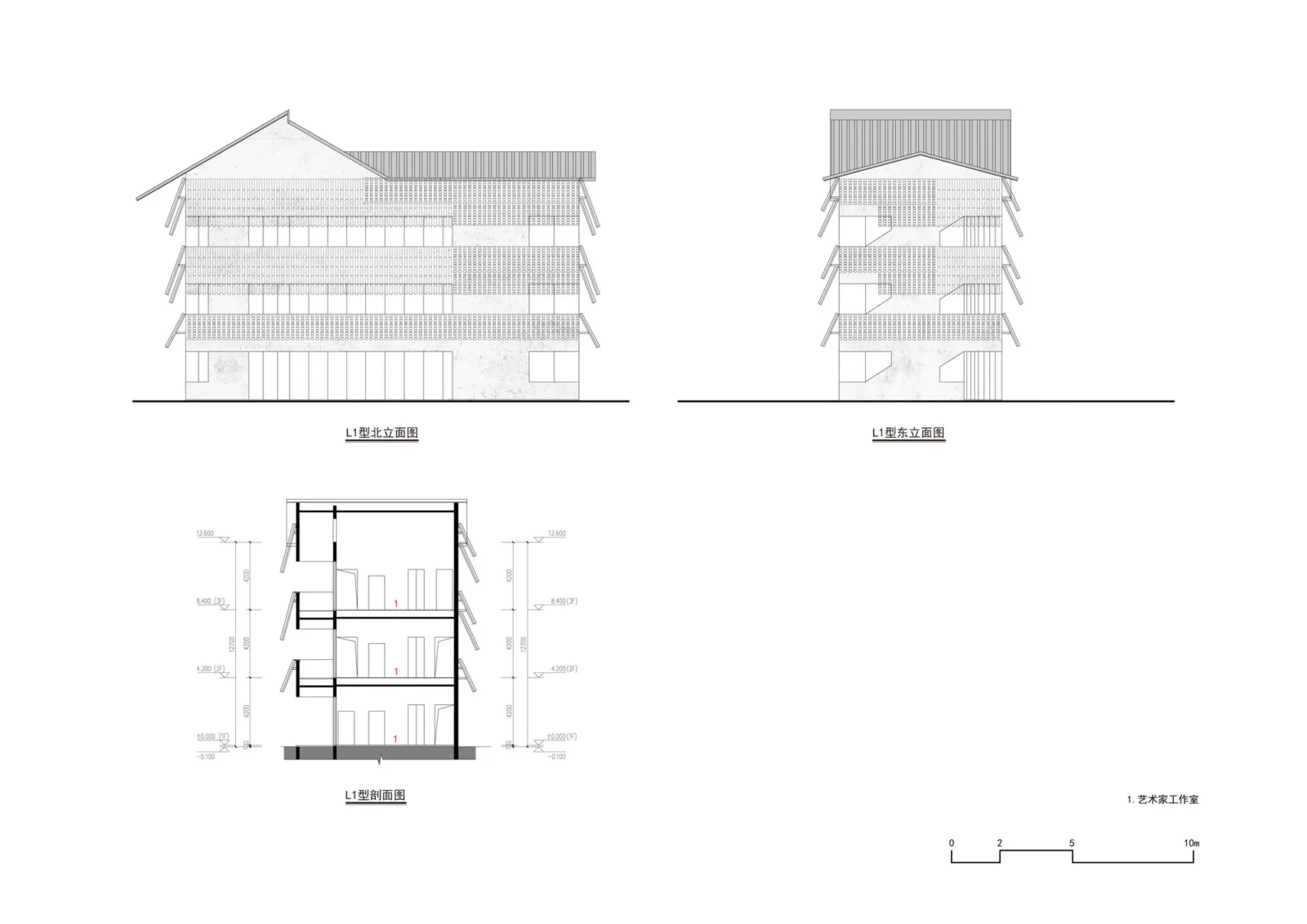
△ L1 type elevation and section diagram
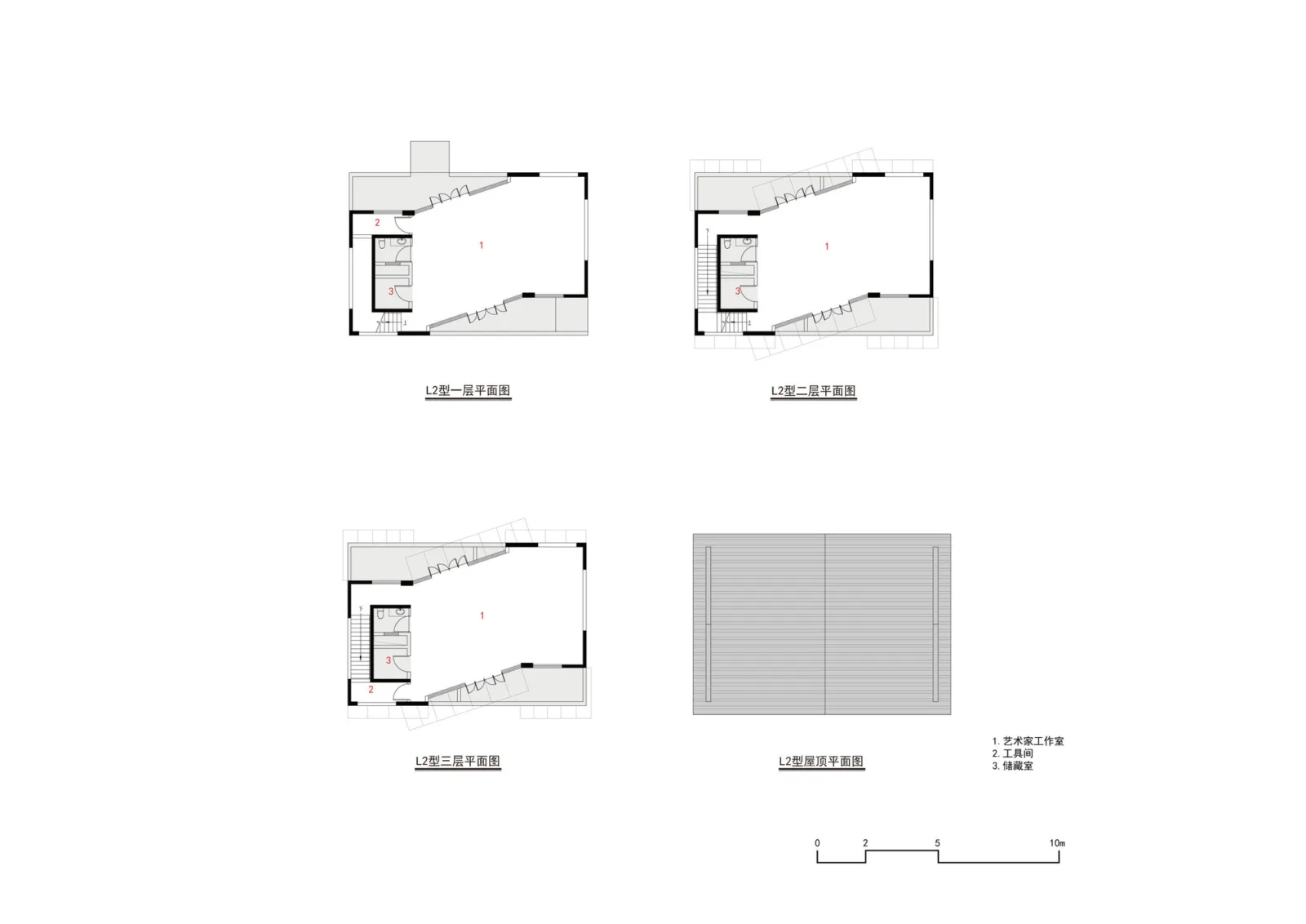
△ L2 type plan view
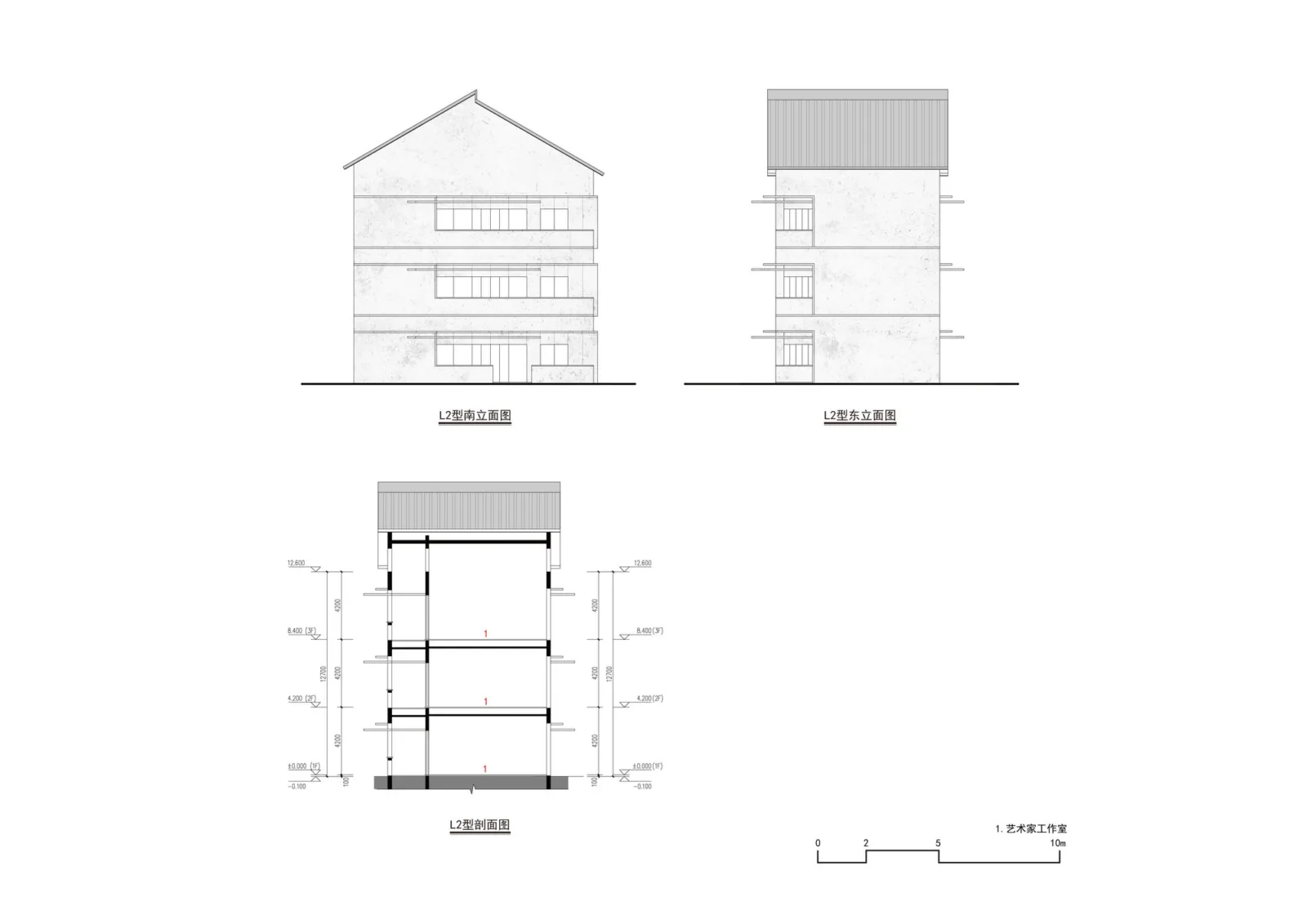
△ L2 type elevation and section diagram
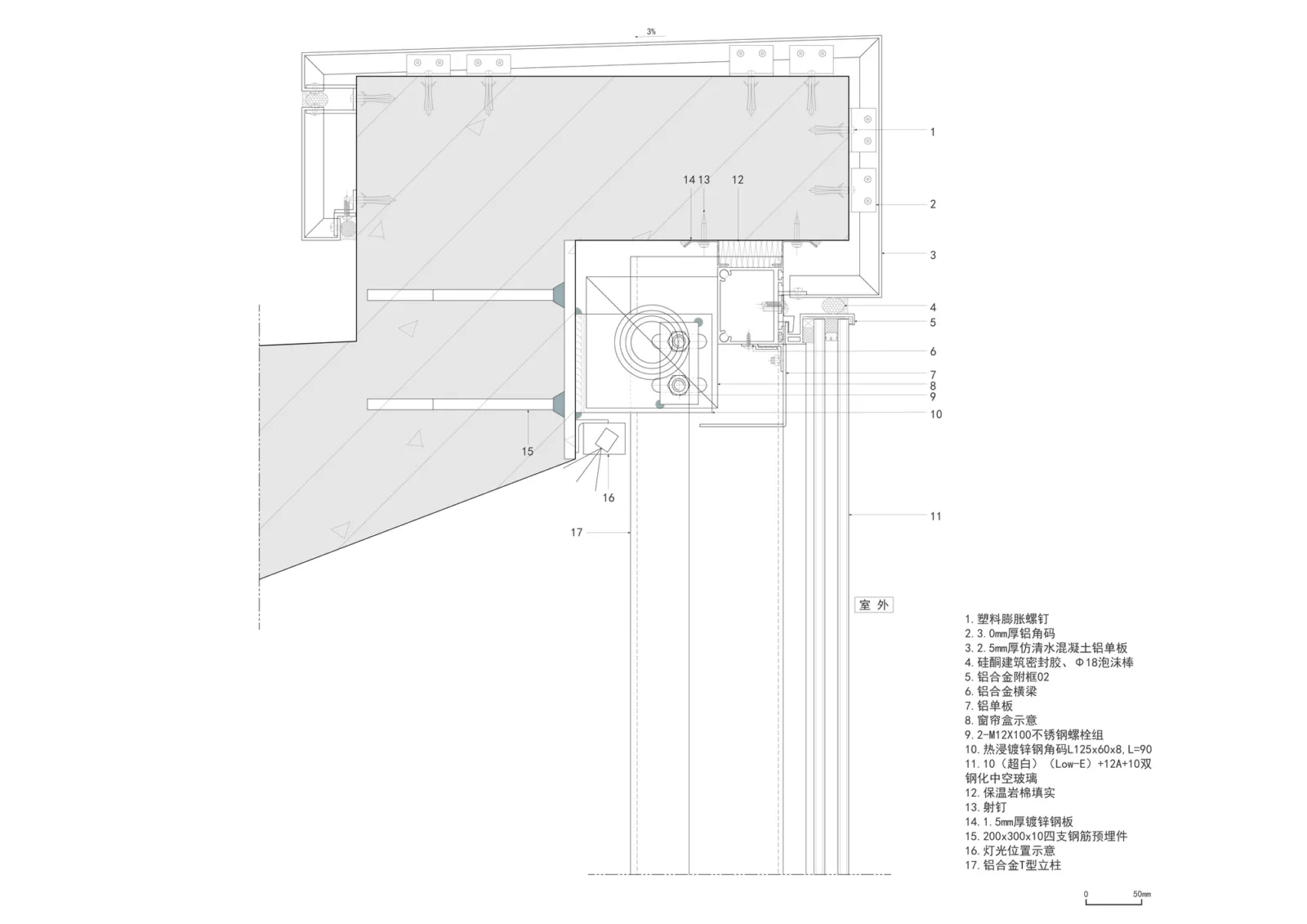
Node 1
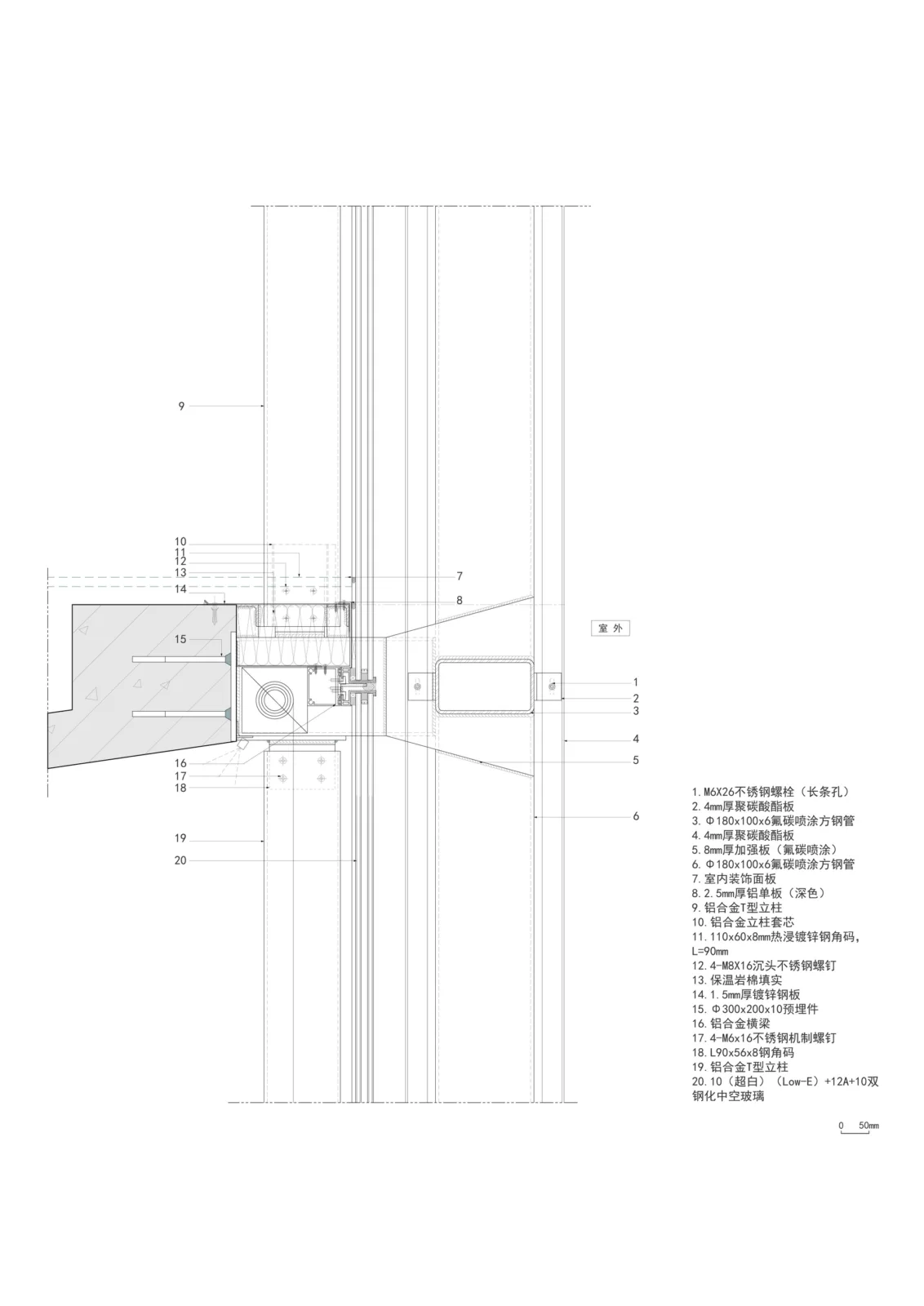
Node 2
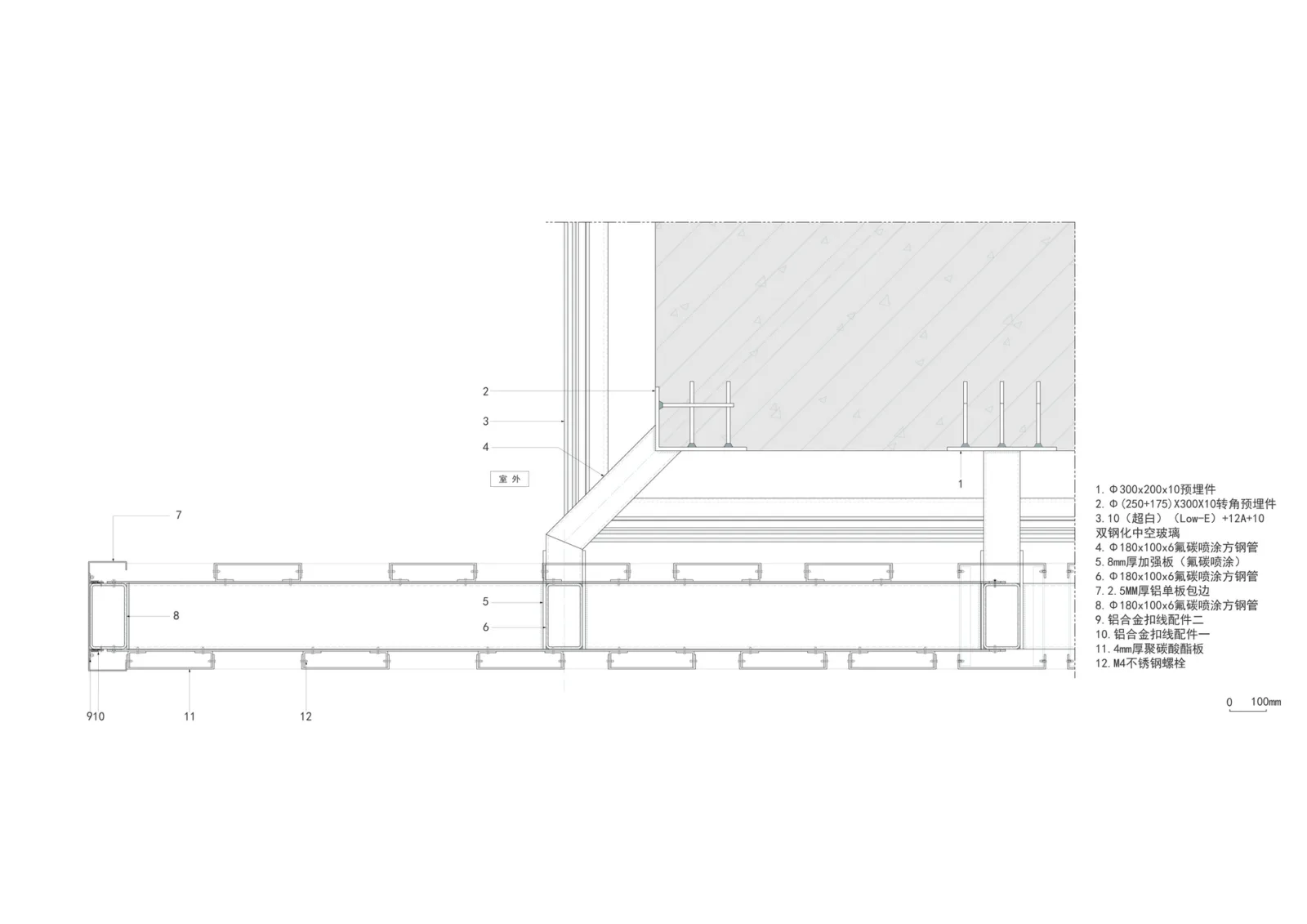
Node 3
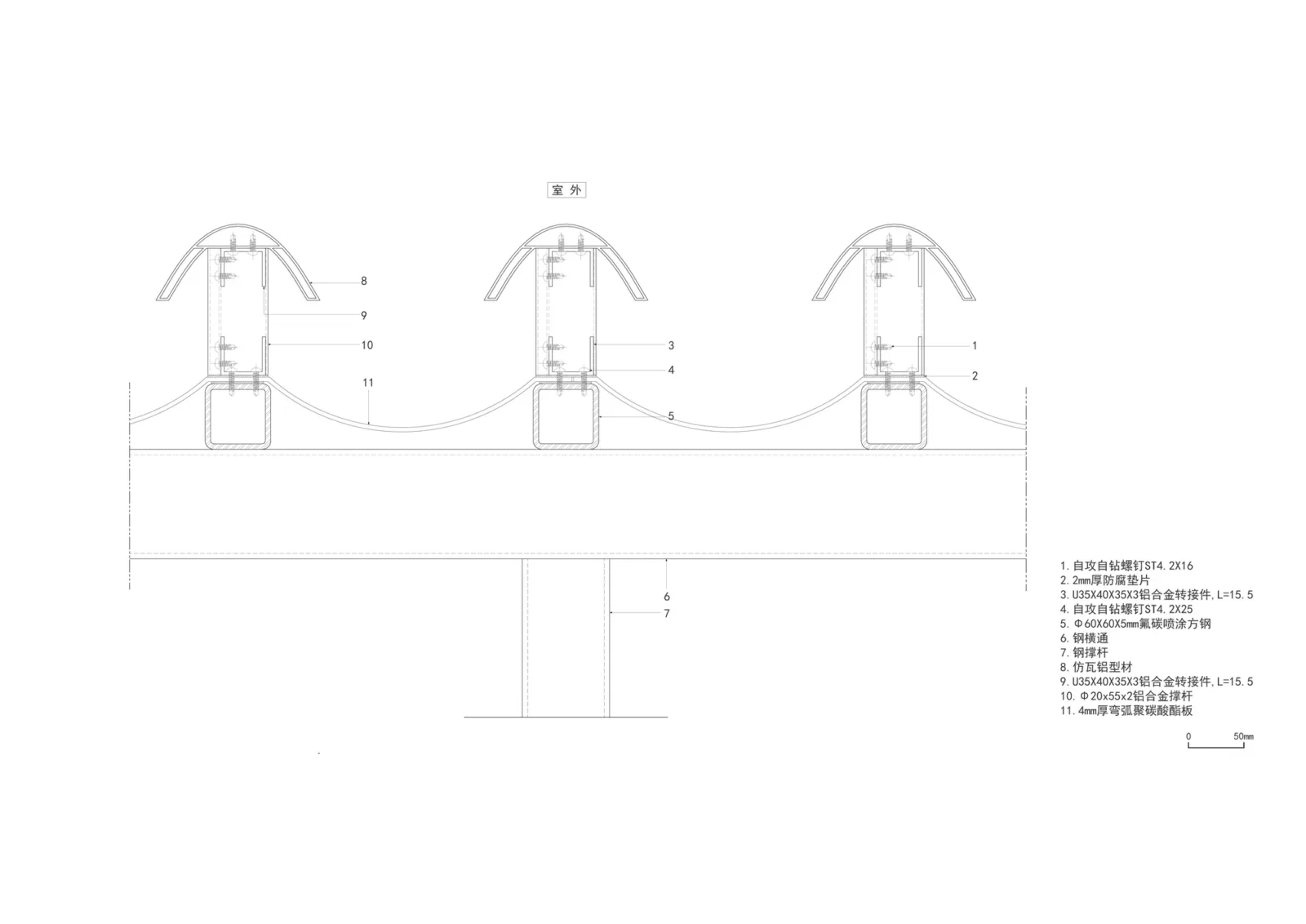
Node 4
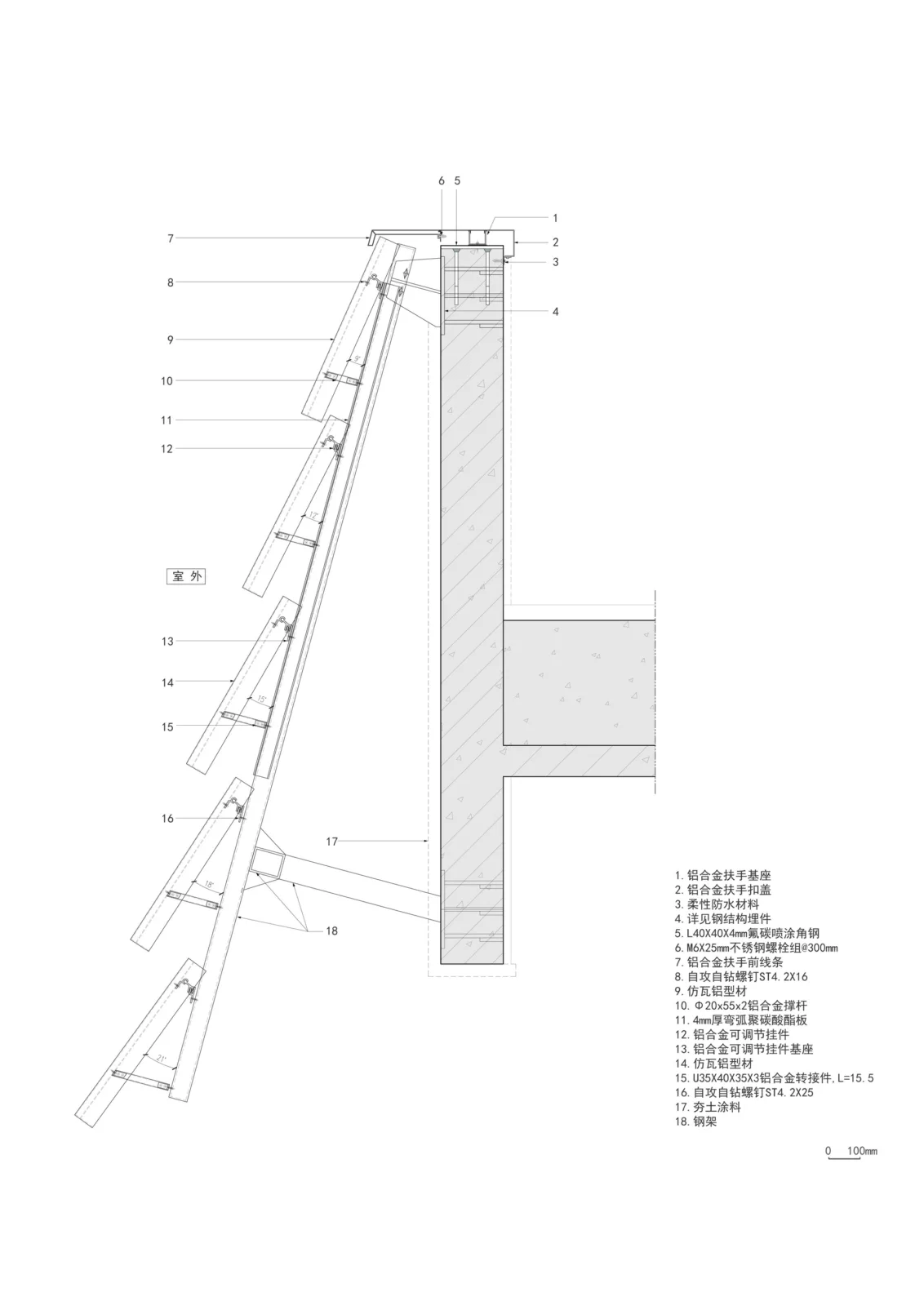
Node 5
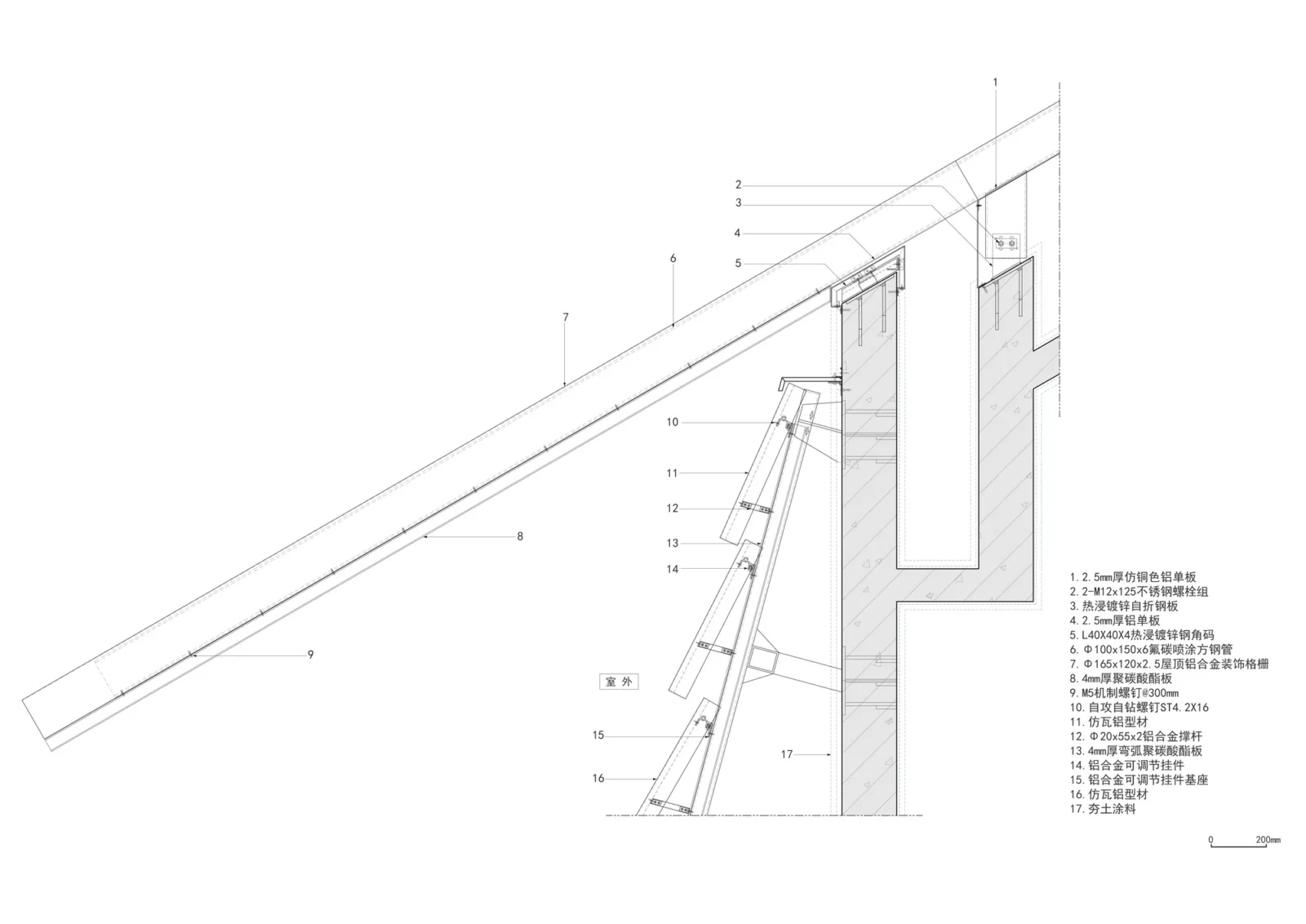
Node 6
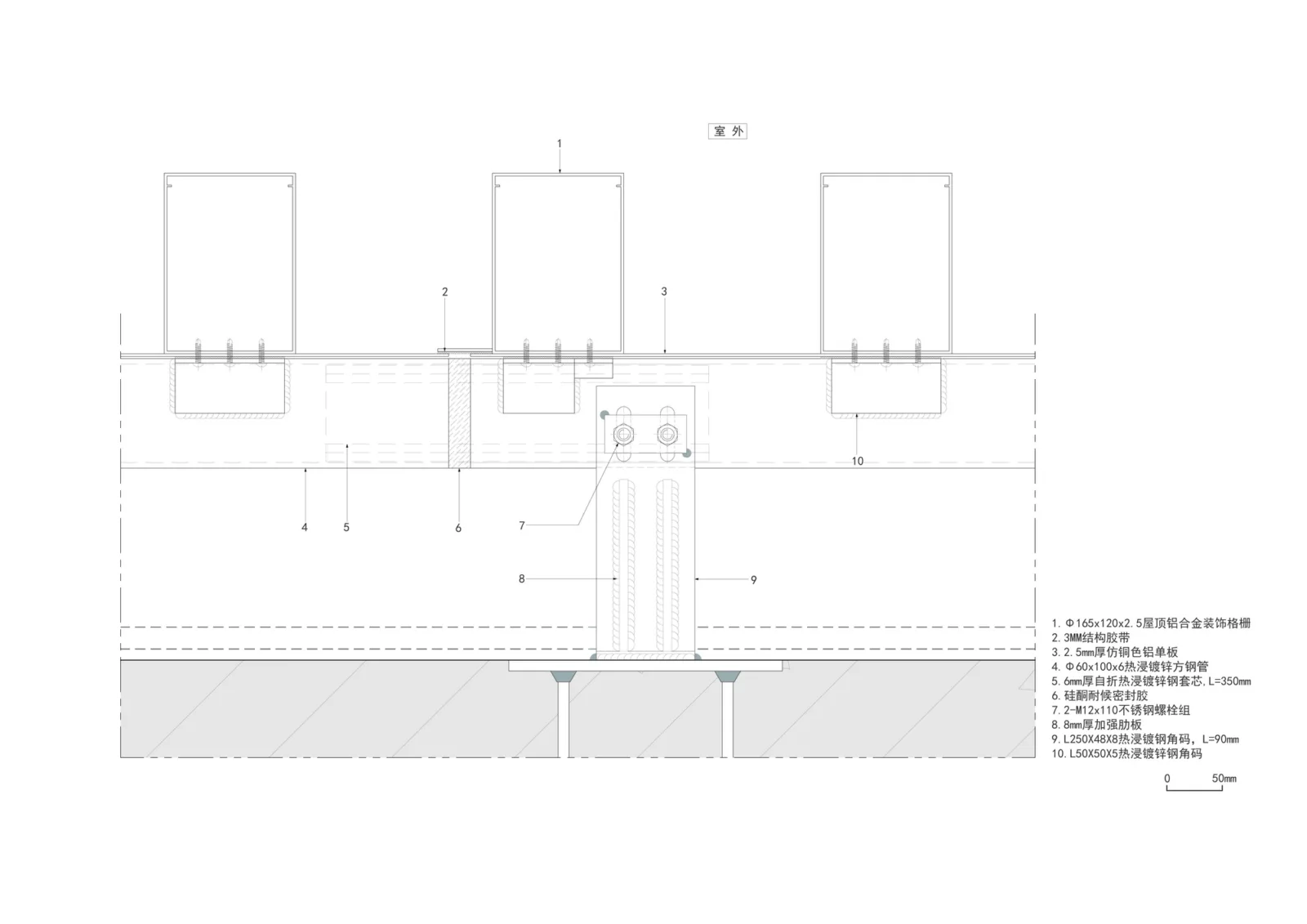
Node 7
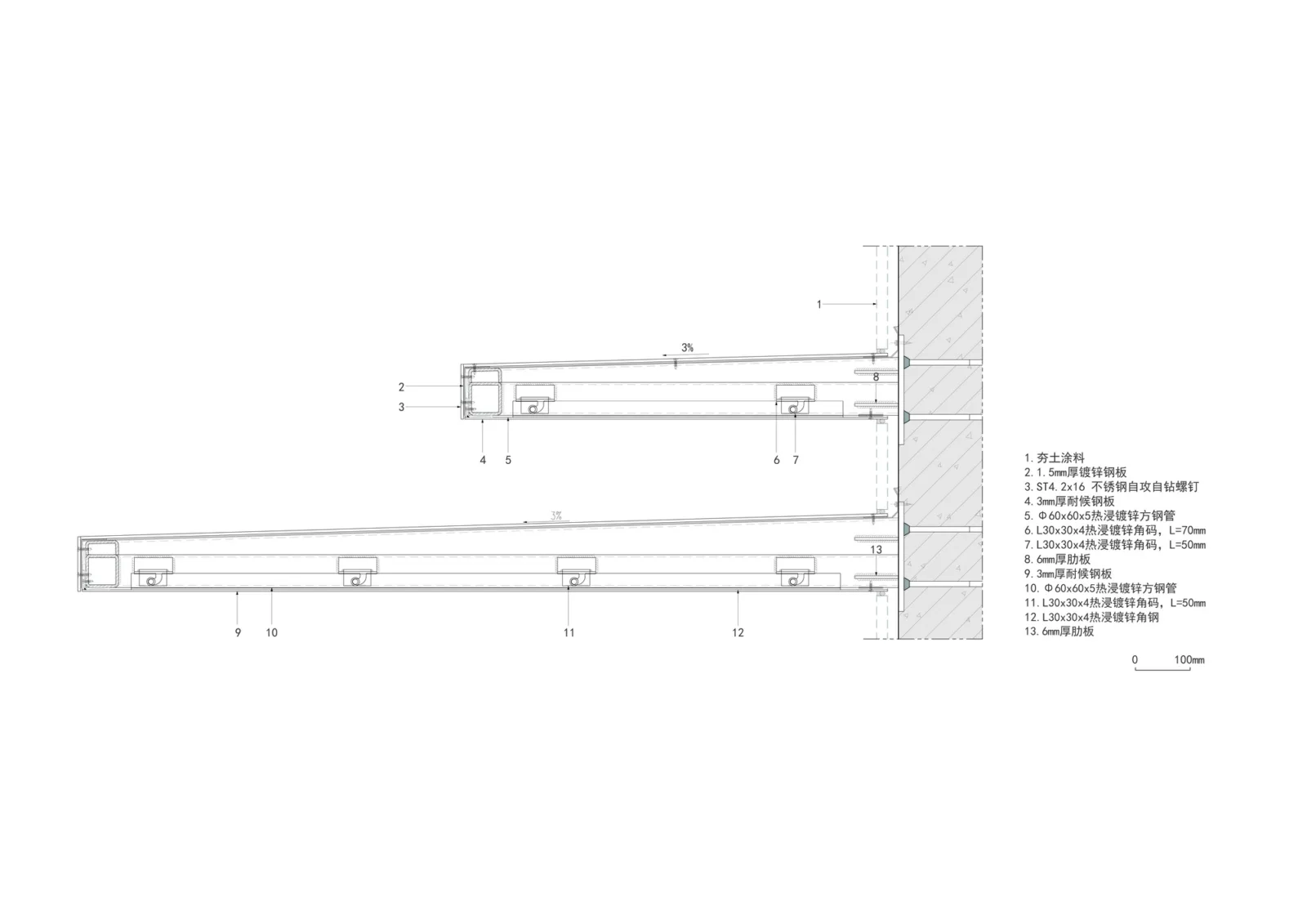
△ Node 8
Project Information
Project Type: Renovation Project
Location: Hangzhou, China
Designer: Zhonglian Left and Right Architecture
Area: 20,298 m²
Year: 2019
Photographer: Octopus Seeks Architecture
Lead Architect: Fang Ye
Design Team: Wang Ren, Li Bo, Li Ying, Xu Tao
Client: Liangzhu Street Management Committee
Interior Design: Duan Xiaodong
Curtain Wall: Wu Wei
Landscape: Zhu Jing












Must log in before commenting!
Sign Up