
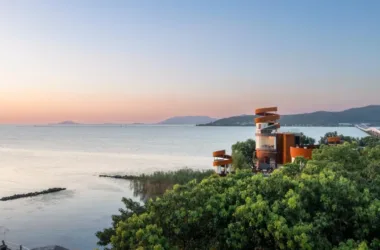
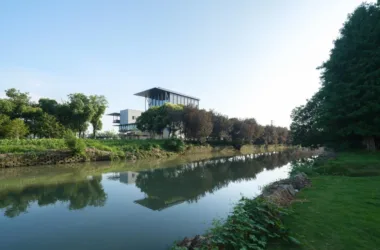
The Hong Art Museum is situated along the elegant Li Gong Causeway by Jinji Lake in Suzhou. This renovation project primarily focuses on children’s art education and exhibitions. The architecture, interior, and furnishings have been designed by Zero One City Architecture Firm.
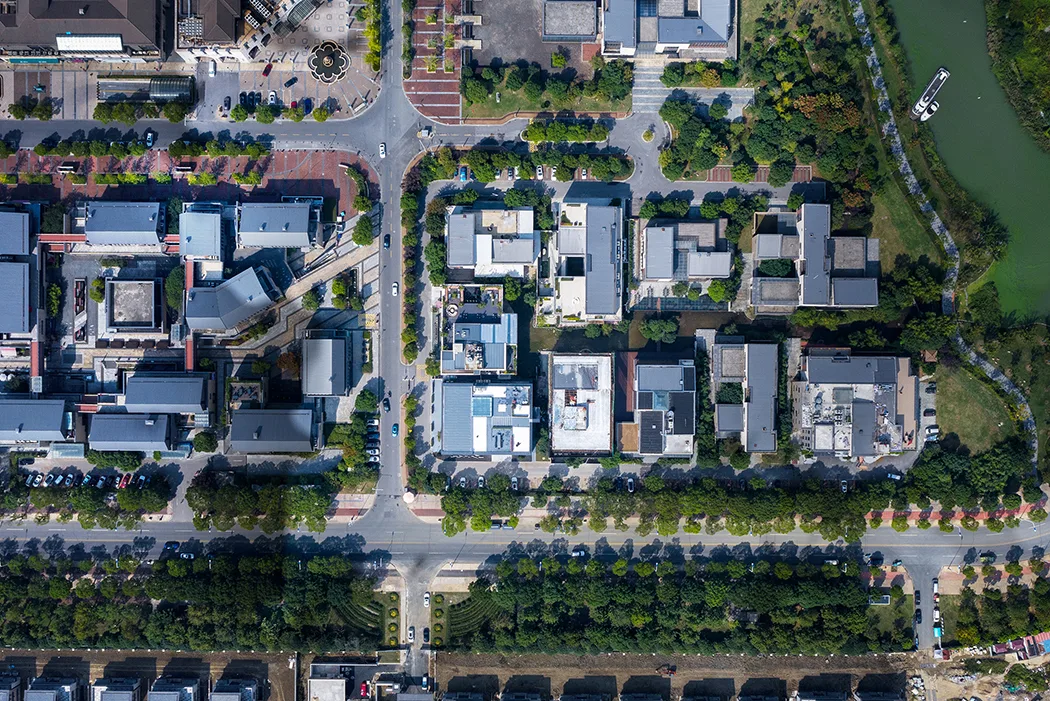
△ Urban Texture
The commercial district of Li Gongdi, where the museum is located, lies at the heart of the developing Suzhou CBD. Its unique geography, historical heritage, and rich cultural influences make it one of Suzhou’s busiest commercial areas. The major design challenge was how to integrate the existing building’s spatial structure with a rational reorganization of its facade and interior, breathing new life into the building and creating an inspiring artistic experience in this bustling urban setting. This project represents Zero One City’s continued exploration of urban renewal.
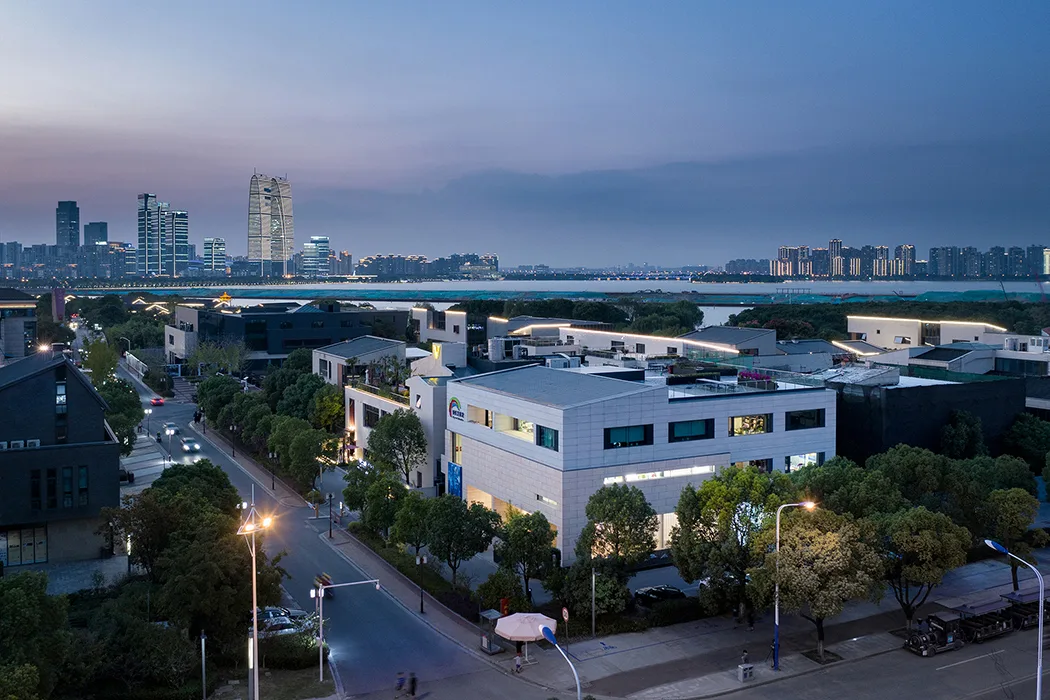
△ Bird’s-eye View from the South
Using Subtraction to Create Rich Layers and Spatial Reorganization
Louis Kahn once said, “Natural light gives space its character and breathes life into architecture. Architecture truly comes alive through the illumination of light.” Inspired by this, the design process centers around ‘light’ as a key element in shaping and reorganizing space. Respecting the existing building structure, the designers strategically subtracted rectangular volumes of varying scales to form complex spatial layers and introduce light in multi-scale, multi-dimensional ways, opening up endless possibilities for the interplay of light and space.
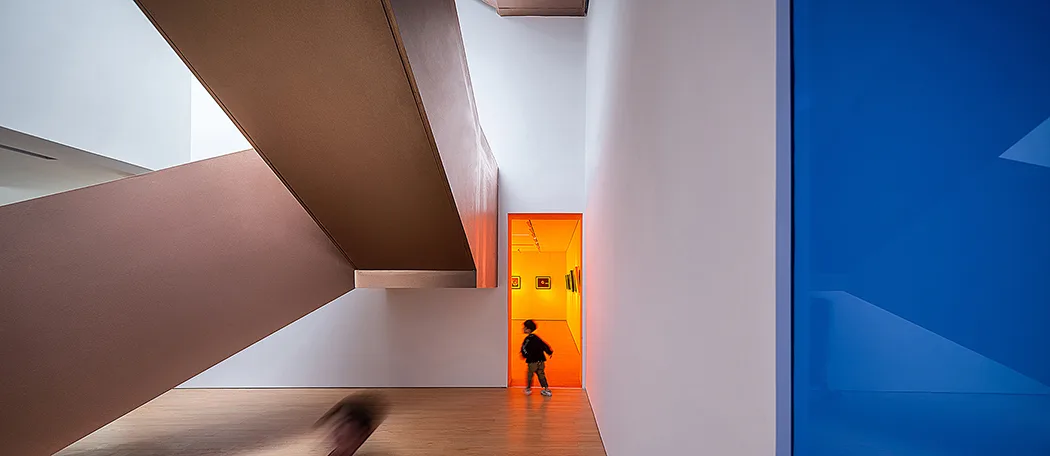
View of the Exhibition Hall from the Atrium
Activating Sunlit Courtyards Within Each Space
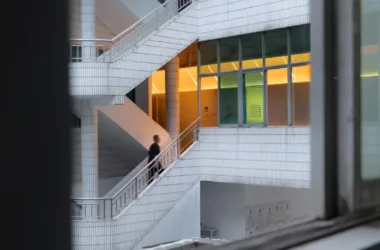
The building’s current structure is rather boxy, resulting in large widths and depths that limit natural light penetration. The existing atrium falls short in lighting the interior adequately. To address this, the original atrium was expanded and surrounded by various functional spaces. A U-shaped glass design crowns the atrium, ensuring ample daylight. A pedestrian staircase spanning three floors is incorporated within, becoming the spatial heart of the art museum. This staircase connects and animates all areas, serving as a captivating indoor installation.
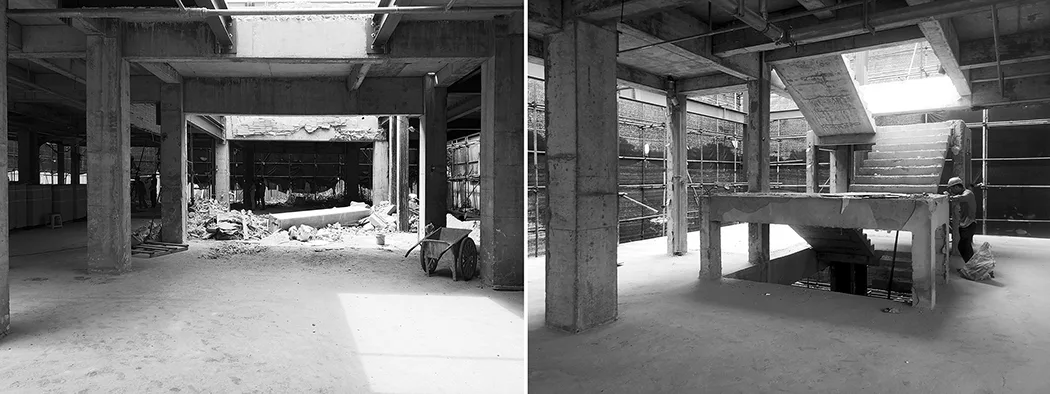
Before Renovation
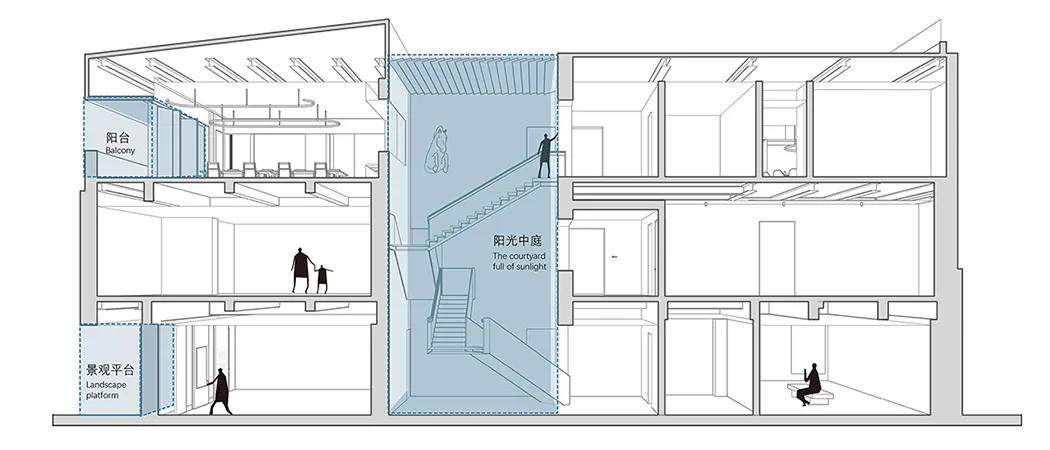
△ Sectional Perspective View
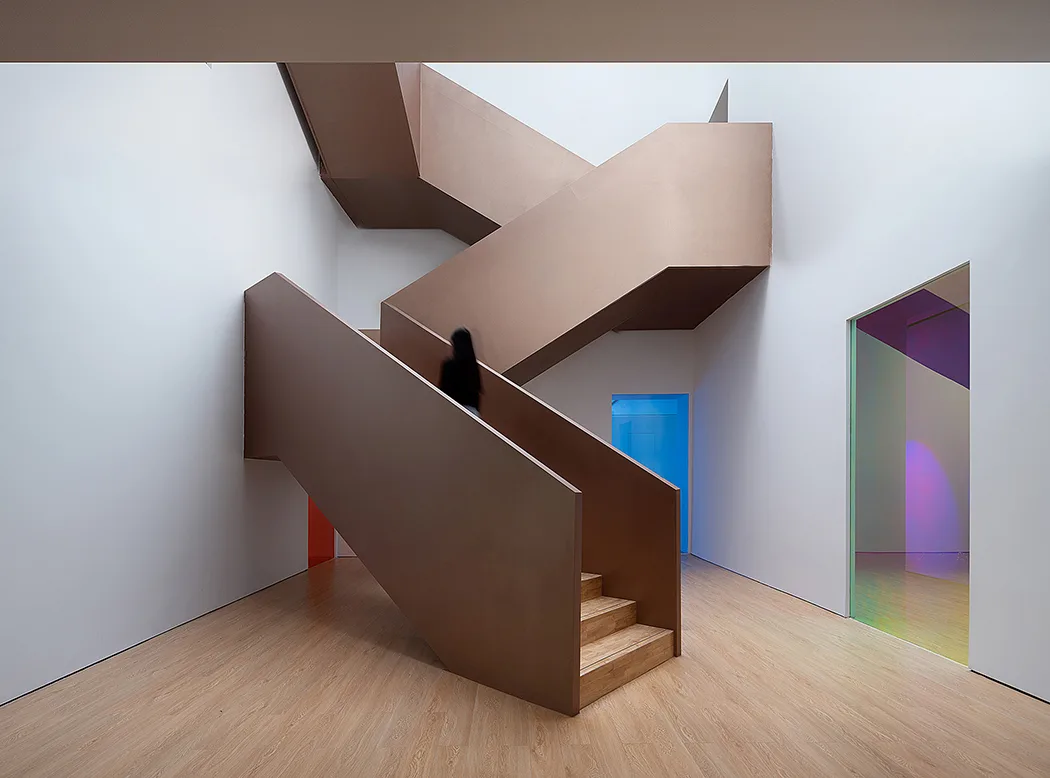
A Grand Staircase Spanning Three Floors
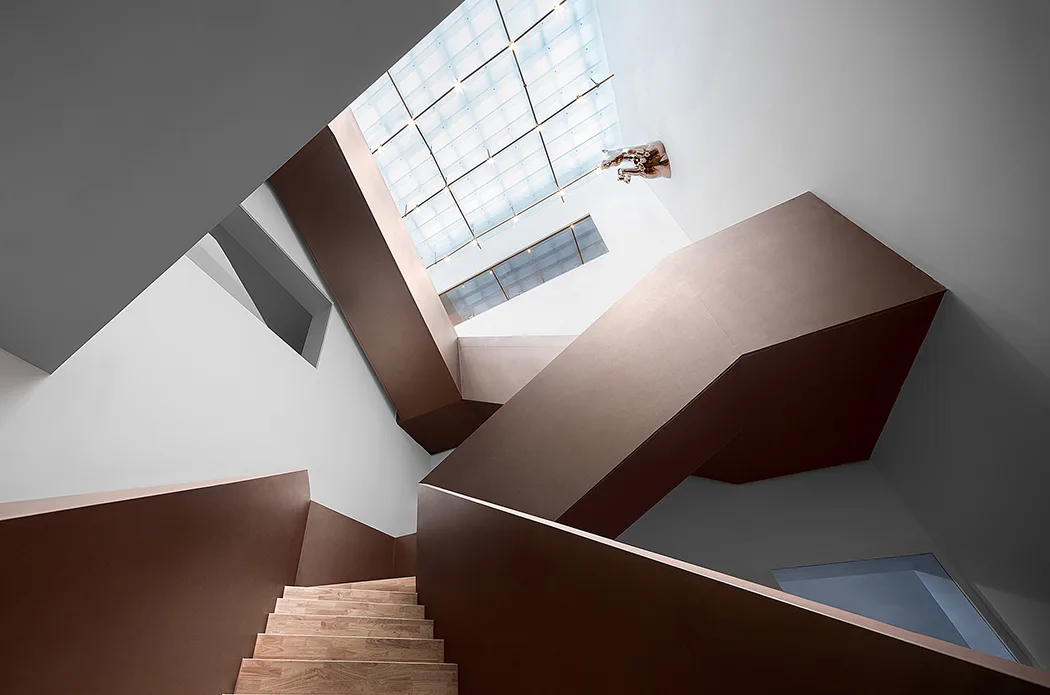
The grand staircase energizes all spaces.
The glass ceiling above the courtyard is arranged methodically, allowing sunlight to gently filter through the skylight. This creates a natural pattern of light and shadow on the white walls. The window openings follow a minimalist design, introducing steady, diffused light through the U-glass skylight into various interior spaces. This design fosters a tranquil atmosphere, encouraging free-flowing thoughts and sparking endless imagination.
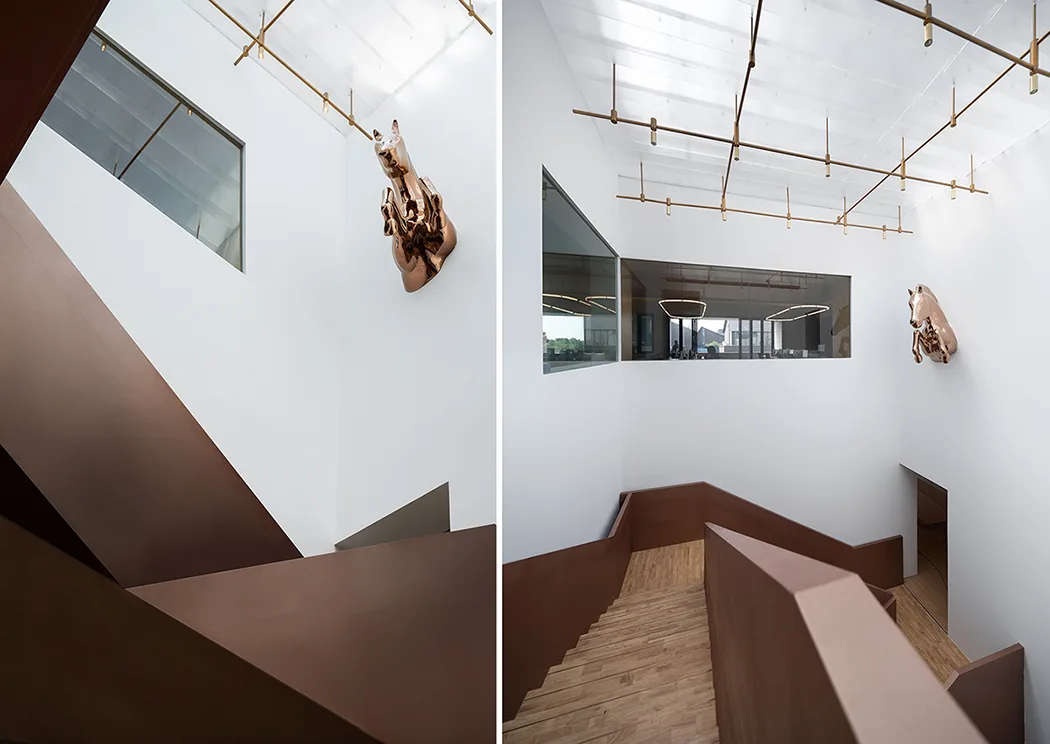
The skylight above fills the atrium with abundant sunlight.
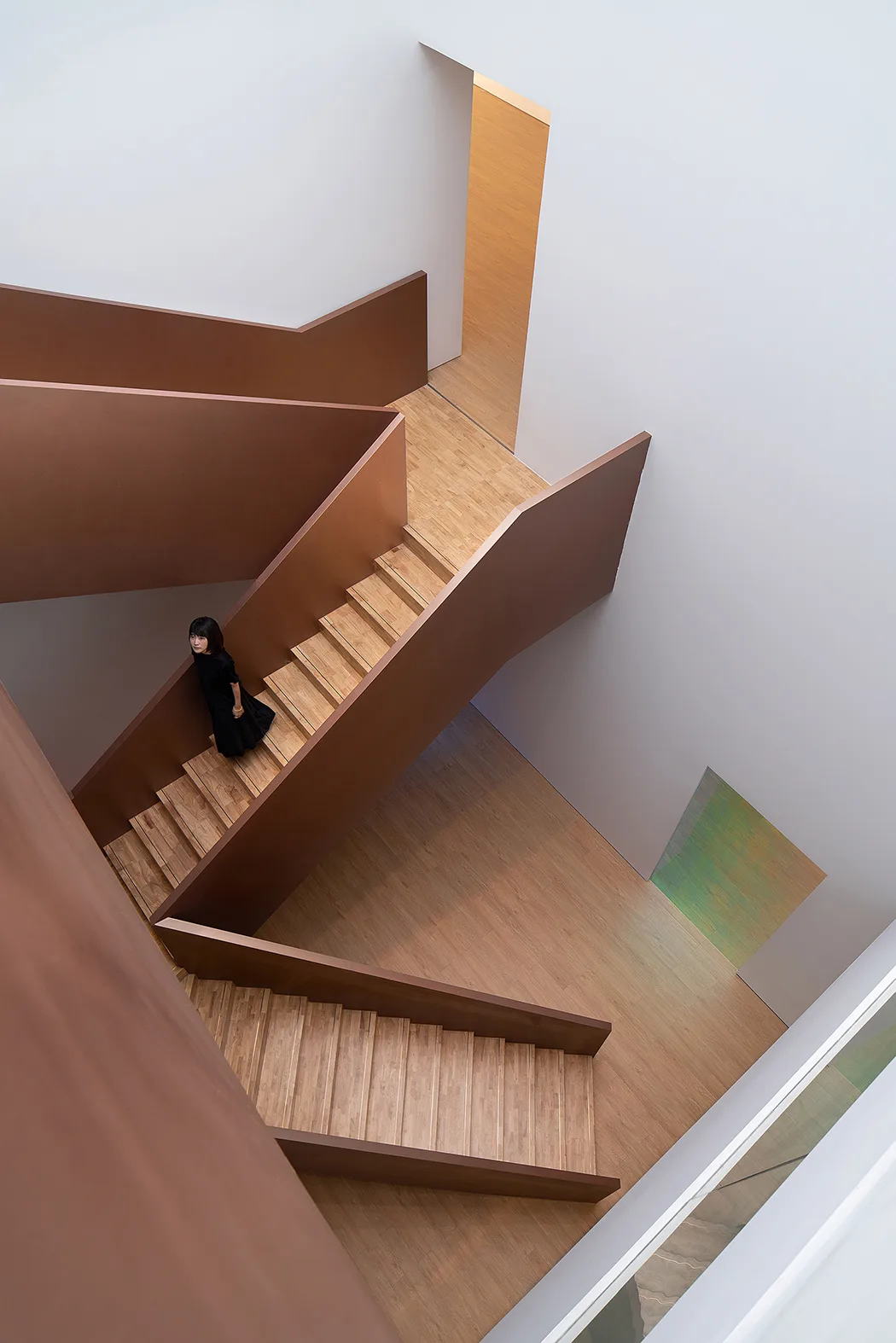
△ View of the Atrium from the Third Floor
A Side Courtyard Corridor Serving as a Buffer Between Inside and Outside
The design links the first and second-floor side courtyards on the building’s south side, creating a transitional space between the enclosed exhibition halls and natural light. Large areas of semi-transparent U-shaped glass replace solid walls on the facade, blurring the boundaries between indoors and outdoors. This side courtyard acts as a buffer zone, allowing visitors to sense the presence of the outdoor environment. The corridor employs minimalist architecture, stripping away unnecessary decoration. The exposed steel frame and raw materials highlight the structure’s inherent beauty. The use of U-shaped glass and high windows avoids direct sunlight in the exhibition spaces by selectively filtering and softening light.
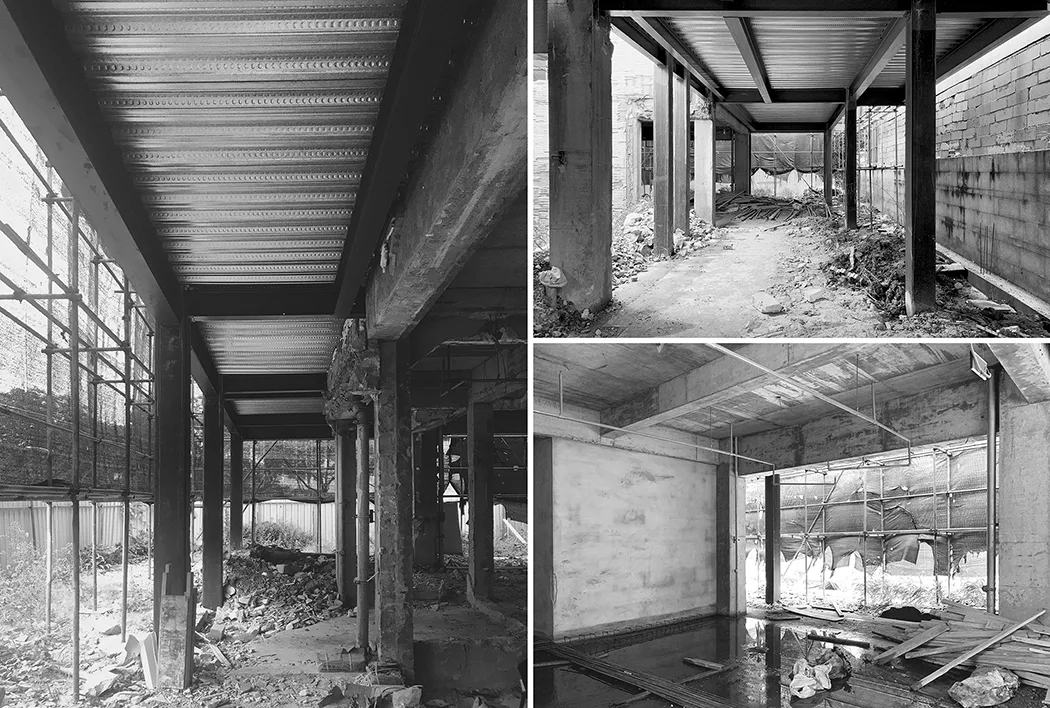
Before Renovation
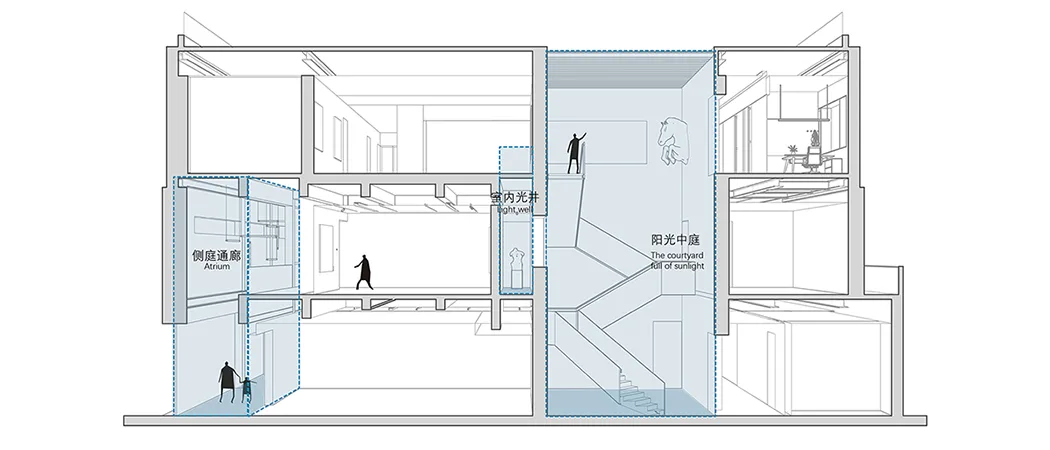
△ Sectional Perspective View
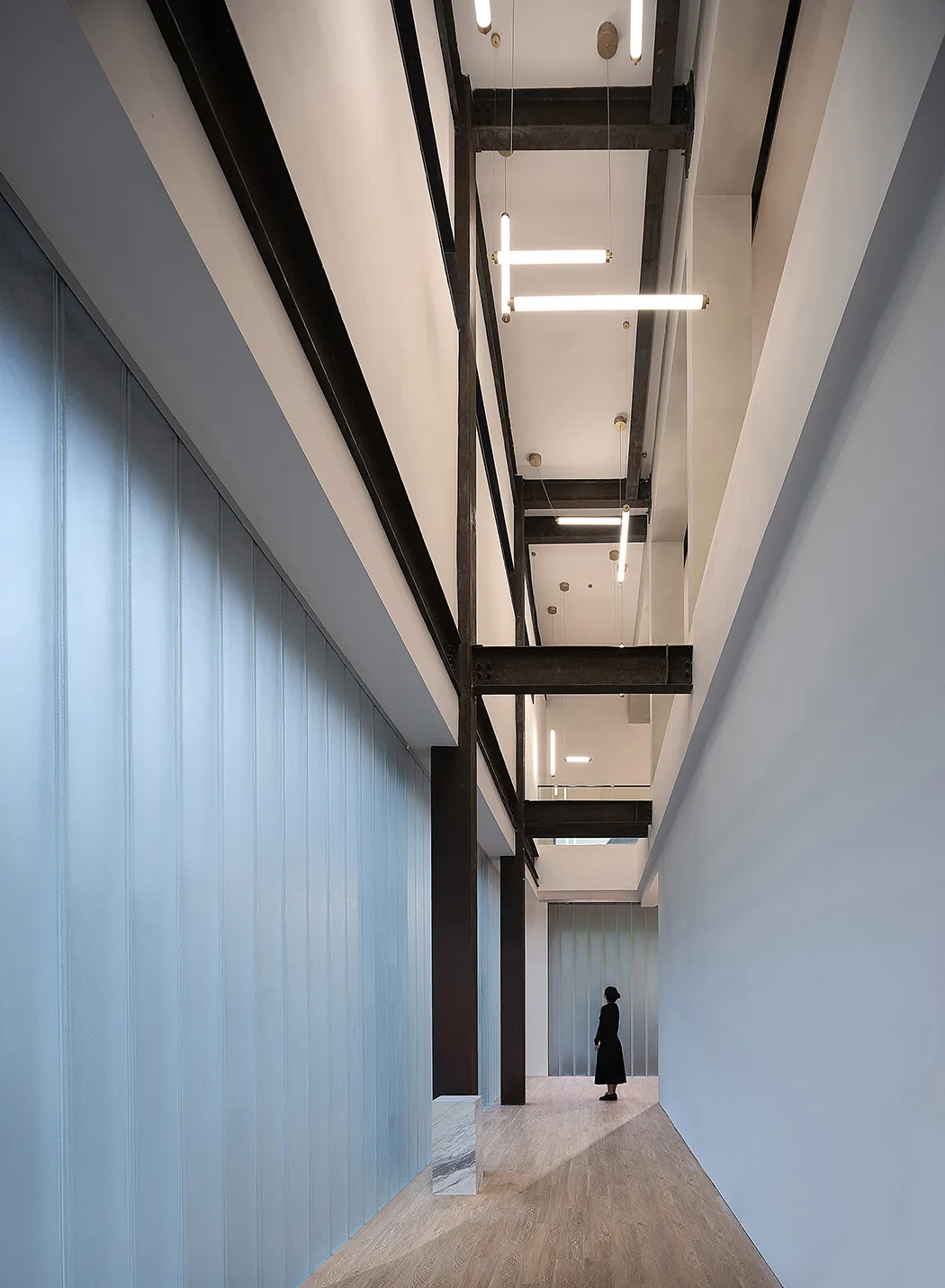
△ Side Courtyard Corridor
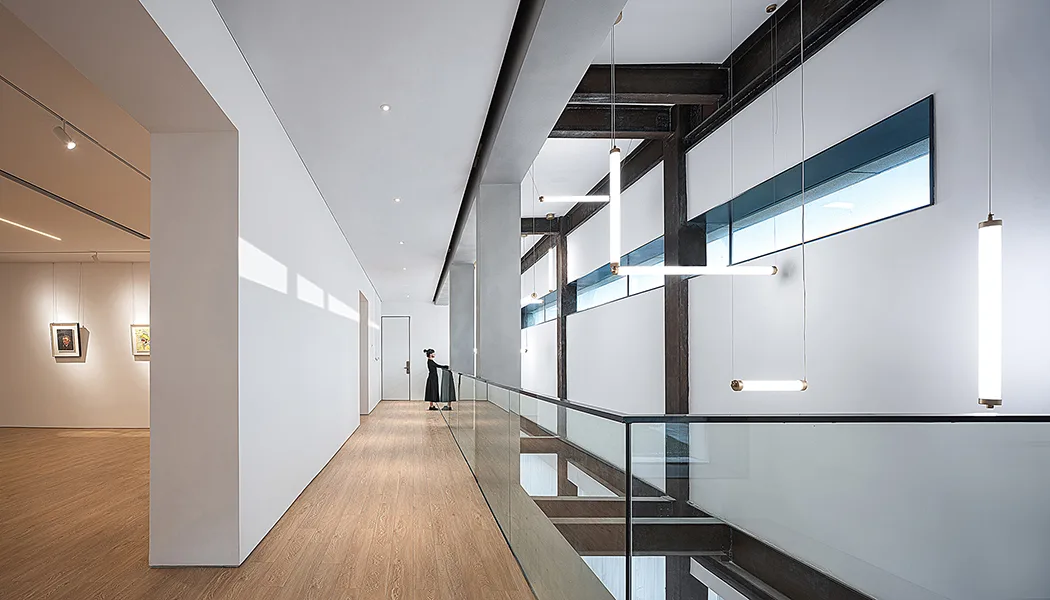
△ Side Aisle
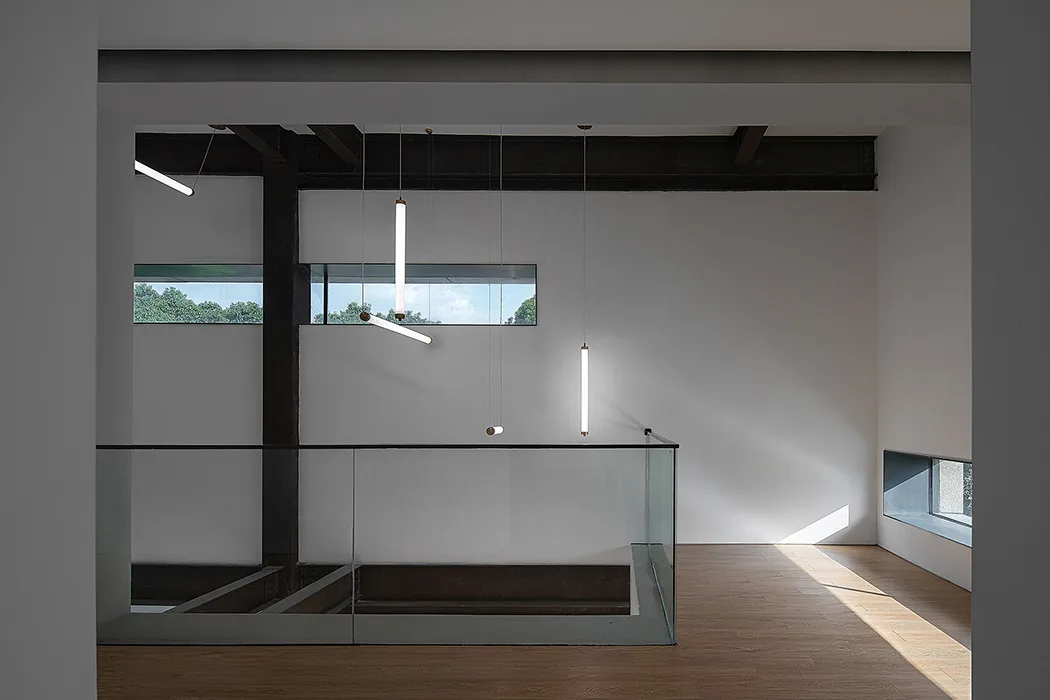
View Toward the Side Courtyard from the Exhibition Hall
The exhibition hall adjacent to the side courtyard is nearly enclosed by solid walls, with only one doorway allowing natural light to filter through the U-shaped glass. The light, softened by this double-layer filtering, is subtle. The stark contrast between light and shadow, divided by a wall, creates a tunnel-like passage through time and space, evoking a sense of wandering. This interplay between illusion and reality deepens visitors’ contemplation and fosters a peaceful mindset.
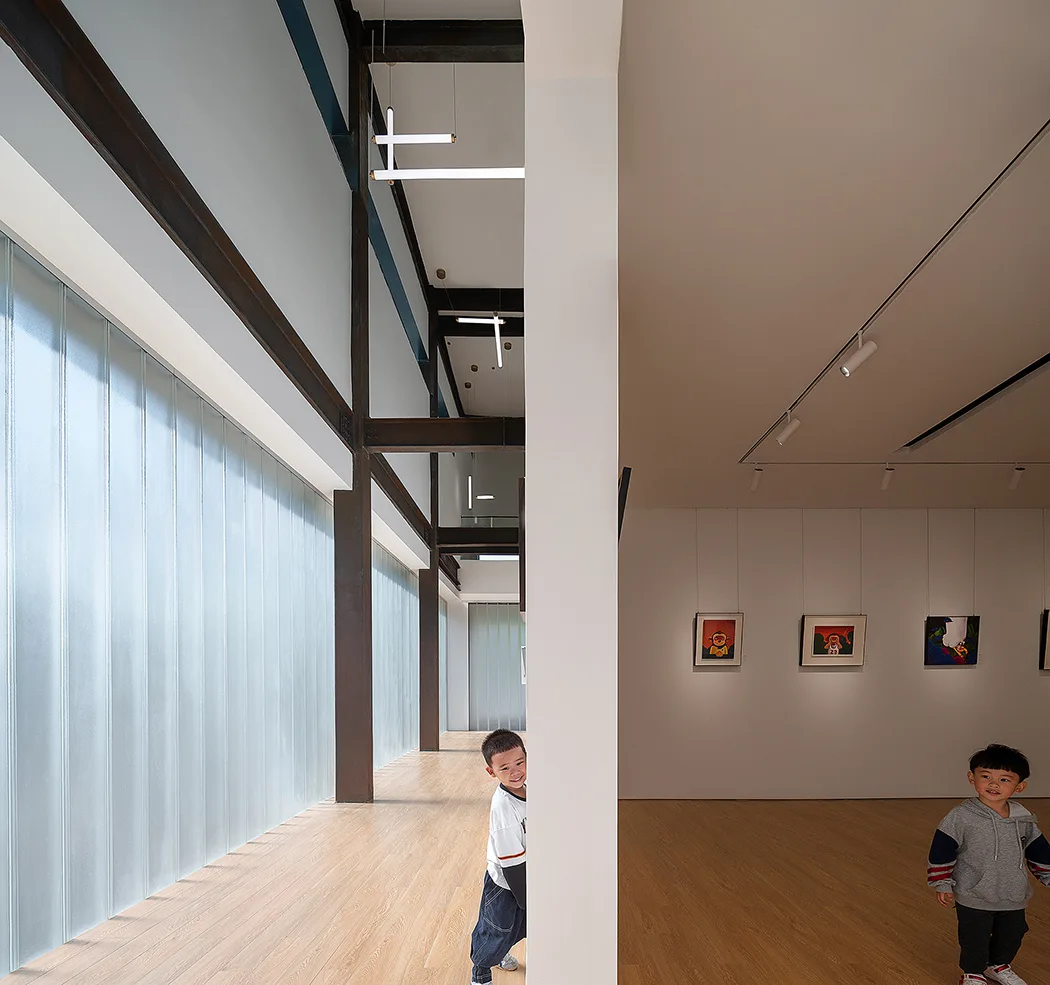
△ Clear Contrast Between Light and Dark Spaces
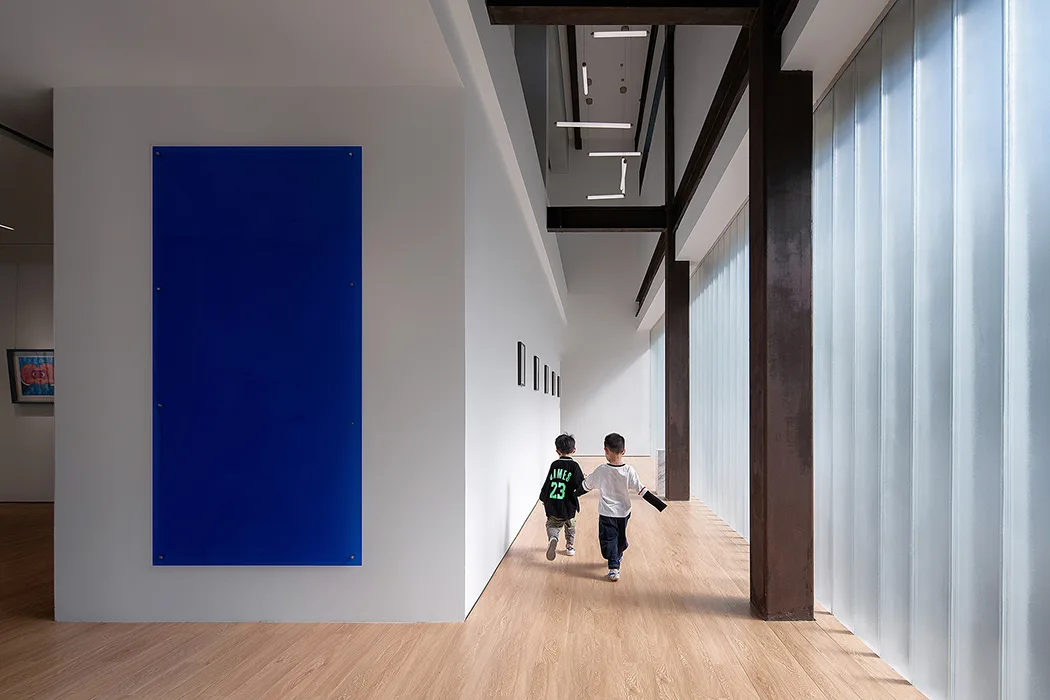
△ Clear Contrast Between Light and Dark Spaces
Creating Diverse Exhibition Spaces Through Light
Unlike traditional art museums, children’s art exhibition spaces demand a more relaxed and flexible environment with varied lighting conditions. The design leverages the existing building and surrounding landscape to craft four distinct types of exhibition halls, each offering unique spatial experiences shaped by different lighting approaches.
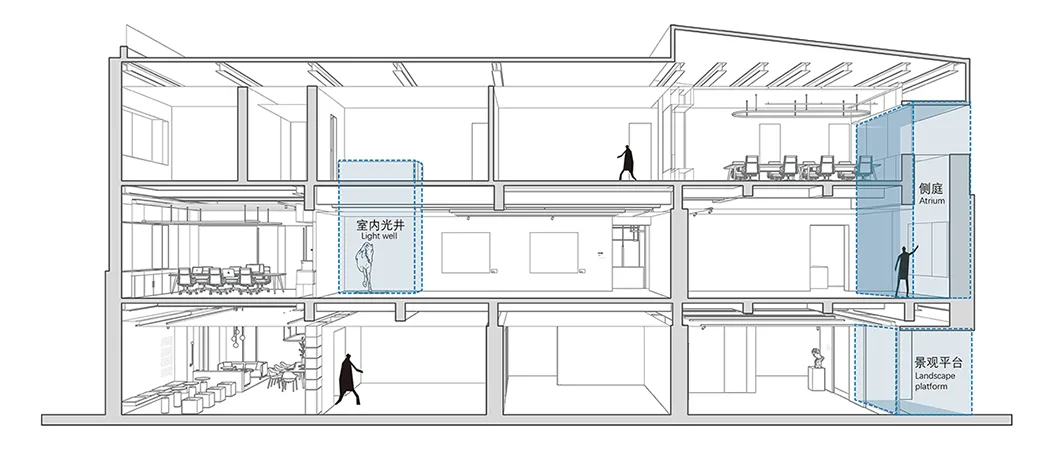
△ Sectional Perspective View
Soft Interweaving of Interior and Exterior Spaces
The concave area on the building’s south side marks the main entrance. Simple lines and a gray-white color scheme define the interior’s aesthetic. The solid wall separating the entrance from the atrium has been replaced with U-glass, creating transparency and extending sightlines. Vertical lines visually separate and intertwine time and space within the building.
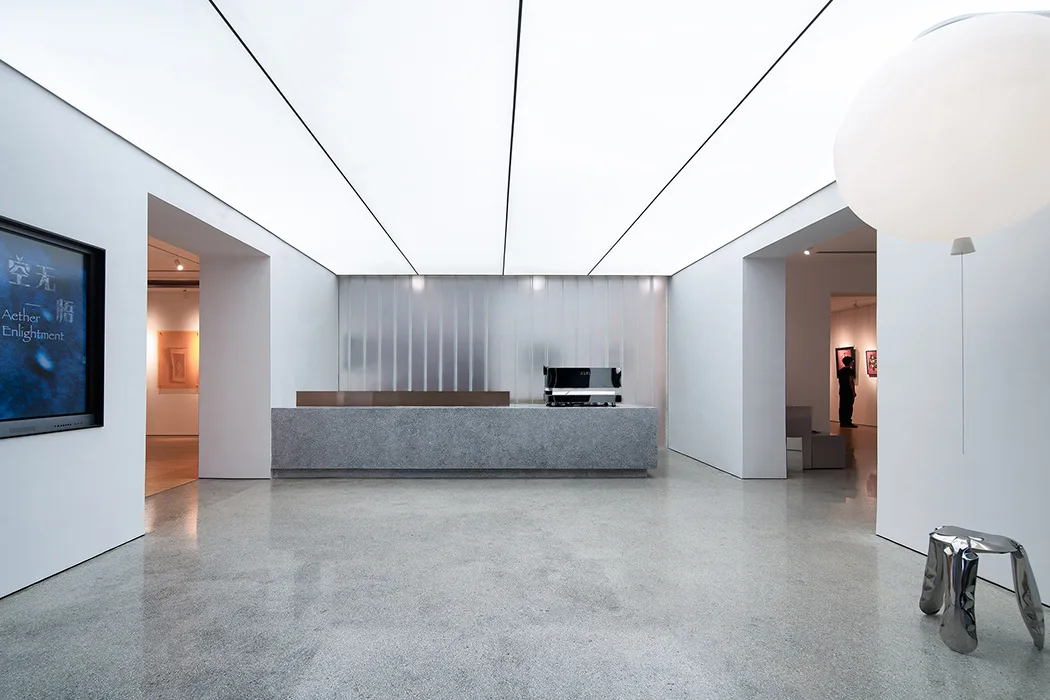
△ Main Entrance Hall
On the building’s west side, three equal rectangular volumes were carved out to create a series of outdoor landscape platforms. The solid stone wall was replaced by U-shaped glass, allowing filtered natural light to permeate the interior. This design immerses the exhibition space in a gentle atmosphere, blending the outdoor landscape seamlessly with indoor views, and visually softening the boundaries between interior and exterior.
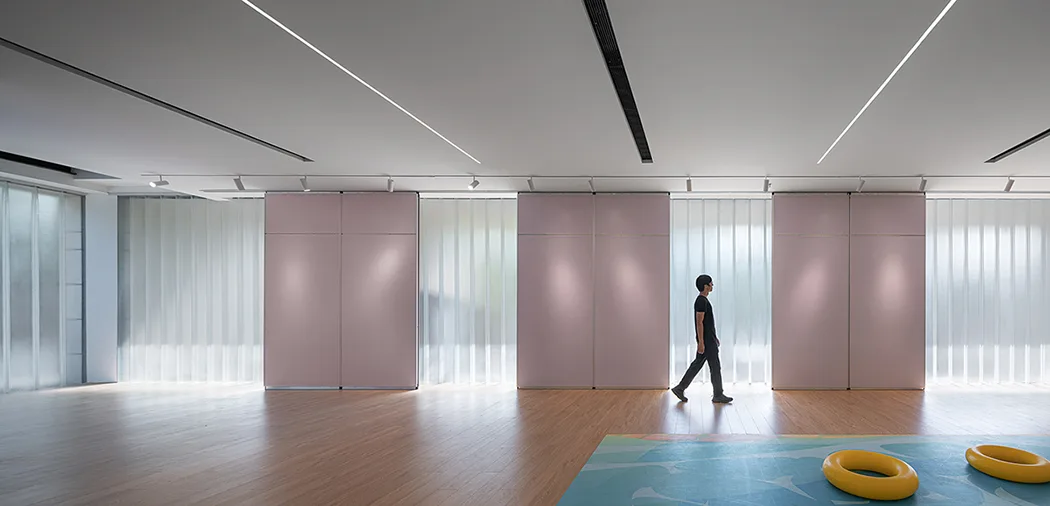
△ Exhibition Space with Diffuse Light Reflected Through U-Glass
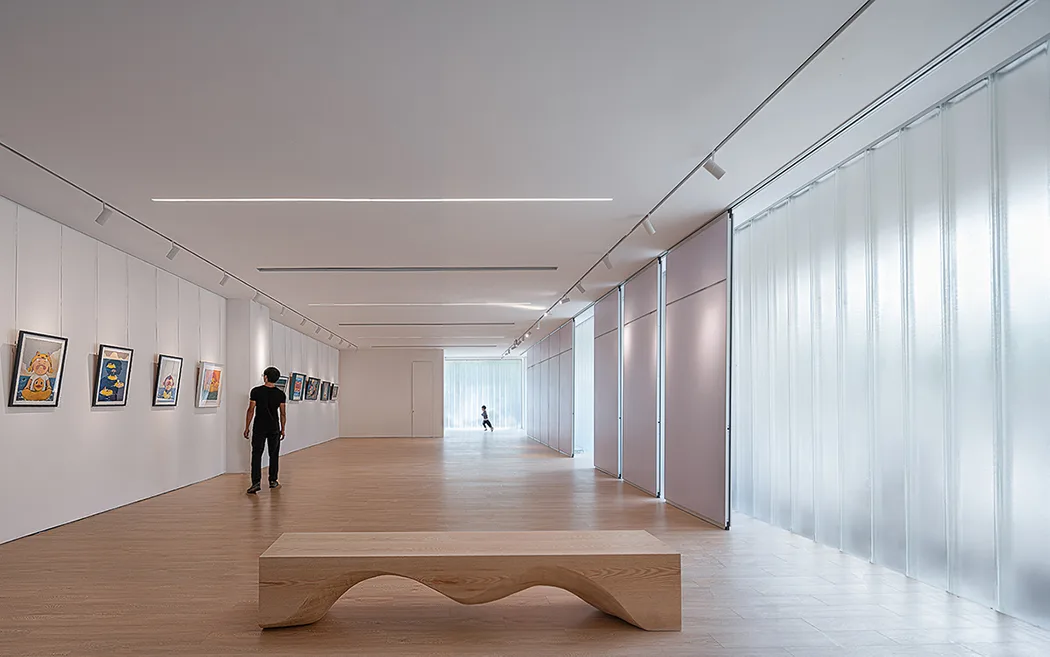
△ Exhibition Space with Diffuse Light Reflected Through U-Glass
A Ray of Light from Above
The semi-high side courtyard on the second floor’s west side allows daylight to penetrate through a skylight, creating a striking contrast between light and shadow on the pure white walls. This flowing “block of light” energizes the exhibition hall, breaking the static space with dynamic light and shadow changes throughout the day. Visitors contemplating or conversing in front of artworks experience light seemingly flowing with time.
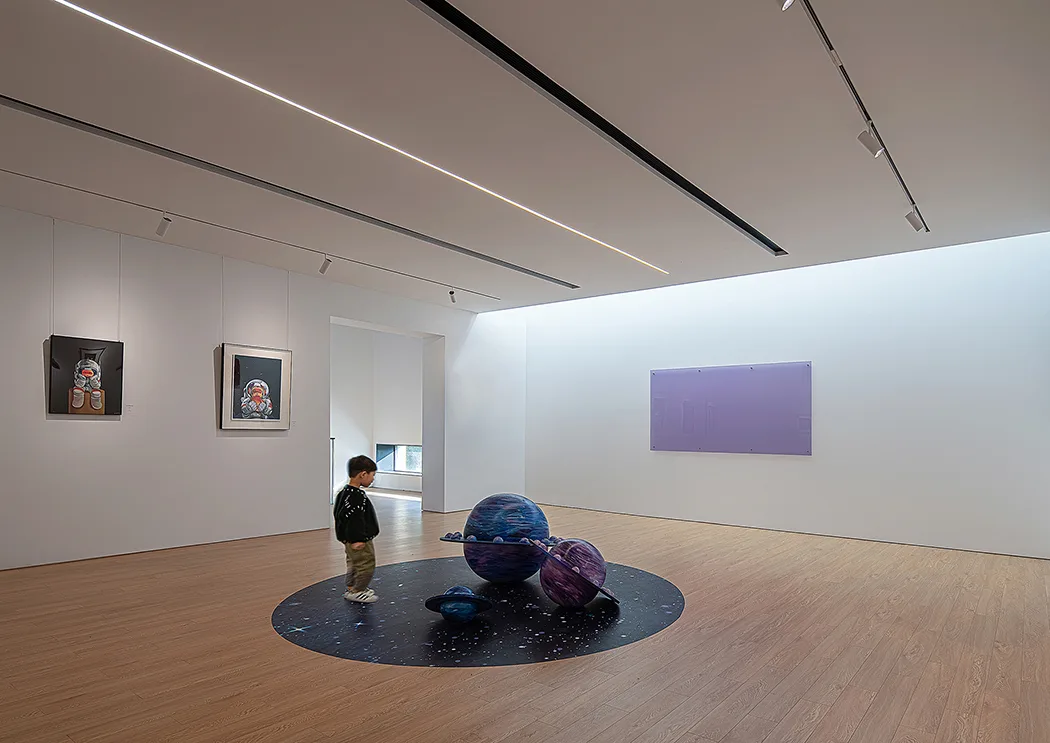
△ Exhibition Space with Diffuse Light from Skylight
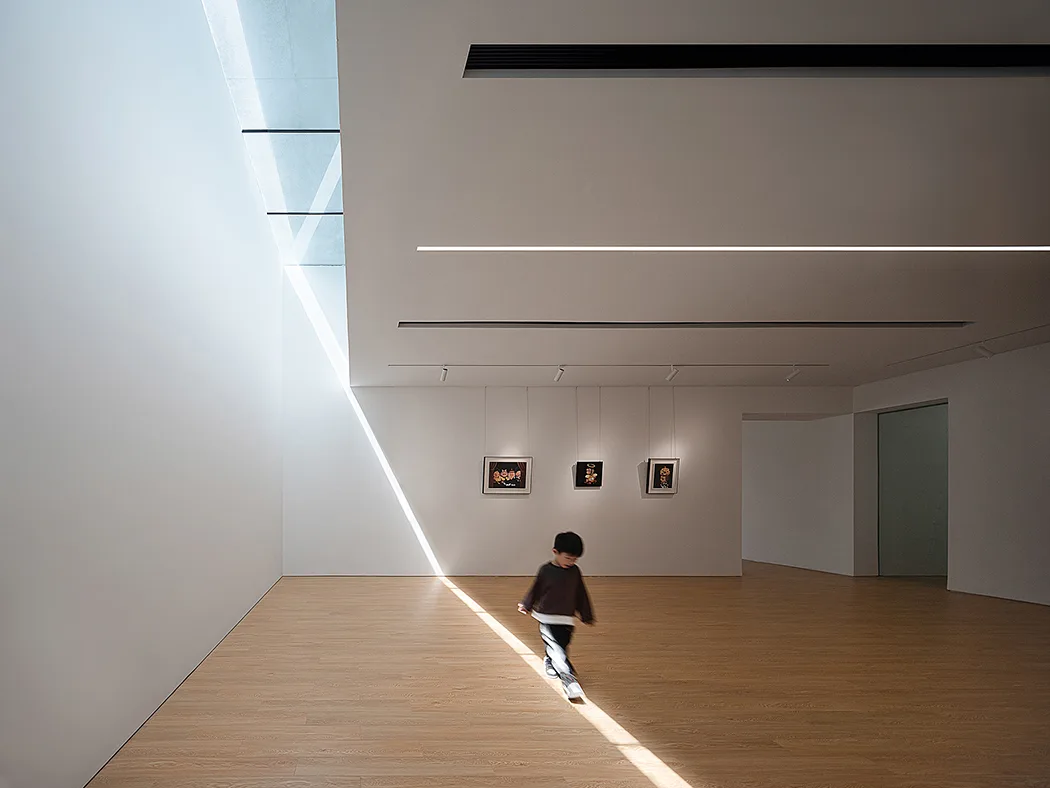
△ Exhibition Space with Diffuse Light from Skylight
The indoor light well extends upwards into the public space, where scattered light unexpectedly meets indoor lighting. The multiple layers of light add vibrancy and depth to the space. Two simple yet contrasting materials—plain concrete and white paint—create a visual boundary between the exhibition hall and the adjoining public circulation areas.
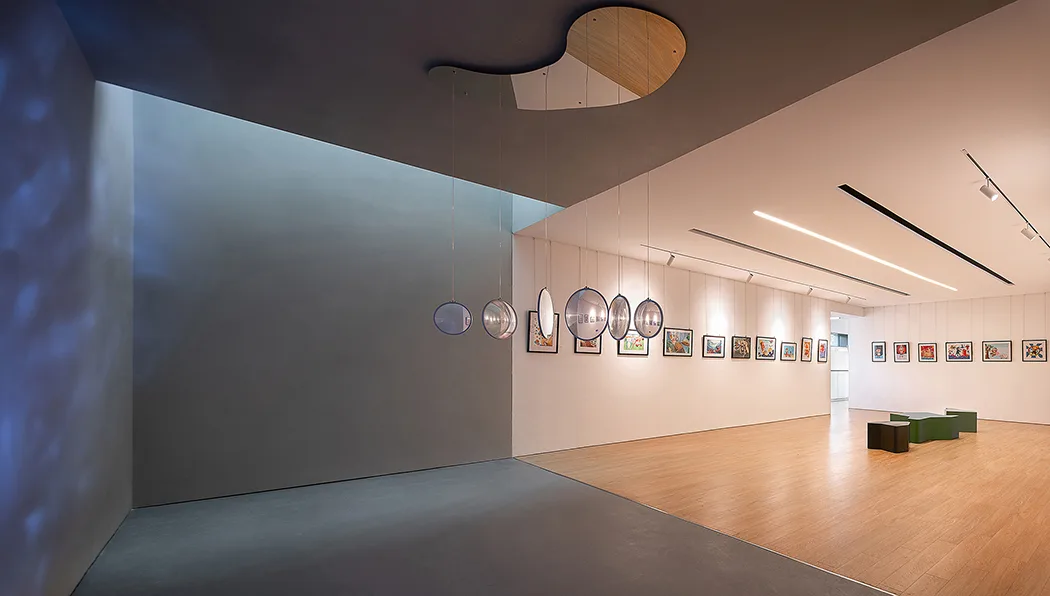
Indoor Light Well
Pausing in the Exhibition Hall for a Distant View
To foster a visual connection between visitors and the surrounding nature during exhibitions, and to complement the natural landscape of Li Gongdi, floor-to-ceiling glass panels are incorporated in some exhibition halls. These introduce abundant natural light while maintaining privacy through large solid wall sections that focus and soften the light. The window frames regulate the light’s reach, inviting visitors to pause and engage with the space.
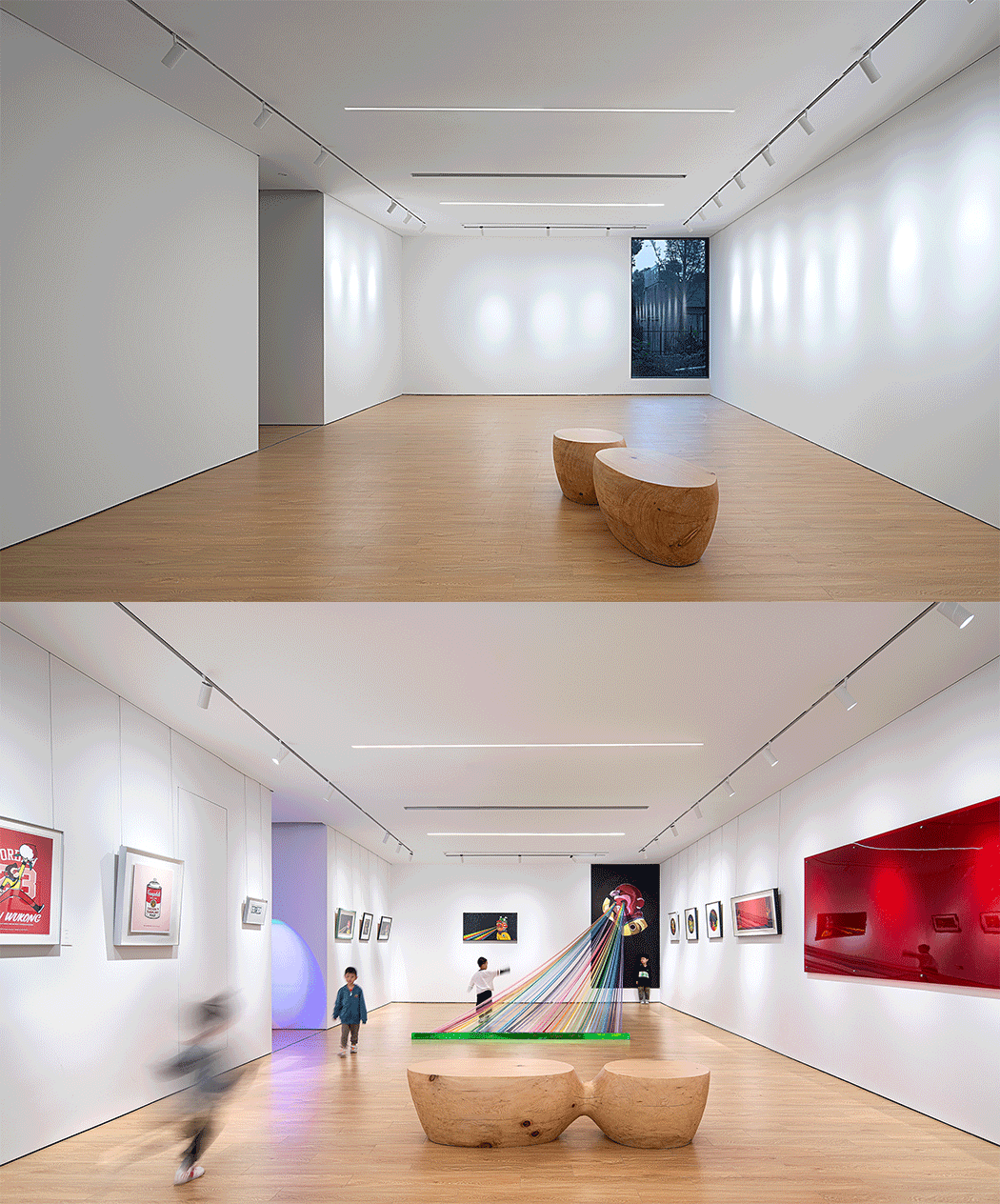
△ East Exhibition Hall on First Floor
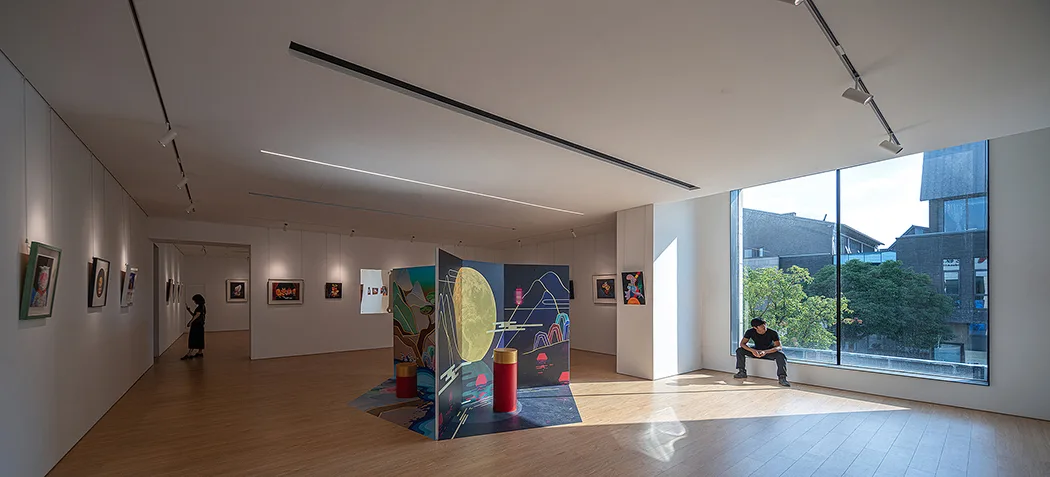
△ West Side Exhibition Hall on Second Floor
Walking and Observing in the Hallway
As a secondary space within the art museum, the hallway was designed not to be concealed but rather to extend the exhibition experience. Arranged around the atrium, projection lights cast vibrant patterns on the white aisle walls, engaging visitors subtly. The corridor connects various exhibition spaces, ensuring a seamless flow throughout the museum.
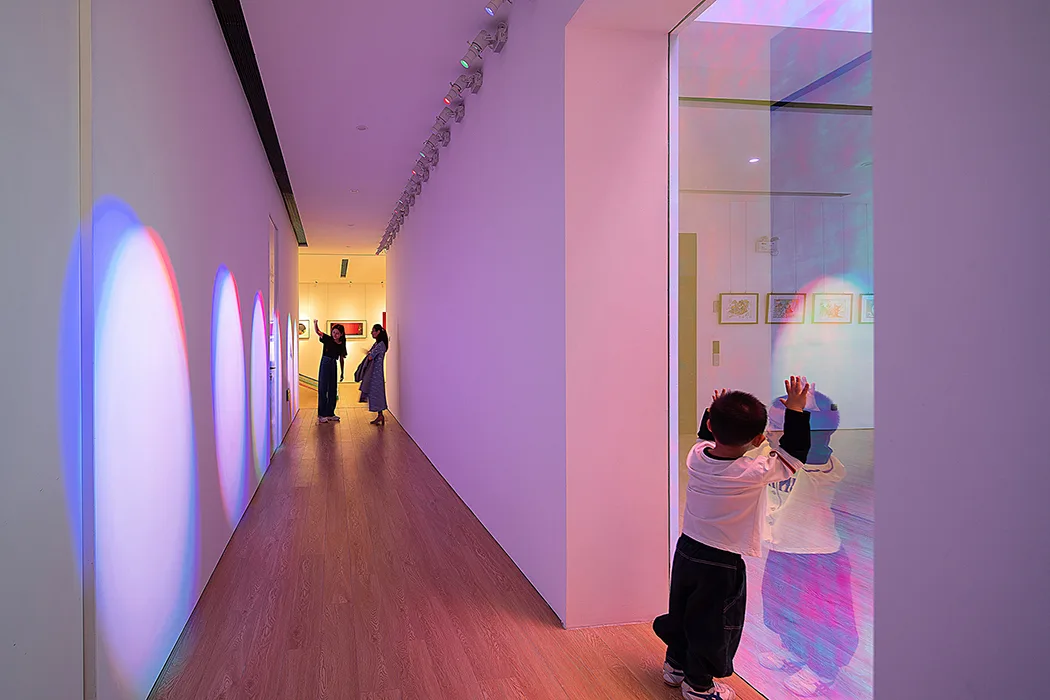
Rainbow Hallway Created by Projection Lighting
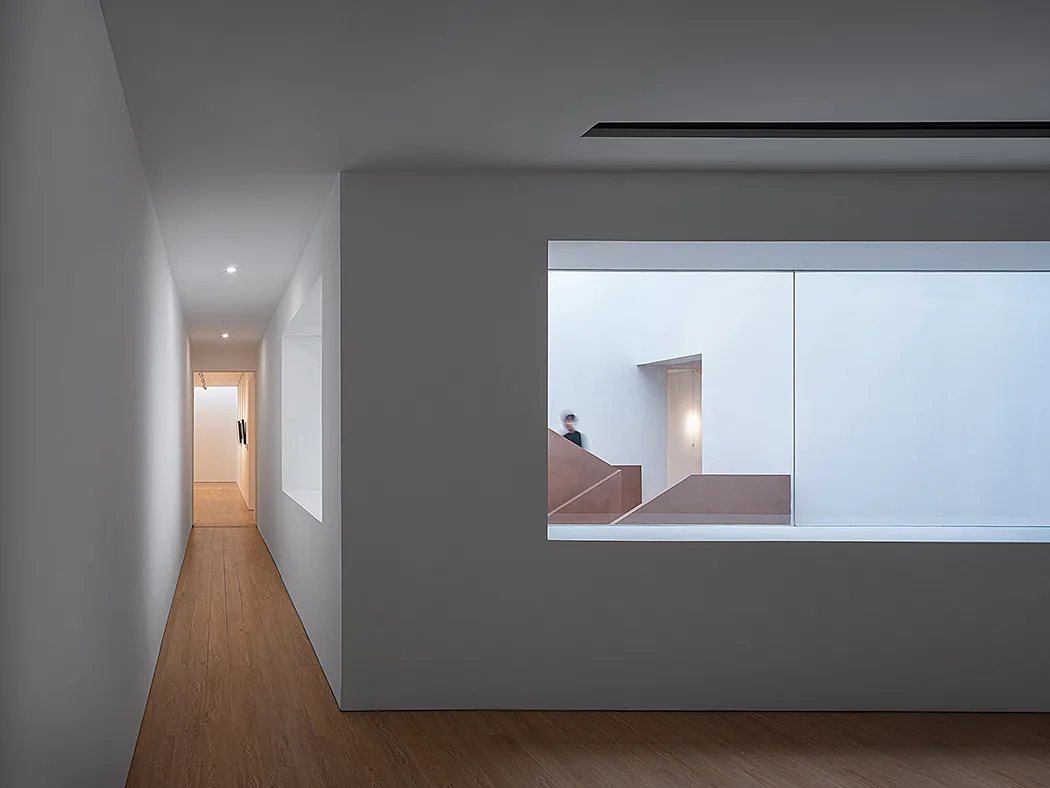
View Toward the Atrium from the Second Floor Hallway
Facade Renovation Reflecting Interior Spaces
The facade renovation responded directly to the function of interior spaces. Various window sizes and shapes were introduced to avoid direct light in exhibition areas, allowing natural, balanced light transitions. This approach balances light and shadow intensity indoors, meeting the needs of diverse functional spaces while enabling a continuous interplay between light and space.
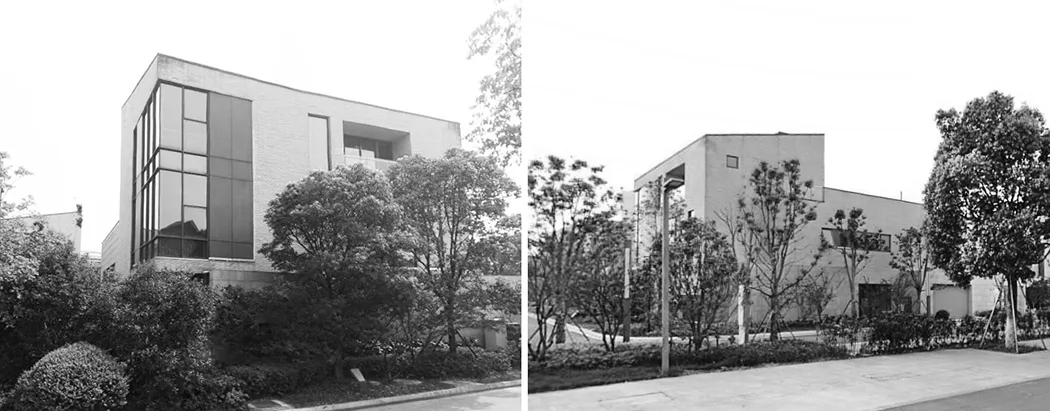
Before Renovation
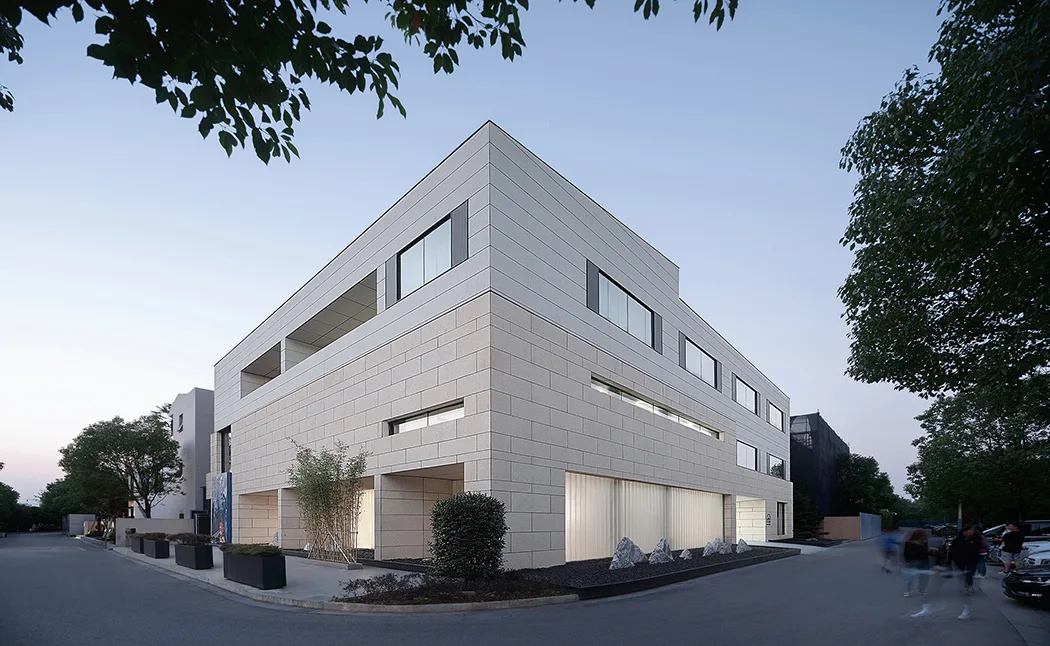
△ Street Perspective
The facade combines two differently colored stones, creating a composed interface that strengthens the connection between exterior and interior functions. Windows of varying sizes and styles bring a unique rhythm to the facade, while glass and stone contrast to balance reality and illusion. Extensive semi-transparent U-shaped glass enhances the visual permeability between inside and outside spaces.
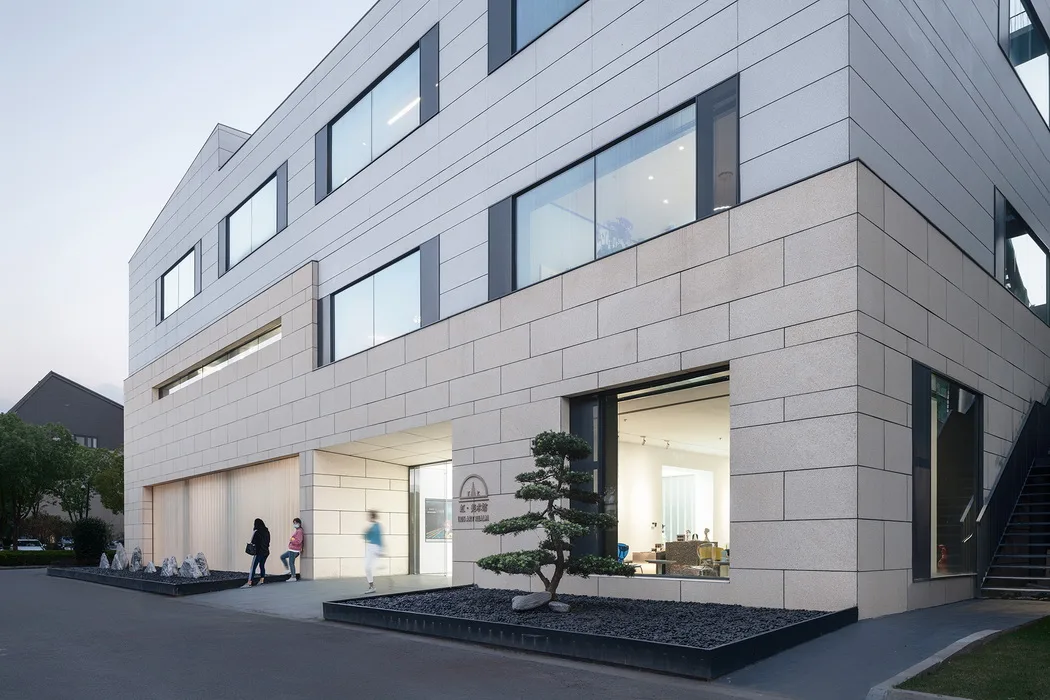
△ Main Entrance Facade
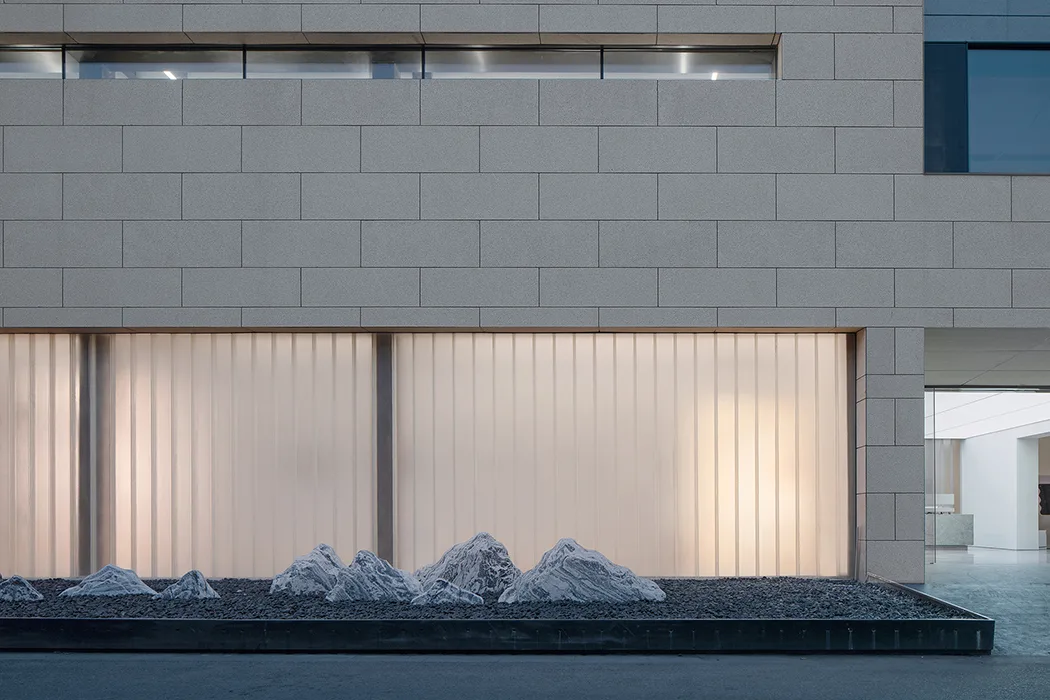
Integration of U-shaped Glass with Stone Walls
△ “Game of Light” Film
Project Information
Project Name: Suzhou Rainbow Art Museum
Project Owner: Suzhou Xinhongyi Education Group
Location: Suzhou, China
Building Area: 2,000 square meters
Project Timeline: 2019-2020 (Design & Construction)
Design Firm: Zero One City Architecture Firm (Architecture, Interior, Landscape, Soft Decoration)
Design Team: Ruan Hao, Zhan Yuan, Zhang Lei, Zhang Qiuyan, Lao Zhedong, Zhao Yifan, Ke Anran
Photographer: Wu Qingshan
Filmmaker: Wu Qingshan












Must log in before commenting!
Sign Up