
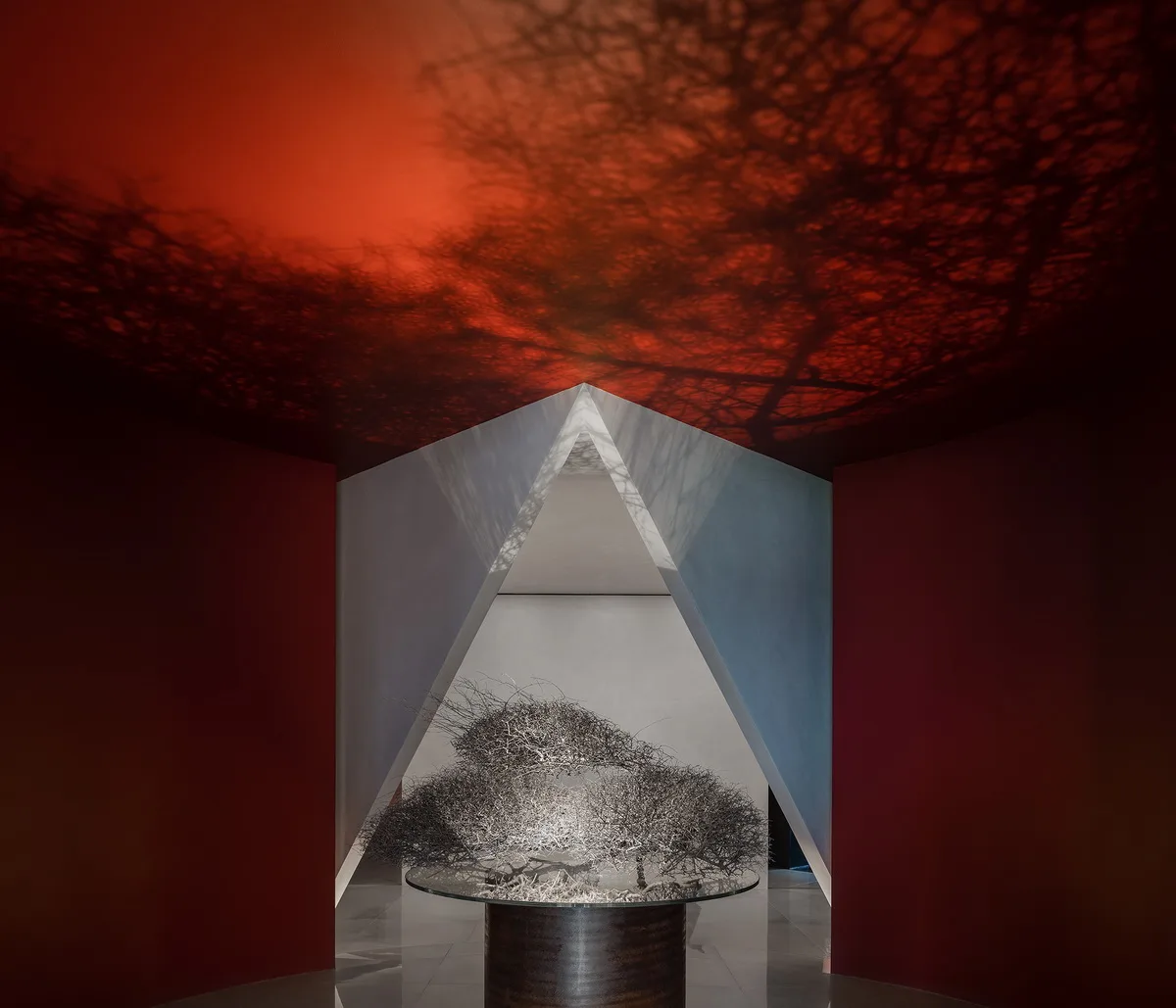
“If we can extract flowers, trees, flowing water, light, and wind from nature according to people’s own wishes, then the world is close to heaven.”
—— Tadao Ando
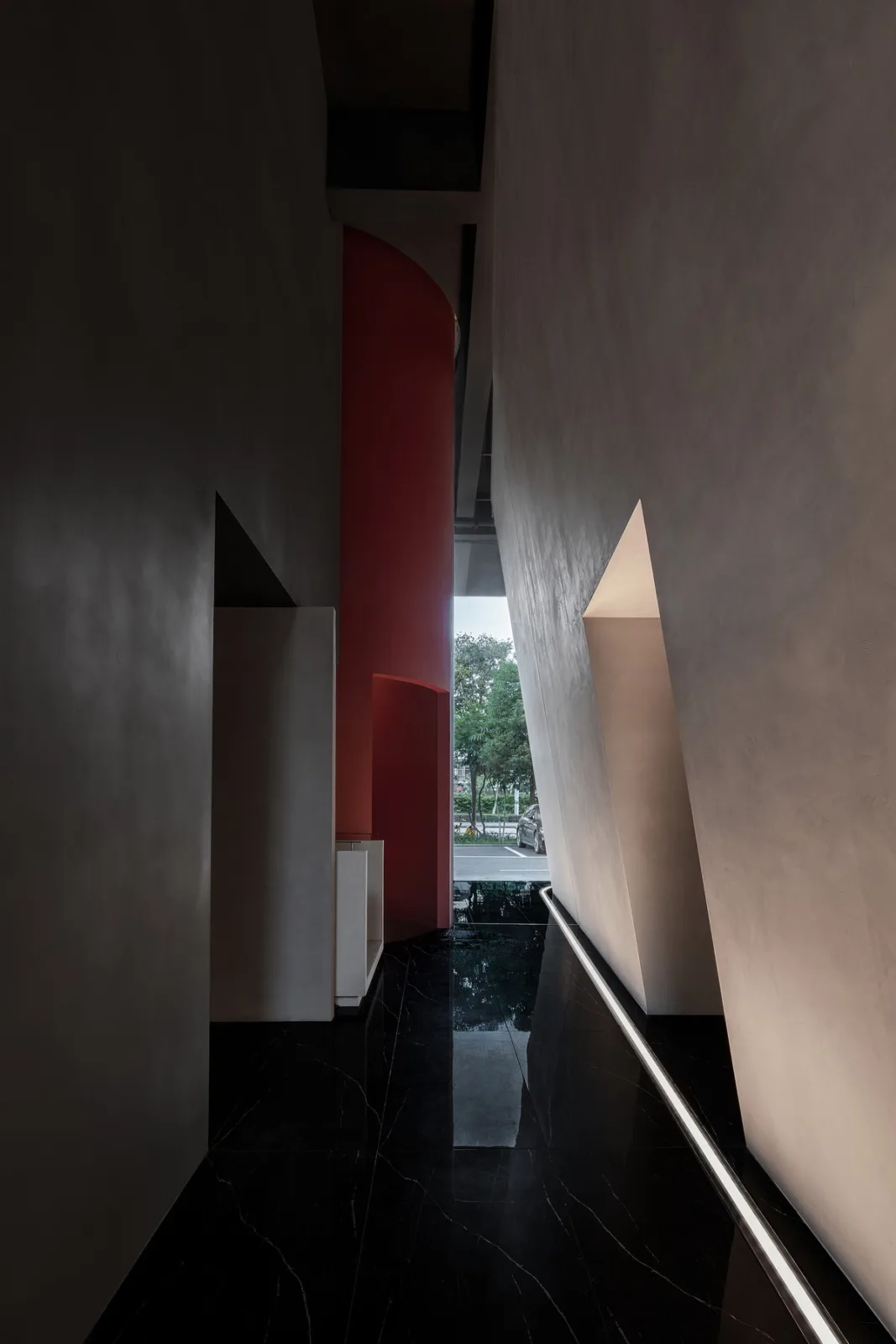
The environment profoundly influences human cognition in subtle ways. Whether noisy or quiet, enclosed or flowing, rough or delicate, each environment evokes unique emotions and sensory responses.
For hundreds of thousands of years, humans have lived closely with nature, and through evolution, this connection is deeply embedded in our genes. Compared to this, constructed environments are relatively recent, which naturally leads us to crave spaces enriched with natural elements. Studies show that indoor spaces with a natural atmosphere help people better receive, understand information, and maintain attention.
△ Project video
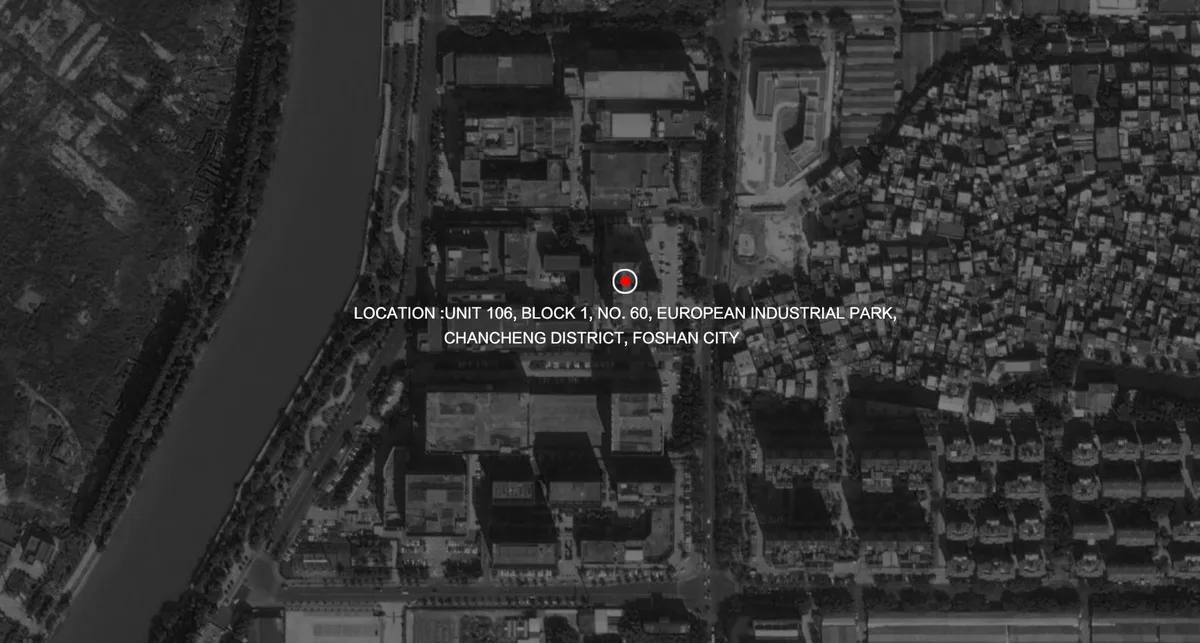
Located along a main road near a transportation hub, the project benefits from easy access and improved operational efficiency. However, the noisy surroundings pose challenges, potentially disrupting indoor activities. As an office and brand showcase, the space must offer a pleasant, quiet atmosphere that also serves as a medium for brand communication.
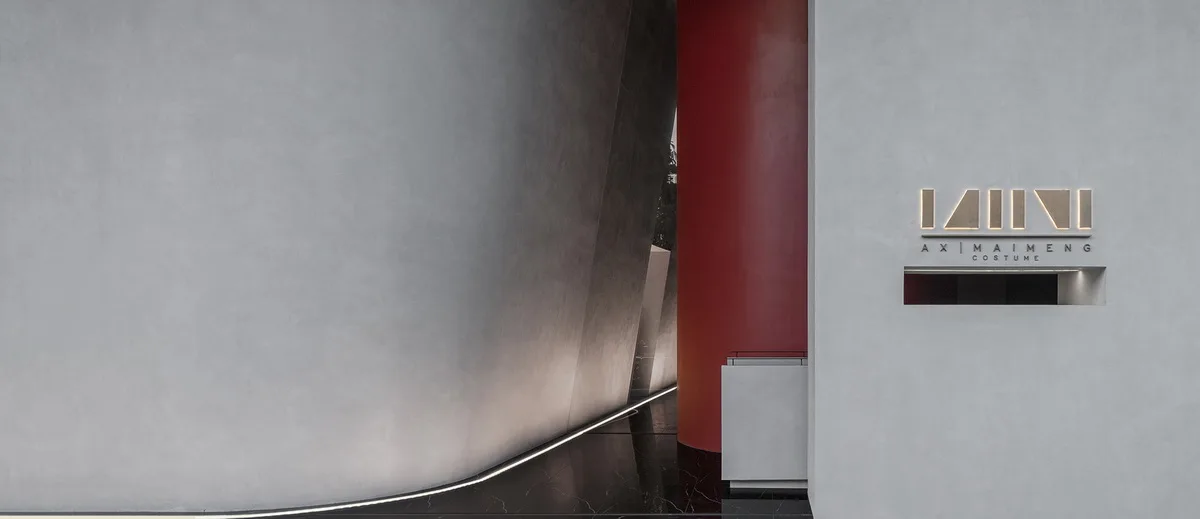
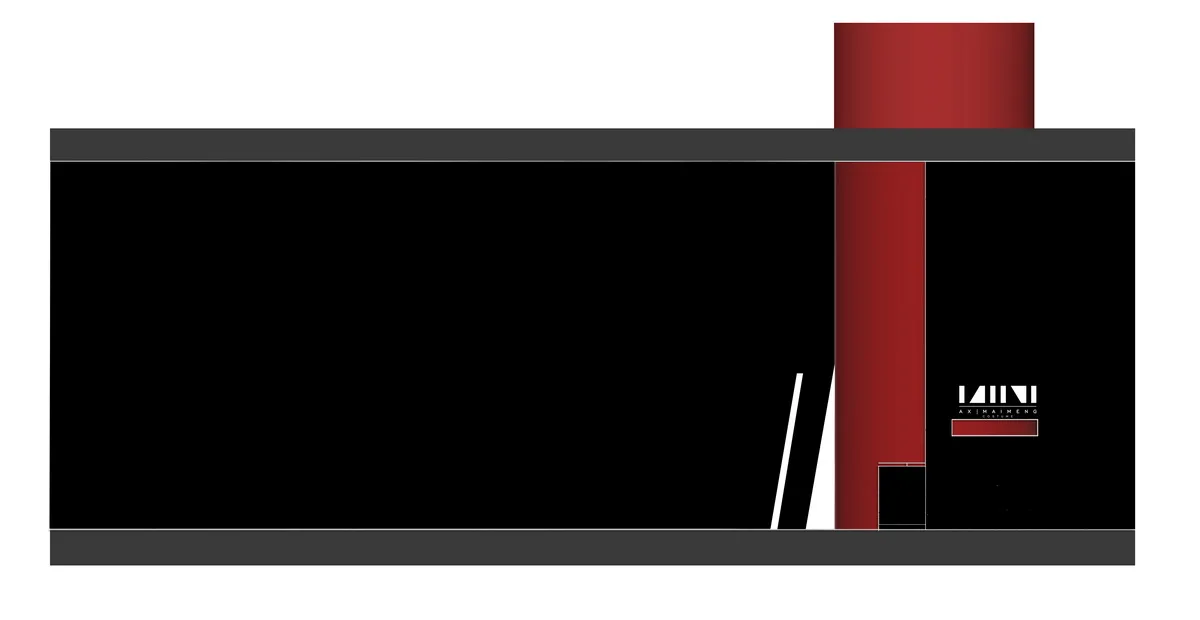
△ Front view of the main entrance
The vast space of ‘separation’ encompasses all elements—natural vegetation, sunlight, rainwater, and various man-made noises. The marvel of indoor design lies in the architectural ability to selectively exclude unwanted elements.
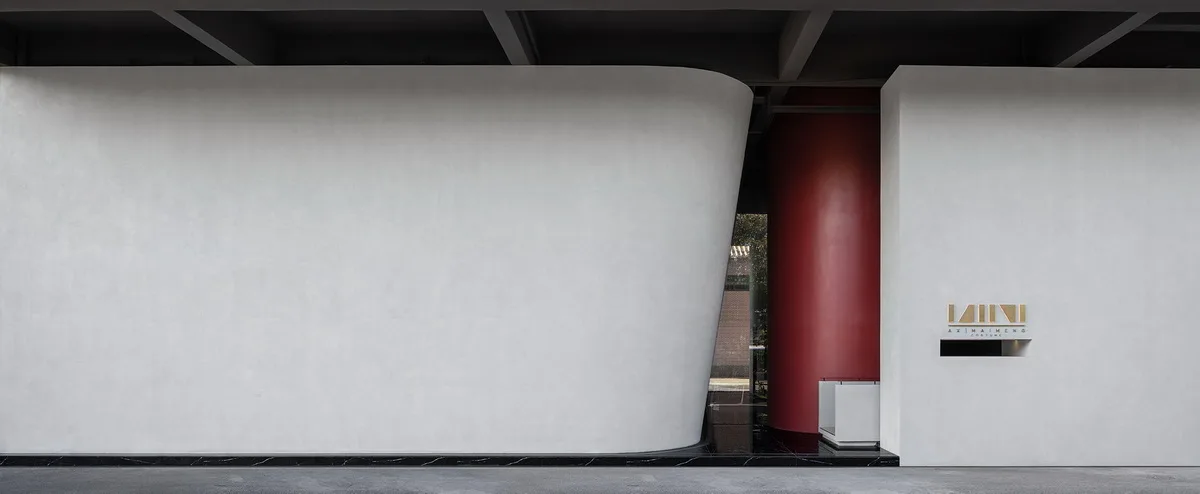
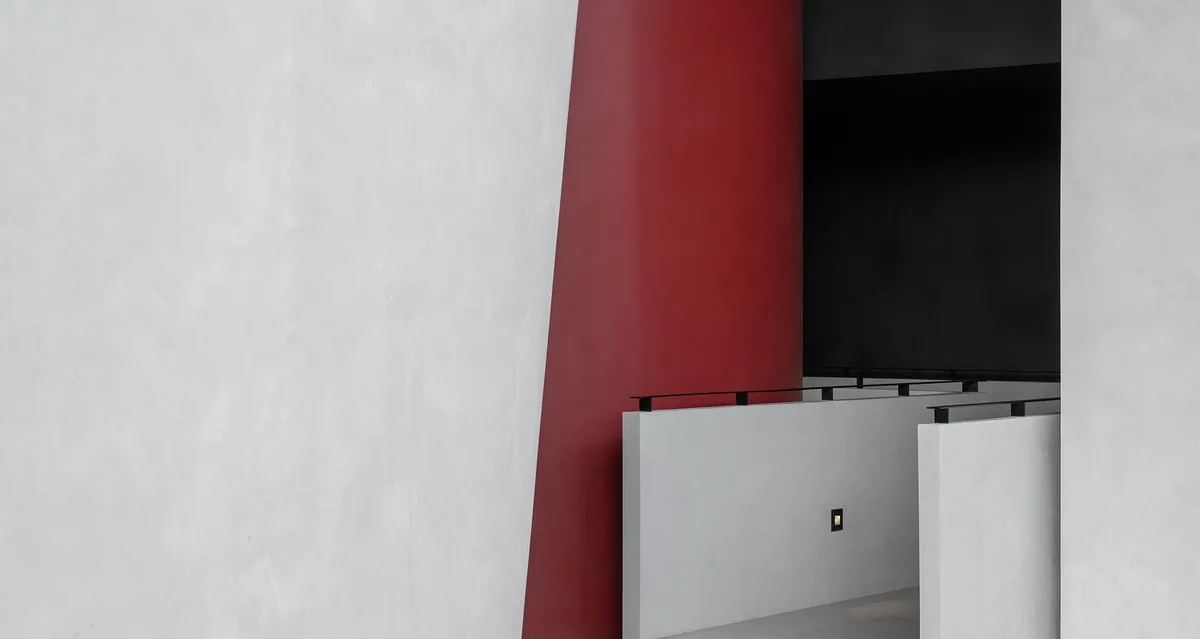
△ Entrance
Transforming space is a gradual process that awakens human senses. The winding bridge and extended pathway slow down dust and footsteps from outside, while different rhythms signal transitions into distinct environments.
Stairs, squares, circles, and various shaped blocks are arranged in overlapping layers. The entrance is discreetly tucked on the side of a square block, finished in a calm cement gray-white without decoration. This minimalist facade conveys a refined and understated elegance.
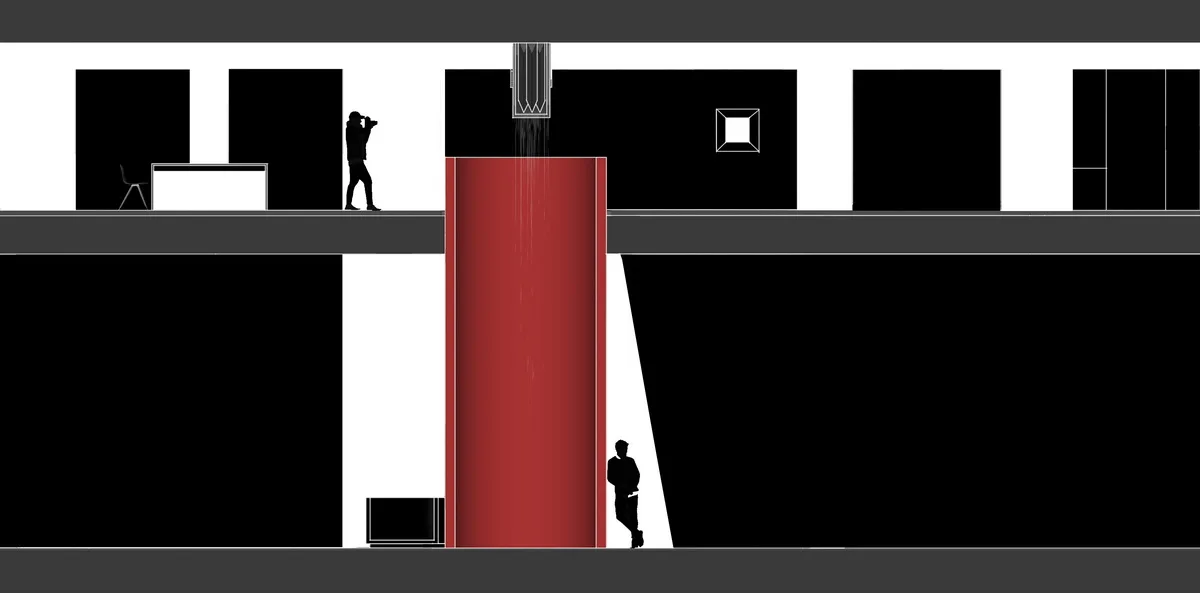
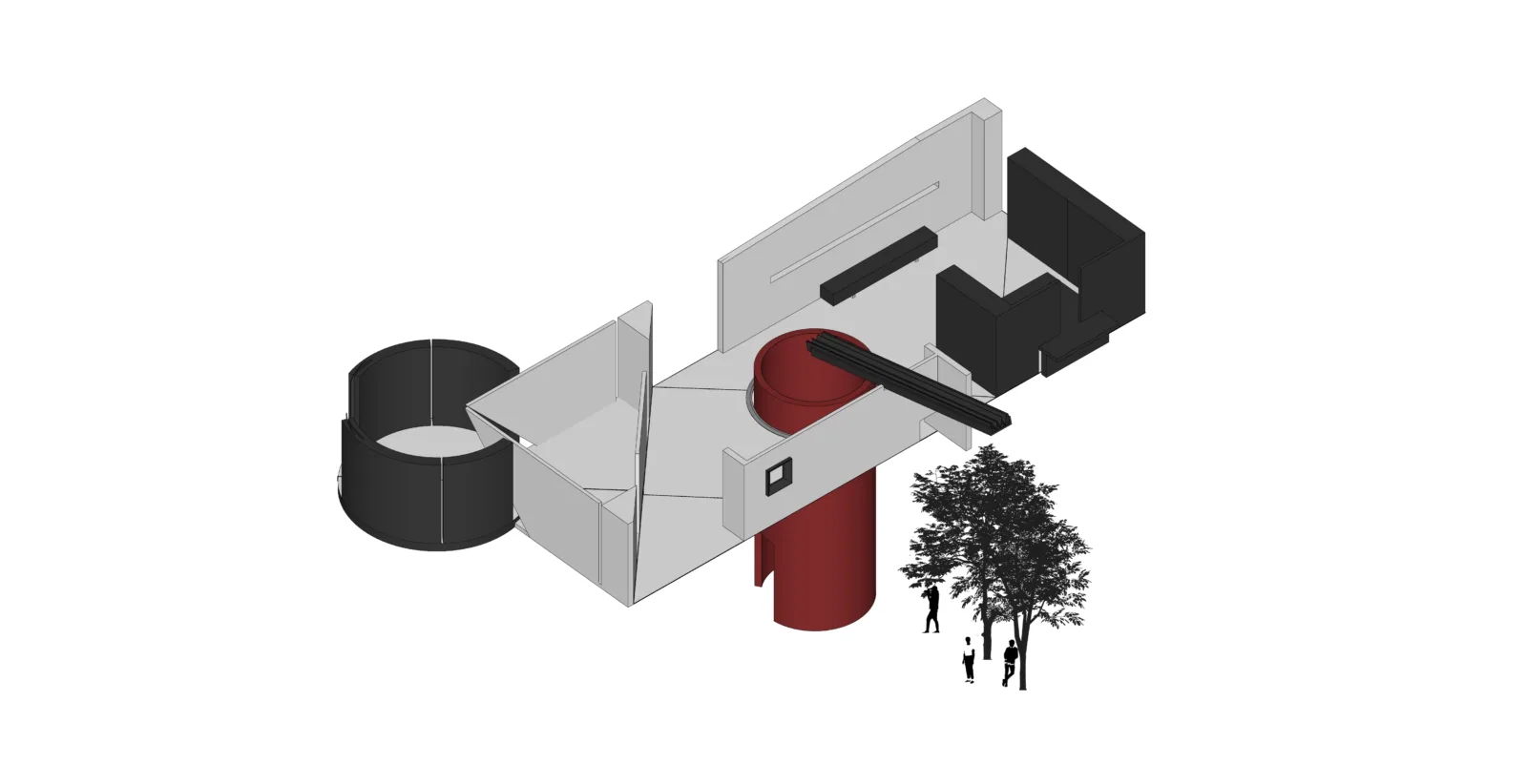
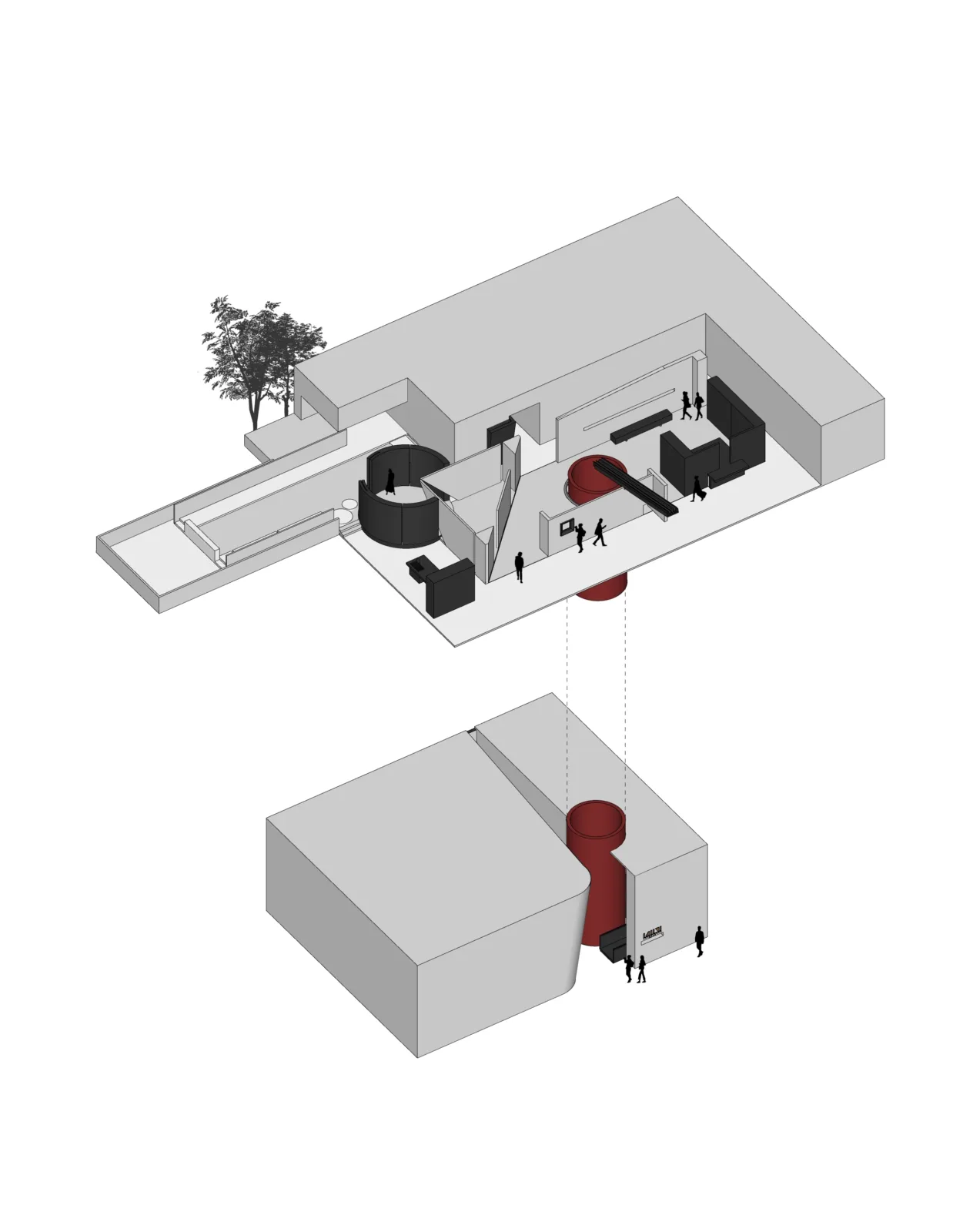
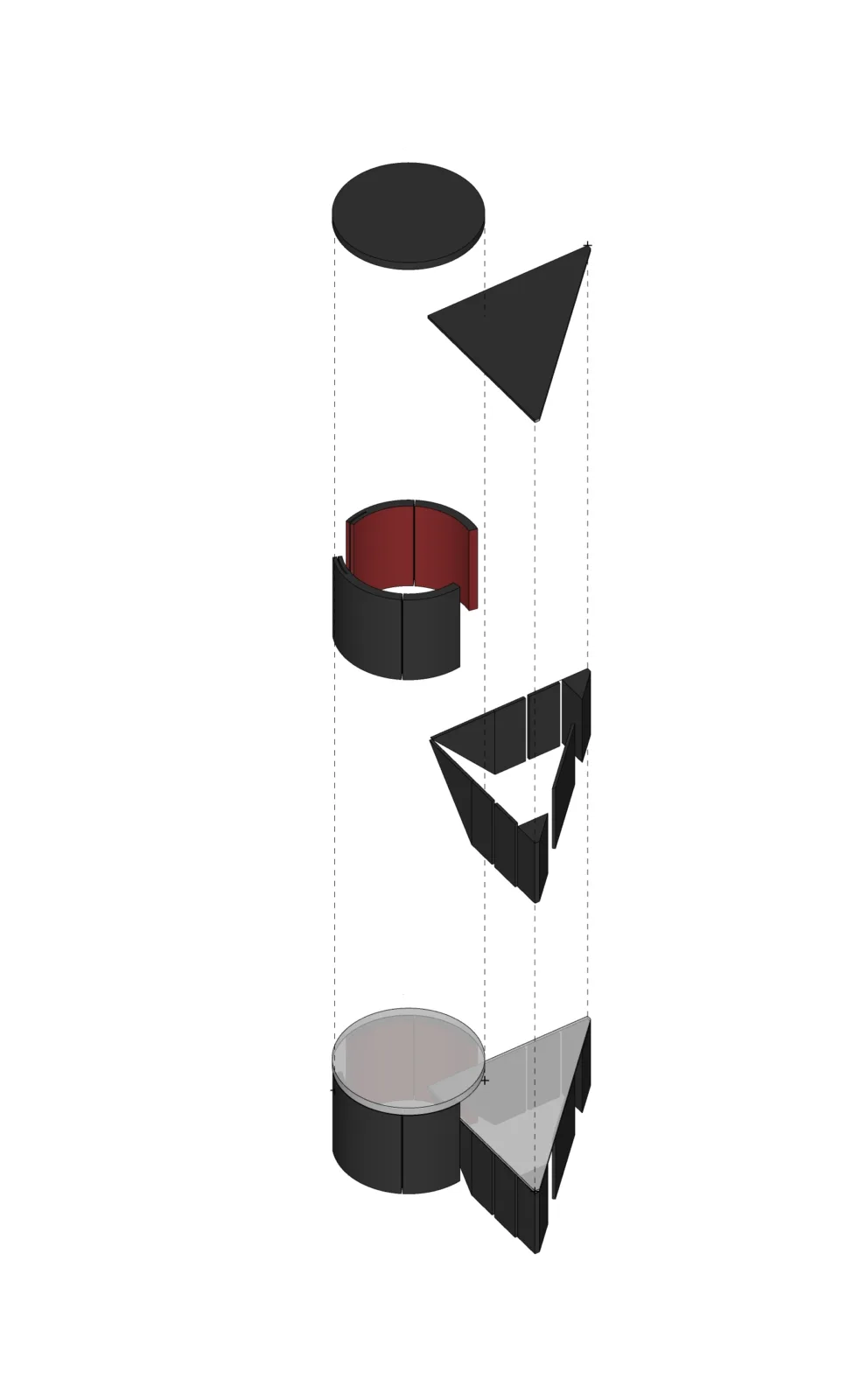
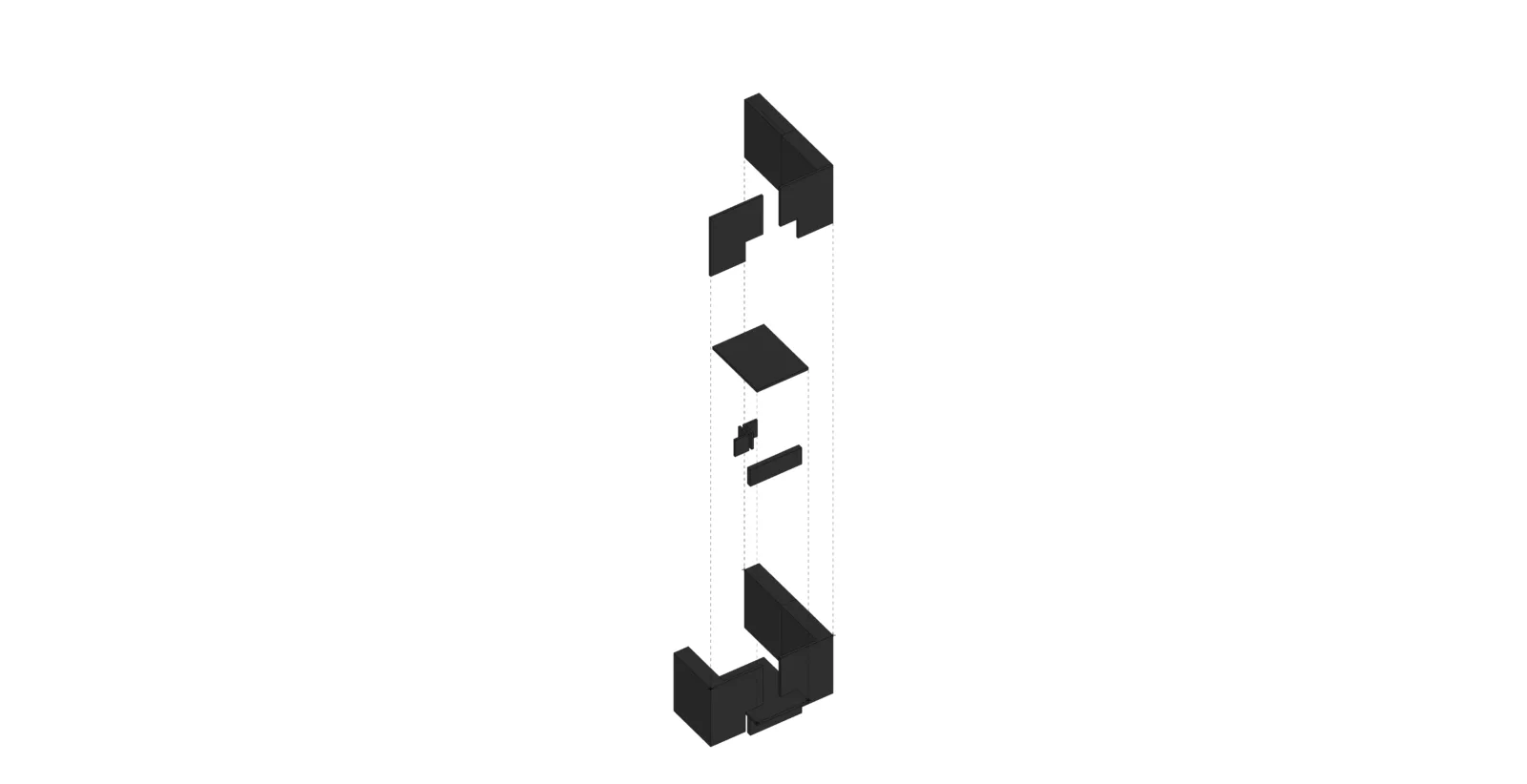
△ Function analysis diagram
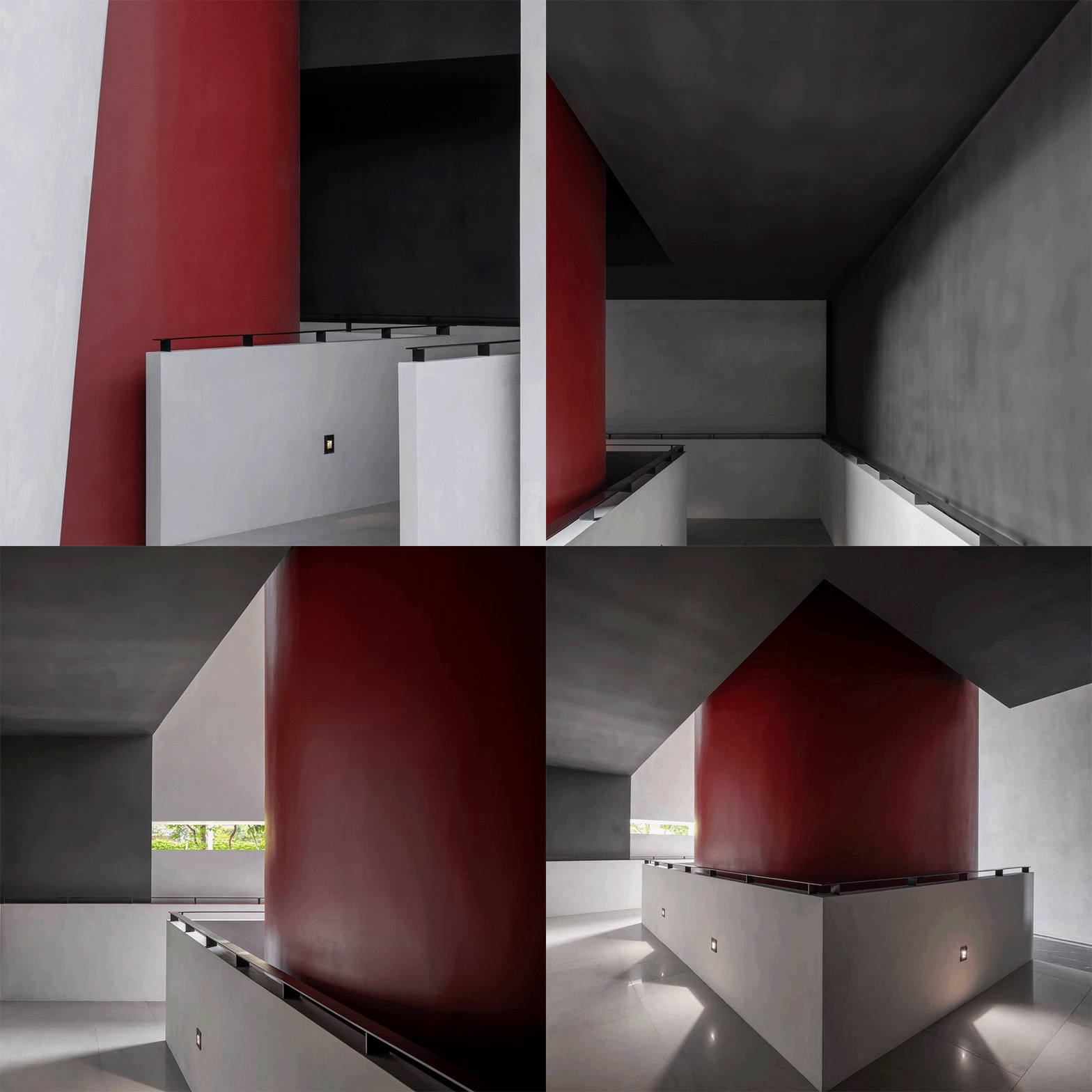
The second floor features discontinuous walls framing a corridor shaped like a “loop.” This interplay of reality and illusion — seemingly separated yet connected, broken but uninterrupted — creates a serene atmosphere that effectively blocks outside noise.
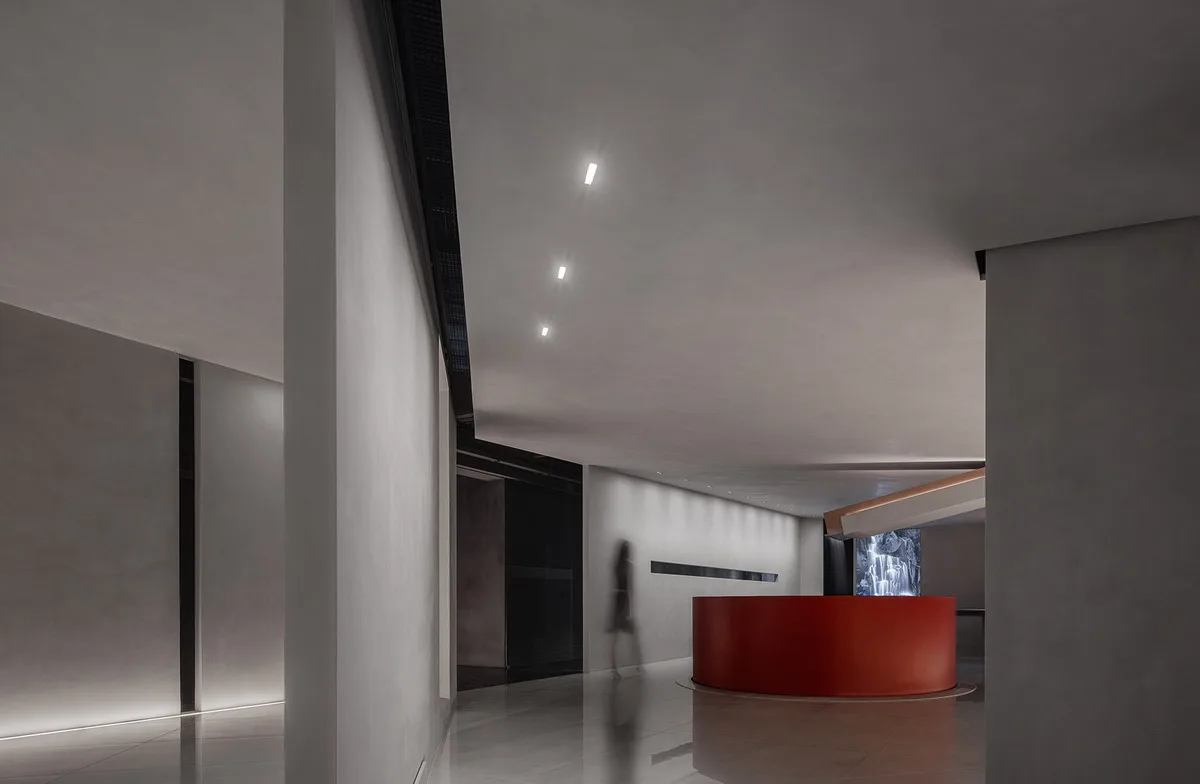
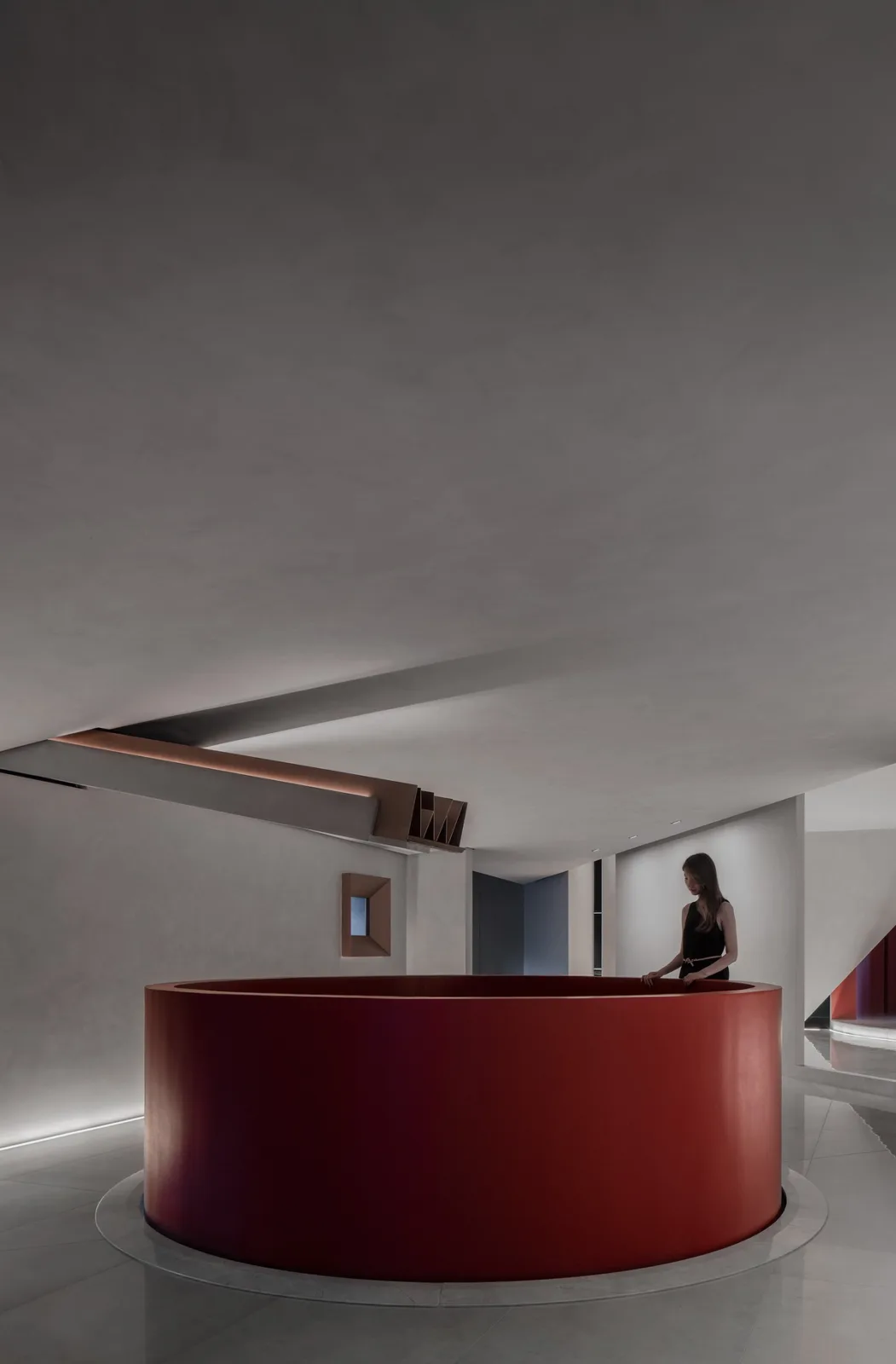
Paths within the space are designed to connect in a “back” shape while allowing free movement through virtual gaps, redefining spatial flow through architecture.
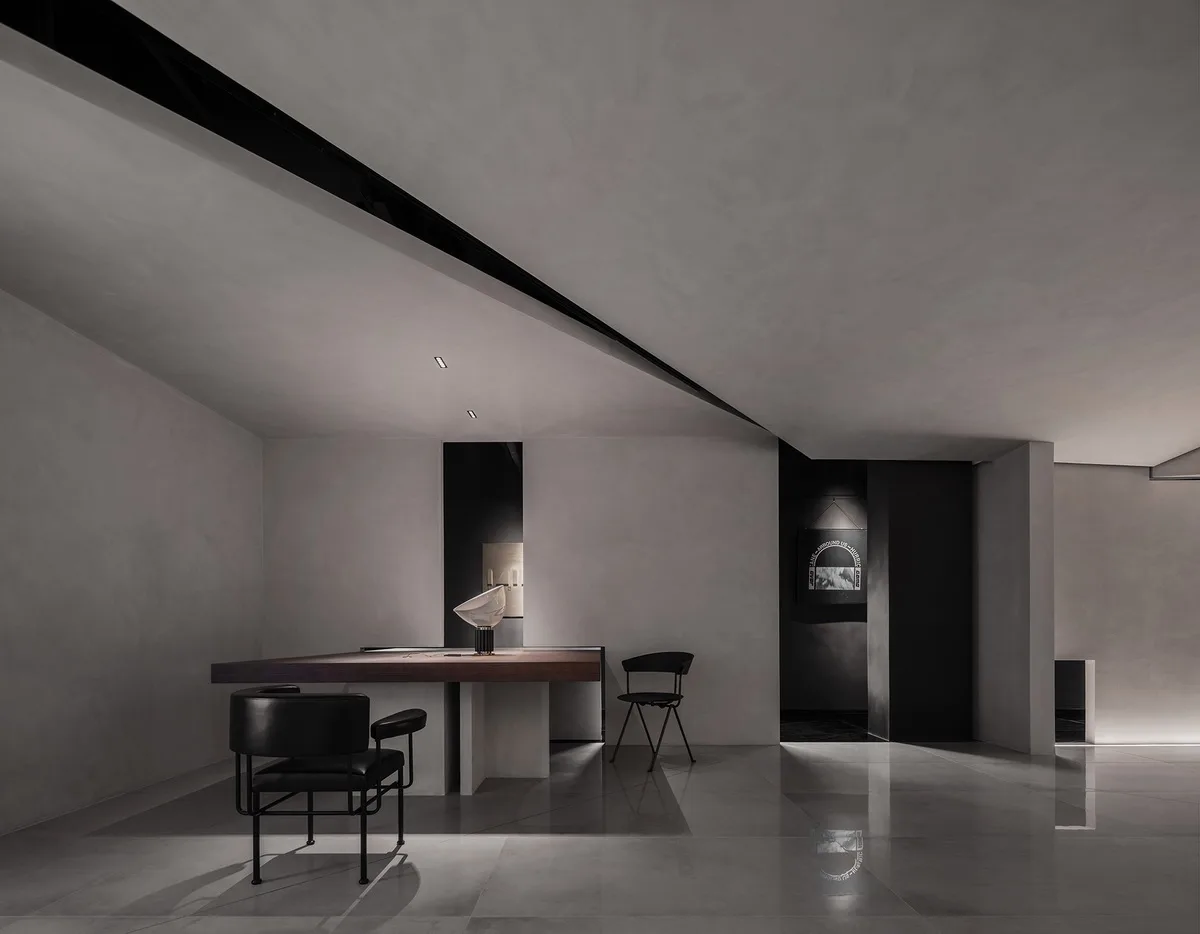
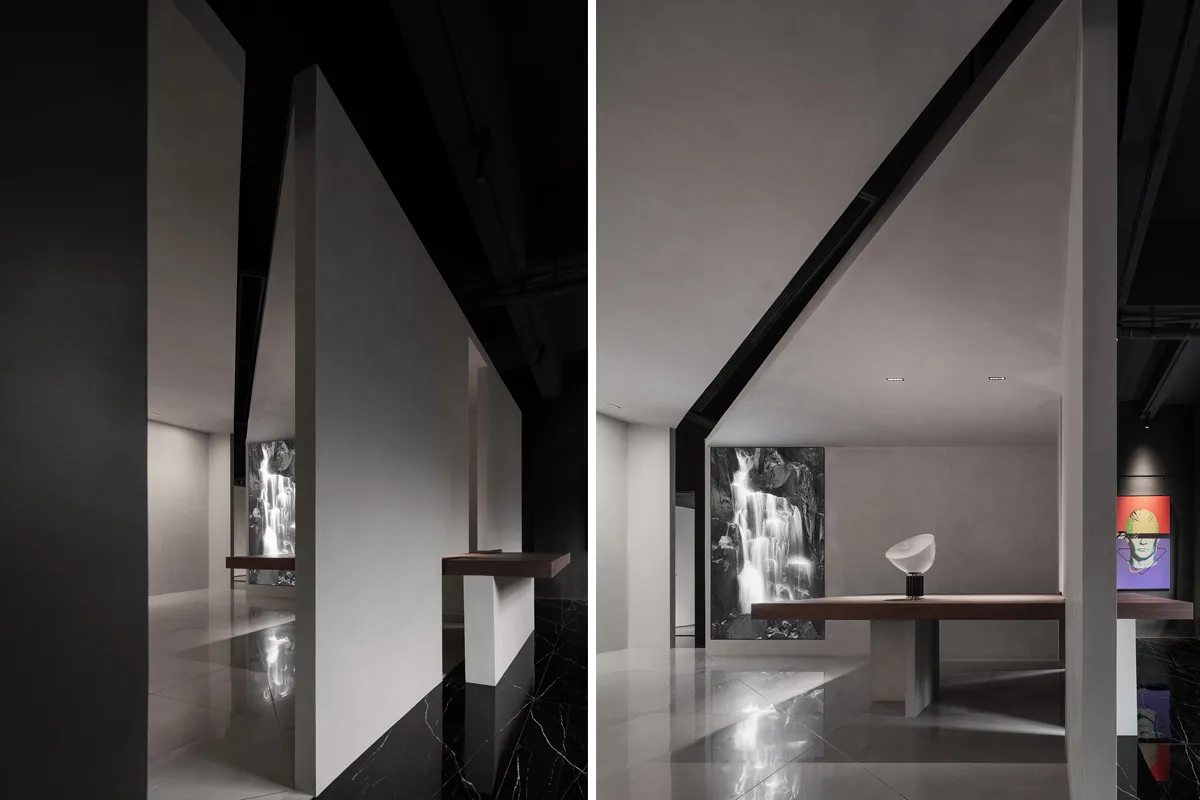
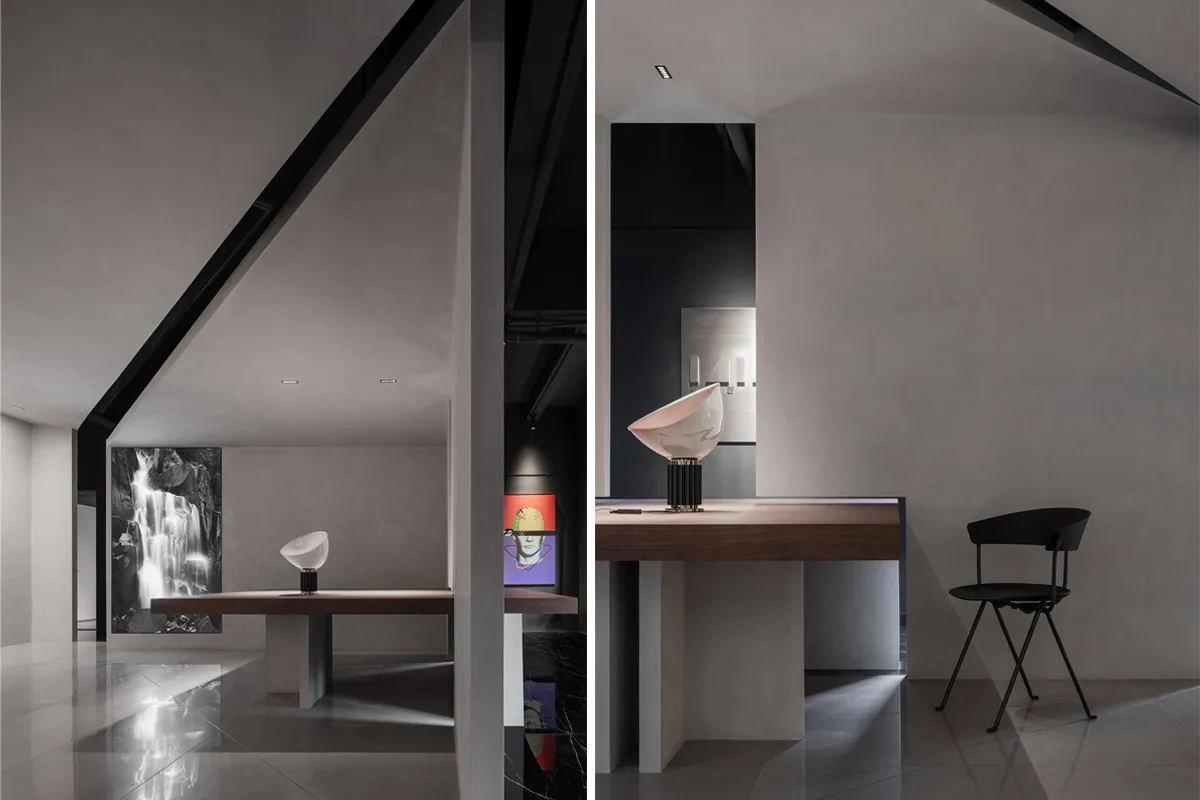
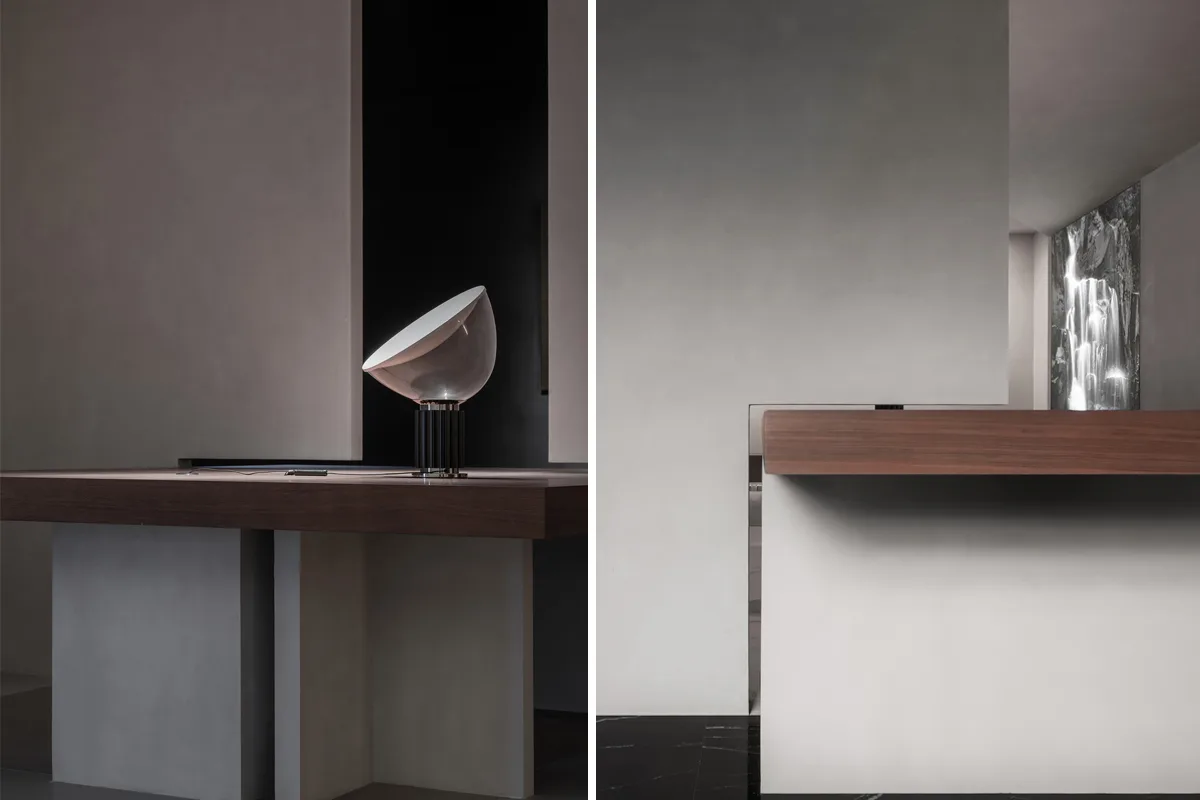
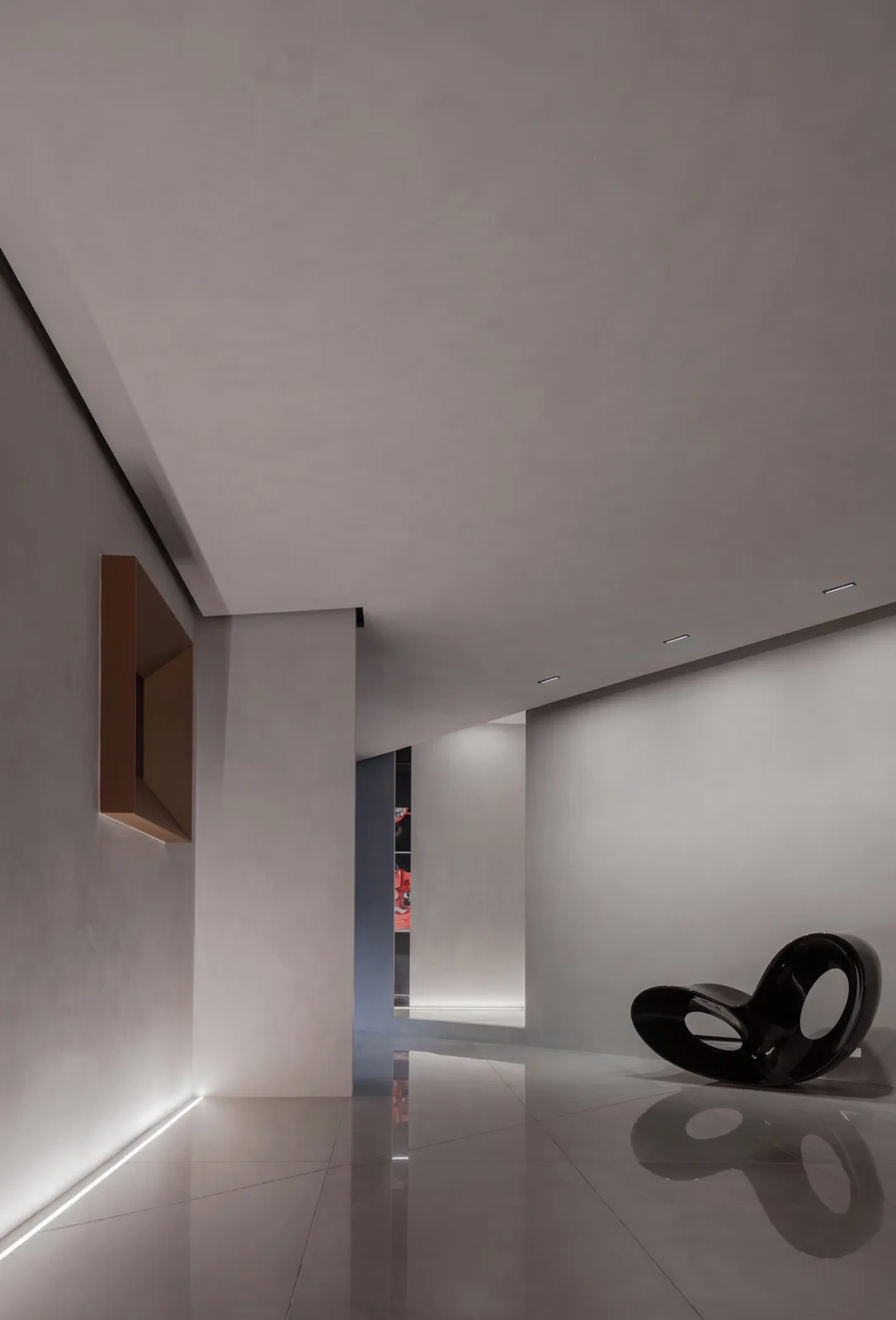
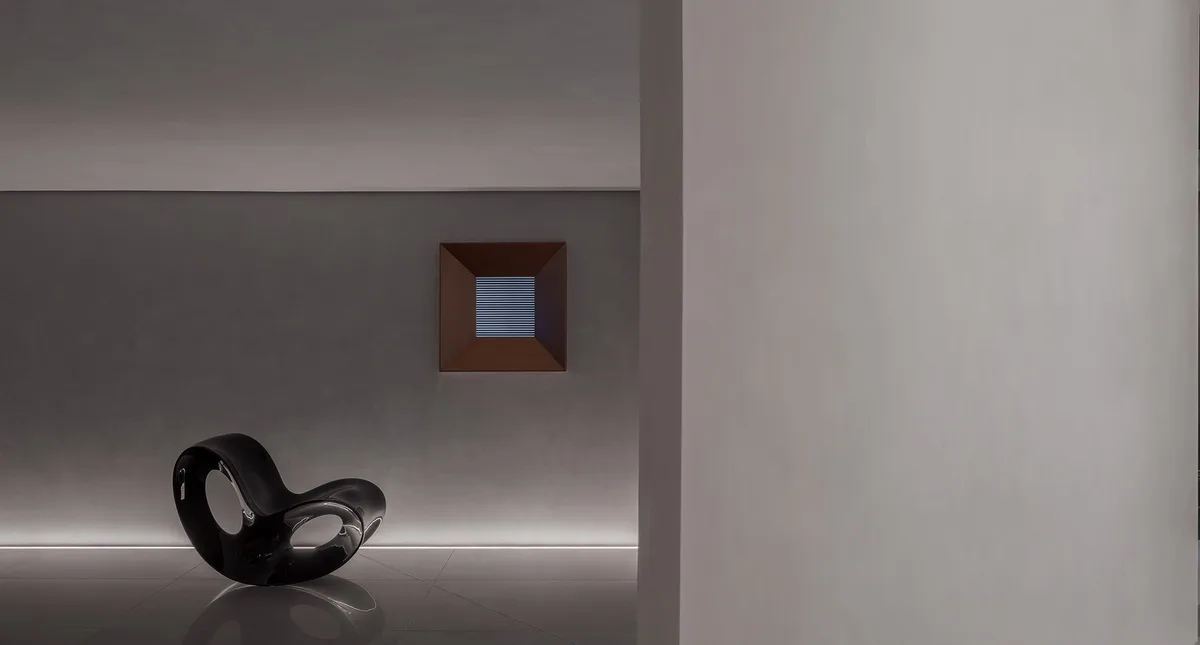
△ Art Gallery
The indoor loop corridor connects with the circular pool corridor on the inner balcony, creating a long, continuous “art gallery” path. This diversification of space supports communication, reflection, work, exhibitions, and new product launches, filling the environment with creativity and possibilities.
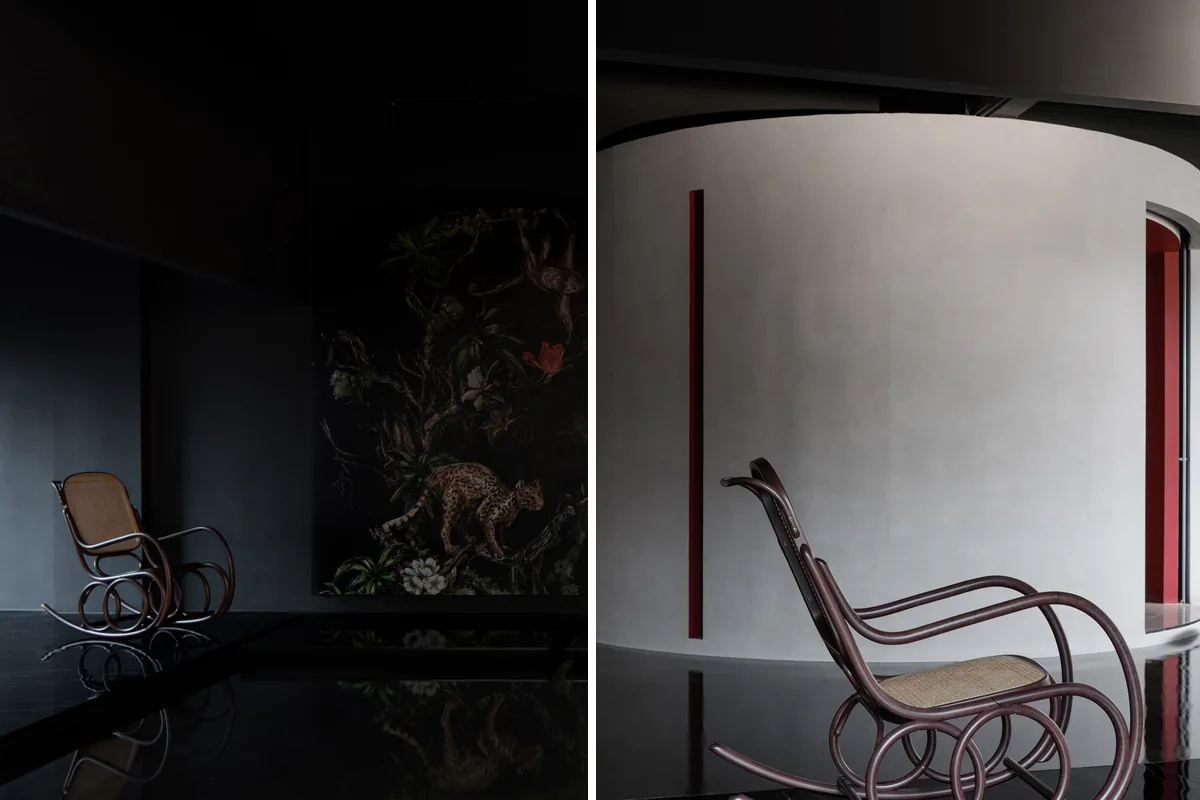
The harmonious integration with nature nourishes both space and artistic inspiration. As noise and restlessness fade, water, light, and wind flow naturally, allowing people to appreciate subtle, vibrant changes. These dynamic elements enliven the space and spark creativity, bringing people closer to nature—a vital expression of care for life and humanity.
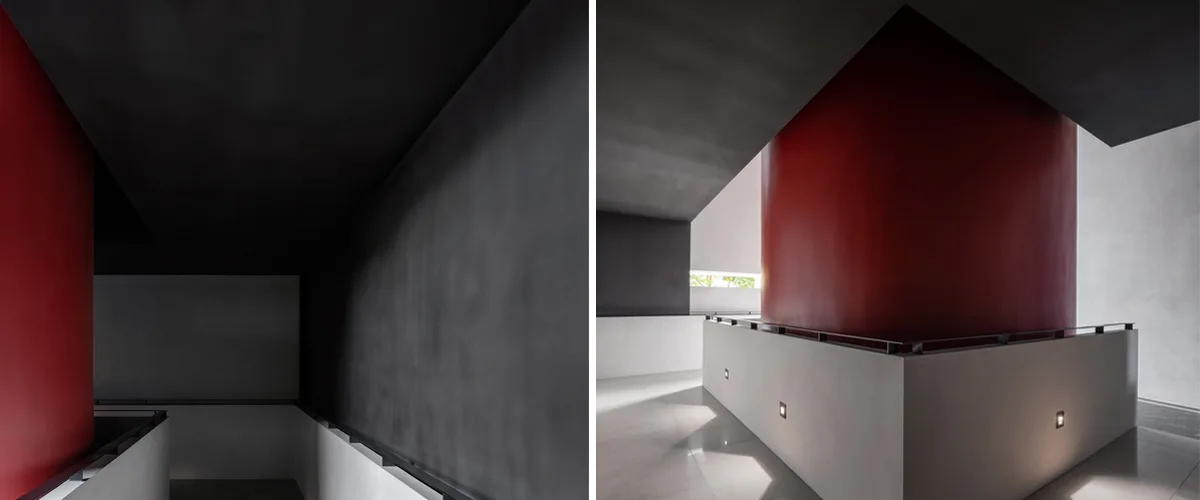
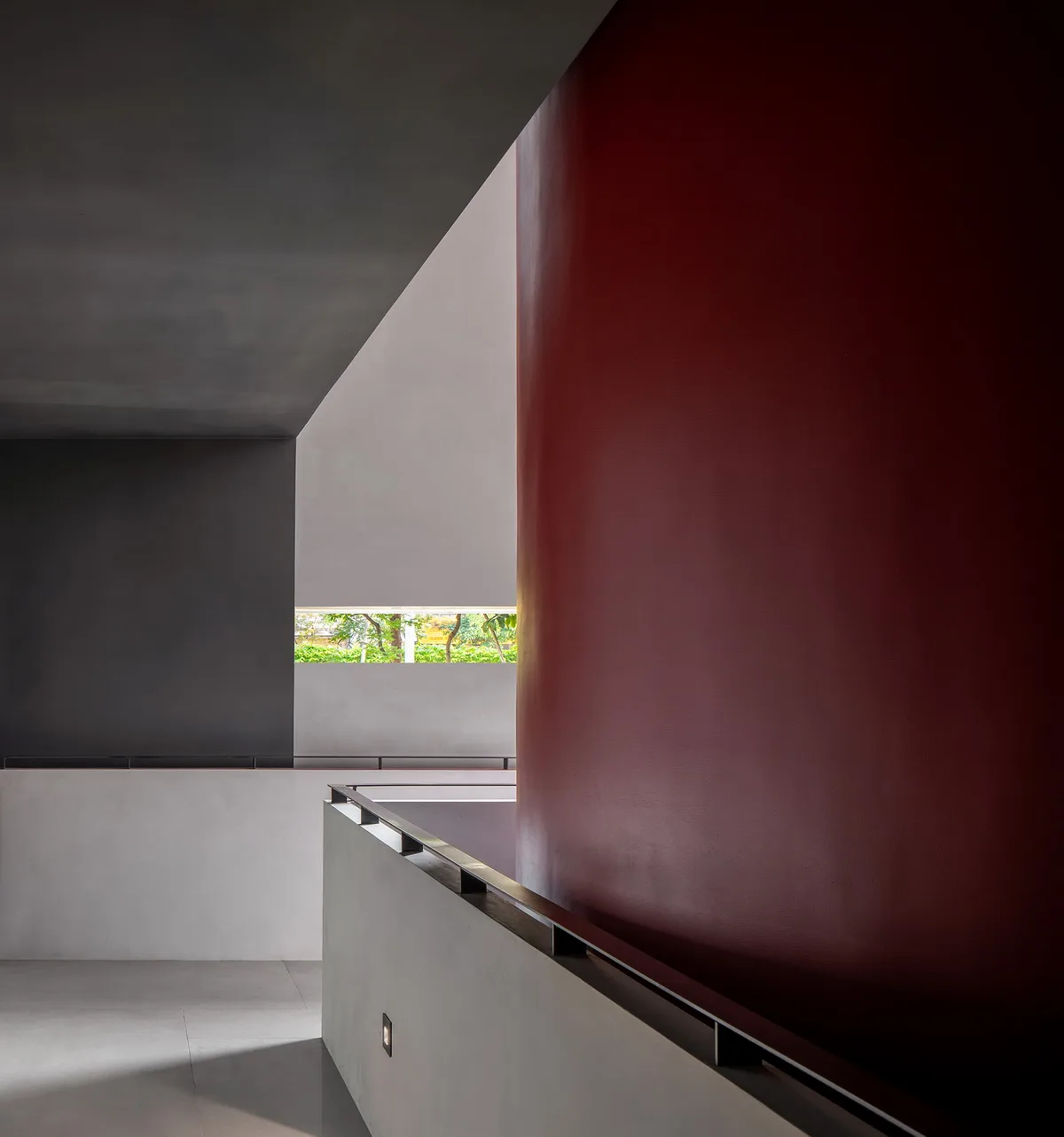
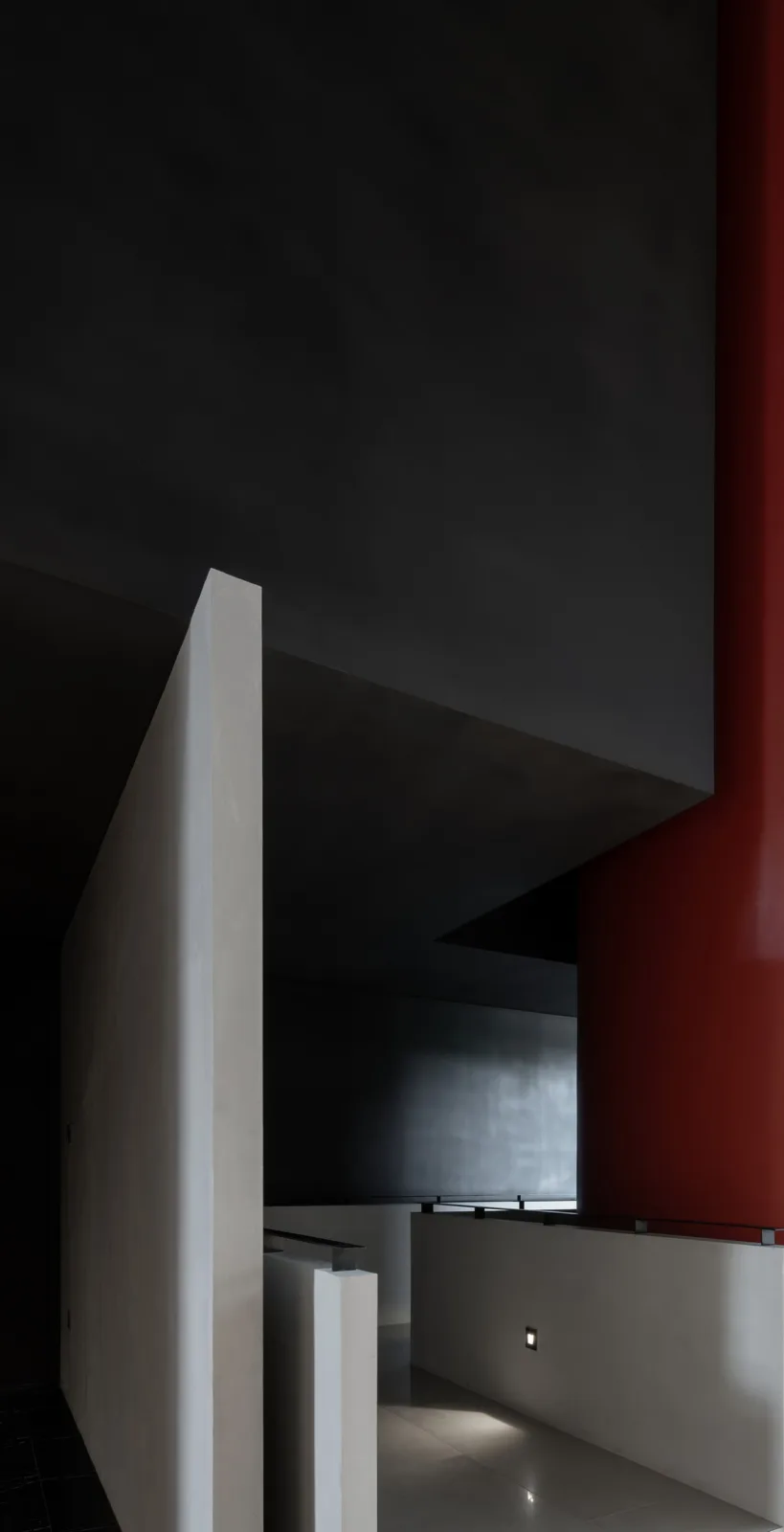
Light flowing through building blocks
“Natural light defines the character of a space; it breathes life into buildings by illuminating them.”
—— Louis Kang
Morning sunlight streams through large windows, casting irregular beams onto discontinuous walls. Light filters into the interior through carefully designed openings on the exterior facade. As the sun moves, these rays dance across the building’s surfaces, animating the space.
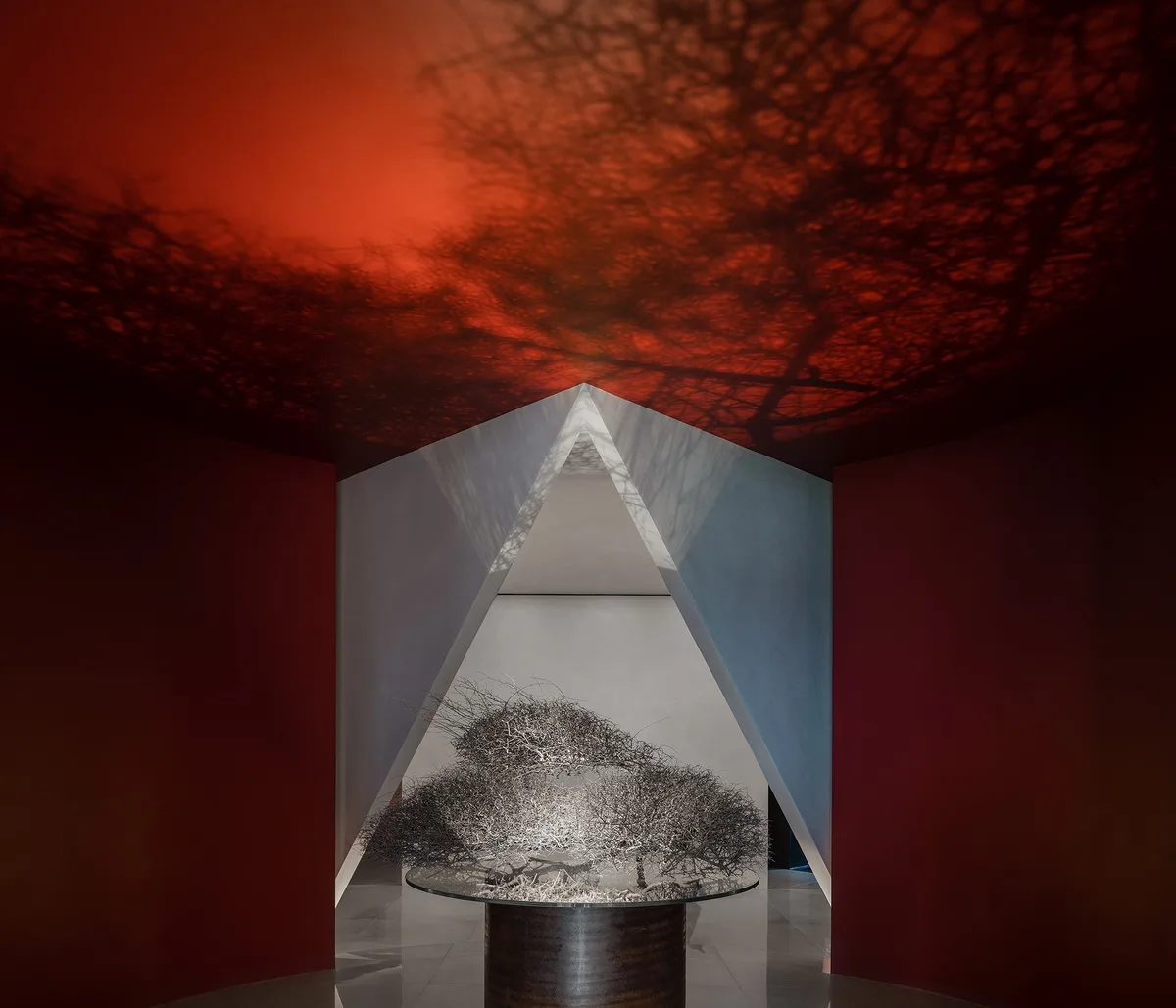

The scent of water as an indoor regulator
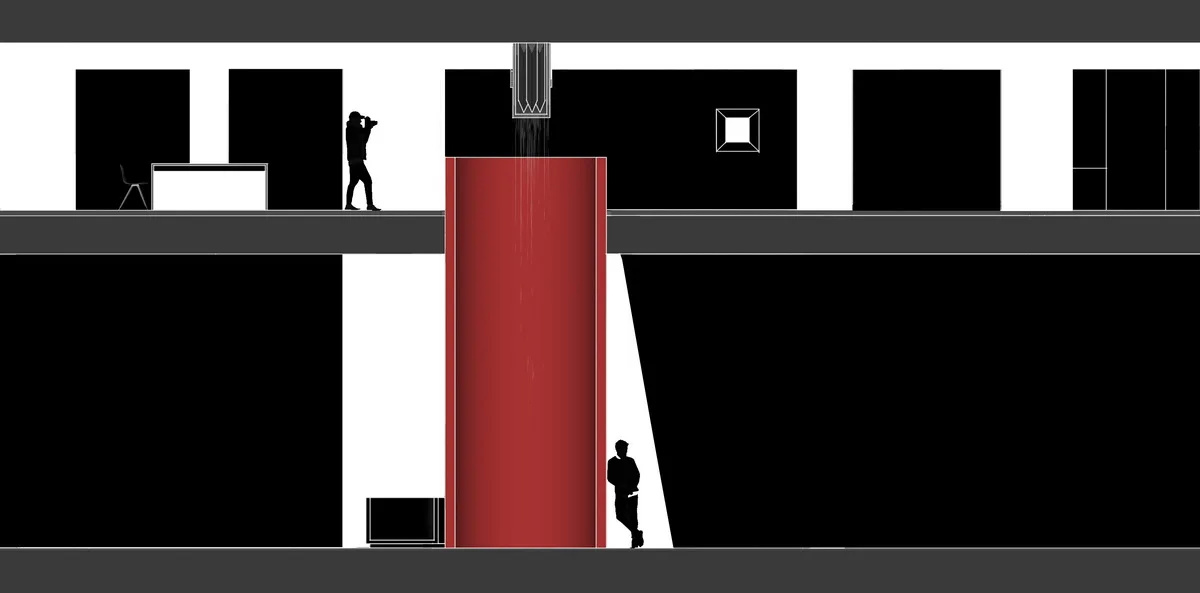
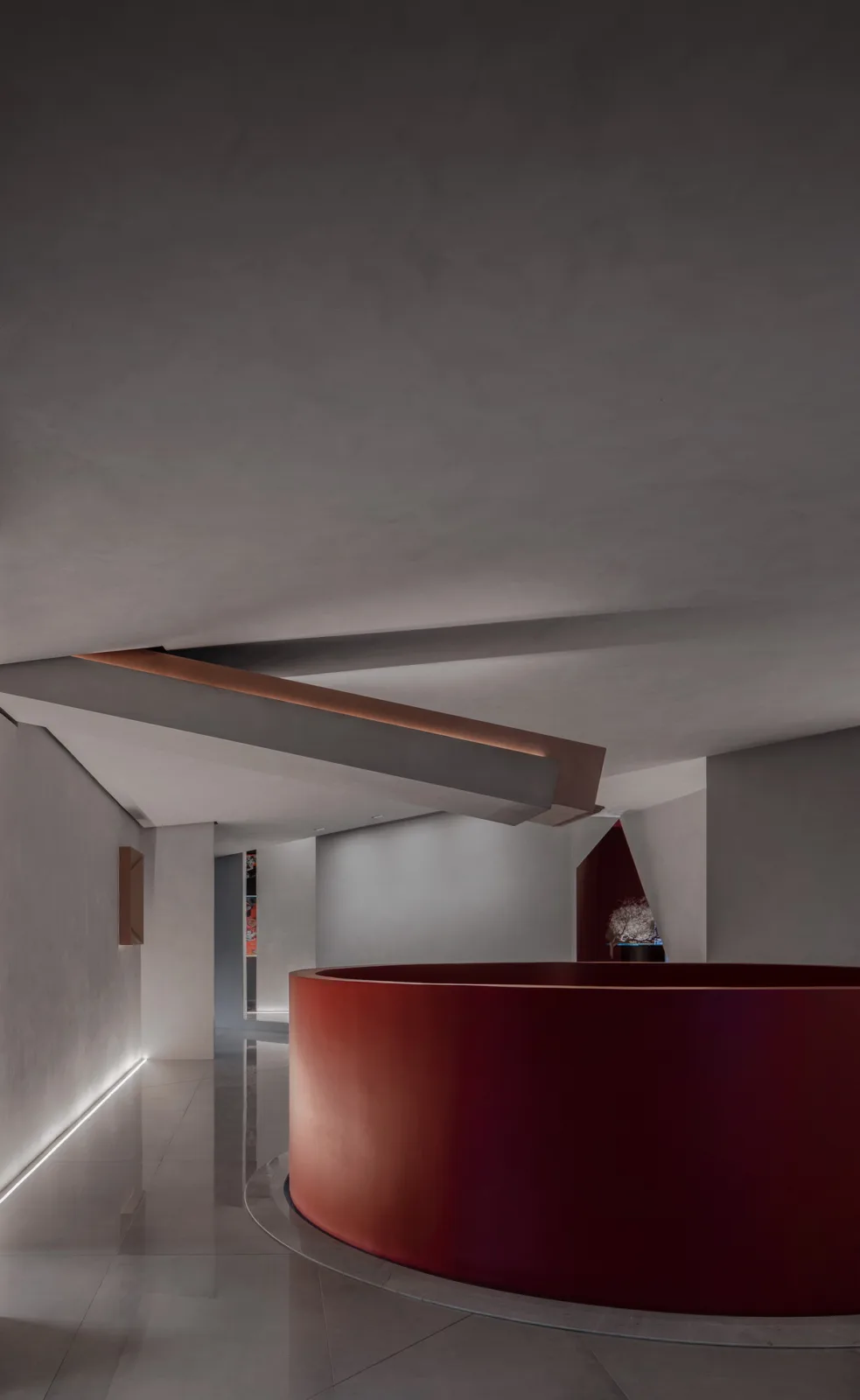
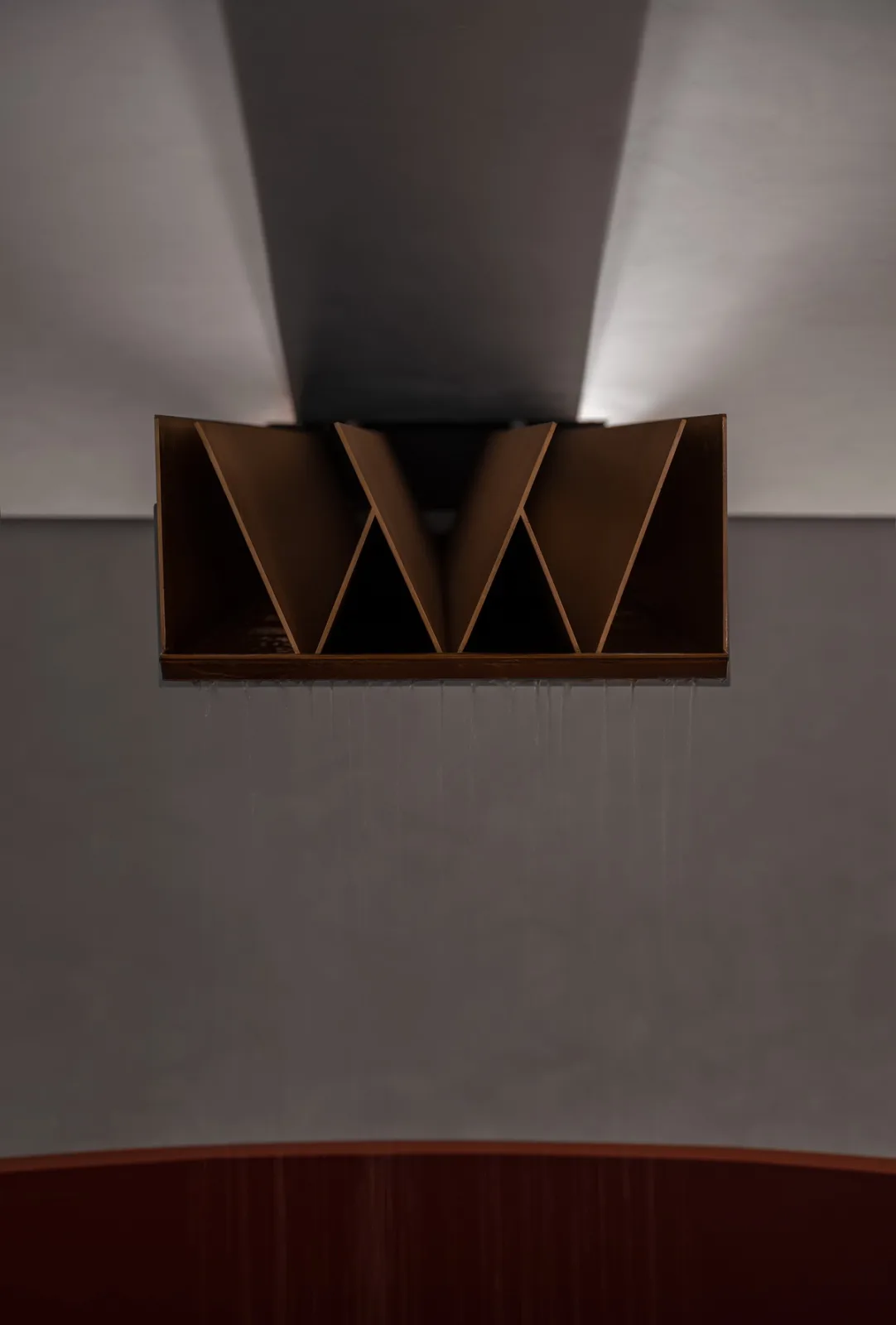
A large red cylinder connects two floors, housing a water tank that channels rainwater from outside. Water cascades from the second to the first floor, its sound echoing within the cylinder like a mountain spring flowing through a forest, creating a calming and uplifting atmosphere.
The outdoor balcony features a square pool framing a circular corridor, mirroring the indoor design. This seamless transition blurs the boundary between inside and outside, while the pool also serves as an ecological regulator, increasing humidity and enhancing comfort.
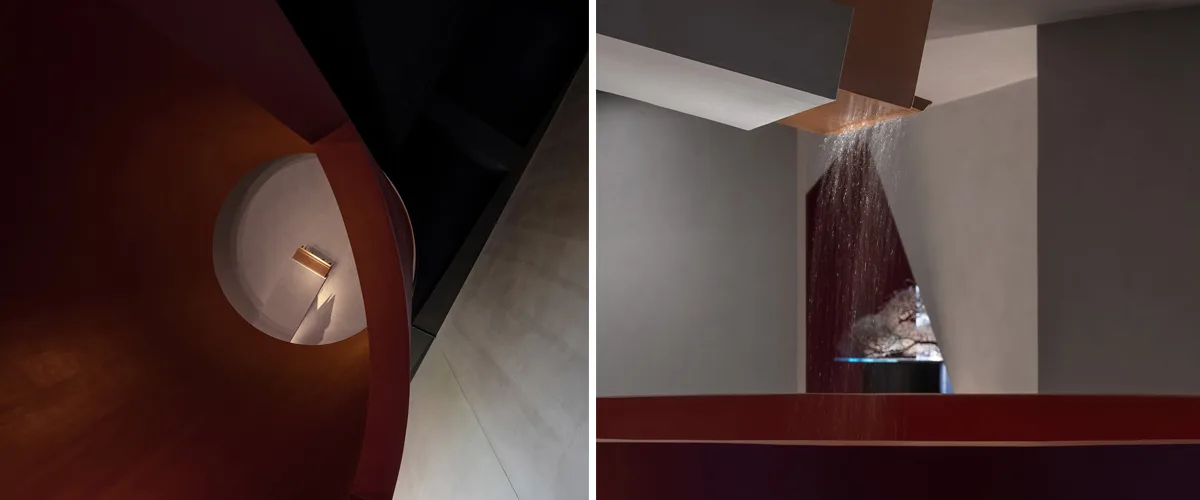
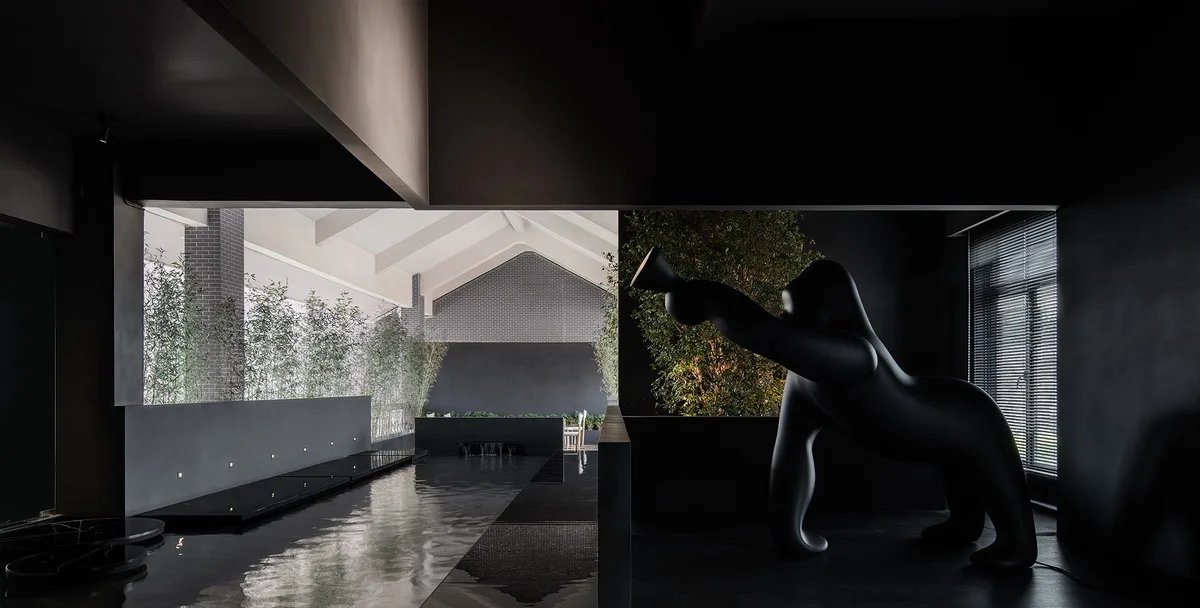
The intangible presence of wind indoors
Situated along a north-south axis, wind flows freely from the open cylinder on the first floor to the second floor. This creates a unique sensation — enclosed by the “box” on the second floor, yet feeling the cool gusts near the cylinder.
The inner balcony, open on both sides, facilitates constant air circulation. The pool makes invisible wind visible, with ripples shimmering under the balcony’s overhead lighting, as if the wind is dancing with the water.

△ Wind Flow Diagram
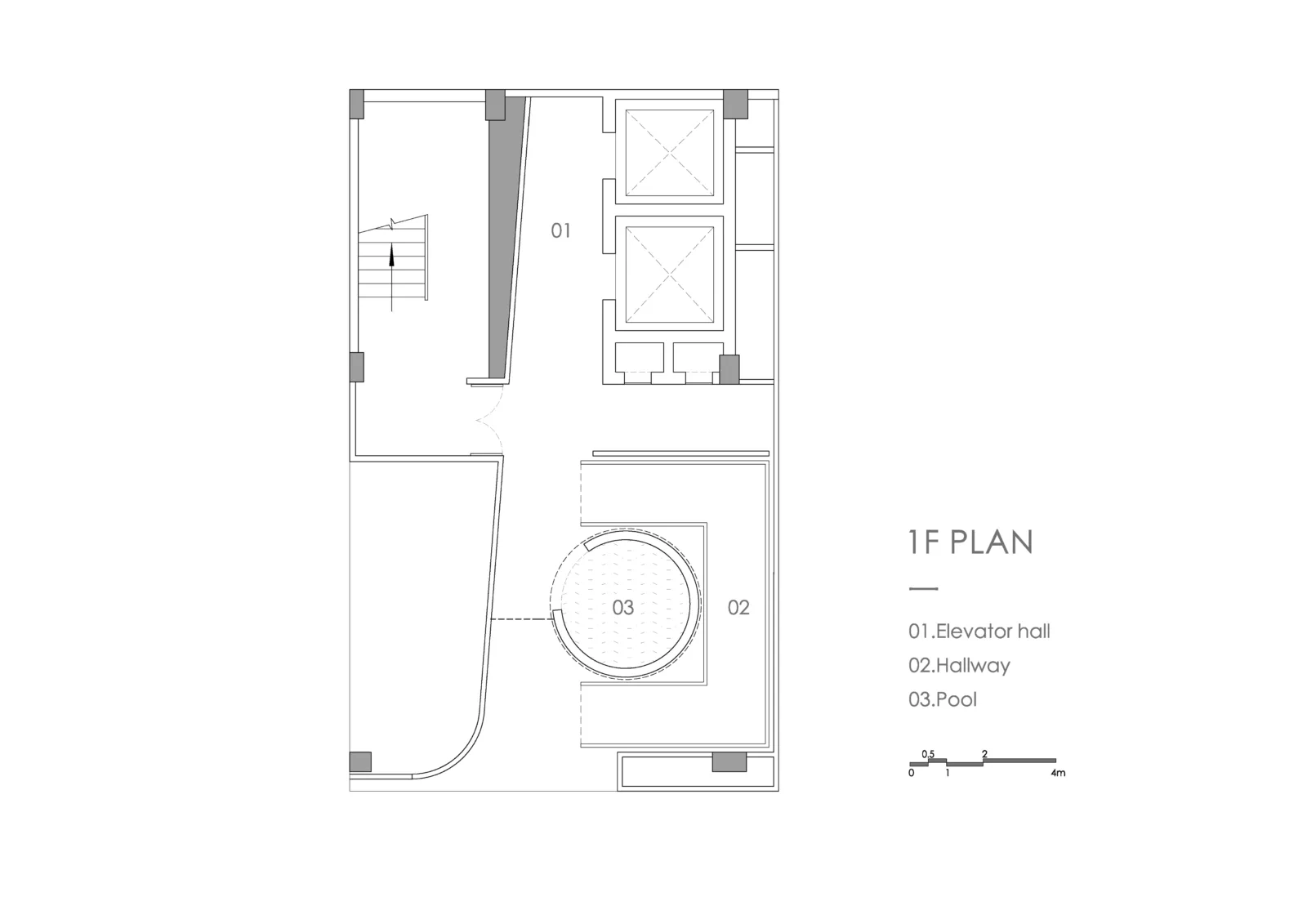
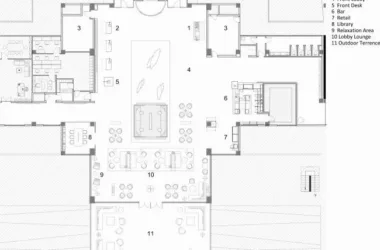
△ First floor plan
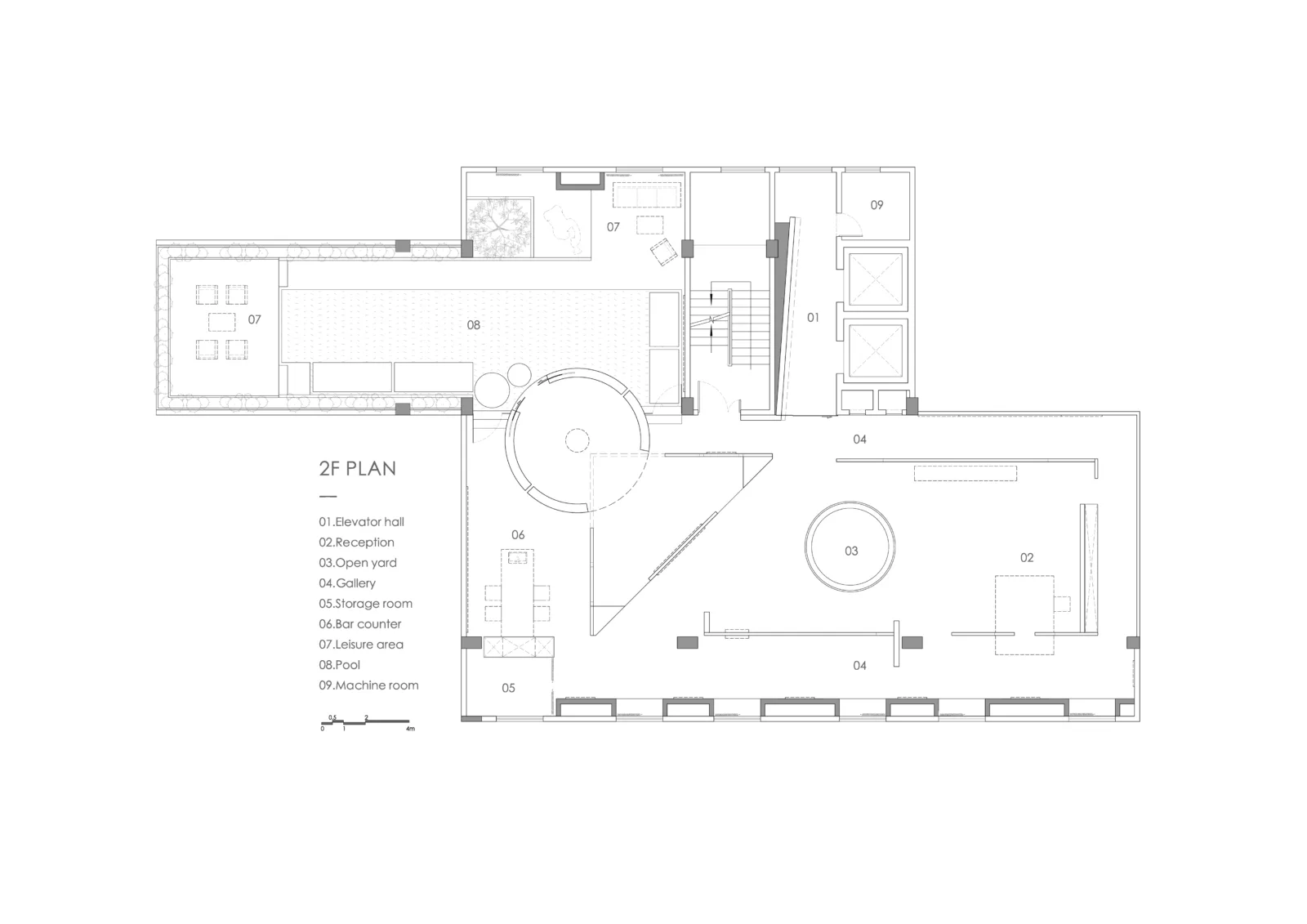
△ Second floor plan
△ Detailed Structure
Geometric elements like triangles and trapezoids are abstracted from the brand and incorporated into the architectural forms. This approach seeks the best expression of brand communication within the company’s identity. The block-constructed “art gallery” challenges traditional manufacturing industry images, realizing diverse spatial functions while subtly conveying brand connotations with lasting impact.
A brand needs a space that aggregates and interacts with various elements, serving as a form of brand expression itself.
The brand’s market positioning shapes the enterprise space, emphasizing a calm and soothing atmosphere that inspires creativity.

The sink outlet design integrates brand elements into fine details. The overlapping triangular lines on the ceiling and floor extend the brand’s visual identity.
Project Information
Project Name: Maimeng Clothing Office Front Office
Project Area: 500 square meters
Location: Foshan, China
Design Firm: Zhengfang Liangxing Design
Lead Designer: Xu Qingliang
Design Team: Huang Wanquan
Construction Drawings: Hezuo Building
Interior Decoration: Ruikun Soft Decoration
Material Supplier: Guipu Material Selection
Brand Furniture: Liangxing Culture
Primary Materials: TOA Taitu cement-based art coating, Ferona ceramics, 90+ ceramics, gray marble, aluminum honeycomb composite stainless steel plates
Design Year: 2019
Completion Year: 2020
Project Photography: Liu Yujie












Must log in before commenting!
Sign Up