
The “Cloud Corridor” aerial self-study room is situated at the vibrant crossroads of Suzhou’s ancient city and the Wuzhong district. As evening falls and the lights illuminate the space, a warm lemon-yellow glow reflects off towering office buildings. This continuous greenery softens the shadows cast by traditional architecture, creating a serene and comfortable retreat. From this vantage point, the entire project offers a panoramic view that captures the historic charm and cultural heritage of Gusu’s old city.
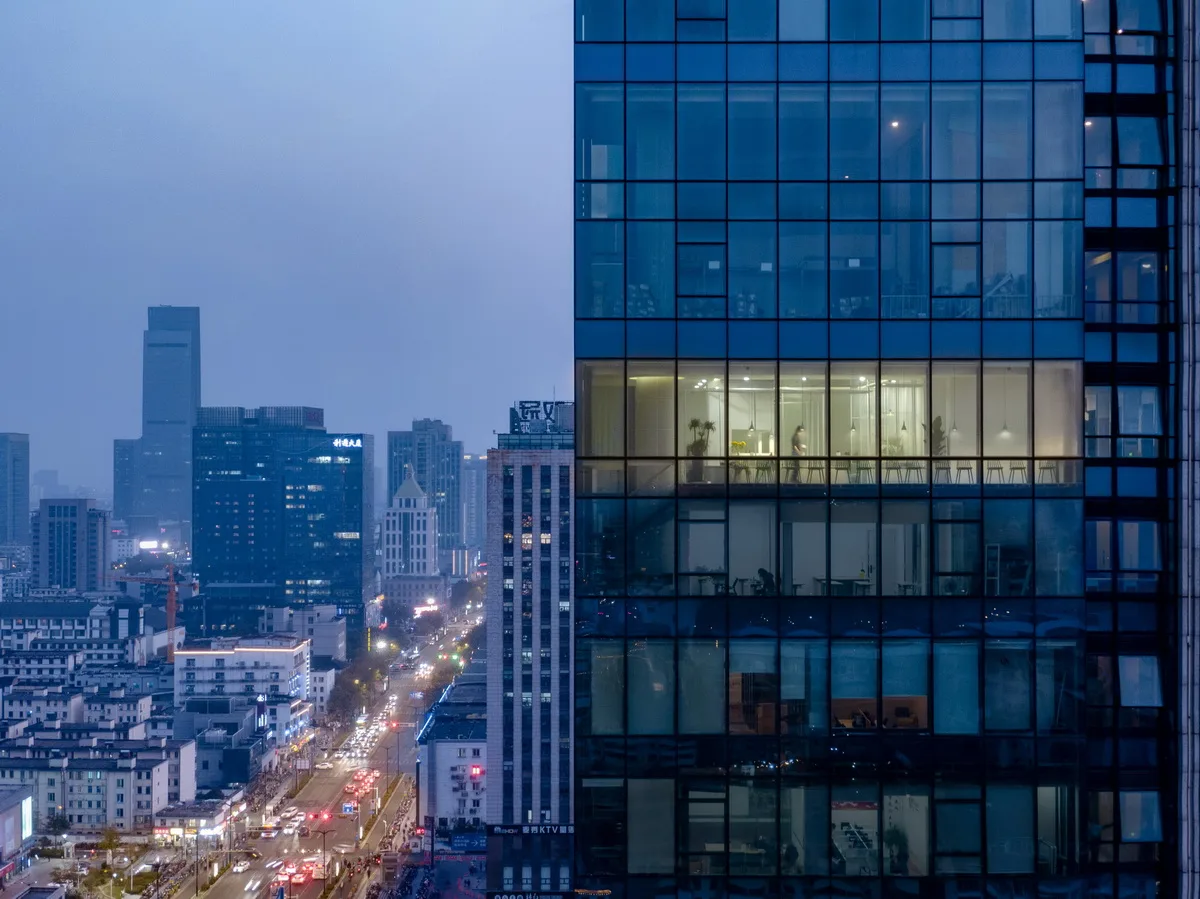
△ Outdoor aerial photography © Yao Jieqi
Spatial Layout
Within a relatively compact original space, the design employs a “micro landscaping” technique for the Cloud Corridor study rooms. Drawing inspiration from traditional Suzhou landscaping elements such as corridors, gardens, and pavilions, the design cleverly extends and reconstructs the space. This transforms the area into an innovative composite environment that balances open and semi-open spaces, providing a relaxing and harmonious atmosphere within overlapping micro landscapes.
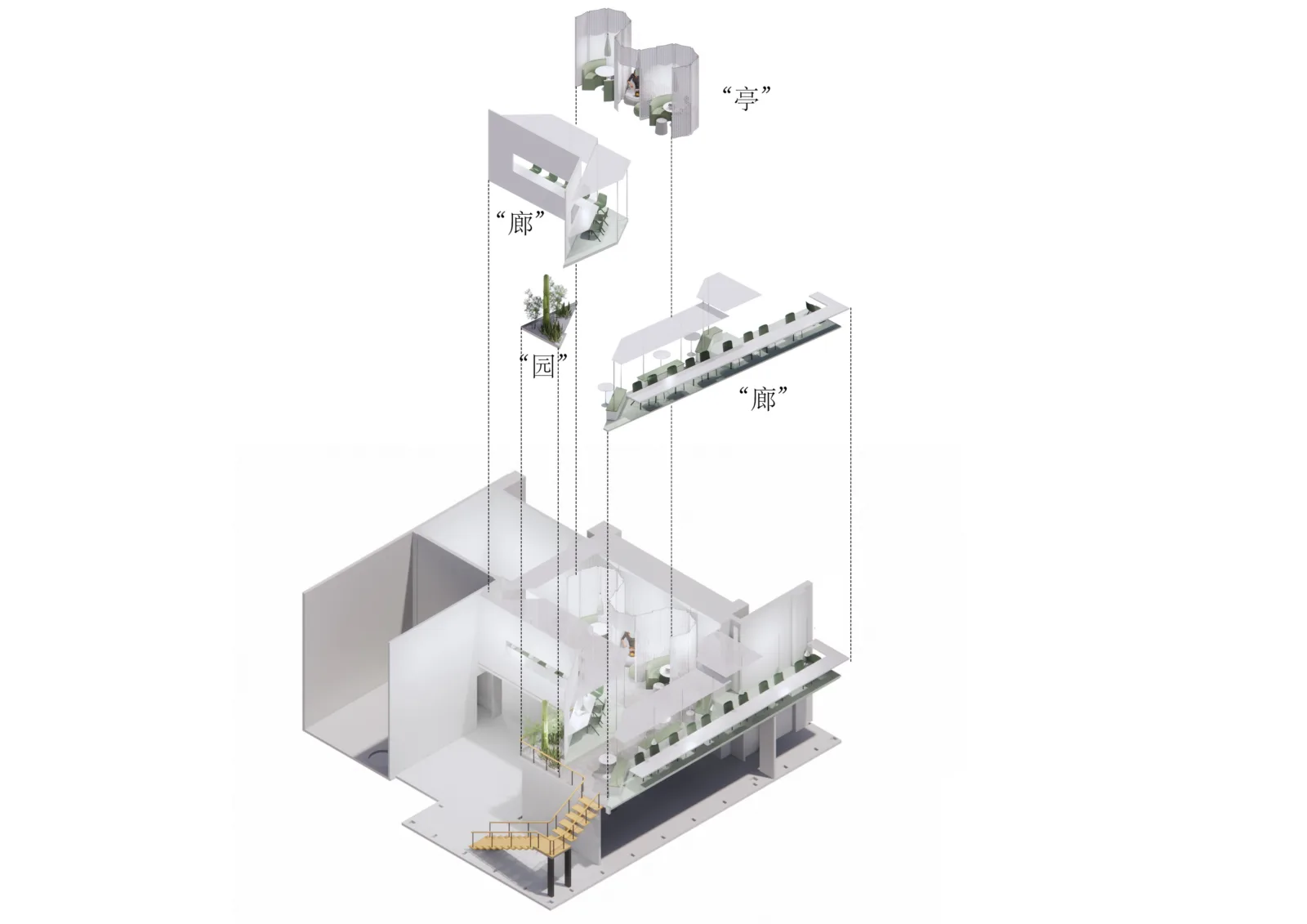
△ Axonometric diagram © Pingjie Design
Entrance Space
The entrance features staggered angles that evoke a sense of exploration and spatial immersion. Landscape elements are strategically placed at the corners, offering varied views as users move through the space, which adds rhythm and dynamism. The main passageway follows an open, streamlined path, addressing circulation challenges often found in narrow, crowded areas. This gradual transition from the outdoor environment to the indoor space helps shift visitors’ moods from the city’s hustle and bustle to a state of calm, fully revealing the composite space ahead.
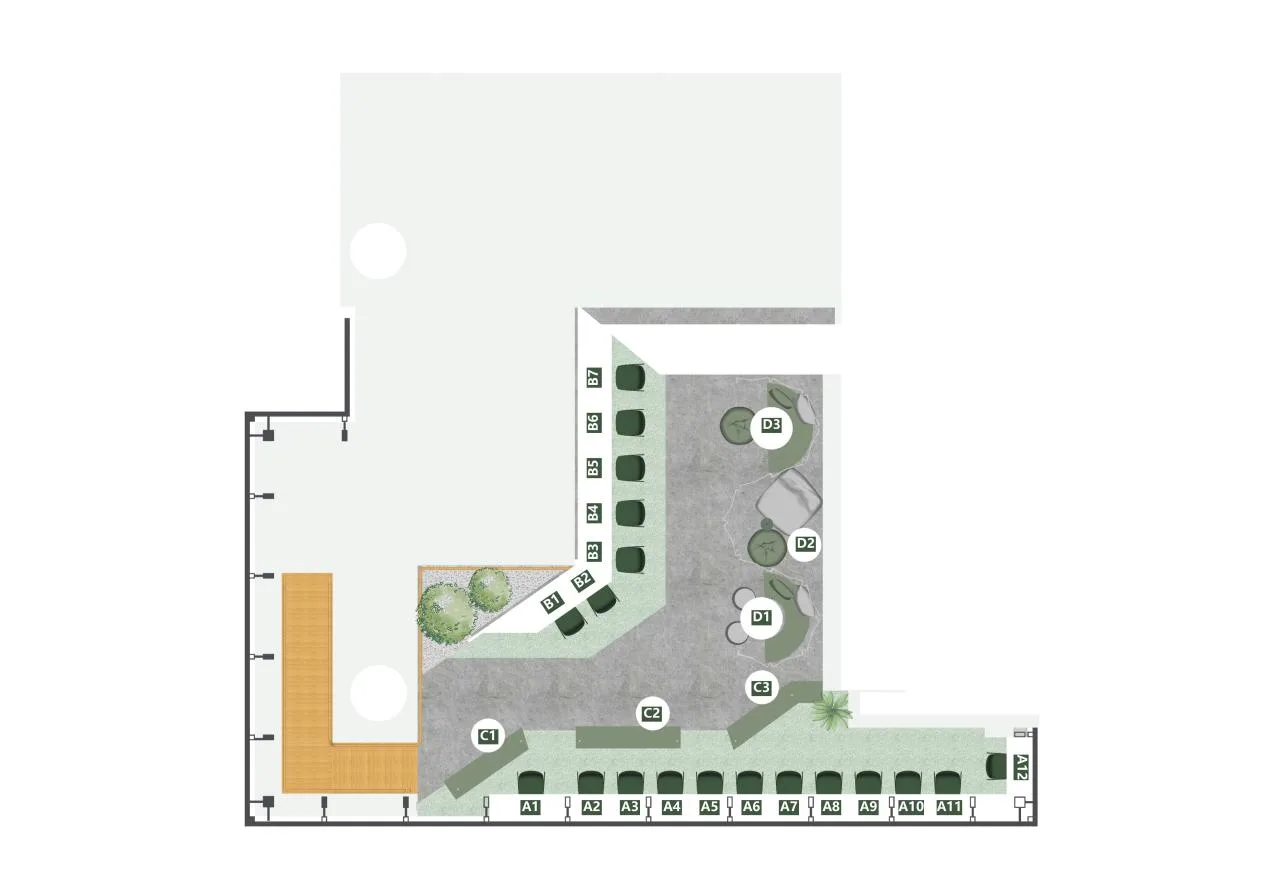
△ Layout plan © Pingjie Design
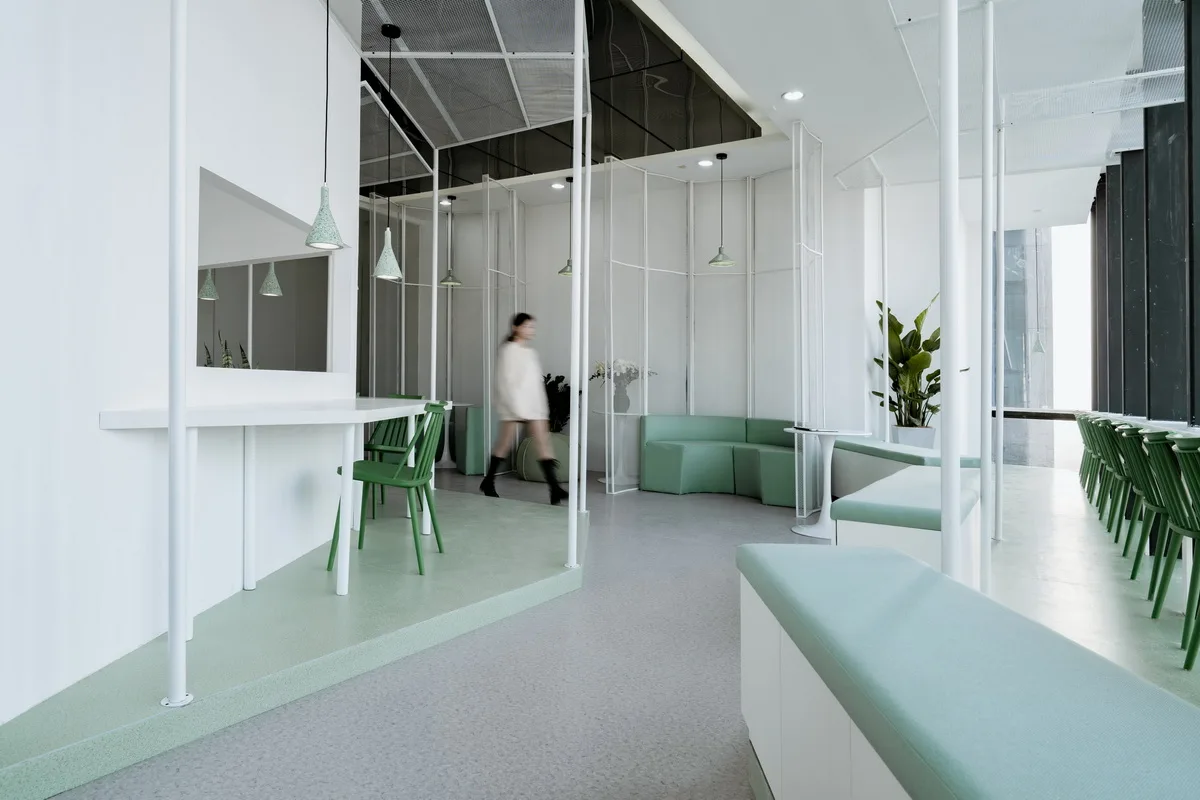
The entrance is winding and secluded; once inside the public self-study area, visitors experience a sudden sense of enlightenment. © Yao Jieqi
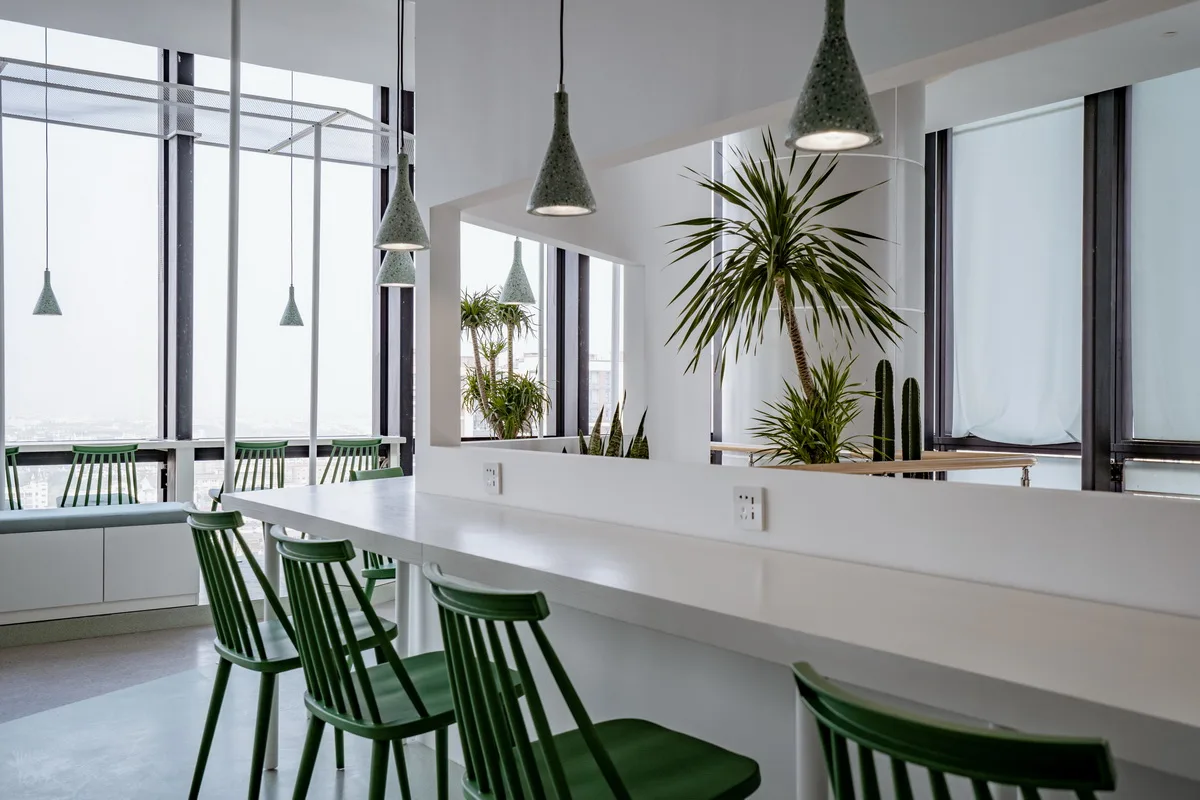
Landscape forms viewed from different perspectives © Yao Jieqi
Spatial and Material Fluidity
Inside the space, lightweight mesh metal ceilings and continuous, orderly steel frames redefine the corridor’s artistic atmosphere. These elements segment the large area into zones of varying scales and functions without blocking sightlines, maintaining spatial continuity. The balance between dynamic and static elements creates a harmonious environment.
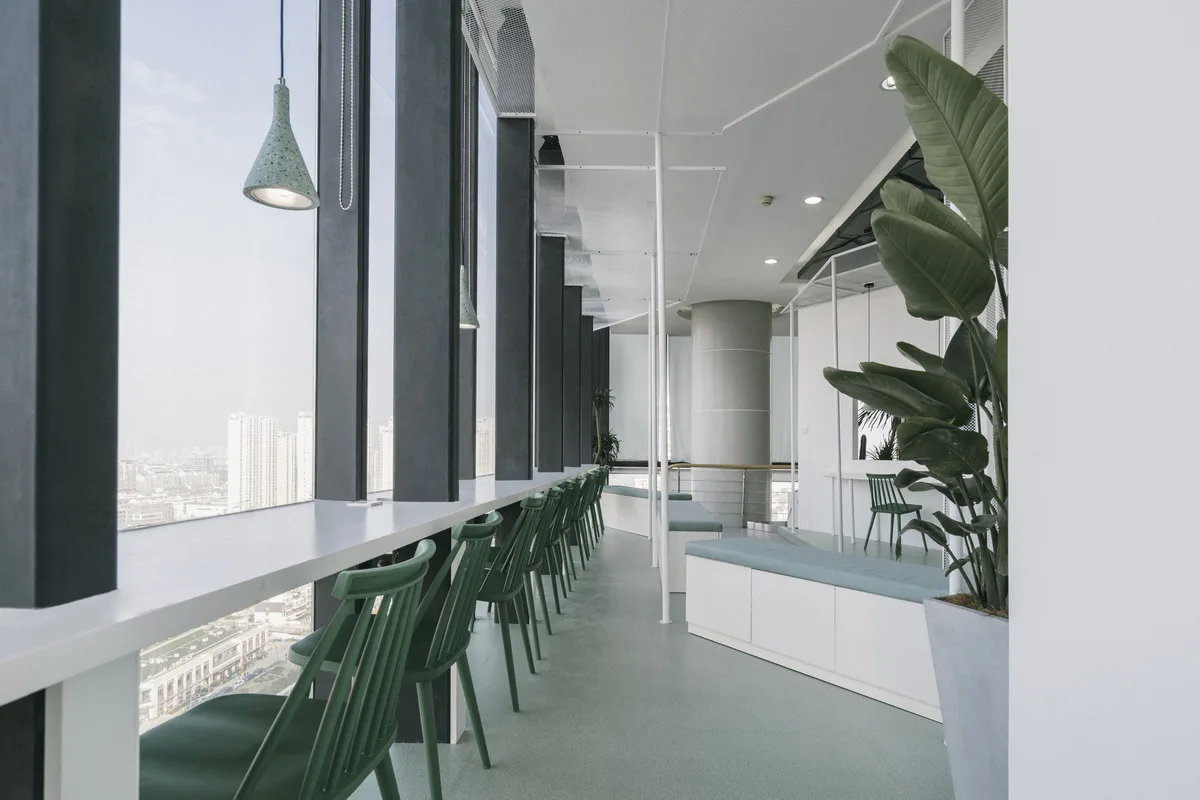
△ Artistic conception of the corridor © Yao Jieqi
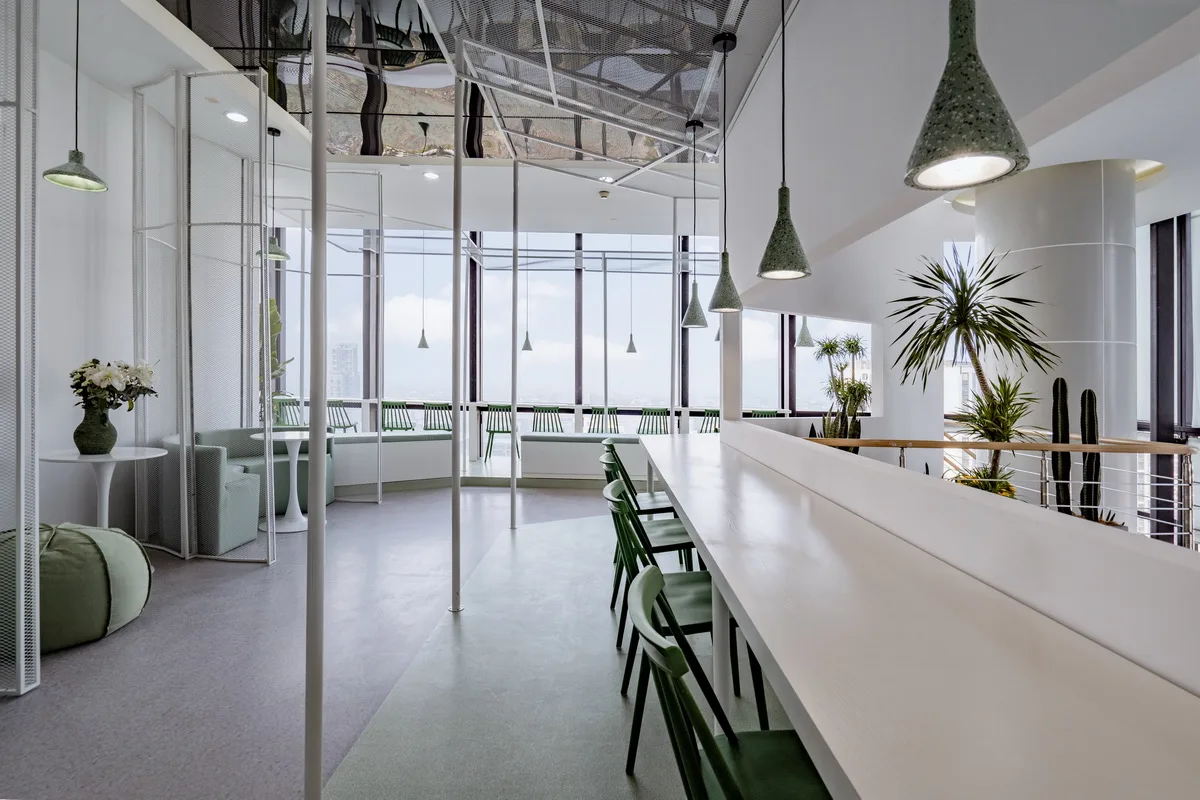
△ Extended space © Yao Jieqi
At the boundary between the interior and the open first-floor void, a continuous, winding white wall serves as a safety barrier. Integrated window openings punctuate the wall, visually connecting inside and outside. These openings bring in outdoor views, while intermittent greenery along the walking paths adds vitality and movement to the space, evoking the feel of a garden.
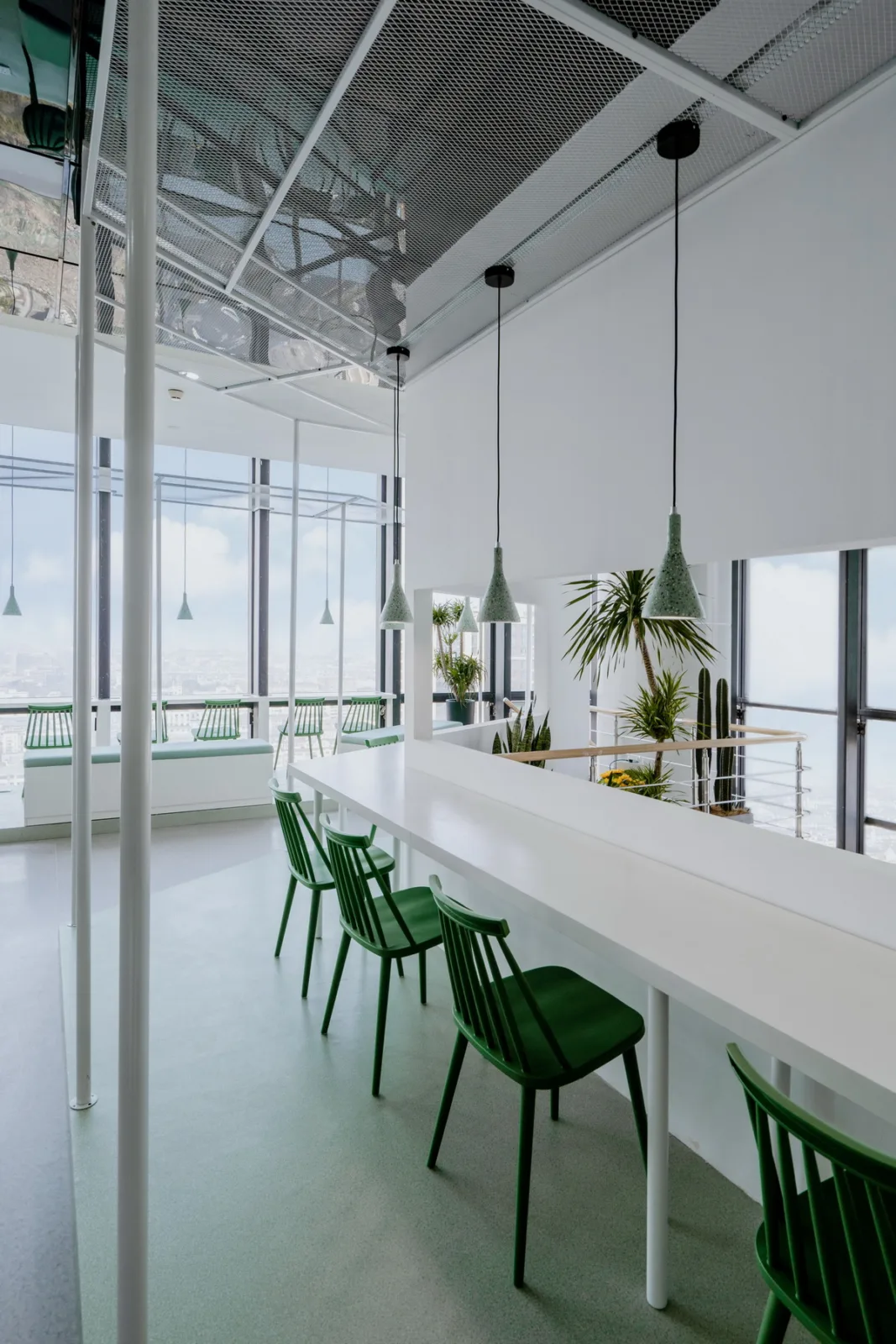
△ Wall and window scenery inserted © Yao Jieqi
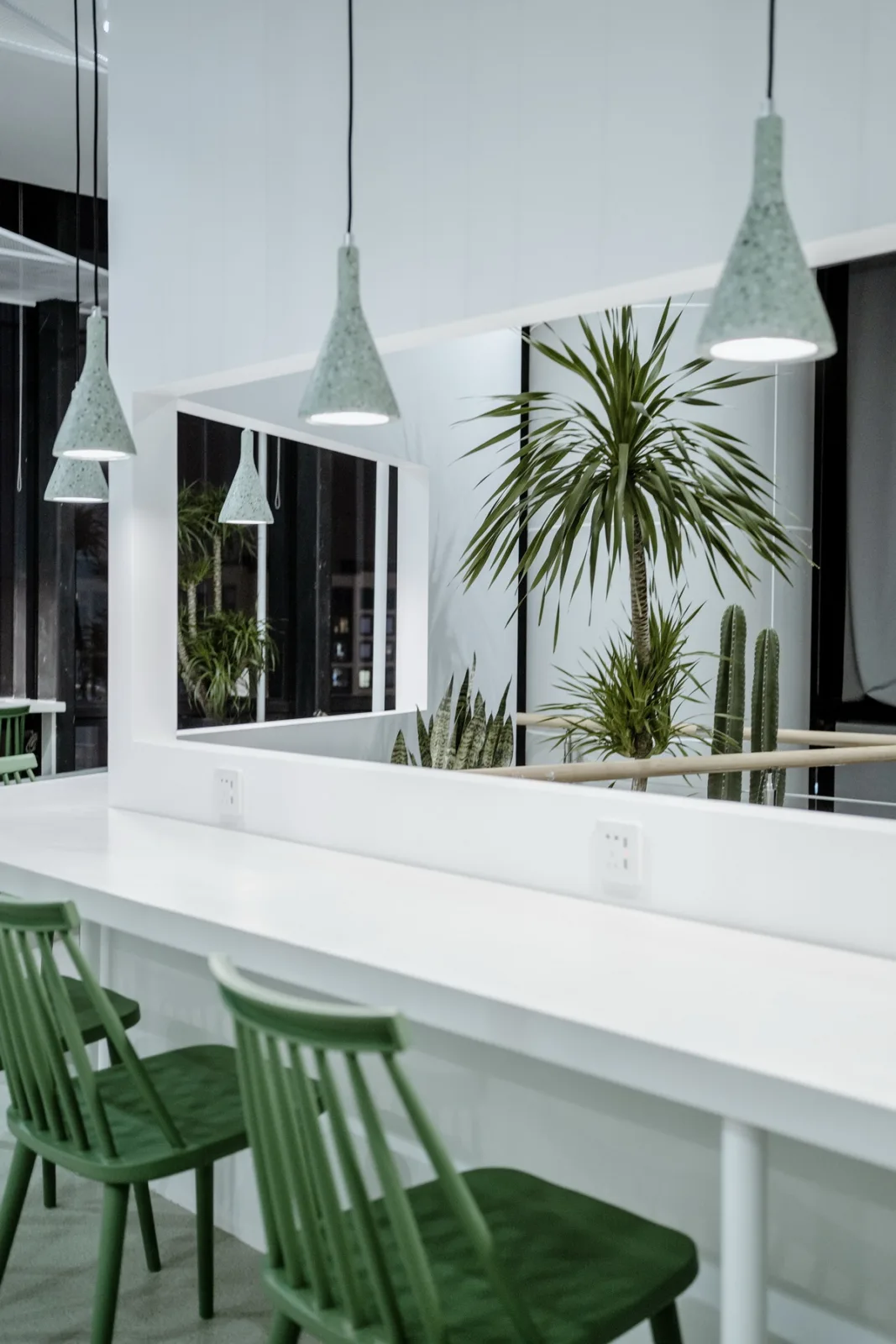
△ Moving through new scenery, reminiscent of a garden © Yao Jieqi
The project avoids elaborate decorations or expensive materials, focusing instead on the site’s geographic characteristics and current conditions. Appropriate materials were chosen to respect traditional architectural techniques while exploring new spatial possibilities. The material selection follows a subtle modern-retro aesthetic, responding with restraint to the contemporary commercial atmosphere.
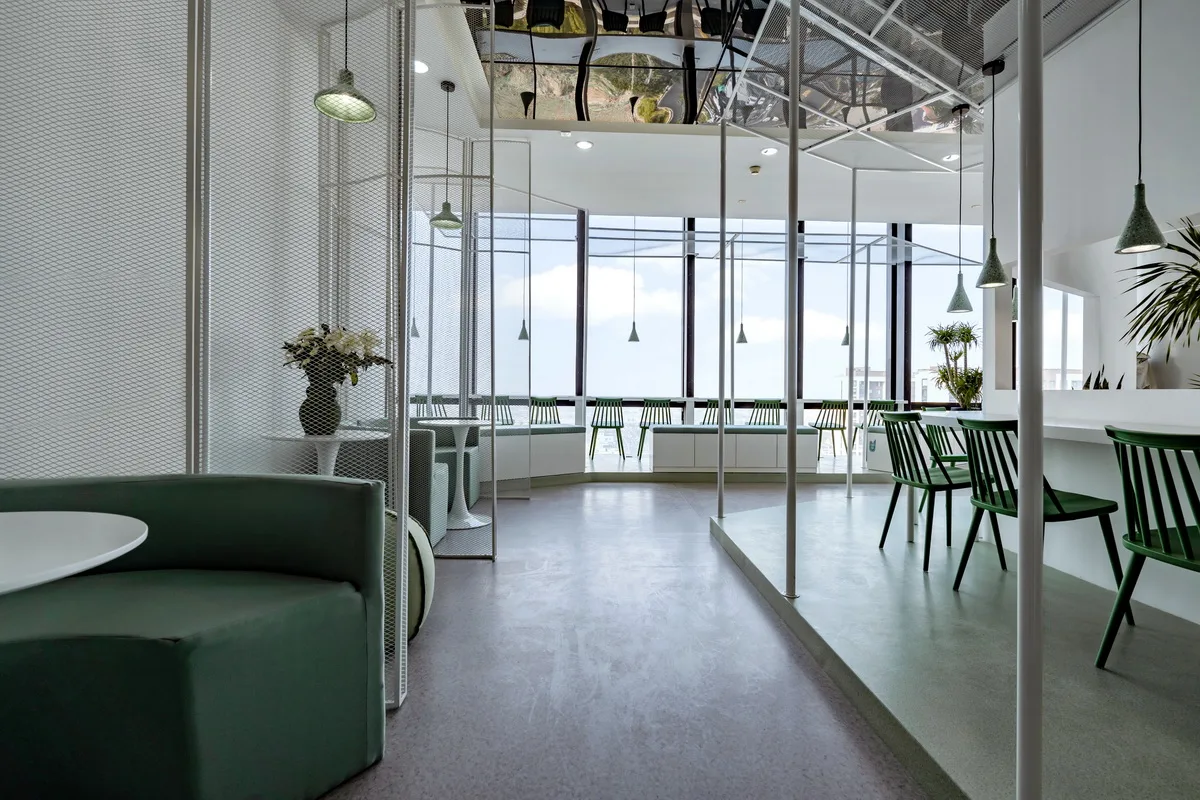
△ Material composition in space ① © Yao Jieqi
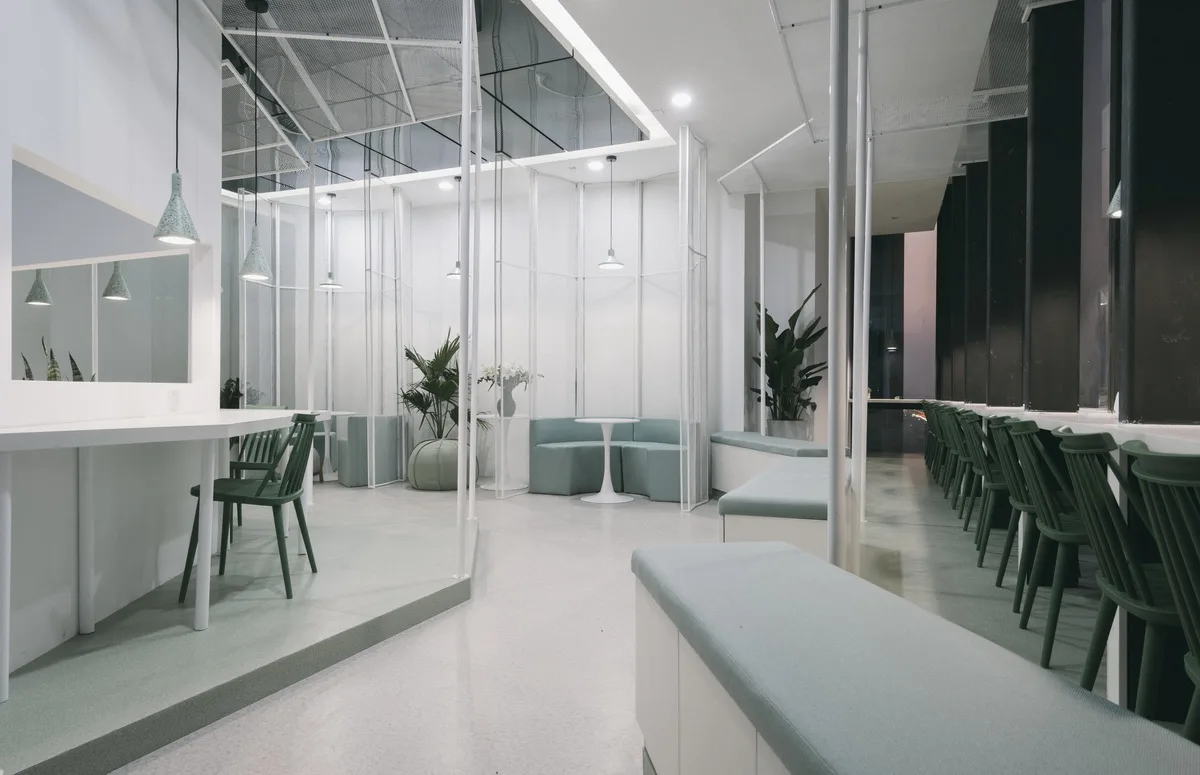
△ Material composition in space ② © Yao Jieqi
An Immersive Escape from Reality
This space offers visitors a brief escape from the city’s hectic pace, resembling a tranquil natural garden. It allows relaxation of both mind and body amidst intense work, ultimately enhancing learning efficiency. The intricately curved workbench contrasts with the corridor’s linear structure, with continuous curved surfaces dividing the interior into distinct zones that provide diverse transitional experiences. The green flooring beneath tables and chairs evokes the sensation of sitting on grass, while low ferns and other small plants interspersed between workstations not only bring nature indoors but also improve the microclimate and environment. Every corner is filled with greenery.
The semi-transparent perforated white panels gently enclose the space without fully enclosing it, blurring boundaries and softening the perception of rigid walls. The overarching themes are purity, nature, and lightness. Set against the lively streets of Gusu, the study room feels like a peaceful oasis, a beautiful urban landscape. Different scenes visible through the windows make each corner unique—whether green or white—offering each visitor a personal sanctuary.
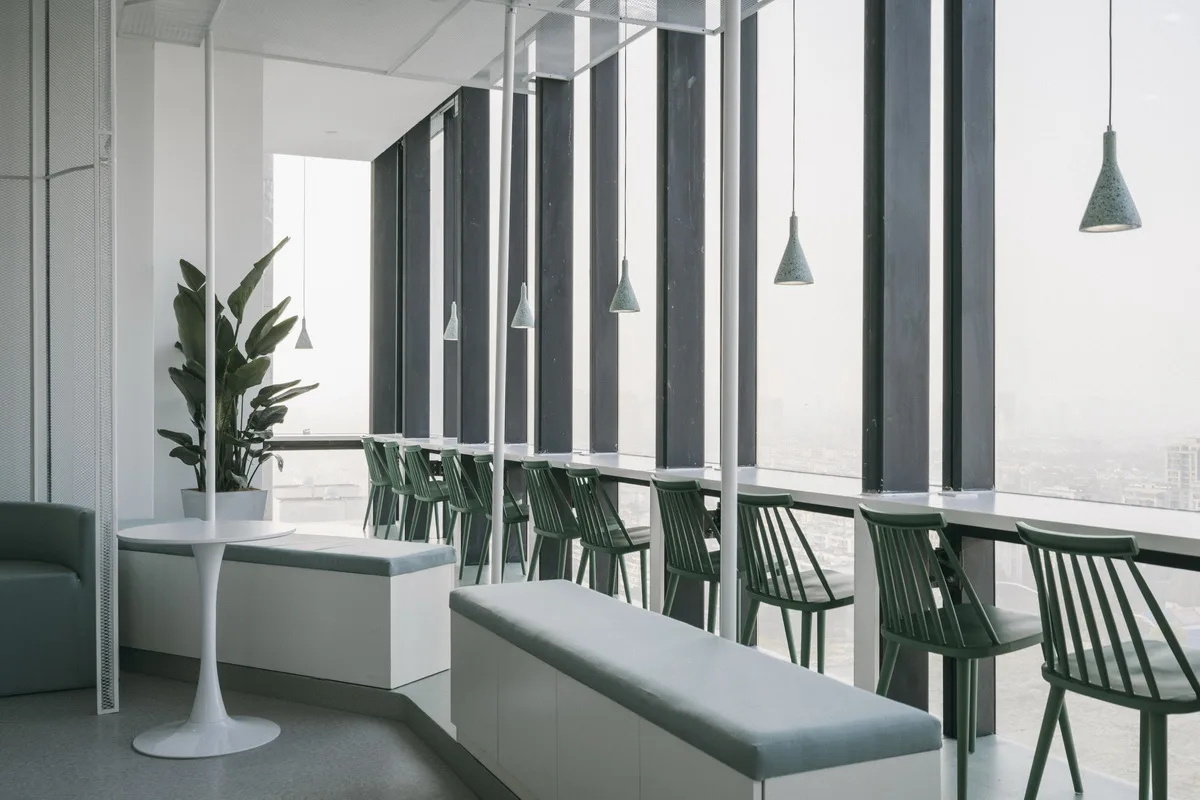
△ Open and natural learning atmosphere © Yao Jieqi
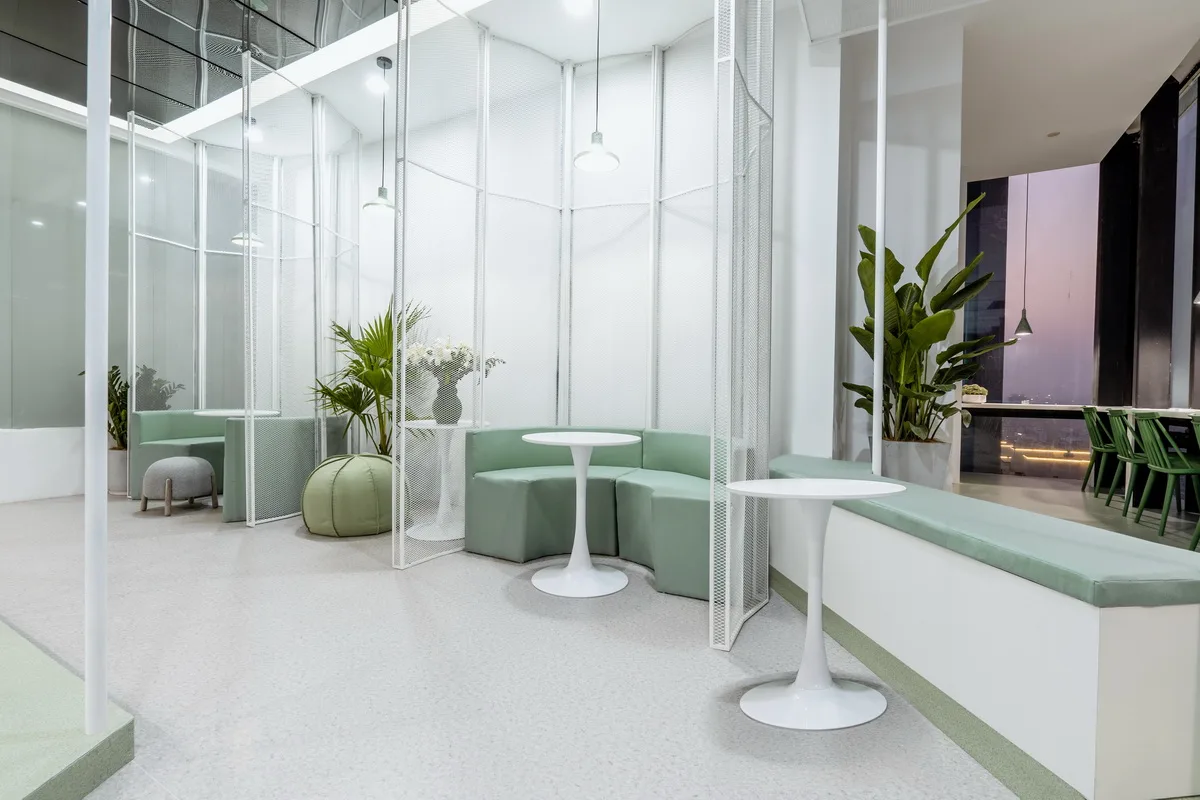
Discussion area enclosed by continuous metal mesh © Yao Jieqi
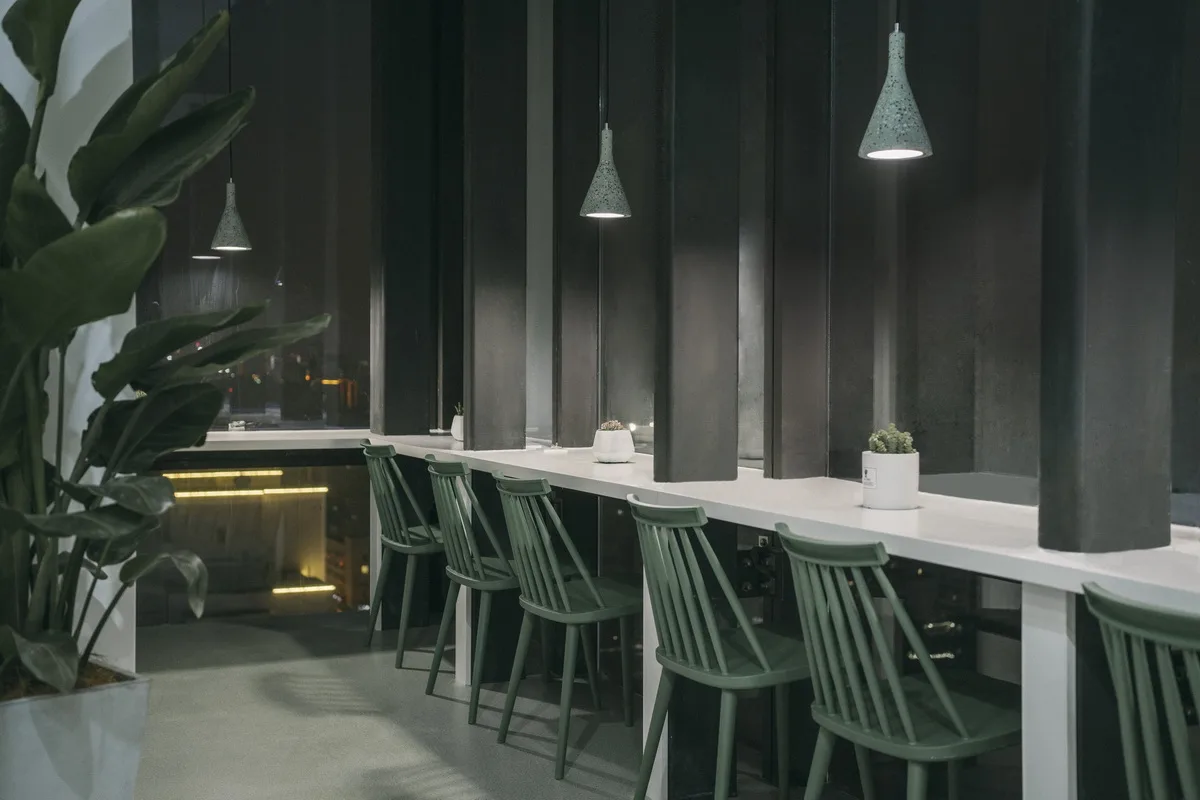
△ Quiet self-study space © Yao Jieqi
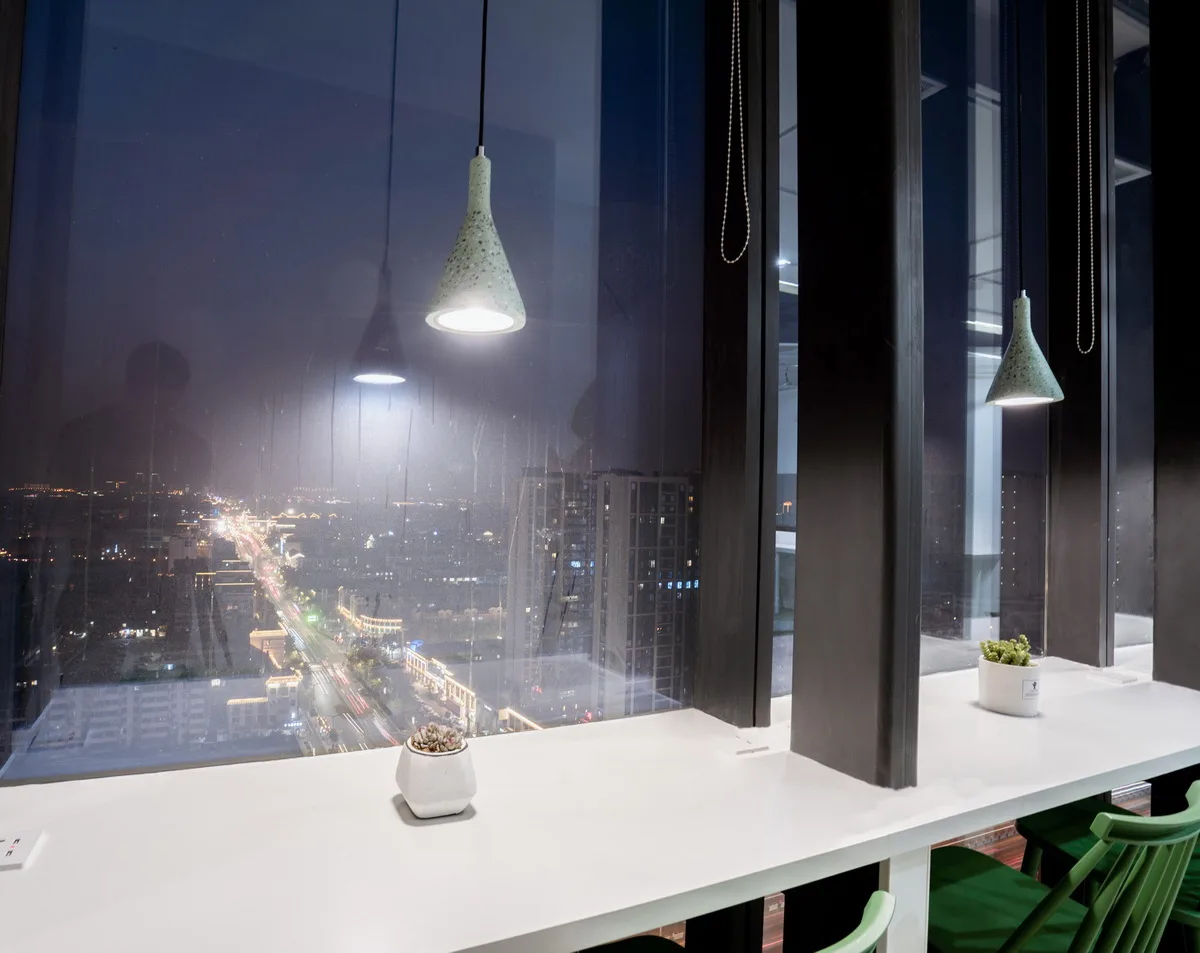
△ Window-side landscape © Yao Jieqi
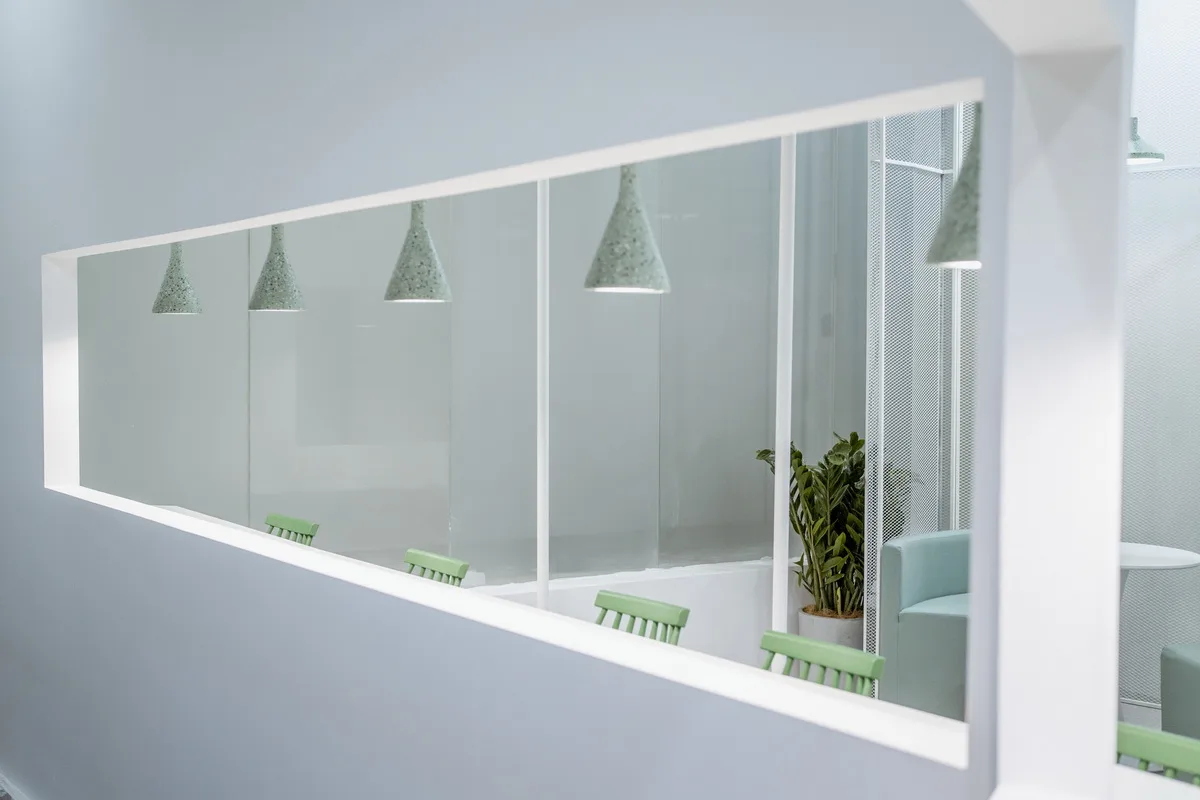
△ View of the other half of the quiet self-study space through an artificial window scene © Yao Jieqi
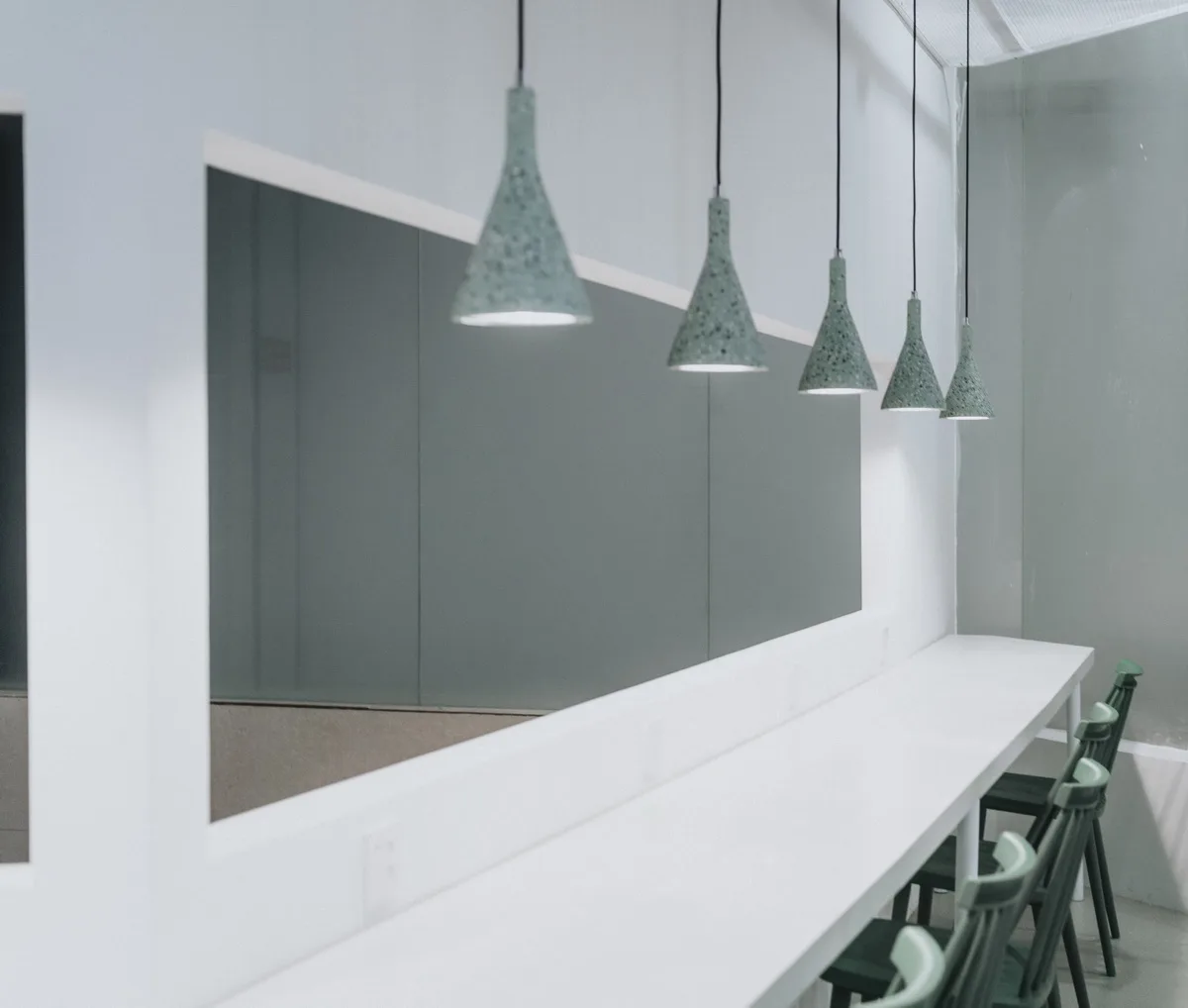
△ Local details © Yao Jieqi
Project Information
Project Name: “Cloud Corridor” Aerial Study Room
Designer: Pingjie Design (Suzhou Pingjie Building Technology Co., Ltd.)
Project Design & Completion Year: November 2020
Design Team: Yang Bo, Yang Nan
Project Location: Wuzhong Building, Gusu District, Suzhou City, Jiangsu Province
Building Area: 60 square meters
Photography Copyright: Yao Jieqi
Client: Suzhou Xueze Shi Education
Company Website: __AI_ST_URL_0__
Email: [email protected]













Must log in before commenting!
Sign Up