
△ Video © CreatAR Images
In the vibrant spring of 2020, before officially resuming work, TOPOS DESIGN was commissioned by Hangzhou Arno Biomedical Technology Co., Ltd. to design their new corporate headquarters in Hangzhou. Arno Pharmaceuticals sought a headquarters that would stand apart from traditional biotech companies, entrusting the design team completely with the vision of how to achieve this distinction.
Due to the pandemic, the design phase relied heavily on frequent video conferences. During a brainstorming session, the concept of the Force emerged—an idea blending the Star Wars universe with Eastern and Western philosophies, becoming the spiritual essence of the space. Together, we envisioned the new corporate headquarters as a Jedi Temple that would awaken the company’s Force.
⊙ Balance of the Force
“The Tao gives birth to one, one gives birth to two, two gives birth to three, and three gives birth to all things.”
—Laozi, Tao Te Ching
Double Tower
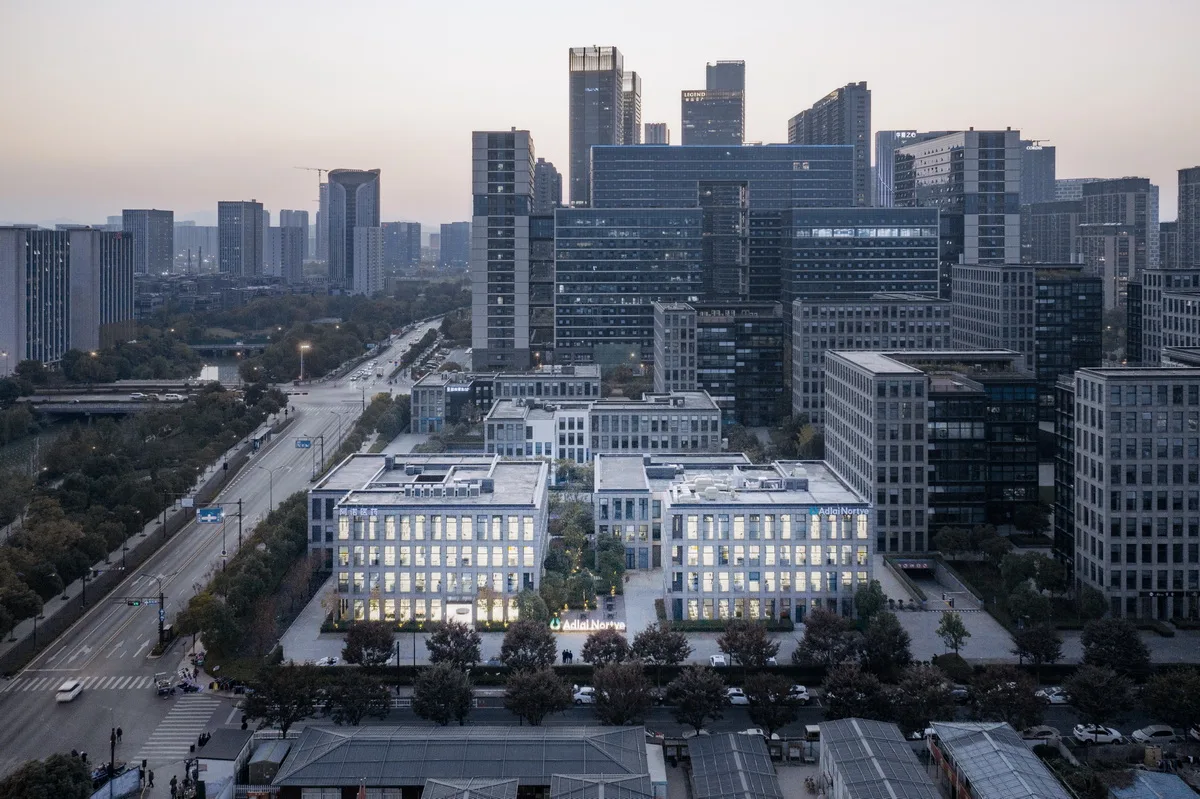
△ Hangzhou Future Science and Technology City
Arno Pharmaceuticals gave us full confidence in the design decisions. Early in the process, we actively participated in selecting the site for the headquarters. After visiting multiple industrial parks, we chose Le Fu Hai Bang Park in Yuhang District, Hangzhou, located within the Hangzhou Future Technology City—home to Alibaba headquarters. This renowned new city is a hub for innovation.
The headquarters combines administrative offices and R&D facilities across two adjacent multi-story standalone buildings: Building 6 houses administration, while Building 8 contains research laboratories. Like many recently developed parks in China, the buildings follow typical functional designs, often resulting in uniform layouts. Our goal was to break away from this norm.
The park’s management prohibited exterior facade renovations. To unify the two separate buildings visually and functionally, we strategically enhanced the outdoor landscape platform between them with minimal alterations. We introduced a human-scale landmark featuring a subtle, refined corporate logo that reflects Arno Pharmaceuticals’ identity.
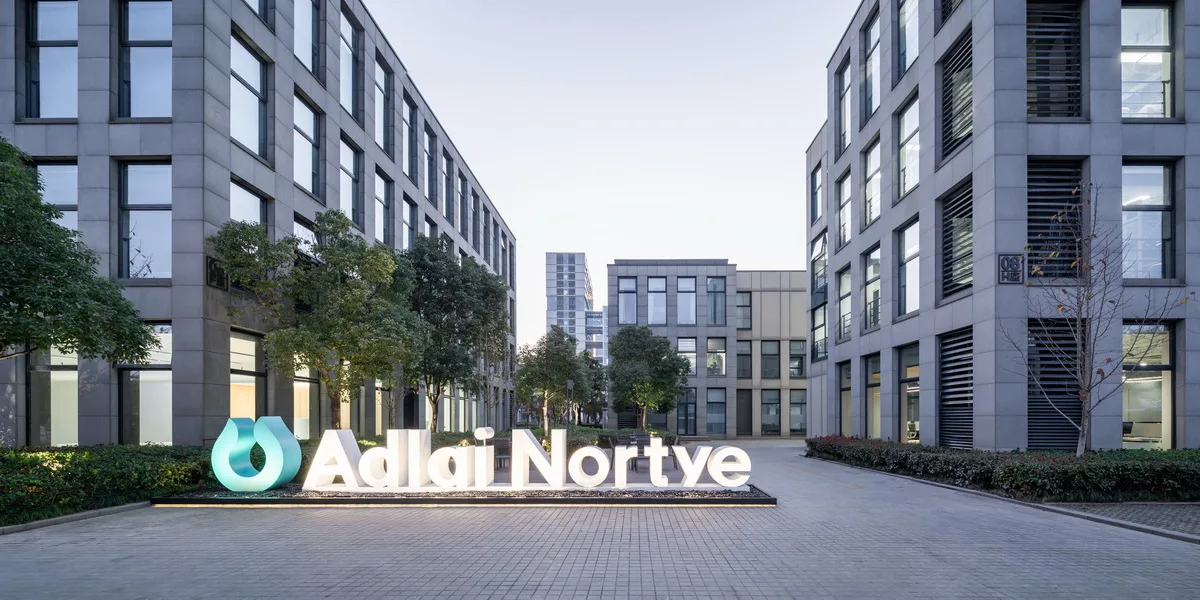
△ Logo inspired by landscape
Double Helix
As the double helix symbolizes genes in biotechnology, the administrative and laboratory functions of the two buildings are relatively independent, lacking overlap. However, blending these functions can enhance their qualities. We infused a sense of ritual into the administrative building and introduced freedom and modernity into the experimental building. This breakthrough in functional layout, inspired by Eastern wisdom, balances and awakens the company’s power.
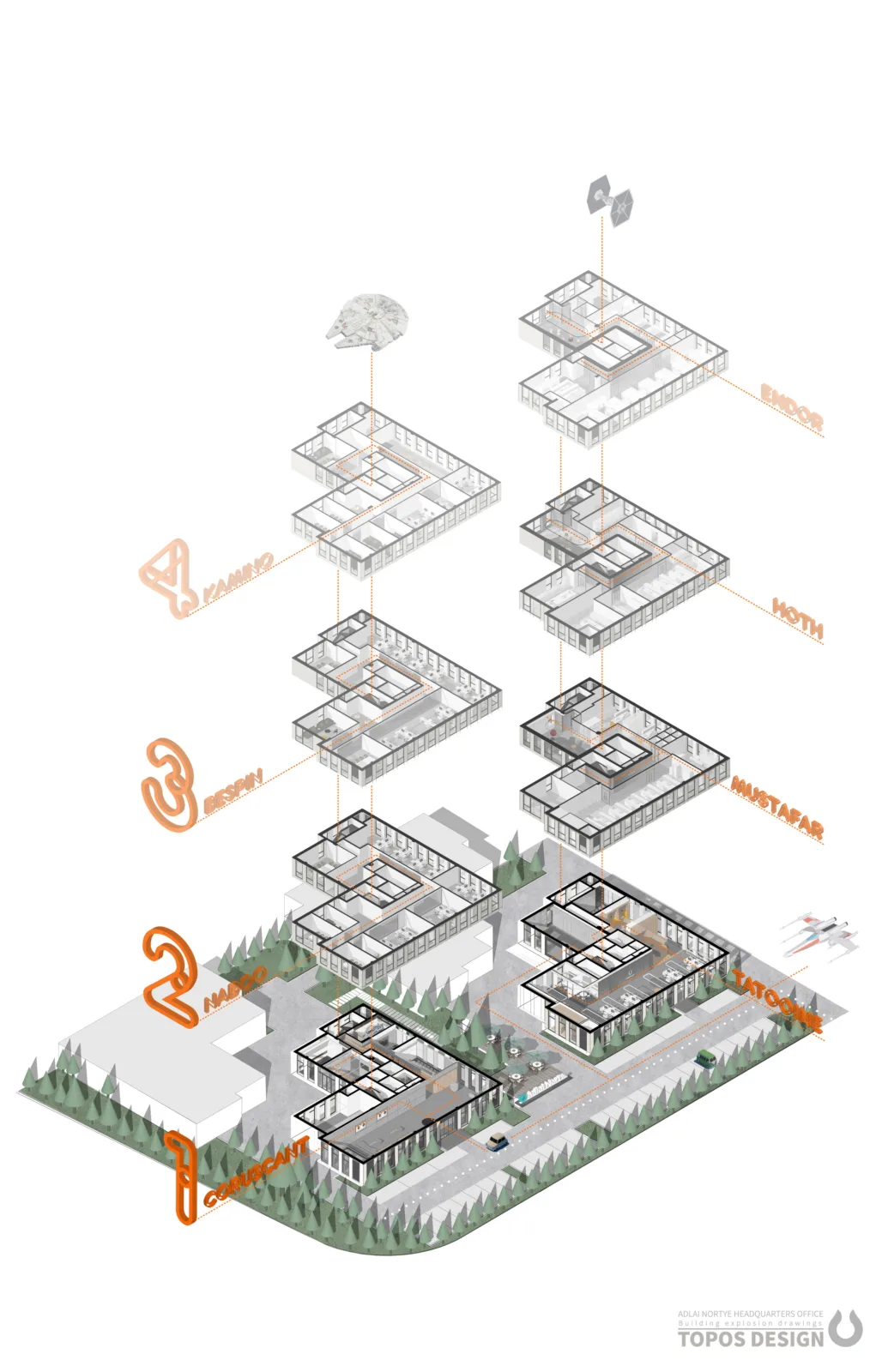
△ Double-floor exploded diagram © TOPOS DESIGN
The main lobbies of Building 6 (one large, one small) share a common design matrix with the south entrance hall of Building 8. Anodized aluminum panels extend from the main walls to the ceiling, mimicking the shape of a space station cabin—a nod to classic sci-fi films. Administrative staff, scientists, and visitors enter through separate doors but experience a unified spatial atmosphere defined by consistent materials and forms. This repetitive space station motif subtly embeds the corporate culture into visitors’ subconscious.
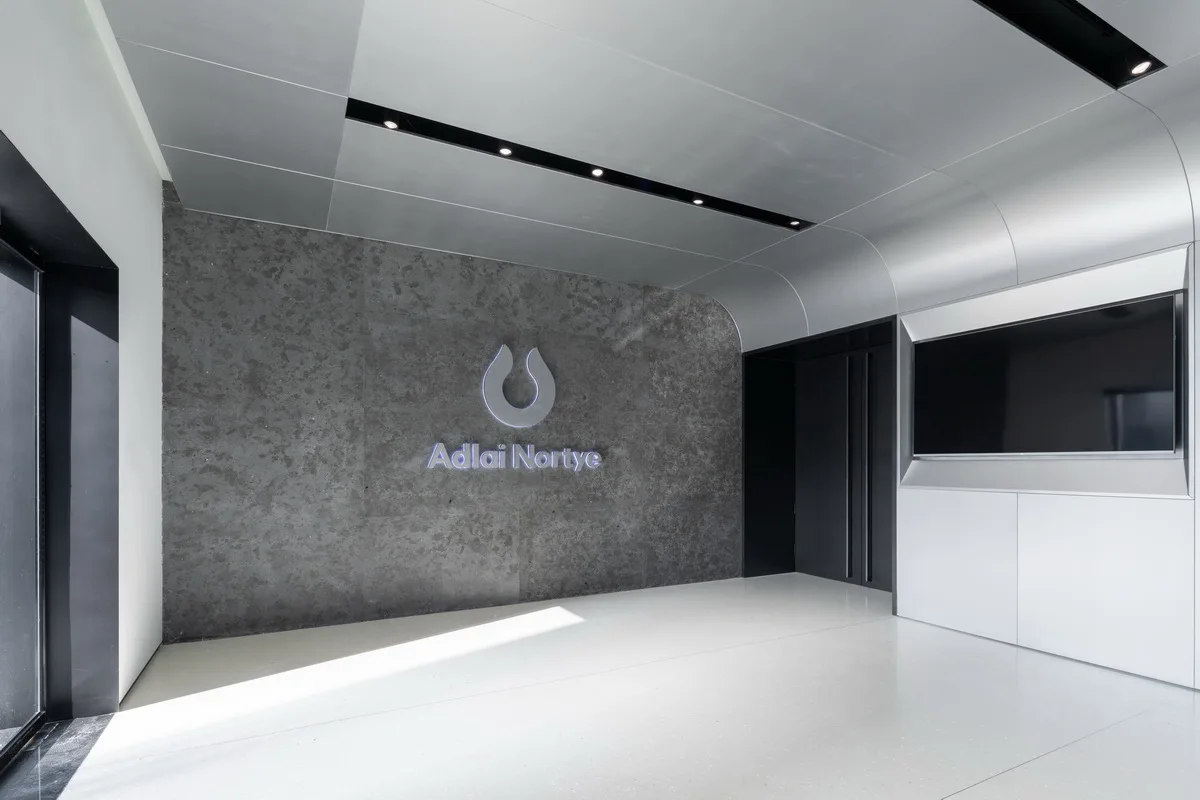
△ South entrance hall of Building 6
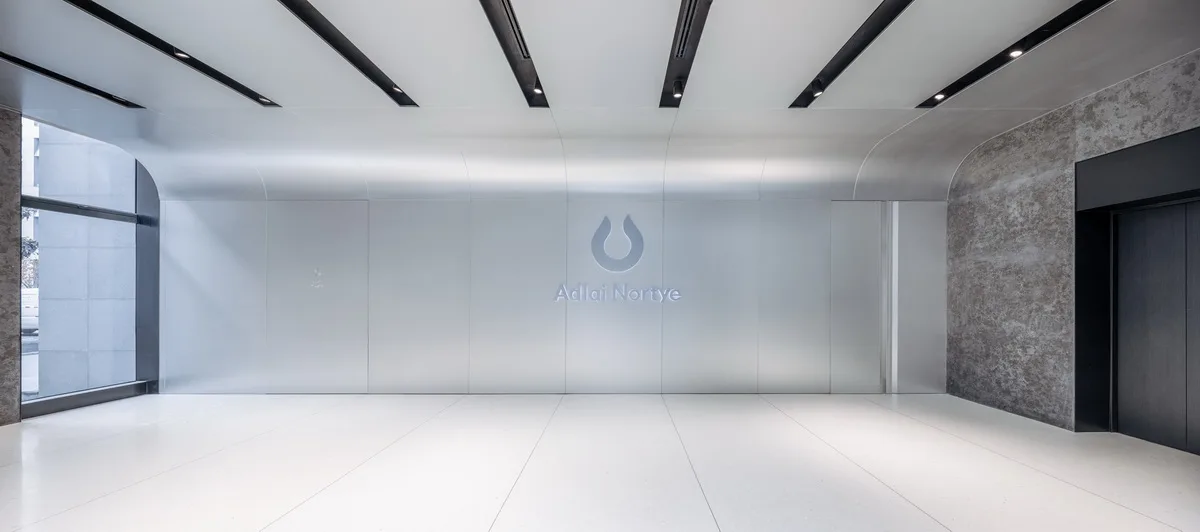
△ South entrance hall of Building 8
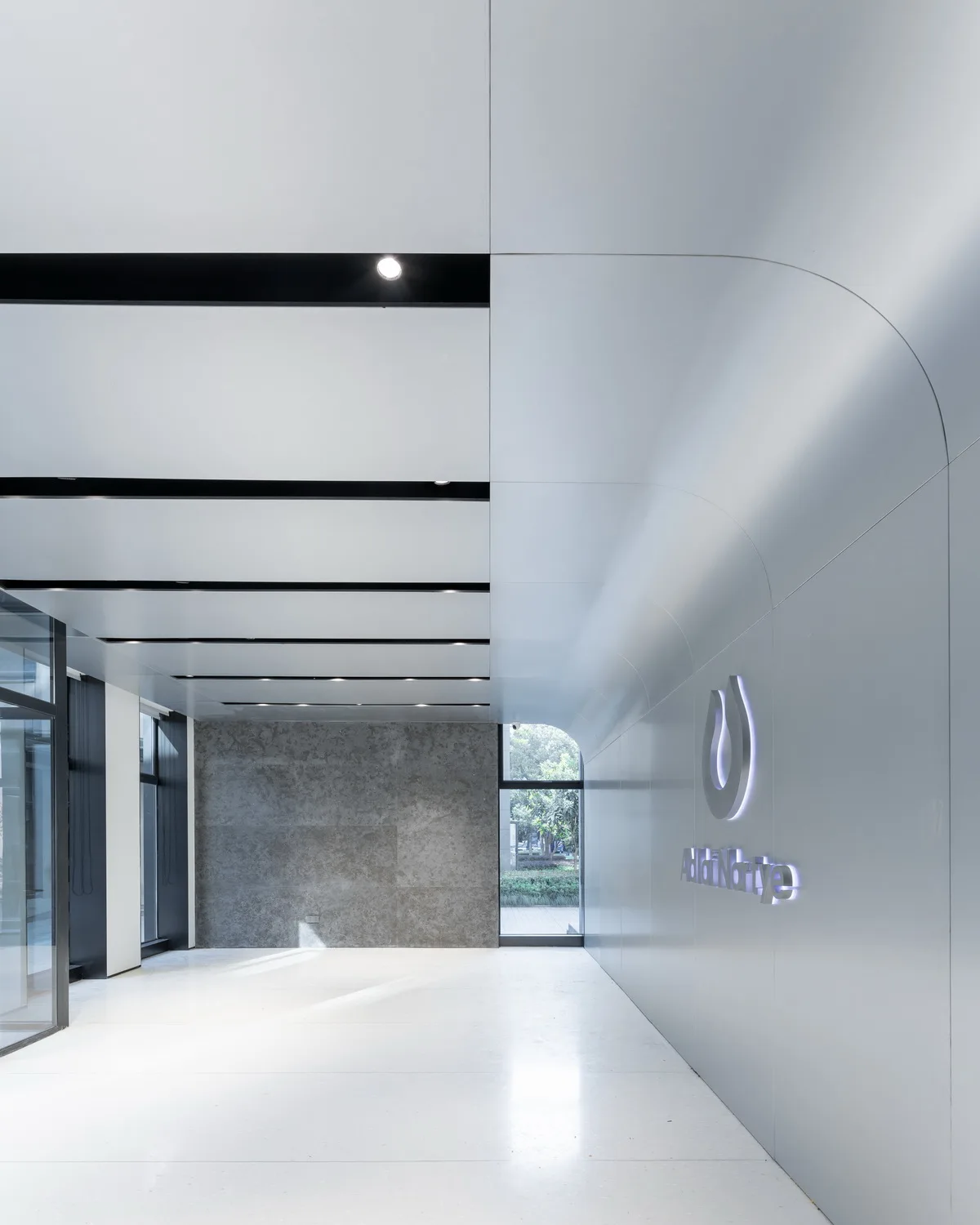
△ South entrance hall of Building 8
To continue the Star Wars-inspired narrative, each floor’s spaces in both buildings are named after the eight planets from the Star Wars universe, creating a memorable spatial identity system. In the buildings’ stairwells, simple text symbols serve as cultural codes reflecting the double helix gene concept.
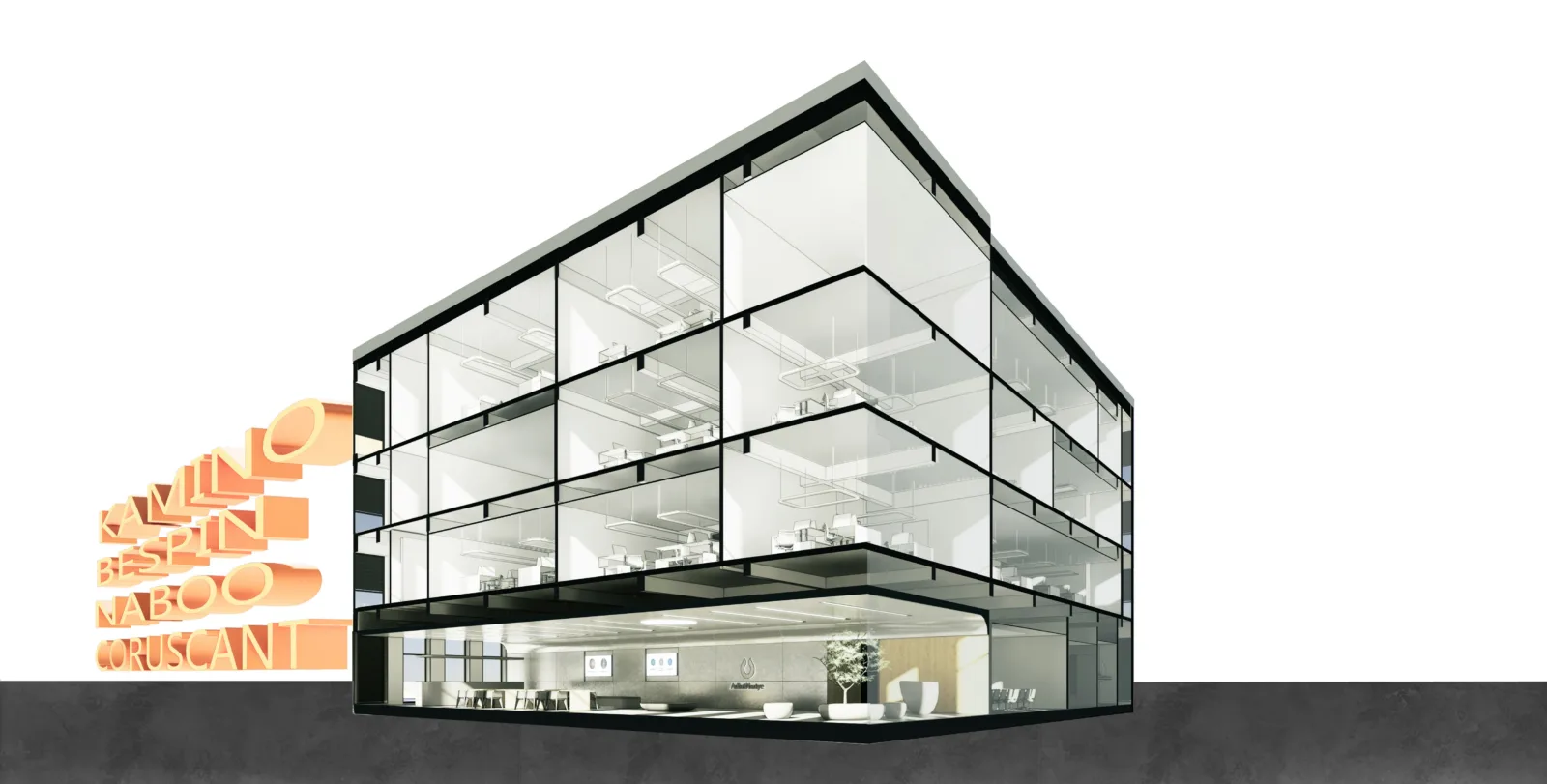
△ Perspective View of Building 6 © TOPOS DESIGN
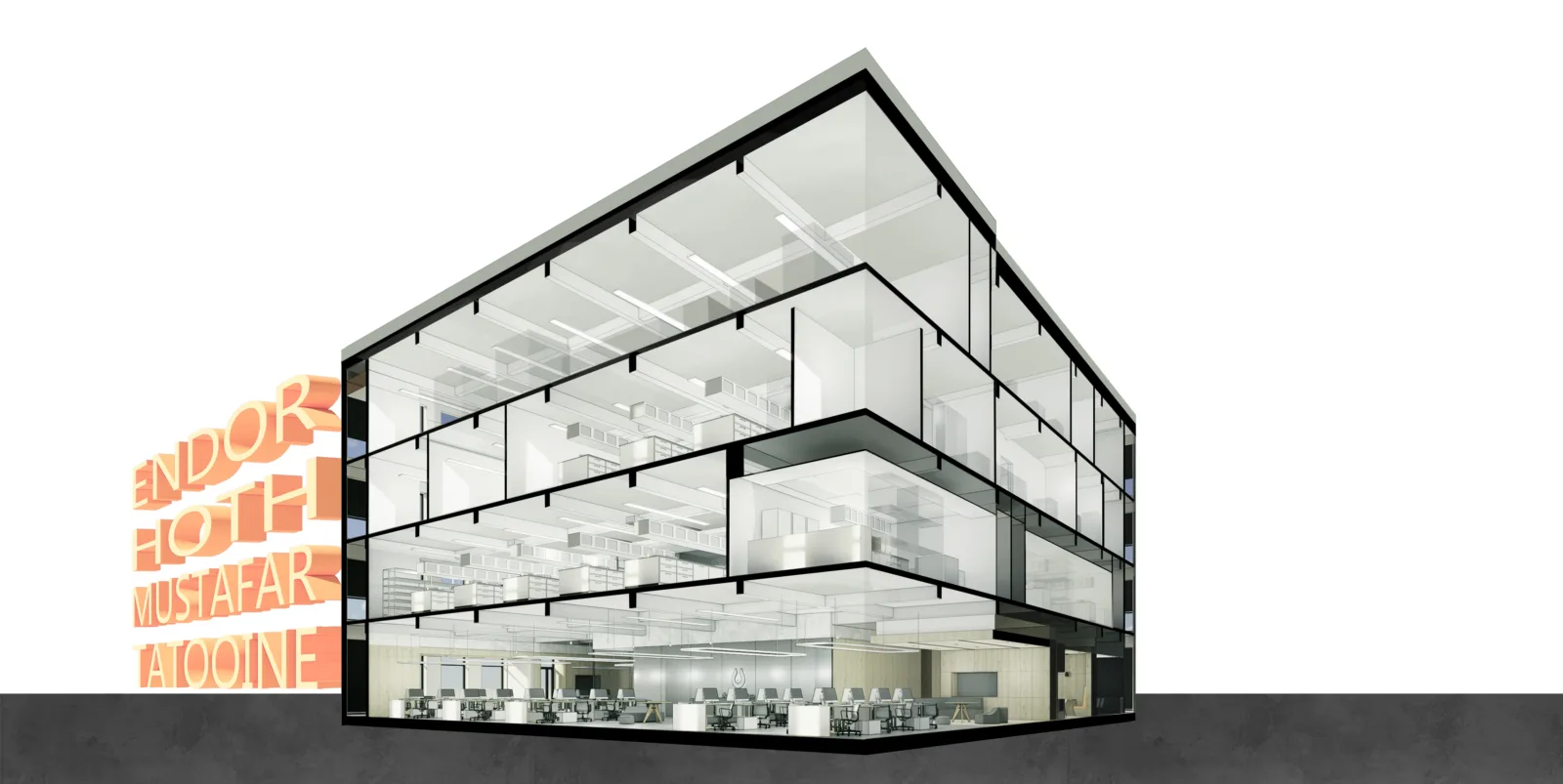
△ Perspective View of Building 8 © TOPOS DESIGN
⊙ Less or More
“The simplest way to achieve simplicity is to give up with heart.”
—John Maeda, The Simple Rules
Jedi Temple
We envisioned an ultimate space rich in symbols and metaphors—the Jedi Temple.
After careful spatial planning, the administrative departments occupy the 2nd to 4th floors of Building 6, avoiding fixed workstations on the first floor. This allows the first floor to become a shared Arno living room. The most transparent eastern section is a universal space measuring 27 meters by 8 meters, embodying the concept of “emptiness” and becoming the destined Jedi Temple.
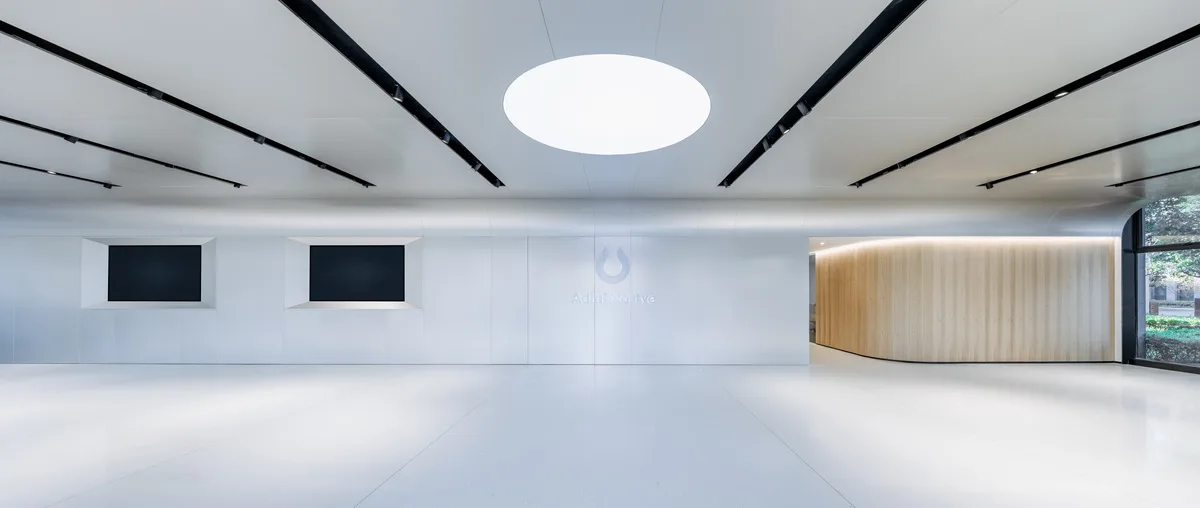
The Jedi Temple, unfurnished
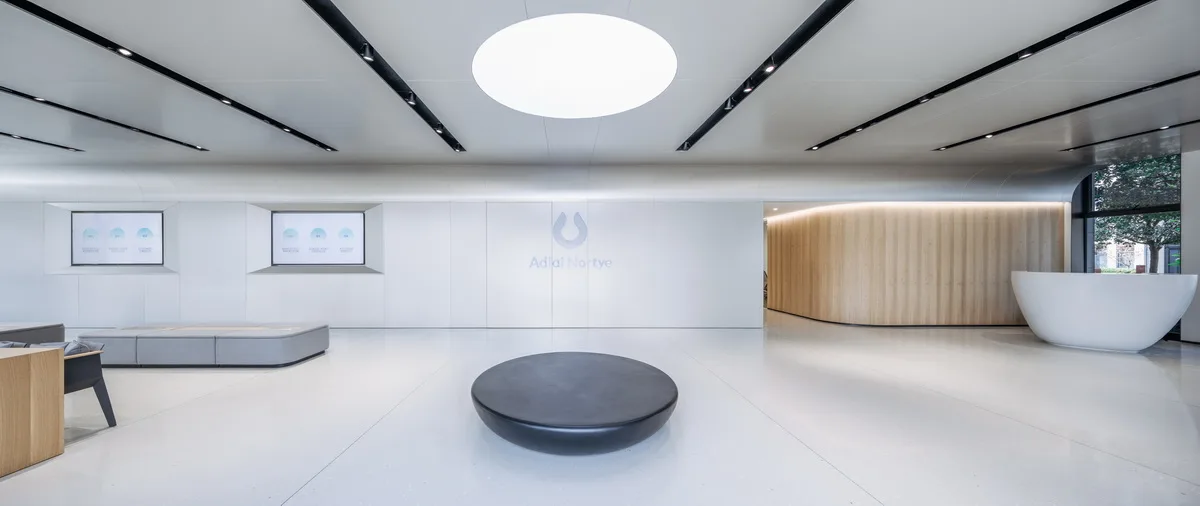
The Jedi Temple, furnished
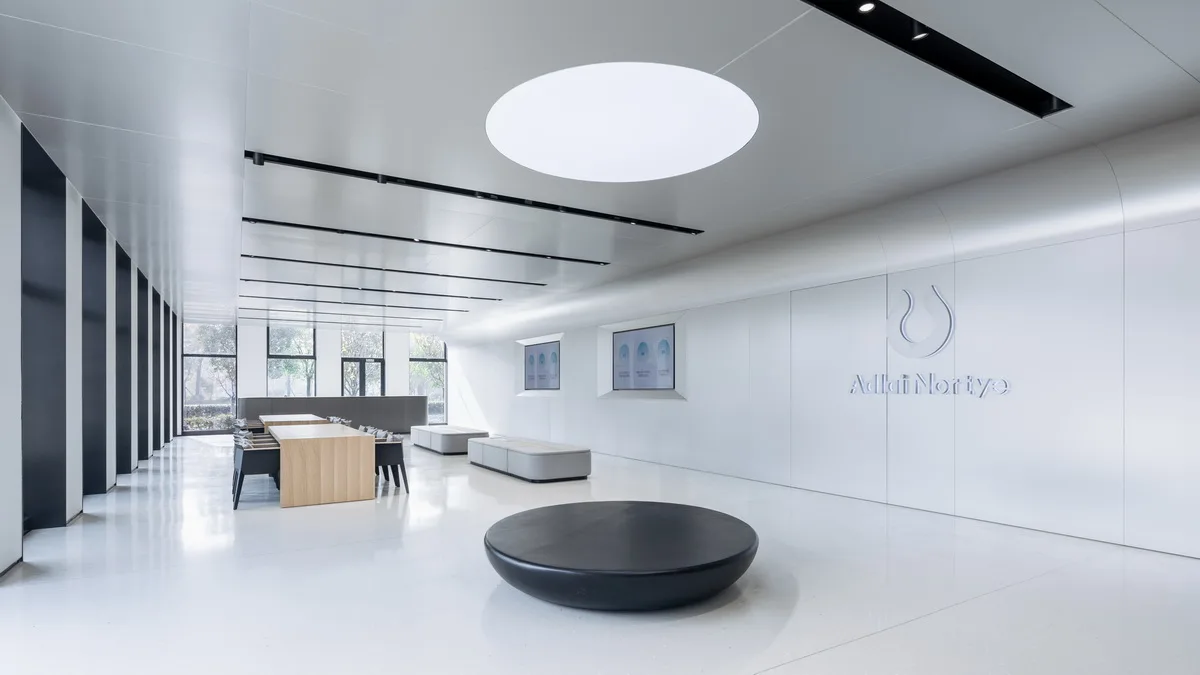
The Jedi Temple
Custom-designed furniture supports various functions such as welcoming, reception, negotiation, and display. Except for the large bar counter, all furniture is movable to accommodate press conferences and team events. This space avoids the traditional intimidating front desk, instead featuring droplet-shaped seating areas surrounded by greenery for a relaxed atmosphere. It is not a conventional exhibition hall; corporate displays are minimal and tasteful, with only two large screens thoughtfully arranged.
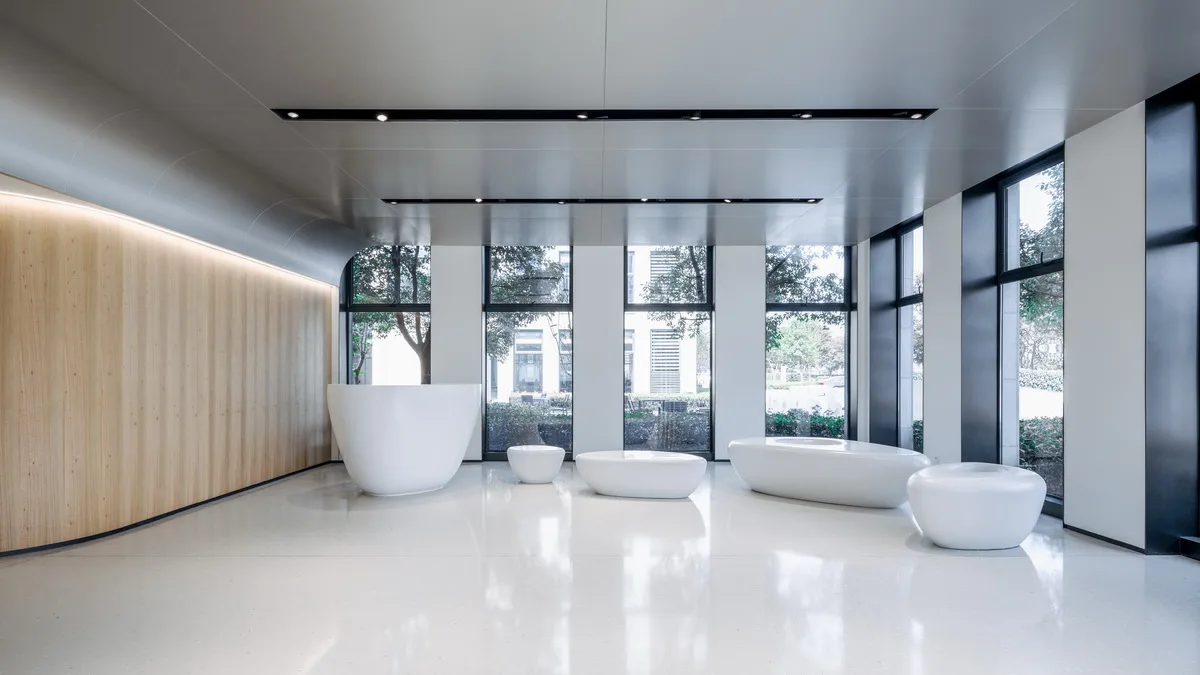
The Jedi Temple, reception area
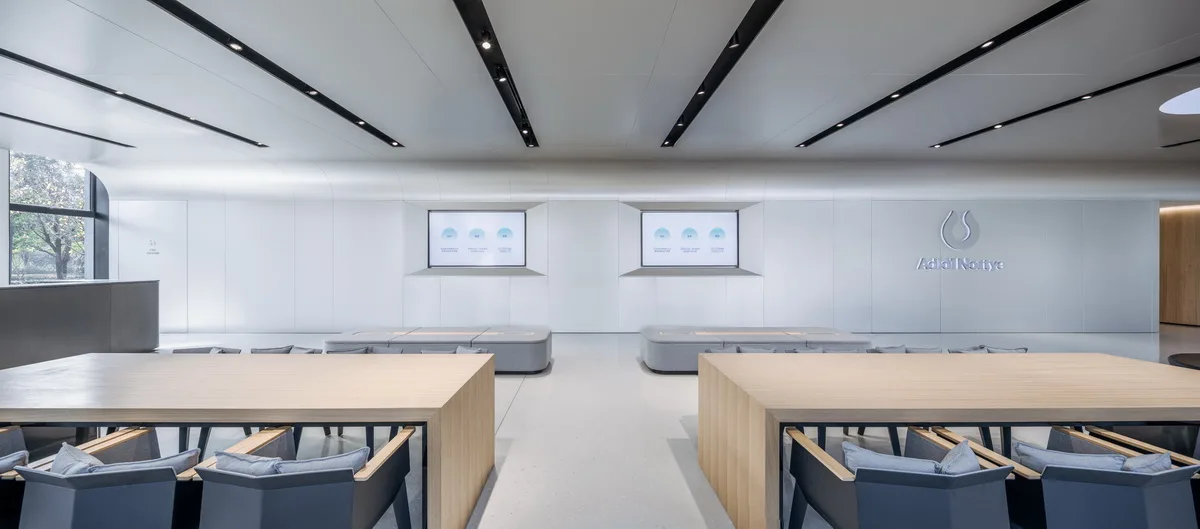
The Jedi Temple, lecture area
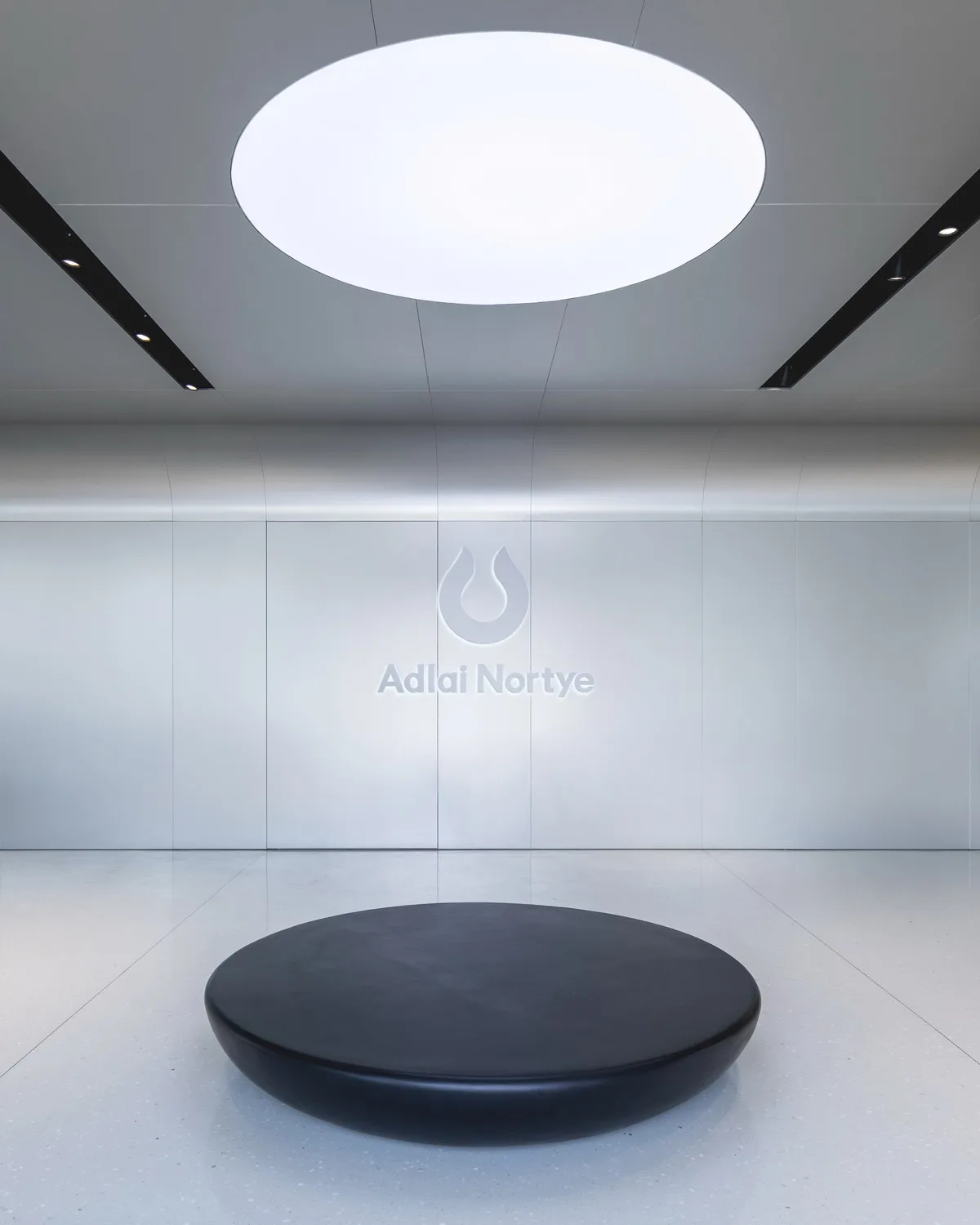
△ Entrance to the Jedi Temple
Sugiyama eucalyptus wood adds warmth with its elegant rounded corners. Parallel concave light strips guide visitors into semi-private cell spaces reminiscent of planetary orbits. The open conference area includes an embedded tea bar, a Zen tea room hidden behind a secret door, and a VIP lounge with a cozy fireplace—each element enriching the ceremonial atmosphere. At the entrance, a black disc paired with a white circular ceiling film symbolizes the duality of the Force, representing the company’s spiritual core through abstract minimalism.
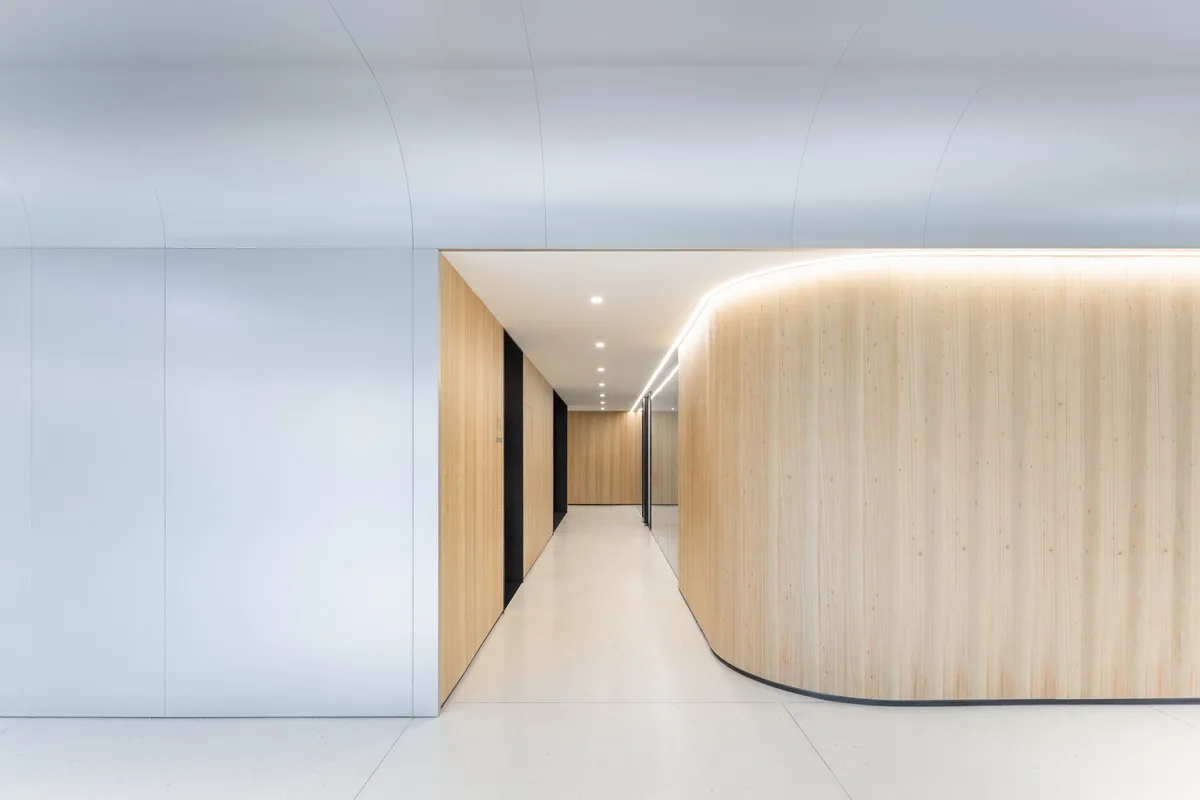
Wood veneer corridor with rounded corners on Building 6, 1st floor
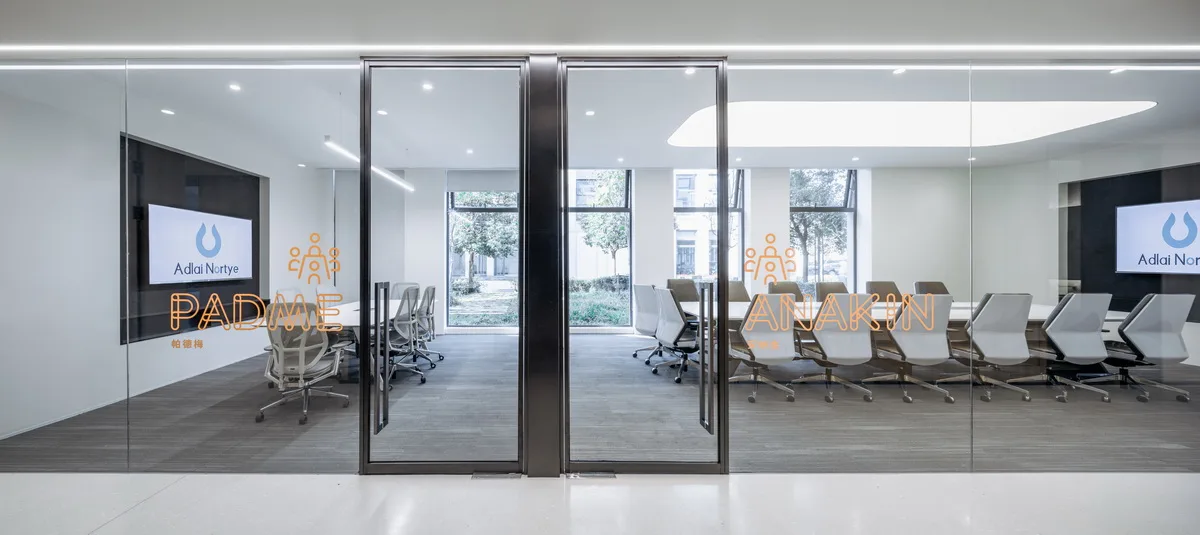
△ Building 6, 1F, large and small conference rooms
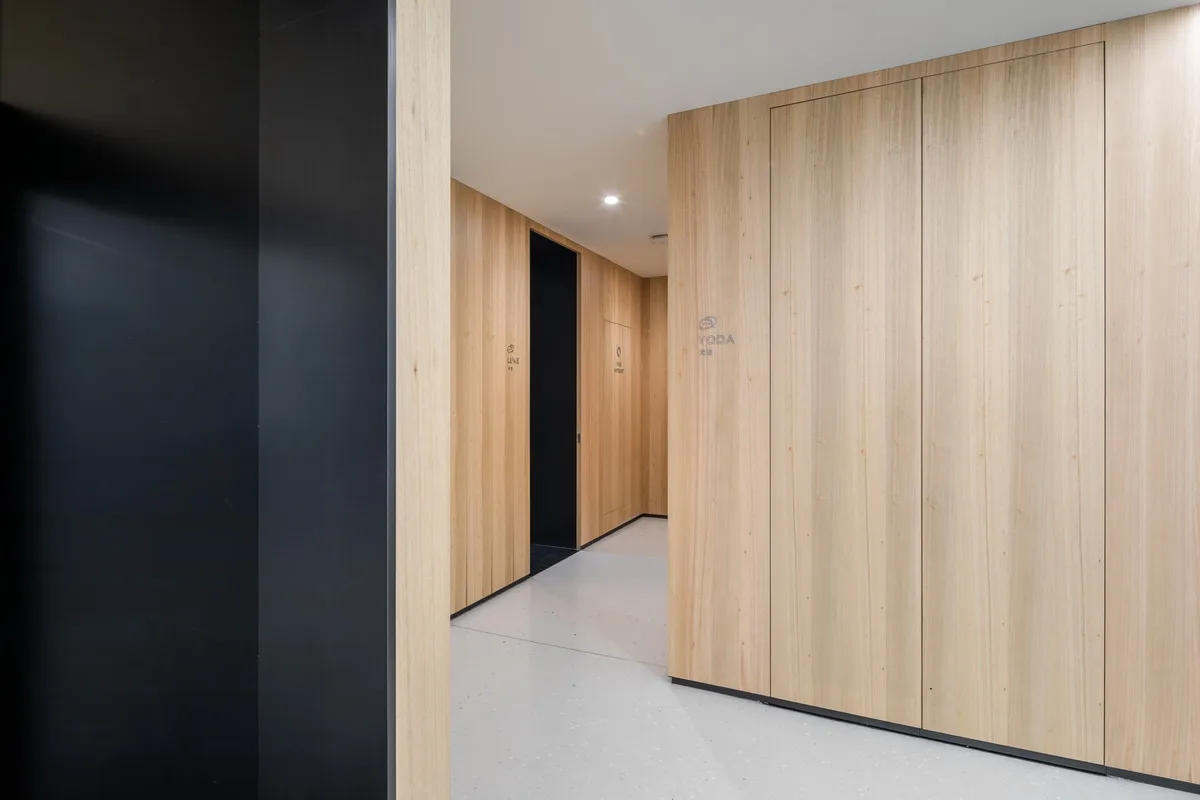
△ Building 6, 1F, concealed wood veneer door
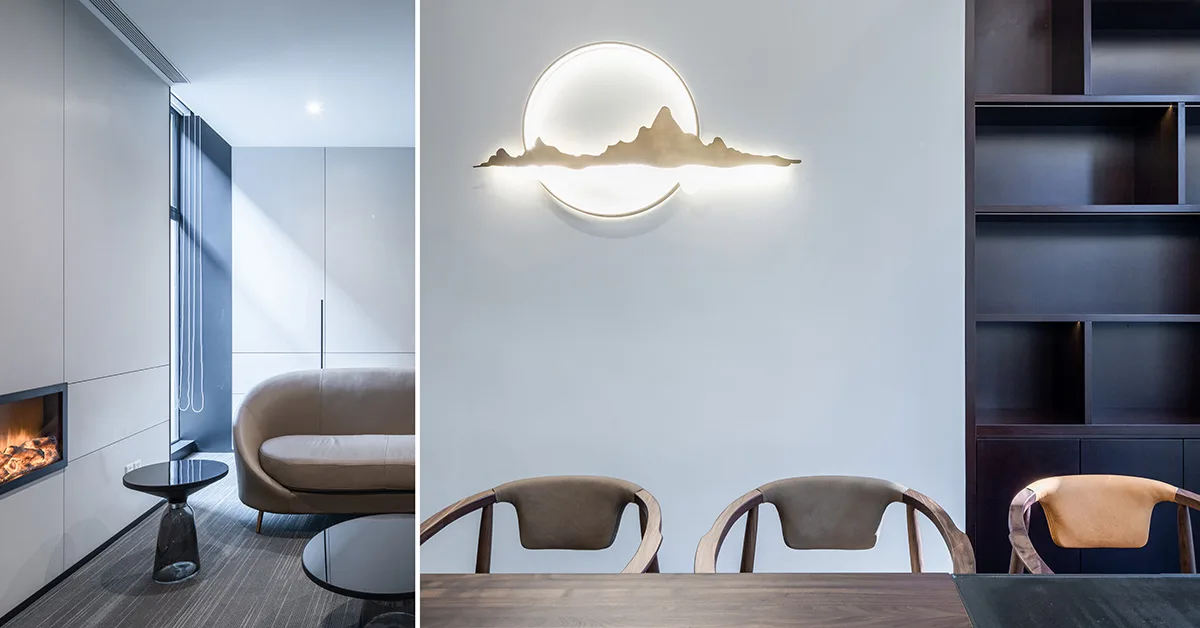
△ Building 6, Room 1, Secret Room
Secret Weapon
Is simplicity simple? Not quite.
The use of two premium materials—anodized aluminum panels and gold grinding stone—fulfills our obsession with design purity. After evaluating various metals, we selected anodized aluminum for its realistic and refined texture produced by electrochemical oxidation, as well as its pollution and corrosion resistance suitable for biopharmaceutical environments. We adopted a minimalist, integrated design for all aluminum-covered surfaces. Prefabricated ceiling boxes conceal lighting, fire protection, HVAC, and intelligent systems. Walls hide fire doors and equipment rooms behind tightly joined aluminum panels with joints precise to three millimeters. We insisted that flooring align perfectly with windows, walls, and panels. Gold grinding stone, chosen for its wear and stain resistance, posed challenges in base color, stone density, and polish gloss—requiring close collaboration among suppliers, builders, and designers. The resulting subtle layering and texture made our persistence worthwhile.
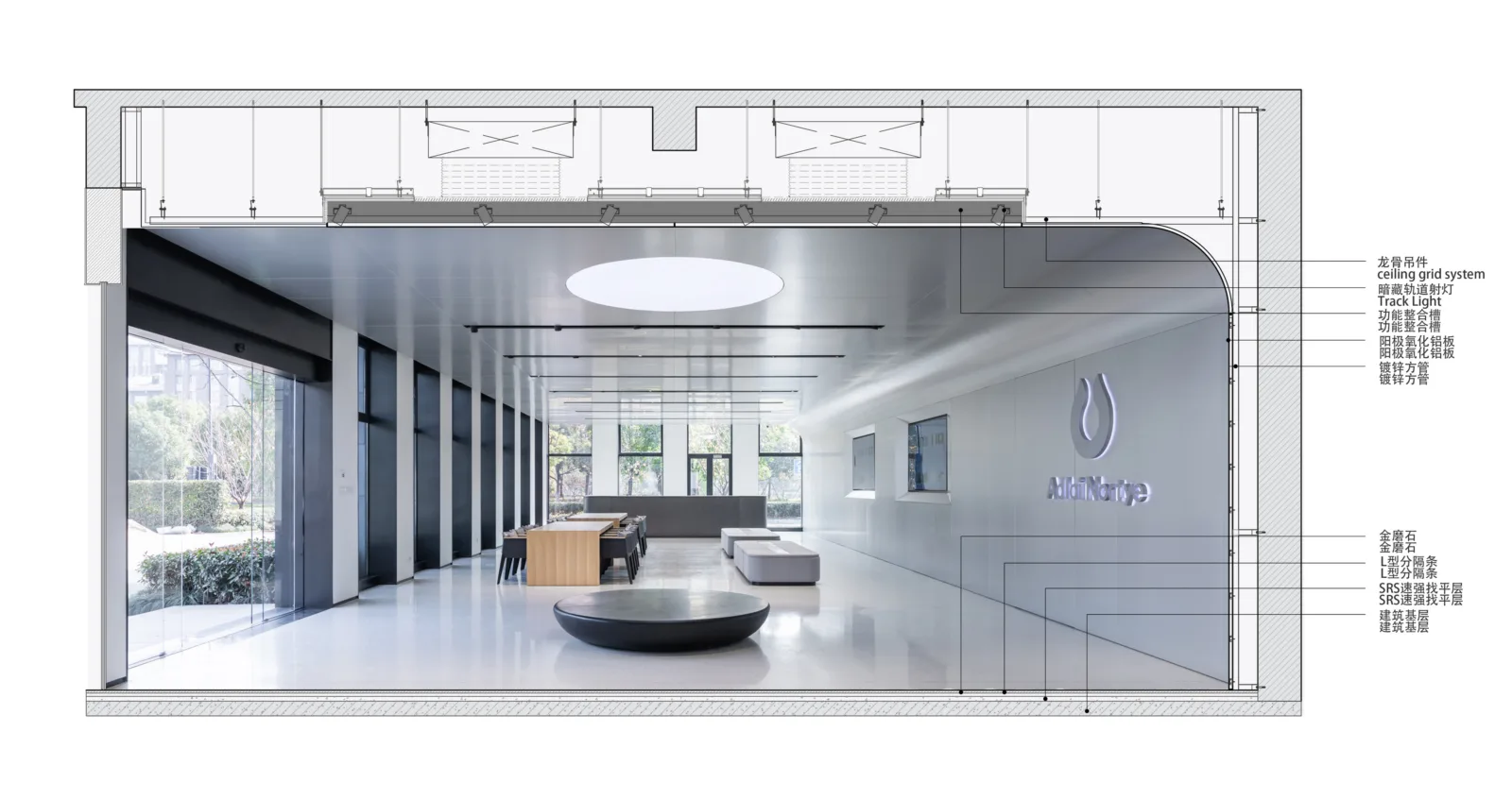
△ Detailed sectional drawing of anodized aluminum panel © TOPOS DESIGN
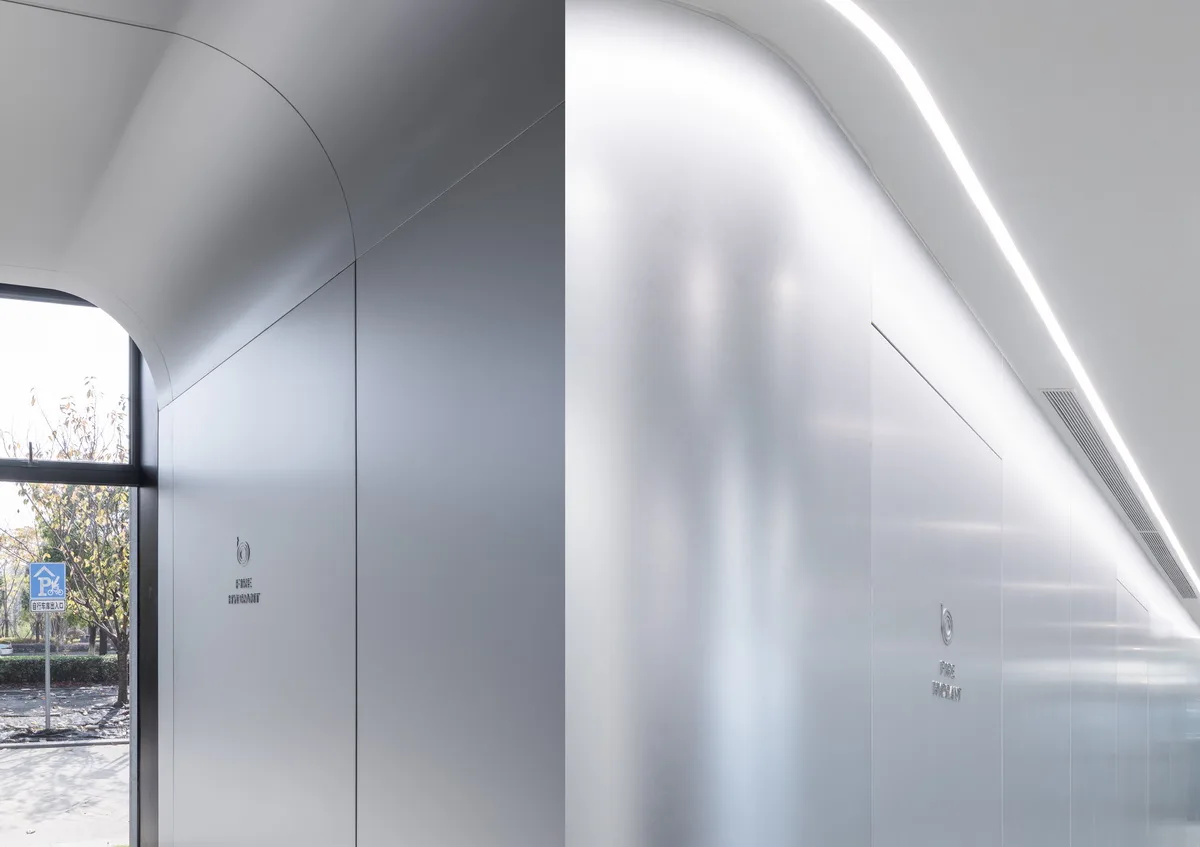
Prefabricated anodized aluminum panel
From Mies van der Rohe’s “less is more” to Venturi’s “less is a bore,” and BIG’s “yes is more,” the architectural world has long debated “how much” design is appropriate—balancing aesthetics, respect for context, and problem-solving. Our approach favors subtraction without over-design; it is minimalism without asceticism.
Ideal Community
We aimed to create an open and free community to inspire scientists’ creativity.
Unlike the ceremonial atmosphere of Building 6, Building 8 is a concrete shell housing precision equipment and instruments. We infused warmth and vitality to support scientists who spend long hours here. The open office on the first floor breaks away from traditional fixed workstation layouts, activating the space with diverse conference rooms, open tea areas, and discussion zones furnished with sofas—allowing flexible group collaboration at any time.
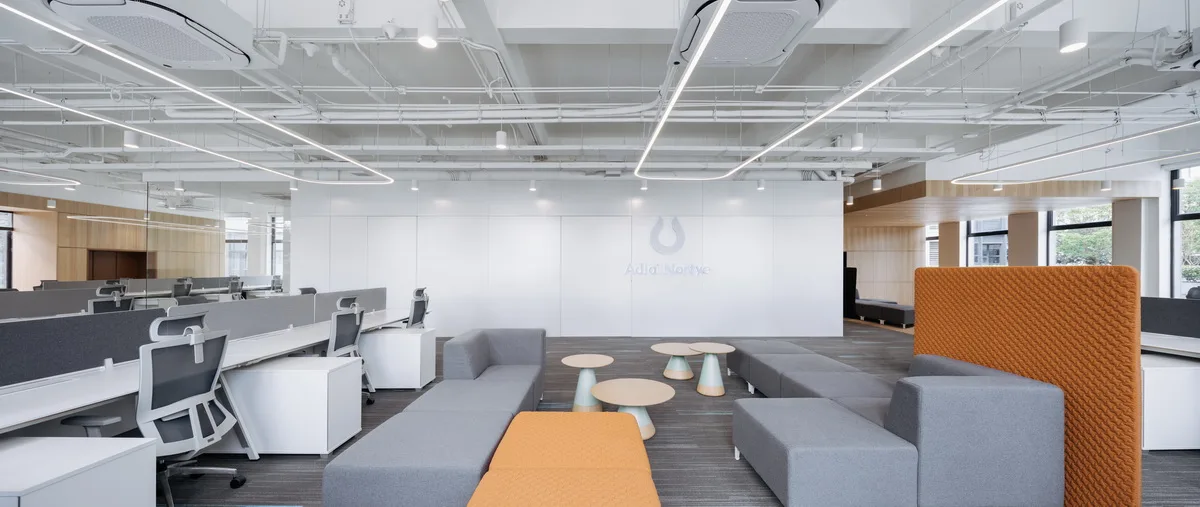
△ Building 8 1F Open Office Area
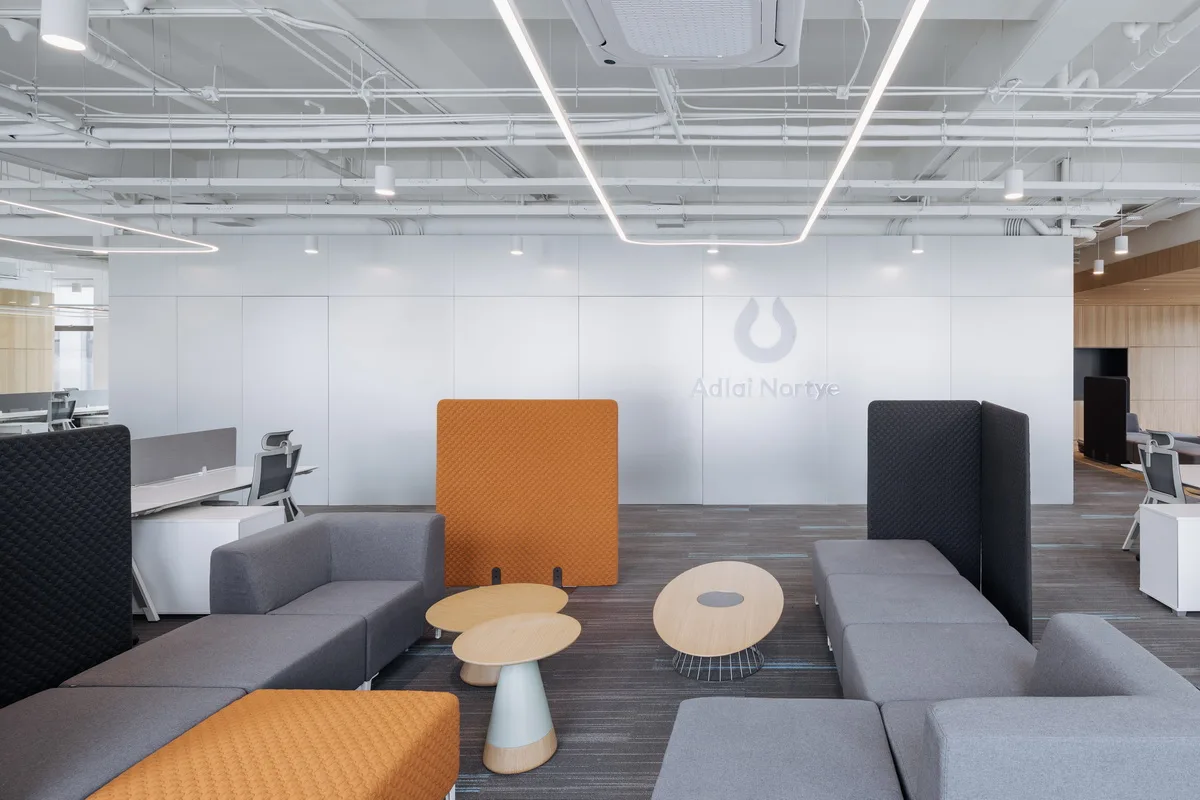
△ Building 8 1F Open Office Area
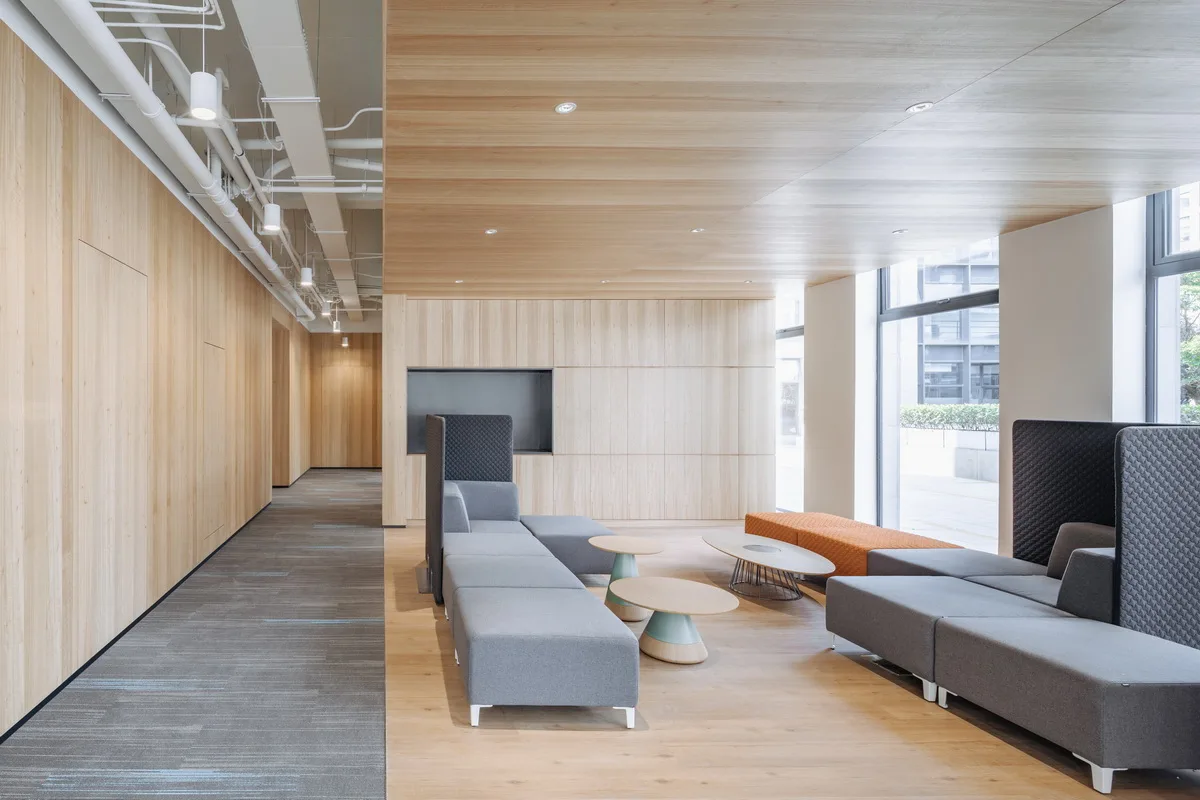
△ Building 8 1F Open Office Area
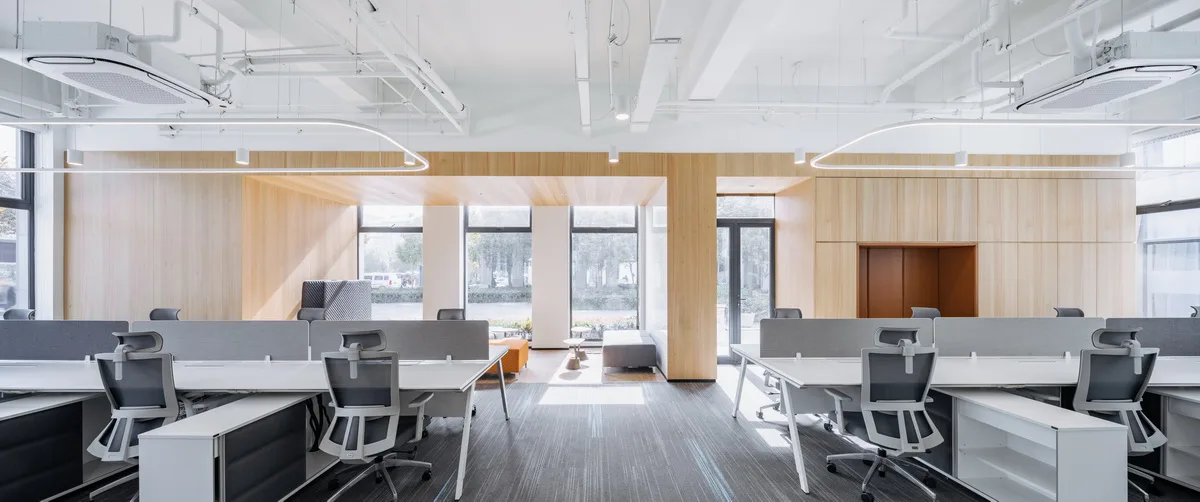
△ Building 8 1F Open Office Area
The 2nd to 4th floors are the R&D core, each featuring a clear visitor pathway. One side opens to complex laboratory systems behind large glass walls, while the other conceals infrastructure within an aluminum-clad core tube. At each corridor entrance, we convinced Arno to allocate nearly 80 square meters of valuable laboratory space as shared, flexible areas. This generous openness is a rare luxury in lab design.
In these shared spaces, unlike the strict lighting of labs, a large luminous ceiling emits soft light to create a relaxing atmosphere. Furniture and soft furnishings support diverse postures and activities—free-form sofas, swivel chairs, plush blue whale toys, adjustable wine chairs, movable wooden tables, and even an inflatable boxing column. Comfort and flexibility are paramount.
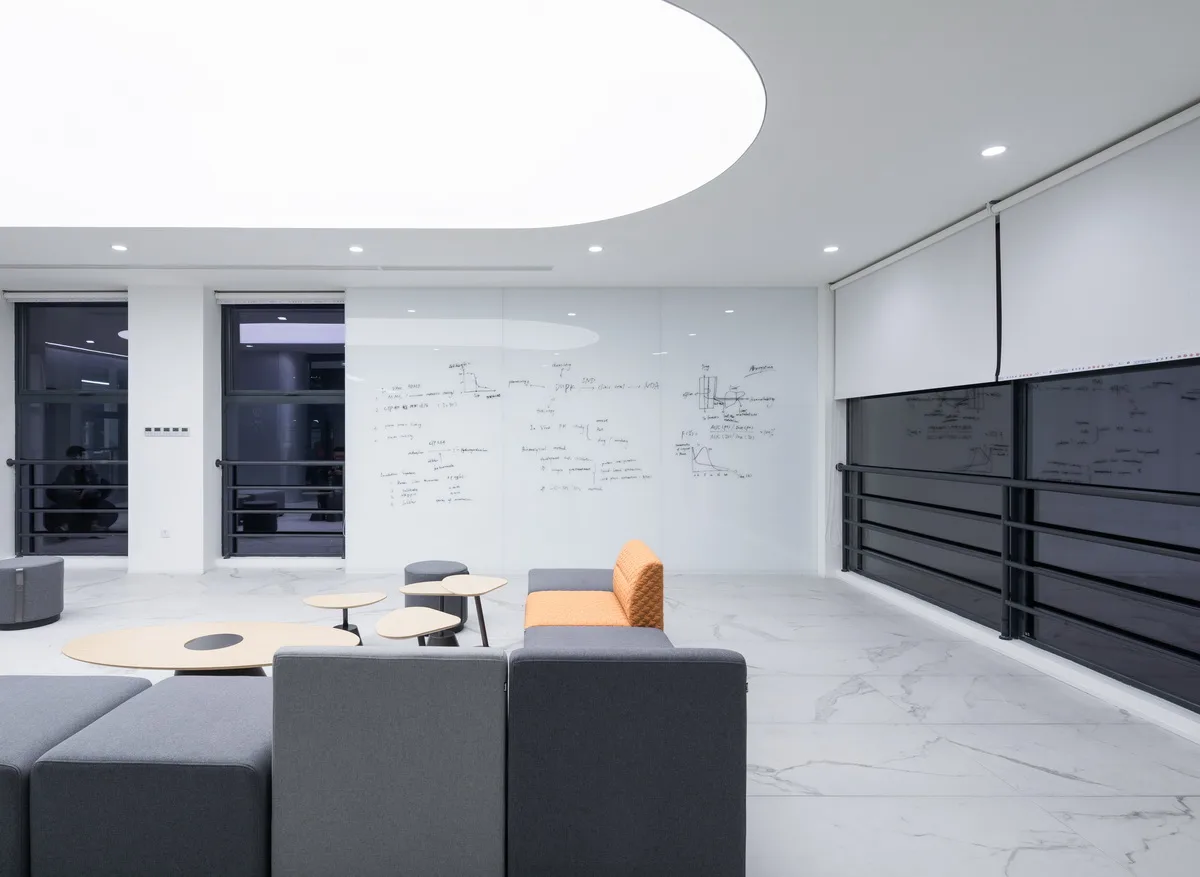
△ Laboratory shared space
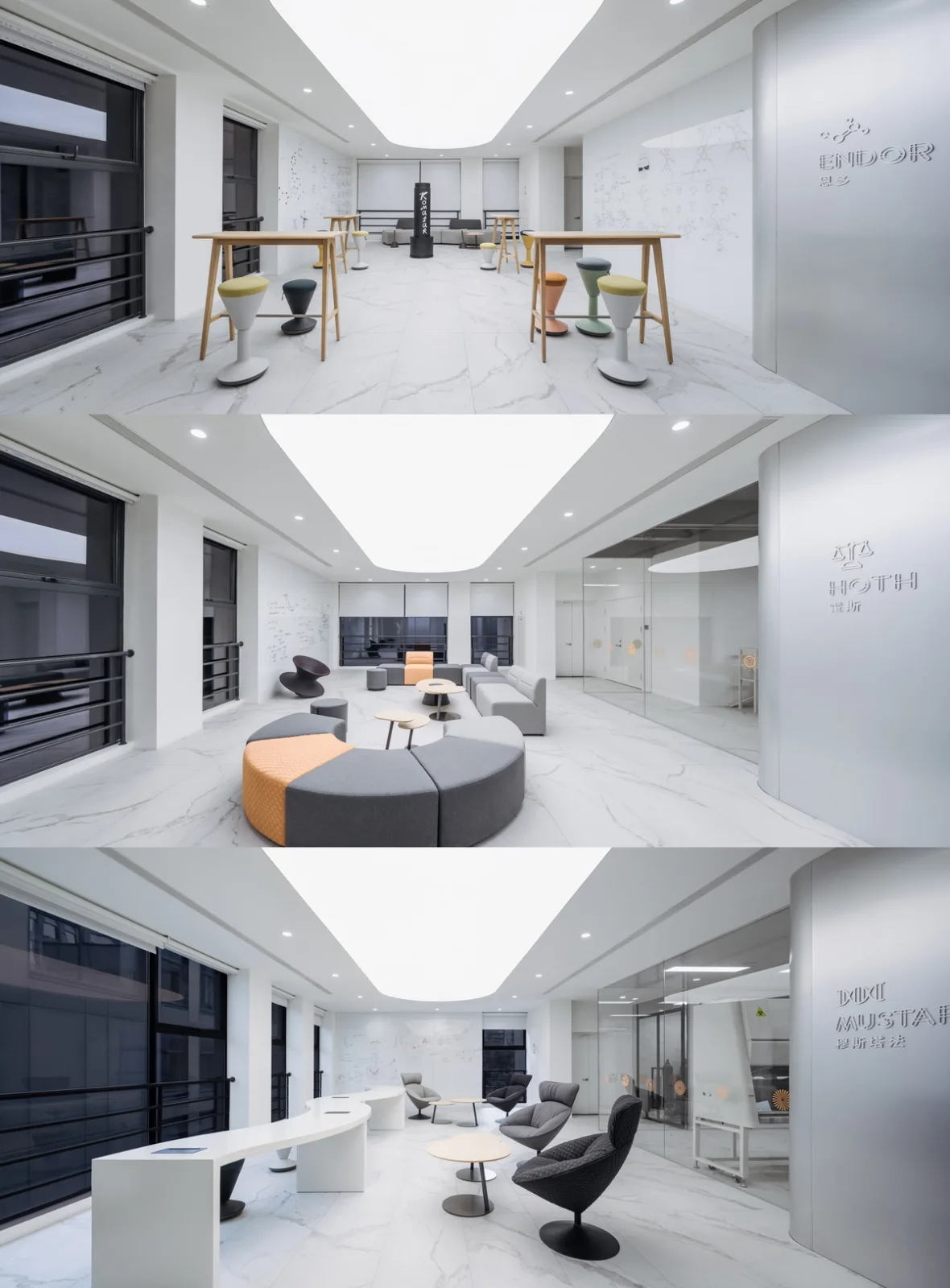
△ Shared space on each floor of the laboratory
We want everyone to feel at home, part of a familiar community. Horizontally and vertically, Building 8 offers diverse views and spaces that inspire learning and growth. This is where design transcends function, redefining the ideal workplace.
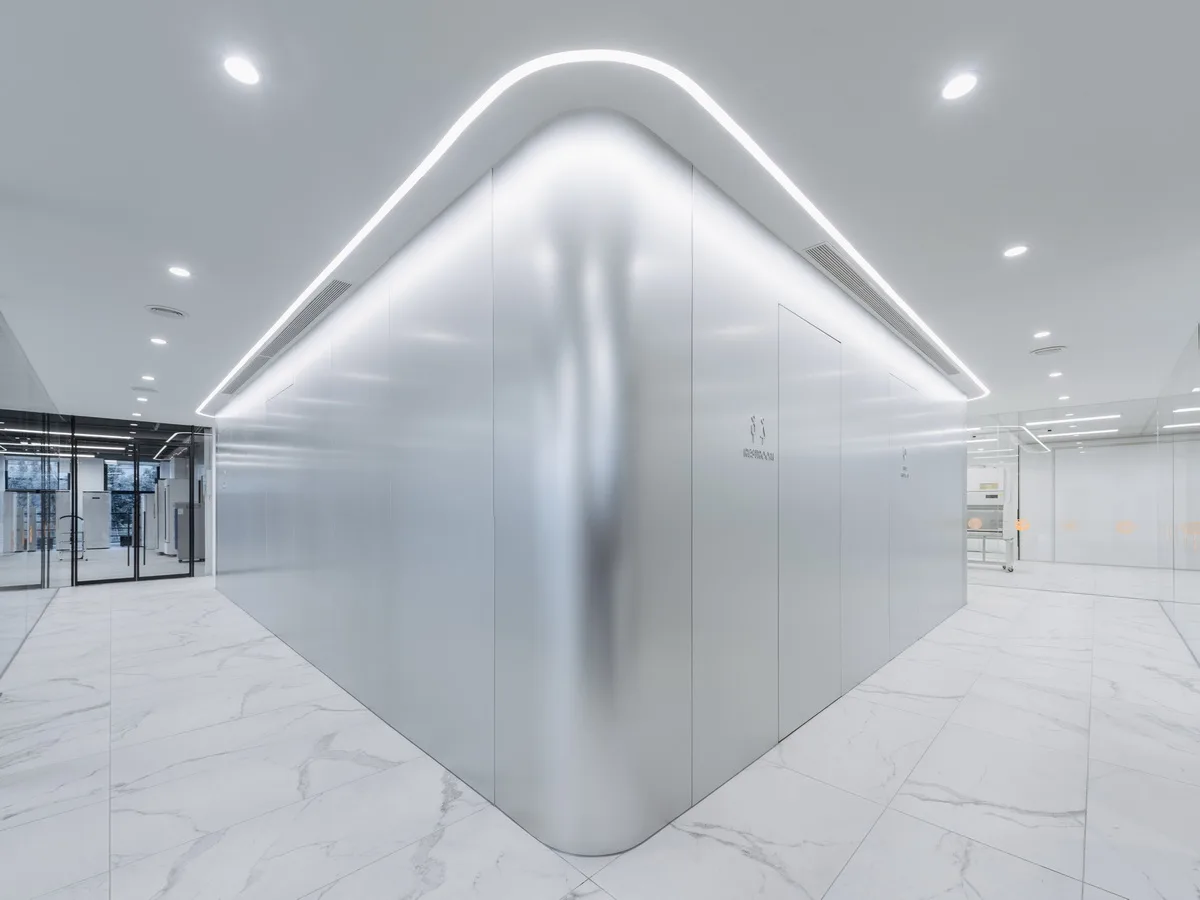
△ Building 8 Laboratory Corridor
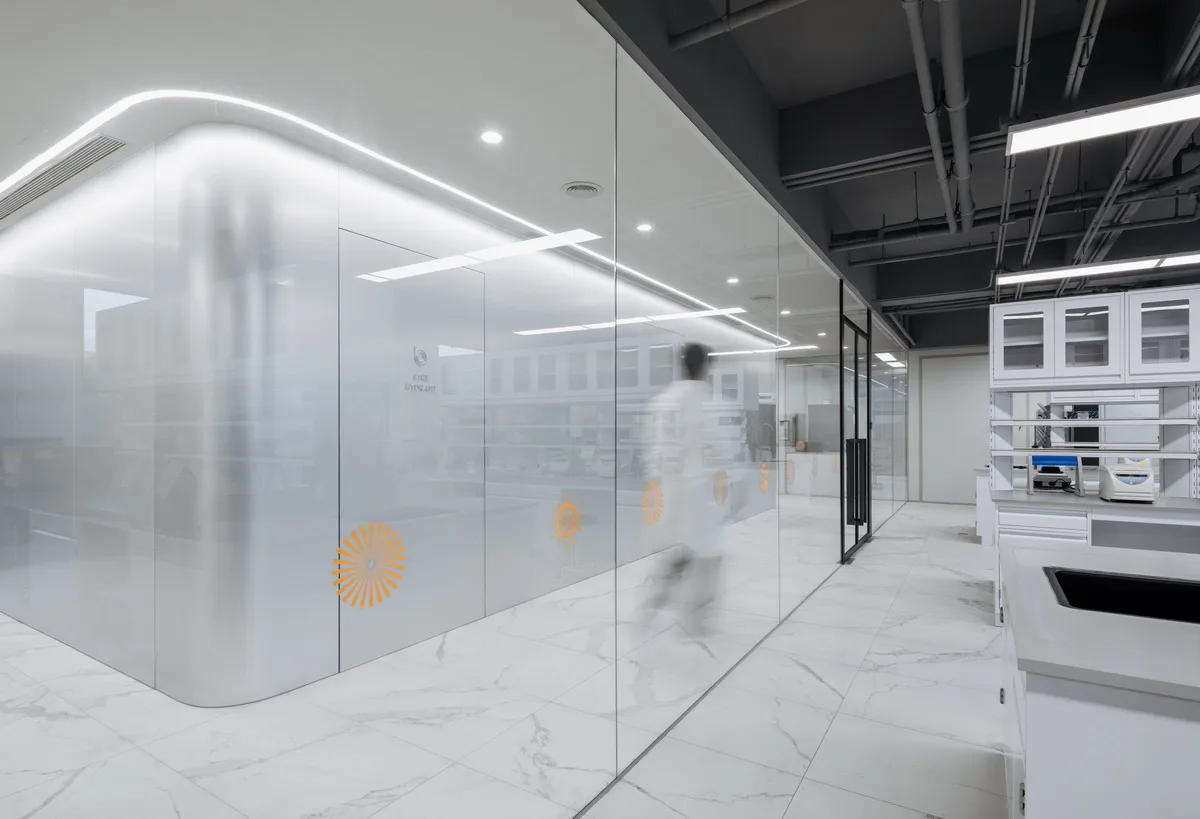
△ Building 8 Laboratory Corridor
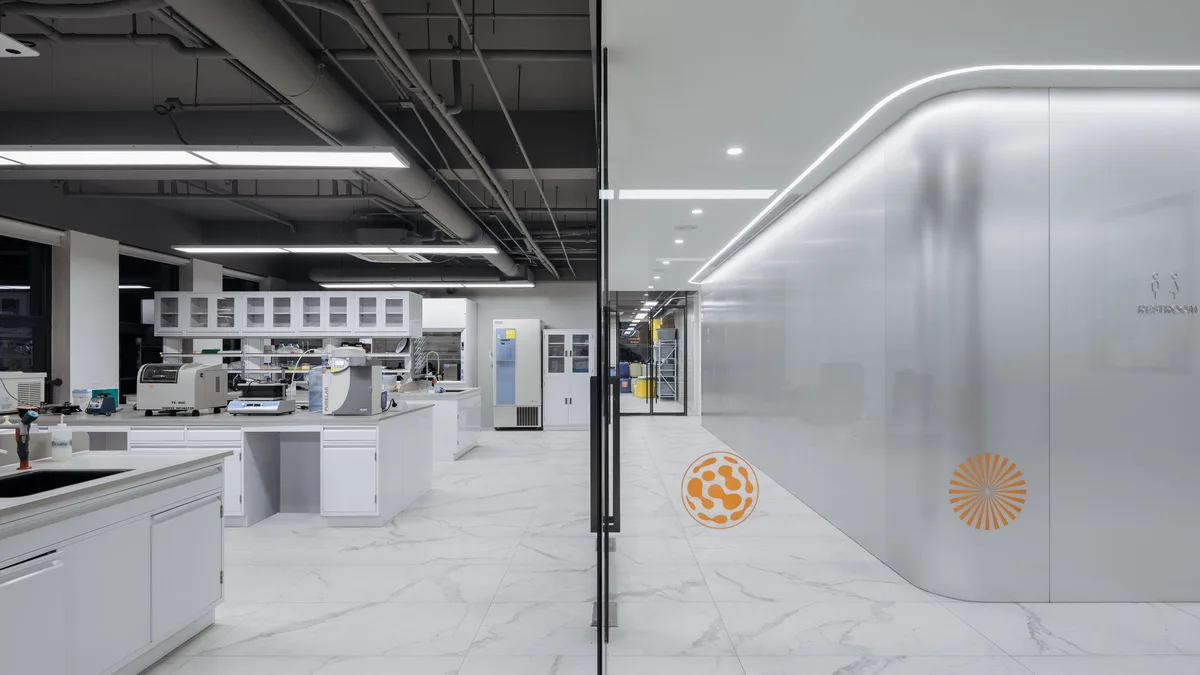
△ Building 8 Laboratory
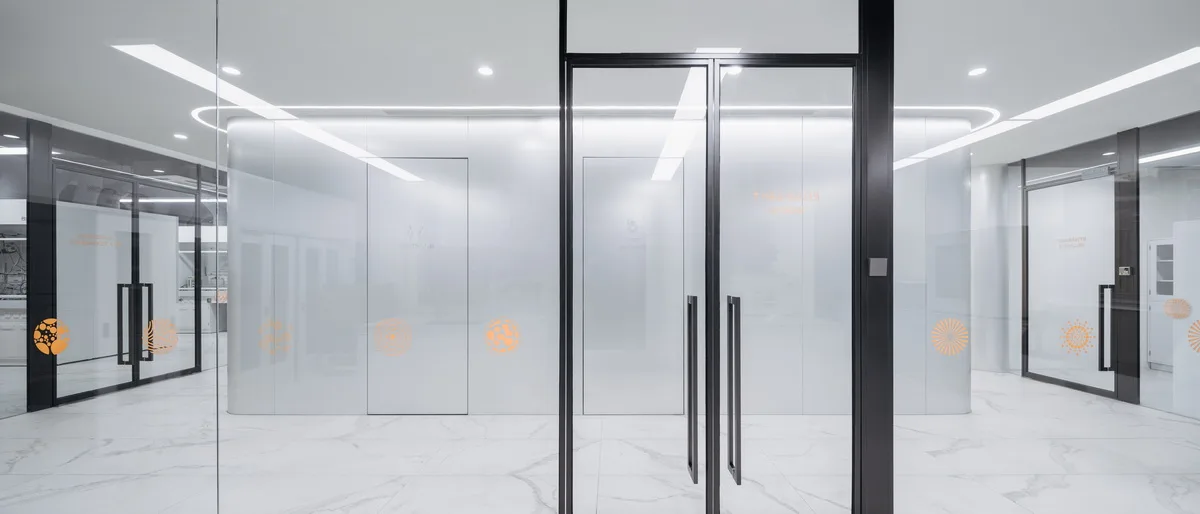
△ Building 8 Laboratory
⊙ Imagination and Execution
“Every great achievement in science is based on bold imagination.”
—John Dewey
Design parallels science—it requires both imagination and execution.
The future of design lies in collective wisdom, not isolated effort. For this project, we collaborated with numerous specialized teams: a visual design group for spatial signage, a laboratory equipment supplier with expertise in precision instruments, an office furniture manufacturer specializing in R&D and production, and a supplier of demanding special materials. China’s rapid construction boom has fostered specialized design and technical teams excelling in their fields. The architect’s role is to captain this ship—balancing meticulous control with openness. This synergy guides our choices.
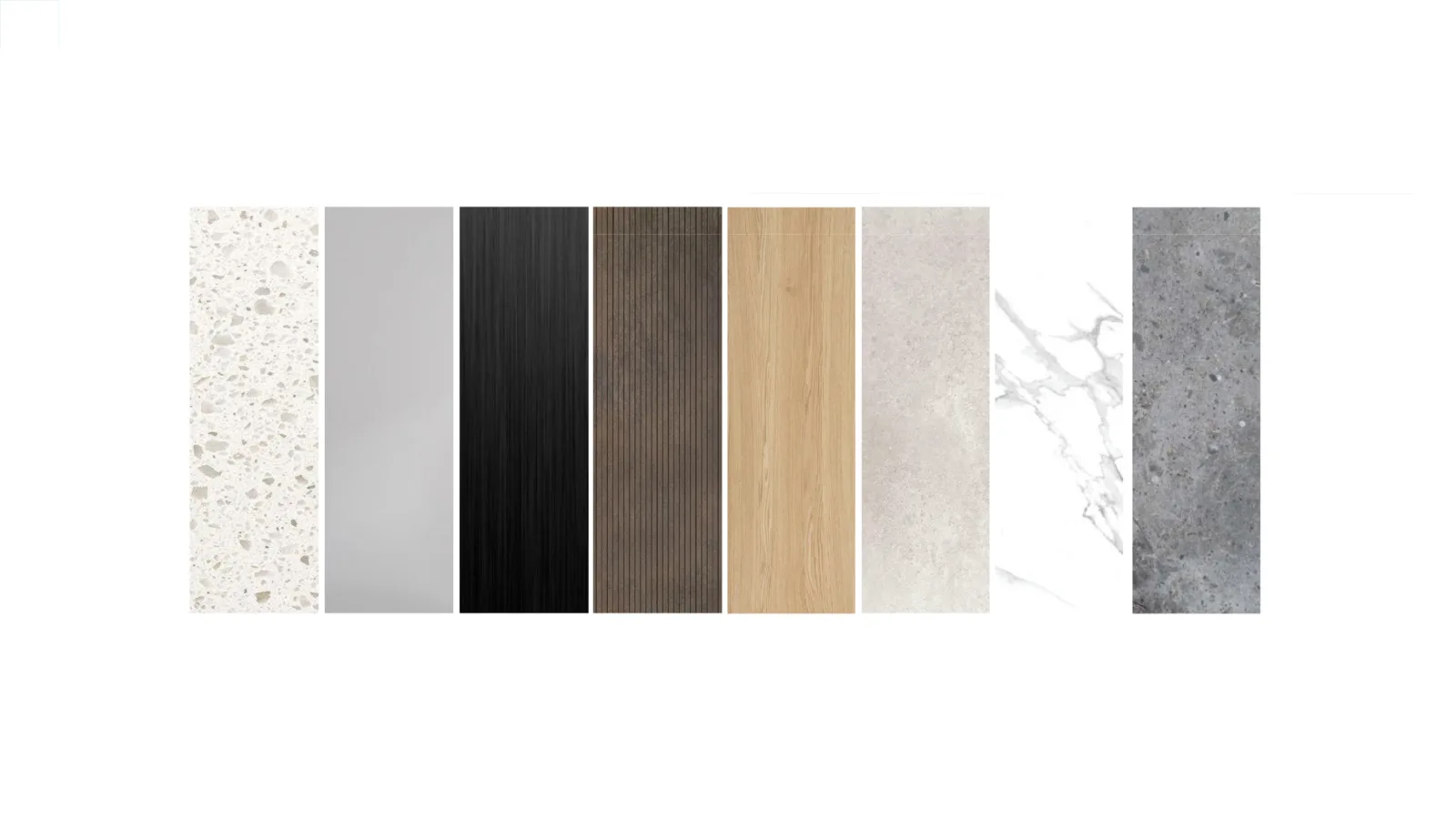
△ Material sample © TOPOS DESIGN
During conceptual design, we strongly advised the owner to engage the graphic design team early for spatial signage design, yielding excellent results. Thanks to SHUN Design’s deep spatial understanding, the signage integrates intuitive biotech elements with orange accents for warmth. The abstract, flat two-dimensional signage harmonizes with the space, avoiding conflicting design languages and unifying the environment.
△ Logo design animation © SHUN Design
The laboratory equipment supplier, while technically rigorous, lacked design aesthetics. The labyrinth of equipment pipelines intersects HVAC and electrical systems, posing major challenges. We collaborated closely with the construction drawing team, applying BIM design principles rarely used at this scale in interior design. This optimized pipeline layouts, maximized ceiling height, minimized rework, and shortened construction time.
We requested continuous color sampling from material suppliers to meet design specifications, balancing budget and schedule constraints. Even after owner and design team approval of the anodized aluminum and gold grinding stone textures, the lead architect insisted on fine-tuning the silk surface texture and stone edge sizes. The final result revealed subtle, delicate layers that justified our persistence.
There is only one real world, but imagination is infinite.
⊙ Jedi Counterattack
“May the Force be with you!”
—Star Wars
After China’s rapid urbanization golden age, younger architects face more refined urban renewal challenges. Future clients have broader global perspectives and higher expectations—both opportunity and challenge.
In 2020, TOPOS DESIGN awakened its own Force in design pursuits, launching a new five-year plan after the rapid growth of the past five years. How to elegantly integrate into urban fabric and become part of the city’s collective memory will be our focus for years to come.
Arno Pharmaceuticals’ new headquarters stands in Hangzhou Future Science and Technology City with a futuristic outlook, blending Eastern and Western wisdom in biotechnology. Arno, awakened by the Force, represents its bright side and will continue developing anti-cancer drugs here, fighting the dark side. The journey is challenging, but the achievements are immeasurable. Just as humanity faced the 2020 global pandemic, we believe a powerful counterattack is coming.
May the Force be with you!
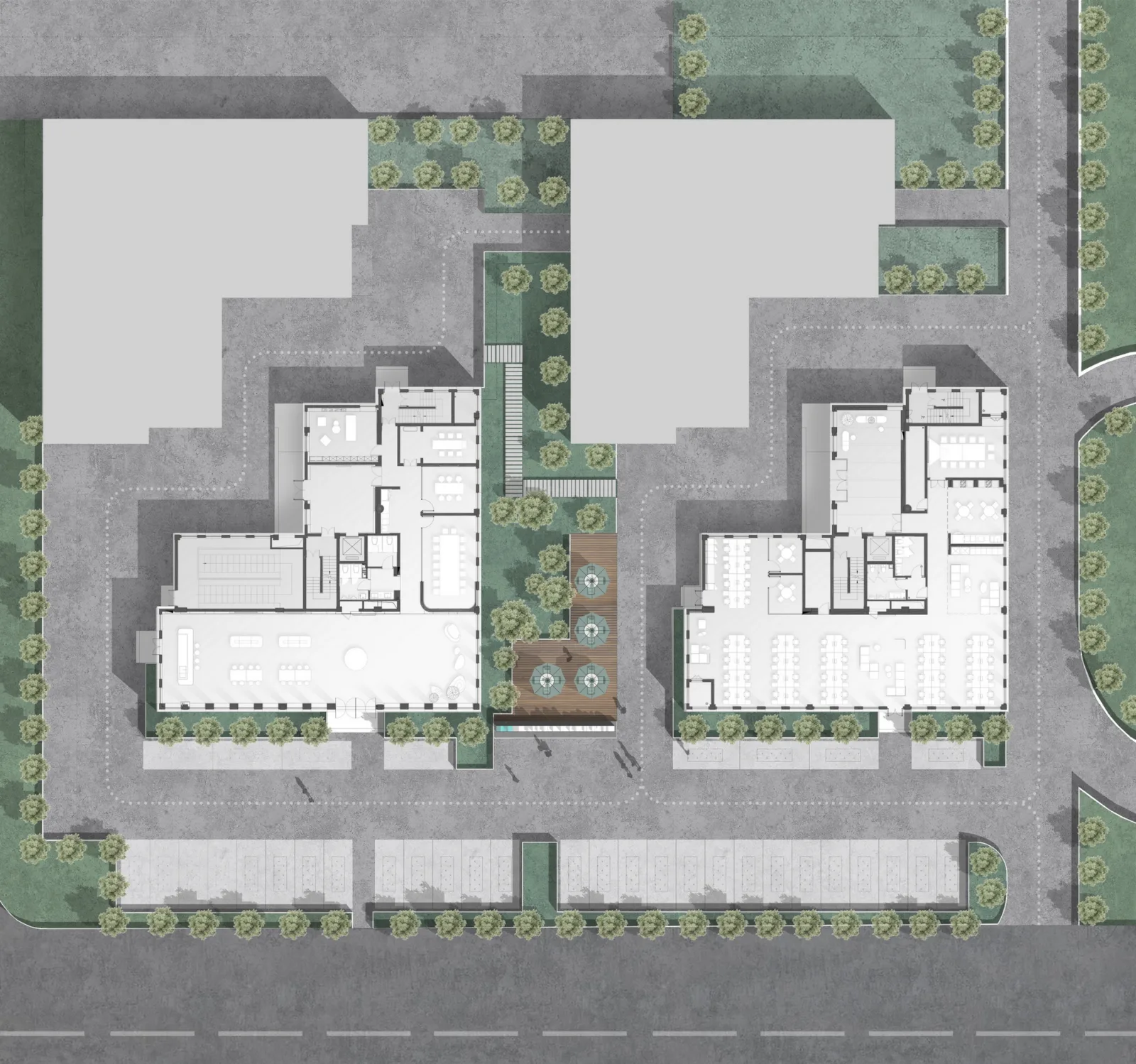
△ General layout plan © TOPOS DESIGN
Project Information
Project Name: Force Awakening, Arno Medical Tumor Immunotherapy Drug Innovation Center
Location: Hangzhou, Zhejiang Province, China
Owner: Hangzhou Arno Biomedical Technology Co., Ltd.
Design Firm: TOPOS Design (www.topos-design.com)
Lead Architect: Lin Chen
Project Architect: Wang Lei
Design Team: Lv Jie, Feng Zixiang, Lu Liyuan, Feng Yanyan, Chen Shuxiang
Chief Design Consultant: Ru Yun
Civil Consultant: Qin Mengjiang
Owner Project Manager: Yang Donghui
Owner Project Management Team: Feng Haitao, Hua Ruo, Lai Qiannan
Construction Managers: Wu Liang, Shen Kangfu
Construction Drawing Designers: Huang Rui, Zhu Xi, Zhu Lizhen
Construction Drawing Design Institute: Hangzhou Yilun Architectural Design and Research Institute Co., Ltd.
Visual Design: SHUN Design
Architectural Photography: CreatAR Images (www.creatarimages.com)
Building Area: 4,840 m²
Design Period: April 2018 to August 2020
Construction Period: August 2020 to December 2020
Main Materials: anodized aluminum panels, gold grinding stone, wood veneer, wear-resistant ceramic tiles, stainless steel, fiberglass reinforced plastic












Must log in before commenting!
Sign Up