
Exploring Minimalism in an Era Dominated by Expressionism.
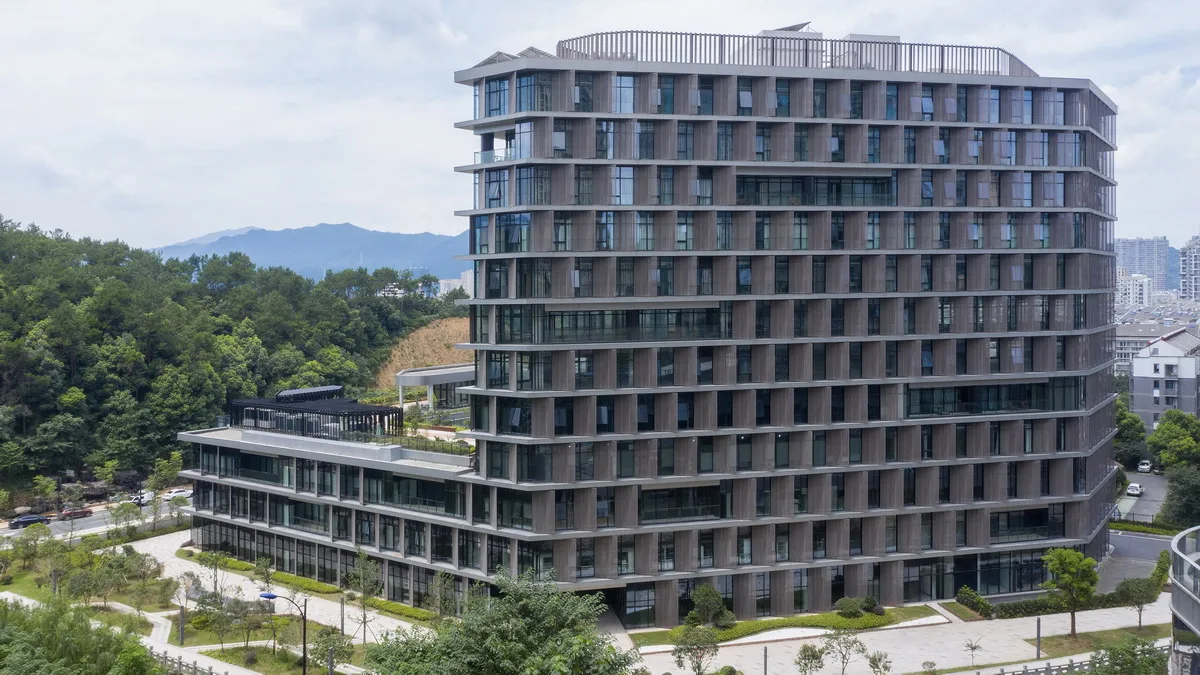
Mixed Type Architecture
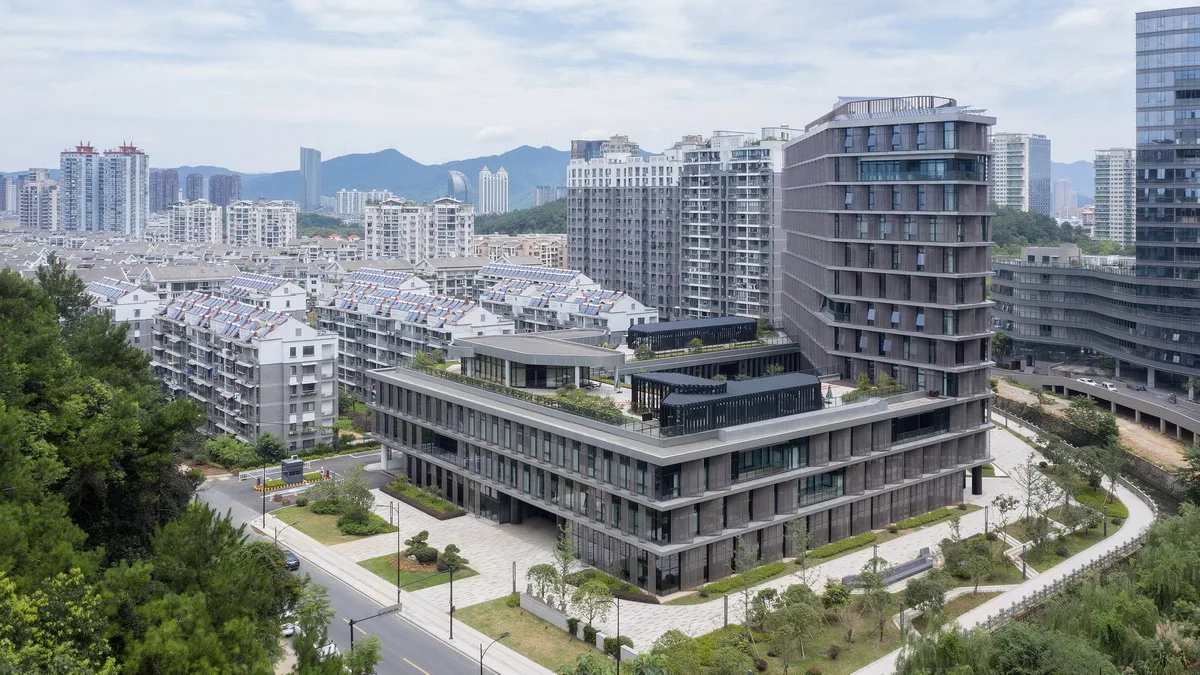
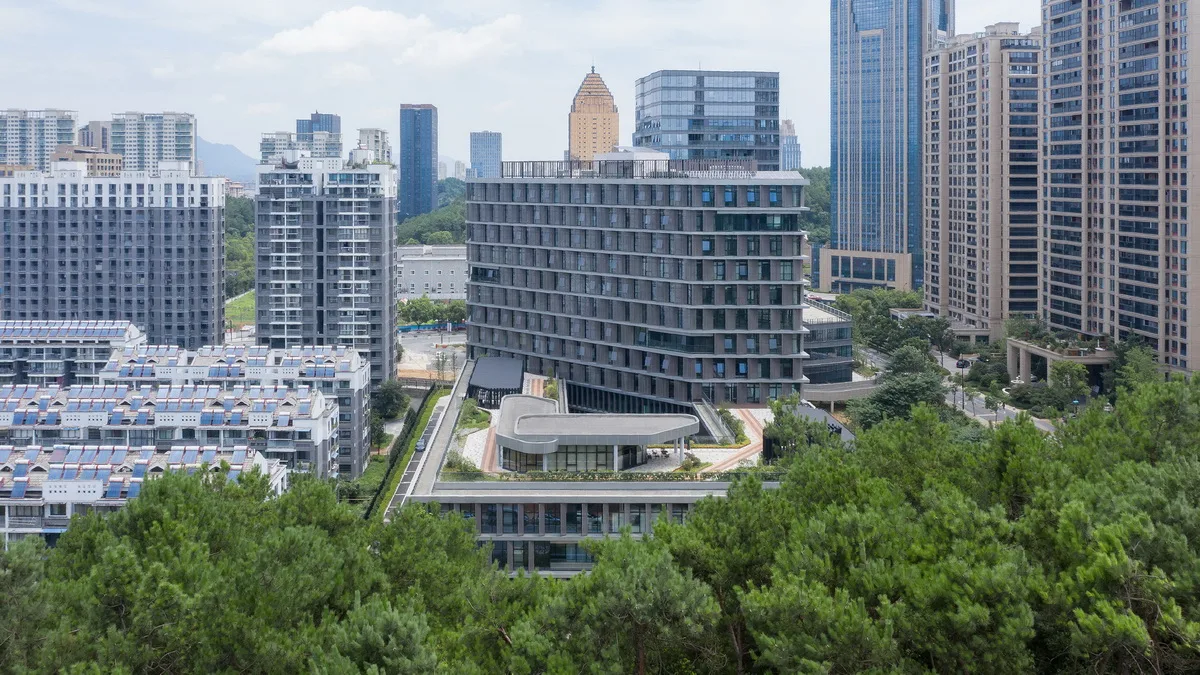
In China, podium architecture often struggles to meet the floor area ratio demands imposed by increasing urban population density. As a result, urban buildings heavily depend on tower structures to comply with municipal plot ratio standards. Hybrid architecture emerges as an effective solution to address the challenges of the current urban environment.
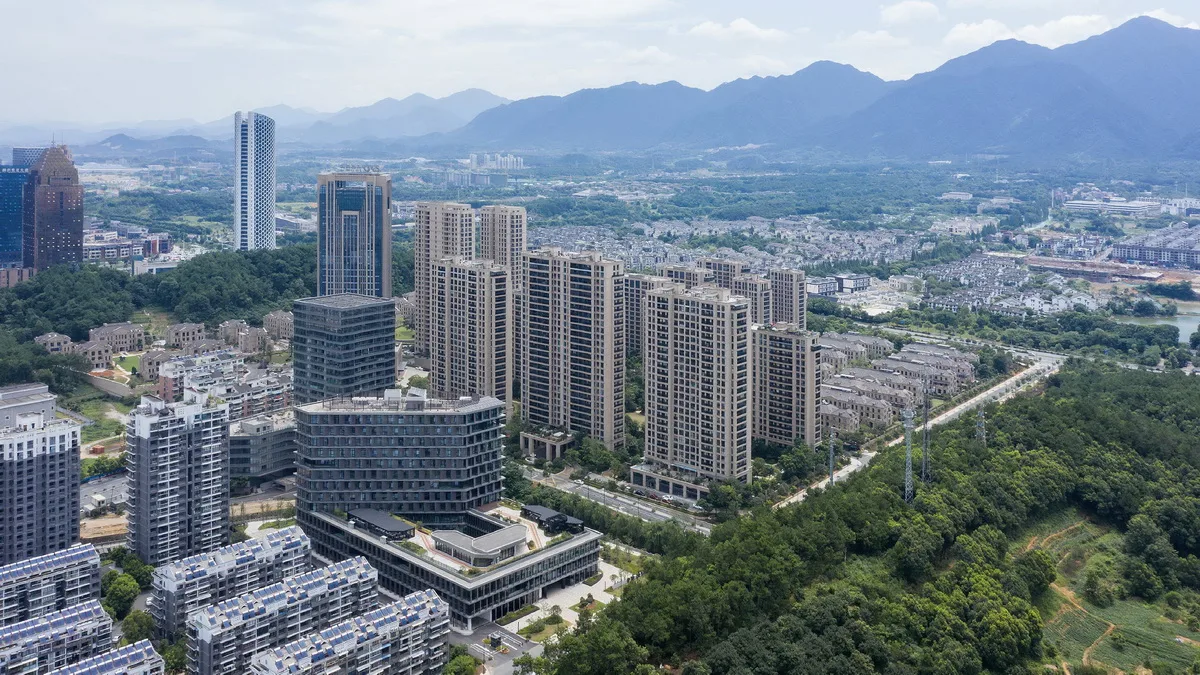
Tower Rising from the Podium
This combination offers several benefits: the podium activates the edges of urban streets, ensuring excellent lighting and ventilation. Users can enjoy an inner courtyard that blends public and private spaces seamlessly. Meanwhile, the tower can be constructed without exceeding plot ratio limits, thus maximizing building floor area utilization.
Creating a Friendly Neighborhood
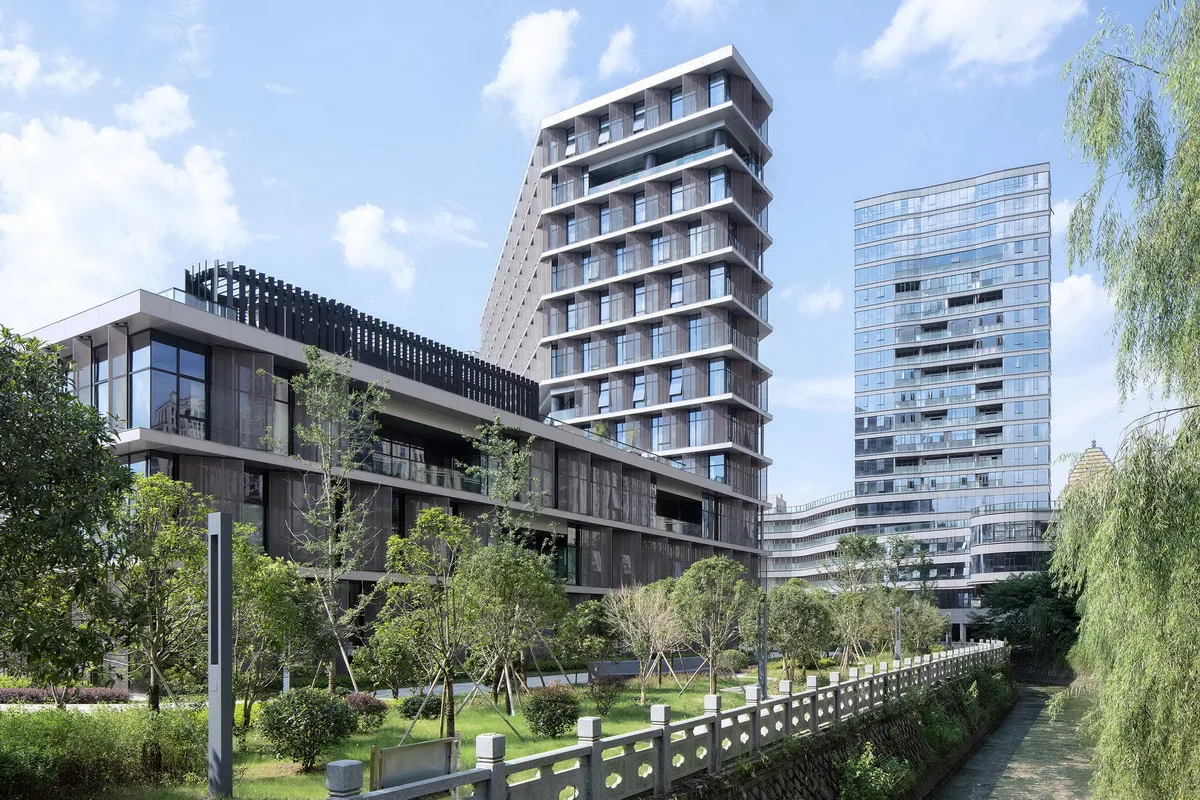
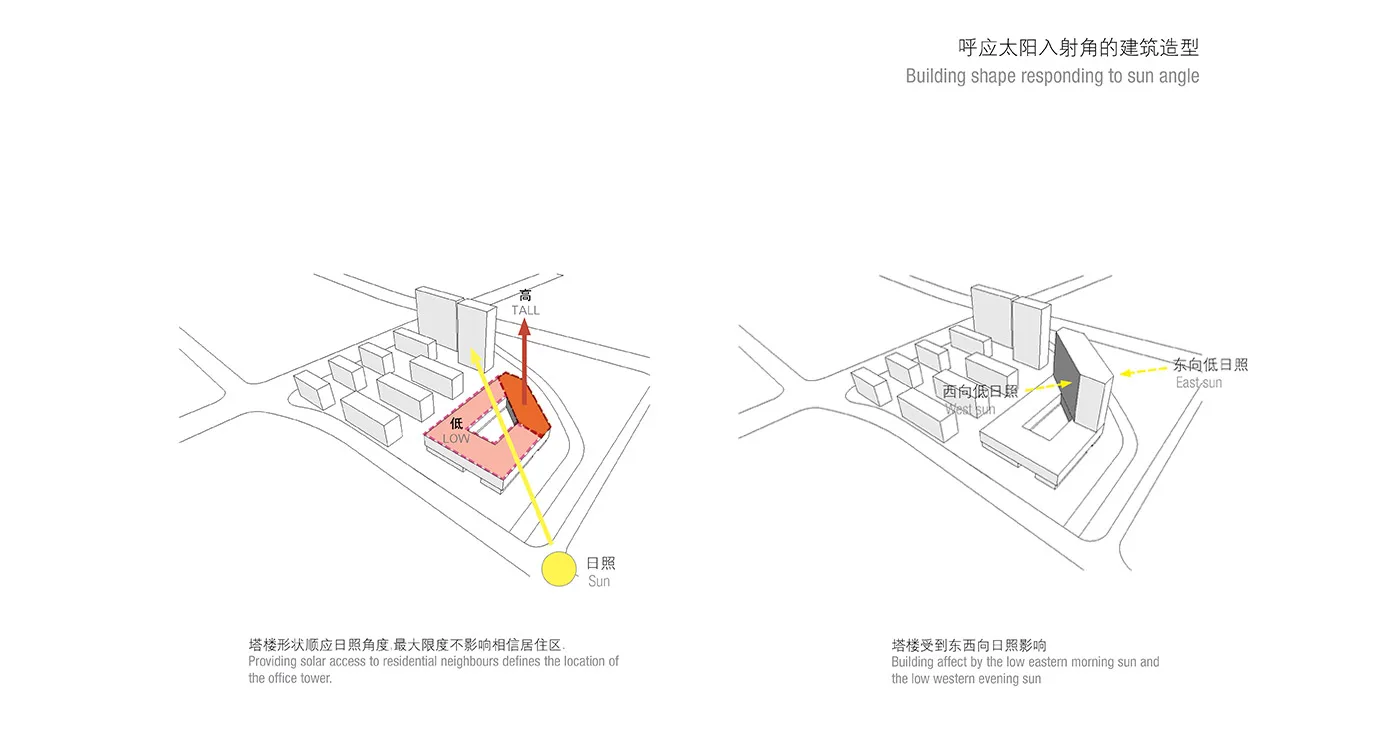
The project required a design that would not block sunlight for neighboring buildings. While the podium building does not significantly affect sunlight, tower placement is more complex. After analyzing summer sunlight angles, we decided that the tower’s facade should face east-west to optimize natural light and shading.
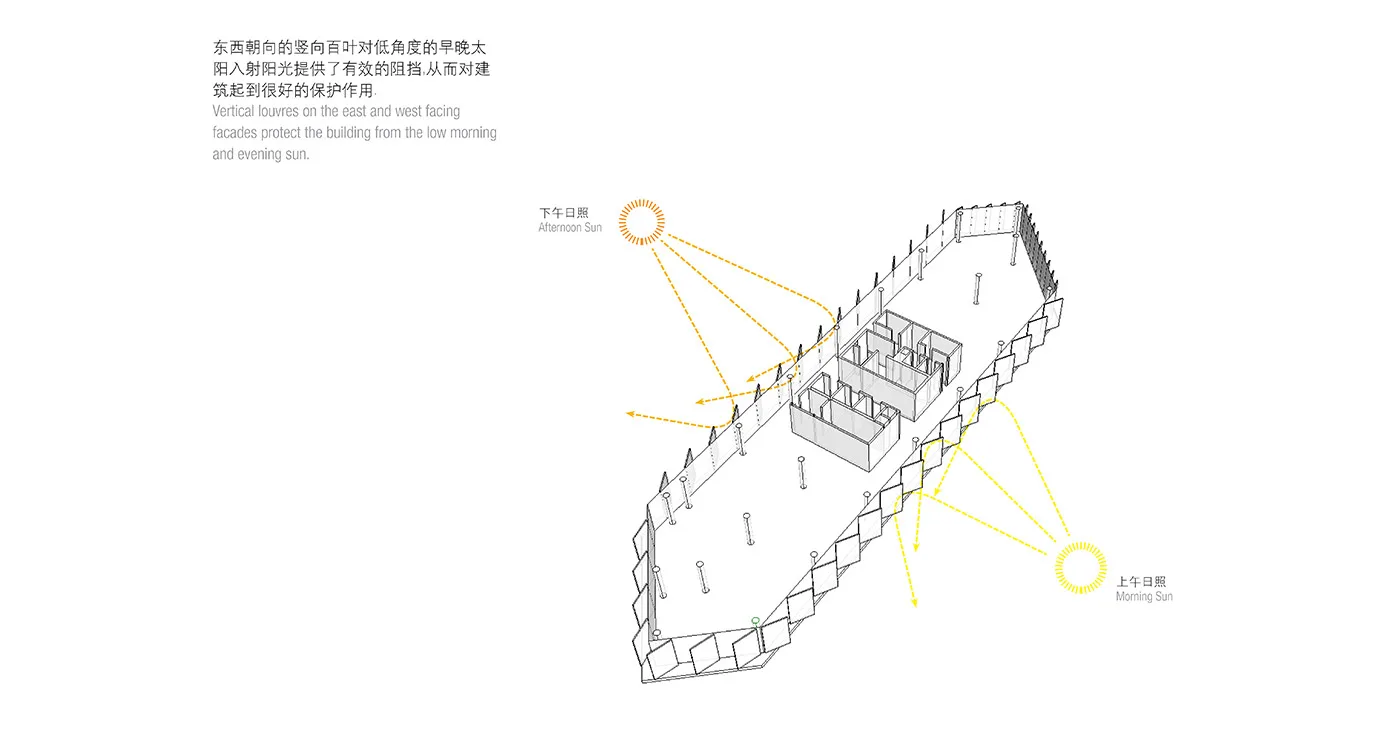
Metal Blinds for Shading
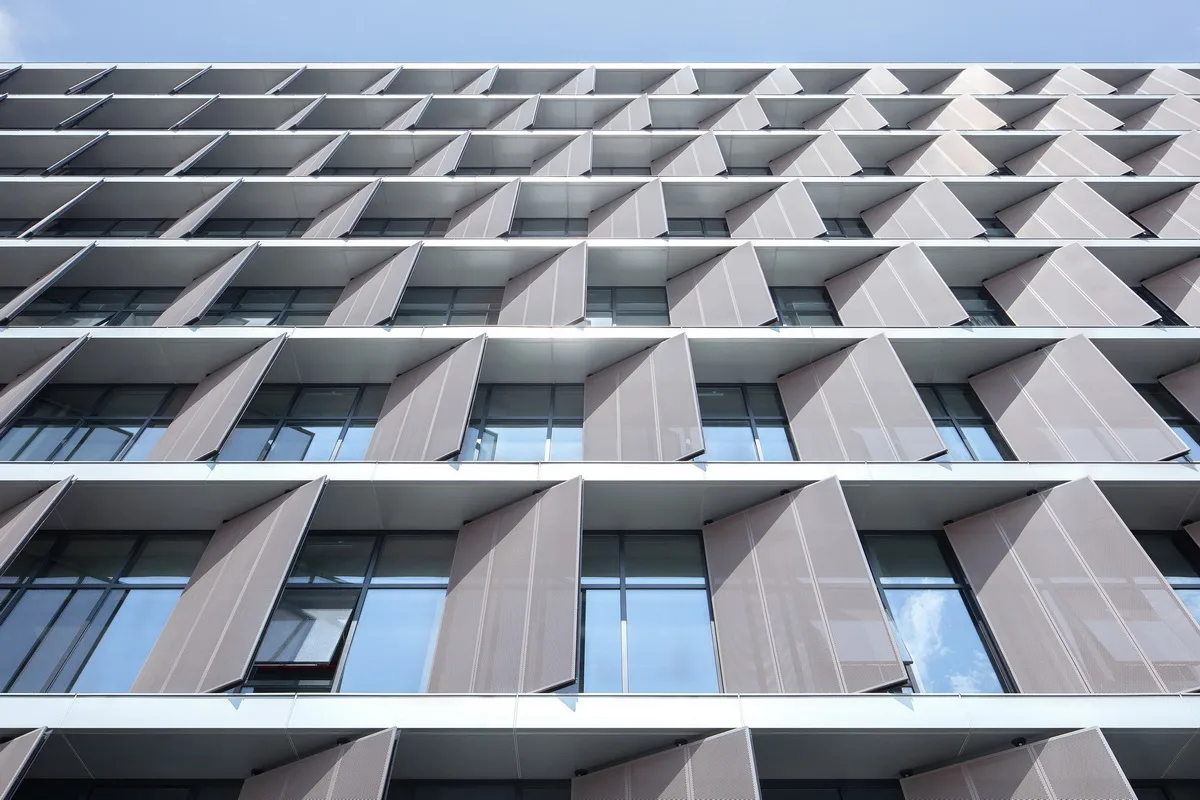
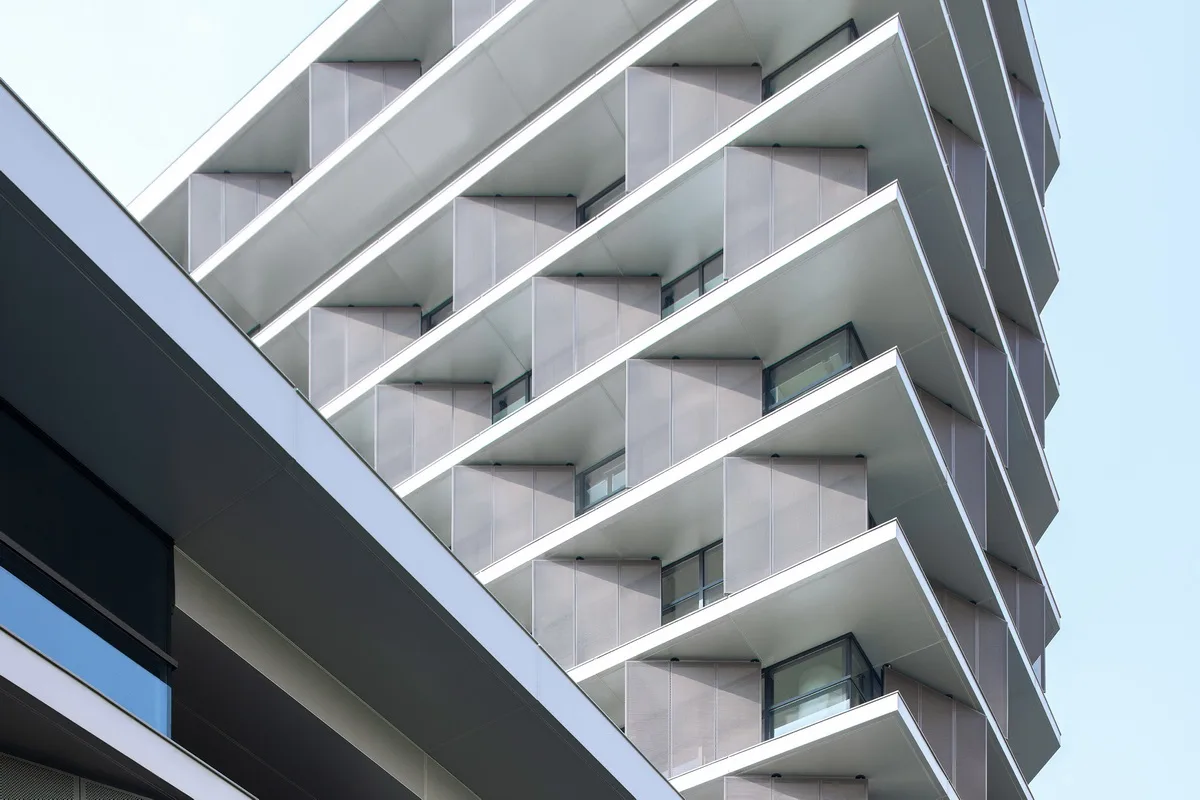
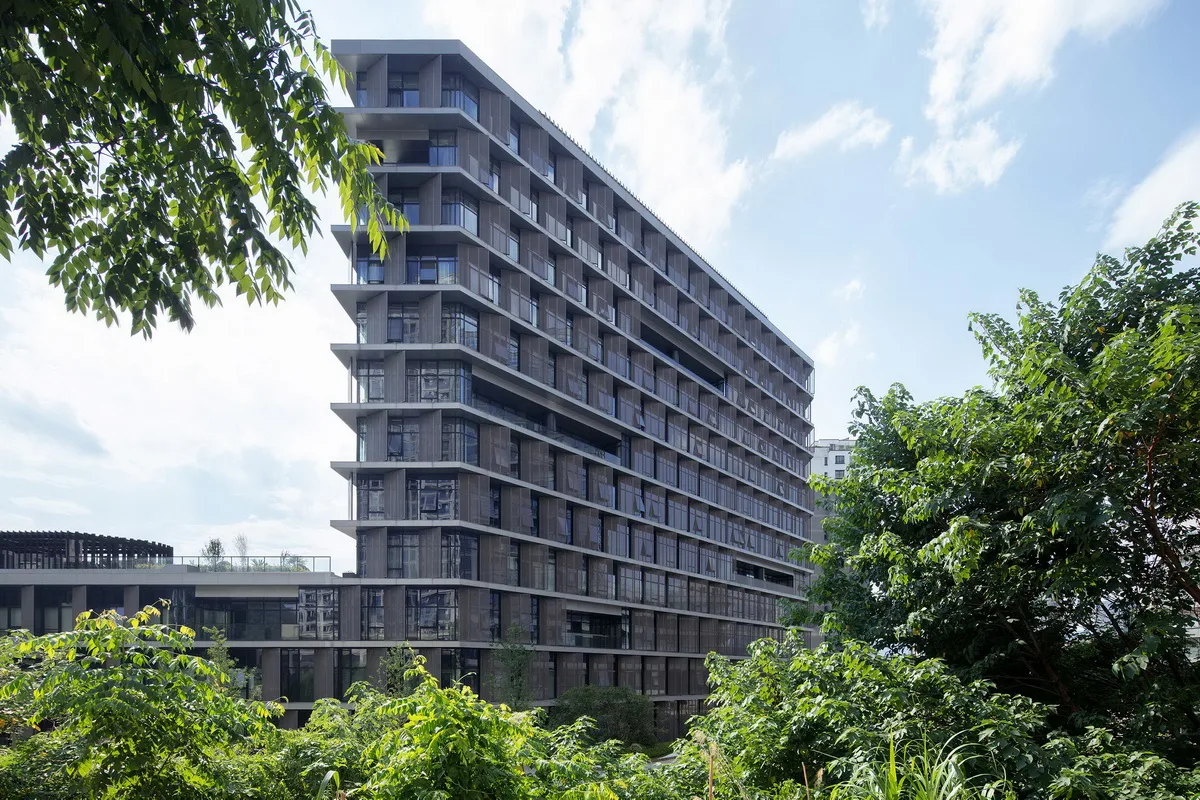
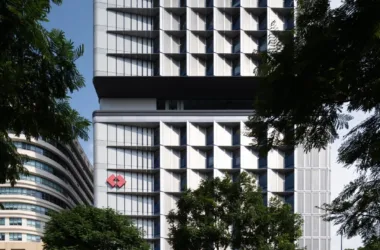
The building’s facades incorporate vertical shading barriers to regulate sunlight and heat. Elegant thin plates extend beyond the windows, creating horizontal planes topped with vertically perforated metal shading panels. These panels can be adjusted to block sunlight or opened to provide clear views, resembling metal petals that cover the facade with a unified and orderly appearance.
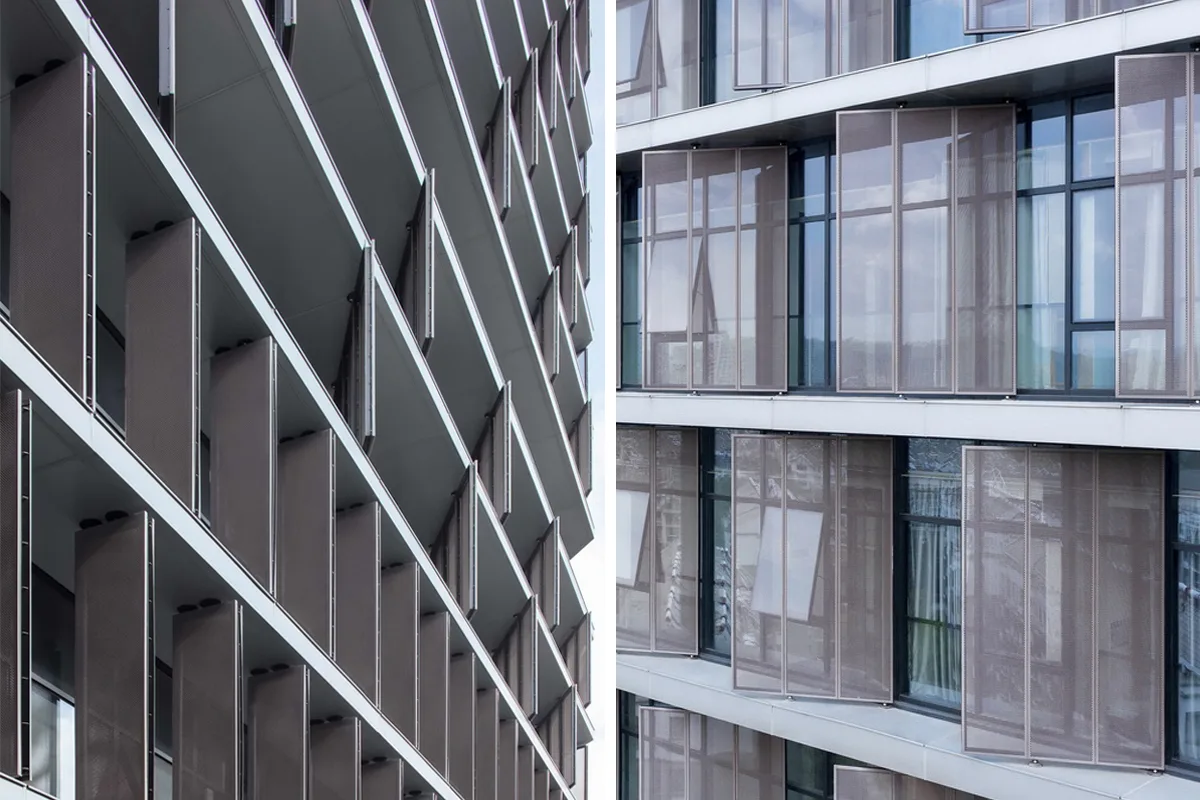
Each floor features an outdoor deck, providing additional external space while breaking up the shading panels to reduce visual bulk caused by extensive metal elements.
Minimalism as the Core, Performance as a Complement
The government office building is versatile, housing archives, a testing center, staff canteen, commercial street café, and various enclosed or open-plan office spaces. This design highlights the building’s ability to integrate multiple functional areas while reflecting the hybrid nature of the podium and tower structure.
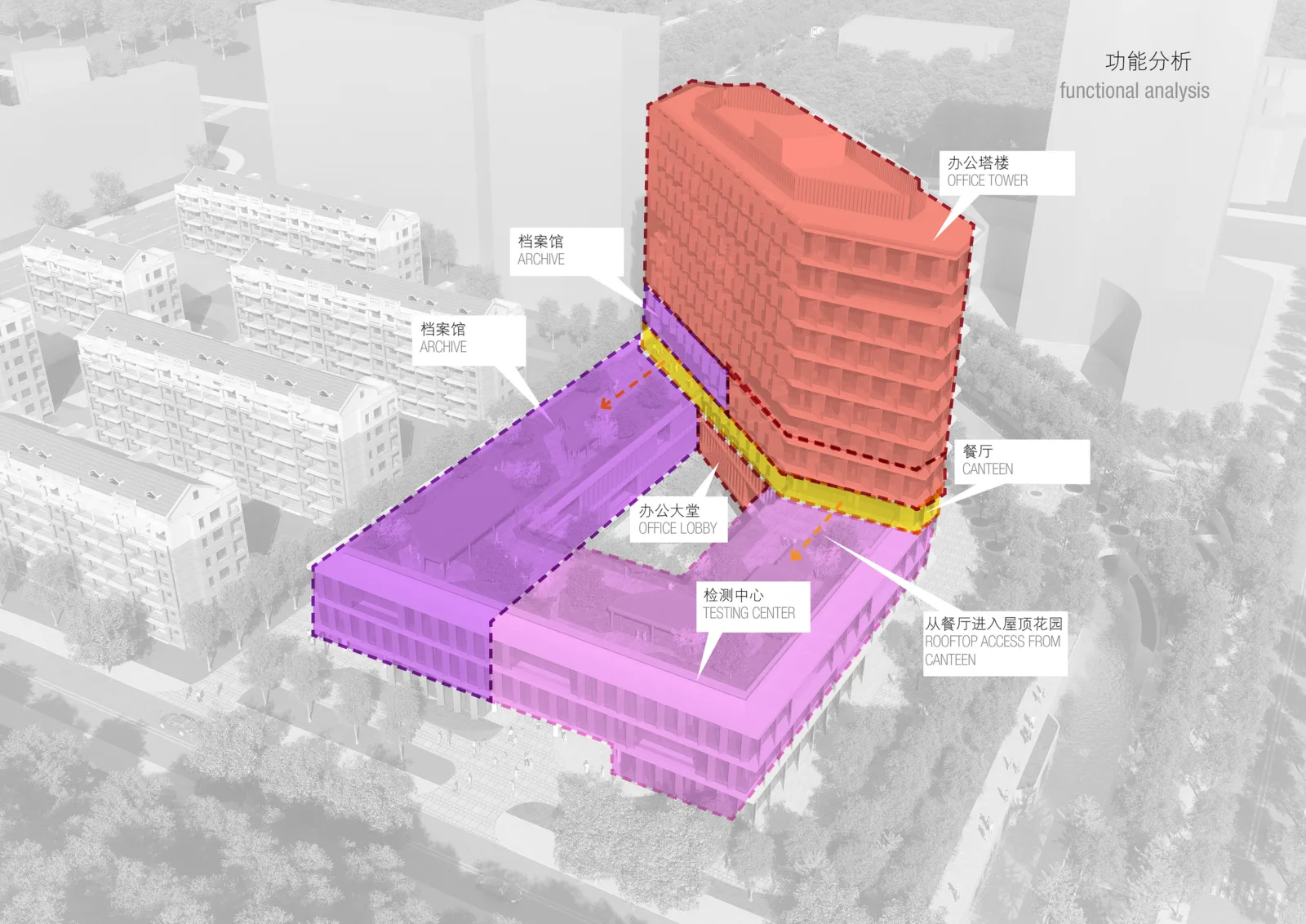
Beyond addressing surface-level functional connectivity, we explored how to clearly distinguish different functions and how the podium-tower combination can offer more diversity compared to stand-alone structures. Two key design strategies were implemented: 1) Unified curtain wall planning to meet sunlight and shading requirements for each distinct area; and 2) All entrances leading into a central courtyard.
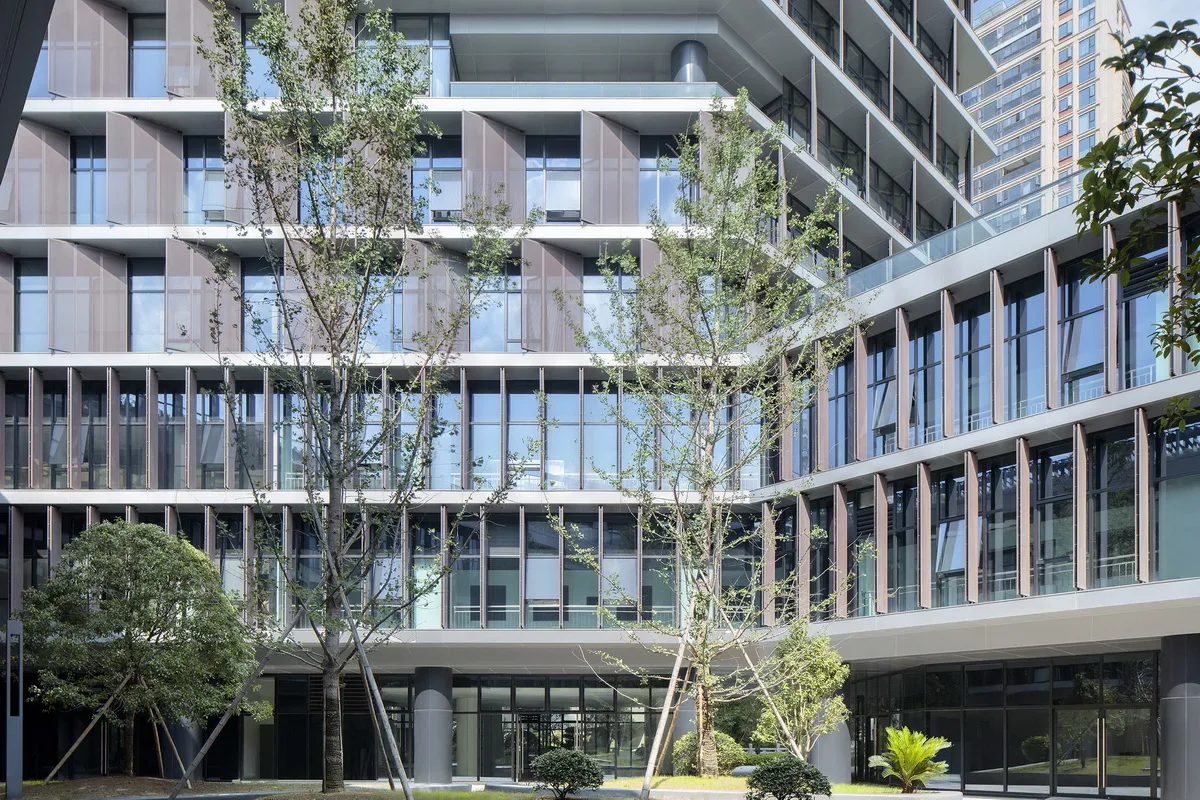
Semi-Public Courtyard
This centralized circulation fosters a semi-public outdoor space that encourages collaboration and communication between departments. The enclosed courtyard also offers a lively dining environment during lunch hours.
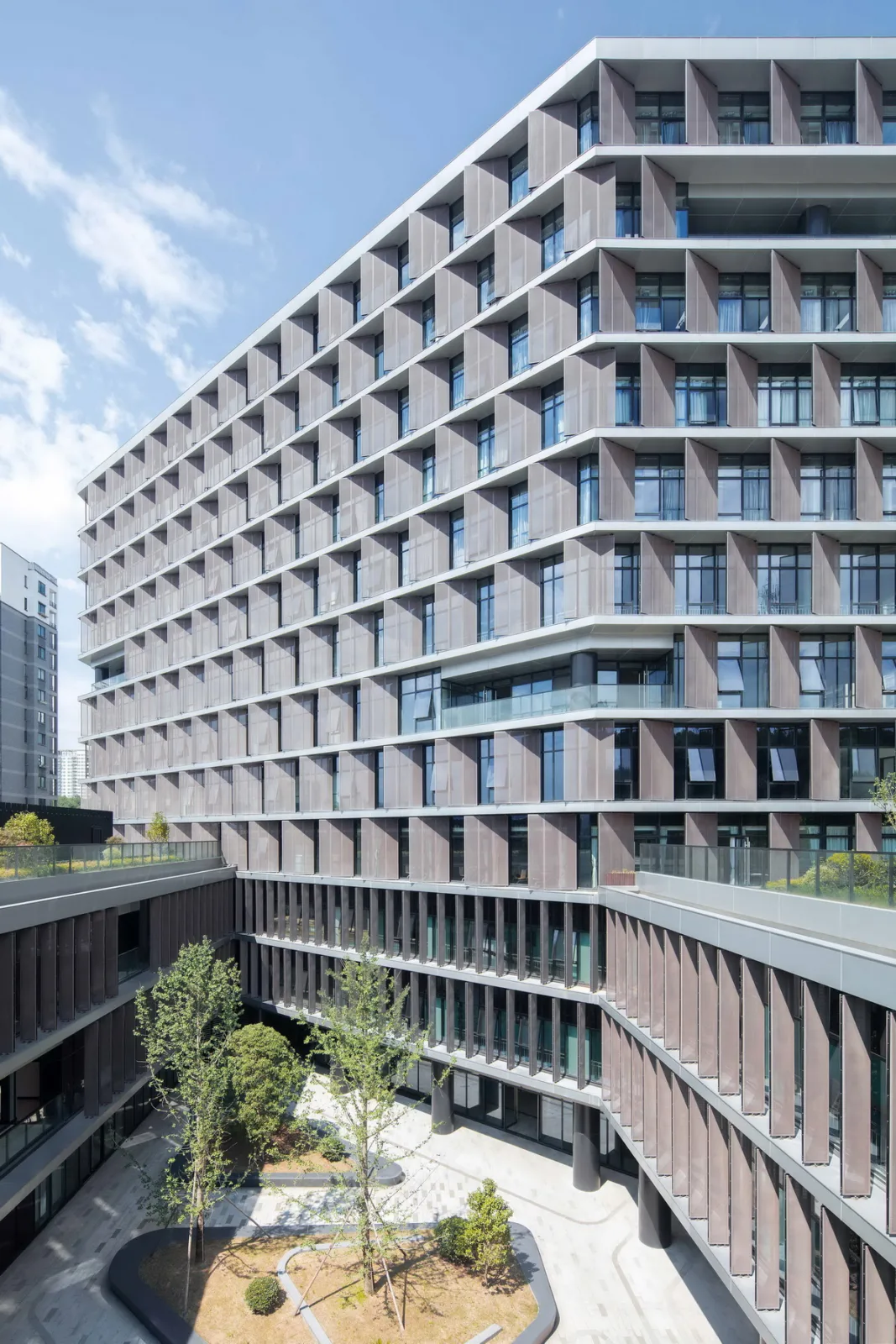
The courtyard connects to a public sidewalk leading to the south gate, linking to a proposed pedestrian bridge and the northeast side of the courtyard via a diagonal pathway. This design emphasizes the courtyard’s semi-public nature.
Unique Roof Landscape
To encourage employees to enjoy outdoor spaces, indoor floor tiles extend seamlessly into the courtyard and towards the river. This approach lays the groundwork for future public and commercial uses on the first floor.
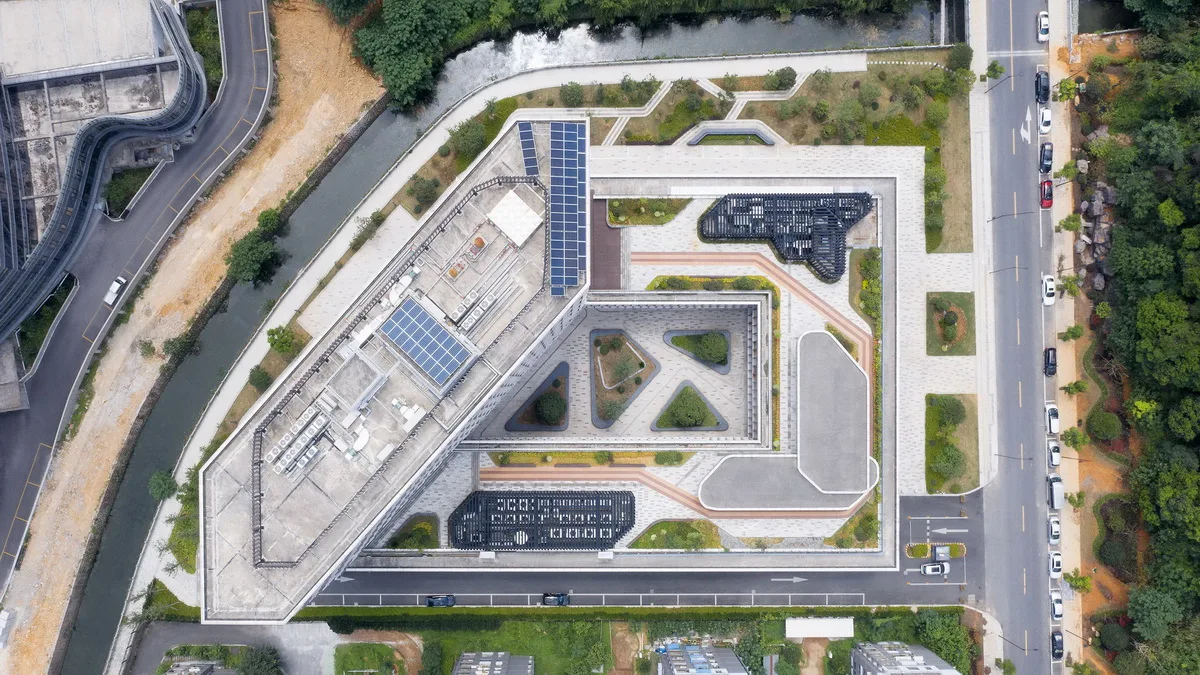
The tower overlooks the podium’s roof, featuring a garden pavilion on the top floor that serves as a covered space—an example of a ‘misplaced’ landscape. The staff canteen opens here, providing a place for lunch and informal meetings. Additionally, a mechanical room is disguised as a small pavilion, offering tenants private outdoor space on the top floor.
Simplicity and Serenity Stand Out
In commercial and retail settings, buildings often strive for uniqueness amidst a landscape dominated by advertising and signage. They become battlegrounds for corporate identity and marketing. However, simple, elegant, and serene public buildings can be even more striking.
Design Drawings
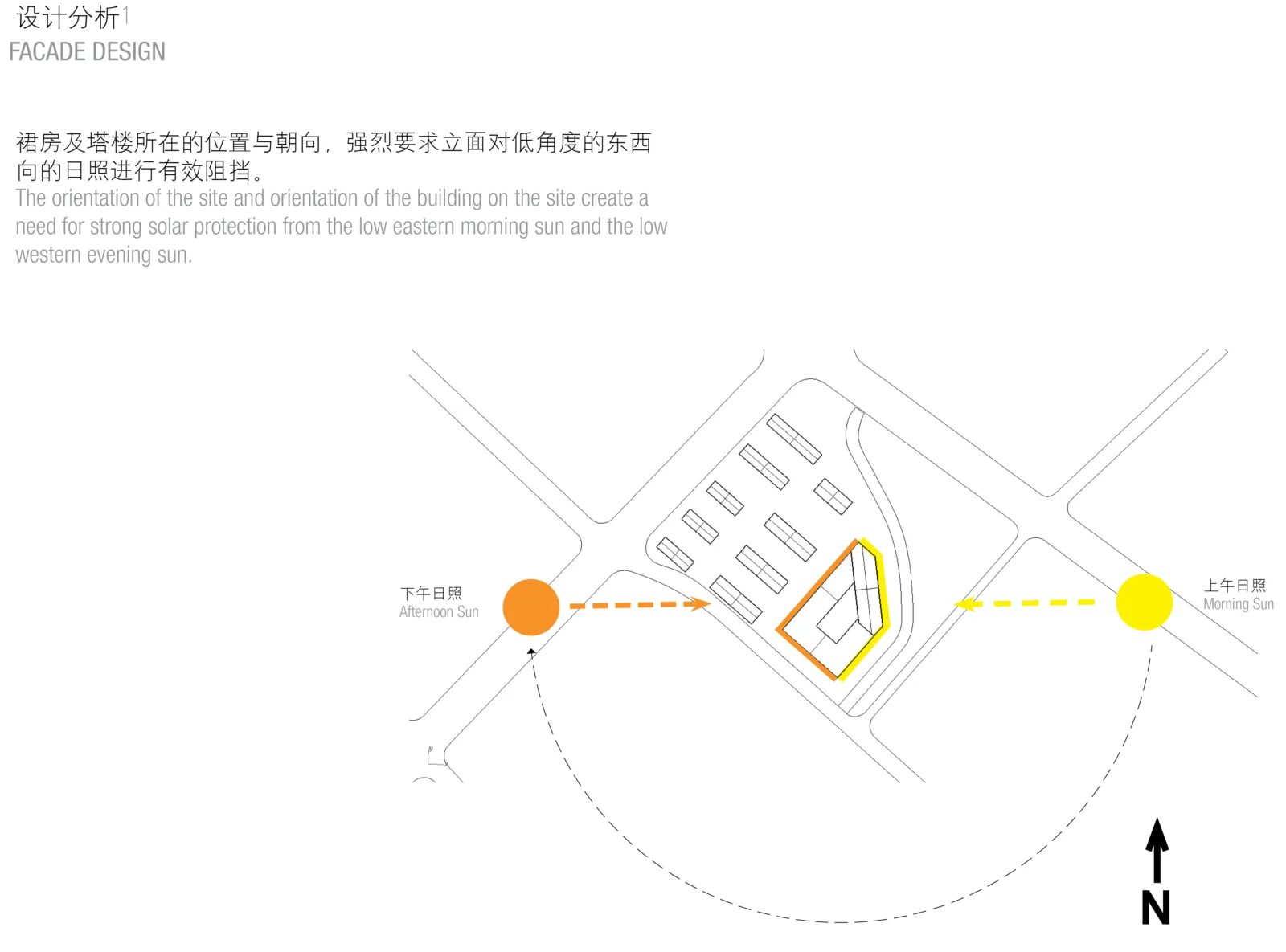
△ Analysis Diagram
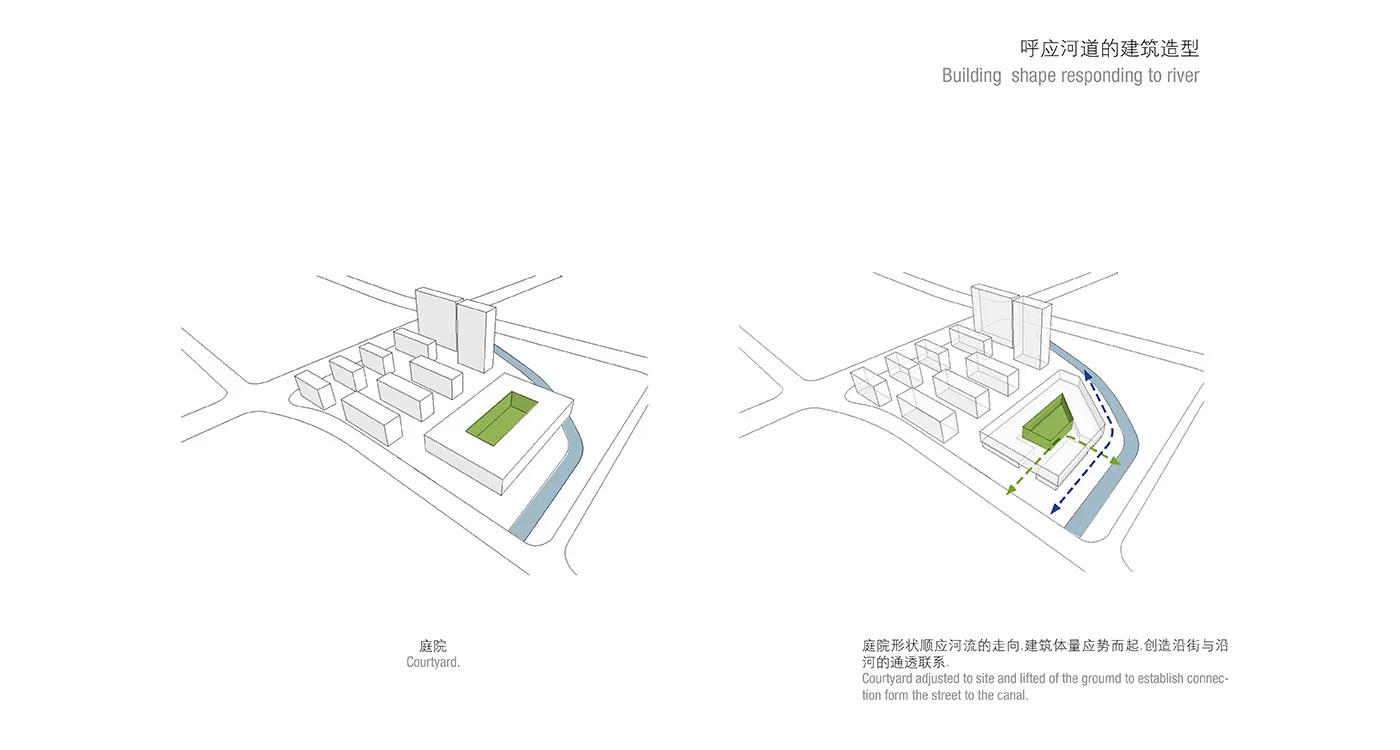
△ Analysis Diagram
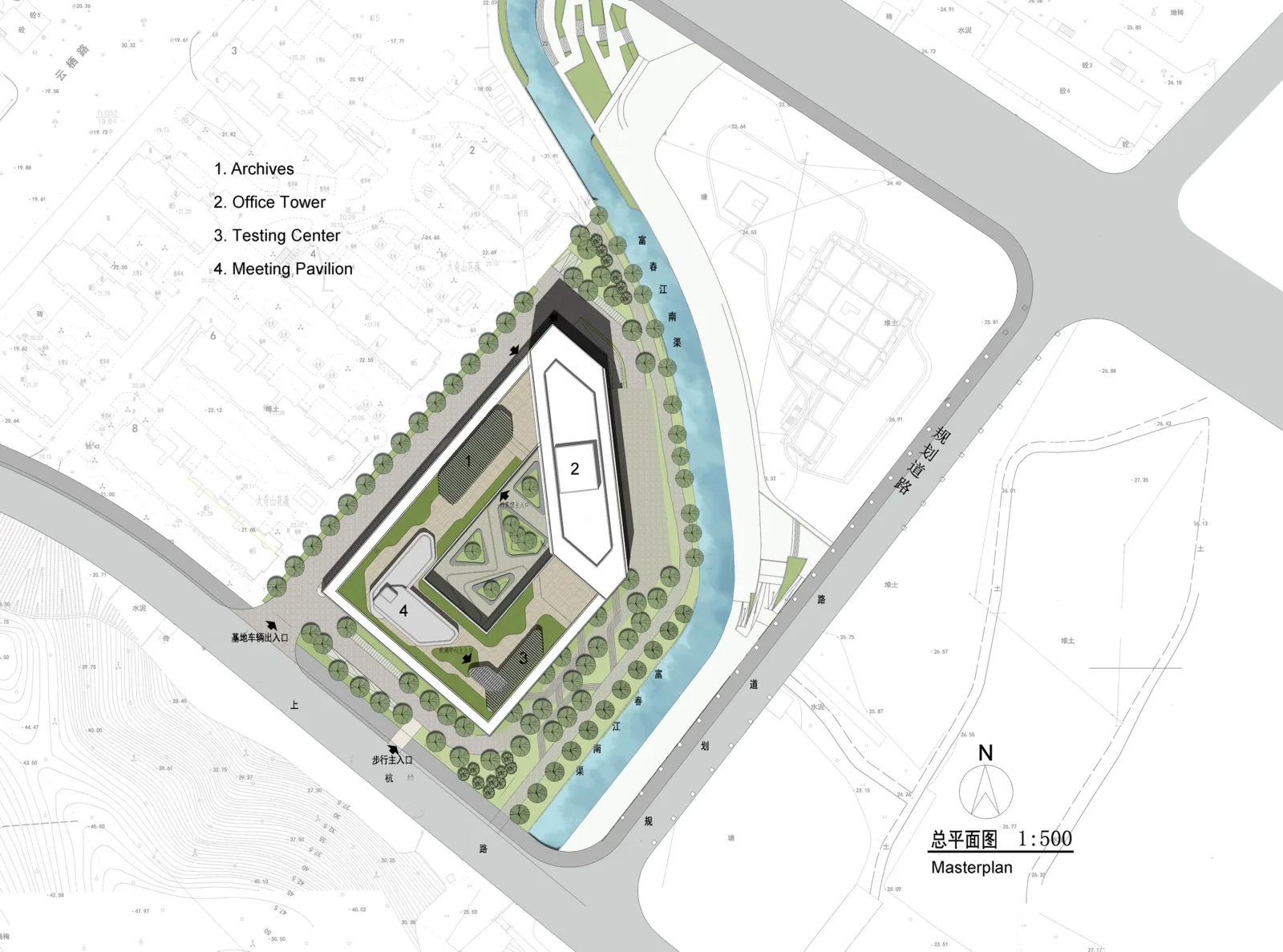
△ General Layout Plan
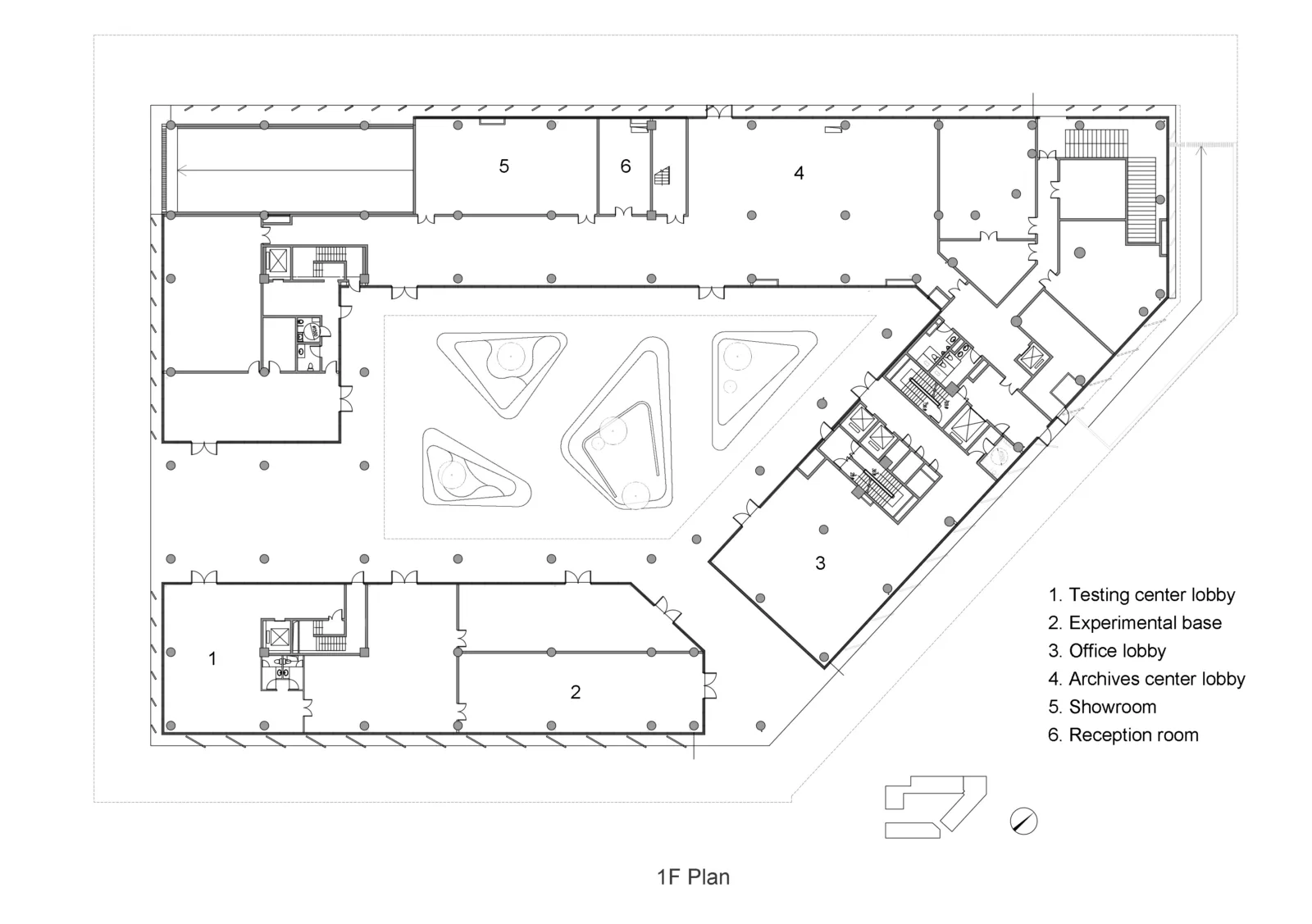
△ First Floor Plan
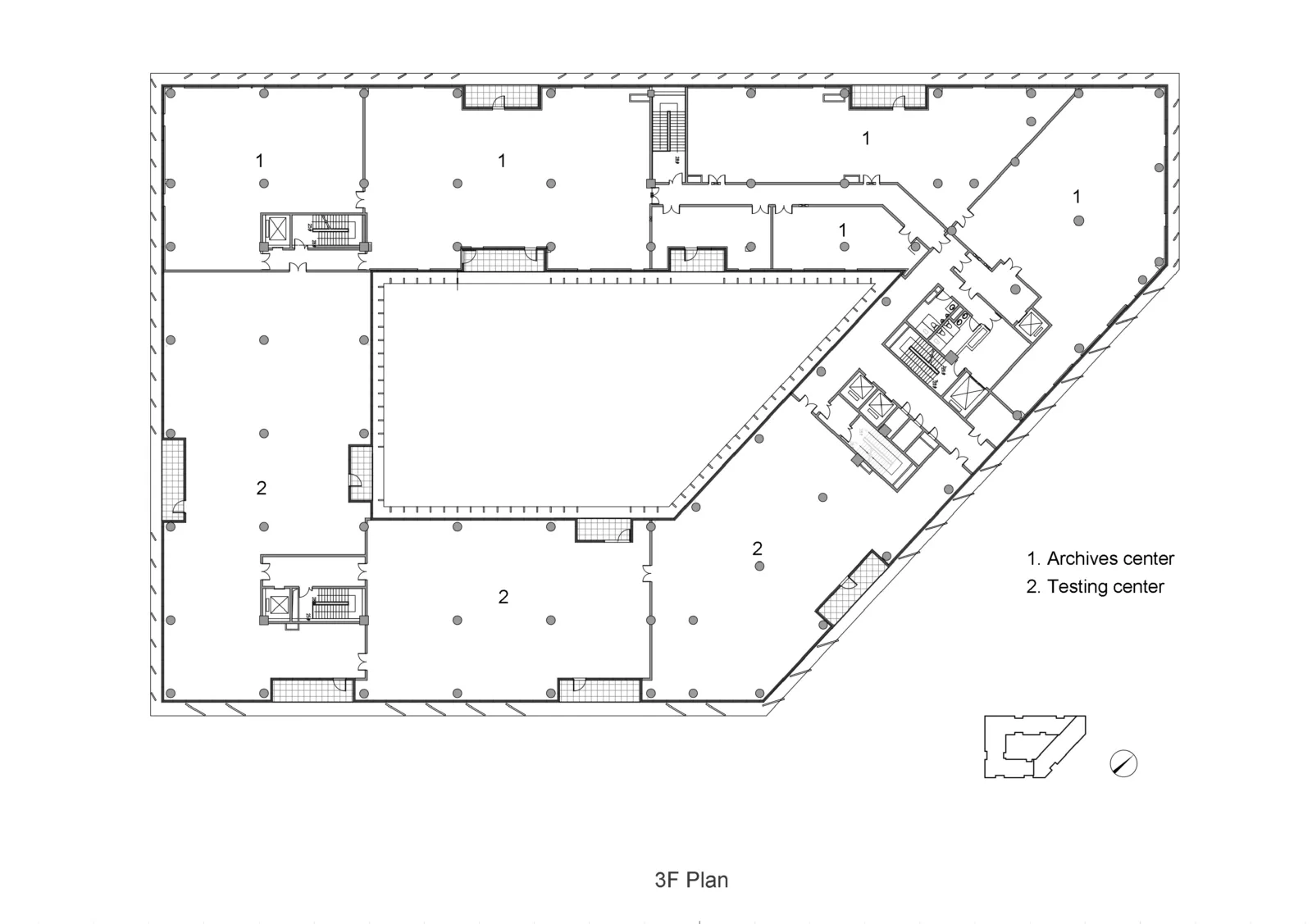
△ Third Floor Plan
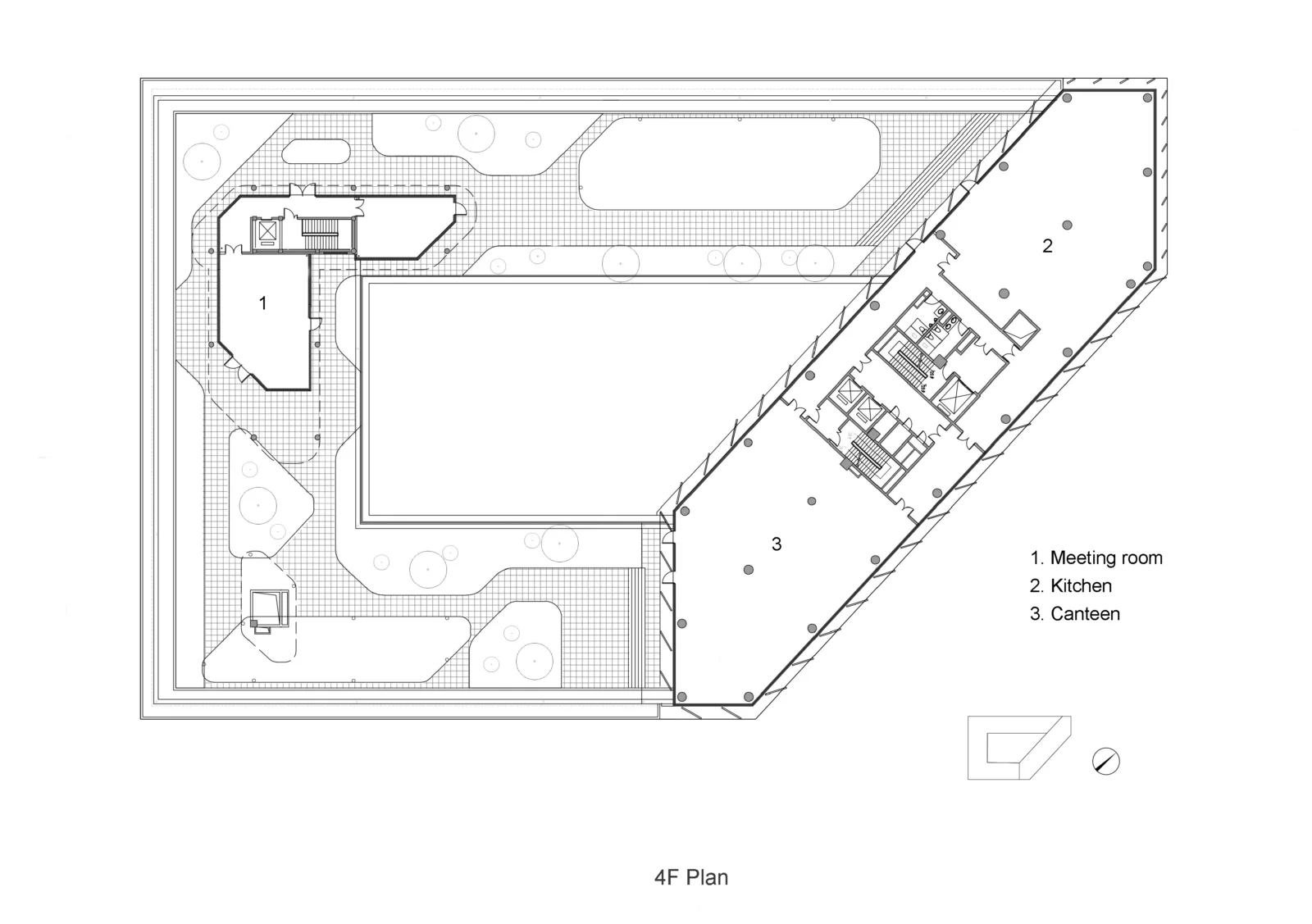
△ Fourth Floor Plan
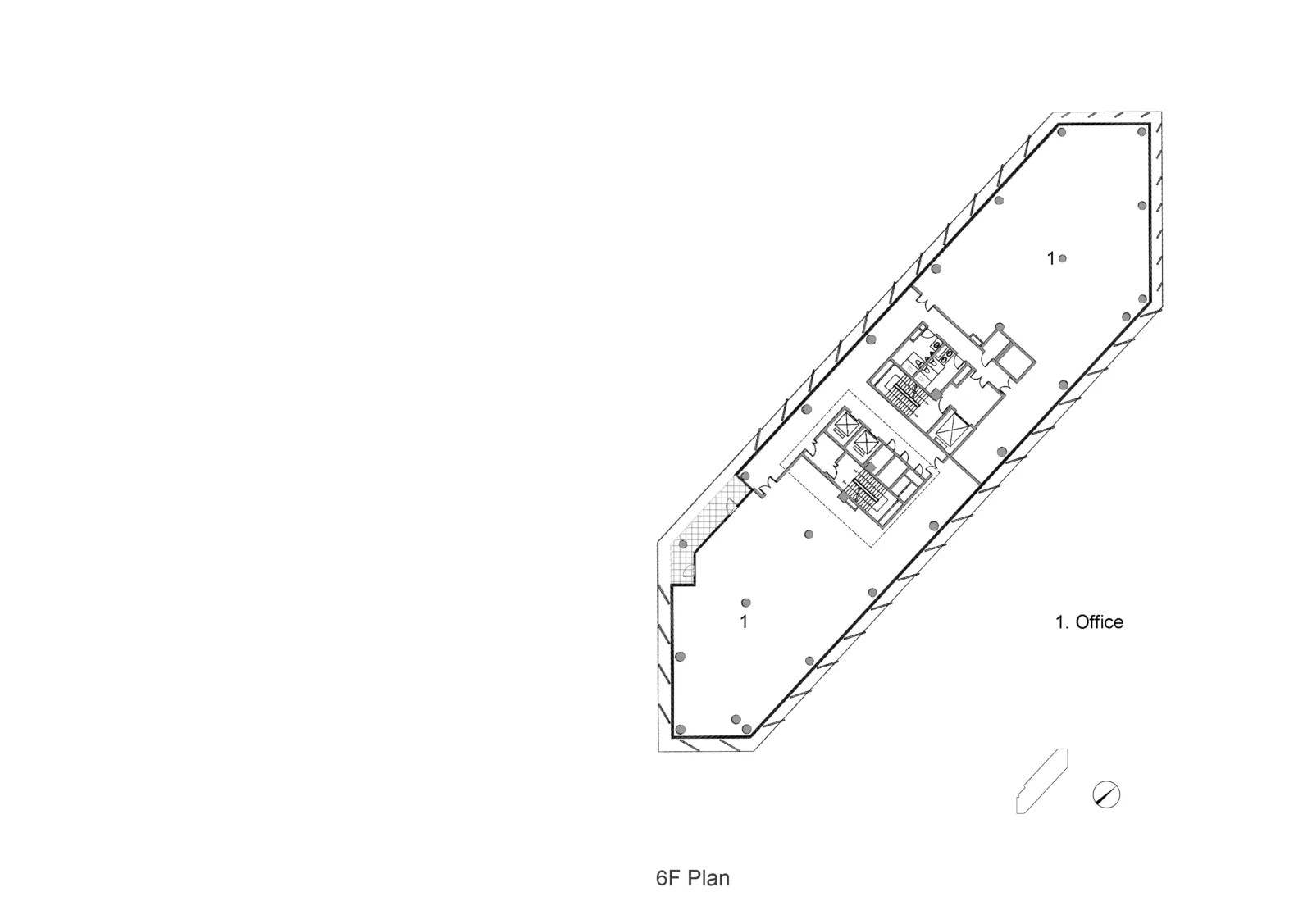
△ Sixth Floor Plan
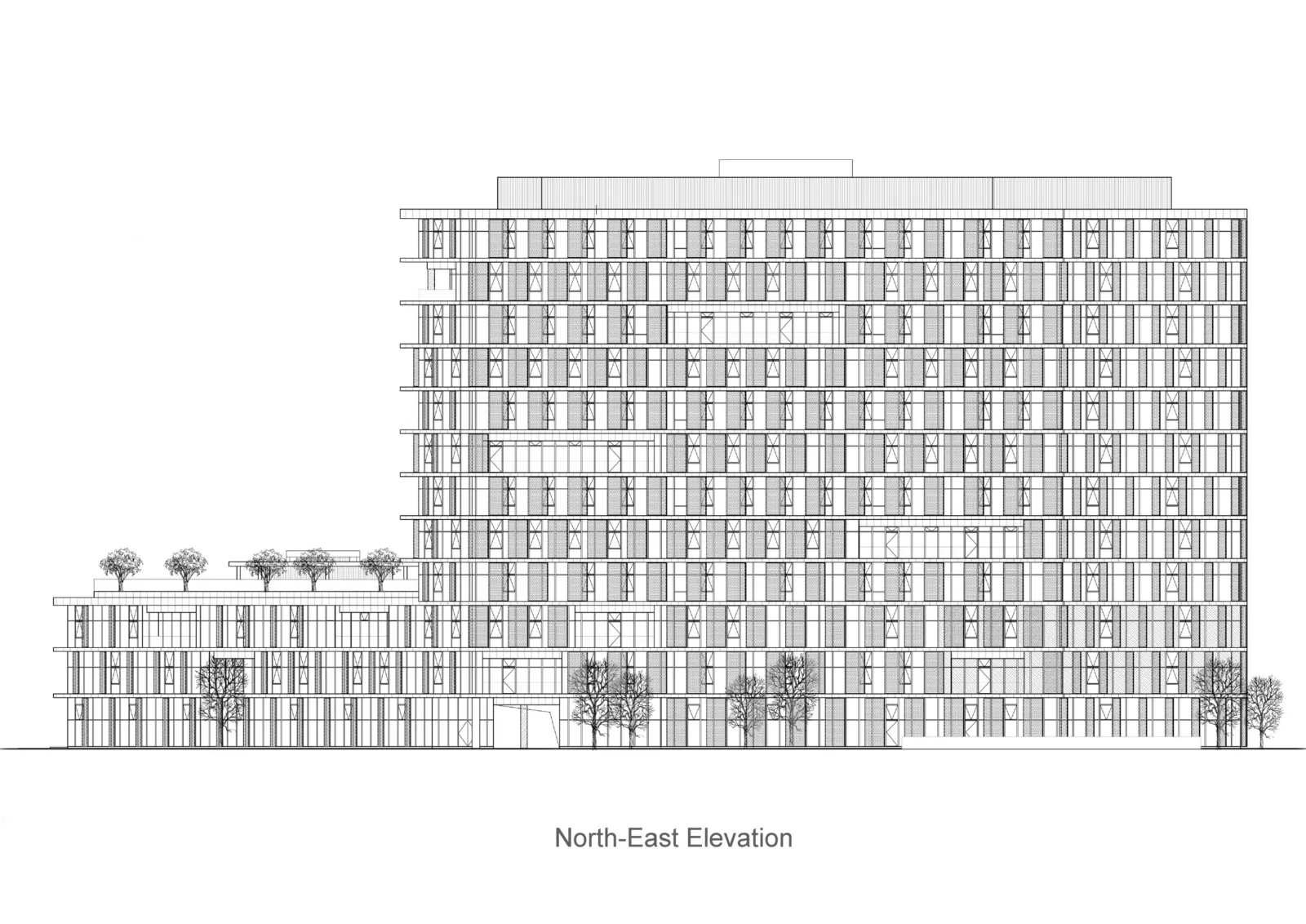
△ North East Elevation View
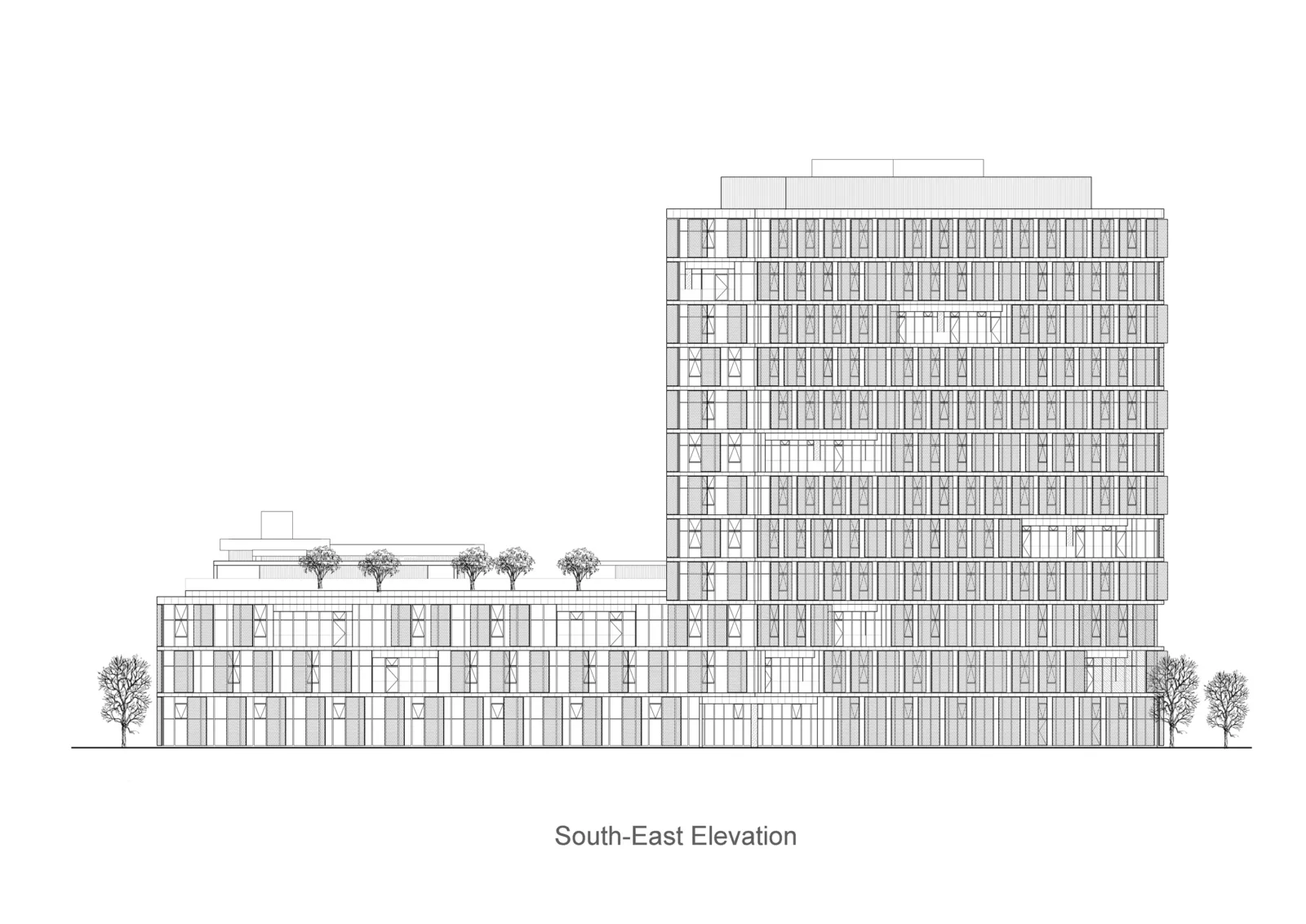
△ South East Elevation View
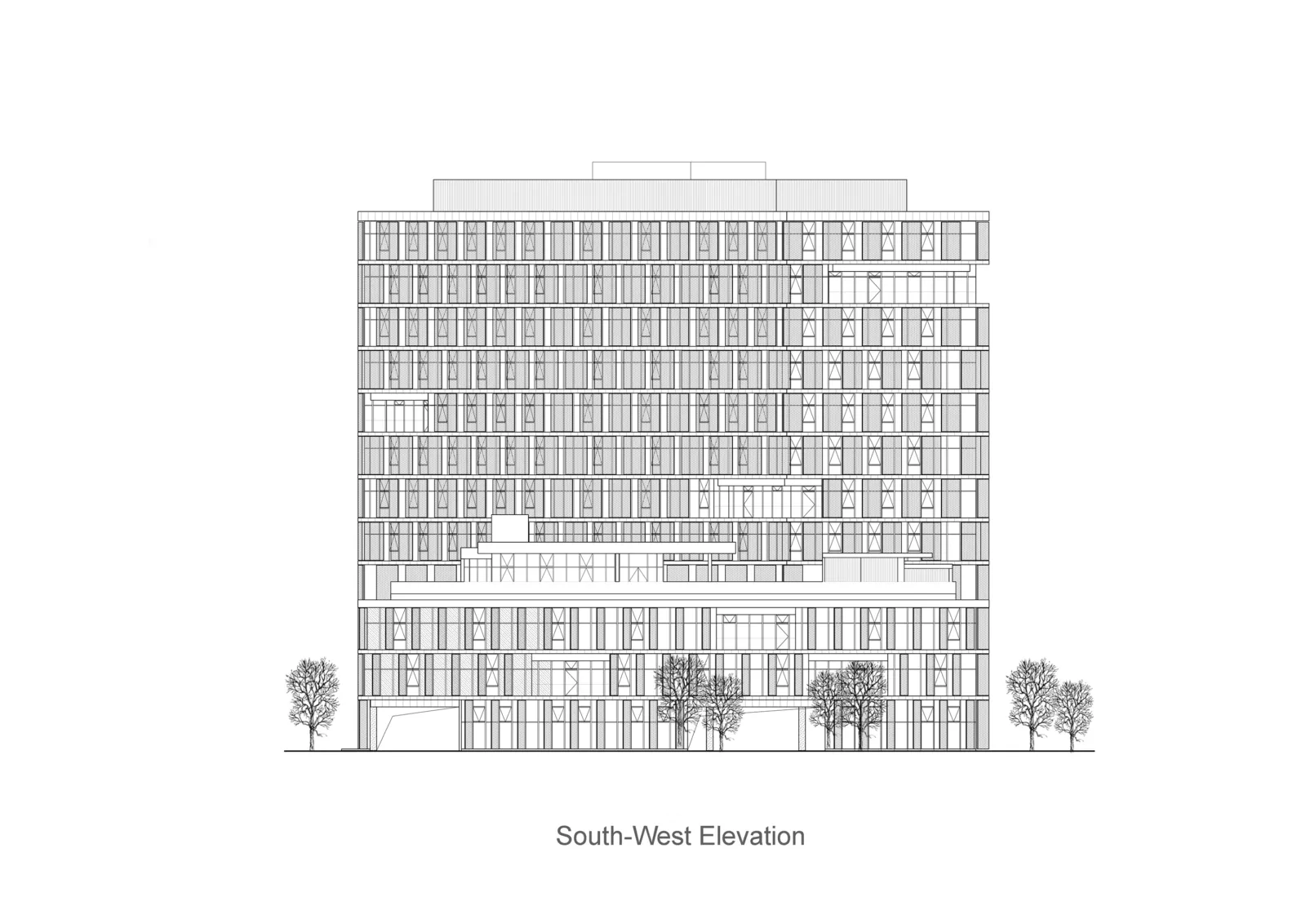
△ South West Elevation View
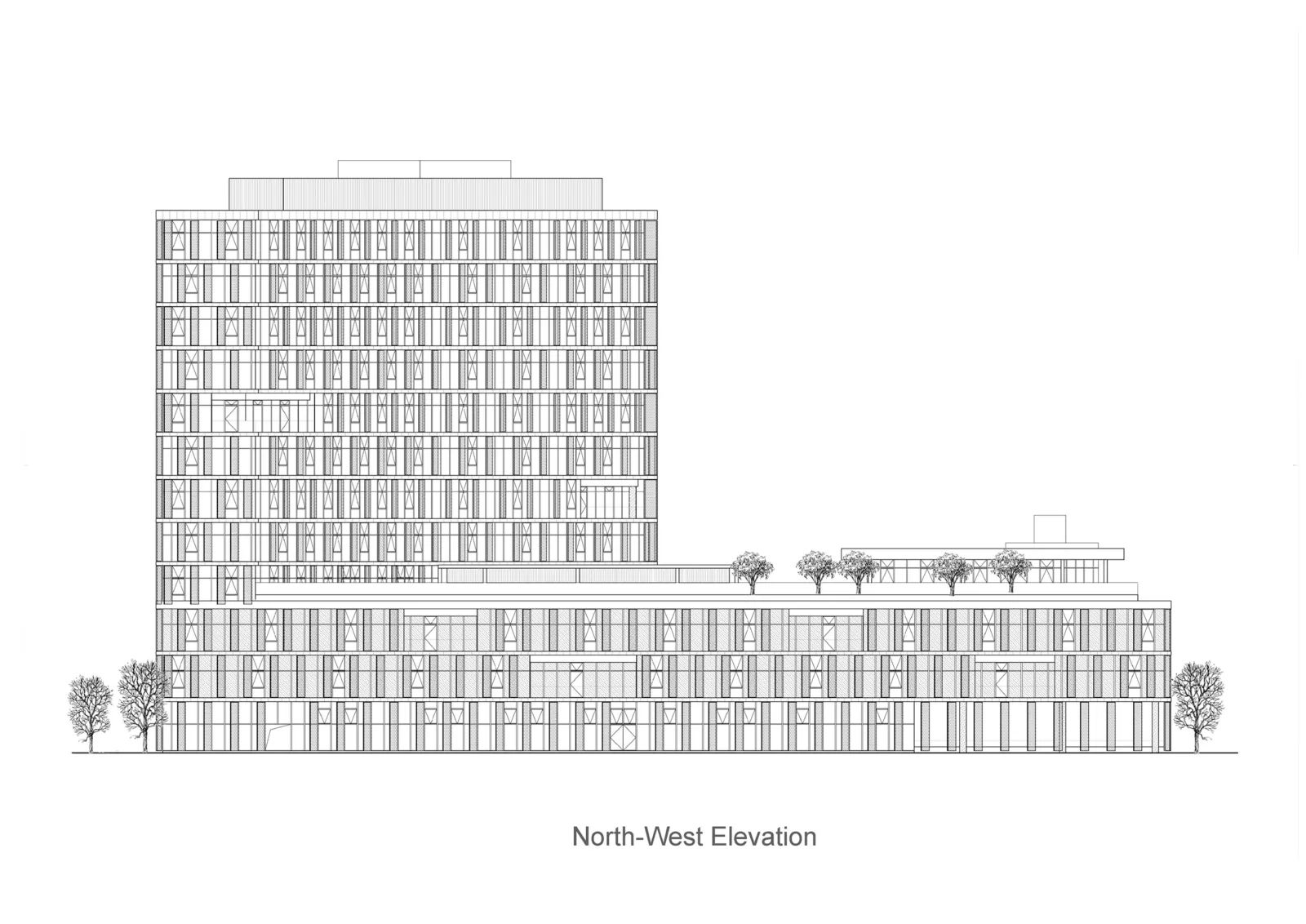
△ North West Elevation View
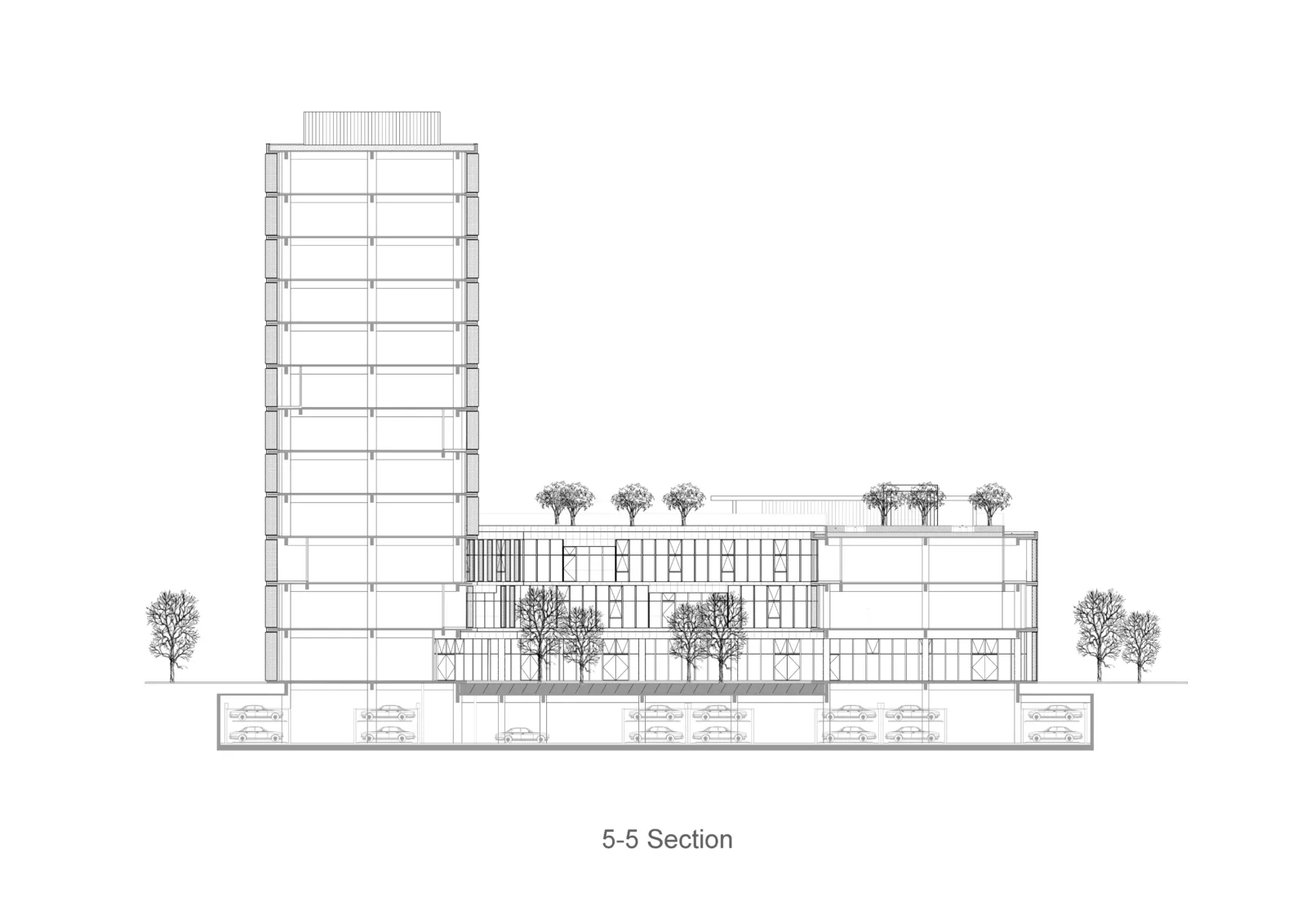
△ Section 5-5 View
Project Information:
Project Name: Hangzhou Tonglu Office Building
Status: Completed in 2019
Location: Tonglu, Hangzhou, Zhejiang Province
Client: Tonglu Urban Development and Operation Co., Ltd
Building Type: Office Building
Functions: Archive, Testing Center, Office Spaces
Construction Period: 2016-2019
Building Area: 26,684.01 square meters
Investment: RMB 136 million
BAU Project Team: James Brearley, Jens Eberhardt, Chen Zhiyong, Luo Huaili, Steve Whitford, Gao Weiguo, Chen Jian
Construction Company: Hangzhou Port Construction Co., Ltd
Collaborative Design Institute: China United Engineering Corporation
Photography: Summer Solstice












Must log in before commenting!
Sign Up