
Jiaheyuan Nature Education Camp is nestled in a field between Huangdong Reservoir and Huangdong Village in Liangjing Town, Huizhou. Surrounded by rolling hills, it offers a northern view of Huangdong Village’s architectural cluster, with intersecting fields and pathways creating a charming rural landscape. The owner envisions this place as a playground for children and visitors to immerse themselves in rural life, while preserving the rich cultural heritage of the Hakka people. Building on this vision, the design leverages the site’s natural resources and targets its customer base, aiming to craft a living experience that harmoniously blends nature with courtyard spaces.
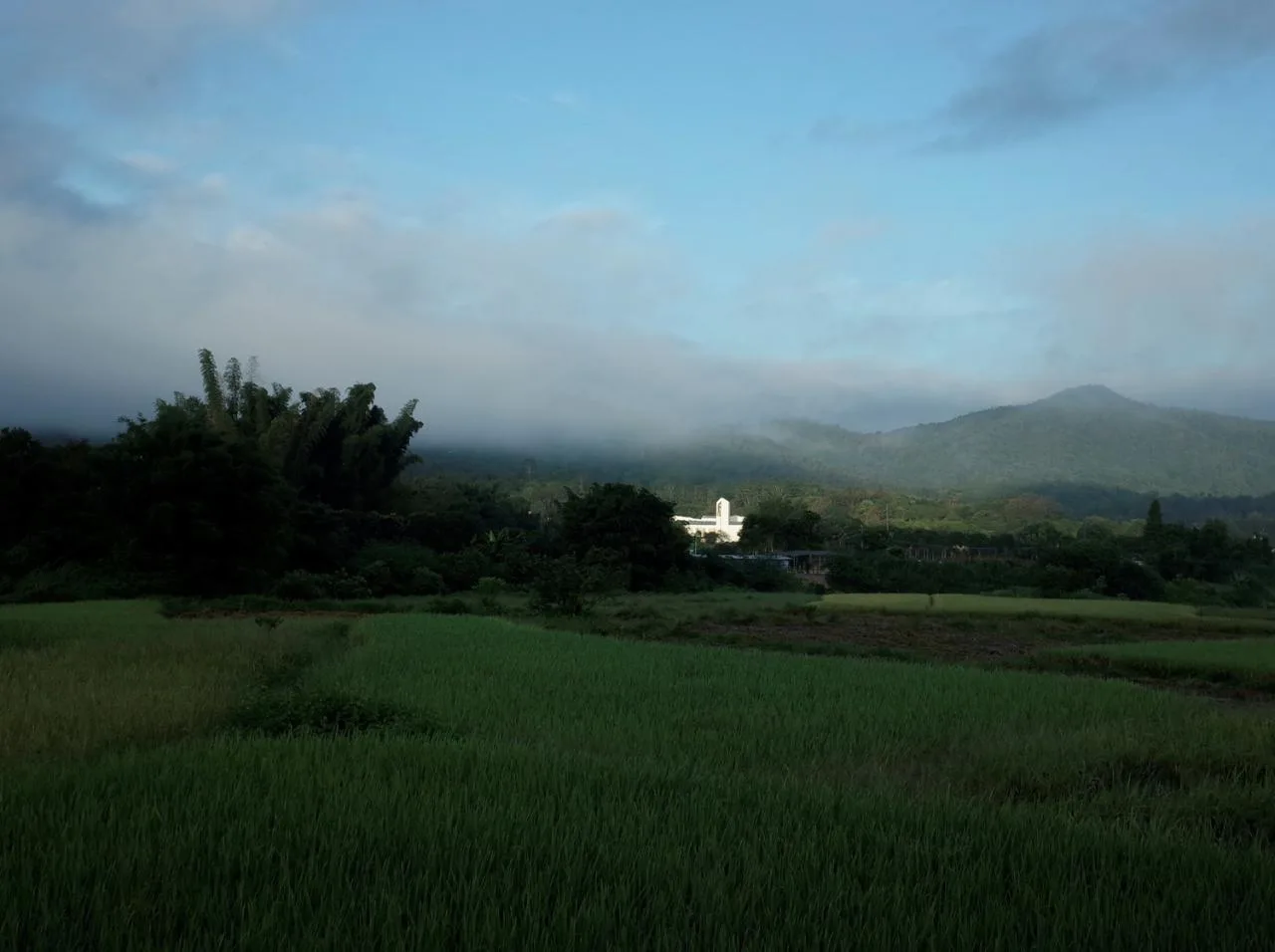
A unique cloud drifts over the fields.
Our design concept is “modern settlements on the fields,” an abstract, contemporary interpretation deeply rooted in traditional Hakka culture. It aims to create a spiritual sanctuary for modern individuals to reconnect with rural life. The structure functions as a single enclosed building, yet its forms resemble a cluster of village houses. This fusion of homestay residential style and rural architectural imagery enriches the living experience and symbolizes the spirit of Hakka culture.
Architectural Appearance – House Clusters
Our “settlement” mimics a cluster of houses scattered across the field. Similar to village residents’ homes, these clusters vary in distance and size, freely combining to form the unique architectural fabric of a village.
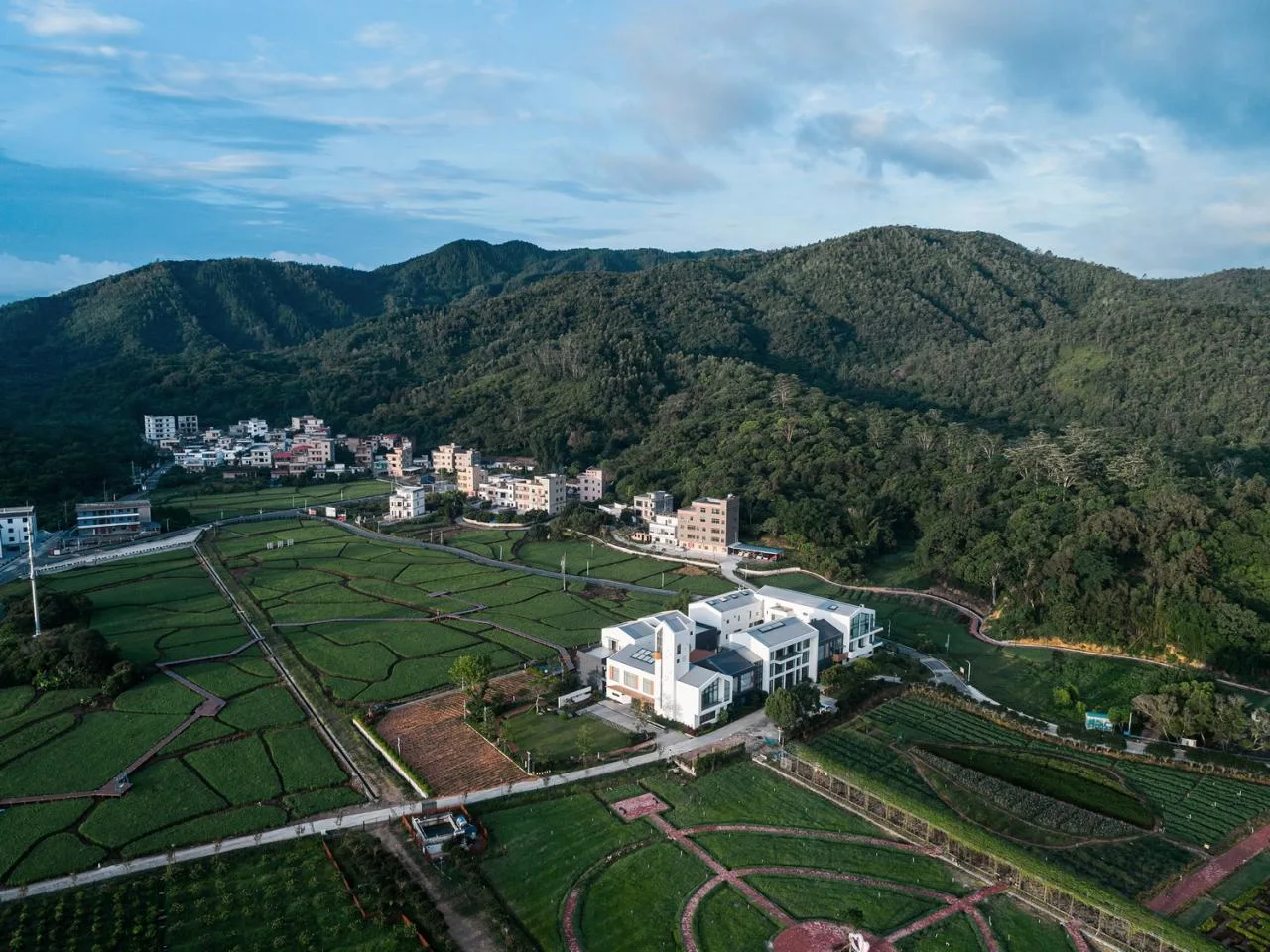
△ A cluster of houses that maintains the village’s scale and texture.
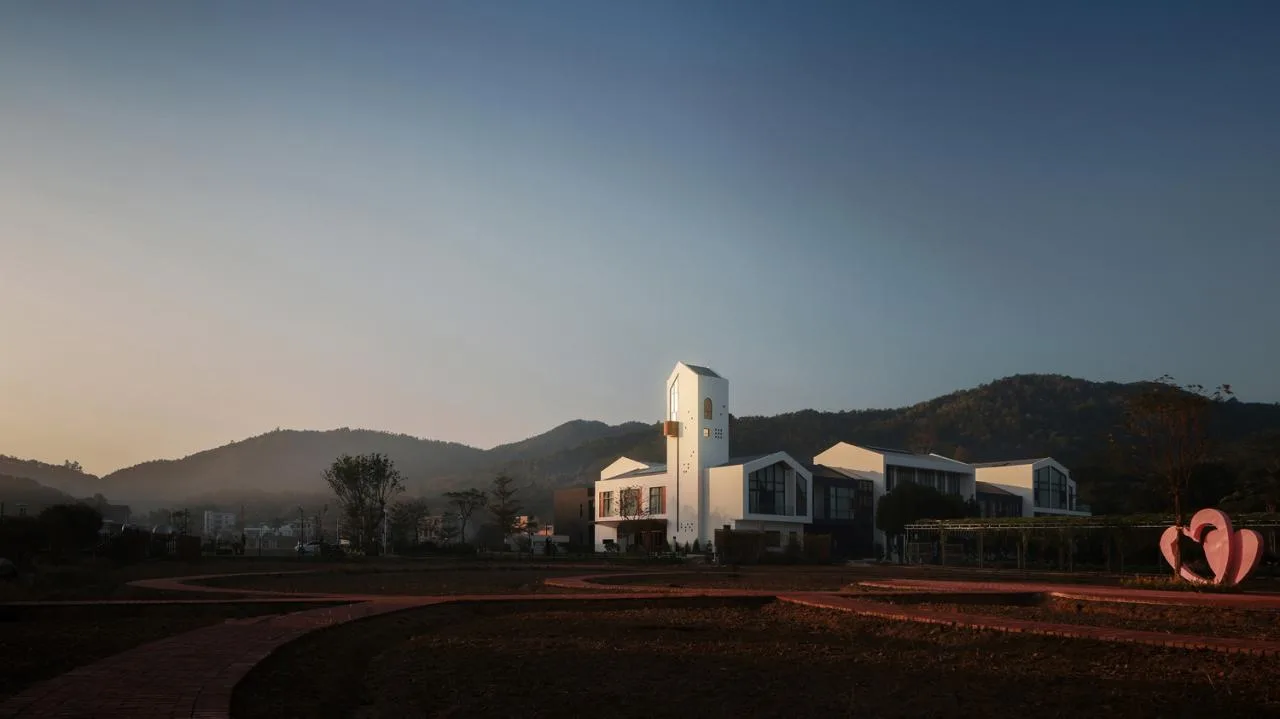
Contemporary walled houses bathed in morning light.
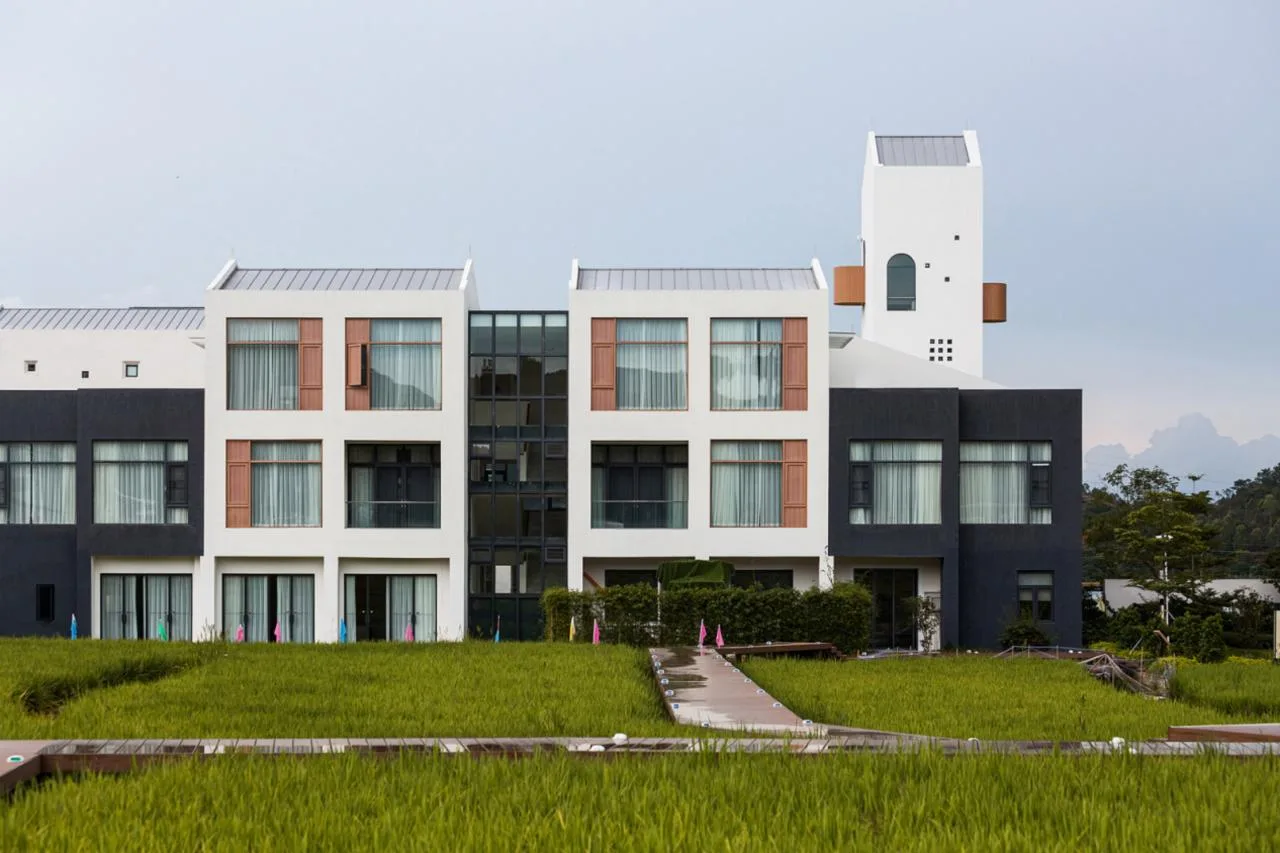
A white house with staggered roof heights.
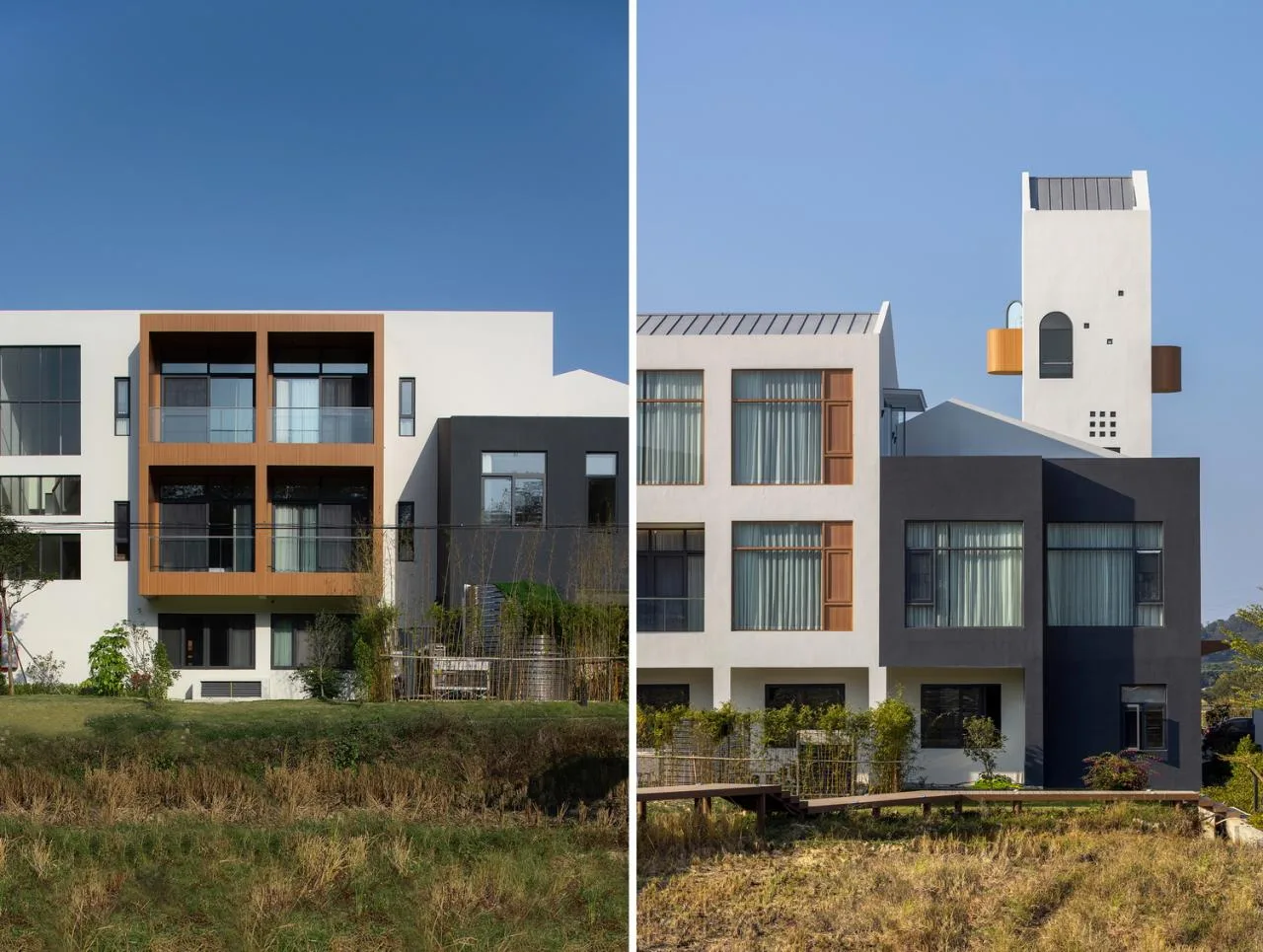
△ Local facade design.
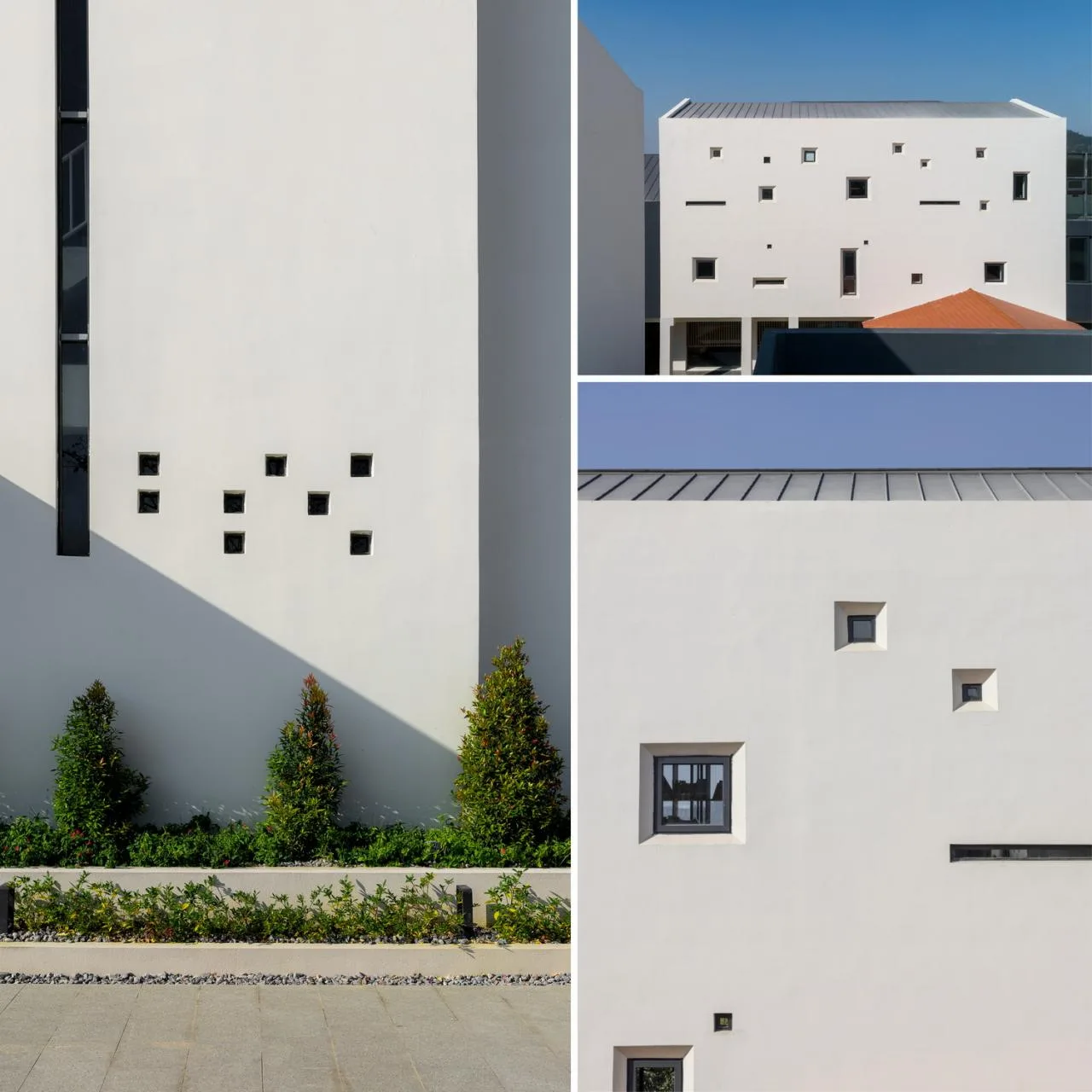
△ Point-style details and vertically narrow windows create dynamic light and shadow effects.
Core Space – The Stage
In traditional Hakka walled houses, the ancestral hall occupies the central space and serves various functions including clan worship, folk rituals, and education. It acts as the heart of Hakka cultural exchange. Inspired by this, we designed a central “stage” space between the front and rear courtyards. This transparent north-south space hosts diverse public cultural activities. Surrounded by gray and white buildings, the stage features a red tile roof symbolizing traditional Hakka temple culture, representing a modern continuation of the community’s spiritual core.
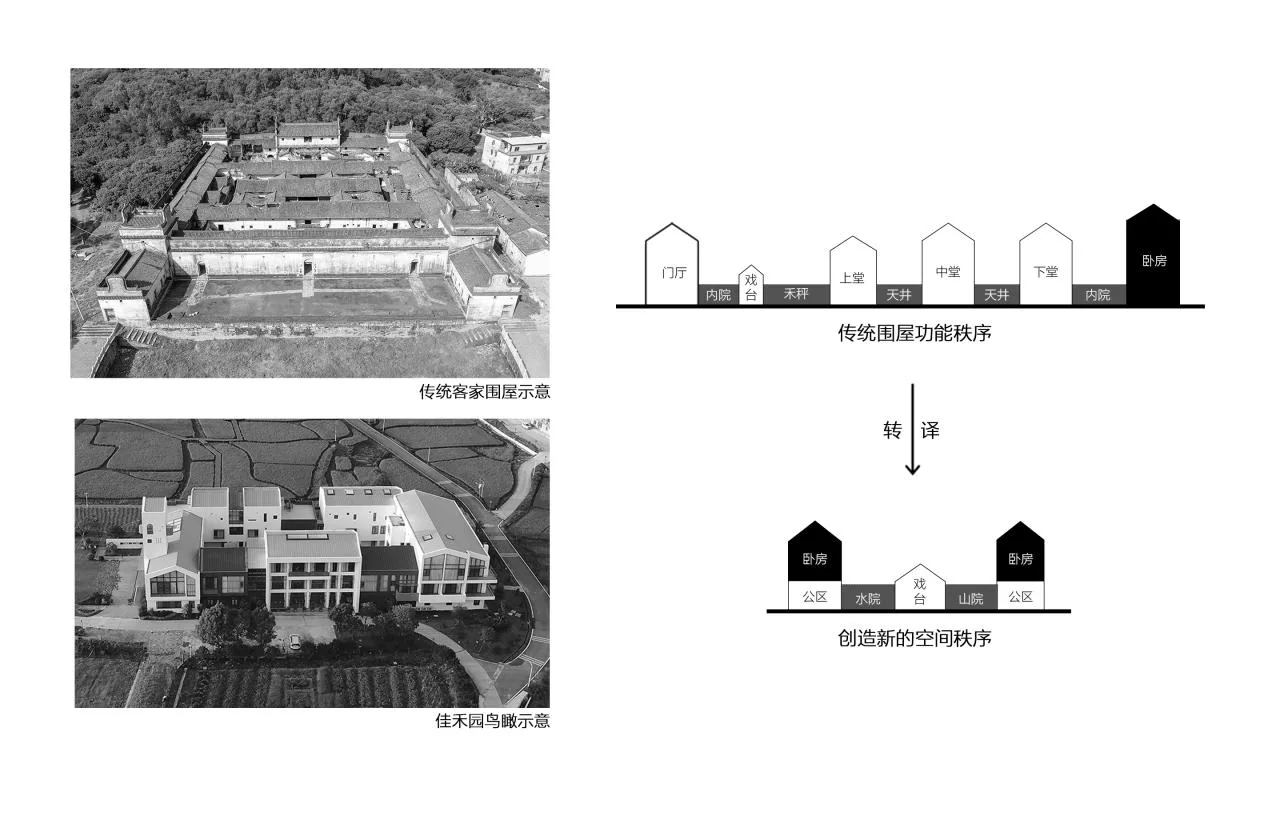
Interpretation of space in Hakka walled houses.
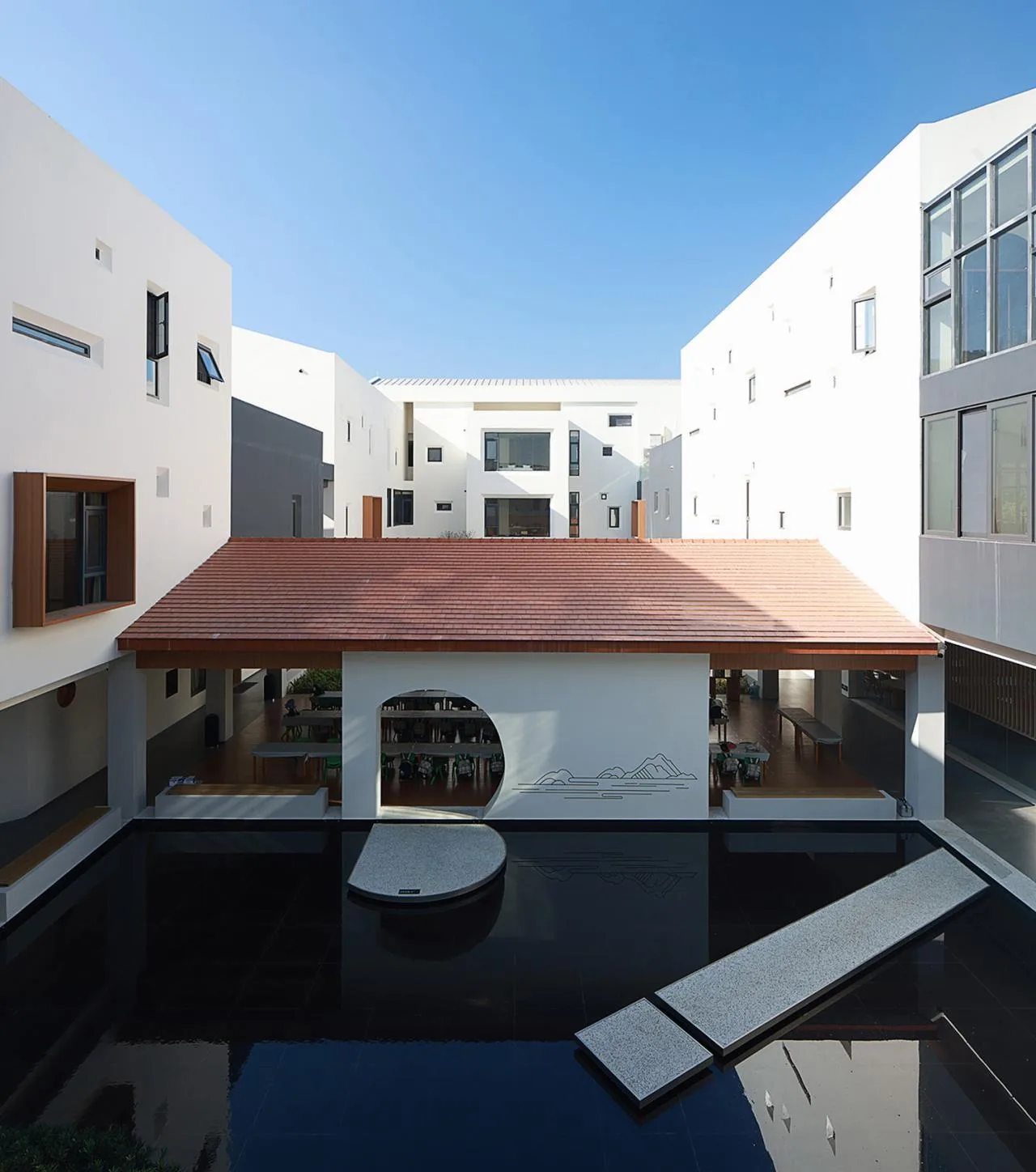
The red-tiled stage situated at the core of the atrium.
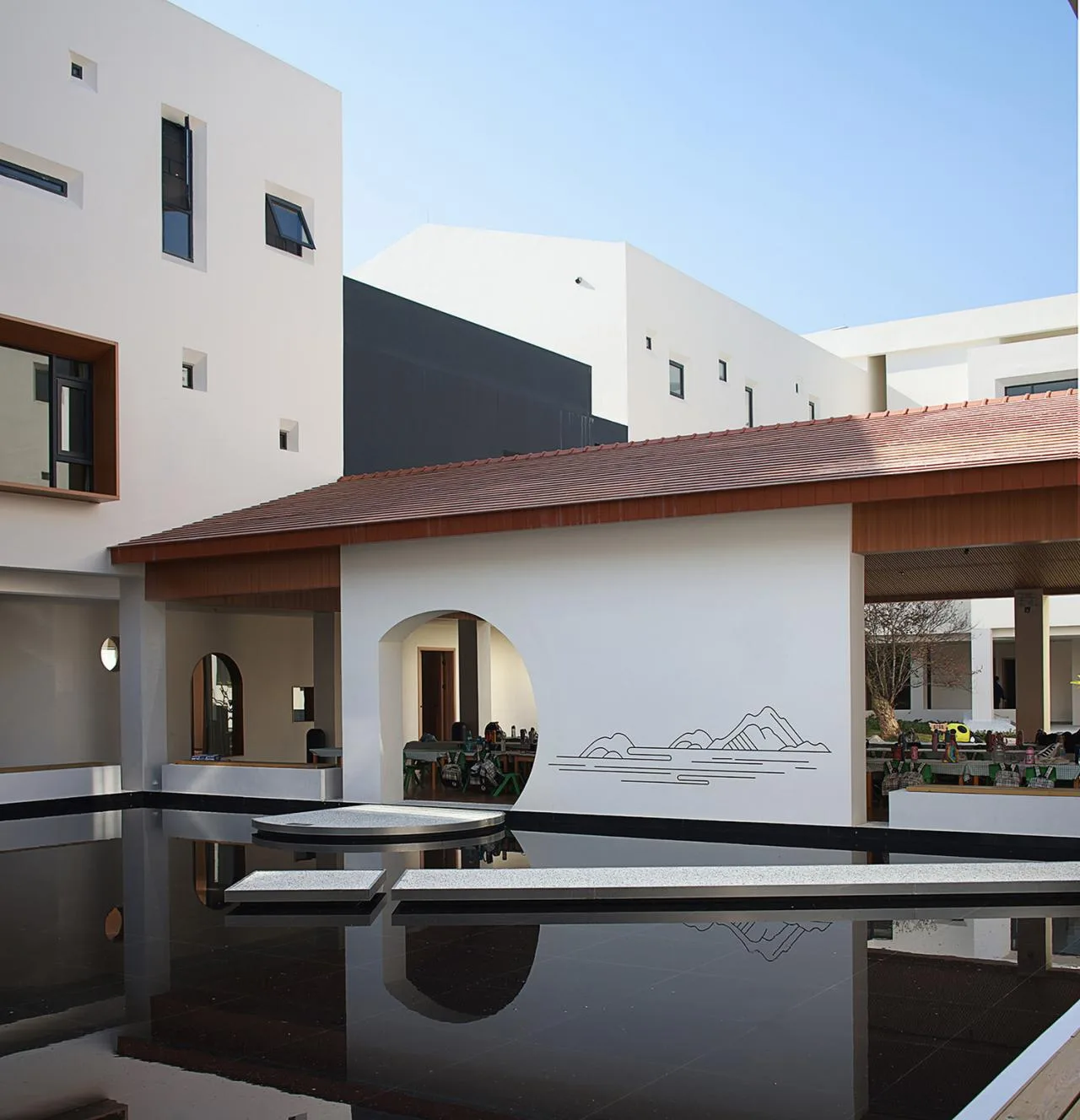
The embankment bridge and moon gate face each other without a direct connection.
Courtyards – Water Courtyard and Mountain Courtyard
Courtyards, enclosed by traditional residential buildings, offer a sheltered environment distinct from the outside world. Our settlement features two enclosed courtyards with contrasting atmospheres: the water courtyard and the mountain courtyard.
Upon entering through the main gate and passing the lobby, visitors first encounter the Water Garden. The trees surrounding the pond introduce a sense of life amidst tranquility, engaging in a subtle dialogue with broken bridges, walls, and platforms. The scene softly captures the ever-changing clouds and shadows.
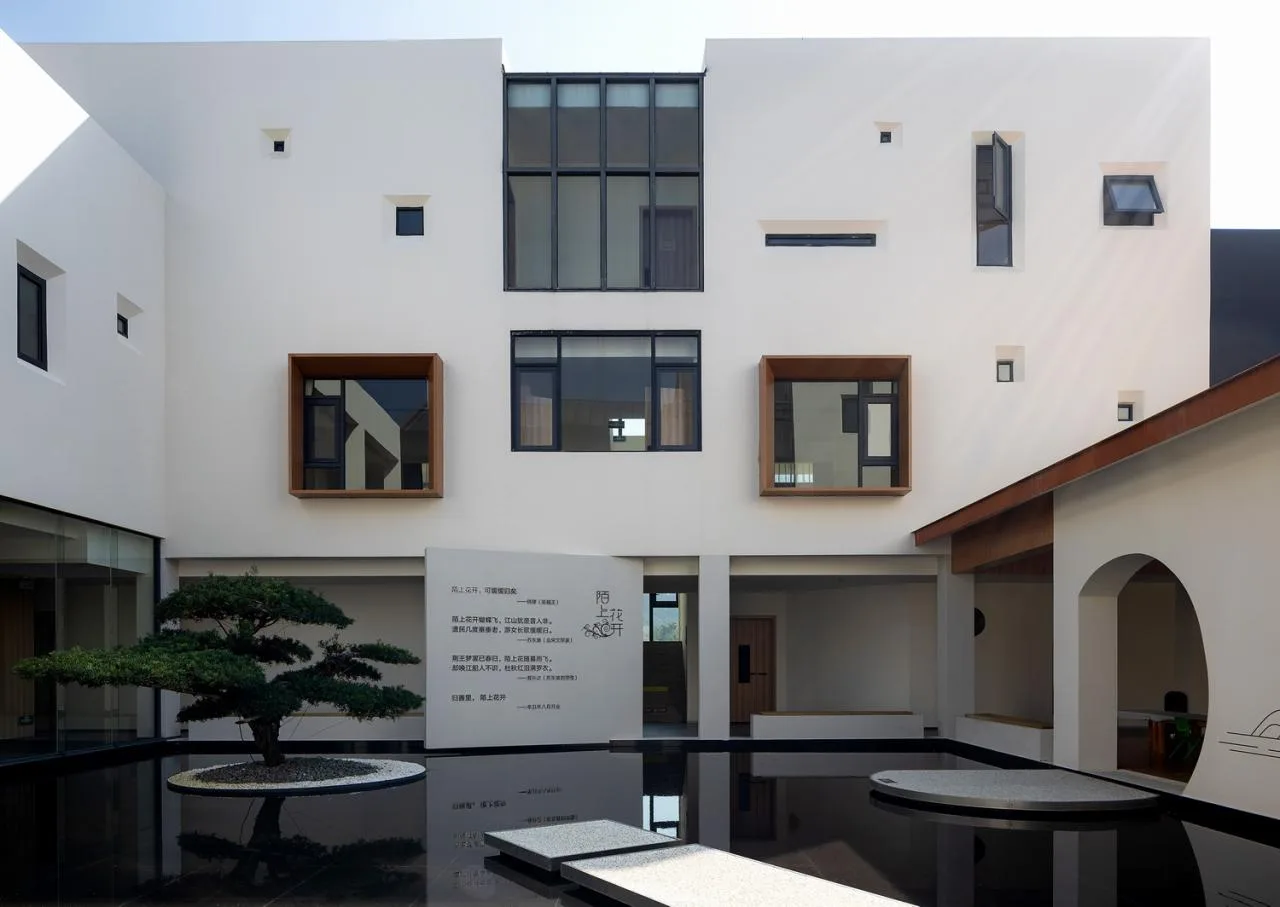
△ Shuiyuan continues traditional architectural elements such as embankment bridges, boardwalks, shadow walls, and moon gates.
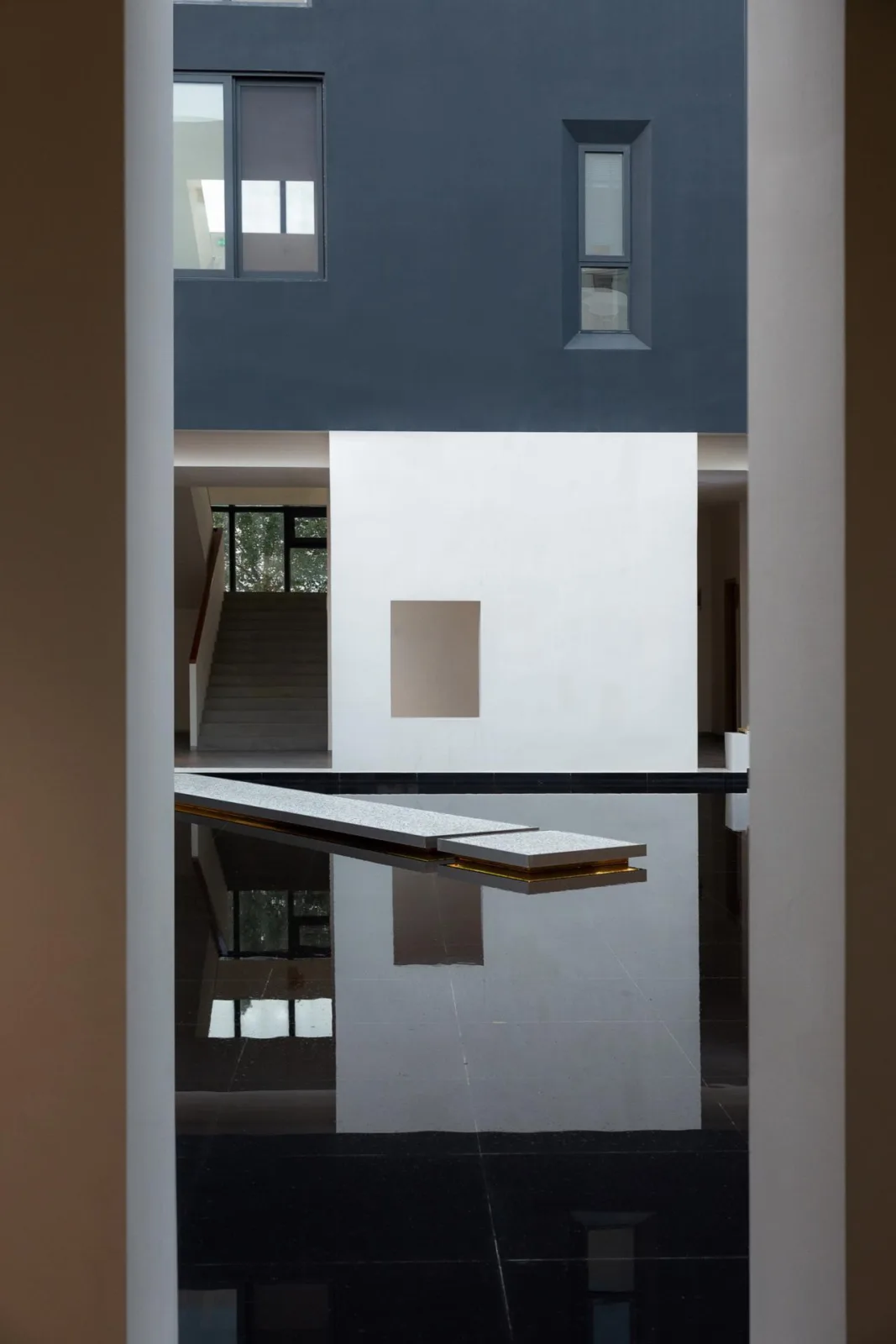
△ Water courtyard nestled between the spaces.
The mountain courtyard is enclosed by the stage, restaurant, and children’s activity room, serving as the hub of public activities. Inspired by “fields, distant mountains, and courtyards,” gravel paths, grassy hills, and small pavilions symbolize mountains, rivers, lakes, and boats. This design bridges the exterior landscape with the inner courtyard, inviting children to explore and play freely.
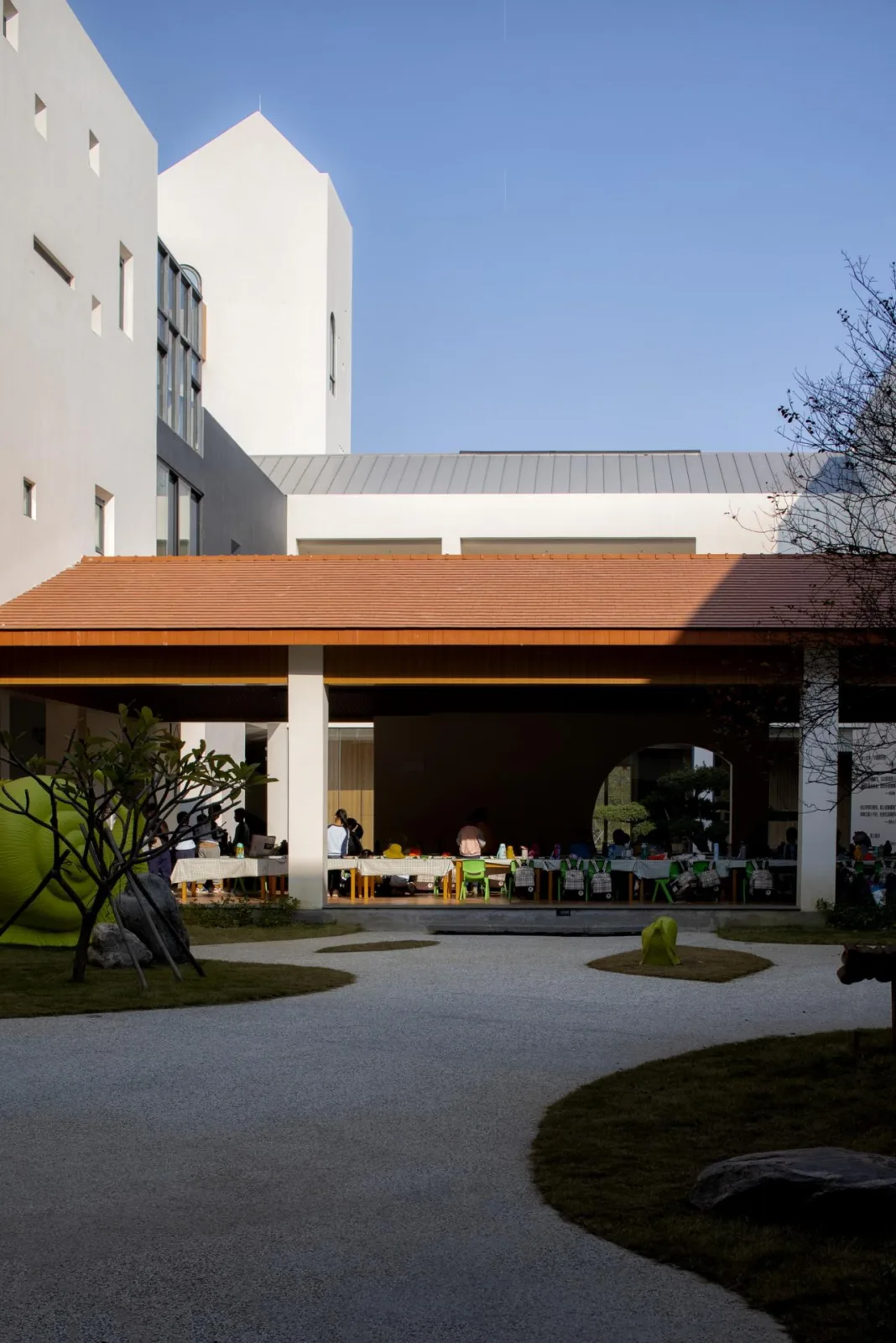
△ Shanyuan (Mountain courtyard)
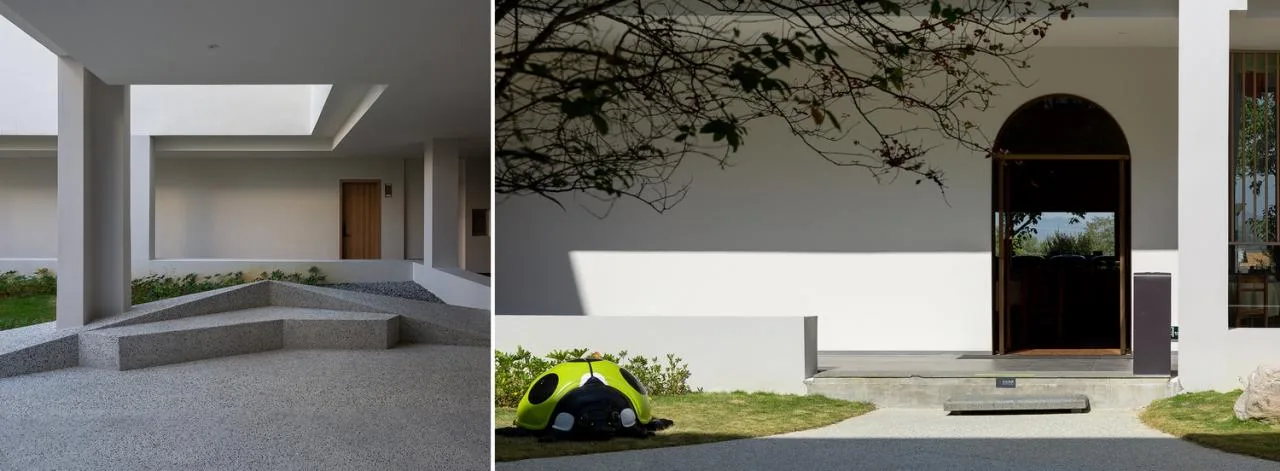
△ Terraced gathering spots and mountain-like structures create engaging spaces.
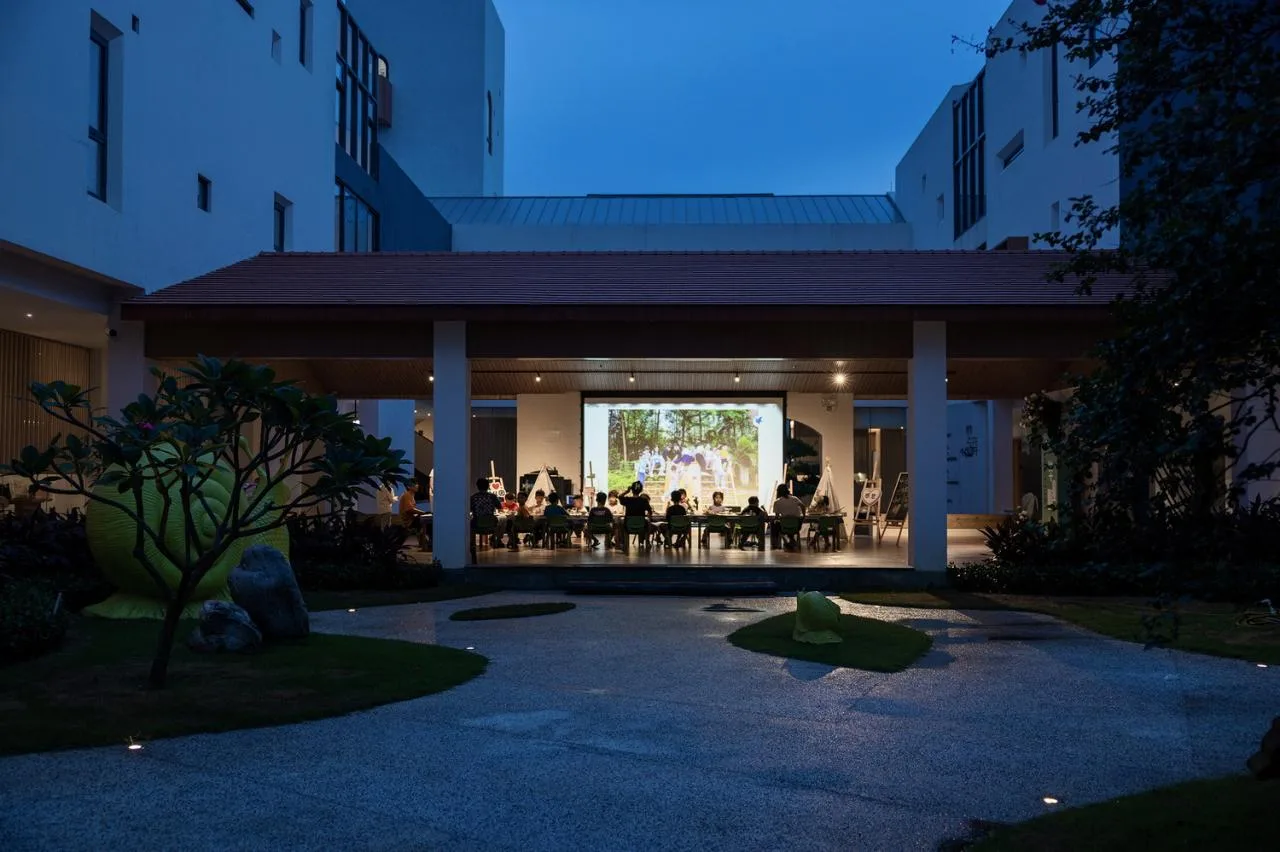
Preserving the traditional central function of the stage.
Tower – The Spiritual Lighthouse
Traditional villages often feature entrance towers that serve multiple purposes: providing a vantage point to survey the countryside, signaling to the village, and embodying the village’s spiritual ethos through architecture. Inspired by this, the homestay’s entrance includes a tower overlooking fields, the reservoir, and the village. This tower stands as a symbol marking the “settlement’s” entrance and is a vital element in the site’s architectural identity.
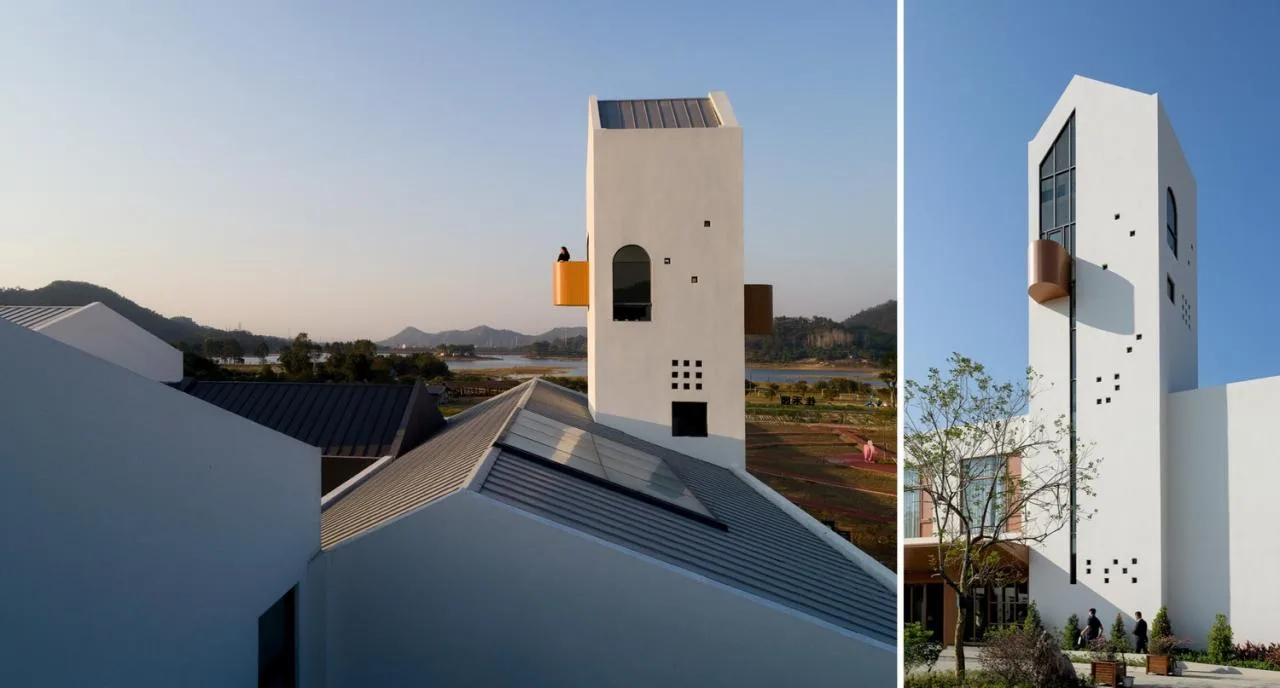
△ Tower
Functional Flow – Combining and Separating
The building’s overall layout continues the Hakka tradition of enclosed house design, preserving the “three halls and two horizontals” ancestral hall form. The enclosure is segmented, reflecting the structure of local villages and homes. Our approach balances tradition and modernity by simplifying complex forms and adapting to contemporary needs. Rather than traditional corridors connecting rooms, the design breaks up the enclosure into more independent suites, better suited for traveling families.
The building features distinct but interconnected flow lines, creating an experience akin to wandering through a mountain village. This unique layout allows guests to explore the space freely while maintaining a sense of connection.
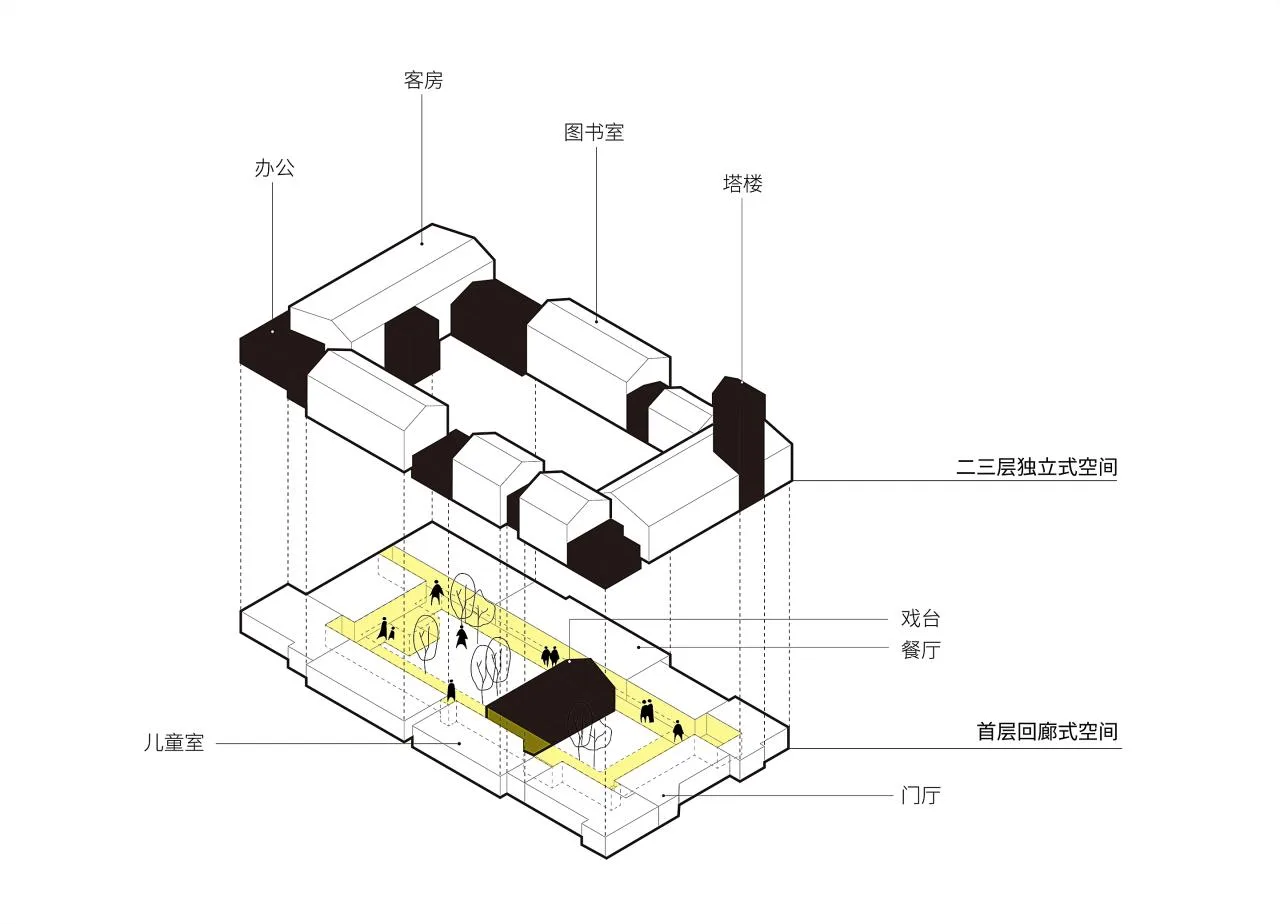
△ Architectural composition
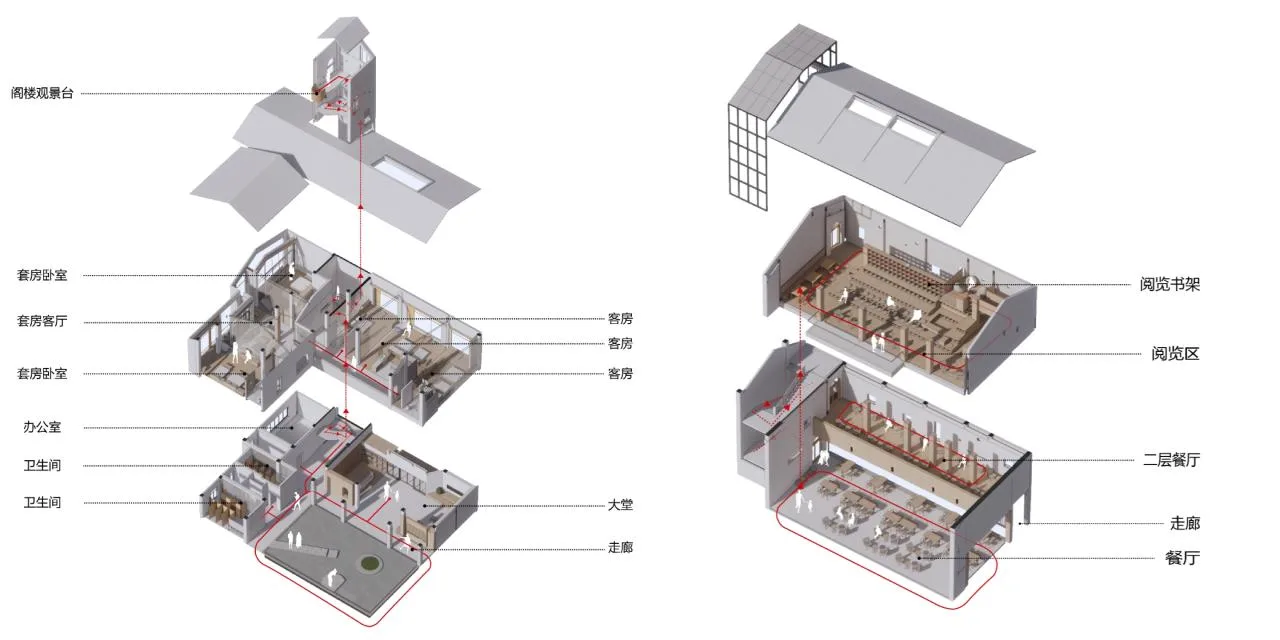
Analysis of flow lines within the tower lobby, restaurant, and library.
A gentle breeze sweeps over the rice fields, while sunlight filters through blue skies and white clouds, casting dappled shadows over the grassy terrain. A key design challenge was integrating water, light, and mountain scenery naturally into the building’s interior.
The main public spaces are aligned north-south to maximize views of the rice fields and reservoir. Expansive doorways and windows blur the lines between indoors and outdoors, allowing fresh air and the scent of grass to permeate freely. Wooden materials are extensively used throughout, creating a warm, inviting environment that unifies the interior and exterior.
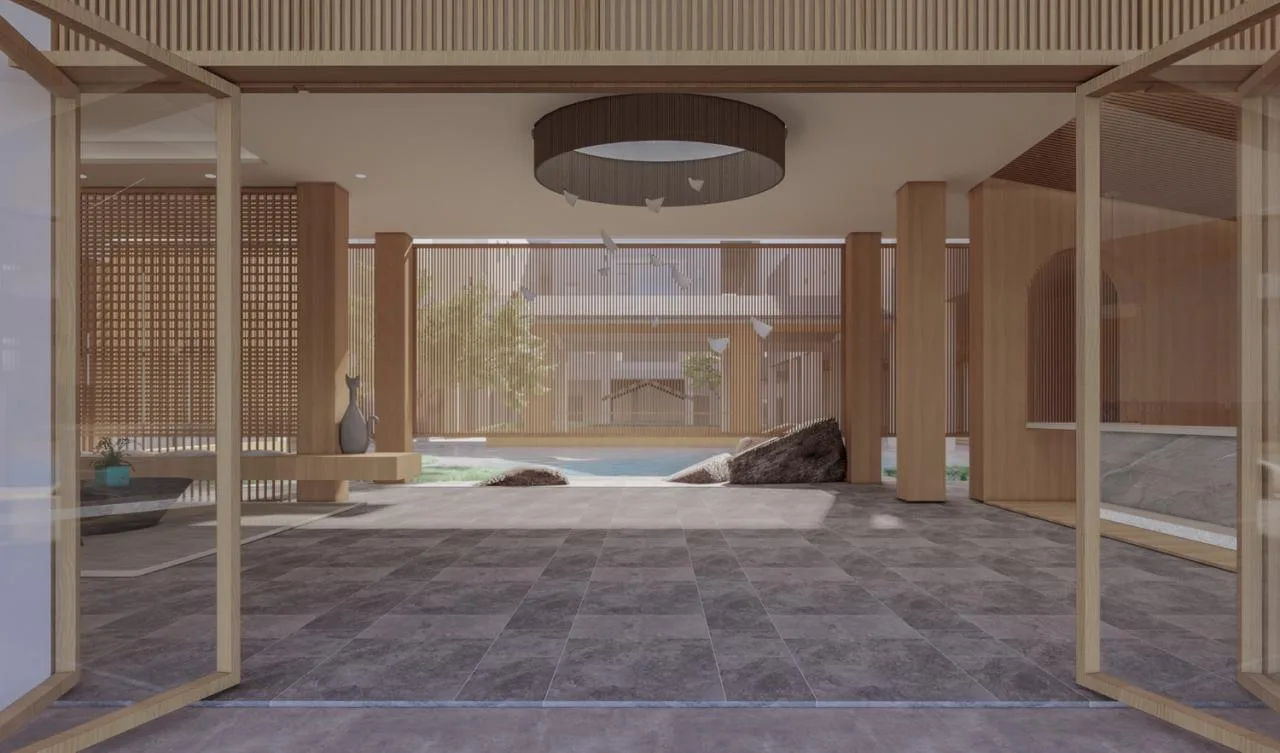
△ Lobby designed to reconnect with nature, featuring simplicity and rustic charm, reflecting Guishan Village’s cultural essence.
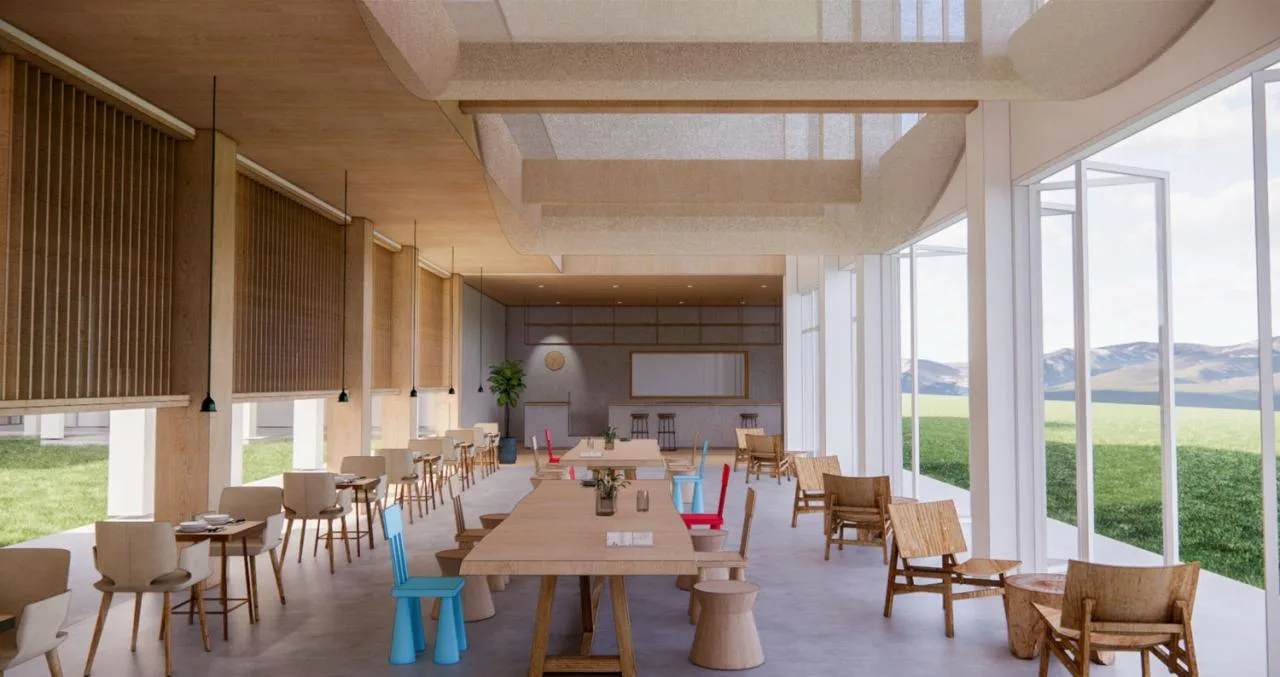
The restaurant features a double-height ceiling with large doors and windows on both sides, creating a bright, airy space.
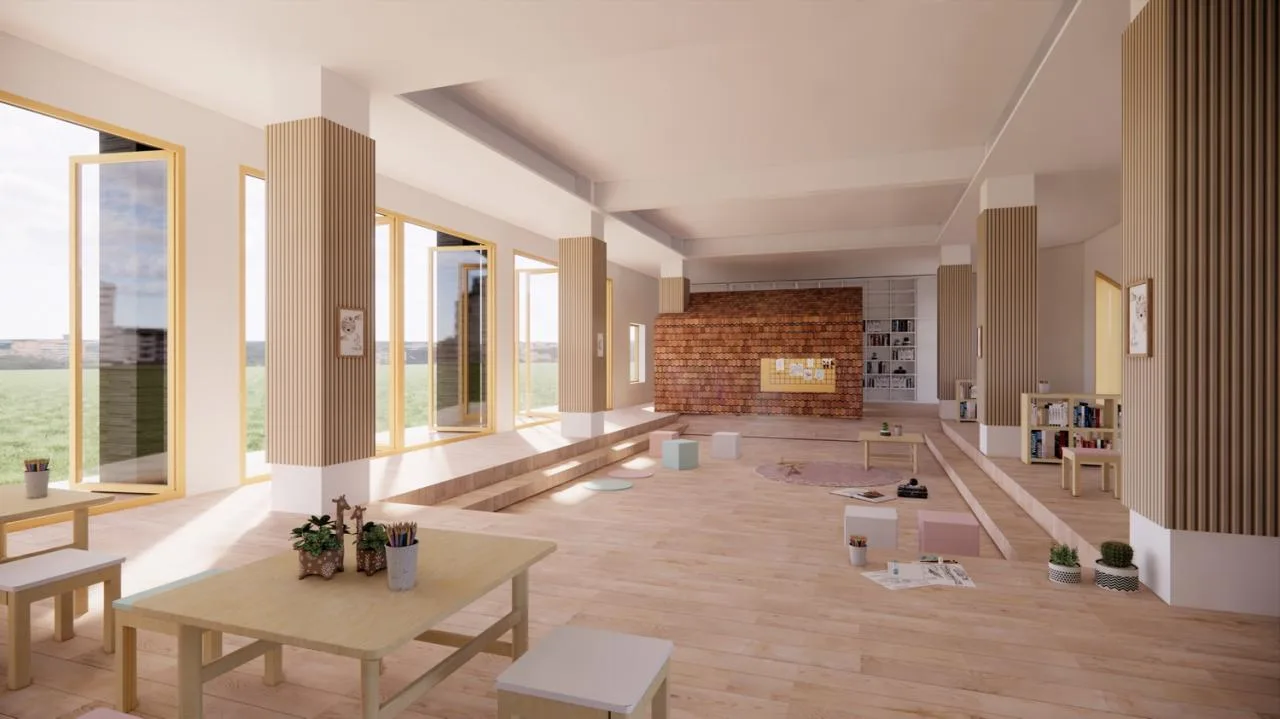
△ Children’s room designed to seamlessly integrate indoor and outdoor spaces, fostering a close connection with nature.
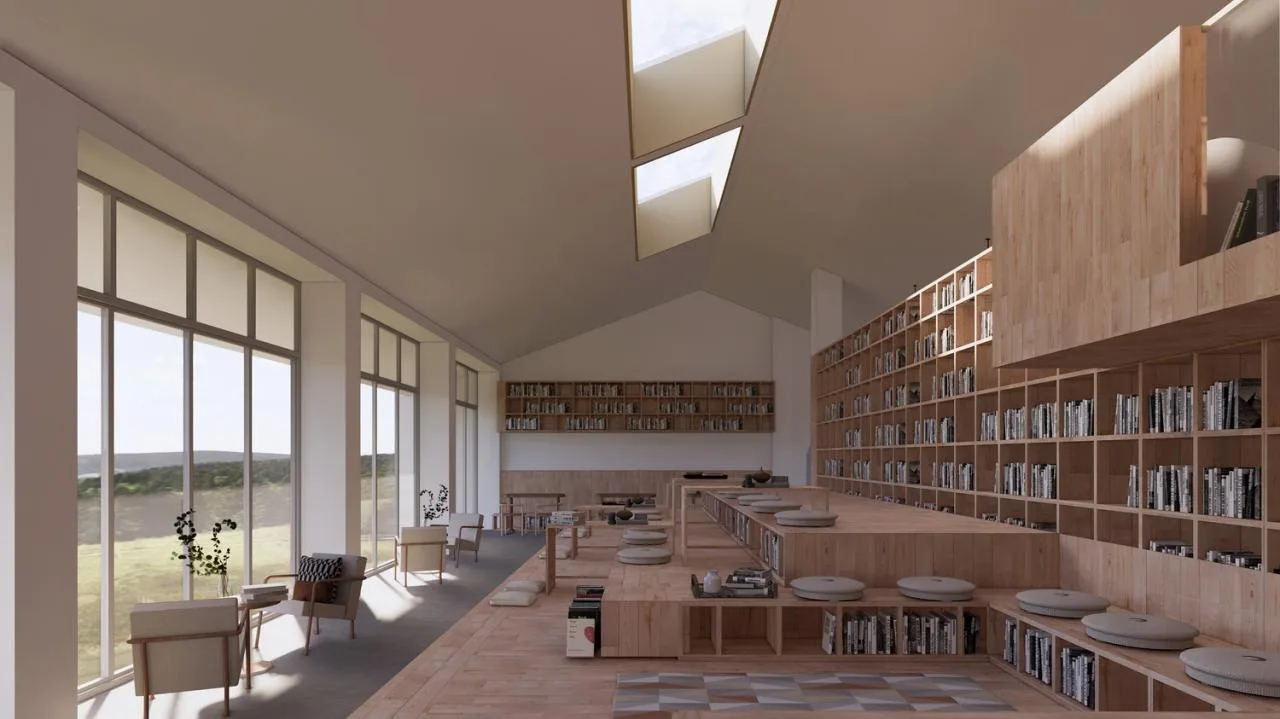
The reading area, located on the third floor and overlooking the reservoir, offers a private space for reflection, observation, and meditation.
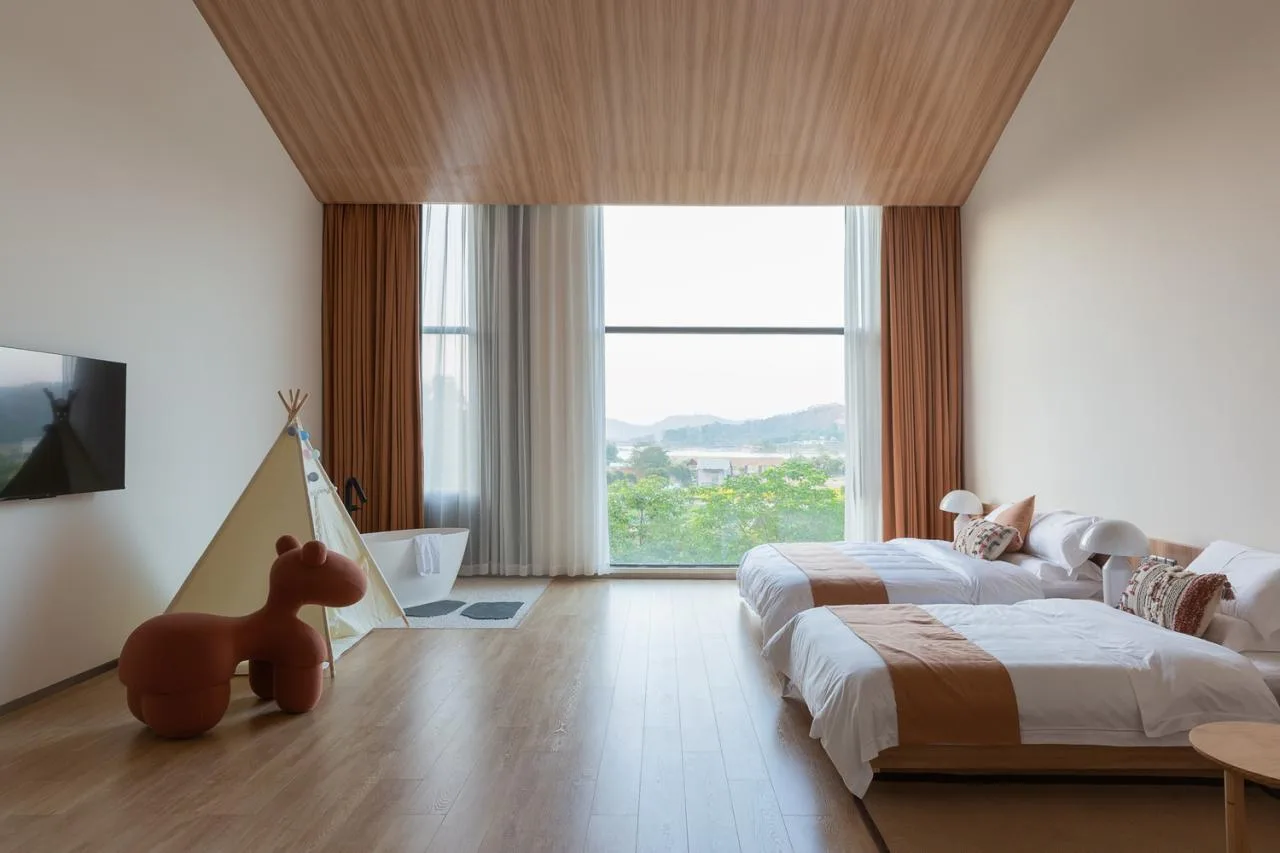
△ Guest bedroom with large windows for natural light and panoramic views of surrounding fields.
Project Drawings
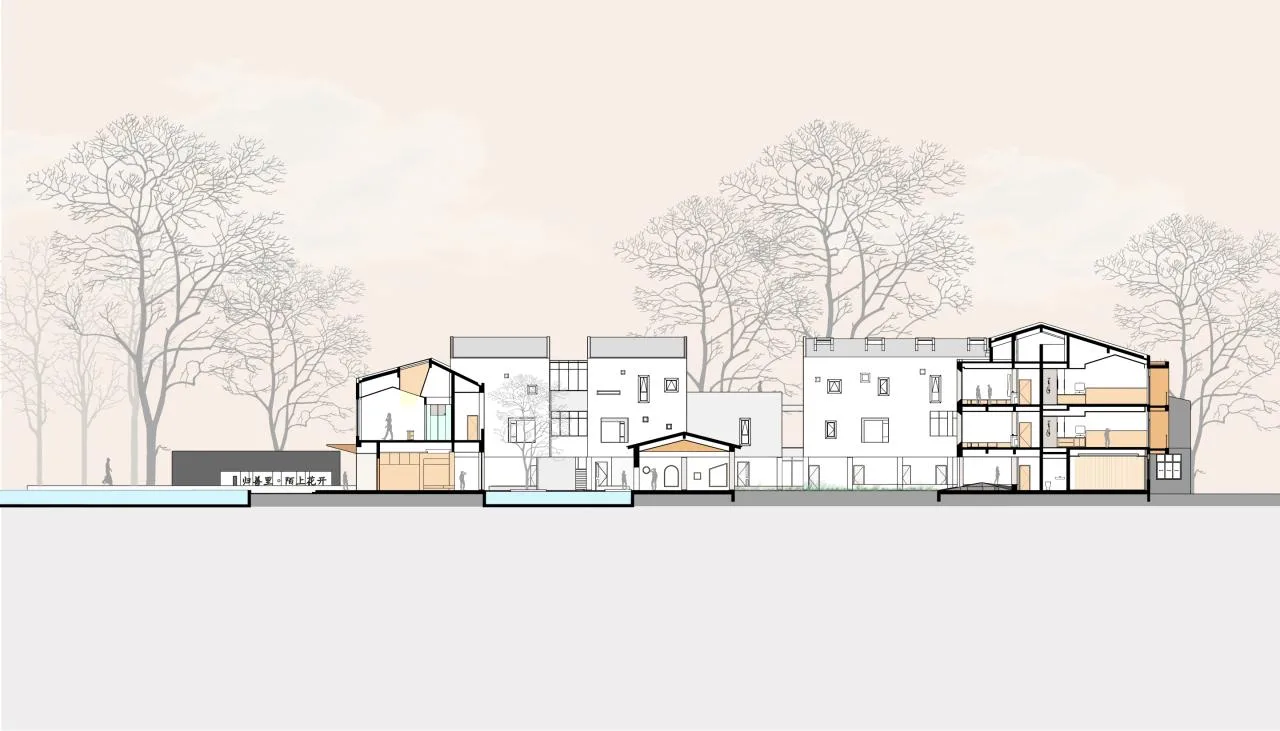
△ Section diagram.
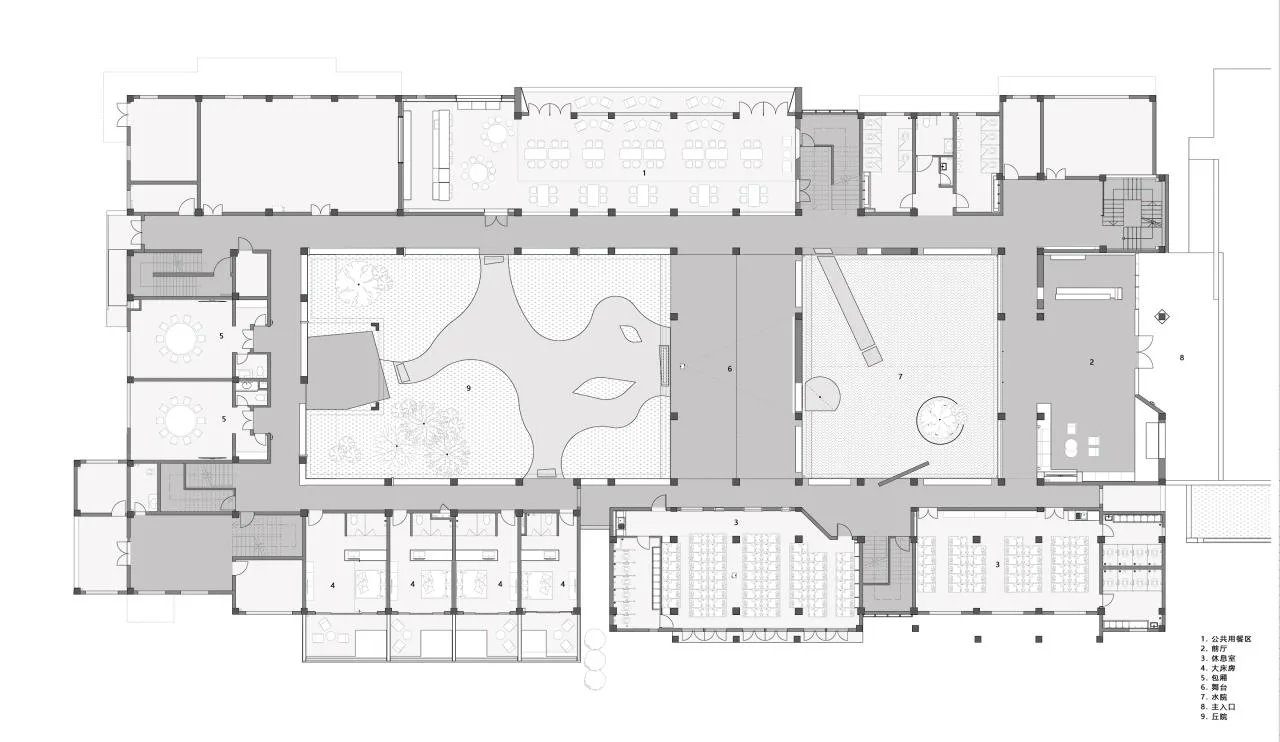
First floor overall plan.
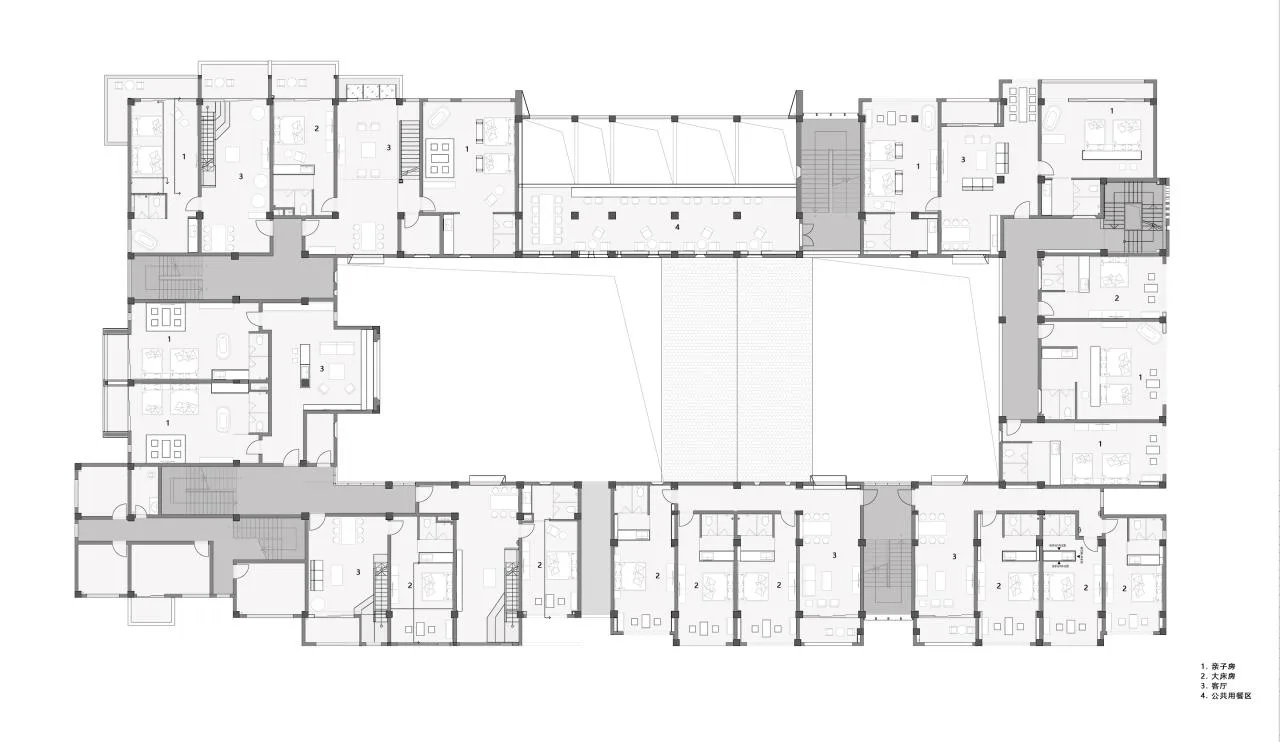
△ Second floor overall plan.
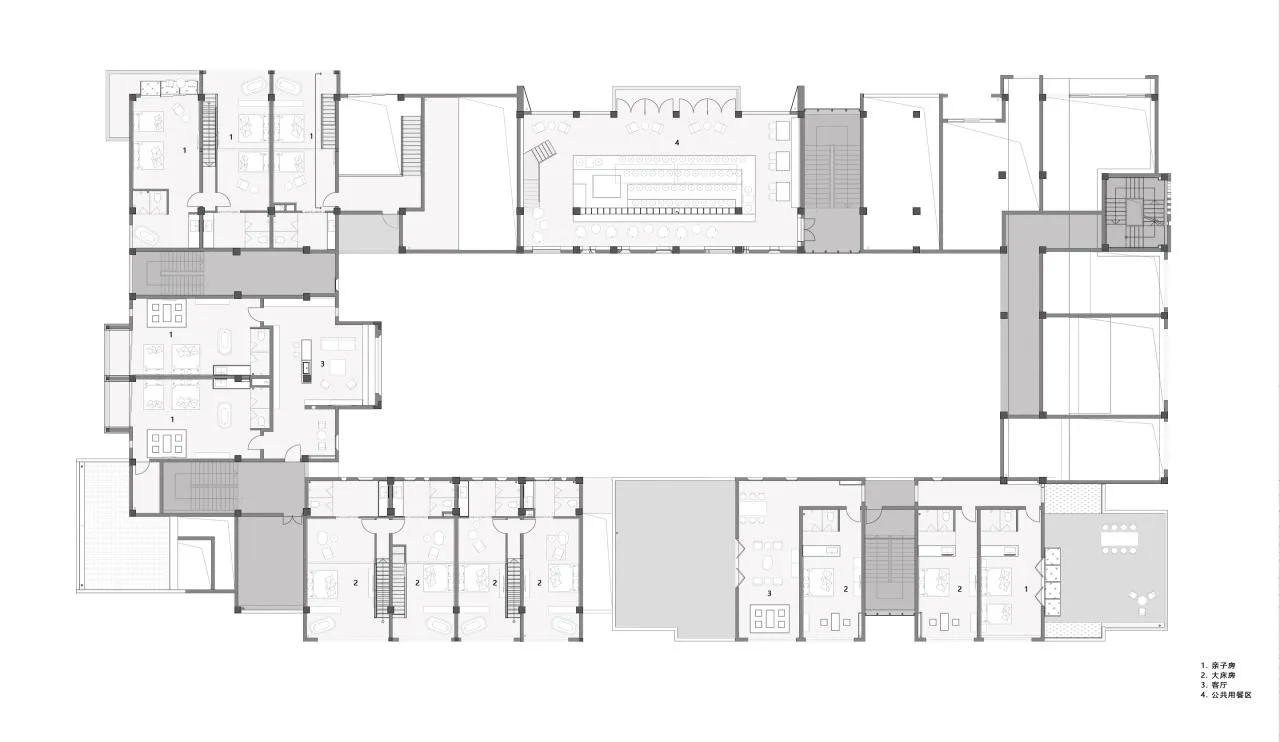
△ Third floor overall plan.
Project Information
Project Name: Jiaheyuan Nature Education Camp
Designer: Guangzhou Outer City Architectural Design Co., Ltd
Design Team: Chen Jieqi, Lin Wangming, Shen Yingying, Huang Yiyuan, Chen Zhenhui, Chen Zhiyi, Weng Yanhua
Photography Copyright: Chao Sheng
Design & Completion Period: November 2020 – September 2021
Location: Liangjing Town, Huiyang District, Huizhou City, Guangzhou Province
Project Area: 5,000 square meters















Must log in before commenting!
Sign Up