
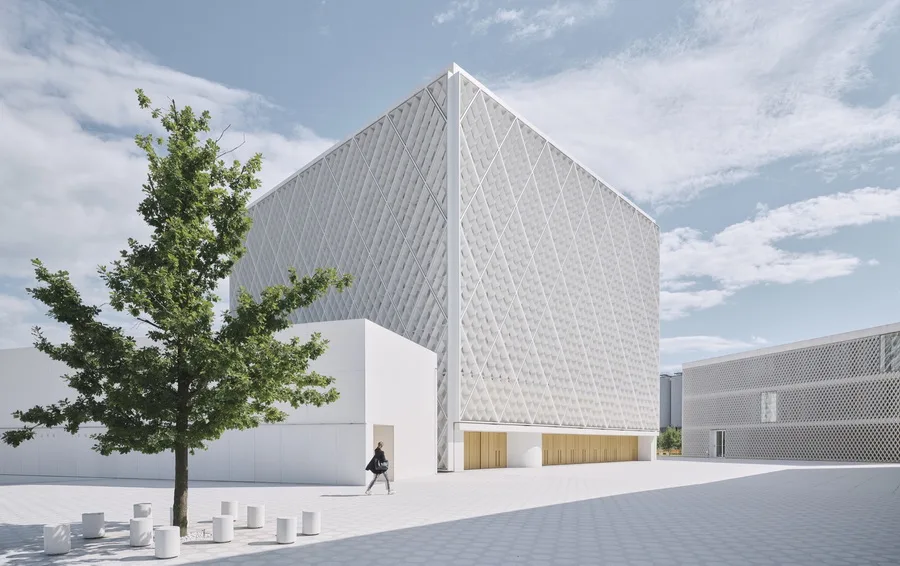
The defining characteristic of the new site for the Islamic Religious and Cultural Center is its lack of conventional “specificity.” Situated in an abandoned, overlooked area near Ljubljana’s city center, the site is in a state of disrepair and uncertainty regarding its future role within the city. Historically, the nearby Sarajevo Mosque, constructed in the 19th century with support from wealthy patrons, formed part of a group of mosques that marked a new chapter in the city’s development. Similarly, this new mosque aims to open a fresh chapter in Ljubljana’s history.
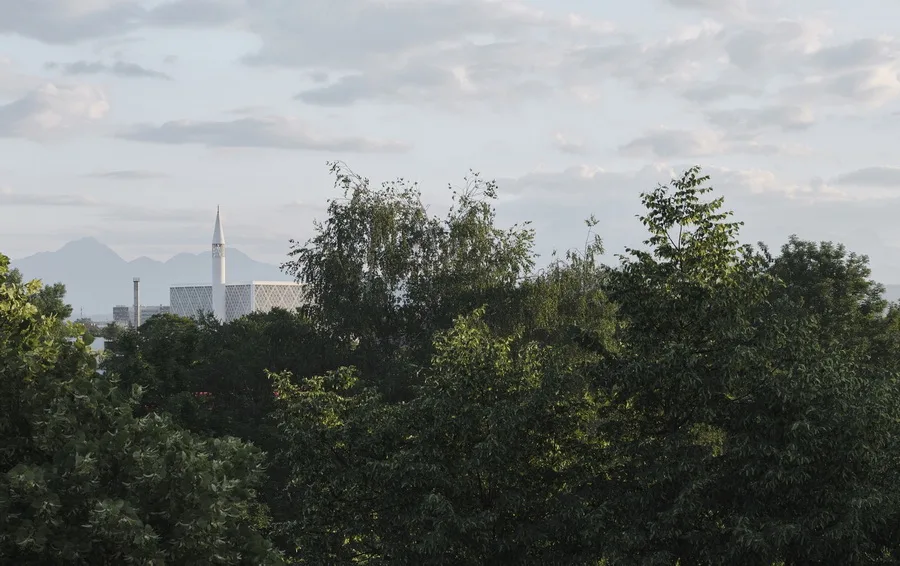
The Islamic Religious and Cultural Center comprises multiple facilities: a religious school, cultural and office spaces, residential apartments for community workers, a restaurant, and Slovenia’s first mosque. All these components are connected by an underground parking garage.
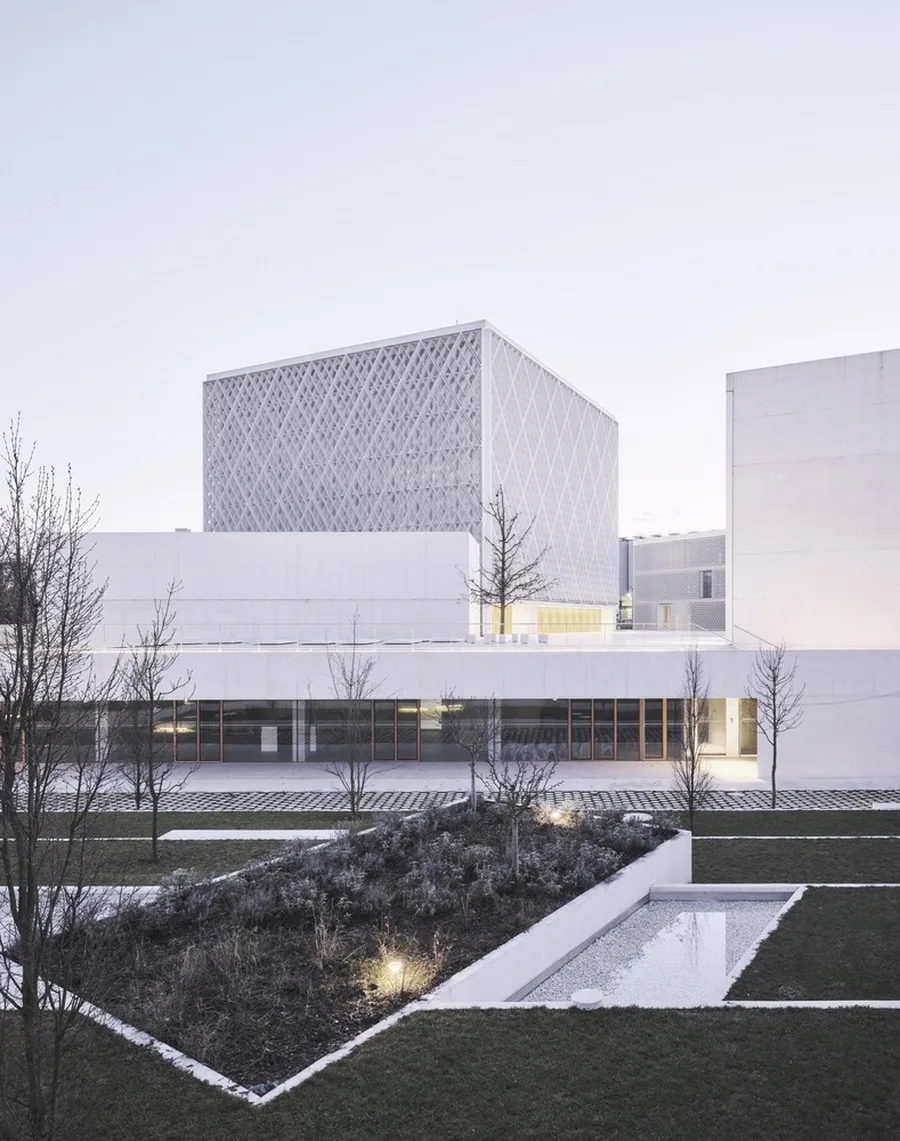
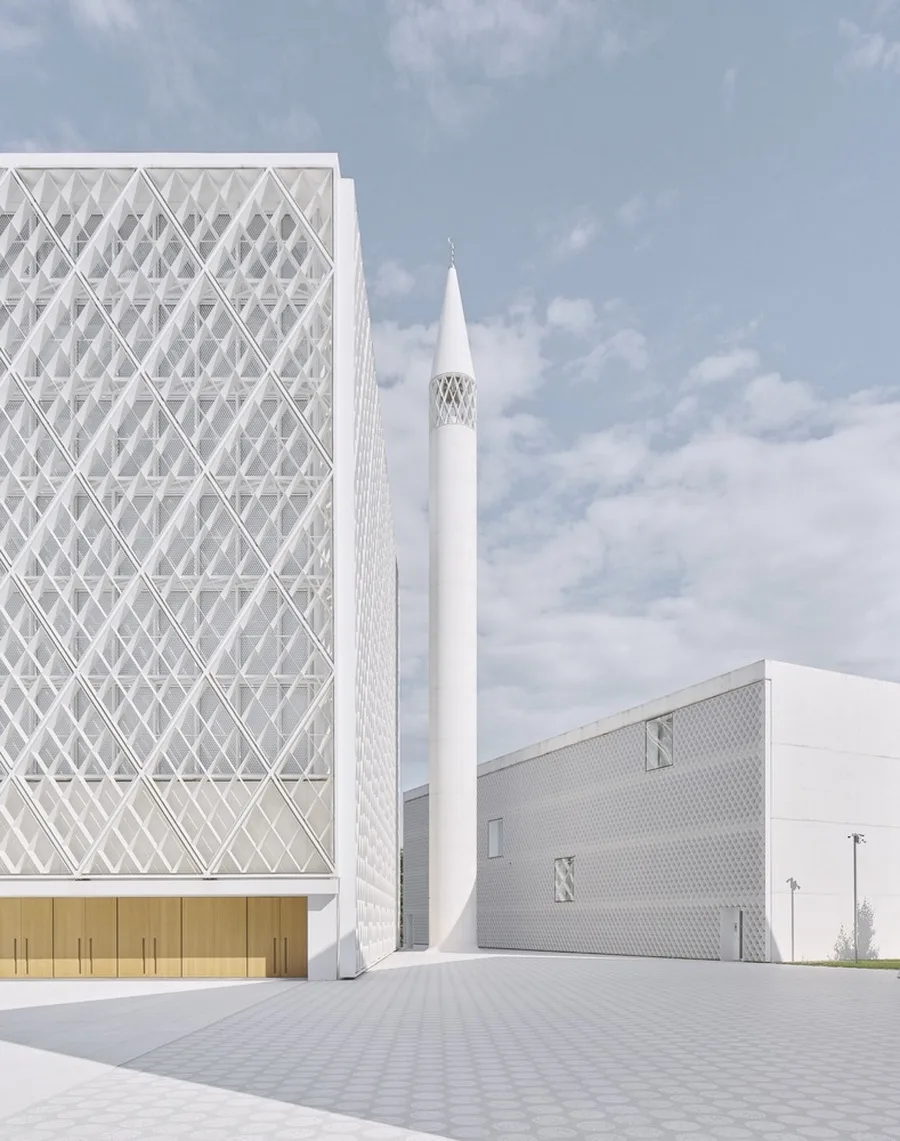
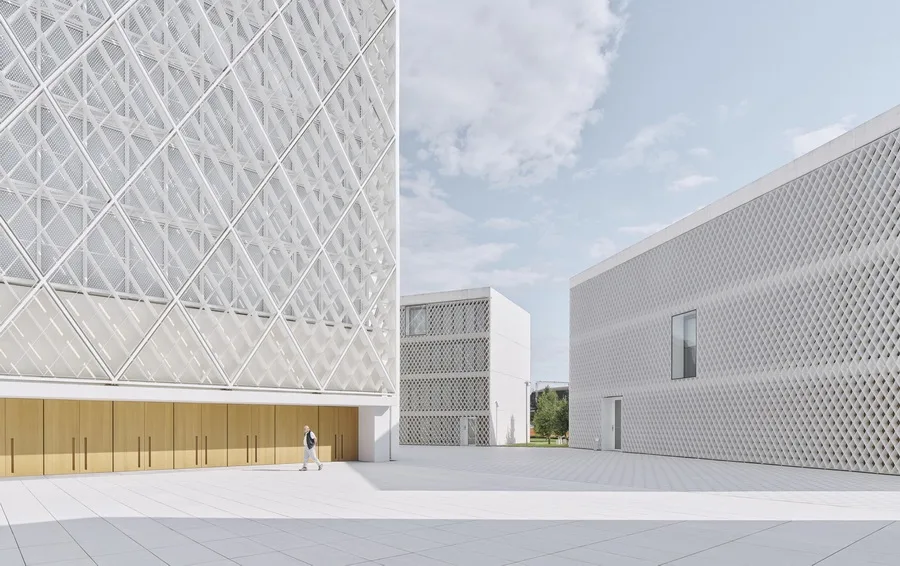
The project’s core building consists of several independent structures arranged around a central plaza and the mosque. Each building features simple geometric forms aligned with its specific function, all facing outward toward the city. Together, they enclose the mosque at the center, creating internal courtyards that visually connect through the gaps between buildings, fostering a sense of community and openness.
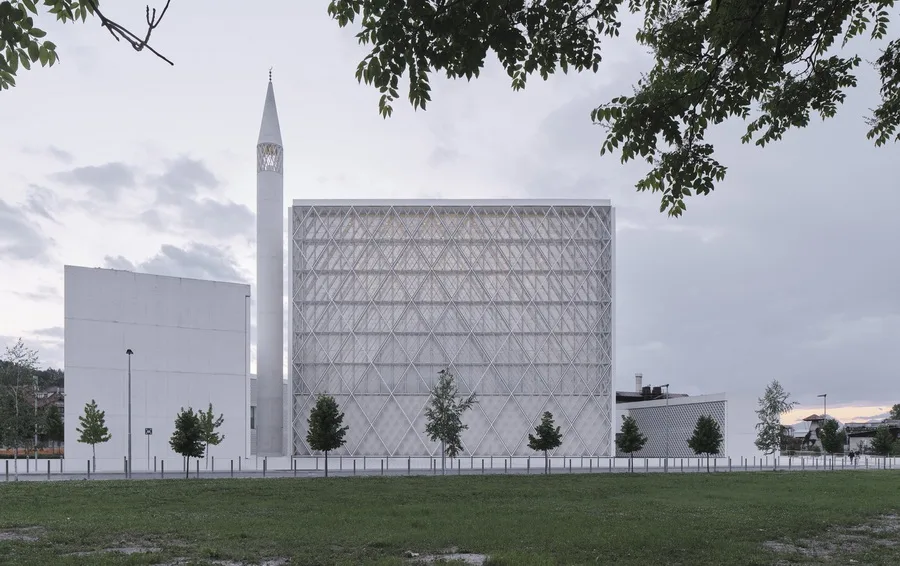
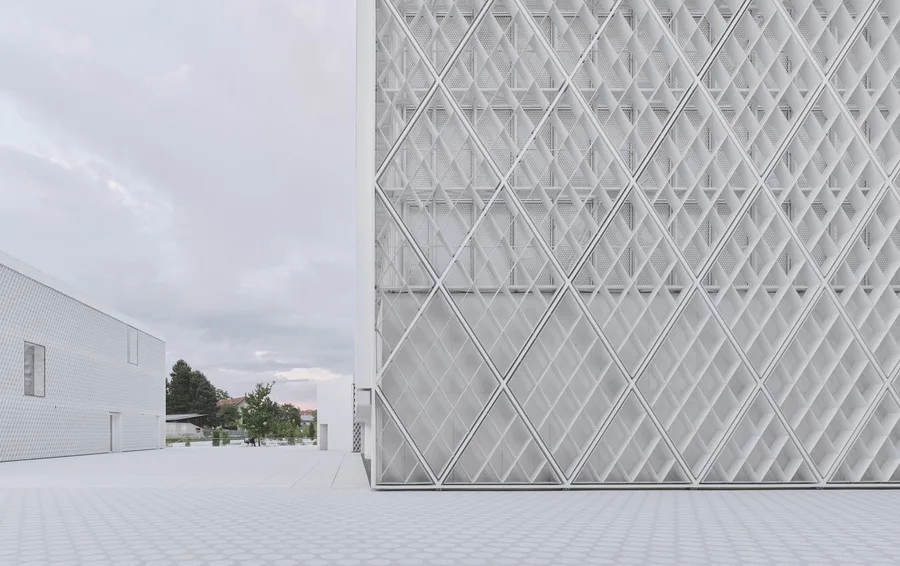
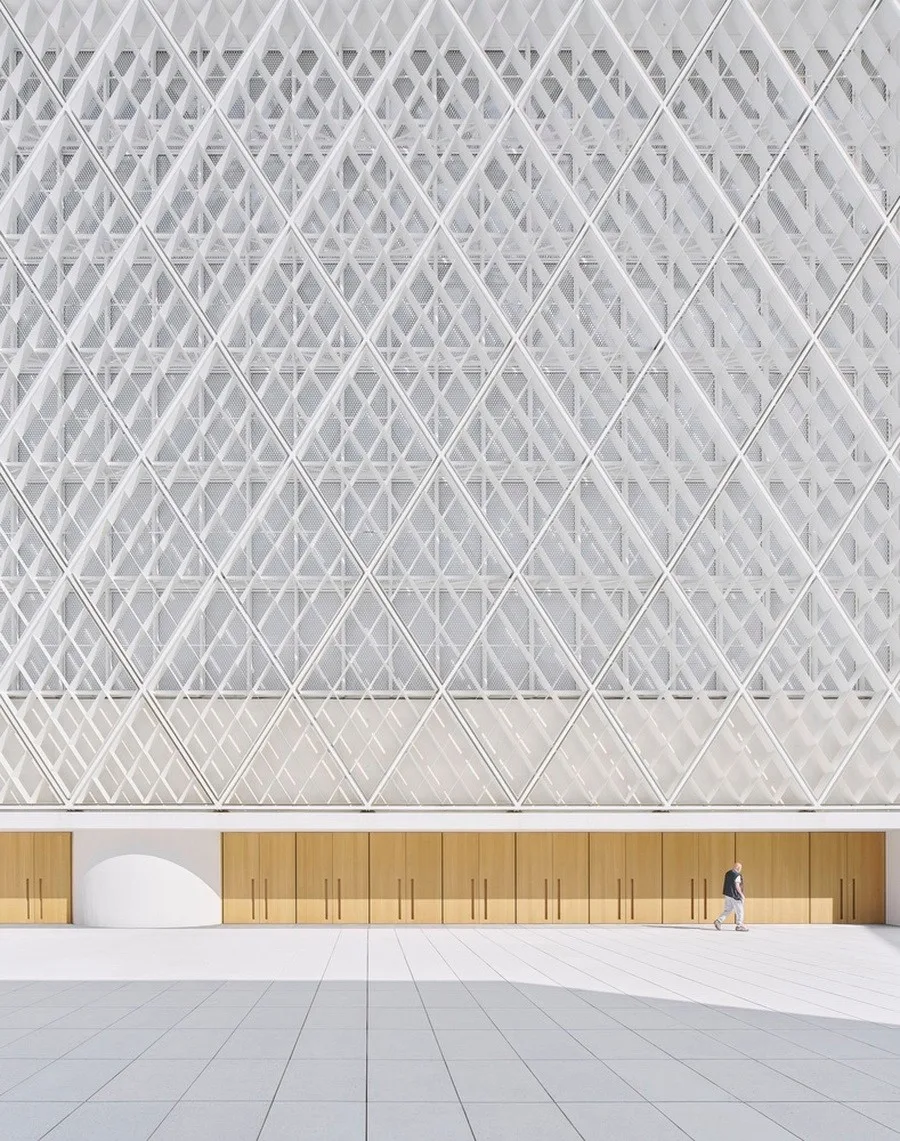
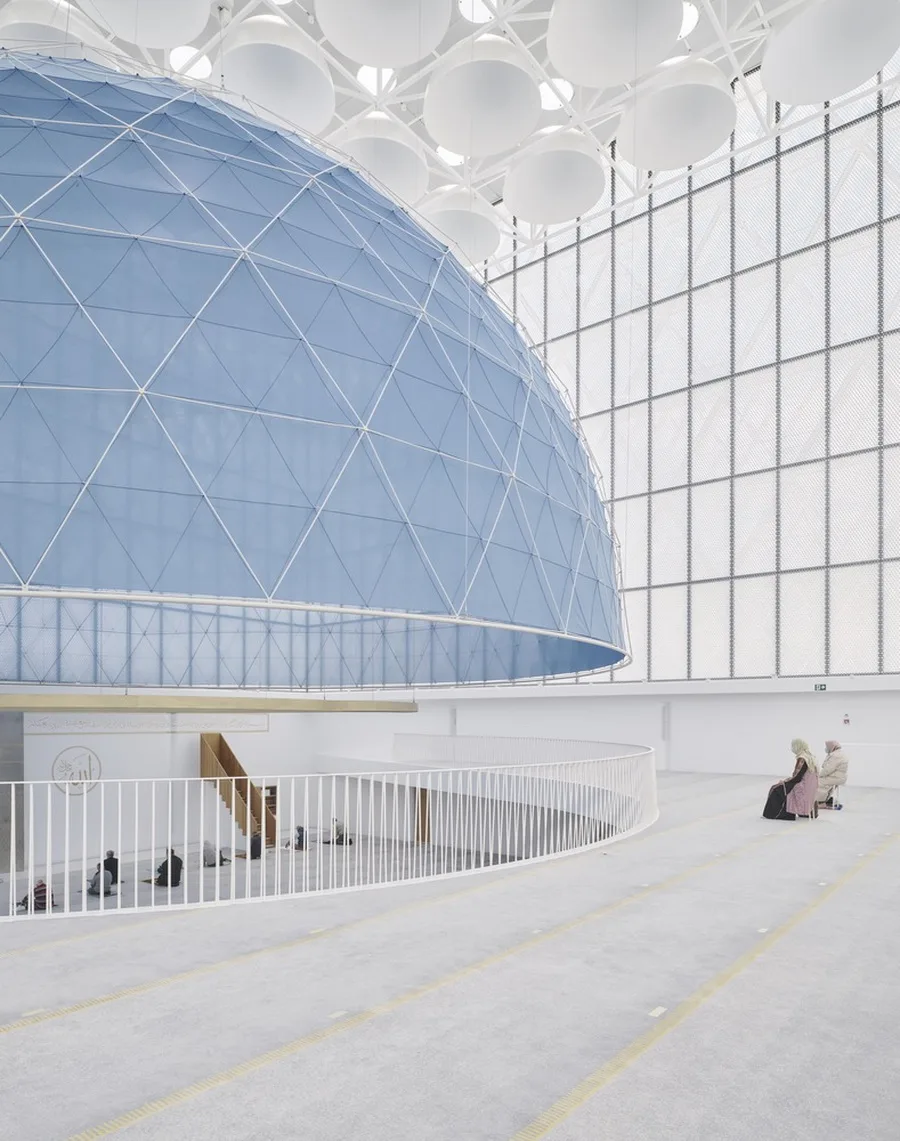
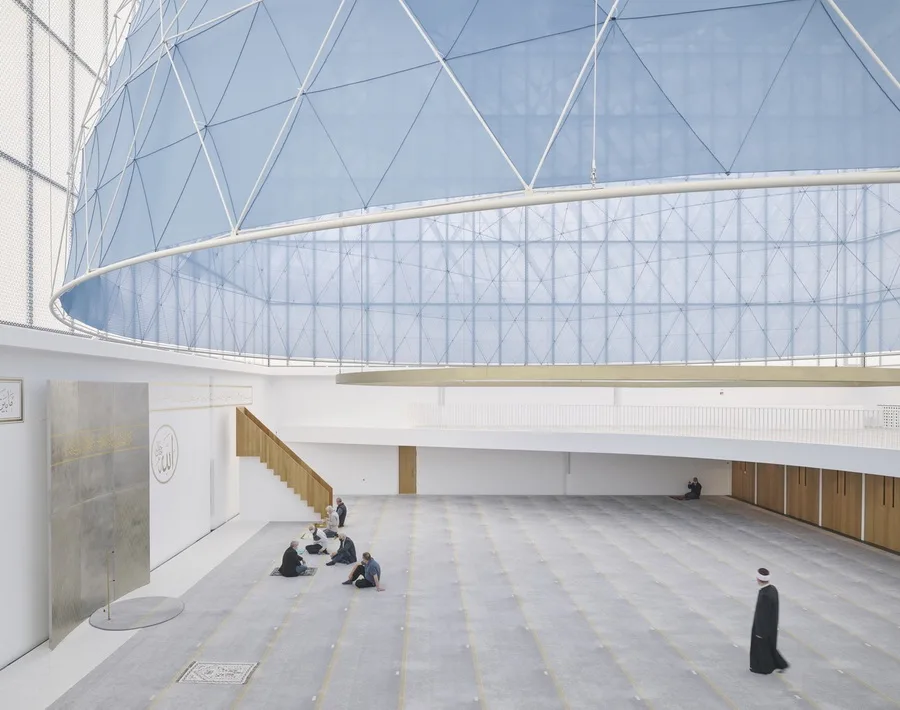
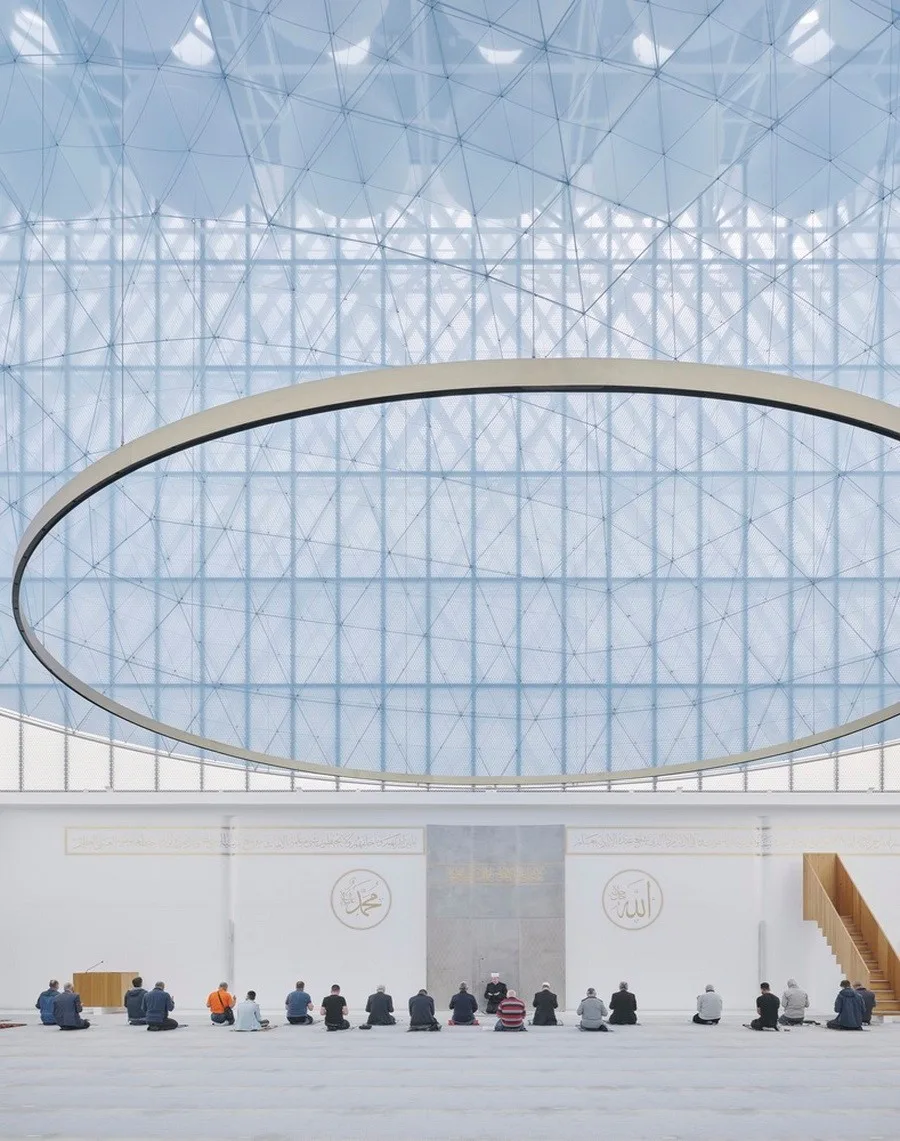
The mosque itself is situated directly on the plaza, fully open to it. This design allows the prayer area to extend outdoors during large gatherings, making it the heart of the new complex. The mosque was not built following traditional historical styles or recent architectural trends; instead, it employs steel as its main structural material. The building forms a 32x32x24 meter box composed of a steel lattice structure that is 1 meter (approximately 45 centimeters) deep and only 2 centimeters (approximately 8 centimeters) thick. The base is crafted from white concrete, while the roof is made of transparent glass, permitting natural sunlight to flood the interior.
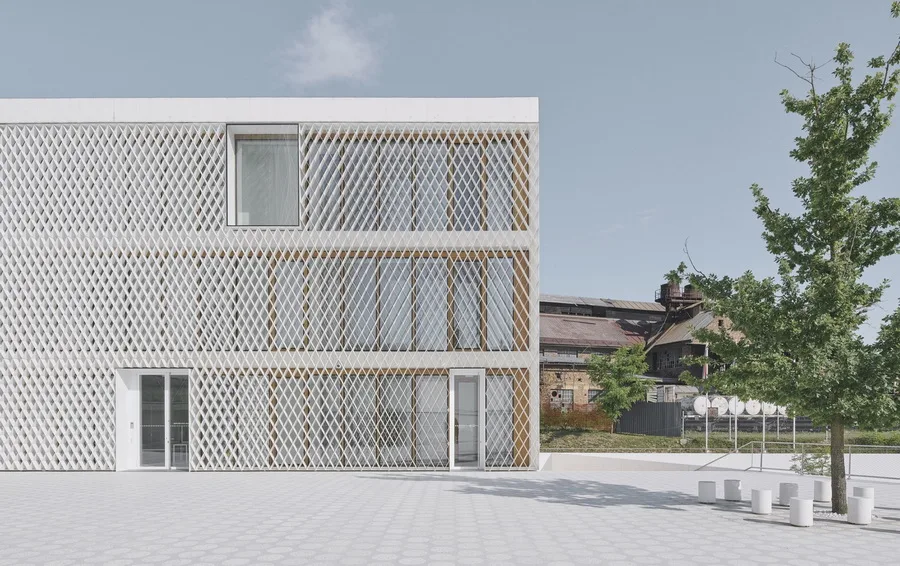
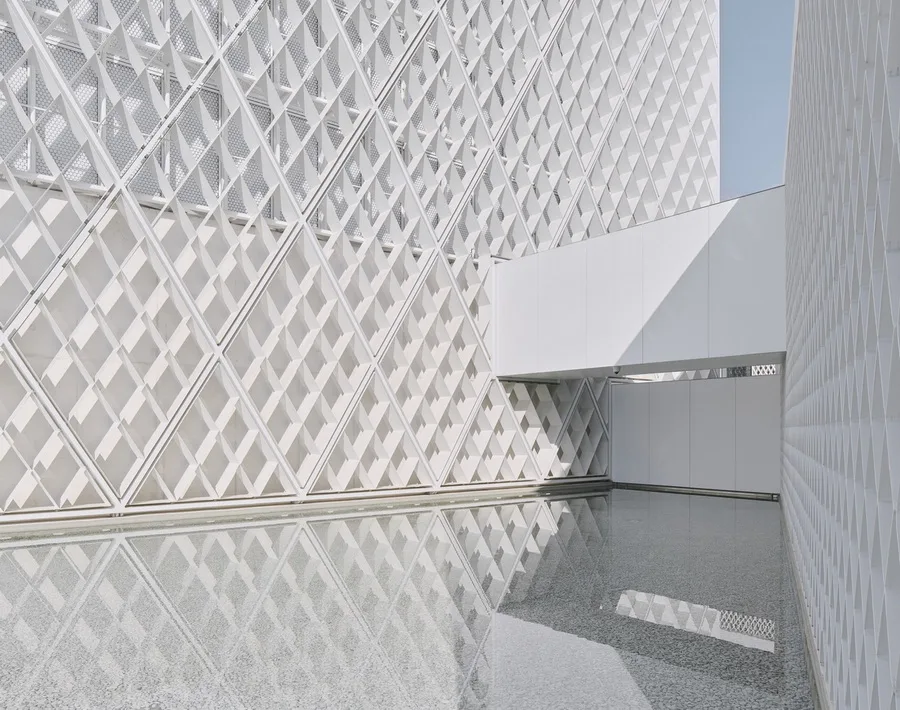
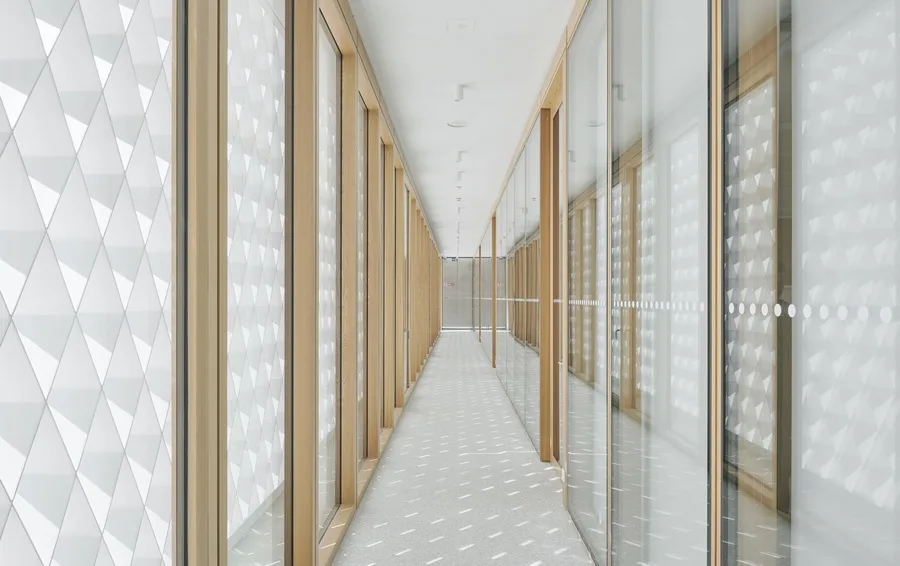
The mosque’s central architectural feature is its dome, which does not enclose the upper space but instead hangs suspended within the building. Historically, the dome symbolizes the sky. Here, it is crafted from a delicate, transparent blue textile—the lightest and most fragile material—carrying a rich Islamic heritage. This textile has been used traditionally, from the Kiswa of the Kaaba to portable Iranian mosque tents.
Design Drawings
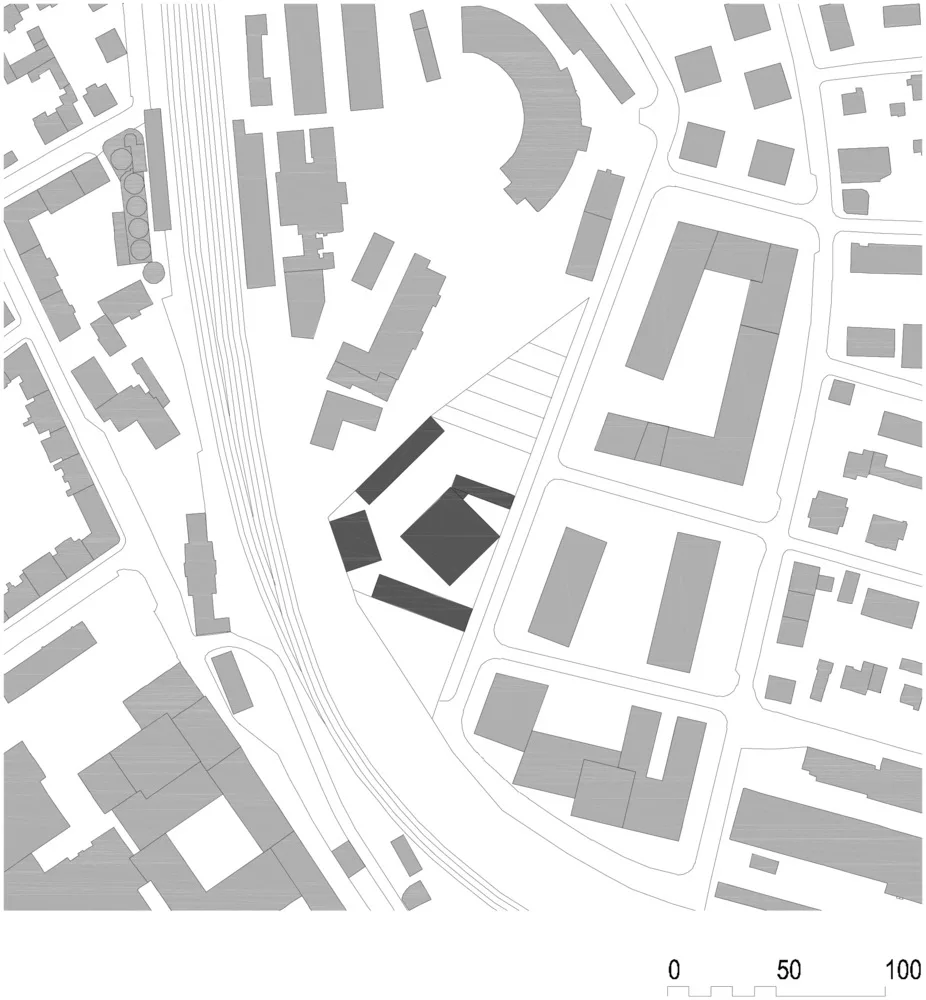
△ General layout plan

Concept analysis
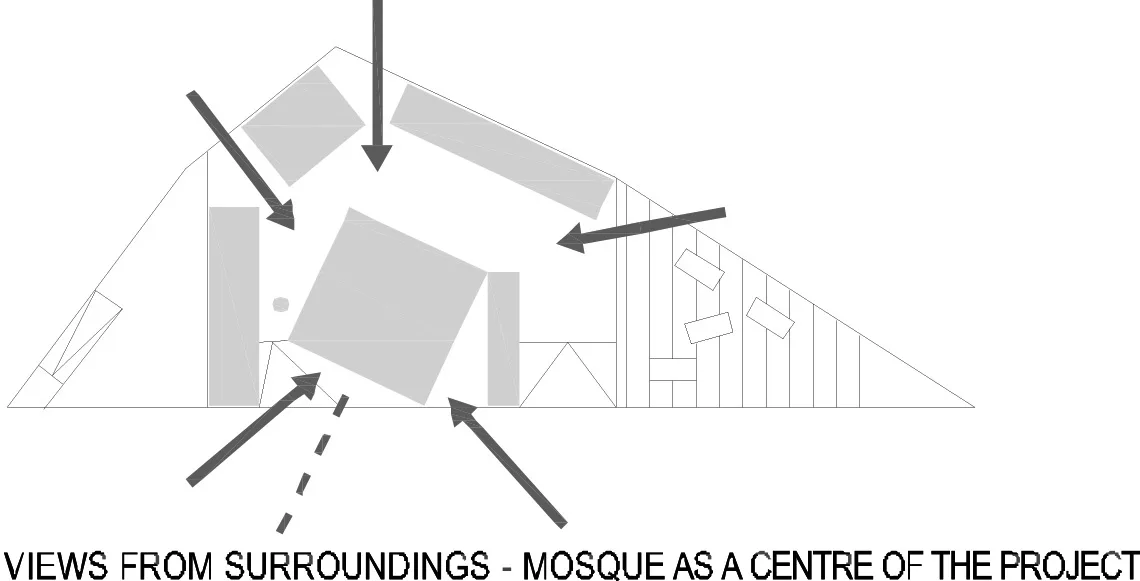
Concept analysis
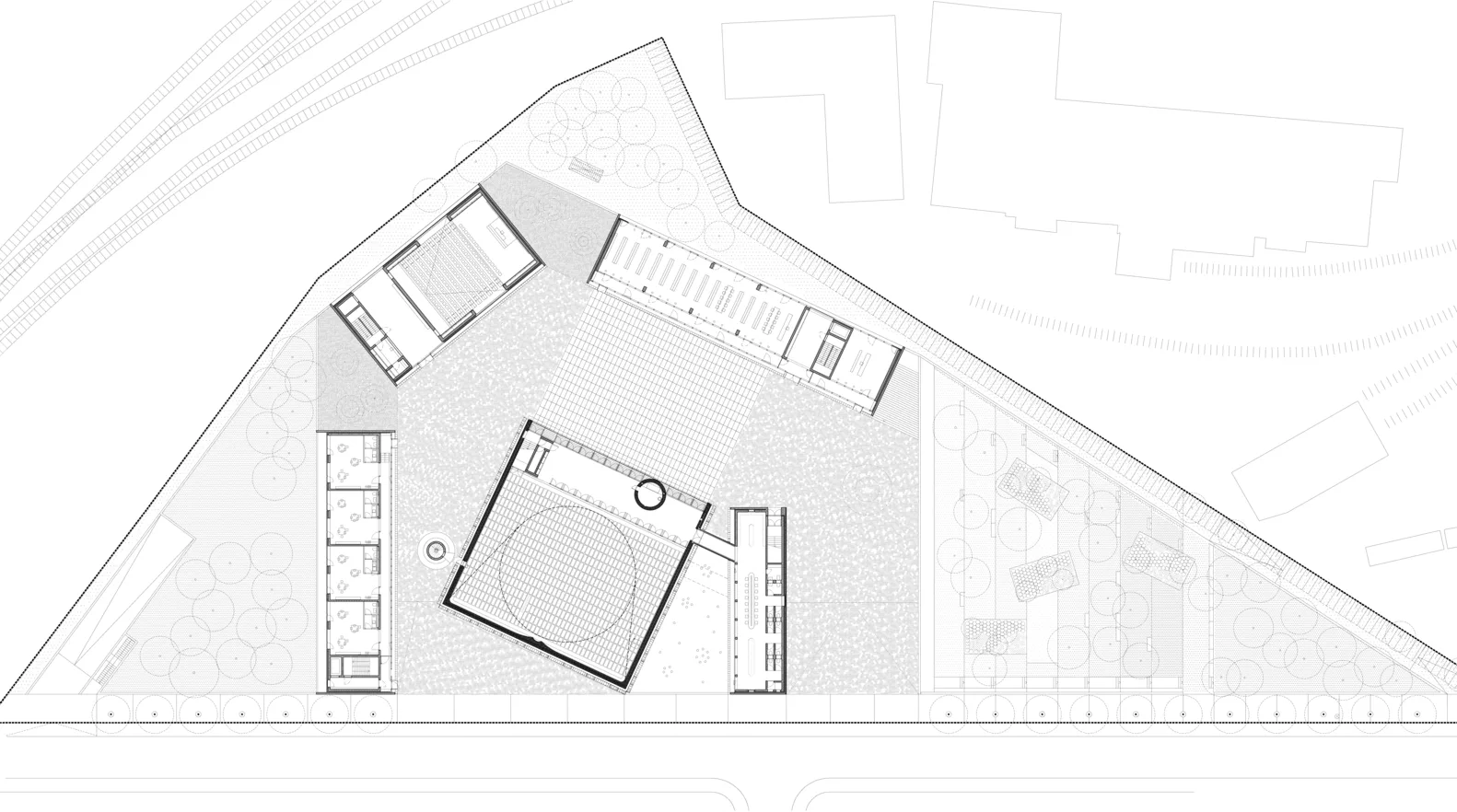
△ Plan view
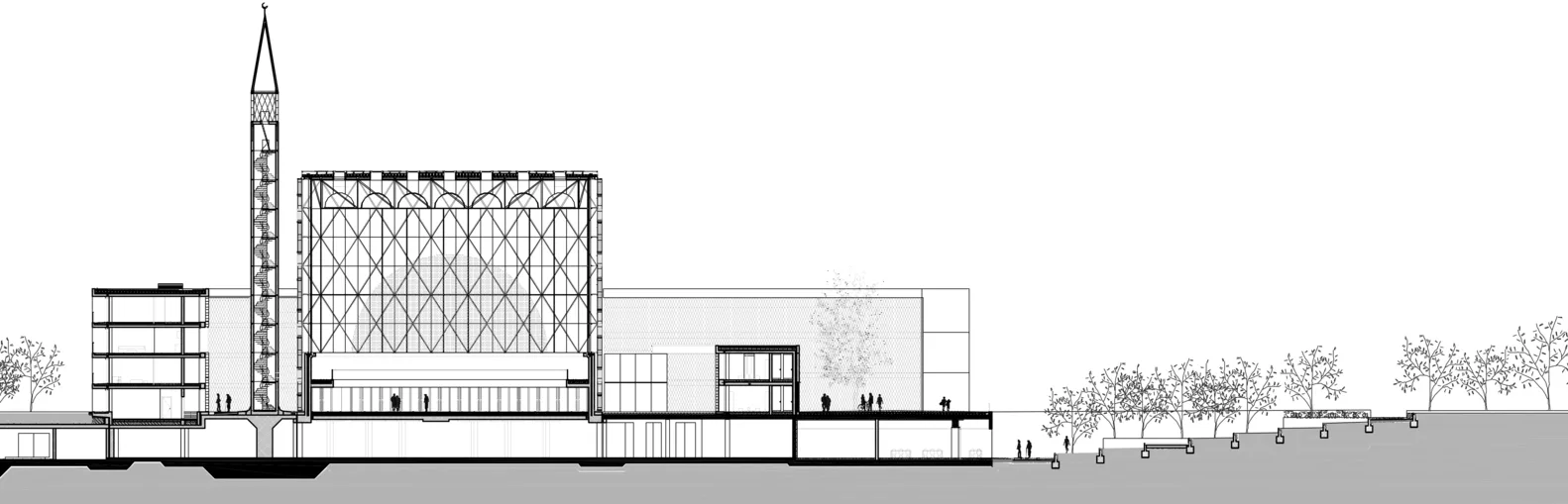
△ Section diagram
Project Information
Project Type: Religious Architecture
Location: Slovenia
Architectural Design: Bevk Perovi ć arhitekti
Area: 14,080 m²
Year of Completion: 2020
Photographer: David Schreyer
Design Team: Matija Bevk, Vasa J. Perović, Christophe Riss, Ida Sedušak, Tina Marn, Andrej Ukmar, Irene Salord, Rok Gerbec, Blaž Goričan, Urban Petranović, Davorin Počivašek, Maša Kovač
Owner: Islamic Community Center Ljubljana, Republic of Slovenia












Must log in before commenting!
Sign Up