
The Qiantan School, integrating nine years of primary and secondary education along with kindergarten facilities, is situated within the Binjiang International Community in the southwest corner of Shanghai’s Qiantan International Business District. Positioned across the river from Qiantan’s central area to the northeast and bordered by residential communities to the west and north, the school enjoys distant views of the Huangpu River.
As a key development zone in the post-Boe era, Qiantan has emerged as a secondary business hub complementing Lujiazui Central Business District. This neighborhood is designed as an efficient, accessible, and pleasant small community. Despite the school’s large site, its plot ratio of nearly 1.5 classifies it as a high-density campus, significantly above the typical standard.
Therefore, the design of Qiantan School responds strategically to the urban public environment on a macro level while addressing spatial composition demands both horizontally and vertically on a micro level. The result is a campus characterized by efficient spatial organization and seamless circulation. The dynamic, multifunctional public spaces embedded within the complex program form the core experience of the school and underpin its architectural concept.
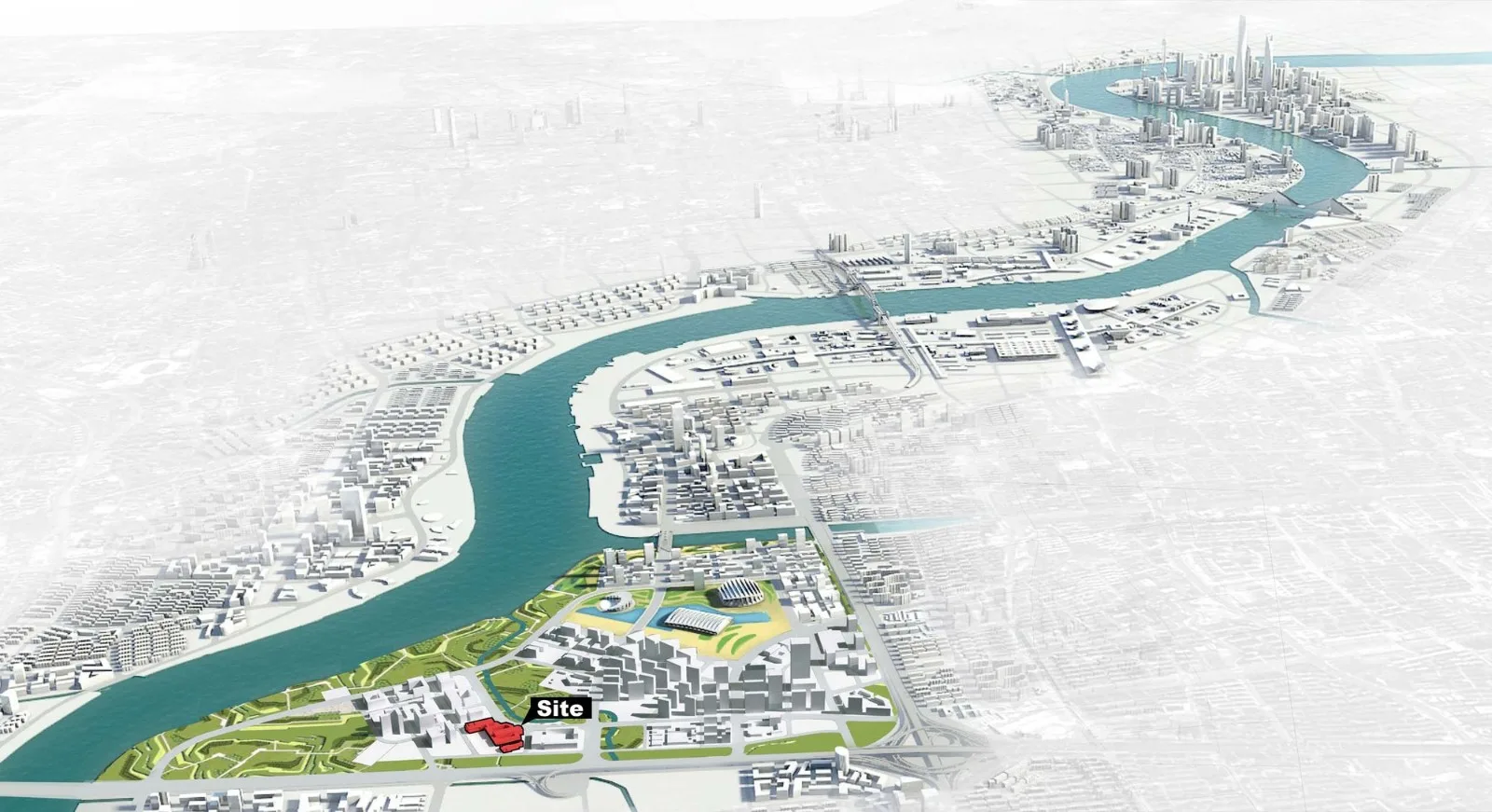
Aerial view of the location
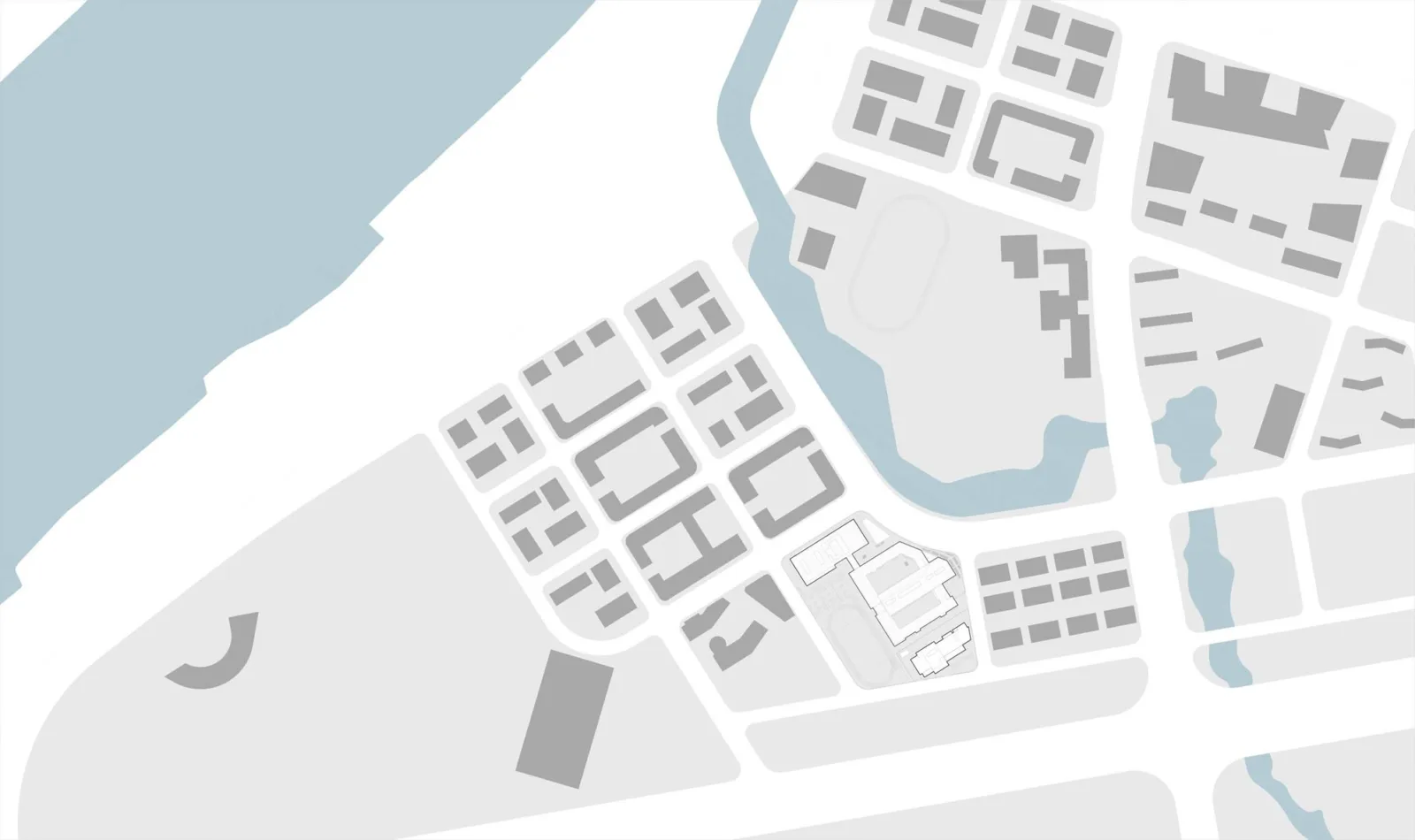
Urban texture
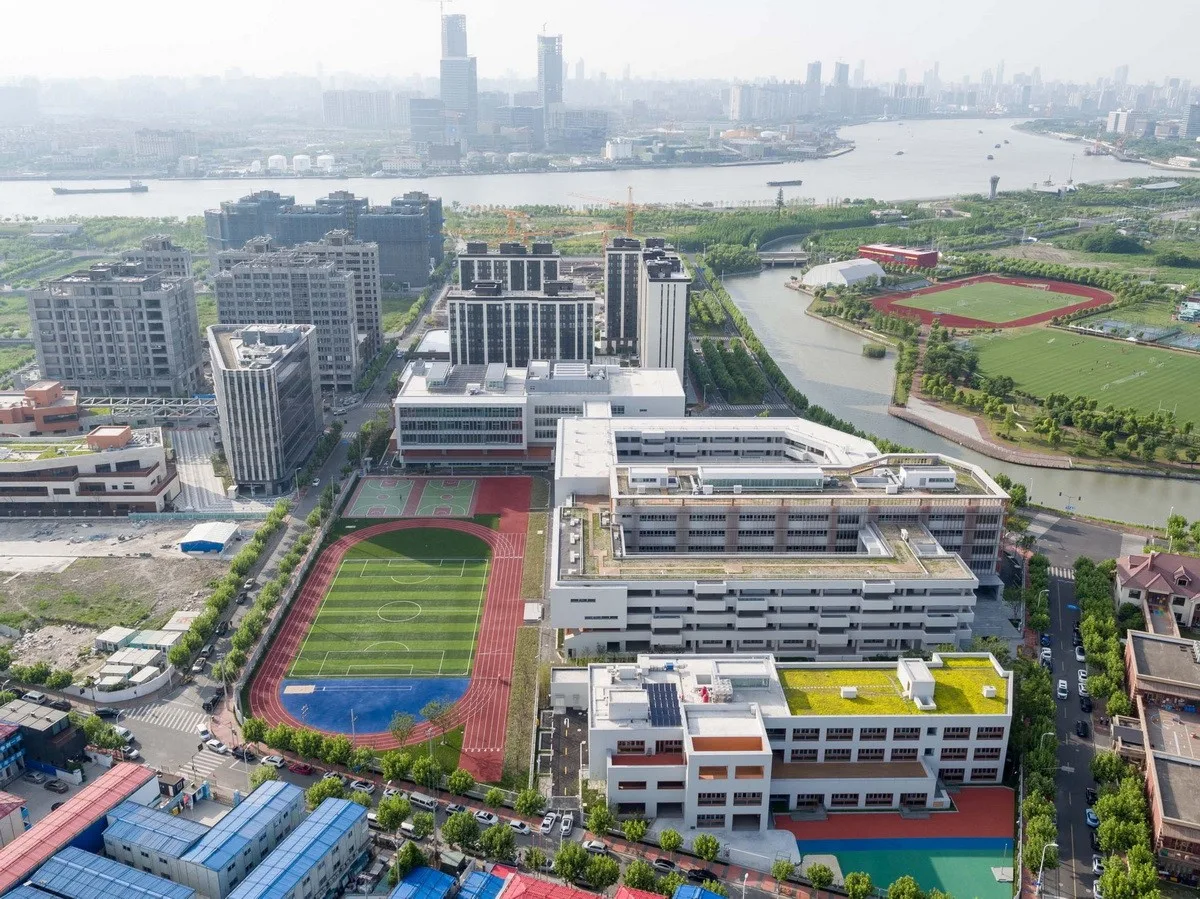
Aerial view
Taking into account the surrounding urban context and sunlight conditions, the sports field is strategically located in the southwest corner of the campus. The campus is logically divided into five distinct functional zones arranged from south to north: preschool, primary school, comprehensive teaching, junior high, and cultural & sports departments.
The preschool section has a dedicated entrance on the south side, while the main entrance for the primary and secondary schools is positioned on the eastern road. The design challenge was to achieve a balance between shared, composite spaces and the functional flow and independence of each zone.
With a plot ratio far exceeding Shanghai’s typical school standard of 0.8, Qiantan School’s high spatial density prompted a design approach centered around two key spatial typologies: “platforms” and “courtyards.”
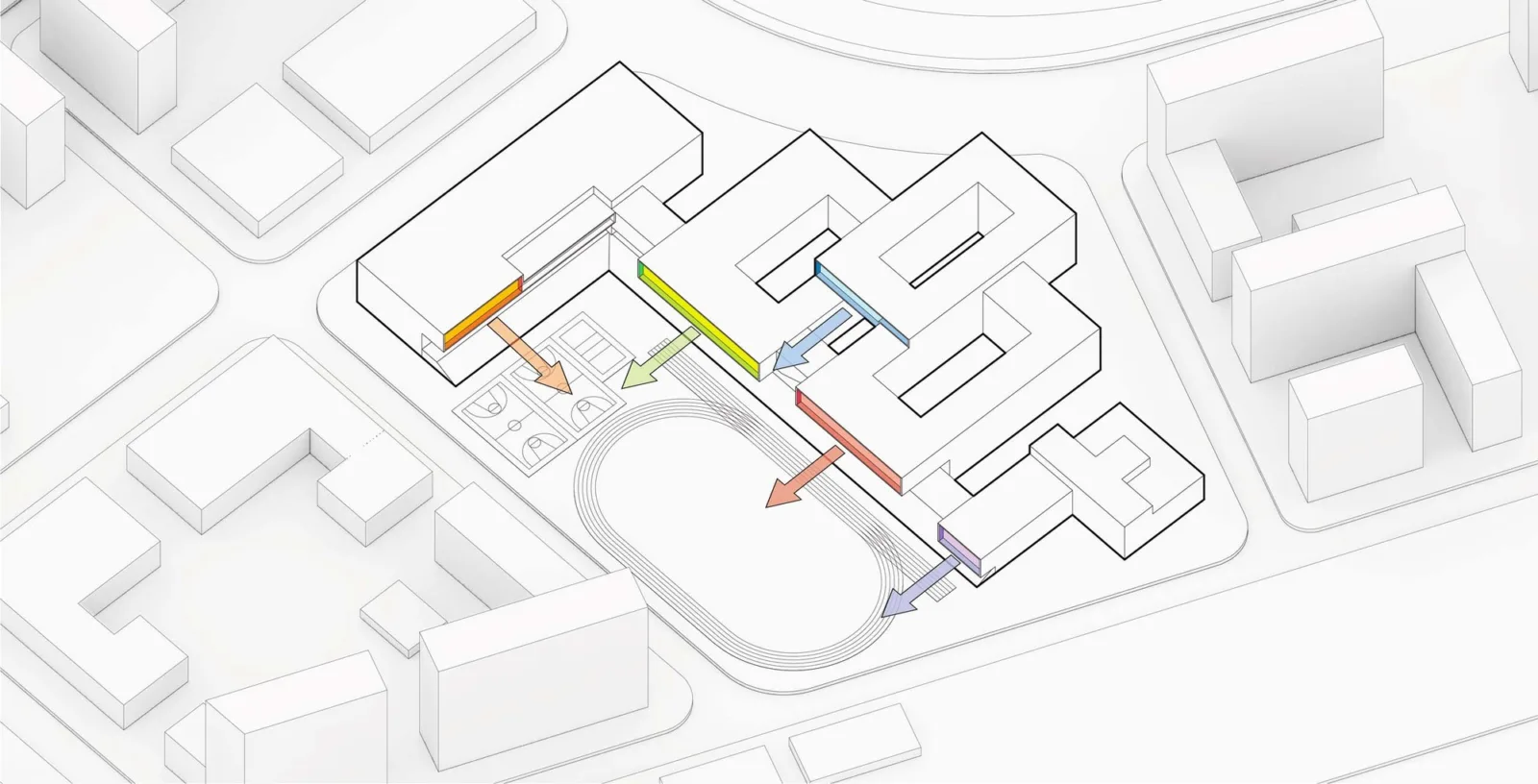
Visual analysis
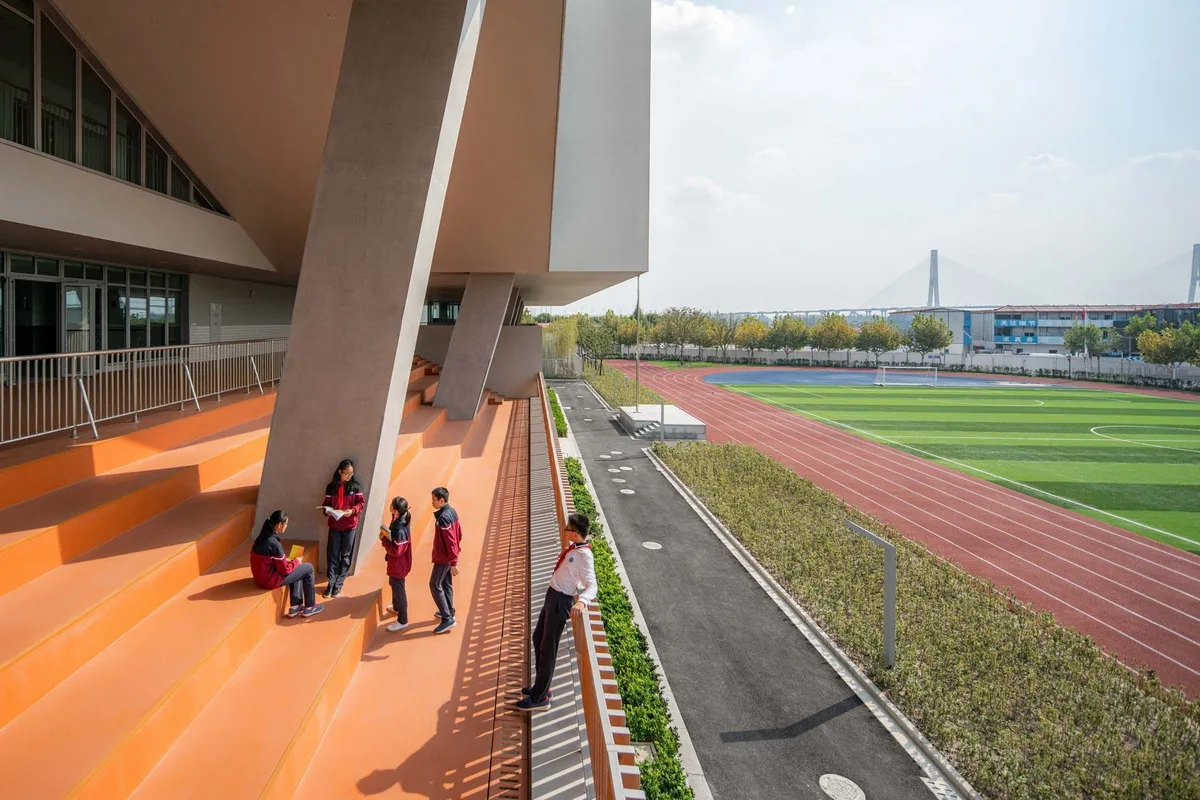
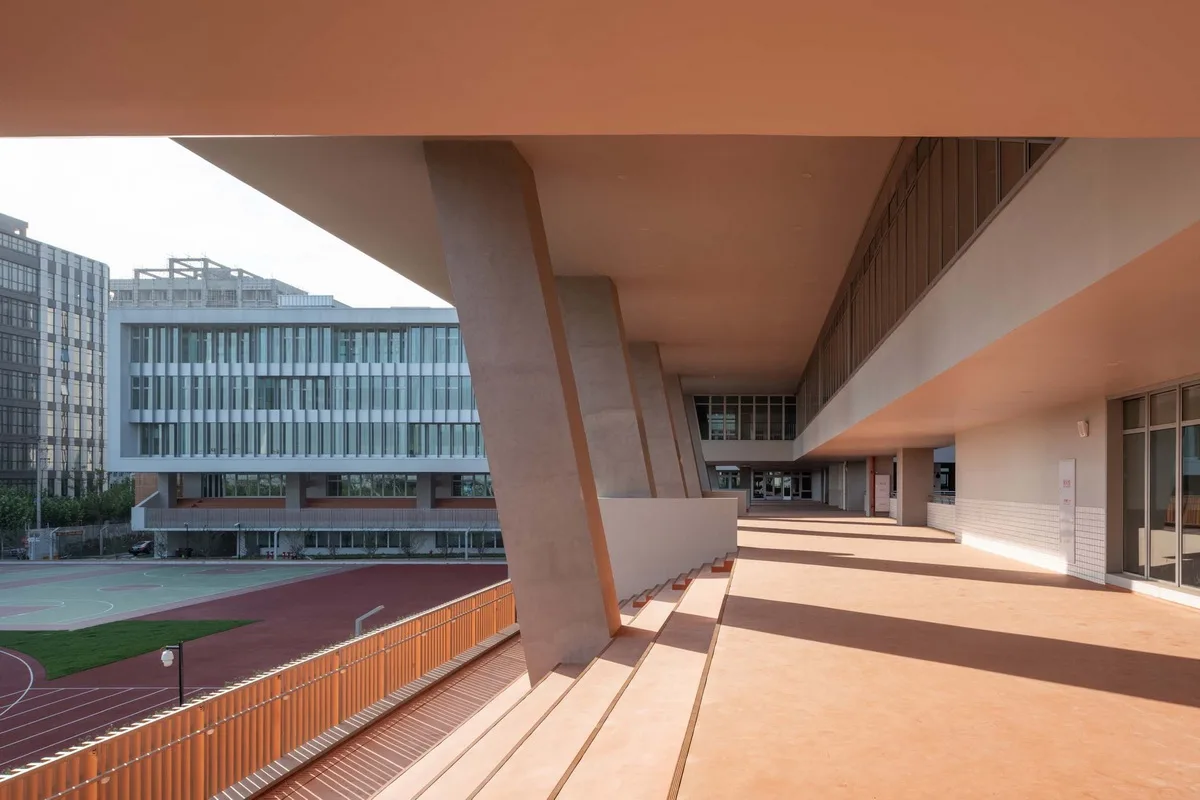
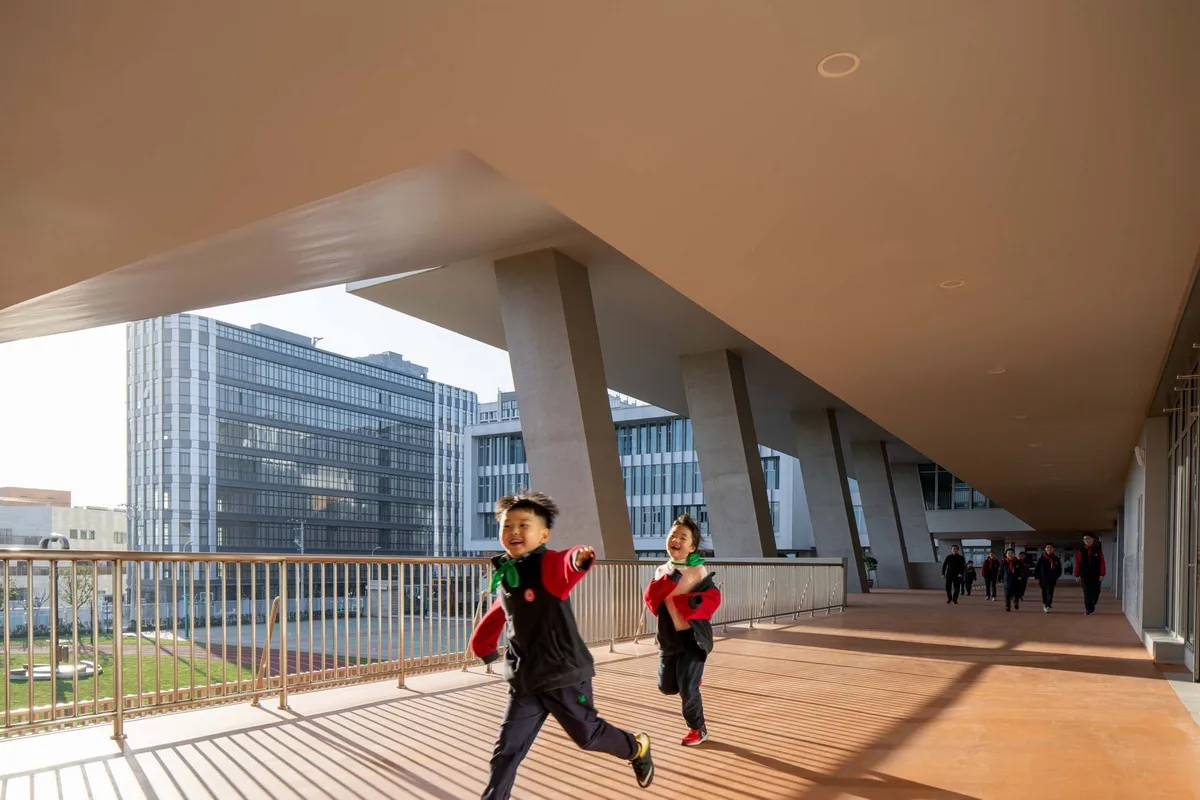
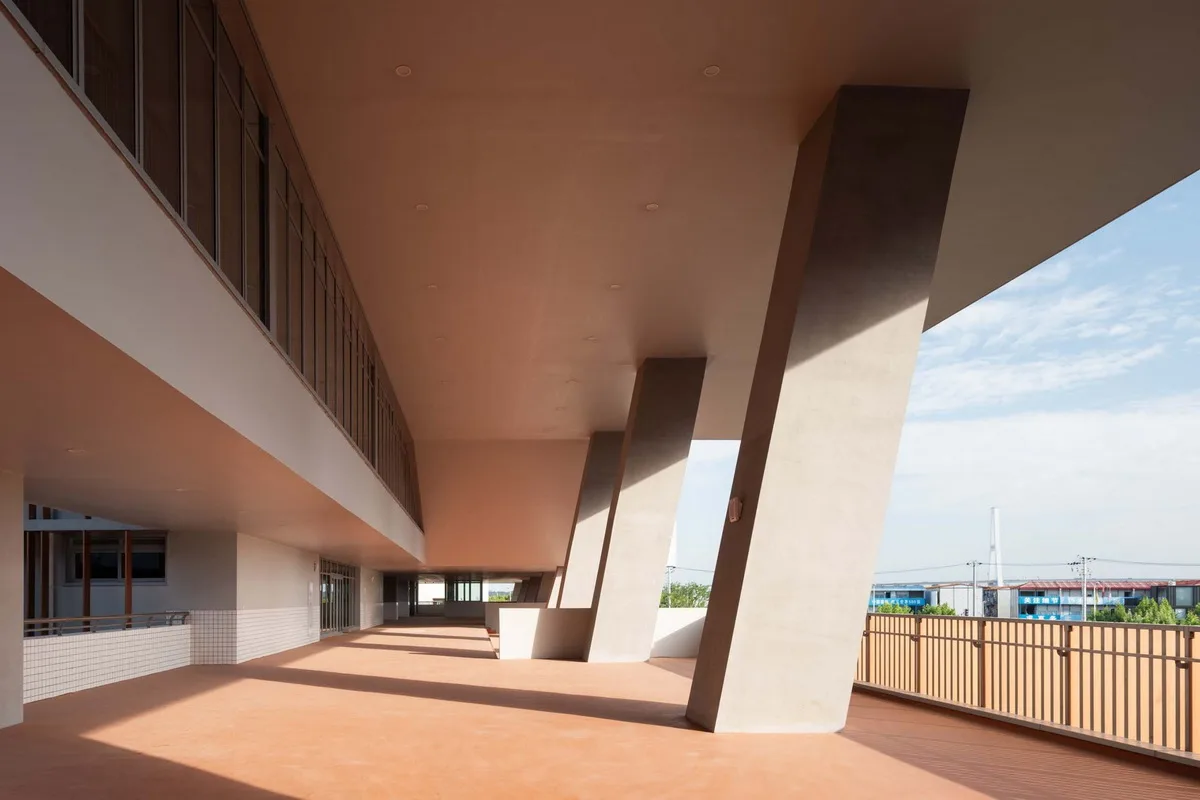
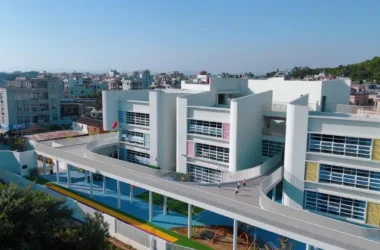
The “L”-shaped staircase platform on the second floor faces the sports field and serves as a vital circulation hub. It efficiently links the primary school, comprehensive teaching, junior high, and cultural and sports zones, forming an elevated viewing stand around the playground that encourages interaction between indoor and outdoor spaces.
Teachers and students can stroll through this open-air space, encircle the playground, and enjoy views of the river. Above this platform, public facilities such as the library and gym also face the sports field, collectively creating the school’s most prominent public interface to the community. This openness fosters a seamless transition between the campus and urban fabric.
At the northeast corner, where the substation is located, the roof has been adapted to serve as a landscaped platform connected to the second-floor cafeteria. This “backyard” overlooks the river and the central area across the water, linking the campus with the wider cityscape.
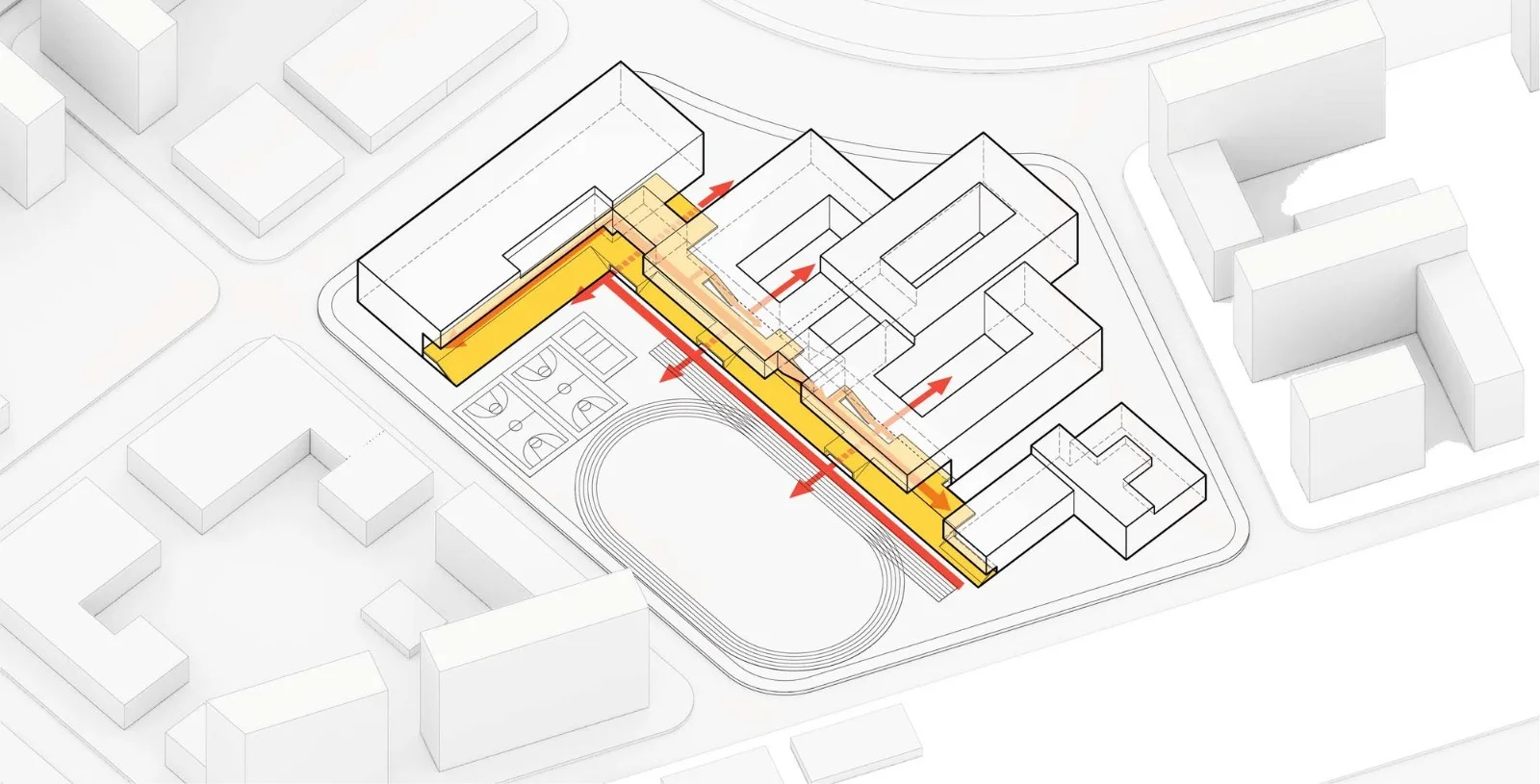
Platform traffic analysis
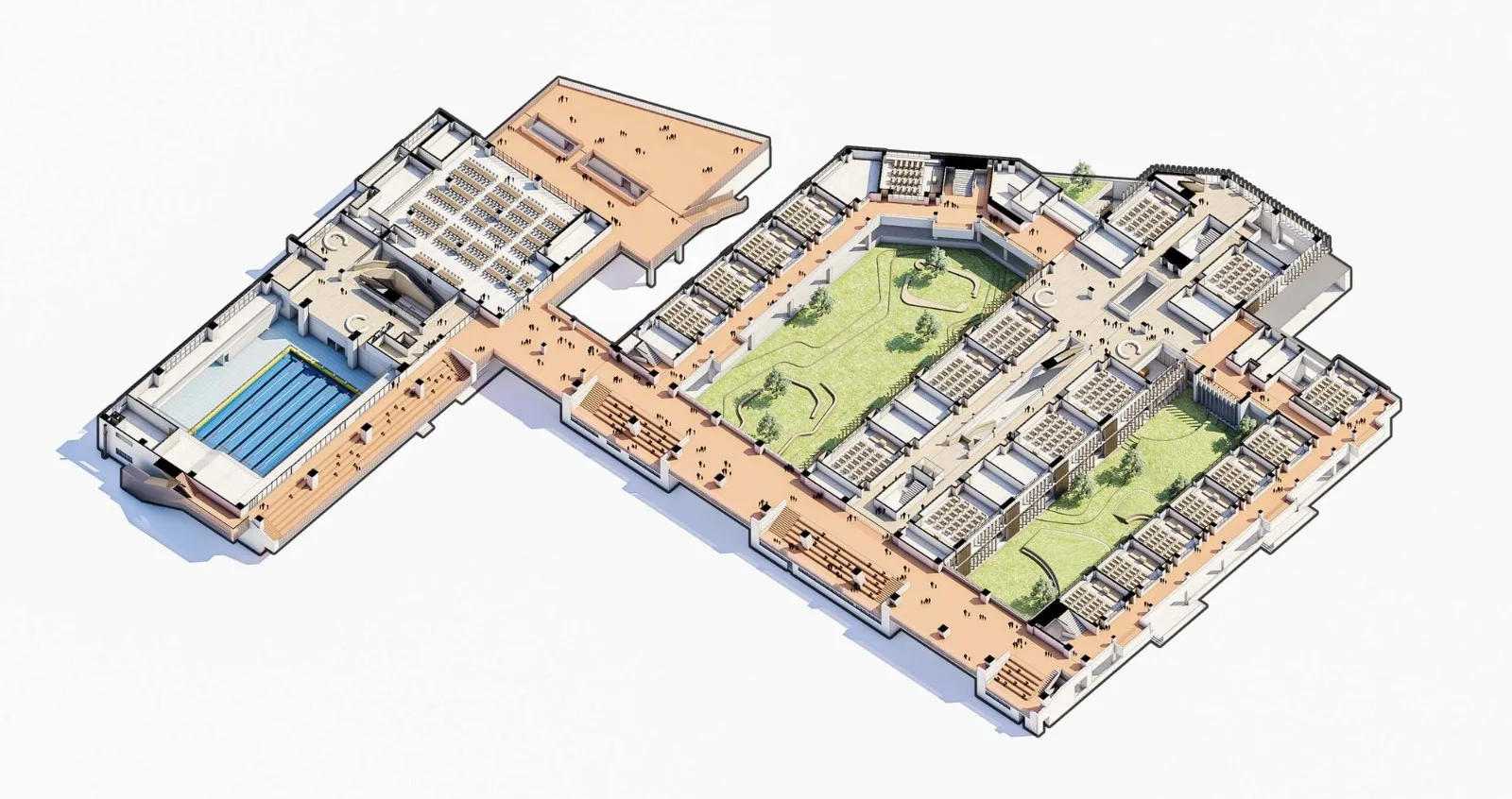
Platform analysis
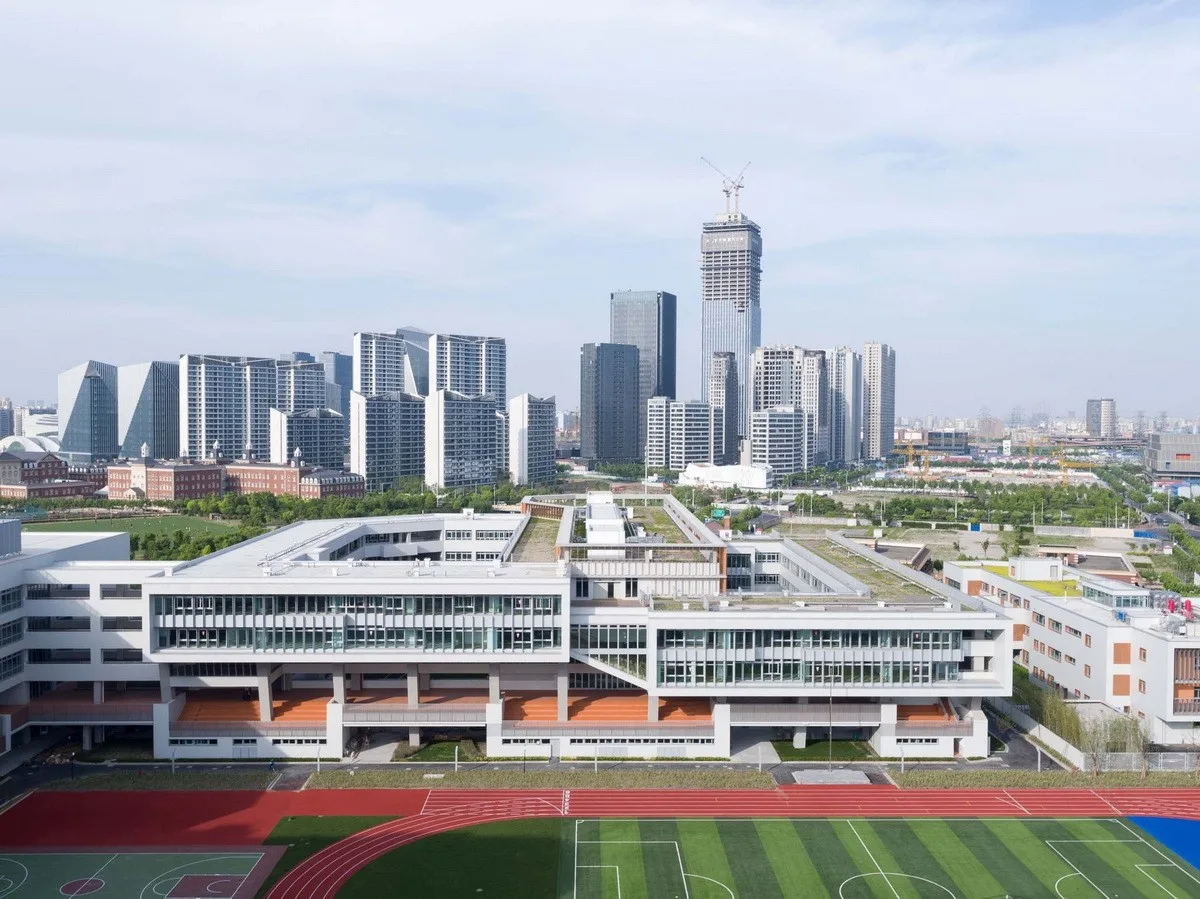
Aerial view
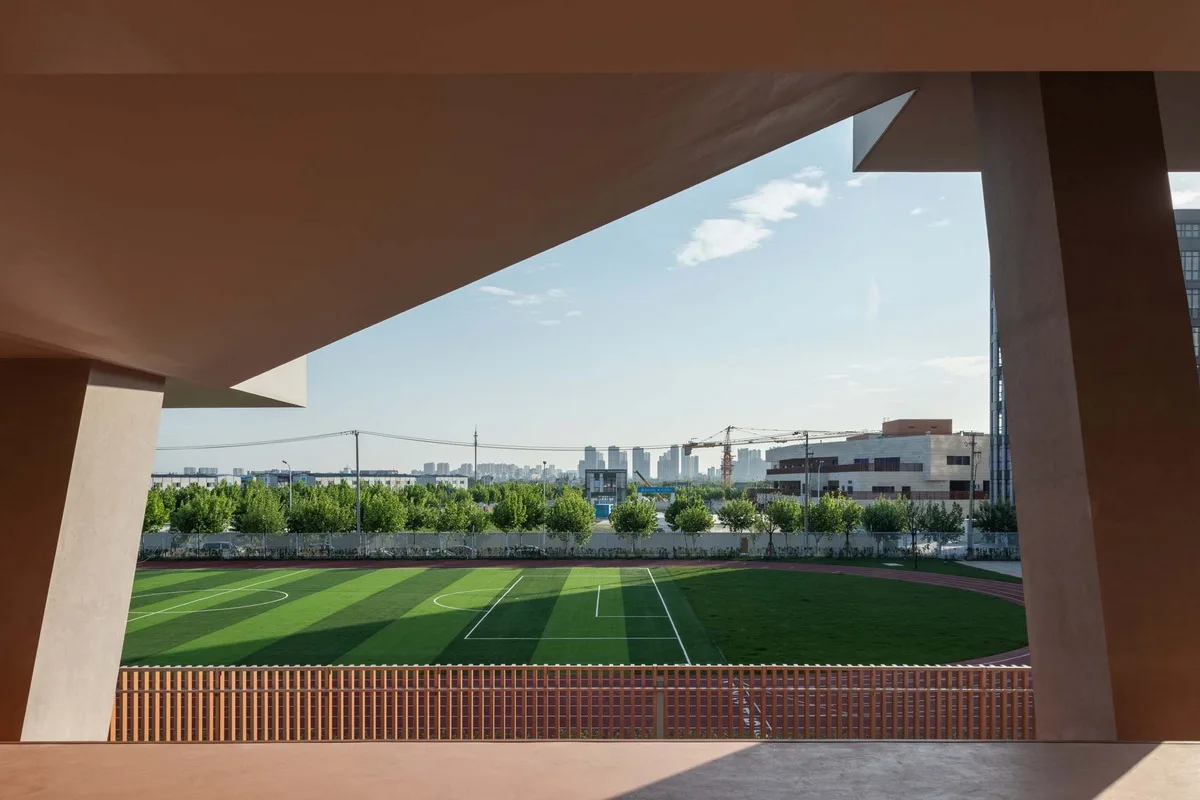
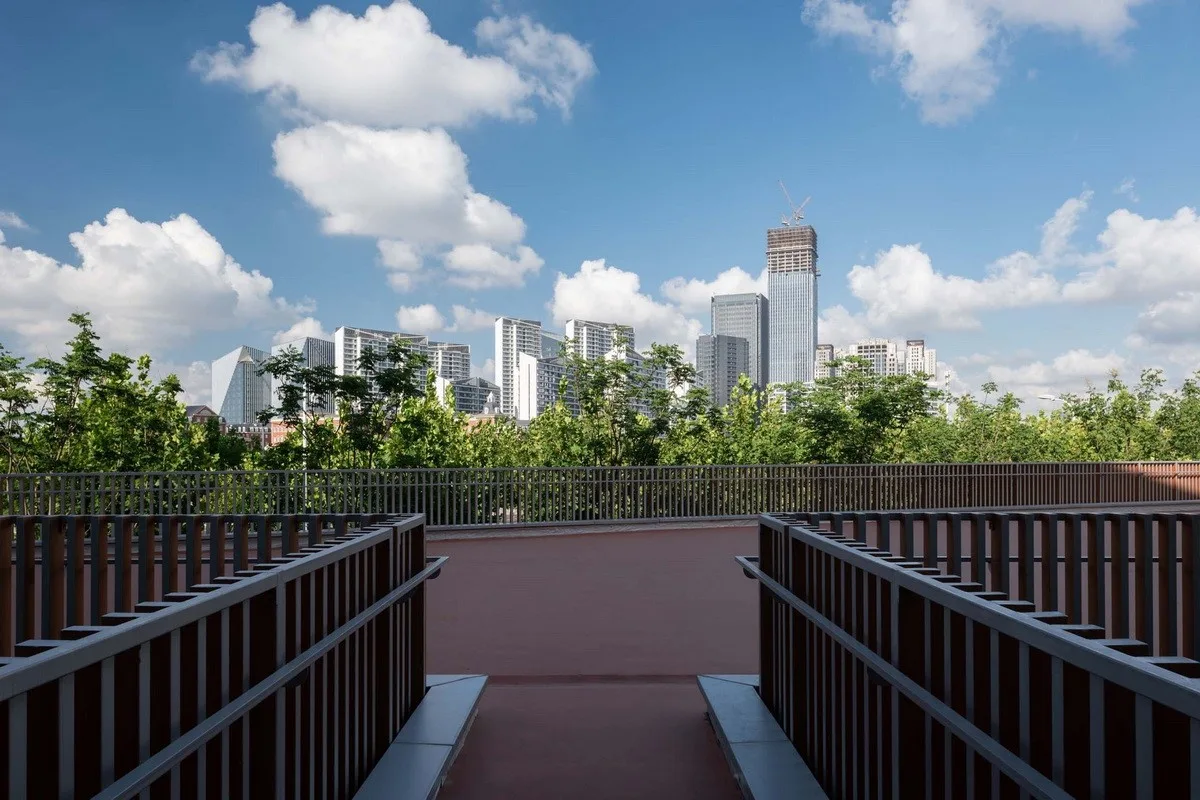
View of the urban skyline from the rooftop platform of the substation connected to the cafeteria
Courtyards
While the platform system defines the campus’s overall public character, individual functional zones are organized around various indoor and outdoor courtyards that enhance their communal nature.
The comprehensive building centrally connects the primary and secondary teaching areas, forming an inward-facing courtyard pattern. Two outdoor courtyards serve the primary and junior high departments, providing students with inviting spaces for breaks and activities. Additionally, four distinct indoor courtyards within the comprehensive building, library, and cultural & sports complex offer bright, pleasant cores in the densest parts of the campus.
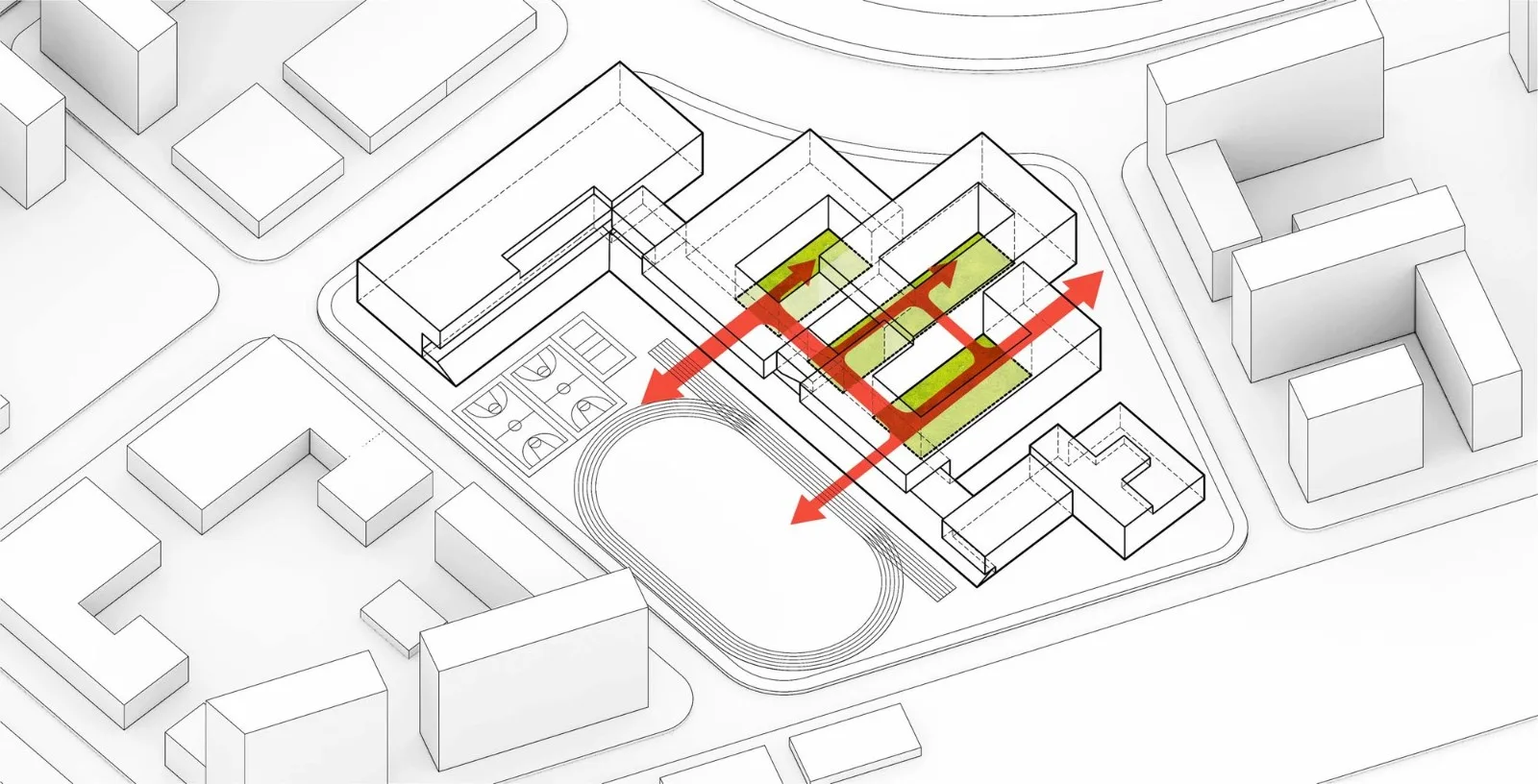
Courtyard analysis
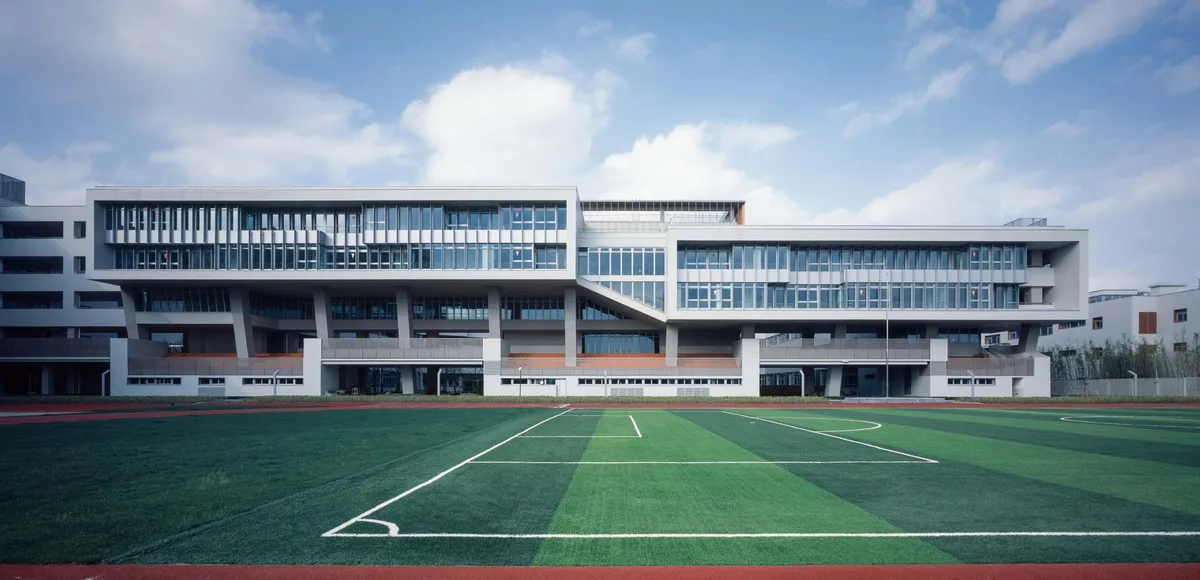
Comprehensive building facade
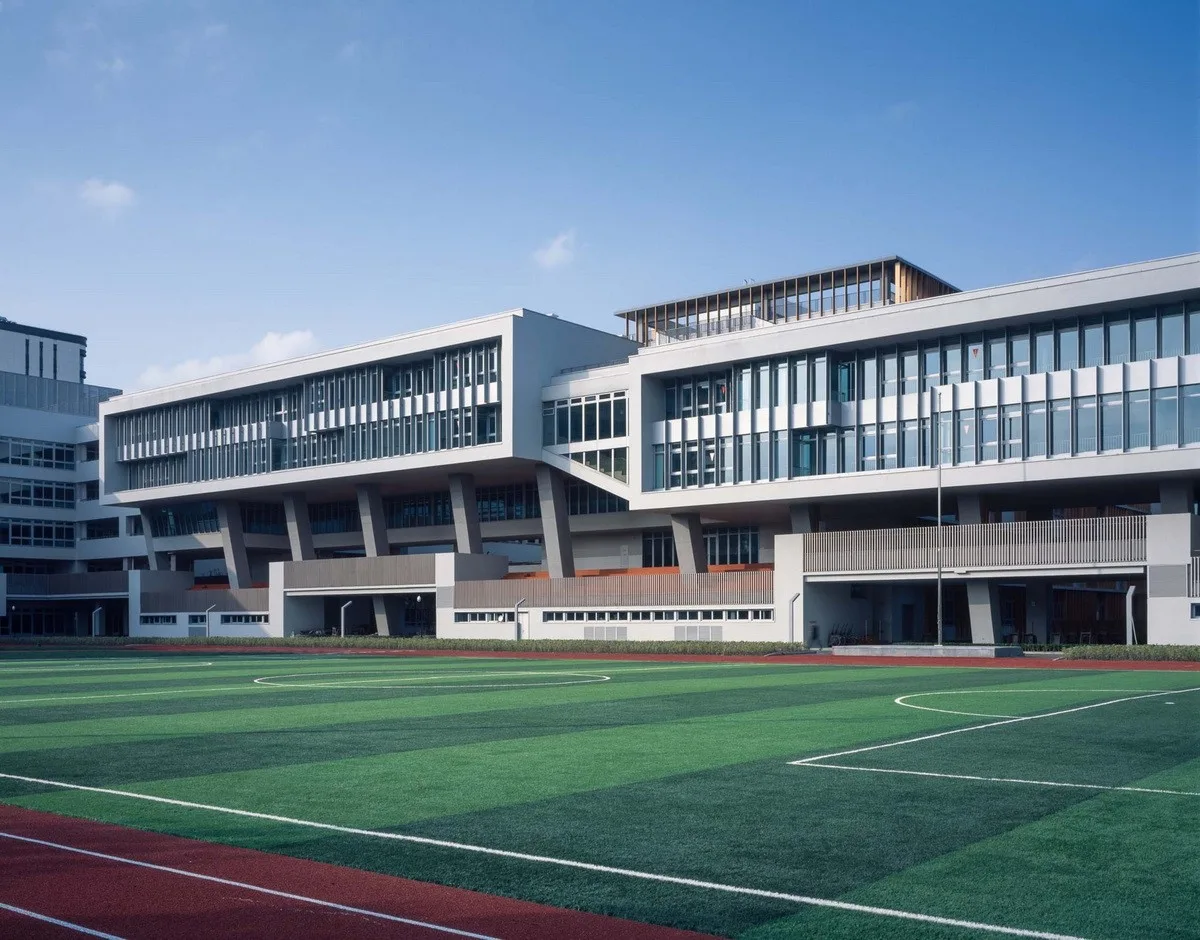
Comprehensive building facade
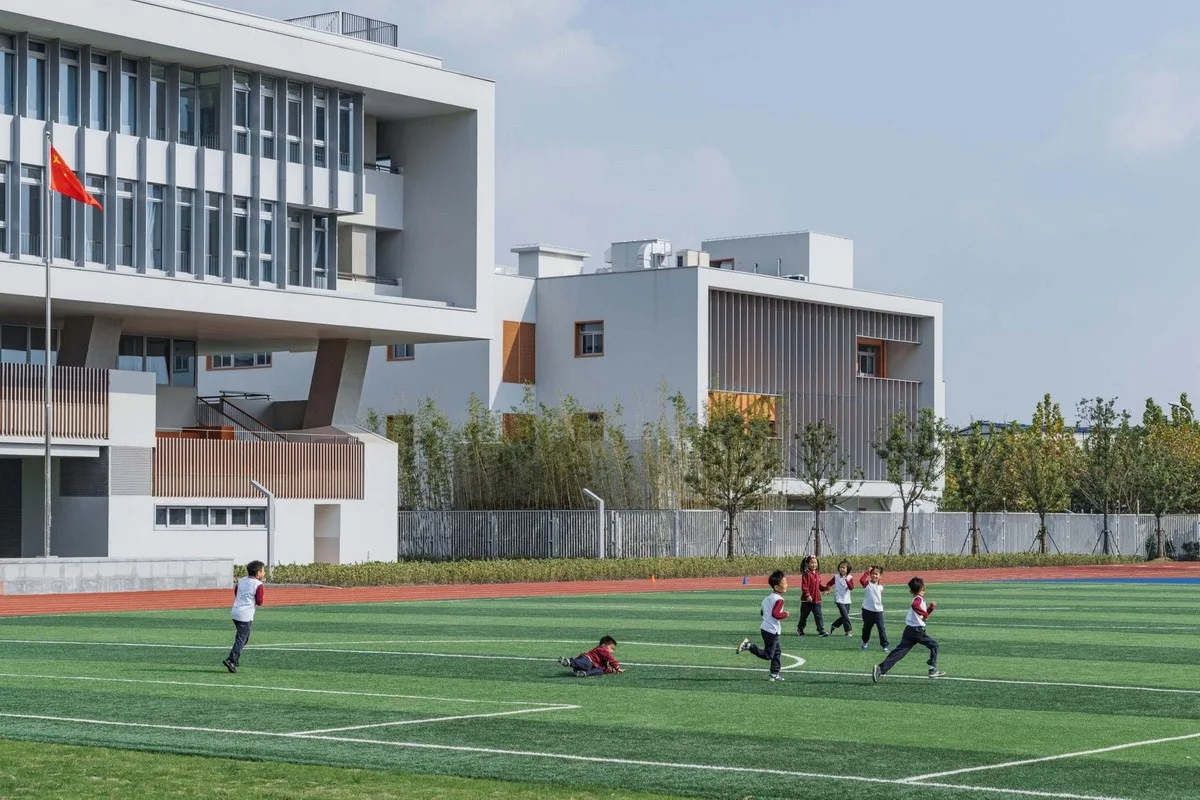
Playground
The comprehensive building’s atrium is notably narrow, with high side windows providing natural light to specialized classrooms flanking the space. Diagonal staircases disrupt the monotony of circular corridors and create dynamic, engaging spaces that encourage exploration across floors.
At the eastern end, an irregular terrain courtyard links the building with the city, while an internal spiral staircase connects multiple floors and serves as both circulation and a social area for students in the dense cluster of specialized classrooms.
A large staircase courtyard between the third and fourth floors connects the upper and lower library spaces, serving as a multifunctional gathering area and an active focal point for the school’s public interface.
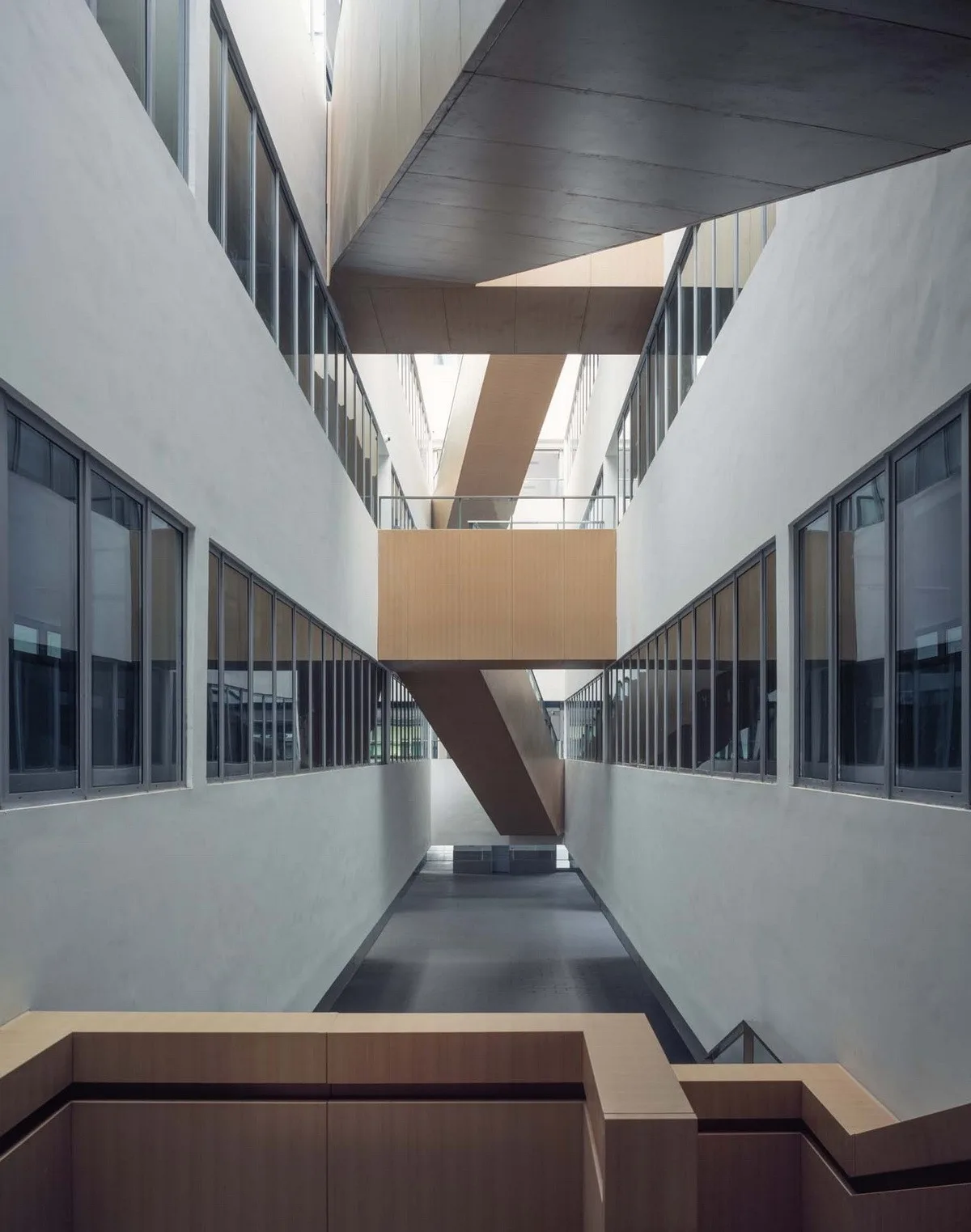
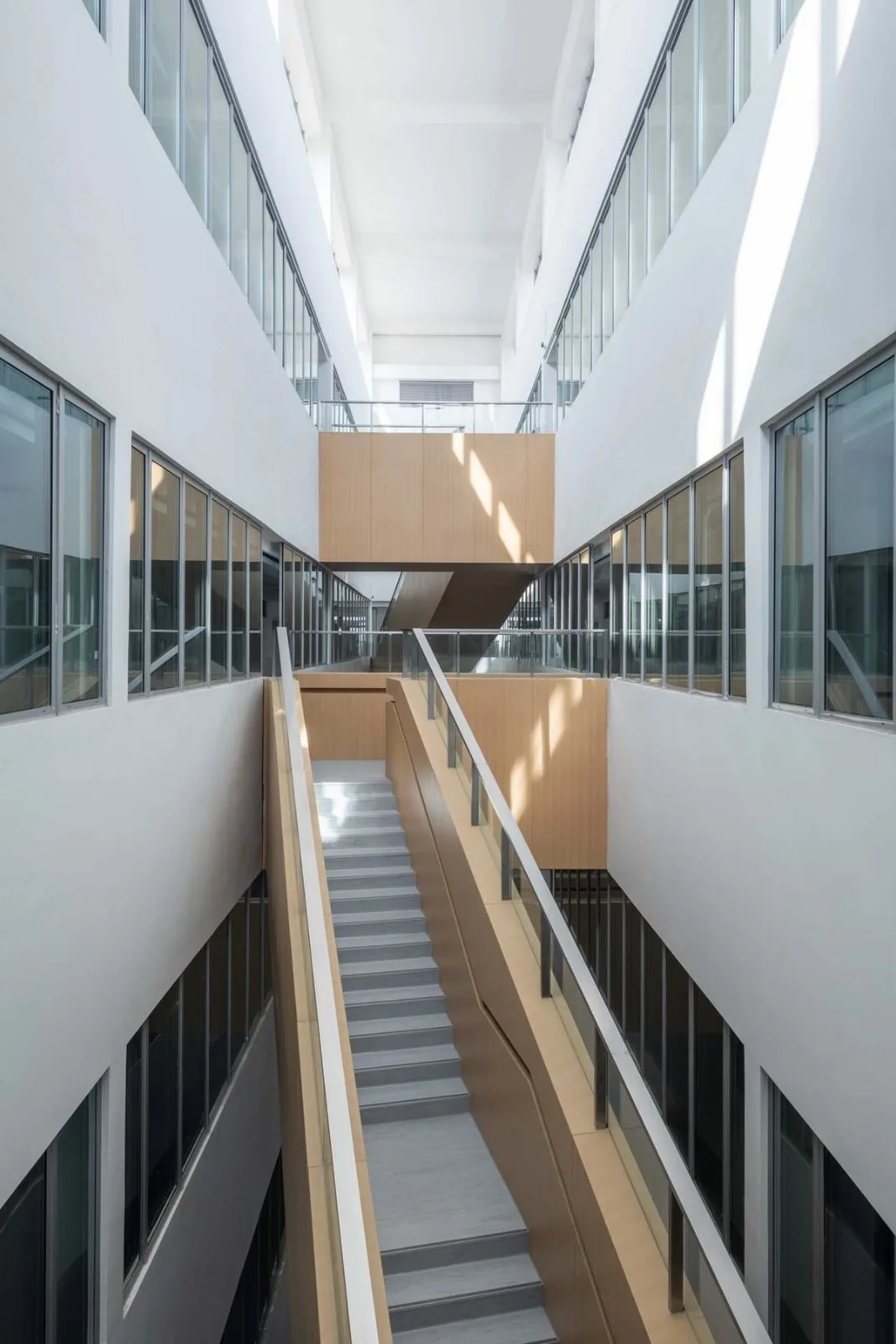
Comprehensive building courtyard
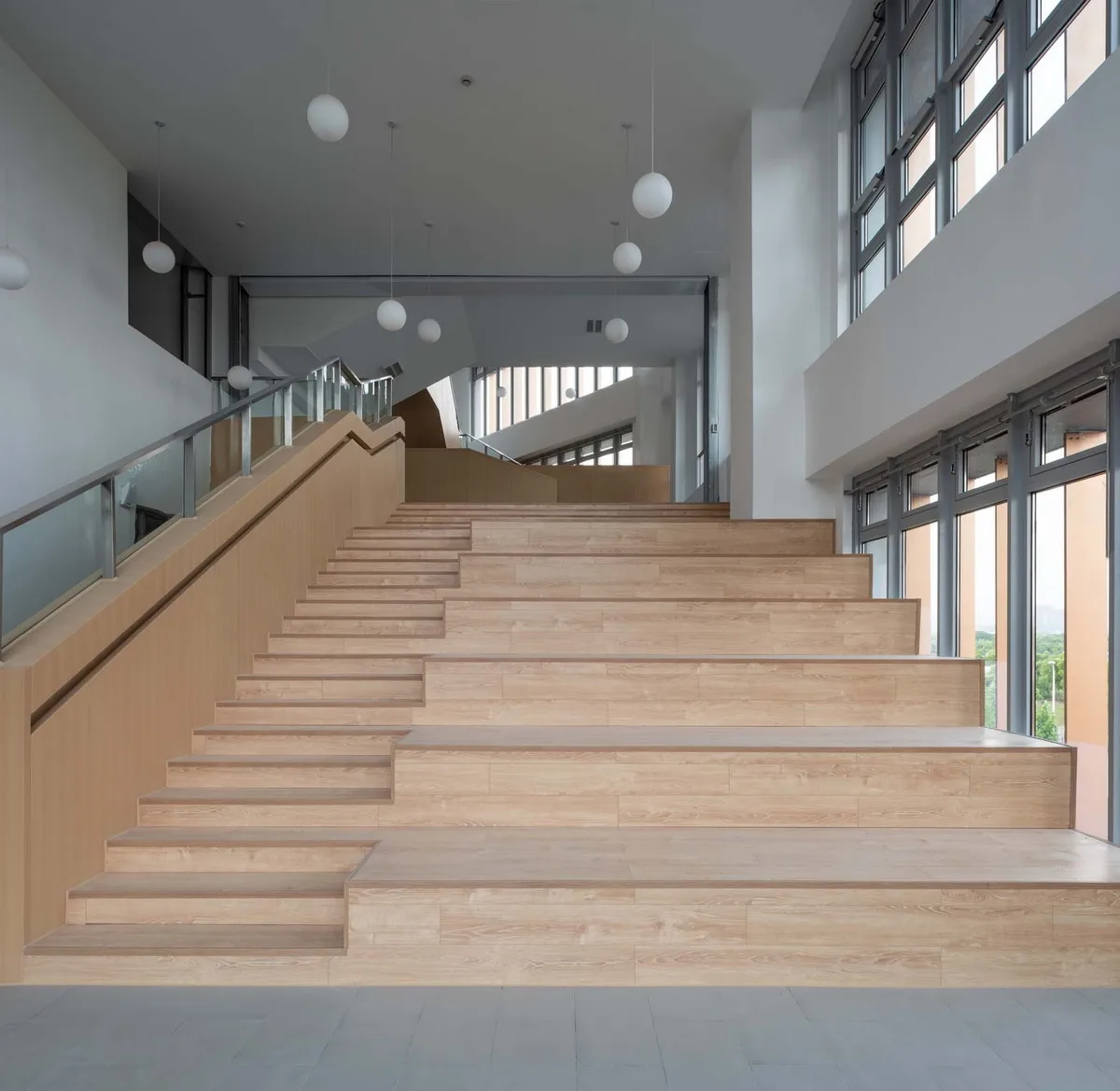
Side courtyard of the comprehensive building
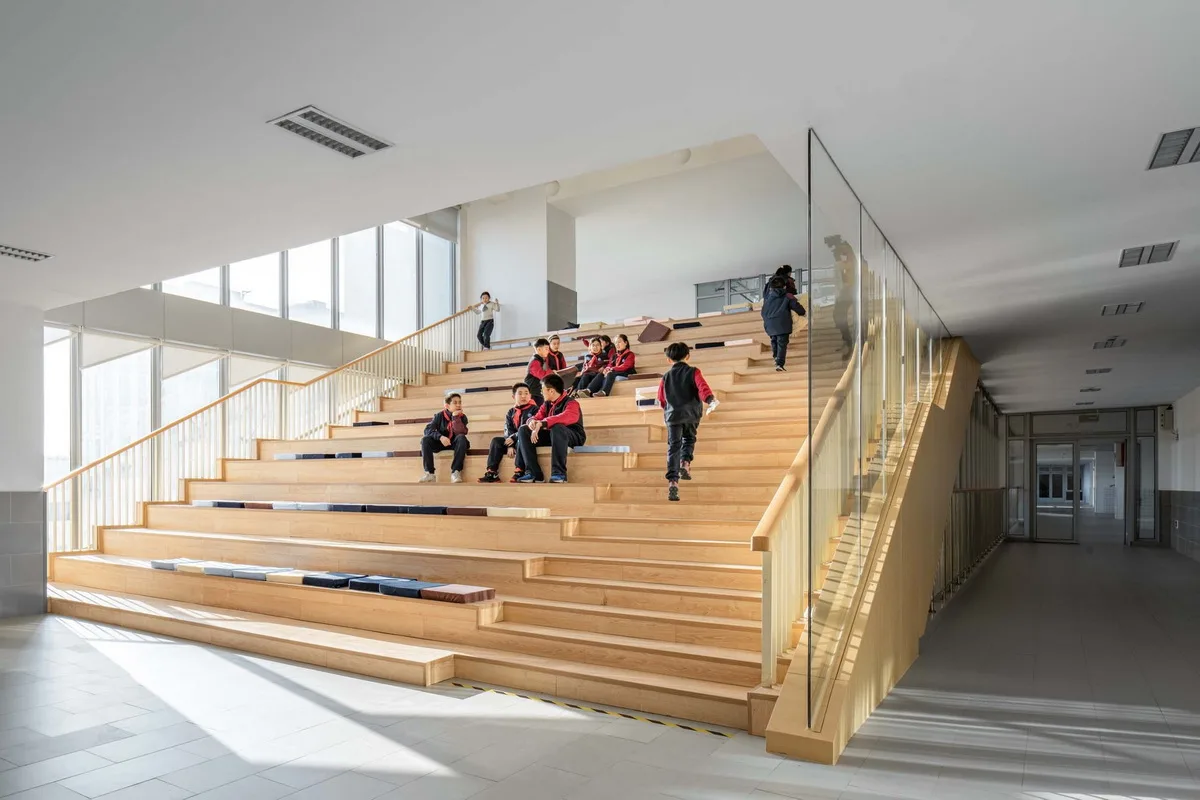
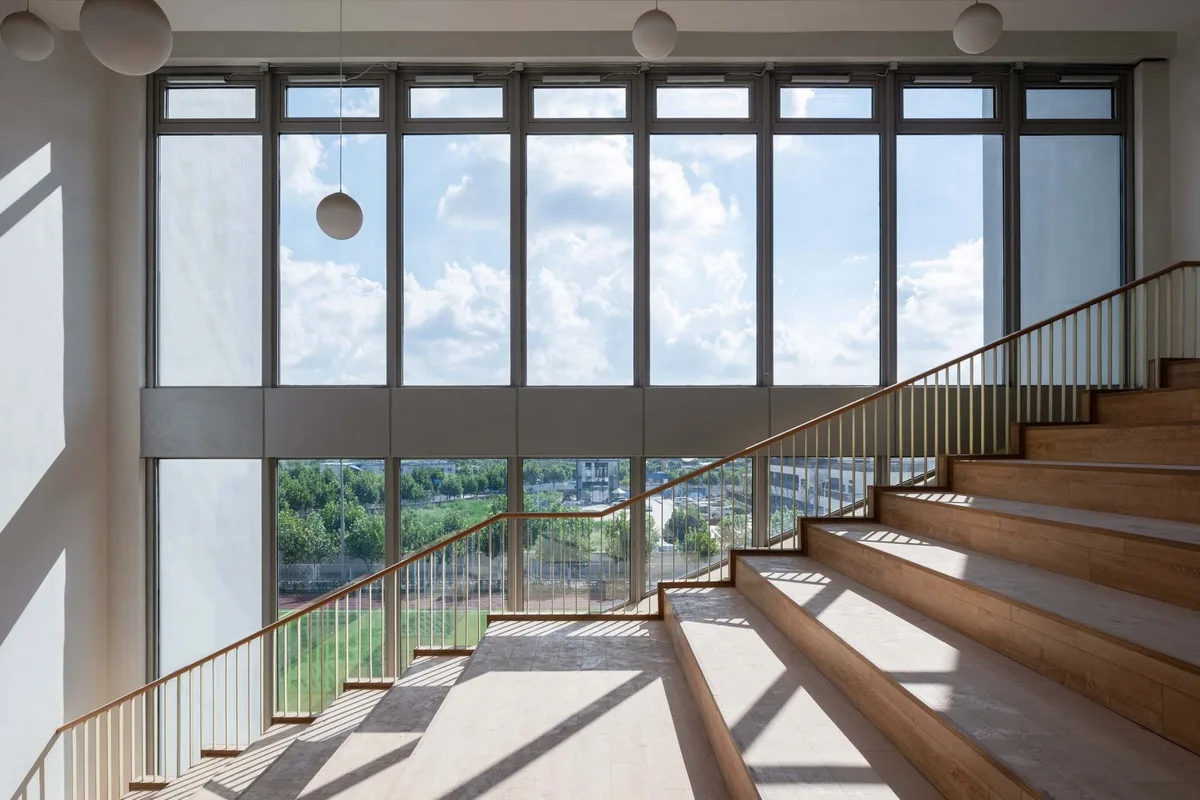
Library atrium
The cultural and sports building features a central atrium with a spiraling public staircase that connects four core facilities. This design efficiently manages vertical circulation among the swimming pool, basketball court, table tennis hall, theater, and cafeteria.
A serrated north-facing skylight illuminates the atrium, while winding pathways create a balanced spatial experience through dynamic changes in light and shadow, resulting in a refined and fractal spatial atmosphere.
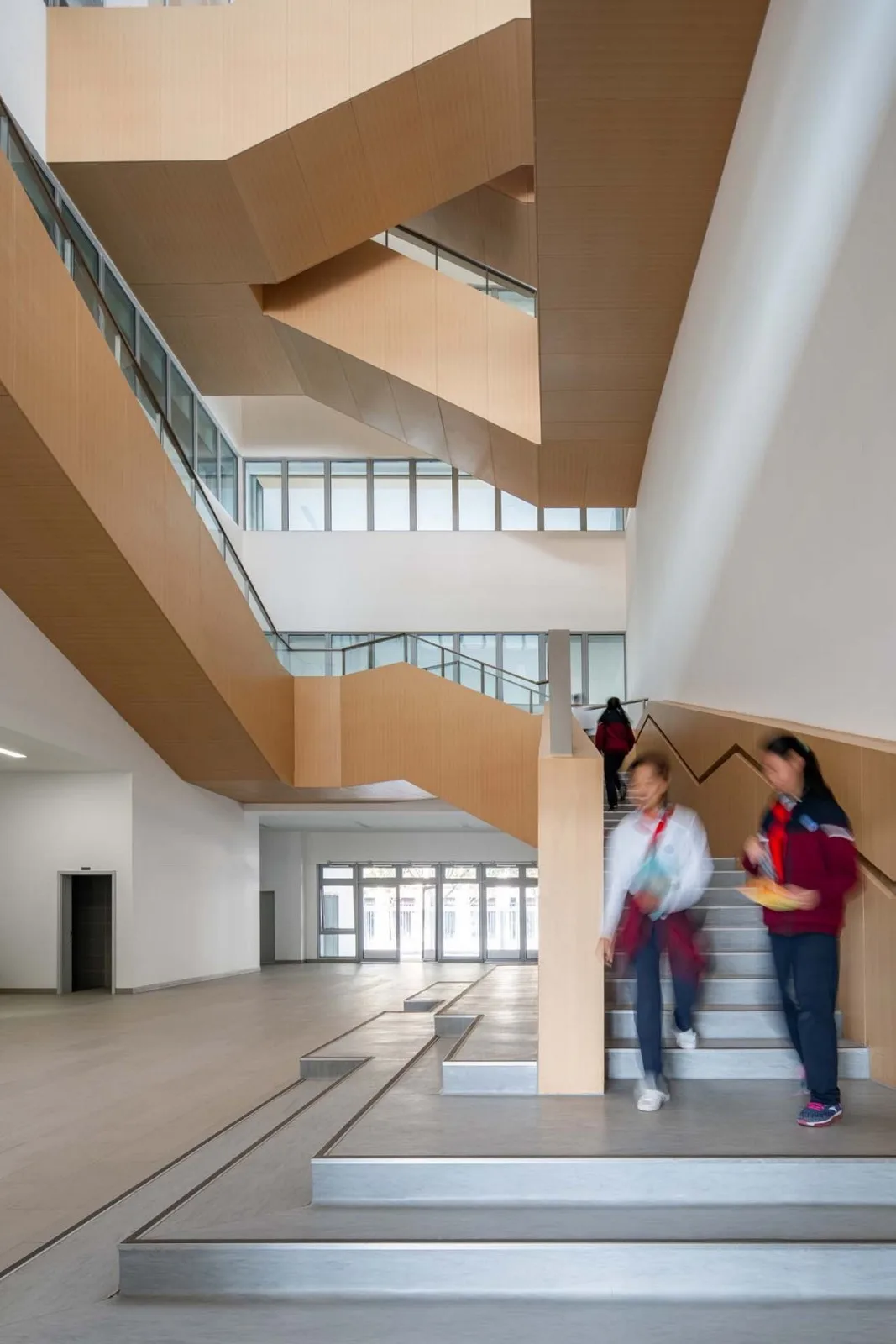
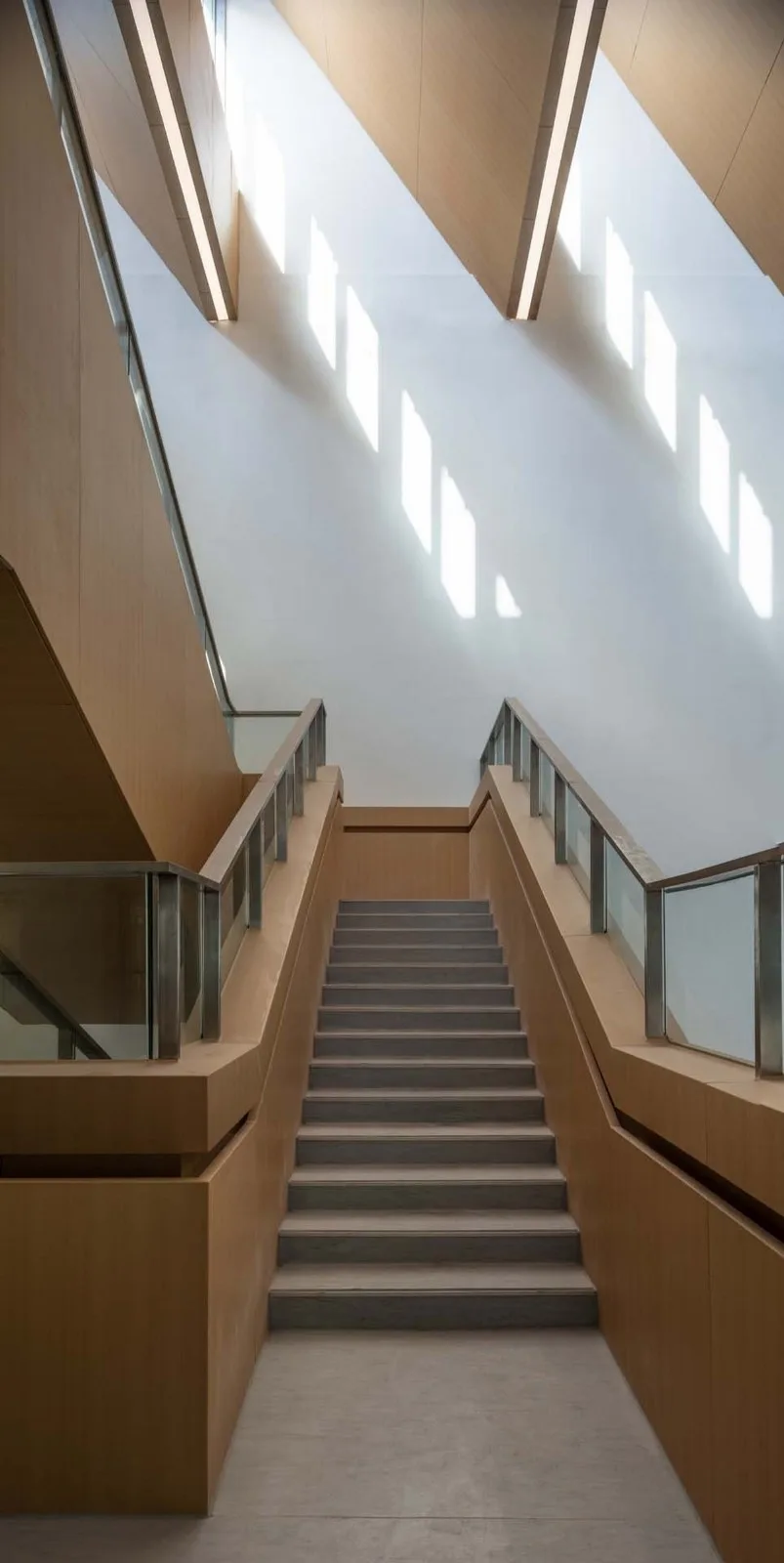
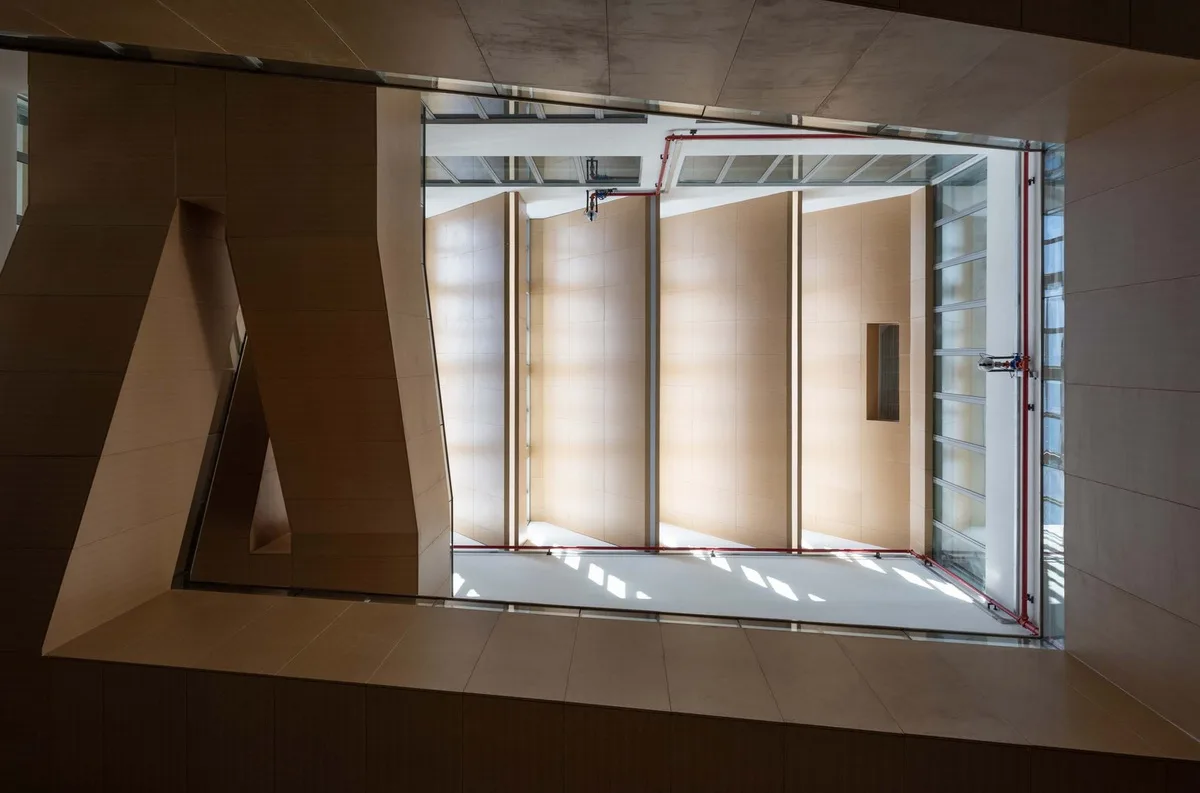
Courtyard of the Culture and Sports Building
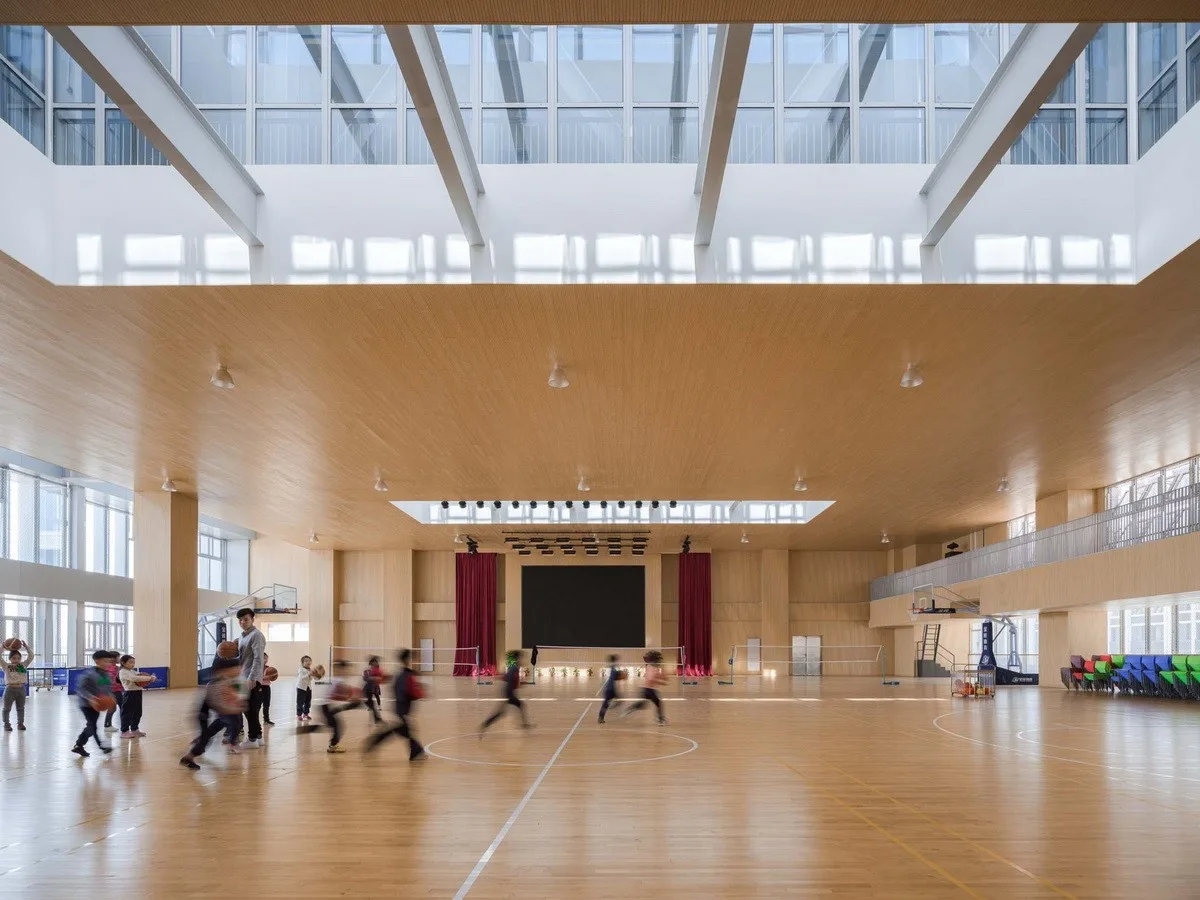
Sports Center
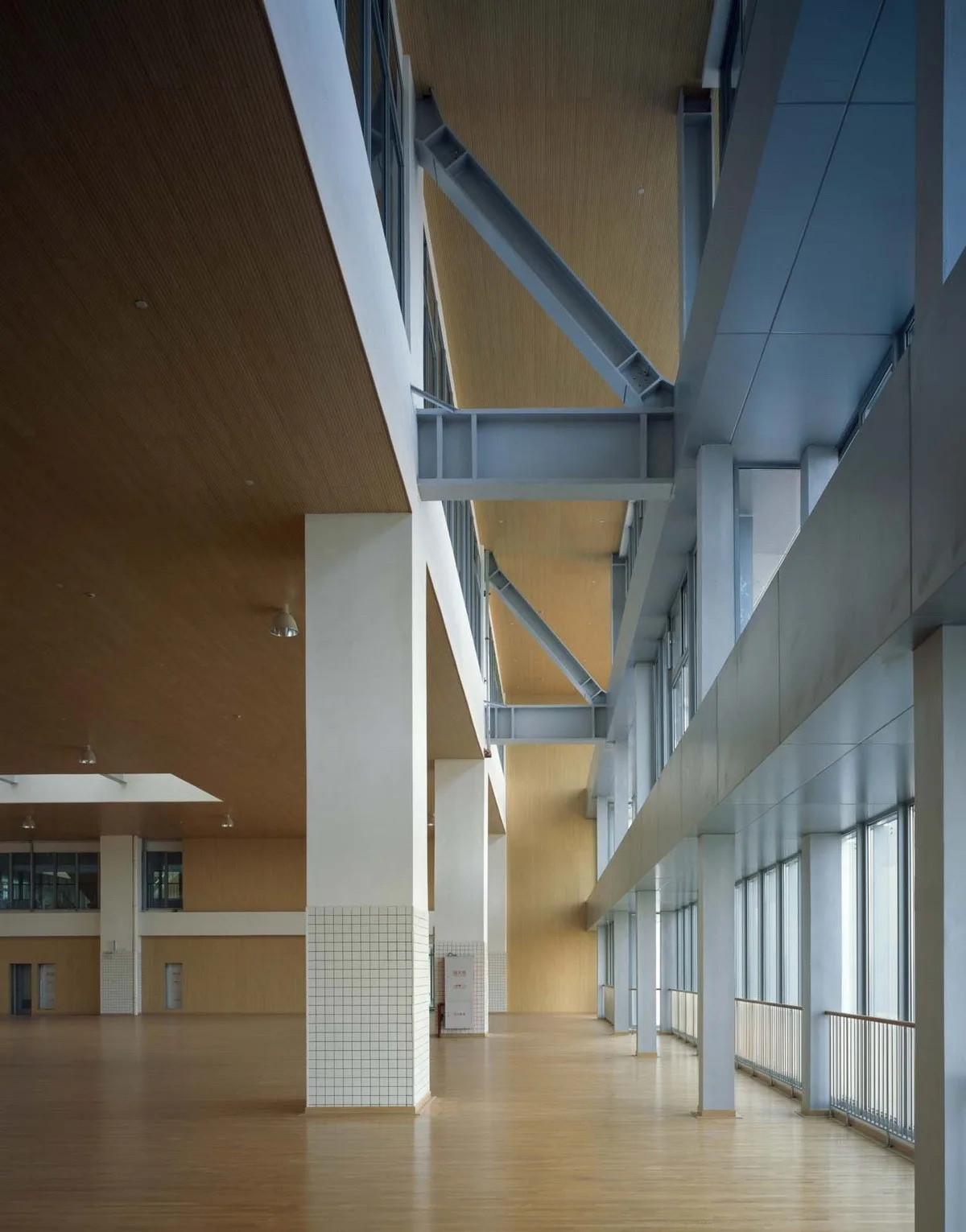
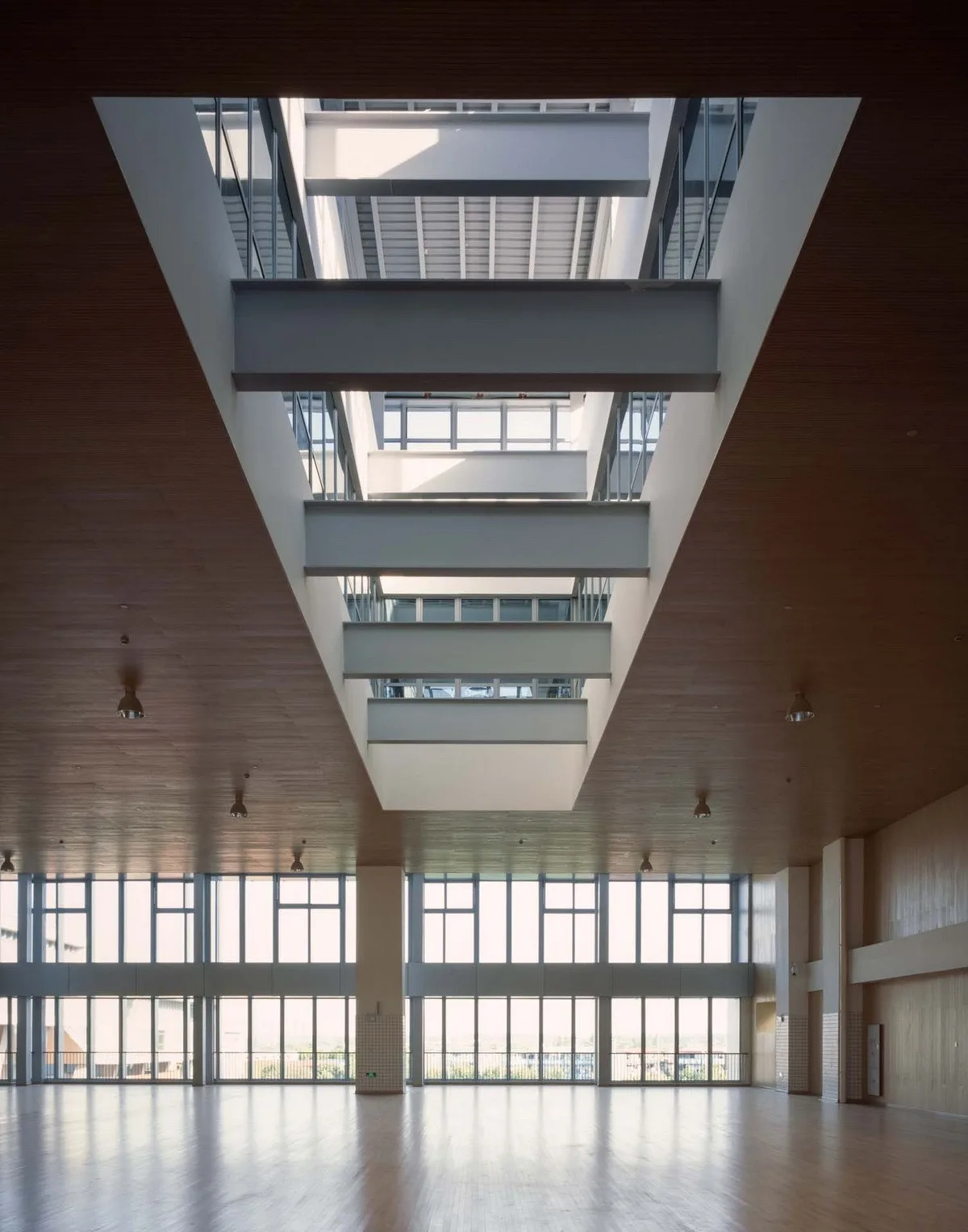
Basketball court
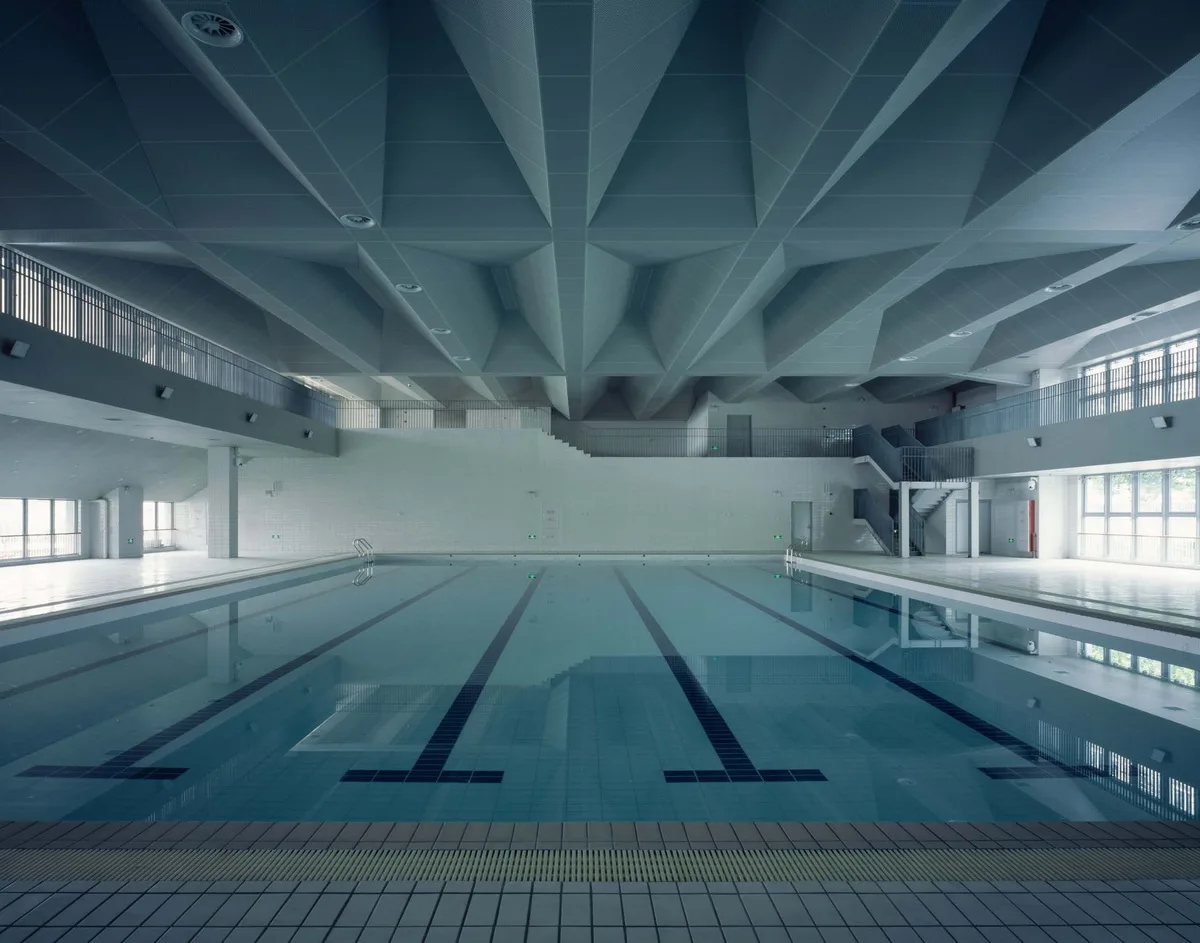
Swimming Pool
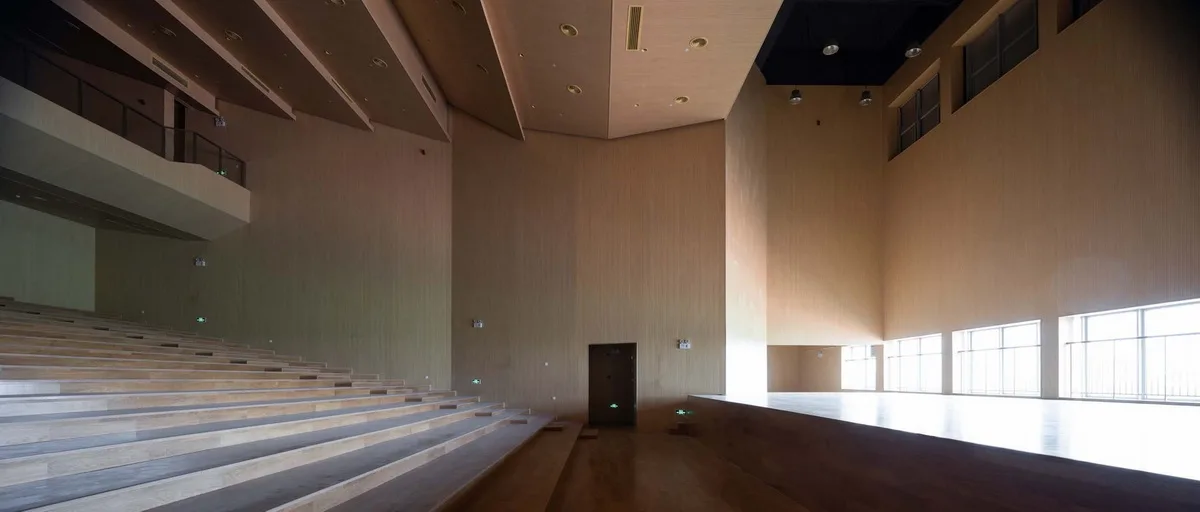
Auditorium
The preschool department operates independently on the ground level, separated from the primary and secondary school areas, but connected below ground via a shared garage. The preschool’s multifunctional hall and office areas, located on the western end of the second and third floors, form a cantilevered volume with double-layered balconies facing the sports field and community, continuing the campus’s public interface.
The preschool spaces are organized around a small, intimate courtyard on the south side, with an open staircase that connects floors and extends into an indoor amphitheater on the ground floor, providing a playful and welcoming environment for young children.
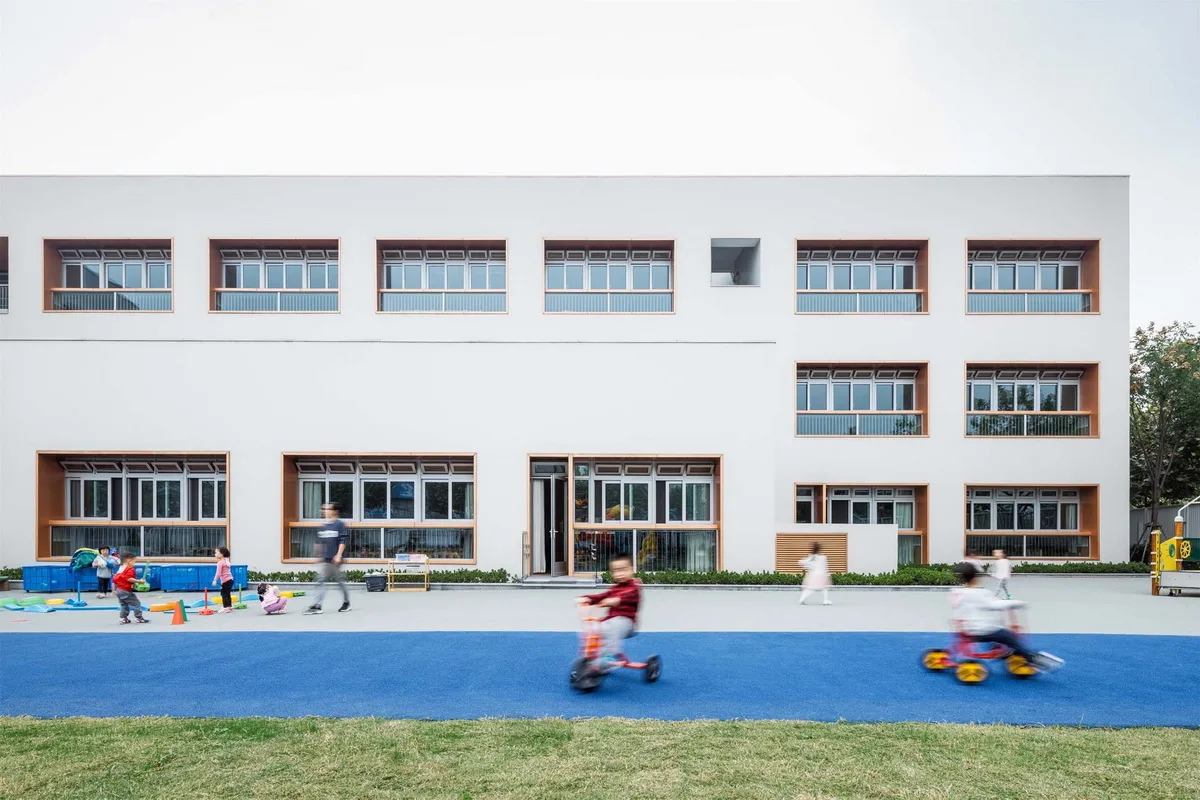
Outdoor kindergarten play area
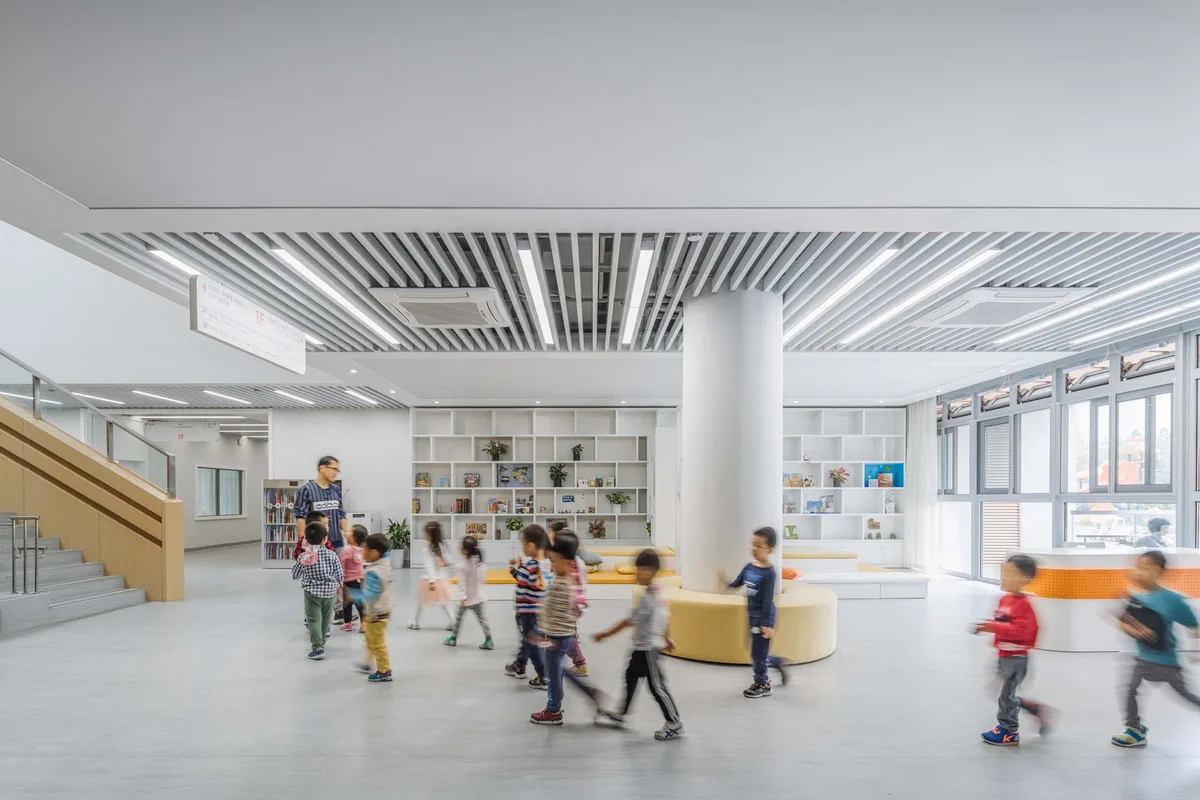
Indoor kindergarten space
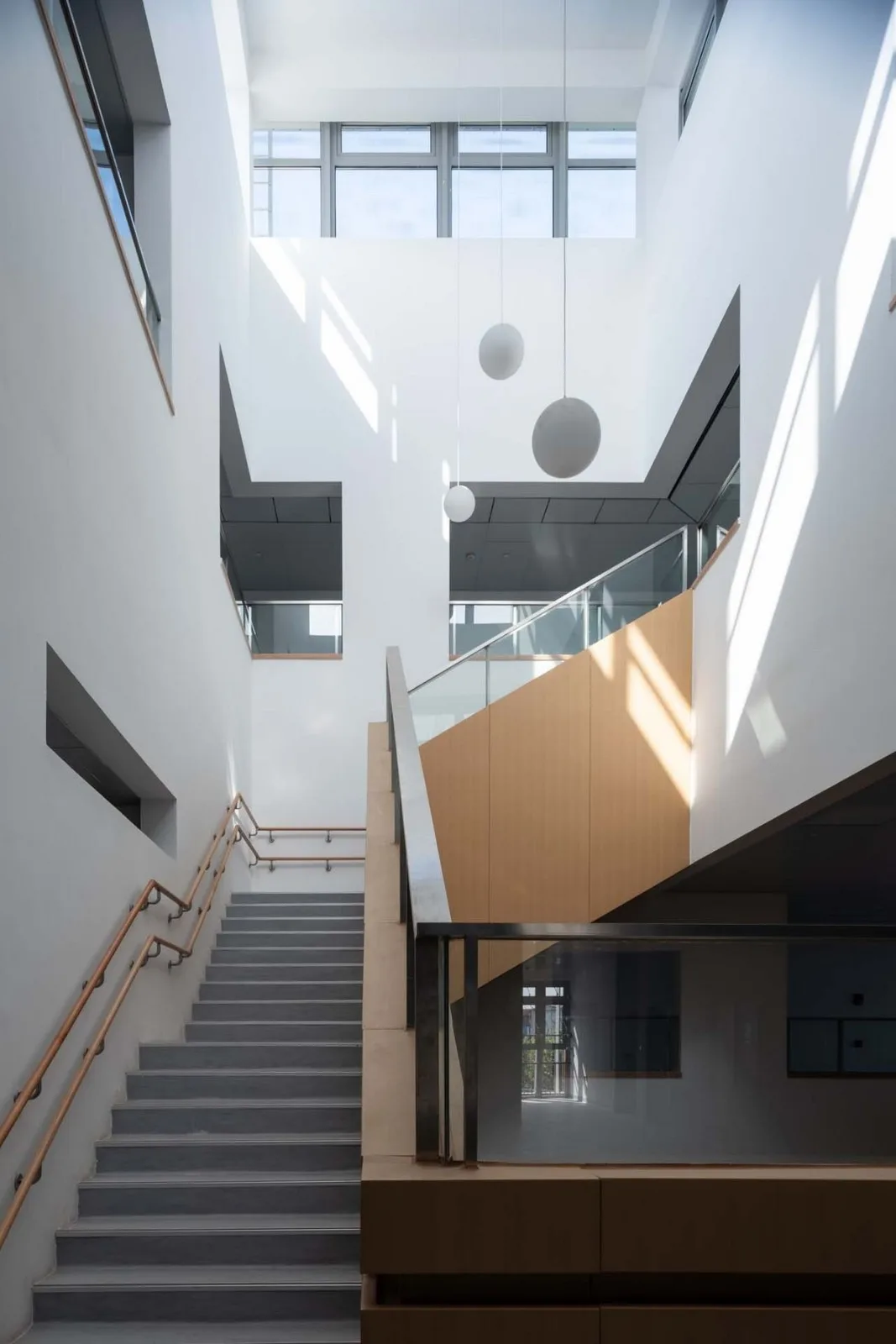
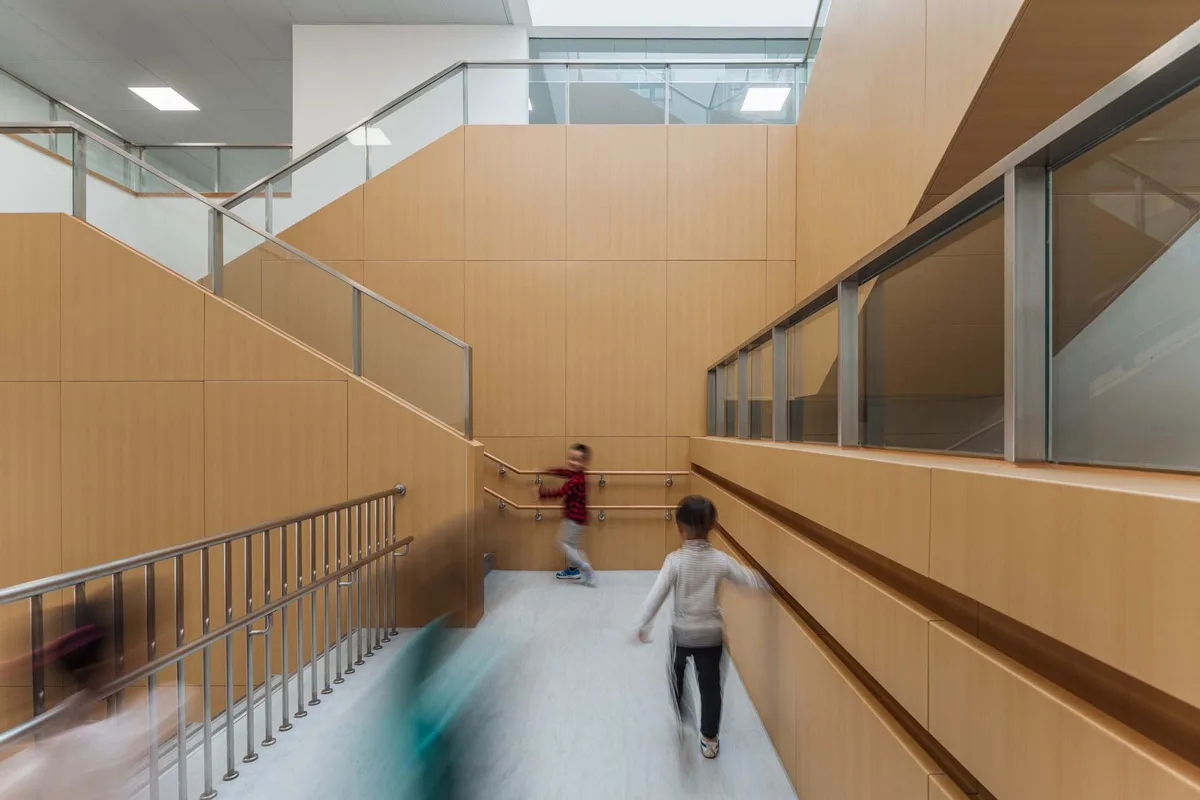
Kindergarten atrium
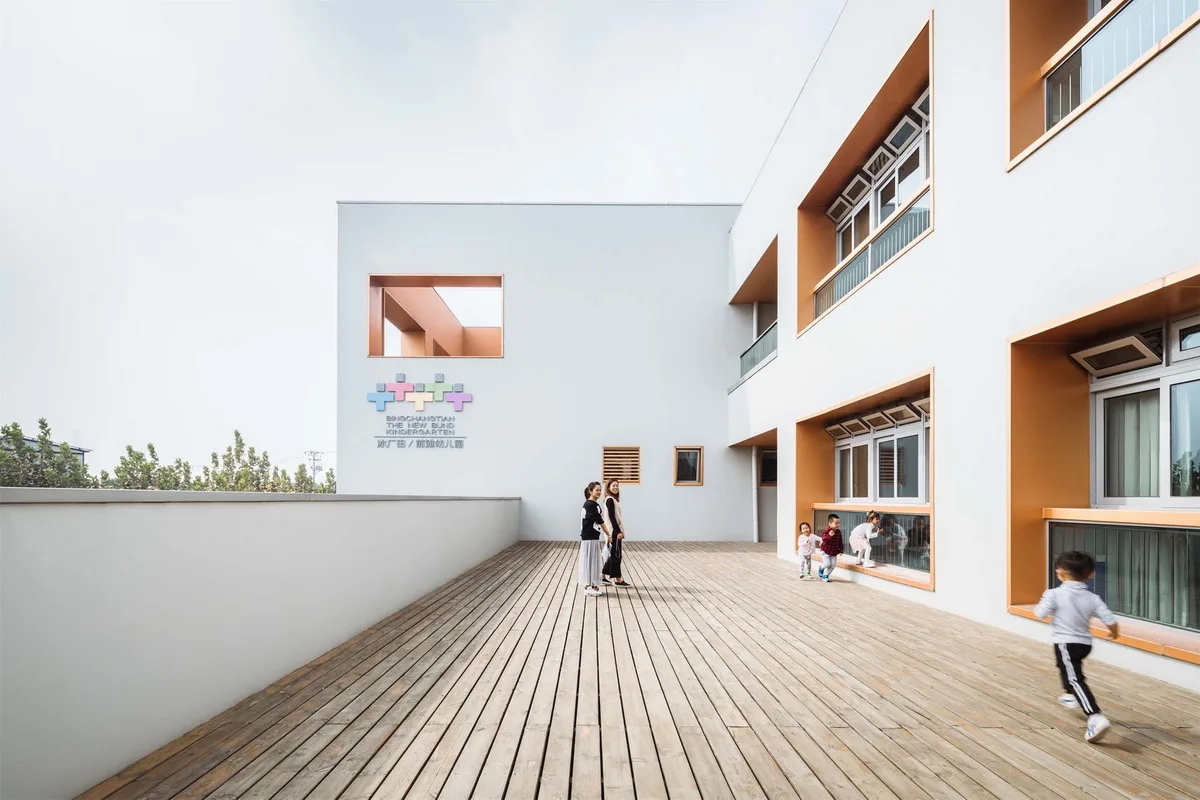
Outdoor kindergarten area
Given the high-density and spatial complexity of Qiantan School, specialized structural solutions were employed in key areas to support spatial integration. Around the sports field, an inclined column structure creates a floating sensation for the upper volumes and openness of the platforms.
The cultural and sports building’s western sports section features a complex steel structure to accommodate three large-span spaces stacked vertically: the swimming pool, basketball court, and table tennis hall. The upper-level table tennis hall is cleverly situated within the space between the enlarged basketball hall’s roof trusses. To enhance natural lighting, two large skylight wells extend through the table tennis hall, illuminating the basketball court below.
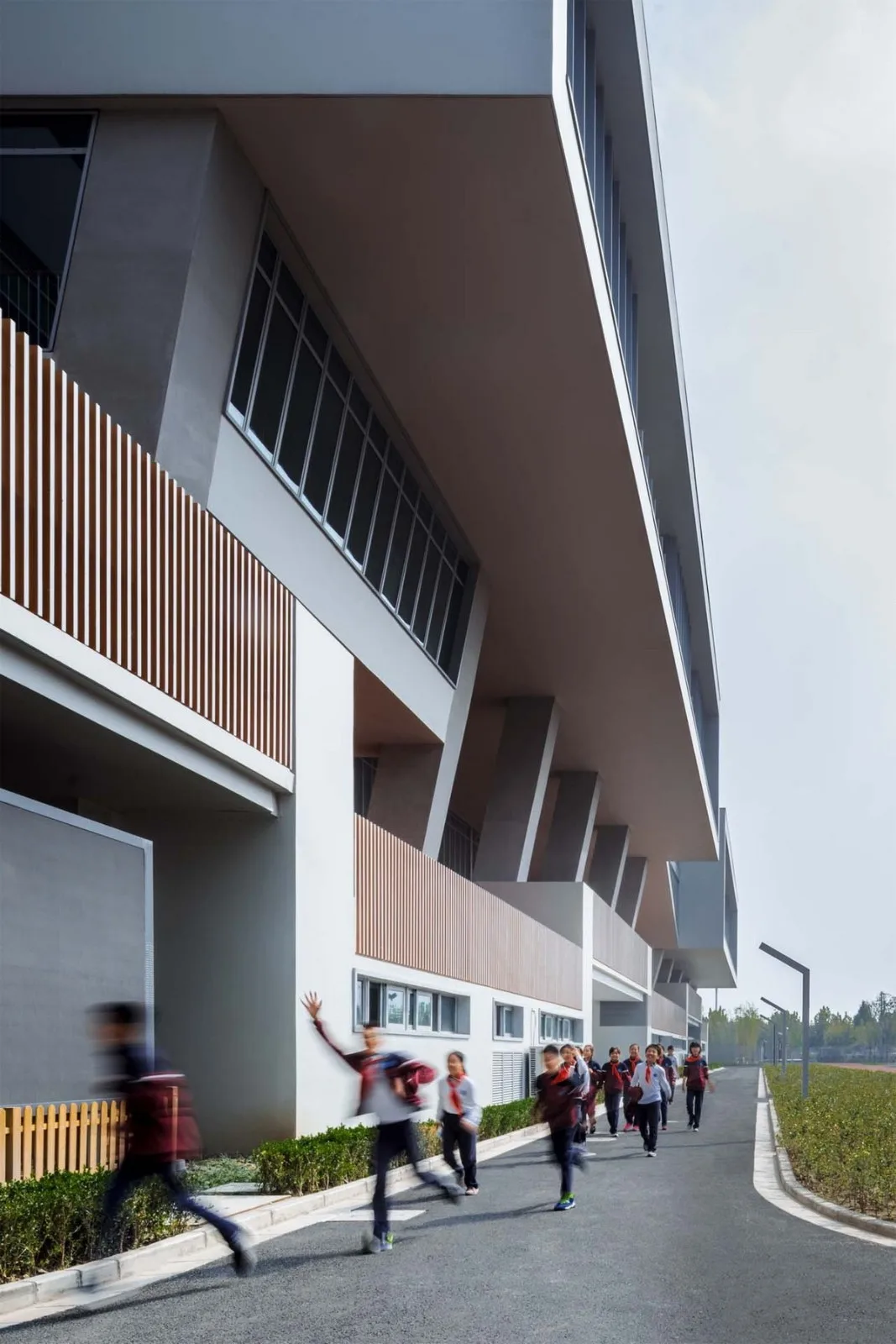
Outdoor area
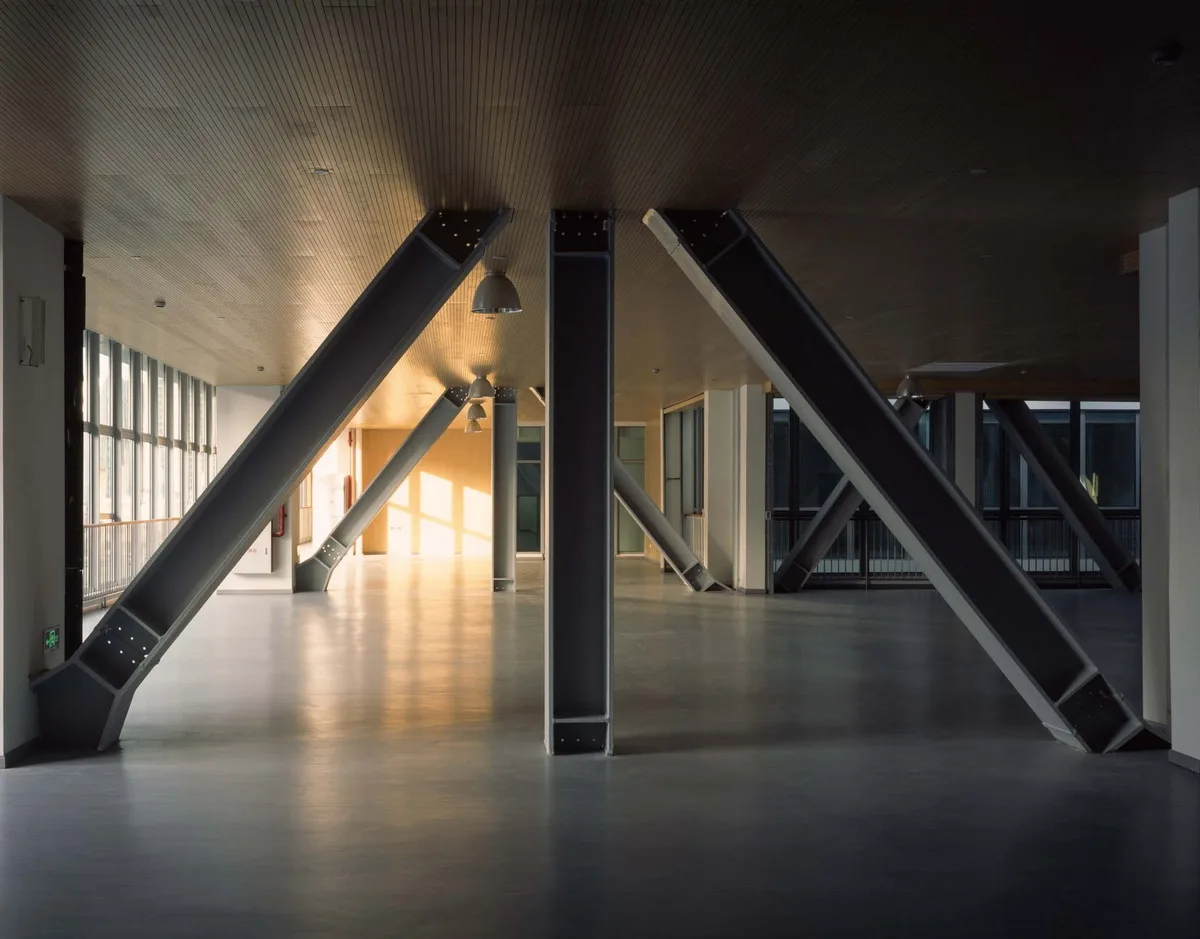
Table Tennis Room
The campus overall features a unified white color palette and simple volumes to create a cohesive visual identity. However, key areas use special materials to express their spatial significance. For instance, transparent box-like structures suspended around the sports field, the copper-clad vertical sunshades enveloping the central comprehensive building, and the staggered glass and perforated copper panels on the cultural and sports building’s western and northern facades all highlight important architectural elements.
Inside, the bright white background continues, but flow-defining elements such as steps and atrium stairs are finished in warm, inviting wood, emphasizing circulation paths. Additionally, the gymnasium and auditorium extensively incorporate wooden acoustic panels, bringing a sense of warmth and intimacy to these large spaces.
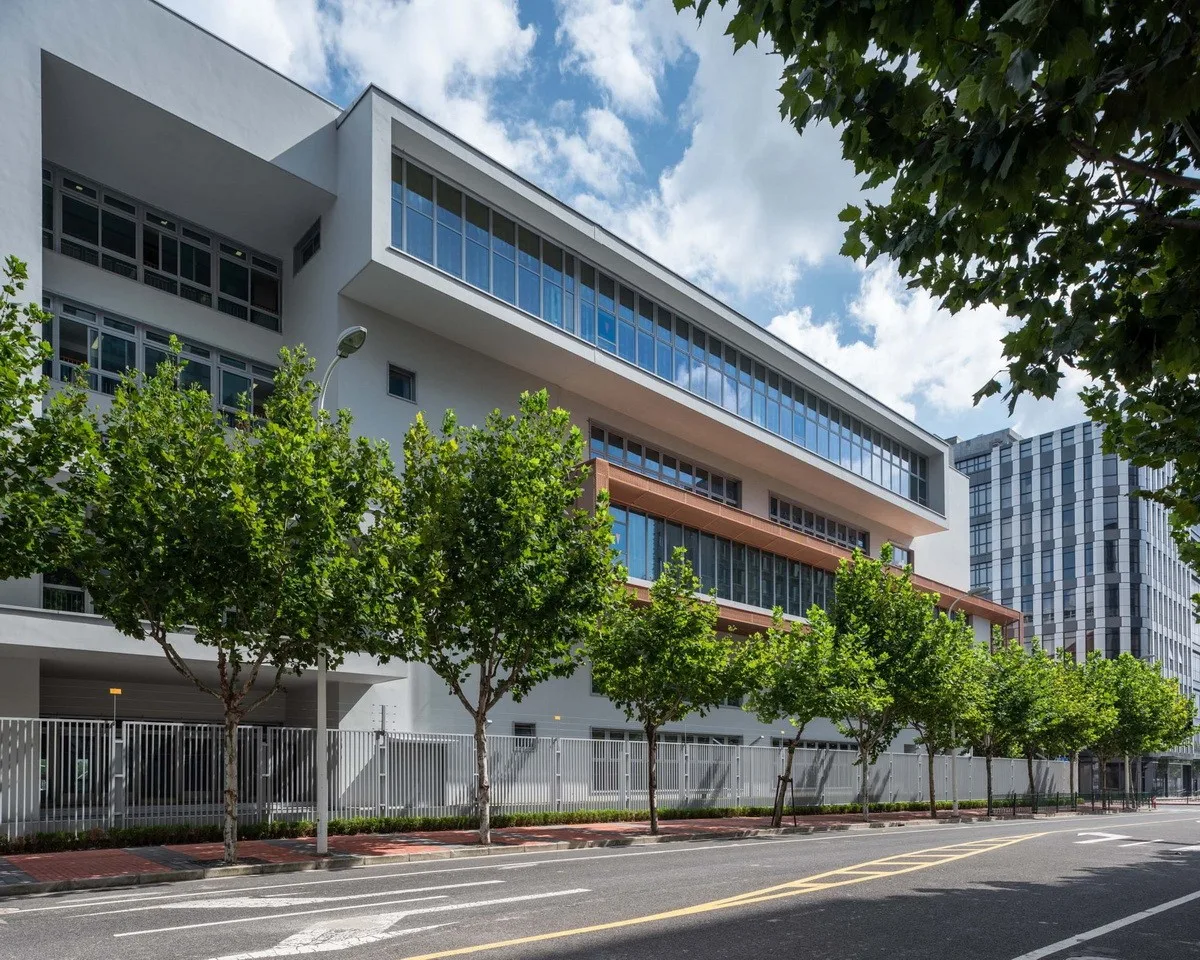
Facade facing the city
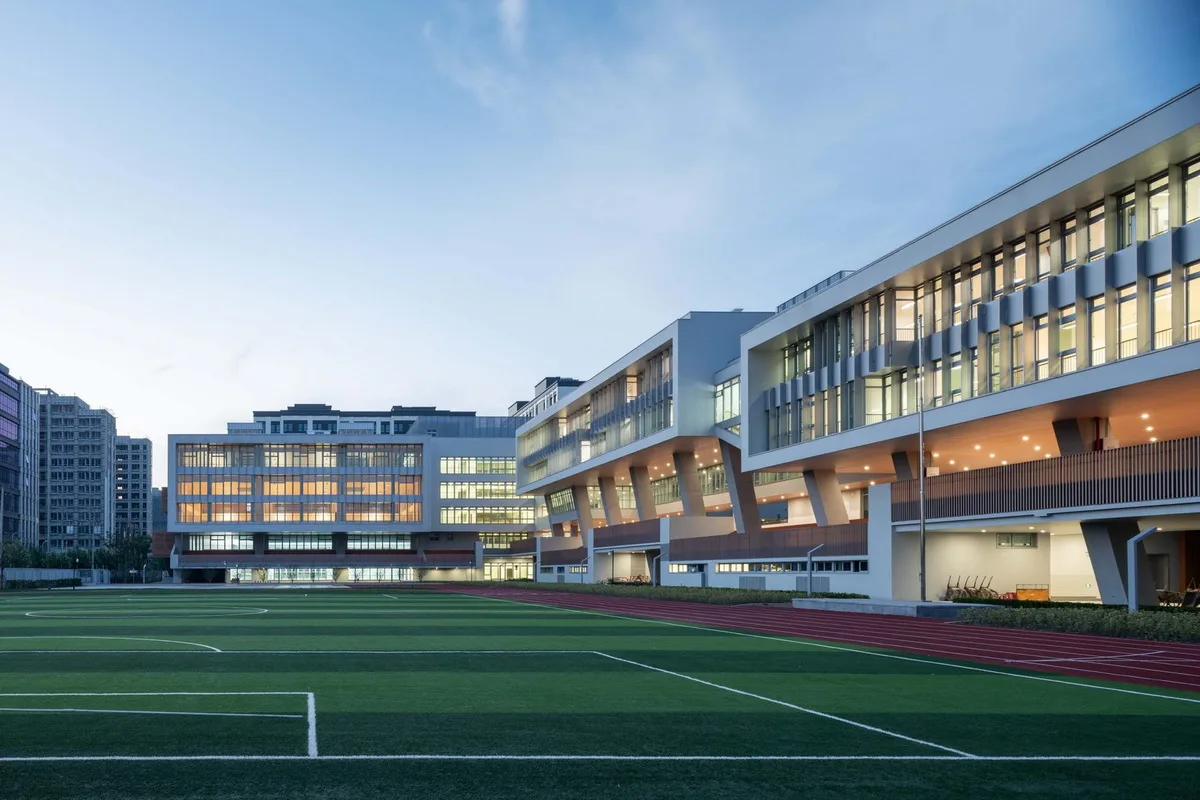
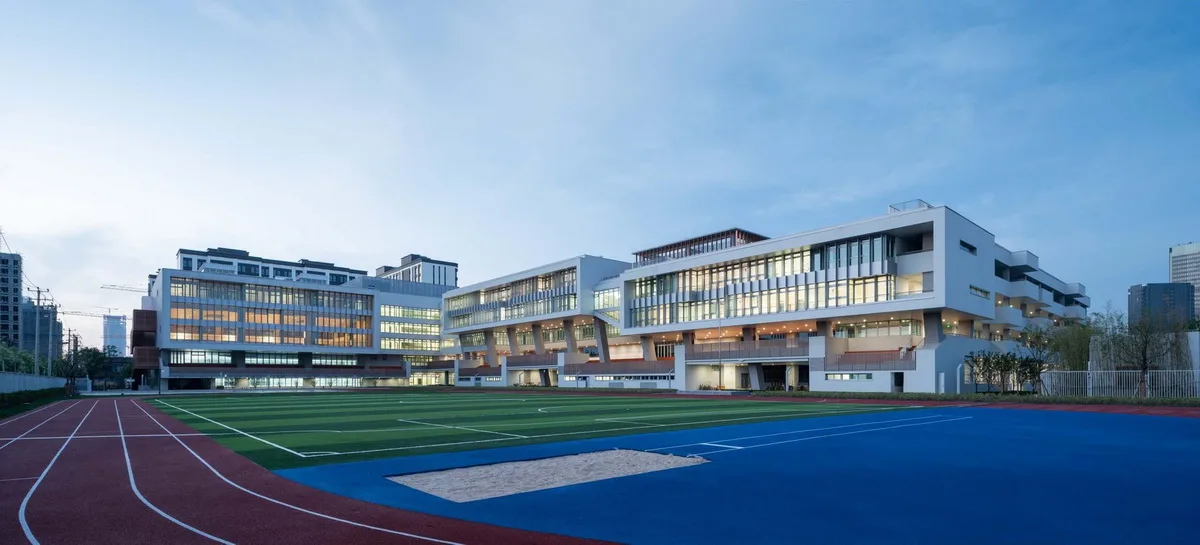
Partial view from the southwest side
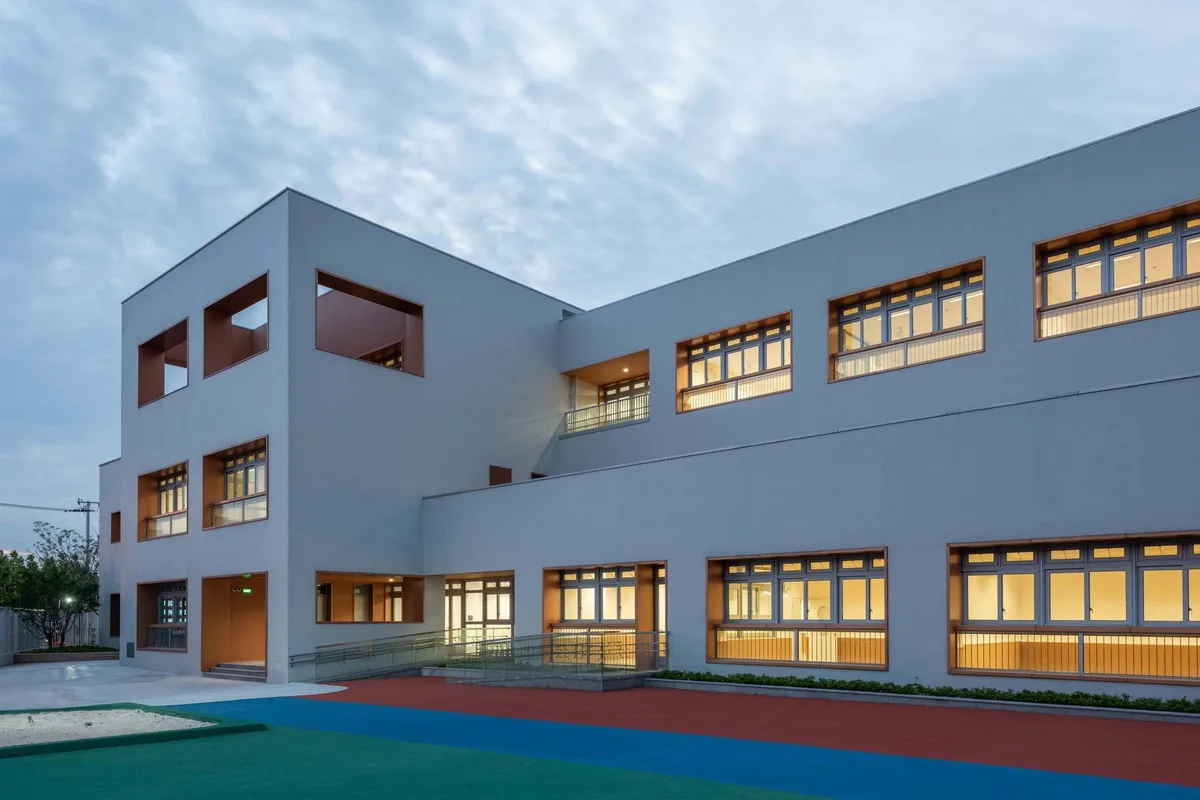
Outdoor kindergarten space
Design Drawings
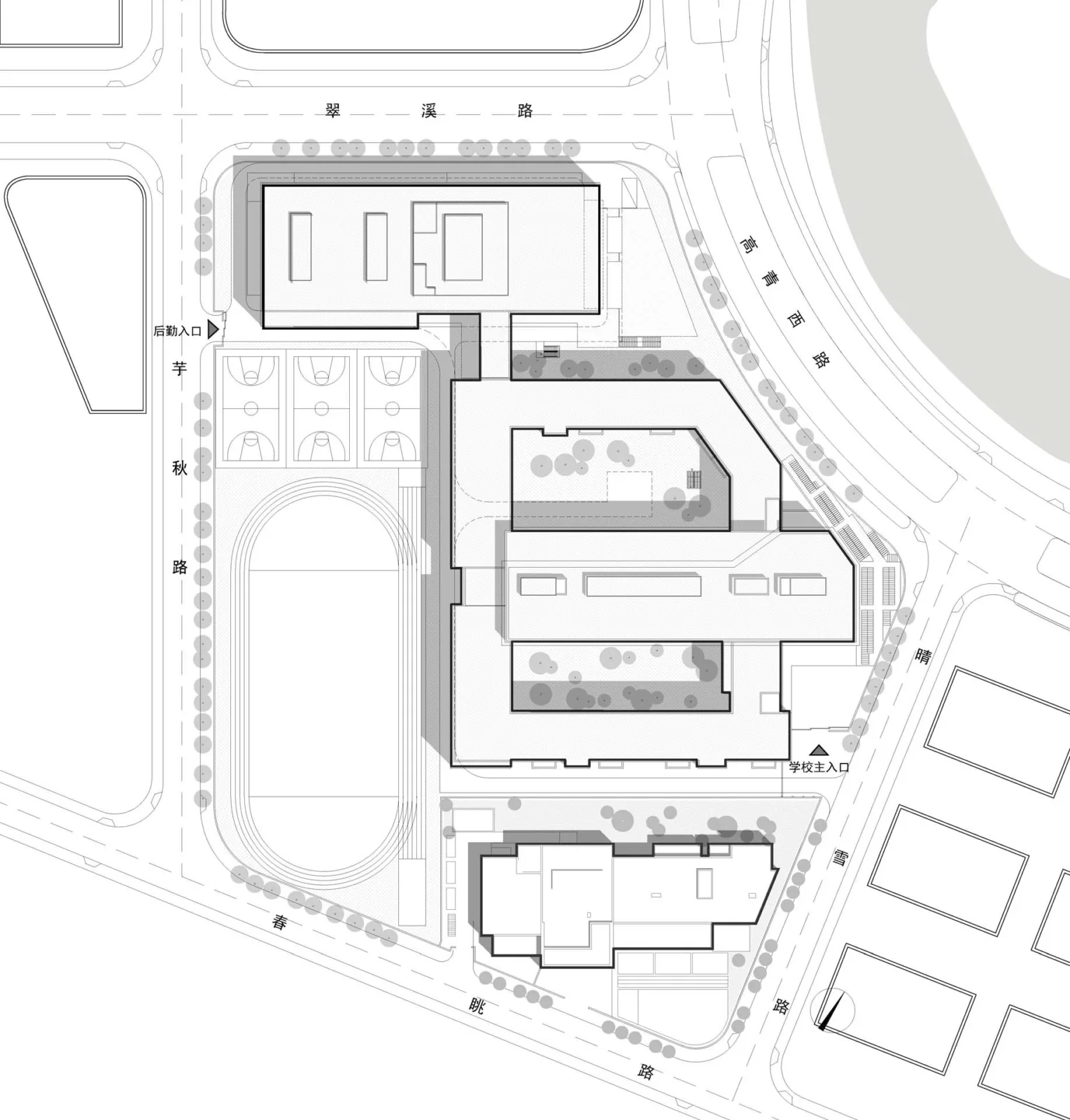
General layout plan
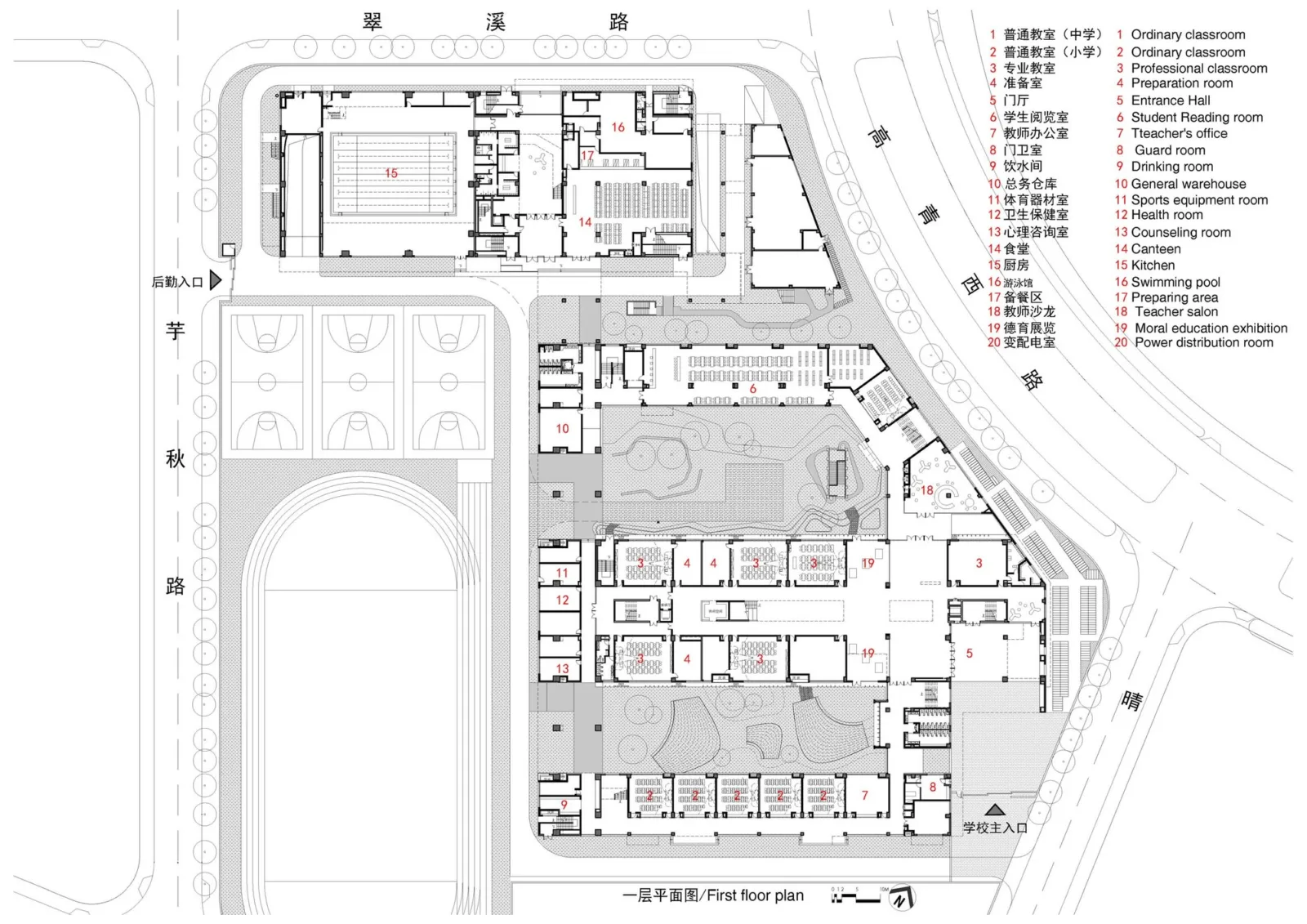
First floor plan of the school
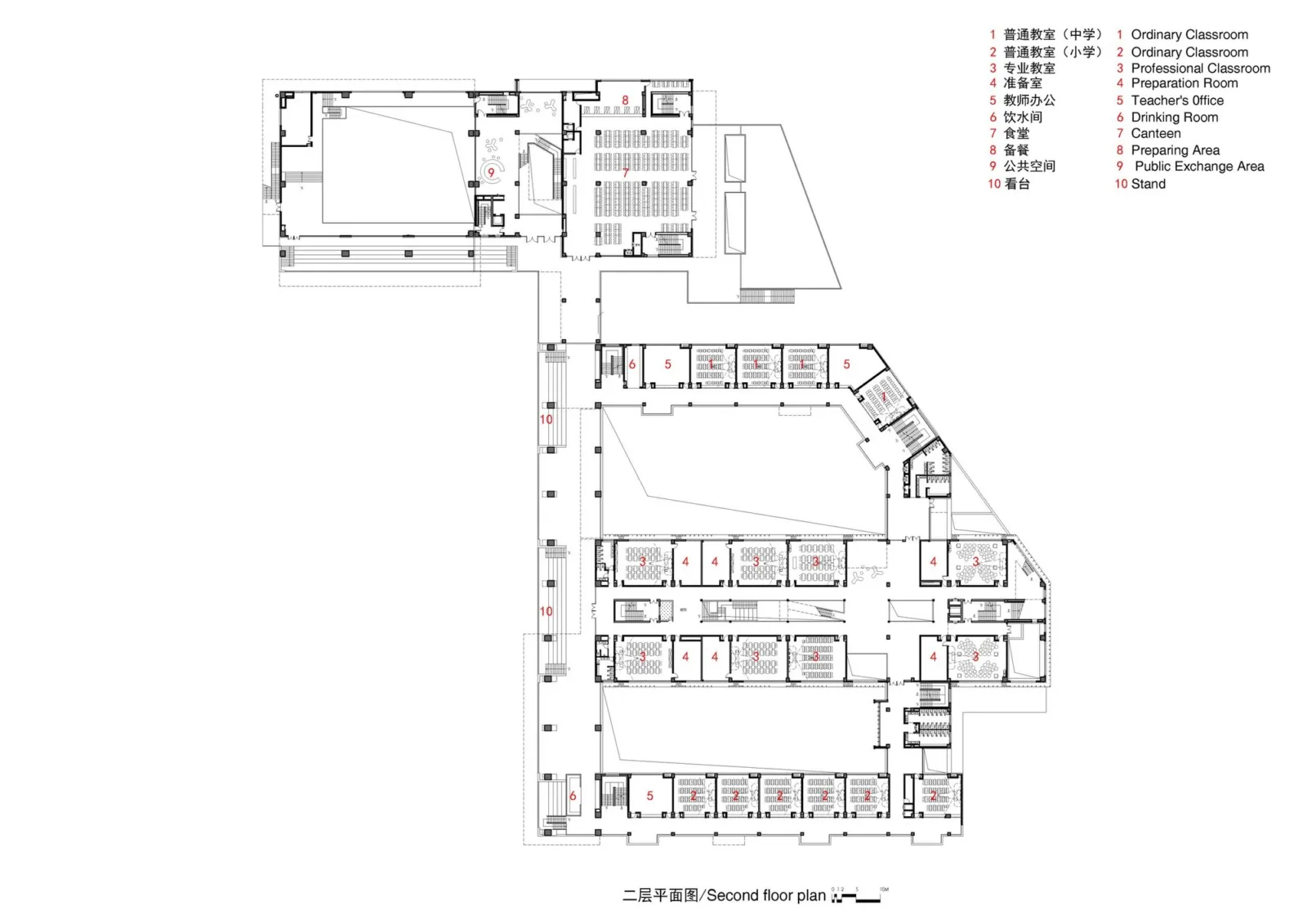
Second floor plan
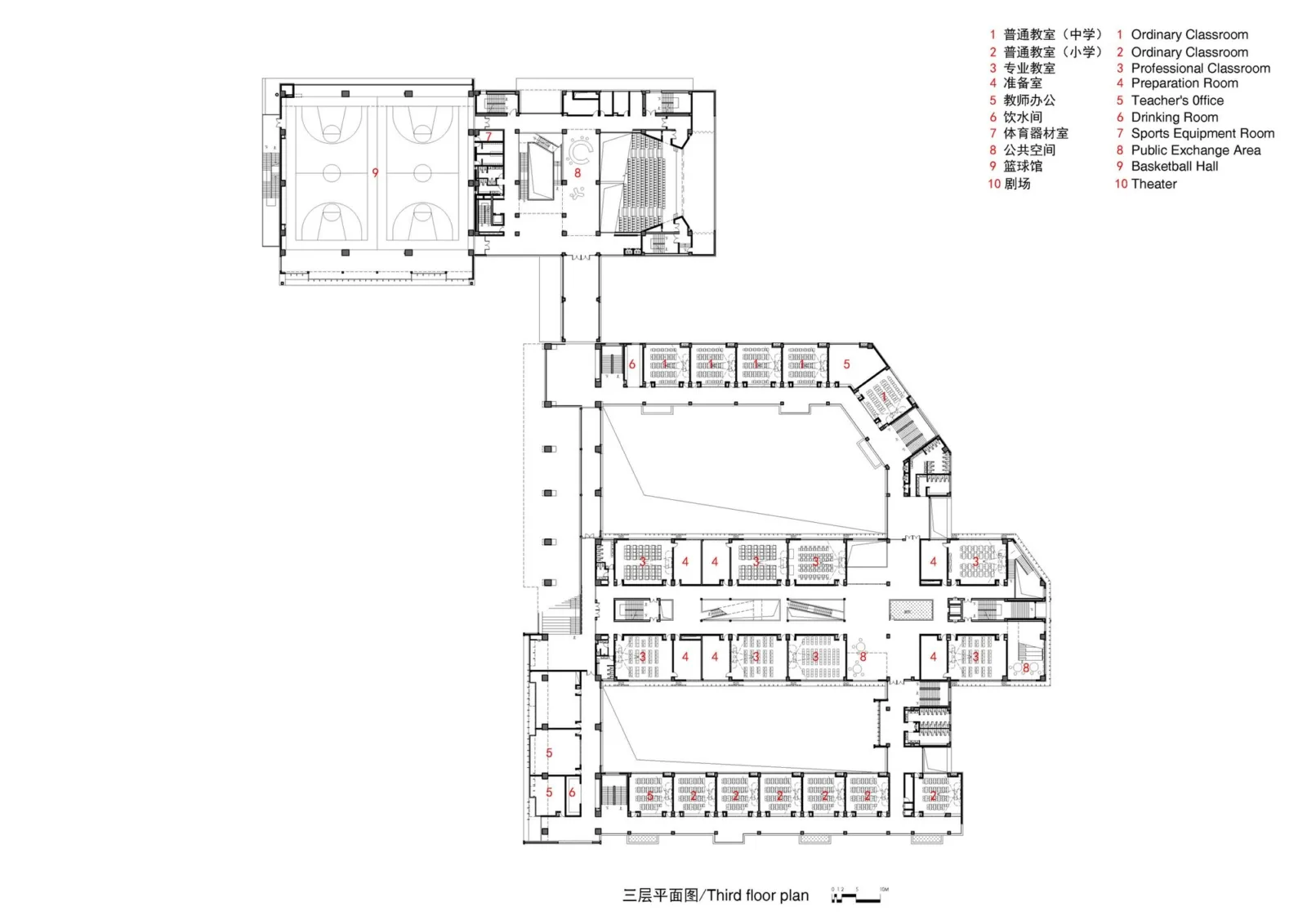
Third floor plan
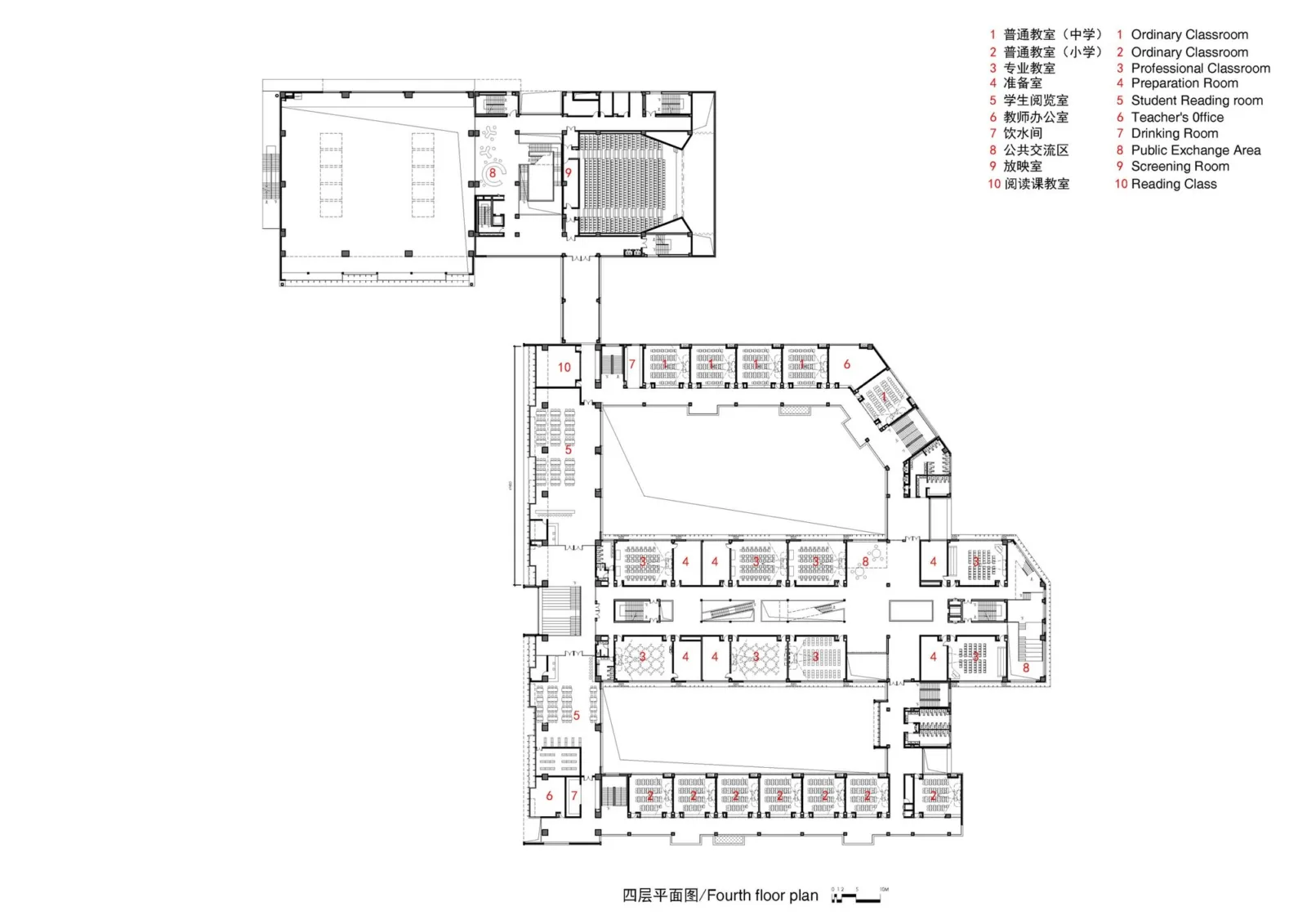
Fourth floor plan
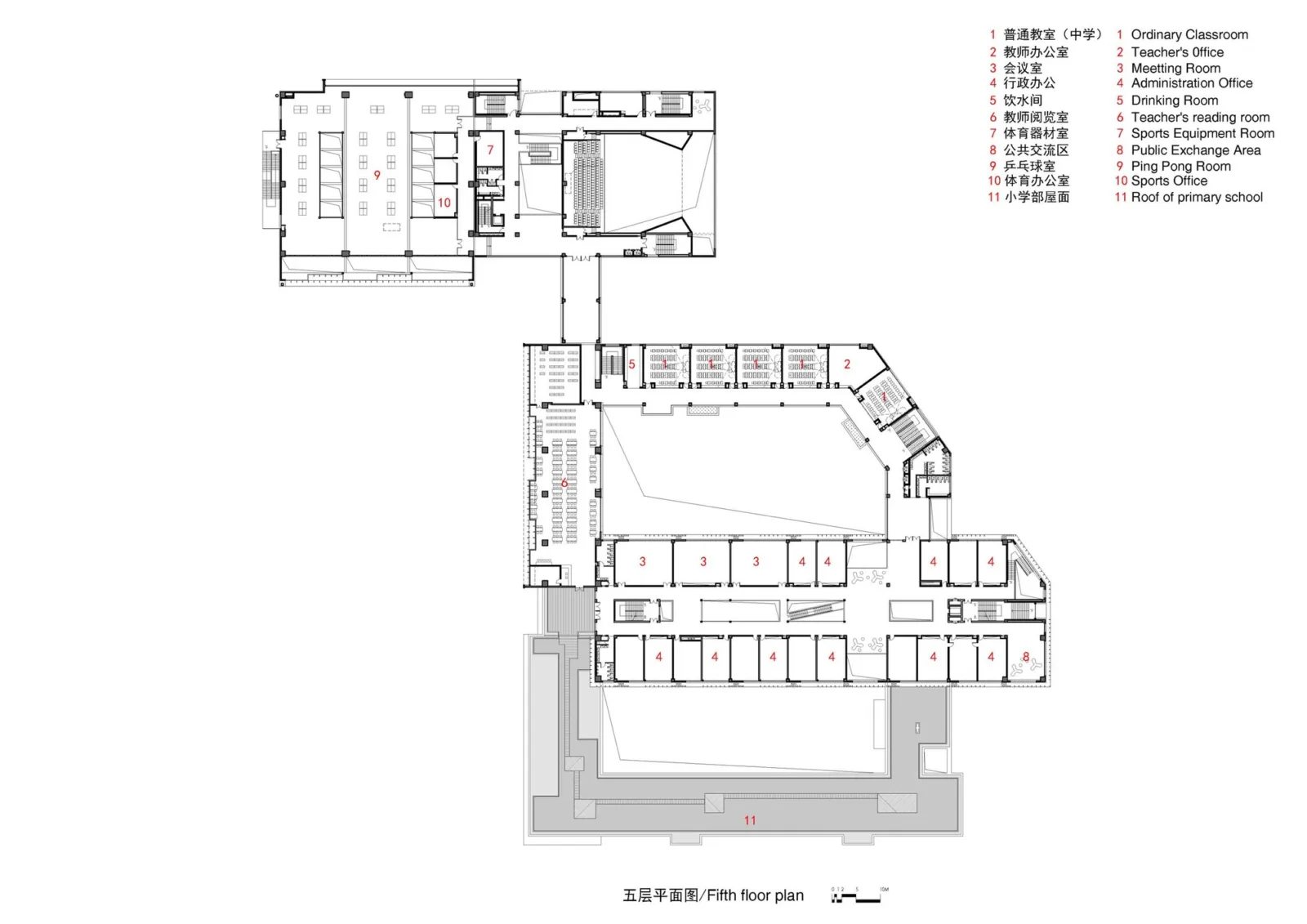
Fifth floor plan
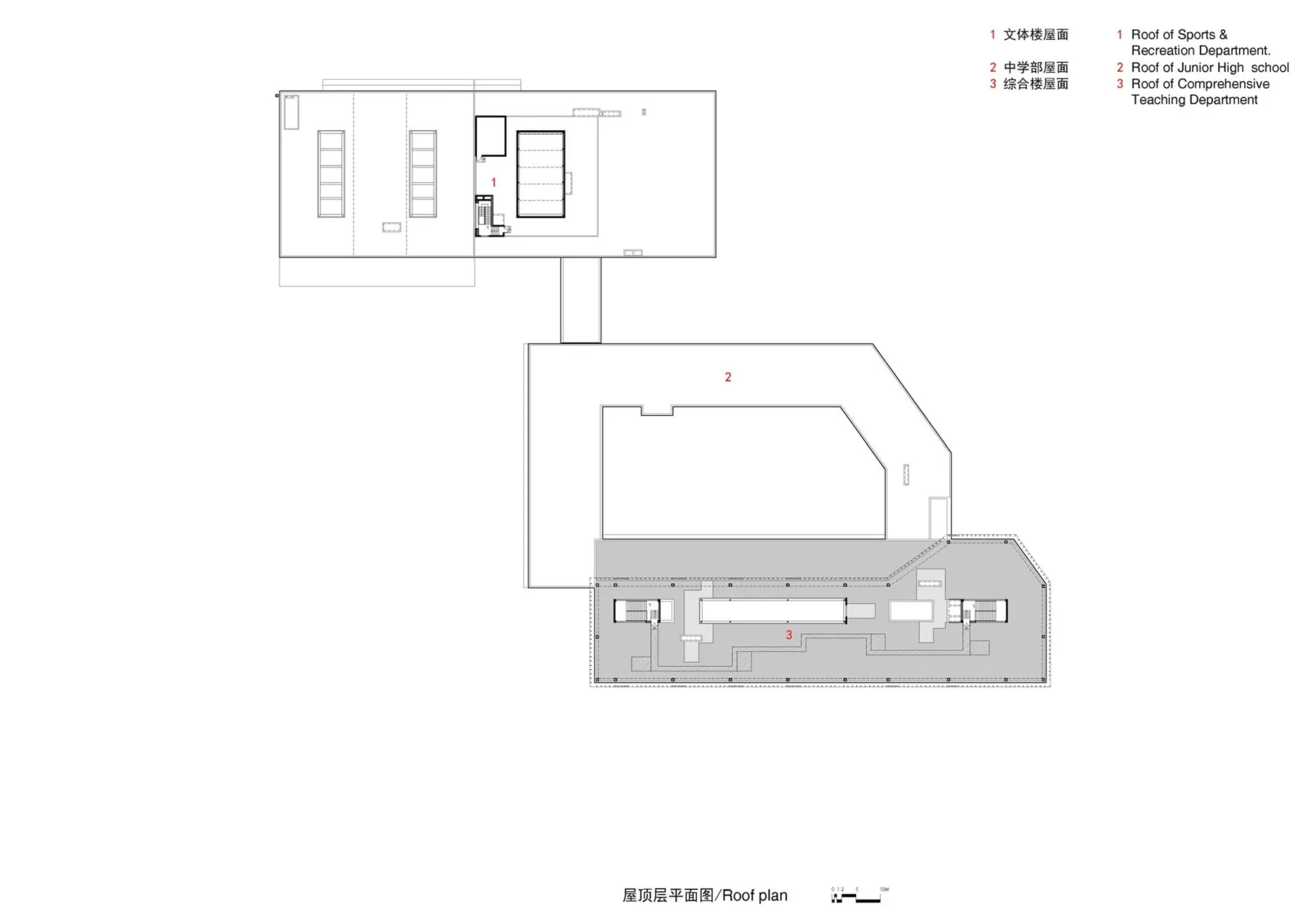
School roof plan
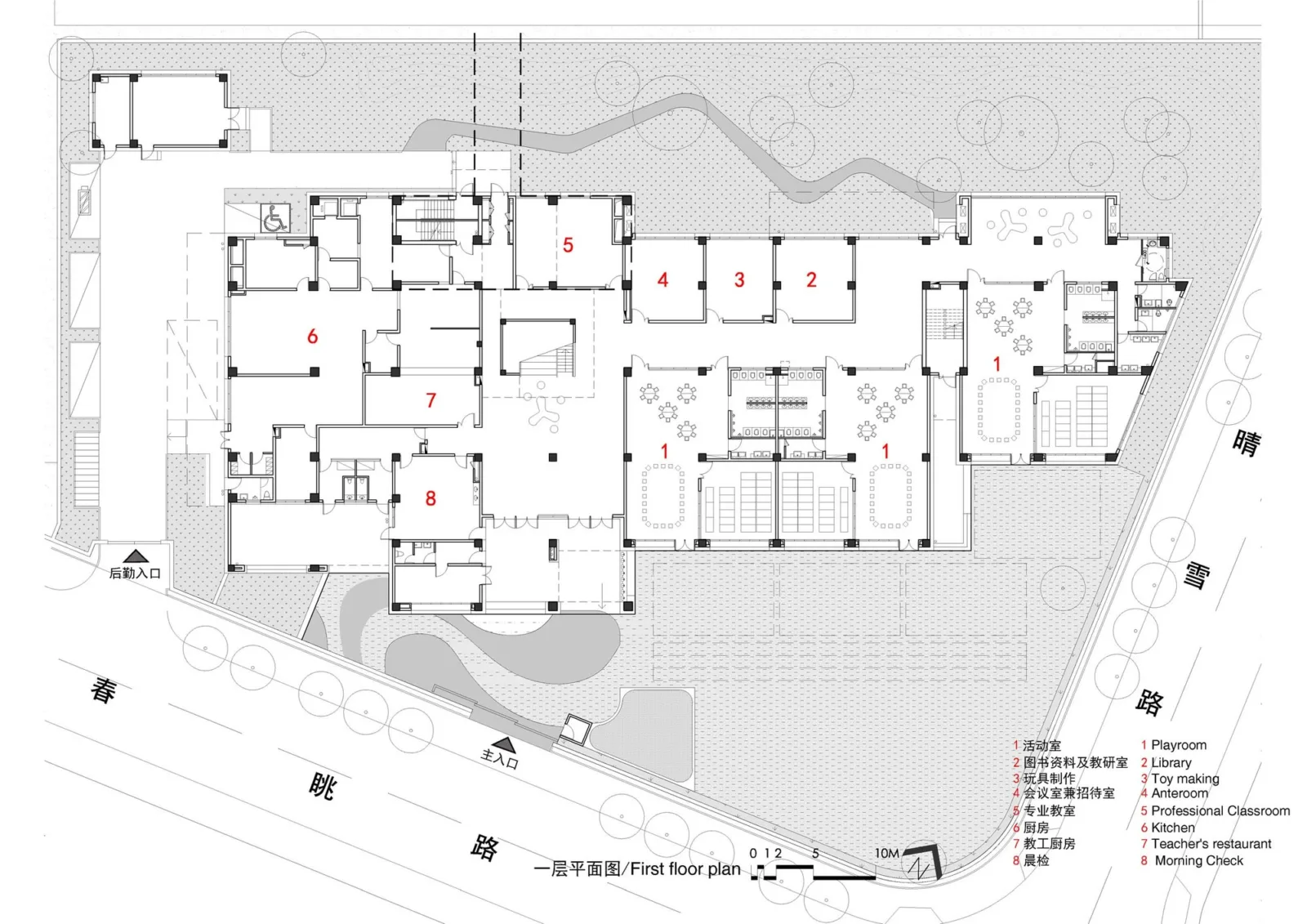
Kindergarten first floor plan
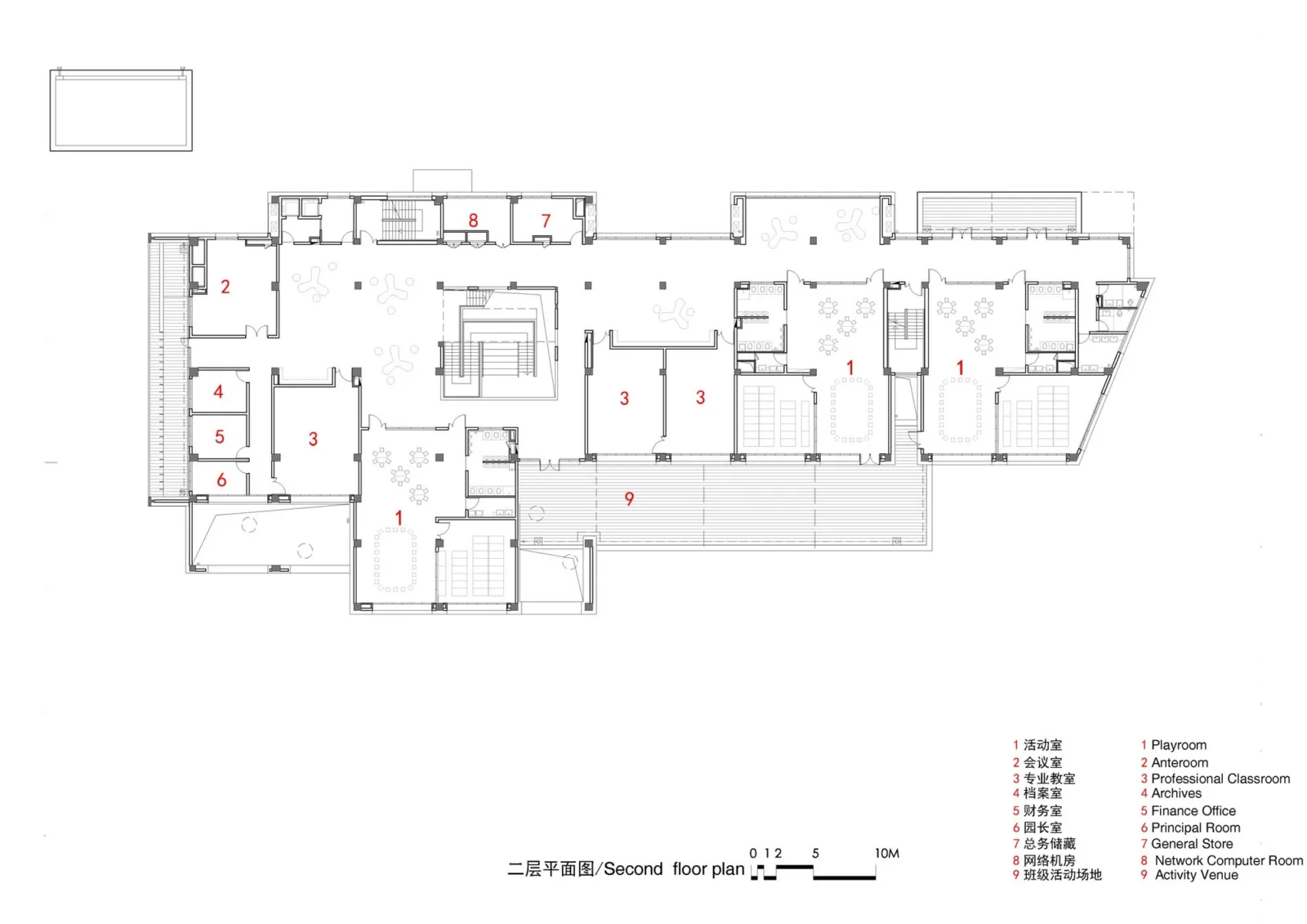
Kindergarten second floor plan
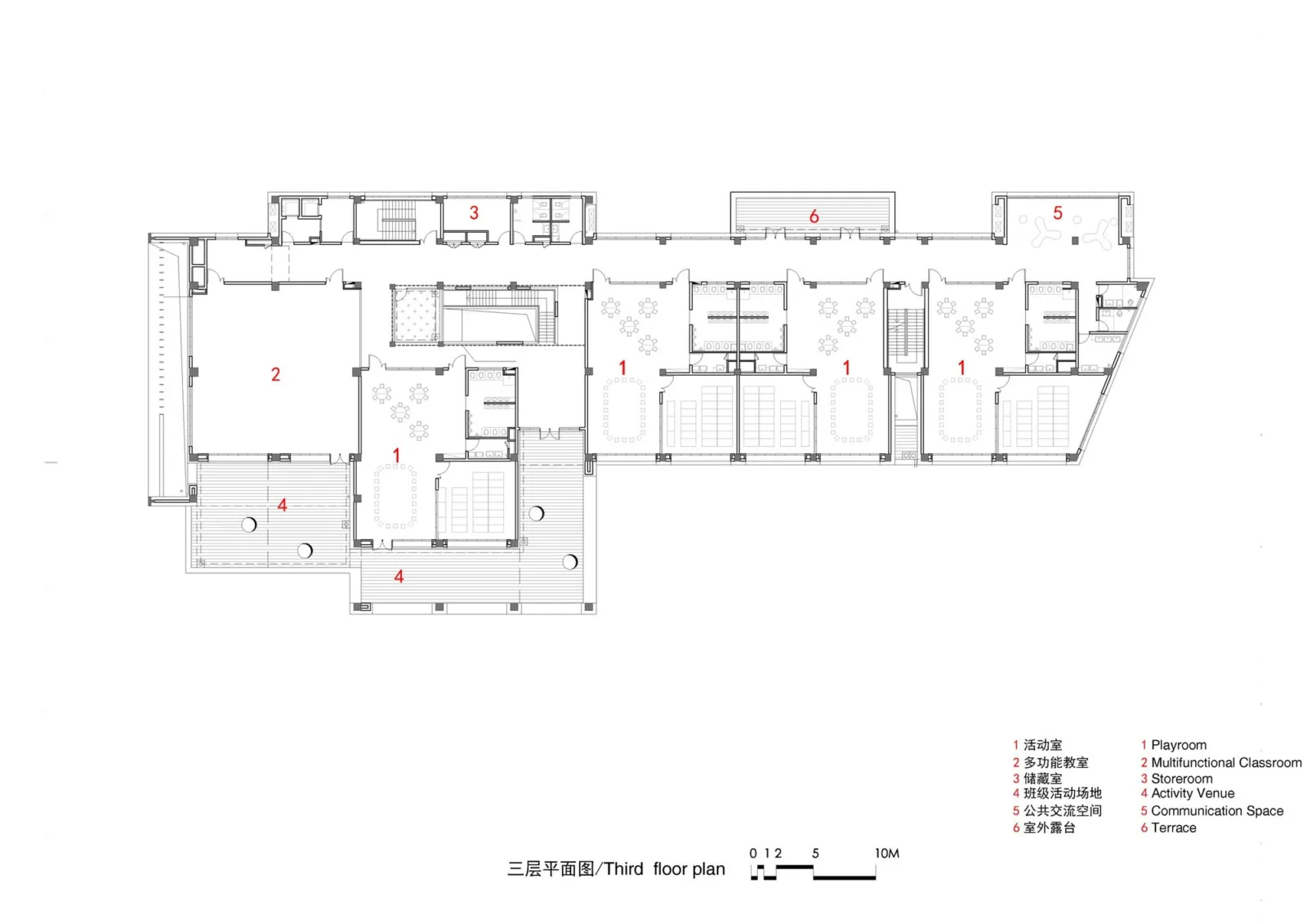
Kindergarten third floor plan
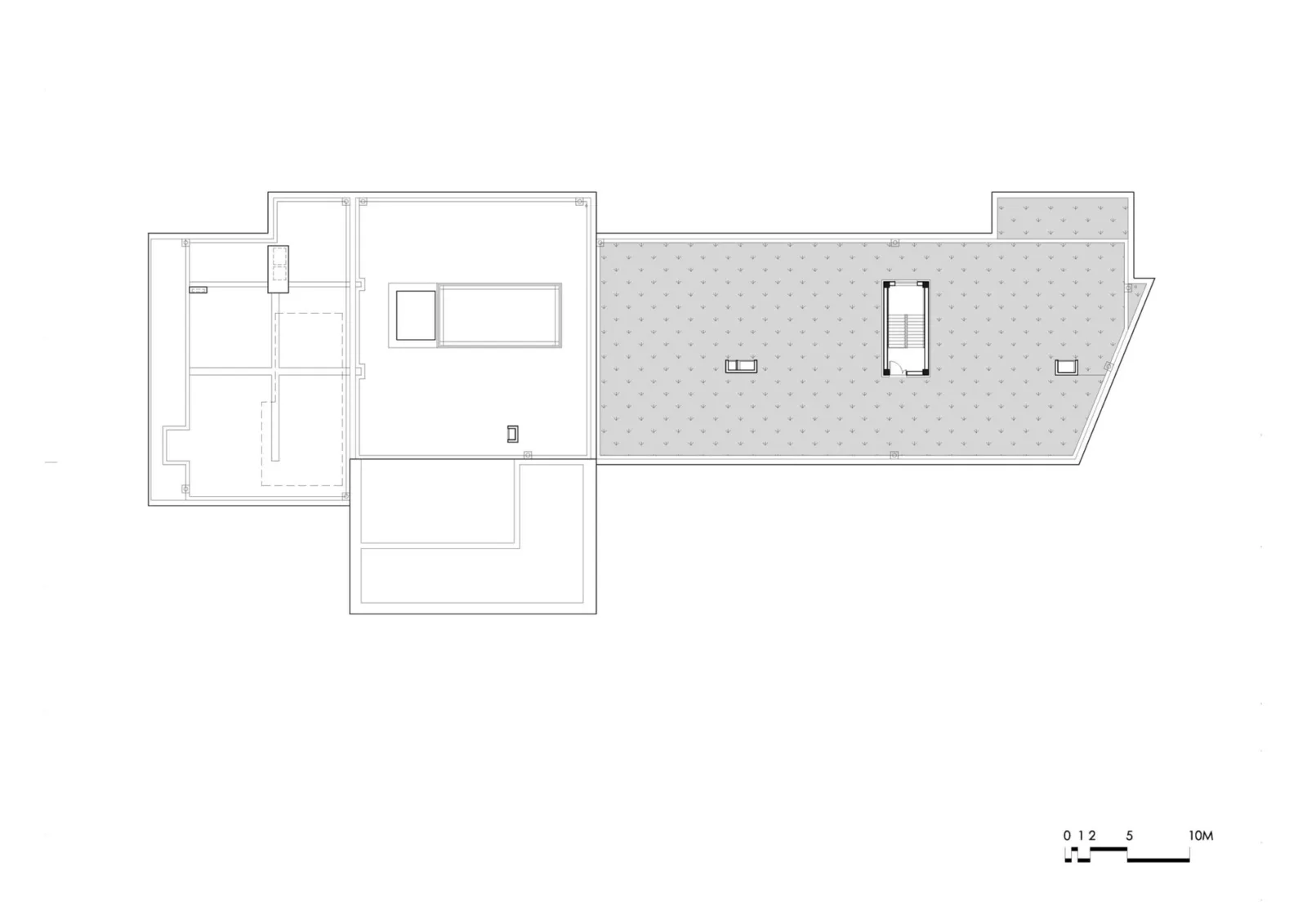
Kindergarten roof plan
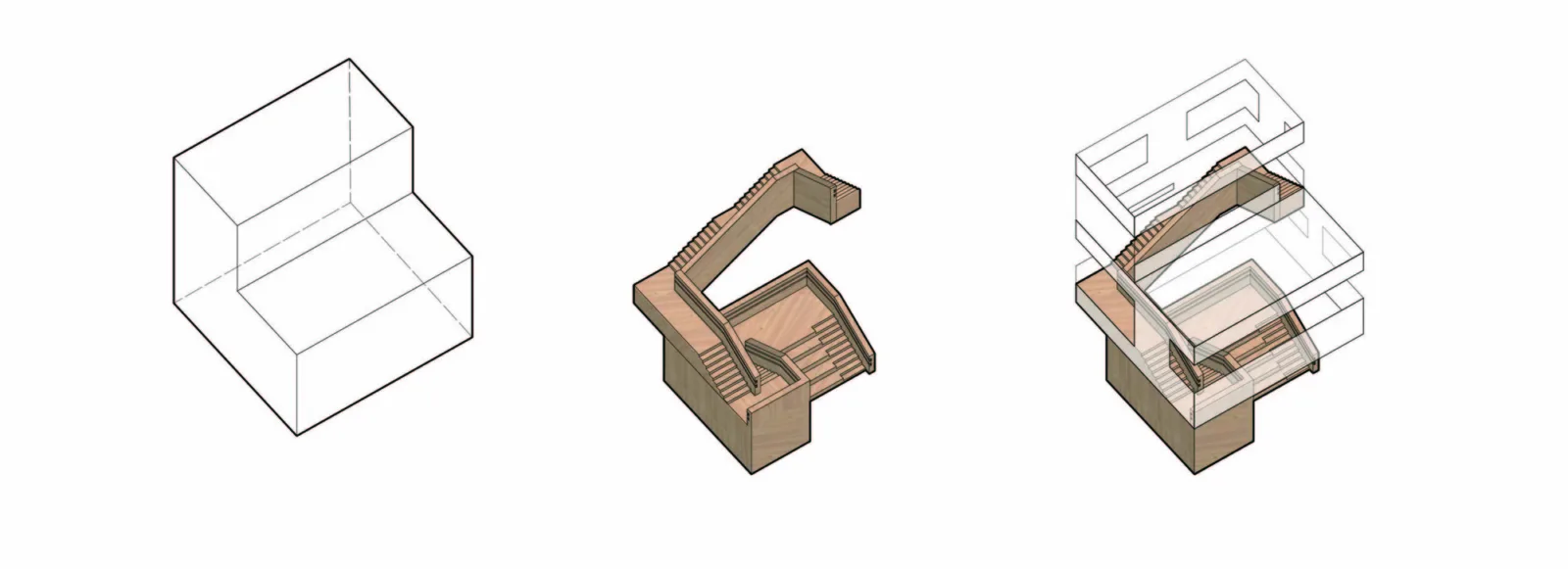
Kindergarten atrium
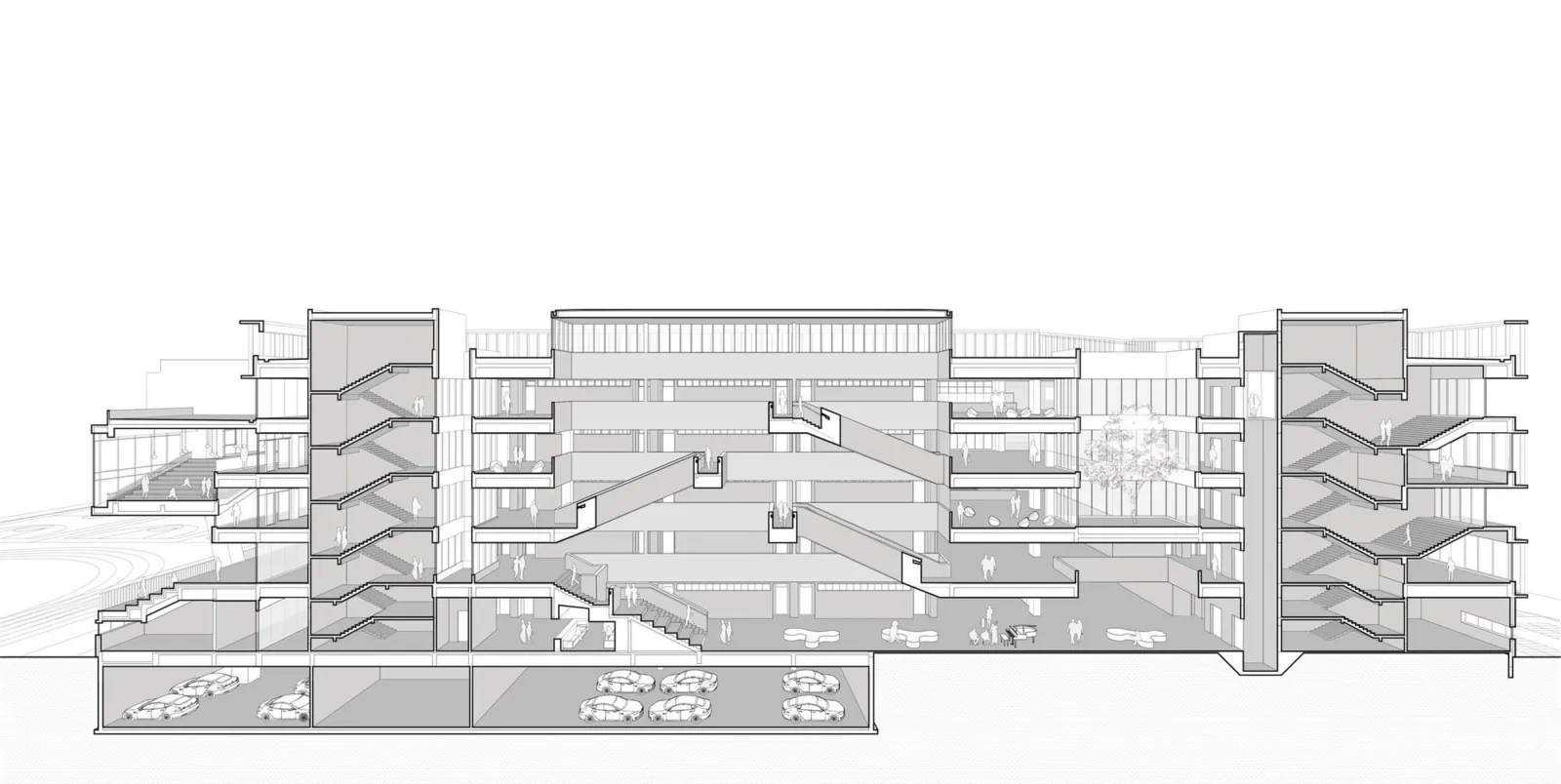
Comprehensive Building Sectional Perspective 1
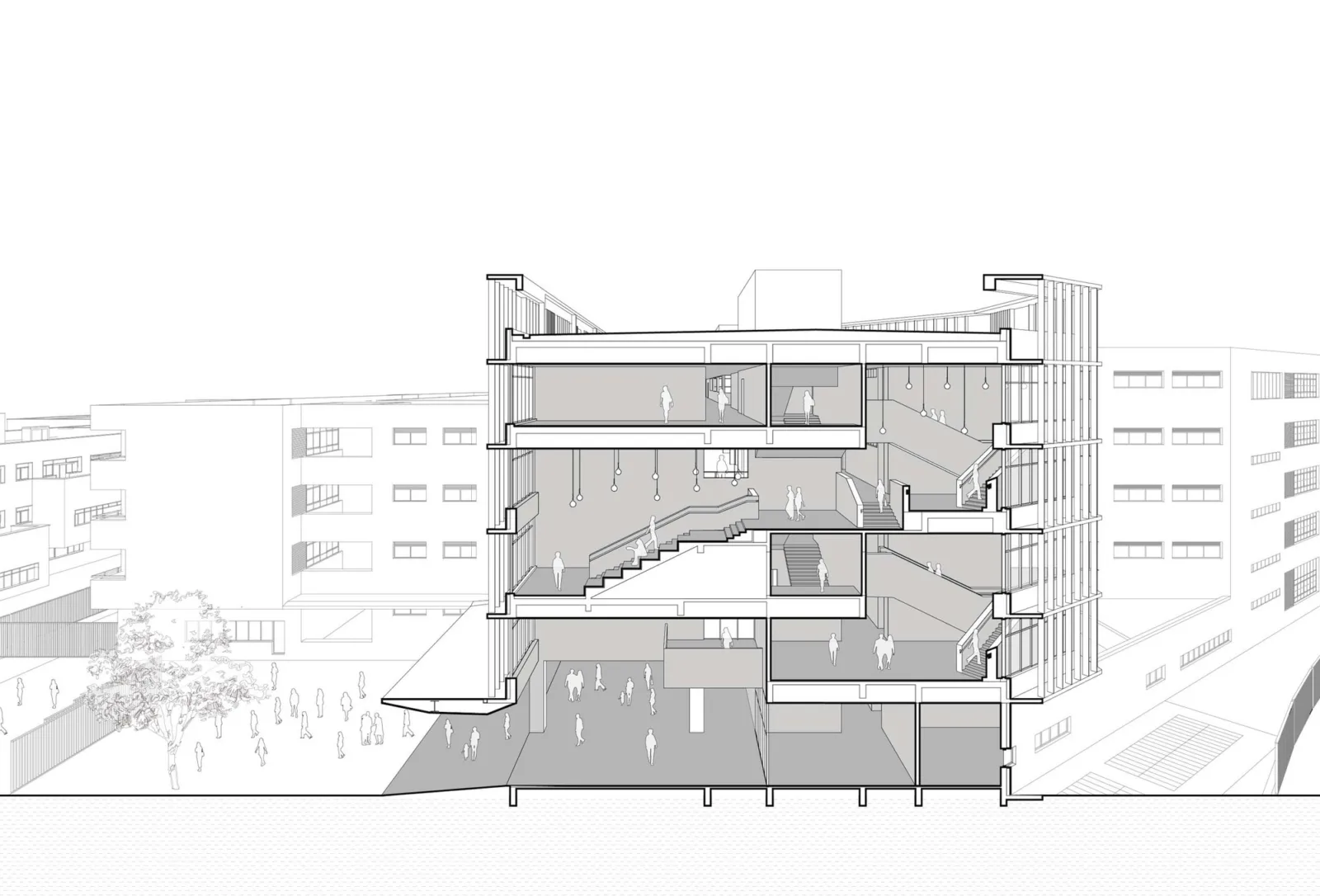
Comprehensive Building Sectional Perspective 2
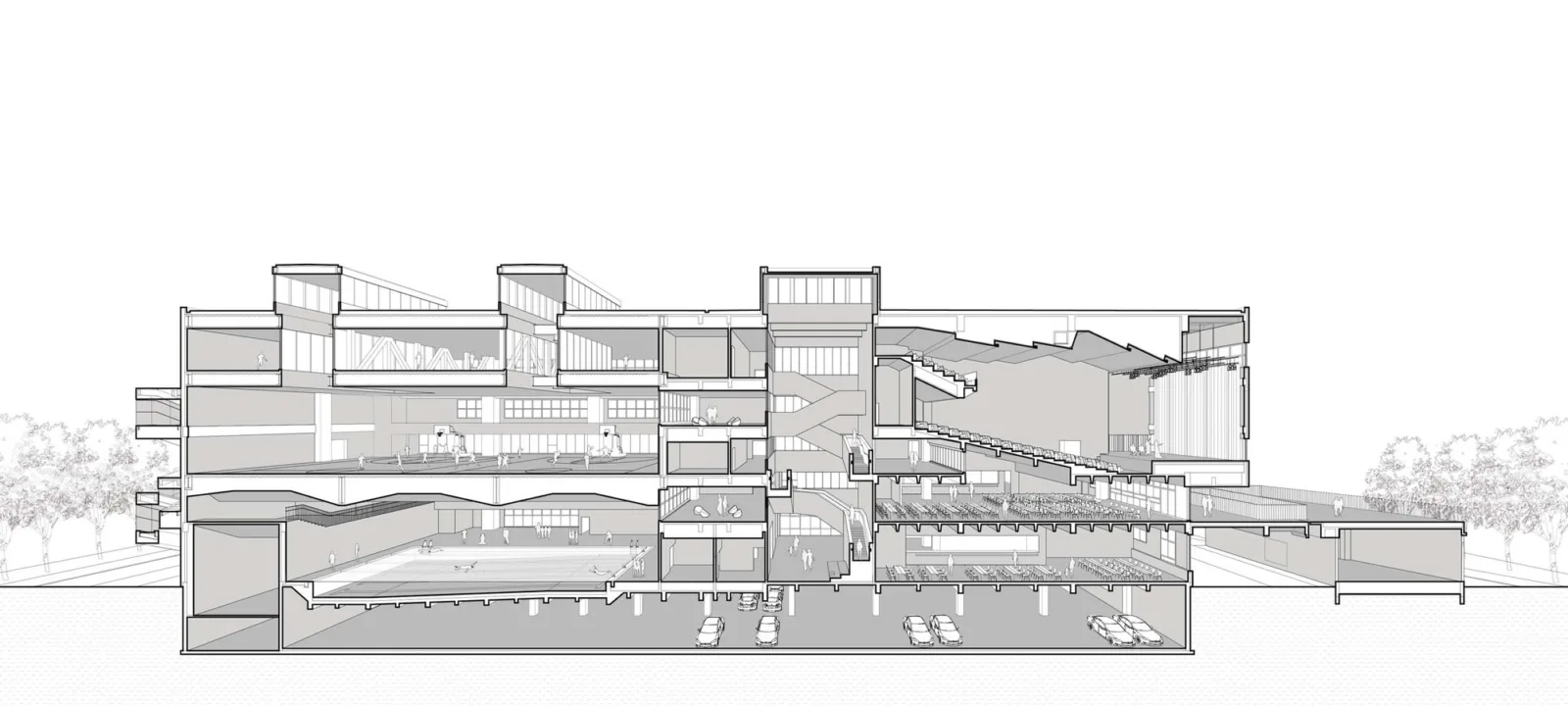
Perspective of the Cultural and Sports Building Section 1
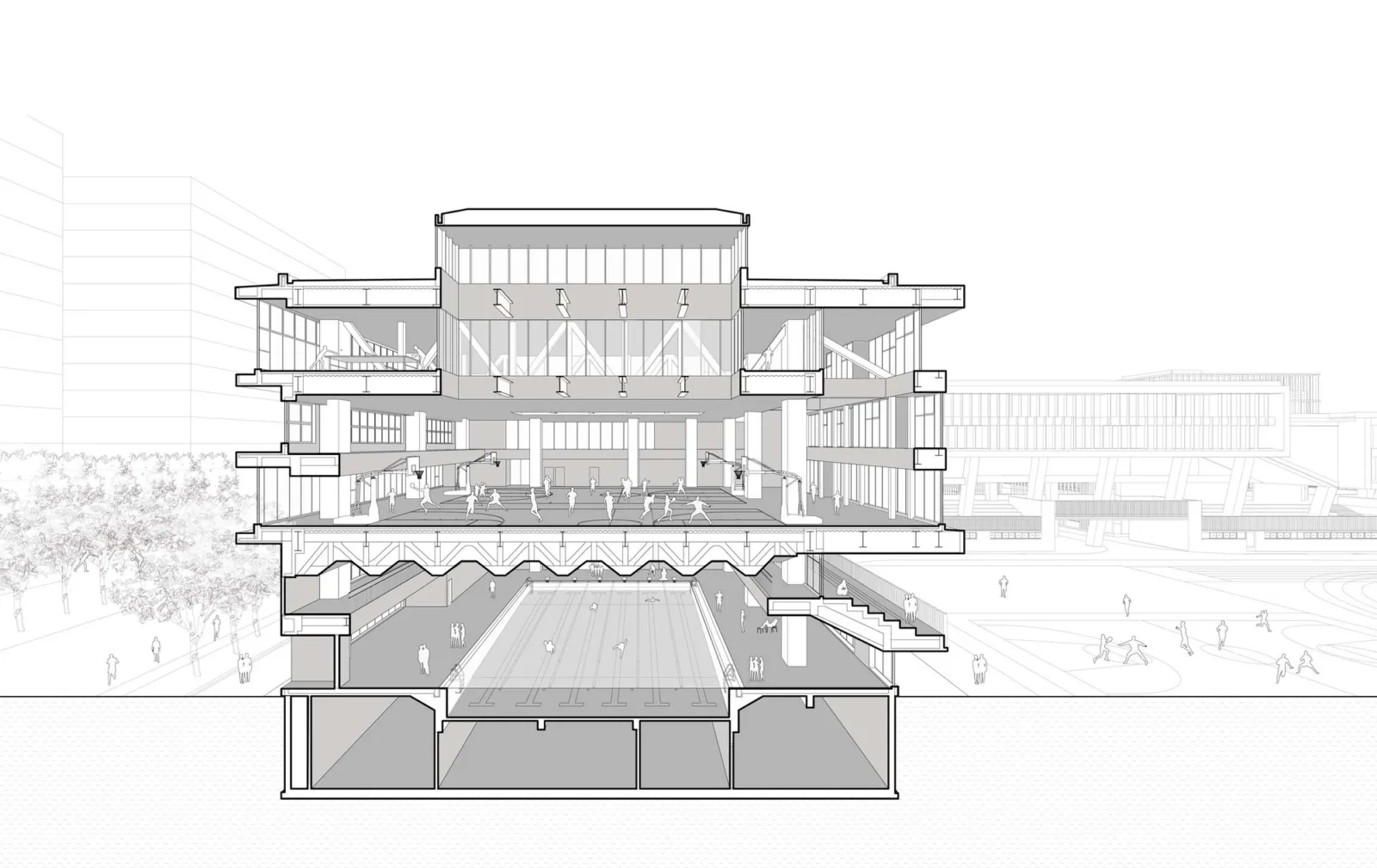
Perspective of the Cultural and Sports Building Section 2
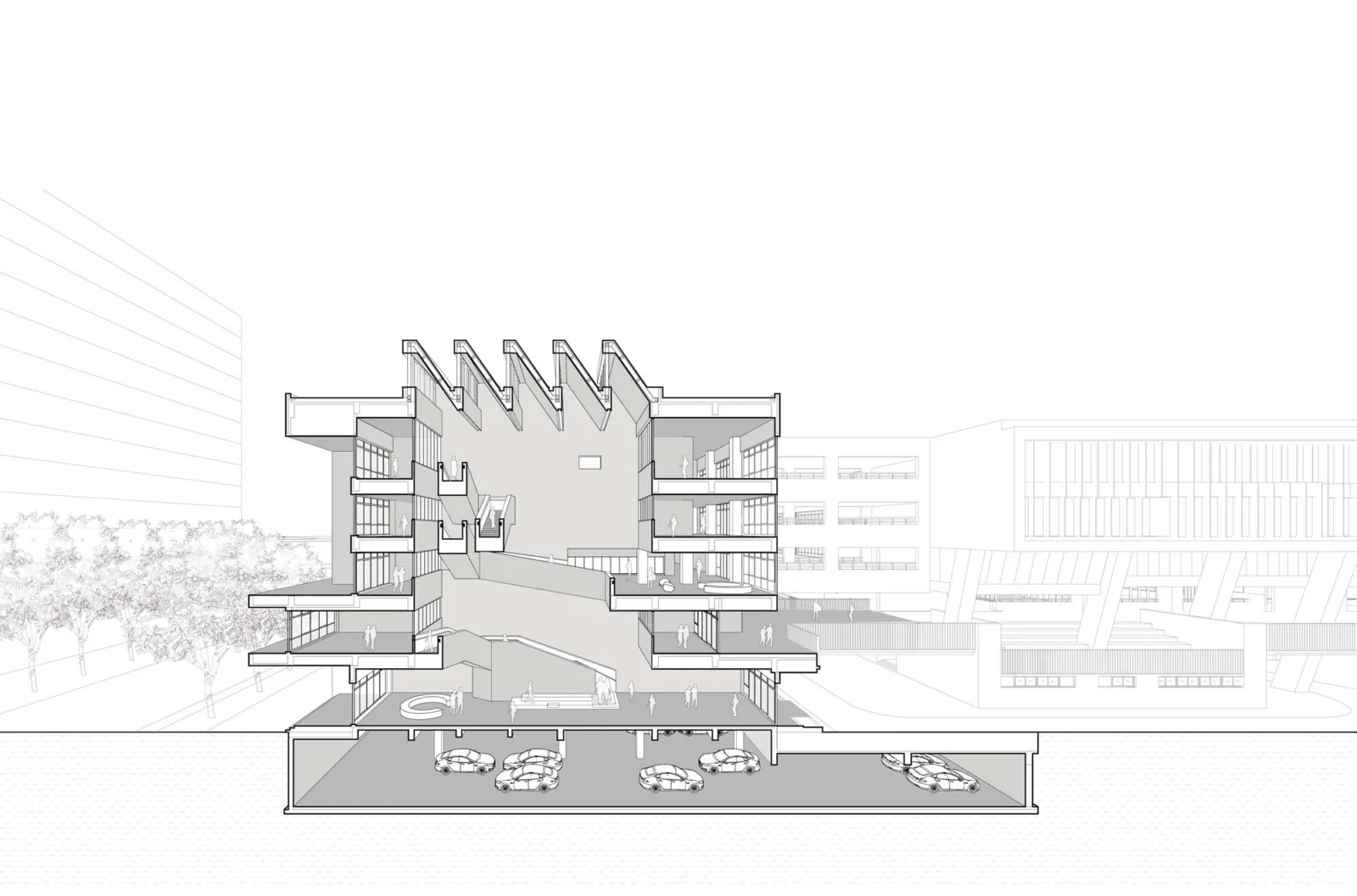
Perspective of the Cultural and Sports Building Section 3
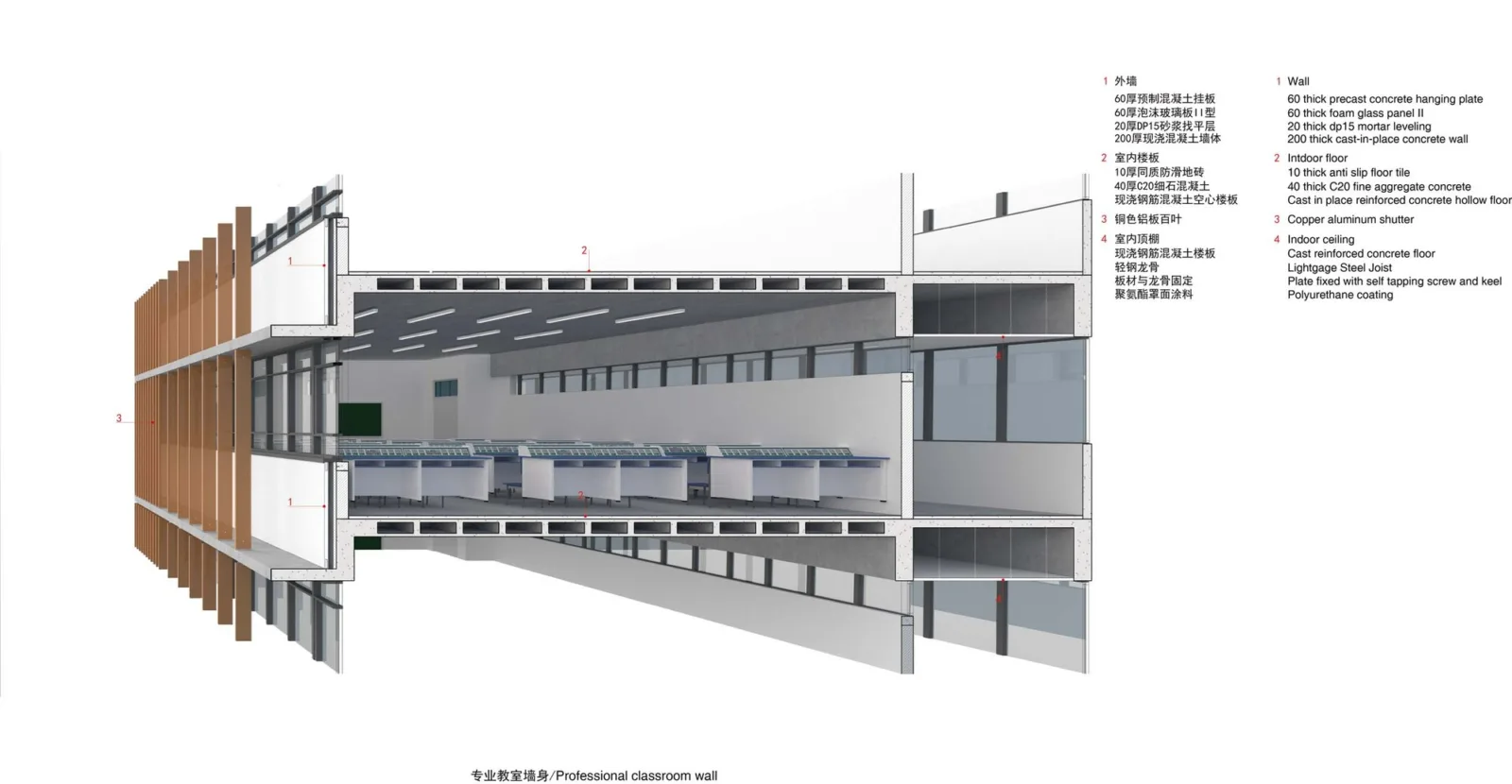
Professional classroom wall
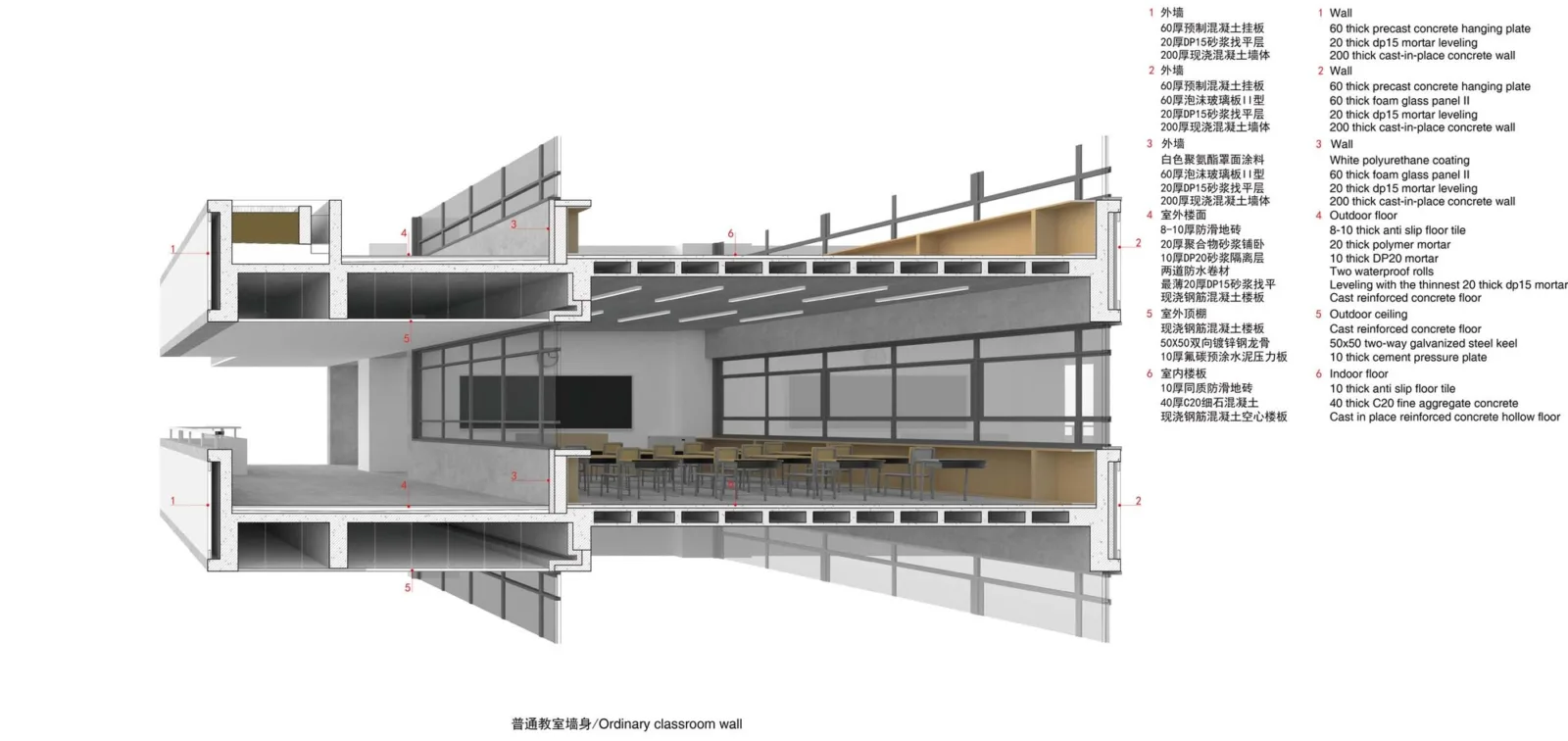
Standard classroom wall
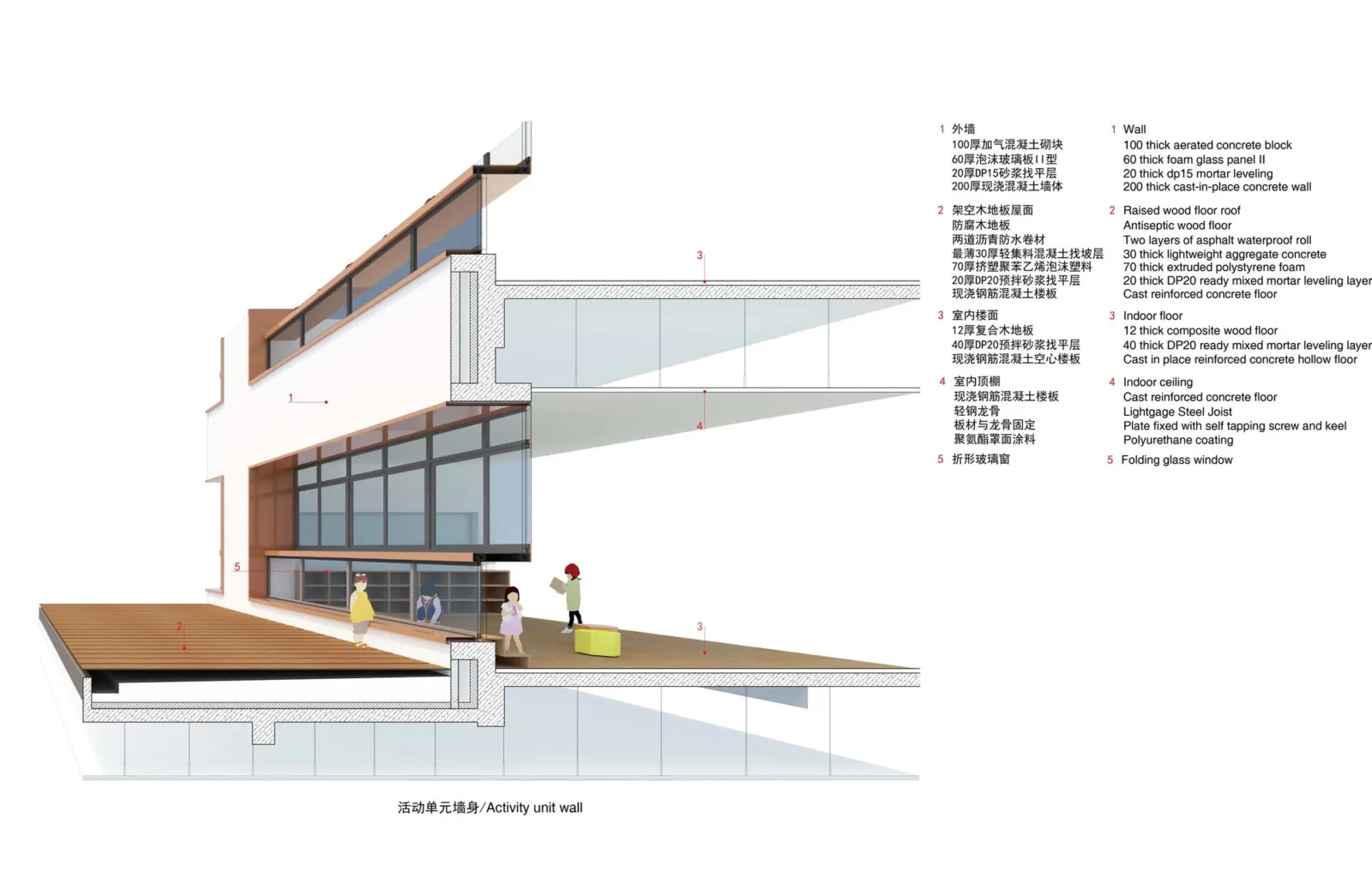
Activity unit wall body
Project Information
Project Type: Kindergarten, Primary School, Junior High School
Location: Shanghai, China
Architectural Design: Zhizheng Architectural Studio, Taisho Architectural Firm
Area: 59,846 square meters
Project Year: 2019
Photographers: CreatAR Images, Chen Hao
Manufacturers: Shanghai Yaopi Glass Group, Shanghai Yatai Aluminum Plastic Panel Co., Ltd., Yuhua Aluminum Industry Co., Ltd
Lead Architects: Zhang Bin, Li Shuo
Design Team: An Bingxiang, Fan Mingming, Tu Dan, Liu Zhiyuan, Wang Ziyu, Chen Zai
Planning, Expansion, and Construction Drawings: Yuan Yi
Planning, Expansion, and Interior Design: Li Le
Construction Drawings, Coordination, Interior and Landscape Design: Wang Jiaqi
Collaborative Design: Shanghai Pudong Architectural Design and Research Institute Co., Ltd
Construction Unit: Shunjie Construction (Group) Co., Ltd
Investment Unit: Shanghai Qiantan International Business District Investment (Group) Co., Ltd
Engineering Cost: 300 million RMB












Must log in before commenting!
Sign Up