
Author: Chen Mingliang and Hui Qin Hao from China Electric Power Construction Zhongnan Survey and Design Institute Co., Ltd
1. Background
The Xiangjiaba Right Bank Dam Back Power Station project is characterized by a tight construction schedule, close coordination among specialties, and tightly linked processes. Unlike the large-volume concrete work of the dam itself, the construction of the rear factory building on the right bank dam involves a more complex structure. The integration of civil engineering and metal structures demands higher standards in embedded parts management, process control, and progress tracking.
As the project advances into the construction stages involving embedded units and the plant frame structure, the conflicts between different construction processes become more apparent. To address this, the construction team leverages the existing 3D design models provided by the design institute. This allows them to utilize 3D visualization advantages to guide on-site management effectively, minimizing common issues such as errors, omissions, clashes, and blockages in embedded parts and pipelines.
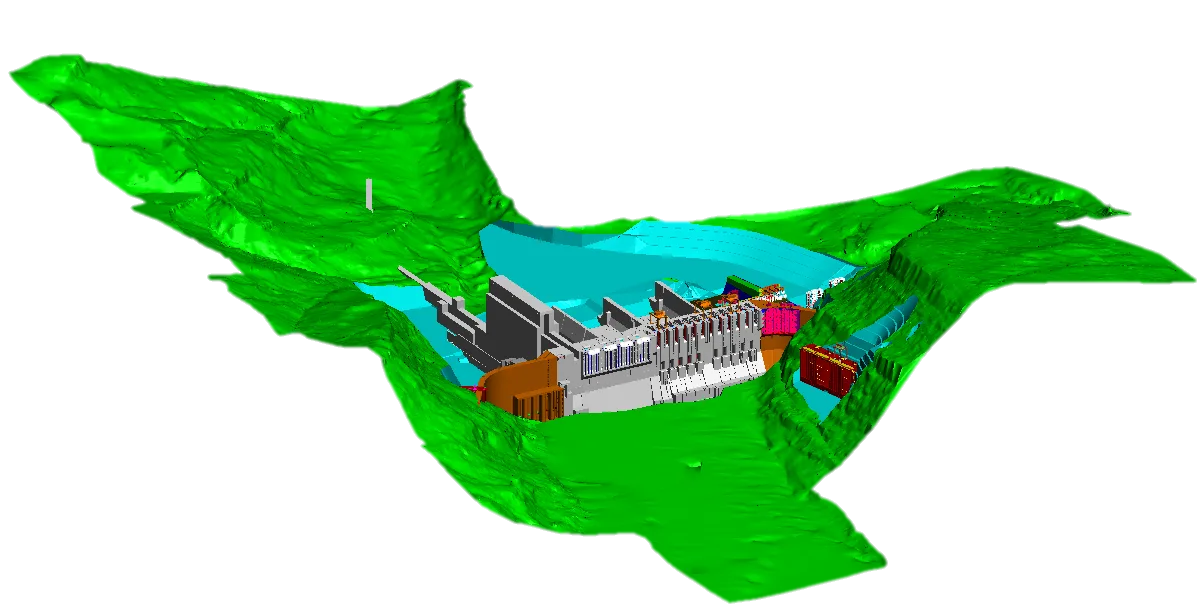
Figure 1: Model diagram of Xiangjiaba Hydropower Station
Currently, Zhongnan Institute employs Bentley series software to perform 3D design for the right bank dam rear power station project. Construction blueprints are extracted directly from these 3D models. Various disciplines’ 3D models are reviewed collectively through the ProjectWise collaborative server to ensure model accuracy.
2. Project Goals
The system is built upon 3D design with three primary objectives: management of design data and results, control of segmented pouring in construction warehouses, and a comprehensive query platform.
2.1 Design Data and Results Management – Pre-Optimization Design
Design data and results management form the foundation for effective warehouse pouring management. The accuracy of the 3D information model is crucial for the system’s success and practical application. Collaborative design during the planning phase helps resolve conflicts between different disciplines, reduces design deviations, lowers the chance of later changes, and optimizes the overall design scheme. The 3D spatial model clearly represents the layout of embedded parts, significantly reducing errors and omissions.
2.2 Construction Warehouse Pouring Management – Precise Process Control
Based on construction progress requirements, unit projects are divided into independent 3D visual models within the overall model, following a warehouse partitioning principle. Important information such as engineering quantities, types, numbers, and embedded part locations is categorized and highlighted within the model. This classification supports the construction team in preparing materials and allows supervision teams to inspect and verify conditions before warehouse activation.
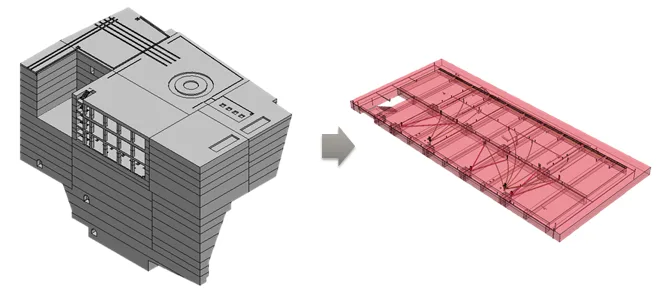
Figure 2: Schematic diagram of warehouse partitioning
The supervision unit must approve the warehouse surface design according to requirements. Warehouses can only be opened after thorough acceptance by all involved disciplines. Once opened, both construction and supervision teams record detailed information about the warehouse surface on a digital platform, including basic opening and receiving data, construction logs, explanations of special circumstances, and photo or video documentation.
2.3 Comprehensive Query – Post-Construction Feedback and Analysis
A comprehensive query platform is established to provide a visual, integrated access point for project documents including 3D models, drawings, reports, videos, and photos. Construction progress and engineering information can be described, categorized, searched, and analyzed by spatial location, discipline, construction unit, and other criteria.
3. System Implementation
3.1 System Framework
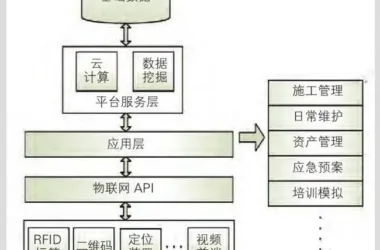
The engineering data center acts as an integrated platform running throughout the entire project lifecycle. Its core purpose is to store and manage comprehensive information generated during design and construction, supporting business applications and project stakeholders. Bentley’s eB products enable this data center. The proposed system architecture includes:
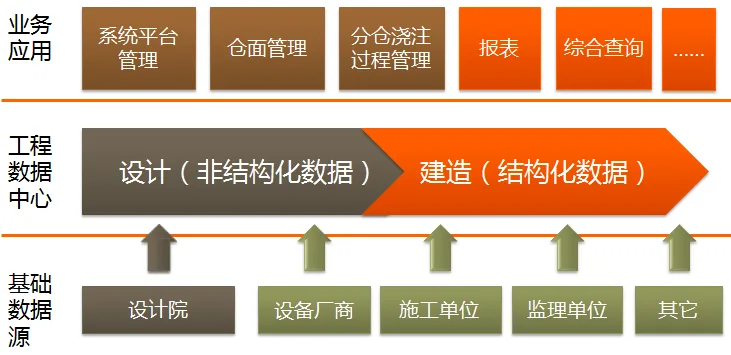
Figure 3: System Framework
3.2 Software Tools
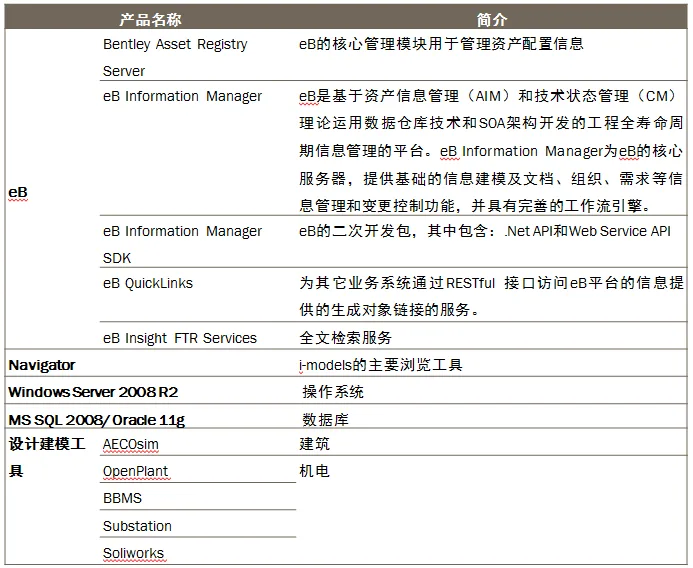
3.3 Network Deployment
Plan 1 and Plan 2
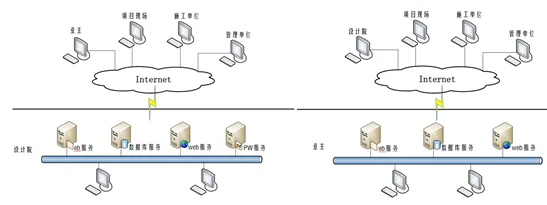
Figures 4 and 5: Schematic diagrams of two deployment schemes
3.4 Rules for Establishing Information Models
The information model is fundamental for storing and managing data generated throughout the project lifecycle. It comprises three main types: data models, document models (including 3D models), and relationship models. The platform’s information modeling capabilities must meet the following requirements:
- Structured Data Management: This forms the basis for data exchange and reuse between business applications, including WBS plan descriptions, spatial location breakdowns, and warehouse data.
- Unstructured Document Management: These legally validate the project and include drawings, 3D models, specifications, construction materials, and other documentation produced throughout the project.
- Relationship Model Management: Essential for information traceability and improving retrieval efficiency. It manages links between documents, data objects, and physical objects like equipment, for example, relationships among warehouses, 3D models, embedded parts, and construction resources.
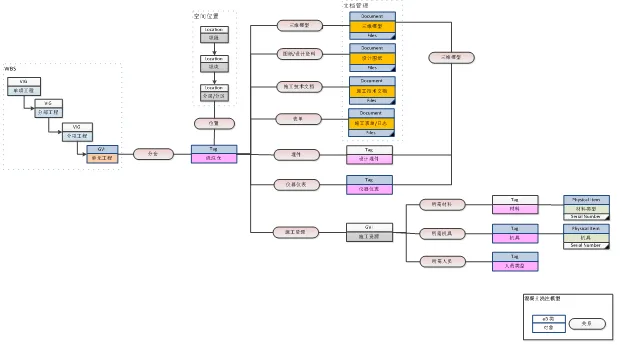
Figure 6: Information Model Relationships
The core design concept of this information model centers on the pouring warehouse, constructed through associations of WBS, spatial location, documents (including 3D models), construction resources, and other relevant data.
3.4.1 Plan Information Storage and Management
Planning information is represented by subproject WBS elements. The smallest planning unit is the unit project, which corresponds one-to-one to a pouring warehouse. Linking unit projects with pouring warehouses enables access to required resources, documents, and scheduling information.
3.4.2 Spatial Location Information Storage and Management
Spatial location breaks down the physical construction site according to management needs, storing control information for each pouring bin. Managing spatial locations along with pouring warehouses allows users to query and analyze pouring data based on spatial coordinates.
3.4.3 Pouring Warehouse Storage and Management
The pouring warehouse is the platform’s management core. Associating it with unit projects enables progress tracking and control; associating with spatial locations supports geographic queries and analysis; linking with documents facilitates 3D model referencing and technical document access; connecting with construction resources supports automatic resource verification and acquisition.
3.4.4 Engineering Coding
Coding provides unique identifiers for engineering objects and facilitates rapid relationship building within the platform. Coding covers unit projects, warehouses, spatial positions, embedded parts and pipes, resources, and files (drawings, models, data, images, videos). These codes may originate from existing business systems or be automatically generated upon data entry.
3.5 Partial Achievements
1. Warehouse Surface Management
This module manages basic information about warehouse design, embedded parts, and buried instruments. It supports two main functions: managing warehouse surface design data and embedded parts/instrument information.
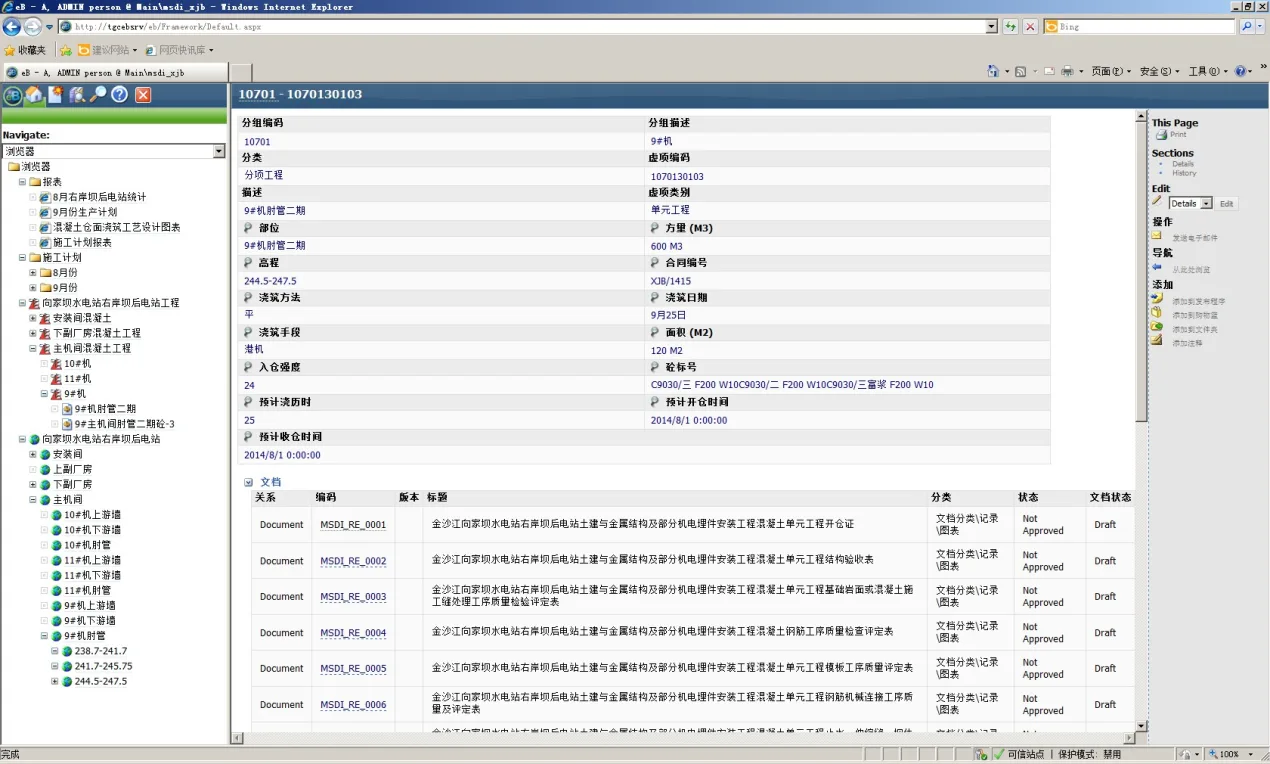
Figure 7: Unit Engineering Information
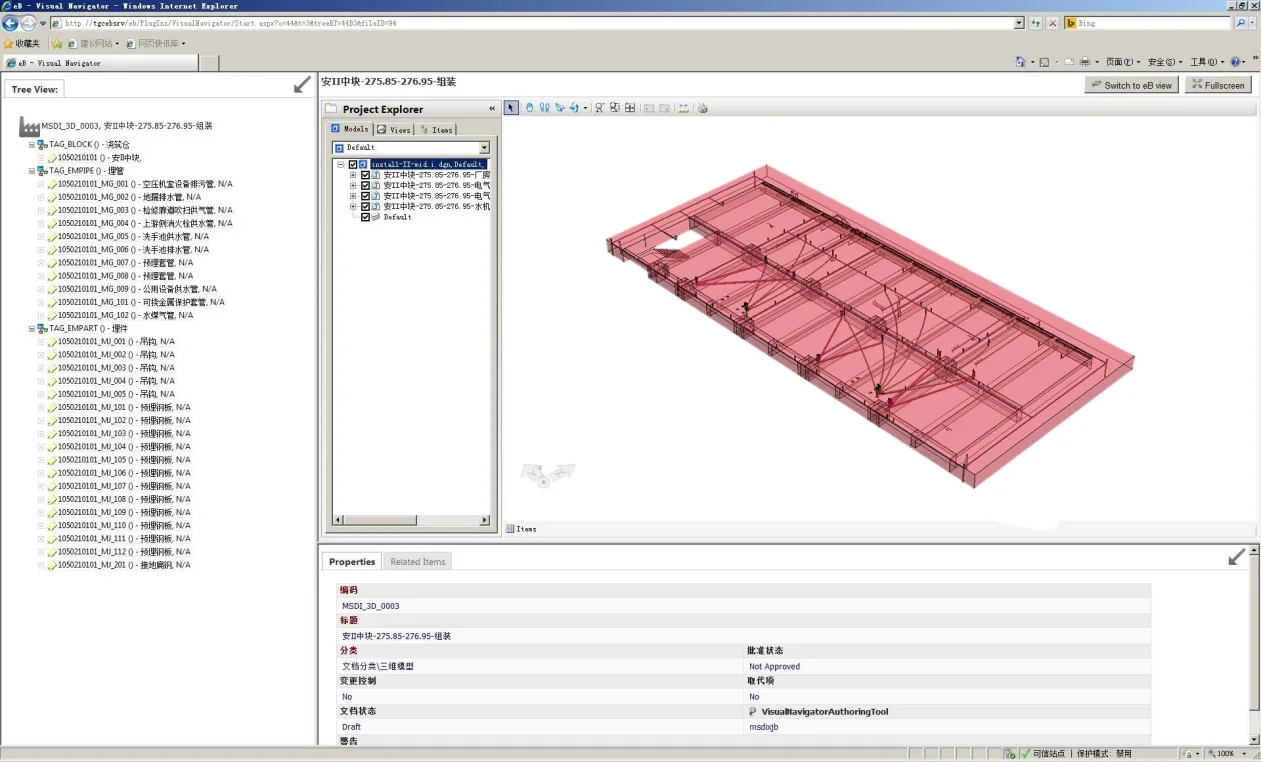
Figure 8: Warehouse Information
2. Management of the Pouring Process in Separate Warehouses
This aspect controls and monitors the pouring process within each warehouse, based on the warehouse surface’s basic information. It covers five main stages: preparation, opening, pouring, inspection, and receiving.
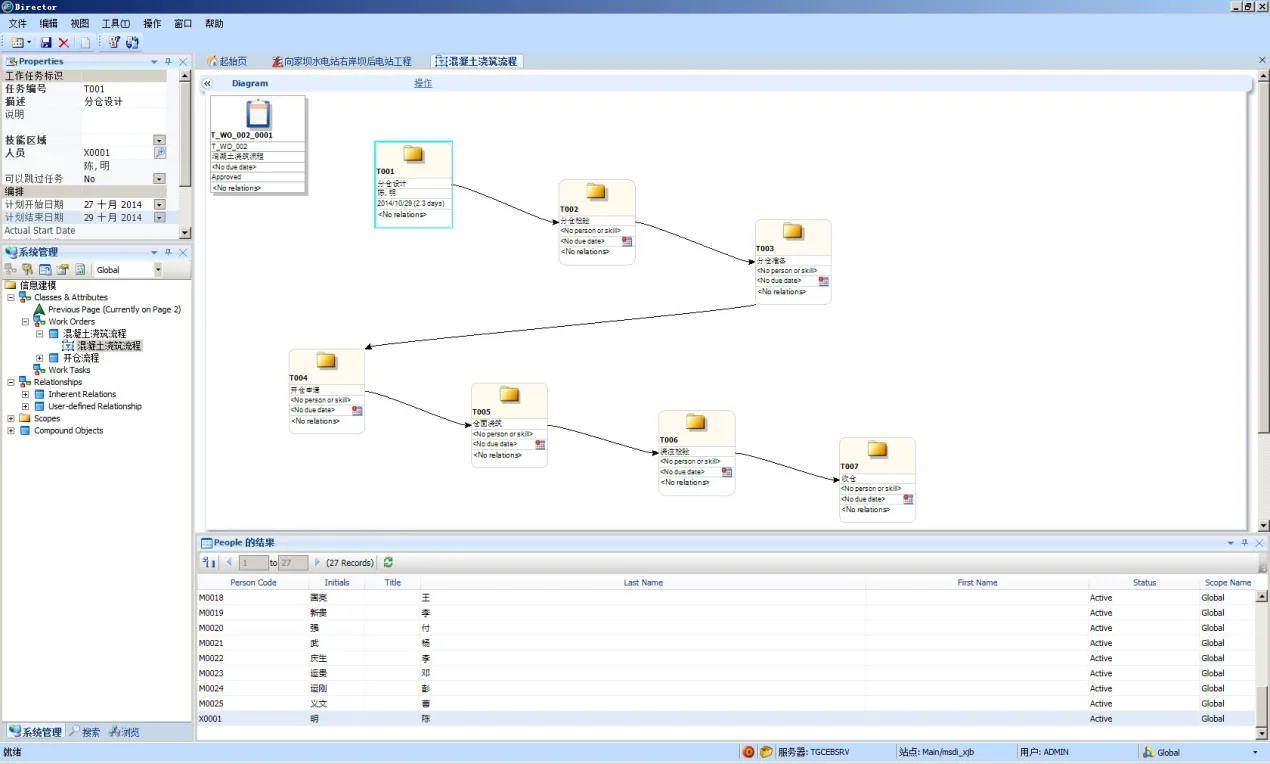
Figure 9: Pouring Process Diagram
3. Reports
The system allows customization of reports tailored to management monitoring and decision-making needs. These reports can be automatically distributed to relevant users, enabling on-demand access to critical information.
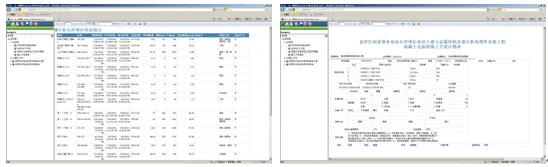
Figure 10: Statistical Report
4. Applications on iPad
On-site supervisors can use tablet devices to access detailed warehouse surface information, assisting with preparation, inspection, record-keeping, and other critical tasks directly in the field.
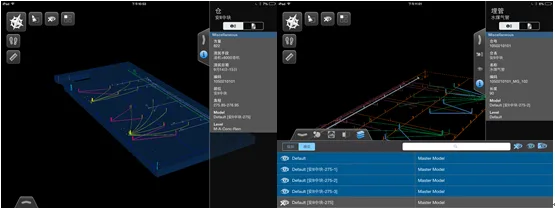
Figure 11: Querying Unit Project Information on iPad
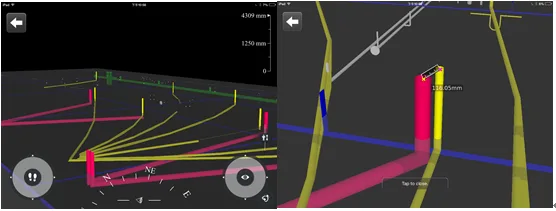
Figure 12: Roaming and Measurement on iPad
4. Conclusion
By leveraging a three-dimensional design information model to manage warehouse construction and pouring, the project delivers more accurate and comprehensive information to the owner than ever before. The intuitive and real-time visualization greatly facilitates on-site construction management for all parties involved.














Must log in before commenting!
Sign Up