
Álvaro Siza – Water and Milk Fusion
The Huamao Art Education Museum is situated on the north bank of Dongqian Lake. Viewed from above, the structure forms a triangular shape outlined by continuous walls, creating a graceful, curved aesthetic rather than sharp edges.
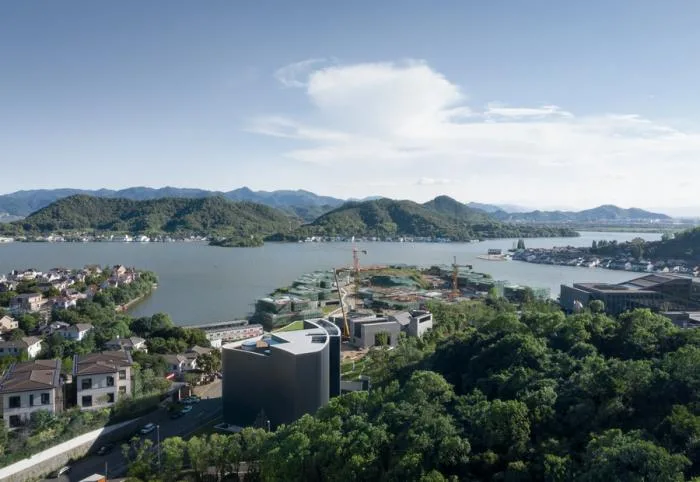
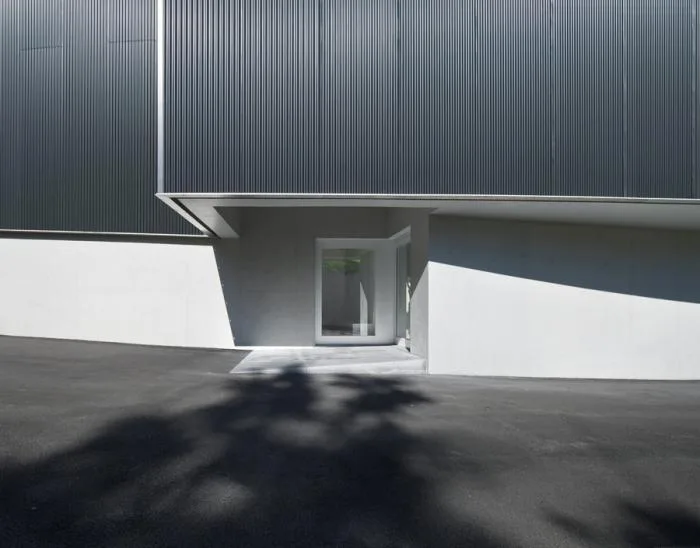
At the ground level, the spatial experience shifts, and a feeling of separation from the external world emerges. The surrounding green vegetation and paved areas on three sides segment the site in an organized fashion. The public entrance and VIP area are located on the northwest facade, adjacent to the hillside. The layout extends around the museum, interconnected by pathways, allowing access from all directions.
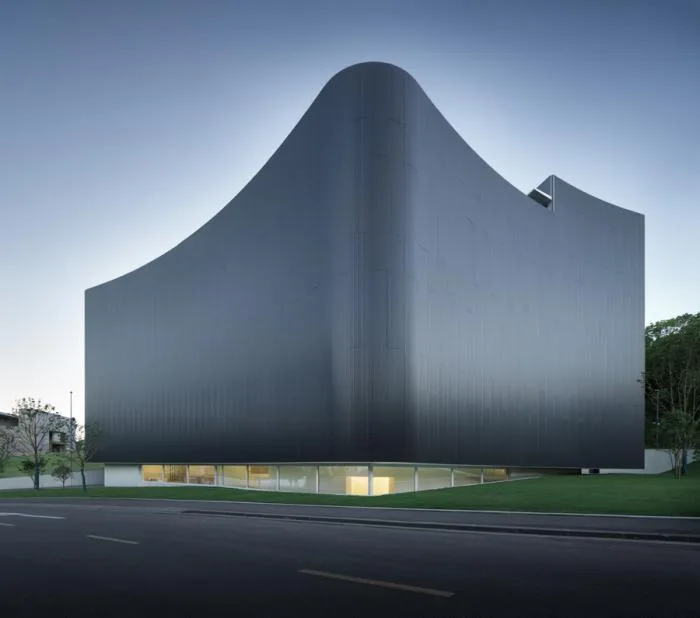
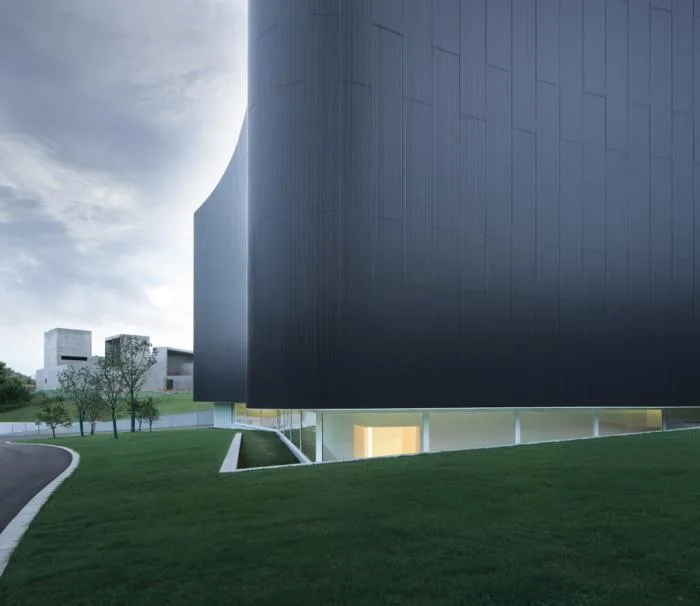
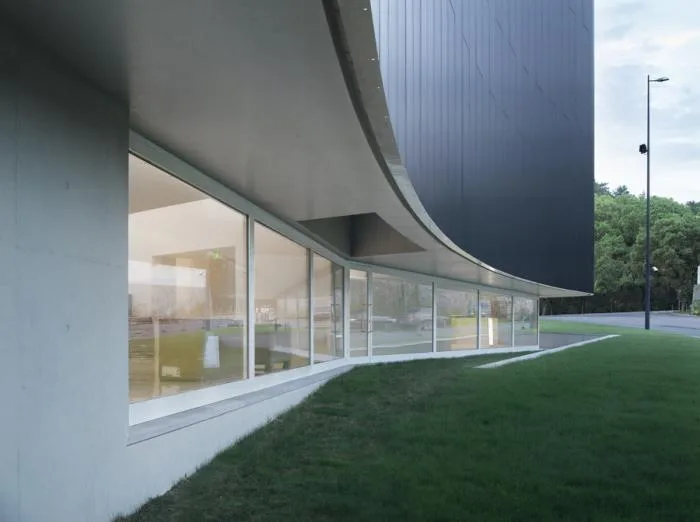
Regarding the overall architecture, the first floor occupies the northwest side in a linear arrangement containing service areas such as an atrium, elevators, stairs, and restrooms. The second floor encompasses a larger elongated space housing the main hall, library, administrative offices, and exhibition rooms.
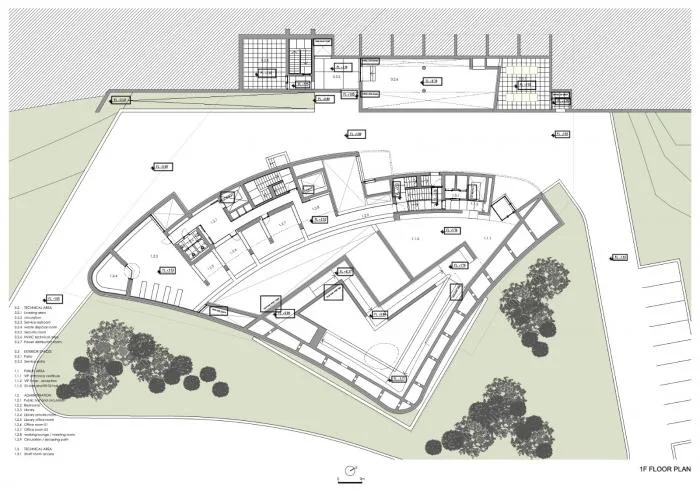
△ First Floor Plan
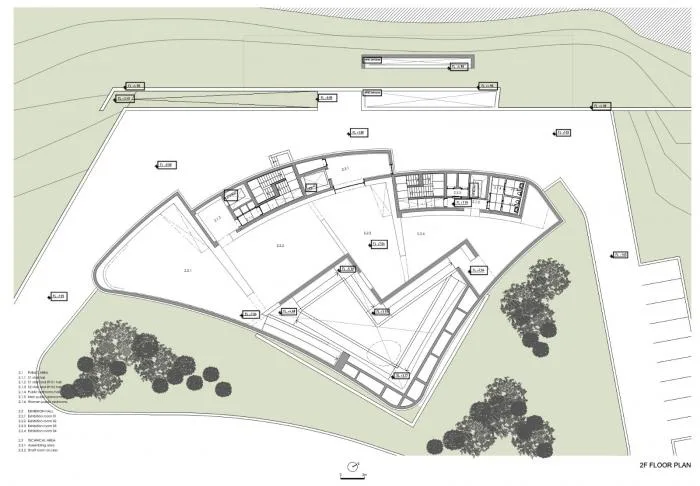
△ Second Floor Plan
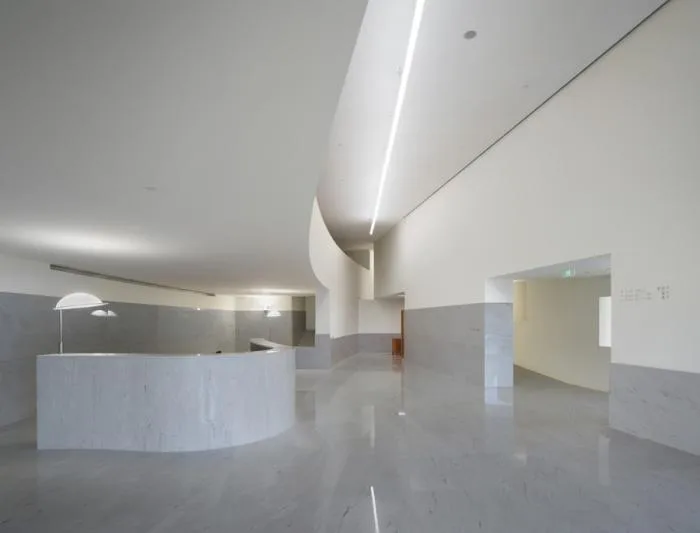
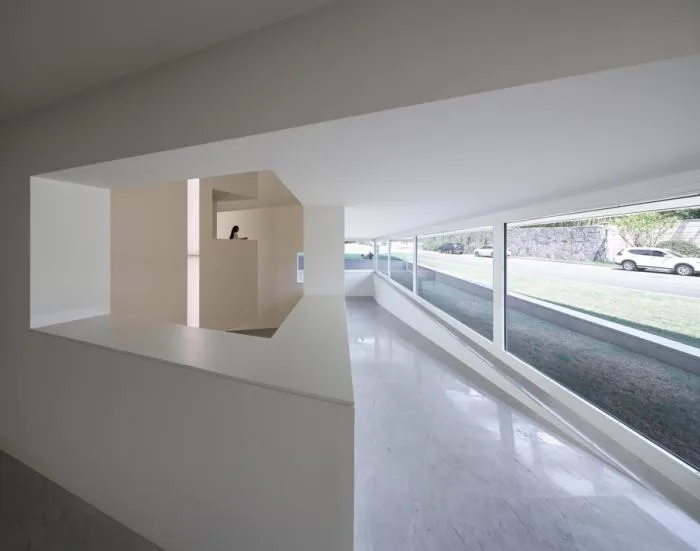
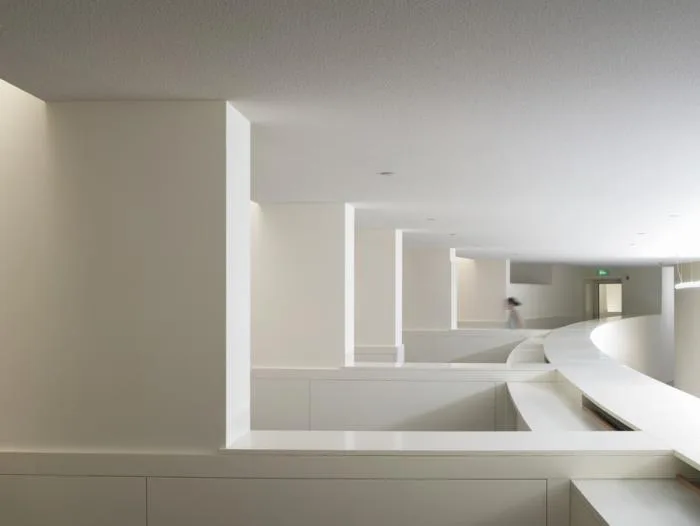
A spacious triangular elevated area extends through the building’s southeast corner, topped by a skylight that floods the interior with natural daylight. Surrounding this space is a continuous ramp connecting the first through fourth floors. Bright white walls amplify the natural light, which filters into adjacent rooms through carefully designed windows and door openings.
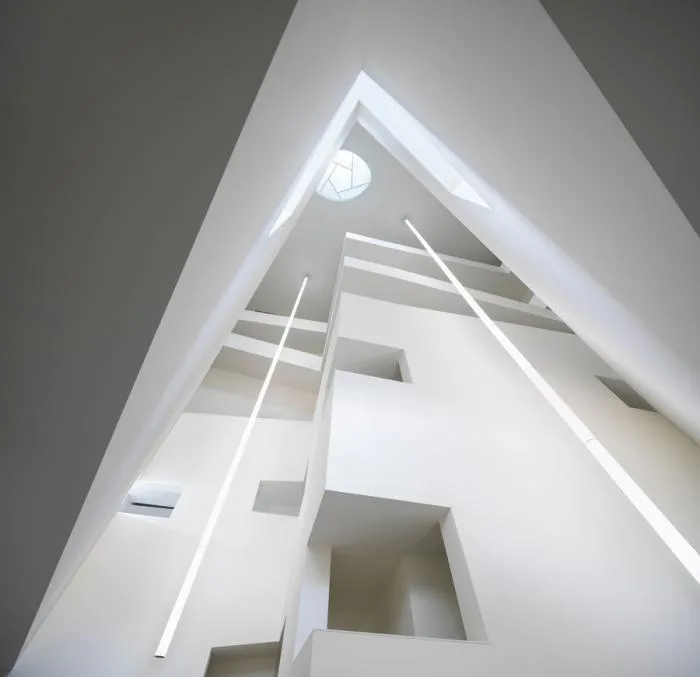
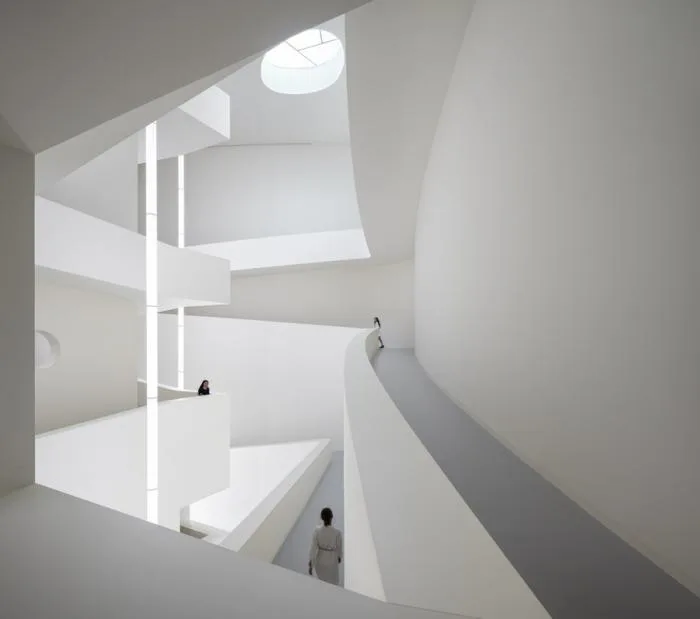
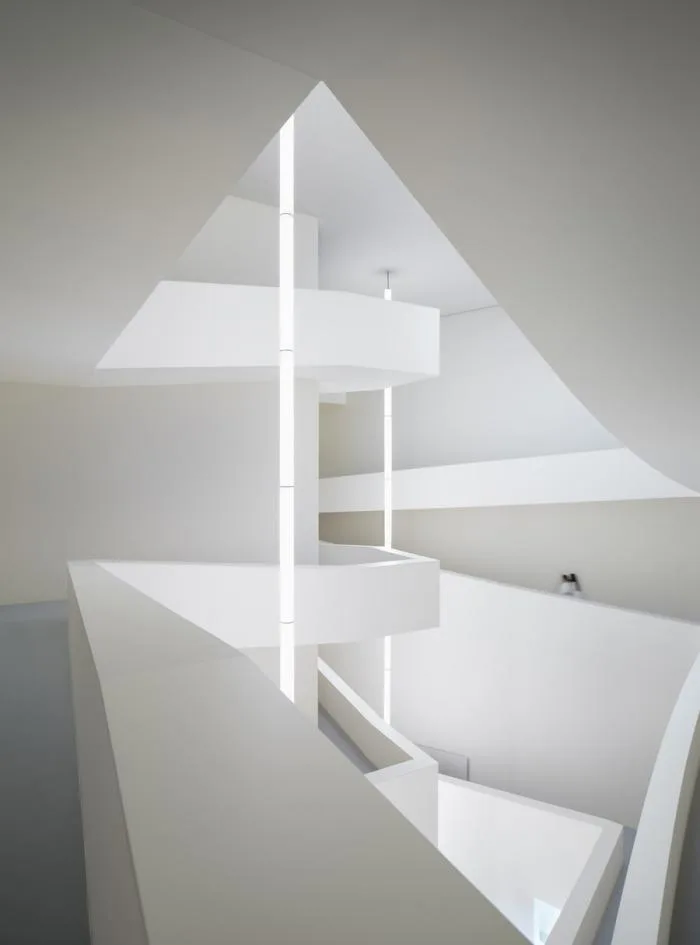
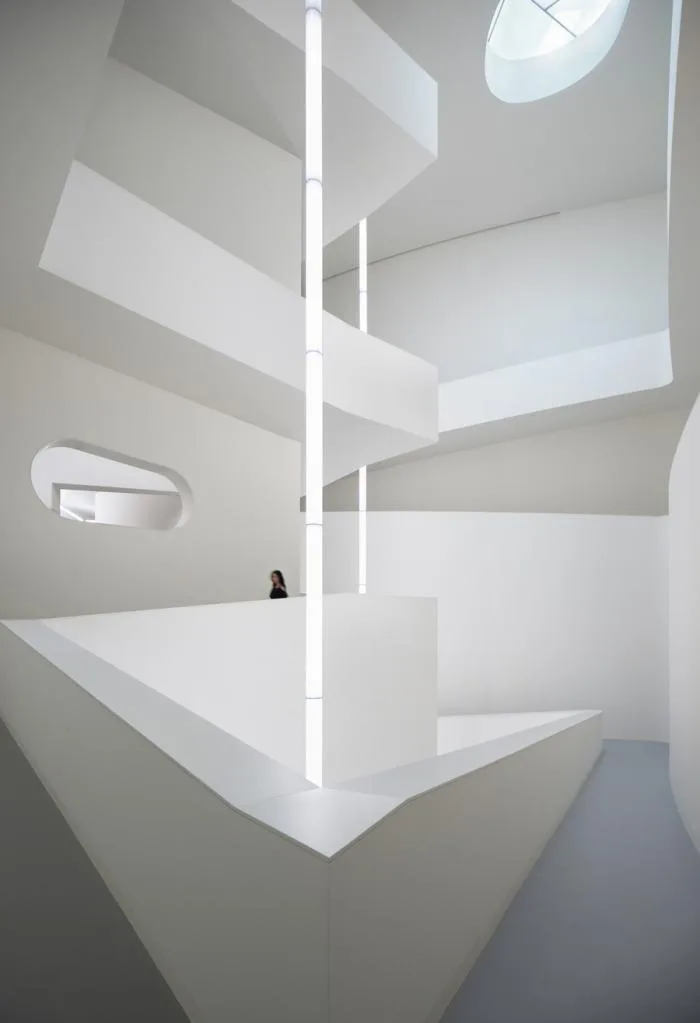
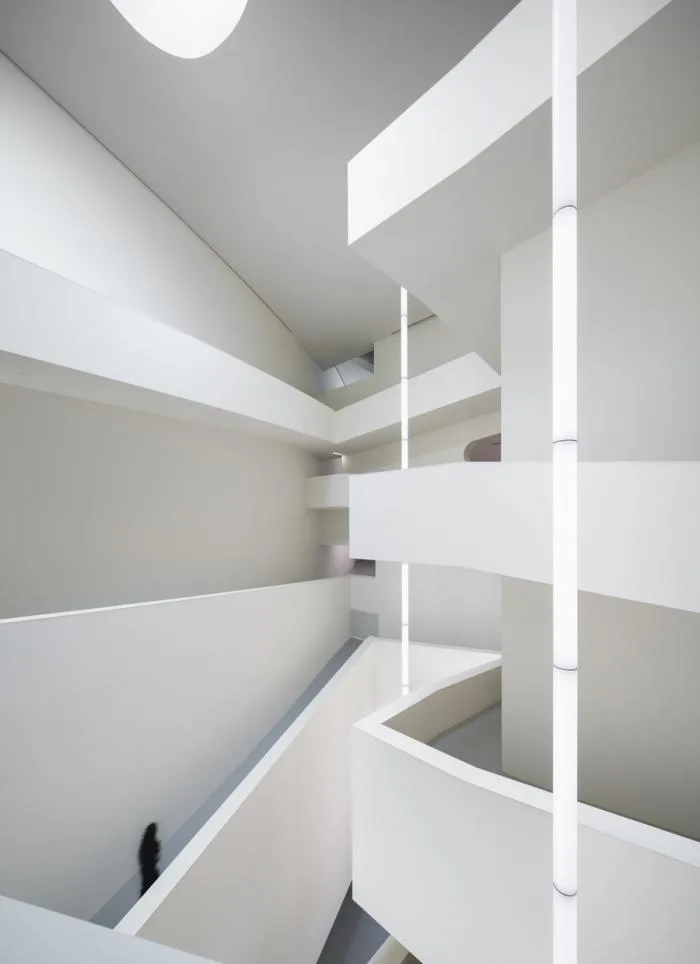
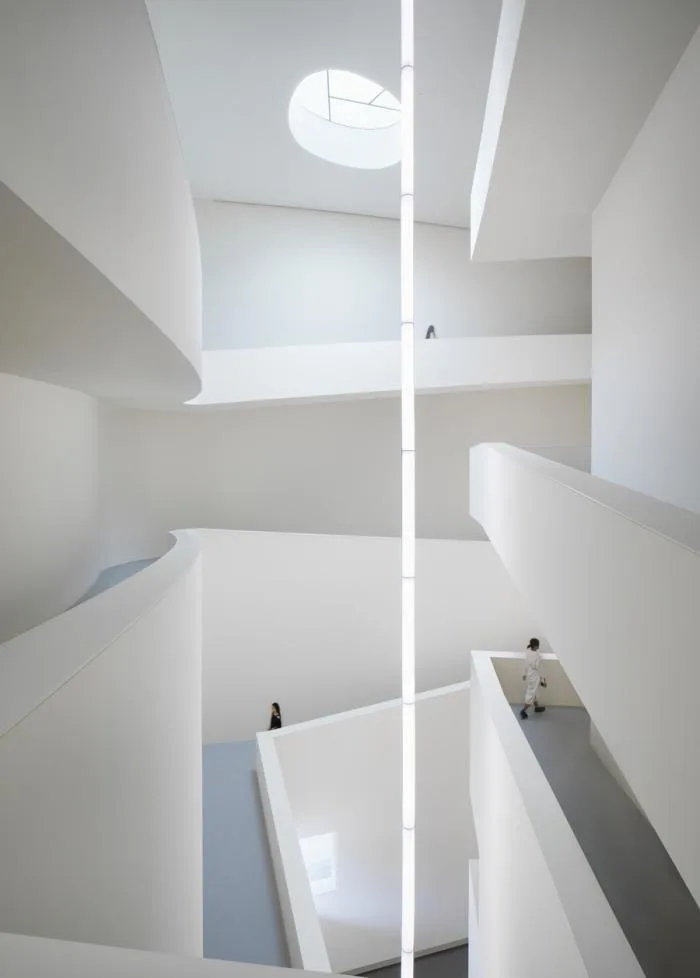
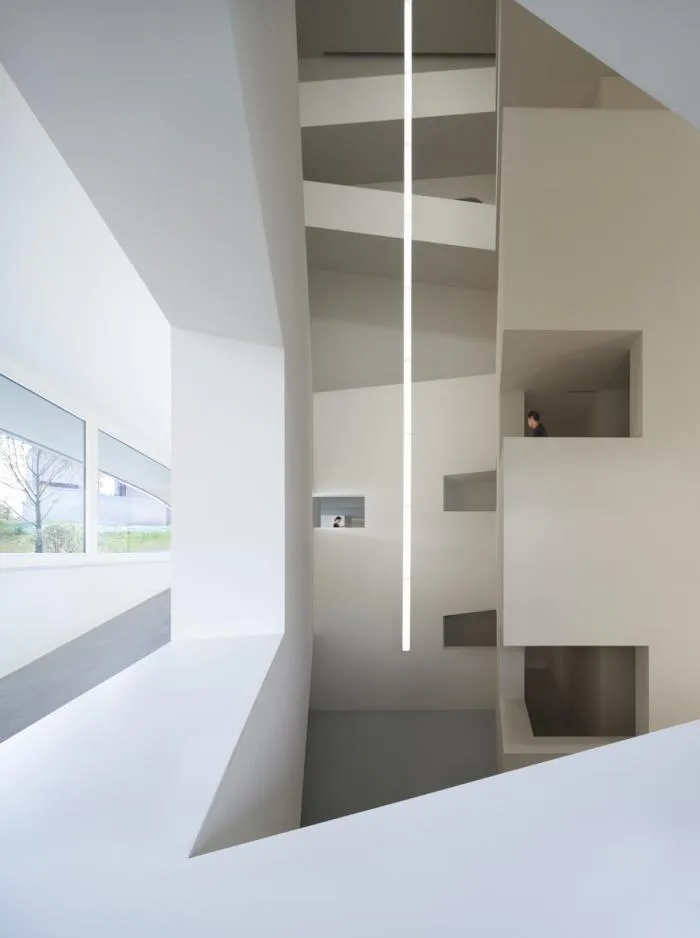
The basement and the concave roof space differ in both function and scale but are combined according to the planned spatial organization. The basement serves as the main functional and circulation hub, extending northwest between the museum and the mountain at the entrance, with a narrow equipment room tucked beneath the hillside.
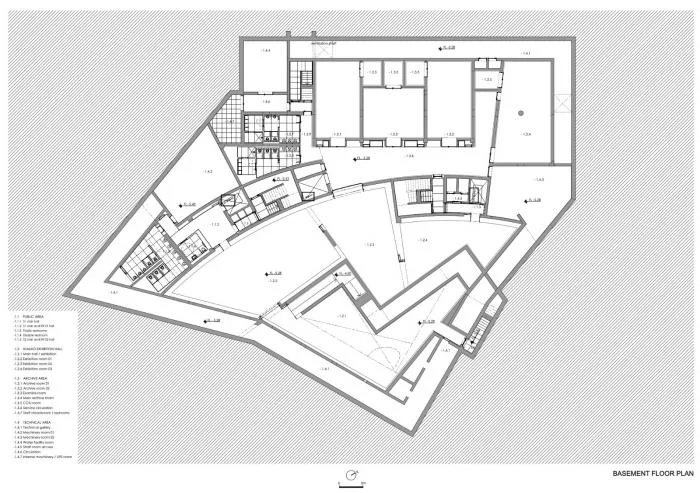
△ Basement Floor Plan
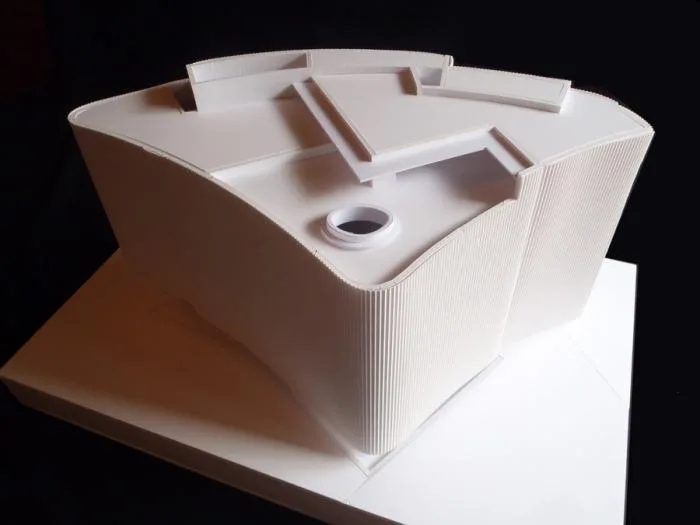
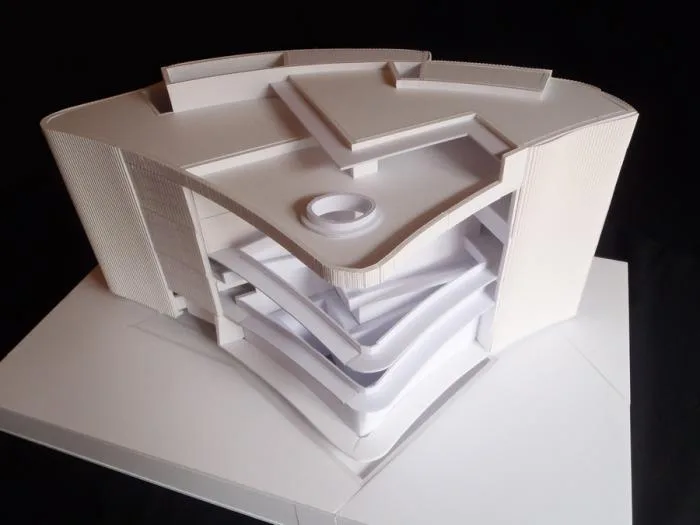
△ Model Diagram
The retaining wall along the mountain side, accessible from both the entrance and basement areas, marks the boundary between the hillside and surrounding vegetation. From the recessed VIP entrance, visitors enter an independent lobby with direct access to the rooftop terrace.
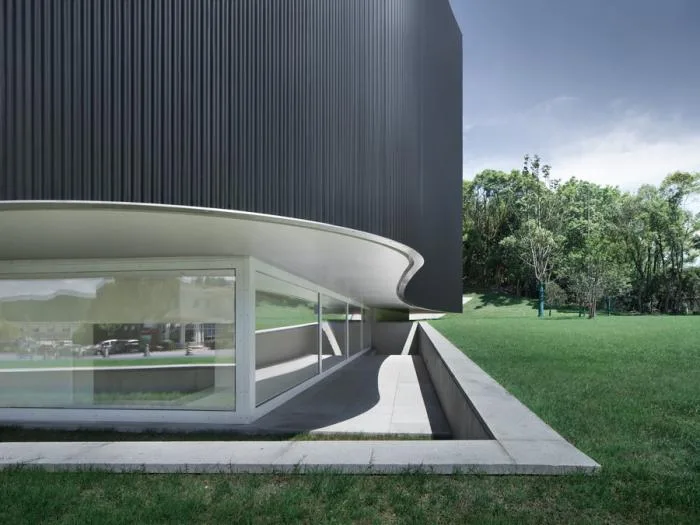
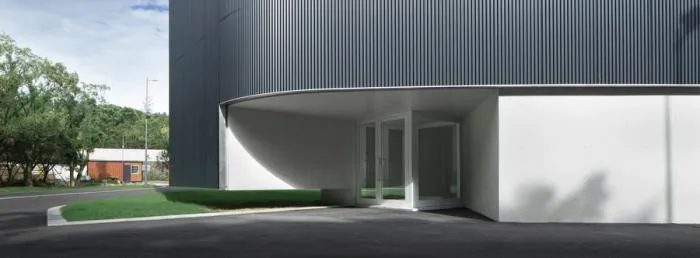
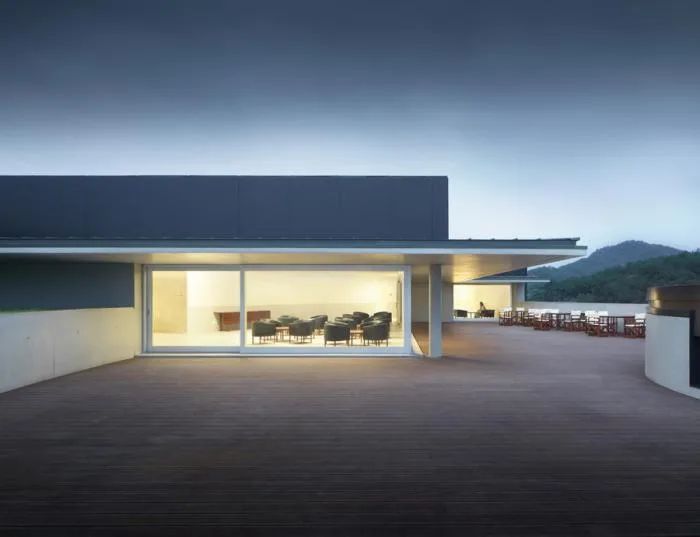
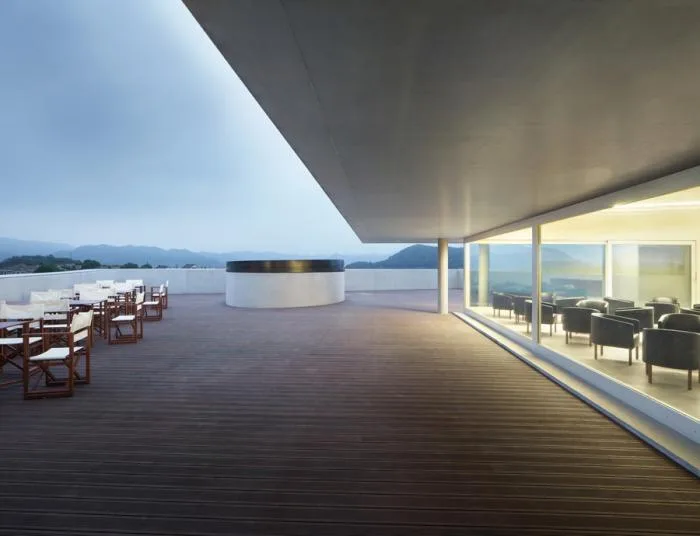
The entire building is clad in corrugated aluminum panels, giving it a darker tone that shifts from black to silver depending on the angle of light and viewing perspective. Inside, the building becomes a “masterpiece of light art,” where natural light enters the courtyard and softens as it diffuses into surrounding spaces.
Various lighting fixtures are installed throughout the different exhibition areas, hung horizontally or vertically to meet diverse lighting requirements.
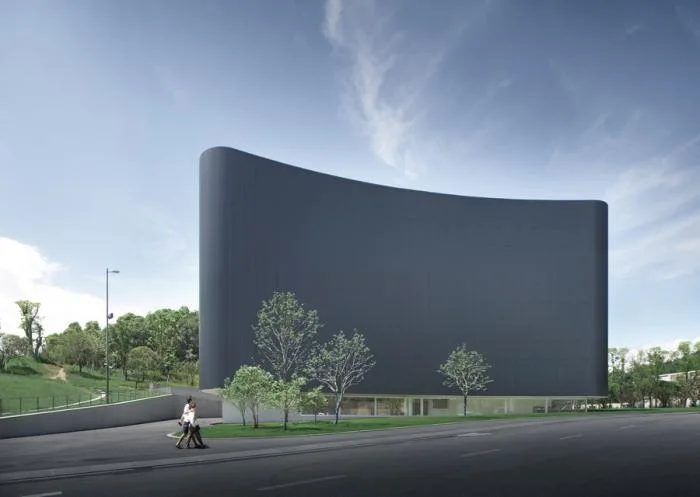
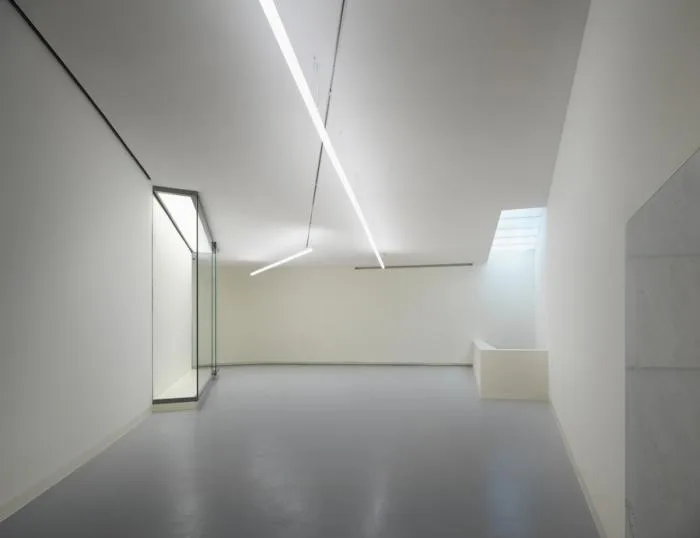
Outside, pedestrian ramps connect the museum entrance to nearby residential neighborhoods and hotel roads. The project’s intention is to harmoniously integrate with the natural landscape, existing structures, and planned developments, forming an organic whole. It serves as a multifunctional space that fulfills both everyday public needs and cultural architectural responsibilities.
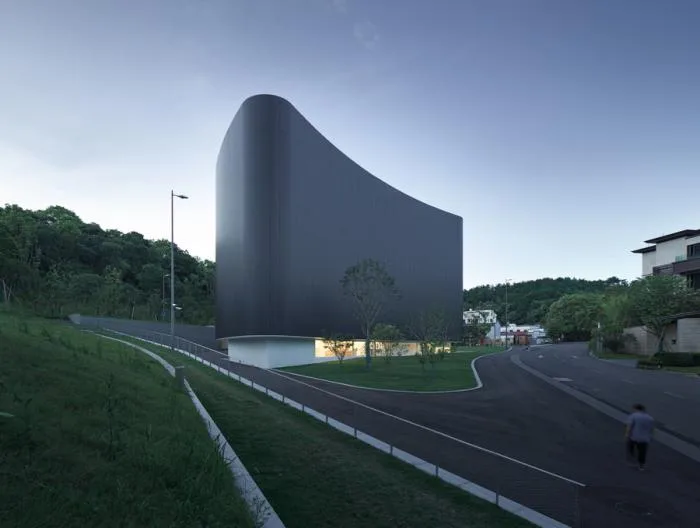
Carlos Castanheira – Mustard Seed Hidden Sumeru
A museum often demands a grand and imposing presence, a spectacle to behold. It must feature clear, bright windows that radiate light. Yet, this art education museum is refined and compact, revealing its beauty inwardly.
Mountains rise and descend from flat terrain.
A divine, mysterious touch is present. Though mountains and waters are unseen, the design remains unconventional.
Moving from exterior to interior, approaching the entrance, even the narrow corners are captivating. Wandering through evokes a sense of heaven and earth—looking upward, the winding slope connects the floors with a balanced rhythm of tension and relaxation, beginning and ending gracefully.
The internal winding pathways are secluded and intertwined, creating a spatial experience reminiscent of mustard seeds hidden in a beard, surrounded by reeds crafted with unique skill.
Outside, the metal shell floats near the ground, undulating like waves.
Light constantly shifts, flowing and transforming endlessly. Inside, exhibits remain both still and vibrant, blending art with life. The intimate scale feels vast and immersive.
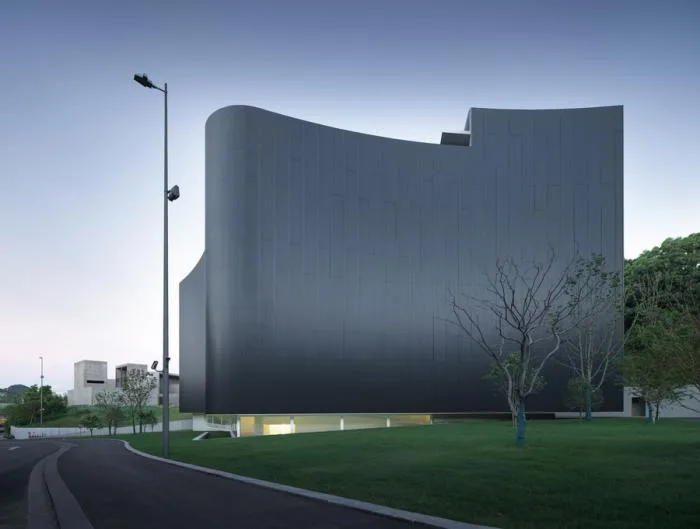
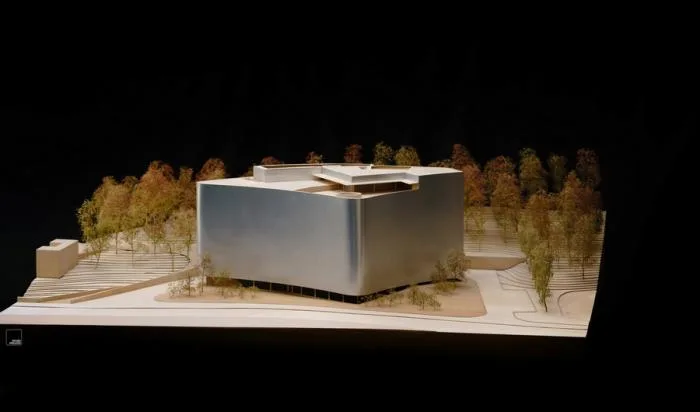
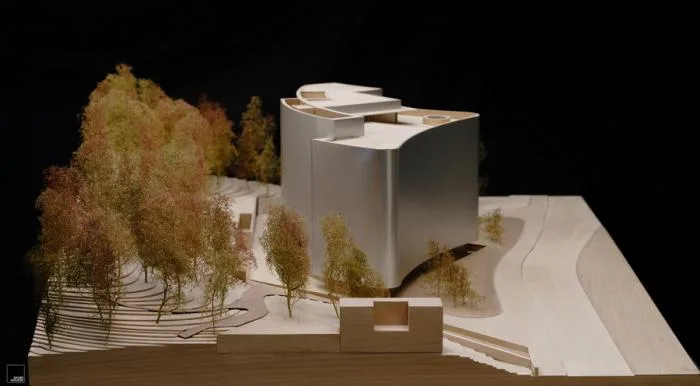
△ Model Diagram
Design Drawings
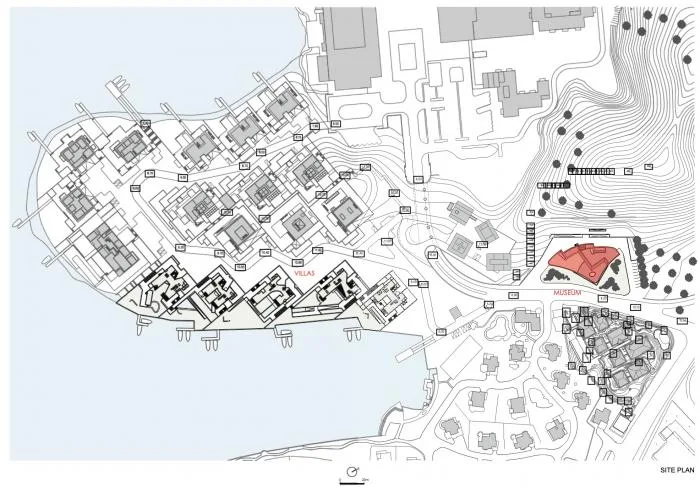
△ General Layout Plan
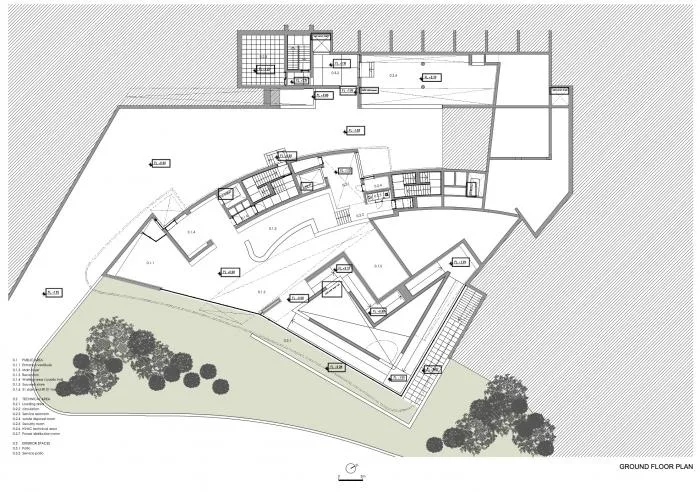
△ Ground Floor Plan
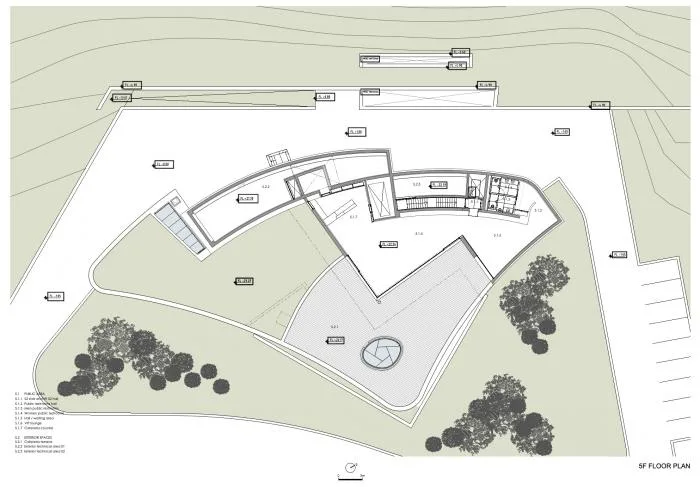
△ Fifth Floor Plan
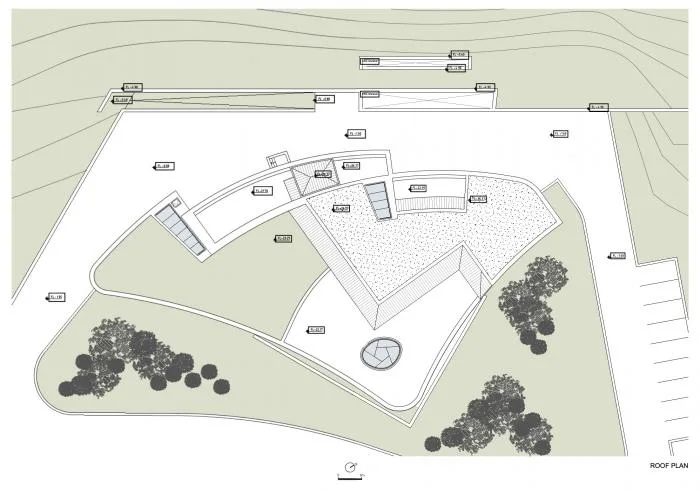
△ Roof Plan
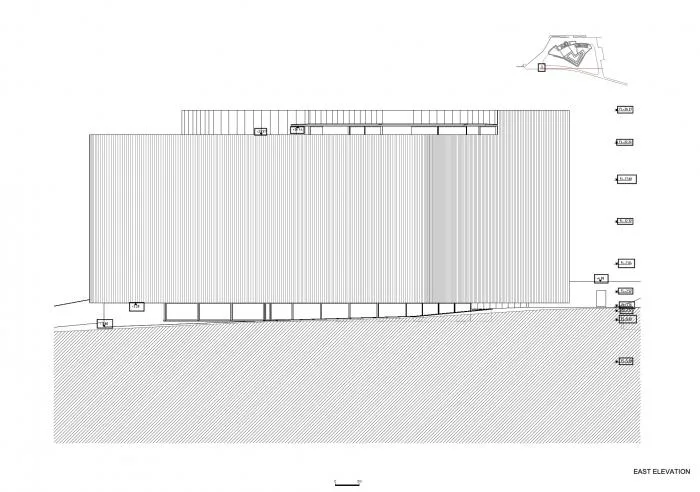
△ East Elevation View
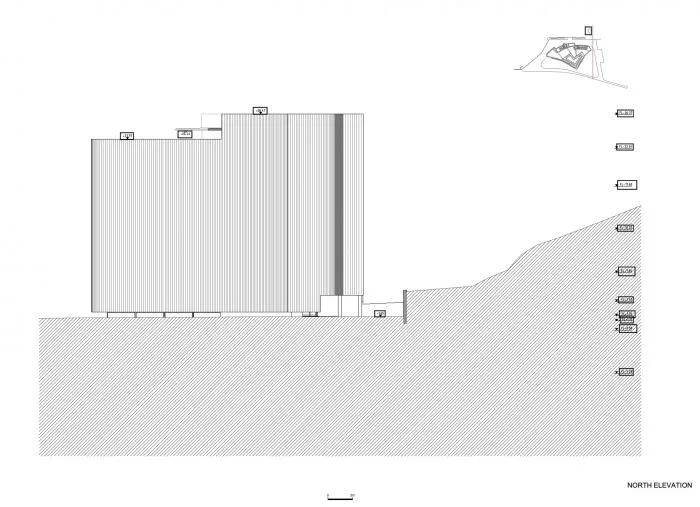
△ North Elevation View
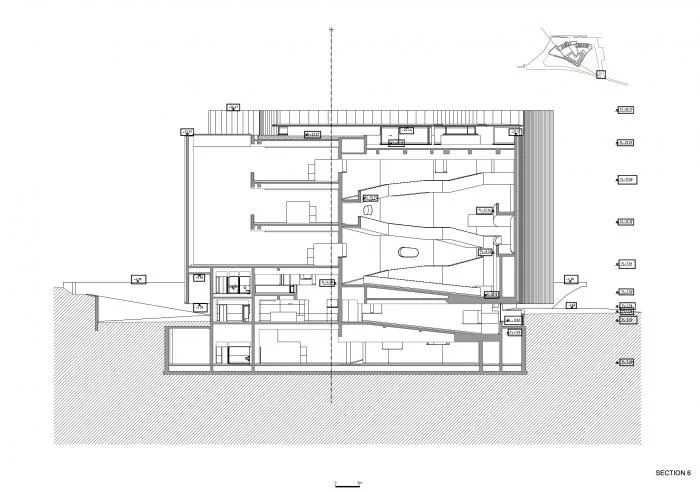
△ Section Diagram
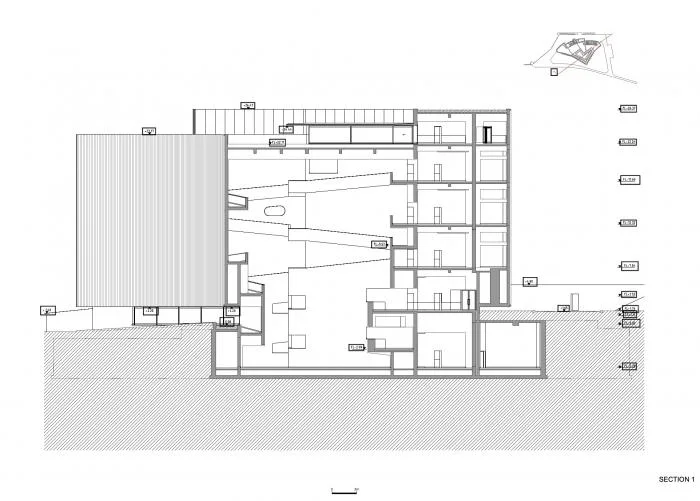
△ Section Diagram
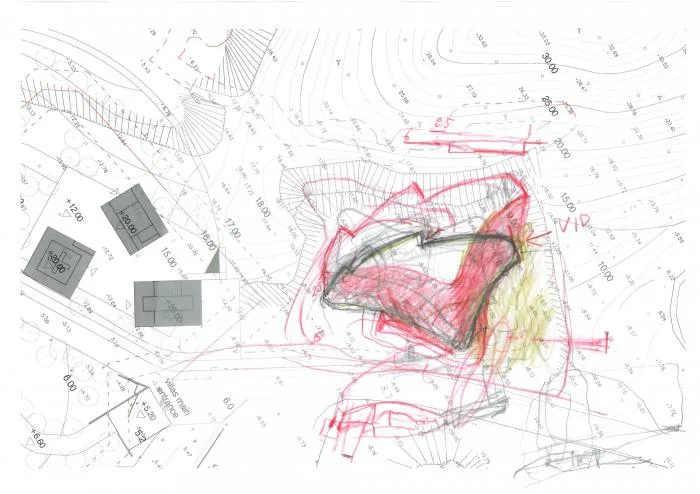
△ Analysis Chart
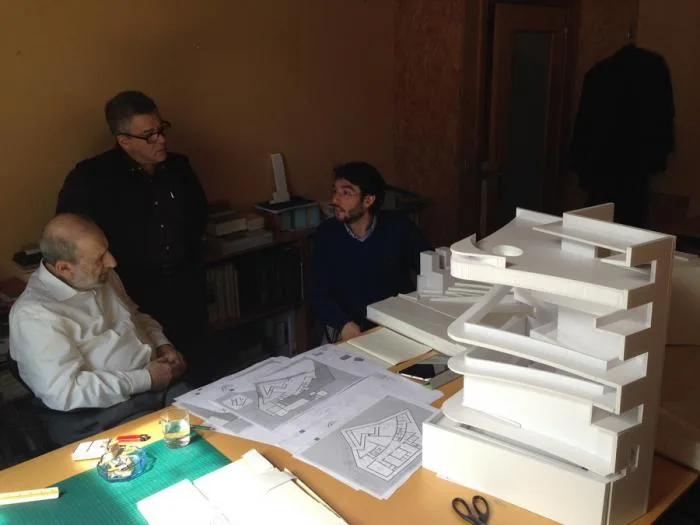
Architects Discuss the Site
Project Information
Project Type: Exhibition Architecture
Location: Ningbo, China
Architectural Design: Álvaro Siza & Carlos Castanheira
Area: 5,300 m²
Year: 2020
Photographer: Hou Bowen
Manufacturers: CLIMAR, Sto
Lead Architects: Álvaro Siza with Carlos Castanheira
Project Leadership: Phase 1 (Schematic Design) – Luis Reis, Elisapete Queirós, Pedro Carvalho; Phase 2 (Design Development, Construction) – Pedro Carvalho
Design Team: Jorge Santos, Joana Soeiro, Sara Pinto, Susana Oliveira, Francesca Tiri, Rita Ferreira, Diana Vasconcelos, Inês Bastos, Luisa Felizardo
3D Modeling and Rendering: Germano Vieira, Sara Noronha
Lighting Design: Alexandre Martins – GPIC
Acoustic Design: Filipe Andrade Santos
Structural Engineering: Paulo Fidalgo – HDP
Design Management: Zhejiang Huazhi Architectural Design Co., Ltd. – Tong Xiuguang, Li Zheren, Cheng Tianying
Coordination, Translation, Design Resident and Management: Liu Chunyi
Local Design Institute: China Academy of Art Landscape Architecture Design and Research Institute Co., Ltd. – Zhao Yuanpeng
Mechanical and Electrical Engineering: Hangzhou Mingjiepu Mechanical and Electrical Design Firm Co., Ltd.
Construction: Zhejiang Wanhua Construction Co., Ltd.
Model Making: Escala Reduzida
Client: Ningbo Huamao Education and Culture Investment Co., Ltd.












Must log in before commenting!
Sign Up