
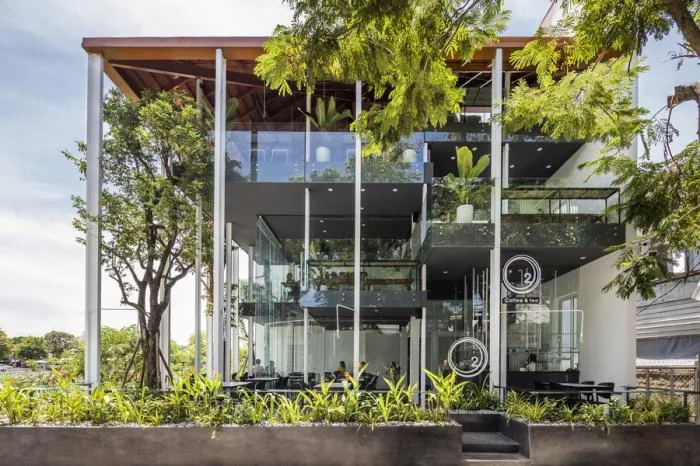
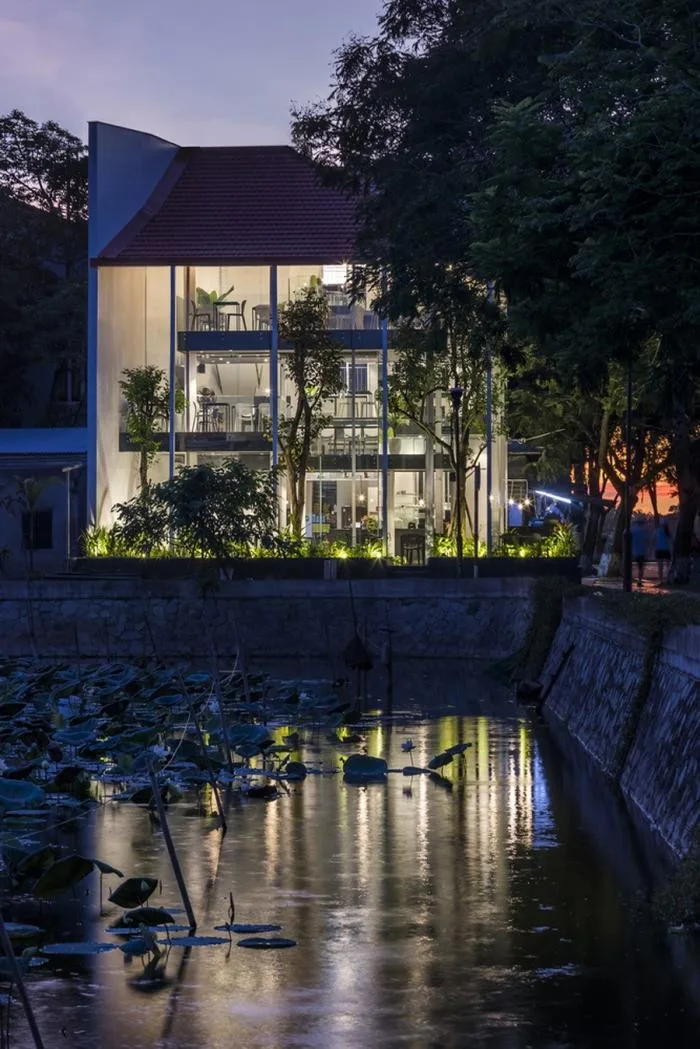
Located in Hue, Vietnam, the O2 Coffee Shop spans 120 square meters and is uniquely positioned between roads and lakes on either side. This venue sits within a residential neighborhood rich in cultural and historical significance, adjacent to the Hue Imperial City, known as “Dai Noi.” The term “Dai Noi” broadly refers to fortresses from Vietnam’s old feudal dynasties (19th-20th centuries) designed to protect key palaces. This site is recognized as a UNESCO World Heritage Site in Vietnam.
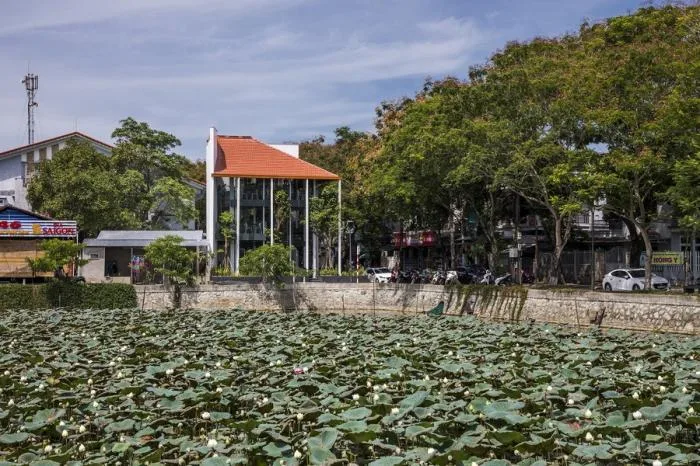
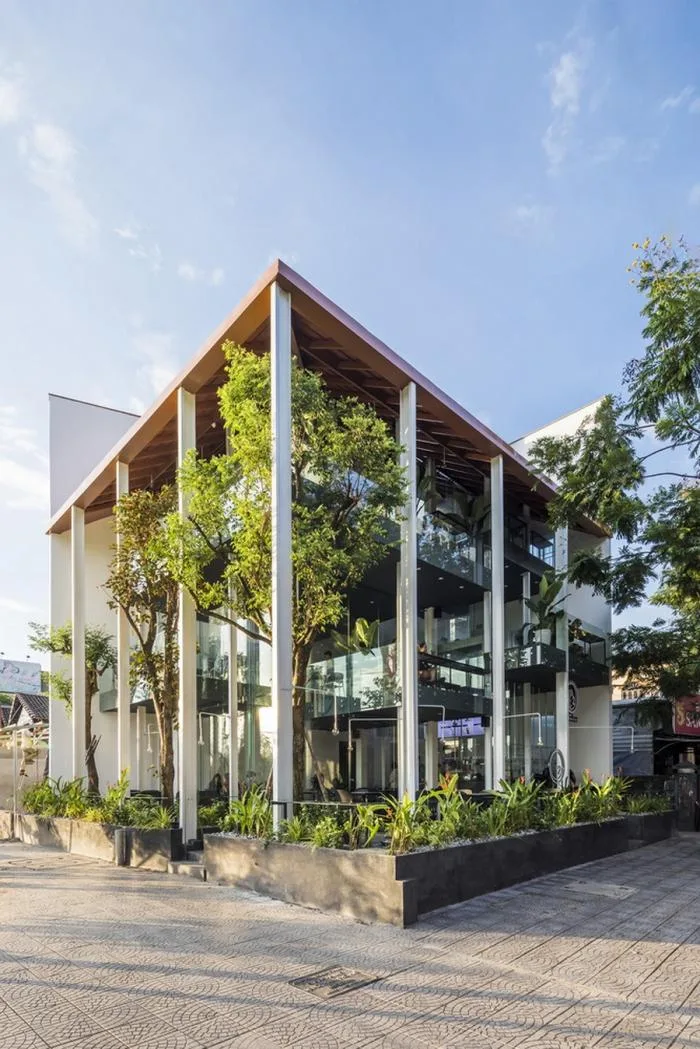
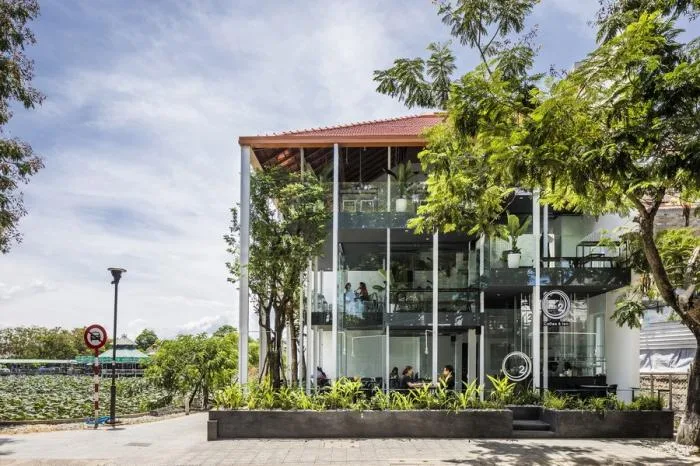
This project is situated in an area with distinctive cultural heritage that demands preservation and thoughtful development, particularly concerning aesthetics and architecture. The design team carefully maintained the strong connection between the building and local cultural elements, respecting the area’s historical context while aligning with future development directions. Vietnam’s tropical monsoon climate, characterized by hot summers, cold winters, and extended rainy seasons, significantly influenced the design.
Given these climatic factors and the area’s cultural background, traditional architectural forms such as the “Rường houses” with sloping roofs have long been appreciated. These structures effectively address Hue’s climate conditions. However, due to limitations in materials, costs, structural needs, and functional demands in today’s fast-paced society, these traditional buildings gradually no longer meet modern needs and are at risk of being forgotten.
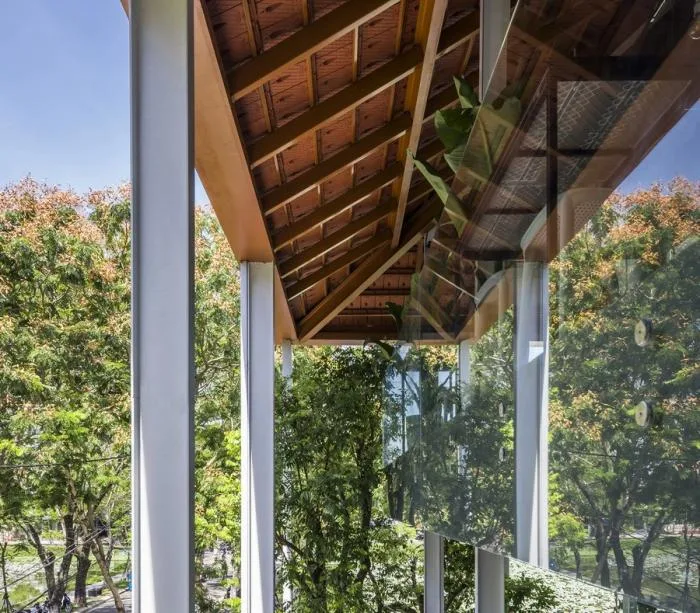
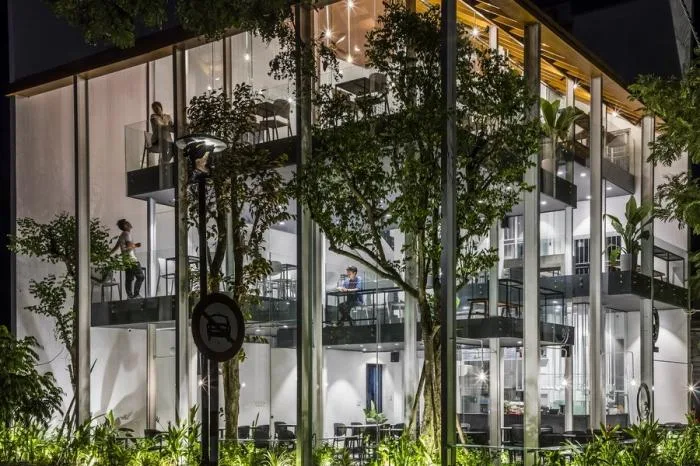
In response, the design team proposed a modern architectural concept that embraces future development needs while preserving key visual, physical, and functional features like lighting and ventilation characteristic of the “Rường house.” The building maintains a harmonious relationship with its environment, symbolizing a bridge between history and the future. This is evident in the design elements such as the straight steel column system and the sloped roof tiles.
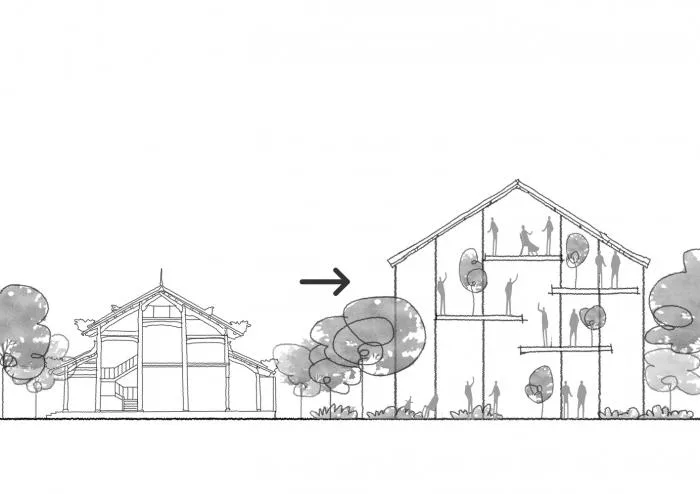
Concept Sketch
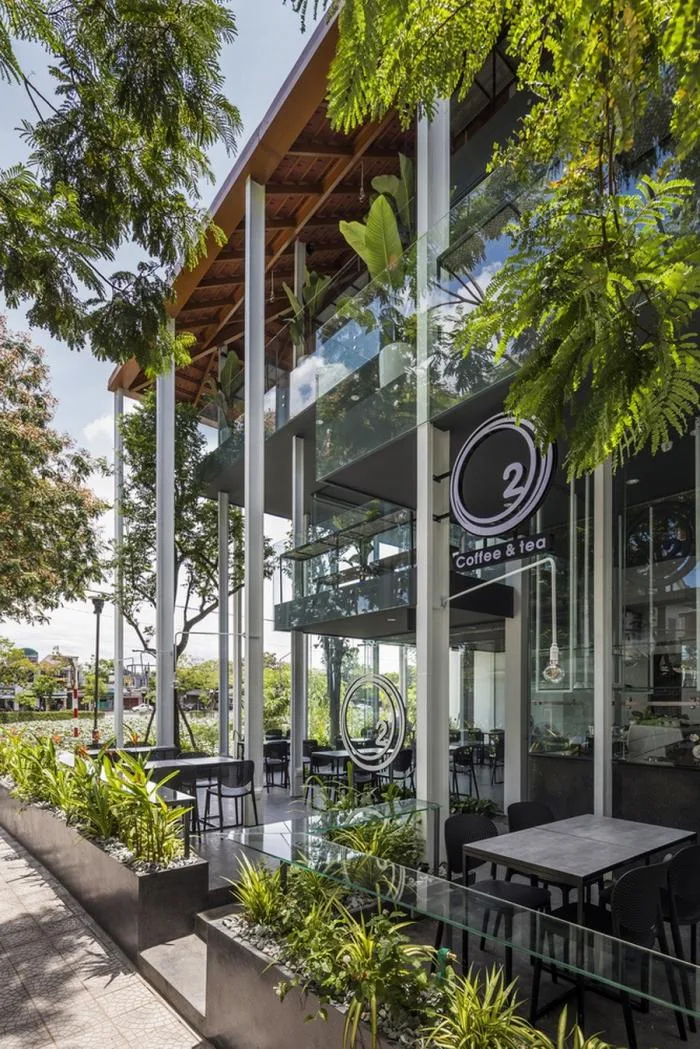
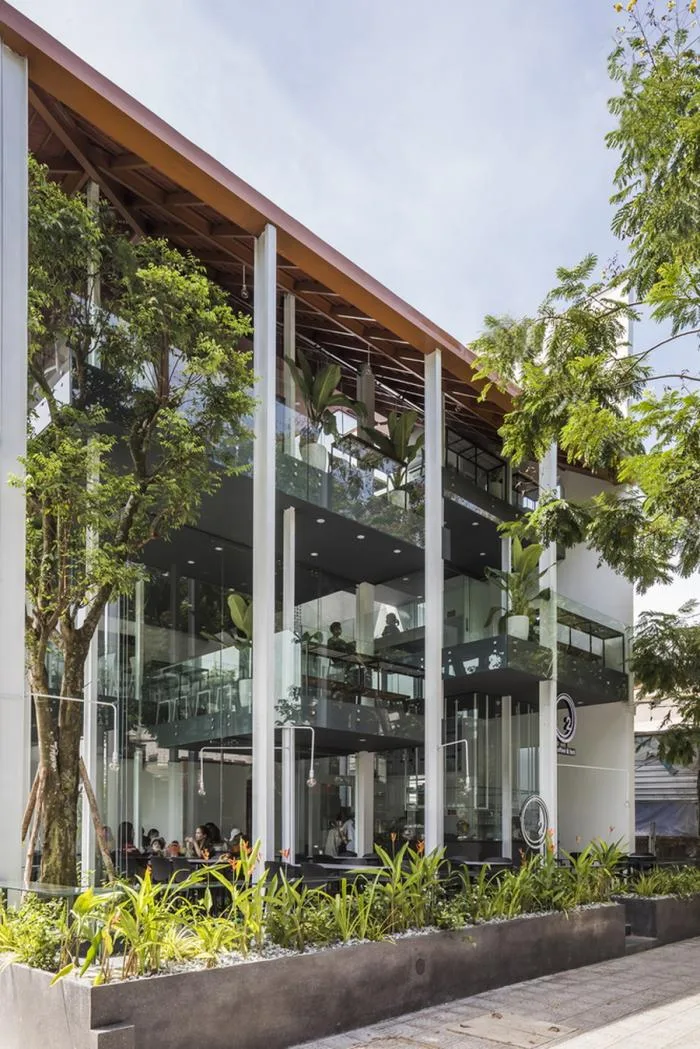
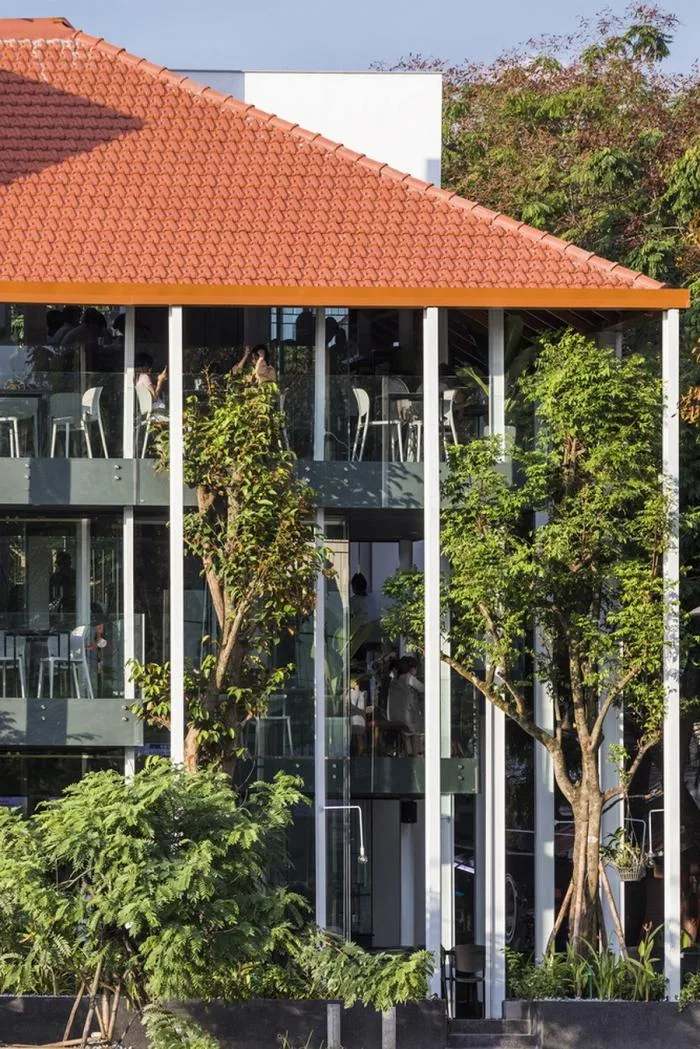
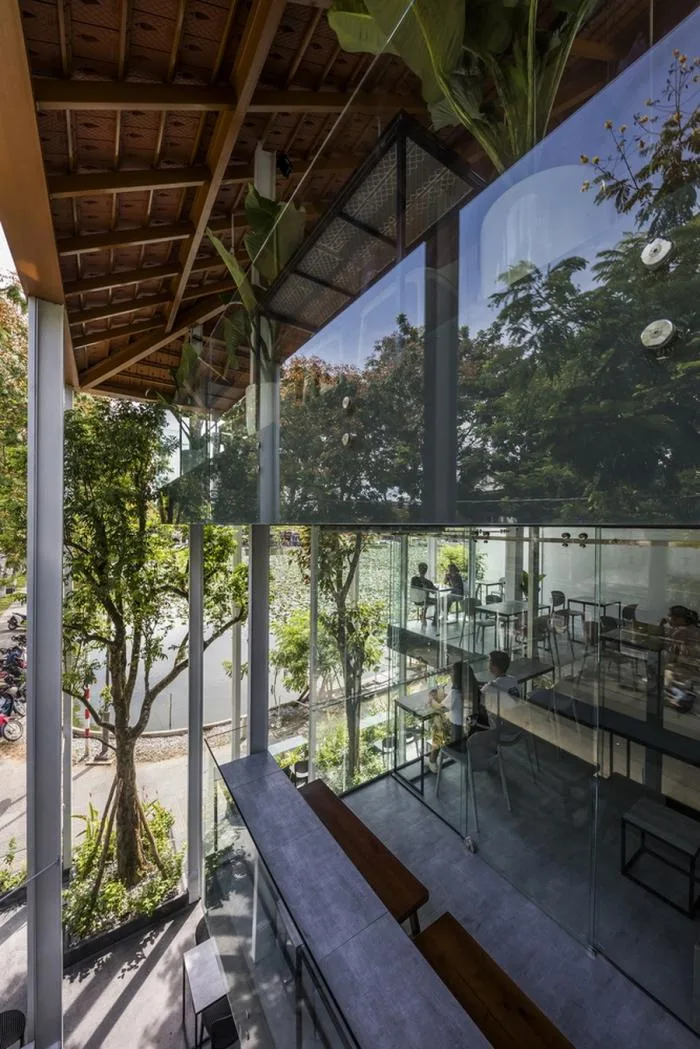
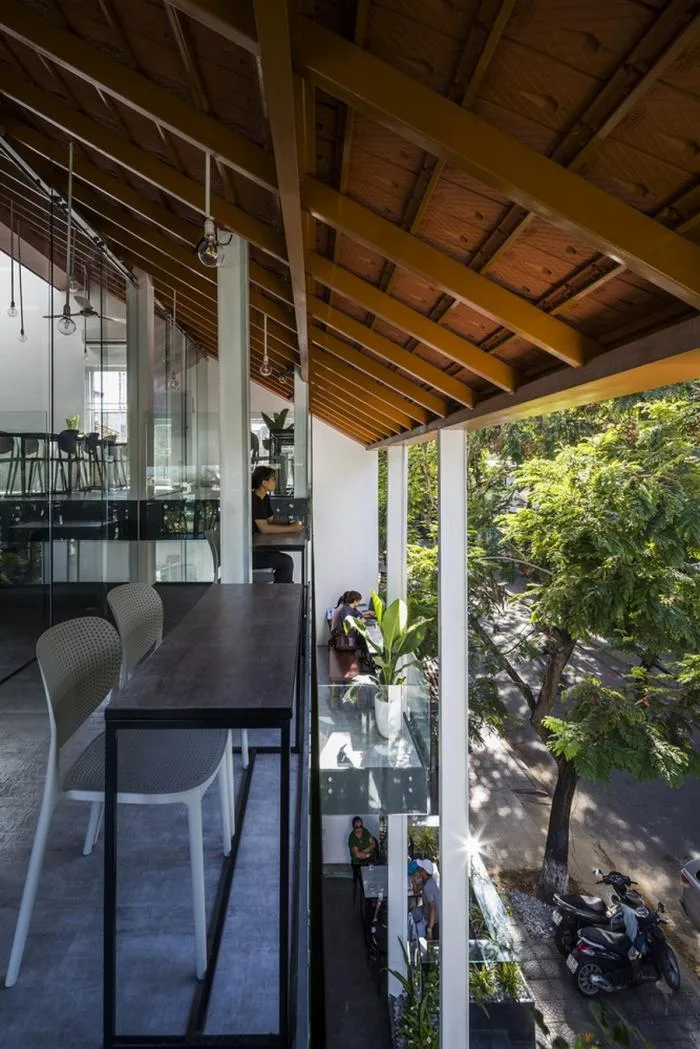
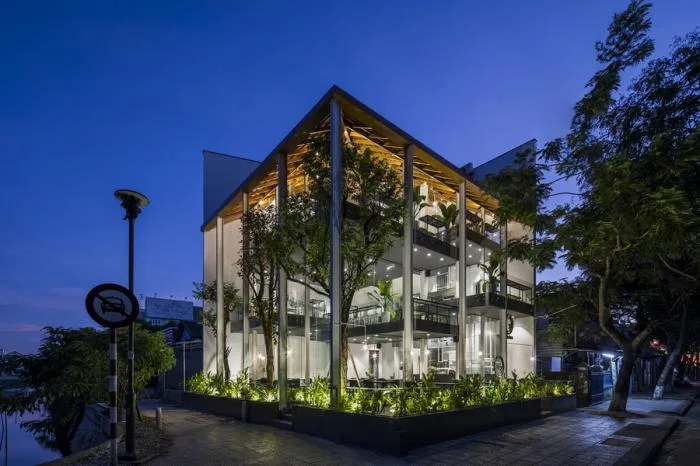
The building design creates large gaps and open spaces along its two main facades, balancing the ratio between indoor volumes and outdoor space. Strategically placed glass sliding doors promote effective ventilation. By expanding horizontally and contracting vertically, the natural landscape surrounding the building feels closer to the users, establishing a seamless visual connection between interior and exterior. This approach not only strengthens the building’s integration with its environment but also enhances its appeal as a commercial and service destination.
Commercial and service buildings in Vietnam often face challenges due to short-term investment approaches. This results in issues like underinvestment, boundary and height limit violations to maximize floor area, and the use of materials and structures that lack durability, professionalism, and safety. Crucially, these developments often overlook user experience and service quality, neglecting community integration and cohesion with the surrounding environment.
O2 Coffee Shop addresses these challenges by varying floor heights and orientations, creating flexible gaps and intersections inside and outside the building. This design encourages users to explore the space from new perspectives, moving beyond passive seating to actively engage with the environment as it changes with time and seasons. This approach not only produces striking visual effects but also increases the density of usable floors, allowing for more commercial space without increasing the building’s overall height.
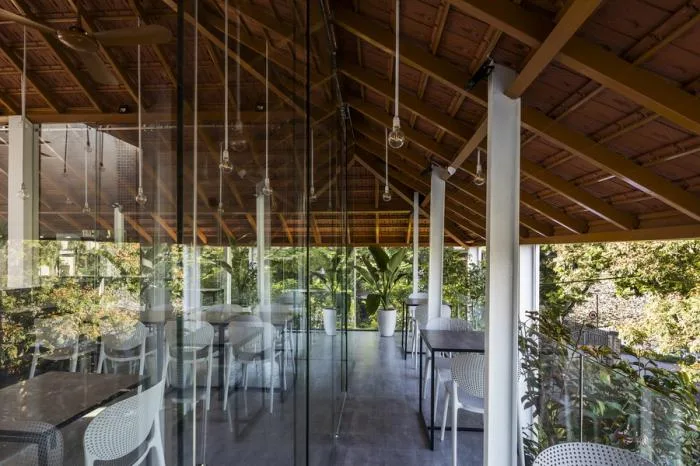
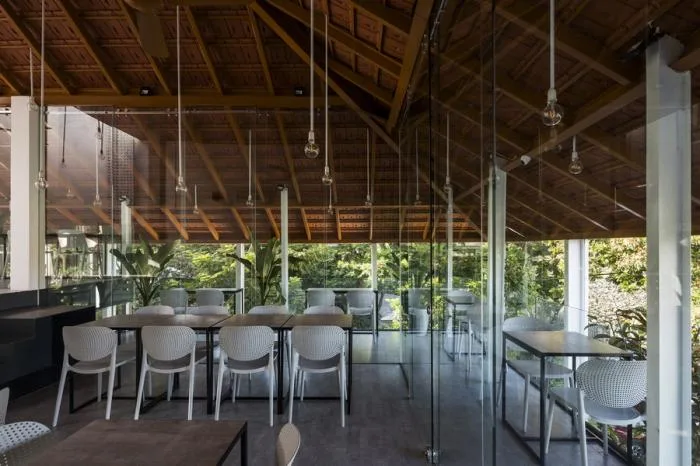
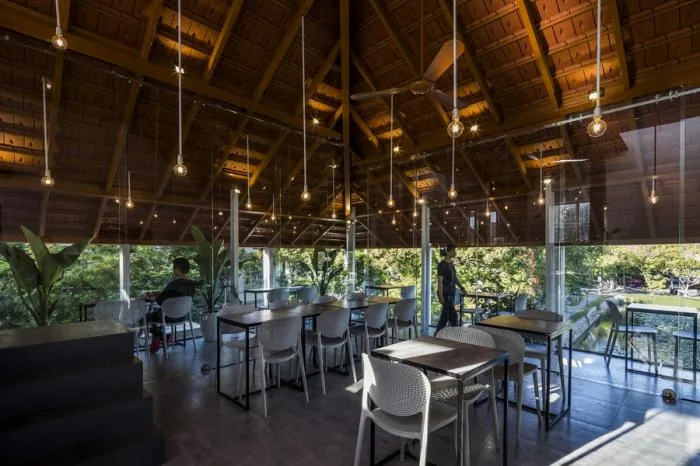
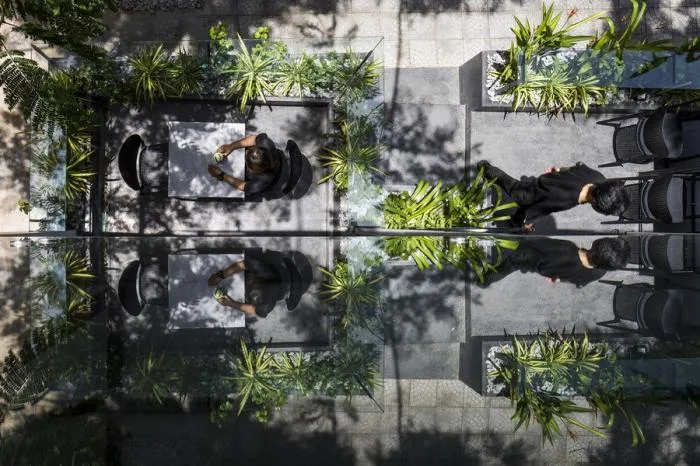
The building appears as a transparent block that opens up to its surroundings, enhancing the commercial appeal of its location and fostering a symbiotic relationship with neighboring businesses. It acts as a hub for various trade activities in the area. Trees planted around and outside the structure create a buffer zone, minimizing direct sunlight impact on the two glass wall systems. The glass walls receive less heat, and multiple sliding doors positioned in different directions facilitate heat dissipation and improve indoor ventilation, helping to reduce the building’s greenhouse effect.
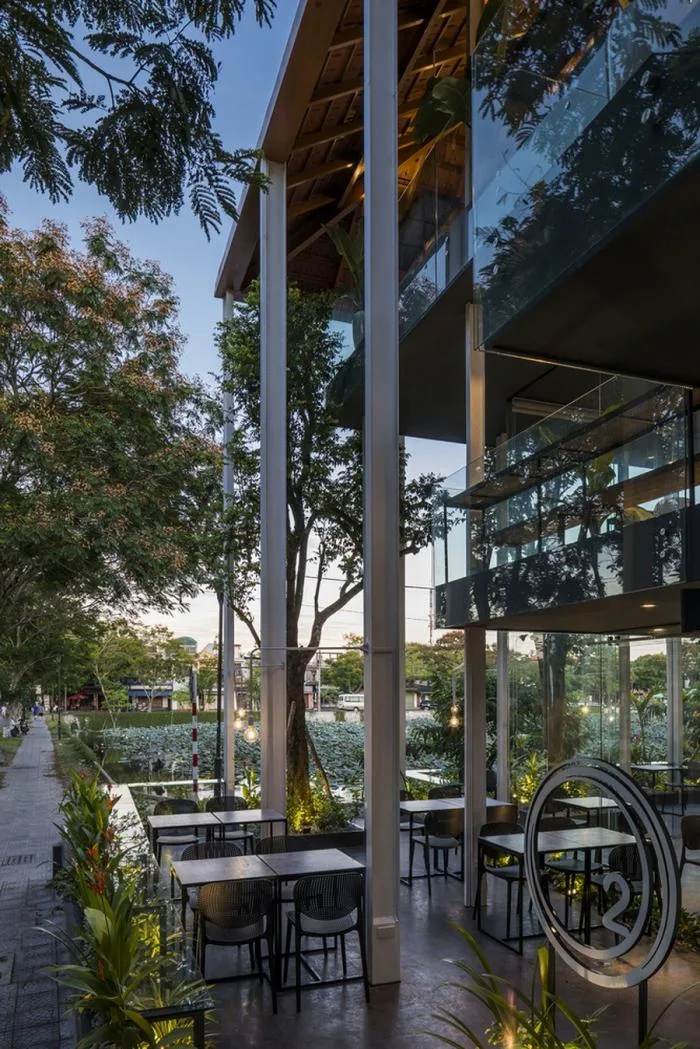
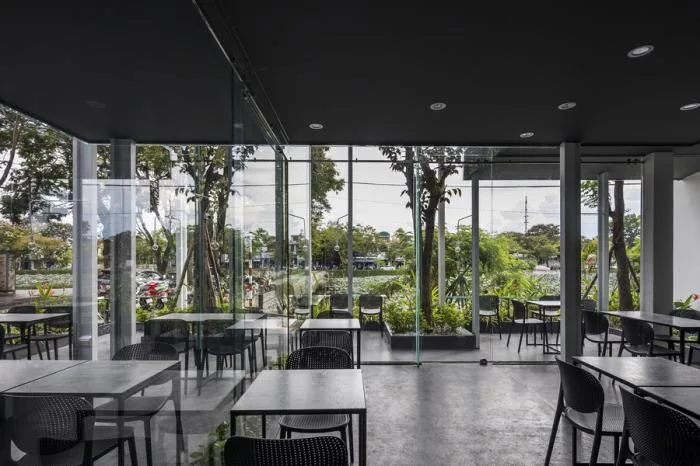
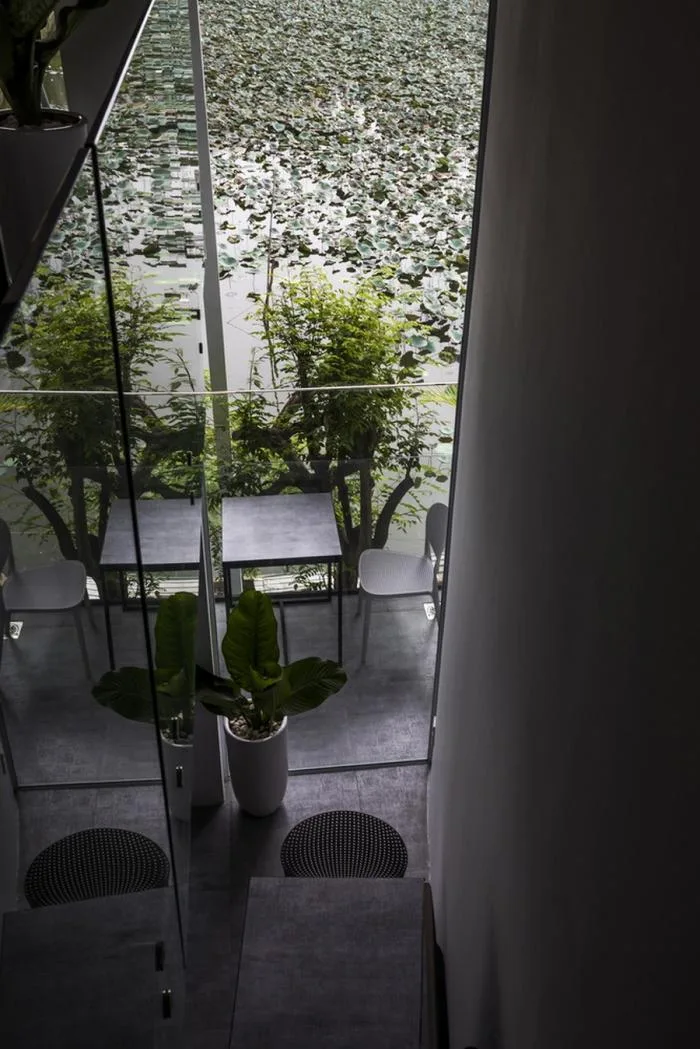
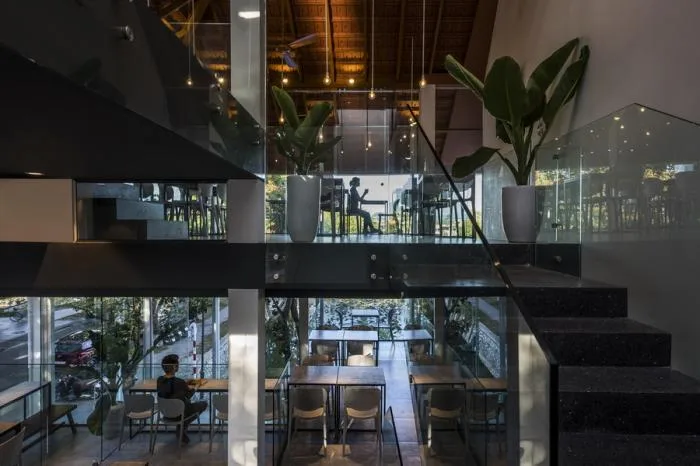
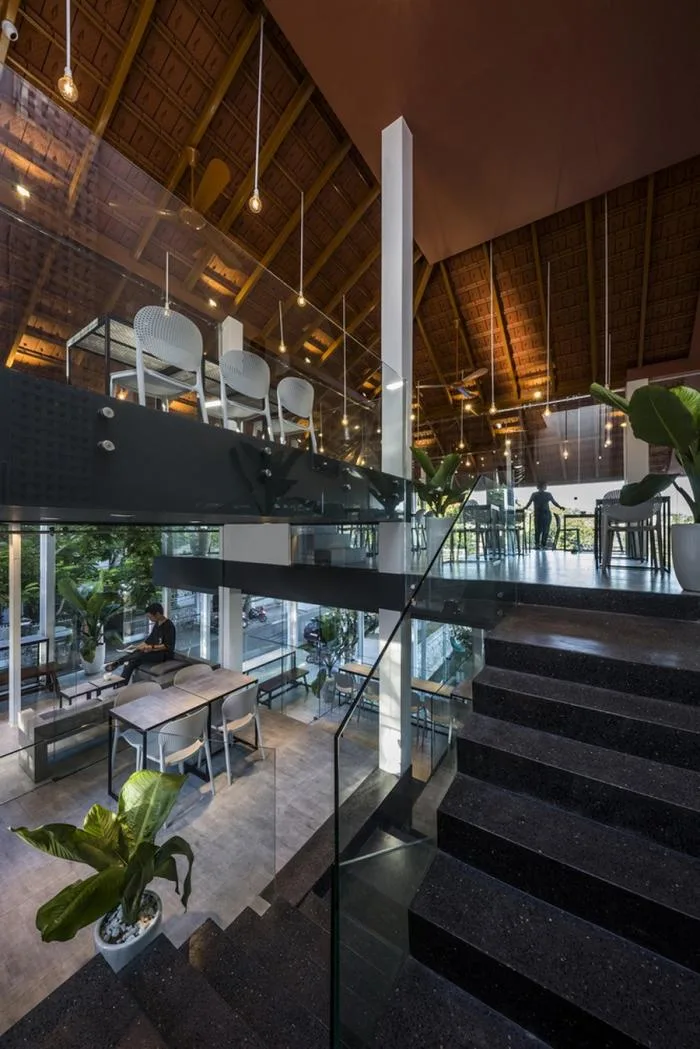
Structurally, the building mainly uses load-bearing steel frames for columns, floors, and walls. The cladding materials are largely sourced from recycled industrial and agricultural waste, including GACHMAT panels and low-fire bricks. The construction employs an assembly method that allows for rapid building with minimal environmental impact and easy material procurement. Additionally, the building is designed for easy disassembly, enabling most materials to be reused in future constructions.
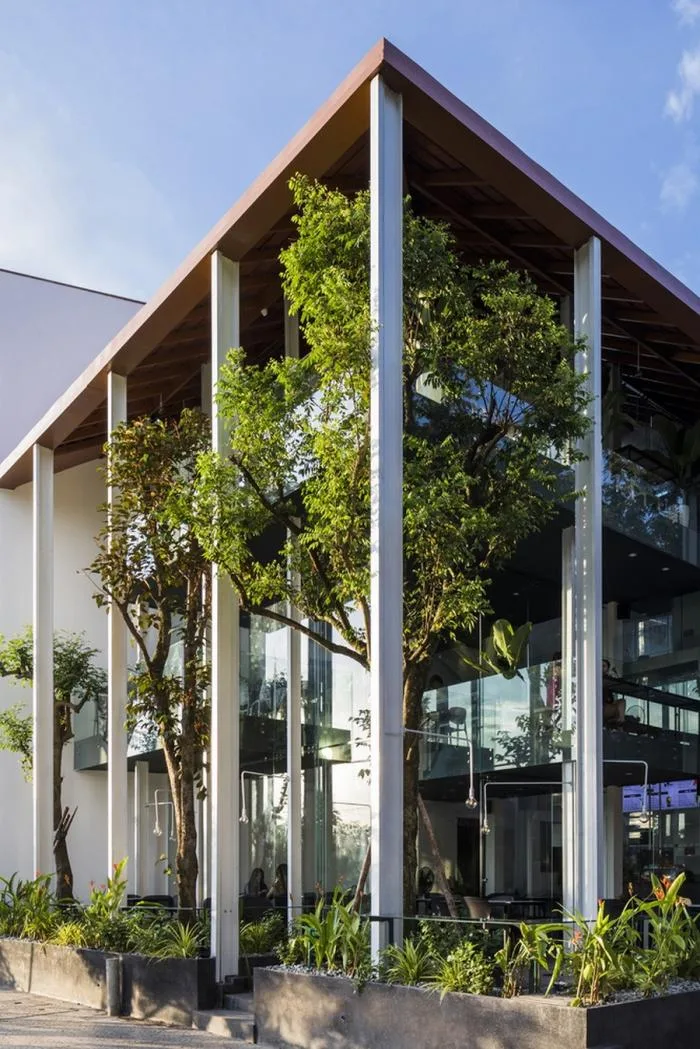
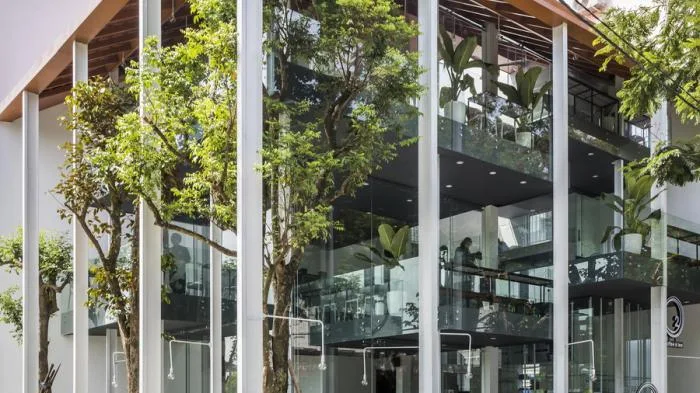
During the day, the building requires no artificial lighting. Even under poor weather or at night, energy-efficient LED lighting is used. Air conditioning is managed thoughtfully according to daily and seasonal temperature variations, optimizing energy use. Beyond the “hollow block” design, the team has also planned for potential future changes in the building’s function, aiming to limit further encroachment on natural land by future development.
Design Drawings
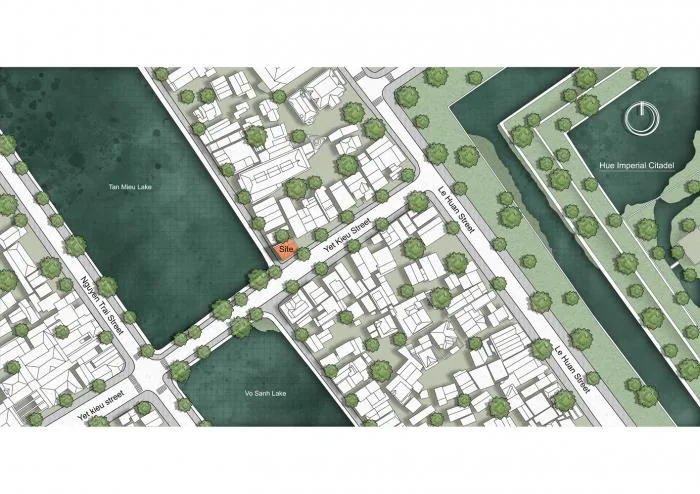
△ General Layout Plan
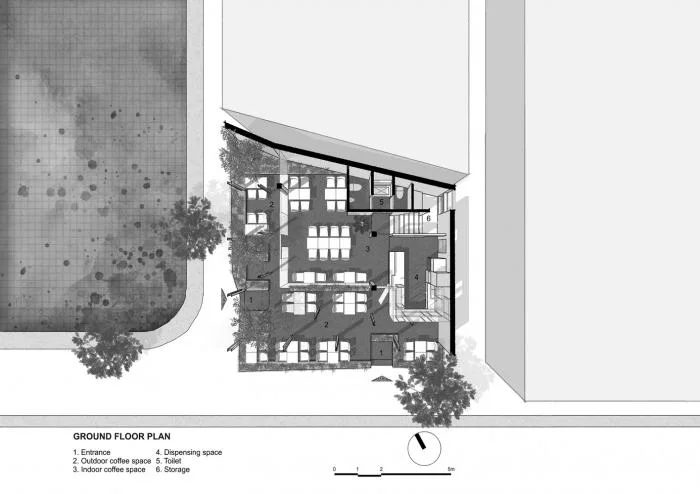
△ First Floor Plan
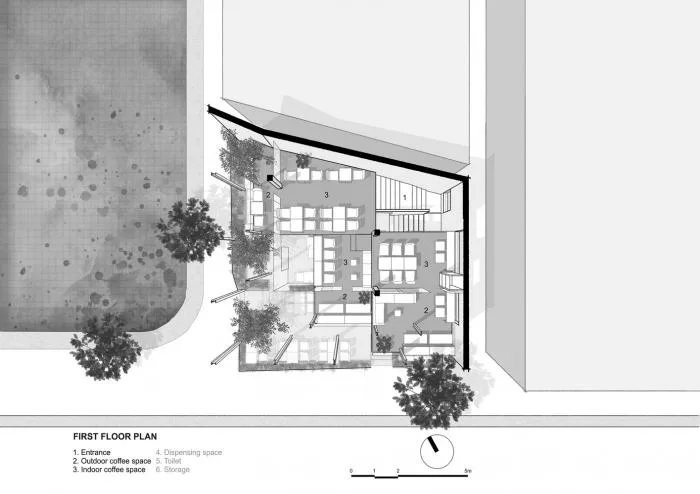
△ Second Floor Plan
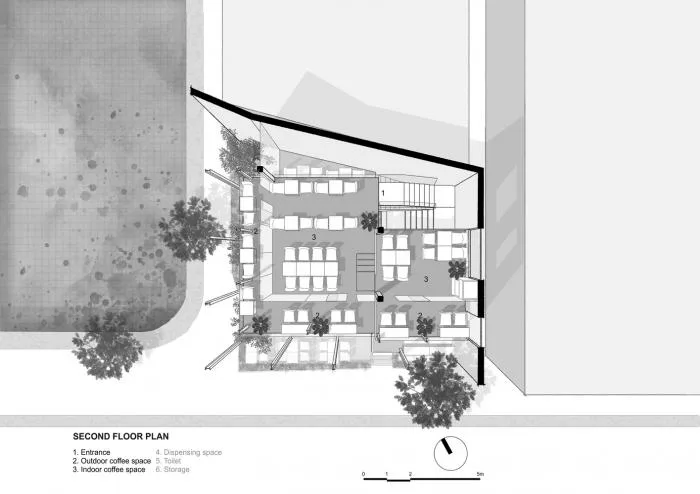
△ Third Floor Plan
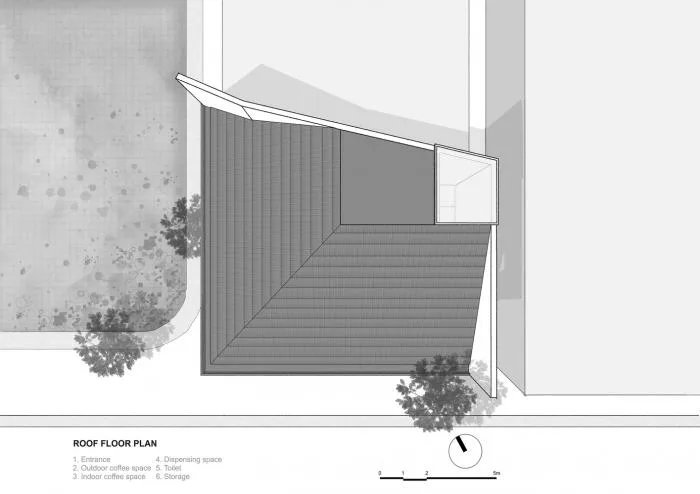
△ Roof Plan
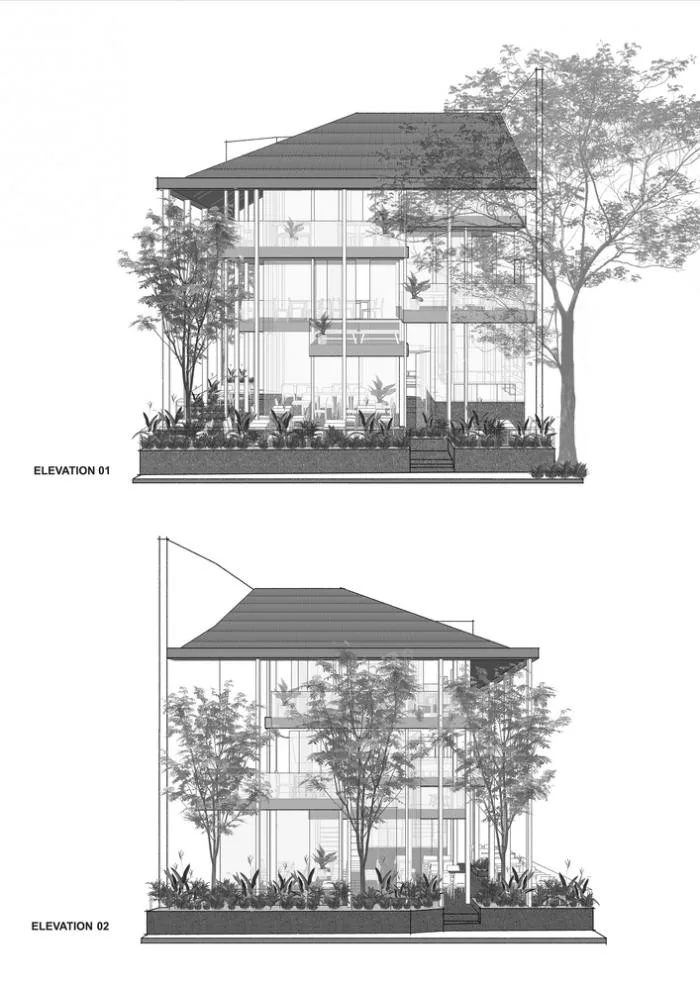
△ Elevation Drawing
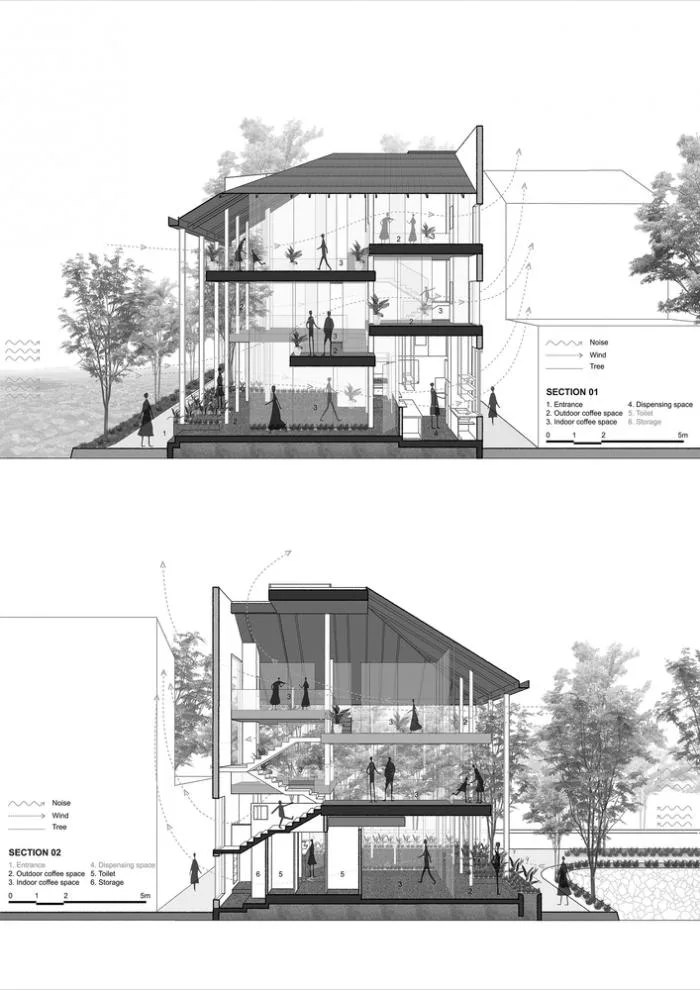
△ Section Diagram
Project Information
Project Type: Coffee Shop
Location: Thành Phố Huế, Vietnam
Architectural Design: MW Archstudio
Area: 170 m²
Year: 2019
Photography: Hiroyuki Oki
Suppliers: AutoDesk, Galaxy Lighting, INAX, Trimble Navigation, Xingfa
Lead Architects: Le Minh Quang, Nguyen Ái Thy
Design Team: Le Thi Thu Huong, Nguyen Phuoc Quoc Thang
Client: O2 Coffee & Tea












Must log in before commenting!
Sign Up