
Zhejiang Gongshang University is situated on its historic old campus along Jiaogong Road in downtown Hangzhou, with roots tracing back to the 1960s. Like many Chinese universities facing urban expansion pressures, this old campus has been repurposed into a rare office park in the city center. Within this park, the tiered classrooms located on the first and second floors of Building B have long remained unused due to their spatial layout being unsuitable for conventional office needs, becoming a leftover challenge in the transition from old to new.
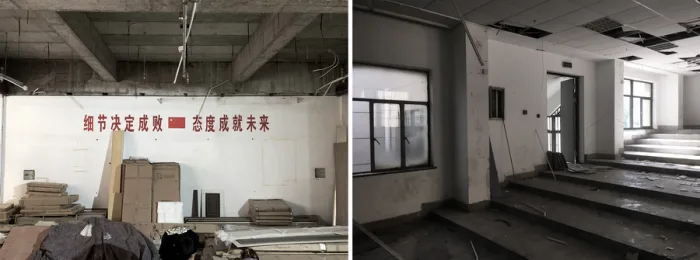
△ The ladder classroom before renovation © gad · line+ studio
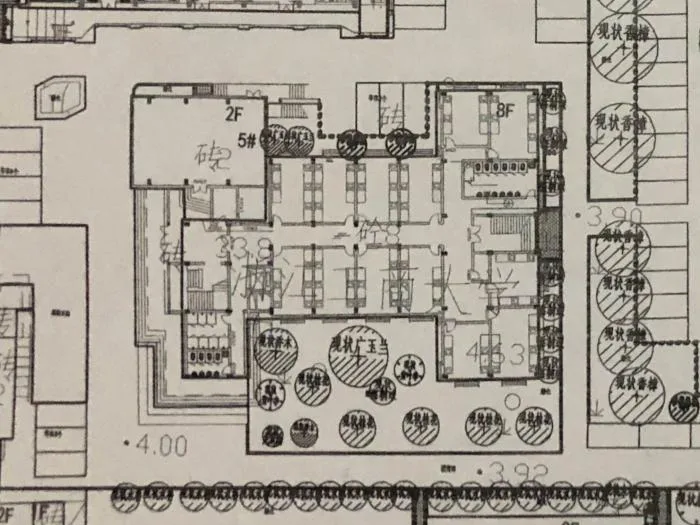
△ Original engineering archive drawings
When the design studio Line+ urgently required more open and spacious office space to accommodate team growth, the team immediately selected this highly layered and unconventional area, along with the entire second floor of the adjacent former girls’ dormitory. This choice marked the beginning of unlimited possibilities in the eyes of Line+.
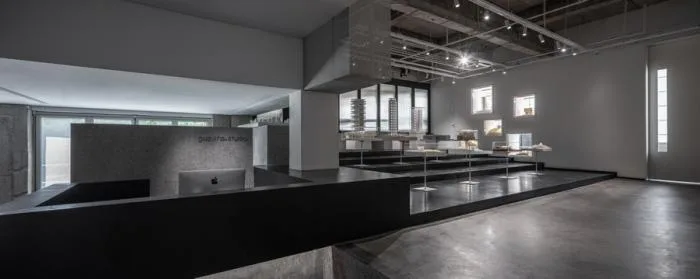
© Pan Jie
Traditional office environments are often closed, singular work “containers.” However, with the rapid evolution of information technologies, office spaces have gradually transformed into dynamic “mediums” that support work and communication. They now accommodate a variety of uses such as exhibitions, lectures, salons, entertainment, and events, fostering both formal and informal interactions and knowledge sharing.
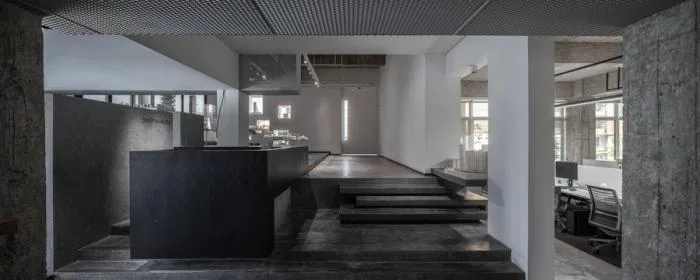
© Pan Jie
© Yang Guangkun
© Pan Jie
Given the chance to create our own exclusive workspace, we took on the roles of both client and designer, setting clear goals: to design a workspace that is simultaneously cool and approachable, fluid and open, capable of adapting to the evolving needs of the future while delivering a comfortable environment for architects. The name ‘Line’ symbolizes boundaries, and ‘+’ represents breaking through them. Our renovation embraces this core philosophy by pushing the limits of space and time, reflecting our contemporary vision of office environments.
© Pan Jie
01 Redefining Architectural Layout – Creating Seamless Connections
Resetting circulation paths was the first step in our design process. Building B originally featured a public lobby and circulation system designed for an eight-story office building. To enhance the space’s independence and visual identity, Line+ introduced an external staircase linking the original two-story lecture hall and an adjacent old tree, establishing a new independent entrance within a courtyard. This addition adds depth and playfulness to the space. Meanwhile, the entrance to Zone D was repositioned to align with the other office areas, creating a cohesive spatial relationship.
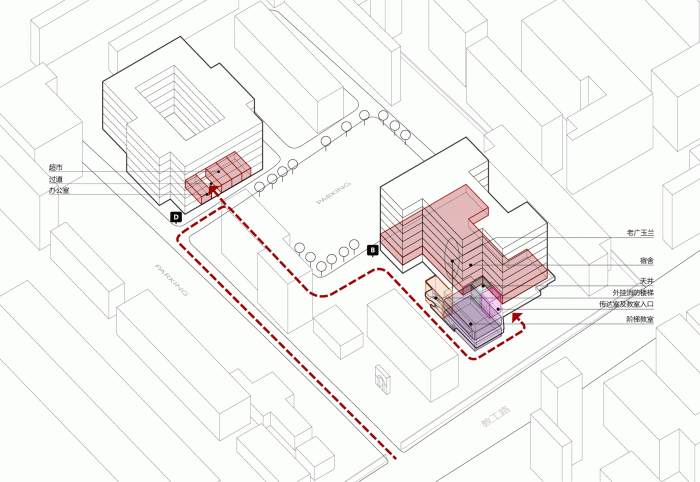
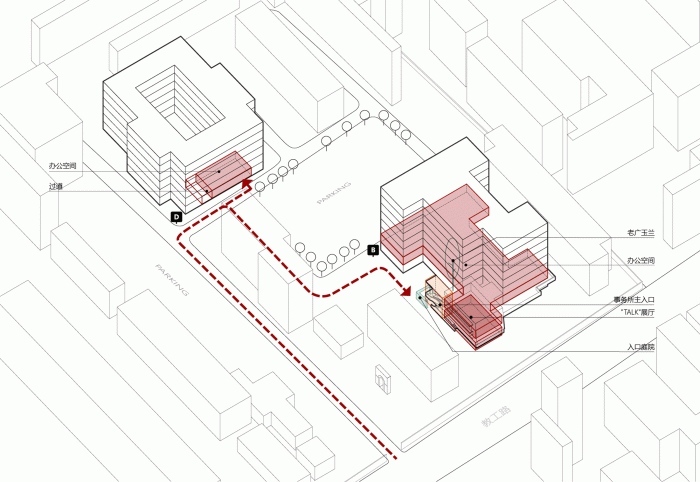
△ Upper level analysis and overall design © gad · line+ studio
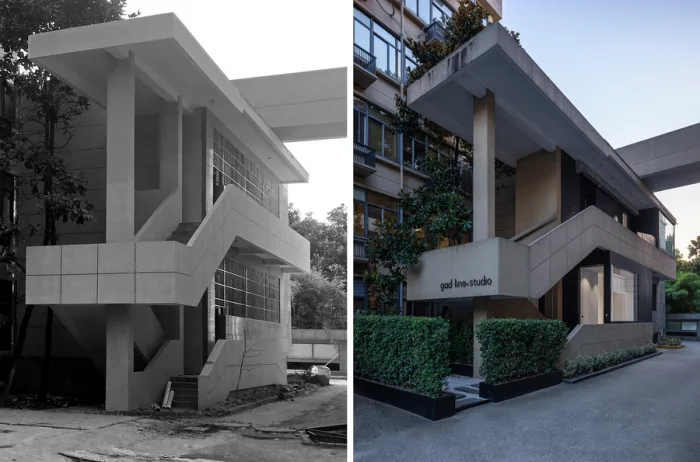
The external staircase of the staircase classroom before renovation (left) is repurposed as the main office entrance after renovation (right: © Pan Jie)
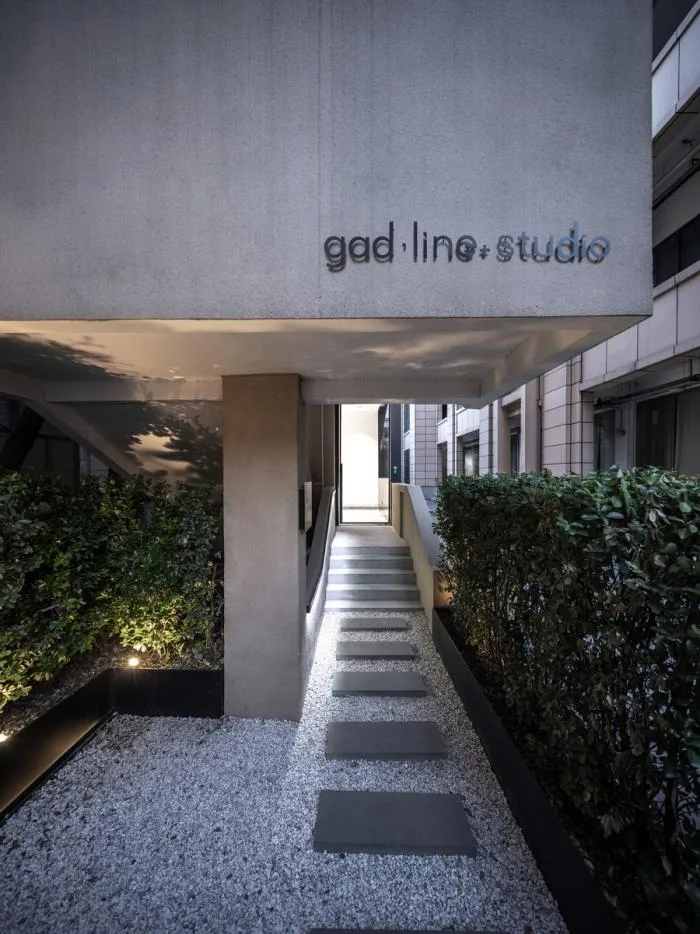
△ Entrance courtyard space © Pan Jie
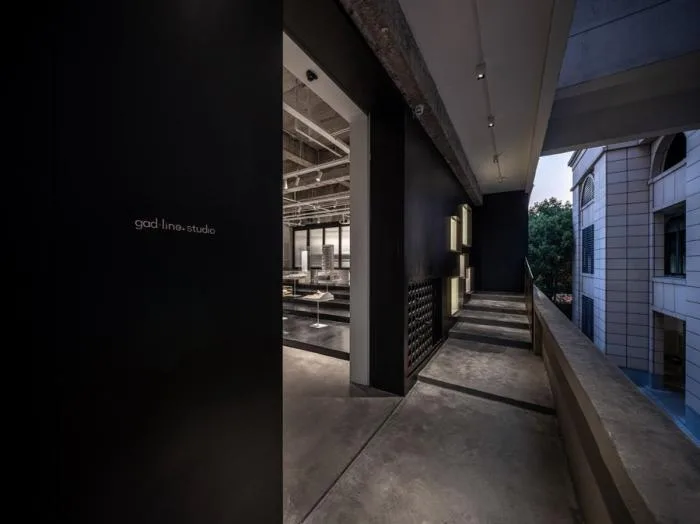
△ Entrance space on the second floor © Pan Jie
After reorganizing the space, we deepened the design. The original staircase classroom and dormitory areas in Zone B were separated by a central courtyard and wall, forming two distinct zones. Line+ reconnected these separated spaces through a closed courtyard, then broke through the dormitory partition wall. New steps were introduced to link the exhibition hall, office, and water bar areas, bridging height differences and creating a continuous, integrated office system.
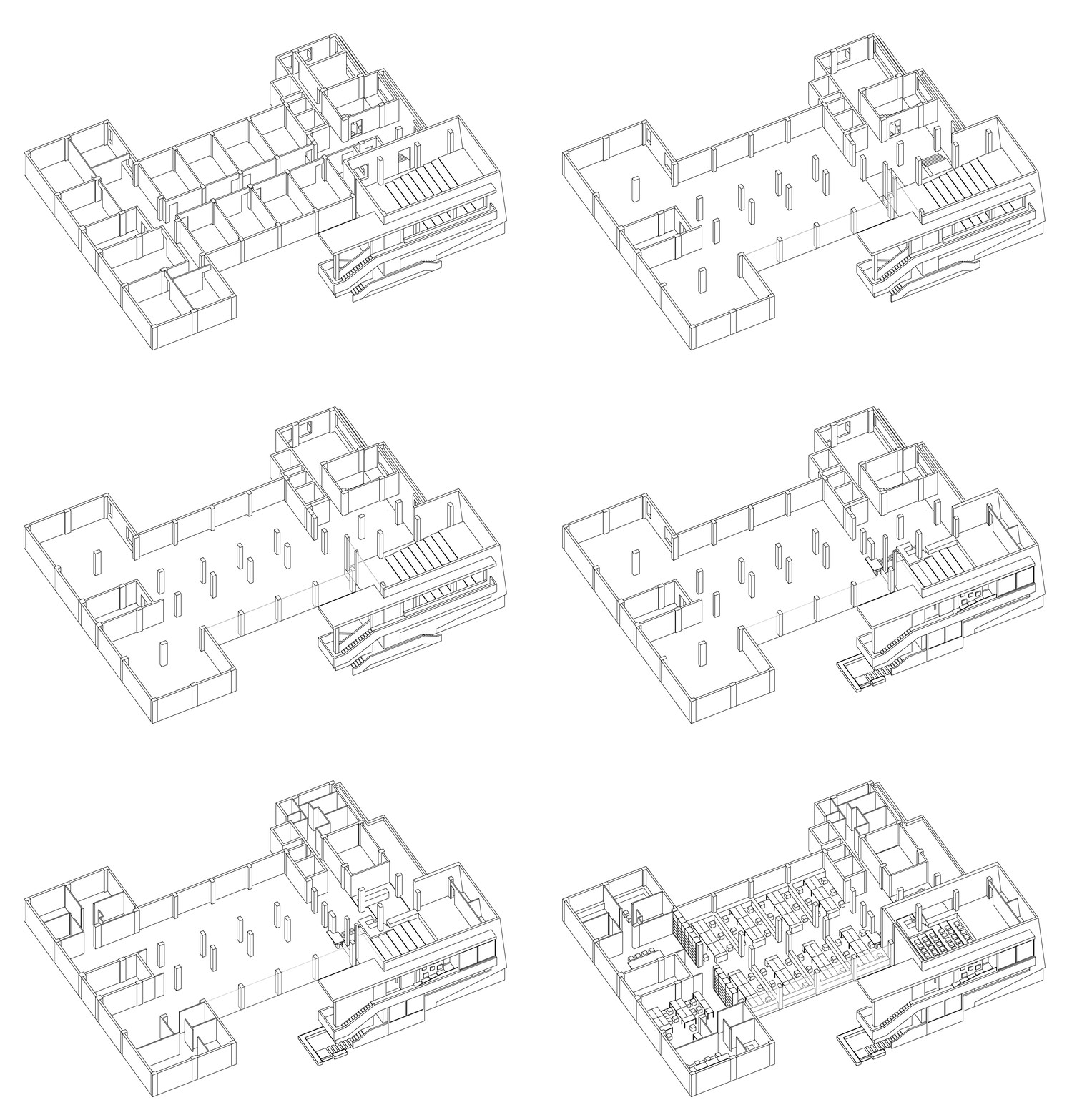
△ Transformation diagram © gad · line+ studio
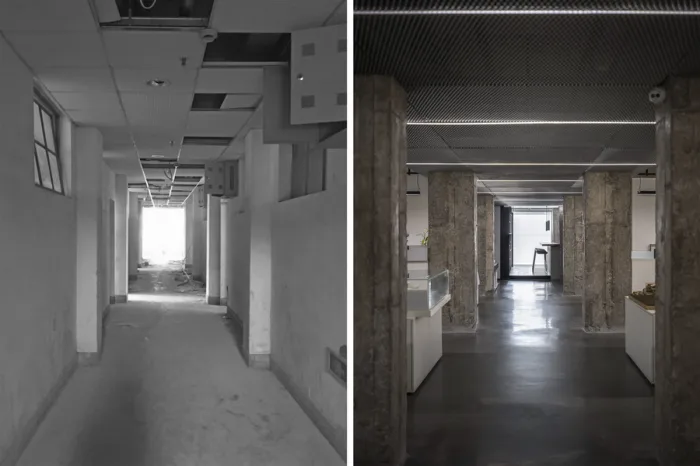
△ Former female dormitory before renovation (left) and office space after renovation (right: © Pan Jie)
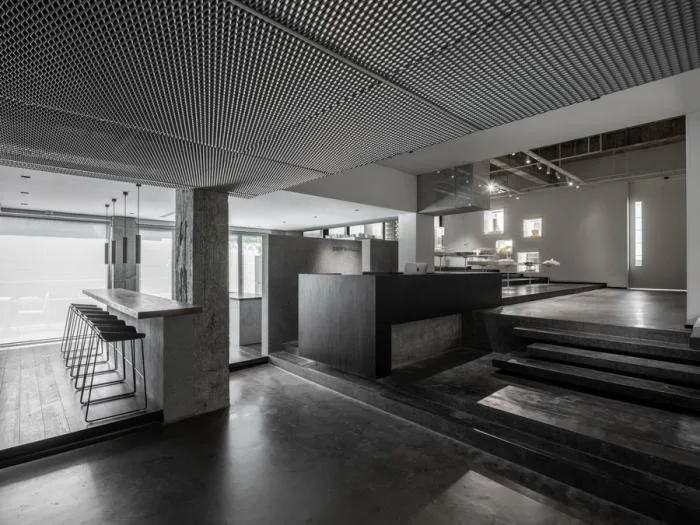
© Pan Jie
In Zone D, two previously separated ground floor areas were merged by relocating the public corridor. Subsequently, the original small bay layout was removed, partition walls were taken down, and the spatial potential was fully unleashed.
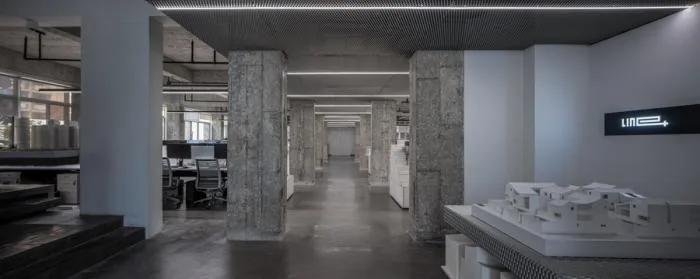
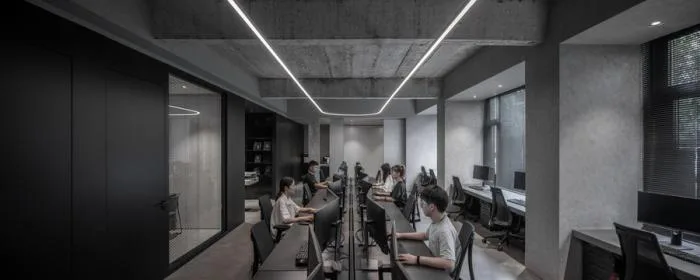
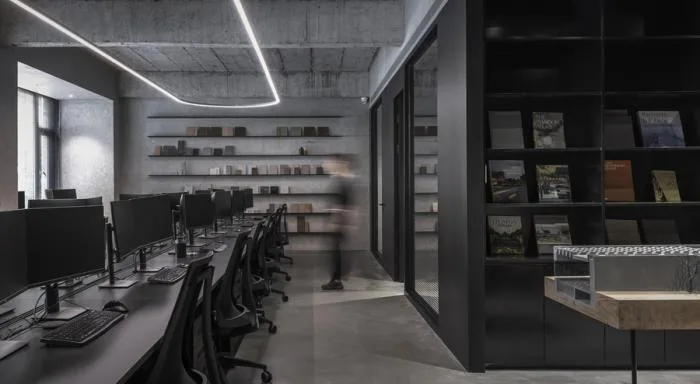
△ Open office space © Pan Jie
02 Transforming the Building Facade – The Black Box of Growth
The space beneath the eaves of the original building facade offered great flexibility. We introduced a black box constructed from black metal and glass to replace the gray area underneath the eaves, thereby expanding interior space, enhancing spatial hierarchy, and establishing a distinctive Line+ identity. The continuous glass facade floods the interior with natural light and creates a seamless connection between inside and outside. Embedded within the black metal facade, transparent display model boxes create windows that allow the office to showcase itself to the public.
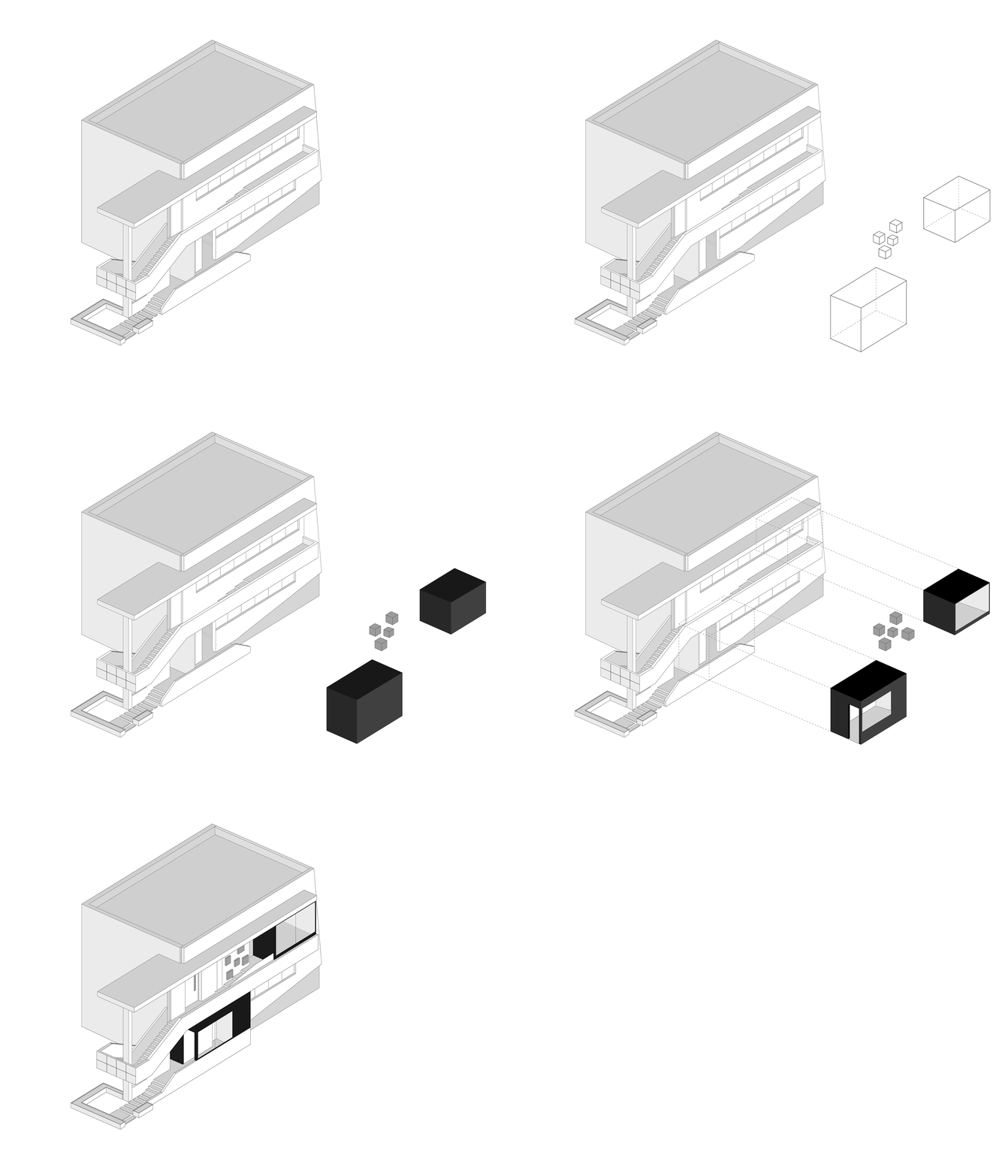
Placement of the black box in Zone B © gad · line+ studio
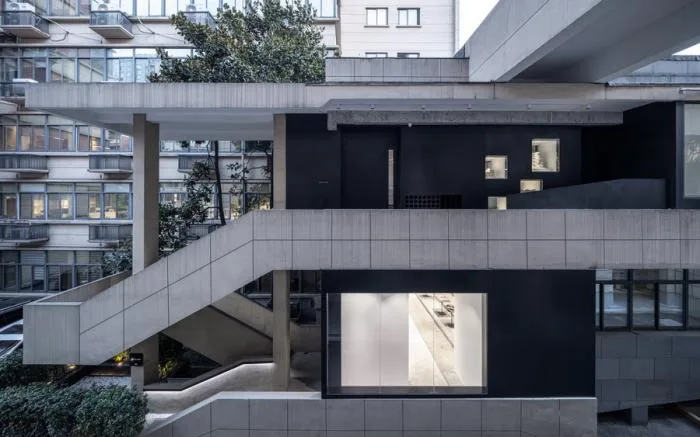
△ Zone B facade © Pan Jie
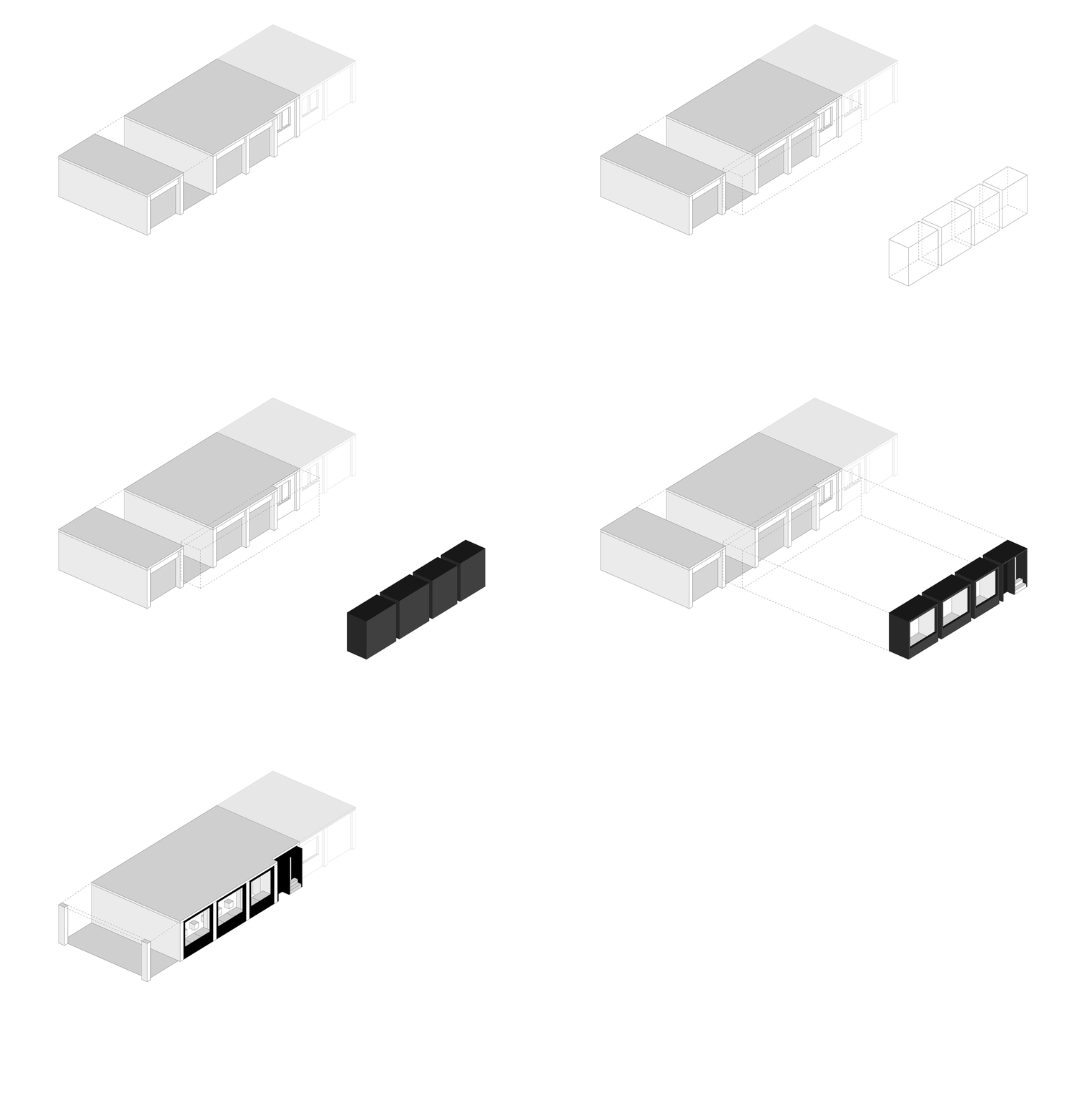
△ Black box insertion in Zone D © gad · line+ studio
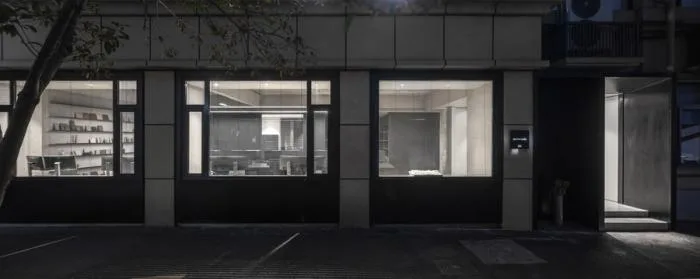
The black box establishes a distinctive Line+ territory and expresses the intent of external display © Pan Jie
03 Redefining Space – The “TALK&LINK” Multipurpose Area
“TALK&LINK” is a signature event at Line+ that involves internal sharing and dialogues with experts across various industries. We infused this spirit of communication into the tiered classrooms as well as informal spaces such as conference rooms, model rooms, material zones, water bar platforms, and terraces. These hotspots are scattered throughout open areas, forming a multi-centered network that encourages interaction among designers, creators, clients, and experts.
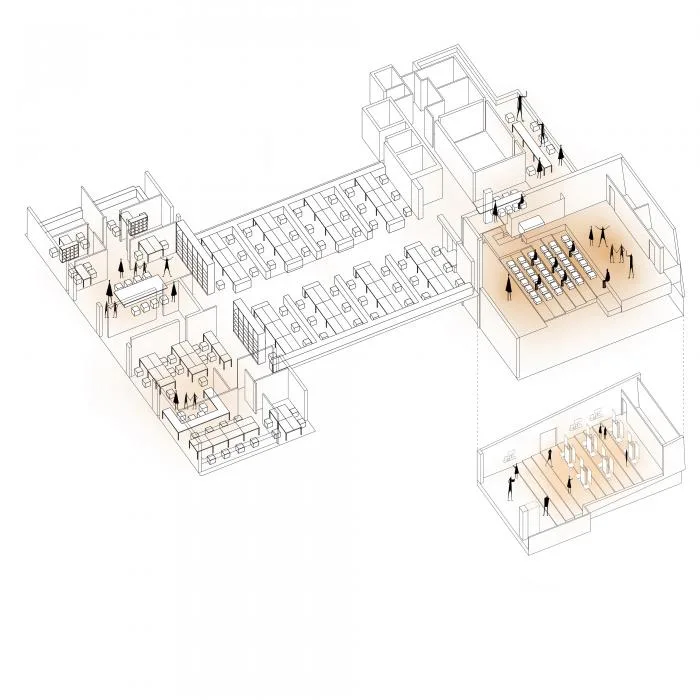
△ “TALK & LINK” concept © gad · line+ studio
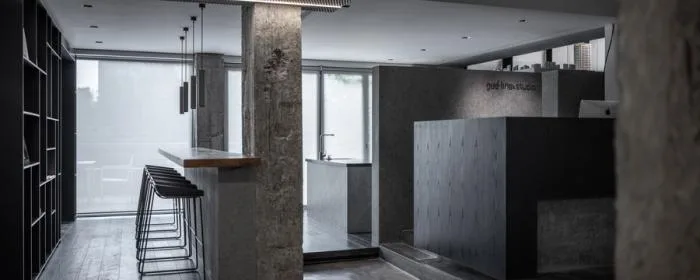
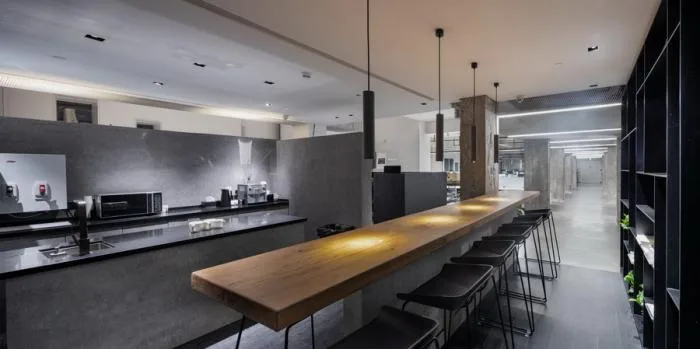
△ Water bar area © Pan Jie
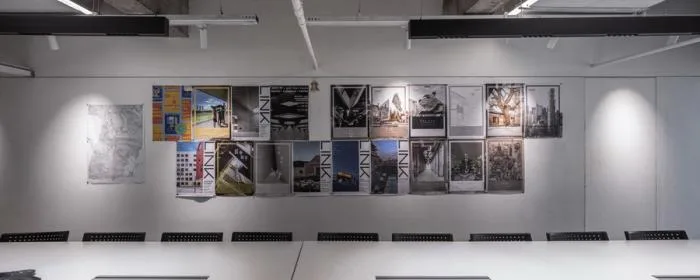
△ Large conference room © Pan Jie
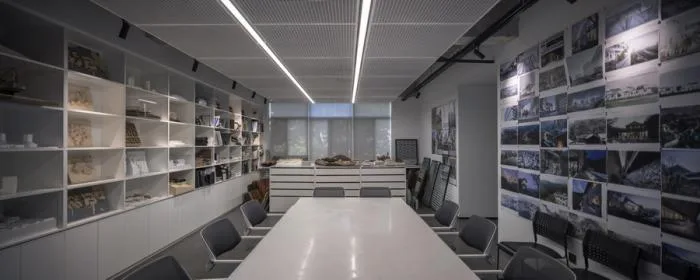
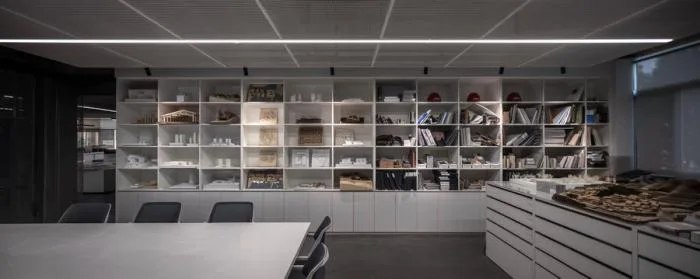
△ Materials and open discussion area © Pan Jie
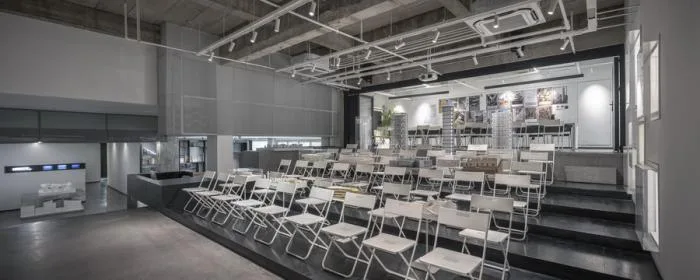
The second-floor staircase classroom serves as the iconic space for TALK&LINK. Vertically integrated with the outdoor staircase, it acts as both the prelude and showcase for Line+ Studio. The connection between two exhibition halls supports hosting large-scale events such as exhibitions, lectures, salons, and conferences simultaneously.
© Pan Jie
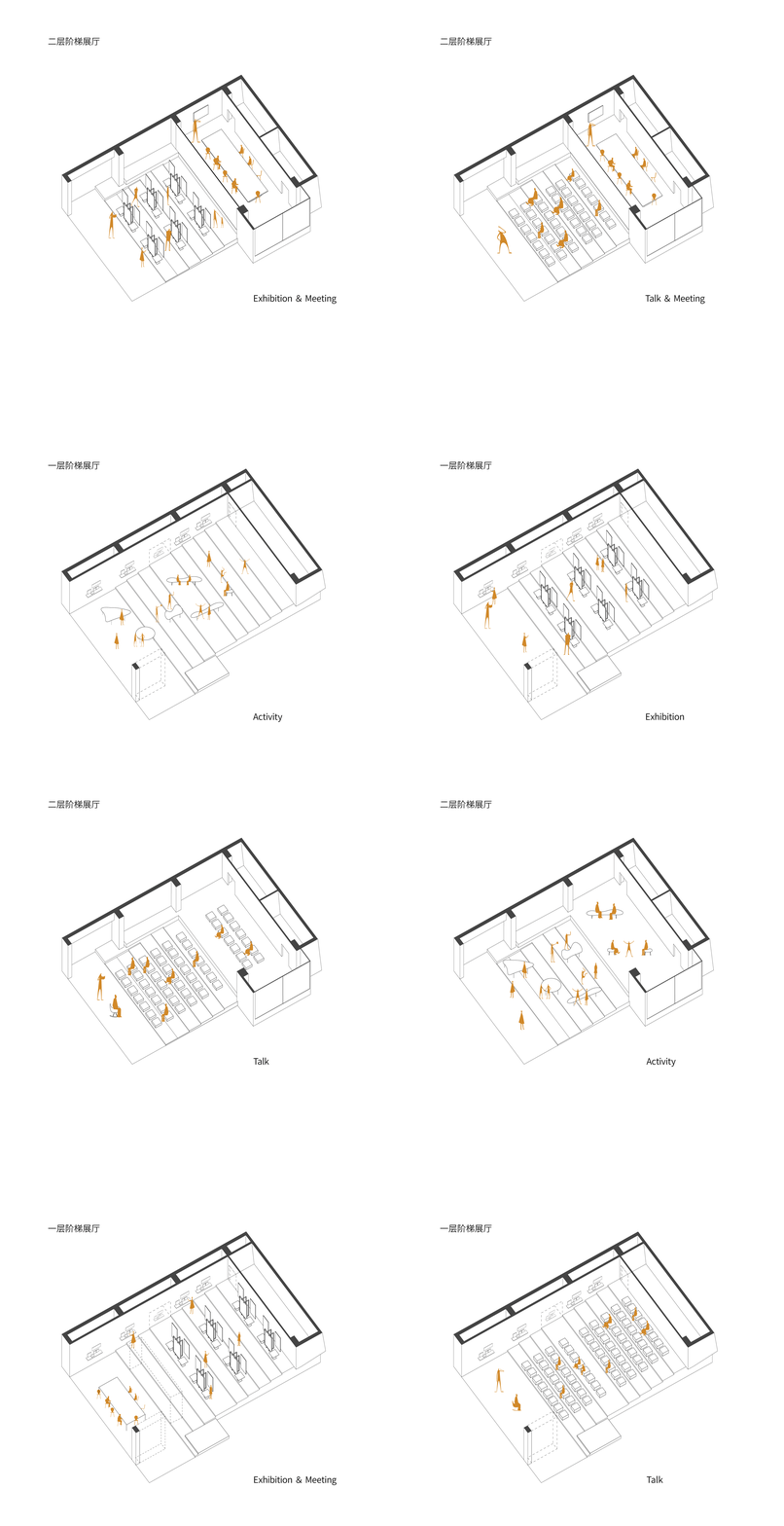
△ First floor and varied uses of the second-floor staircase exhibition hall © gad · line+ studio
Inside, the first-floor staircase classroom employs hidden design techniques that conceal mechanical equipment and ancillary rooms, preserving the purity of the space.
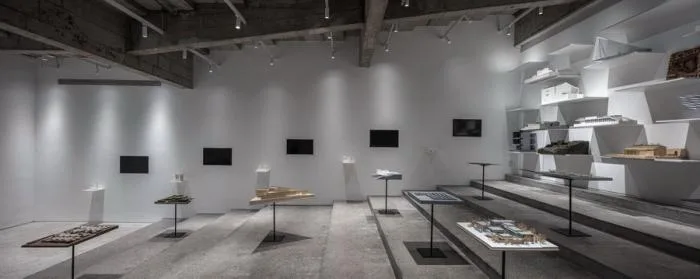
△ First-floor staircase exhibition hall © Pan Jie
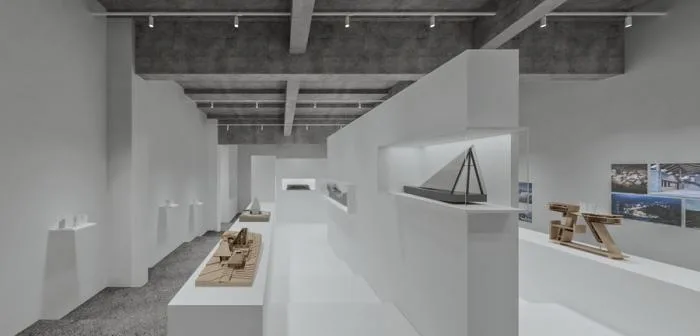
△ First-floor staircase exhibition hall © gad · line+ studio
The deeper second-floor staircase classroom features elevated steps at the rear, creating a flat meeting area. A movable partition separates the multifunctional area from the conference space, allowing flexible transitions between large events and formal meetings. This design maximizes spatial utility and versatility.
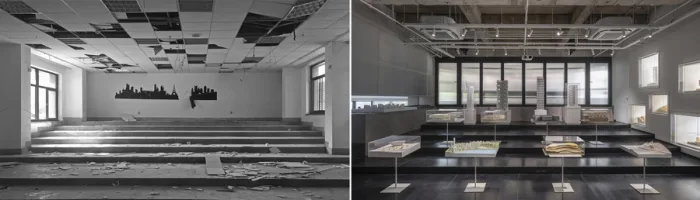
Abandoned staircase classroom before renovation (left) and multifunctional exhibition hall after renovation (right: © Pan Jie)
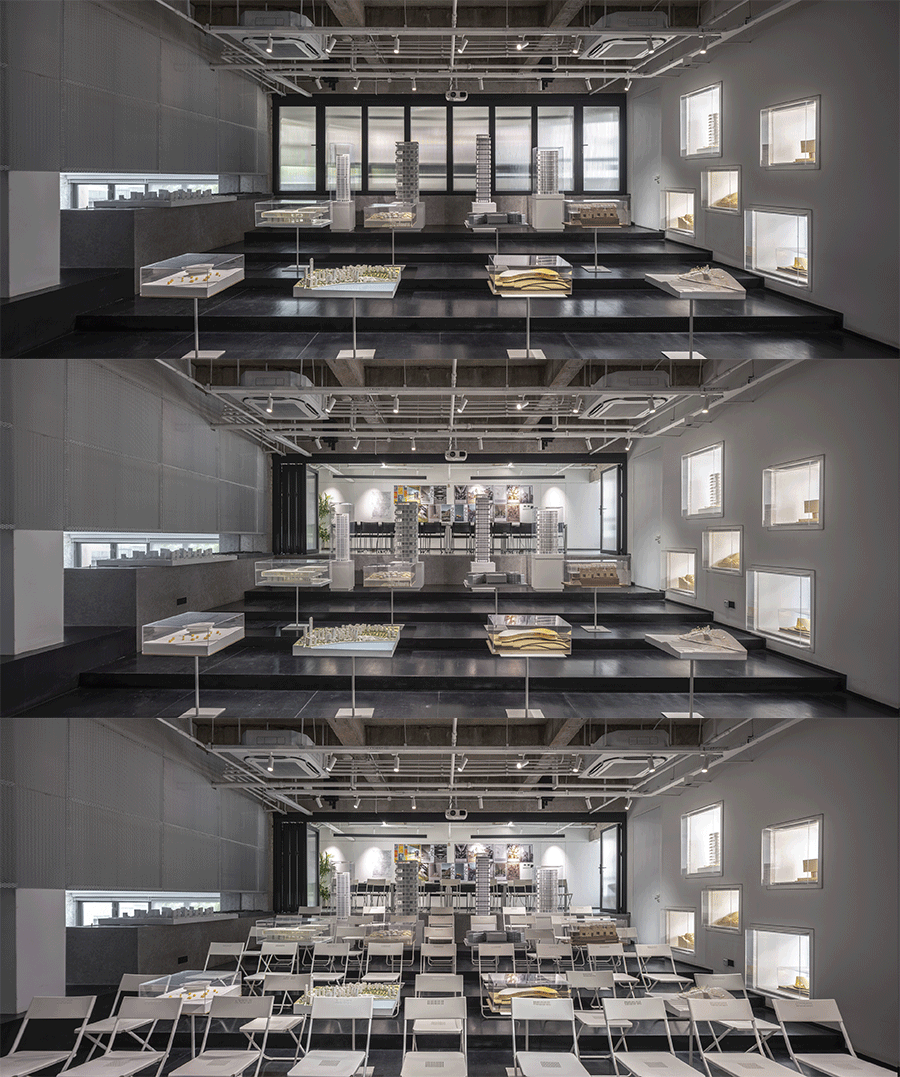
Various usage scenarios of the second-floor staircase exhibition hall © Pan Jie
04 Blurring Time Boundaries – Combining New and Old Materials
By carefully selecting materials and limiting the color palette to black, white, and gray, a solid, monochromatic space was created. We removed the original ceilings and decorative layers on beams, columns, and ceilings to expose raw concrete textures. The flooring consists of solid-colored polished concrete, harmonizing with the concrete structure and roof.
For wall treatments, Zone B features white-painted walls to create a contrast between smooth white and rough gray surfaces, while Zone D’s walls are concrete painted to emphasize spatial continuity.
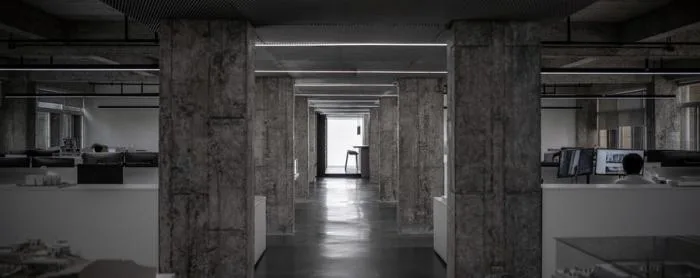
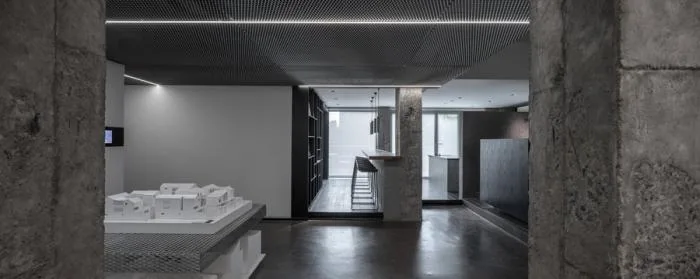
Contrast between rough concrete and white-painted walls in Zone B © Pan Jie
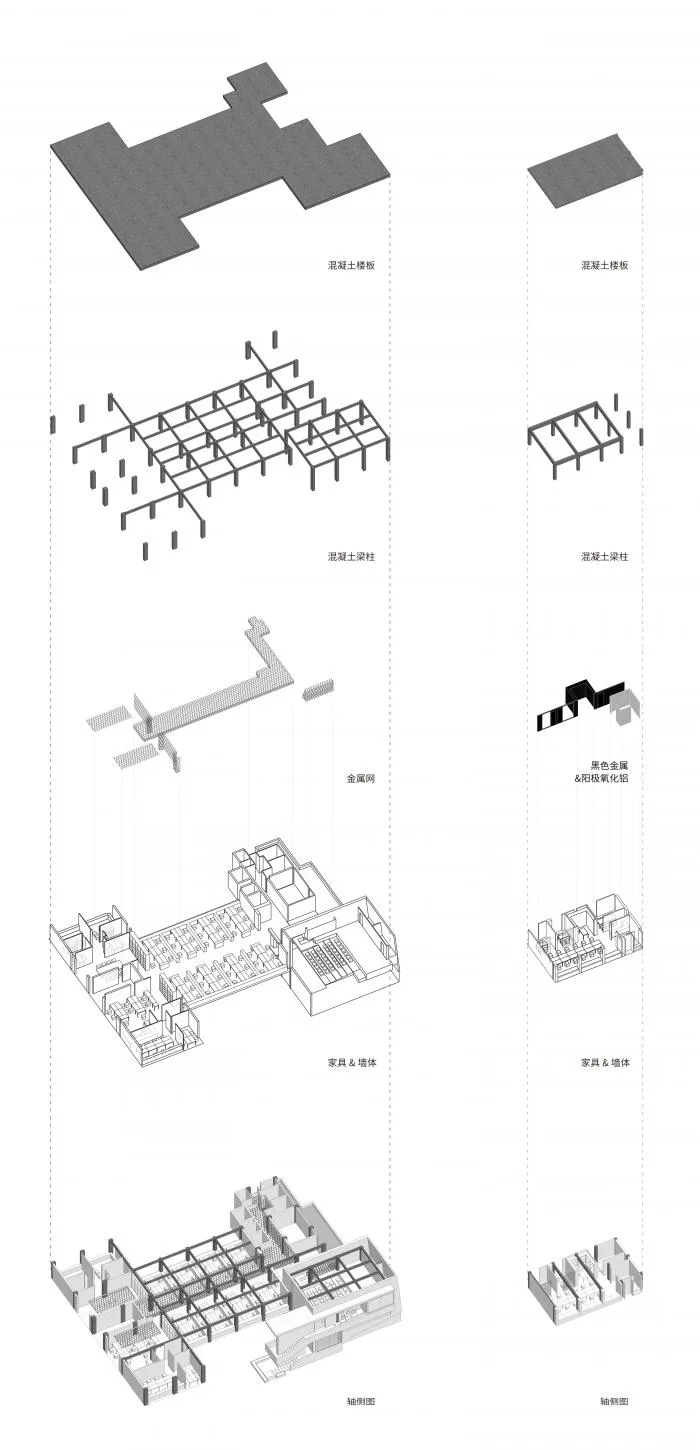
△ Exploded design technique diagram © gad · line+ studio
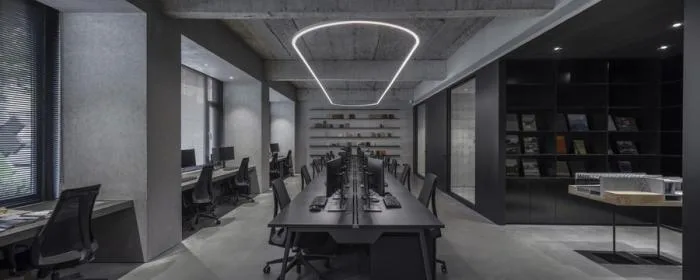
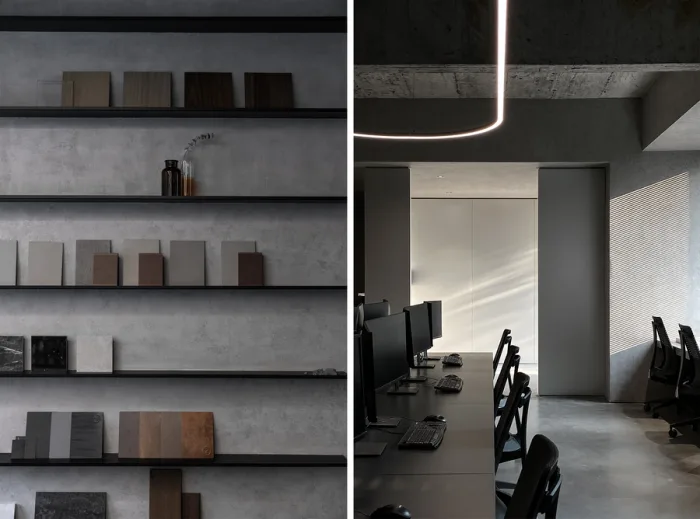
△ Zone D’s concrete painted walls emphasize spatial unity © Pan Jie
Metal, a modern material, integrates into the monochrome palette, adding a refined, contemporary touch. In Zone B, metal stretch mesh extends from the partition wall of the staircase exhibition hall to the ceiling of the office area, standing upright on the display bookshelf, creating layered spaces that balance transparency and opacity. Light strips embedded within the U-shaped brackets atop the mesh add depth and rhythm.
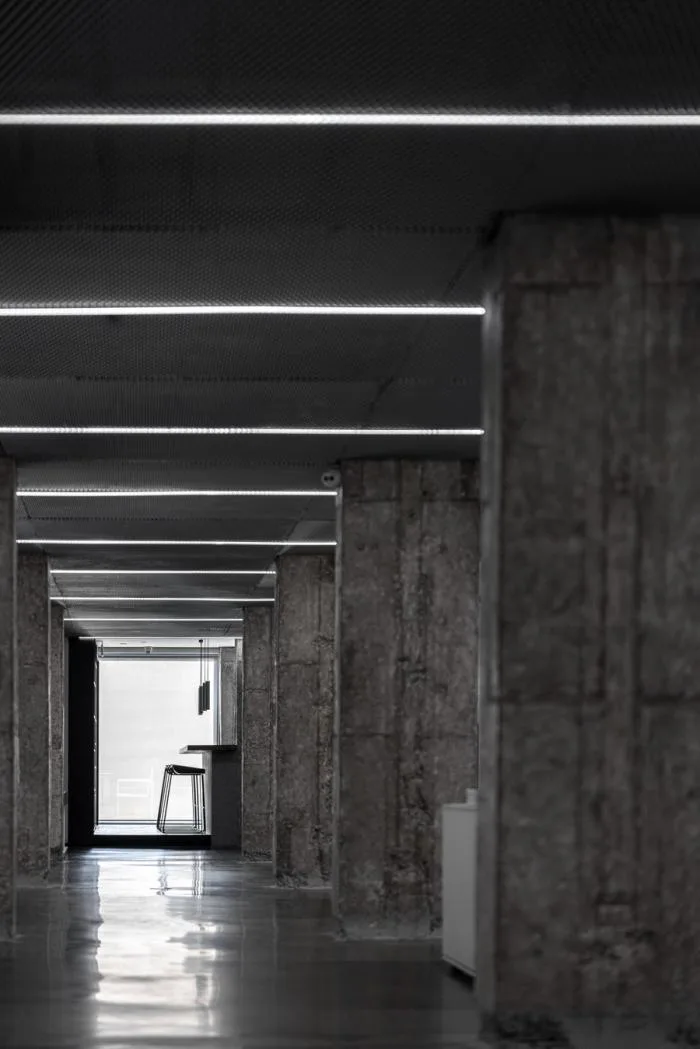
△ Light strips embedded in the upper metal mesh create a sense of depth and sequence © Pan Jie
In Zone D, the black metal facade continues indoors, forming a new internal facade. Simultaneously, silver-gray anodized aluminum is used to enclose a foyer area, enhancing a futuristic, technological atmosphere.
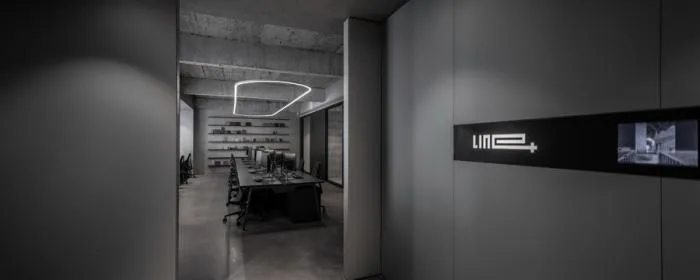
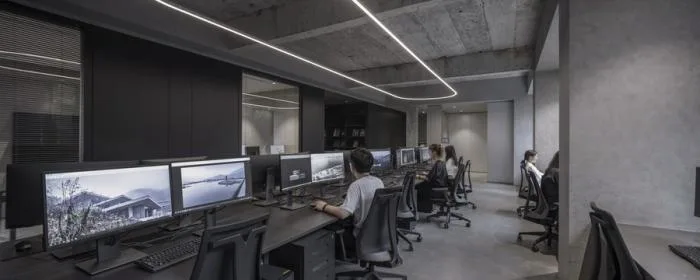
Zone D continues the metallic texture theme with black steel plates and anodized aluminum © Pan Jie
This renovation uses a subtractive approach to strip down the spatial and structural elements, limiting materials to a grayscale system to highlight contrasts between old and new. We transform previously closed and idle campus spaces, silenced by changing social functions, into shared, open hybrid environments suited to modern times. This approach explores new models for innovative enterprises and the future of office spaces. The endless possibilities of Line+’s past, present, and future converge here.
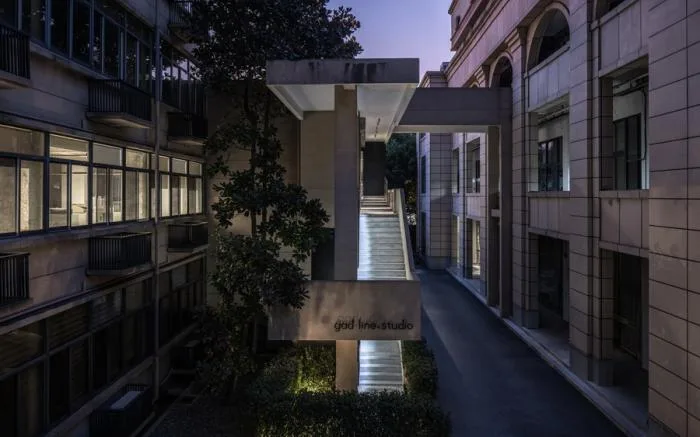
© Pan Jie
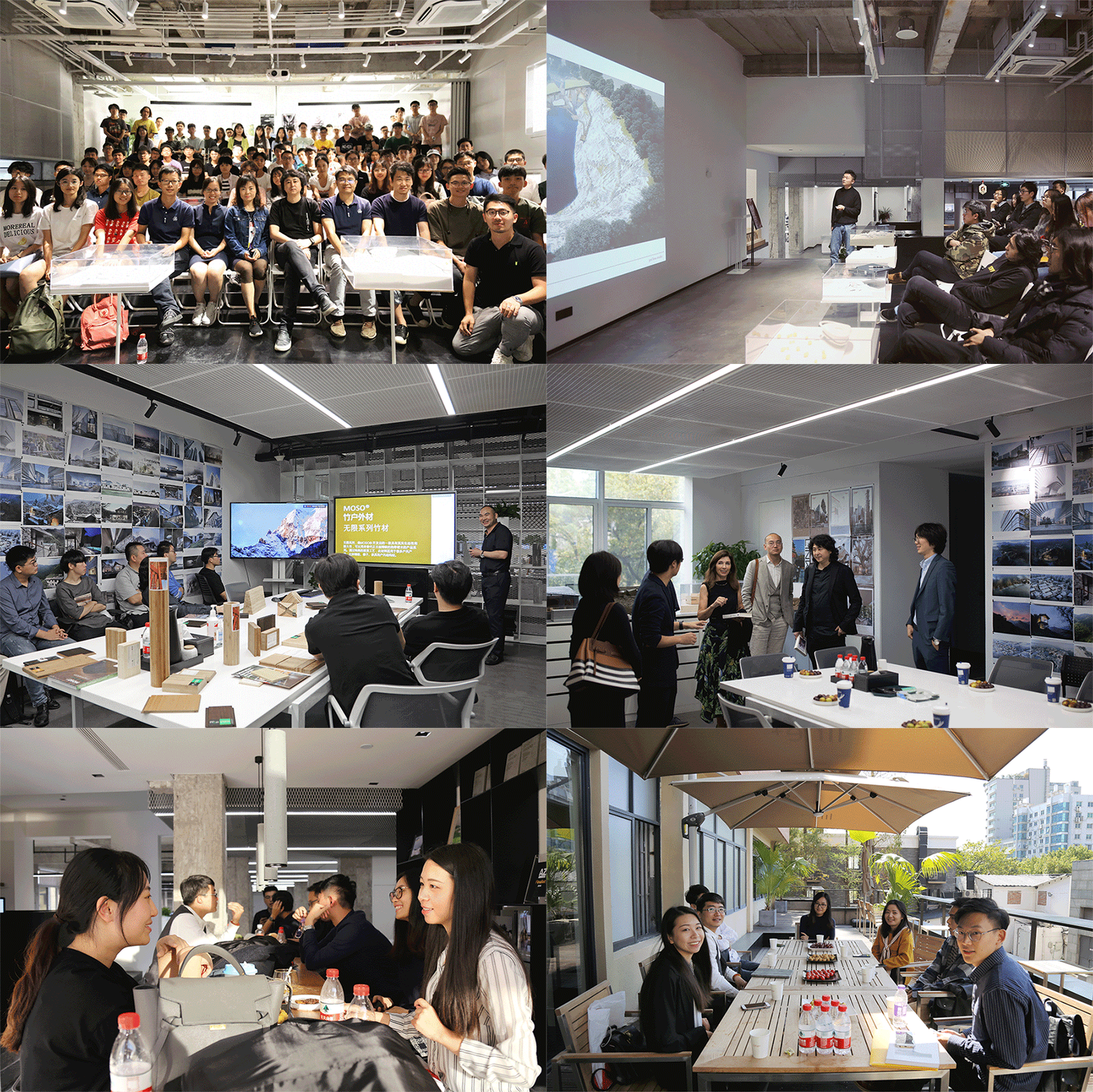
△ Our current use of the space © gad · line+ studio
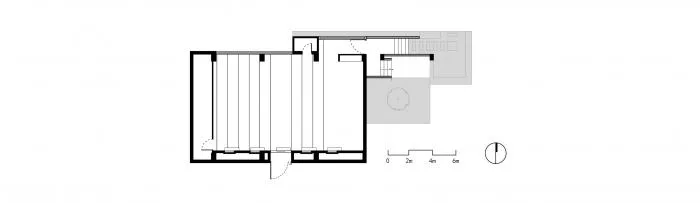
First floor plan of Zone B © gad · line+ studio
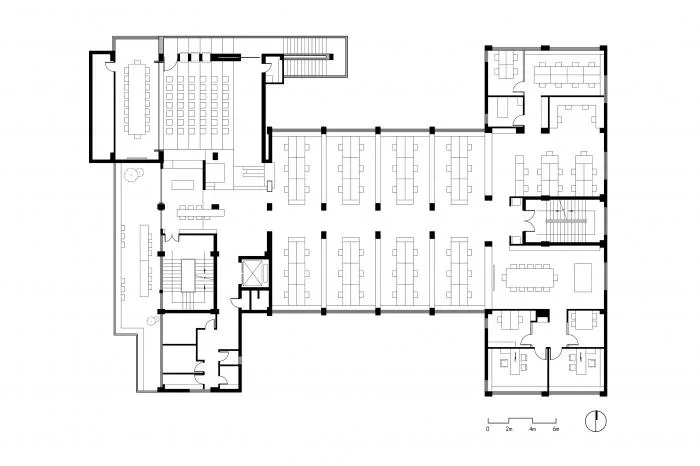
△ Second floor plan of Zone B © gad · line+ studio
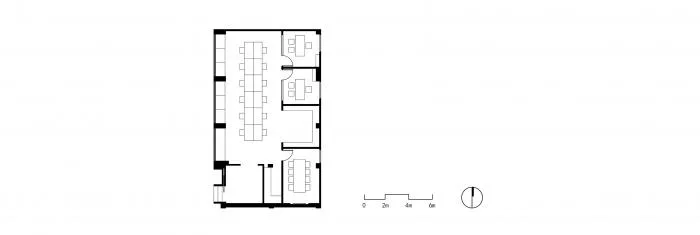
△ First floor plan of Zone D © gad · line+ studio
Project Information
Project Name: Gad · Line+Studio Office Space
Location: No. 198 Jiaogong Road, Xihu District, Hangzhou City
Design Firm: Gad · Line+Studio
Lead Architects: Meng Fanhao, Zhu Peidong
Design Team: Zhu Jun, Qi Fan, Jin Yuting, Deng Hao, Zhang Sisi, Ge Zhenliang, Qiu Limin, Chen Wen, Cai Zhixing, Cai Xiaoyu, Zhu Xiaocheng
Renovation Area: 1,300 square meters
Design Period: January 2018 – September 2019
Construction Period: January 2018 – April 2020
Furniture: Steelcase
Doors and Windows: Solarlux
Main Materials: Novelis (Yang grade alumina), Zencool (alloy steel), Sisiwei (concrete coating)
Photography by Pan Jie and Yang Guangkun












Must log in before commenting!
Sign Up