
Light cast upon an object creates both bright and shadowed areas — the fundamental origin of design.
Space, light, and order are essential to humans, as vital as bread and shelter.
— Le Corbusier (French architect)
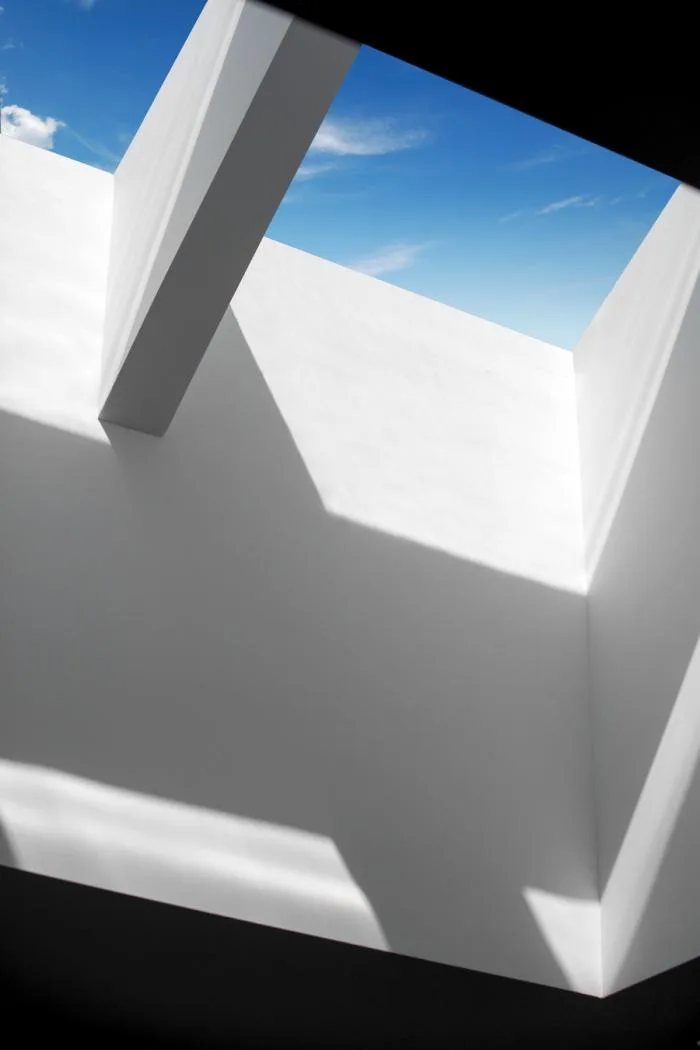
Yuan Yanzai introduced the concept of the “sensory object,” attributing distinct characteristics to objects based on perception to assert their presence.
Human senses—sight, hearing, smell, taste, and touch—guide spatial design. Interfaces emphasize the impression of points, lines, and surfaces through color and materials. Every design detail is carefully considered to highlight superior quality. Beyond the physical, there is an essential element of “expressiveness” that breathes life into space. This element is intangible yet omnipresent: natural light.
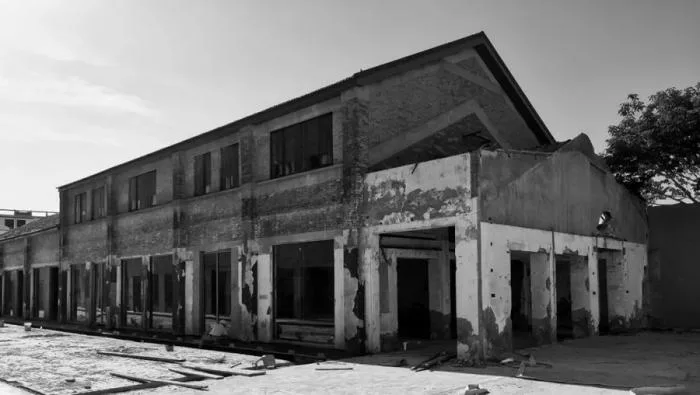
△ Original architectural exterior
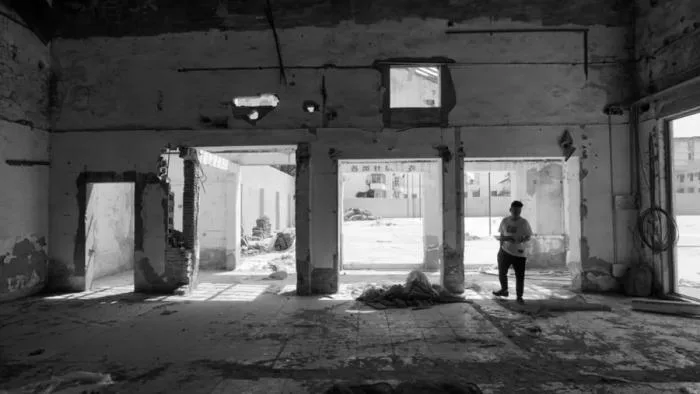
△ Original interior of the building
The project site was once the Suzhou Dehe Small Commodity Market, featuring a column-shaped frame structure that allows ample ventilation around the main building. The triangular roof’s inclination enhances indoor openness; however, it also limits natural light due to sunlight obstruction.
Inspired by the angle of natural light, the “Lobby” and “Entrance” have been designed with tilted angles to allow unobstructed sunlight to enter. Serving as the interior’s main axis, these spaces break conventional vertical and horizontal layouts, embracing dynamic spatial changes.
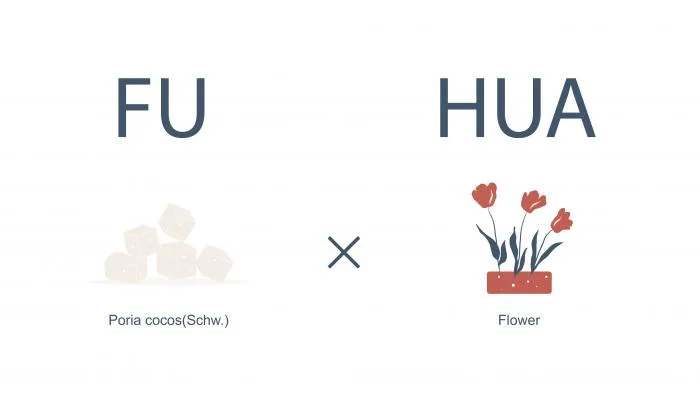
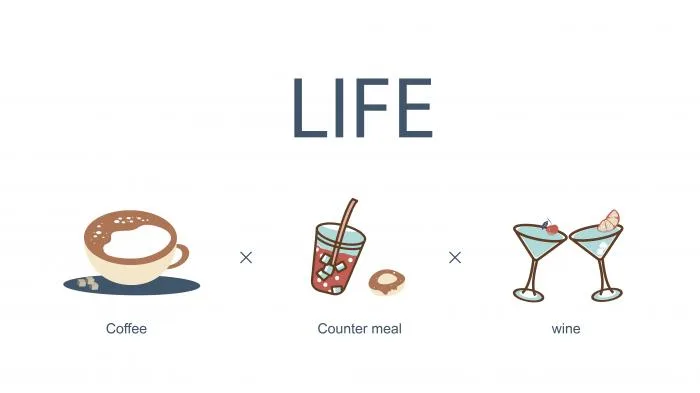
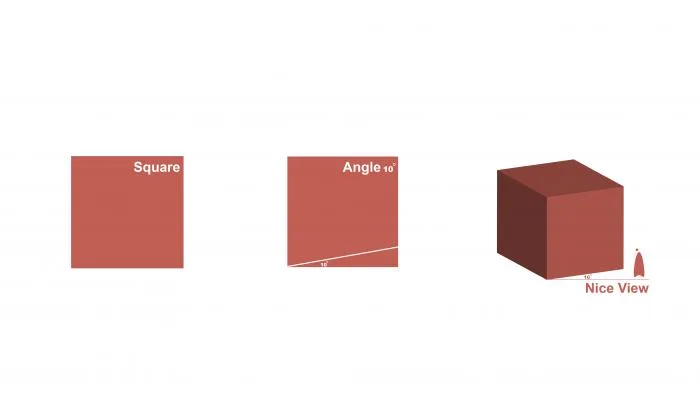
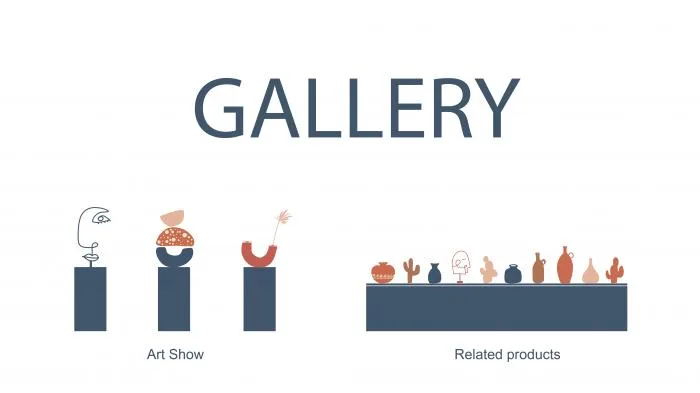
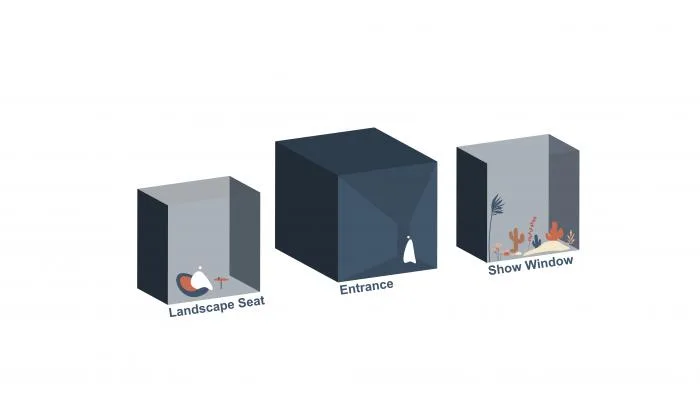
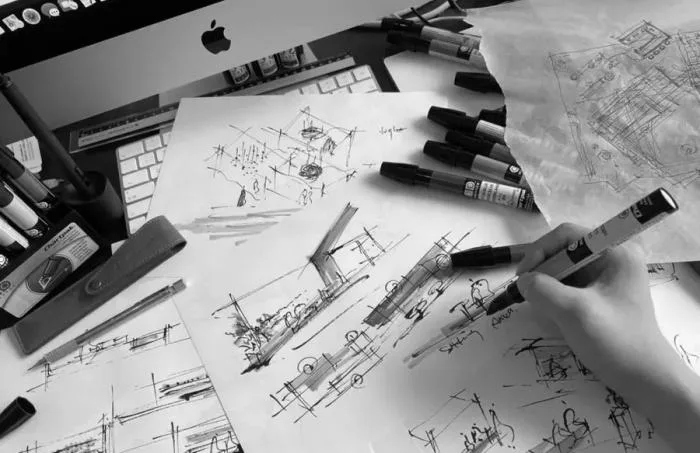
△ Hand-drawn conceptual sketch
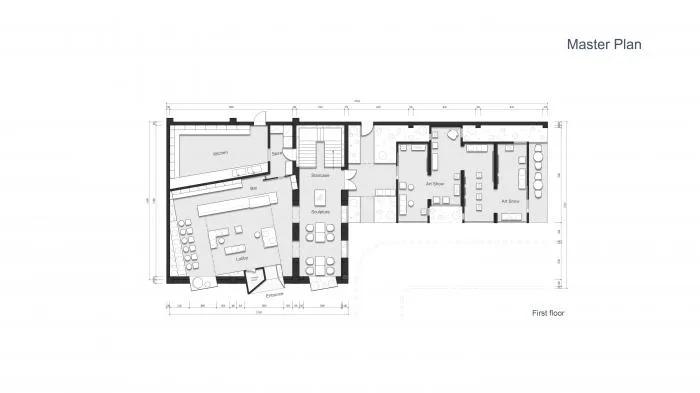
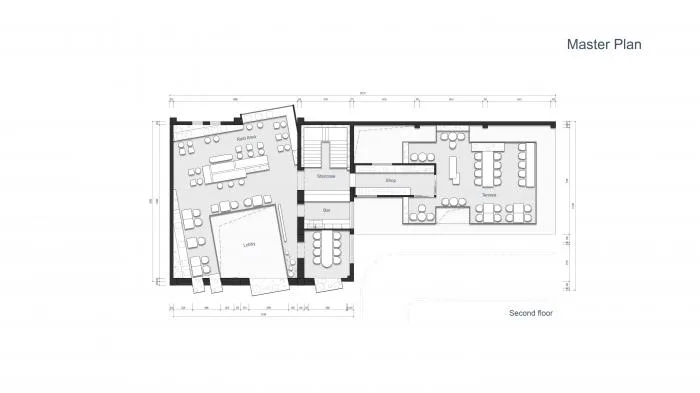
△ Layout plan
Light³
Visual perception depends entirely on light. Without it, darkness prevails, colors lose meaning, and the world becomes isolated. Light reflects or refracts off materials, ultimately reaching the human eye, shaping the color and texture of surfaces. The warmth of natural light also stimulates skin’s sensory nerves, offering a comforting tactile sensation.
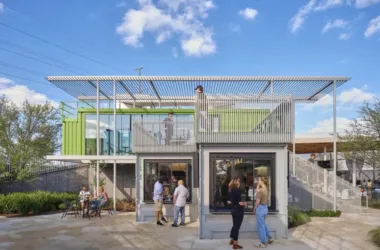
‘Light³’ treats indoor space as a container—a “box”—to capture and hold natural light. This concept moves away from enclosing spaces with solid walls, instead embracing openness to welcome light in. The “cubic” idea explores light’s three-dimensional presence, deepening the experience of color and material textures.
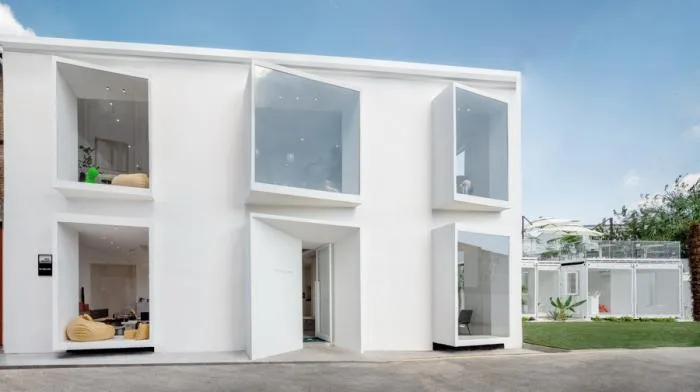
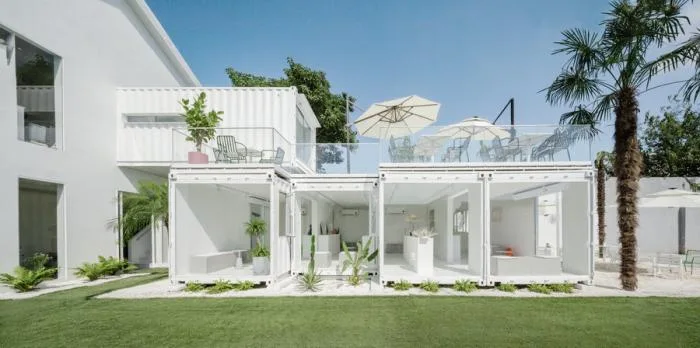
△ Architectural exterior
The design blurs the boundary between indoors and outdoors, emphasizing seamless connectivity between interior and exterior spaces.
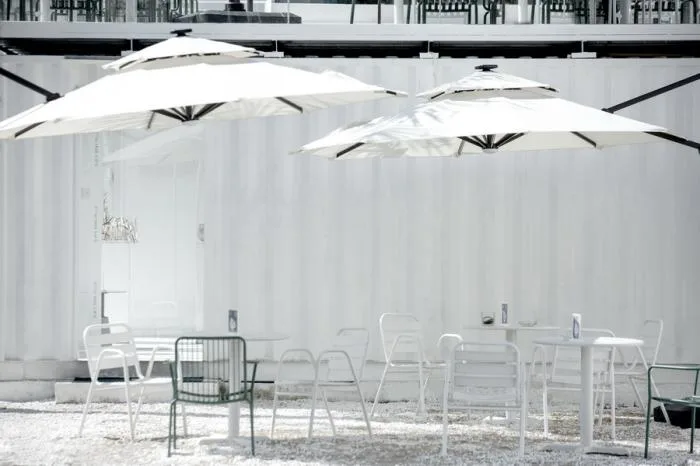
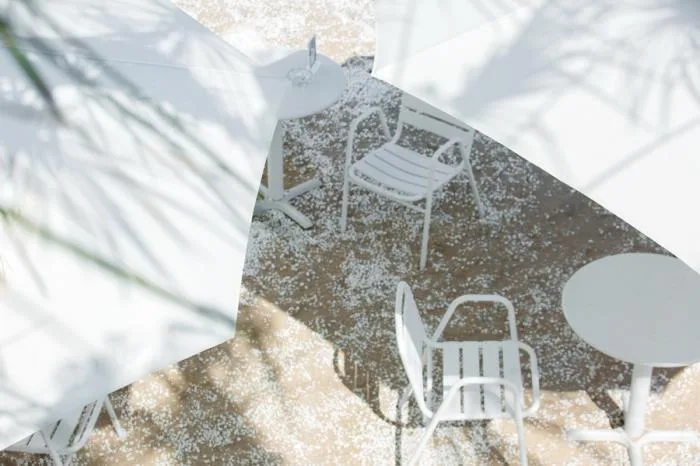
△ Garden rest area on the first floor
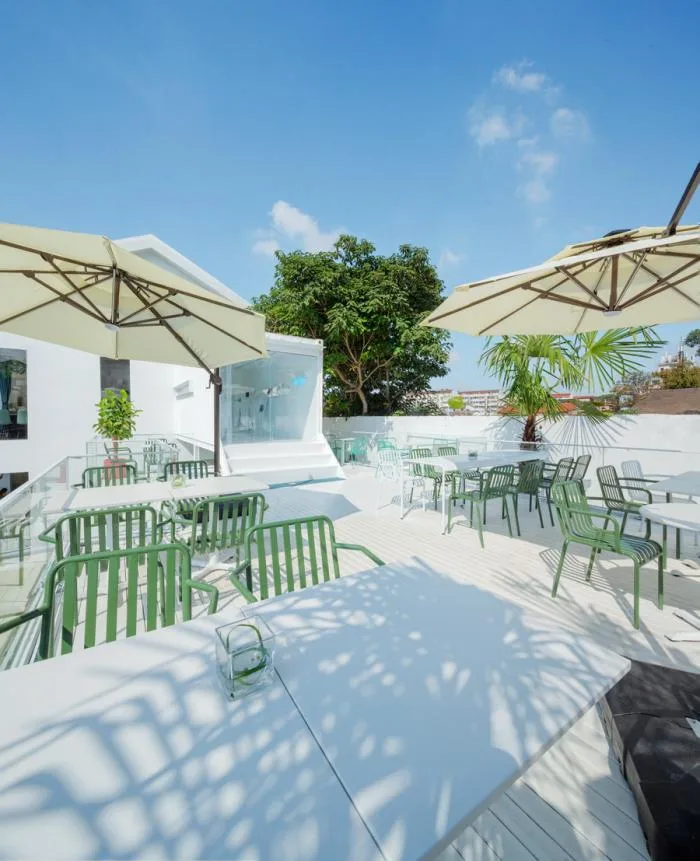
△ Second-floor container terrace
Geometric Interface
The design adheres to an “internal placement” principle, using clean, concise lines to accentuate tension and detail. Sharp, rugged lines and surfaces, arranged methodically, express the aesthetic beauty of form.
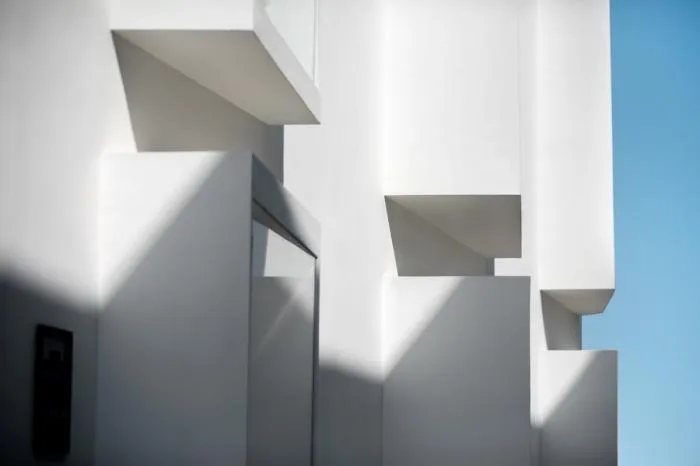
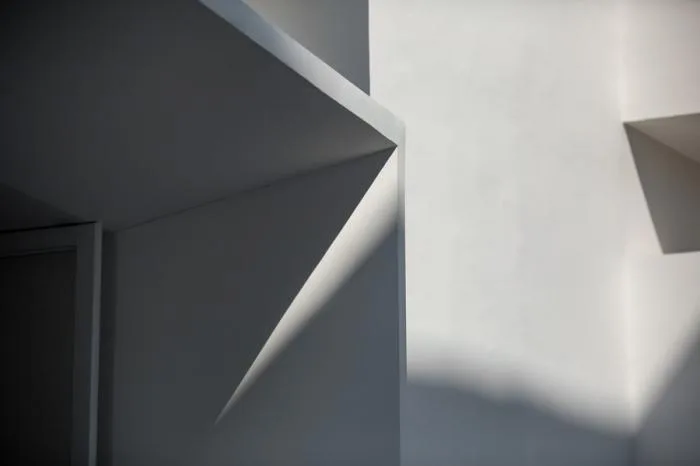
△ Building facade details
The design carefully considers natural light variations throughout the day, meticulously examining scale and proportion. Dynamic contrasts of light and shadow craft the structure, while subtle texture details add depth.
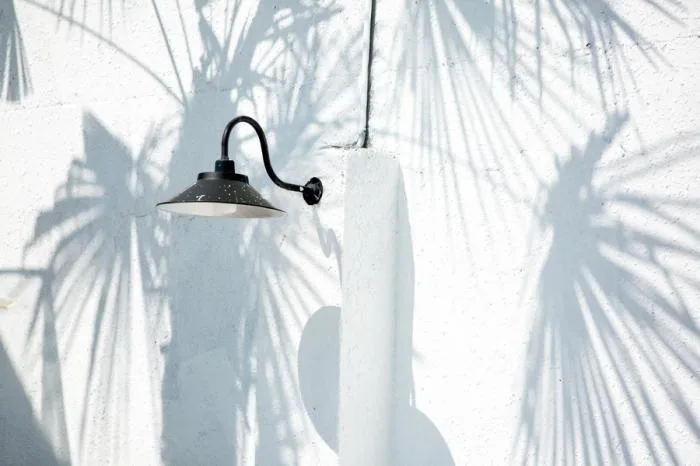
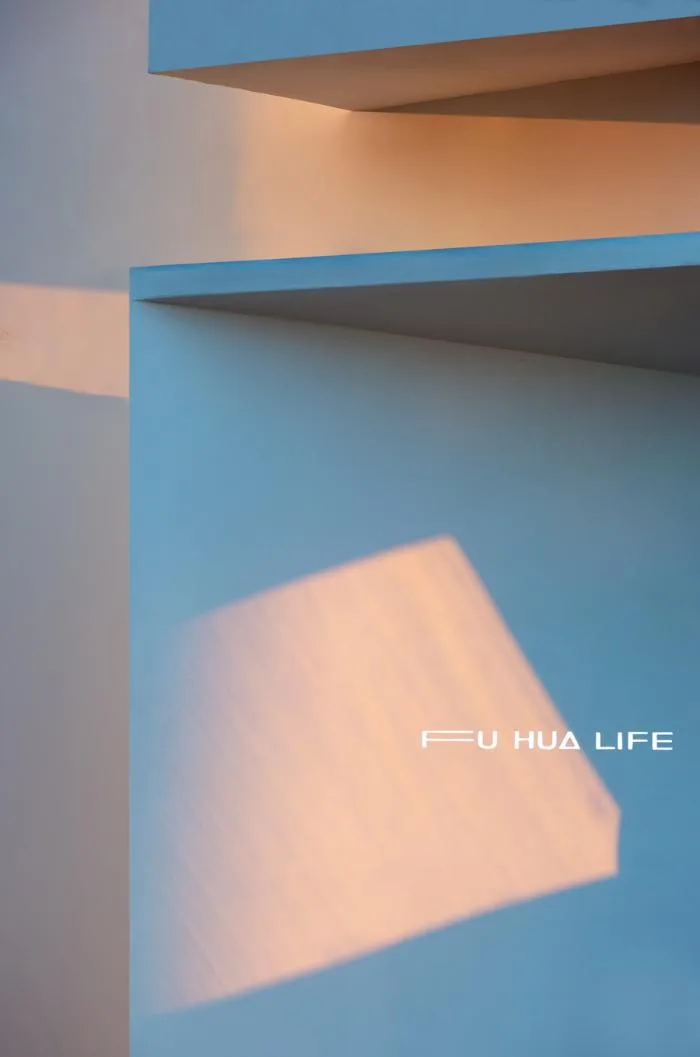
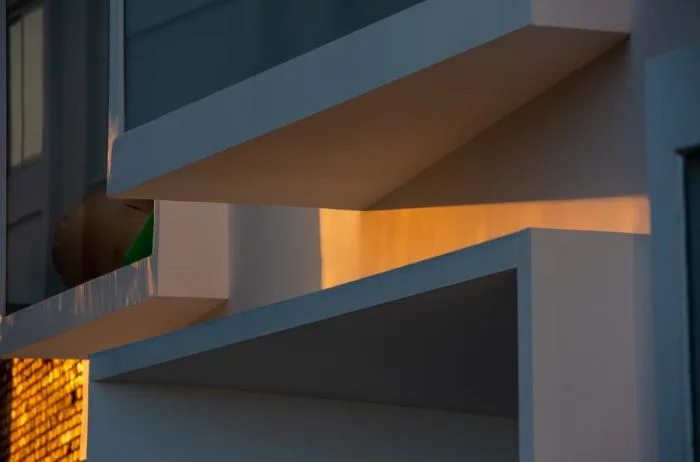
△ Building facade details
Indoor Spindle
The upper and lower floors are planned to maximize space utilization and maintain openness in sightlines. A skylight above the staircase enhances natural lighting, increasing spatial transparency.
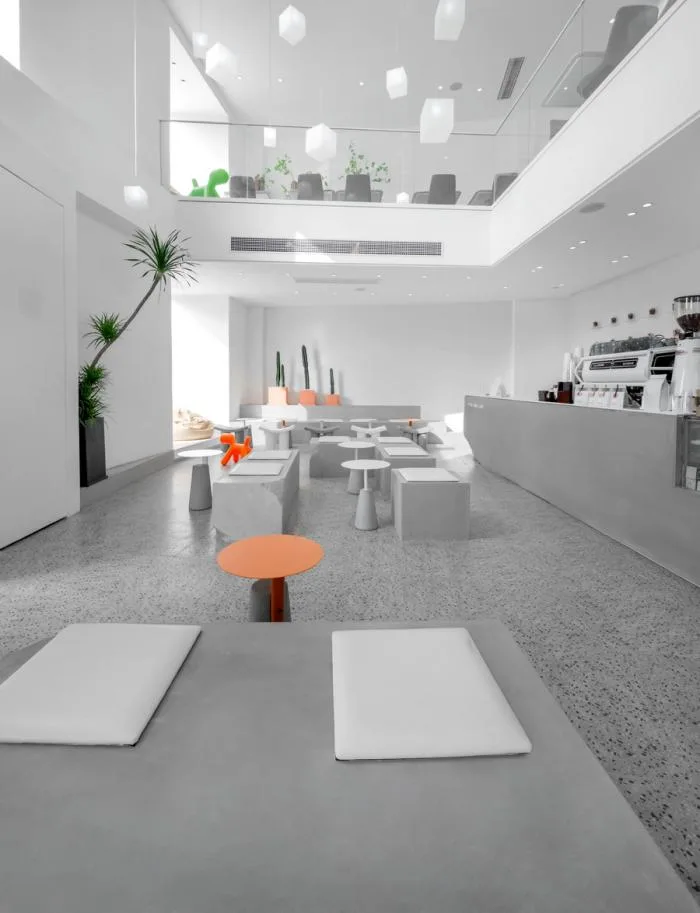
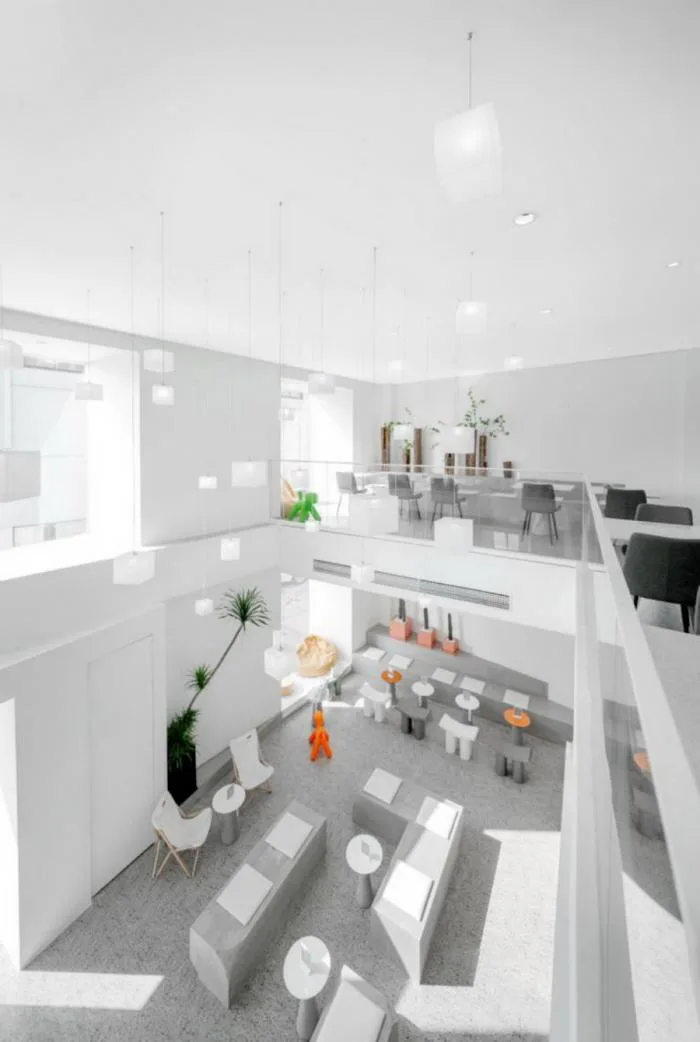
△ First floor lobby
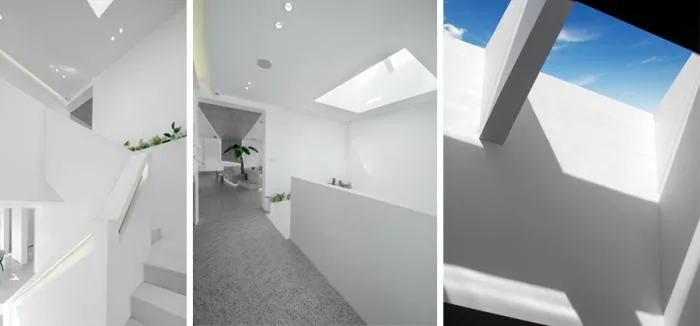
△ Staircases, walkways, and skylights
Color Impression
White absorbs and reflects all colors, embodying endless meanings and inclusivity. It highlights the other colors within a space. Orange brings brightness and enthusiasm, while the green of plants adds vitality. Against a white backdrop, the interplay of orange and green creates a distinctive artistic atmosphere.
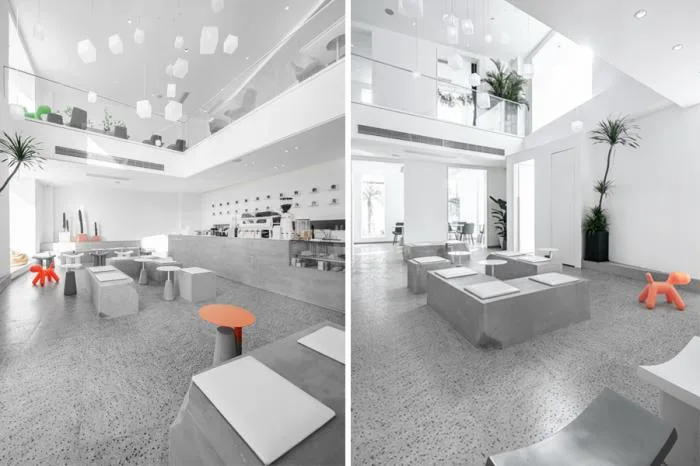
△ First floor lobby
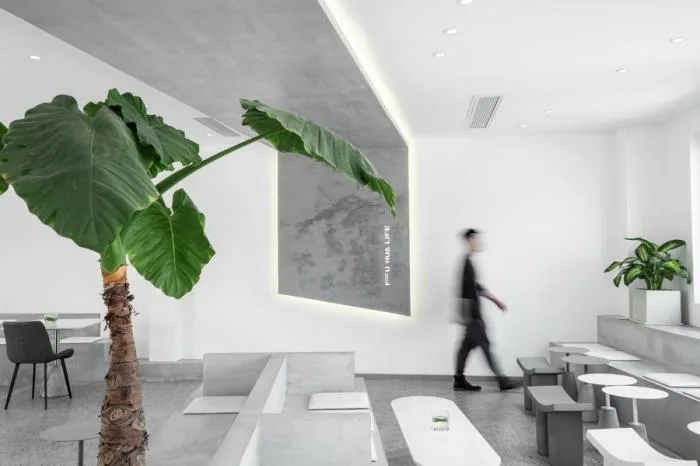
△ Second floor casual seating area
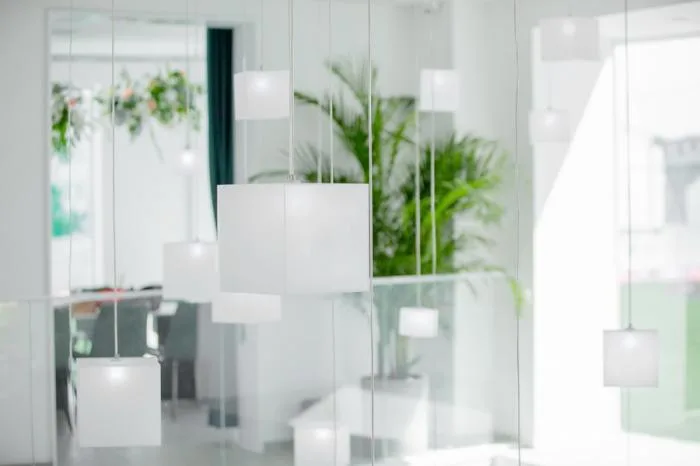
△ Second floor atrium featuring installation art
Material Texture
Inspired by light, the design seeks to return to authentic materials that invigorate the space. Cement mortar, stone, metal, and glass surfaces are shaped by the interplay of light, with organic details expressing creative concepts and artistic depth.
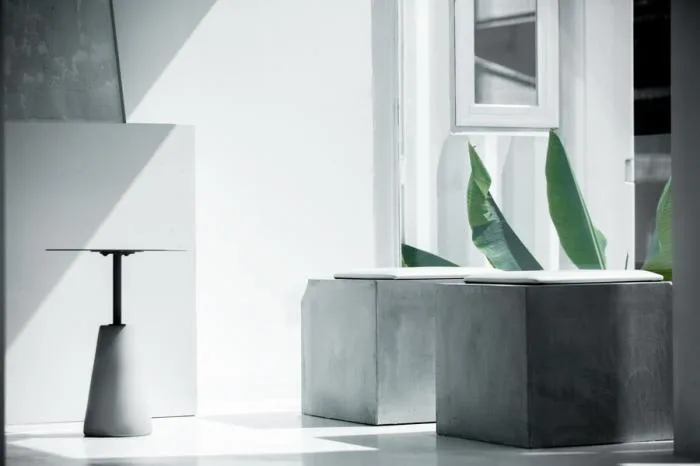
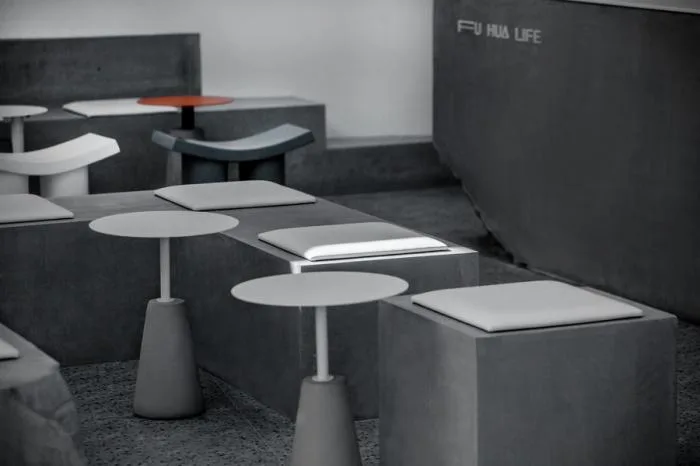
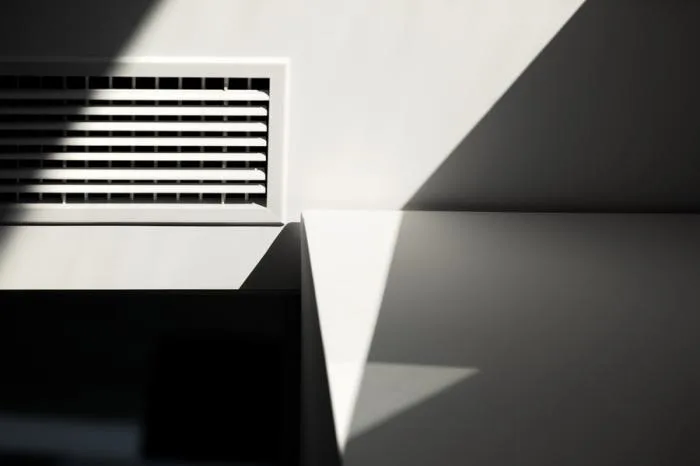
△ Interior details
Postscript
‘Light³’ emphasizes the symbiotic relationship between design and nature, reflecting philosophical and spiritual life pursuits. It invites light into a white space, creating unique effects through the interaction of material texture and form. Space serves as the foundation, the sky the guide—integrated and orderly with profound meaning.
△ Project video
Project Information
Project Name: Suzhou Fuhua ARTLIFE
Architectural Design: Suzhou Feijie Inspiration Design Co., Ltd
Interior Design: Suzhou Feijie Inspiration Design Co., Ltd
Contact email: __AI_S_SC0__
Project Design Year: May 2020
Owner: FUHUA LIFE
Main Creators and Design Team: Hu Yanxin, Xu Guangquan
Photography Studio: YUNSIN STUDIO
Photographer: Cai Qing
Project Address: Blue Garden, No. 188 Panxu Road, Gusu District, Suzhou City, SPORT | Building 17
Building Area: 480 m²
Materials: Terrazzo, textured paint, wood veneer, metal, floor paint, acrylic, ultra-white glass












Must log in before commenting!
Sign Up