
△ Project Video
Base Overview
The Chinese Culture (Publishing, Broadcasting, and Television) Big Data Industry Project is China’s first national-level big data center in the fields of news, publishing, broadcasting, and television. Situated in Guiyang’s Shuanglong Aviation Port Area, it aims to establish the country’s largest copyright trading platform alongside a new integrated platform for broadcasting and television networks.
Leveraging Guizhou Province’s natural advantages—such as its environment, geography, and climate—the park positions big data and cloud computing as strategic industries driving national economic growth. Guided by relevant industrial policies, it offers a dynamic, complex, open, and shared big data display platform with an ecological focus.
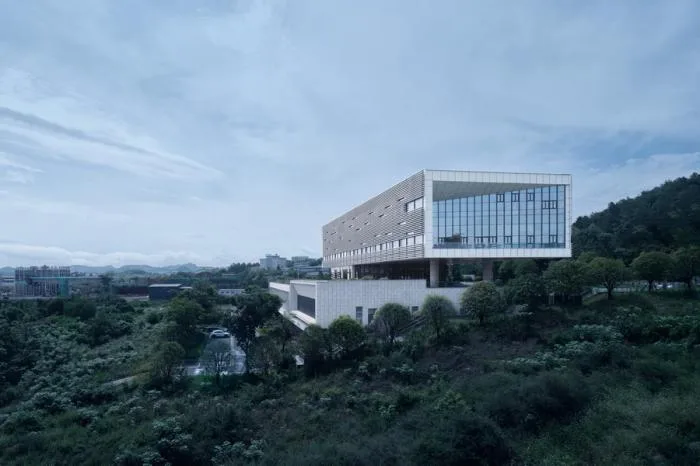
△ Architectural Vision © Zhang Yong
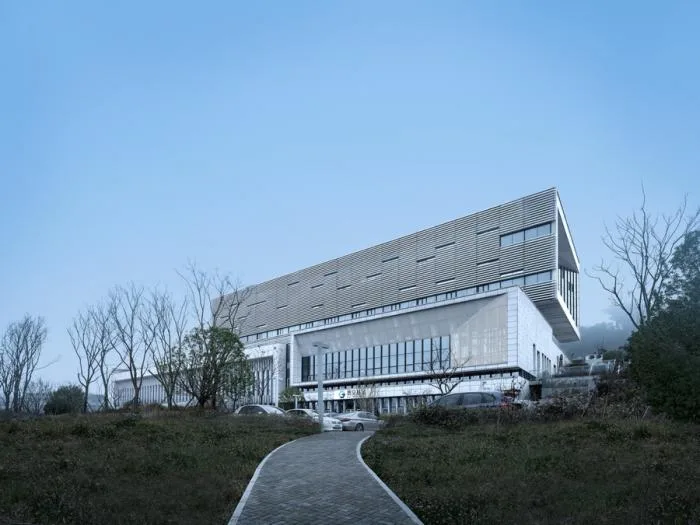
△ Close-up of Buildings © Zhang Yong
This project serves as the inaugural startup within the Chinese Culture (Publishing, Radio, and Television) Big Data Industrial Park. The copyright cloud base will develop two national-level copyright information and specimen comparison databases. It integrates multidimensional monitoring and tracking of cultural content dissemination across the entire network and provides a comprehensive industry service platform—from authentication and registration to monitoring, development, and trading of digital content.
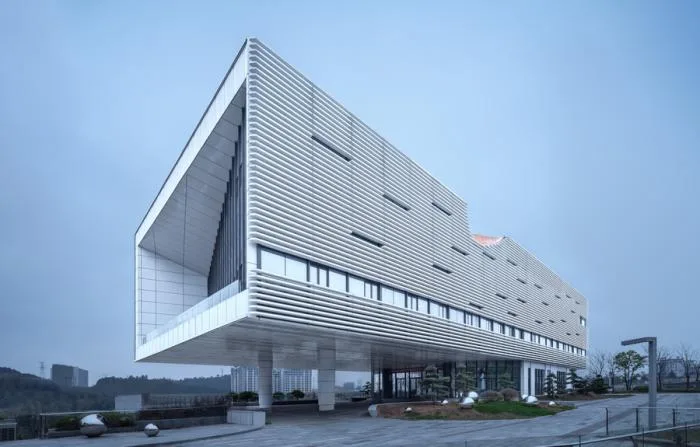
△ Building Facade © Zhang Yong
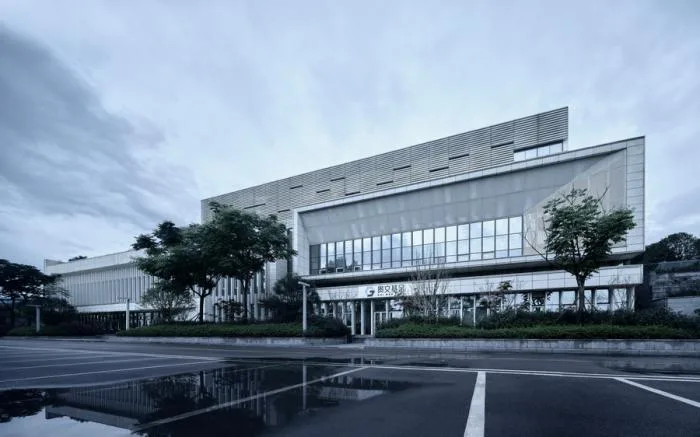
△ North Side of the Building © Zhang Yong
The main building occupies the core startup area near the intersection of Xingye West Road and Southwest Ring Road in Guiyang’s Shuanglong Airport Port Area. It faces the Shuanglong Airport Economic Zone Planning Exhibition Hall and neighbors cultural and tourism innovation projects like the Colorful Guizhou Cultural and Creative Park and Colorful Guizhou City.
With a favorable ecological environment and excellent transportation access, the site’s terrain slopes from south to north with a maximum height difference of approximately 15 meters. Covering about 7,500 square meters, the above-ground built area totals roughly 4,462 square meters. The main building is 18.6 meters tall, featuring three floors above ground and two underground levels.
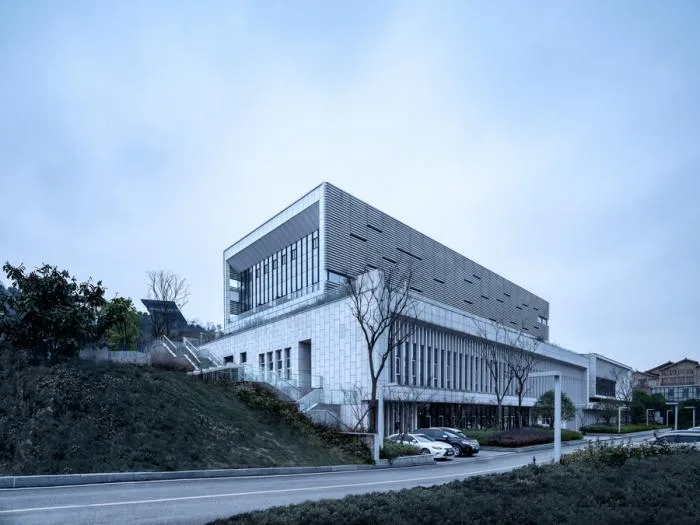
△ Building Height Variation © Zhang Yong
Design Philosophy
The architectural concept centers on a suspended “smart information box.” The building’s form responds to the site’s terrain, adopting Guizhou’s distinctive suspended building style that aligns with the slope, creating varying building heights.
The three-story structure features a straight, rectangular shape forming the core “smart information box.” The first-floor east and west columns span approximately 30 meters and are partially elevated, allowing the upper box to appear as if floating, responding to the natural environment’s undulations.
The underground portion emphasizes the building’s upper section, following the terrain and employing a simple white stone finish. The north-facing main curtain wall highlights the main entrance and a “window” motif at the northwest corner, echoing the suspended upper box.

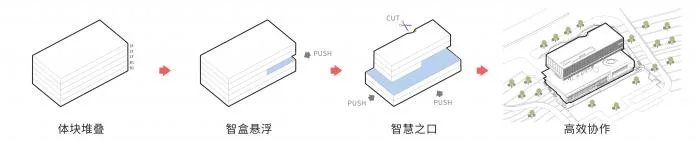
△ Facade Deduction and Design Concept

△ Shape Generation
Functionally inspired by “big data boxes,” the design emphasizes the building’s timeliness and technological aesthetic. The “information box” is clad in glass curtain walls with subtle inward curves on the east and west sides, forming “display windows” that evoke a digital-age atmosphere.
Big data code symbols are extracted and represented on the north and south facades using aluminum alloy grilles arranged horizontally with dense, randomized spacing, mimicking a digital “jumping” pattern. A concave water droplet-shaped feature on the upper left of the south facade adds visual interest and activates the building’s main facade.
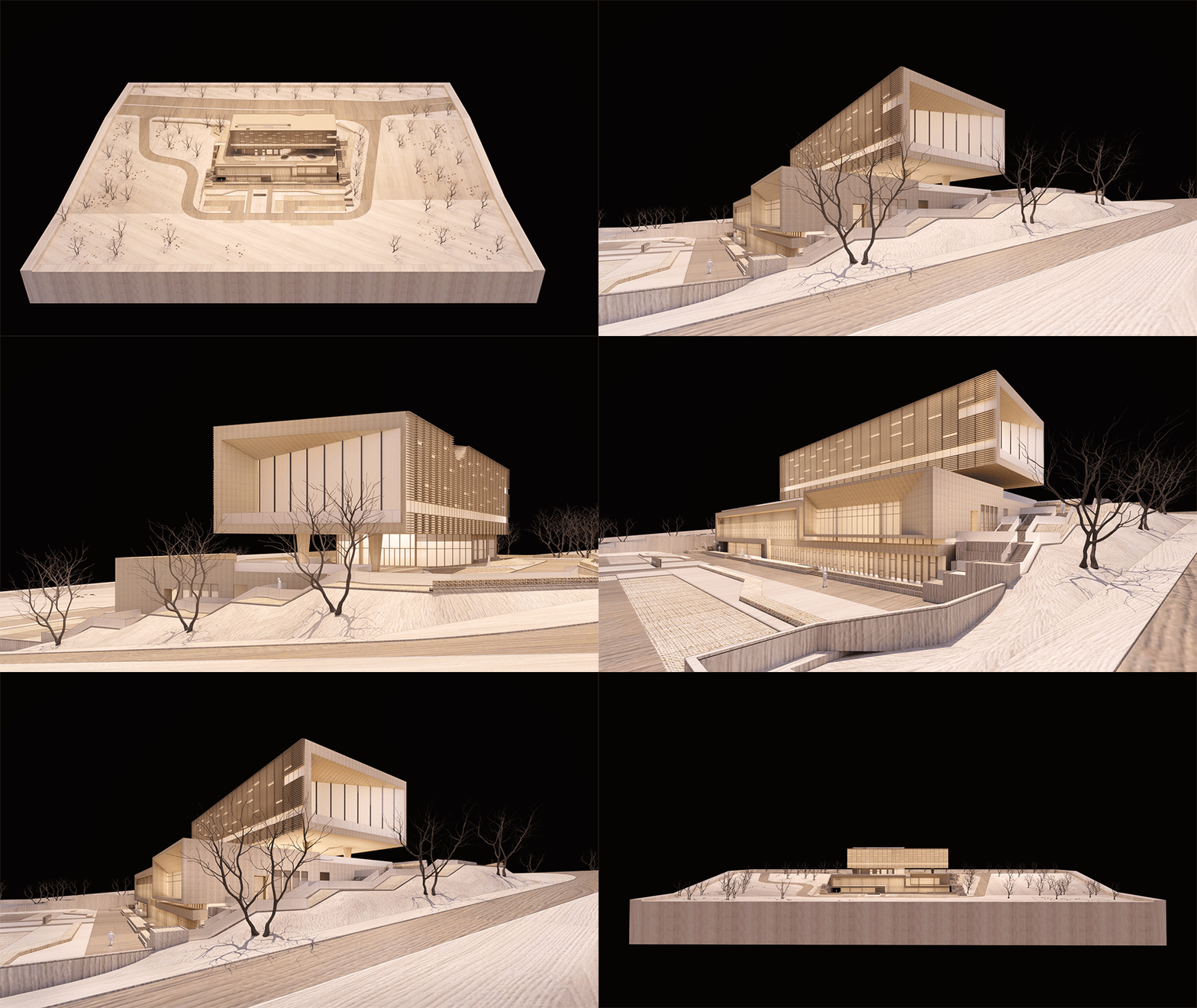
△ Model
Functional Layout
The project steps down from south to north and is divided into above-ground and underground sections. The above-ground part consists of three floors. The west side of the first floor is elevated, forming an entrance plaza with circular internal roads. This serves as the main entrance for big data and copyright cloud displays. Visitors can access the second-floor exhibition area via escalators and exhibition halls.
The first and second floors primarily host big data and copyright cloud display functions. A logistics auxiliary entrance is located on the east side of the first floor, while an elevator hall entrance on the north side provides direct access to the third floor’s copyright trading hall, monitoring display hall, custody center, and related office spaces.
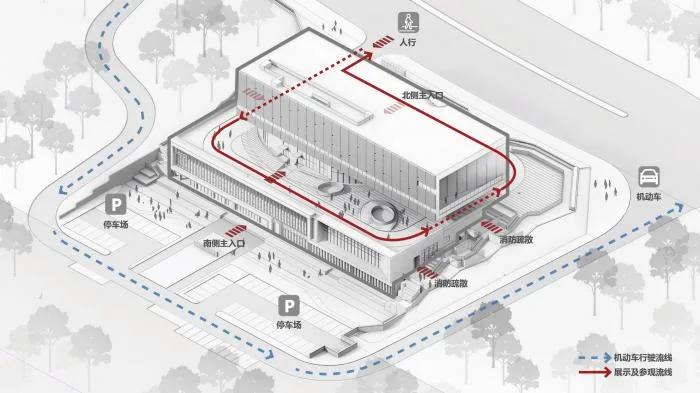
△ Streamline Analysis Diagram
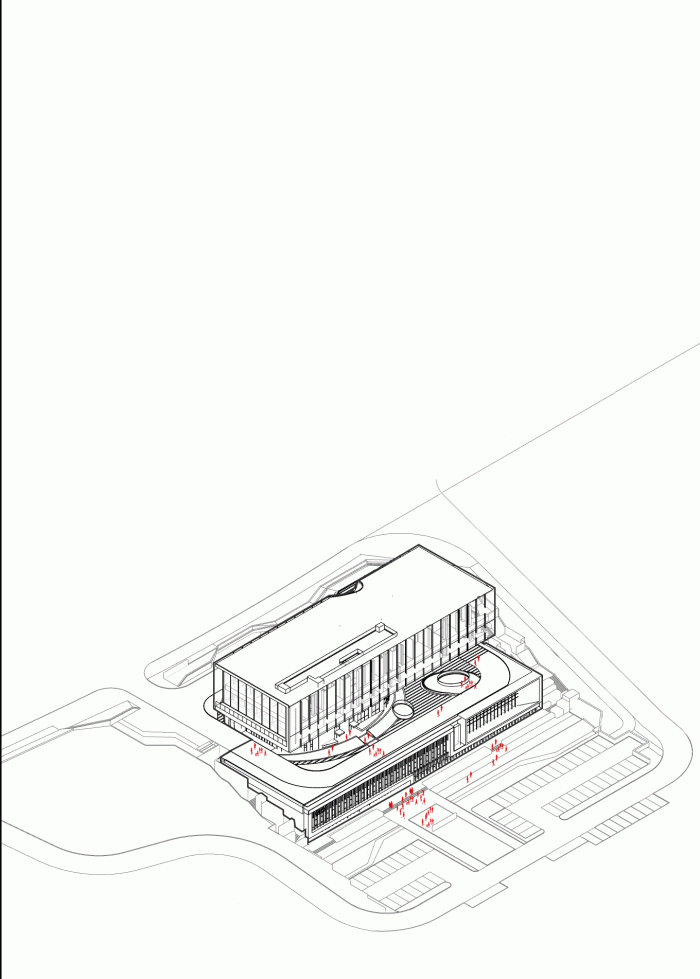
△ Exploded View Diagram
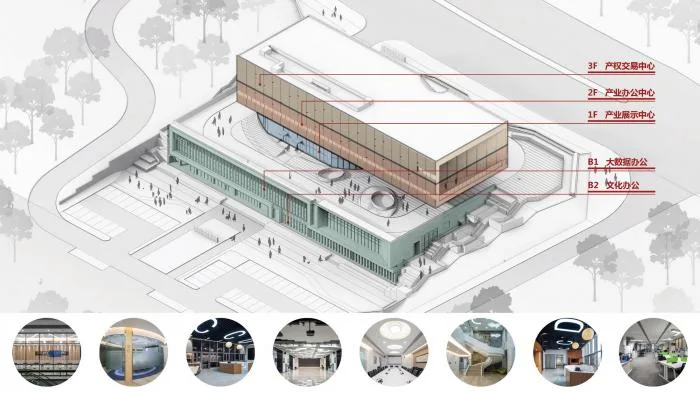
△ Functional Analysis Diagram
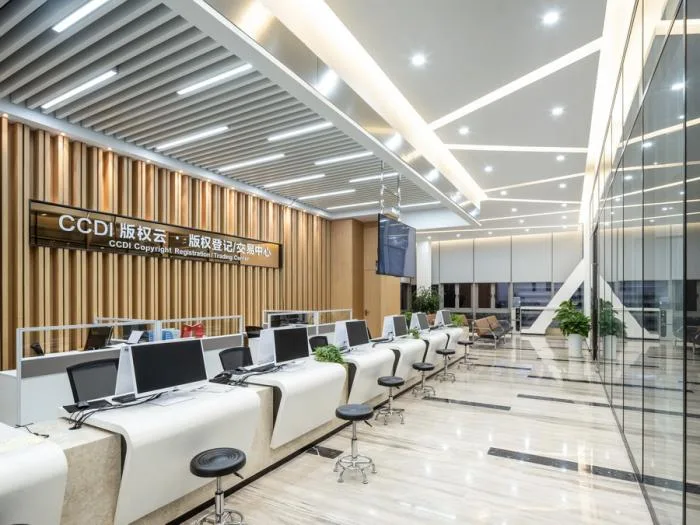
△ Trading Center © Zhang Yong
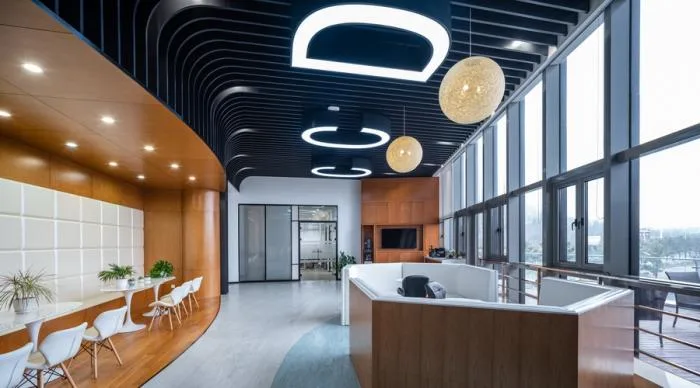
△ Public Space © Zhang Yong
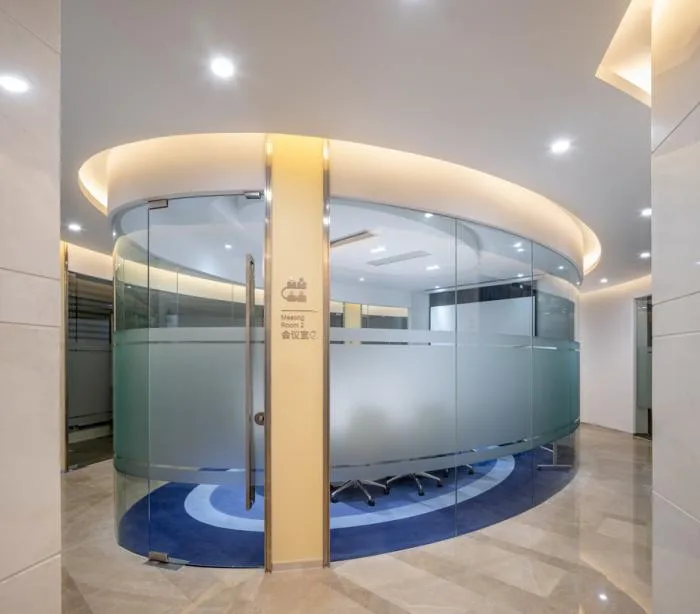
△ Meeting Room © Zhang Yong
The building’s lower section follows the terrain slope: the south side is buried underground as the first basement level, housing equipment rooms such as fire water tanks and substations. The north side is exposed, comprising two underground floors for office spaces, staff restaurants, and kitchens.
Large staircases flank both sides of the building to facilitate pedestrian flow and emergency evacuation.
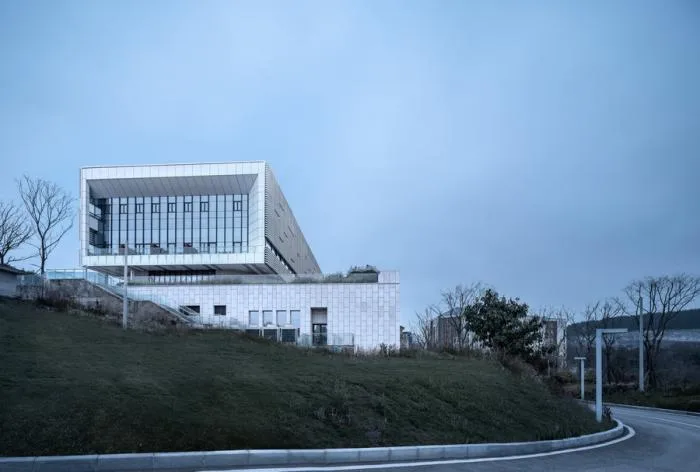
△ East Side of the Building © Zhang Yong
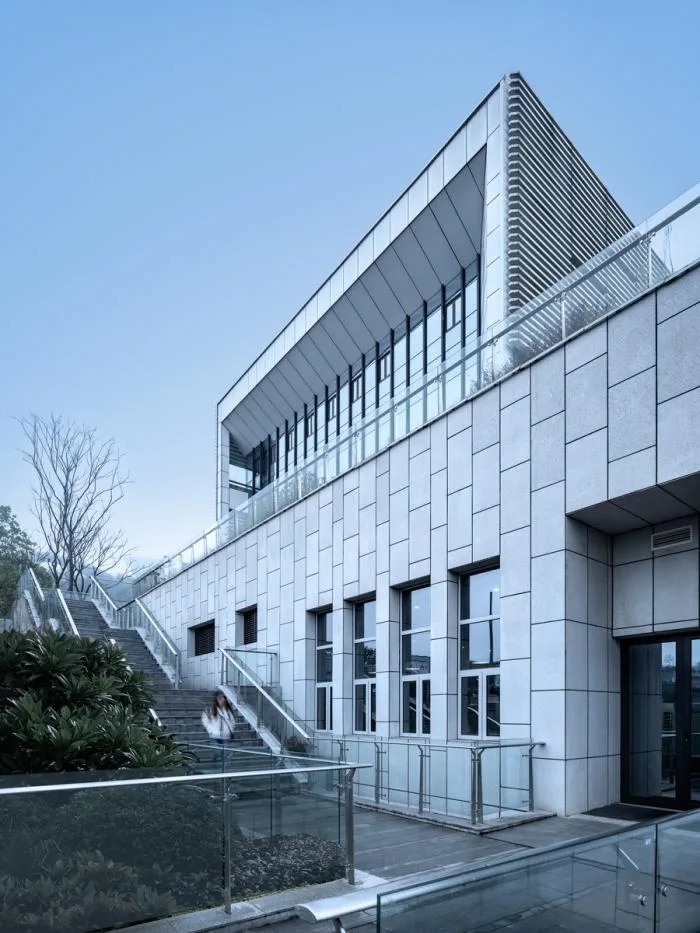
△ Large Staircases © Zhang Yong
Green Space Planning – Vertical Integration
The green space planning carefully considers terrain, cost, and maintenance factors. Various green landscapes are arranged along the vertical slope of the road and site.
Local plants are integrated on the first and second-floor stair areas, complemented by paved surfaces, greenery, tree pits, small landscapes, and decorative elements within the plaza. This approach blends the building into the ecological terrain, creating a subtle urban ecological landscape, as if an open platform is nestled within natural mountains, offering distant views of the city through the dynamic architectural form.
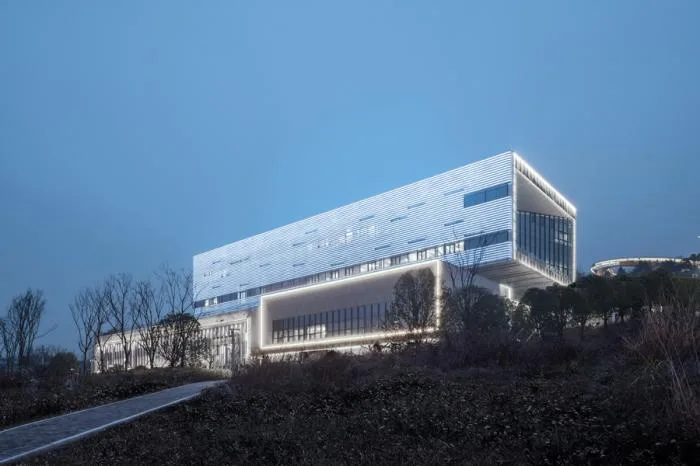
△ Architectural Night View © Zhang Yong
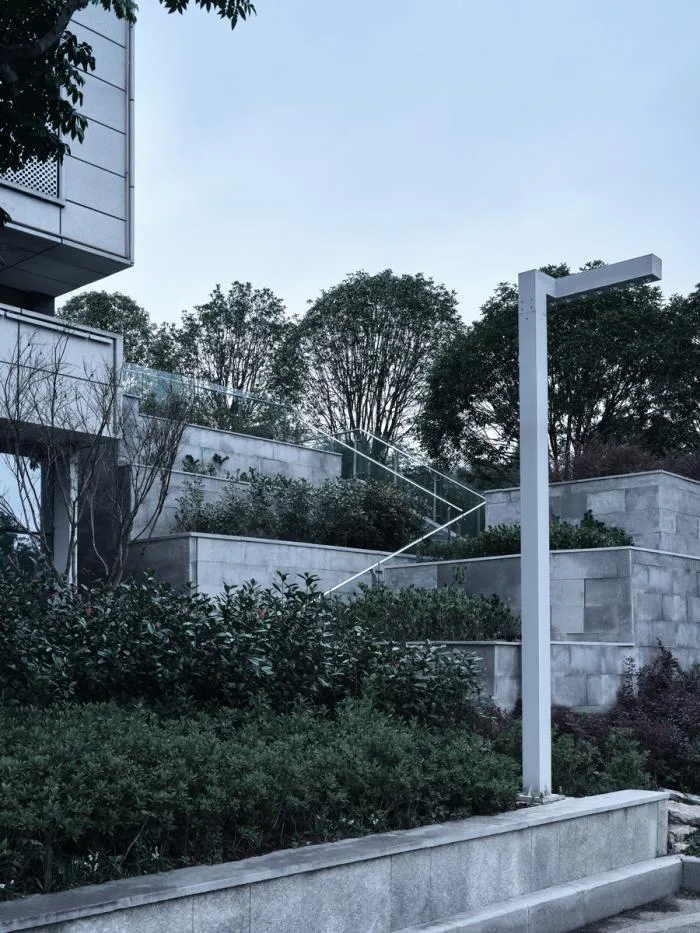
△ Architectural Landscape © Zhang Yong
The Copyright Cloud Work Base project capitalizes on the city’s natural geography and industrial policies to embody a design concept centered on intelligence, digital cloud integration, and ecological harmony. It creates a dynamic, open, shared, and ecologically advanced big data display platform, ensuring effective implementation of intelligent and modern information network infrastructure.
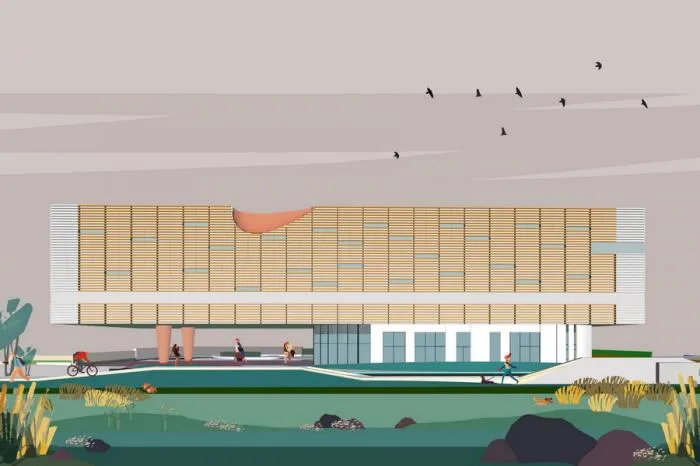
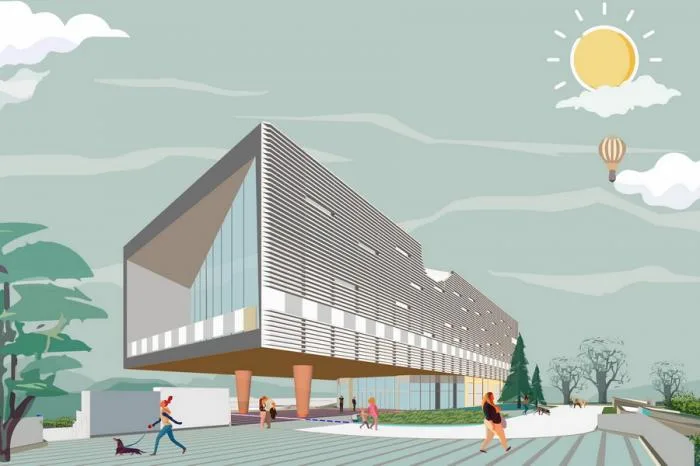
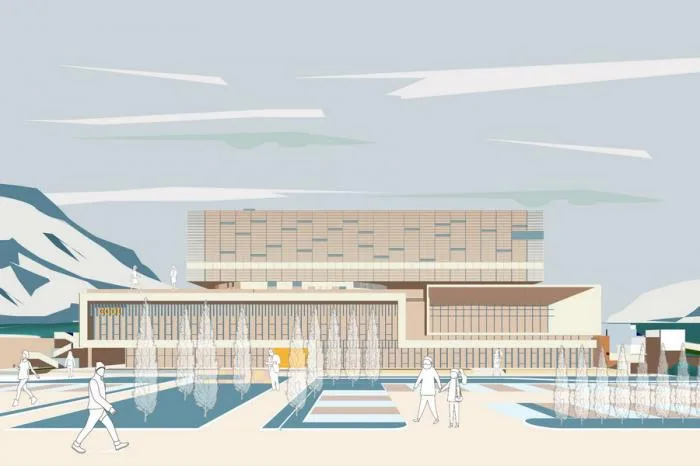
△ Scene Illustration
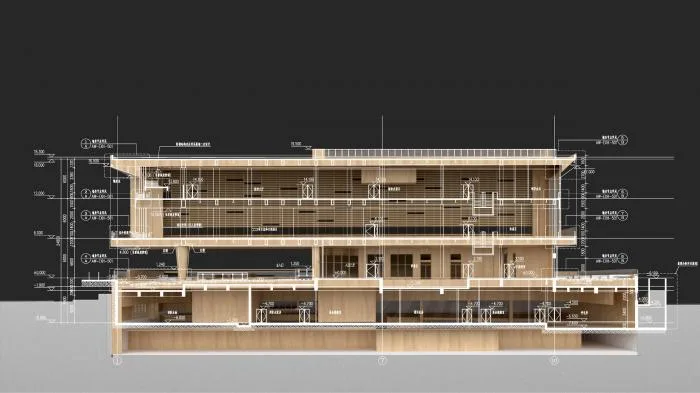
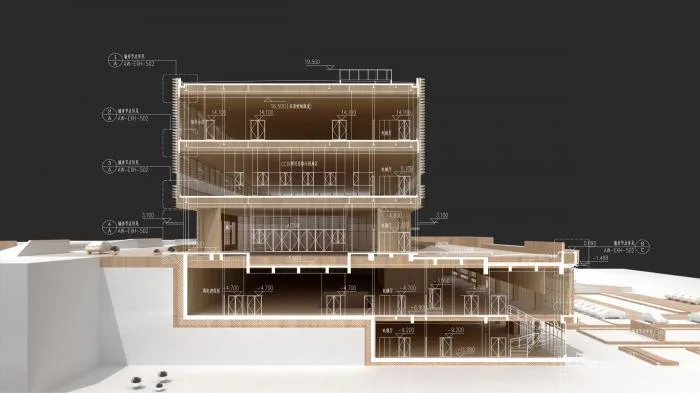
△ Section Diagram
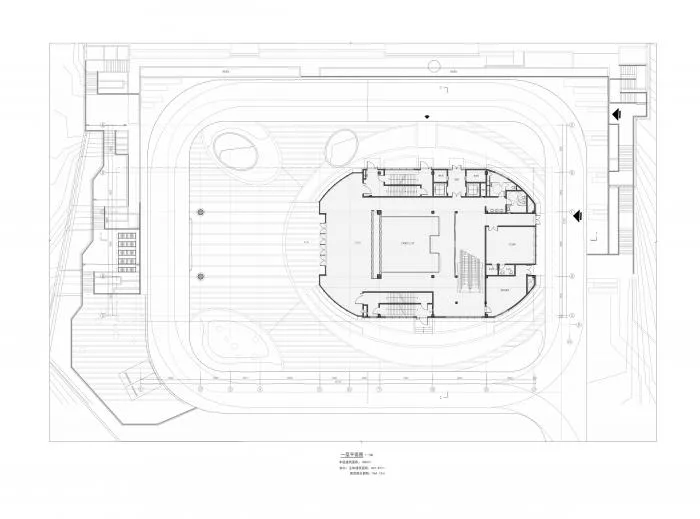
△ First Floor Plan
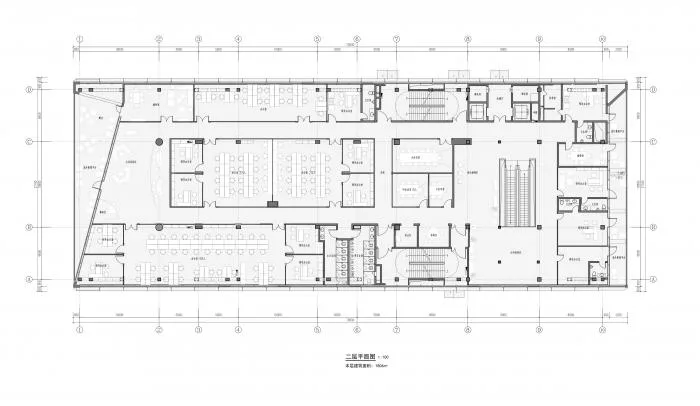
△ Second Floor Plan
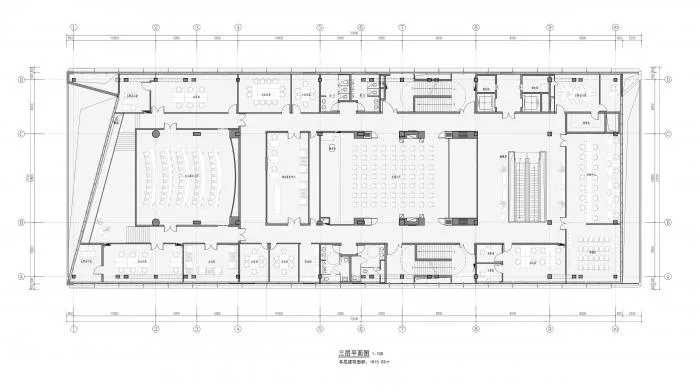
△ Third Floor Plan
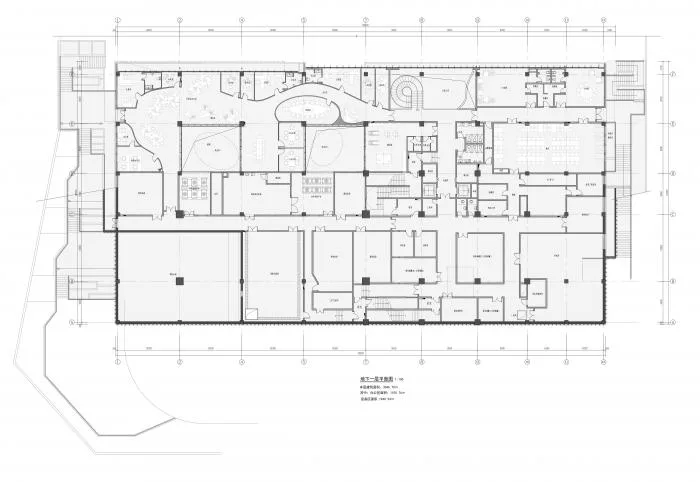
△ Underground Floor Plan
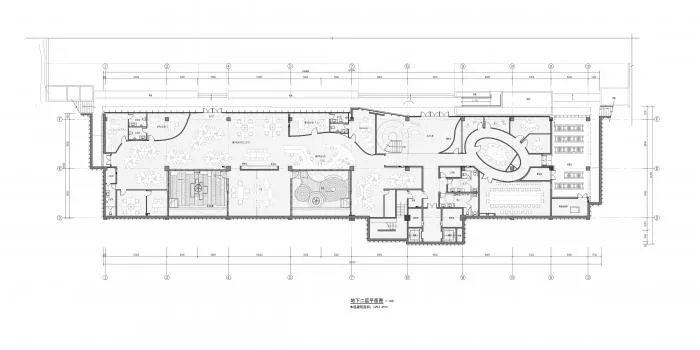
△ Underground Second Floor Plan
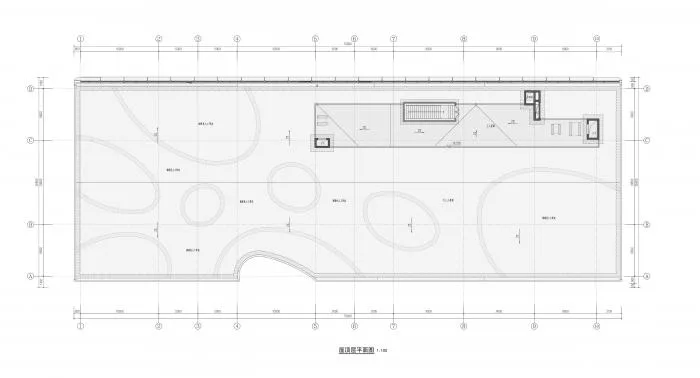
△ Roof Floor Plan
Project Information
Construction Company: Shanghai Huadu Architectural Planning and Design Co., Ltd. (HDD)
Location: Guiyang City, Guizhou Province, China
Chief Designer: Kuang Xiaoming
Architectural Design Team: Shen Yi, Zhang Haiao, Shi Feng, Yao Qiwei, Gong Benling, Chen Xiaotong
Structural Design Team: Zhang Yongqiang, Pu Yixuan, Zhu Yuehai, Zhou Zhen, Wang Guoxun
Electrical Design Team: Zhang Yi, Chen Yu, Xiao Yan, Ren Fusheng
Water Supply & Drainage Design Team: Jiang Yi, Wu Wenwen, Yang Cheng
HVAC Design Team: Cheng Lingsong, Chai Yunliang, Qu Dongyang, Dong Yunfeng, Yang Chao
Building Area: 9,767 square meters
Project Year: 2018
Photographer: Zhang Yong













Must log in before commenting!
Sign Up