
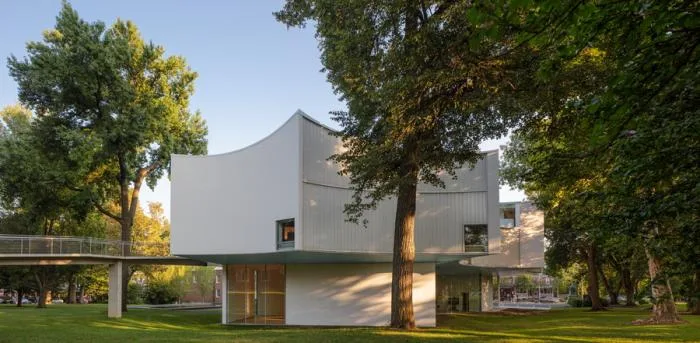
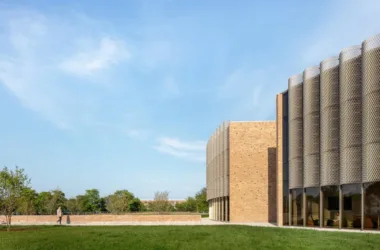
The New Winter Visual Arts Building is situated on the historic campus of Franklin and Marshall College, nestled among the oldest 200-year-old trees. Its design has evolved in harmony with this natural heritage. Serving as a vibrant new hub for students, the building aims to inspire both teaching and artistic creativity.
Buildings with a Sense of Place
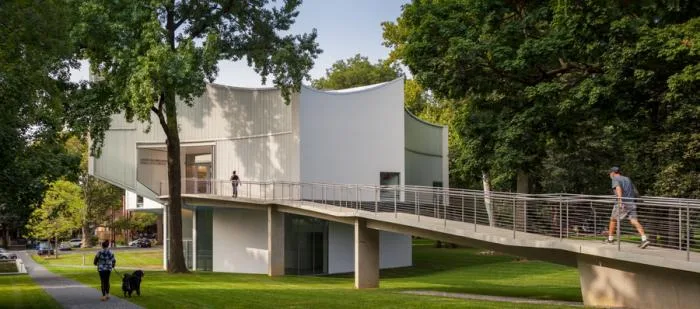
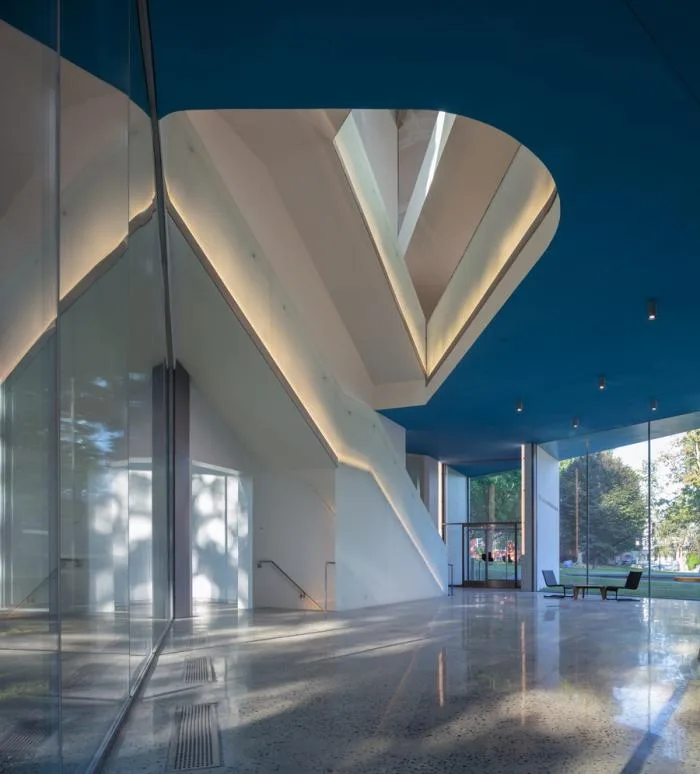
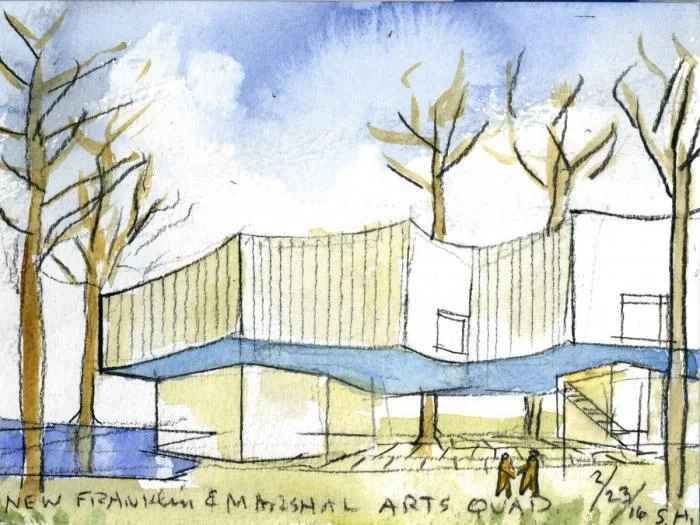
This architectural vision for the Department of Art, Art History, and Film draws inspiration from Franklin and Marshall College’s motto, “Light and Law.” The building presents itself as a “lightweight mass,” complementing and contrasting the heavy brick architecture of the original 1856 campus. A gently rising external ramp connects the main park’s axis to the building’s second-floor entrance, inviting visitors to stroll above the first-floor entry and experience the newly established “Art Academy.” This design reactivates the southern edge of campus as a vibrant new destination.
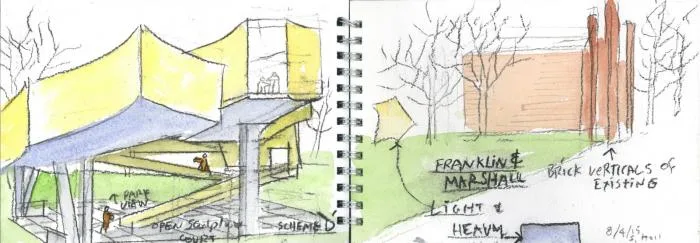
△ Watercolor Illustration – Concept of Light and Heavy
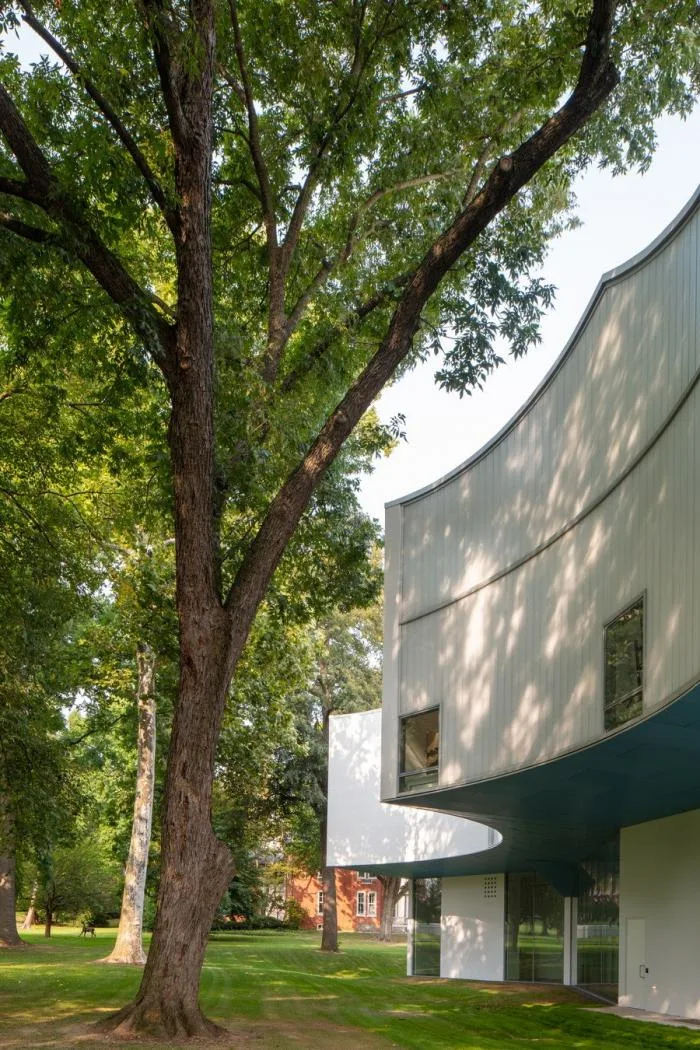
The large-diameter trees are the oldest elements in Franklin and Marshall College’s 210,437 square meter campus and serve as the conceptual inspiration for the building’s geometry. The Visual Arts Building is designed as a lightweight structure with its main floors elevated to align with the tree canopy, while the transparent first floor faces the campus and the adjacent Buchanan Park.
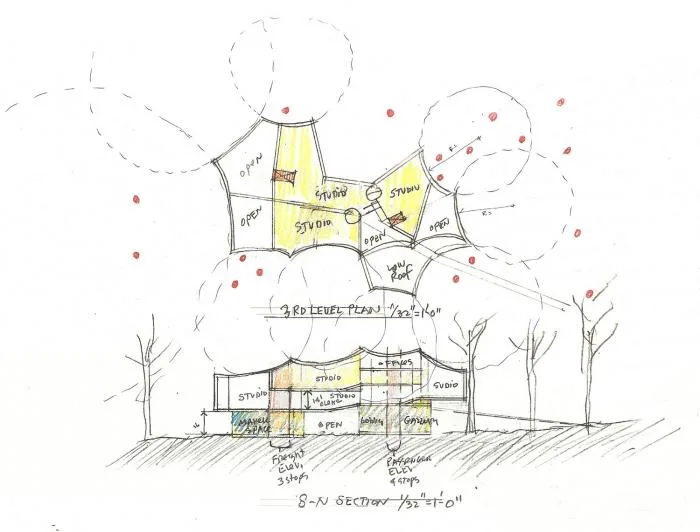
△ Watercolor Illustration – Tree Diameter Convex Geometry
A Place of Inspiration for Craftsmanship and Artistic Education
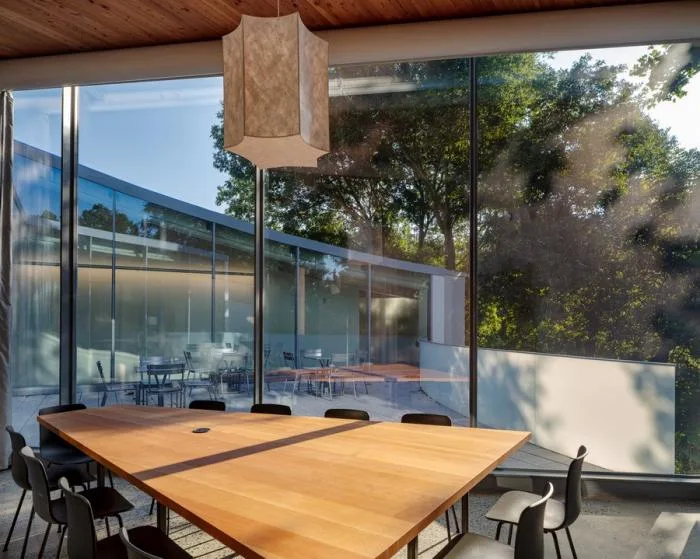
The 3,065 square meter Visual Arts Building serves as the creative heart of campus life. It fosters an artistic atmosphere where students from diverse backgrounds collaborate on art projects. The first floor houses forum and gallery spaces that engage the Lancaster community, integrating campus life with art exhibitions and activities.
The sculpture studio, designed to accommodate heavy materials, is located on the first floor for easy loading and unloading. Adjacent to this is an open-air sculpture courtyard. The digital laboratory, requiring minimal natural light, is situated in the basement, supplemented by daylight filtering in.
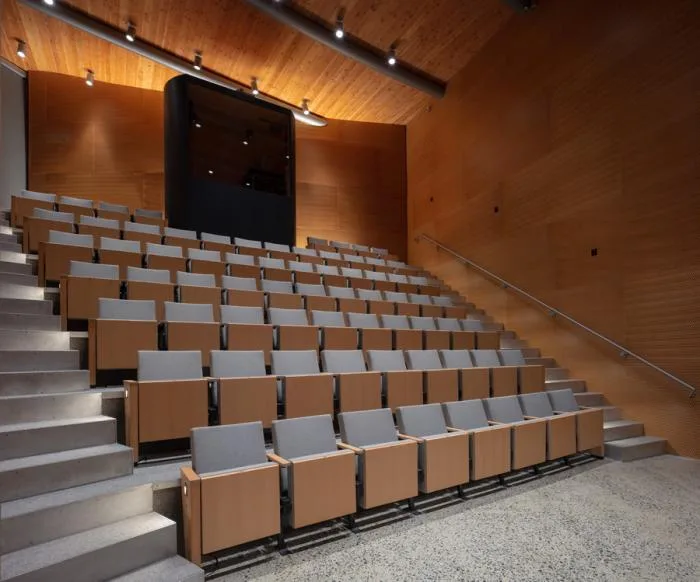
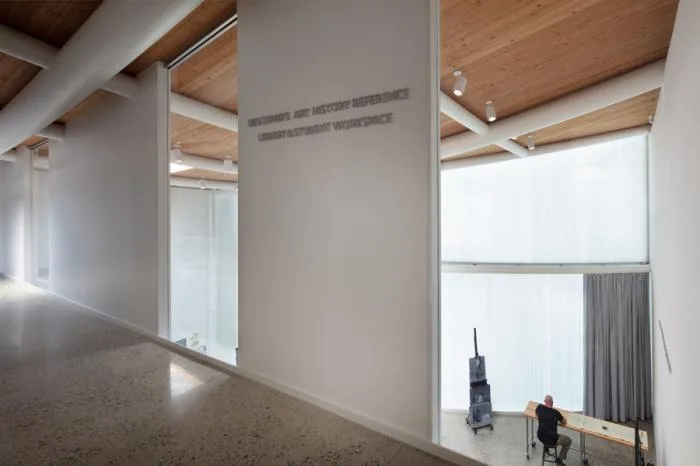
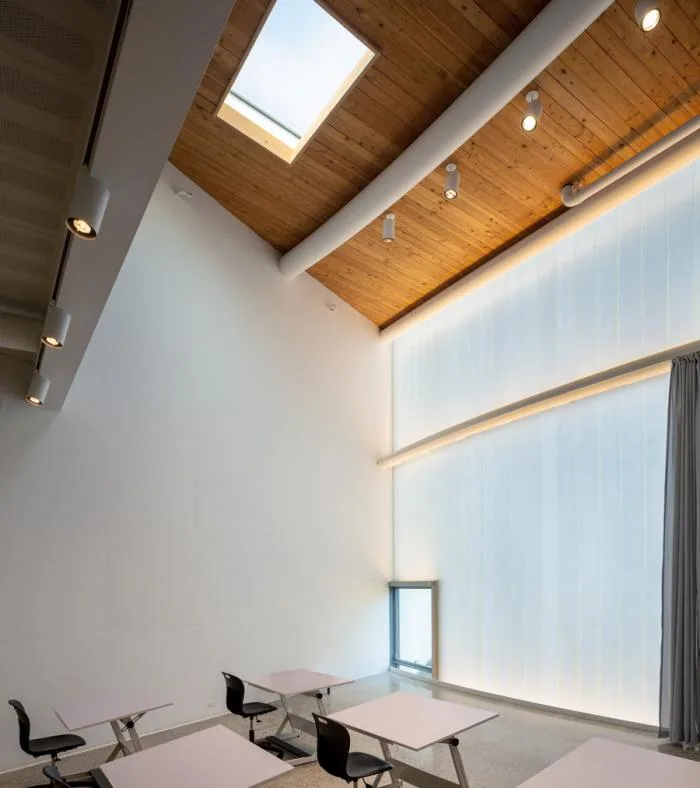
Studios for painting, design, printmaking, oil painting, woodworking, and cinema occupy the second floor, arranged around communal spaces that also serve as informal lecture areas. All studios benefit from natural light through semi-transparent facades and are equipped with adjustable clerestory windows and skylights. Faculty studios and the art history seminar room are positioned on the mezzanine level, overlooking the studios below, enriching the double-height space and fostering inspiration.
Framework for Practice and Innovation
The lightweight two-story “kite box” steel frame rests on two concrete slabs at ground level, efficiently creating dramatic cantilevers and curved geometric forms. Slender trusses are concealed within the second-floor studio walls, supporting curved steel pipes that span between them. Steven Holl Architects leveraged 3D modeling and collaborative teamwork to refine construction documents, enabling contractors to assemble these complex geometries accurately and efficiently.
The roof structure remains exposed, with steel pipes shaped and tilted uniformly to form a curved roof geometry. Cedar boards, 7.6 cm (3 inches) thick and arranged in a tongue-and-groove fashion, are mounted on these curved pipes, creating a rippling effect. Fixed at the peaks of the curved steel pipes, the wood’s natural flexibility helps foster a dynamic learning environment that encourages creative thinking.
△ Watercolor Illustration – Architectural Appearance
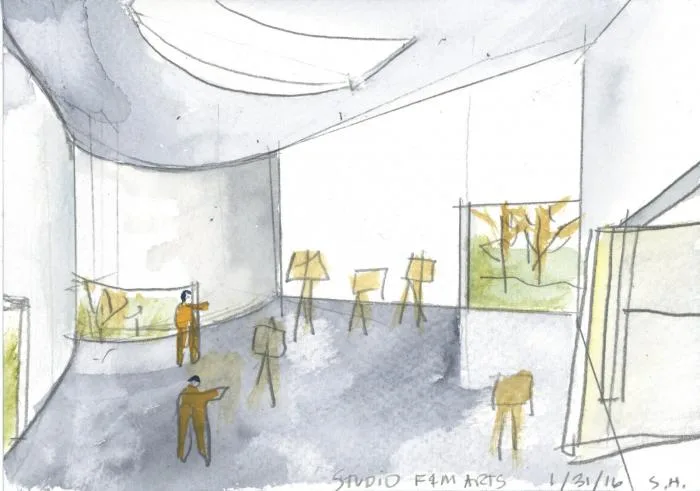
△ Watercolor Illustration – Interior Space
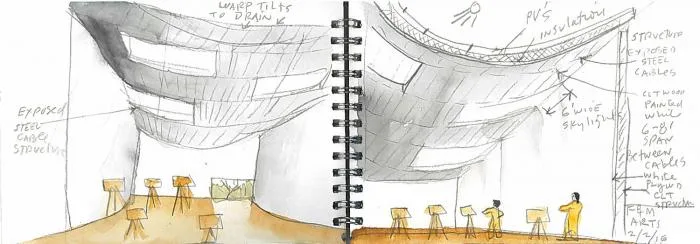
△ Watercolor Illustration – Interior Section
Eco-Design
The curved, semi-transparent glass façade is constructed from a double-layer U-shaped structural glass system with an insulating semi-transparent layer. This design offers excellent thermal performance and allows 19% light transmission, making it ideal for studio spaces. The building incorporates natural light and ventilation alongside efficient floor heating and cooling systems, meeting LEED Gold certification standards.
During construction, all trees and their root zones on-site were preserved. The building’s undulating form reflects a deep respect for these ancient trees, echoing their drip lines. Maintaining local plant species on-site minimizes future restoration efforts and protects existing ecosystems from disturbance.
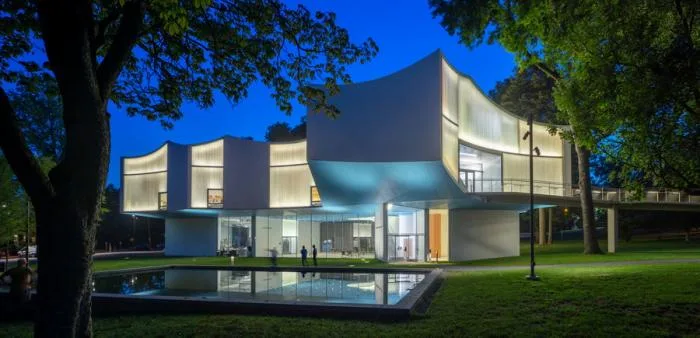
Air, Light, and Green Spaces in a Post-Pandemic World
The Winter Visual Arts Building is set to welcome students when Franklin and Marshall College opens this academic year. The design philosophy of Steven Holl Architects naturally incorporates pandemic-responsive measures, including social distancing and enhanced fresh air circulation.
Spacious social and circulation areas, two main entrances on separate floors that can facilitate one-way traffic flow if needed, ample daylight, natural ventilation, and outdoor terraces ensure a healthy and inspiring environment. The building harmonizes with the lush, garden-like campus setting, creating a serene space where nature and art coexist.
Design Drawings
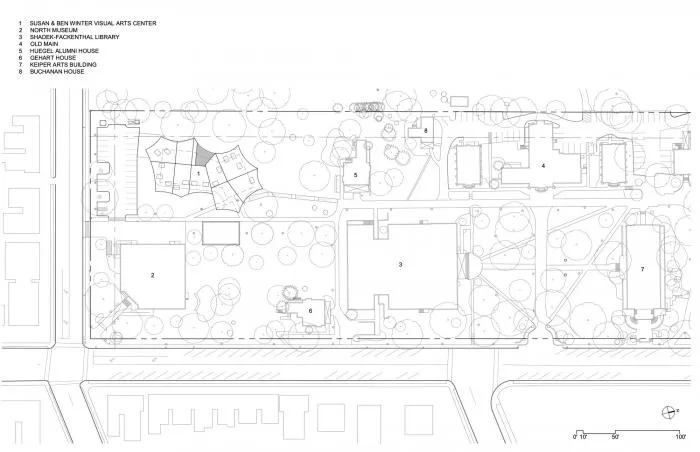
△ General Layout Plan
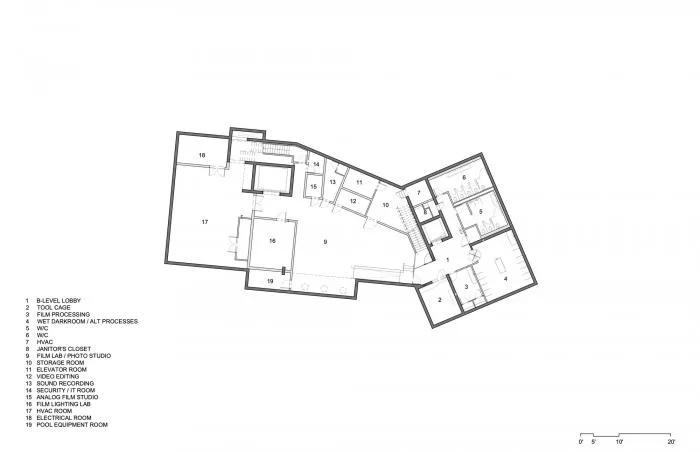
△ Basement Plan
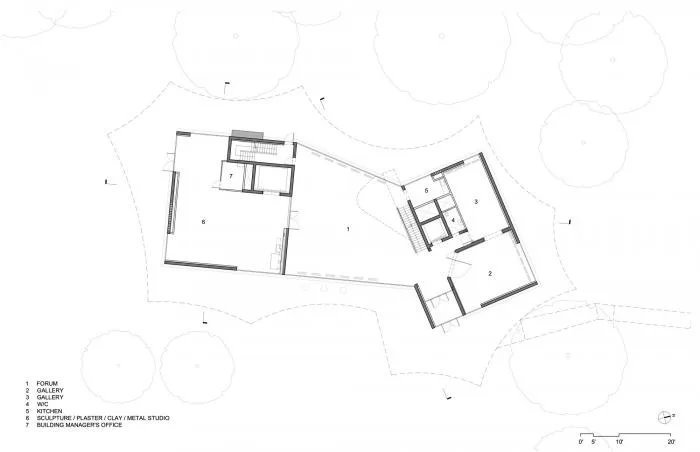
△ First Floor Plan
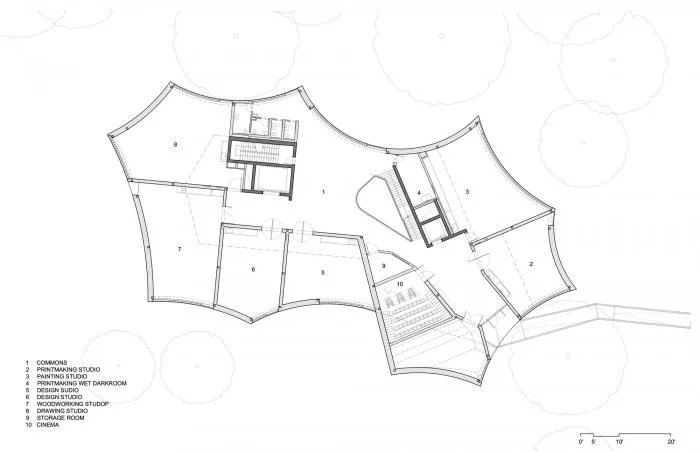
△ Second Floor Plan
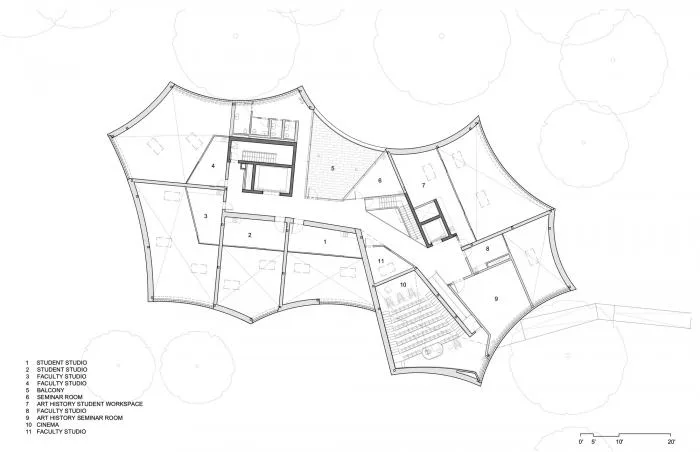
△ Mezzanine Plan
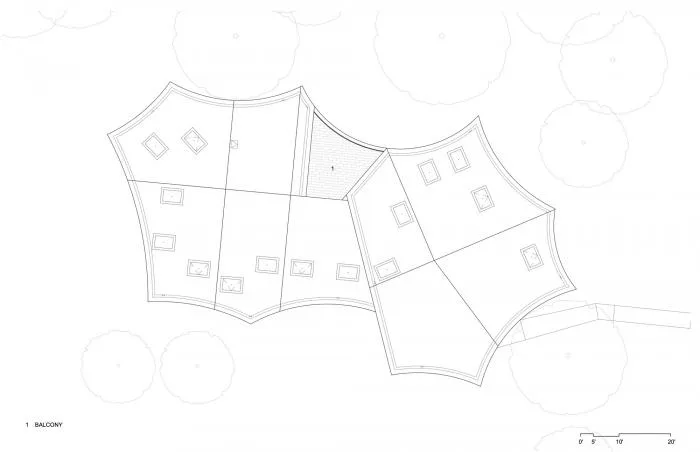
△ Roof Plan
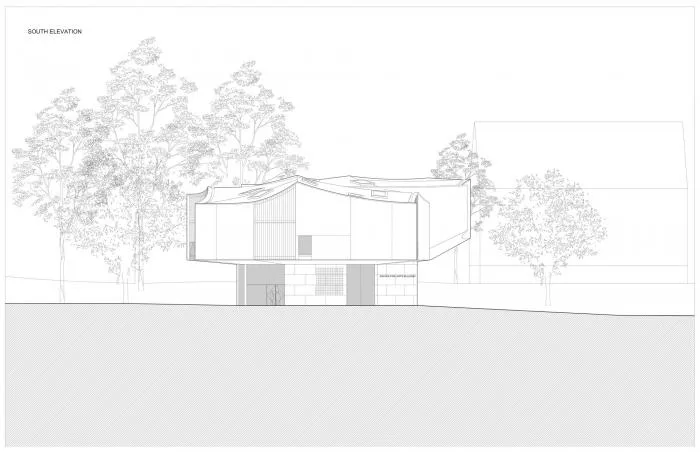
△ South Elevation View
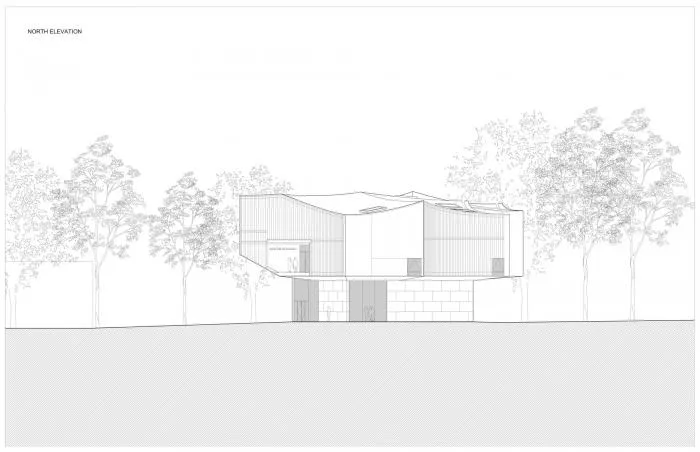
△ North Elevation View
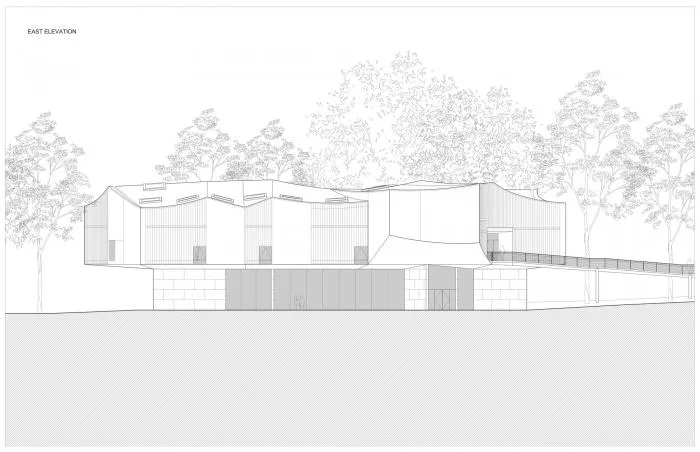
△ East Elevation View
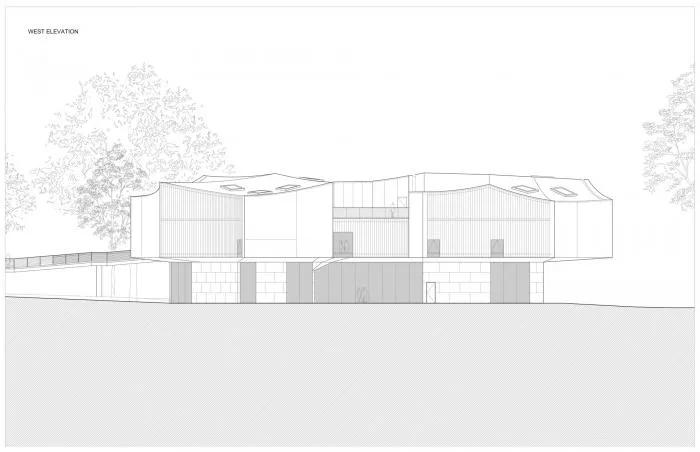
△ West Elevation View
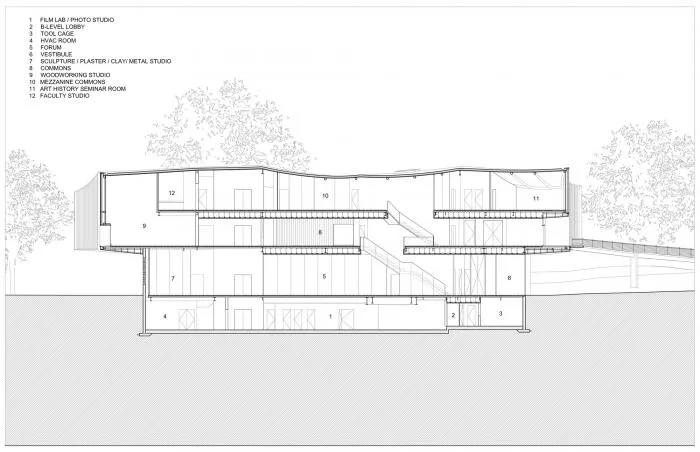
△ Longitudinal Profile
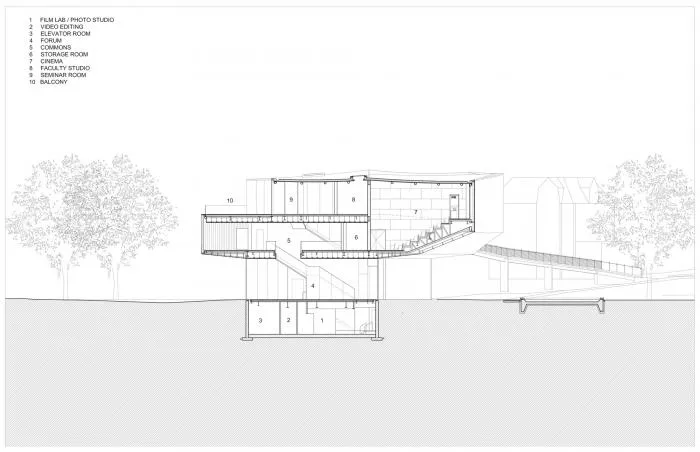
△ Short Profile 1
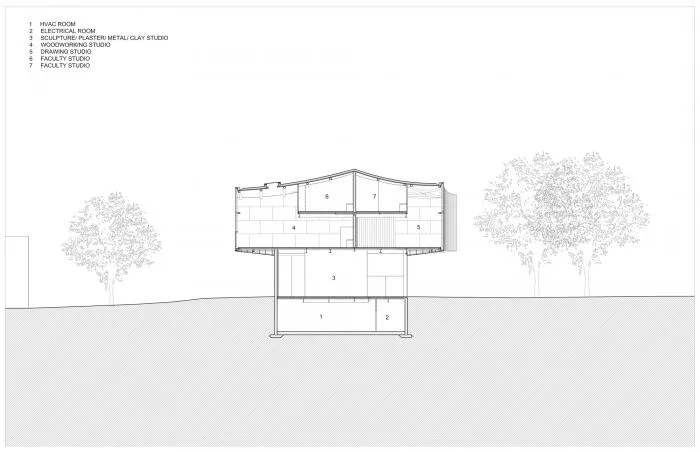
△ Short Profile 2
Project Information
Project Type: Art Museum
Location: Lancaster, USA
Architect: Steven Holl Architects
Area: 3,065 m²
Year: 2020
Photographer: Paul Warchol
Architectural Design Director: Steven Holl
Responsible Partner: Chris McVoy
Project Architect and Senior Architect: Garrick Ambrose
Assistant Project Architect: Carolina Cohen Freue
Project Team: Dominik Sigg, Marcus Carter, Elise Riley, Michael Haddy, Hannah LaSota
Project Manager: Casali Group, Inc.; Thomas Murray and Franklin and Marshall College; Sheldon Wenger
Structural Engineering: Silman Associates
Mechanical Engineering: ICOR Associates
Civil Engineering: David Miller Associates
Subsequent Project: Transsolar
Landscape Design: Hollander Design
Facade Design Consultant: Knippers Helbig Advanced Engineering
Lighting Design Consultant: L’Observatoire International
Acoustic Design Consultant: Harvey Marshall Berling Associates
Pool Design Consultant: Aqua Design International












Must log in before commenting!
Sign Up