
Project Overview
Xinsi Technology, the client for this design project, is a world-leading provider of electronic design automation (EDA) solutions and chip interface IP suppliers. The company is also a global leader in information security and software quality.
At the outset, the design team encountered several constraints from the client based on user needs. The workstation was specified as a 2m by 2m square box standing 1.1m high to ensure employee privacy. Additionally, these workstations needed to maintain continuity without being interrupted by solid walls. The design also required a clear separation between active and quiet zones to provide spaces for focused work. These conditions posed a challenge, as they contrasted with the popular flexible work methods widely used today.
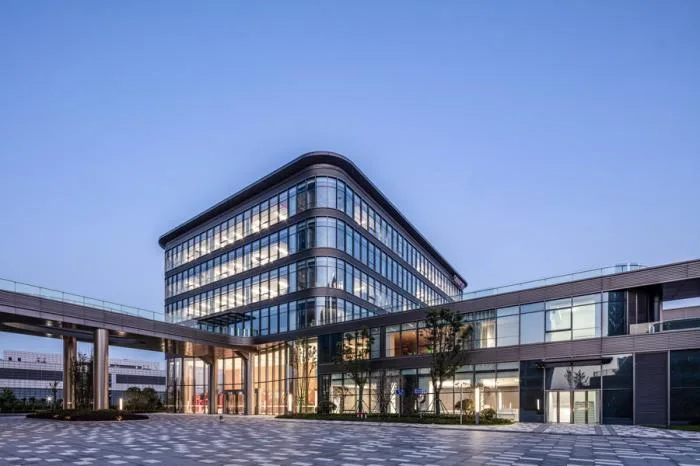
△ Architectural façade
For Xinsi Technology, “technology” goes beyond being a symbol of the future or coolness; it represents the fundamental requirement for safety and convenience in everyday life. Reflecting this philosophy, the design intentionally avoids classic tech company motifs such as monochrome palettes and strict technological lines. Instead, inspired by the concept of a “chip box,” the design deconstructs and reinterprets chip elements through vibrant colors and various compositions, crafting a warm, flexible, and culturally rich office environment.
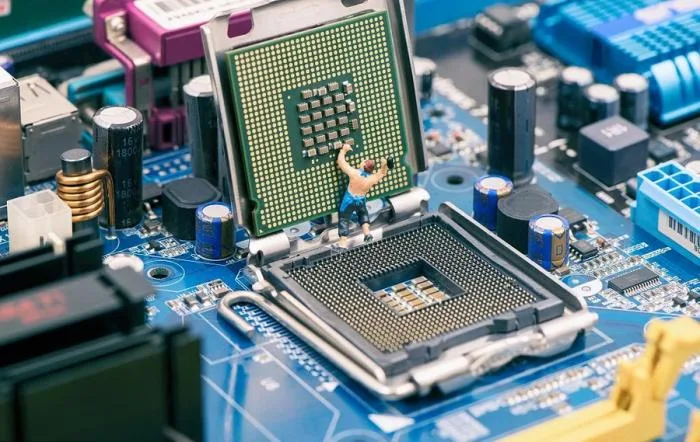
△ The chip box concept links spaces in sequence
01 Creating the Box – Spatial Composition
The building consists of six vertically stacked floors. Based on the owner’s needs and spatial characteristics, the design allocates functions accordingly: the first floor hosts meeting rooms, training areas, and cultural exhibition halls for external reception. The second floor combines office spaces with leisure and fitness areas connected to an outdoor garden terrace. Floors three through six serve as standard office floors.
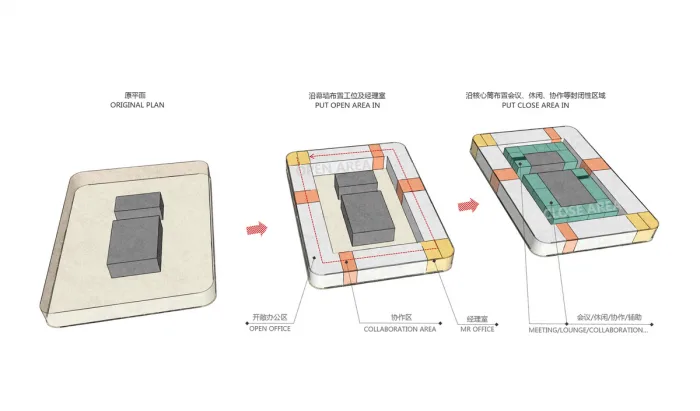
△ Functional zoning diagram of a standard floor
Horizontally, the layout respects the client’s requirement to separate dynamic and quiet zones. Open office areas and management offices are placed near windows to provide natural light and expansive views. Enclosed functional spaces—such as meeting rooms, coffee bars, collaboration zones, and printing rooms—are arranged around the core, preventing interference between office activities and public areas.
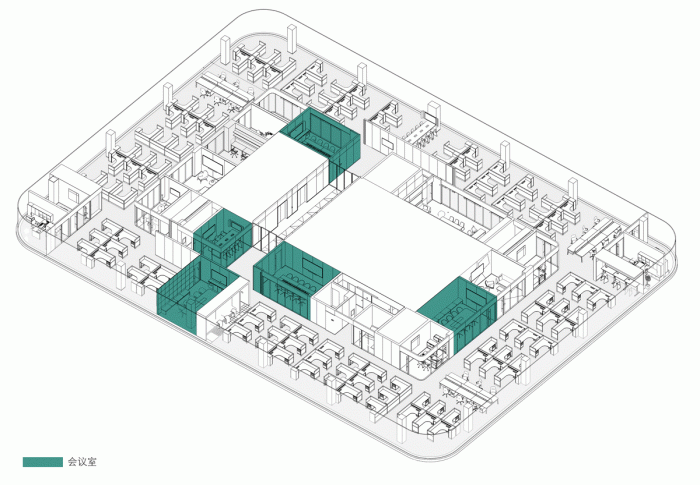
△ Functional zoning of a standard floor
The zigzag-shaped floor plan resembles a chip motherboard, organizing various “components” with distinct functions. Although the layout seems scattered, it follows a logical structure akin to running a program, ensuring smooth operation throughout the enterprise.
02 Opening the Box – First Floor Lobby
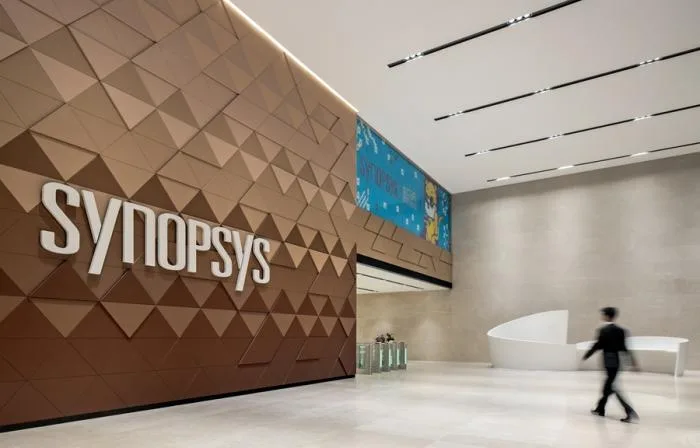
The lobby, as the building’s entry point, carries multiple functions and draws its visual identity from the enterprise itself. The design exudes calmness, reflecting the avant-garde and modern spirit of technology. Abstract chip elements are integrated into the walls in an ordered yet irregular pattern, setting a sensory foundation for visitors entering the space.
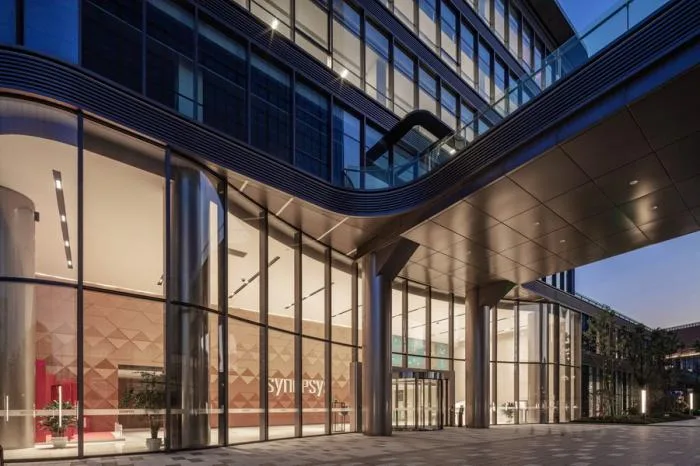
View of the lobby from the building’s north side
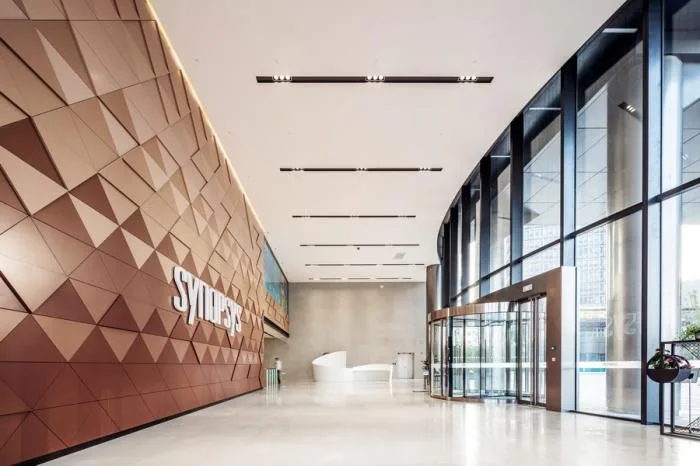
View towards the service desk on the east side of the lobby
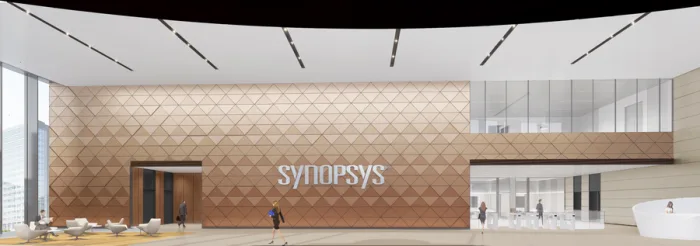
△ Lobby façade analysis
Notably, the reception desk’s design draws inspiration from the initial “S” of SYNOPSYS, featuring smooth, rounded curves that symbolize the company’s open and inclusive corporate culture.
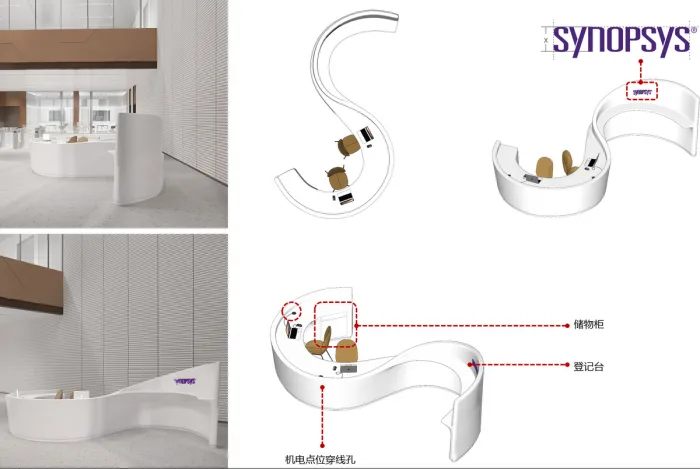
Reception desk detail
03 Exploring the Box – Standard Office Floors
For floors three to six, the design continues to incorporate core chip elements while adding more colors and varied elements to resonate with the primarily post-90s workforce.
The standard floor plan is uniform across these levels, facilitating easy relocation of teams between floors. Each floor is distinguished by unique theme colors and design elements, enhancing the experience of spatial exploration.
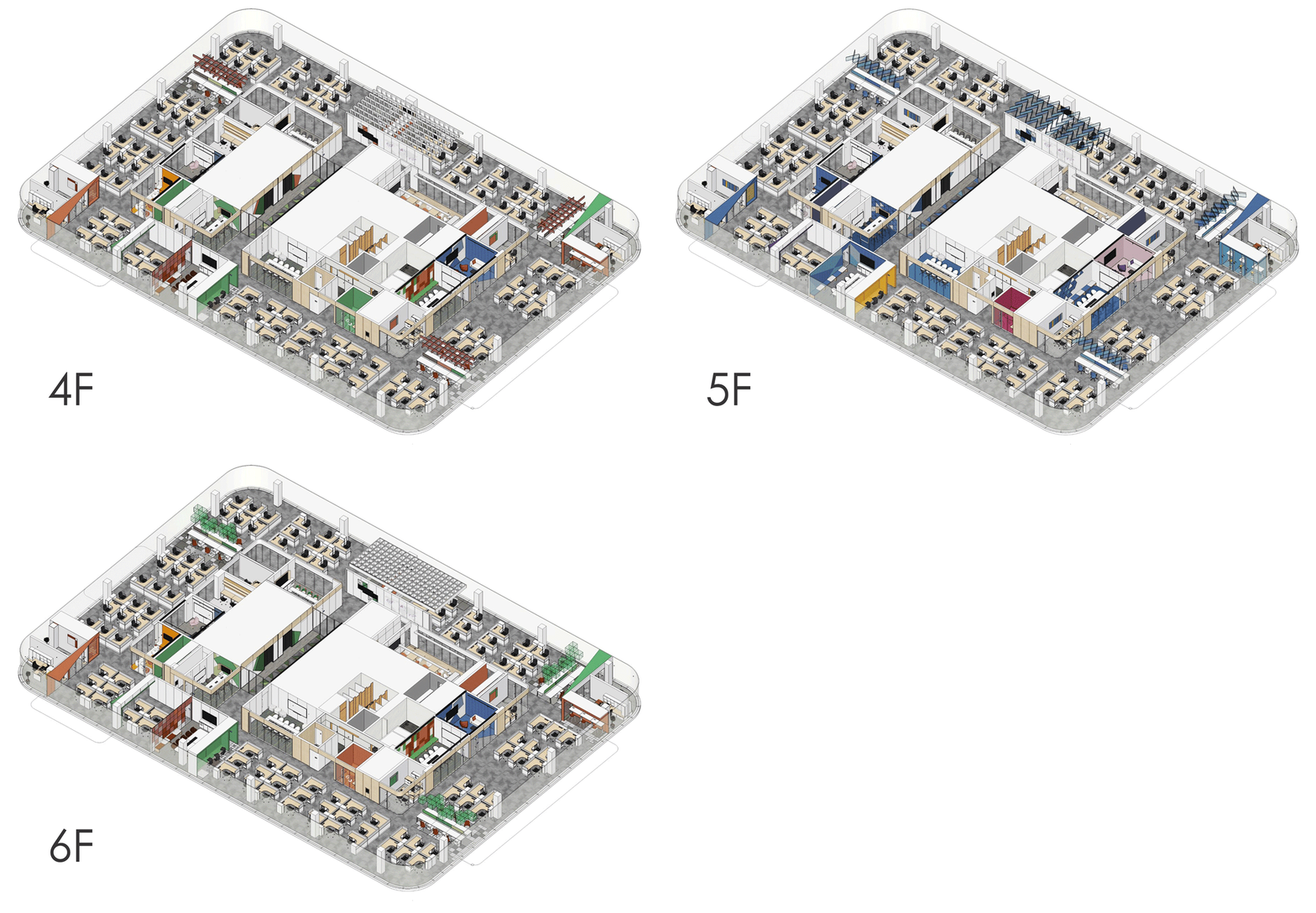
△ Axonometric diagram of a standard floor
The second, fourth, and sixth floors embrace an “orange and green” theme with “square” as the basic design element. The irregular chip-like patterns creatively define different zones, adding architectural interest and spatial dynamism.
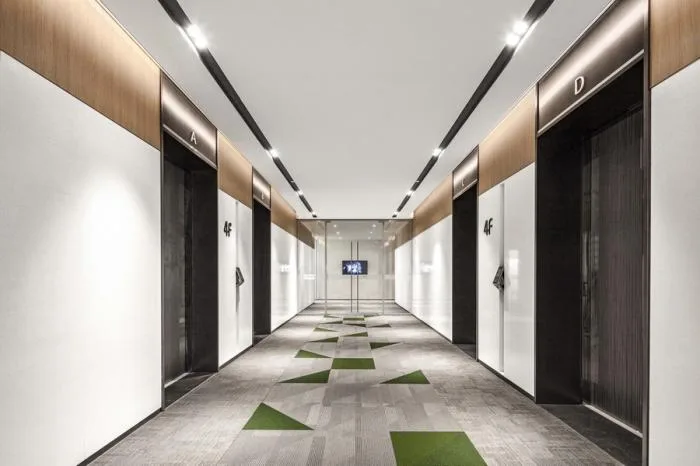
The elevator hall is accented with different floor colors, marking the building’s side.
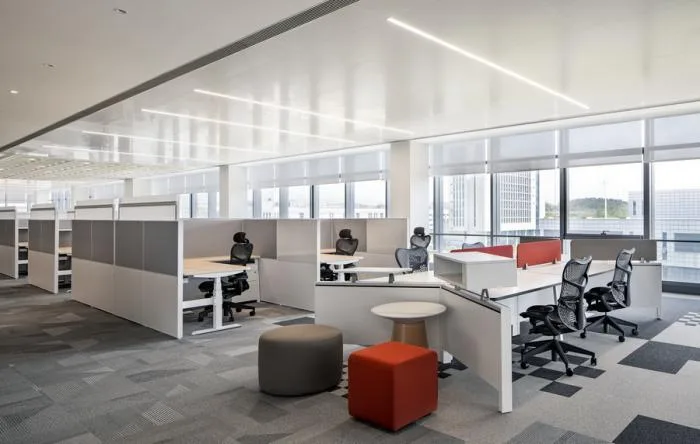
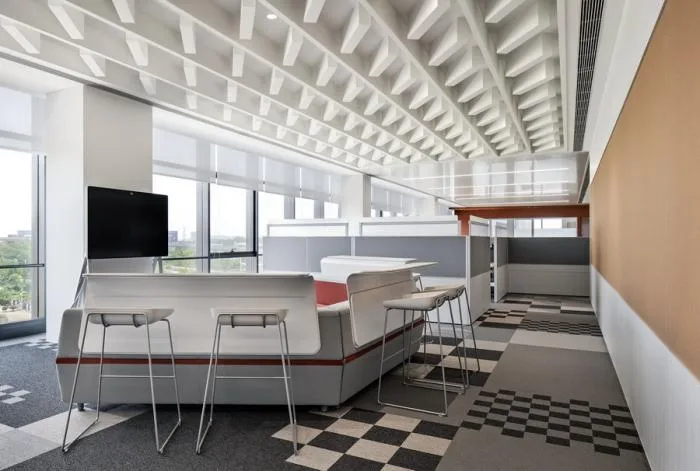
△ Open office area
Open collaborative tables separate workstation clusters, with floor and ceiling designs serving as soft partitions to emphasize spatial zones.
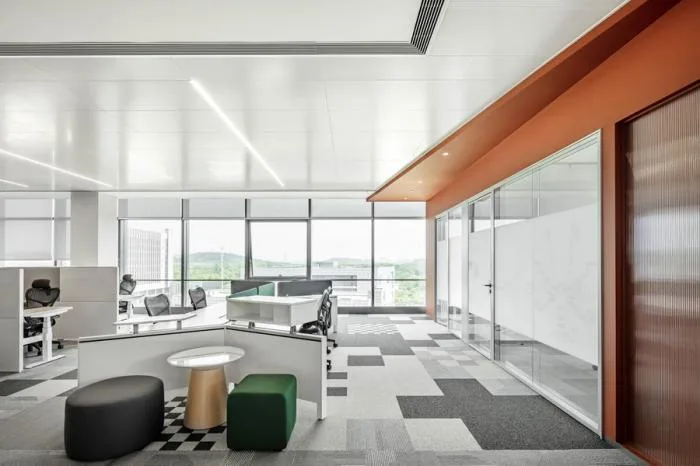
△ Collaborative discussion area
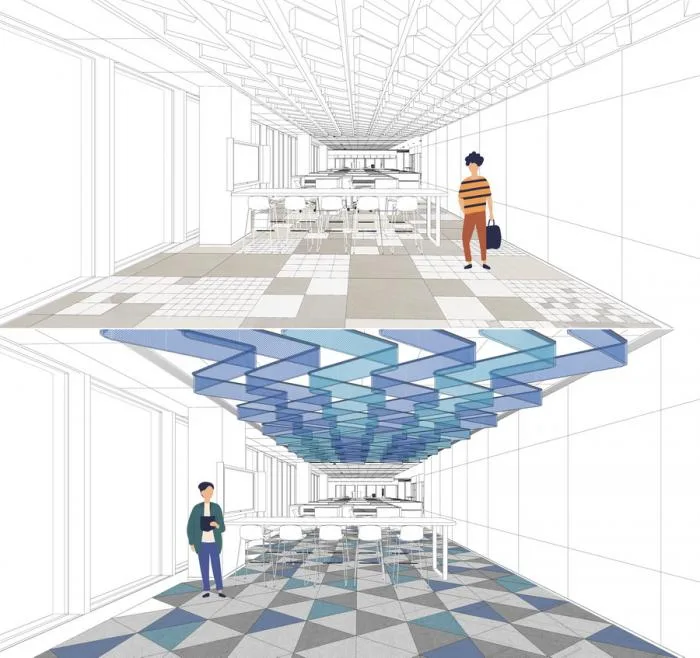
This collaboration zone acts as a buffer between workstation clusters, with floor and ceiling designs highlighting the spatial character.
To support diverse collaboration styles and flexible workspaces, the design includes open, semi-open, and enclosed meeting rooms around the core, fostering creativity and enthusiasm among employees.
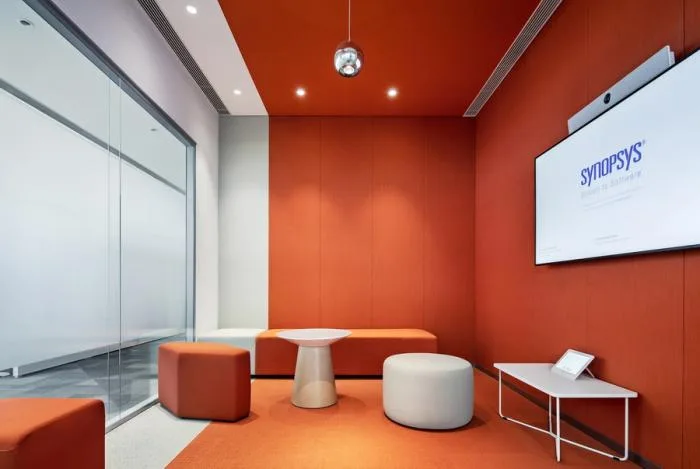
△ Collaborative discussion room
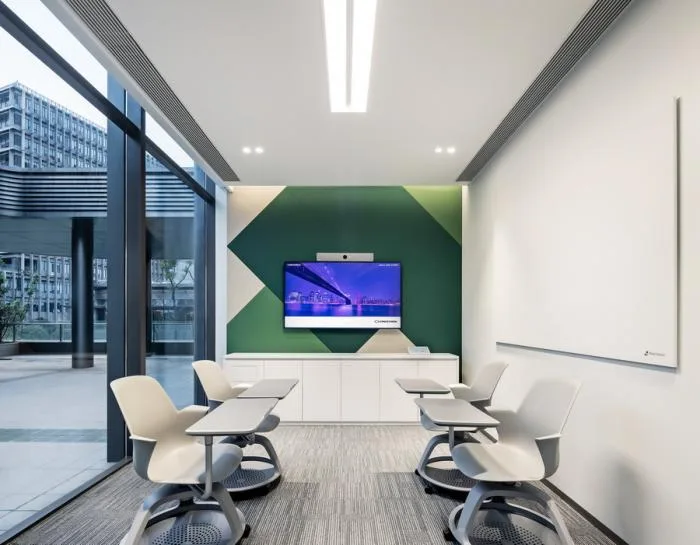
△ Small meeting room
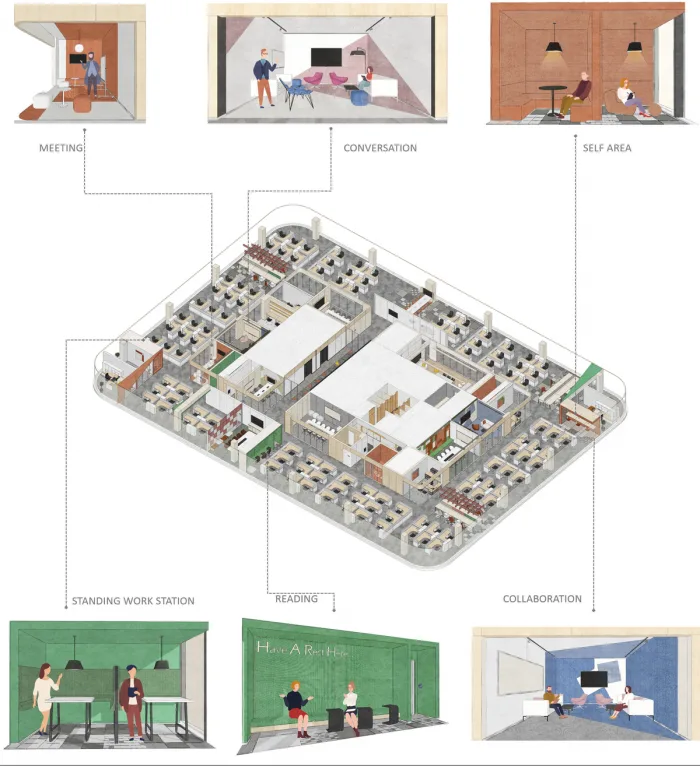
Various collaboration formats coexist within the space.
The fifth floor features a “blue-purple” theme, inspired by the company’s logo colors, with “triangle” as the fundamental design element derived from chip pattern evolution. Triangles offer versatility, transforming into lines and blocks to shape spatial design.
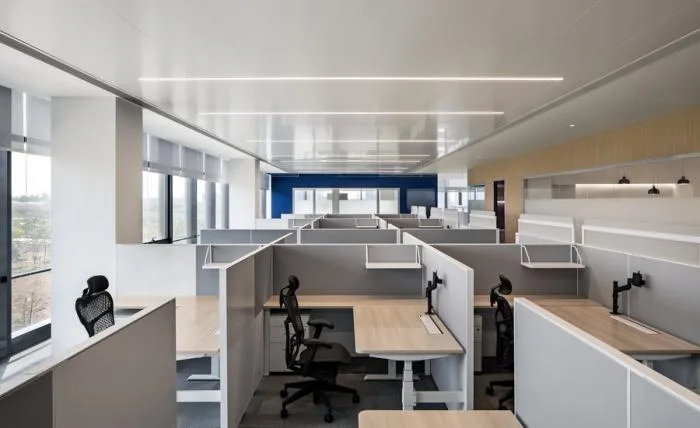
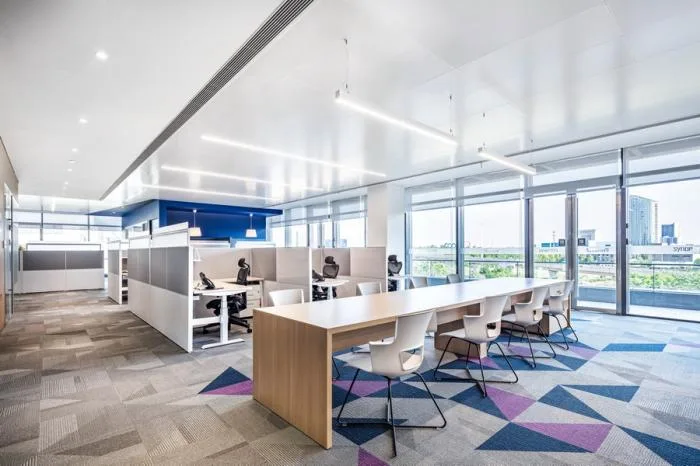
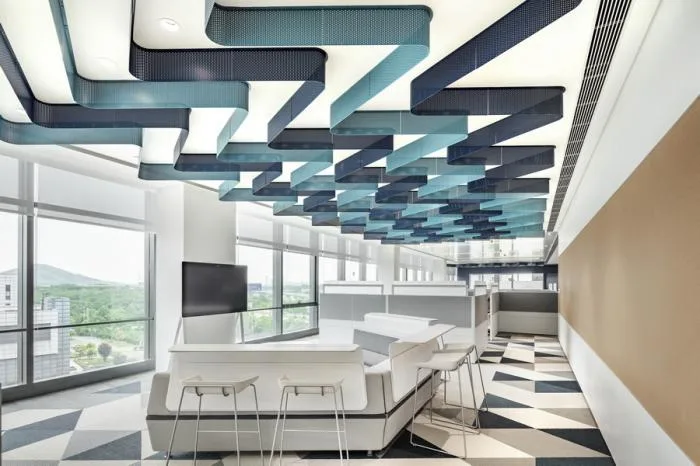
△ Line and triangle elements define spatial forms on the third and fifth floors
Enclosed spaces such as conference rooms and collaboration areas use triangle motifs in their design, creating varied visual experiences while maintaining cohesion across the entire space.
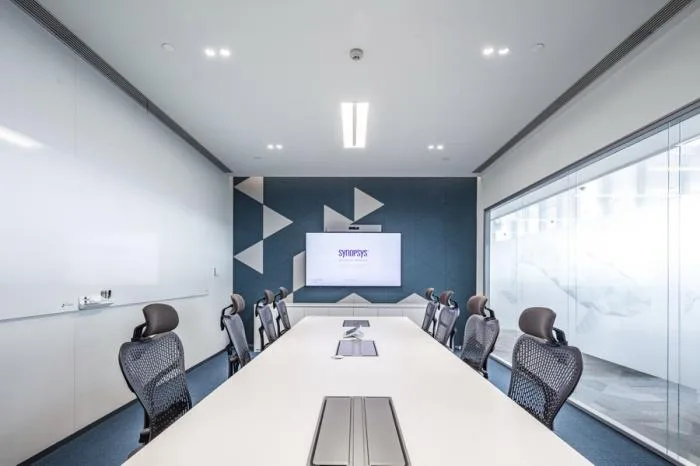
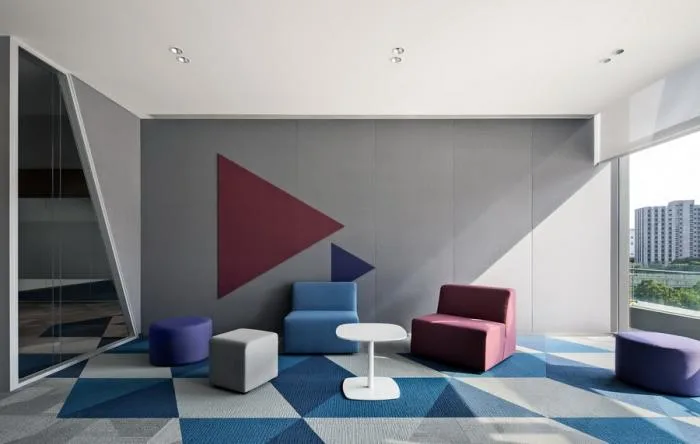
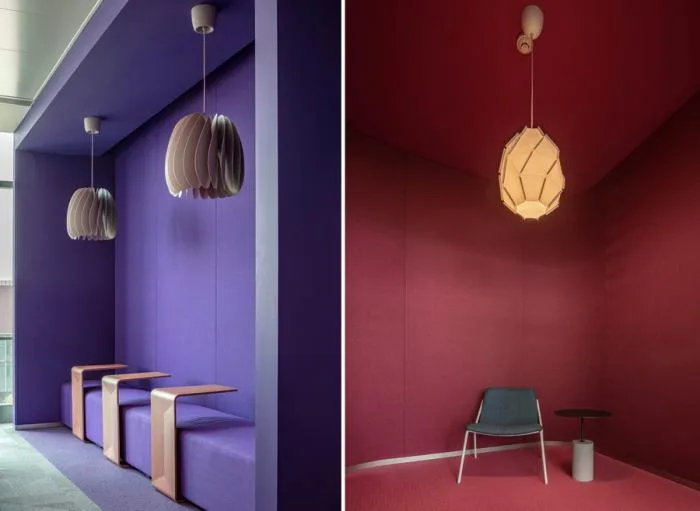
Different triangle configurations distinguish conference rooms.
04 Entertainment Box – Leisure and Fitness Area
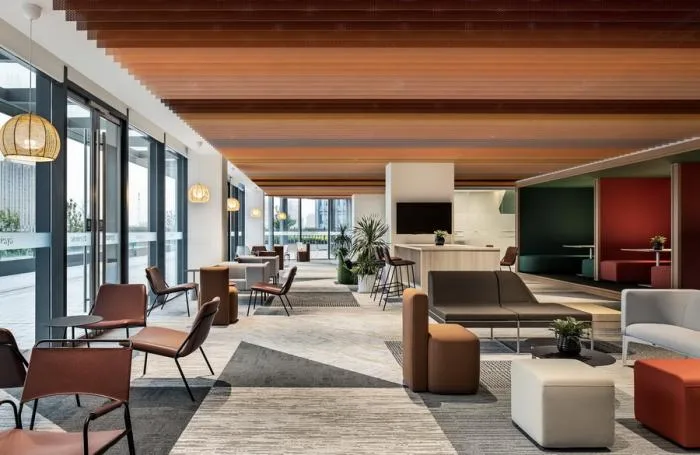
The leisure and fitness area, positioned on the west side of the second floor, forms a distinct zone connected to an outdoor terrace. This separation clearly differentiates work from relaxation, optimizing space use and allowing employees to balance work and downtime effectively.
As the designated space for corporate leisure and entertainment, the design embraces the flexibility and dynamic patterns of chip elements. Bold colors and lively patterns stimulate creativity and energy, fostering a comfortable and free environment for activities.
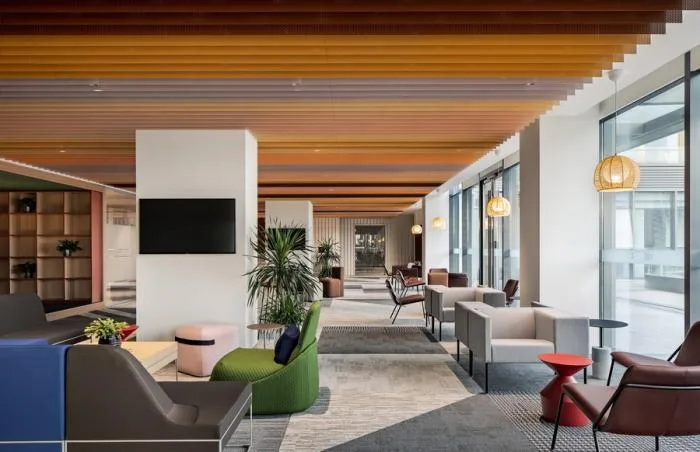
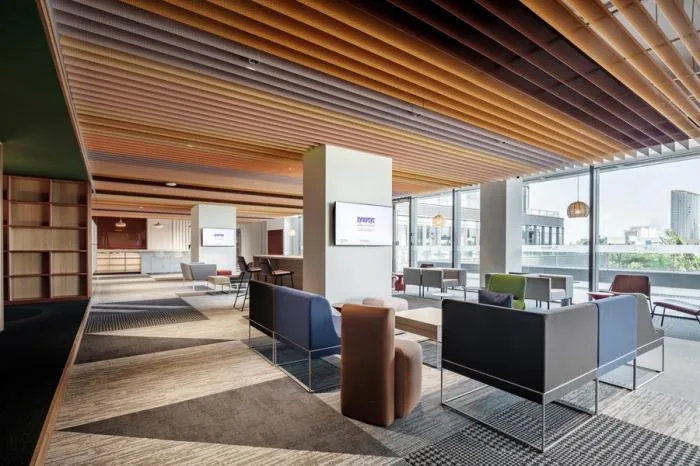
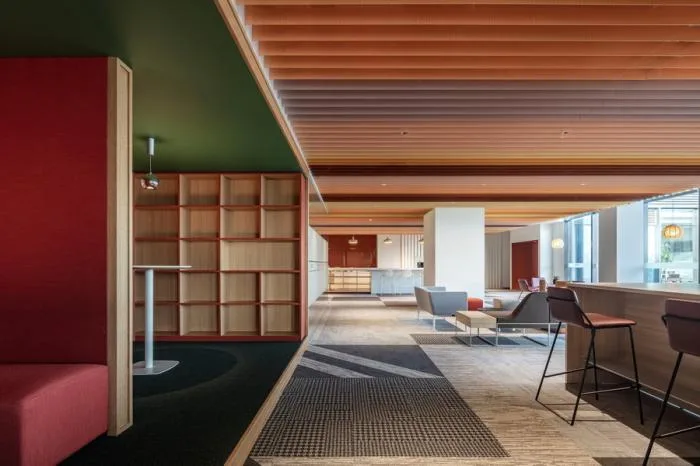
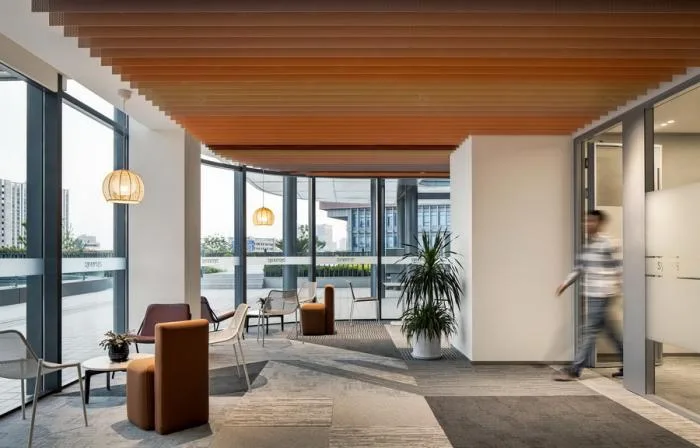
△ Second floor leisure and fitness area connected to the outdoor terrace
This is the building’s largest leisure space, featuring designated areas like a gym, yoga studio, and game room. The design fosters social interaction and collaboration by expanding public spaces and creating a cohesive environment.
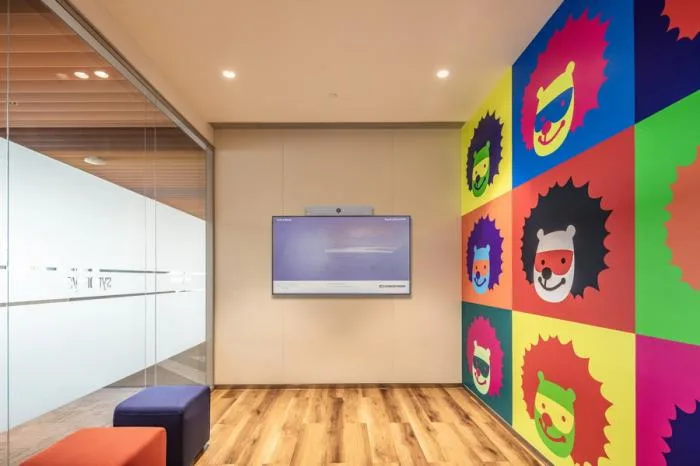
△ Game room
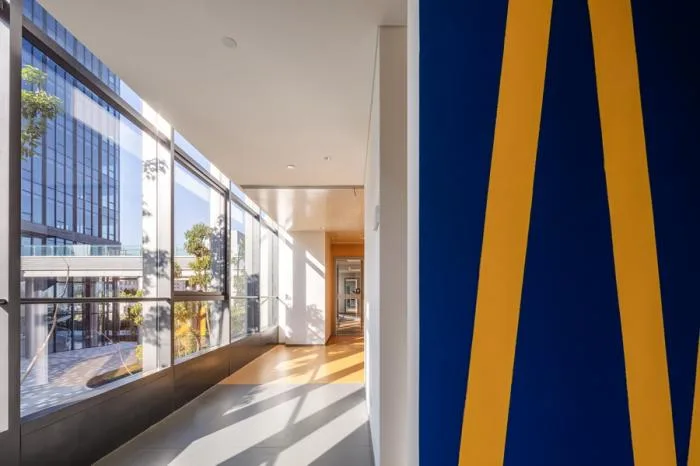
△ Gym corridor exterior
05 Decorative Box – Environmental Graphics
In addition to incorporating colors and chip motifs throughout the space, the design reflects local identity through environmental graphics inspired by Wuhan’s rich heritage.
Drawing from local ancient architecture, traditional cuisine, craftsmanship, natural ecology, and historic relics, these elements are conceptually refined and transformed into unified patterns distributed across walls and glass surfaces. This approach integrates local culture and reinforces the space’s sense of place.
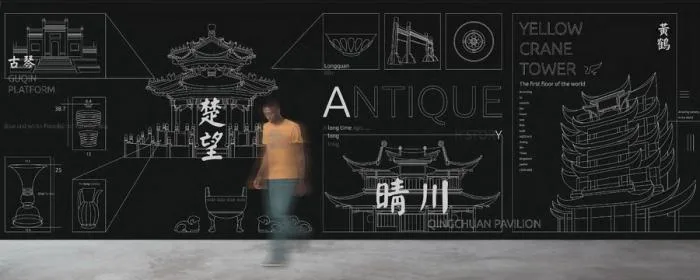
△ Environmental graphics inspired by ancient architecture
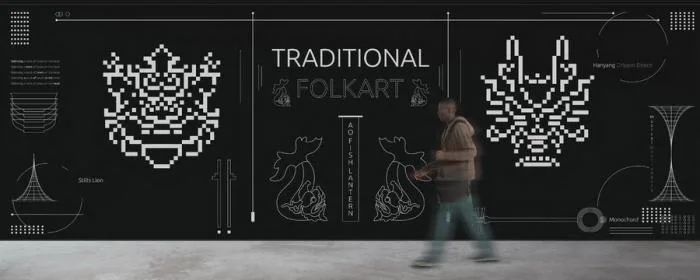
△ Environmental graphics inspired by traditional craftsmanship

△ Environmental graphics inspired by natural ecology
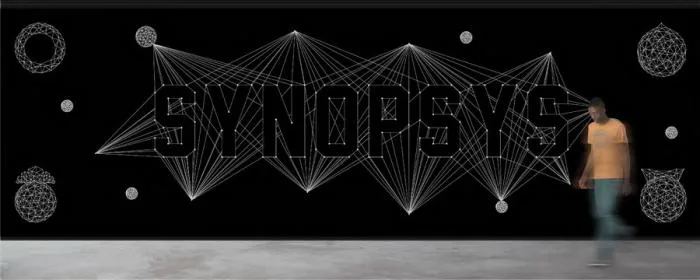
△ Environmental graphics inspired by local cuisine
These carefully crafted patterns, applied to walls and glass films throughout the building, add regional character and create visual diversity across floors.
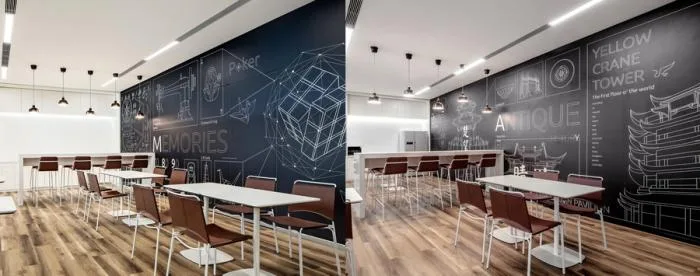
Environmental graphics integrated into the space
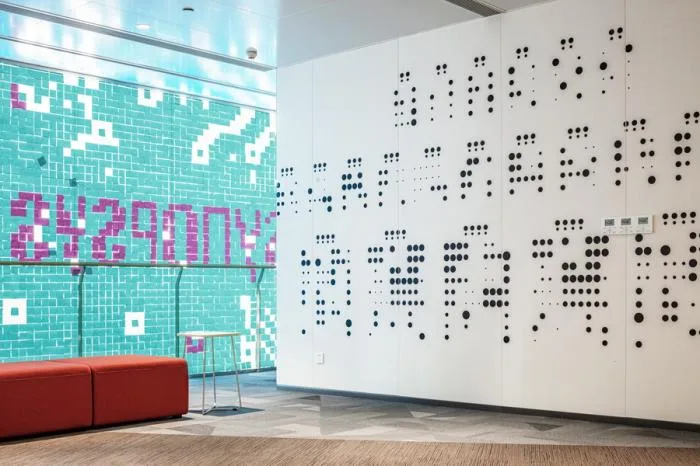
△ Abstract display wall inspired by Hubei’s chime bells, composed of chip elements
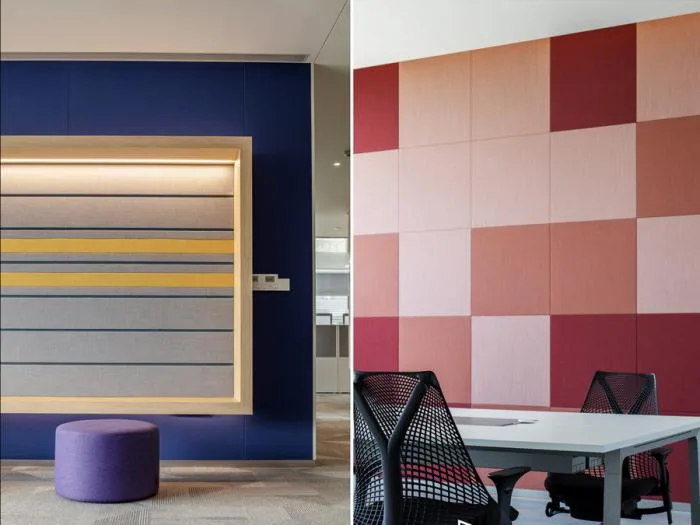
△ Detail of the display wall
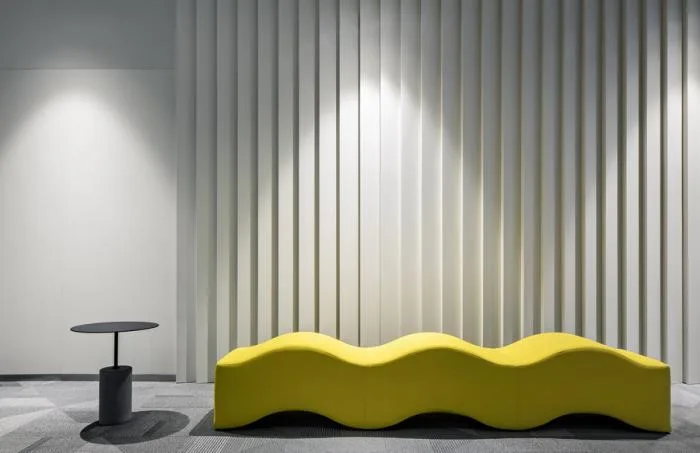
△ Details of floors, ceilings, and walls
The essence of design is to enhance the user experience. The COVID-19 pandemic has reshaped office habits and deepened the understanding of “people-oriented” design. Anticipating future needs, this project pursued international LEED Gold certification, reinforcing green building standards to ensure a healthy and comfortable office environment.

The ideal office space balances flexible work methods with spatial constraints. Technology companies need not rely on cold monochrome palettes; instead, design should optimize spatial attributes and reconcile challenges to create a fitting environment.
Project Information
Project Name: New Thinking Technology Wuhan Headquarters Office
Project Type: Office Design
Location: Wuhan, Hubei Province
Area: 14,000 square meters
Duration: March 2018 – December 2019
Design Firm: CCDI International
Project Lead: Li Zhiyu
Team Members: Pu Yuzhen, Zeng Huifan, Wang Huan, Sun Yang, Ma Yiming, Zhao Xiaoyu, Sun Ruixue, Wan Xia
Detailing Team: Li Haitao, Zhang Ying, Yang Yanling, Di Tingting
Detailing Design: DGN
Client: Xinsi Technology
Property Management: Cushman & Wakefield
Construction: Zhongyi Architecture Decoration
Contact Email: li.zhiyu@xinsitech.com












Must log in before commenting!
Sign Up