
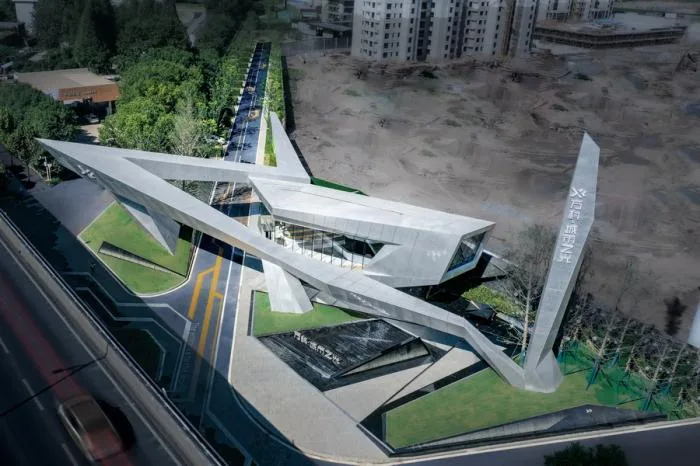
Land Use Interpretation
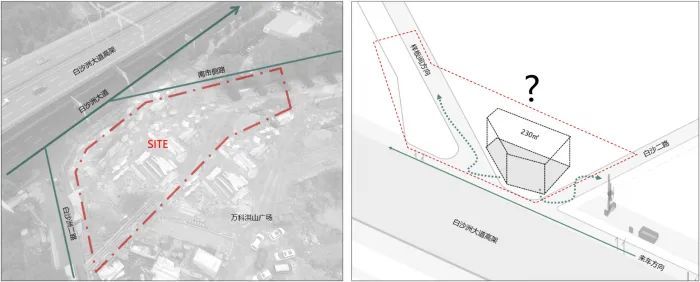
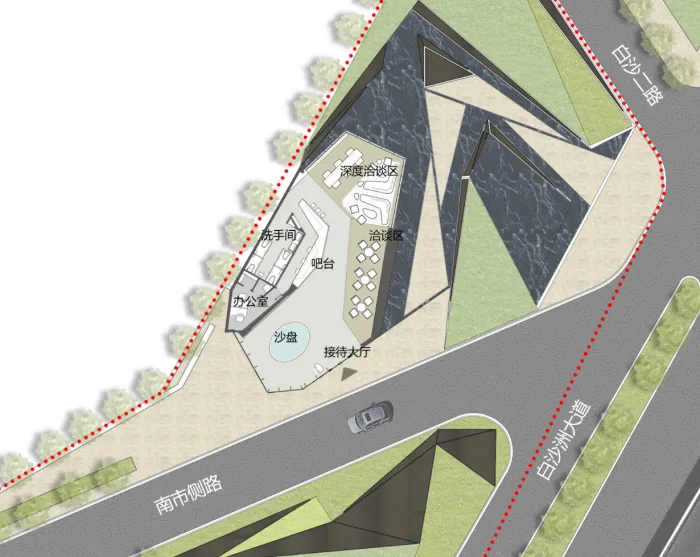
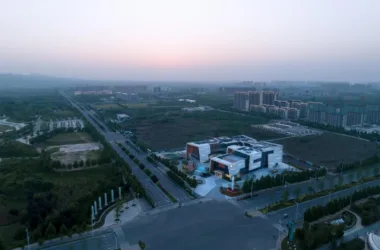
The Vanke City Light Exhibition Center occupies 235 square meters and is situated adjacent to the Third Ring Road, at the southwest corner of Hongshan District, Wuhan City. It lies at the intersection of Baishazhou Avenue and two side streets. The main facade faces the city’s primary road and is flanked by the elevated Baishazhou Avenue, while the rear borders the under-construction Hongshan Commercial Plaza and residential buildings.
Located approximately 1.5 kilometers from an existing regional exhibition center, the client required a temporary reception center of about 200 square meters, designed within a controlled budget.
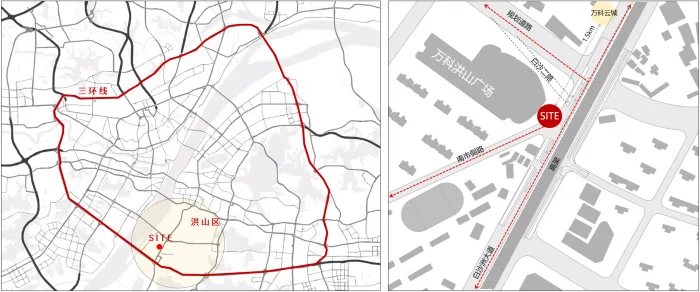
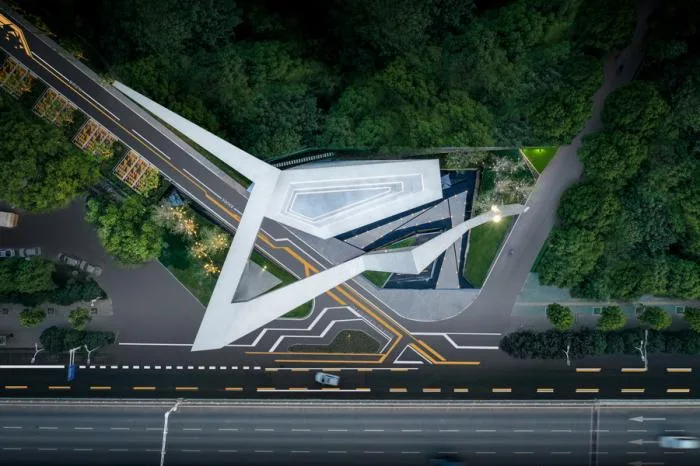
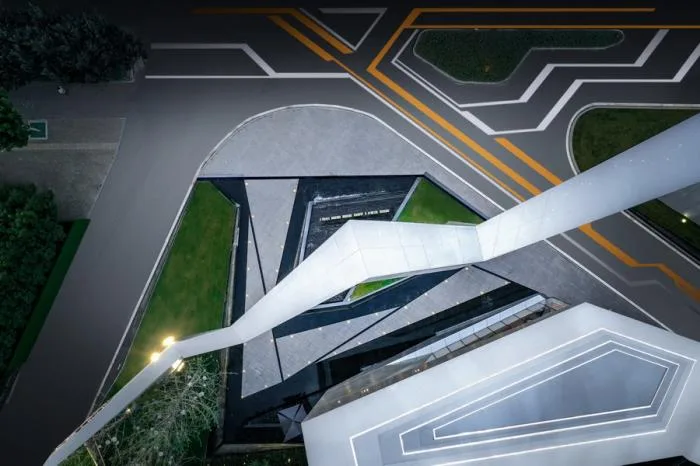
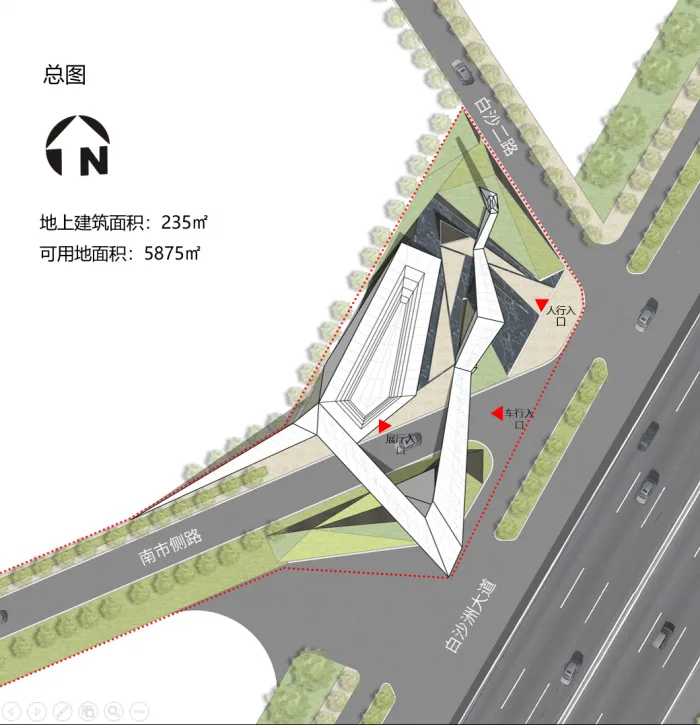
The site features an irregular, complex, and narrow shape with limited capacity. The urban display area is interrupted by two side roads, and an elevated road runs overhead.
Given these challenging land conditions, the first two questions we addressed were:
1. How can we effectively organize fragmented plots to create a coherent sense of place?
2. How do we reconcile the small building volume with the client’s desire for iconic architectural features?
City Lights
“Clever in borrowing, essence lies in the body.”
— Xingzao Lun · Yuanye
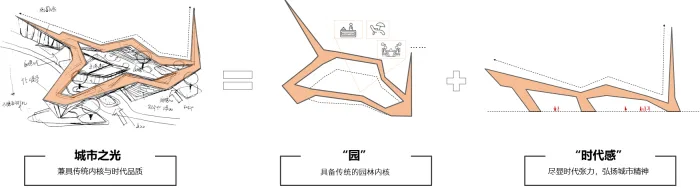
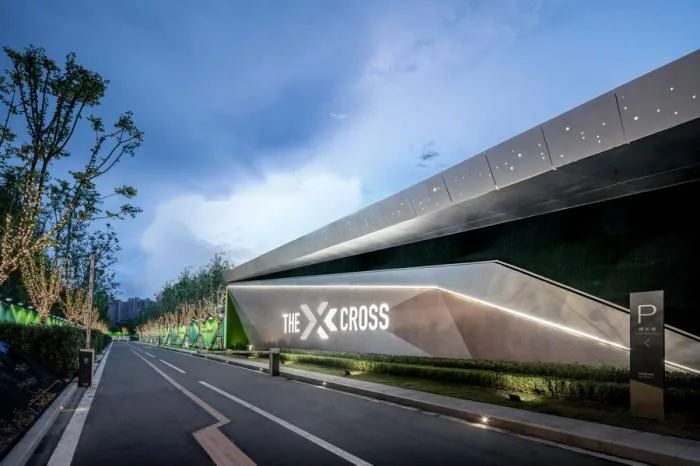
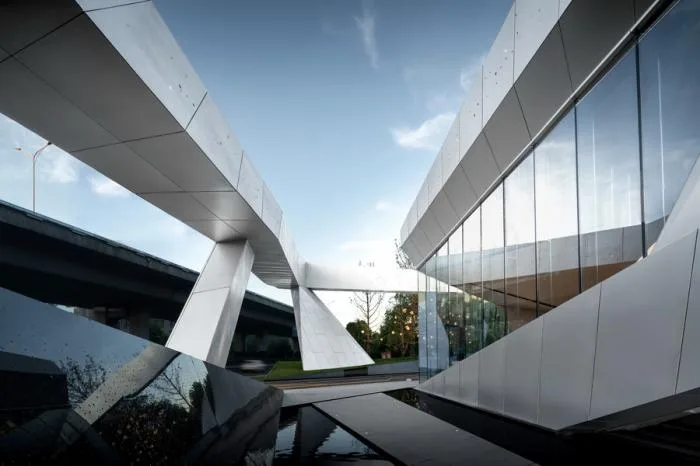
Inspired by traditional Chinese gardens, which use linear elements to connect dispersed spaces into harmonious wholes, we introduced a linear corridor element in this design. This corridor organizes water features, greenery, and architecture, establishing a strong sense of place. Unlike a closed corridor, this open linear element defines space without obstructing sightlines, enriching spatial and visual depth.
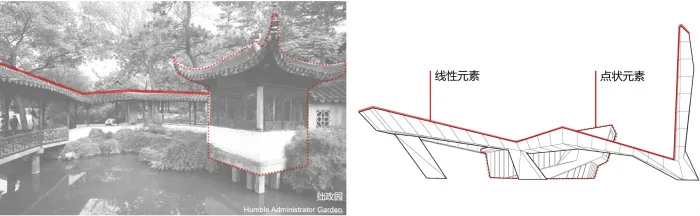
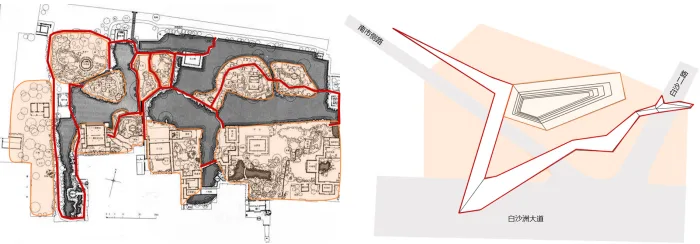
Traditional gardens link pavilion-like focal points through linear corridors, crafting environments rich in identity. Following this inspiration, we utilized landscape structures to define the site and unify the fragmented spaces.
“Like the arrow spine, like Bird’s Nest.”
— The Book of Songs, Xiaoya – “Sikan”
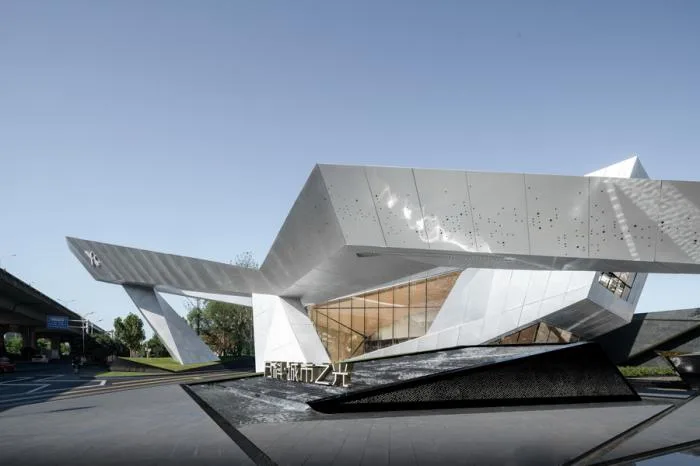
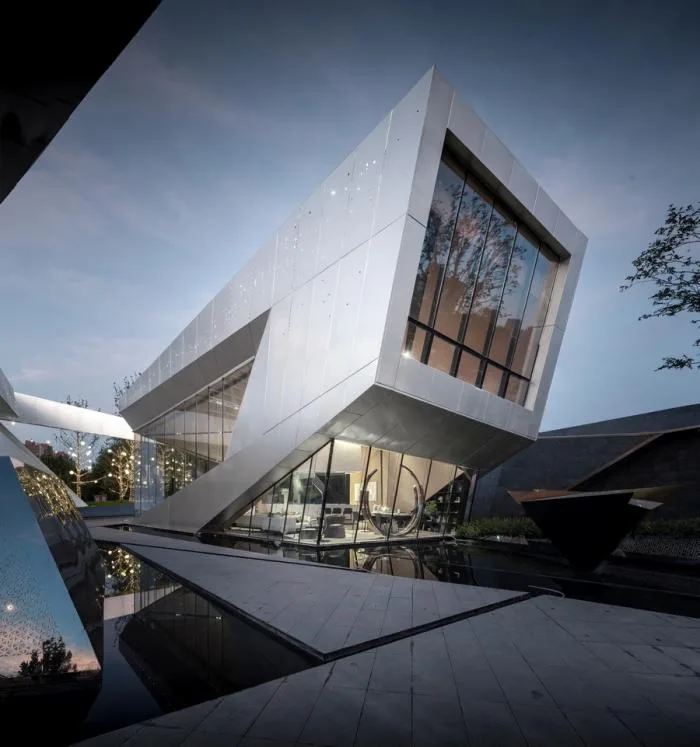
Rather than adopting a traditional box-like form to address the complex site, our design reshapes the environment by incorporating a spatial core inspired by traditional gardens, paired with a sculptural, contemporary facade.
Conflict Resolution
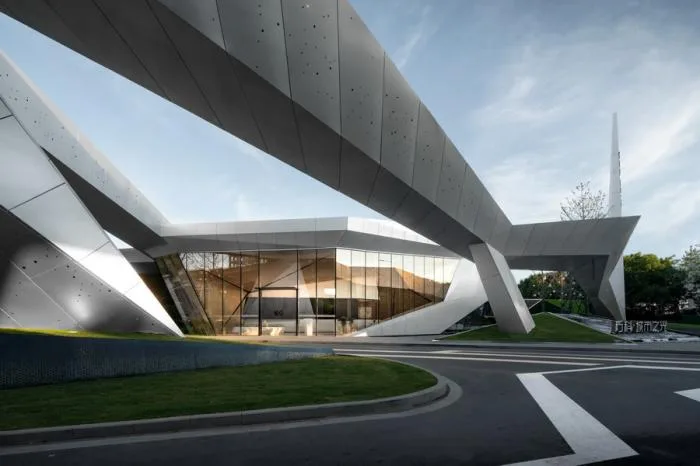
Another challenge was balancing the extremely limited functional space of just over 200 square meters with the client’s desire for an iconic building. Our solution integrates architecture and landscape sculpture. Landscape sculptural corridors fill fragmented boundaries, defining the site and directing pedestrian flow through their enclosing forms.
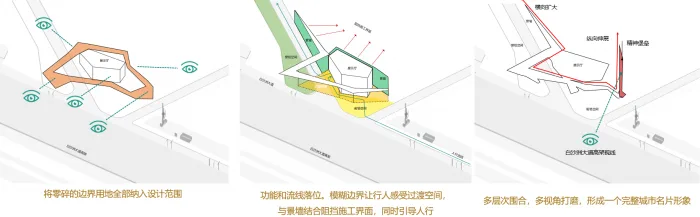
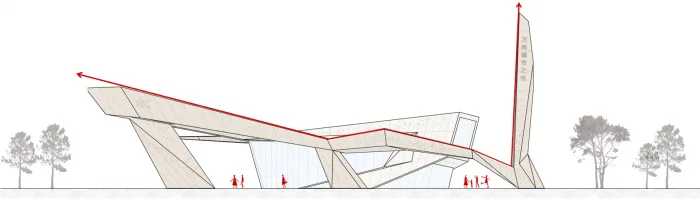
 The client aimed to create a spiritual fortress with a prominent visual presence at the exhibition center’s entrance, visible from distant and elevated viewpoints. Consequently, we connected architecture and sculpture via linear corridors, resulting in vertically expressive spiritual elements and horizontally cohesive architectural forms. The entire design integrates seamlessly.
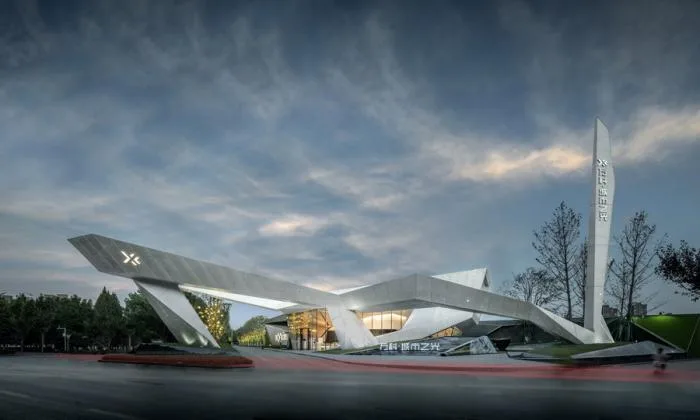
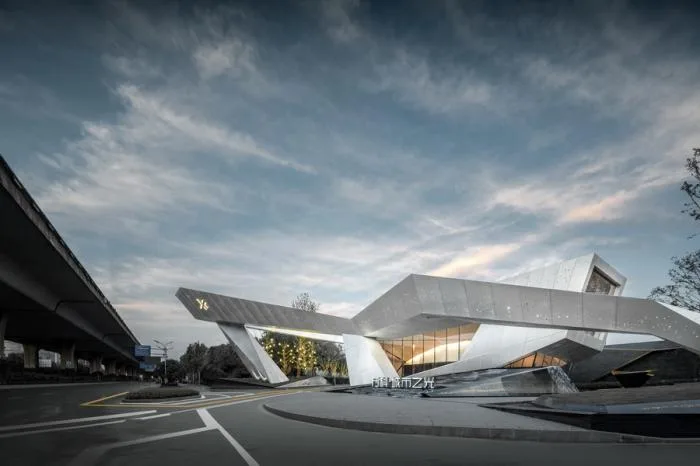
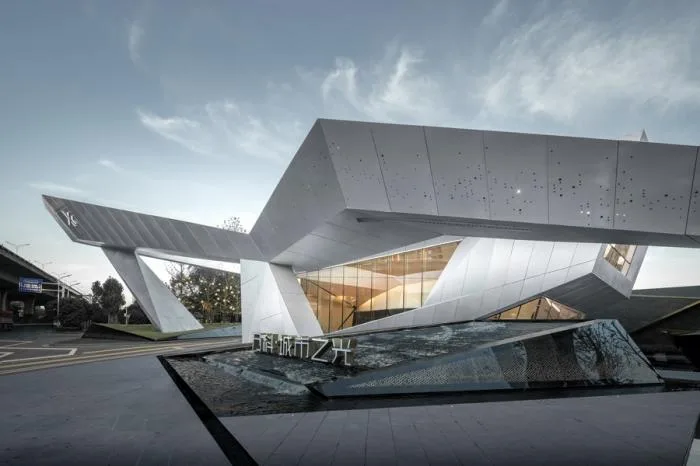
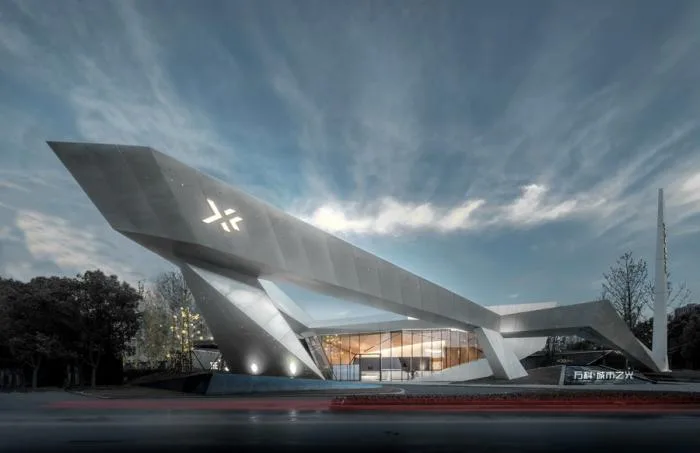
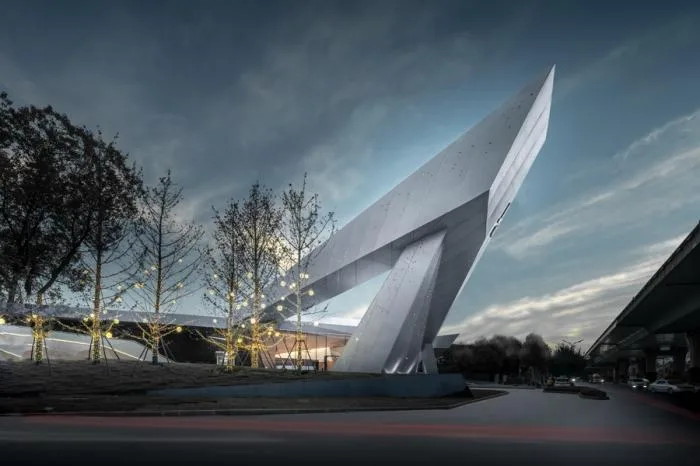
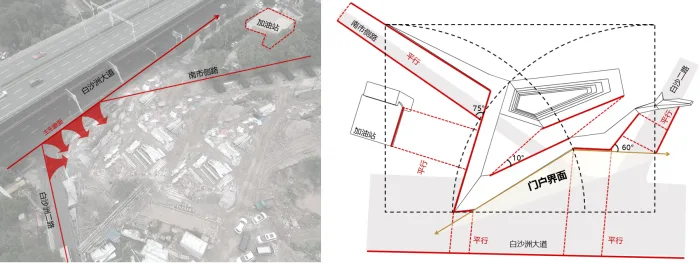
Though the building’s form may appear intuitive, every line in the design follows a logical order—alignment, parallelism, verticality—all based on proportional relationships. This precision enhances aesthetics and ensures construction accuracy, making the building’s form clearly defined and achievable.
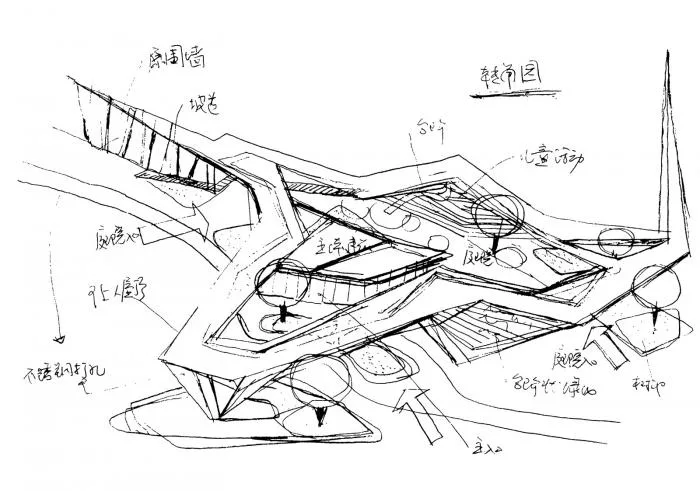
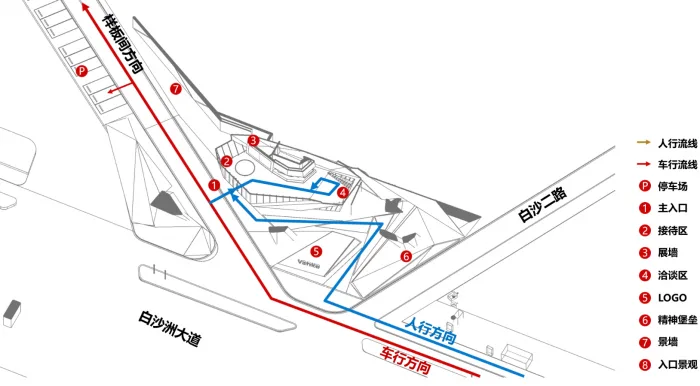
The overall flow diagram reveals the site’s compactness and limited frontal space. To enhance the pedestrian experience, we adopted garden design principles, extending the circulation path through a sequence of entrances, corridors, and turns, thereby enriching spatial perception.
Carefully Crafted Spatial Showcase
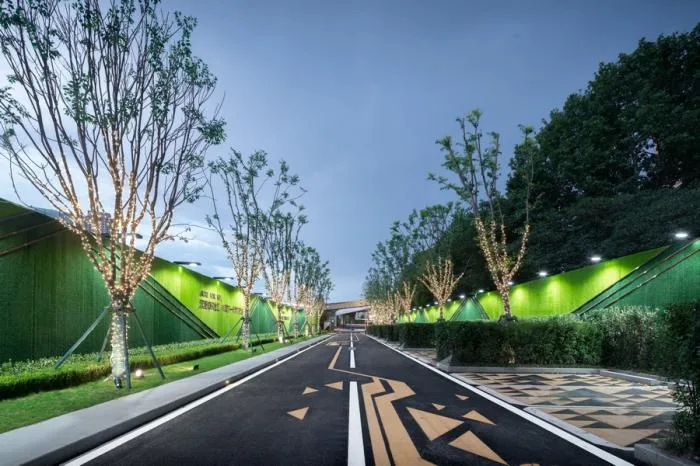
The entrance corridor functions as a community gateway, blending sculpture and architecture within a linear corridor space. Different interfaces—where the sidewalk passes, the model display area exits, and the main entrance of the exhibition space—are orchestrated to create sculptural portals. These portals activate negative spaces and transform them into vibrant urban environments.
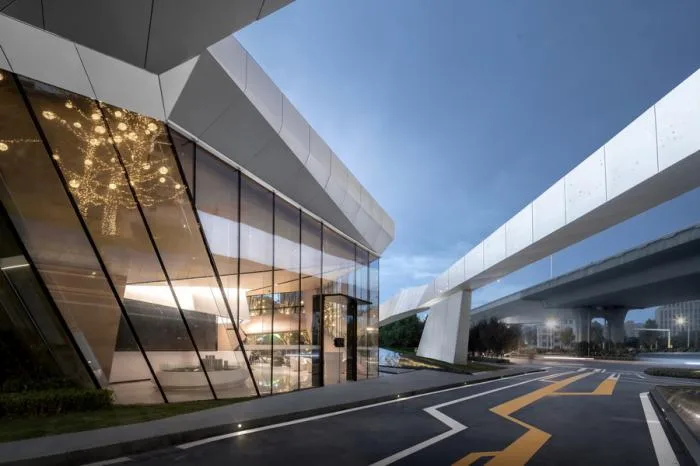
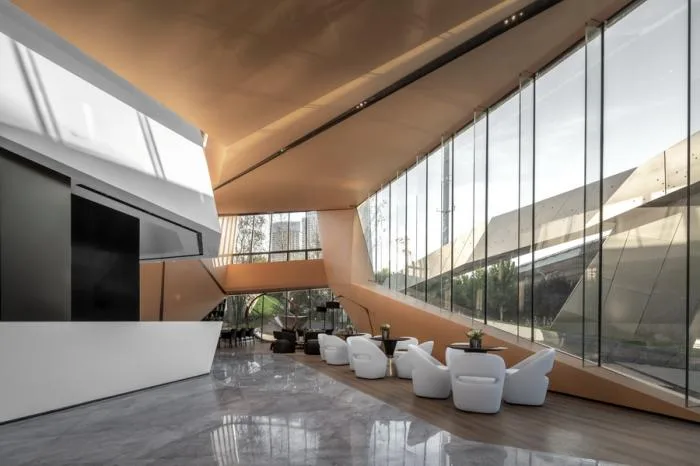
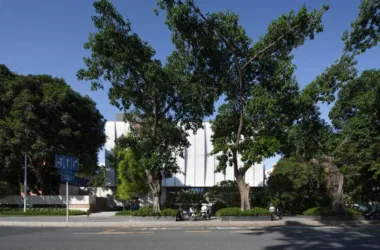
The interior design reflects and extends the building’s sculptural facade through a folded ceiling design. A warm champagne color palette is employed inside, offering a welcoming contrast to the cooler aluminum panels used on the exterior.
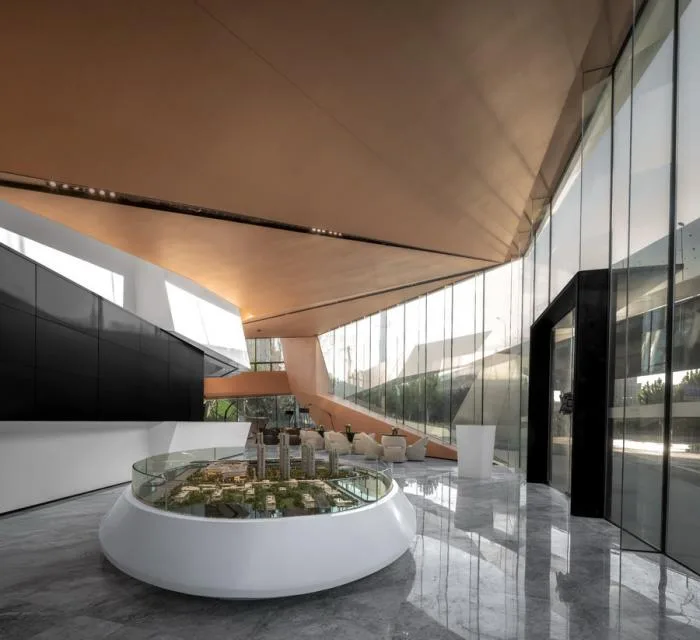
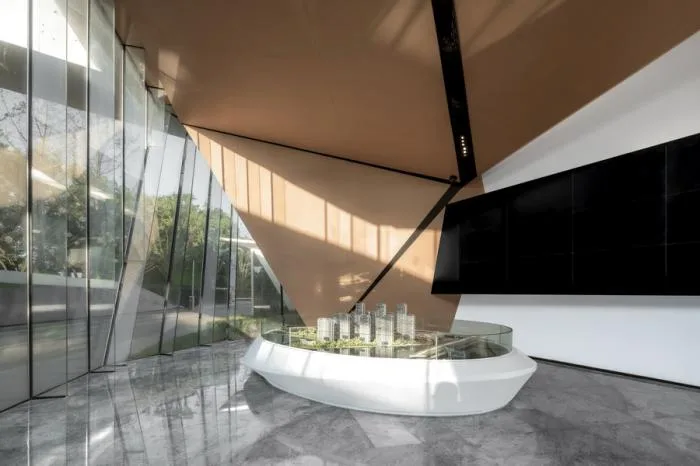
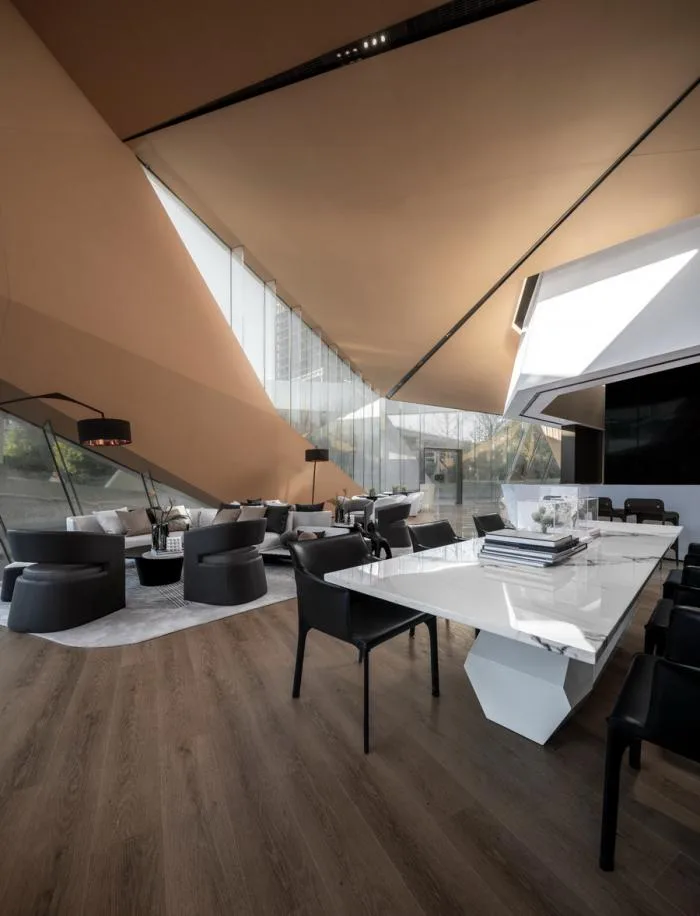
Construction Process
During the design phase, we aimed to achieve two key facade effects: avoiding visible black voids under daylight that could undermine the building’s image, and creating a starry sky effect at night to reflect the theme of urban light. By testing various aperture sizes through parametric design and selecting samples on site, we finalized aperture sizes of 50mm and 20mm.
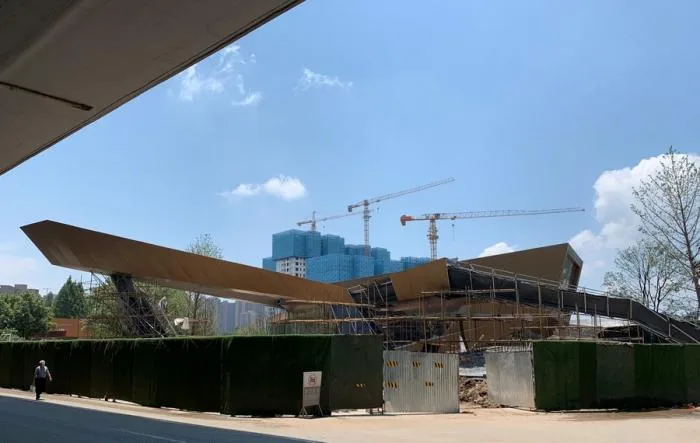
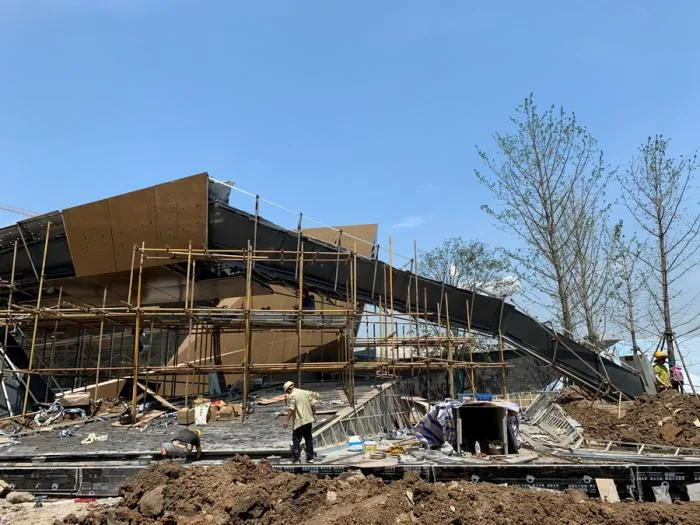
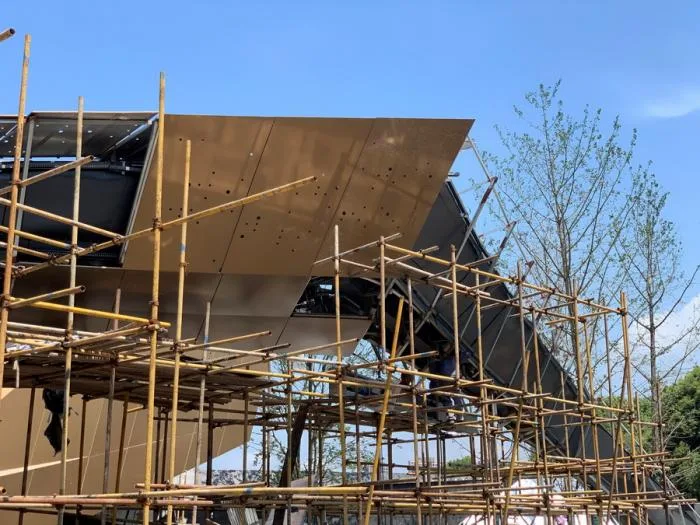
To achieve the lighting effect without compromising the facade’s form, we integrated wall-wash lighting with lined aluminum panels, creating a linear structure dotted with starry lights at night.
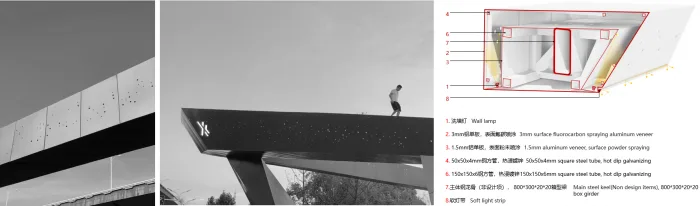
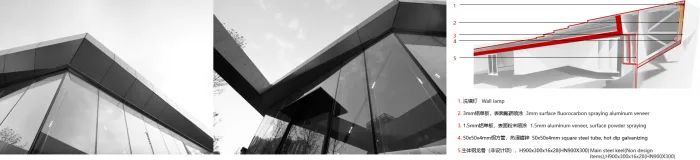
Considering roof design and drainage needs, the fifth facade was crafted with a stepped profile. This not only complements the exhibition hall’s elevation toward the nearby overpass but also effectively manages rainwater.
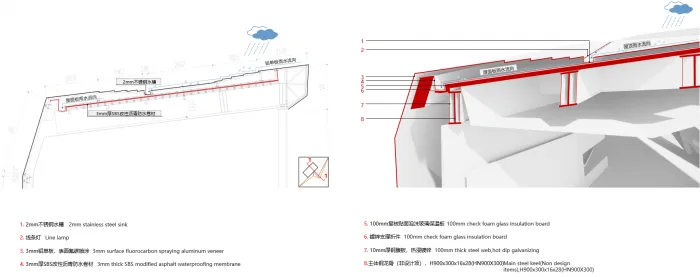
A successful project demands not only excellent design but also effective collaboration among disciplines and active cooperation during construction. By continuously comparing expected results with actual progress and timely adjusting details, we achieved a 90% facade restoration accuracy upon completion of the City Light Exhibition Center.
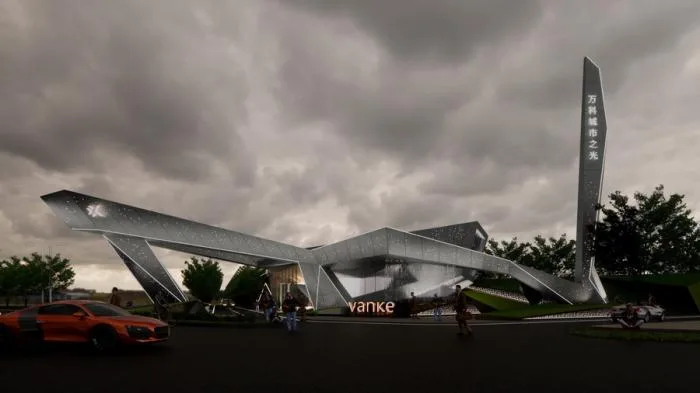
“Architecture is the triumph of human imagination over materials and technology.”
— Wright
Project Information
Project Name: Wuhan Vanke City Light Exhibition Center
English Name: Wuhan Vanke City Light Exhibition Center
Owner: Wuhan Vanke
Building Area: 238 square meters
Location: Intersection of Baishazhou Avenue and Baisha Second Road, Wuchang District, Wuhan City, Hubei Province
Design Date: November 2019
Construction Date: March 2020
Architectural Design: Shanghai Tianhua Architectural Design Co., Ltd
Design Leaders: Xiao Jungui, Jiang Fan
Designers: Tian Jingjing, Fan Lin, He Shengwen, Chen Tingting
Construction Drawings: Shanghai Tianhua Architectural Design Co., Ltd
Architecture Team: Yao Yucheng, Zhang Fan
Structure Team: Feng Xingjia, Chen Fei, Li Xianming
Electromechanical Team: Lu Xue, Zhang Zhiqi
HVAC: Yao Qizhi, Gong Jin
Water Supply and Drainage: Chen Juntao, Liang Xiaofen
Curtain Wall: Foster Engineering Consulting Co., Ltd
Lighting: Foster Engineering Consulting Co., Ltd
Interior Design: Shenzhen Mingde Interior Decoration Design Co., Ltd
Landscape Design: Aoya Landscape
Construction Unit: Wuhan Lingxiang Building Decoration Engineering Co., Ltd
Architectural Photography: Architectural Photography Between AST












Must log in before commenting!
Sign Up