
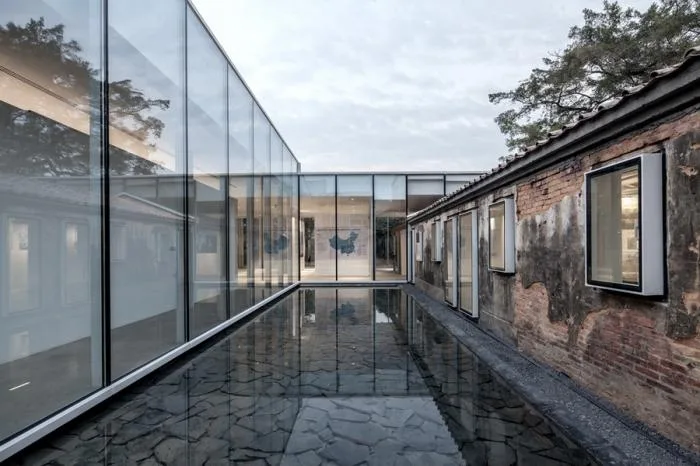
The Shenzhen Guangming Exhibition Hall is situated in Jingkou Community, Guangming New District, Shenzhen, covering 2,250 square meters. To the north, the site borders a lush lychee forest; a village road runs along the south side. The west main entrance faces the Guangdong Provincial Greenway, while a residential building lies to the east. Before renovation, the site consisted of an old brick and concrete house. The project was designed to meet the requirements of the Shenzhen Hong Kong City/Architecture Biennale Guangming Branch Exhibition and will continue to serve as the enterprise exhibition hall for the Overseas Chinese Town Guangming Town project in the future.
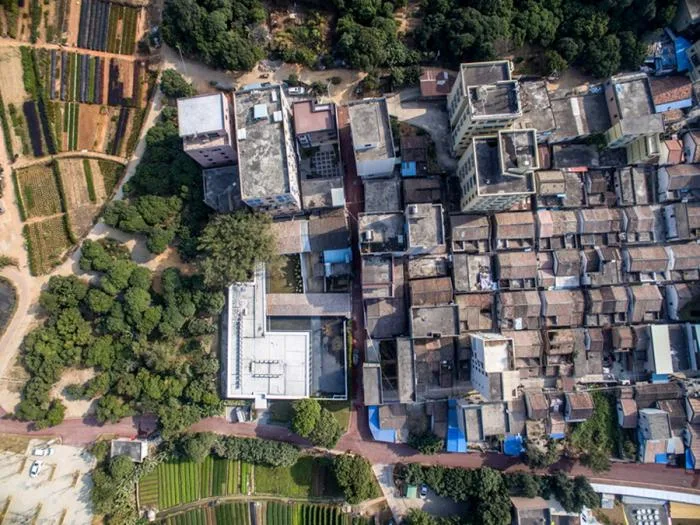
△ Aerial View
Cube Design aims to preserve the original old buildings across architecture, landscape, and interior design. The goal is to introduce new functions, life, and appearance while maintaining the connection between old and new.
Planning | Nestled Within Residential Buildings
The overall plan involves demolishing a row of old houses in the center, rebuilding the existing gas station, and preserving two old houses on the east and west sides, totaling approximately 392 square meters. On this foundation, new construction is added. The main new building is located in the northwest corner of the site, connected to the two old houses by a corridor, forming a unified whole.
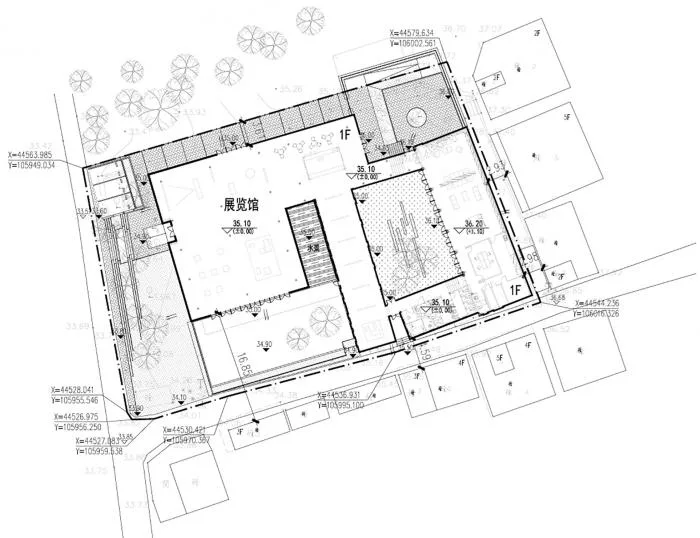
△ First Floor Plan
Architecture | A Dialogue Between Old and New
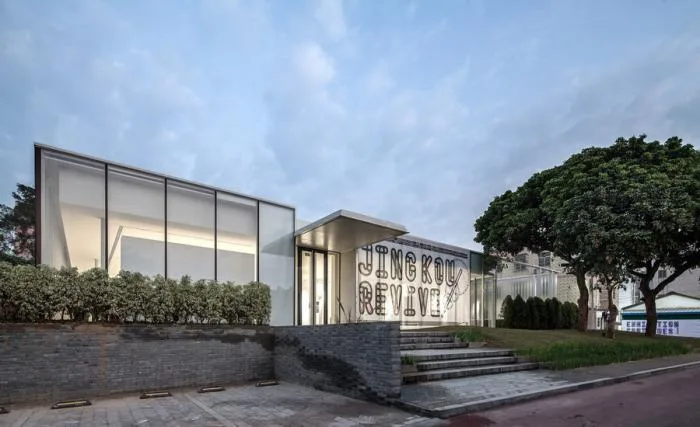
△ Exhibition Hall Entrance
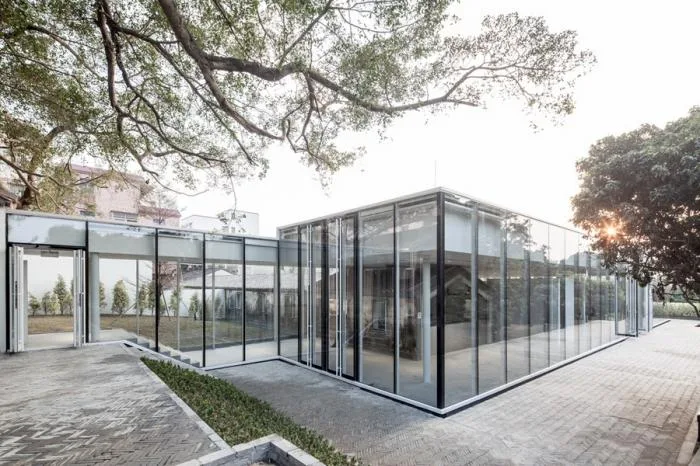
The transparent glass walls maximize views of the surrounding forest landscape.
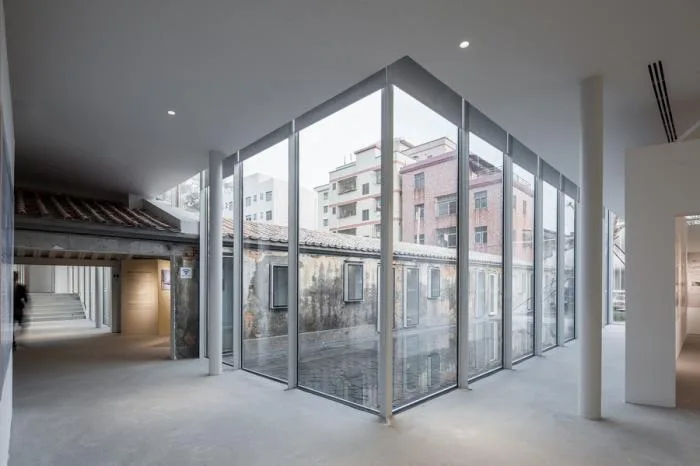
The new building embraces a modern, minimalist style that contrasts strongly with the surrounding historic residential buildings. This contrast creates a harmonious coexistence of old and new in terms of function, spatial experience, and visual aesthetics. Lightweight metal and transparent glass define the boundary between indoor and outdoor spaces. Steel structures contribute to a sense of lightness and transparency. The glass walls not only capture the forest views but also reflect the neighboring residential buildings, blurring the lines between inside and outside. This design reduces the building’s visual presence, fostering a subtle and natural relationship with its environment.
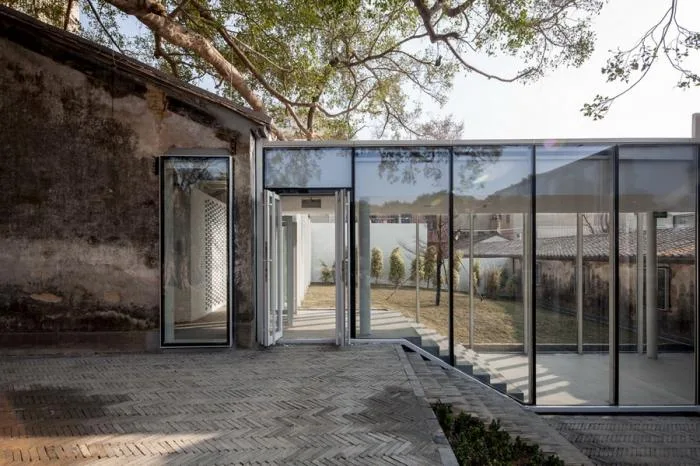
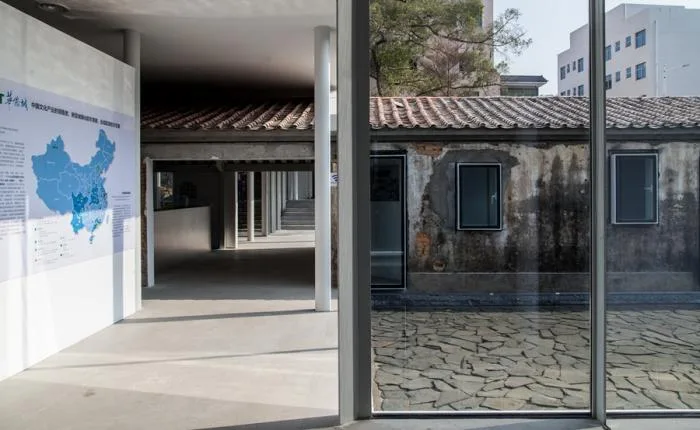
After removing the middle partition wall between the two old buildings, the remaining peripheral walls were structurally reinforced and treated with protective coatings to preserve their mottled texture. The original concrete roof beams were replaced with a steel frame, and recycled old tiles were reused to blend new and old architectural elements. This approach revitalizes the original structure, giving it new language, space, function, and vitality, achieving a seamless integration between old and new buildings and their environment.
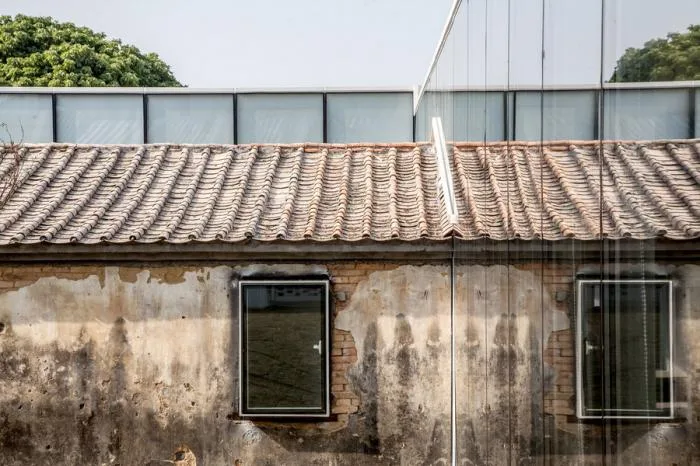
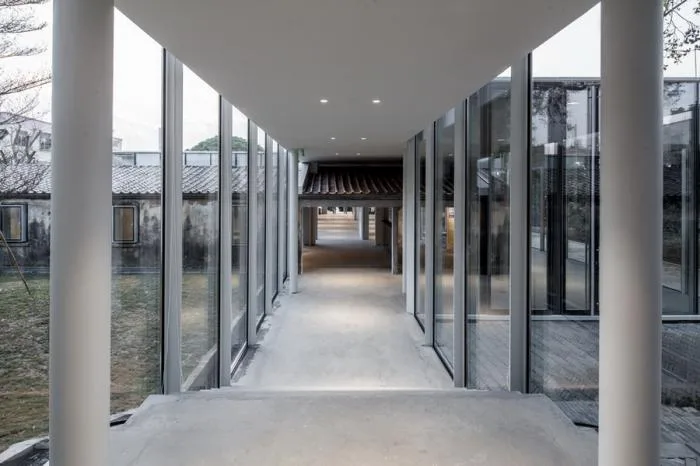
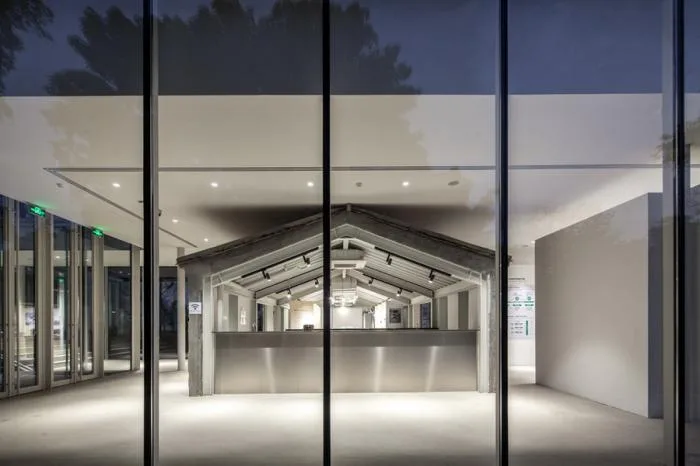
The original door and window openings were preserved to minimize damage to the walls. New doors and windows feature high-transparency, frameless ultra-white frames made of lightweight, modern glass and metal. This design creates an engaging dialogue between old and new, history and modernity, complementing the mottled textures of the walls.
Landscape | Old Trees, Old Houses, New Scenery
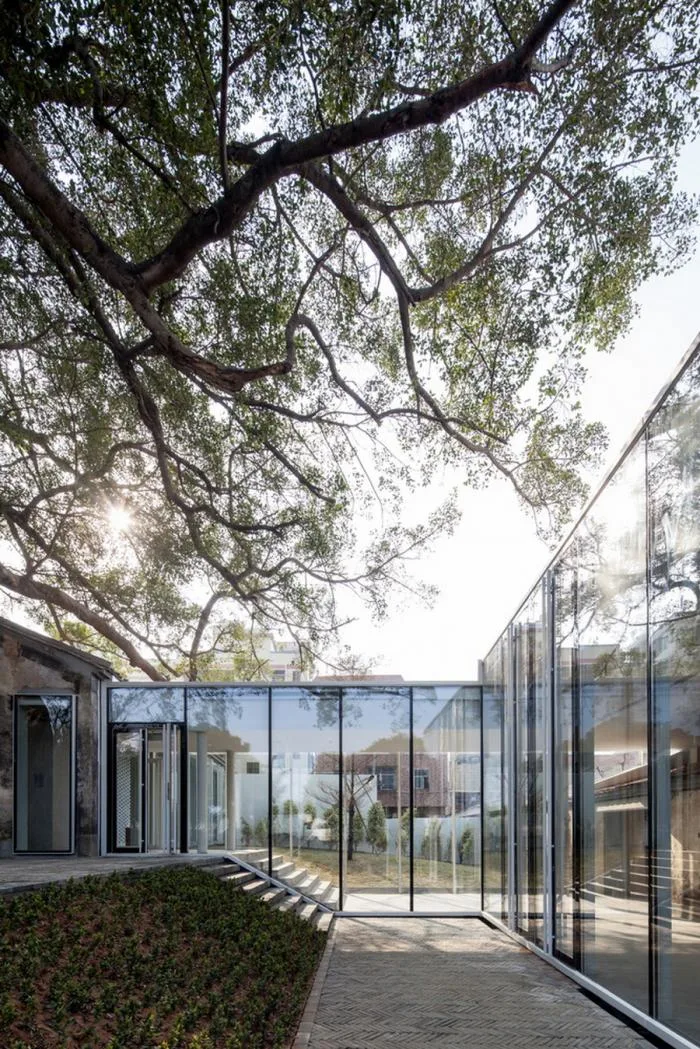
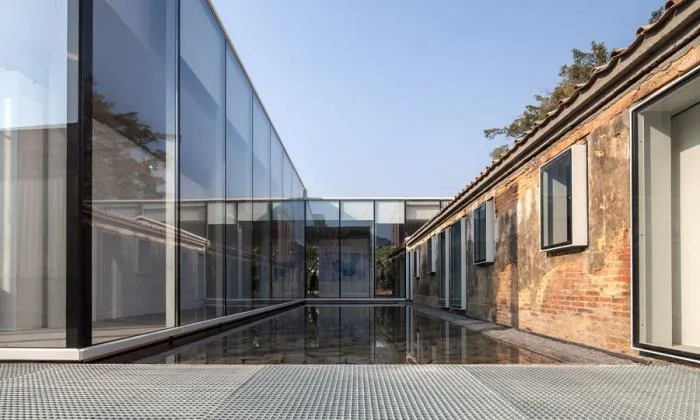
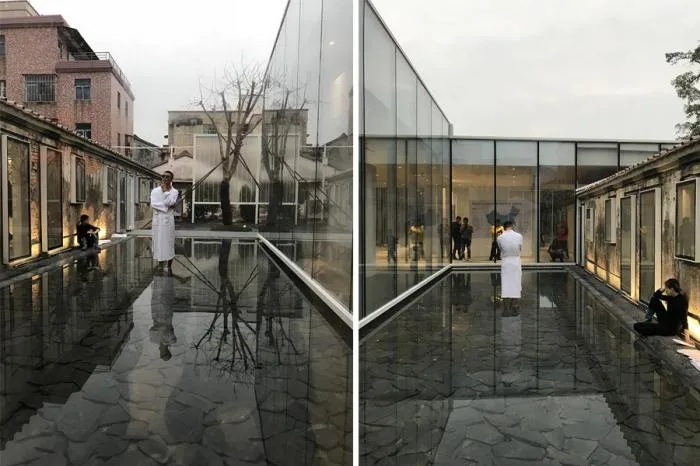
Performance art animates the water features.
In the landscape design, a large banyan tree at the back of the site was carefully preserved as a key feature. The courtyard’s water scenery provides a transitional space between the old and new buildings, becoming the visual centerpiece that draws visitors in. On the opening day, this area also served as a stage for artistic performances.
Space | A Playful Sequence
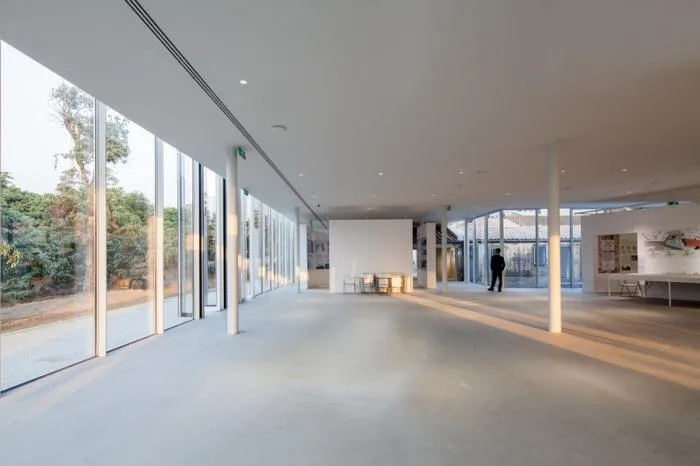
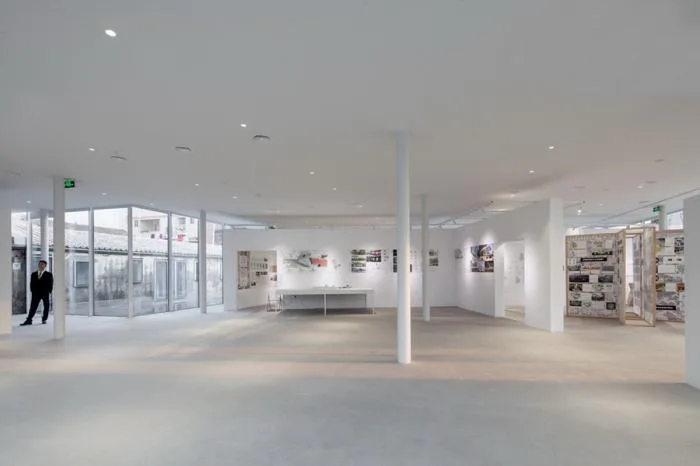
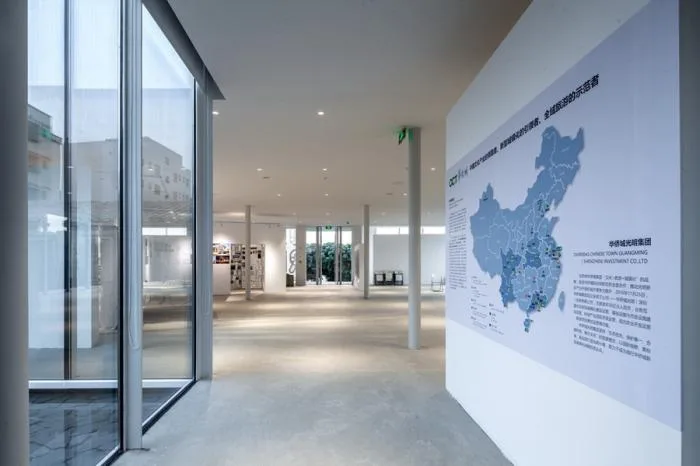
The architectural layout is intentionally flexible and fluid, avoiding rigid definitions. The interior features minimal decoration, with simple wall finishes that allow the exhibition pieces to take center stage.
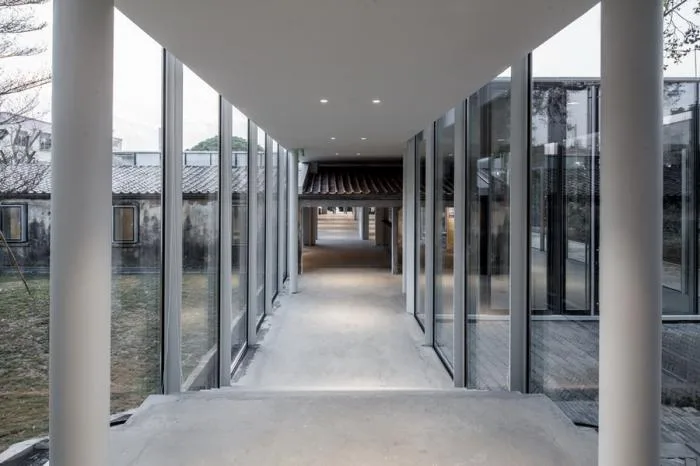
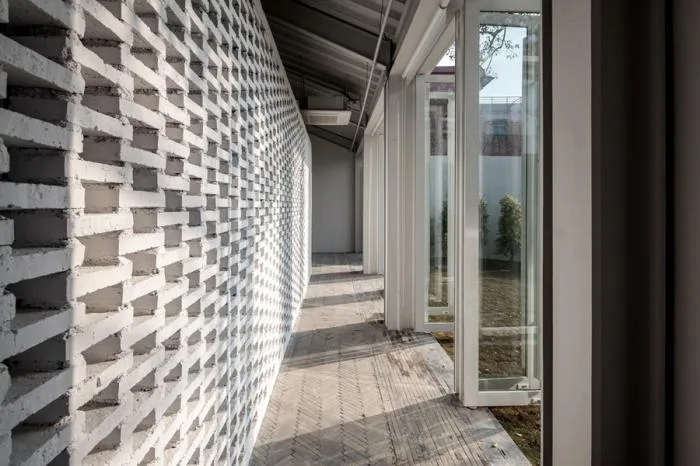
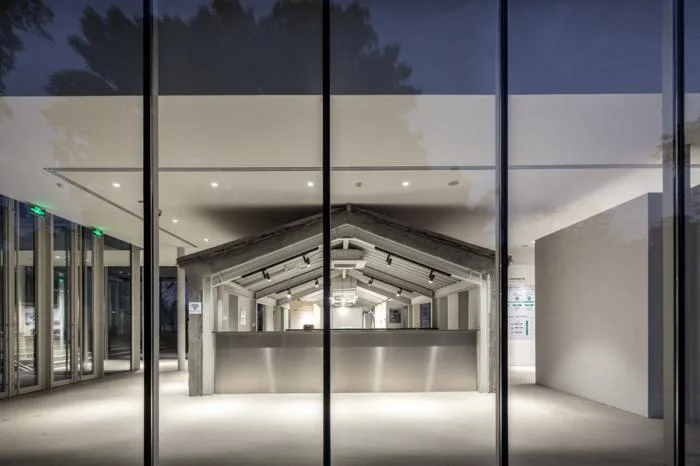
Despite the limited building footprint, the architect employs framing, open spaces, and turns to create a rich spatial sequence that feels winding and secluded. This technique, common in Eastern architecture, arranges spaces to foster a strong sense of unity and rhythm.
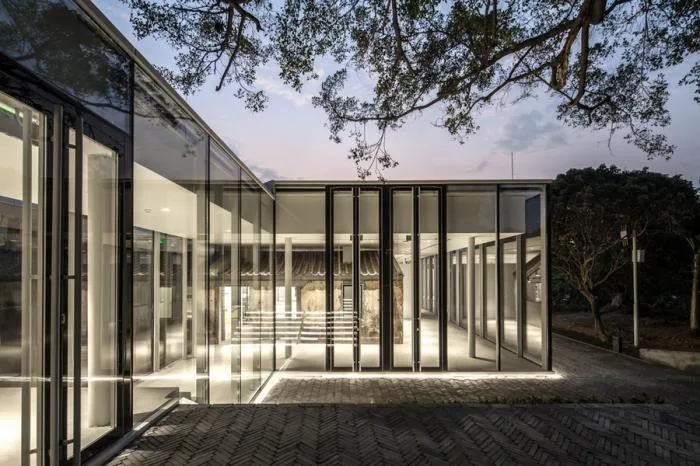
Starting from the daily lives of local residents, surrounding streets, courtyards, and landscapes, the design seeks an ideal balance between architecture and environment. It optimizes reconstruction without disrupting residents’ lives and upgrades construction without damaging the site’s original ecological character. This approach perfectly aligns with the theme “City Growth in Difference” at this year’s Shenzhen Hong Kong City/Architecture Biennale, highlighting coexistence of multiple architectural forms and promoting diverse, differentiated urban development.
Project Information
Project Name: Bright Exhibition Hall of Shenzhen Hong Kong City/Architecture Biennale
Location: Jingkou Community, Guangming New District, Shenzhen
Design Firm: Cube Design
Scope of Services: Architectural design, landscape design, interior design
Design Team: Qiu Huikang, Duan Anan, Yang Long, Zhu Yuanfu
Building Area: 984 square meters
Site Area: 2,250 square meters
Design Start: July 2017
Design Completion: December 2017
Photographer: Chen Junwei












Must log in before commenting!
Sign Up