
The development of higher education in our country is closely tied to modernization, yet many university campuses retain their historic architectural styles. Traditional layouts often hinder modernization efforts, posing a challenge: how can universities renovate their campuses to meet modern needs without compromising their historical character?
This design project aims to explore the integration of large-scale sports facilities within traditional campuses. The goal is to harmonize with the existing campus fabric, complement the historical context, and fulfill the functional and spatial demands of contemporary university sports buildings.
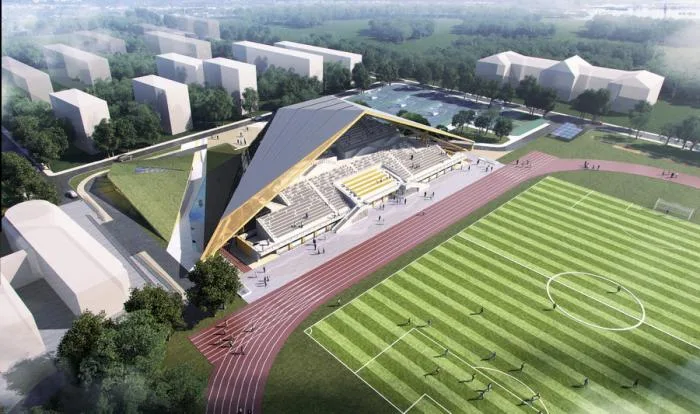
△ Aerial View of the Sports Stadium
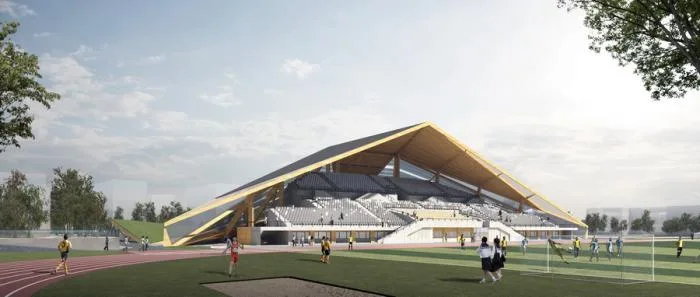
△ Visual rendering of the track and field area within the grandstand building
The site is located on Shandong University’s Baotu Spring campus, which is protected as a cultural heritage area. The project involves renovating the aging sports stadium, optimizing its surrounding environment, and reconstructing the grandstand building to better serve the campus community.
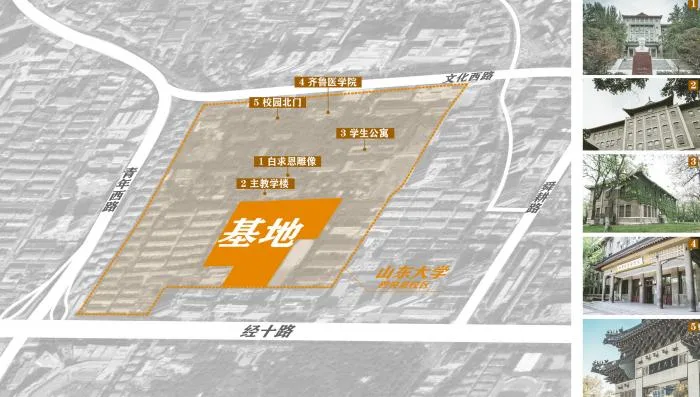
△ Site location and campus style overview
Key Point 1: Seamless Integration with the Campus’s Historical Architectural Atmosphere
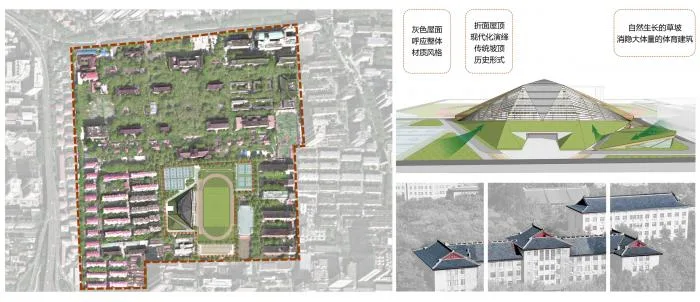
△ Texture Fusion
The existing campus buildings are mainly small-scale structures arranged in rows, creating a stark contrast with the large sports buildings. This design extracts the sloped roof elements from surrounding buildings and reinterprets them into modern, free-form folded plates. These are combined with naturally sloping grassy landscapes to conceal building mass, reduce the visual impact of the new structures, and create a distinctive landscape.
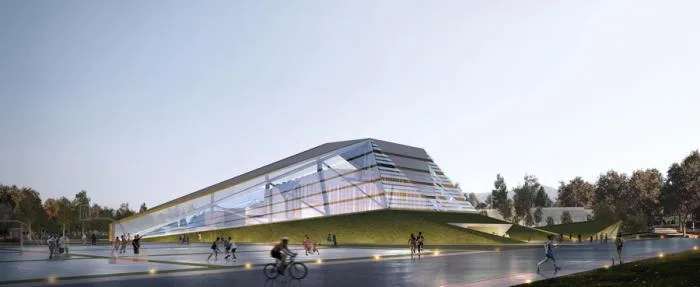
△ Rendering of the grandstand building entrance
Key Point 2: Modern Functional and Spatial Design for Campus Sports Facilities
The current sports facilities are outdated, with poor accessibility and insufficient parking, limiting their efficiency and long-term use. The redesign plans to create a multifunctional grandstand building by reorganizing the layout and integrating an underground parking garage to expand functionality.
The grandstand acts as the central axis, connecting the athletics field, the existing sports arena, the club activity center, and other outdoor sports facilities. This connection improves venue utilization. Architecturally, the building rises neatly from the ground to the top in a symmetrical form, featuring a tree-inspired wooden structure. Evenly spaced L-shaped diagonal columns create a rhythmic pattern that emphasizes verticality, making the building appear tall and powerful.
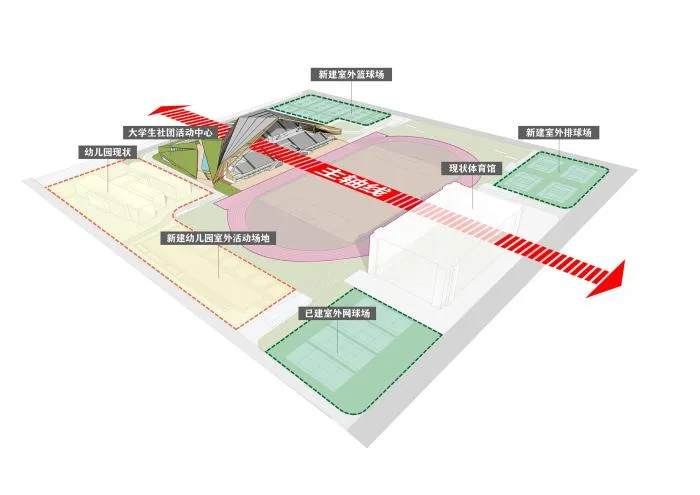
△ The grandstand building’s dominant position on campus
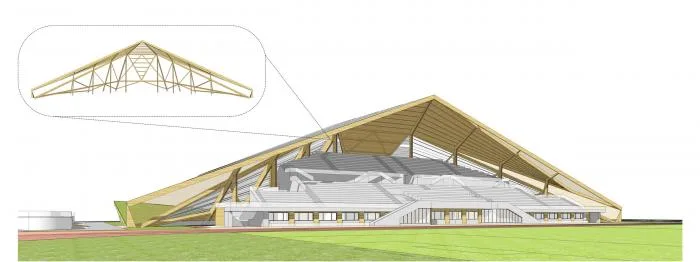
Rhythmic structural form
Key Point 3: Architectural Design Creating Modern Spaces
The folded canopy creates a cavity between the main grandstand structures, forming a semi-indoor, semi-outdoor public activity space. Transparent roofing admits natural light and fresh air. The building’s second-floor platform connects with the site’s health trail via elegant outdoor stairs, offering students a refreshing leisure area.
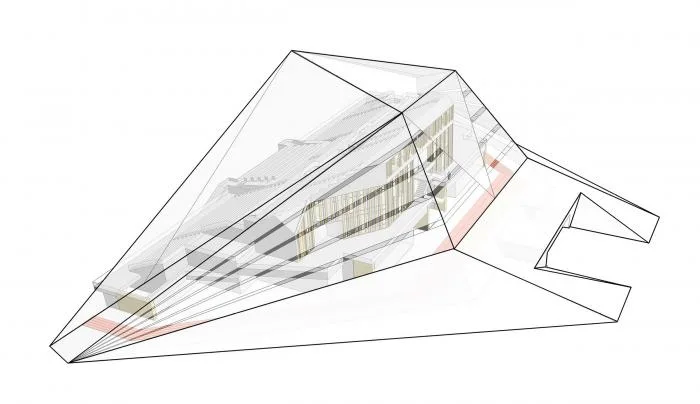
△ Unique space beneath the canopy
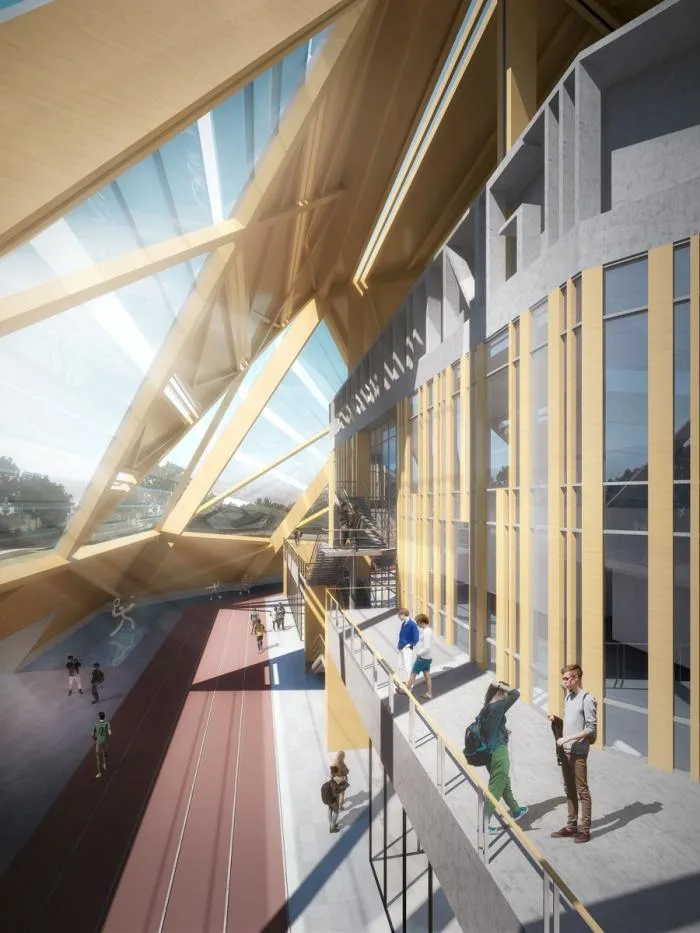
△ Interior rendering
The club activity center is designed as a covered earth structure integrated seamlessly with the undulating grass slopes. A winding, sunken pathway, combined with free-form steps and a water feature, creates an engaging and distinctive activity space.
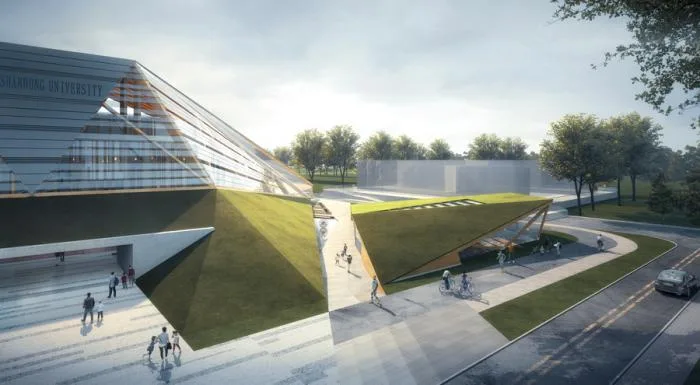
△ Featured activity space
The plan features thoughtful zoning that separates audiences, students, and staff into three distinct groups with dedicated entrances and exits, preventing congestion and cross-traffic.
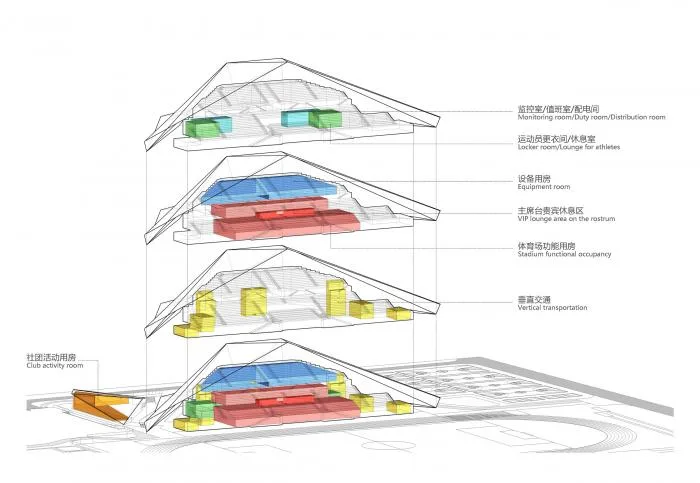
△ Functional zoning plan
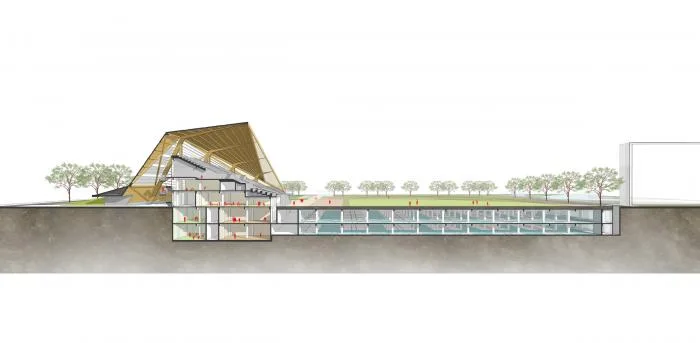
△ Sectional perspective 1
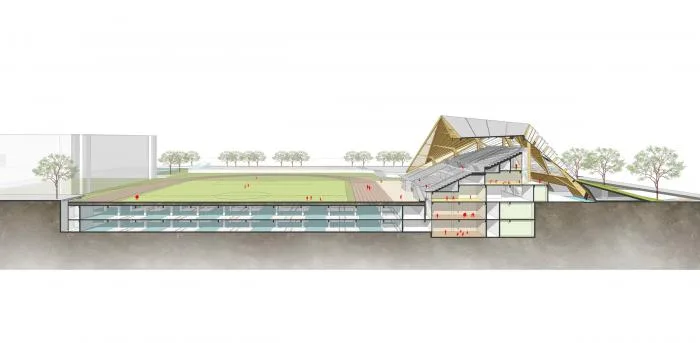
△ Sectional perspective 2
Green Building Features
The grandstand’s canopy provides internal shading and natural ventilation. Photovoltaic glass panels coated with cadmium telluride film are installed on the steel roof structure. These panels transmit light while converting solar energy into heat, which is used to supply hot water for athletes’ showers and other facilities.
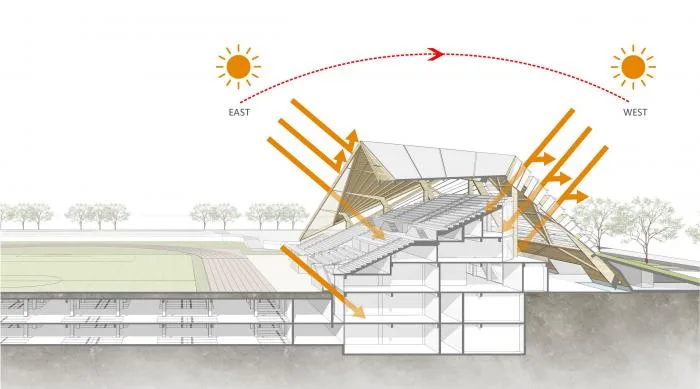
△ Sunlight shading system
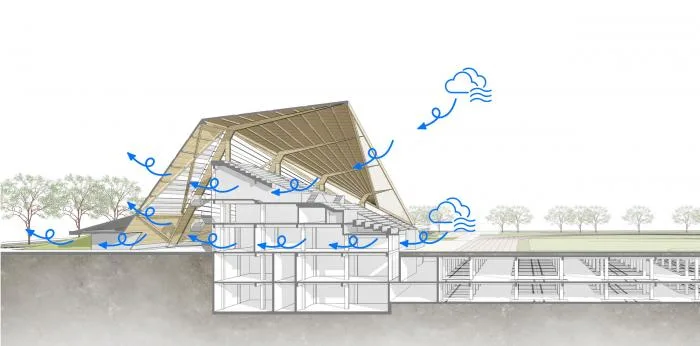
△ Natural ventilation design
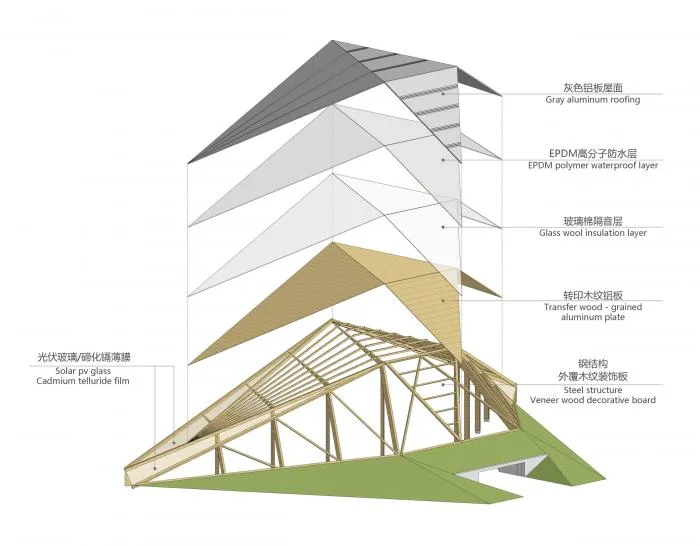
△ Structural analysis diagram
Technical Drawings
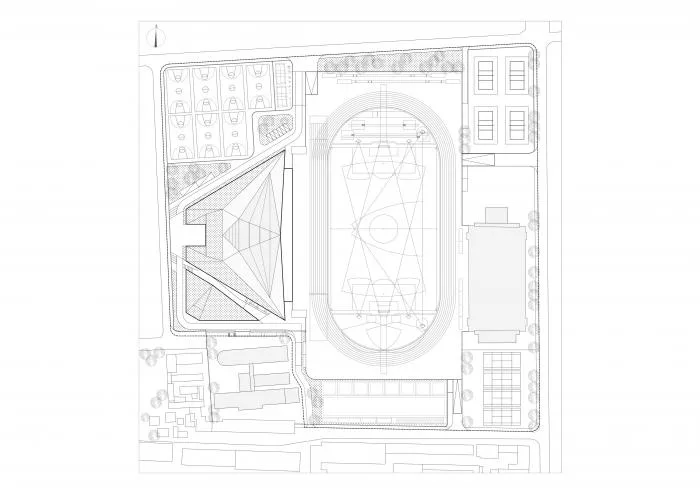
△ General layout plan
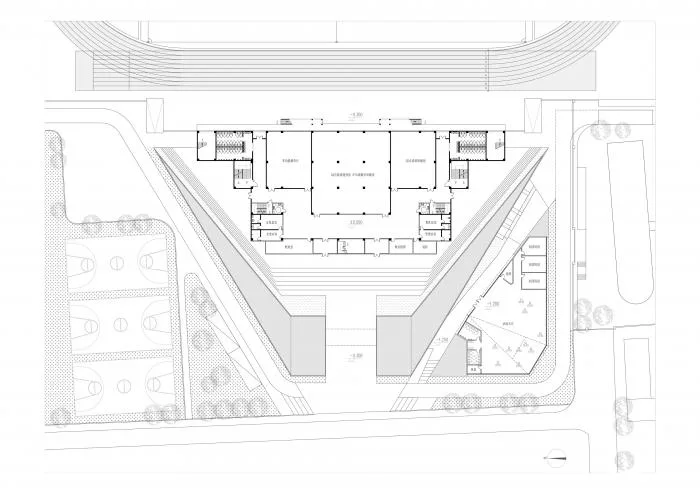
△ First floor plan
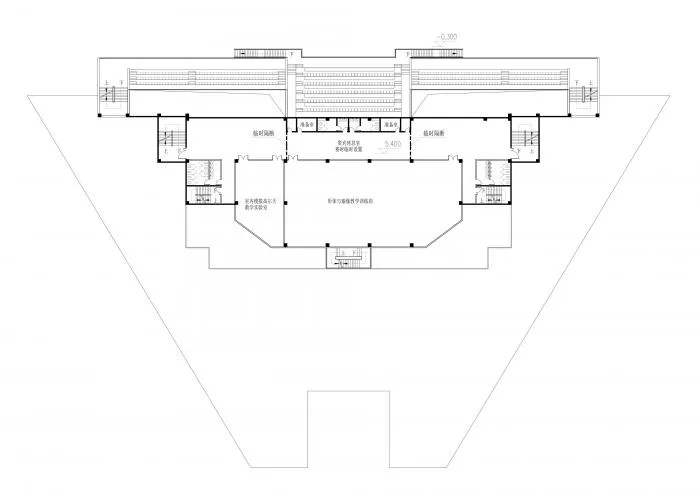
△ Second floor plan
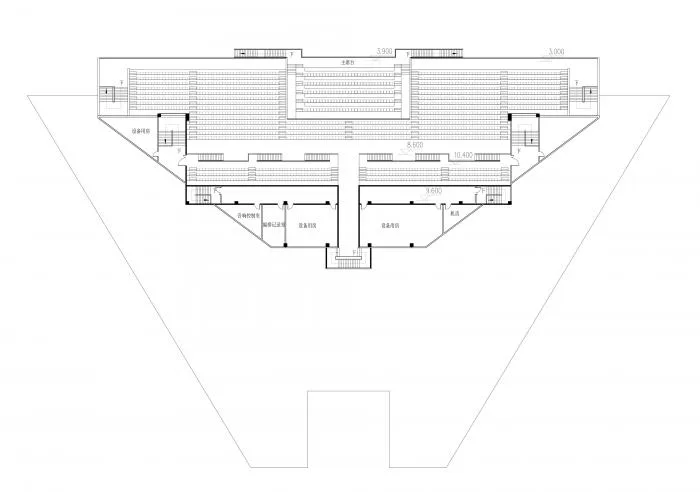
△ Third floor plan
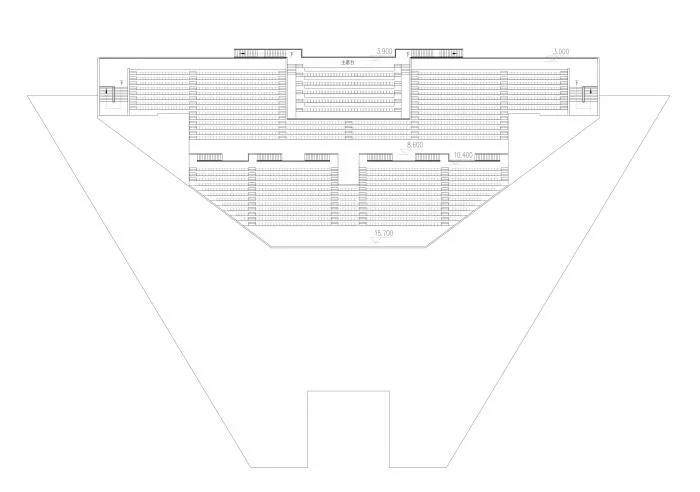
△ Fourth floor plan
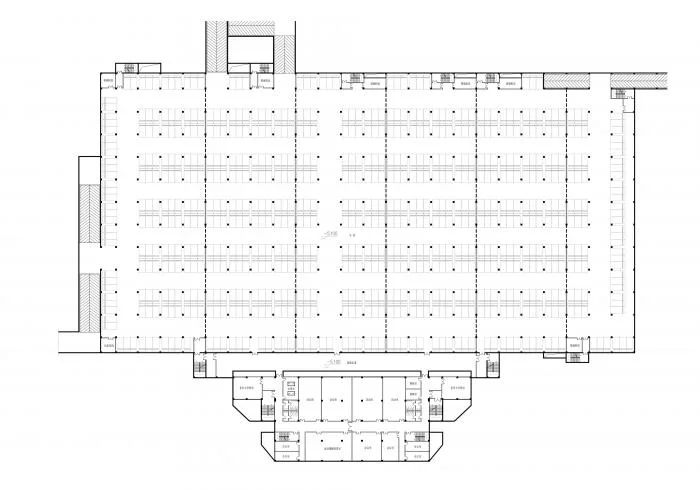
△ Underground floor plan
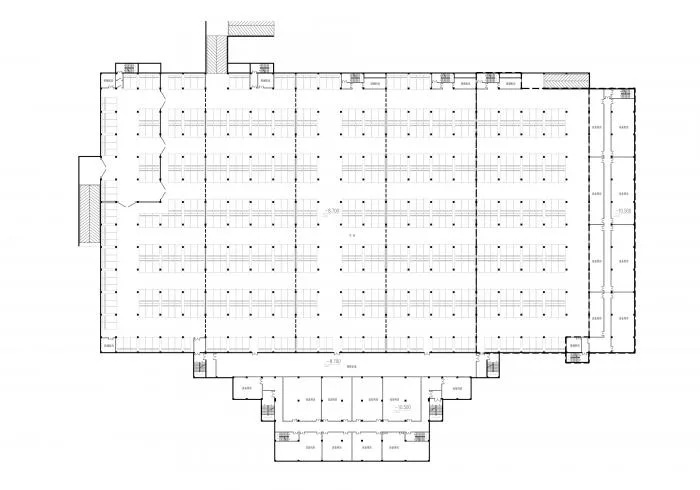
△ Underground second floor plan
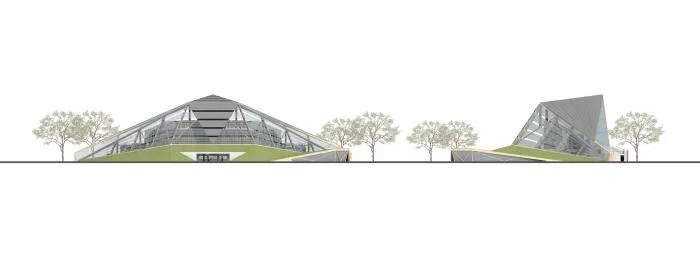
△ Elevation drawing
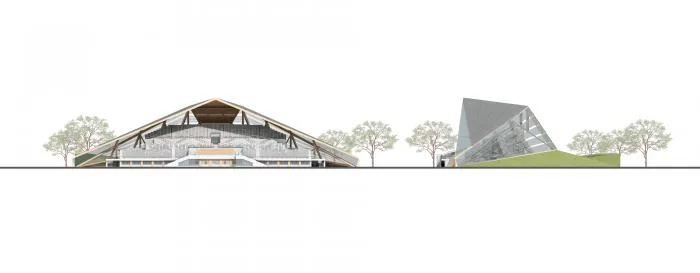
△ Elevation drawing
Project Information
Project Name: Renovation and Design of the Sports Stadium at Baotu Spring Campus, Shandong University
Design Team: Tianjin University Architectural Design and Research Institute, Third Design Institute
Unit Website: __AI_S_TURL_0__
Architects: Zhang Bo, Deng Huiyu, Wang Zijian
Location: No. 44 Wenhua West Road, Jinan City, Shandong Province
Building Area: 52,800 square meters
Design Period: February 2020 – March 2020
Design Phase: Bid proposal
Contact Email: __AI_S_SC0__













Must log in before commenting!
Sign Up