
Venue: Former Red Army Bank
Han Honggou Old Village served as the base for the Taiyue Military Region troops during the Anti-Japanese War. The old courtyard housing this project was once a bank, adding a layer of historical significance and legend to the site.
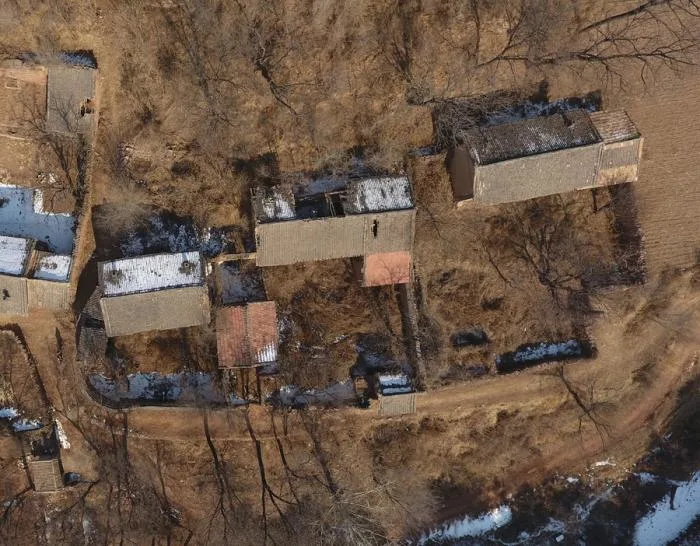
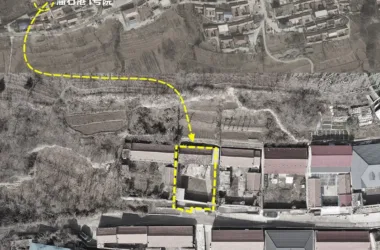
△ Aerial view of the original homestay site © Sanwen Architecture
Located at the edge of the village, the site offers privacy and quietude. To the north lies a hillside, and to the south, an original flood discharge channel opens up a broad view. The original site features three parallel yet independent courtyards arranged in a regular layout. The two-story main house follows a classic three-bay design typical of the Qinyuan area: the first floor served as living quarters, while the second floor was used for food and storage. Unfortunately, the wing rooms on the first floor suffered severe damage or collapse due to years of neglect, making it difficult to fully assess their original state. Prior to renovation, the three courtyards had been vacant for many years, as locals had relocated to the new village. Ownership of the property has since transferred to the village collective.
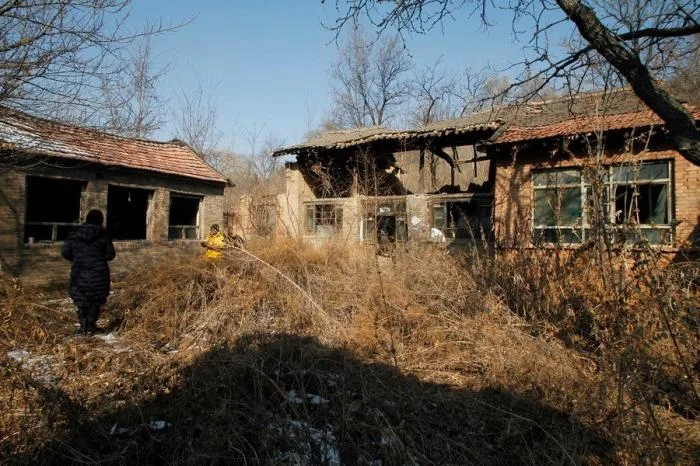
△ Original condition of the homestay site © Sanwen Architecture
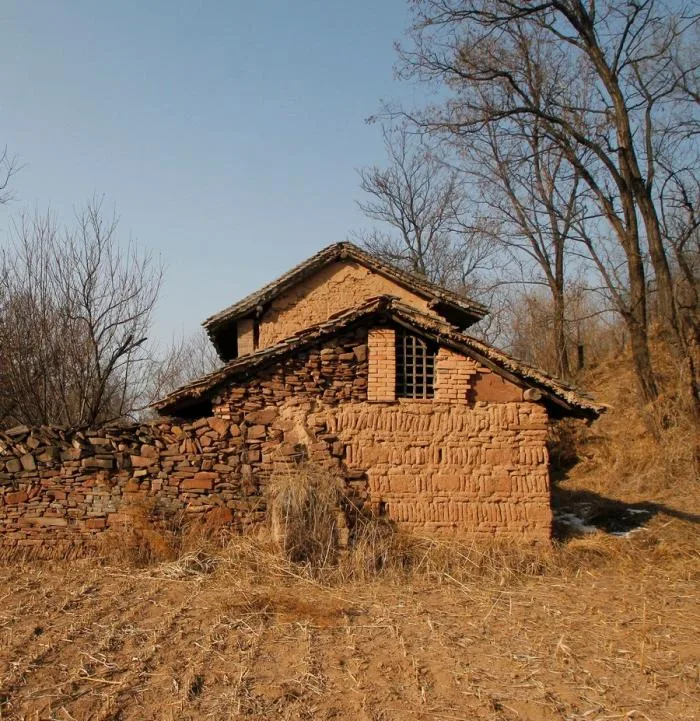
△ Texture of the original building façade materials © Sanwen Architecture
Layout: Connecting Courtyards and Reconstructing Space
To meet the new function as a homestay, the previously isolated three courtyard layouts needed to be dismantled and reconfigured. Unlike residential buildings, a homestay requires a public service area, reception desk, guest rooms, and logistical spaces, along with a sufficient number of rooms and convenient facilities.
The design process followed several key steps: first, assessing the existing buildings to preserve and repair those in good condition, while demolishing those beyond repair. Next, the partition walls between the three courtyards were removed to unify the site, followed by reorganizing the entrance and circulation flow. Finally, new individual buildings were constructed based on the redesigned site landscape and functional needs, integrating harmoniously with the preserved structures.
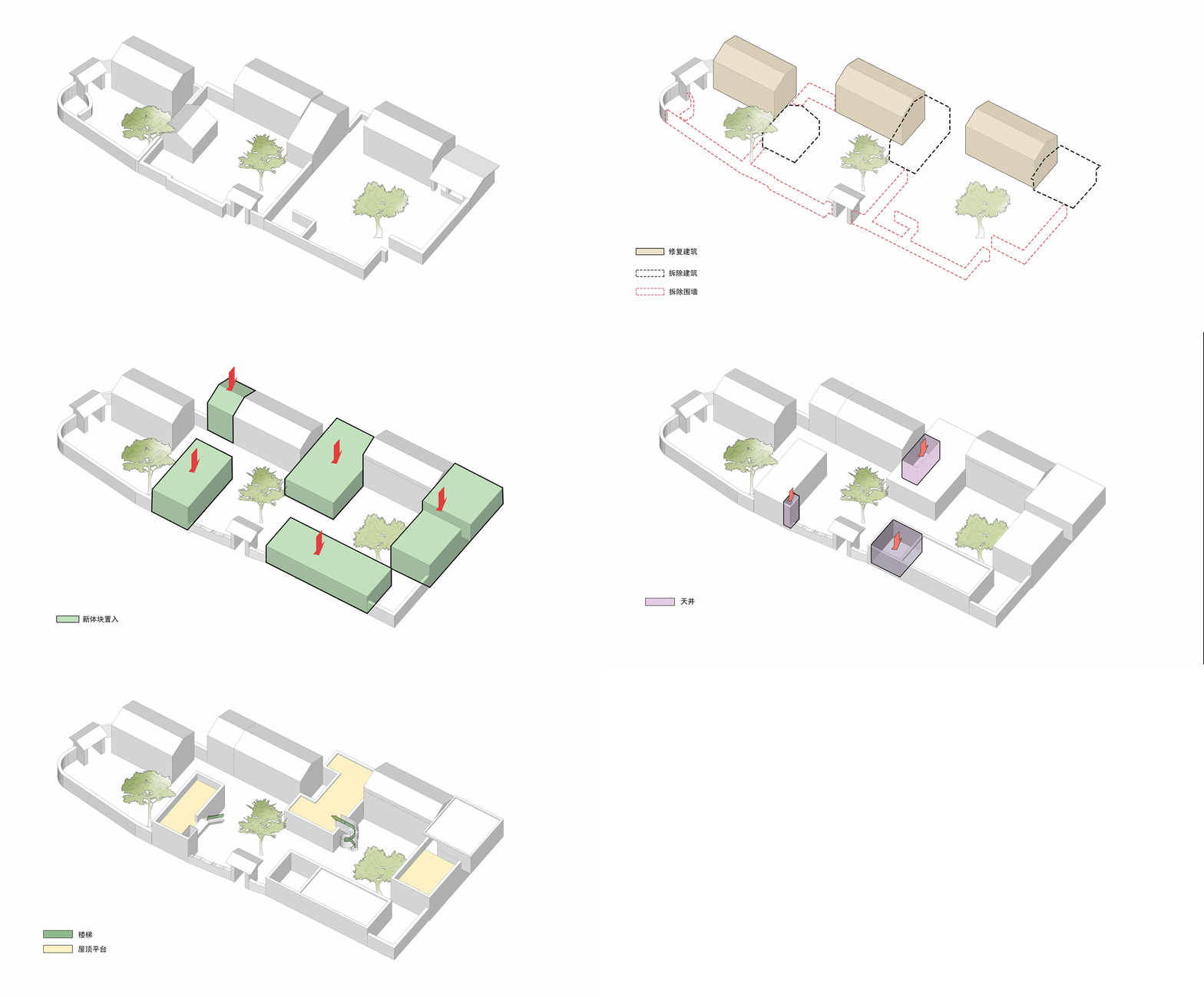
△ Dynamic spatial generation
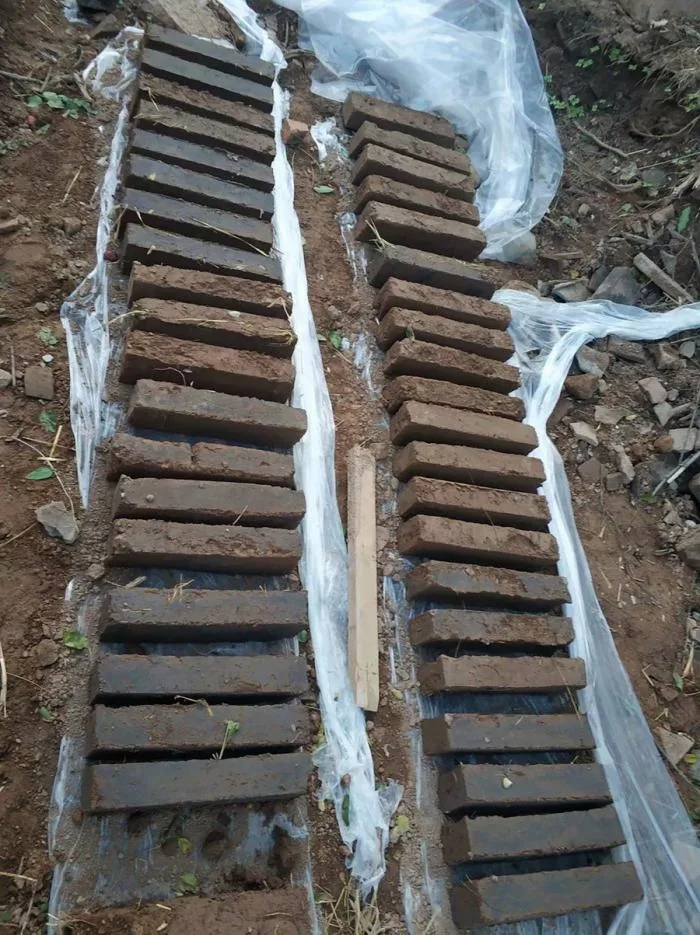
△ Making adobe bricks using traditional techniques © Sanwen Architecture
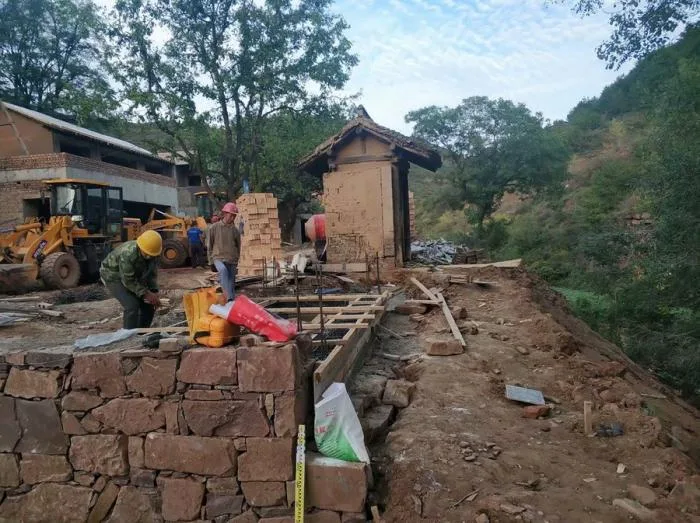
△ Construction process © Sanwen Architecture
Upon completion, the spatial relationship between the original two-story main building and the new single-story wing is preserved. The tall main house remains central, while the subordinate wing extends the spatial flow. This arrangement allows for a reconstructed outdoor space that balances traditional form with modern interventions. The design employs contemporary forms and materials to create a striking dialogue between old and new architecture.
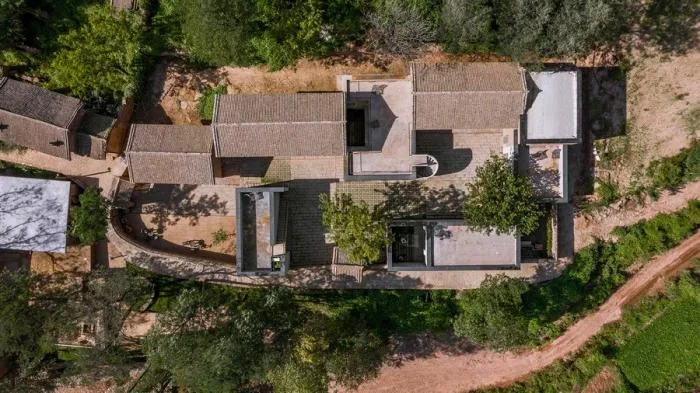
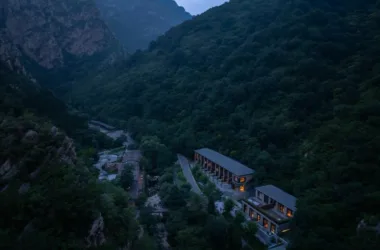
△ Aerial view of the renovated homestay © Jin Weiqi
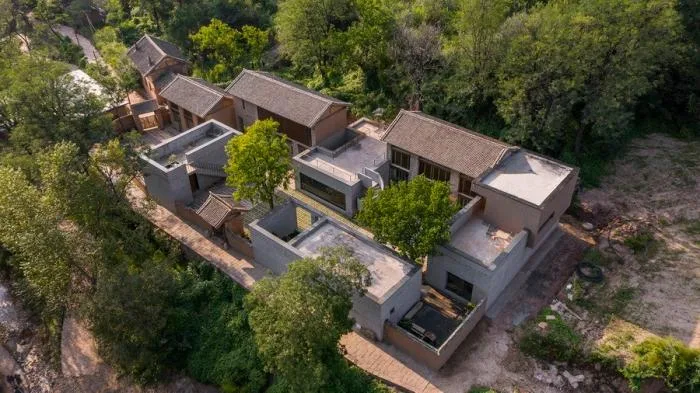
△ Aerial view of homestay © Jin Weiqi
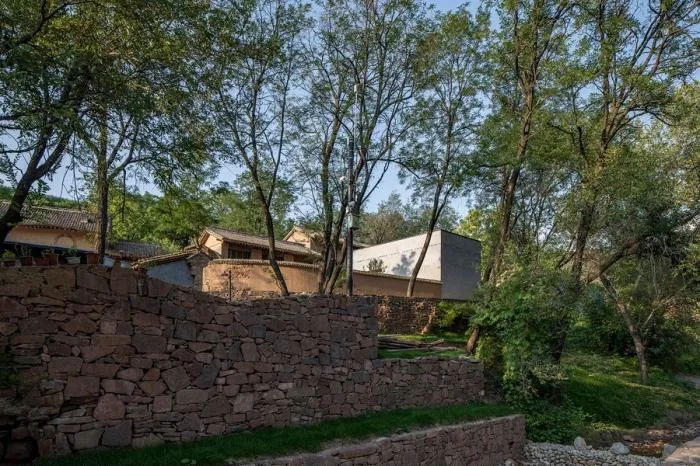
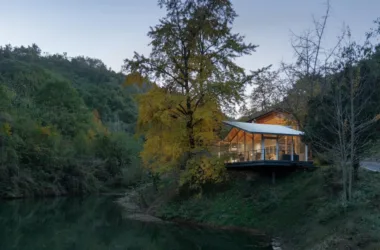
View of the homestay from the stream © Jin Weiqi
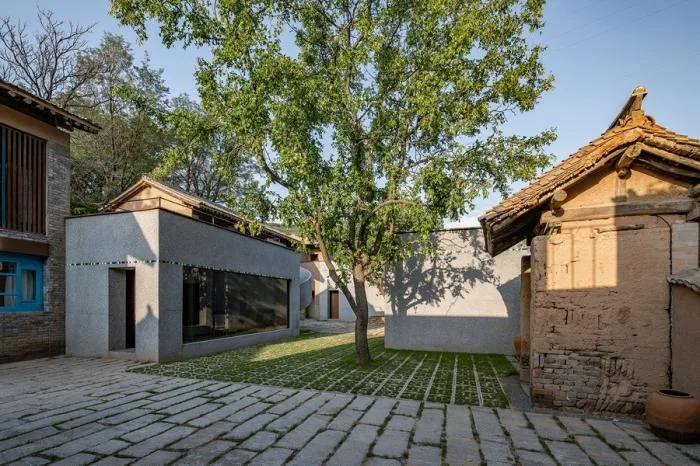
△ Original courtyard gate preserved, highlighting the contrast between old and new © Jin Weiqi
Architecture: Patios, Terraces, Adobe Bricks, Water-Brushed Stones, and Ceramic Tiles
The architectural design respects the original layout logic. Main rooms are preserved, repaired, or rebuilt to their original forms, establishing a strong connection between the homestay and its cultural context. The entrance courtyard’s main building serves as the homestay reception, while the two rear main rooms function as guest rooms. The second floor, once used for storage, has been converted into guest rooms while retaining the traditional lattice facade, honoring the local residential style.
The original adobe bricks have been preserved, complemented by newly crafted adobe walls made using traditional methods. These not only invoke historical memories but also offer rich decorative textures.
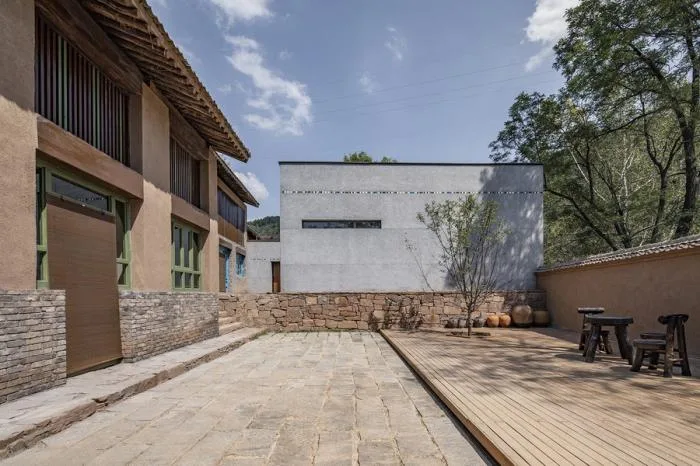
Entrance courtyard of the homestay © Jin Weiqi
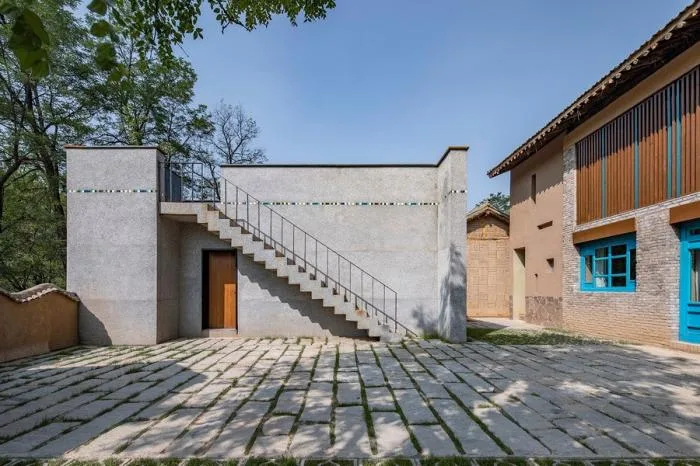
Varied facade materials create rich textures © Jin Weiqi
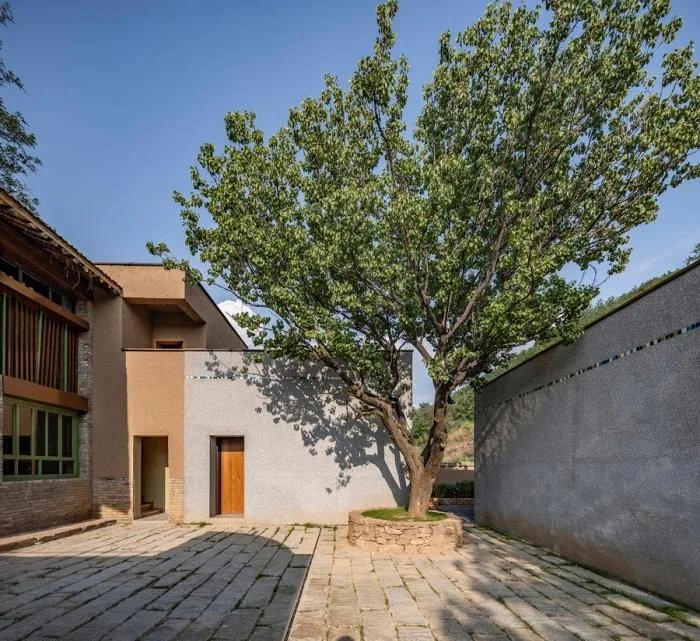
Preserved trees become key elements in the courtyard landscape © Jin Weiqi
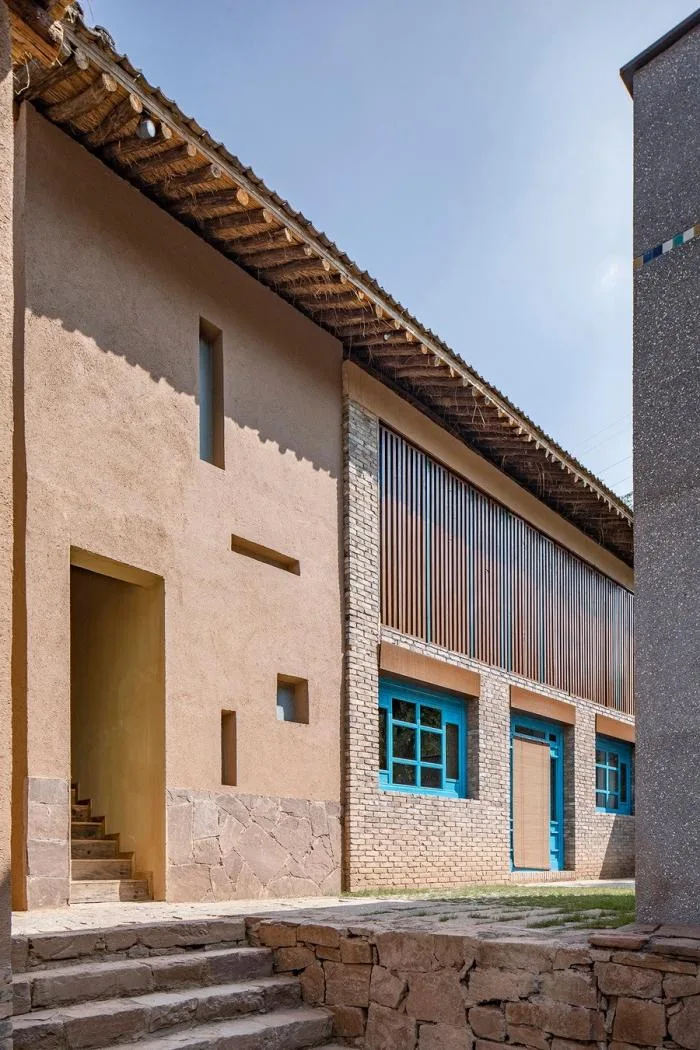
Facade designs translate traditional residential aesthetics © Jin Weiqi
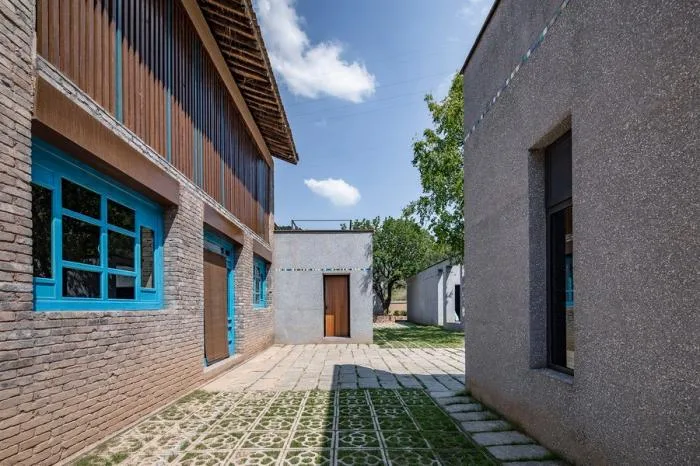
△ Contrast between old and new buildings © Jin Weiqi
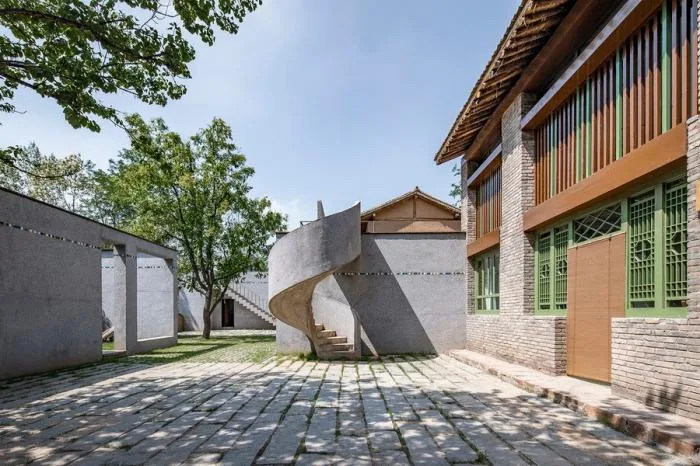
The spiral staircase serves as a visual focal point within the space © Jin Weiqi
The new wing features a flat roof with a modern, abstract form, offering expanded and versatile outdoor spaces such as a second-floor terrace. To ensure privacy for first-floor guest rooms, each newly added room includes its own courtyard or patio, with large windows facing inward to create intimate, private views.
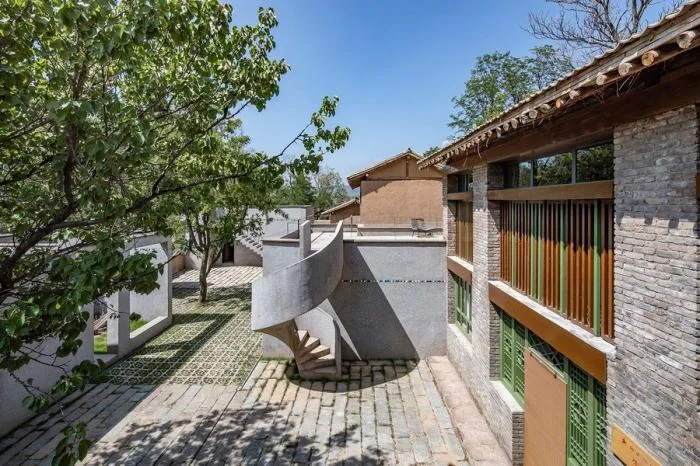
View of guest rooms and courtyards from the rooftop terrace © Jin Weiqi
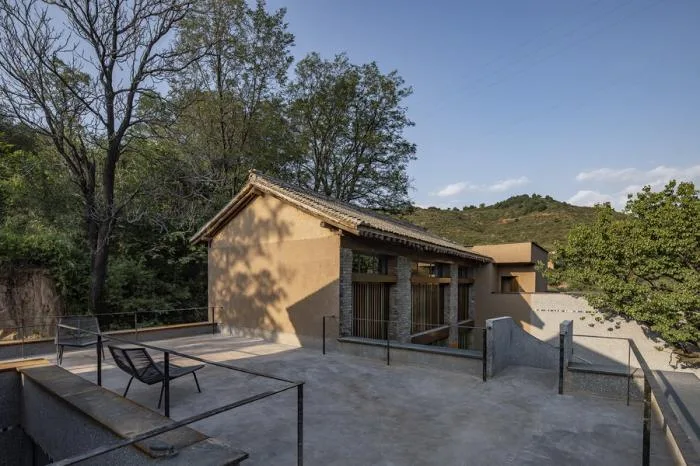
△ Rooftop terrace of the homestay © Jin Weiqi
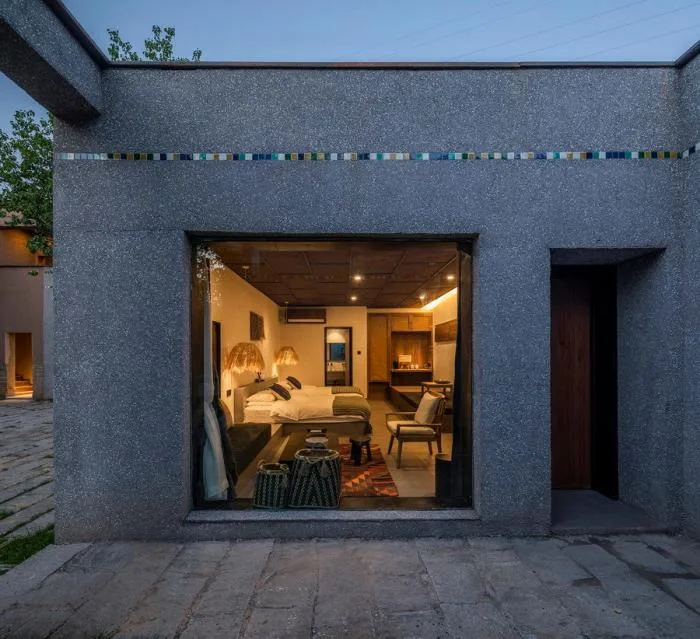
△ The courtyard acts as a transitional space connecting guest rooms and outdoor areas © Jin Weiqi
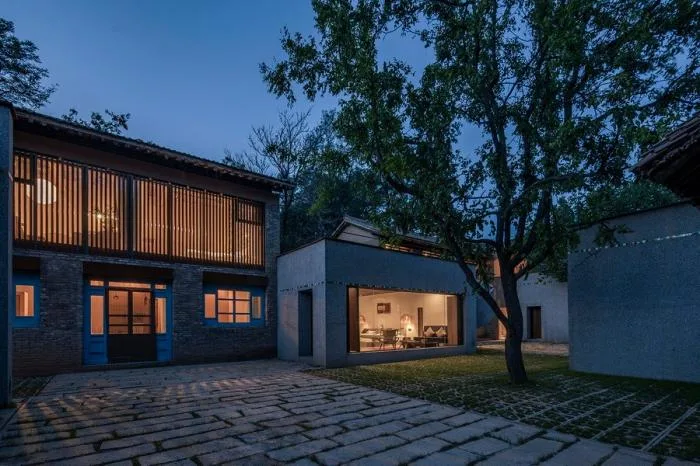
△ Nighttime view of the homestay © Jin Weiqi
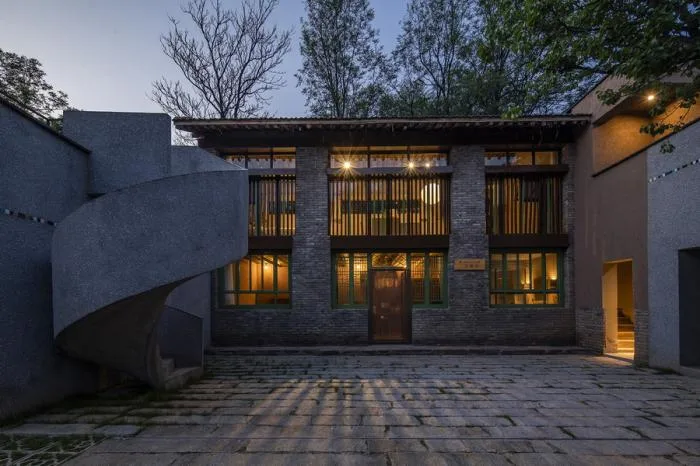
△ Night view of guest rooms © Jin Weiqi
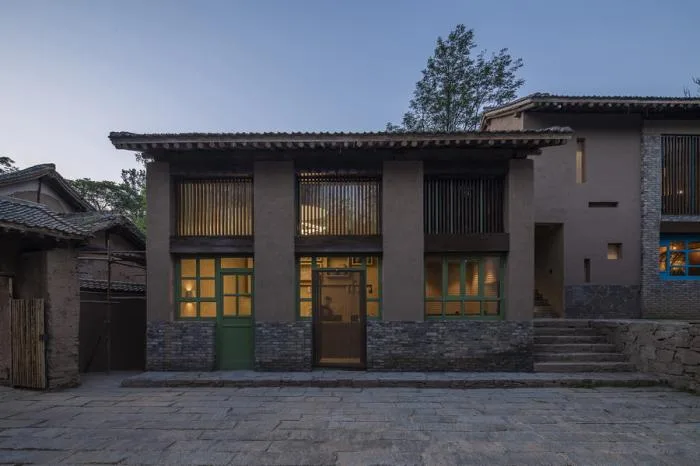
△ Homestay reception area © Jin Weiqi
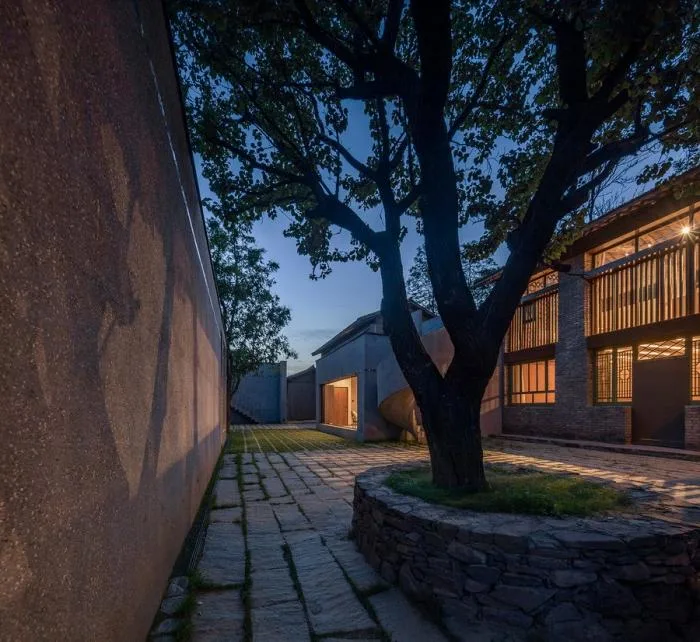
△ Night view of the homestay © Jin Weiqi
The building’s exterior façade avoids local materials, opting instead for water-brushed stone. This choice reflects not only the aesthetics of the 1980s but also the architect’s personal memories. The gray and white pebbled texture offers a subtle contrast to the adobe walls, creating layered visual harmony rather than conflict. The use of colored mosaic strips pays homage to Carlo Scarpa and engages with the theme of rural ceramic tile façades. The architects aim to provoke thoughtful reflection on these rural ceramic surfaces—not merely as criticism but as a rational exploration for solutions.
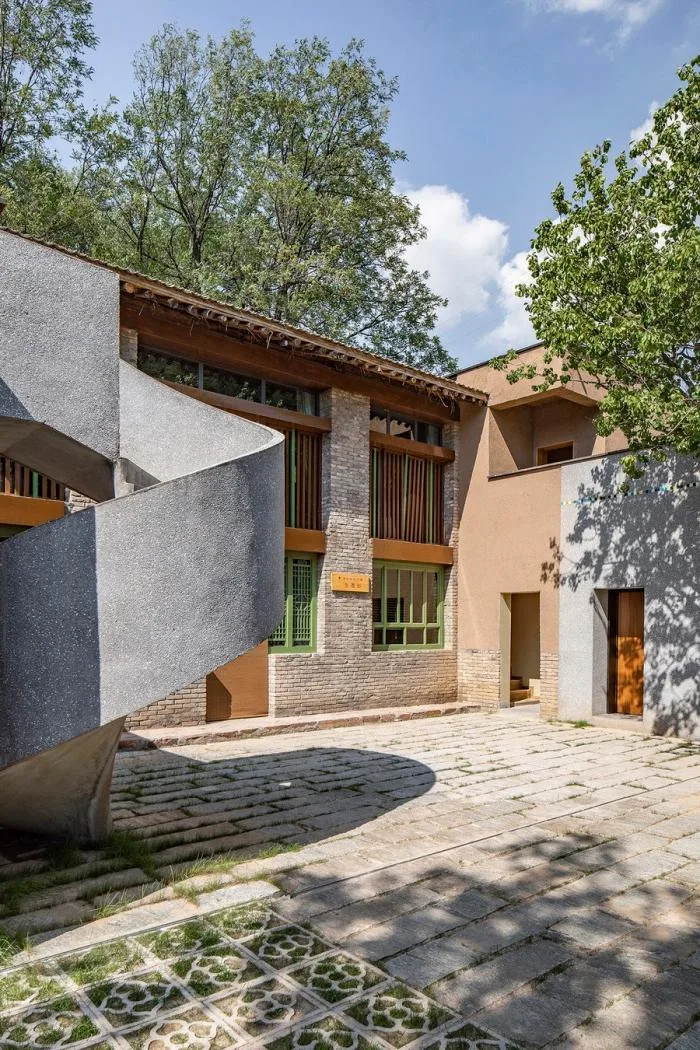
△ Exterior façades combining water-brushed stone, green bricks, and adobe walls with diverse textures © Jin Weiqi
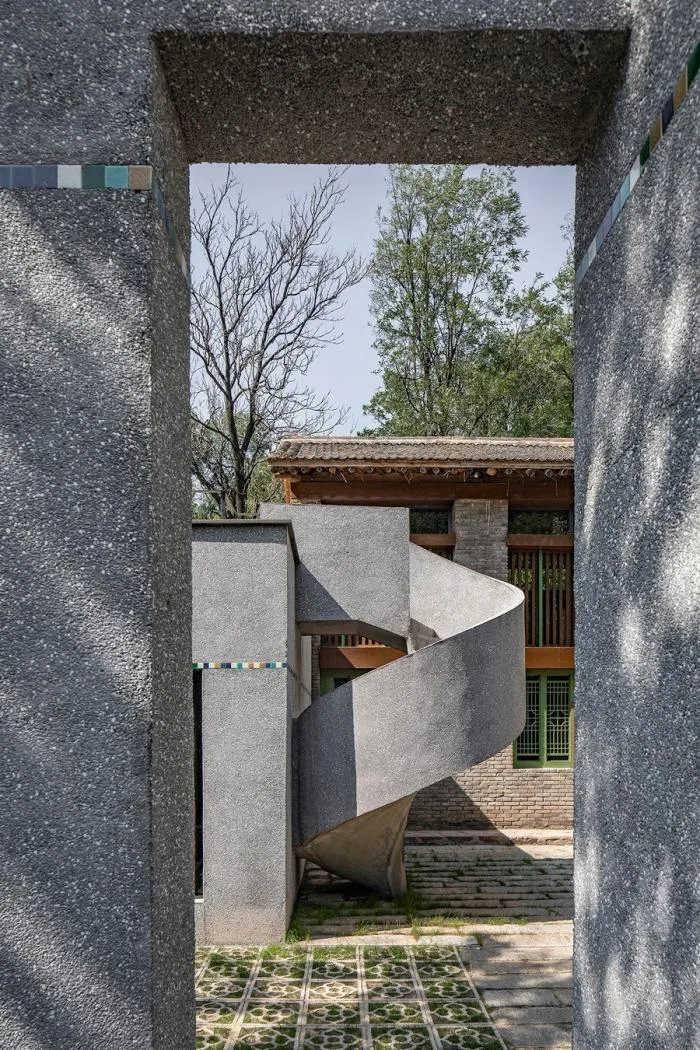
△ Framed scene © Jin Weiqi
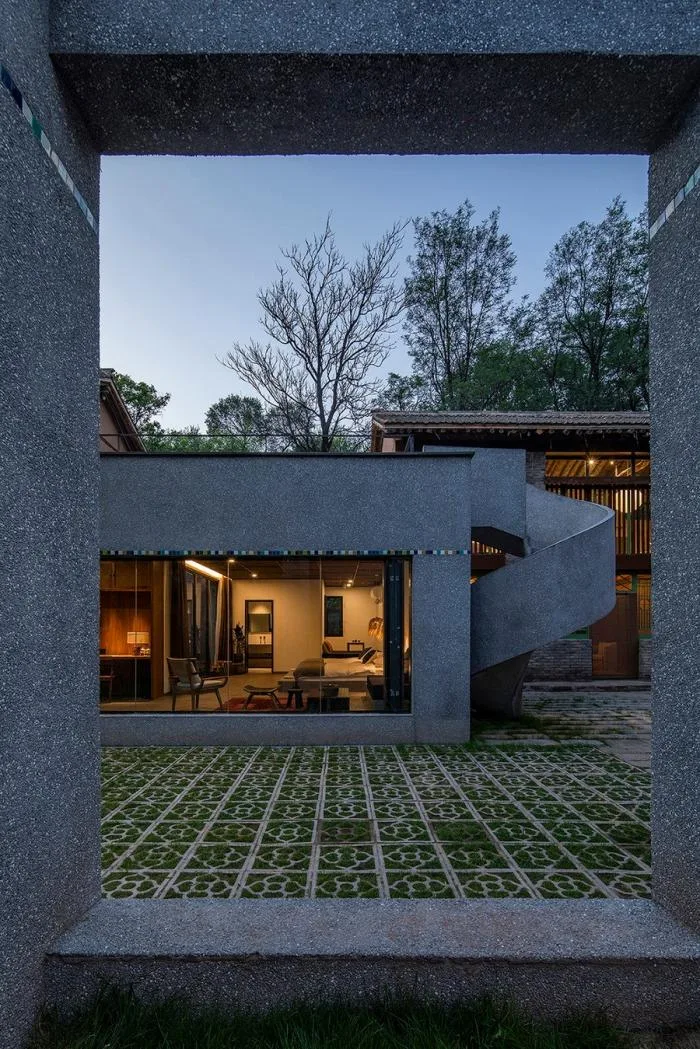
△ Framed scene © Jin Weiqi
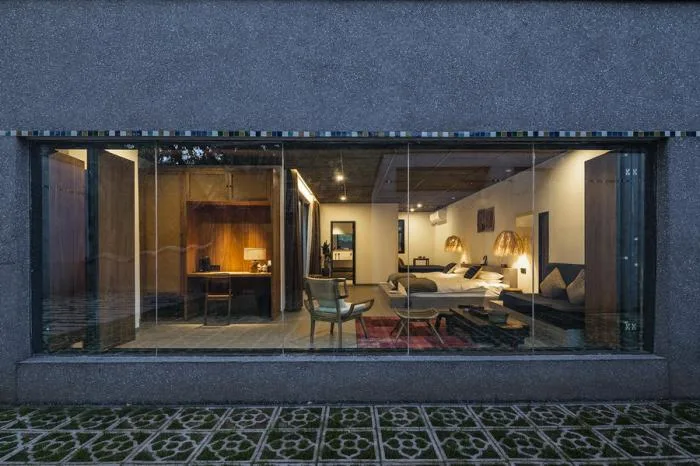
△ Partial interior room © Jin Weiqi
Interior: Earth and Ocean
The interior design logically extends the architectural concept. The architect aims to blend local culture with modern style, showcasing Shanxi’s regional identity while meeting contemporary aesthetic and comfort standards.
Guest rooms vary in size and arrangement to suit modern vacation needs. New buildings feature dark-colored ceilings that create a sense of depth, gray nano-cement floors that feel cool and clean, and white walls to maximize brightness.
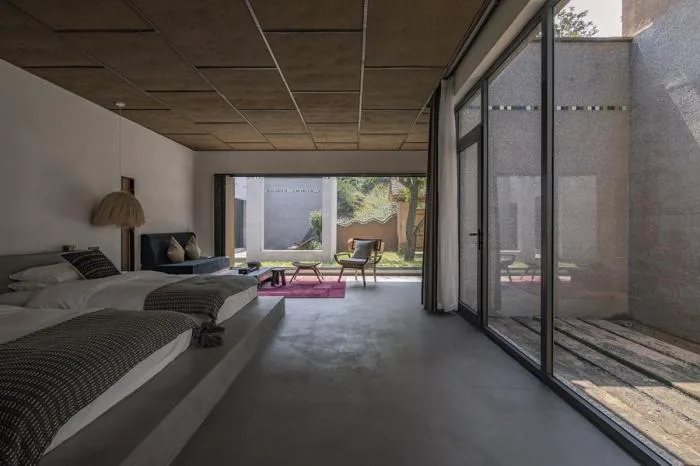
The courtyard design adds spatial layering © Jin Weiqi
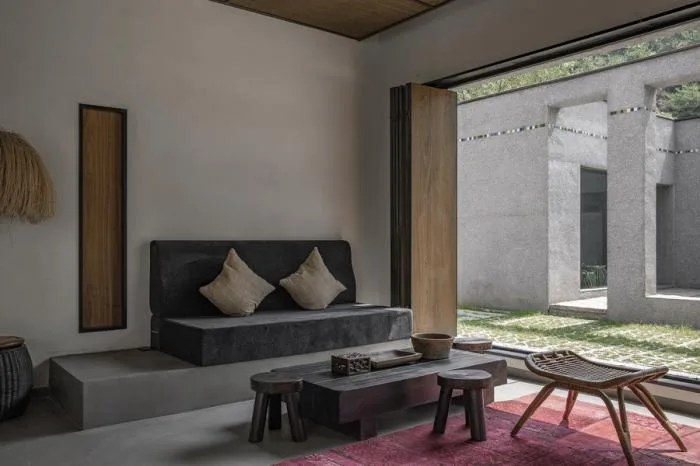
△ Visual connection between indoors and outdoors through glass © Jin Weiqi
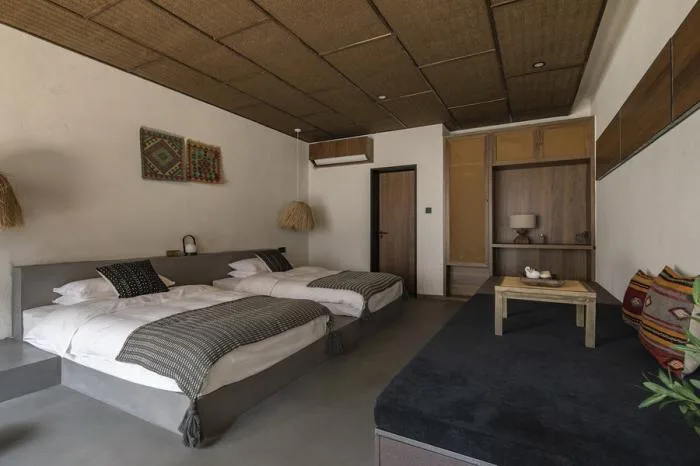
△ Newly constructed interior spaces © Jin Weiqi
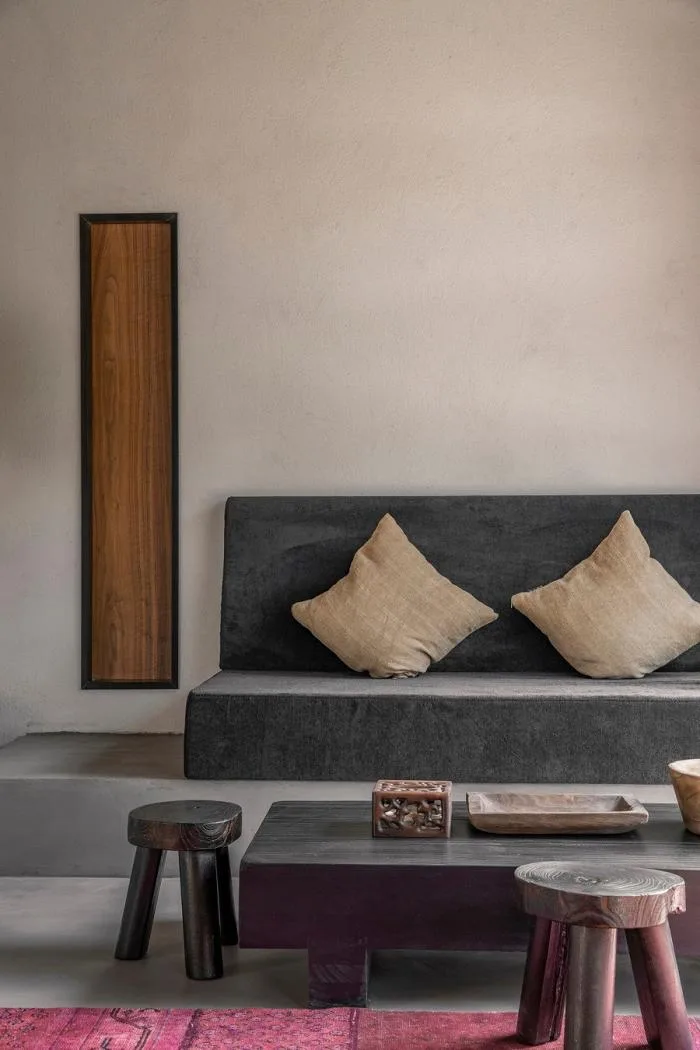
△ Partial view of the new guest room interior © Jin Weiqi
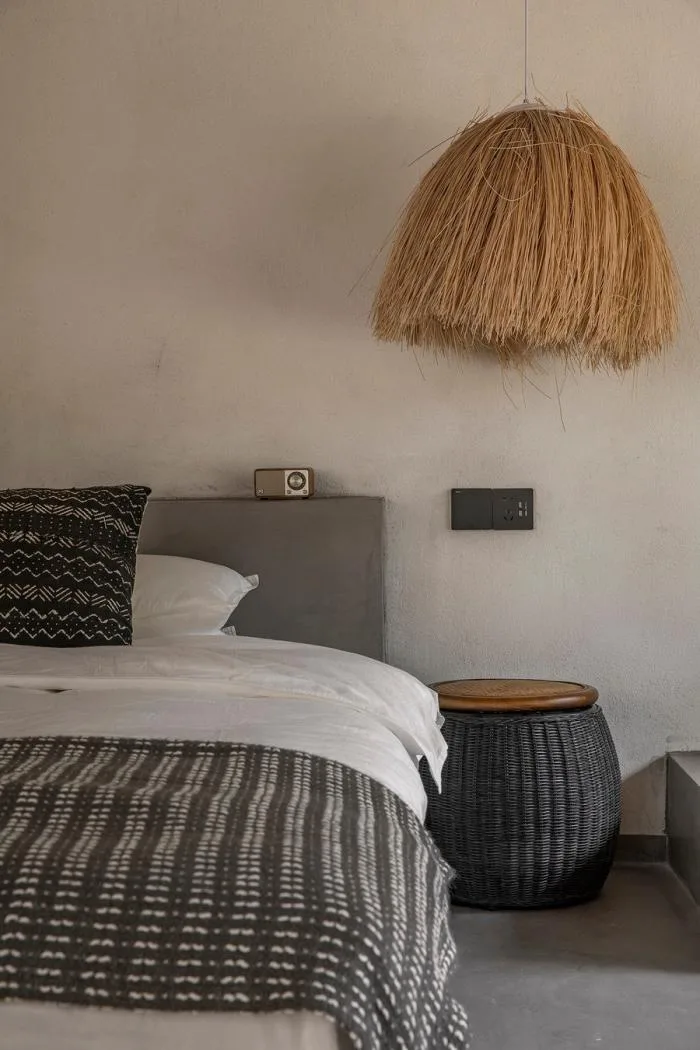
△ Partial view of the new guest room interior © Jin Weiqi
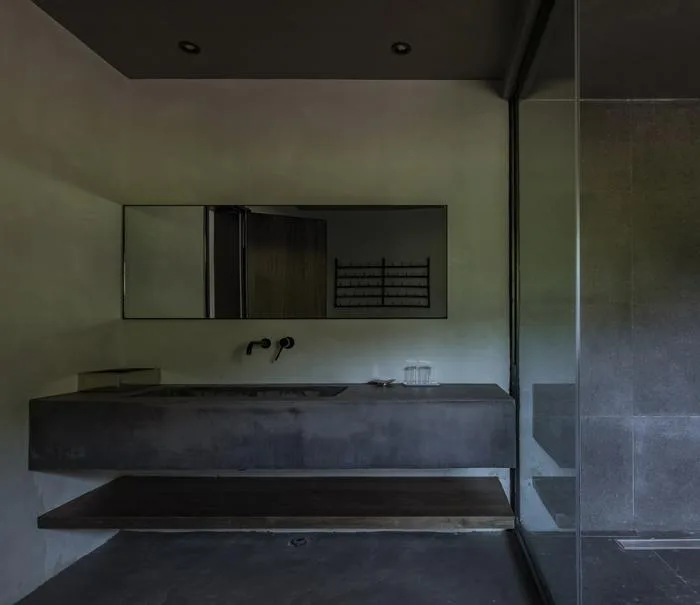
△ New guest room bathroom © Jin Weiqi
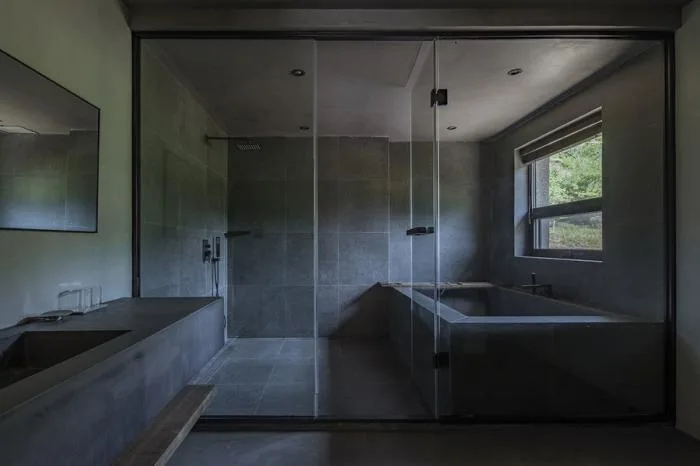
△ New guest room bathroom © Jin Weiqi
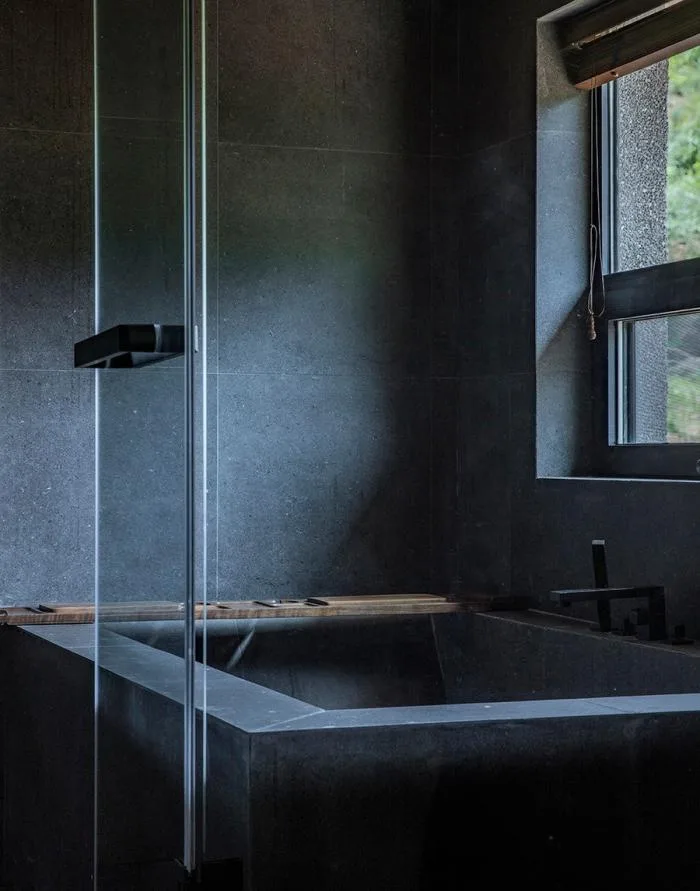
△ New guest room bathroom © Jin Weiqi
The old building’s guest rooms retain their original ceiling structure with exposed wooden beams. Floors use warm-toned solid wood or antique tiles to create a cozy atmosphere. Walls are painted in a yellow earth tone, adding nostalgic warmth and reflecting traditional local residential styles.
Guest beds vary by room: kang (heated brick bed), standard beds, and platform beds. First-floor rooms in the old building use kang beds, second-floor rooms converted from storage spaces have standard beds, and newly built rooms mostly feature platform beds. This variety caters to different guest preferences and allows flexible room configurations, including king and standard-size options.
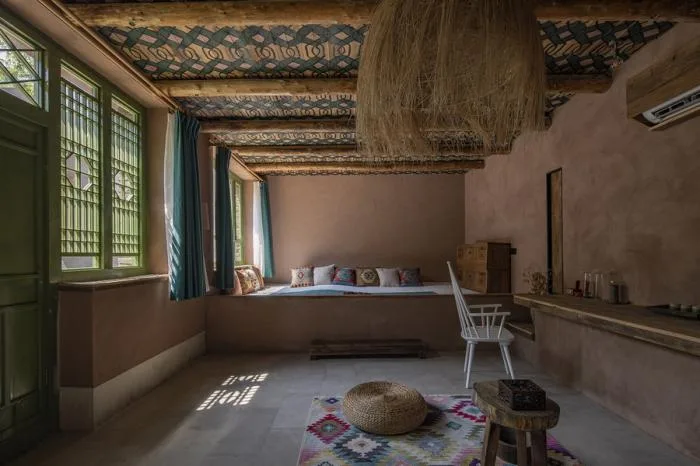
△ Traditional style interior space © Jin Weiqi
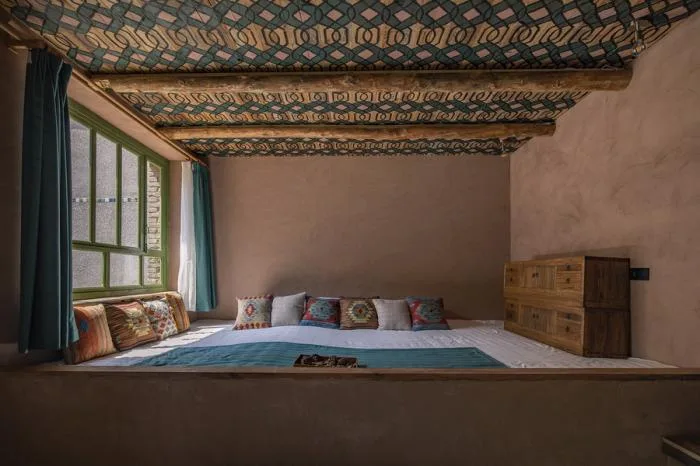
△ Earth Kang bed © Jin Weiqi
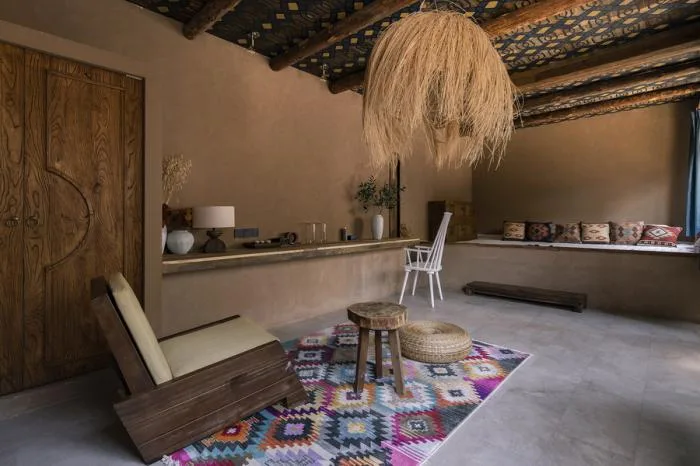
Natural wood, earthen walls, and hand-painted ceilings evoke a strong rural ambiance © Jin Weiqi
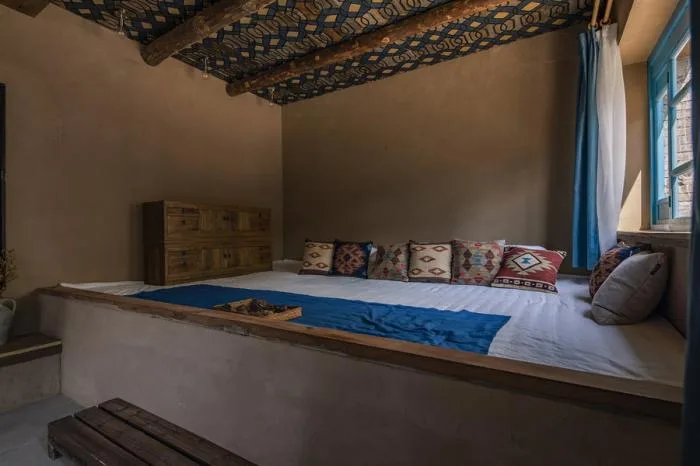
△ Retaining the kang bed in the northern guest rooms © Jin Weiqi
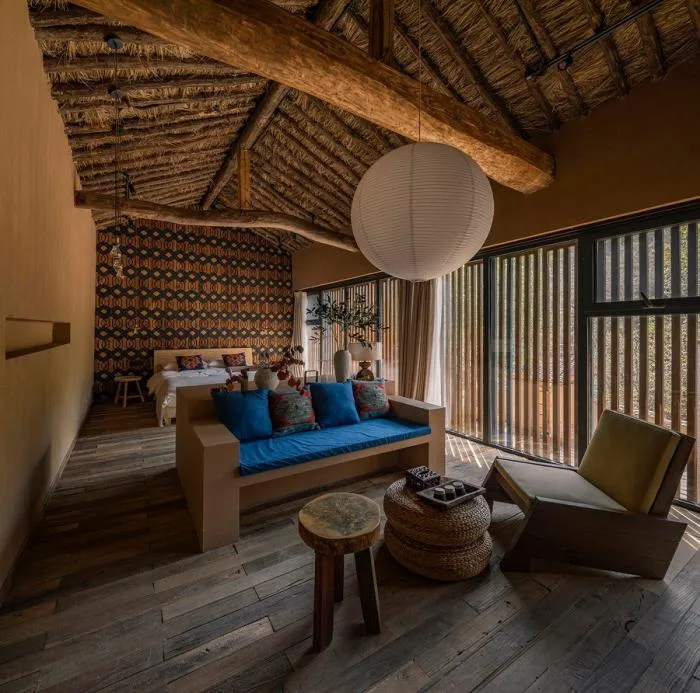
△ Spacious second-floor guest room © Jin Weiqi
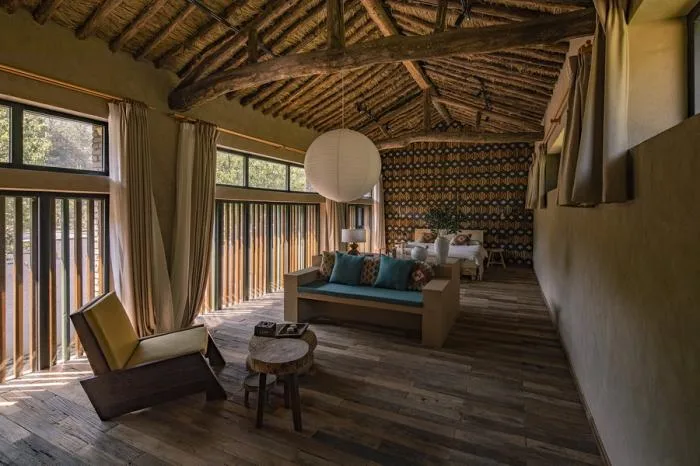
△ Spacious second-floor guest room © Jin Weiqi
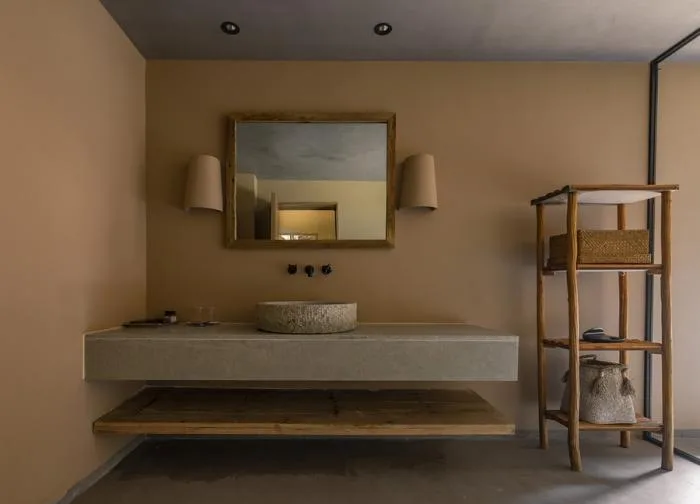
△ Bathroom © Jin Weiqi
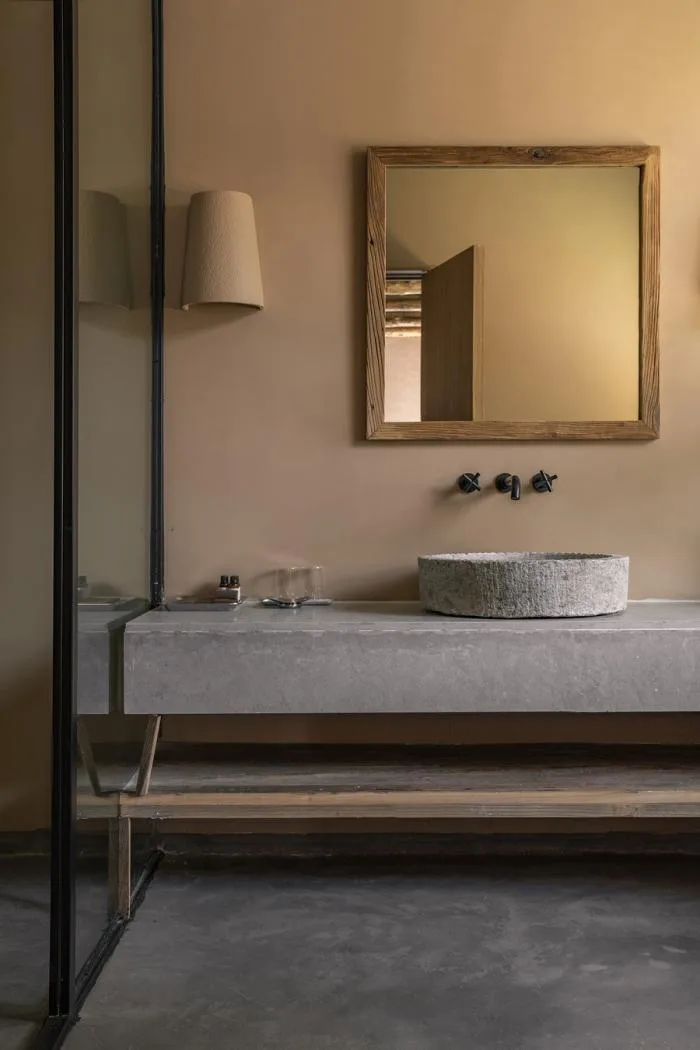
△ Bathroom © Jin Weiqi
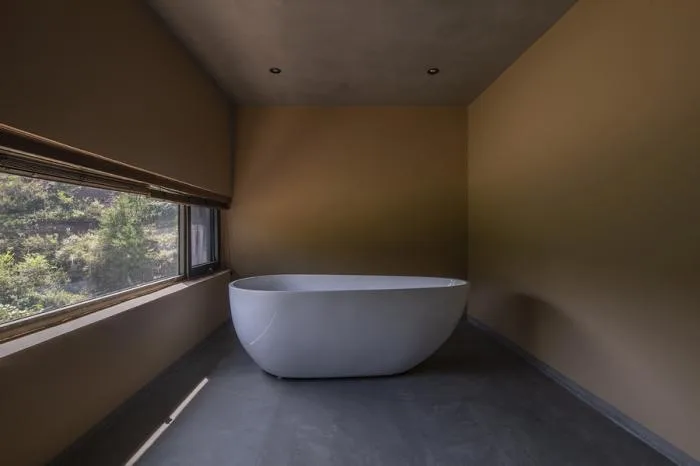
△ Bathroom © Jin Weiqi
To unify the diverse interior styles, furniture and soft furnishings follow a consistent aesthetic. Locally sourced materials such as rough stones, solid wood, woven herbs, and coarse fabrics are thoughtfully selected and combined to achieve a refined, artisanal quality. Color schemes vary across rooms and correspond to the exterior building colors. Vibrant cushions, rugs, and wall decorations provide lively accents, enriching the ambiance.
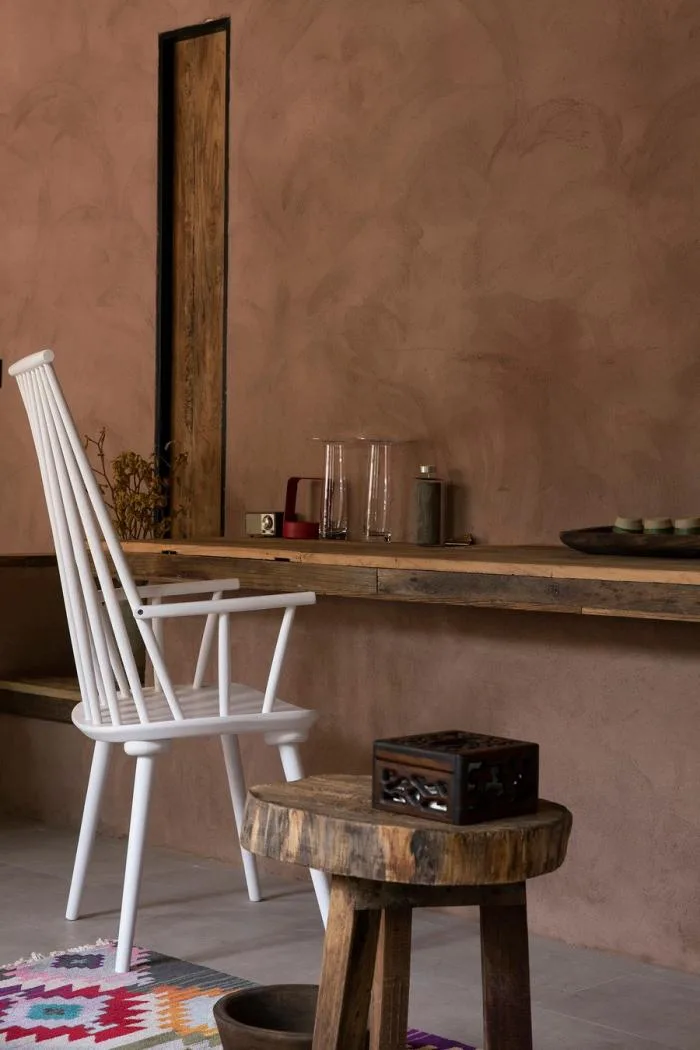
△ Local-style interior area © Jin Weiqi
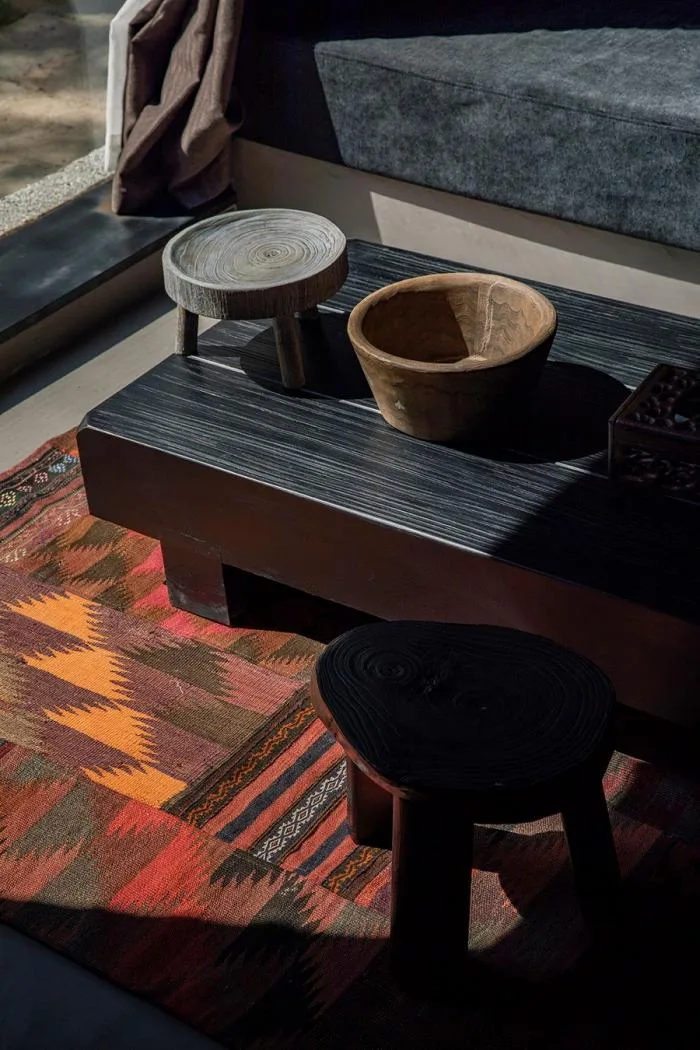
△ Local-style interior area © Jin Weiqi
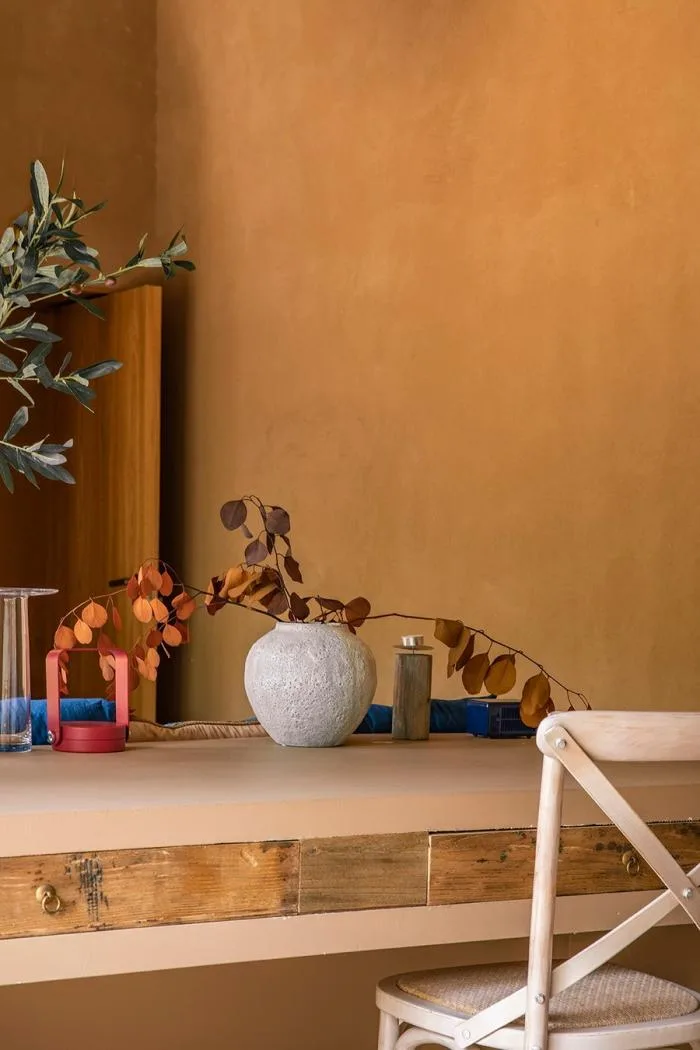
△ Local-style interior area © Jin Weiqi
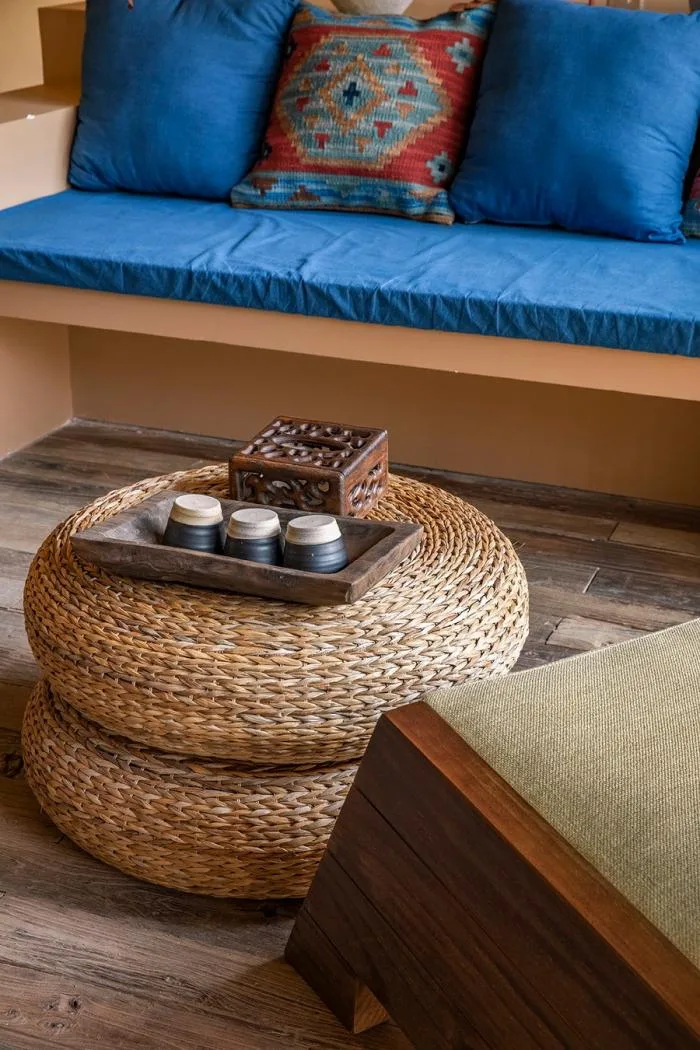
△ Local-style interior area © Jin Weiqi
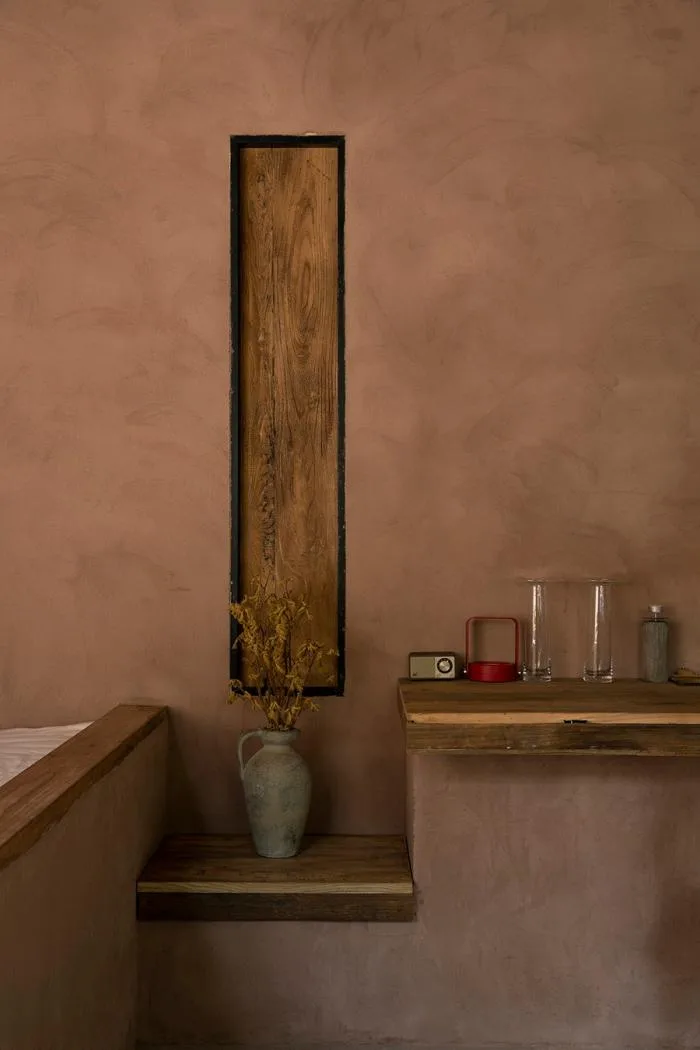
△ Local-style interior area © Jin Weiqi
Design Drawings
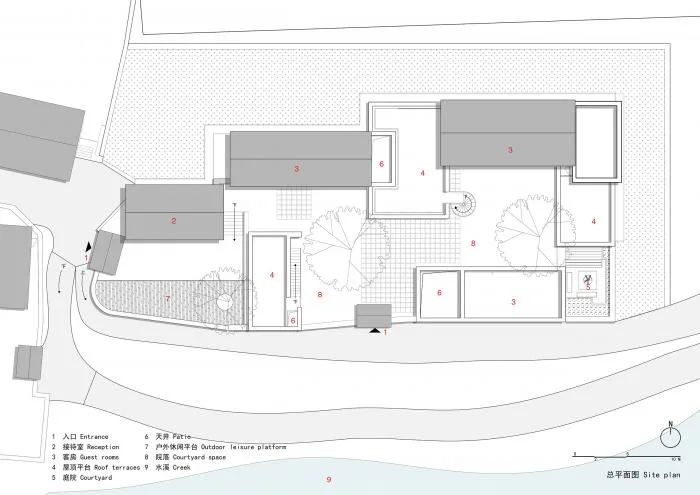
△ General layout plan © Jin Weiqi
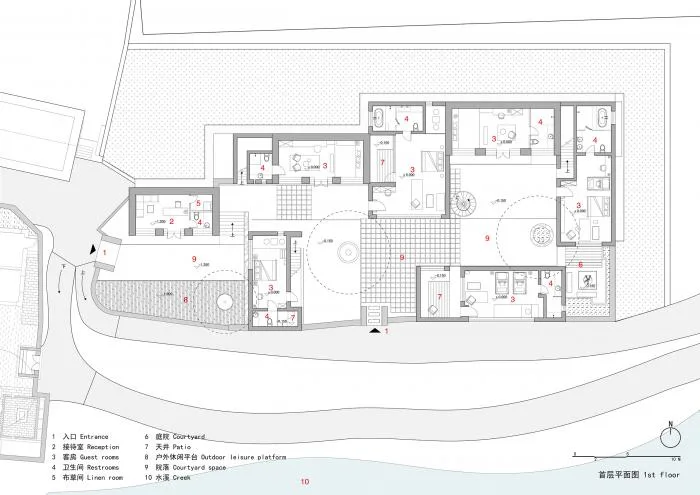
△ First floor plan © Jin Weiqi
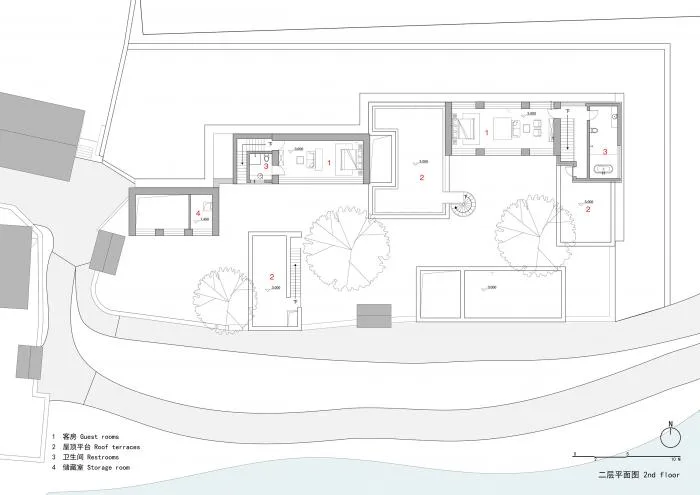
△ Second floor plan © Jin Weiqi
Project Information:
Name: Mint Homestay
Location: Hanhonggou Village, Qinhe Town, Qinyuan County, Shanxi Province
Owner: Qinyuan County People’s Government
Architecture, Interior, and Landscape Design: Sanwen Architecture (www.3andwickdesign.com)
Lead Architects: He Wei, Chen Long
Project Architect: Liang Zhuyu
Design Team: Sang Wanchen, Cao Shiqing, Liu Mingyang
Project Consultants: Zhou Rong, Lian Yirui
Resident Representative: Liu Weidong
Design Period: April – July 2019
Construction Period: August 2020
Site Area: 960 square meters
Building Area: 540 square meters
Photography: Jin Weiqi, Sanwen Architecture












Must log in before commenting!
Sign Up