
Regional Culture and Architectural Purpose
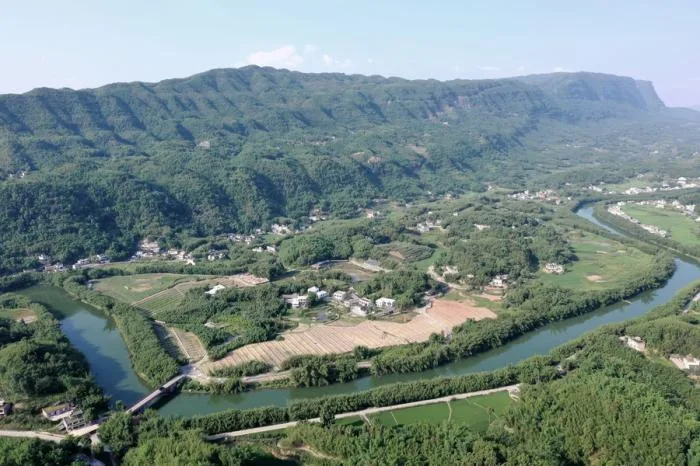
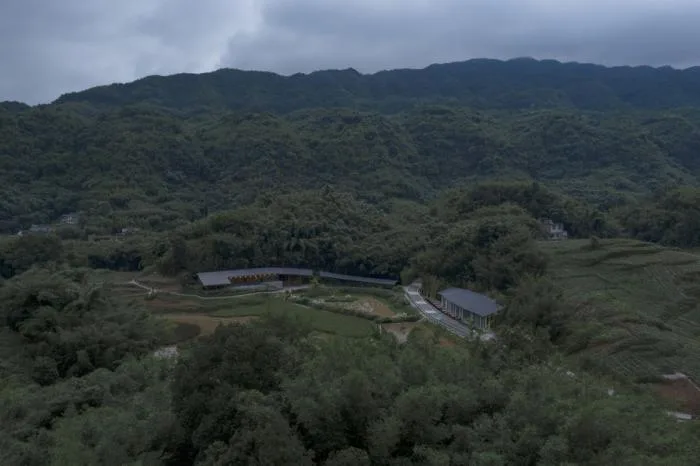
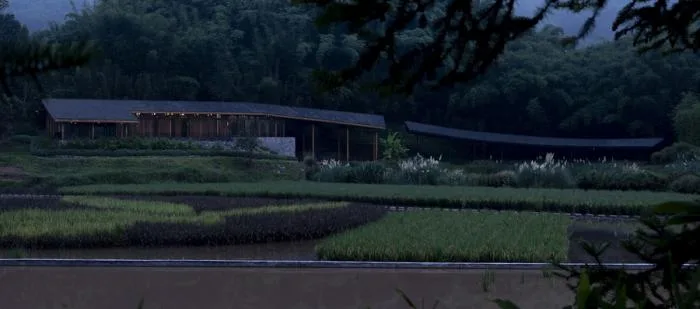
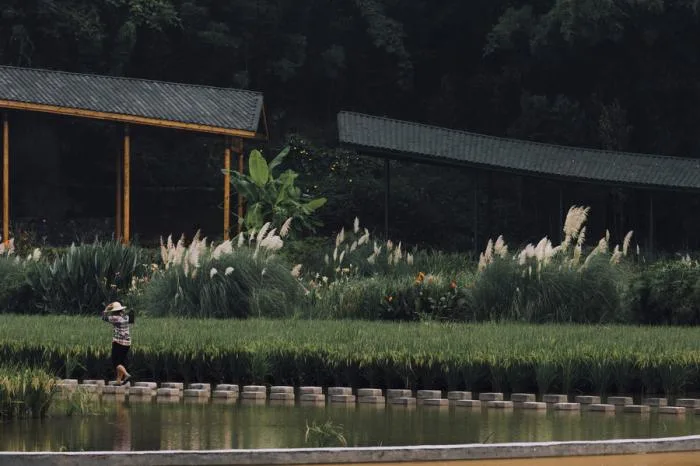
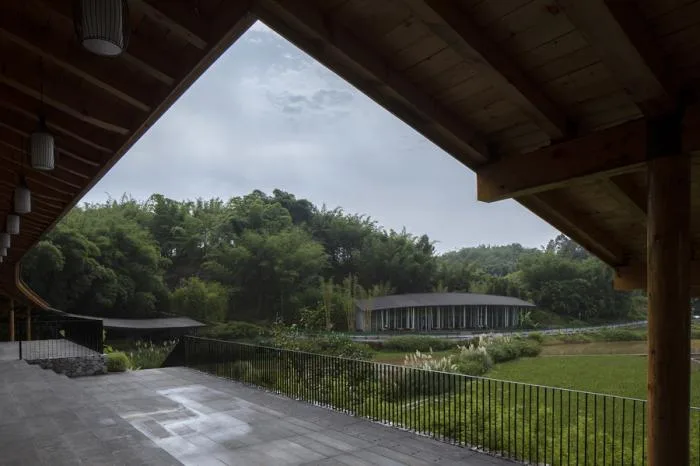
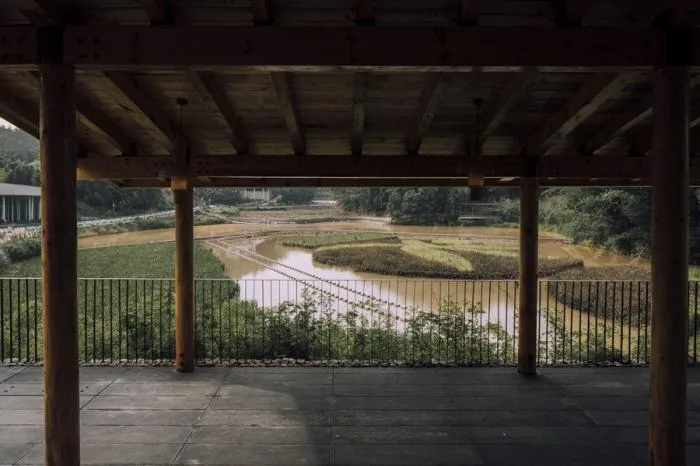
Zhuzhi Academy is nestled in Yongjiang Village, Zhuhai Town, Changning County, Yibin City, Sichuan Province, near the renowned Shunan Bamboo Sea Scenic Area. The project site lies in a small village within Huangjuetan, surrounded by bamboo forests, rice paddies, vegetable fields, and rolling hills. The gentle flow of the Yujiang River borders the west and south, while the Shunan Bamboo Sea extends and undulates to the north, creating a lush green curtain of layered mountains.
Born from China’s rural revitalization initiative, Zhuzhi Academy aims to develop the local bamboo industry and transform bamboo forests into scenic attractions within Sichuan’s picturesque countryside. It also aspires to become an ecological gateway for southern Sichuan to engage with the world. These goals shape its spiritual and architectural vision. The academy’s material functions include the Zhujian Le Fang, Inada Academy, and a Zen meditation hall.
Architectural Imagery
My first visit to the site was in late winter, January 2019. The village appeared withered under the fog and drizzle. Ducks played in the yellowed rice paddies, dogs barked at strangers, and villagers strolled through fields—scenes that brought rare vitality to the quiet landscape. Despite the somber atmosphere, the tranquility and leisure felt unique.
Among the village’s various scenes, the small hills blanketed by bamboo forests, the bamboo-woven mud walls (made from bamboo strips mixed with raw soil), the small green-tiled roofs of old houses, and the banana trees standing beside them left lasting impressions. Yet, these images were typical of rural Sichuan and did not stand out distinctly.
Before leaving, a bamboo grove by the river captured everyone’s attention. Countless new bamboo shoots burst through the old forest canopy, reaching confidently toward the sky. Some had already branched out, evoking Zhang Zhengjian’s words: “Emerald clouds cluster on their own, light flowers and tender bamboo shoots ready to soar into the sky.” This vibrant scene in the depths of winter starkly contrasted with the village’s earlier stillness, leaving a profound impression. It reflected the project’s theme of “revitalization,” evoking ideas of “excellence,” “innovation,” and “the flourishing of old and new.”
Returning in early spring, February, the bamboo forests on the surrounding hills were alive with “green clouds clustering,” “light flowers,” and “tender bamboo shoots poised to soar.” Experiencing the mottled bamboo shadows, bamboo smoke waves, and moonlit bamboo paths on-site brought these poetic images to life. The corridors, arches, interplay of light and shadow, scents, and sounds within the bamboo forest deeply resonated with everyone.
The name “Zhuzhi” derives from Yuefu’s “Modern Songs,” rooted in folk songs from the Chongqing region of Cuba. During the Tang Dynasty, poet Liu Yuxi, governor of Kui Prefecture, adapted these melodies with new lyrics celebrating festive scenes and folk customs. Bamboo branches, as folk songs, are closely tied to music halls and, as poetry, to academies. They represent both a tangible component of bamboo and an essential element of traditional Chinese literature. The imagery of bamboo branches aligns perfectly with the academy’s functions—music, education, meditation—and the vivid impressions gained on-site inspired the name “Bamboo Branch Academy.”
Architectural Ambiance
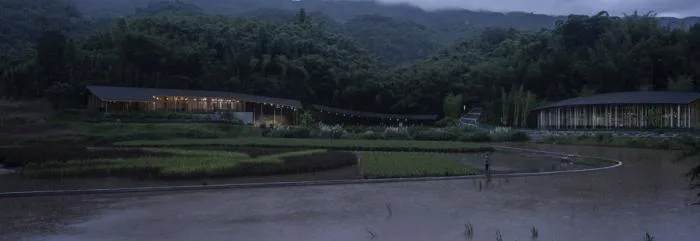
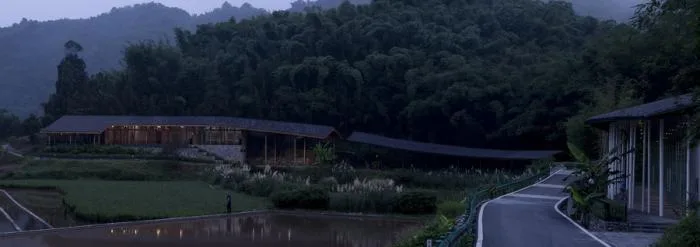
Southern Sichuan is known for its rich traditional culture of bamboo forest villages, typically featuring the “one field, one house, one courtyard” pattern, where bamboo forests surround homes. Mou Pingwu’s “Water Bamboo Residence” vividly captures this architectural mood: clear waves ripple around the house, green silk-like bamboo separates spaces, fish-scale patterns shimmer, and birds sway gently. The painting’s rippling silhouette and the shade of the book swaying in green rain perfectly depict the harmonious integration of architecture with natural surroundings.
Terms like “Raowu” describe undulating architectural forms, “Hualan Yingyang” refers to varied eaves and corridors, and “Shuji” depicts the academy’s functions. The phrase “separated by lush green silk, clear birds, clear ripples, and swaying green rain” poetically depicts the seamless blend of bamboo forests, birds, paddies, and drizzling rain within the architectural environment.
Imbuing Images with Meaning, Seeing Meaning Through Images
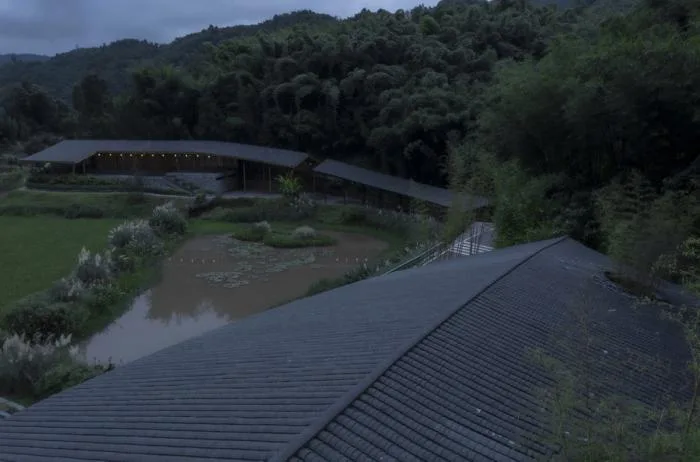
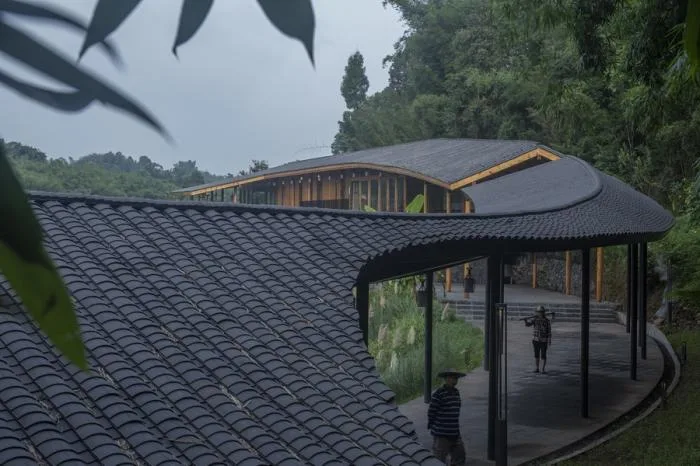
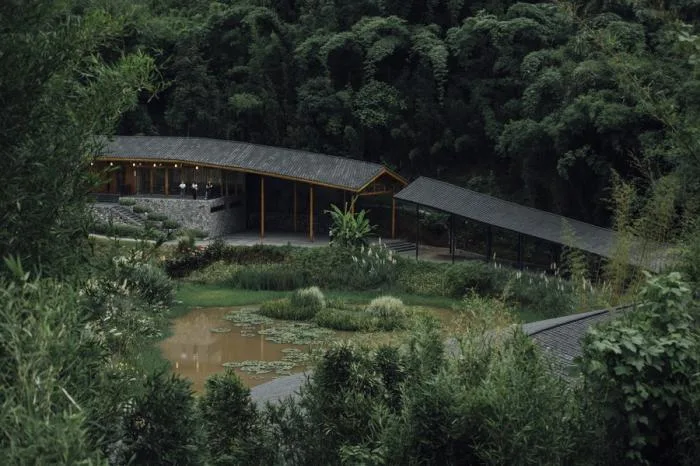
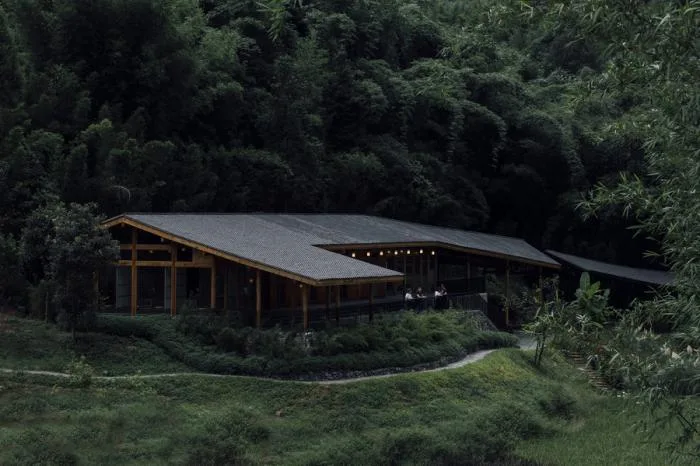
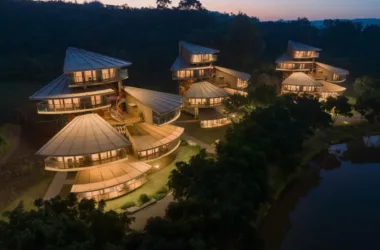
Zhuzhi Academy is a renovation of two old houses typical of southern Sichuan. These buildings have been carefully adapted to accommodate the functions of a music hall, an academy, and a meditation space. The academy is divided into two parts: a secluded meditation academy, located away from the road for peace and quiet, which has been renovated to suit its tranquil purpose; and a Le Fang Academy near a lively road, reconstructed to offer an open, engaging space. These two parts are connected by corridors, forming a “surrounding house” image while also creating multifunctional outdoor spaces, adding vitality and diversity to the academy.
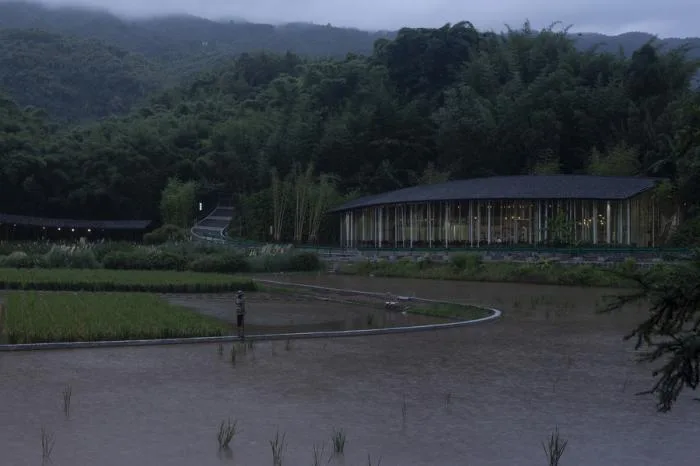
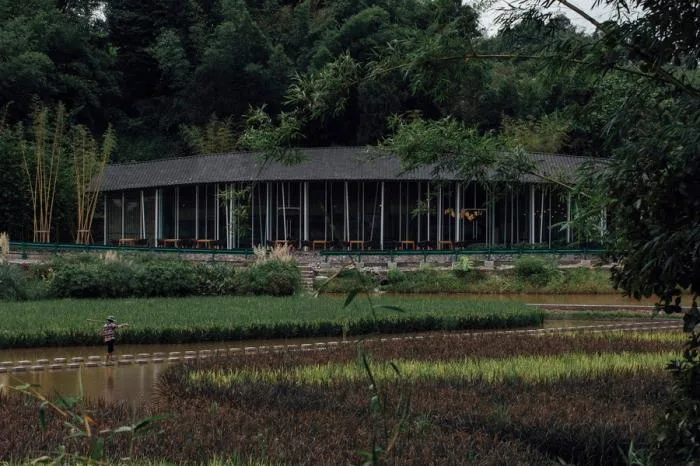
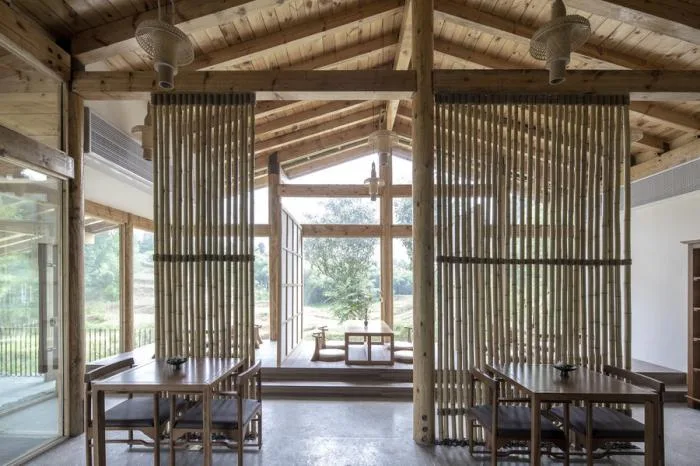
The symbolic “meaning” of bamboo as “valley-like” aligns closely with the philosophy of Zen meditation. The “bamboo nodes” concept is reflected in the interior and exterior spatial design of the Zen academy. Semi-outdoor courtyards, eaves corridors, and open, elegant rooms embody this imagery.
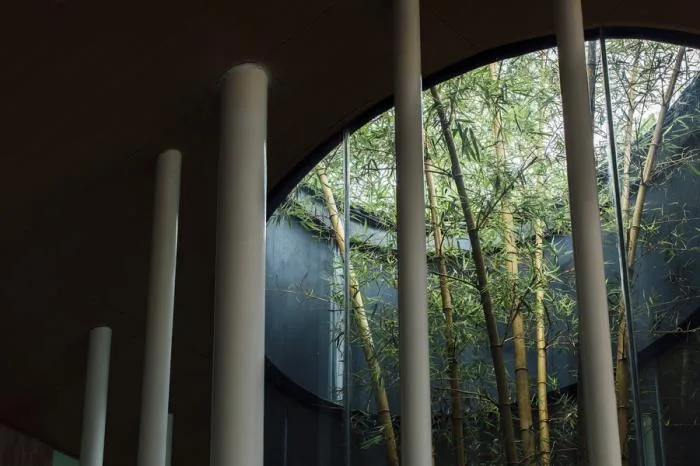
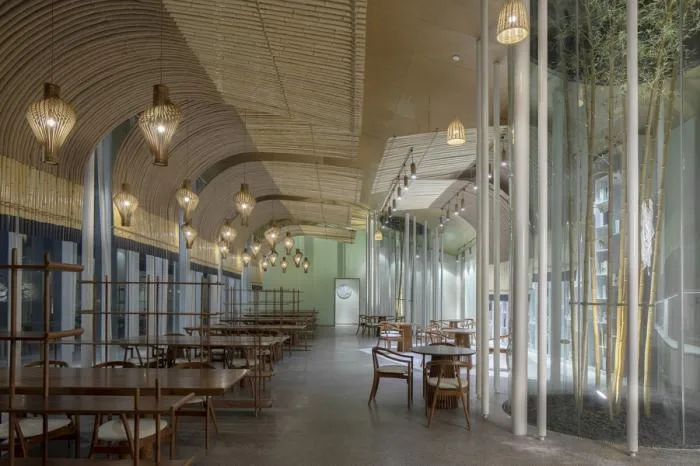
Similarly, the “bamboo standing out” symbolism and the theme of “revival” in Le Fang are integrated. The “bamboo clusters,” “mottled bamboo shadows,” and “secluded bamboo paths” are embodied in the overall space of Le Fang Academy. Features such as bamboo clusters in courtyards, white steel circular pipes in outer corridors, glass courtyards inside, and bamboo decorations abstractly represent the imagery of bamboo forests, shadows, and pathways.
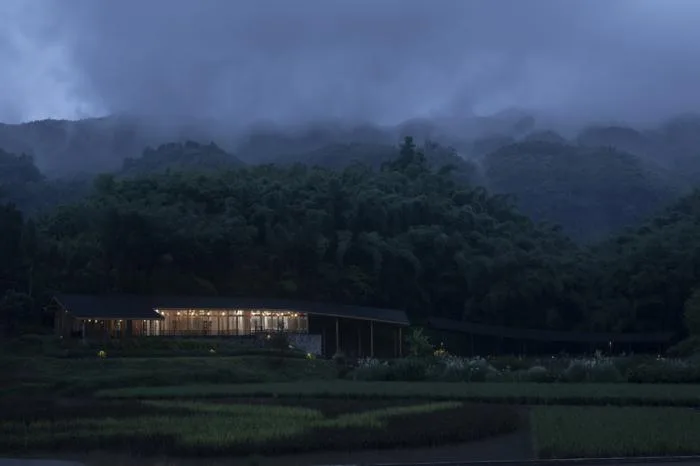
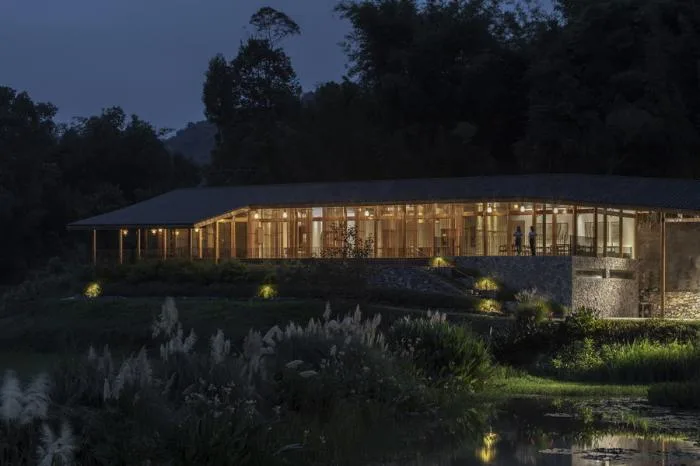
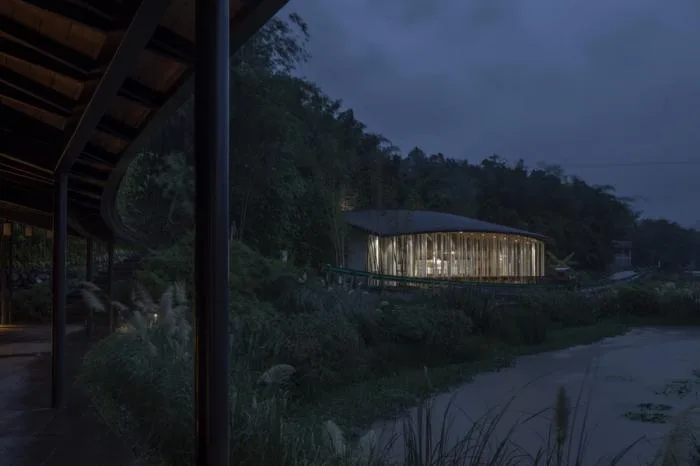
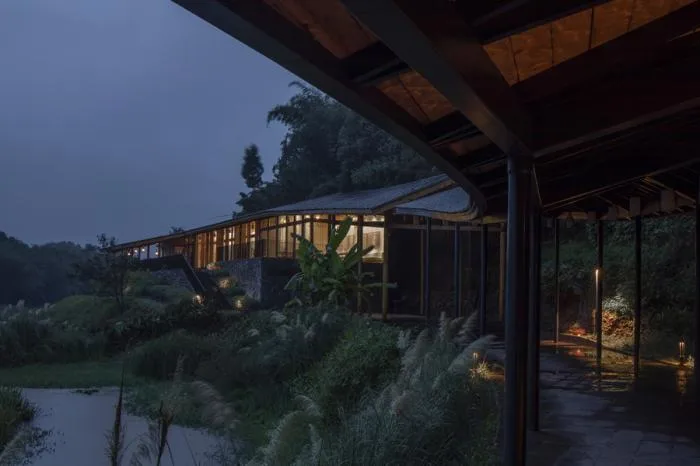
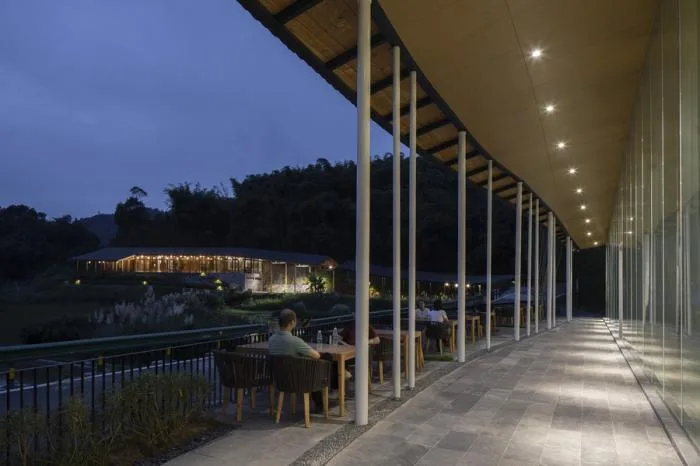
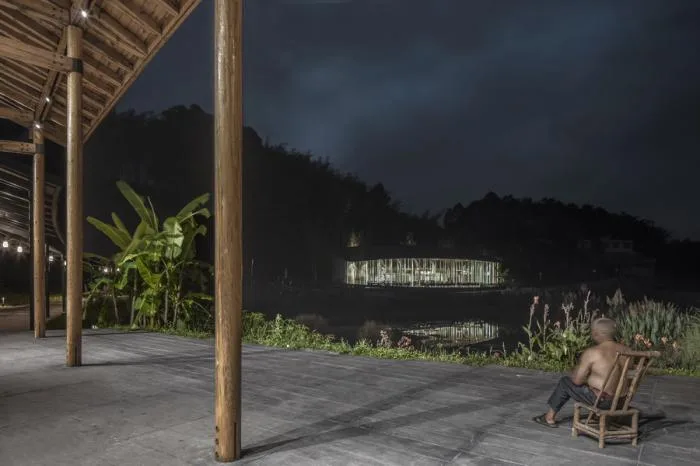
The gently undulating small blue-tiled roof reflects the “surrounding house” image and harmonizes with the bamboo-covered hills nearby. It also responds to the theme of “old and new prosperity” in local dwellings. The thoughtful integration of banana trees, bamboo groves, and field paths invites the new Bamboo Branch Academy to rejoin the village’s embrace with a “soft heart.”
We hope Zhuzhi Academy becomes not only a striking rural landmark in Yongjiang Village, Yibin, but also enriches this small village with poetic charm and picturesque beauty.
Design Drawings
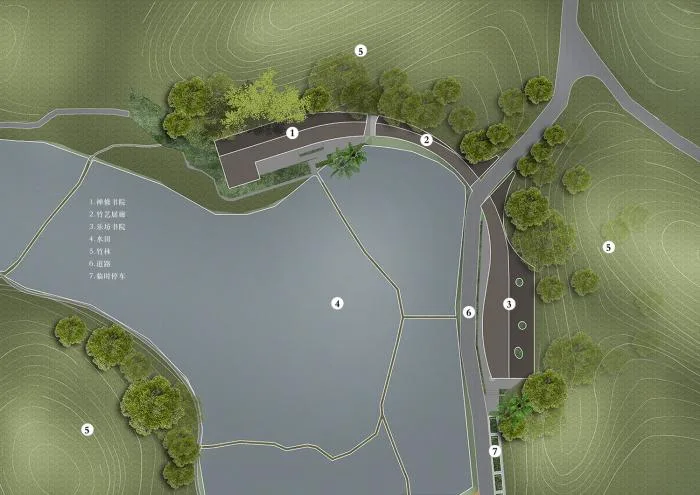
△ General layout plan
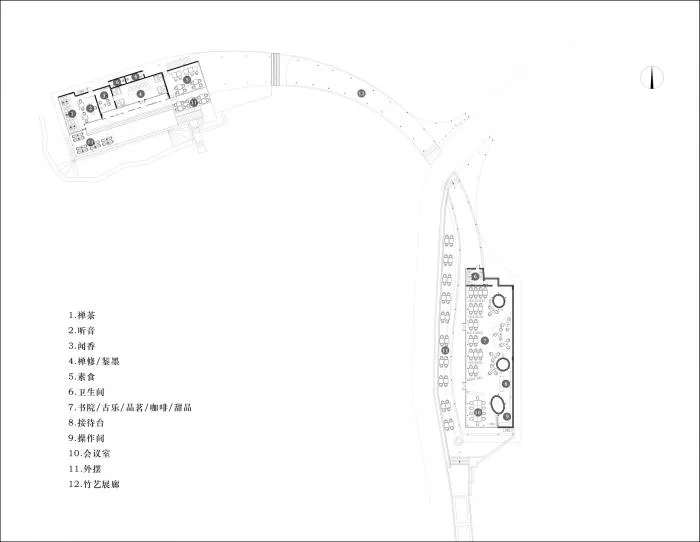
△ First floor plan
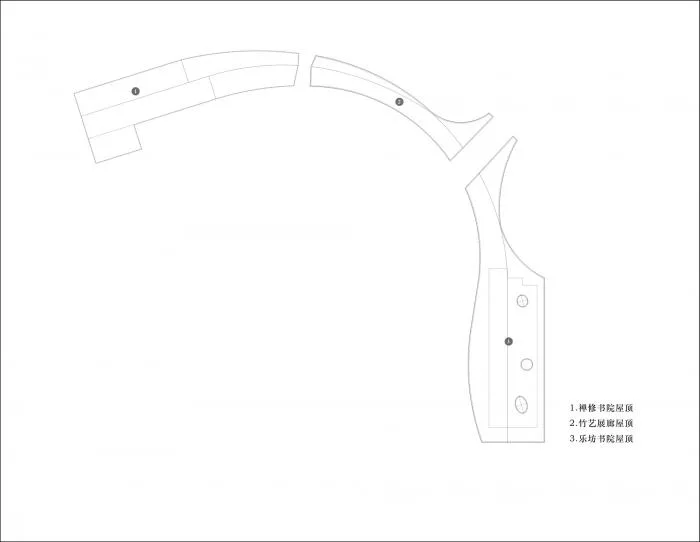
△ Roof Plan
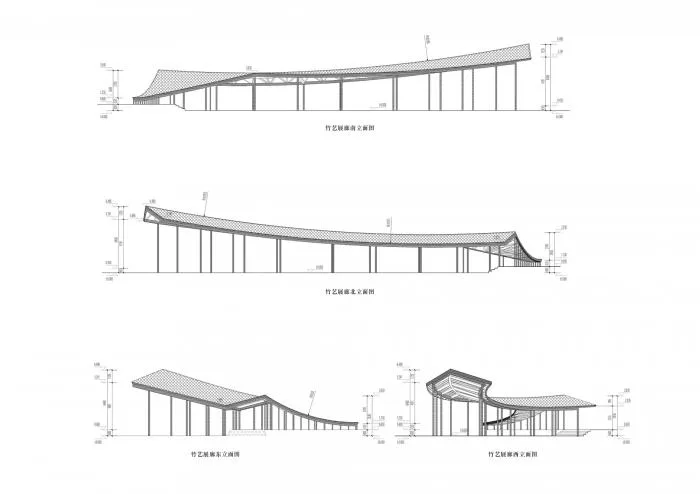
△ Vertical View of Bamboo Art Gallery
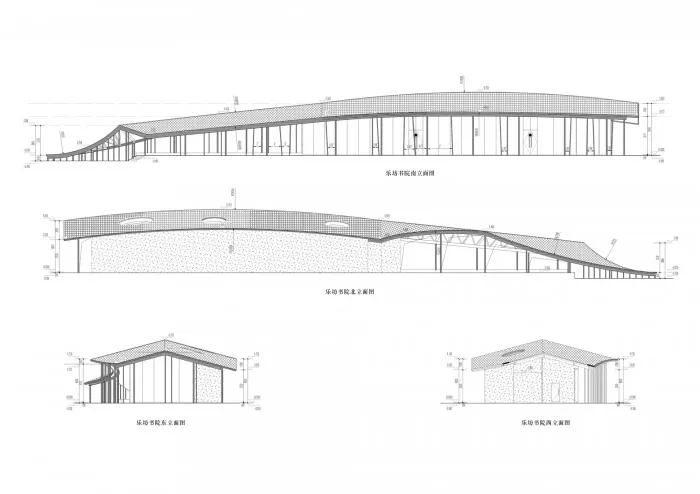
△ Front view of Le Fang Academy
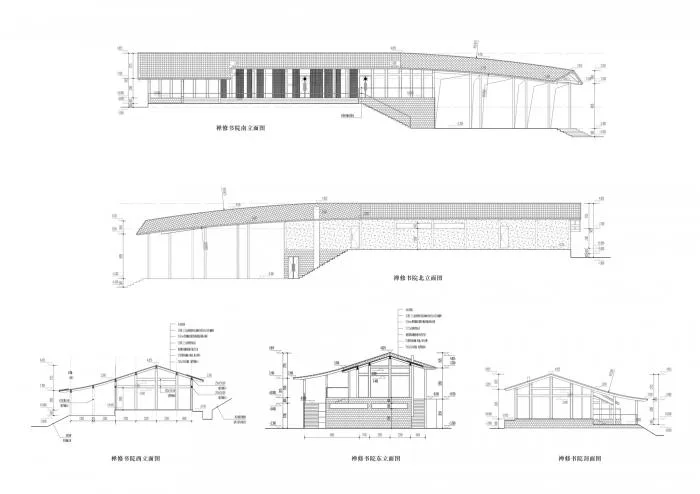
△ Facade and section of Xiushan Academy
Project Information
Project Type: Public Buildings
Location: Yibin, China
Architectural Design: Small Hidden Architecture
Area: 533 m²
Year: 2019
Photography: Existence of Architecture
Lead Architect: Pan Youcai
Design Director: Yang Zhe (Partner)
Technical Director: Chen Renzhen (Partner)
Structural Engineer: Du Xu
Design Team: Li Zihan, Hu Qinmei, Ye Shuhua, He Yi, Gou Yuanjun, Ge Xiangxin, Yang Rui, Liang Guisheng, Wang Qian, Li Gang, Zhang Wei
Construction Drawing Design: Chengdu Sinayulian Architectural Design Co., Ltd
Owner: Sichuan Zhongrui Jinye Cultural Tourism Co., Ltd












Must log in before commenting!
Sign Up