
“Trees grow to my window, like the yearning sound of the silent earth.” — Tagore, Stray Birds
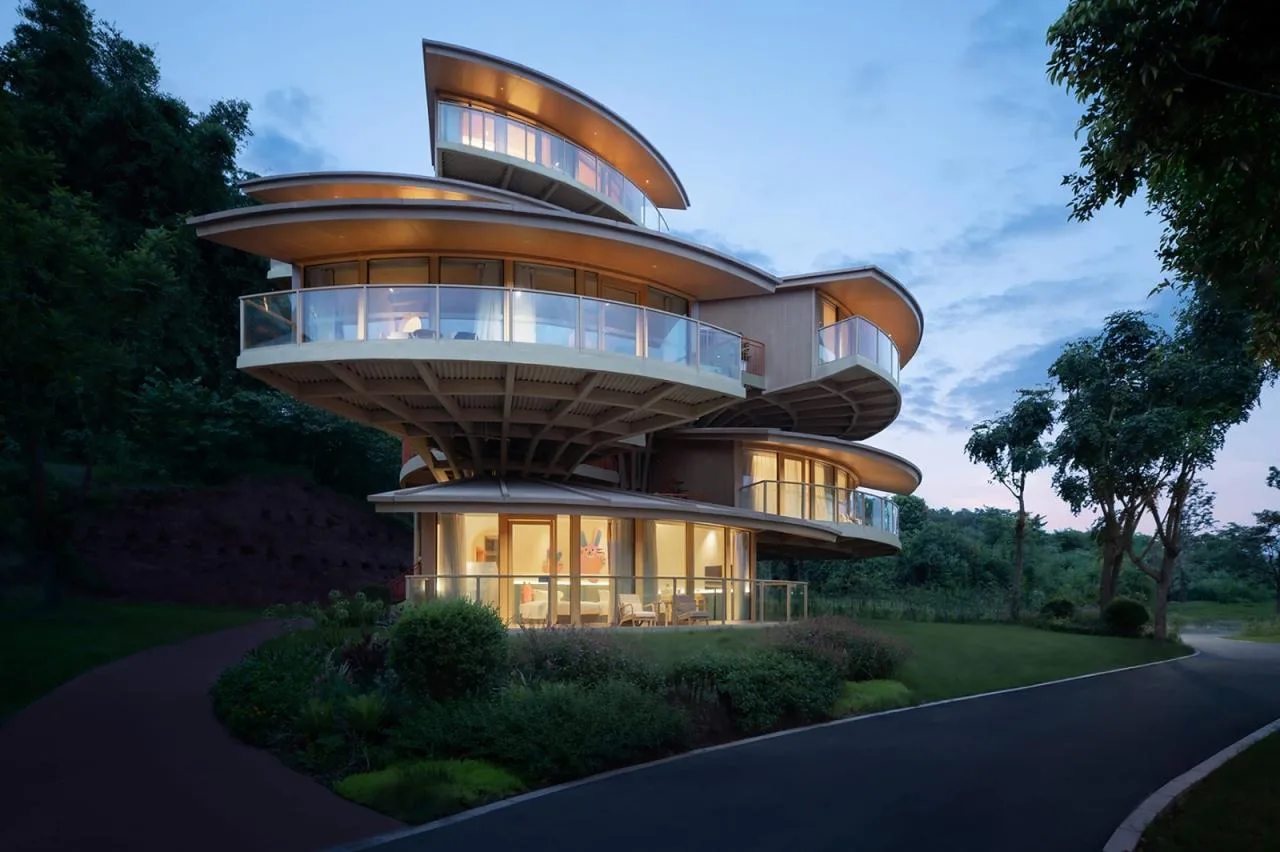
Located in Nanxi District, Yibin City, the Tree House of Nanxi Happy Countryside Wild Fun Hotel represents the 2.0 version of the studio’s treehouse design. Its predecessor, the 1.0 version, is the Hangzhou Kaiyuan Senbo Resort Hotel treehouse completed in 2019. This earlier project quickly recouped construction costs and generated ongoing profits, gaining significant attention from both domestic and international media. It also became a sought-after filming location for advertisements and online content. Notably, the renowned American art website My Modern Met featured the project, showcasing it to a global audience.
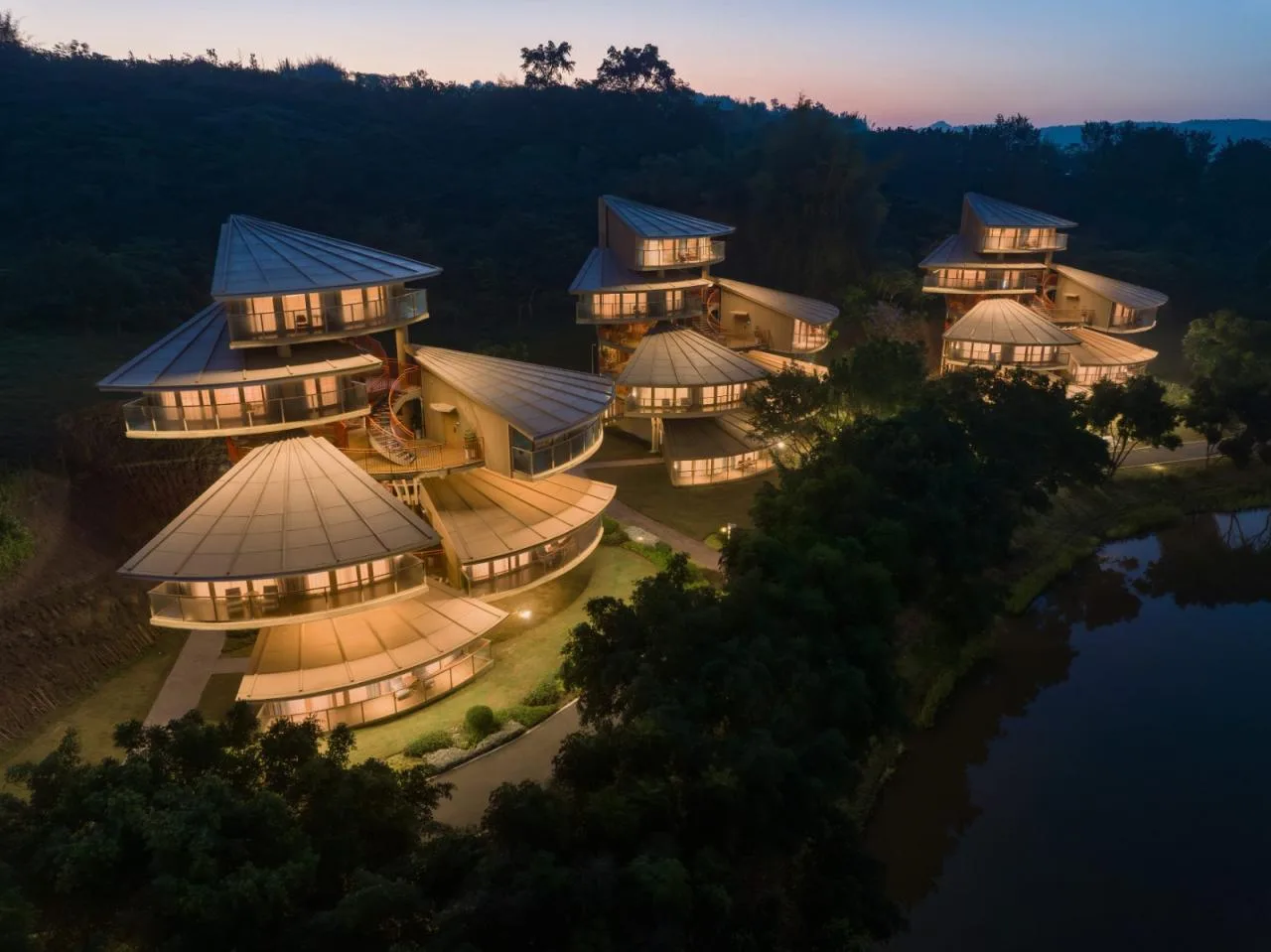
△ Lakeside treehouse © triangular prism
Invited by the Nanxi owner, WH Studio took on the design of this new treehouse product. With strong support from the client, the studio embarked on a fresh exploration of Treehouse 2.0. While version 1.0 emphasized integration with natural elements, inspired by traditional “living quarters,” version 2.0 focuses on an abstract, organic form that appears suspended in the air, drawing particular inspiration from the structure of leaves.
△ Several clusters of leaves © triangular prism
Leaves are among the most common biological forms on Earth, covering the largest surface area among organisms. Structurally, almost all leaves (except phytoplankton) are cantilevered, balancing the need for maximum light exposure with vulnerability to wind and rain. Over millions of years, plant leaves have evolved complex vein systems that deliver nutrients and provide structural support. Botanically, leaf veins are classified into three types: forked veins, reticulate veins, and parallel veins. Parallel veins are common in slender leaves like bamboo; reticulate veins form multi-level networks of primary and secondary veins and are widespread; forked veins, characterized by evenly branched veins from the leaf base, are ancient and rare among seed plants, with Ginkgo biloba being the most typical example.
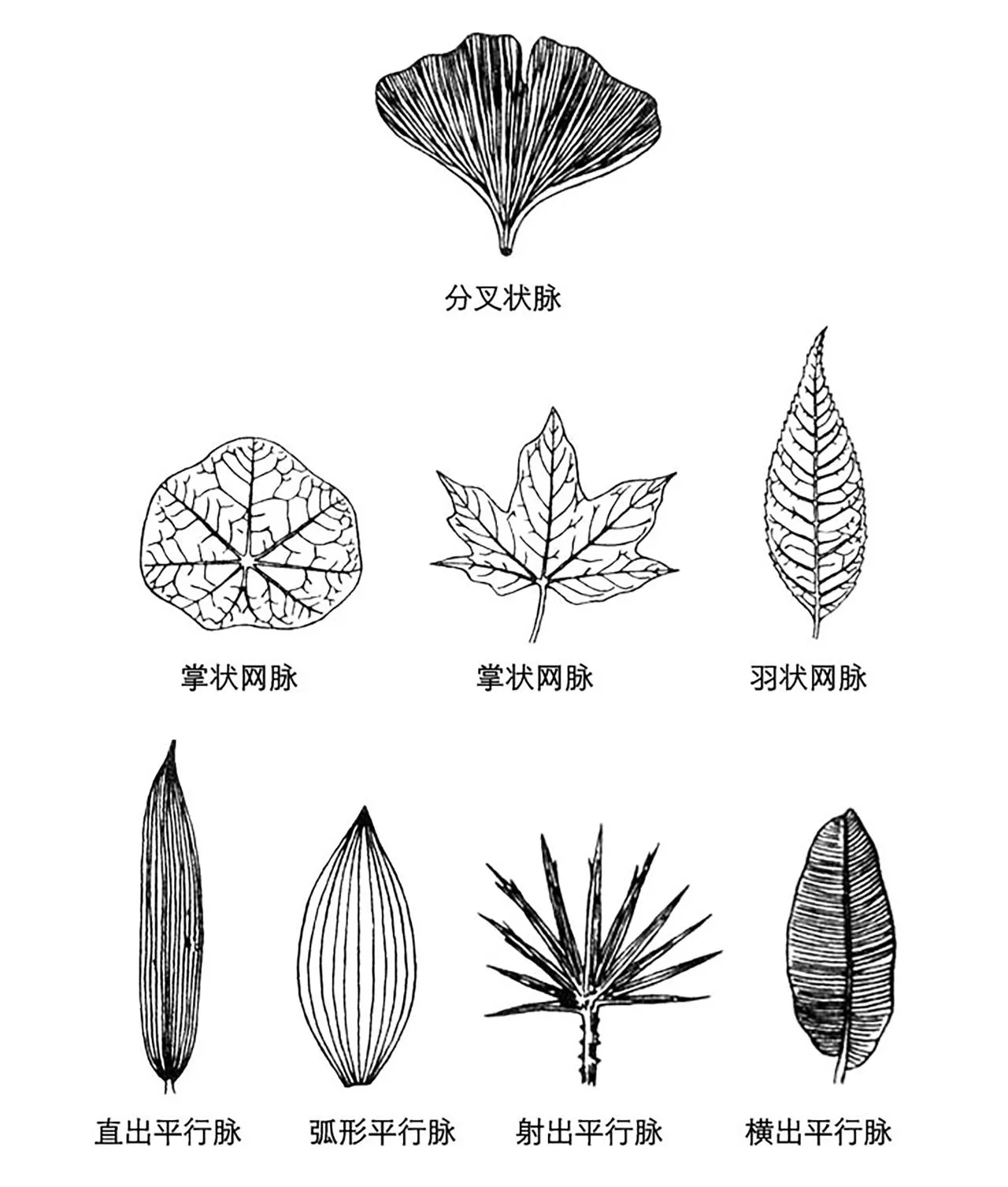
Main types of plant leaves (source: online data)
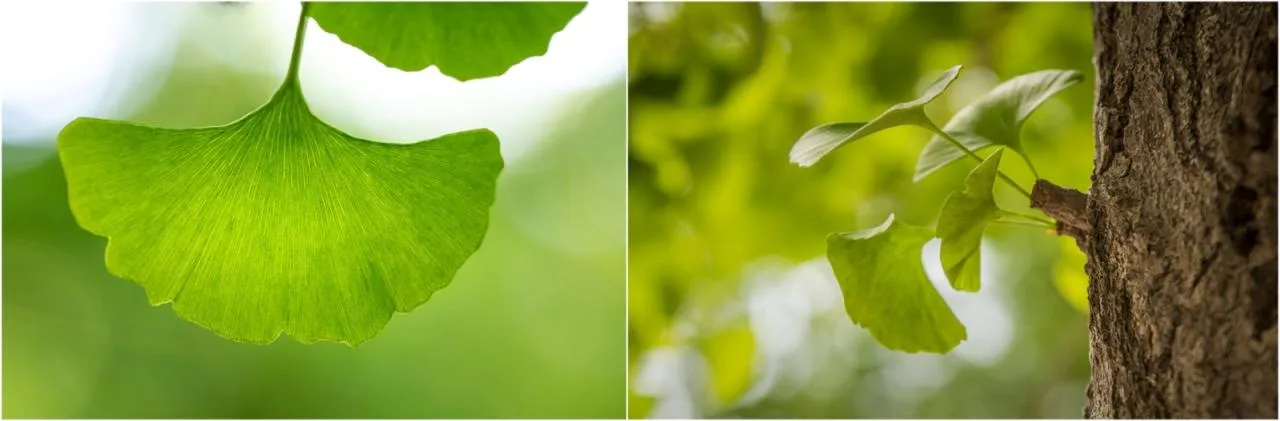
Vein structure of Ginkgo biloba leaves (Image source: Visual China)
Designers regard ginkgo leaves as embodying “classical elegance.” As one of the oldest surviving tree species, Ginkgo biloba is often called a “living fossil.” Its form has remained largely unchanged for over 100 million years, enduring numerous environmental shifts and mass extinctions. The fan-shaped leaves feature clear, simple vein structures with symmetrical proportions, achieving an ideal balance between sunlight absorption, rainwater shedding, and resistance to strong winds.
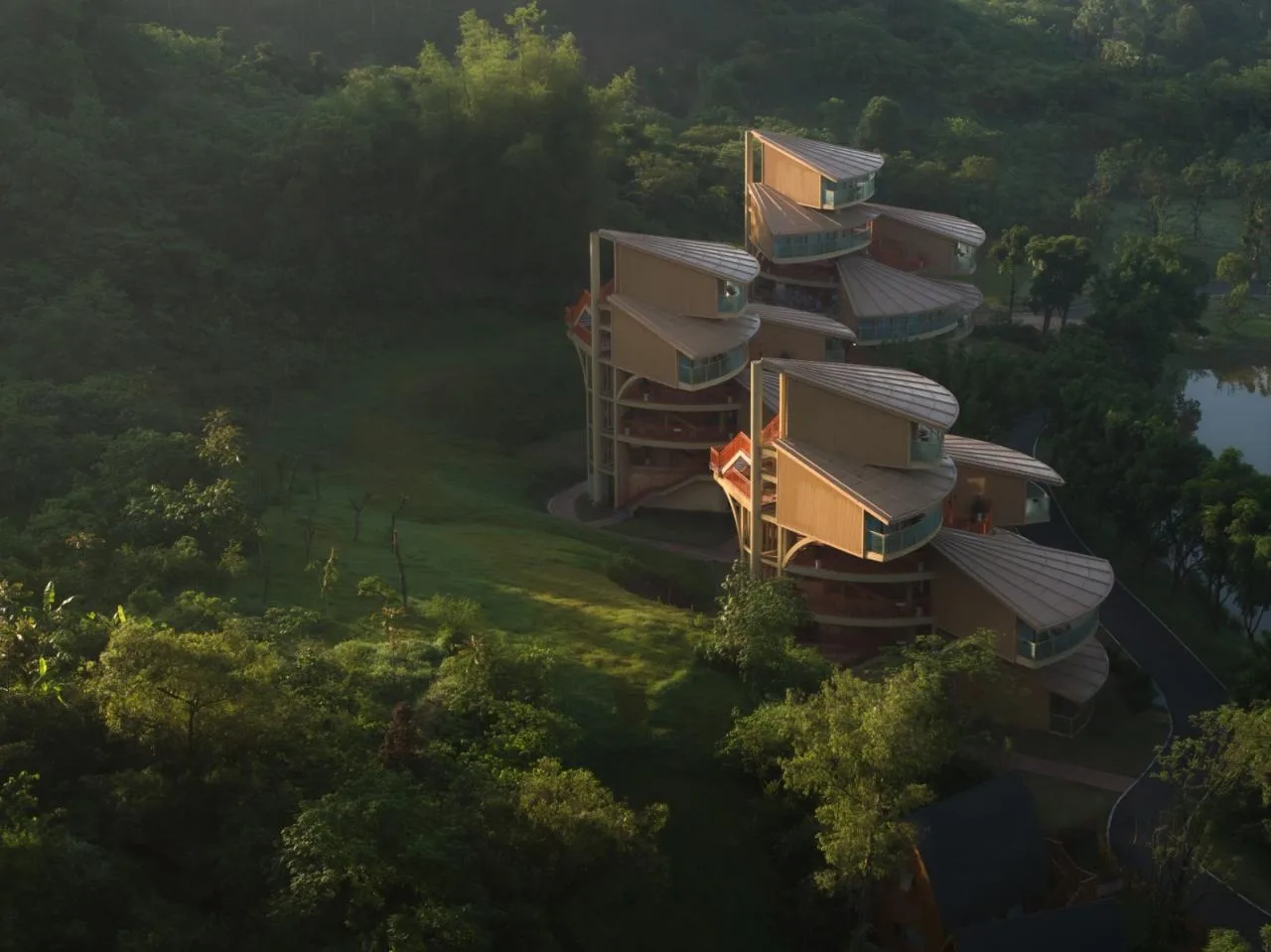
The dawn in the forest © triangular prism
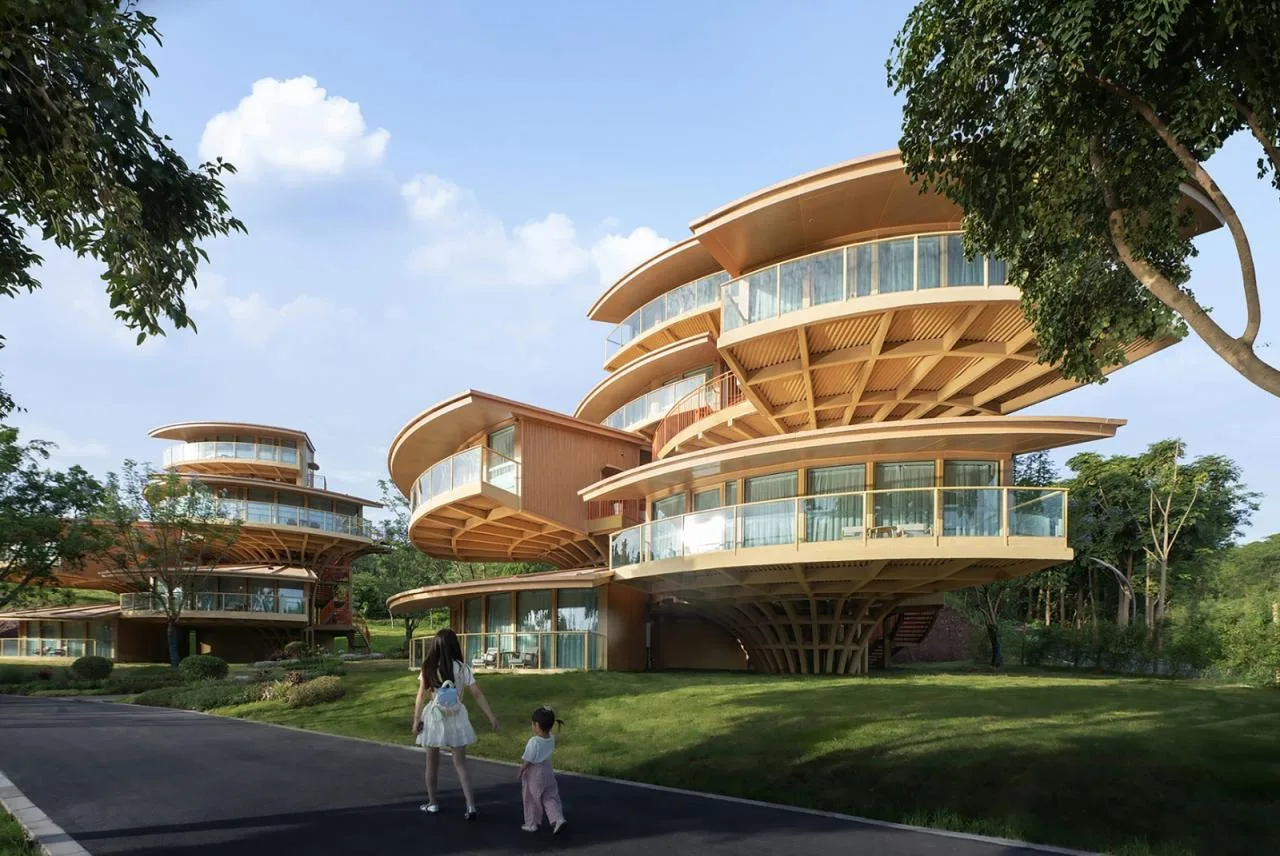
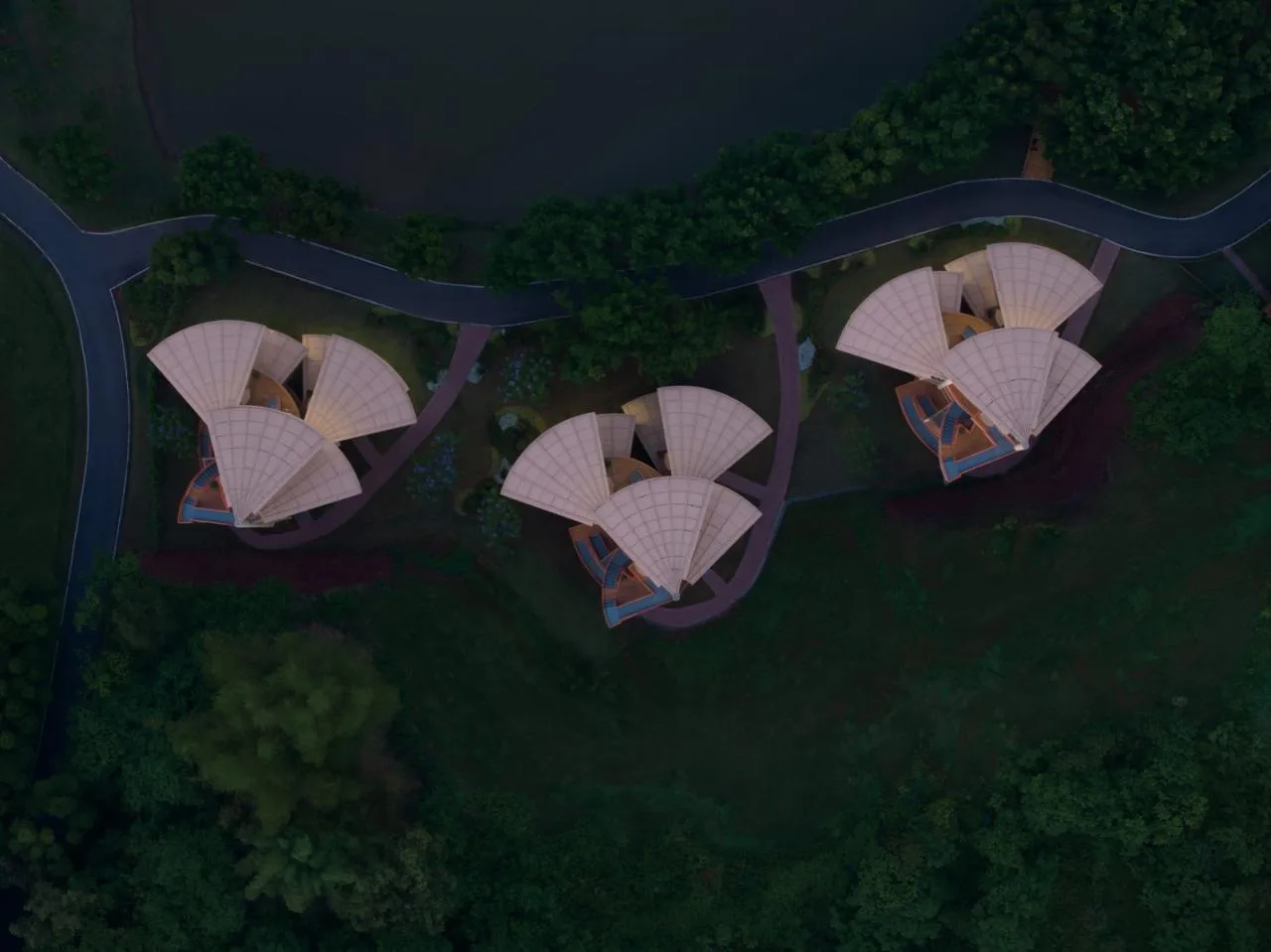
△ Stereoscopic clusters © triangular prism
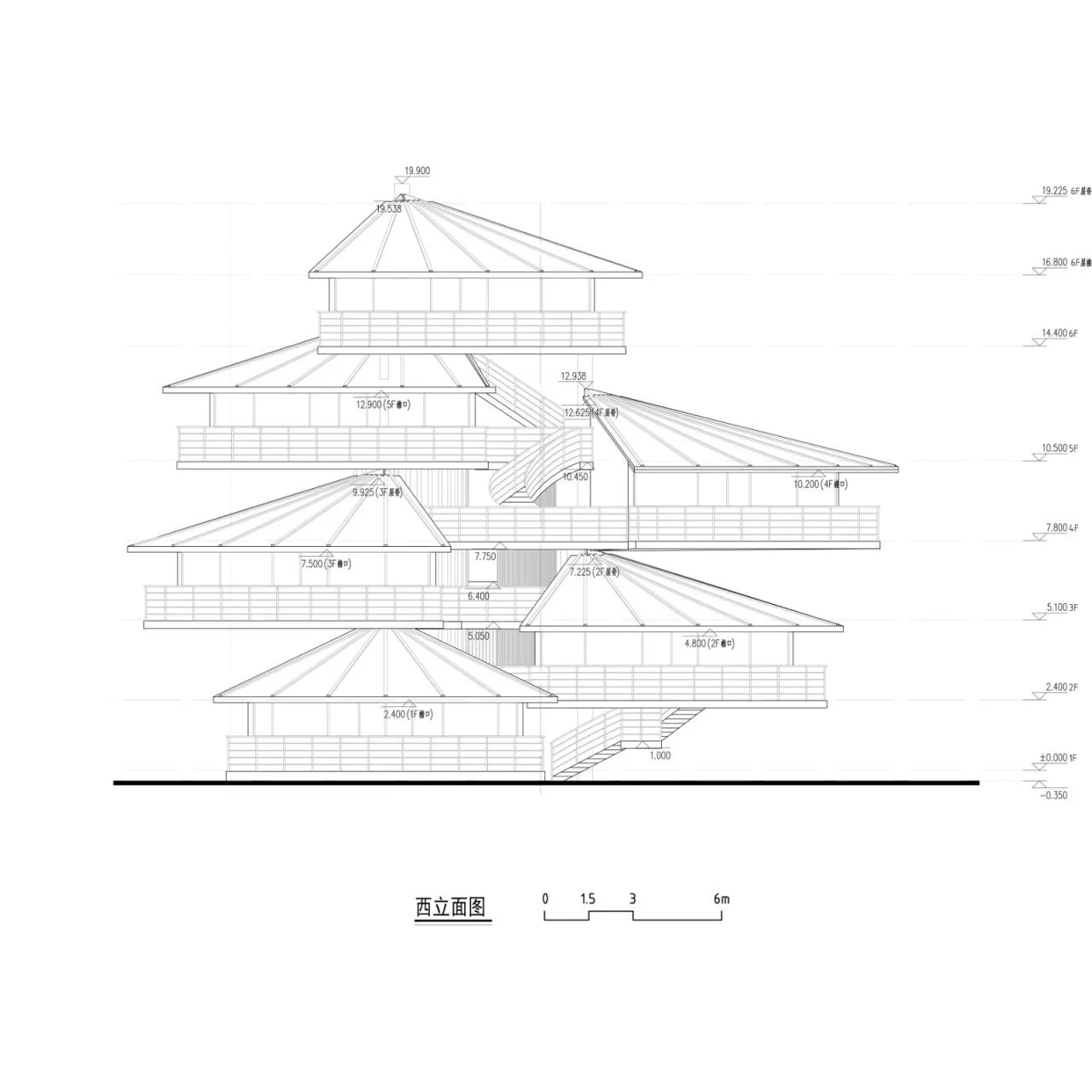
The Nanxi treehouse’s fundamental unit draws directly from the ginkgo leaf’s structure, resembling forked veins that radiate evenly from a central root vein to support a fan-shaped plane. Just as plant leaves offset their top and bottom surfaces to maximize light absorption, the treehouse arranges staggered guest room units at varying heights. Each unit faces the main landscape but at different angles, creating independent structures and spaces that evoke a natural, organic feel while minimizing vibrations common in large cantilevered steel frameworks.
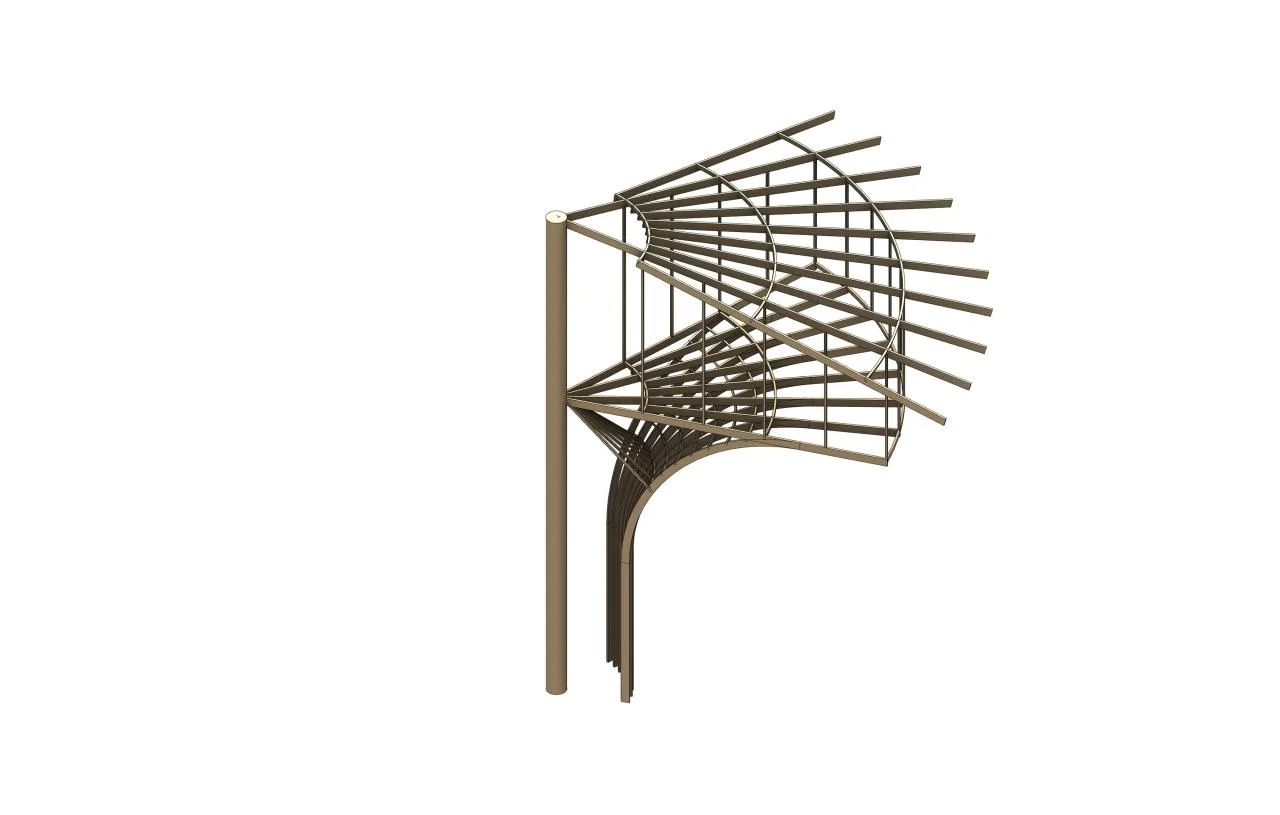
Schematic diagram of treehouse unit structure © WH Studio
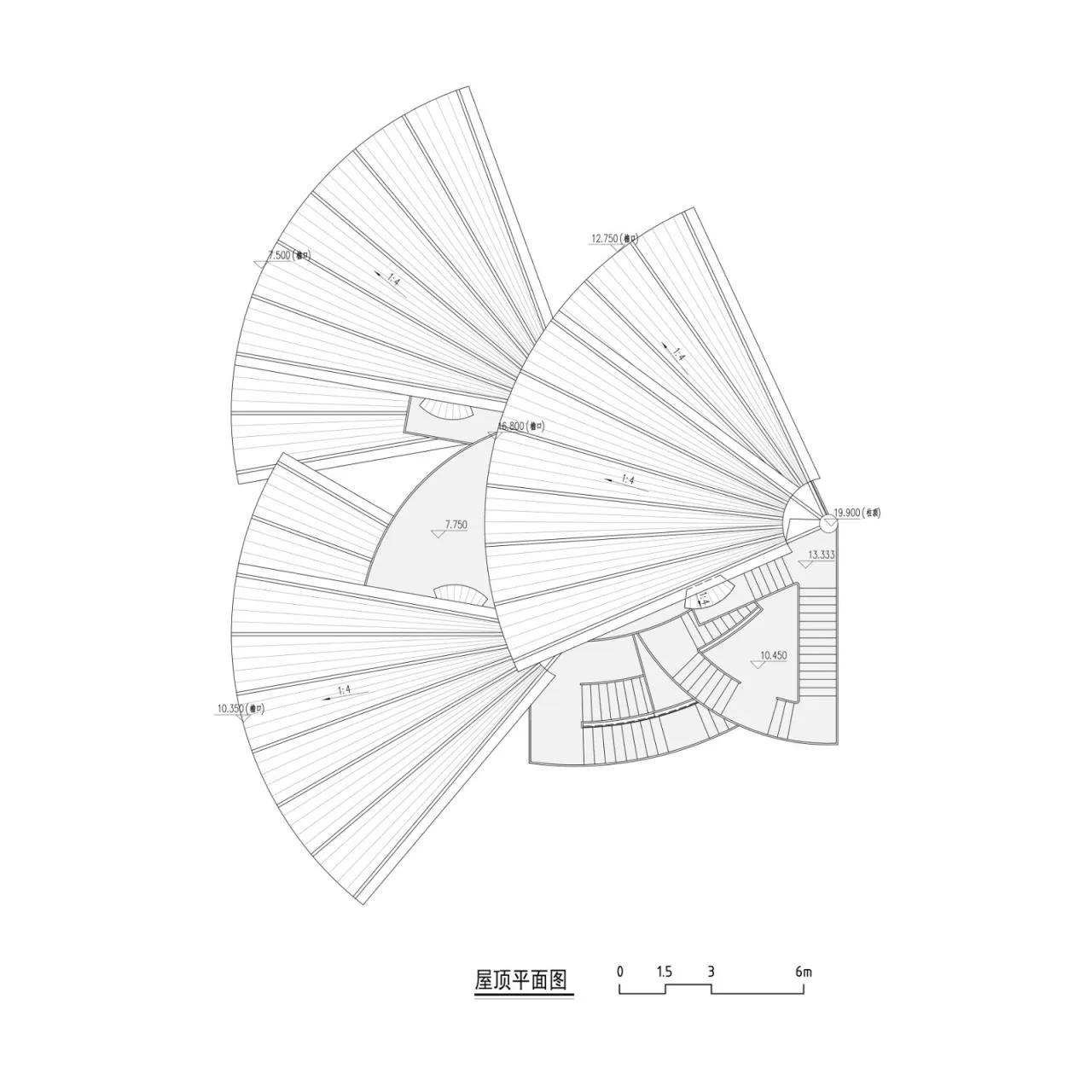
Like a tree trunk rooted in the earth with branches and leaves reaching skyward, the treehouse is supported by three steel columns and a main beam forming a stable triangular structure that carries most of the building’s load. A fan-shaped cluster of structural columns, inspired by leaf veins, supports the cantilevered floor plate. The fan-shaped bottom surface, sloping fan-shaped roof, and slender steel columns—including window frames—together create a suspended structural unit.
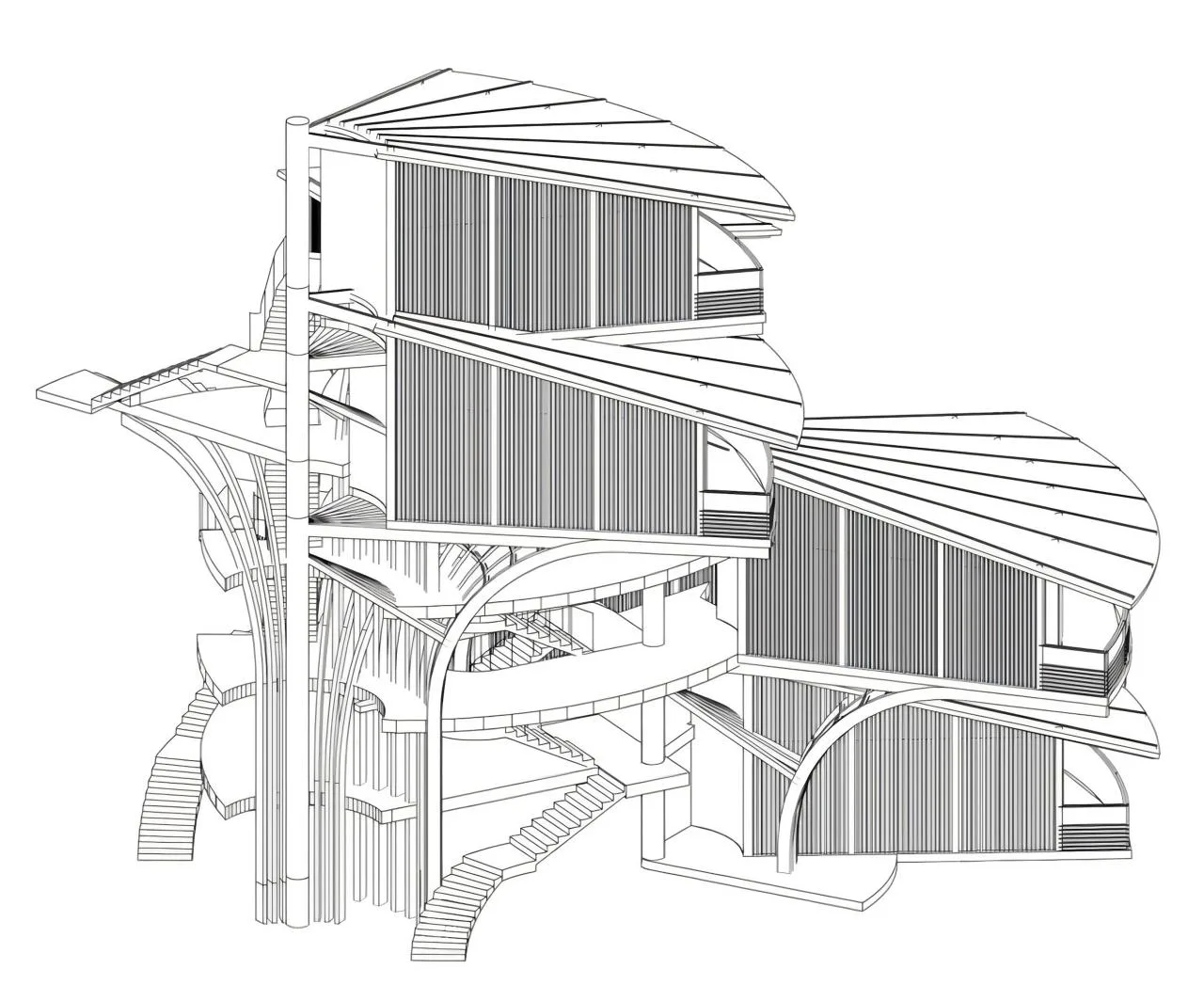
△ Overall axonometric diagram © WH Studio
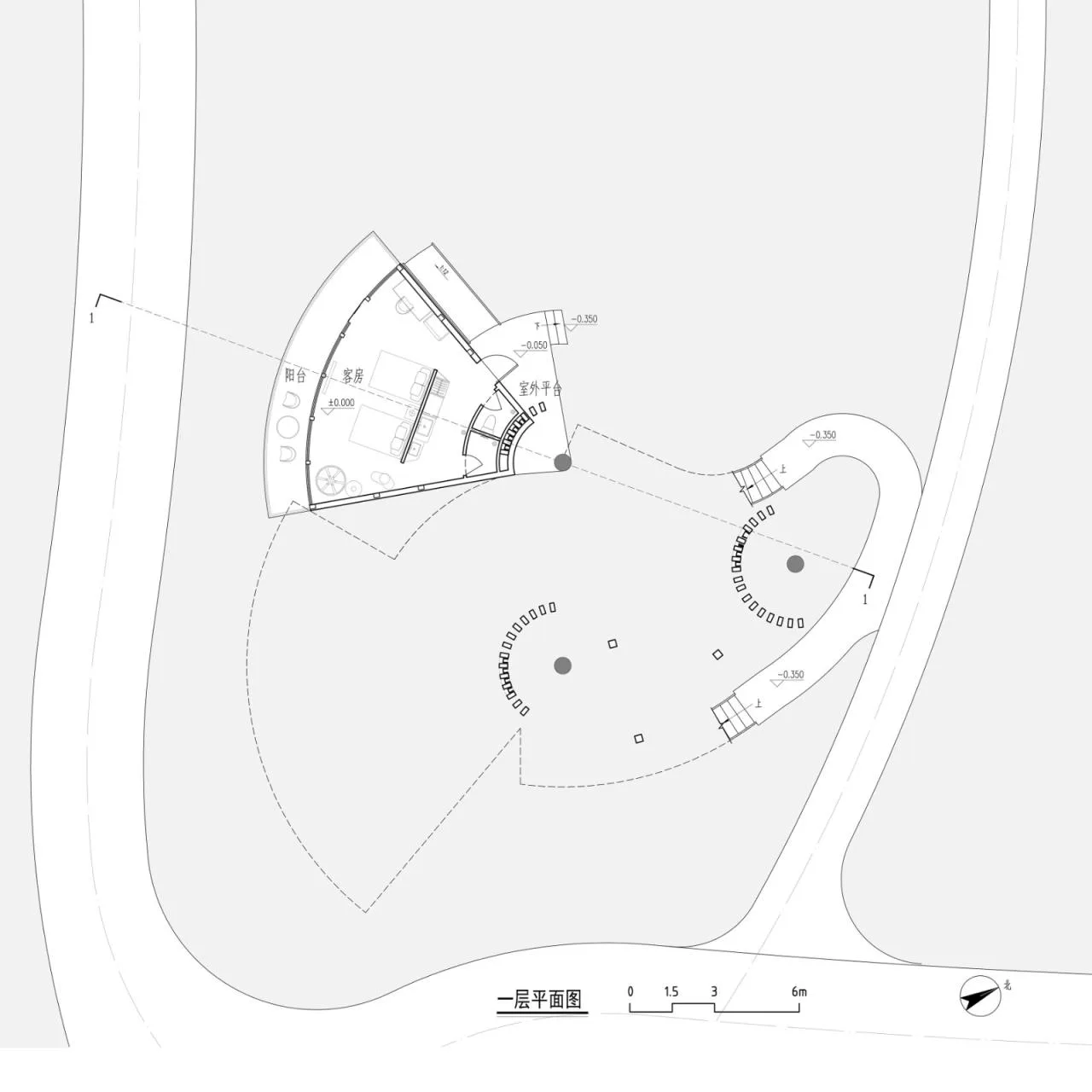
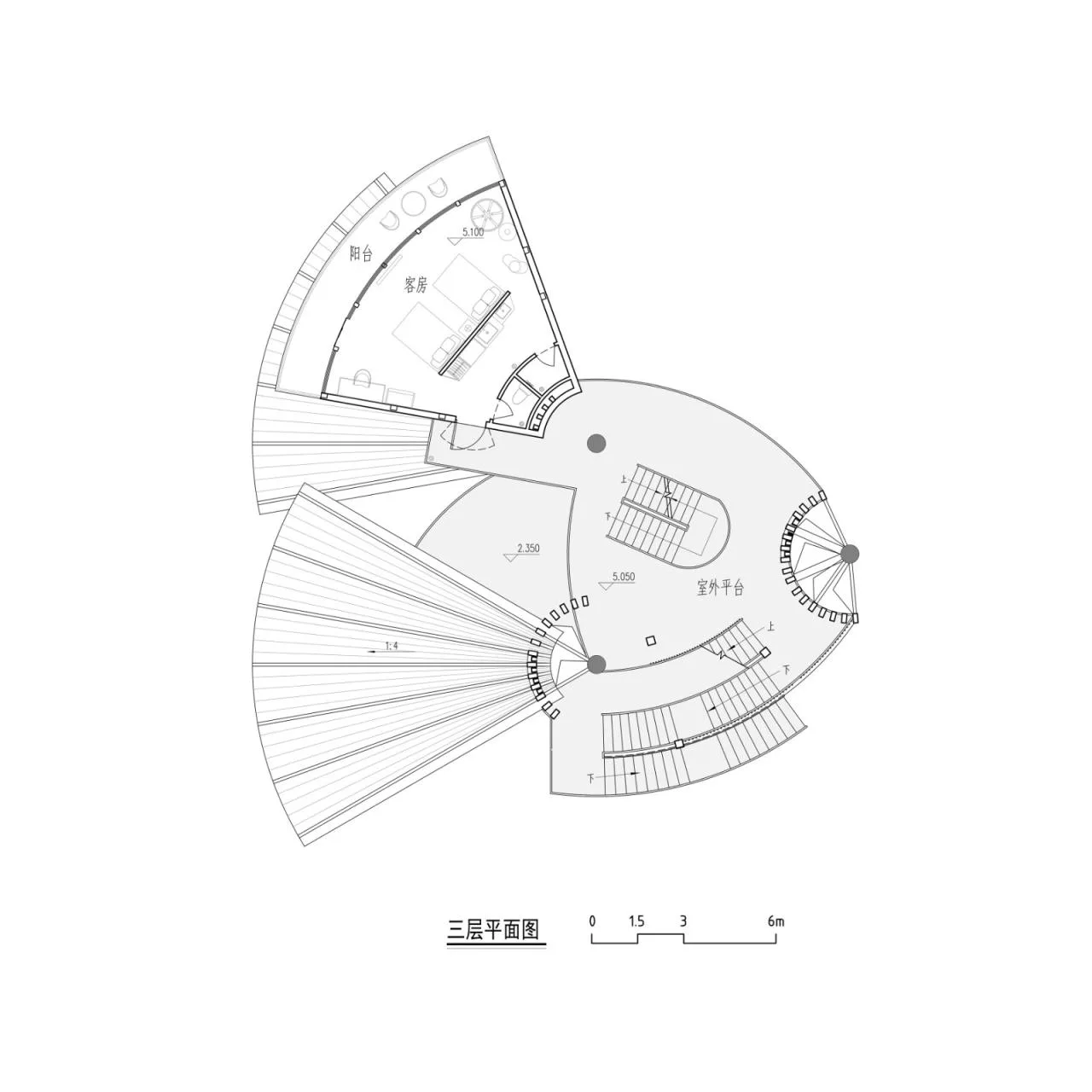
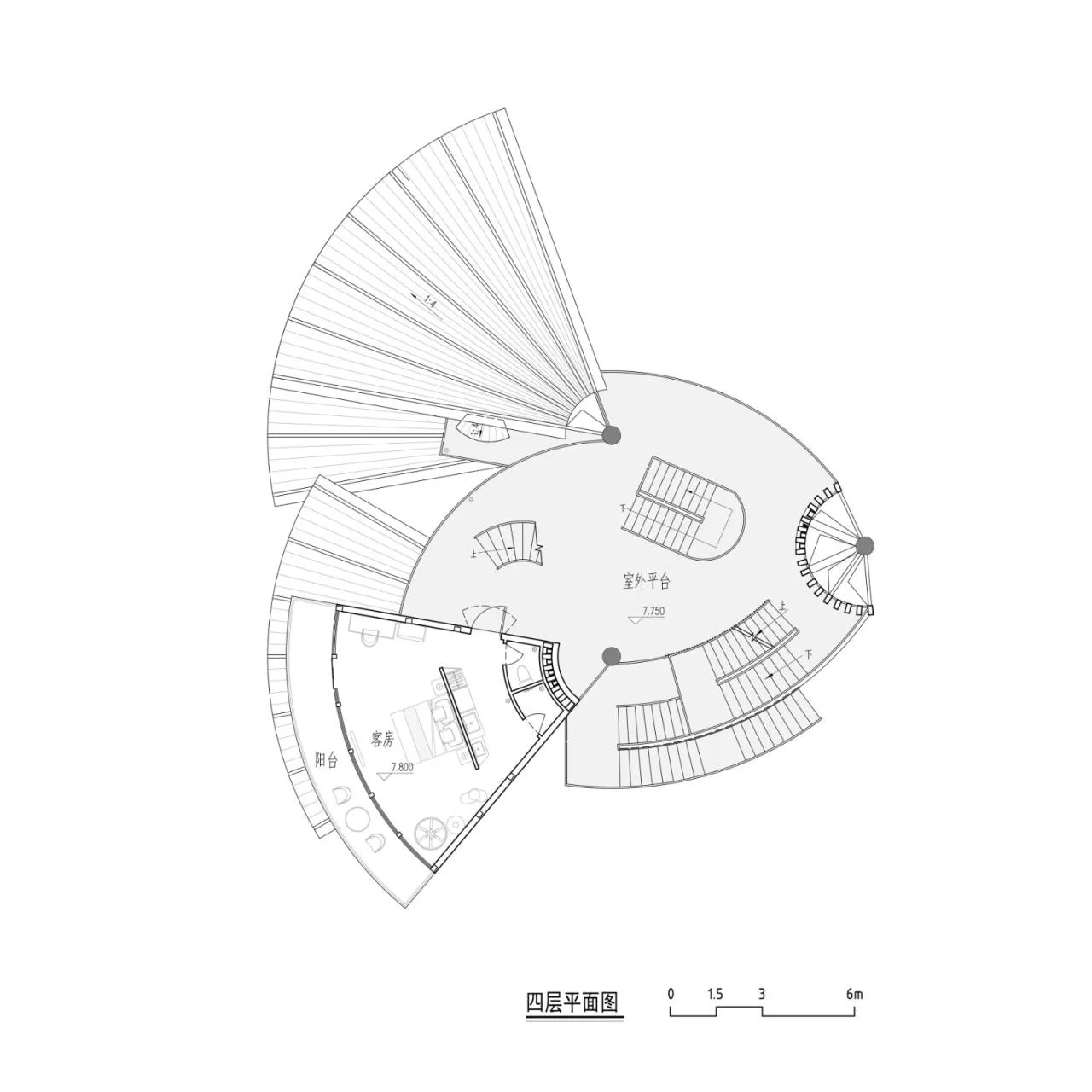
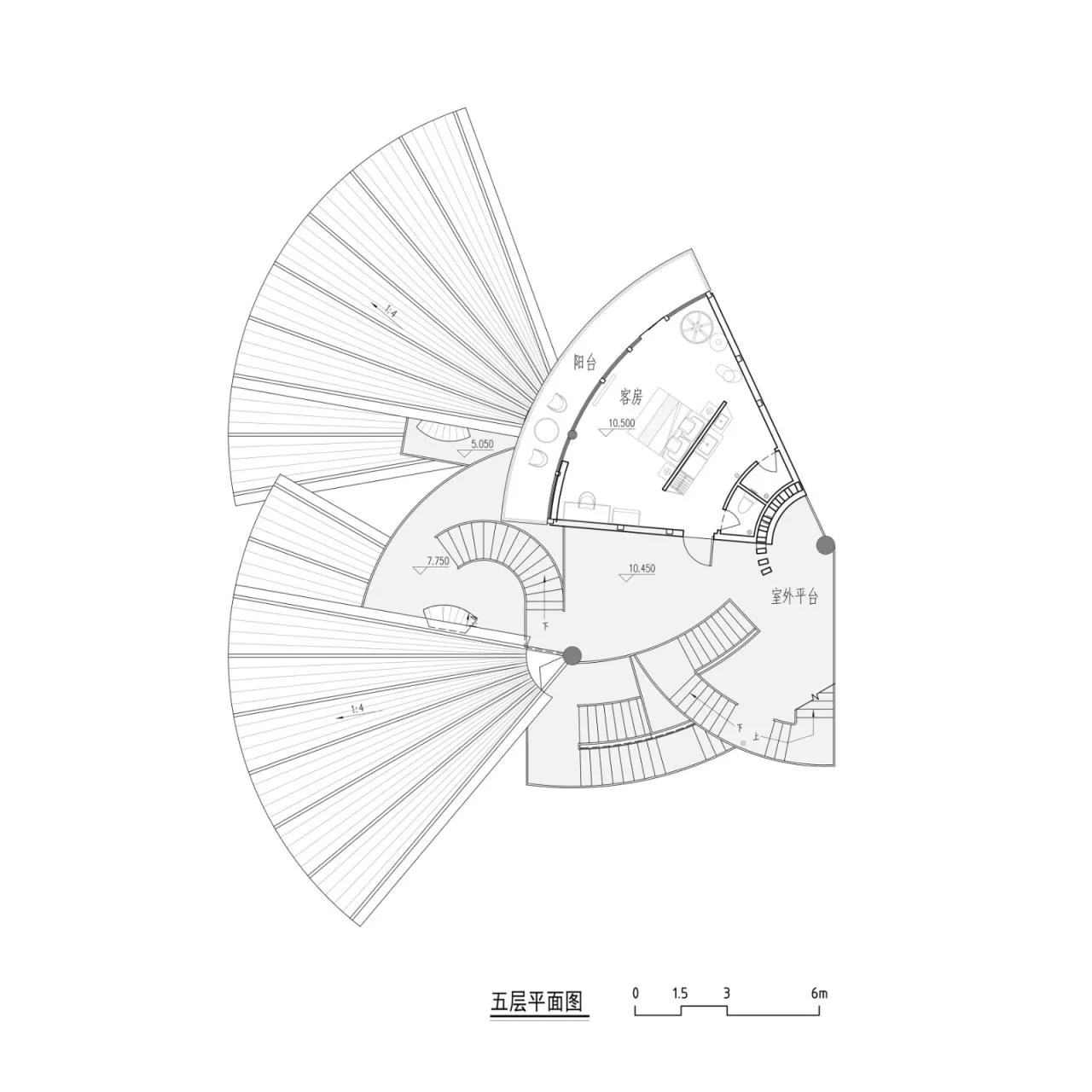
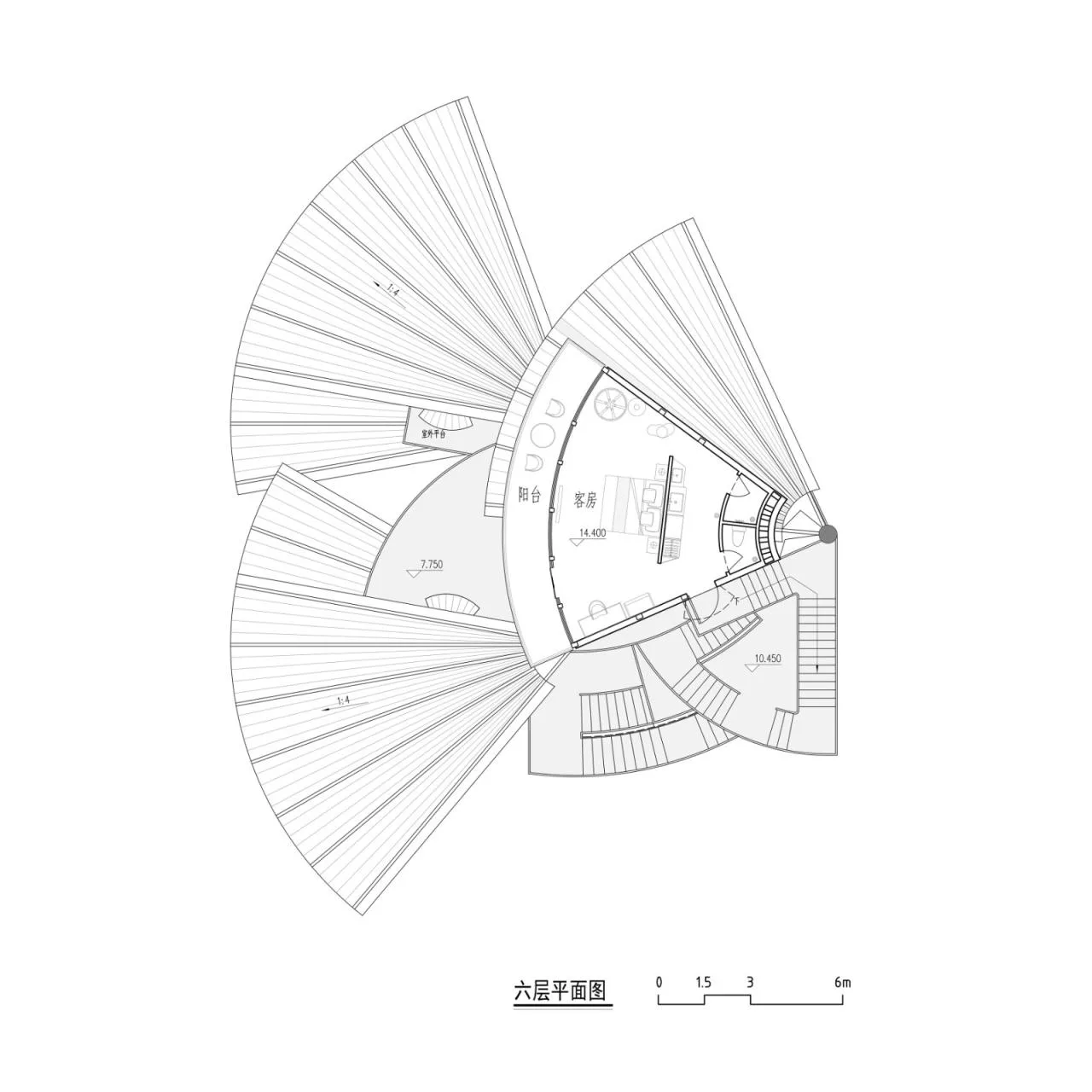
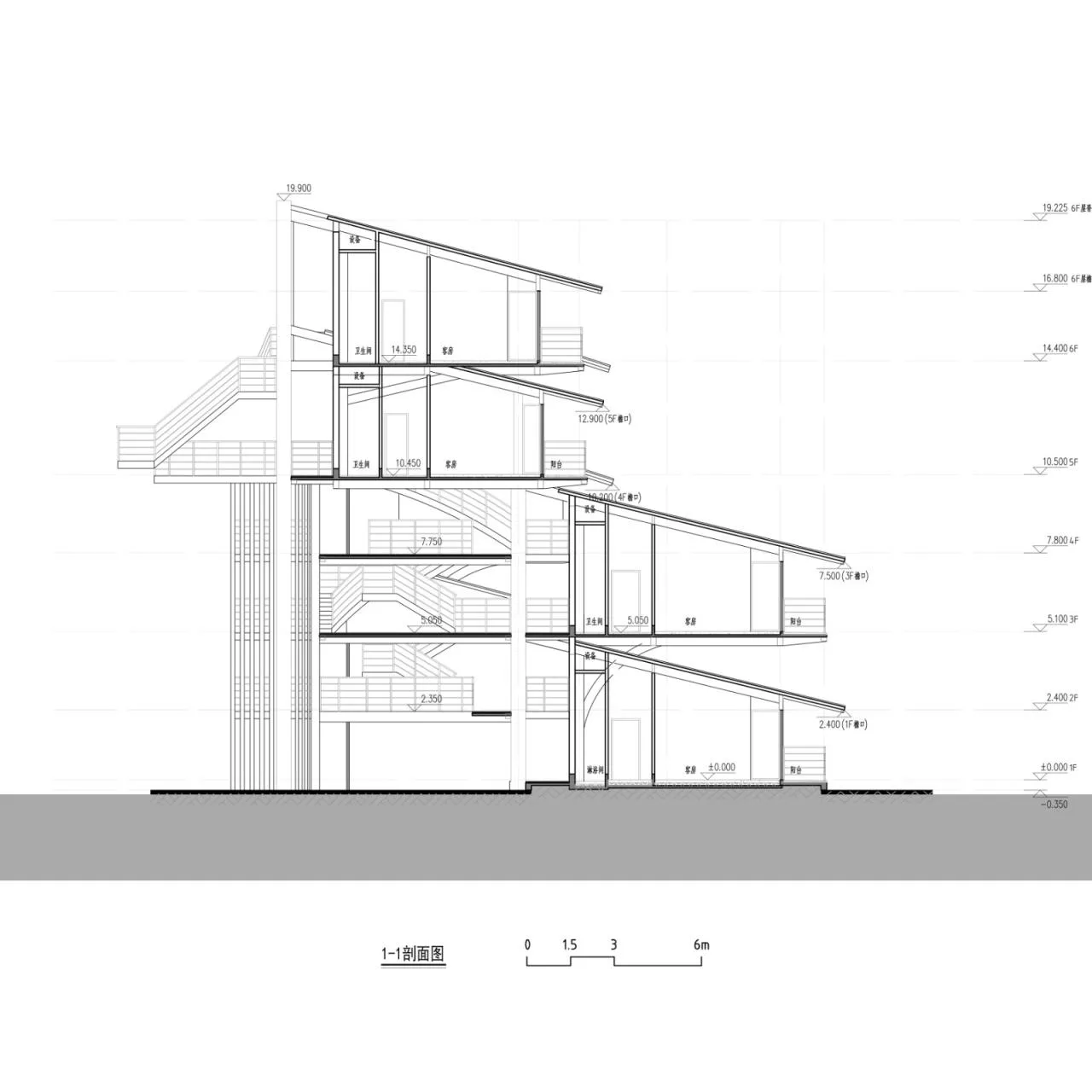
The fan-shaped floor plan of each guest room aligns perfectly with the treehouse’s panoramic views. Interiors are designed with simplicity and brightness. Privacy is prioritized in the bathroom, which is separated from the entrance and living space by a straight wall, creating a smooth circular flow. The curved balcony, approximately 12 meters long, offers expansive vistas.
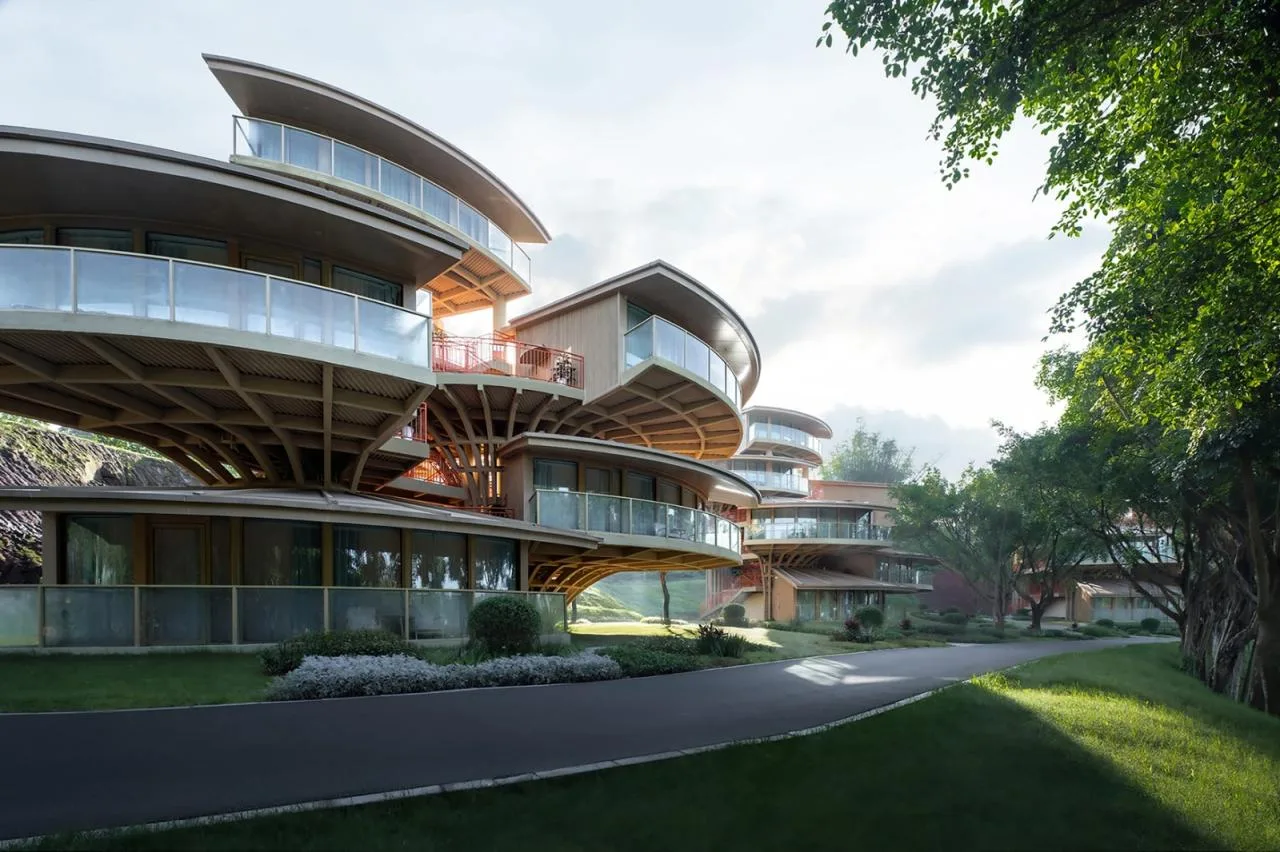
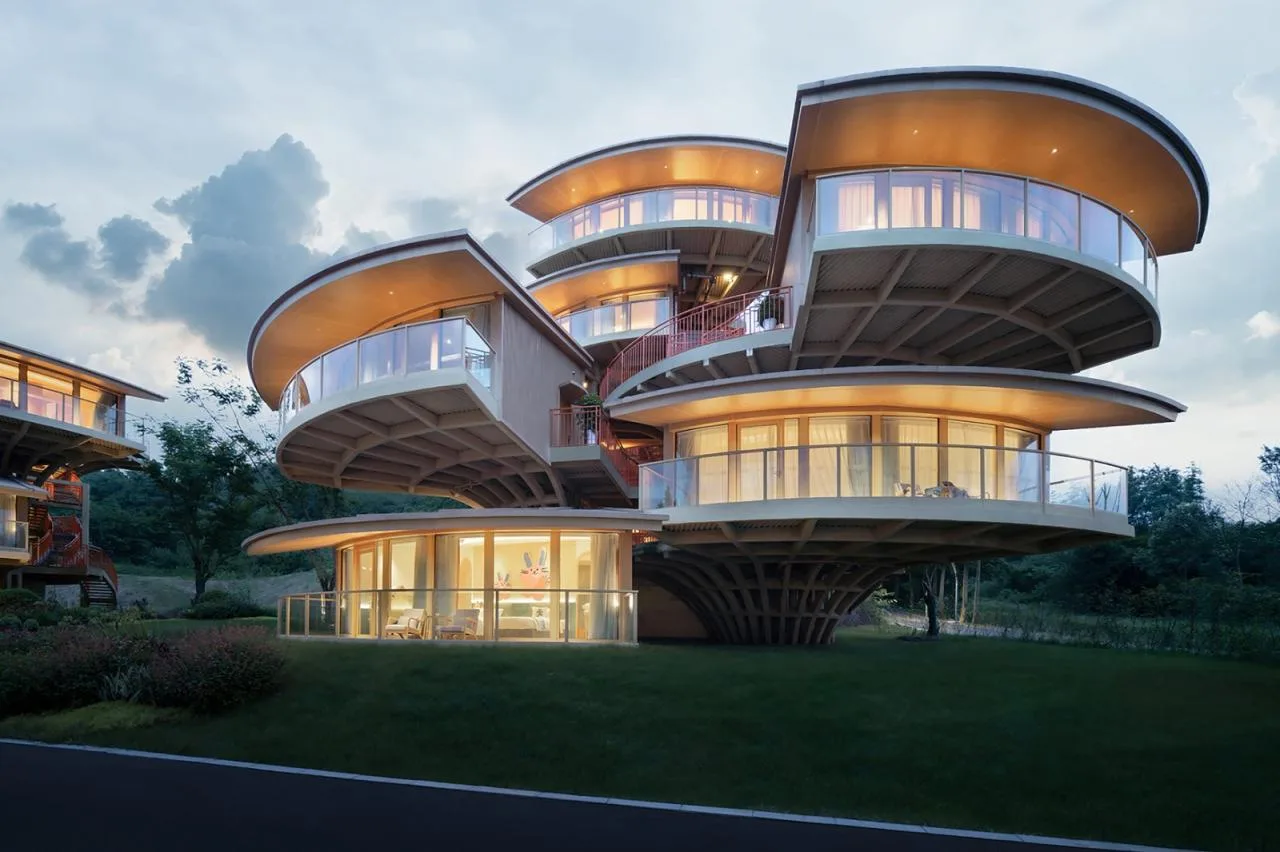
Air dwelling © triangular prism
Leaves are both lightweight and resilient, and the slender curved columns paired with large overhangs evoke a sensation of relaxed floating. While the building avoids direct imitation of tree elements, it still delivers a natural atmosphere of “living among branches, floating in the sky” to its occupants.
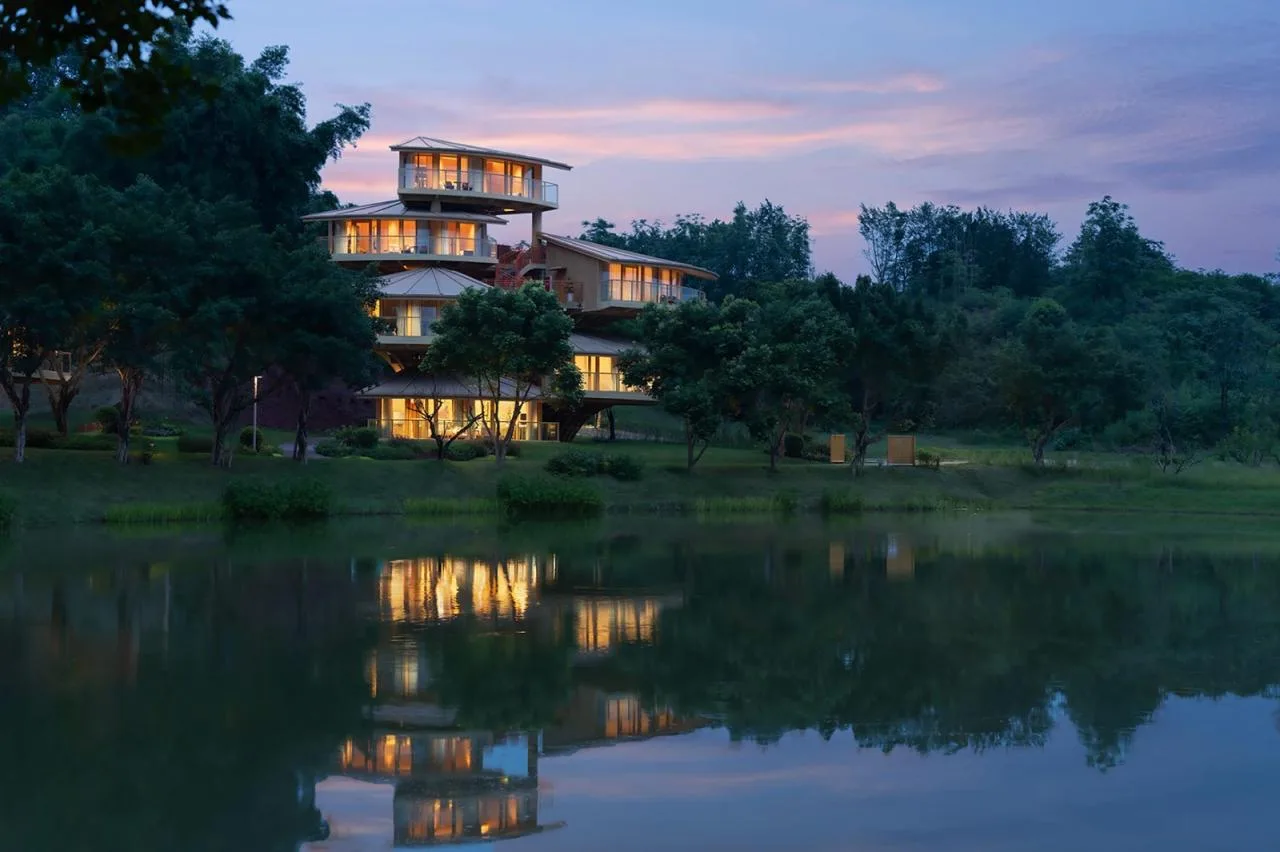
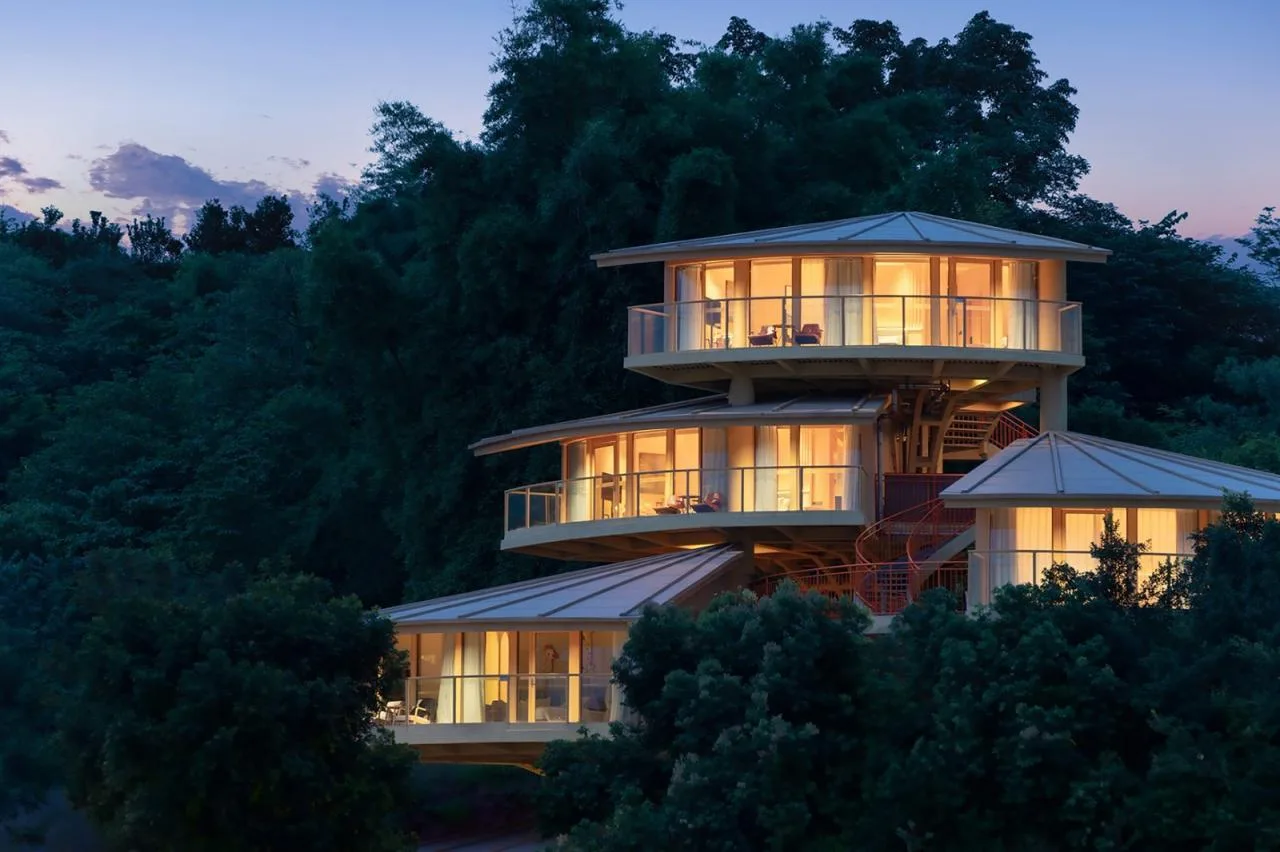
Living on a branch © triangular prism
The three completed buildings each contain six guest rooms situated at varying elevations, with the tallest reaching 14.4 meters. Building codes require two evacuation staircases per treehouse, posing significant design challenges. The final design locates one staircase inside and one outside the main framework, offering two separate routes—one concealed, one visible. Each floor’s outdoor platforms vary in shape, providing spaces for social interaction and family activities.
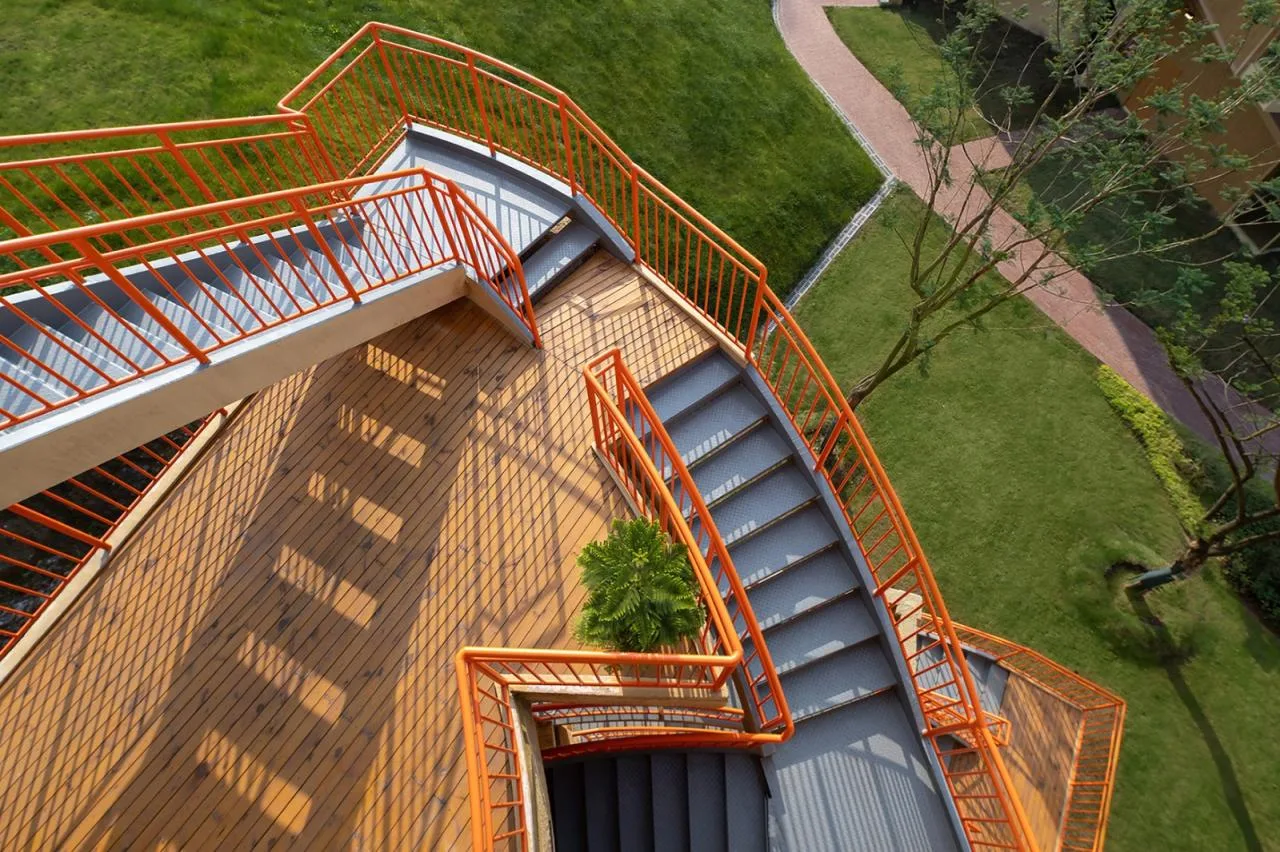
△ External stairs and platforms © triangular prism
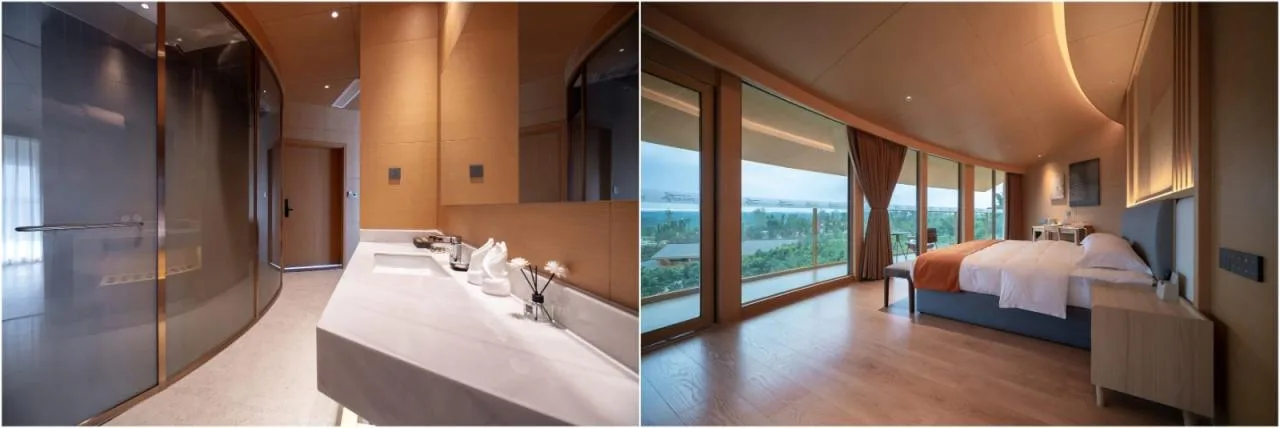
△ Inside the guest room © triangular prism
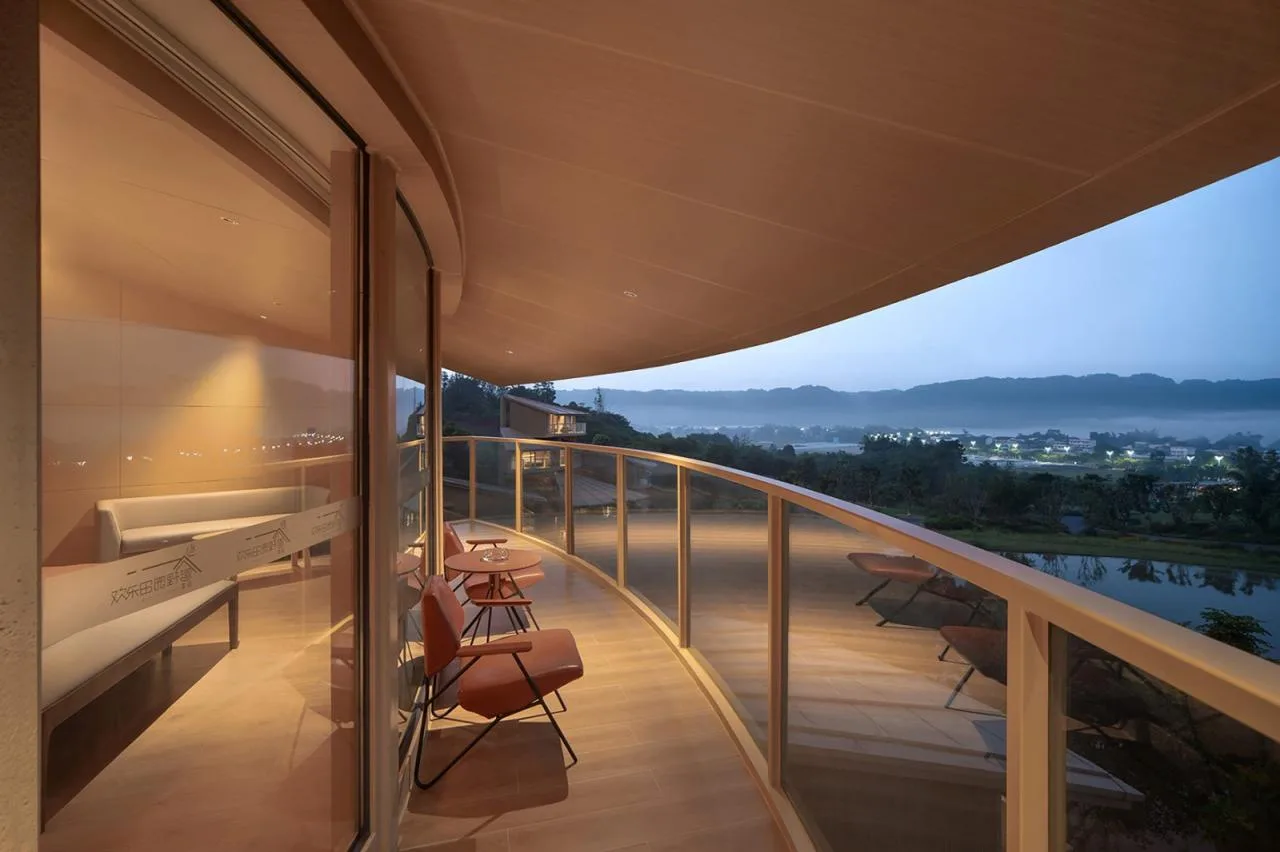
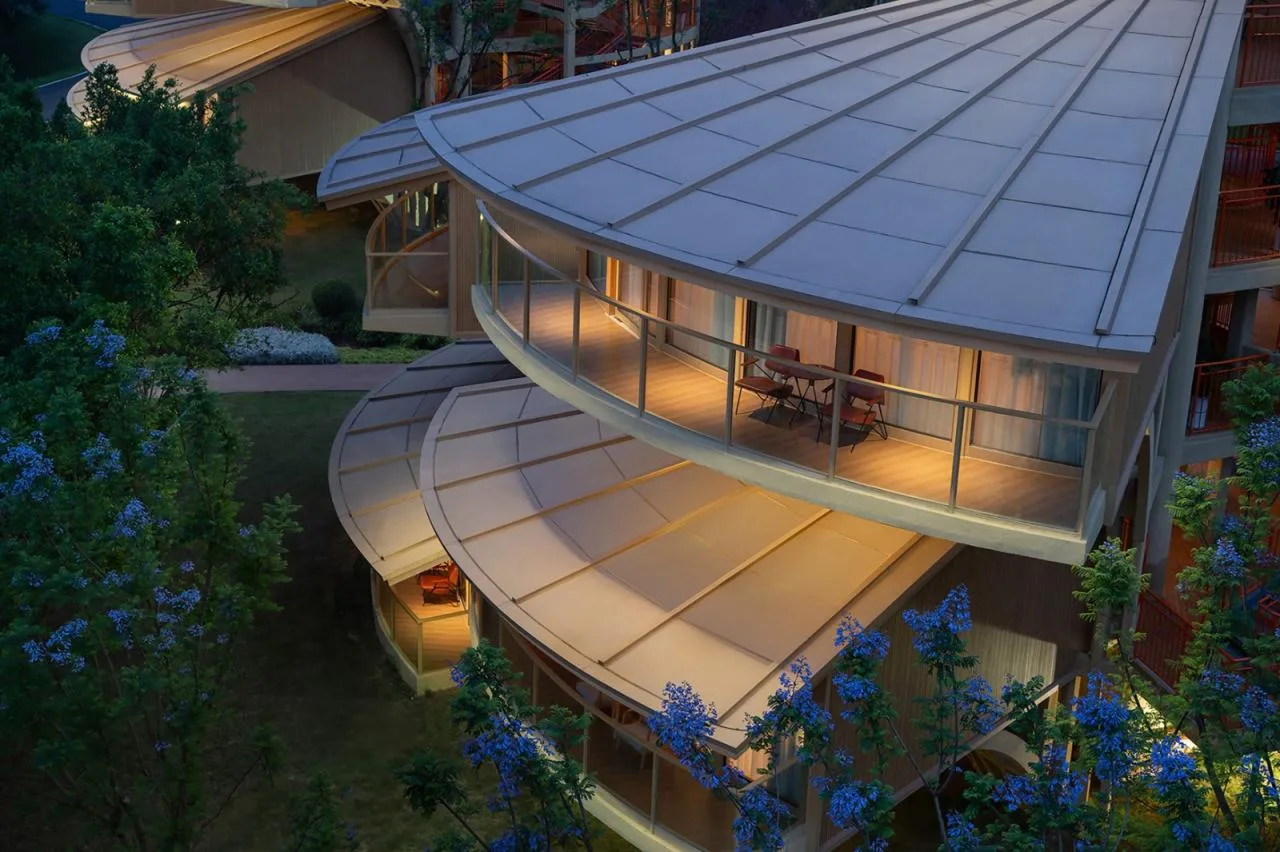
△ Terrace in the Twilight © triangular prism
As the ancients said, “I want to ride the wind back, but I am afraid of the beautiful buildings.” While heavenly palaces may feel cold and distant, the experience of a treehouse—natural, neither fully inhabited nor alone—is more inviting. One might lean on the railing, gaze into the distance, listen to birdsong and the gentle breeze; or share a lamp’s glow with a neighbor across the way, glimpsing a carefree realm where “heaven and earth coexist, and all things are one” amid the wild.
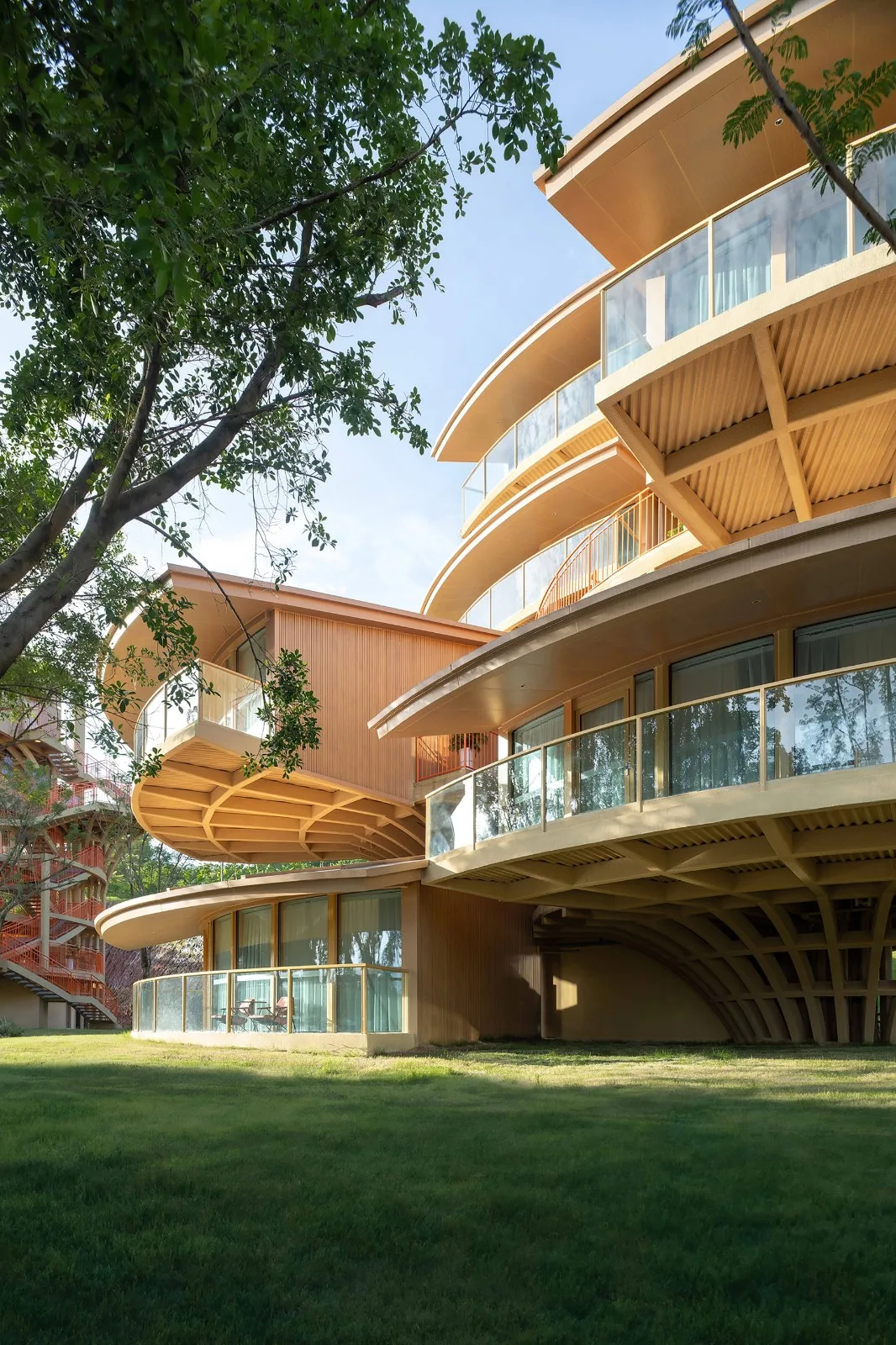
The treehouse bathed in morning light © triangular prism
Project Drawings
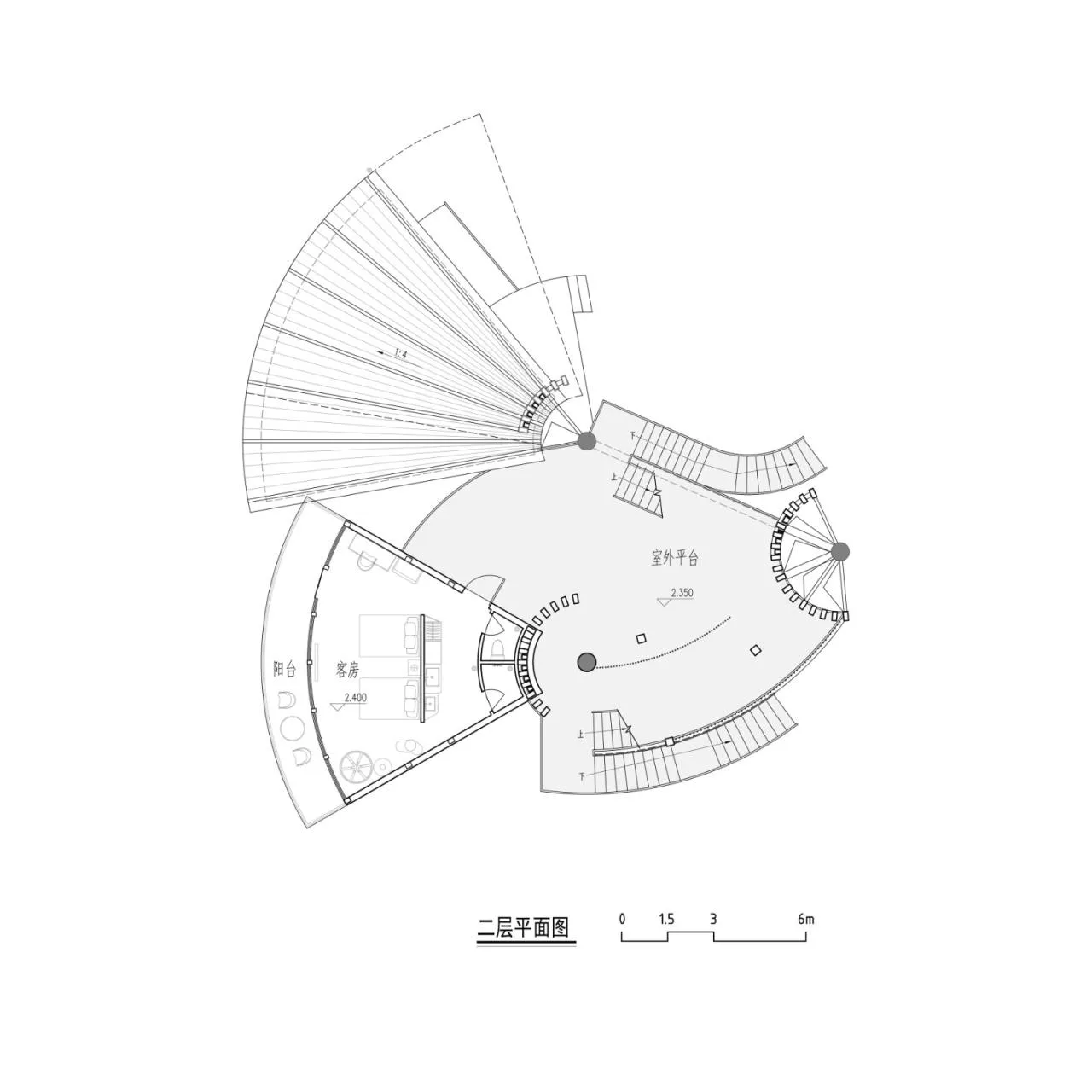
Project Information
Project Name: Tree House Design for Nanxi Happy Countryside Wild Fun Hotel
Principal Designer: Wang Hui / Wang Hui Architecture Studio
Design Team: Ding Chuhua, Liu Mengman, Ye Zichao, Ye Yunfan
Construction Drawing Design Team: Hu Bin, Zhou Li, Wang Yinan, Zeng Chen, Yang Junfa, Lu Qian, Dai Xiaohan, Ou Zhi
Building Area: 1689.12 square meters (3 buildings)
Design Period: 2022–2023
Construction Period: 2023–2024
Project Consultant: Zeng Piao Tang Ting
Location: Changjiang Village, Nanxi District, Yibin City
Owner: Yibin Nanxi Xianyuan Cultural Tourism Development Co., Ltd.
Photography: Chongqing Liangjiang New Area Prism Culture Communication Co., Ltd.














Must log in before commenting!
Sign Up