
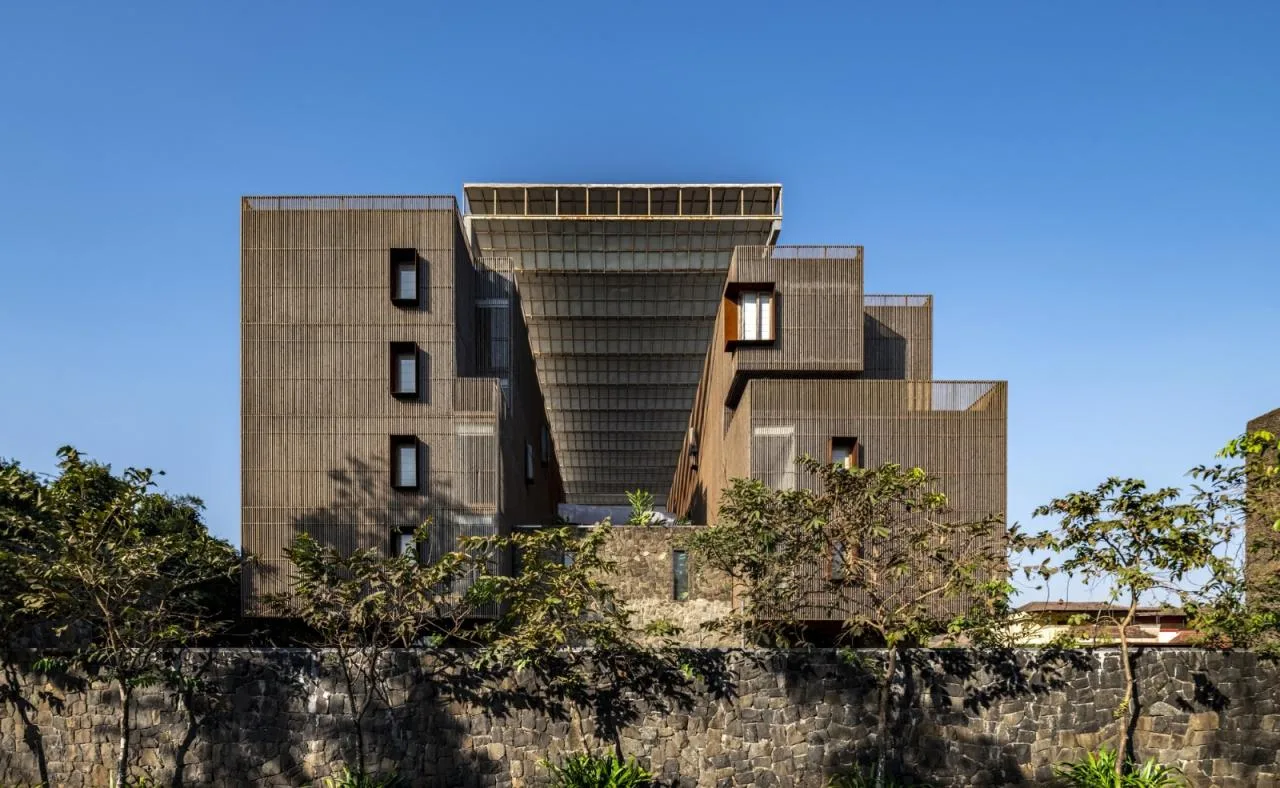
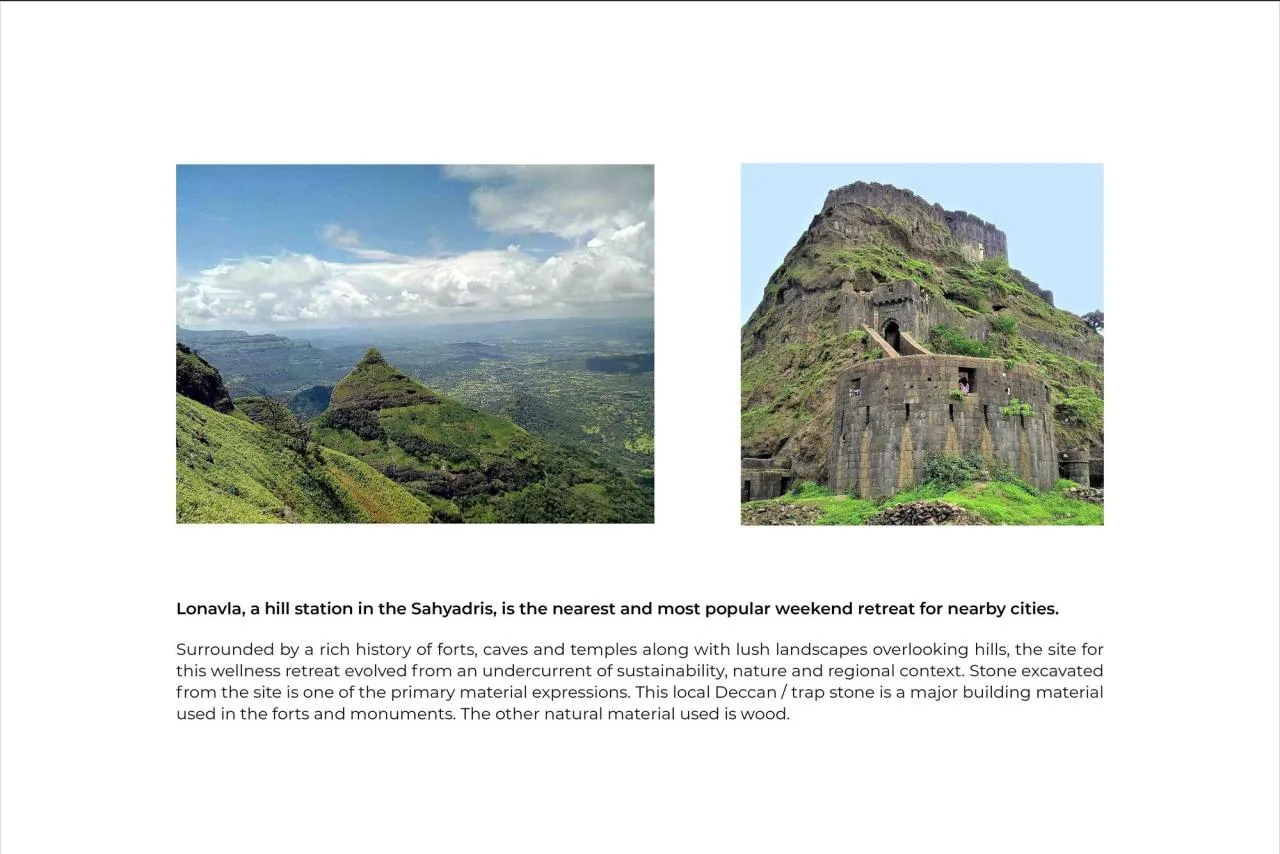
Situated in the Western Ghats Mountains, Langnafla is the closest and most popular weekend getaway for residents of Mumbai. Its natural landscape, cool and dry climate, lush greenery, and rich history—featuring ancient forts and Buddhist grotto temples—have unfortunately led to unregulated development, causing significant erosion of its unique characteristics.
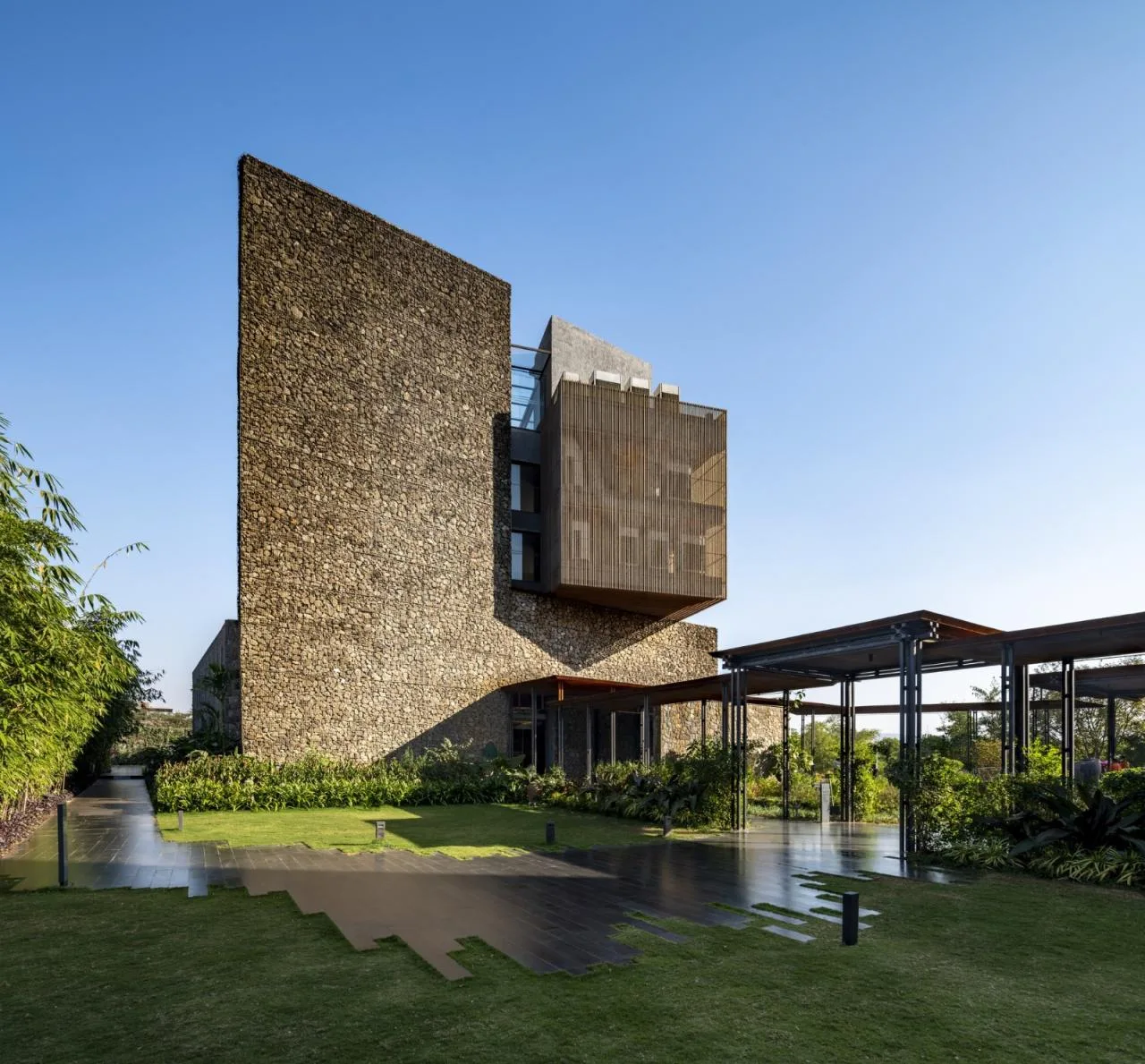
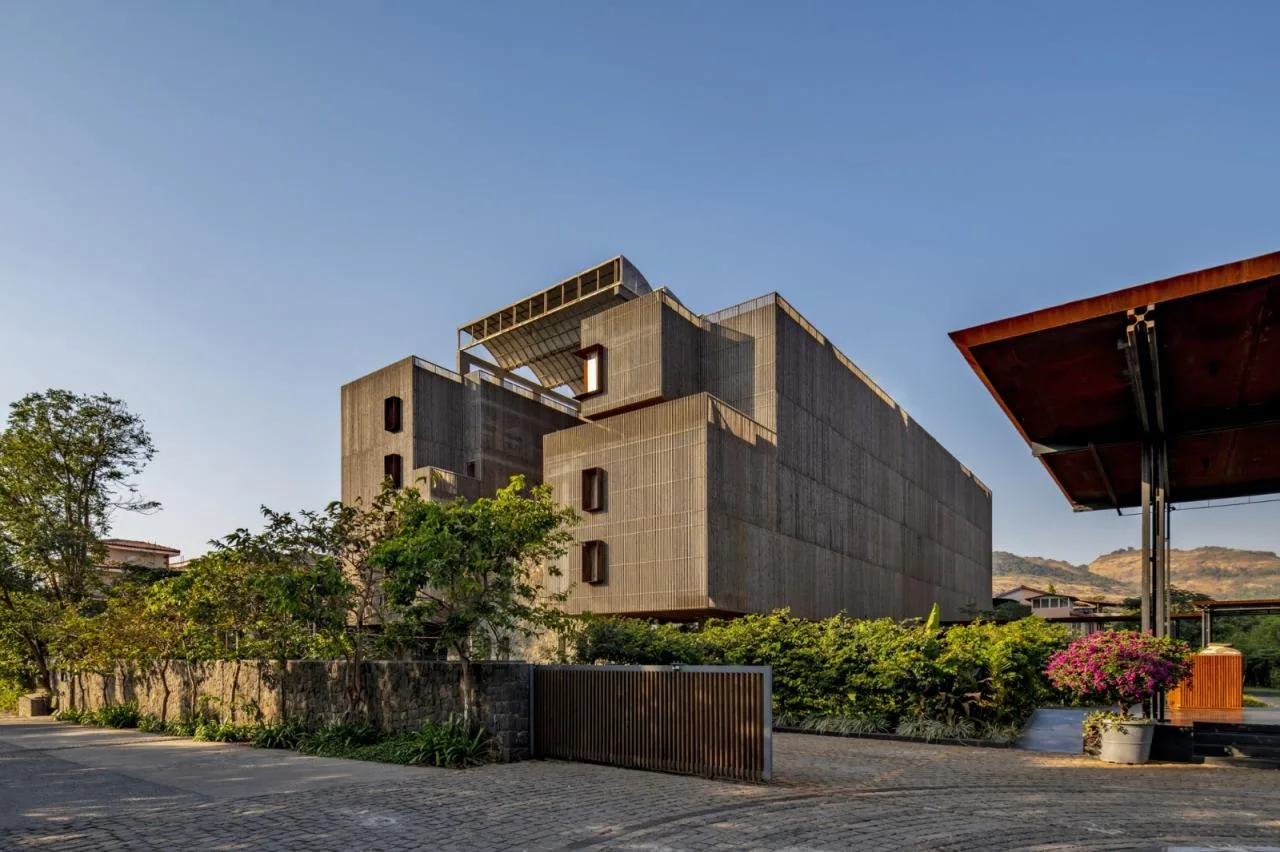
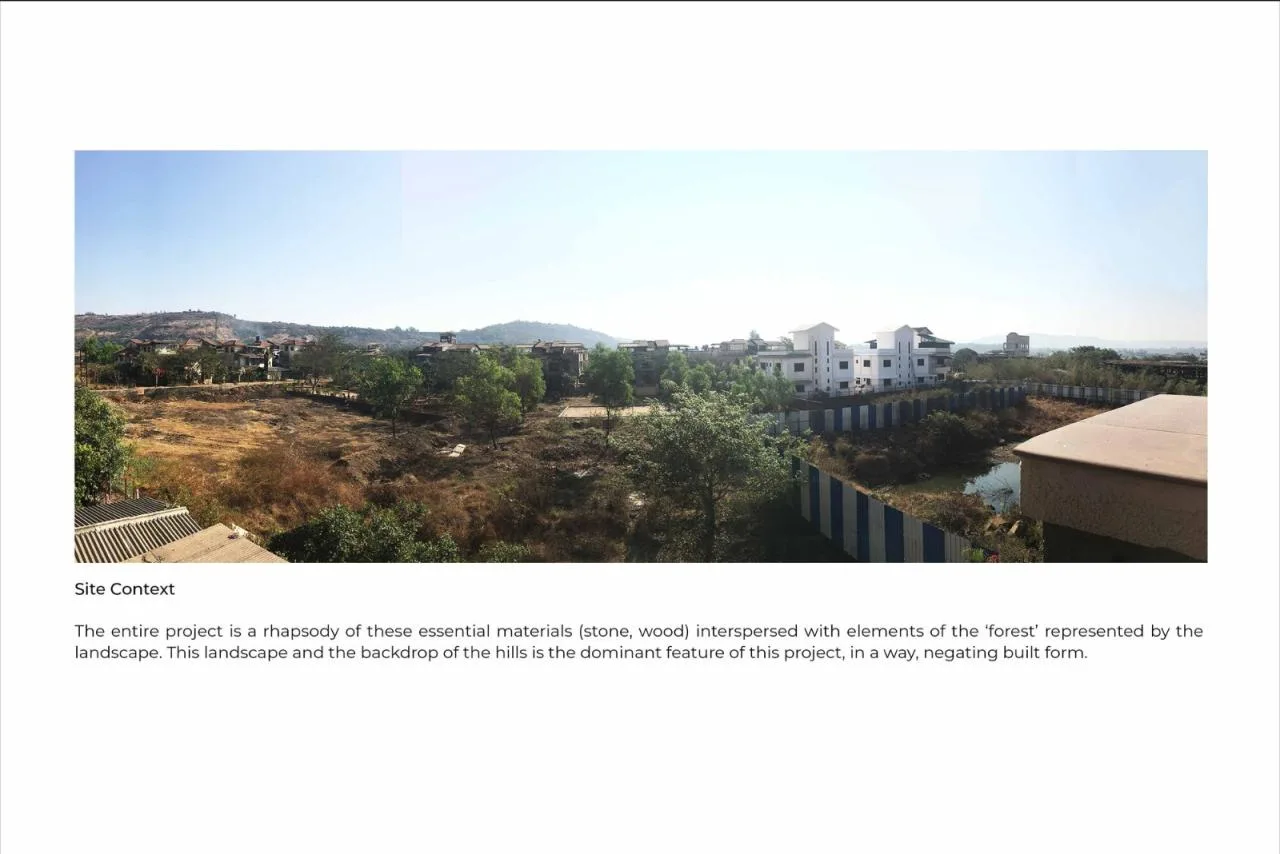
The Radisenlang Resort faces fundamental challenges brought on by rapid urbanization in rural areas. The architectural styles dictated by strict building codes and density regulations conflict with the natural connectivity of open spaces.
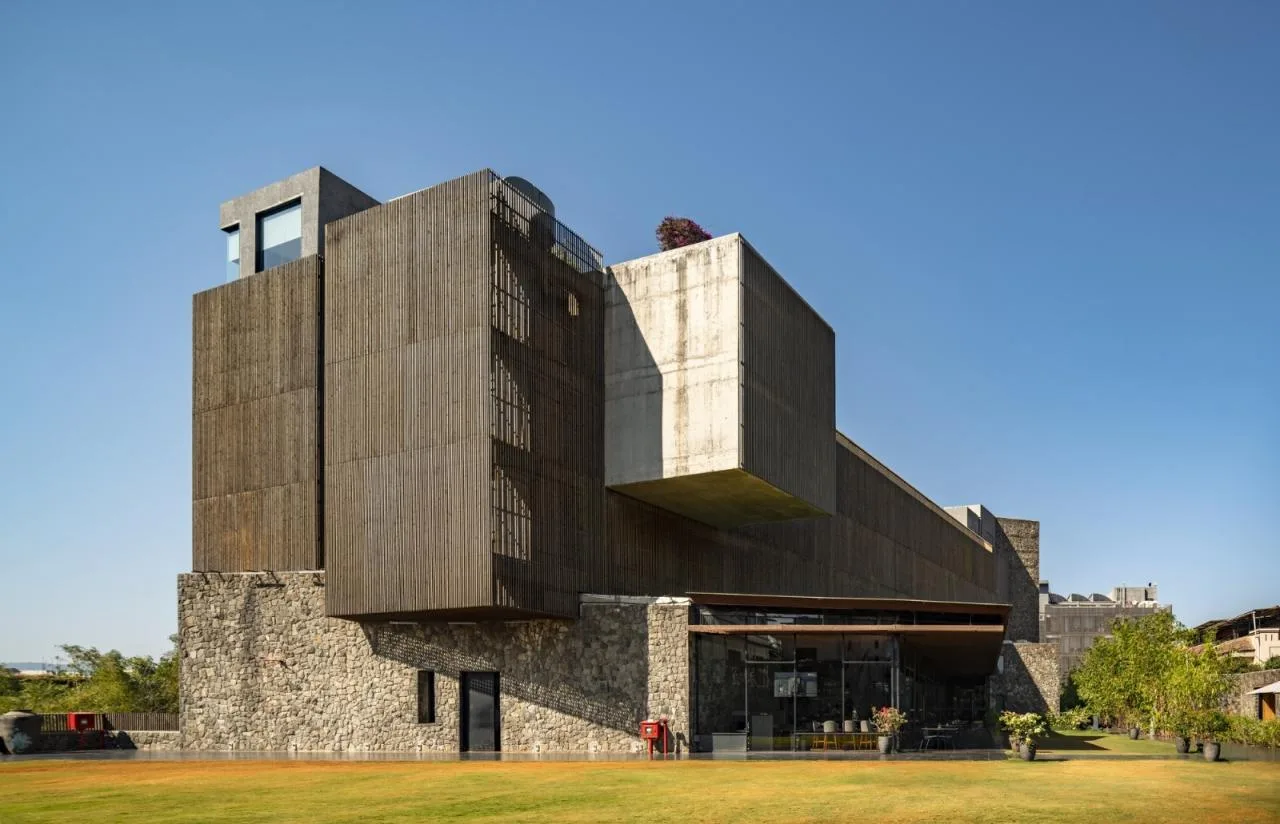
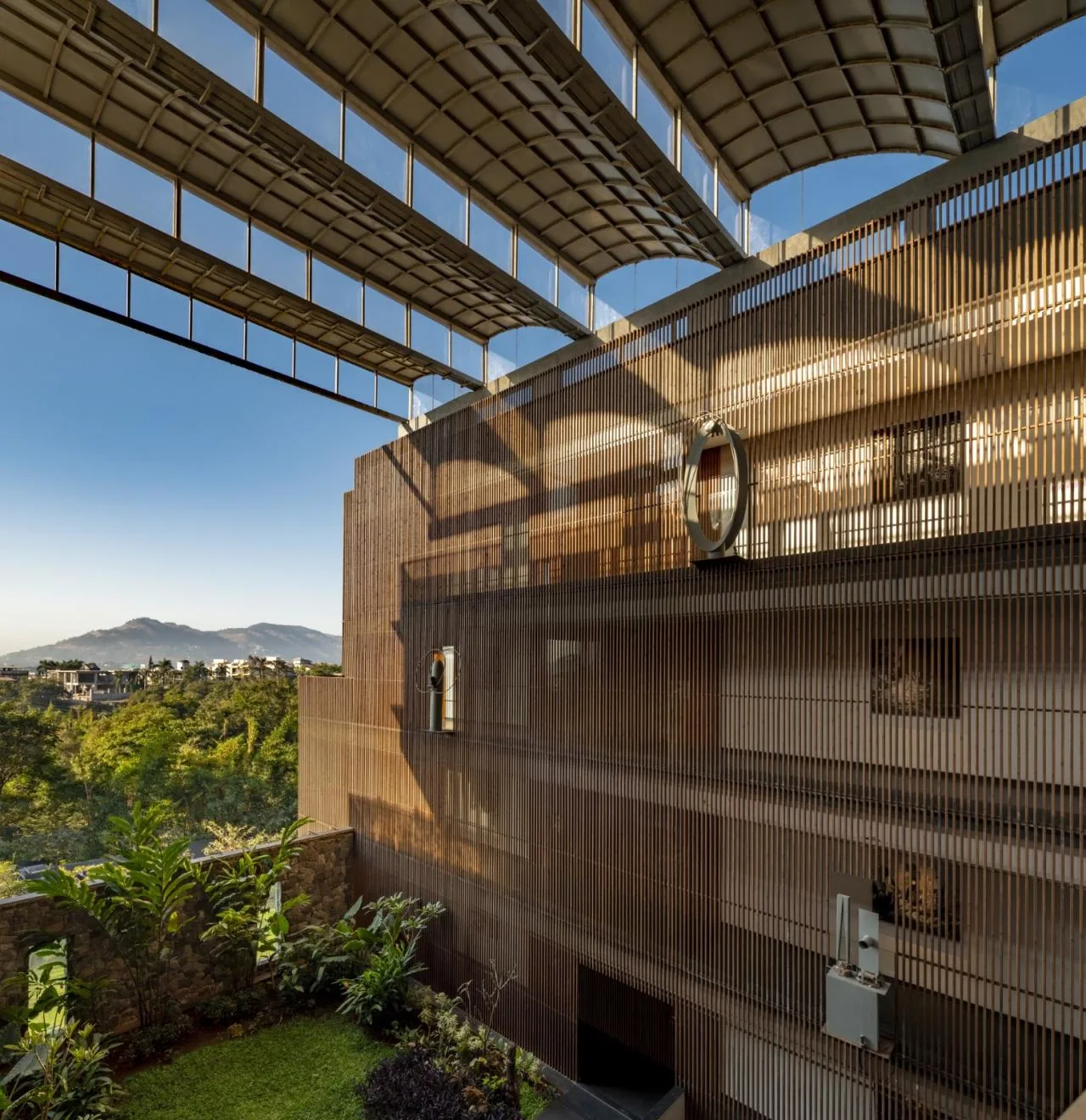
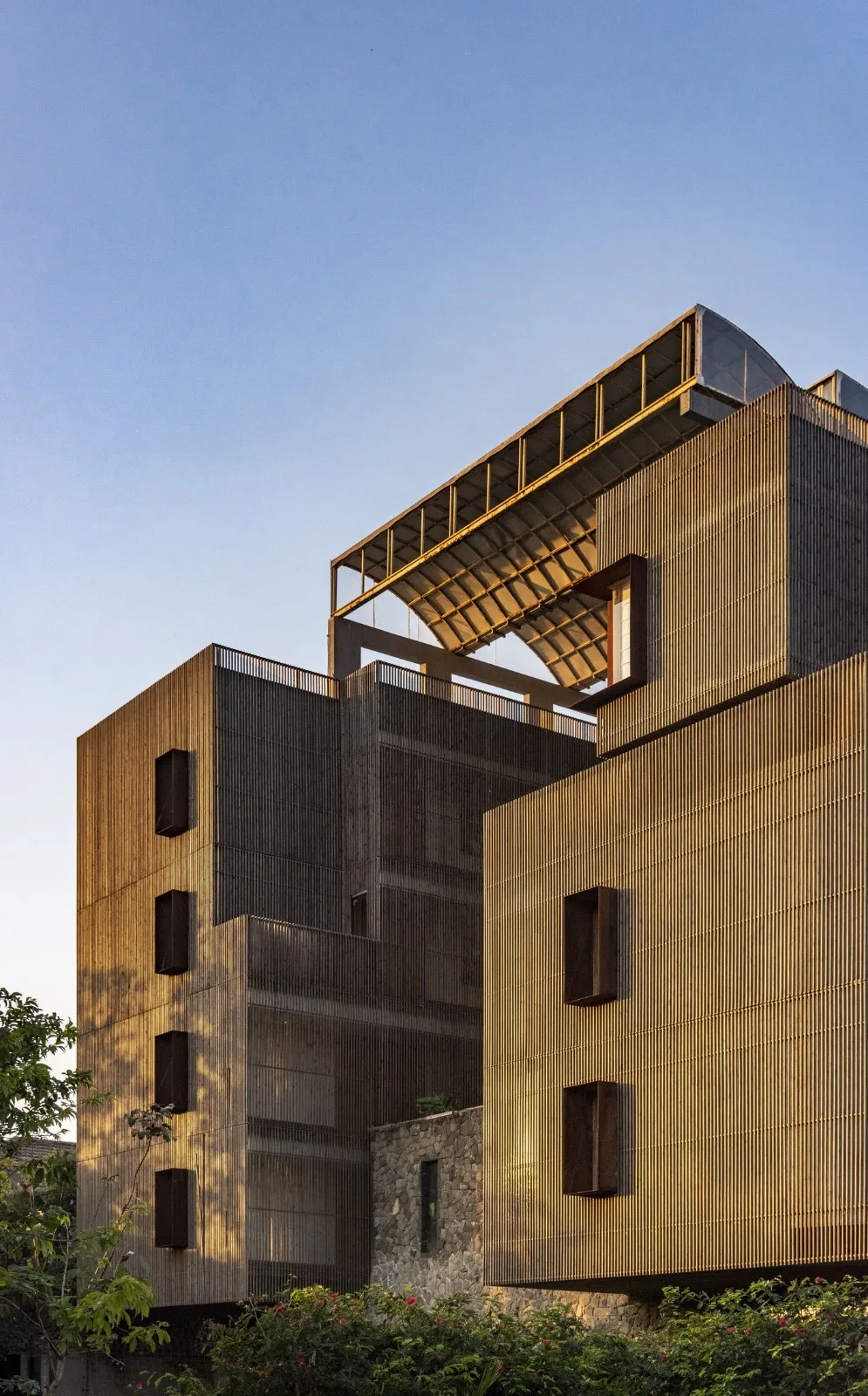
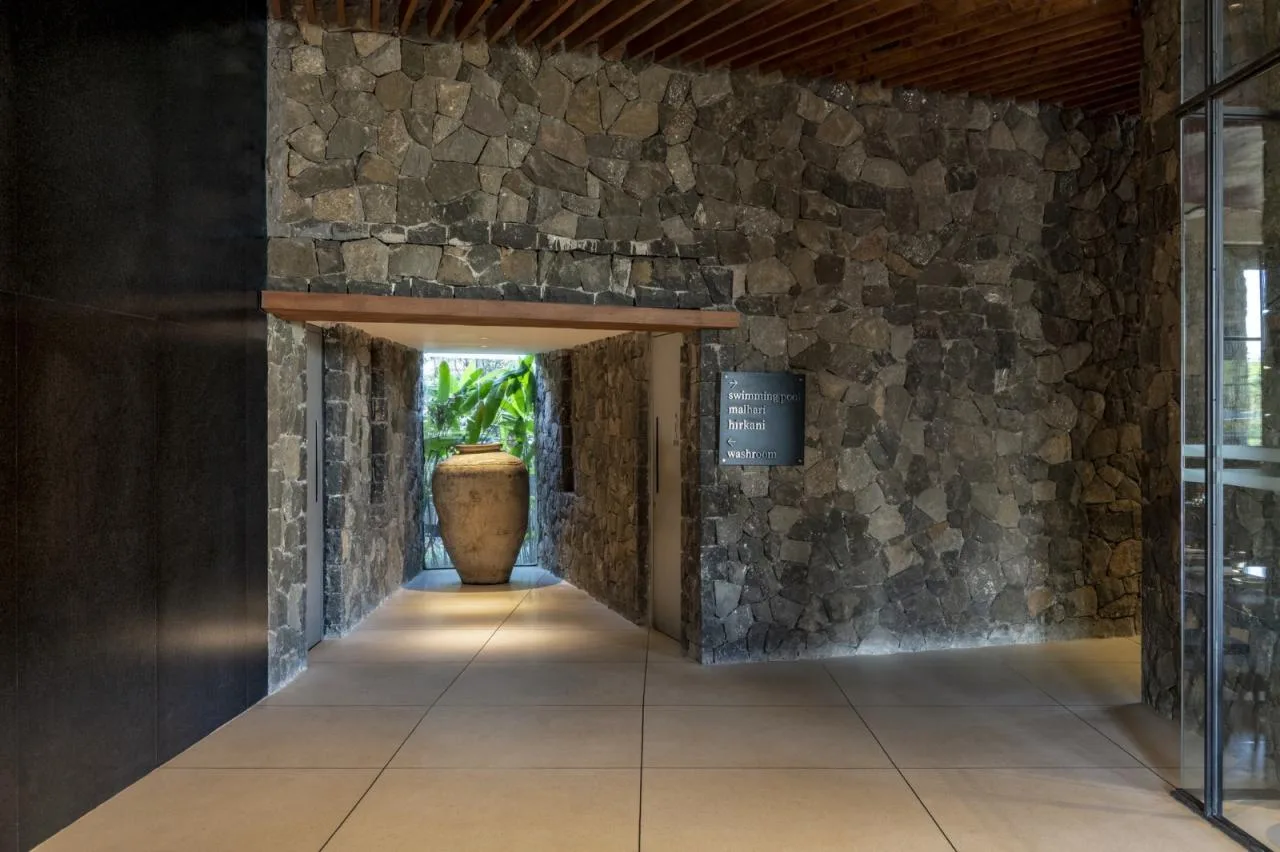
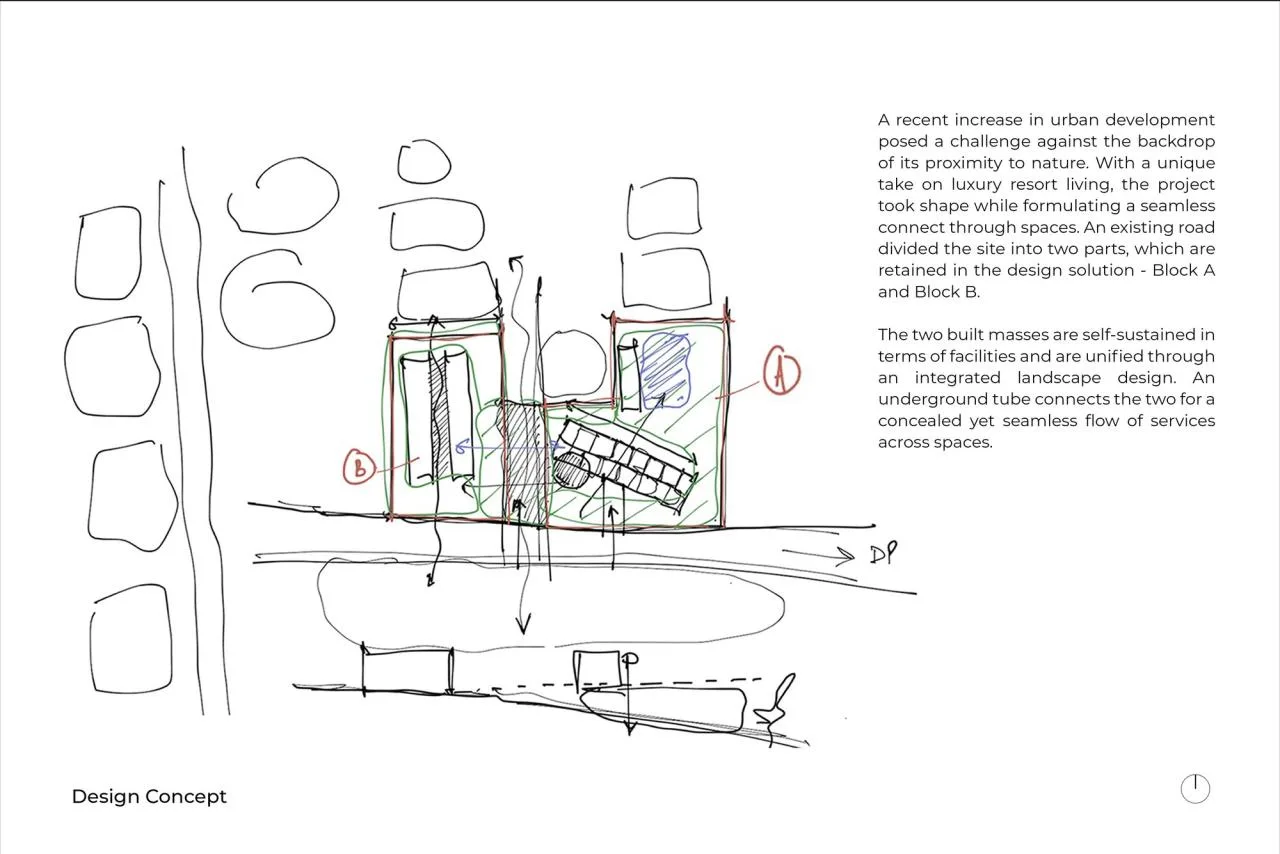
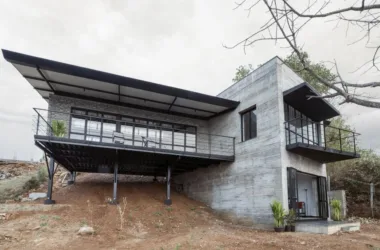
The site is located within a residential neighborhood, divided into two plots by a planned passageway which the project adopts but cannot build upon. The architectural design draws inspiration from the site’s terrain and the region’s material heritage—mainly black basalt and wood—while accommodating the functional demands for both flexibility and permanence, balancing public and private spaces.
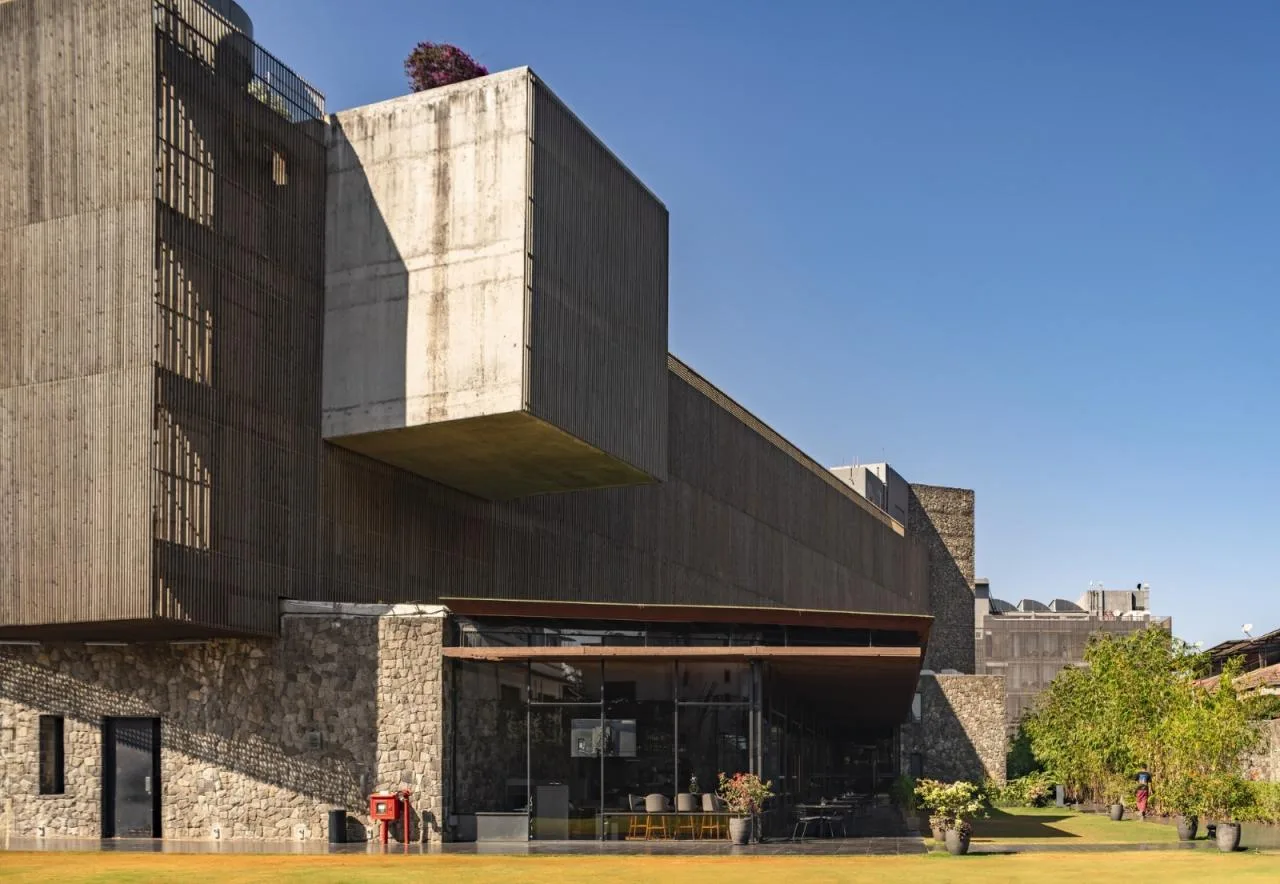
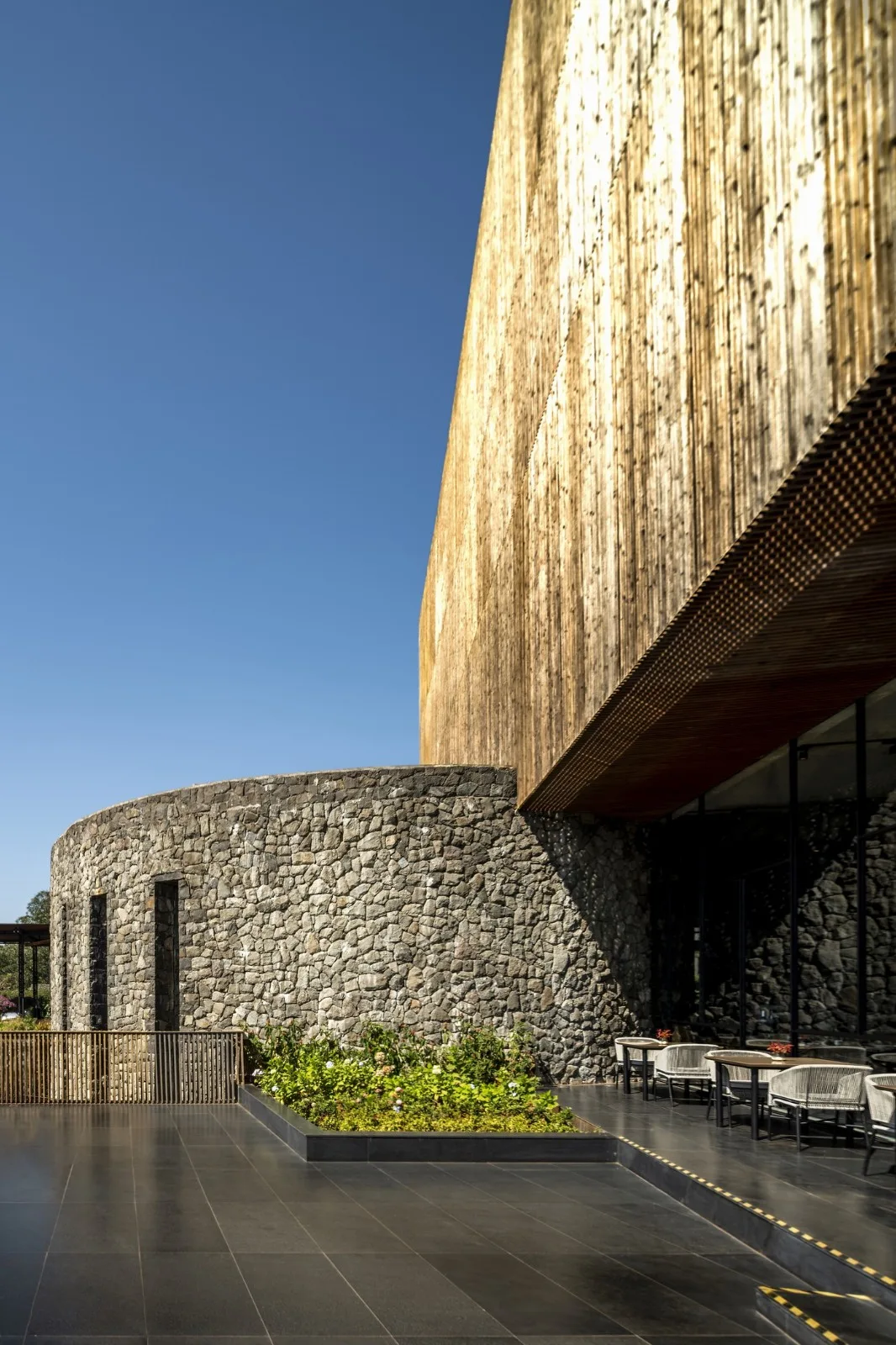
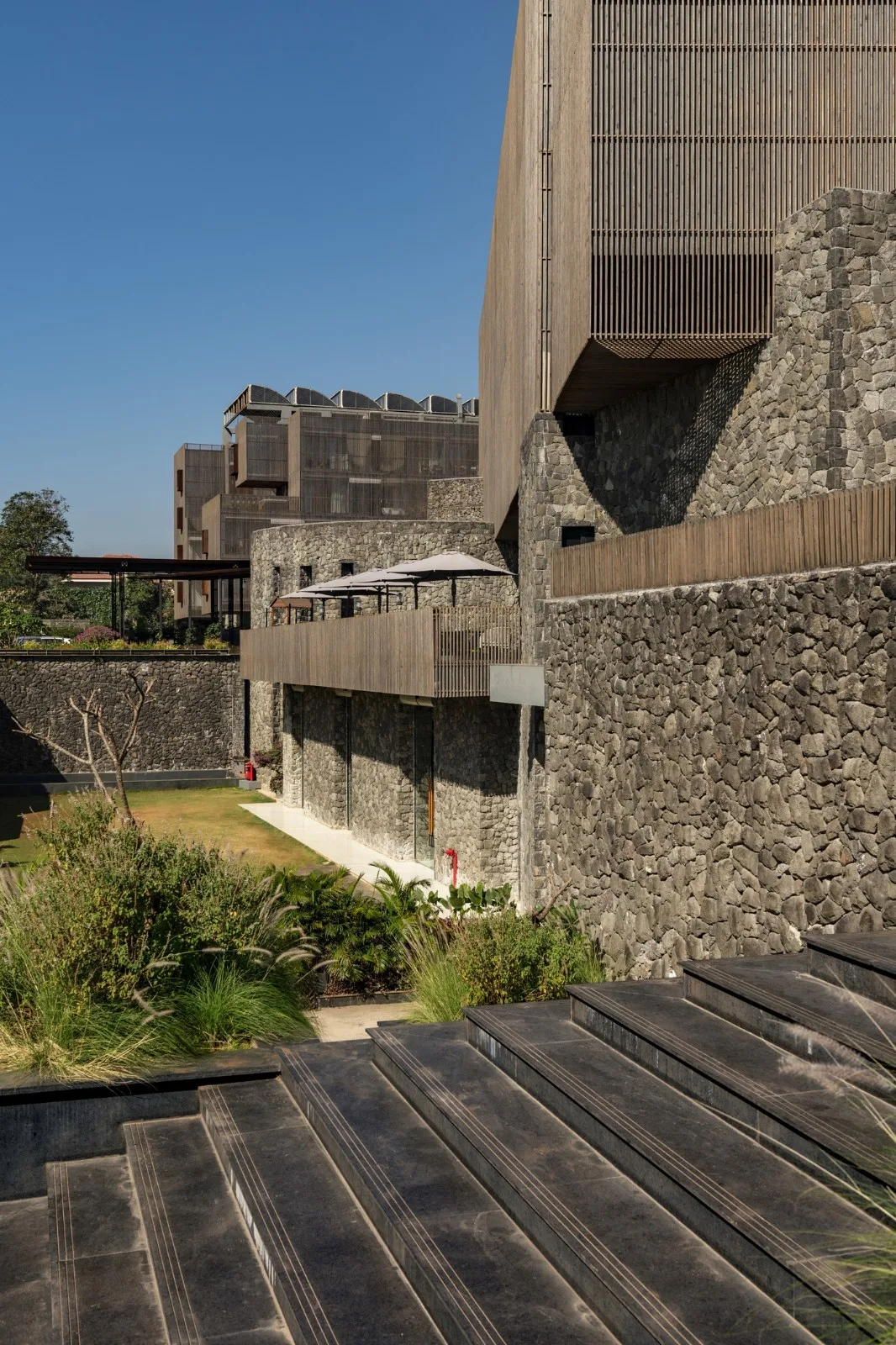
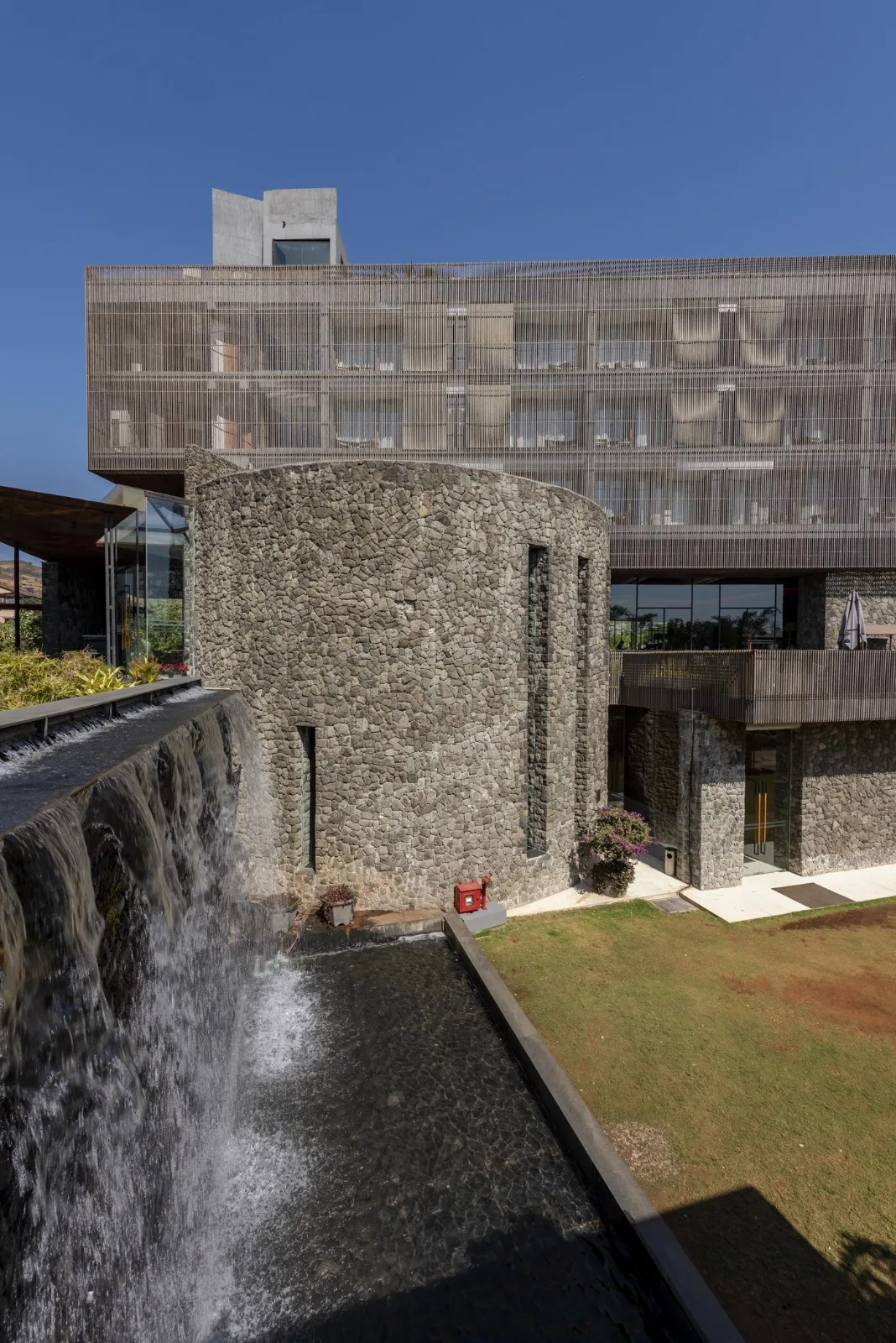
To avoid the oppressive feel often caused by multi-story buildings, the project introduces an organic, free-flowing public space at ground level, connected through varying terrain elevations. Existing architectural elements—such as gabled roofs and large stone walls—alongside stepped courtyards with water features, invigorate the landscape.
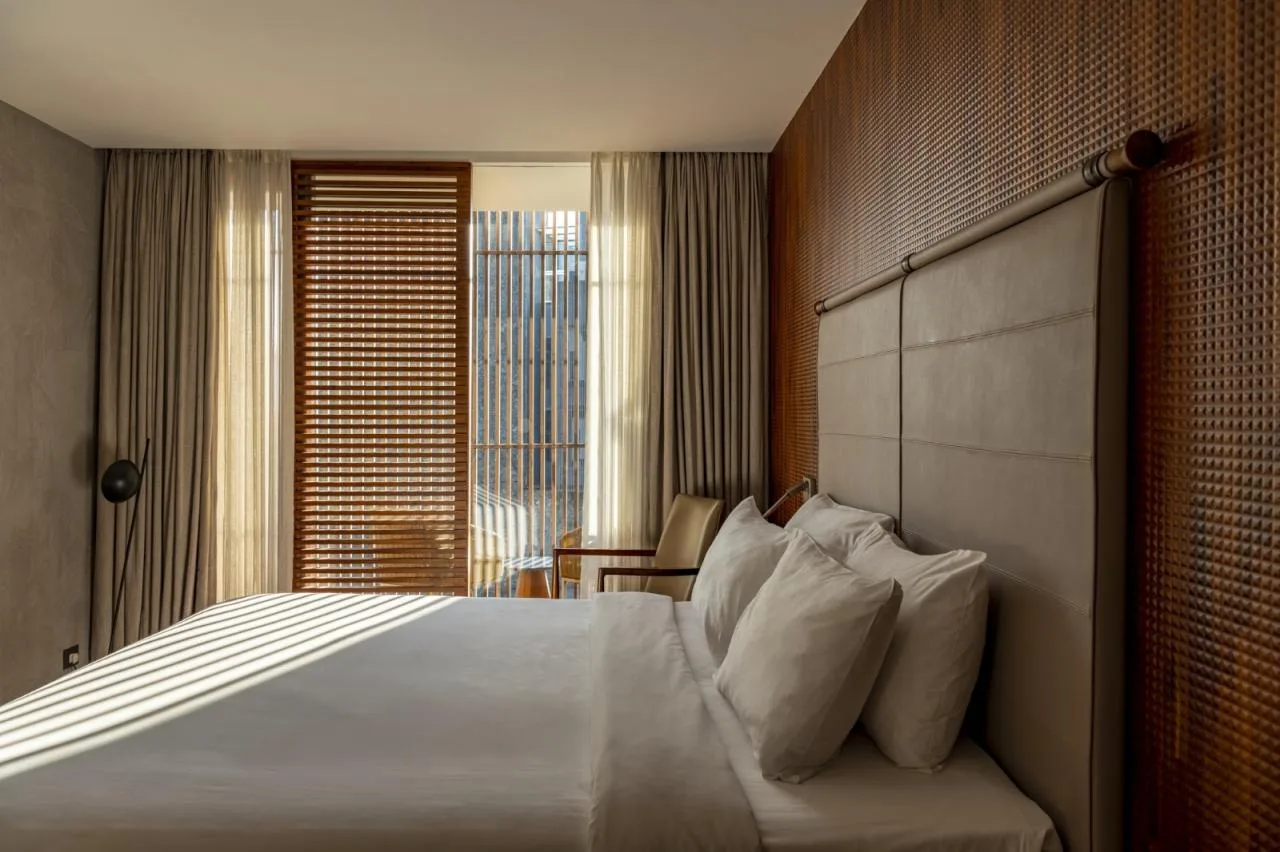
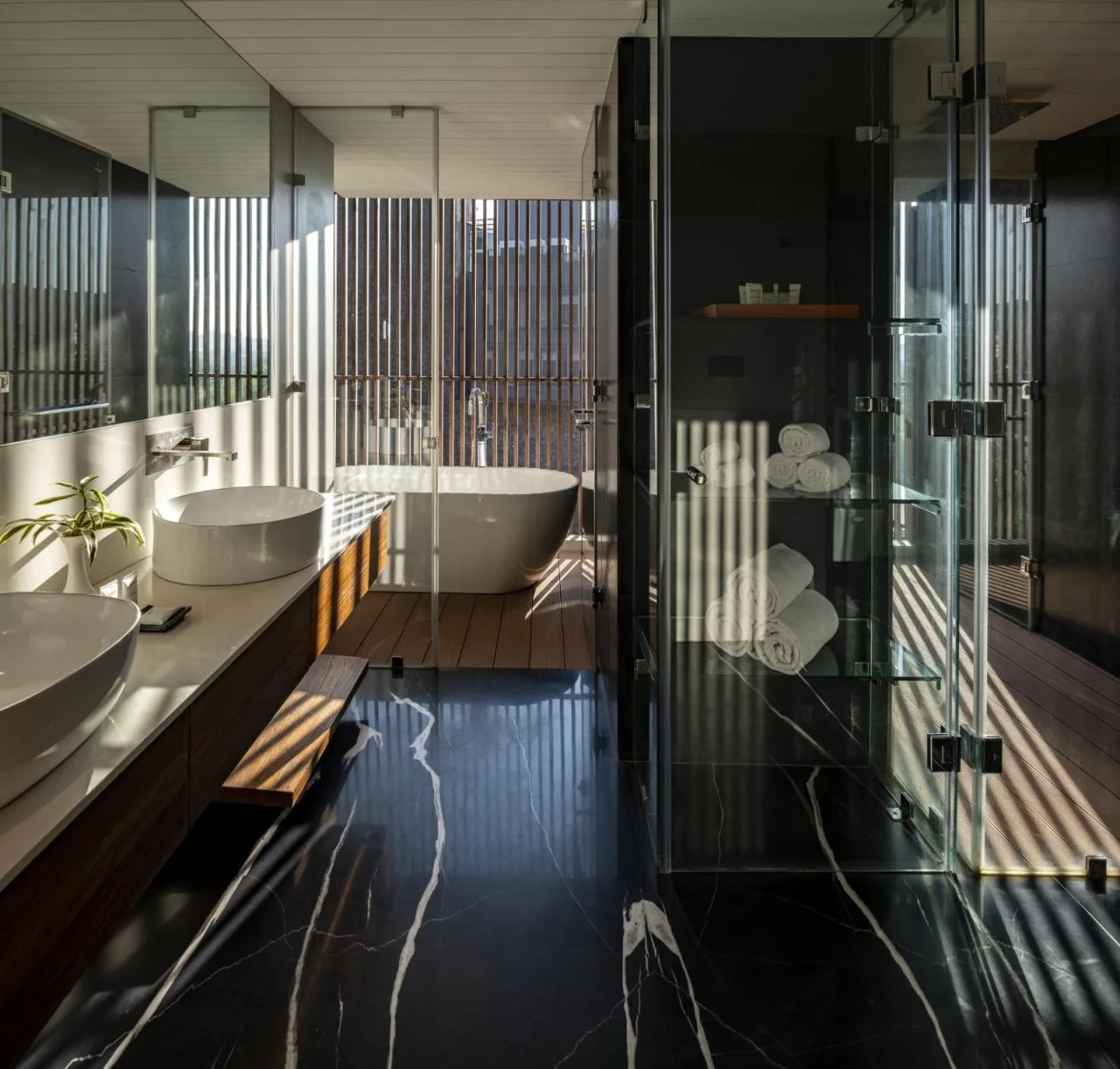
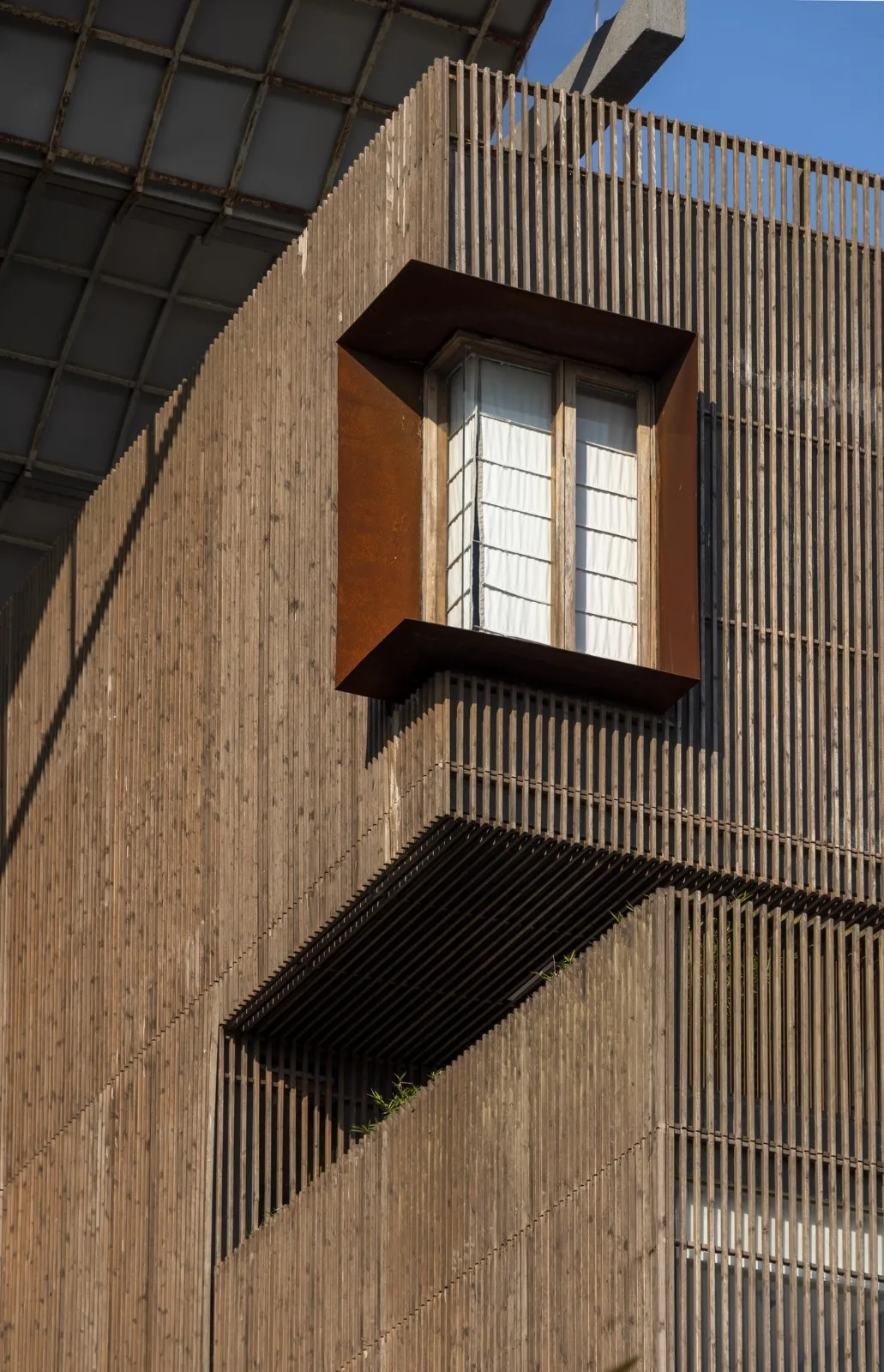
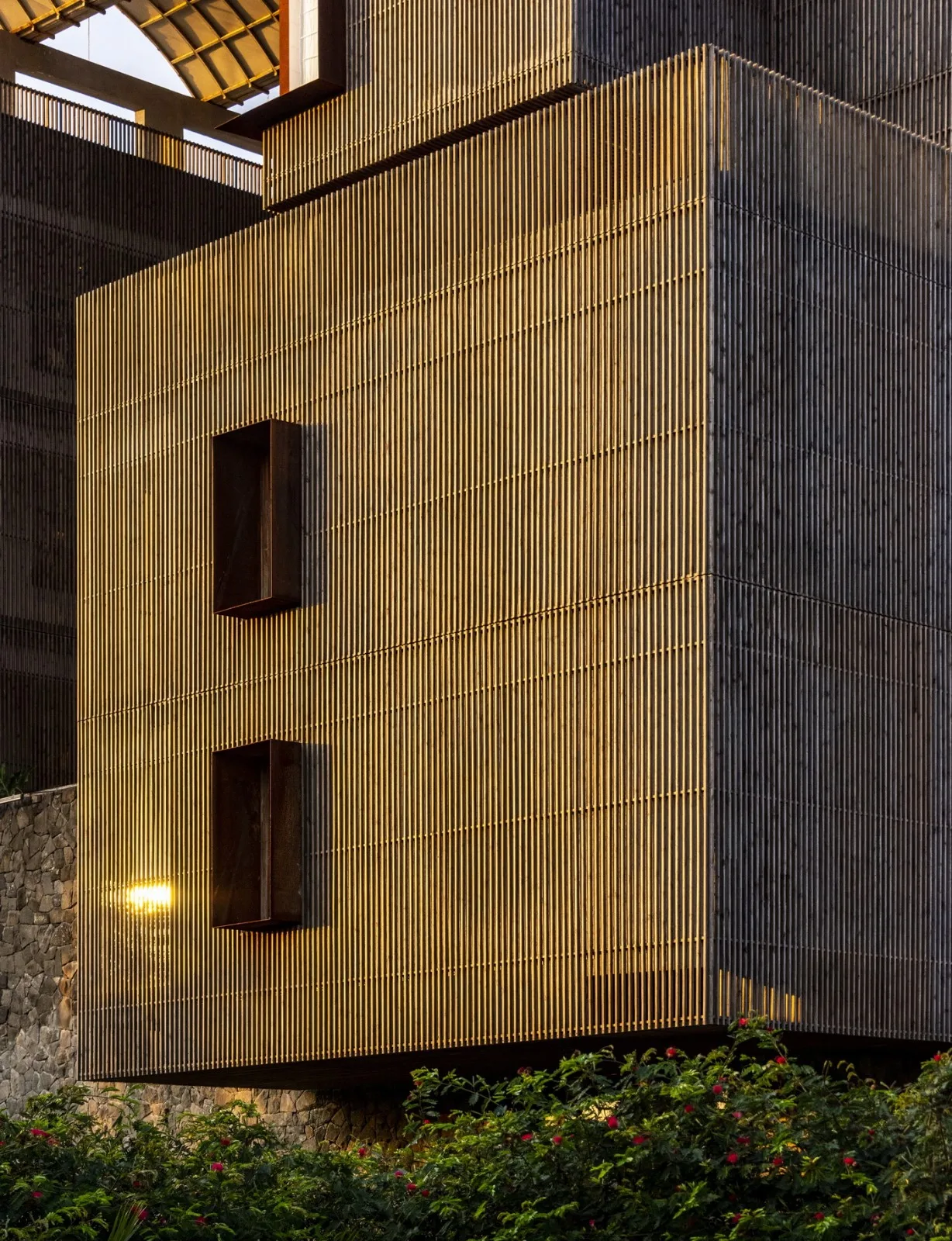
The guest rooms are elevated above ground level, forming bold, abstract volumes featuring permeable secondary walls with blinds. The terrain rises vertically to create shaded courtyards. This spatial organization places nature at the forefront, using space, materials, and light to transform the architectural experience into a dynamic journey through the evolving landscape.
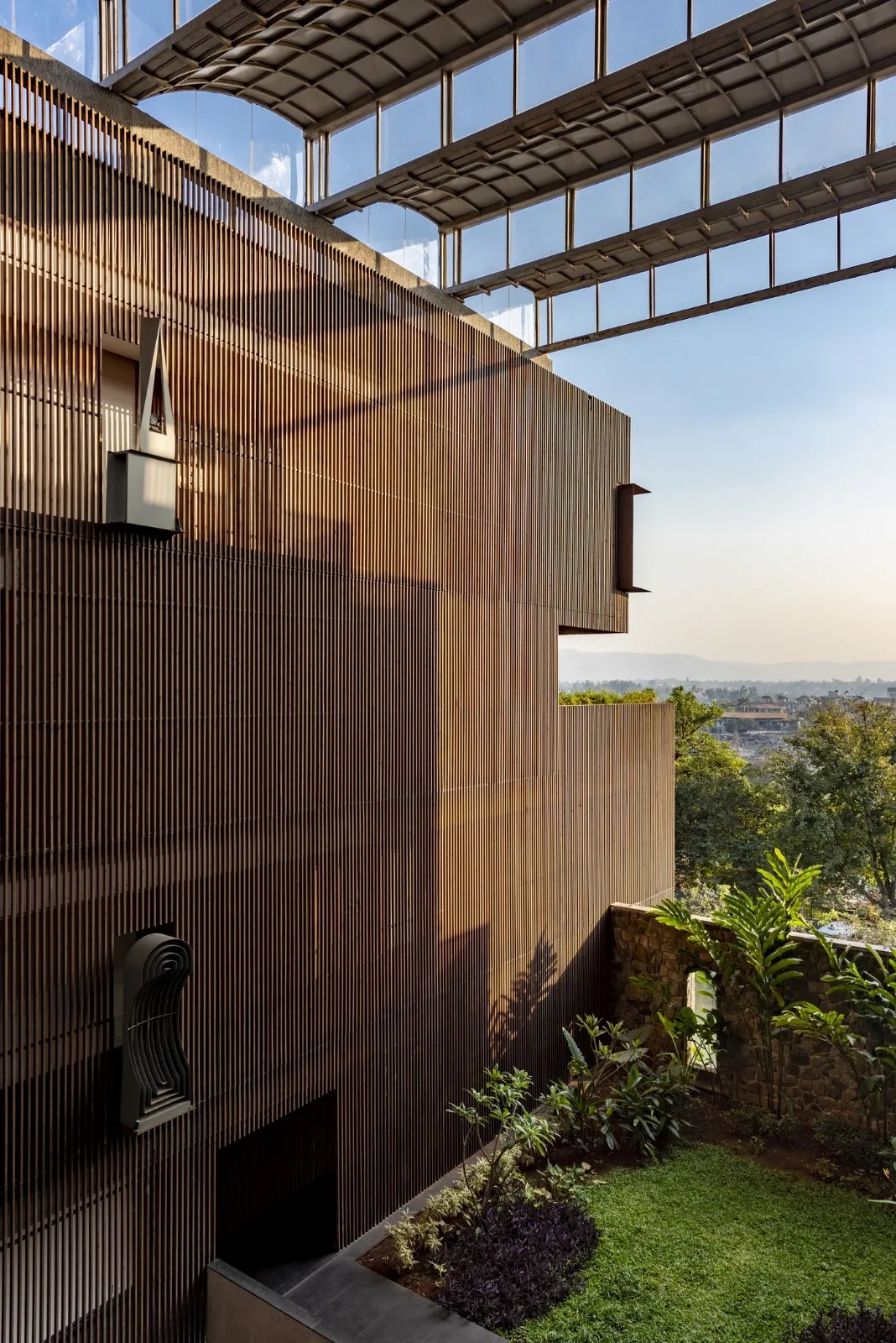
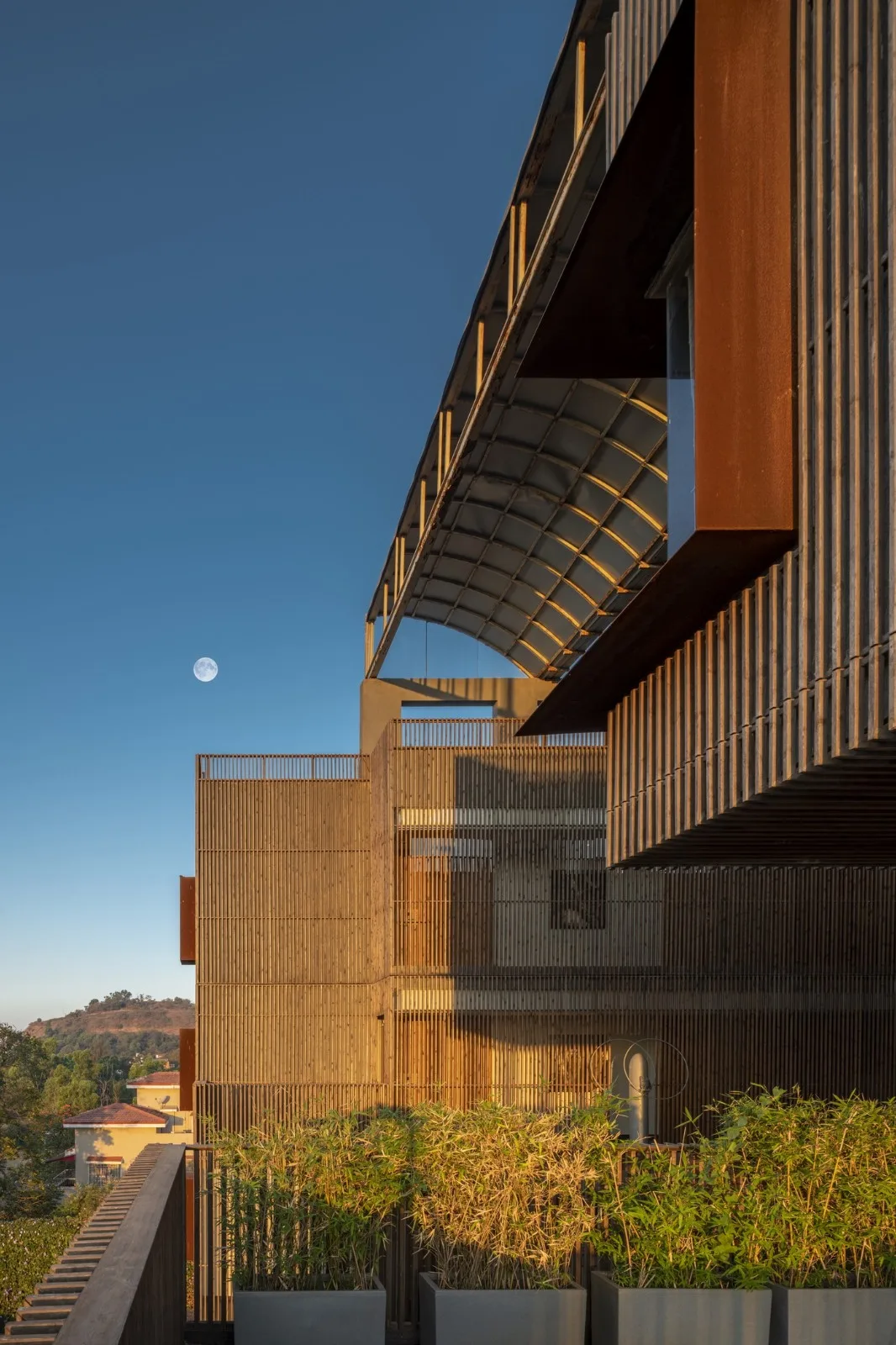
Furthermore, in comparison to nearby hotels of similar density, this project stands out for its innovation. Surrounding hotels often follow urban models and adopt themed designs that feel disconnected from their natural surroundings.
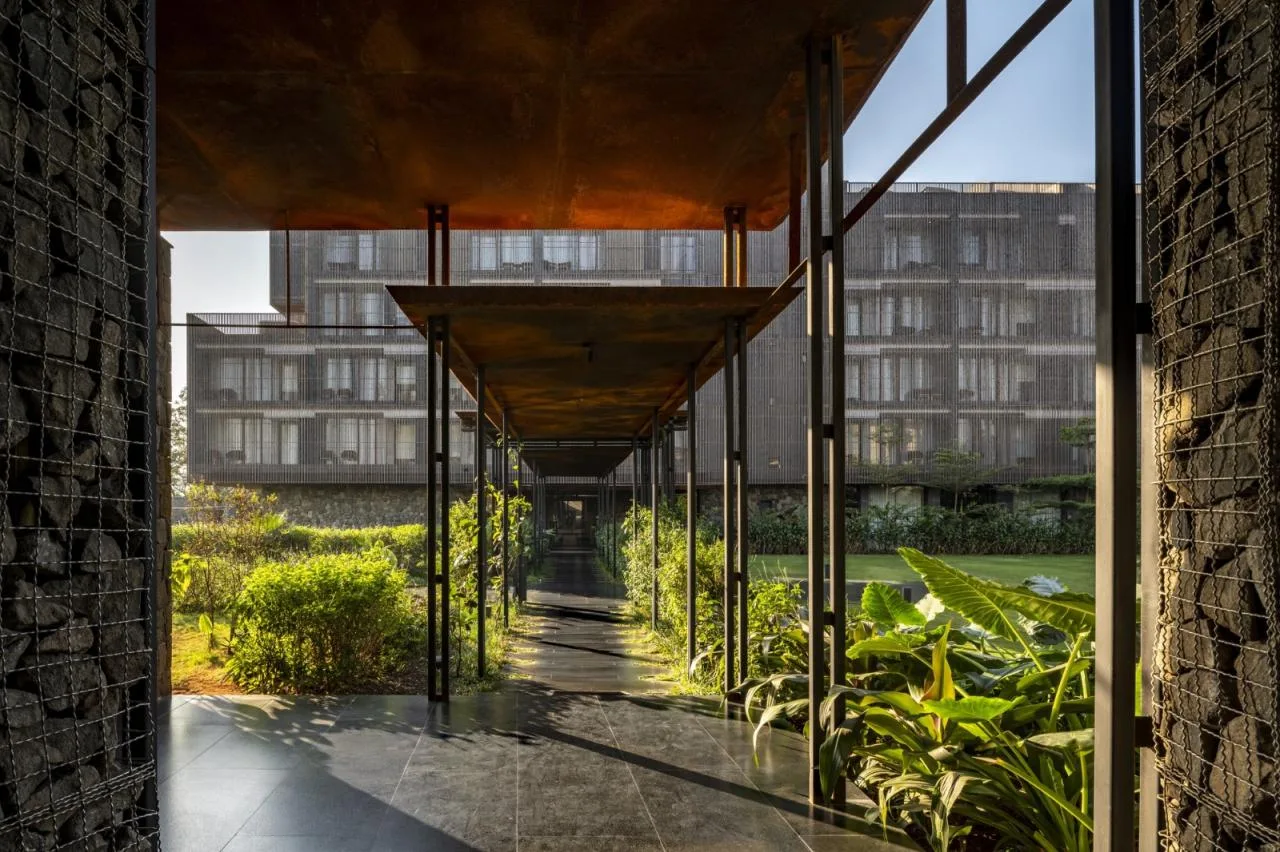
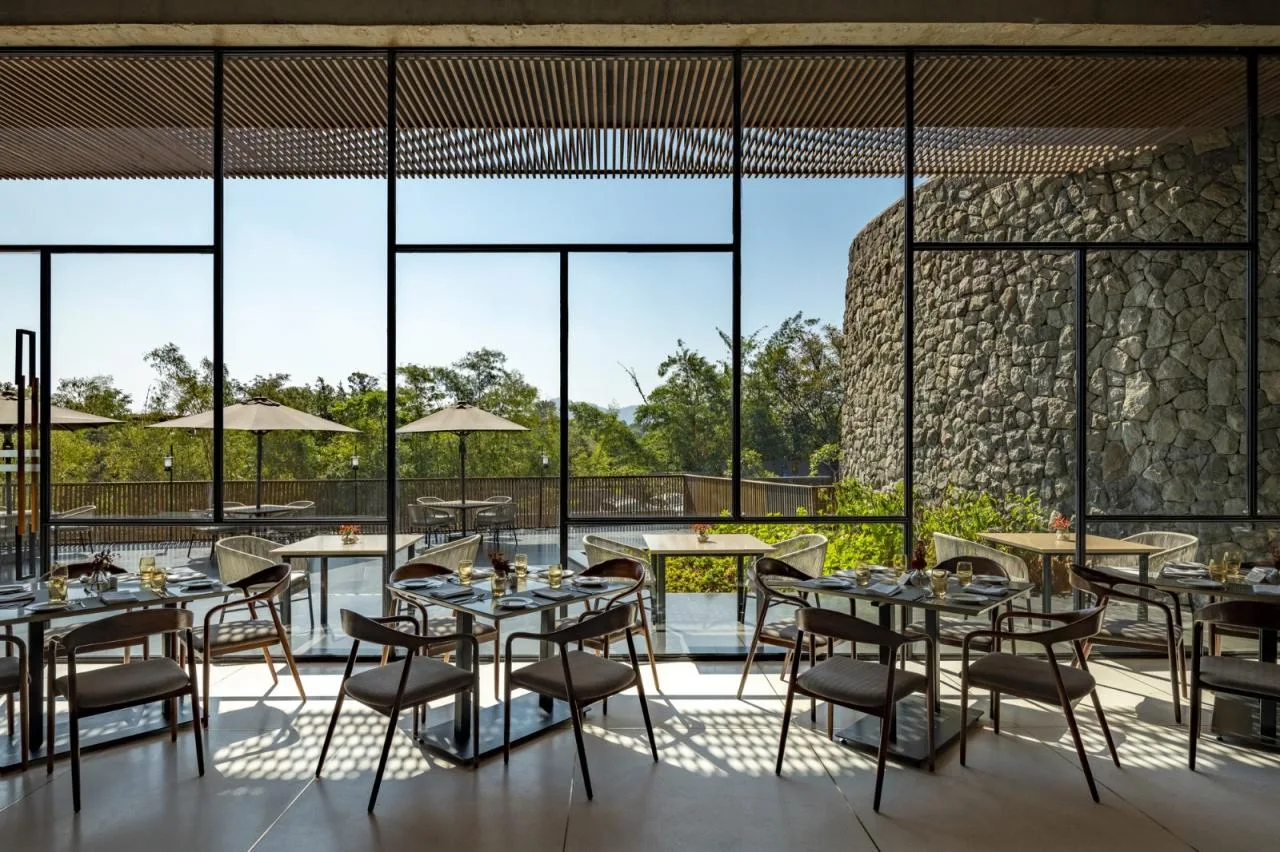
For this project, the design team embraced a philosophy that rejects decorative embellishments, allowing natural building materials to shine through while fulfilling intensive functional needs. The focus is on responding meaningfully to the site, its memories, and climate, rather than relying on preconceived visual styles. This approach represents a significant innovation and breakthrough in architectural design.
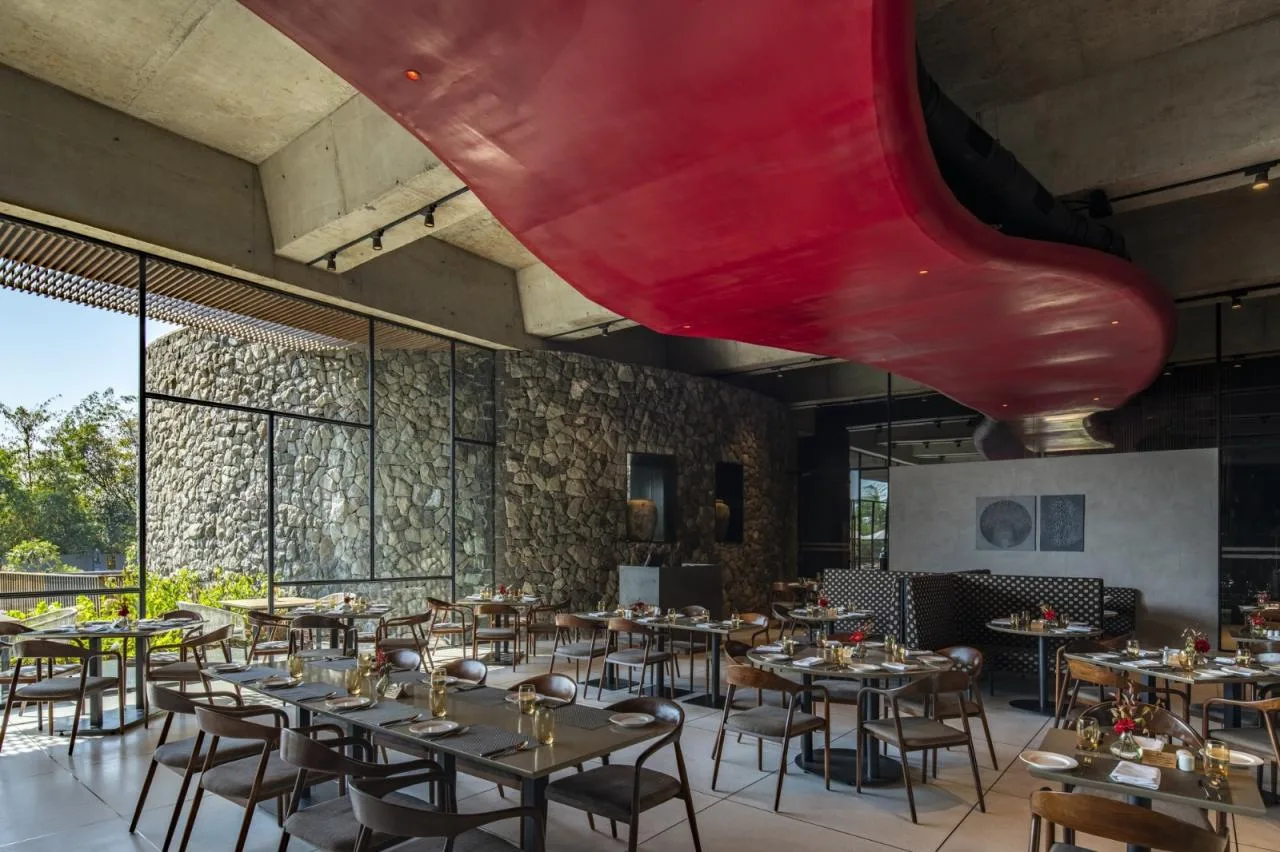
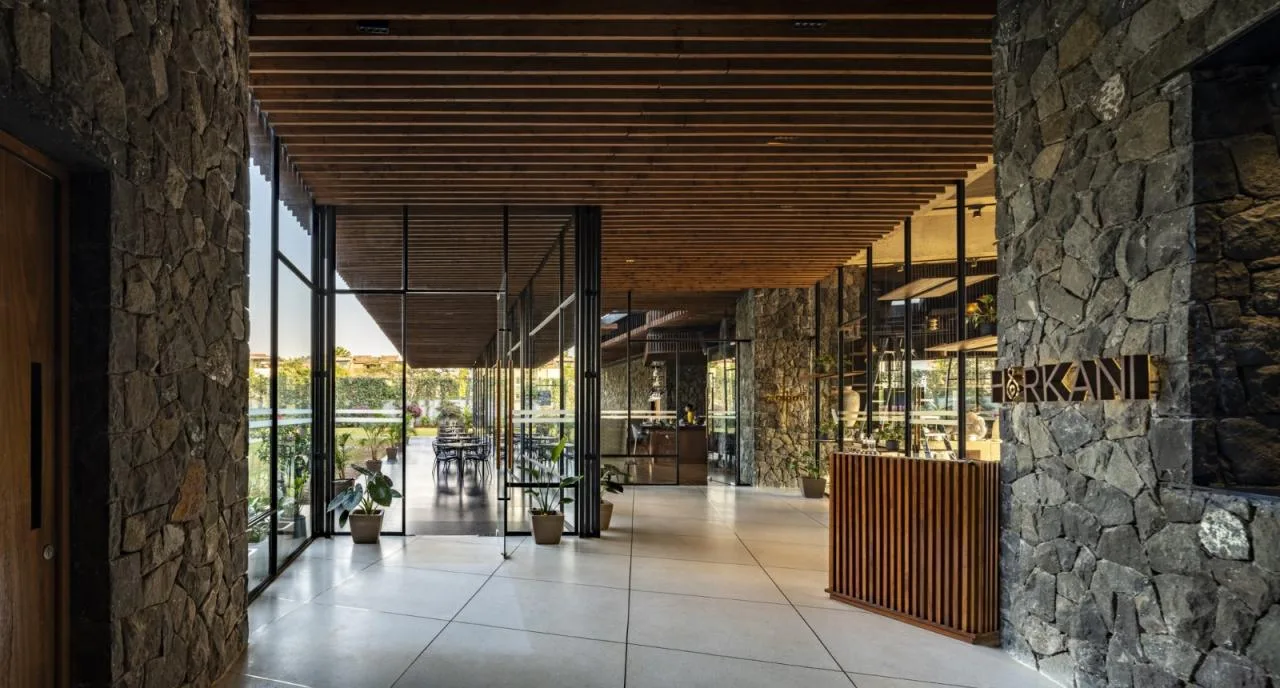
Project Drawings
△ Analysis chart
△ Analysis chart
△ Sketch
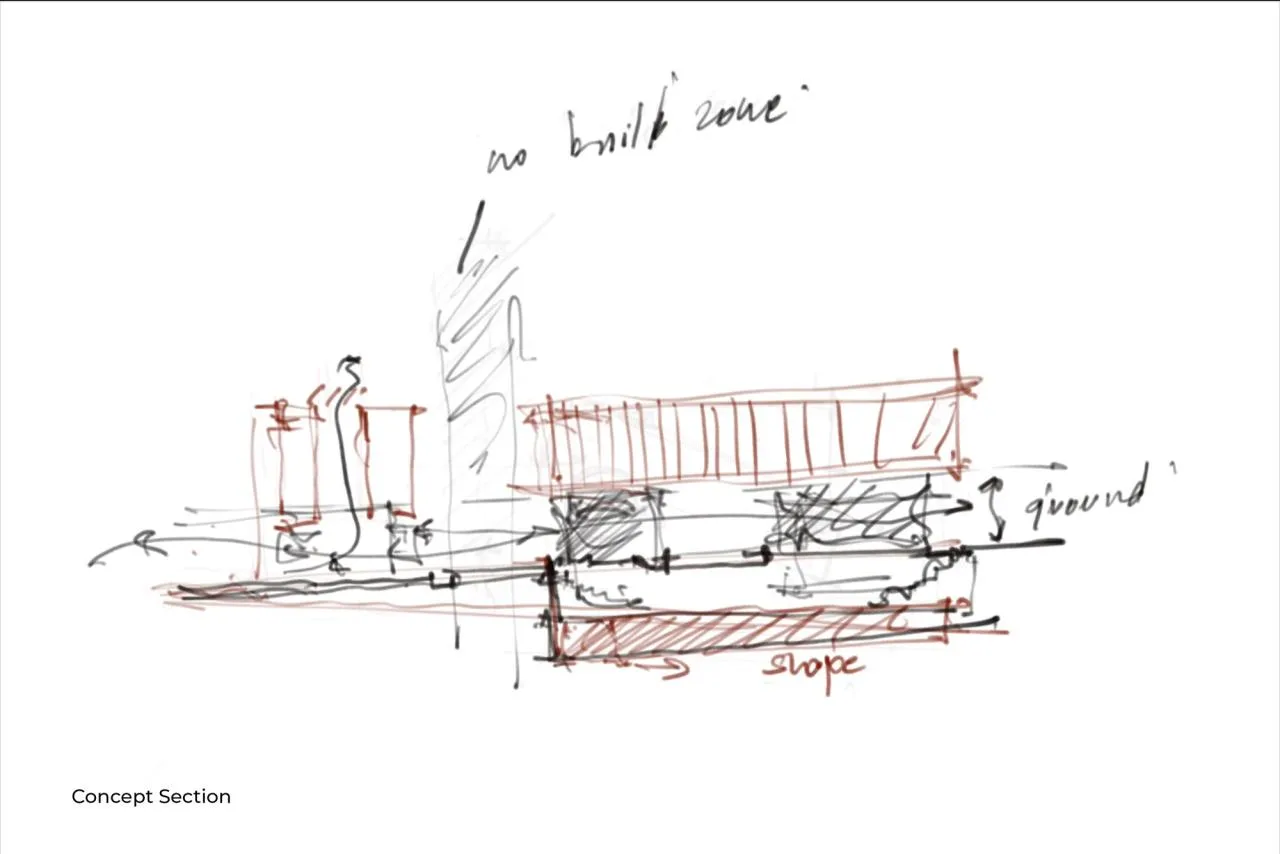
△ Sketch
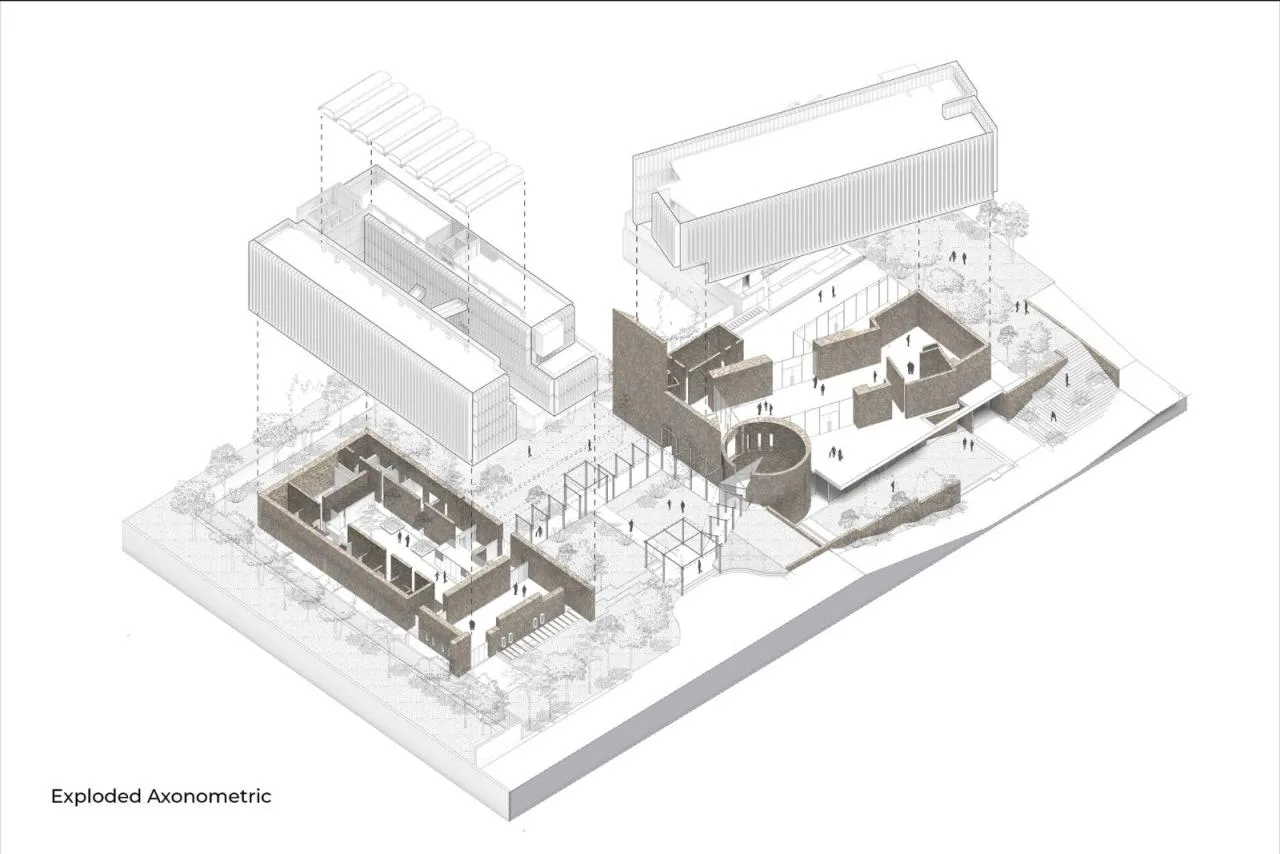
△ Analysis chart
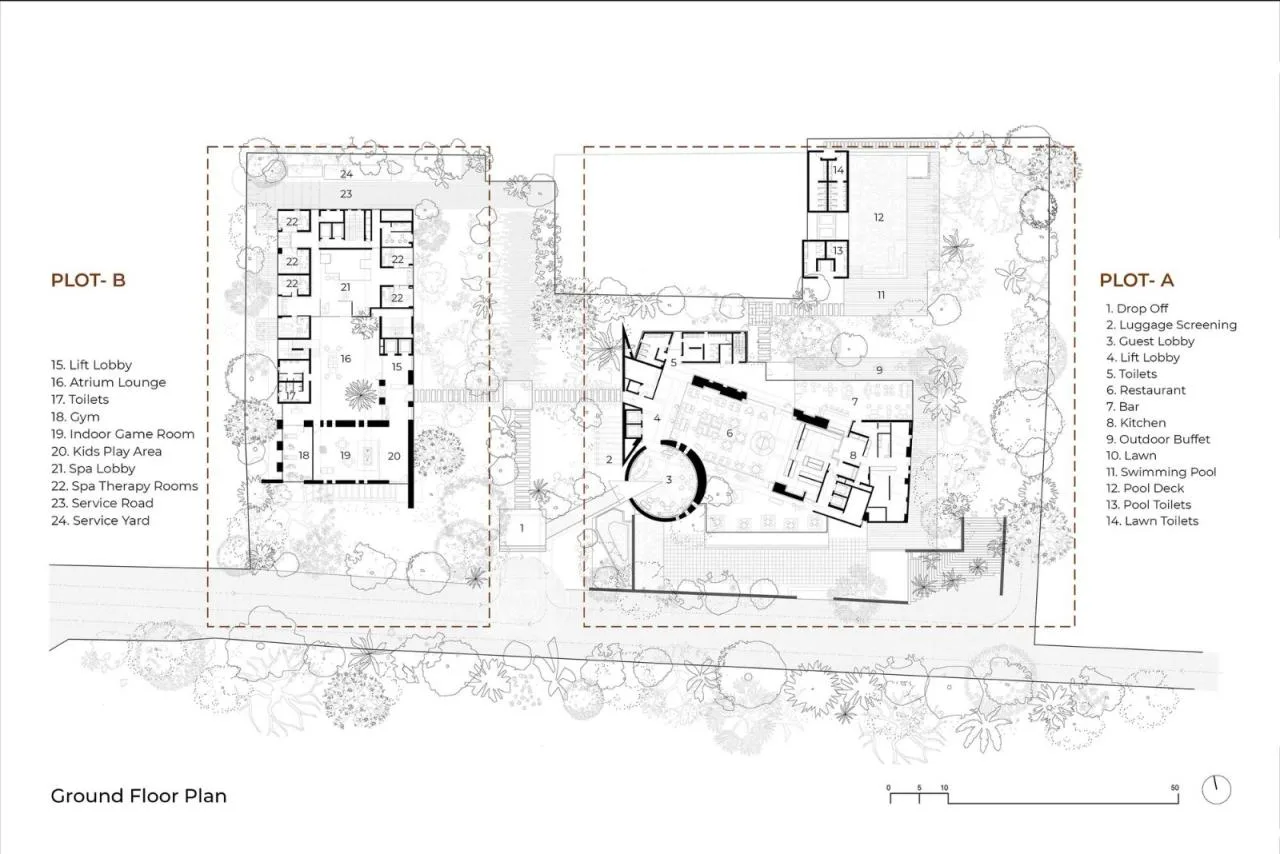
△ First floor plan
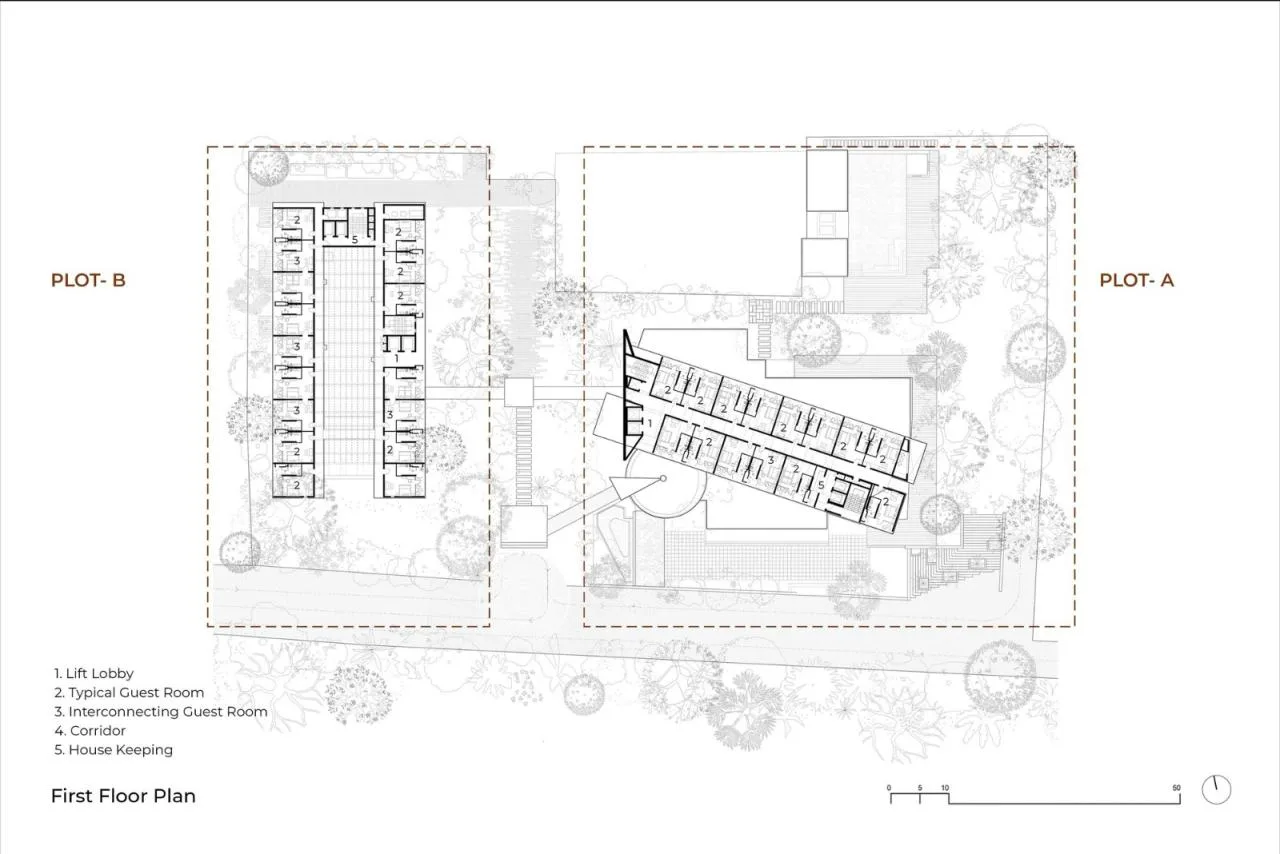
△ Second floor plan
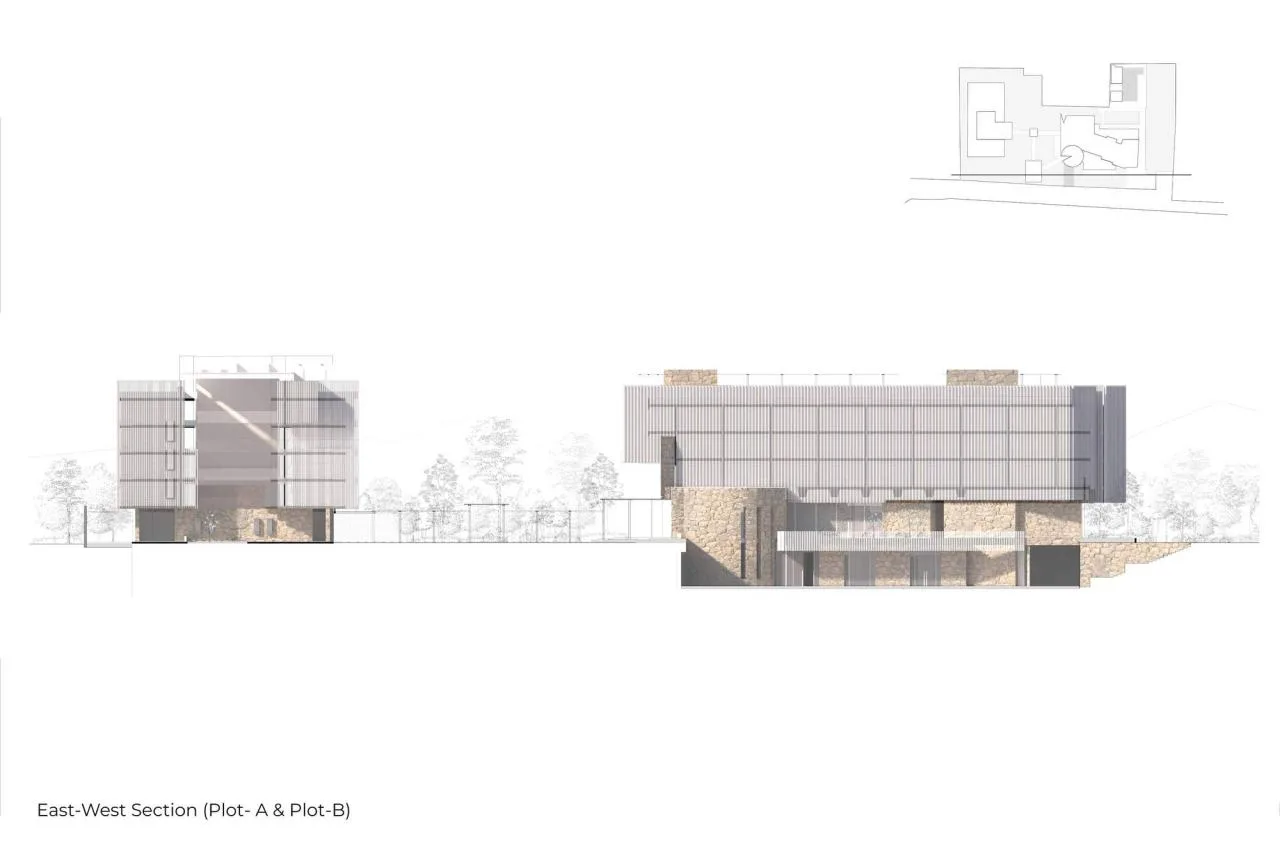
△ Elevation drawing
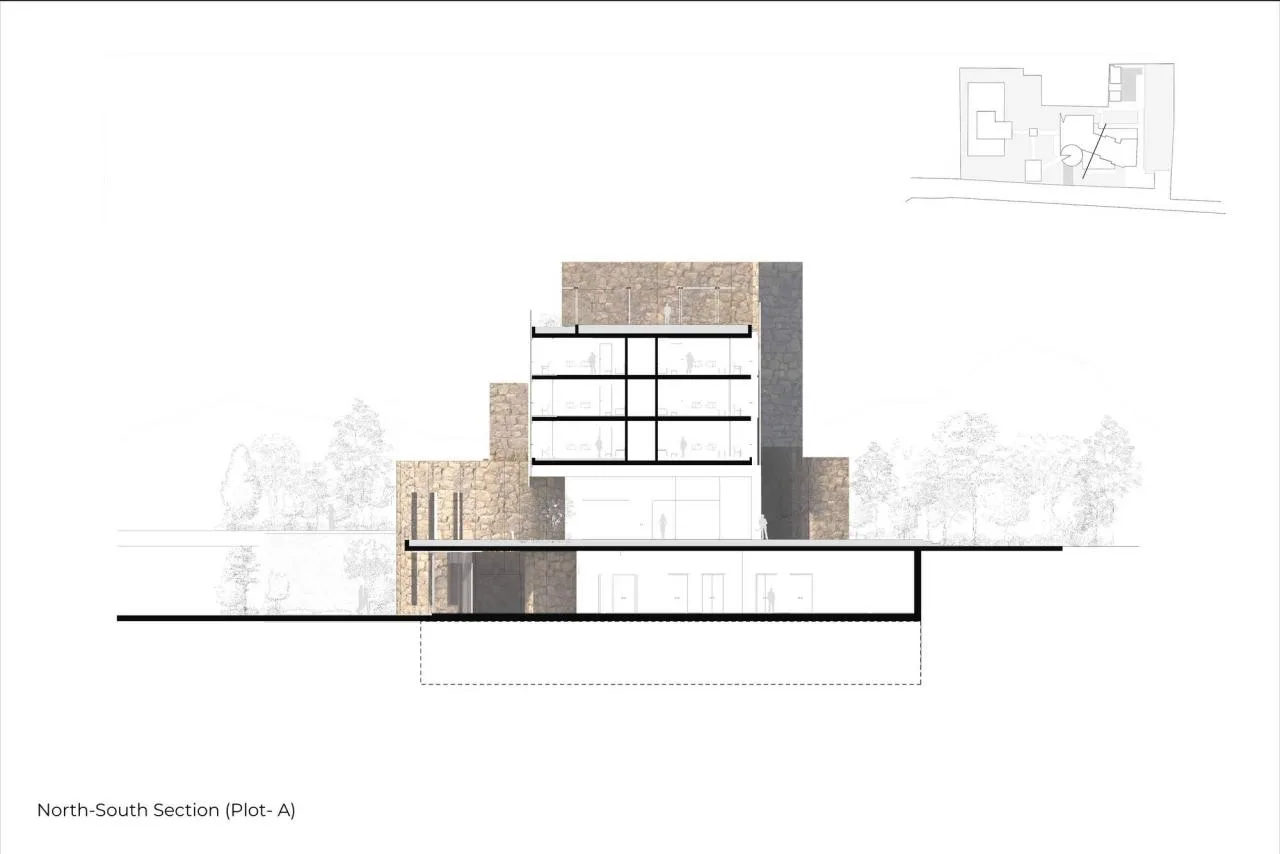
△ Section diagram
Project Information
Architect: Malik Architecture
Area: 120,000 square feet
Project Year: 2022
Photographer: Bharath Ramamrutham
Design Directors: Kamal Malik, Arjun Malik
Lead Architect: Ketan Chaudhary
Project Architects: Payal Hundiwala, Sakshi Jaggi
Engineer: Vivek Garg
Engineering Team: Global Engineering Services
Location: Lonavala, India












Must log in before commenting!
Sign Up