
San Tu Ferry: Connecting Both Sides of the River
The Yangtze and Jialing Rivers, which flow through Chongqing, have shaped the city’s unique landscape, where mountains and water coexist harmoniously. However, these rivers have also posed significant challenges to urban transportation. In earlier decades, when manpower, technology, and funding were limited, ferries served as a vital mode of transport for vehicles and goods between different districts.
With the construction of numerous cross-river bridges in recent years, ferry services have gradually lost their traditional role. Of the 15 ferry terminals once operating in Chongqing, only the San Tu Ferry remains active, shuttling between Sansheng and Shuitu and serving as the sole public welfare ferry crossing in the city’s main urban area.
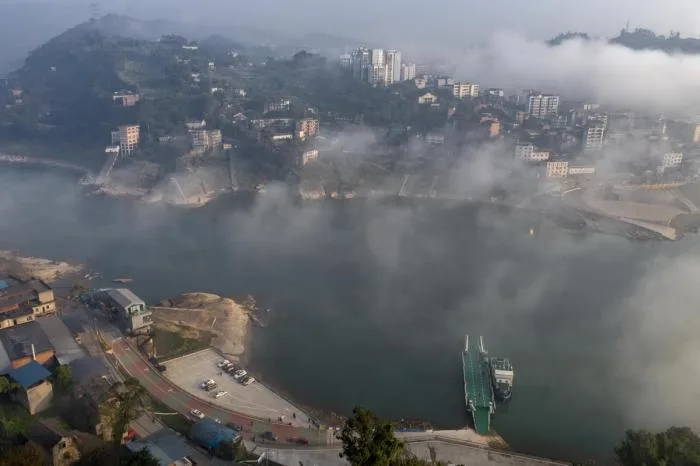
△ Cross Strait Chedu Service Station © Liu Guochang
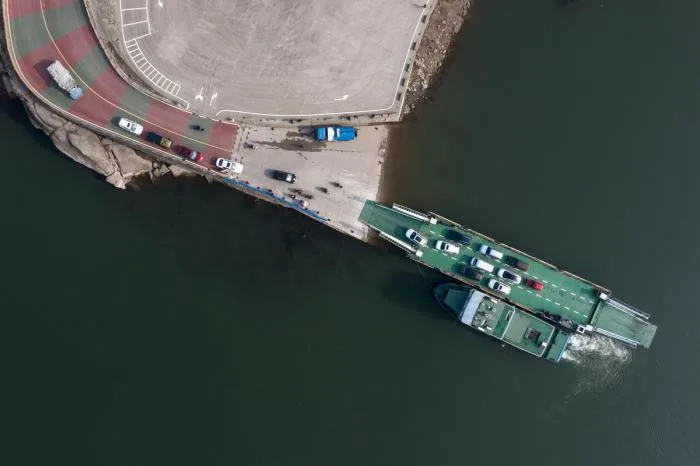
△ Ferry and dock © Liu Guochang
Located in Sansheng Village, Shijialiang Town, Beibei District, on the west bank of the San Tu Ferry, this area was historically a key route from Chongqing to Hechuan. It flourished briefly in the 1960s with the establishment of the Chuanyi 17th Factory but later declined.
On the east bank lies Shuitu Town, also in Beibei District. Founded during the Qing Dynasty’s Kangxi era, Shuitu was once a thriving industrial and commercial hub. A local poem captures its vibrancy: “A thousand people bowing their heads by day, ten thousand bright lights shining by night.” During the Republic of China’s provisional capital period, the Central Guard Agency was stationed here. After the founding of the People’s Republic of China, Shuitu became the seat of Jiangbei County’s government. Many historic buildings, including the county office and the People’s Great Hall, remain well preserved.
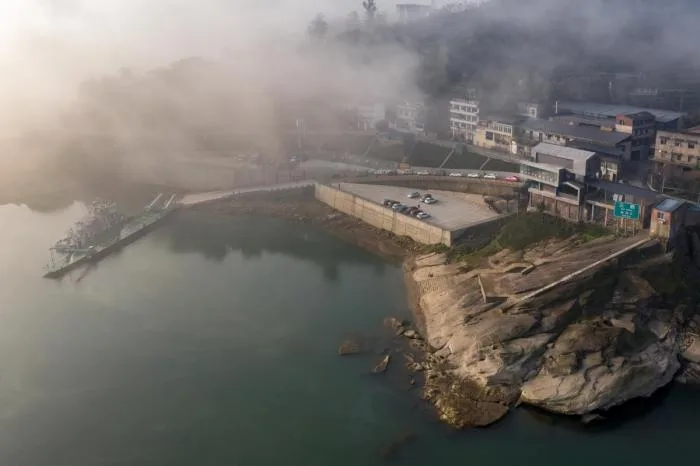
△ Aerial view of Shijialiang Old Street © Liu Guochang
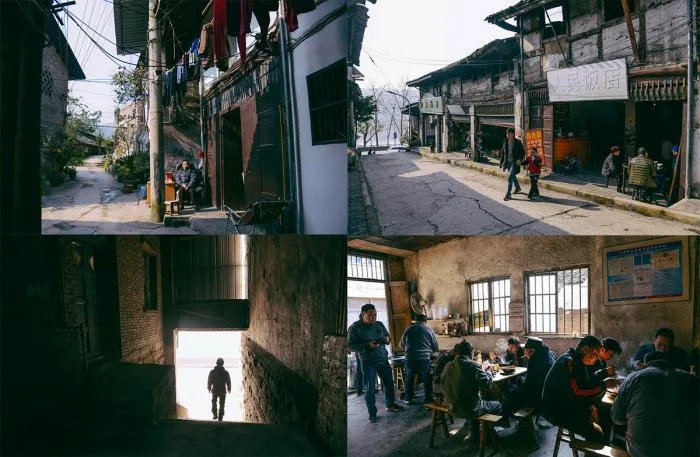
△ Shuitu Old Street ©
With the Jialing River Bridge nearing completion nearby, Chongqing’s last ferry crossing could soon become a part of history. Yet, ferry terminals remain an essential part of Chongqing’s heritage. Although their role in transportation diminishes, preserving this memory through thoughtful functional adaptation and industrial planning could revitalize the villages and towns along the route, forging connections between communities.
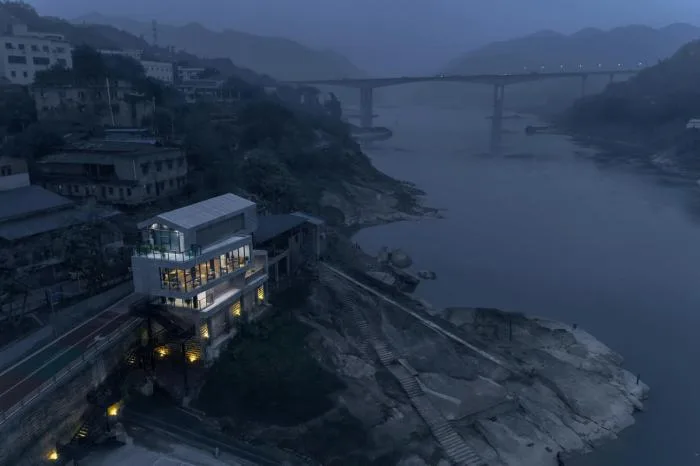
△ The building stands by the river © Liu Guochang
The San Tu Ferry faces a similar challenge to Chongqing’s cross-river cableway, another unique transportation mode. The cableway, built in the early 1980s, once thrived but saw passenger traffic decline as the city developed. The Chongqing Cableway Company responded by transforming the Yangtze River Cableway into a combined transportation and tourist attraction, maintaining its relevance.
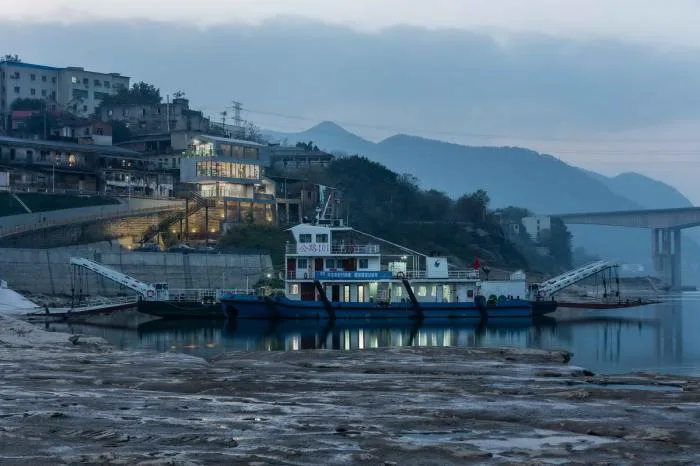
△ Ferry and Car Ferry Service Stations © Liu Guochang
Inspired by this approach, the car ferry service at San Tu aims to leverage the historical and scenic advantages of the war preparedness dock and riverside landscape. By integrating cultural and tourism elements, this traditional transport mode can transcend its limitations, preserving the city’s heritage while creating a new urban attraction.
Riverside Public Space with Multifunctional Design
After consulting with the Chedu Management Station, we sought to support this transformation through architecture. Our goal was to create a public space with supportive amenities at San Tu Wharf, offering cultural exhibitions and leisure areas for locals and tourists alike. Additionally, the design addresses accommodation and dining needs for ferry crew members, helping to preserve the authentic culture of old Chongqing while revitalizing both sides of the river.
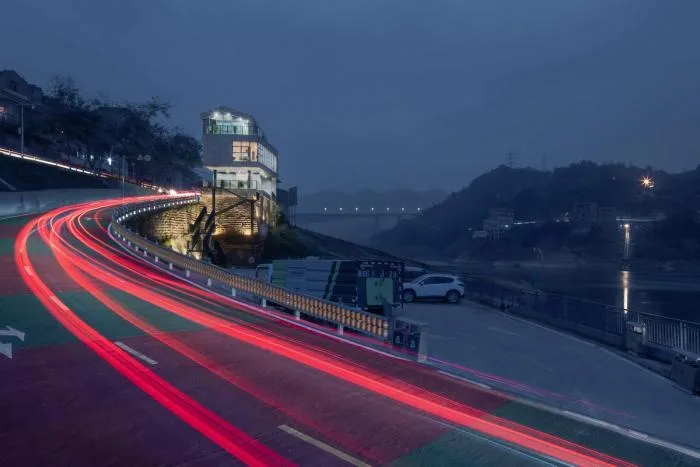
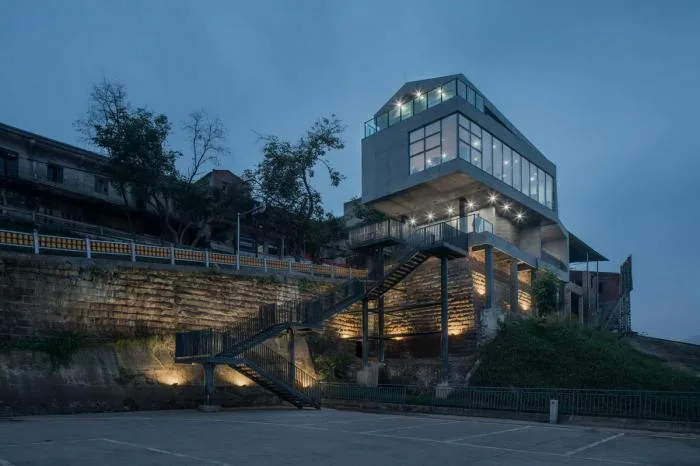
△ Ferry service station under the night sky © Liu Guochang
The project site is a 150-square-meter cliff made of stone slabs on the west bank of the Jialing River, adjacent to Shijia Sansheng Highway, where ferries board at Sansheng Pier. To make the most of the limited space, buildings were arranged north to south, with the river to the east and mountains to the west. Architect Liu Guochang designed three staggered rectangular blocks stacked vertically to maximize spatial complexity and visual interest.
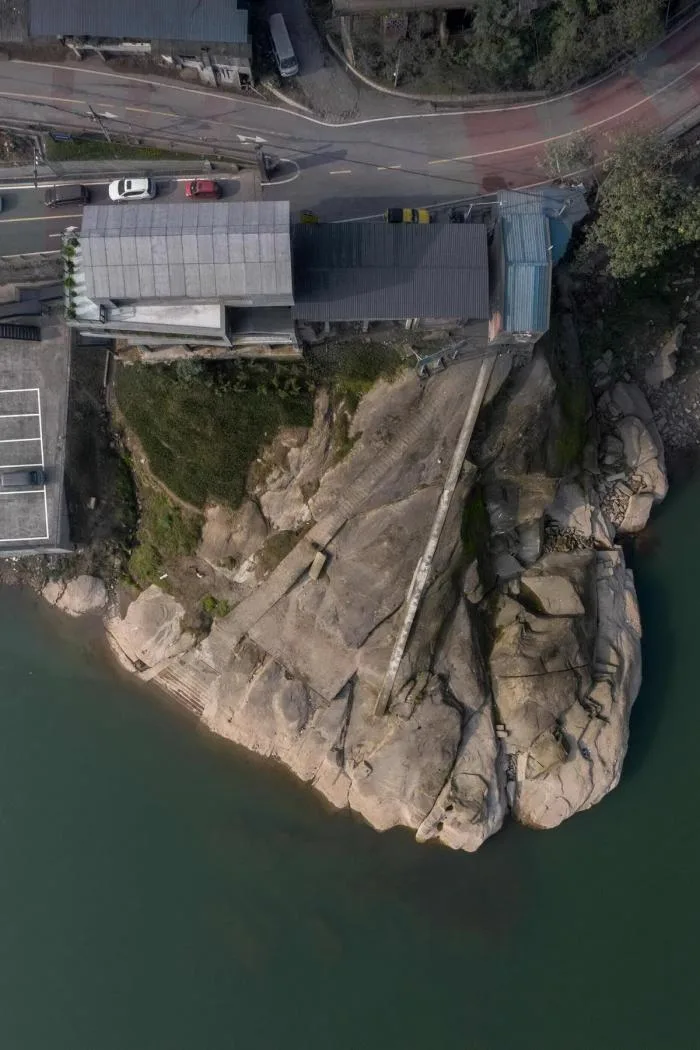
△ The heart-shaped giant rock on the riverbank ©
The staggered blocks vary in size and height to resolve the tight site constraints, creating multiple shaded gray areas that enrich the spatial hierarchy and façade composition.
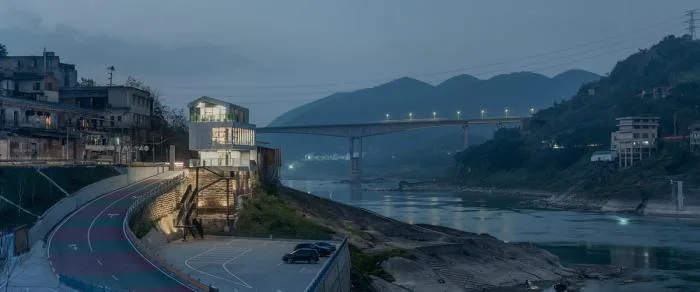
△ Service Station and Vision ©
The main entrance is located on the west side of the ground floor block. Here, the design blends reality with abstraction, opening the space to pedestrian flow and reducing the feeling of confinement, enhancing both the functionality and practicality of the building.
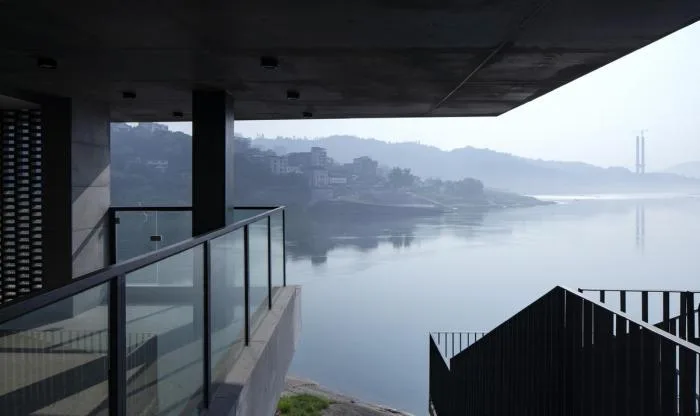
△ Prominent platform overlooking Shuitu Old Street ©
Functionally, the first floor serves as a cultural exhibition space open to the public, showcasing the history of the traditional ferry transportation system, Che Du. The second floor is designed as a leisure area for citizens, offering amenities such as tea, Wi-Fi, power bank rentals, and basic medical assistance, reinforcing the station’s openness and community focus. The third floor provides living quarters for ferry crew members.
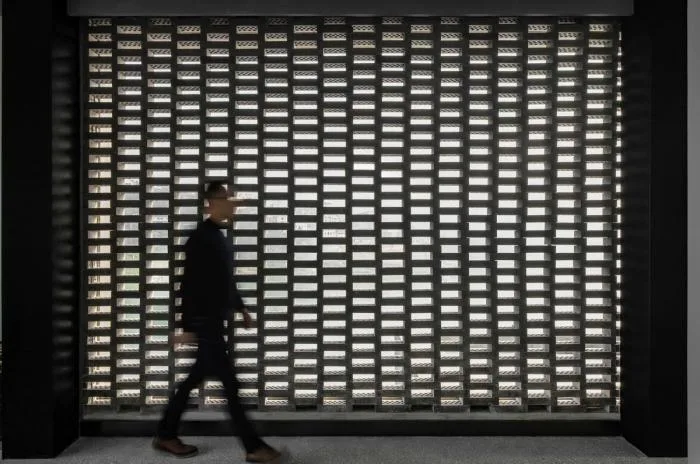
△ Brick wall of the first-floor exhibition hall © Liu Guochang
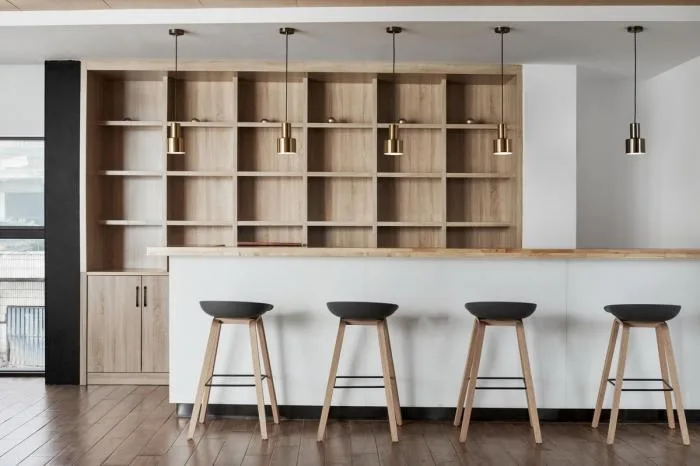
△ Second-floor leisure space © Picture Photography
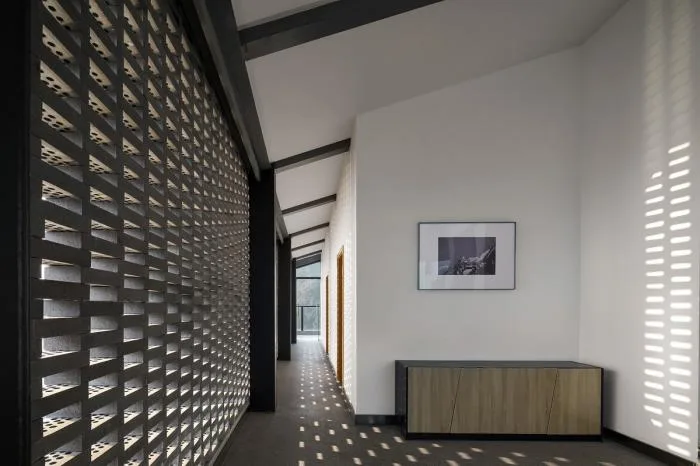
△ Crew dormitory corridor illuminated by light and shadows © Picture Photography
Blending Tradition with the Local Market Texture
Architecturally, the design respects the surrounding old residential buildings by incorporating traditional materials, colors, and forms characteristic of mountain architecture. Modern techniques are infused into elements like staggered sloping roofs, suspended structures, and stepped forms, creating new visual and contextual meanings. This approach integrates the building with its environment, echoes the ferry crossing’s shoreline, and revitalizes the site’s traditional spatial vitality, welcoming both locals and visitors with openness.
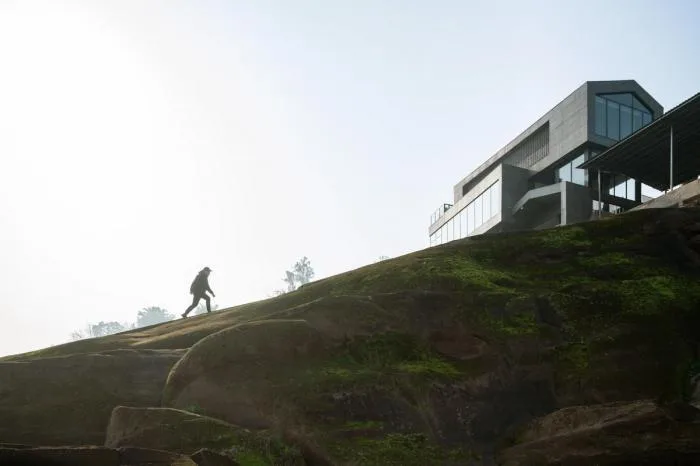
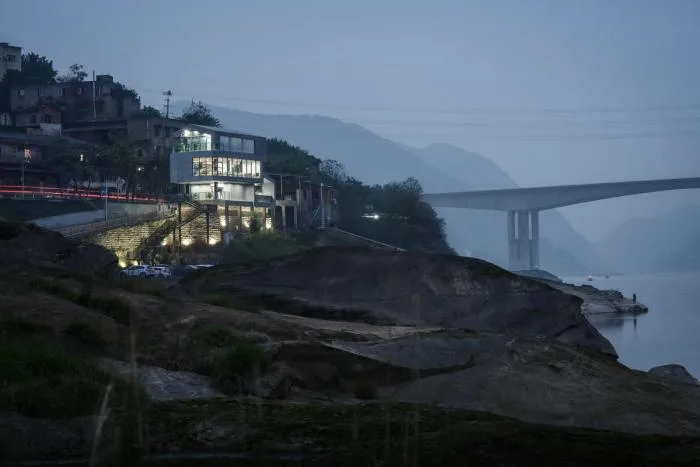
△ Architecture and riverside boulders © Liu Guochang
The building’s roof continues the traditional sloping roof style found in local homes but uses modern materials and volumes to blend traditional and contemporary aesthetics. With the exception of the bathrooms, the ground floor is fully elevated to create an open space ideal for cultural exhibitions. A prominent sloping roof frame perpendicular to the river marks the entrance, framing views of the Jialing River and distant mountains.
The second floor’s volume is twisted to optimize river views, with floor-to-ceiling windows maximizing natural light and scenery.
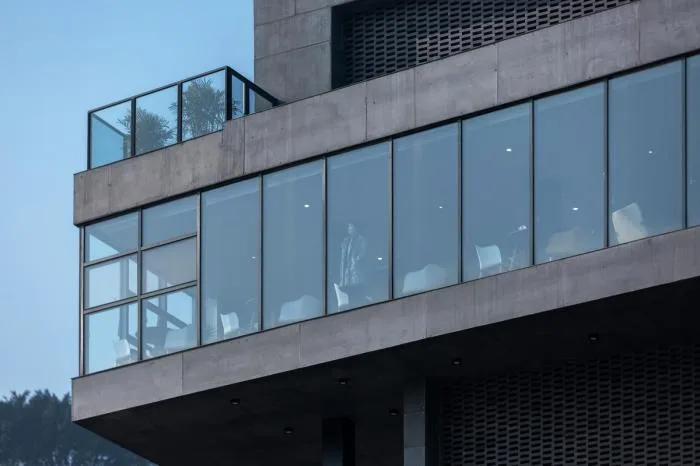
△ Floor-to-ceiling glass on the second floor © Liu Guochang
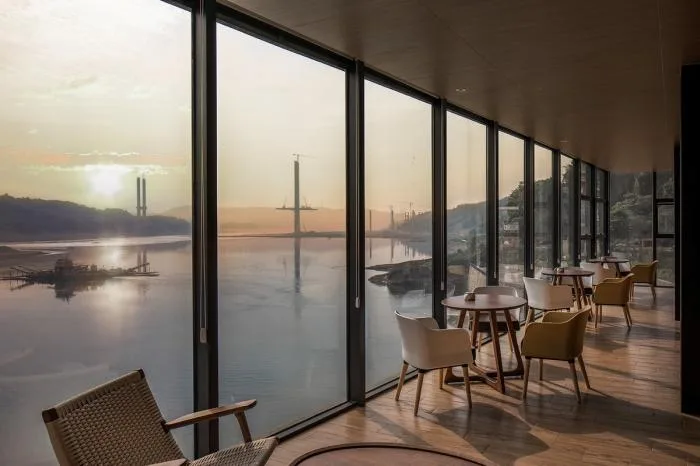
△ Second floor offers excellent river views to enjoy the sunrise © Picture Photography
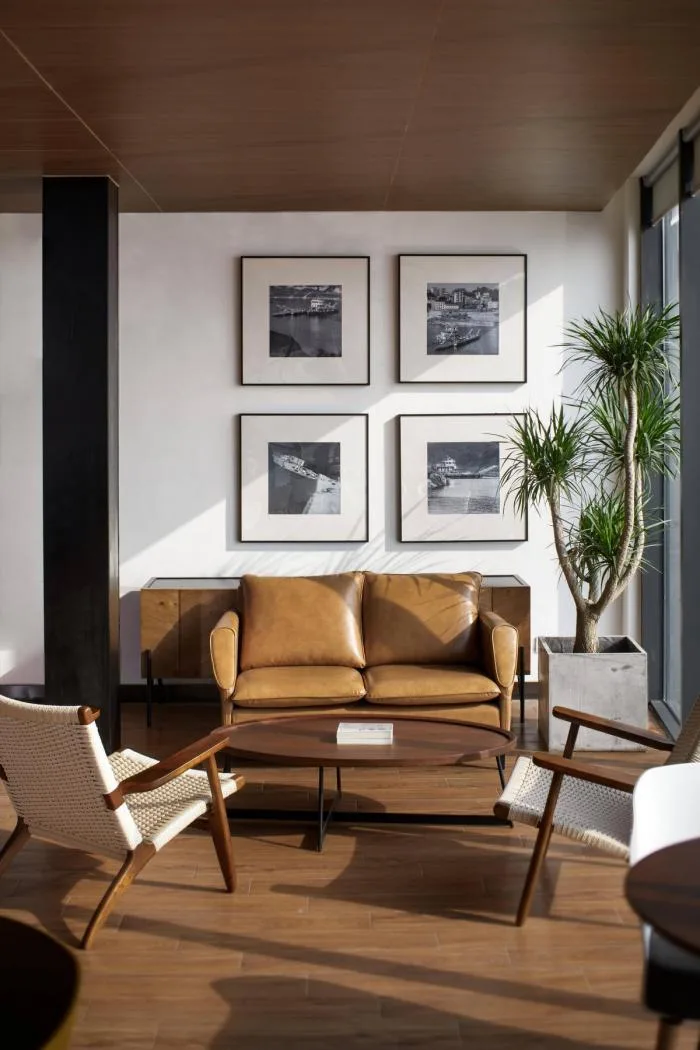
△ Second floor discussion area bathed in sunlight © Picture Photography
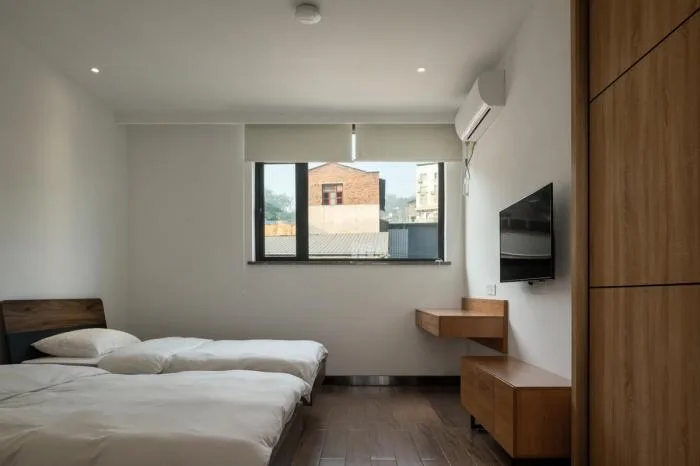
△ Three-story crew dormitory ©
The displacement of the second-floor block creates a tall space to the north on the first floor that serves as a stairwell, while the south side of the third floor features an elevated viewing platform. The stairwell is designed without enclosures, making it an open space with panoramic views. This design lightens the building’s form, as if it is floating on the site.
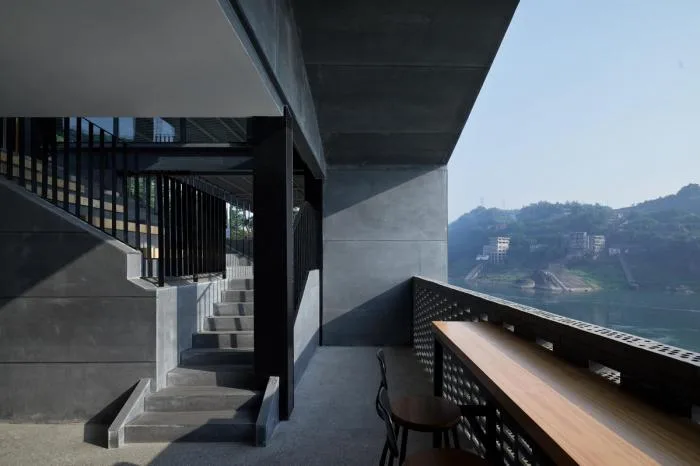
△ First-floor circulation space © Picture Photography
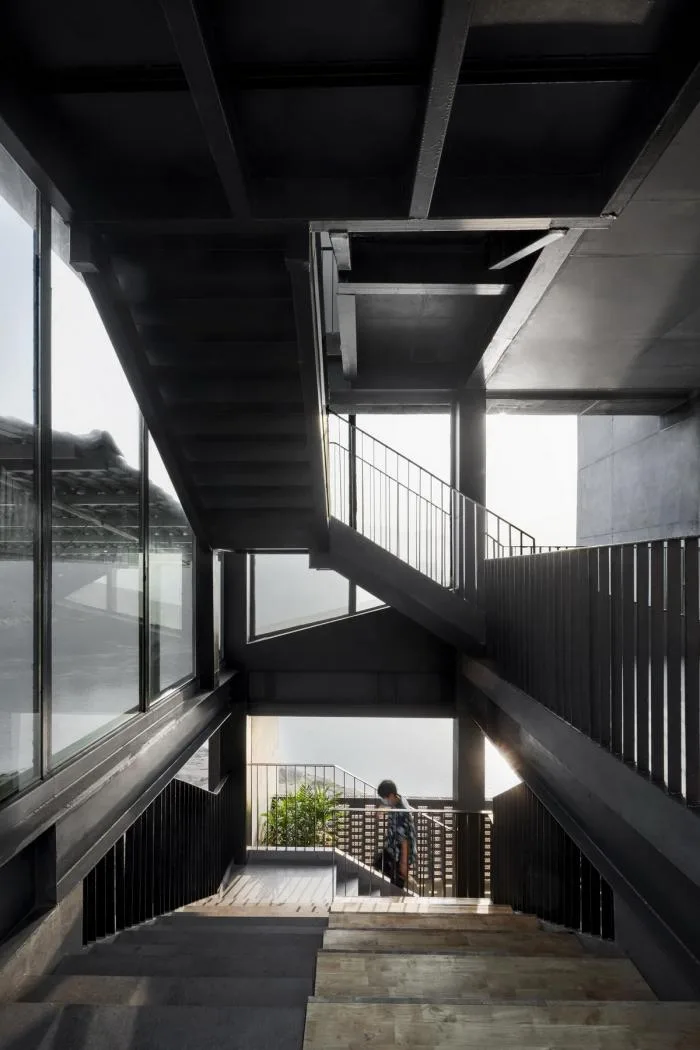
△ Transportation space integrated with activity functions ©
The third floor features a simple sloping roof box, harmonizing with the traditional residential buildings in the background.
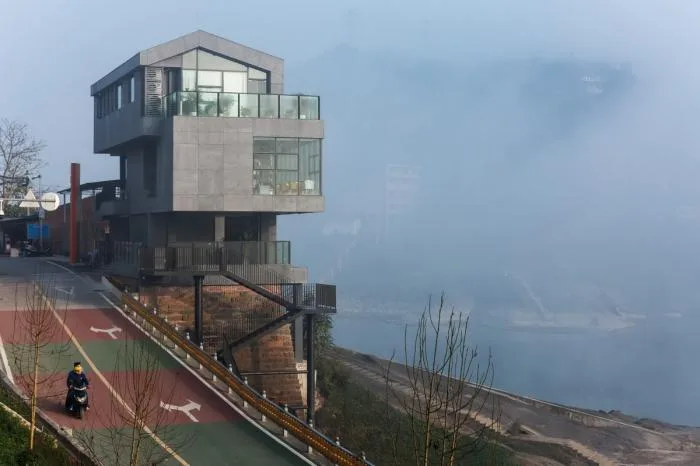
△ Car ferry service station shrouded in mist © Liu Guochang
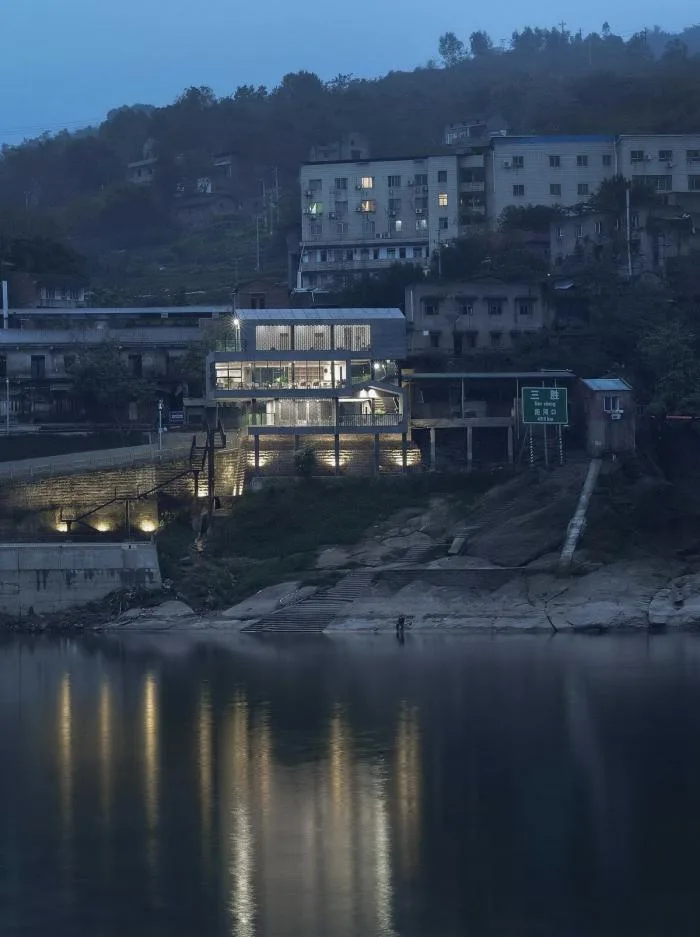
△ Integrated into the market ©

The building’s main structure is a fully steel frame, with the exterior clad primarily in cement fiberboard. Some walls use traditional green brick lattice patterns. Replacing large floor-to-ceiling glass with partially tiled walls preserves the building’s massing, while hollowed areas allow natural light and create distinct light-and-shadow effects.
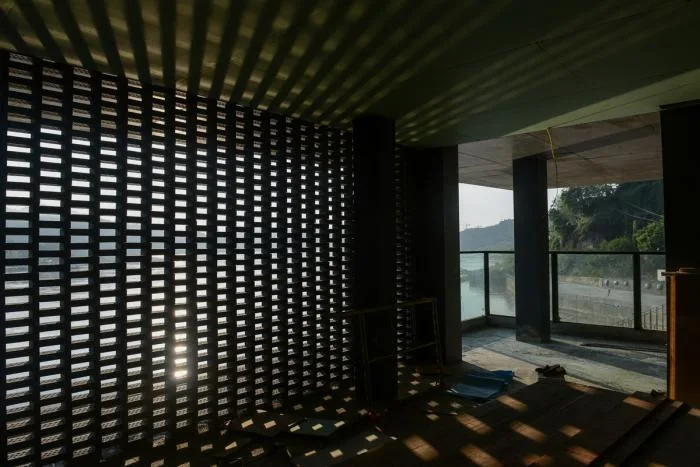
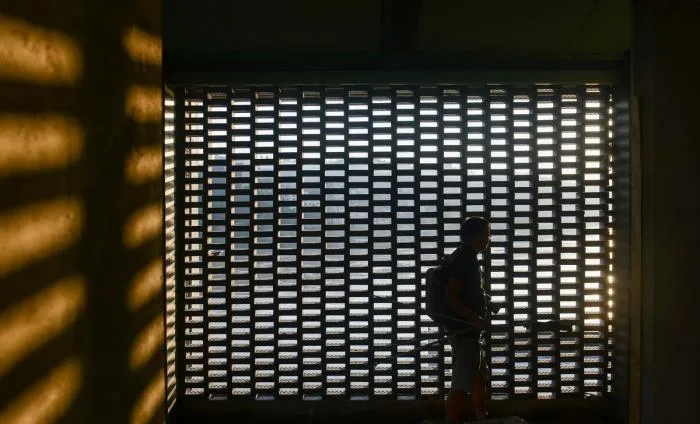
Light and Shadow in the Morning (During Construction) ©
The building’s gray palette helps it blend with the surrounding Sansheng Village, making it appear like a giant river rock quietly resting along the Jialing Riverbank, embodying a unique local spirit.
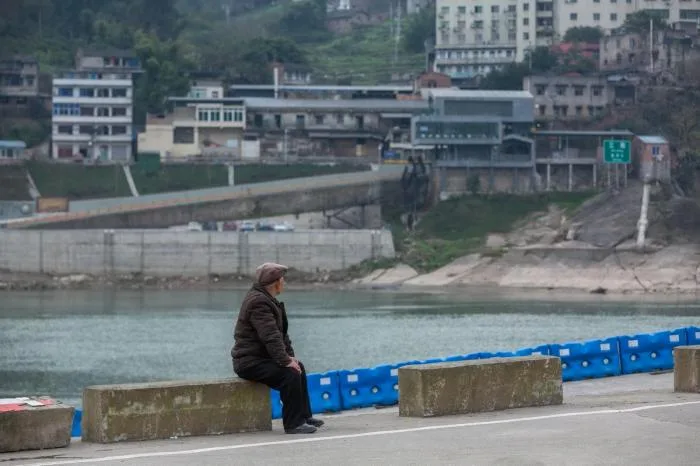
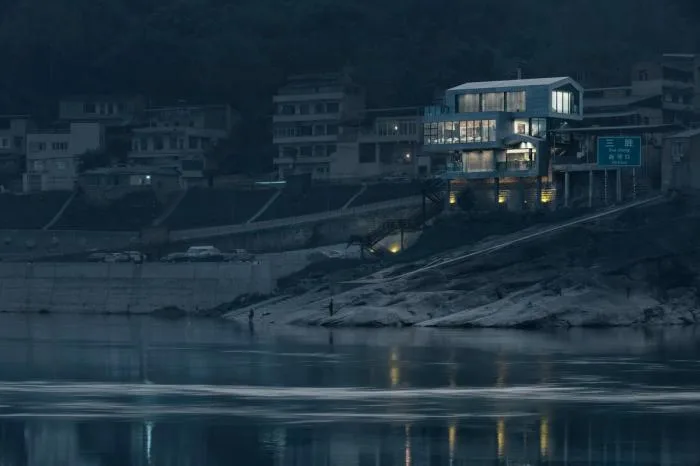
△ Distant river view © Liu Guochang
Creating Opportunities by Overcoming Constraints
To address the 11-meter cliff height difference caused by rock formations, a folding steel staircase resembling a mountain trail connects the building’s ground floor to the nearby riverside parking lot. This vertical circulation disrupts the building’s volume, offering varied spatial experiences as visitors ascend.
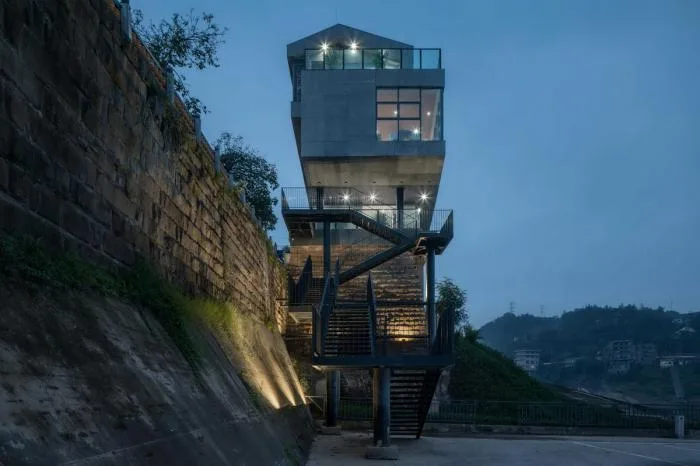
△ Steel staircase bridging the 11-meter height difference © Liu Guochang
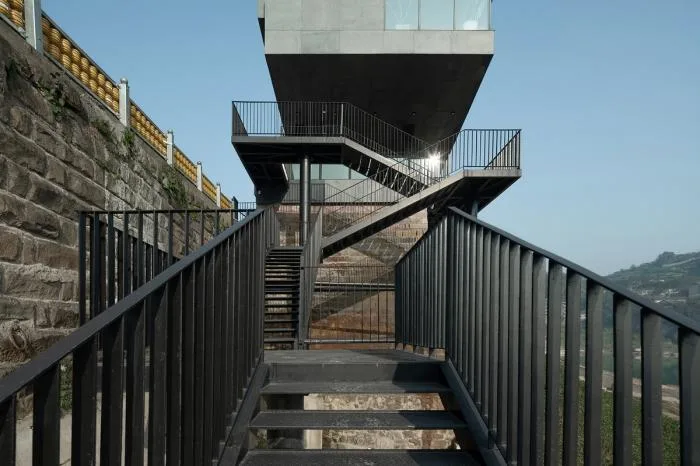
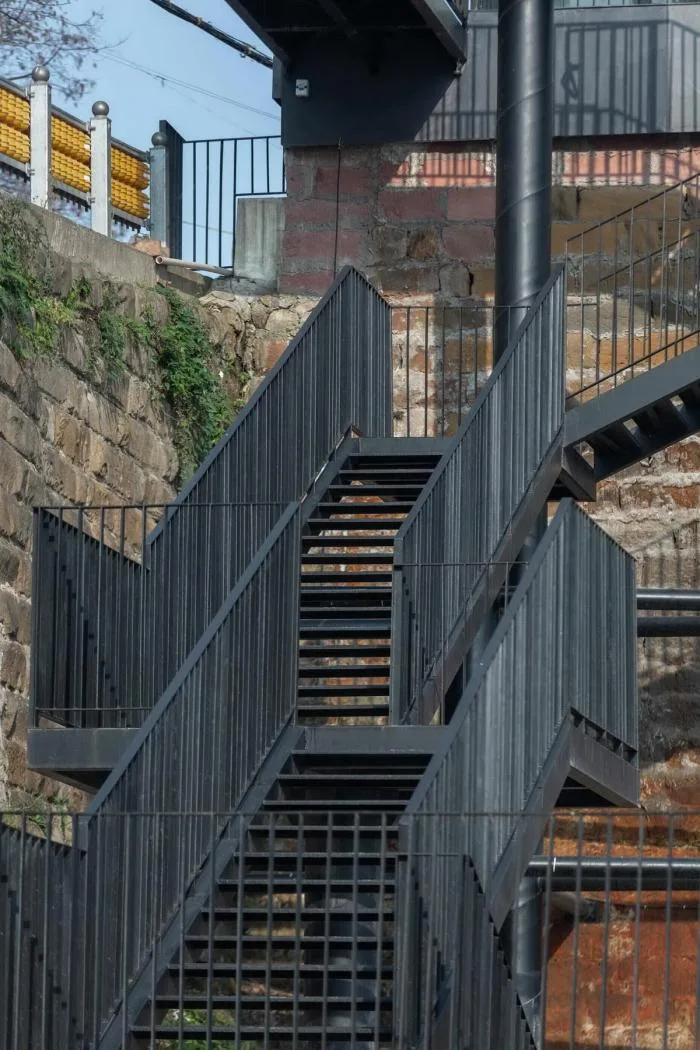
△ Steel staircase turning upwards © Liu Guochang
The Chedu Service Station was built using prefabricated all-steel construction to accelerate completion and operation. The exposed black steel structure complements the gray cement fiberboard, highlighting modern architectural elements. This steel framework also reduces the perceived weight of the cantilevered second floor.
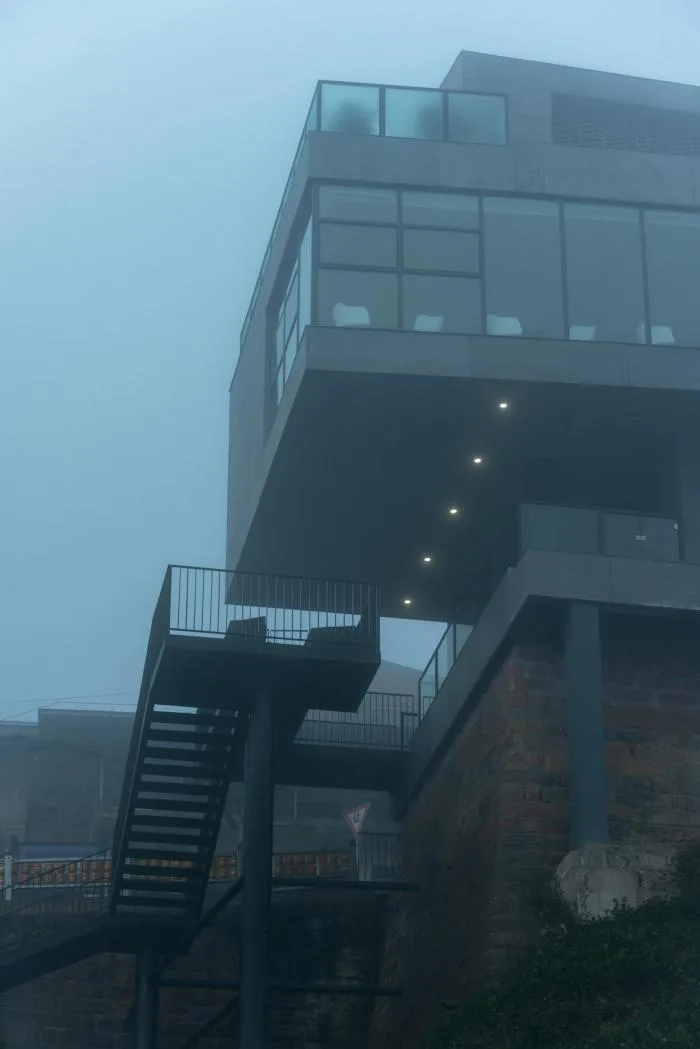
△ Morning mist © Liu Guochang
The building’s riverside location offers stunning views, but it also faces flooding risks during extreme flood events occurring once every 50 years. To address this, the first floor is fully elevated and designed as a flexible exhibition hall, allowing quick evacuation and clearing during floods. Durable materials like cement fiberboard and terrazzo flooring minimize damage if submerged.
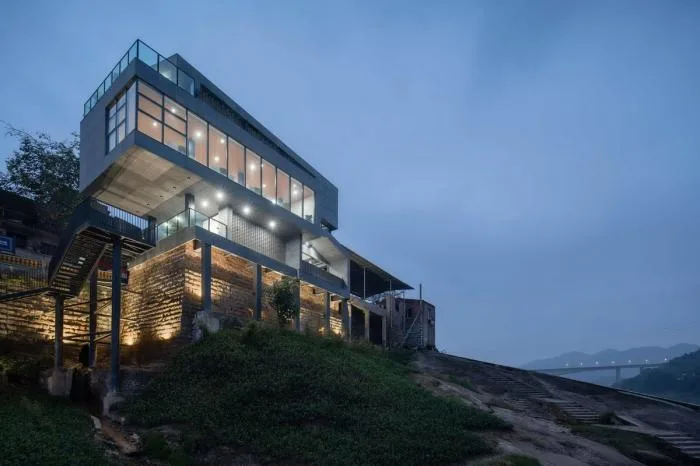
△ Overhead view of the bottom floor and large cantilever © Liu Guochang
Continuous Impact and Support
Using public spaces as catalysts, this architectural approach gradually promotes the development of surrounding areas through guidance rather than imposition. By enhancing public facilities and improving rural residents’ quality of life, this strategy supports the transformation of rural industries and residential construction, contributing to long-term revitalization of remote urban and rural areas.
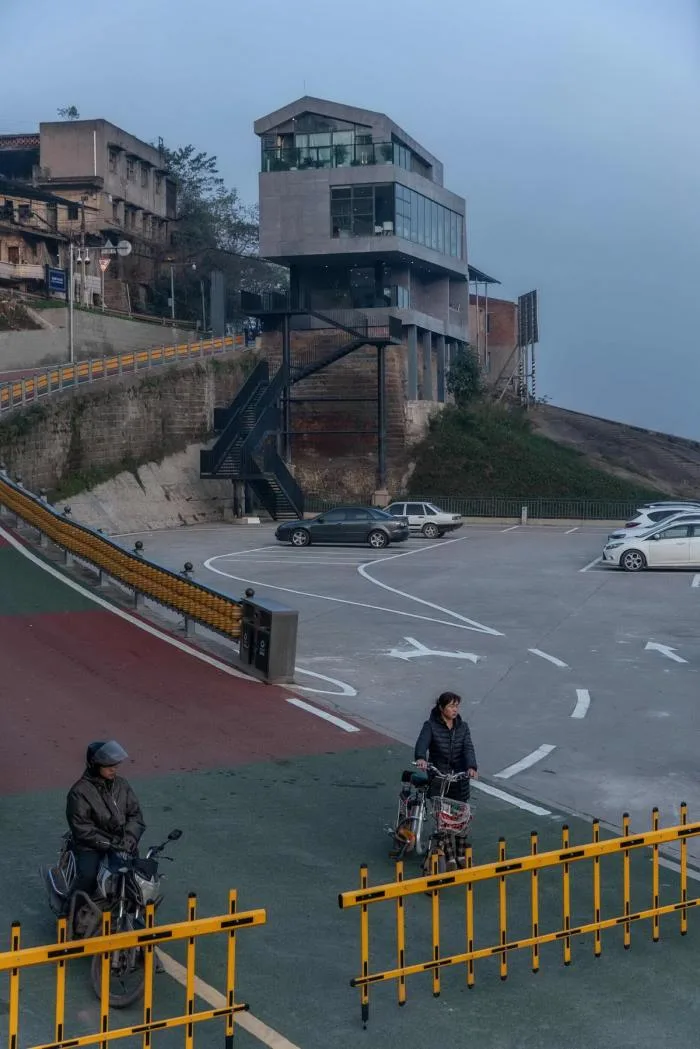
Citizens waiting to cross after the service station became operational © Liu Guochang
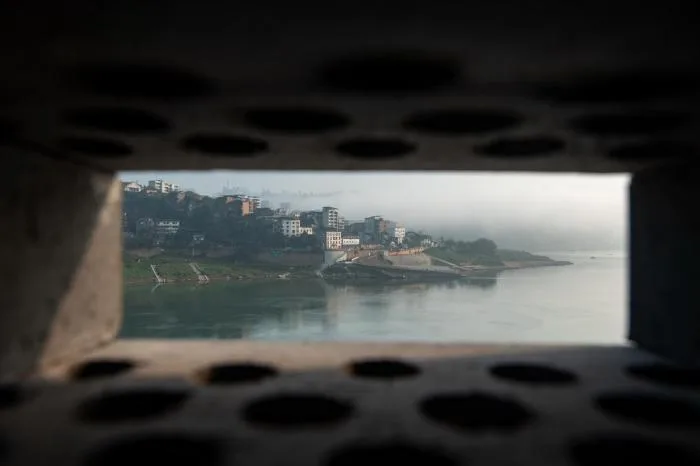
Looking through brick crevices to the opposite bank ©
Since the completion of the San Sheng Che Du Service Station, ferry traffic has gradually recovered, and the site has attracted an increasing number of weekend visitors. Building on this momentum, the design team also contributed to the second phase of the Chedu Service Station and the planning and renovation of adjacent street-side buildings. This “connecting points and lines” model supports a gradual transformation of the village’s character.
Once finished, this area will become a multifunctional public leisure zone centered on ferry culture, organically continuing the ecological chain of San Tu Car Crossing’s development.
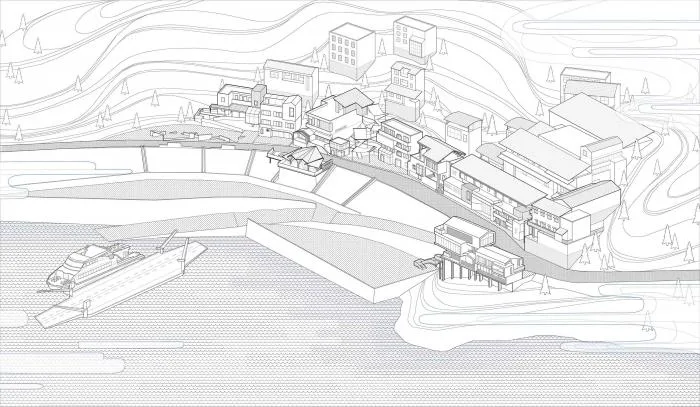
△ Renovation of the back street style at the service station
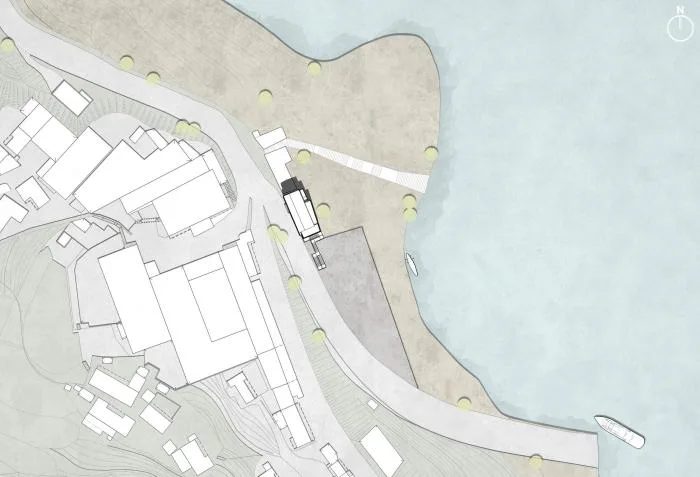
△ General layout plan
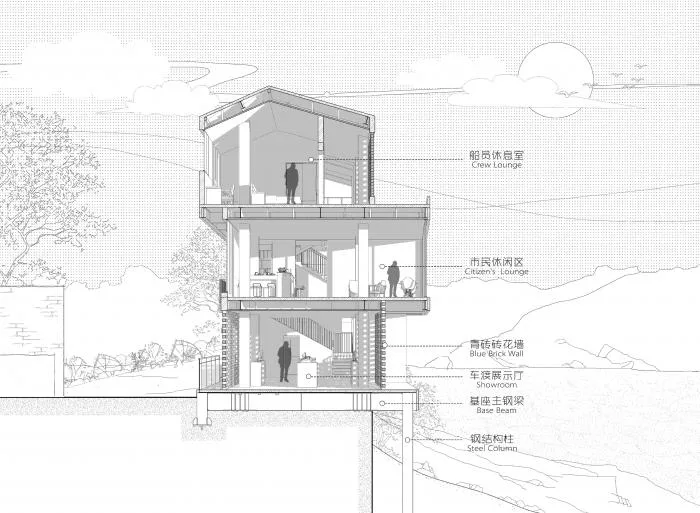
△ Sectional perspective view
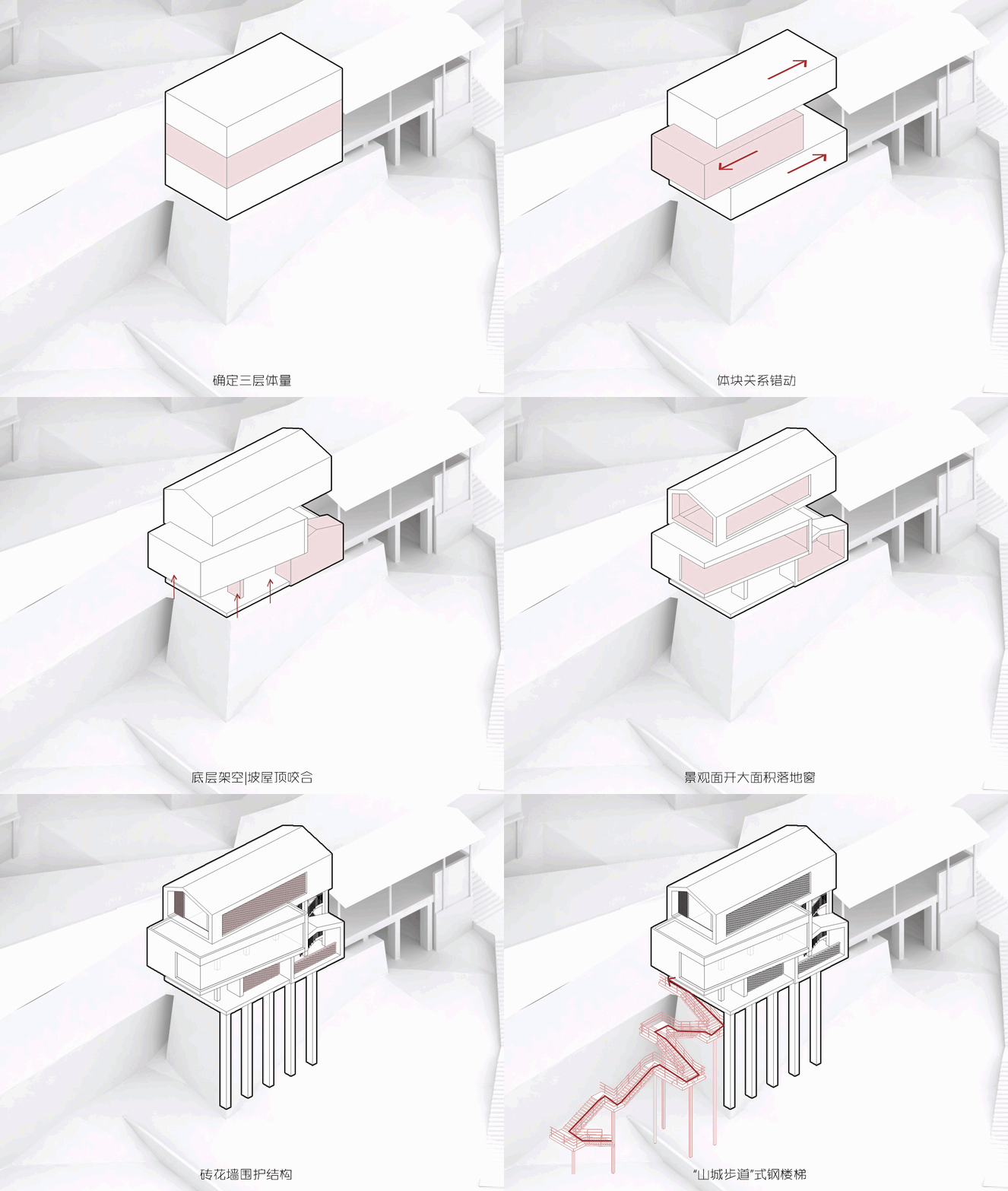
△ Construction process animation
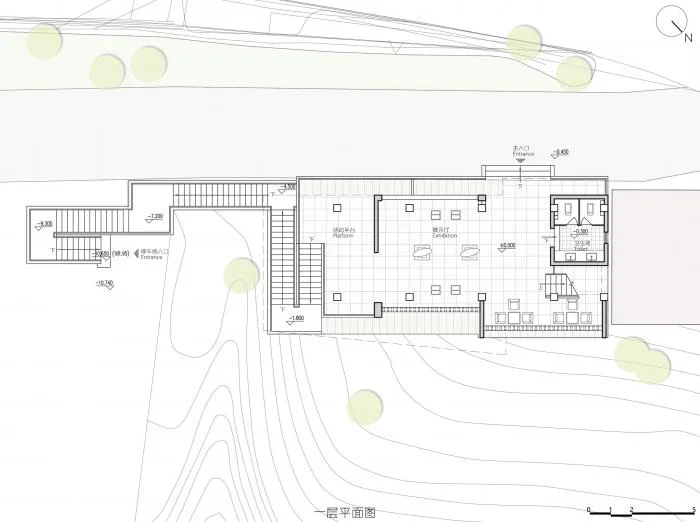
△ First floor plan
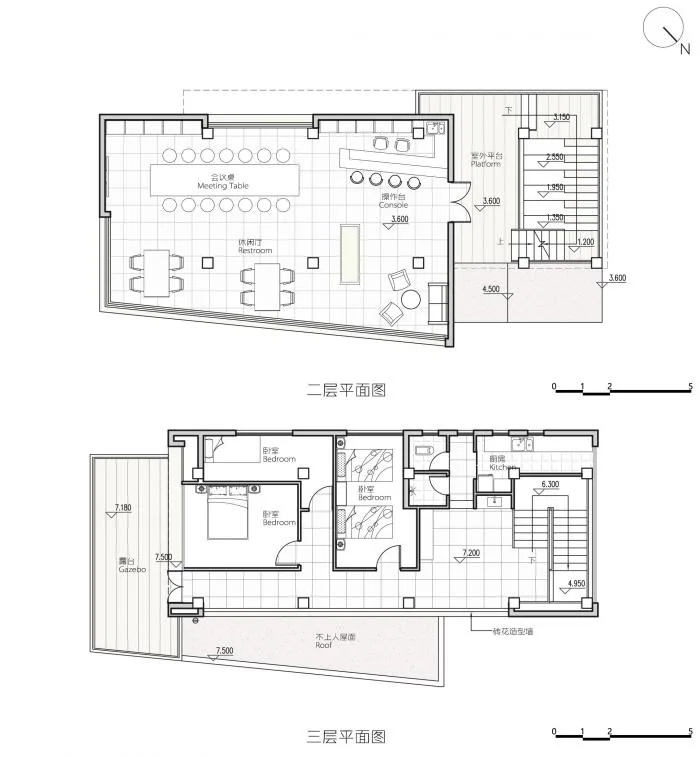
△ Second and third floor plans
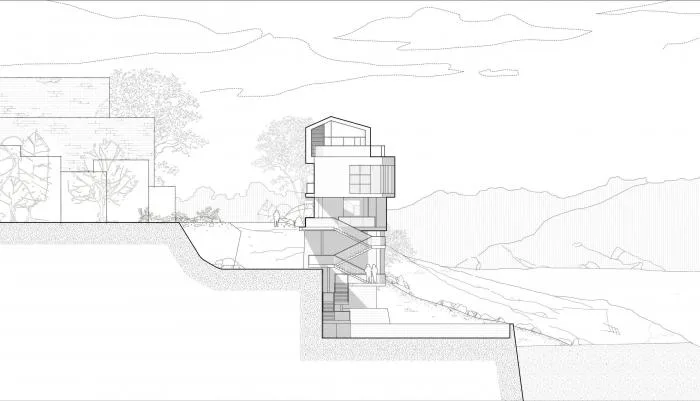
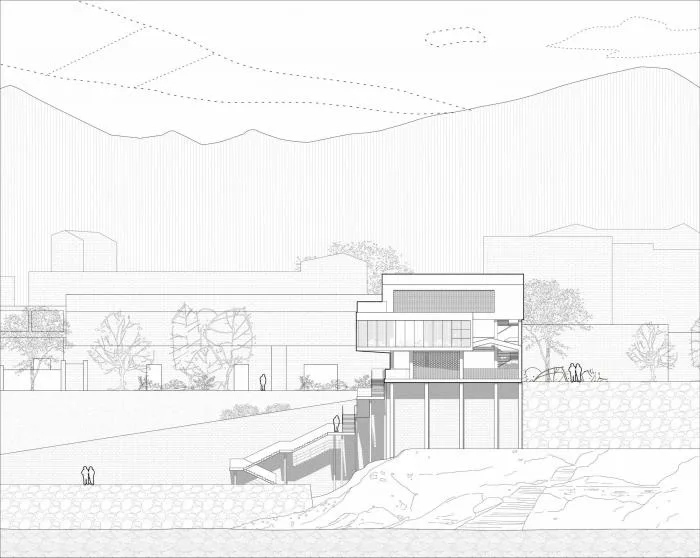
△ Elevation drawing
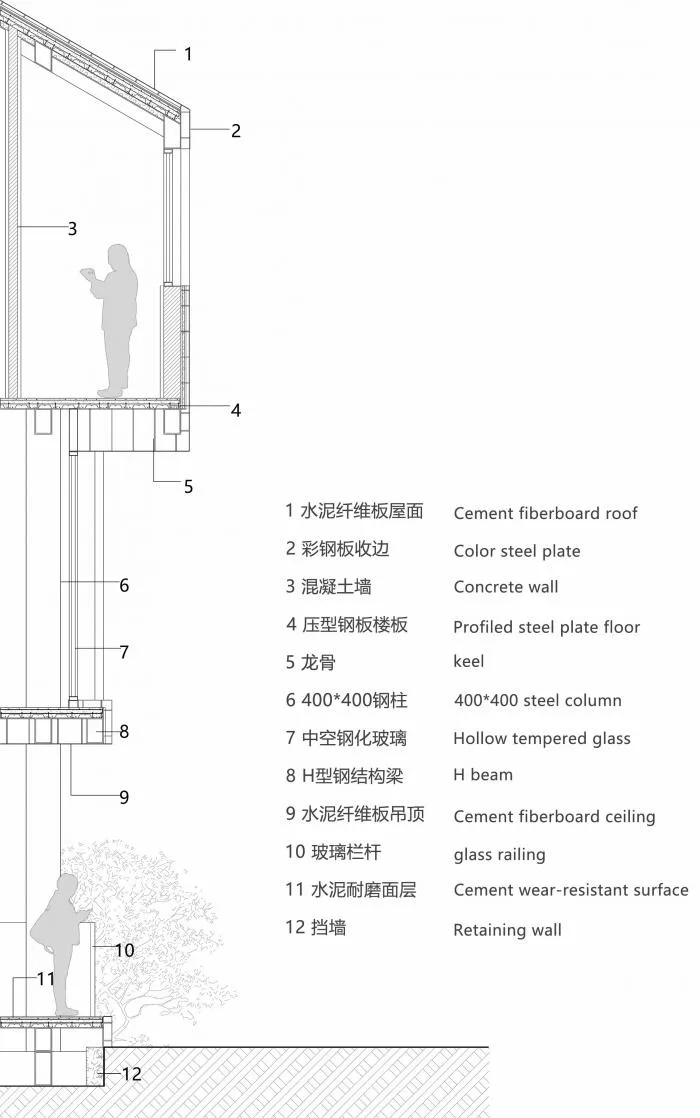
Wall structure schematic
Project Details
- Project Name: Lingjiang Yidu · Sansheng Chedu Service Station
- Location: Sansheng Ferry, Sansheng Village, Shijialiang Town, Beibei District, Chongqing, China
- Area: 430 square meters
- Architectural Design: Chongqing Yueji Architectural Design Firm
- Interior Design: Chongqing Yueji Architectural Design Firm
- Lighting Design: Chongqing Yueji Architectural Design Firm
- Contact Email: __AI_T_SC_0_
- Creative Team: Tian Qi, Li Jun, He Biao
- Design Team: Li Tao, Zhang Qian, Weng Yu Zhan, Chunxiao Lin, Ling Tan, Meng
- Construction Drawing Design: Chongqing Hefang Urban Planning and Design Co., Ltd. First Branch
- Steel Structure Design: Wang Libin, Xu Fuhong
- Main Materials: Steel, Cement Fiber Board, Terrazzo, Blue Brick
- Architectural Photography: Prism Architecture
- Landscape Photography: Liu Guochang, Pictorial Photography, Tian Qi
- Design Period: August 2018 – January 2019
- Construction Period: April 2019 – October 2019












Must log in before commenting!
Sign Up