
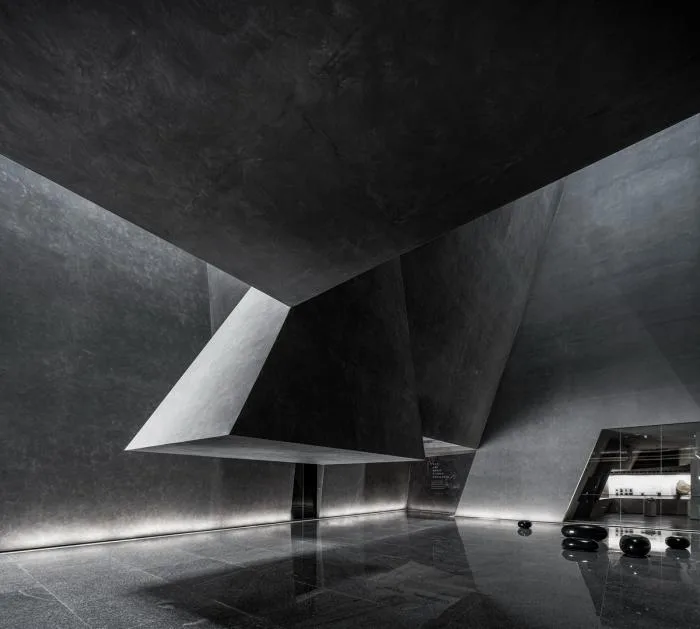
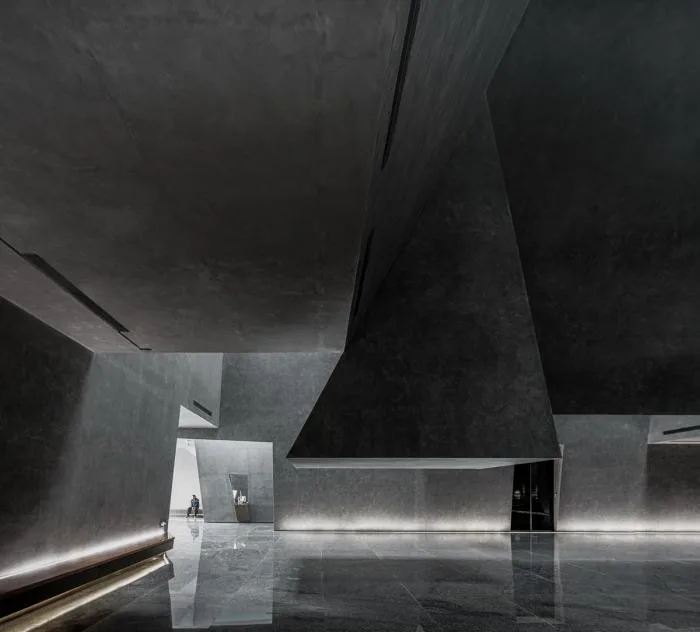
△ First floor atrium © Atelier Alter Architects: Contemporary Architecture
The Yingliang Stone Natural History Museum owners have amassed and preserved a vast collection of fossil artifacts through years of stone business. They envisioned integrating a museum within their corporate headquarters to showcase fossil history and advance the study of natural sciences.
The renovation of the existing office space posed two major challenges: first, how to differentiate and connect the two contrasting functions of internal office work and open exhibition; second, the original office relied heavily on light from an internal atrium, and introducing museum functions risked further limiting this already scarce lighting.
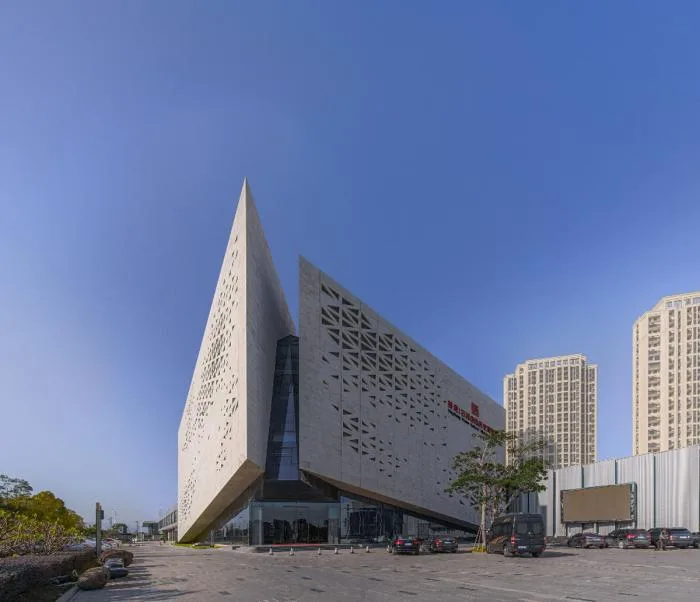
△ Architectural exterior © Atelier Alter Architects: Contemporary Architecture
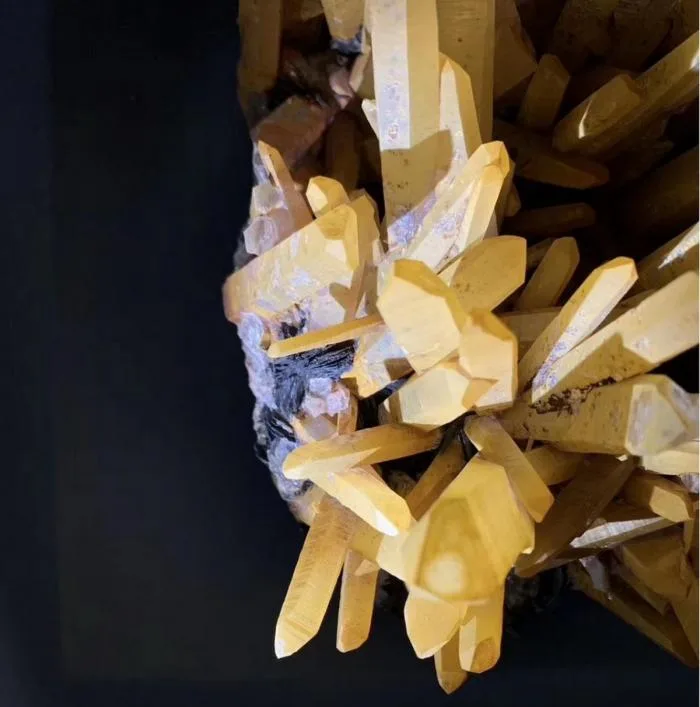
△ Natural crystals © Yingliang Group
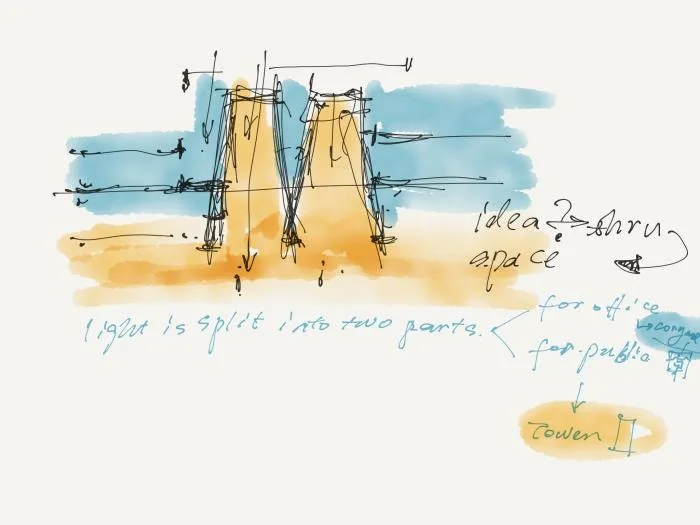
△ Creative sketch of the skylight tube
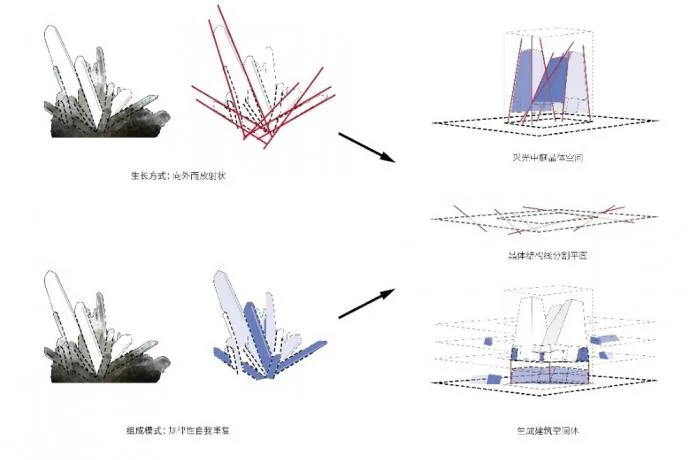
△ Conceptual diagram of crystal space logic
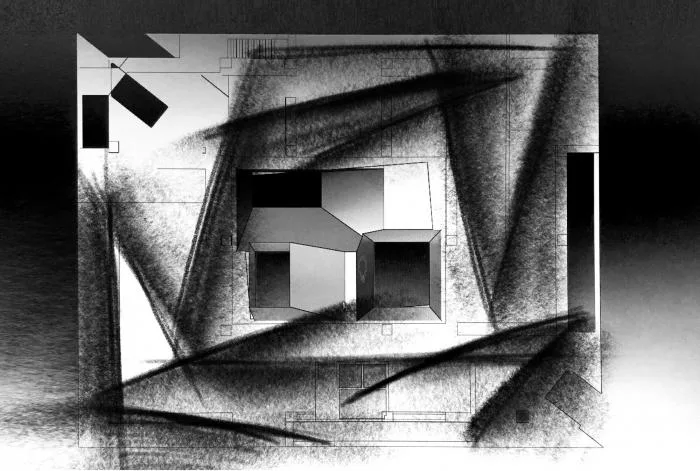
Concept sketch of the crystal plane
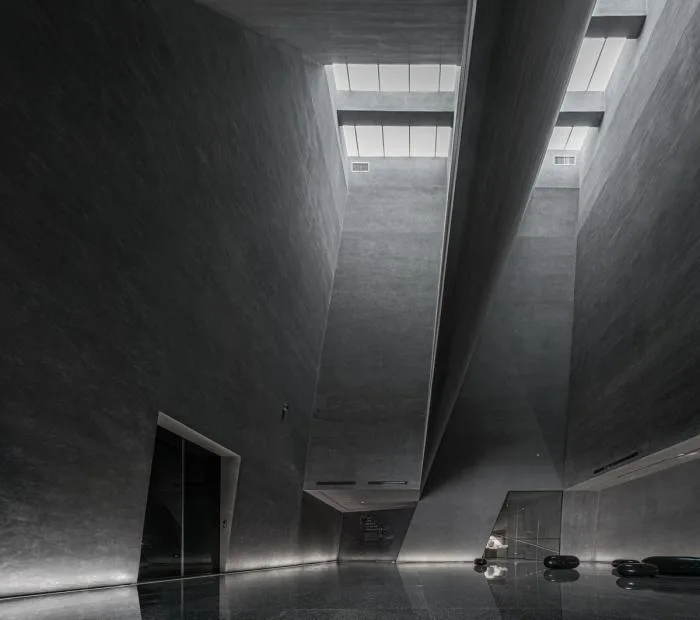
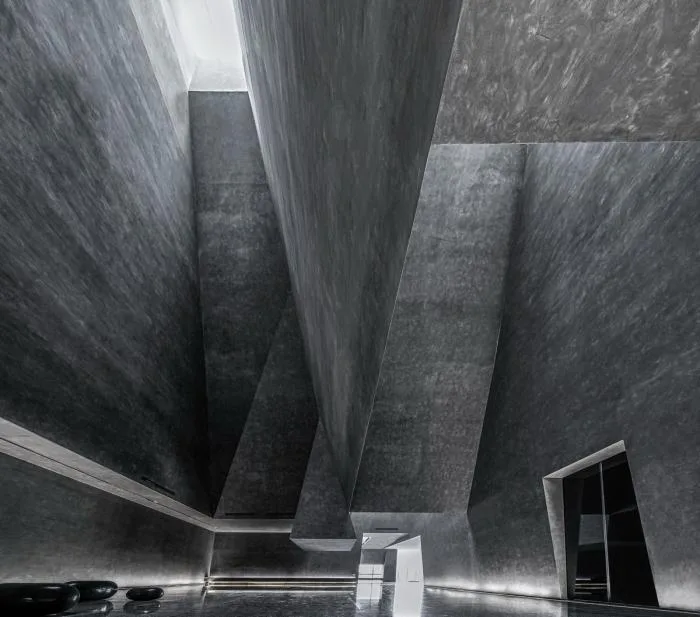
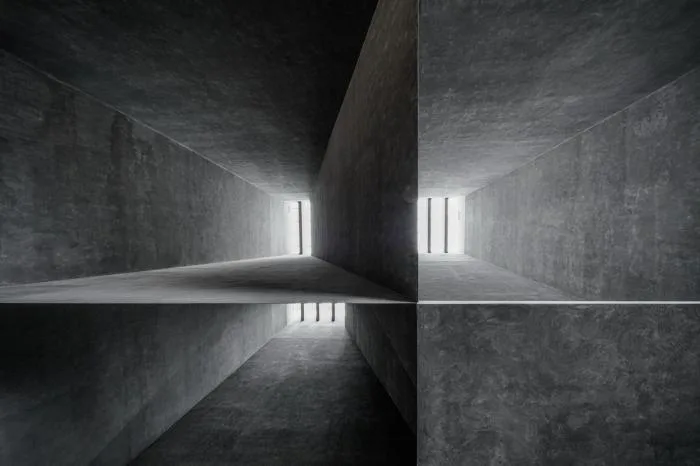
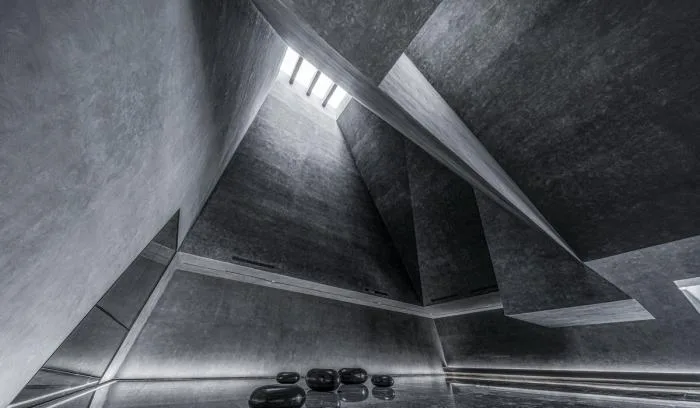
△ Courtyard skylight © Atelier Alter Architects: Contemporary Architecture
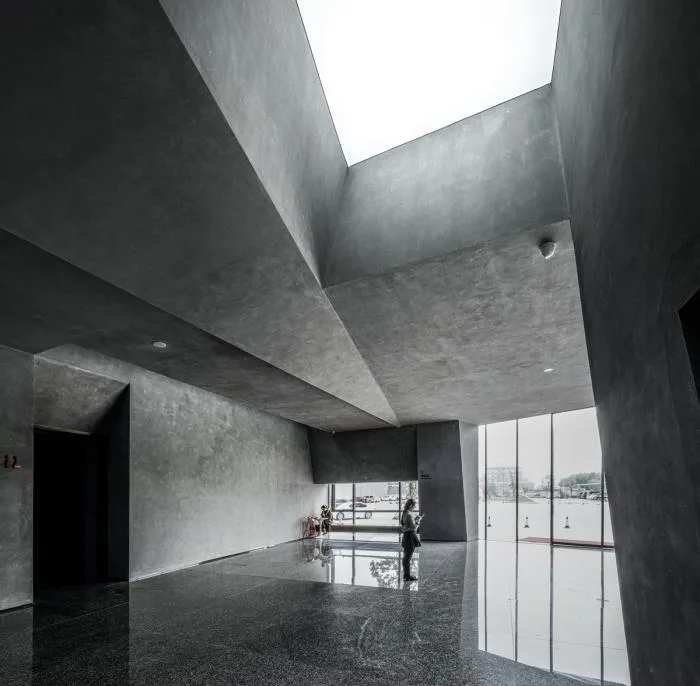
△ Entrance © Atelier Alter Architects: Contemporary Architecture
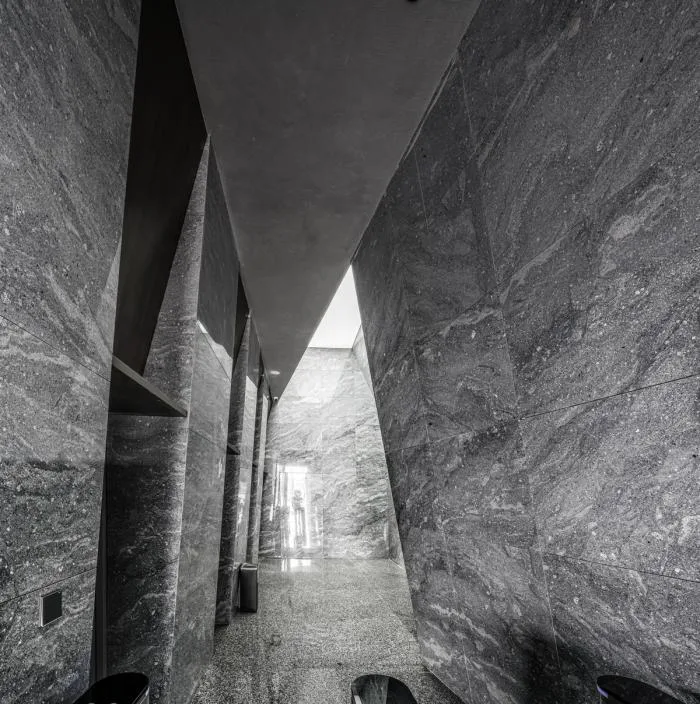
△ Elevator room © Atelier Alter Architects: Contemporary Architecture
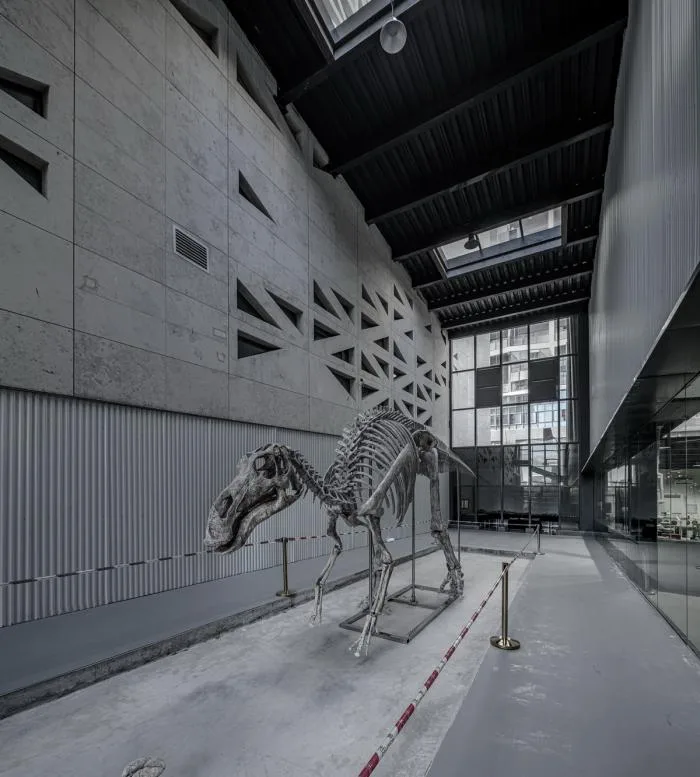
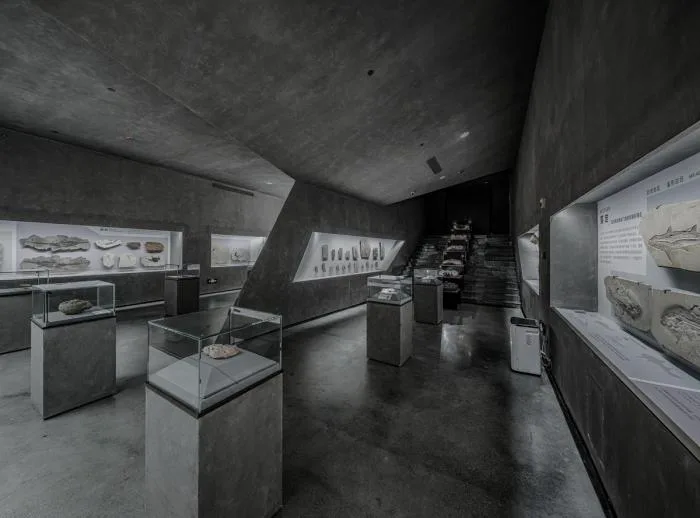
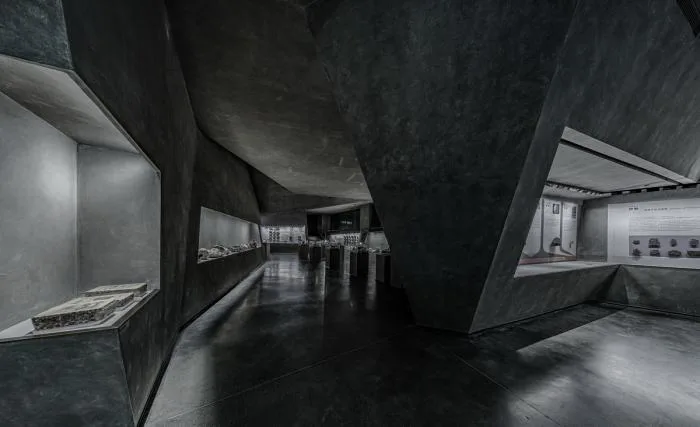
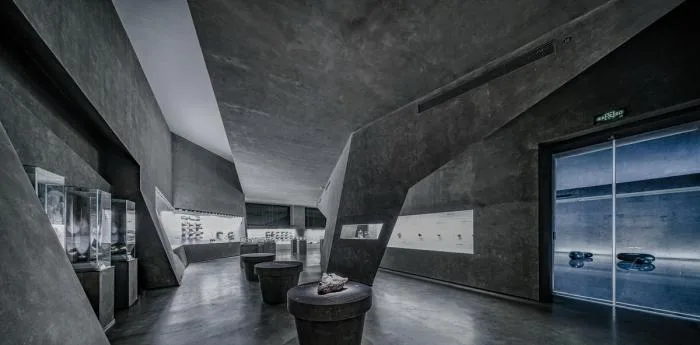
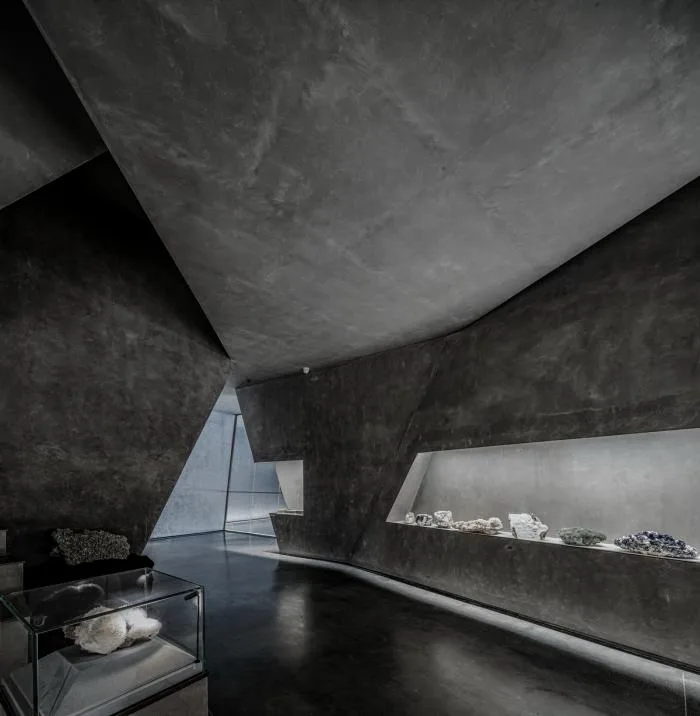
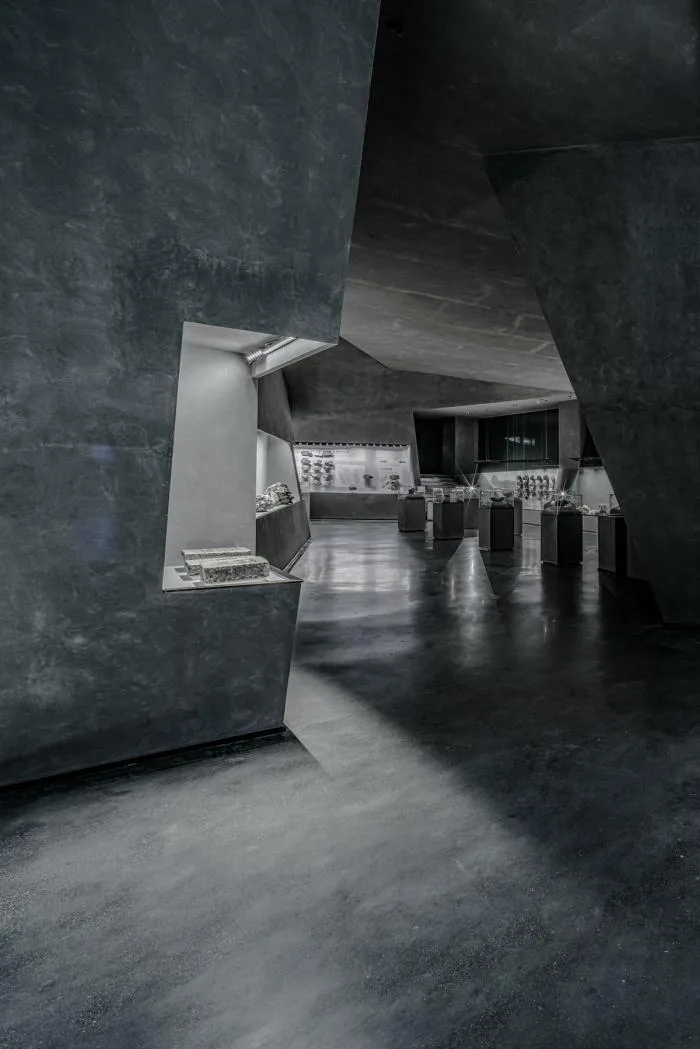
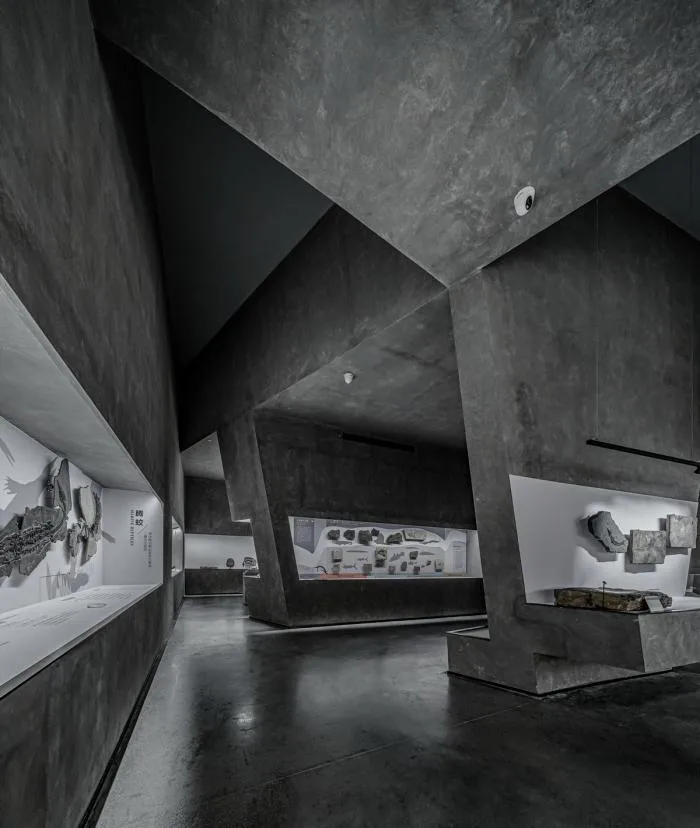
△ Exhibition Hall © Atelier Alter Architects: Contemporary Architecture
Ancient rocks emerged from the continent’s crystalline basement, where prolonged crustal processes of high temperature, pressure, mixing, and sedimentation shaped these crystals into their current form.
Inspired by the most primordial stone form—the “crystal structure”—a new architectural language was developed. Within the atrium, three interwoven crystal forms with pyramid-like conical tubes were introduced. Their slanted upper and outer surfaces reflect skylight into the surrounding offices, while the interiors of these tubes channel light directly to the museum lobby on the first floor.
Encircling these vertical crystals, horizontal crystal forms grow and intertwine to create a series of fossil exhibition halls. The layout of these halls follows a chronological and thematic narrative of the exhibits. These horizontal crystals also channel outdoor light from the facade into the exhibition spaces, seamlessly blending natural illumination with the exhibition function.
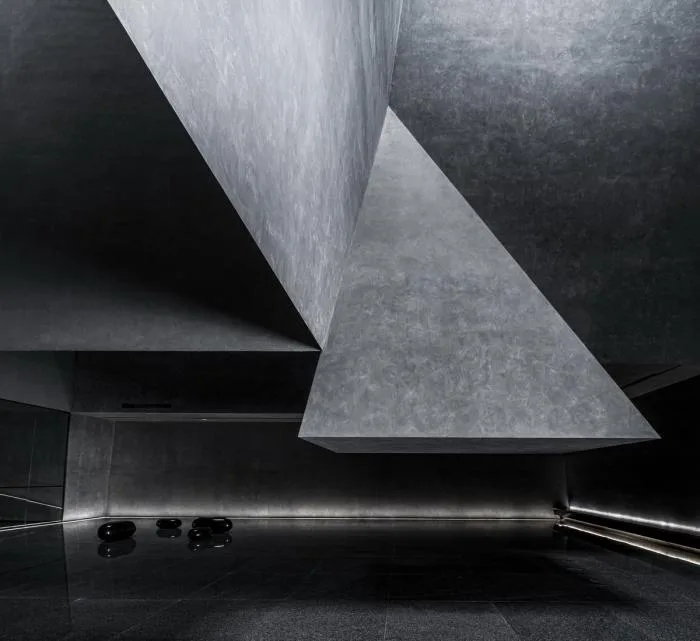
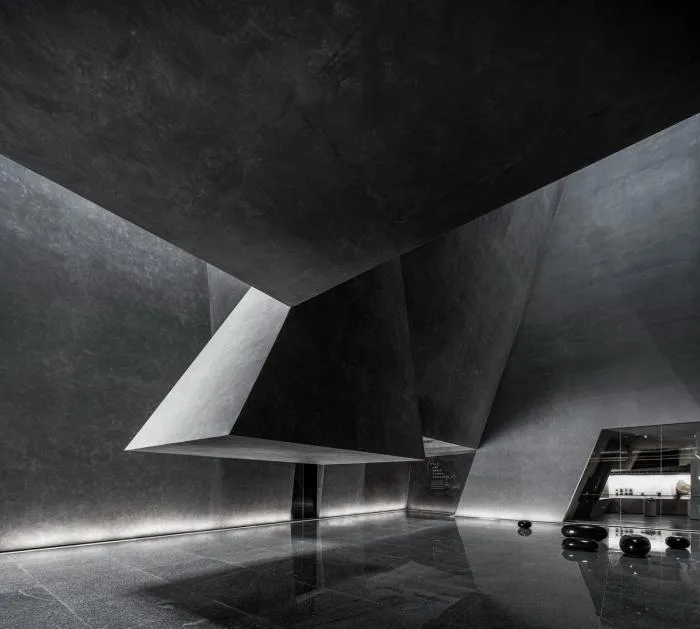
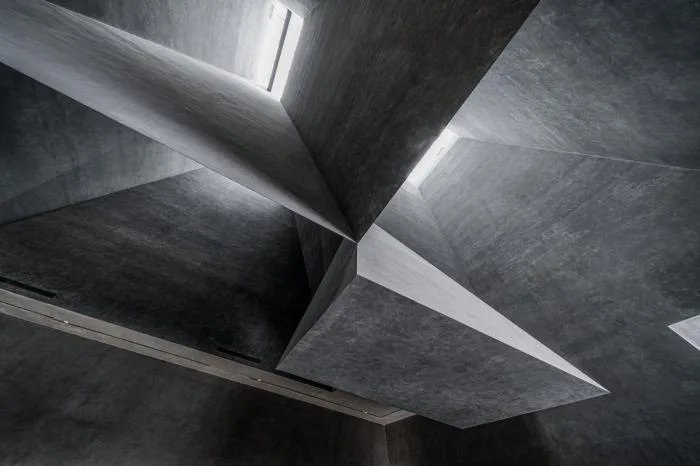
The “anti-gravity” space created by the staggered growth of these “crystal cones” transforms the previously orthogonal floor slabs into mysterious, glowing crystal volumes.
This floating effect transports visitors into an otherworldly environment reminiscent of science fiction. The atrium is divided functionally into museum and office spaces, separated by the crystal structures’ interior and exterior surfaces.
Inside the museum, the space is a complex weave of continuously growing crystal forms, creating a dialogue across time between primordial stone and the ancient fossils on display.
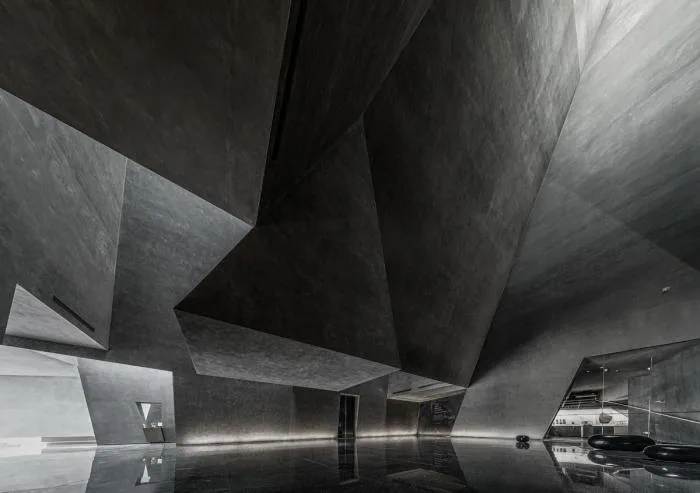
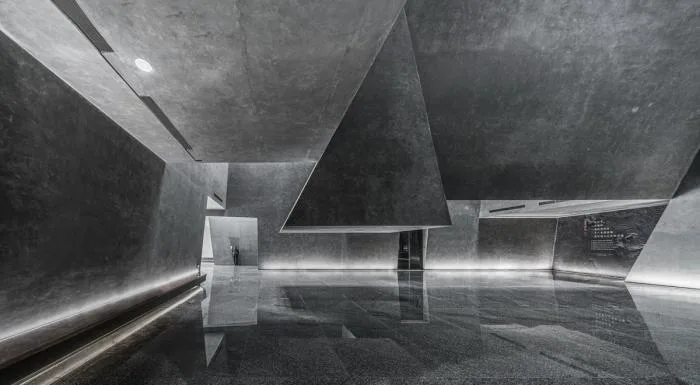
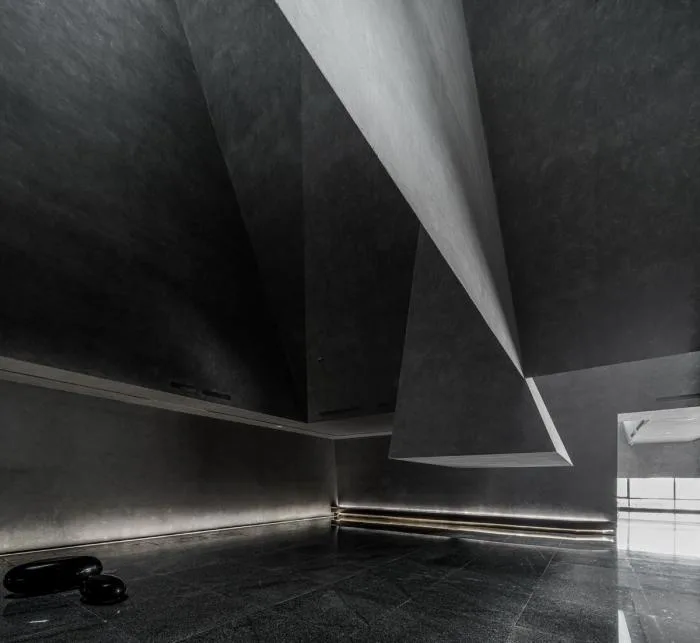
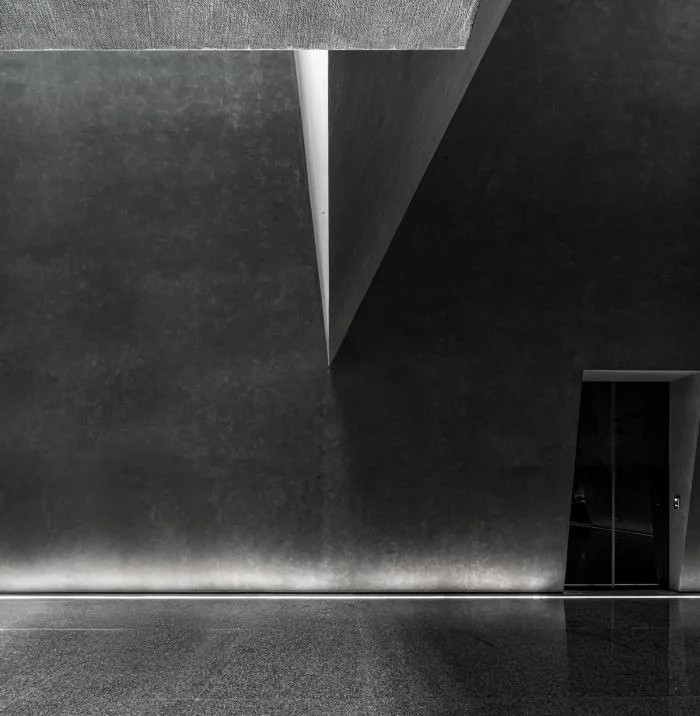
Pure architectural expression—walls © Atelier Alter Architects: Contemporary Architecture
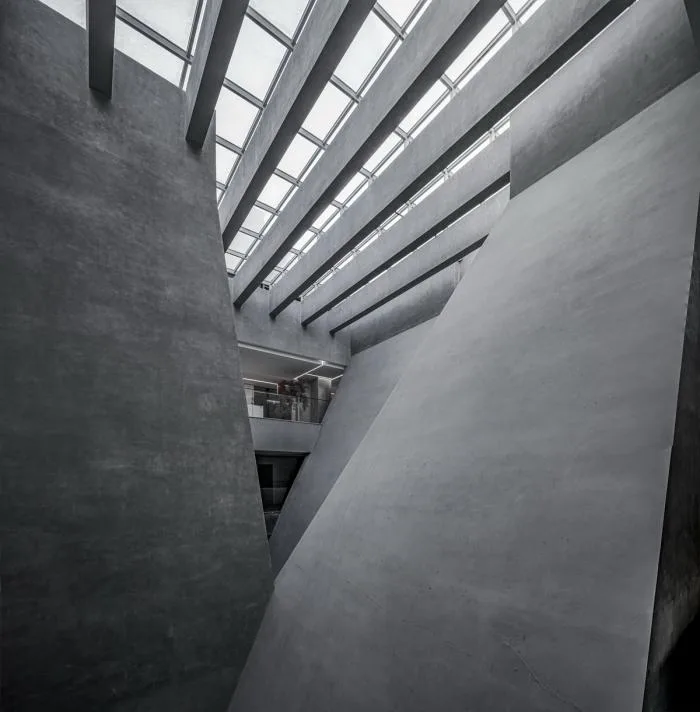
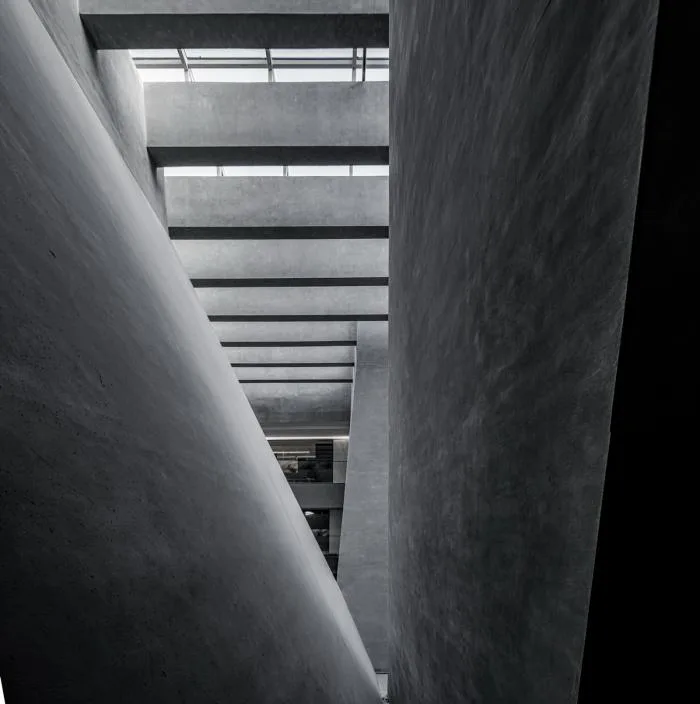
△ Reflective function of walls © Atelier Alter Architects: Contemporary Architecture
The museum space is stripped of unnecessary decoration, preserving the traces of ancient organisms deposited over billions of years in the simplest form—walls.
This minimalism enhances the spatial experience, emphasizing scale and light. Walls transcend their traditional role as mere separators; internally, they form the museum ceiling, fostering a calm, cave-like atmosphere that highlights fossil exhibits.
Externally, these walls act as reflective panels for the office floors, while also separating public and private zones.
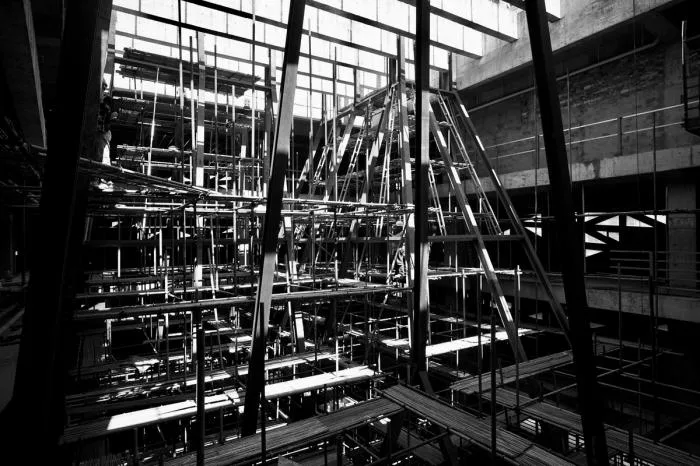
△ Construction site
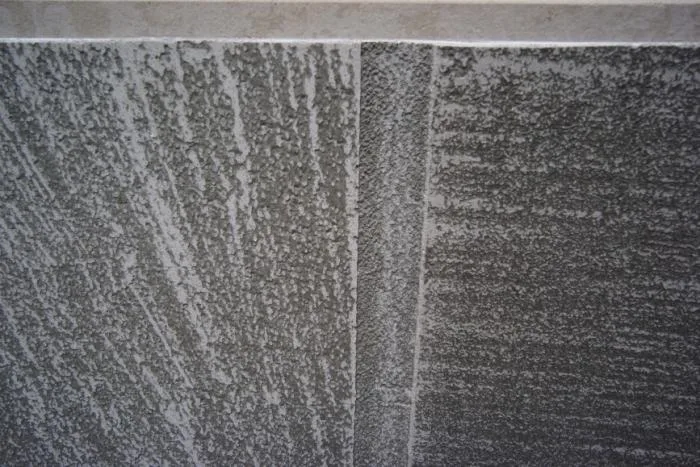
△ Wall material
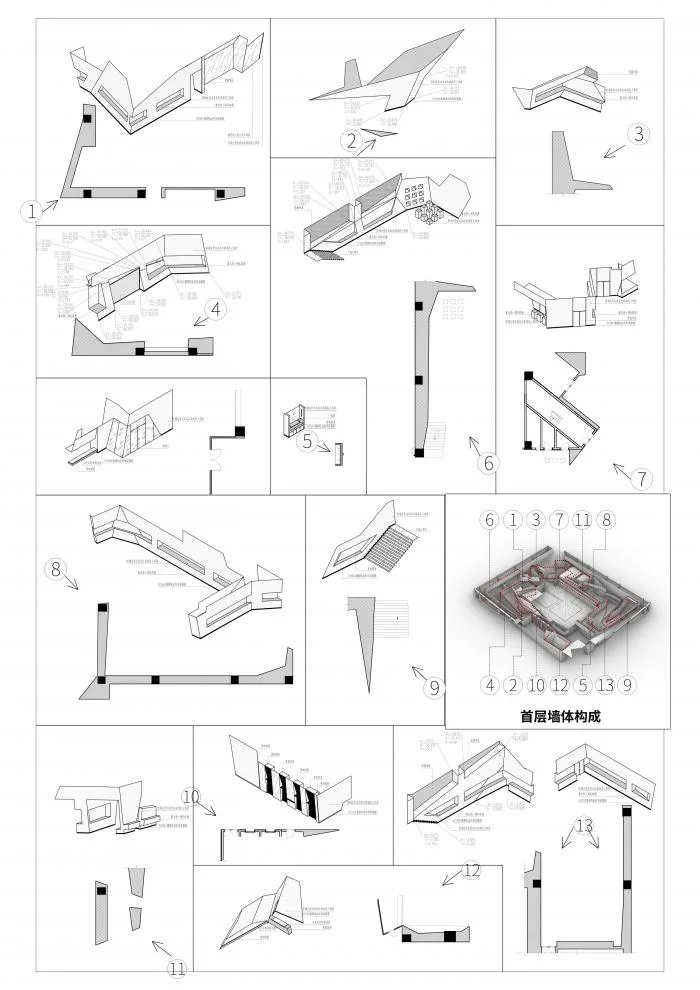
△ Wall assembly diagram
Because the walls feature numerous inclined surfaces, traditional two-dimensional coordinates and angle notations proved insufficient to describe the complex geometry.
A three-dimensional coordinate system was adopted for precise annotation. During construction, a total station was utilized to accurately map three-dimensional spatial coordinates, ensuring exact alignment and preventing errors that could impact related structural planes.
The project’s materials were chosen to be understated and simple, emphasizing spatial form shaped by light and creating an ideal environment to showcase ancient fossils.
Project Model and Drawings
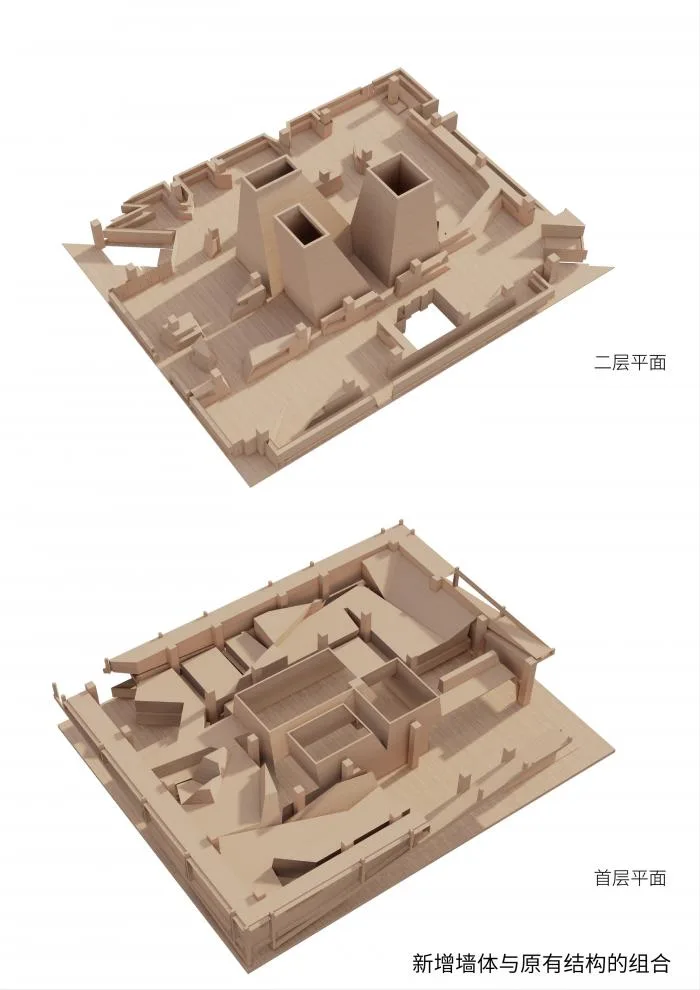
The fusion of old and new, featuring the composition of crystal walls
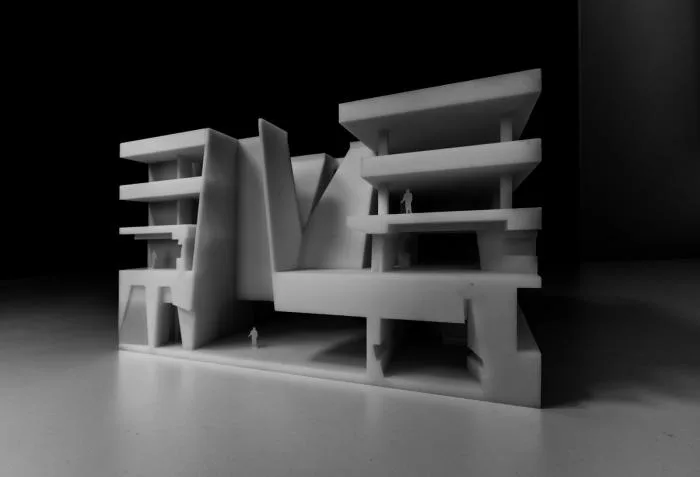
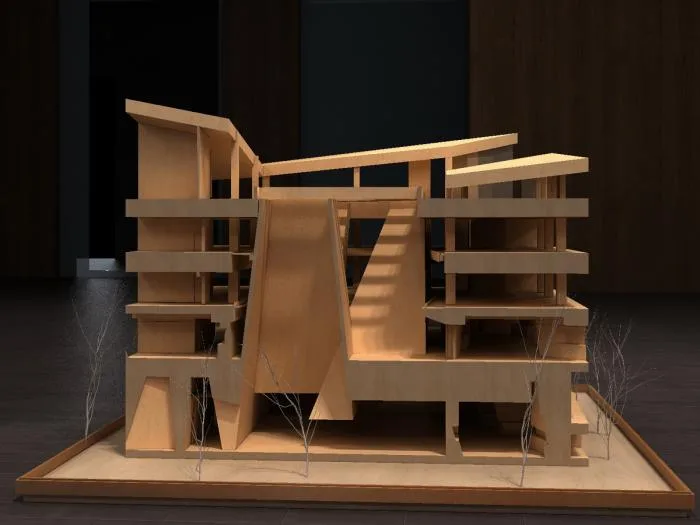
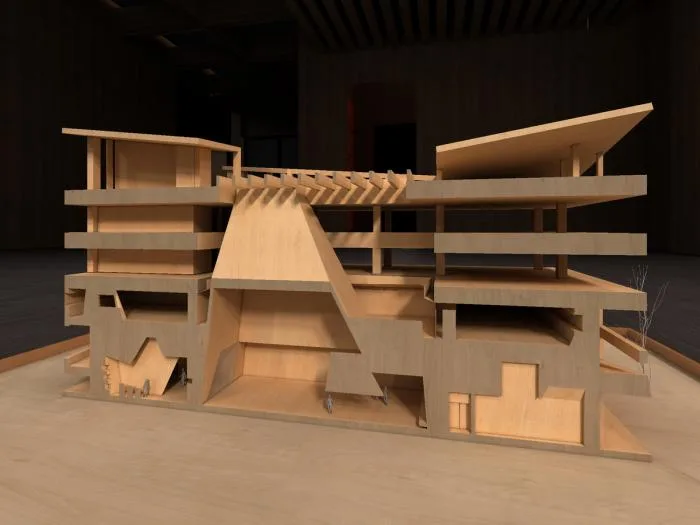
△ Model
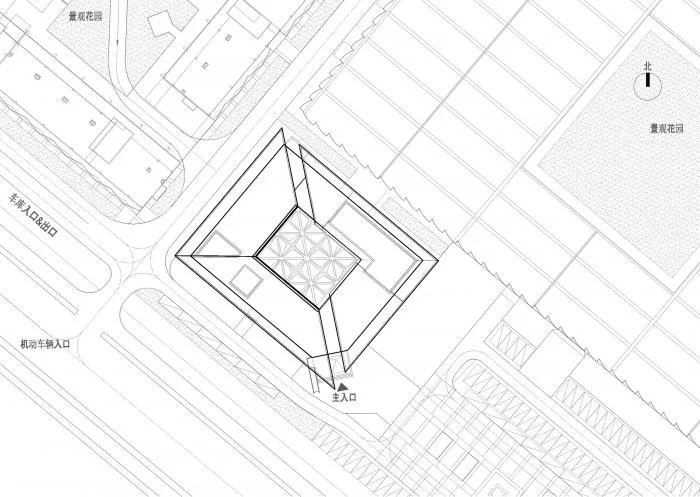
△ General layout plan
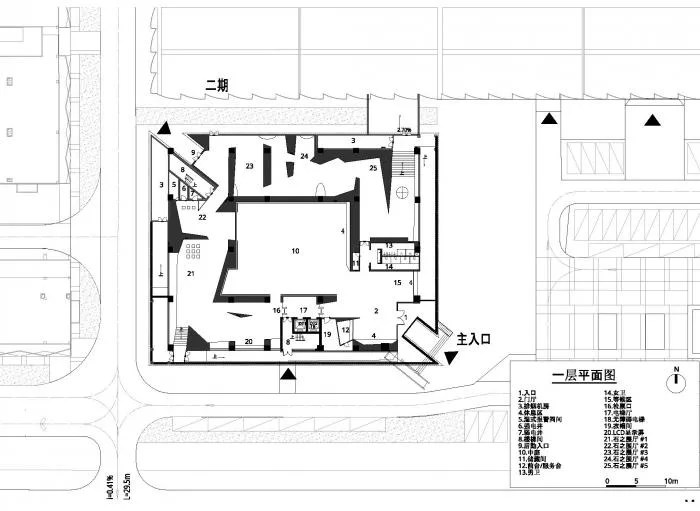
△ First floor plan
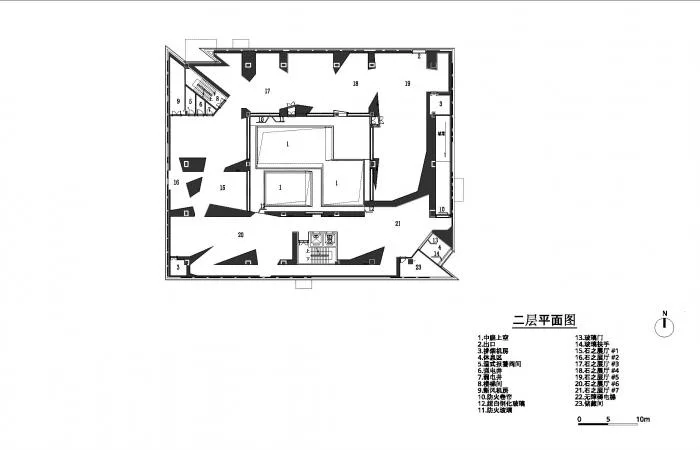
△ Second floor plan
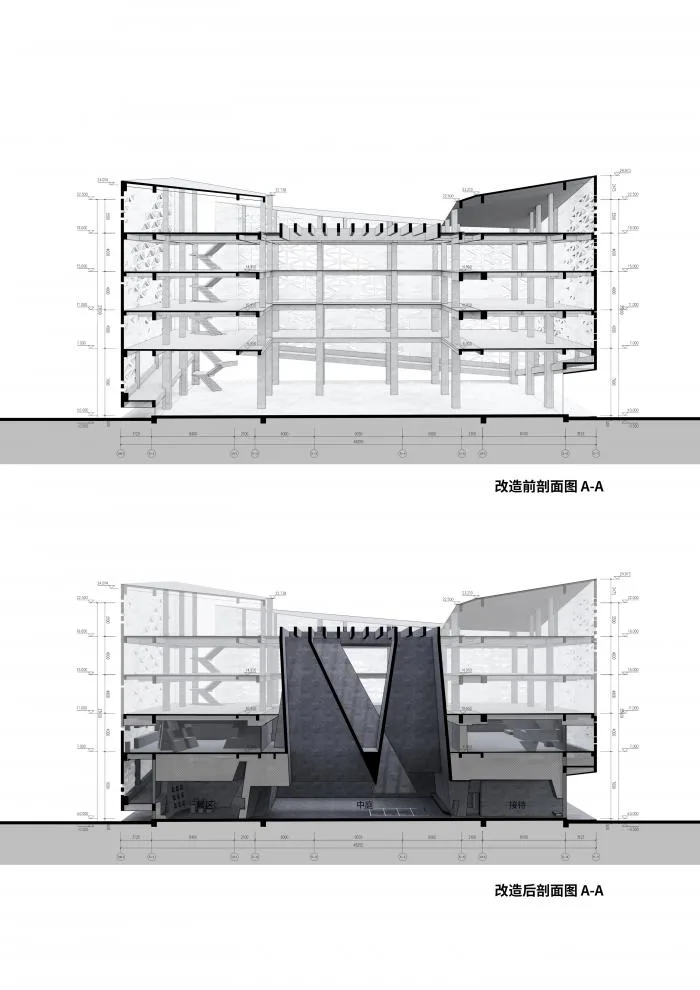
△ Section diagram
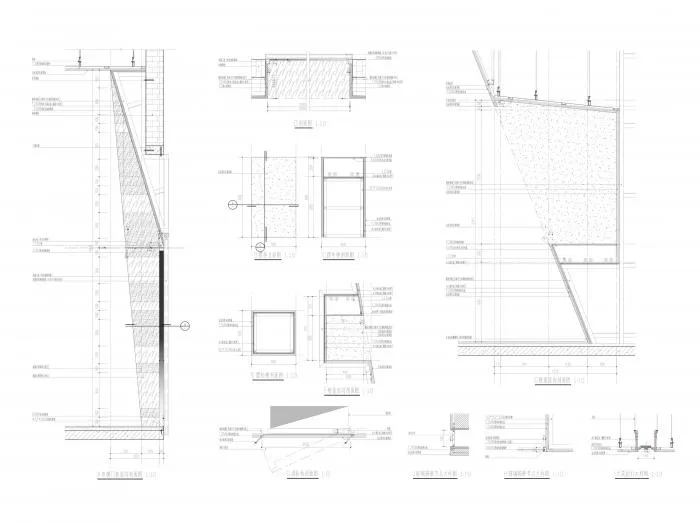
△ Detailed node diagram
Project Information
Project Type: Museum
Architectural Design: Atelier Alter Architects – Contemporary Architecture
Lead Designers: Zhang Jiyuan, Bu Xiaojun
Design Team: Li Zhenwei, Zhang Jiahe, Zheng Lairong, Huang Bo, Ma Leilei
Mechanical and Electrical Design: Chenggong
Interior Design: Contemporary Architecture
Cost: ¥4,000,000
Area: 2,600 square meters
Construction Start Date: January 5, 2020
Photography by Atelier Alter Architects: Contemporary Architecture
Image Copyright: Atelier Alter Architects
Client: Yingliang Group
Address: Yingliang Impression No.5 Stone Cultural Creative Park, Shuitou Town, Nan’an City, Fujian Province
Phone: +86-595-86812213
Email: yingliang@yinglianggroup.com
Website: __AI_S_TURL_0__












Must log in before commenting!
Sign Up