
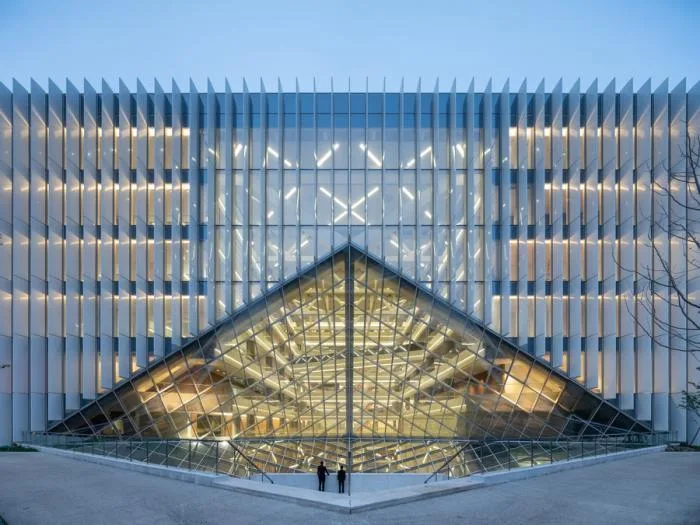
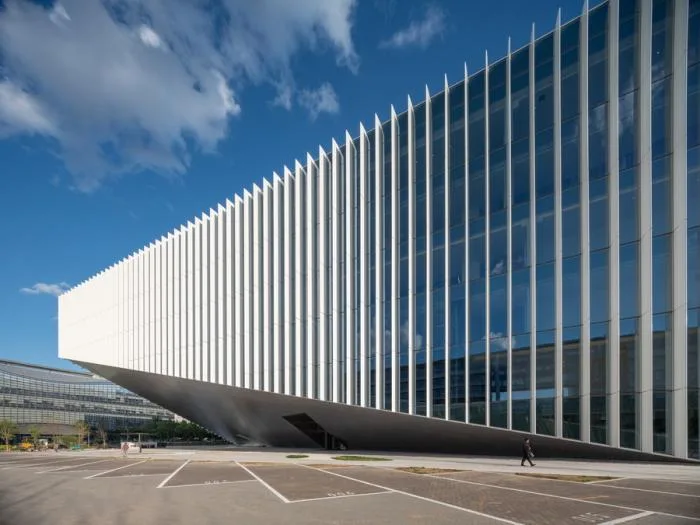
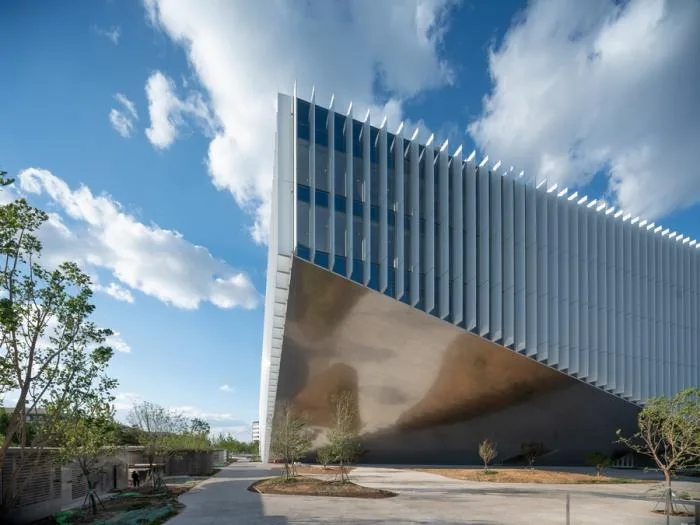
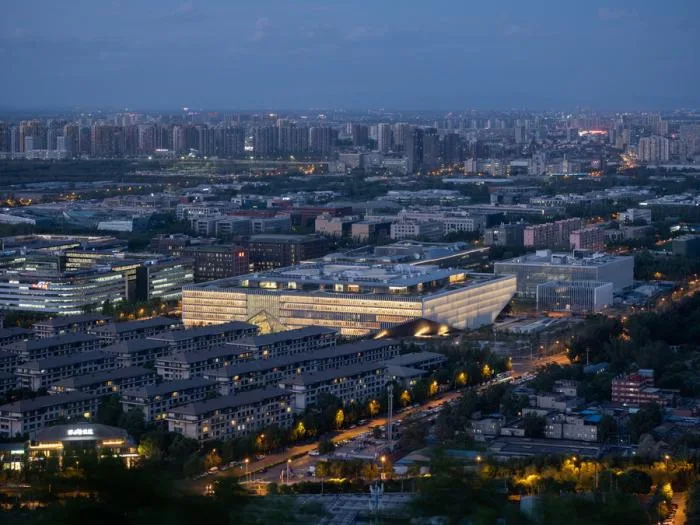
Tencent’s new headquarters in Beijing is designed to accommodate thousands of employees. Instead of increasing vertical height to meet space demands, OMA created a unique, square cantilevered structure that extends horizontally. The building stands only seven stories tall and spans an impressive 180 meters by 180 meters, a rare architectural approach for such a large floor area.
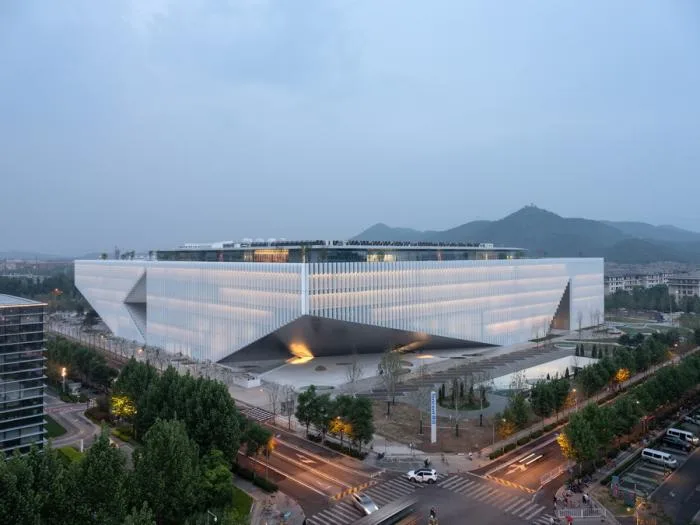
The headquarters is divided into nine independently operable blocks, each featuring its own dedicated core tube. This design allows the building to function like a small vertical city. Interwoven “streets” connect these core tubes, creating a clear hierarchy and distinct block identities. Each floor is subdivided into smaller zones with diverse functions, including office spaces, educational areas, and entertainment rooms, with spatial designs tailored to their specific purposes.
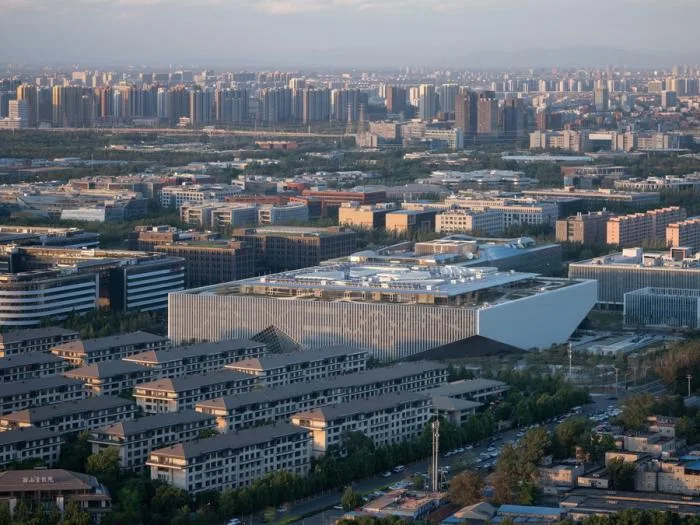
Visual connections between different areas enable occupants to observe activities throughout the building. The blocks are linked by an outdoor network of pathways, enhancing connectivity. Additionally, multiple landscaped outdoor spaces are scattered across the site, providing areas for various recreational activities.
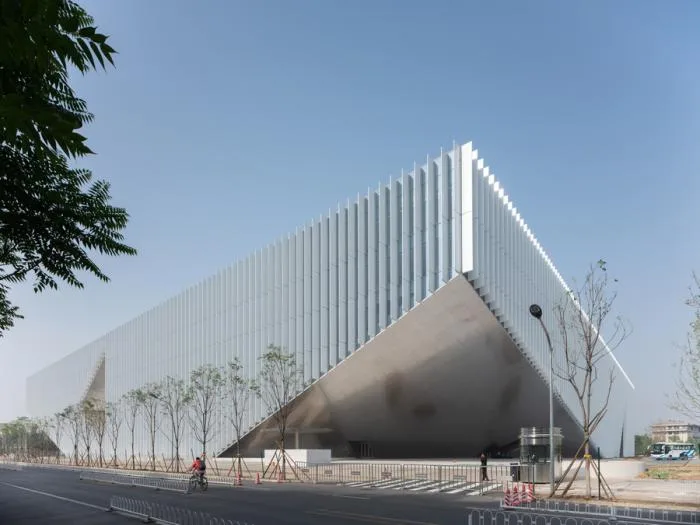
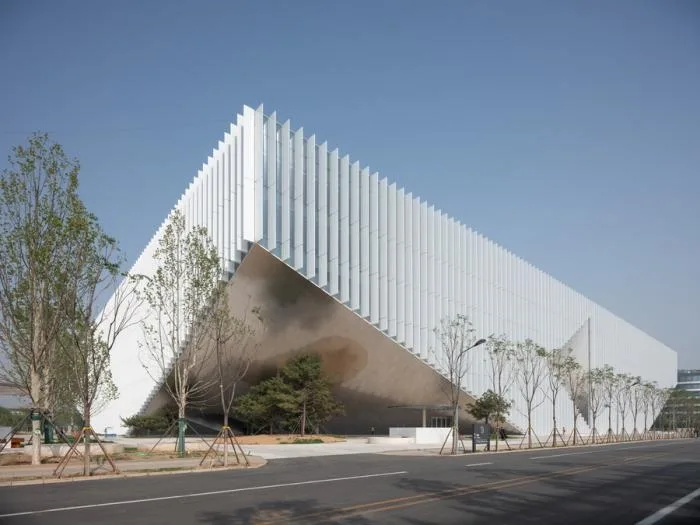
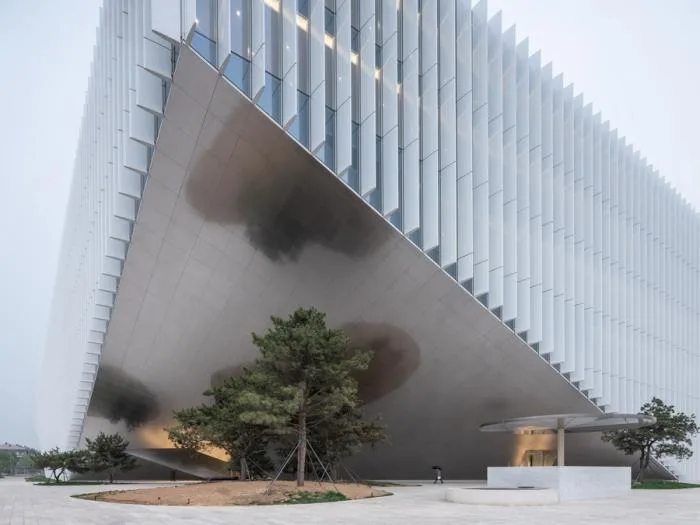
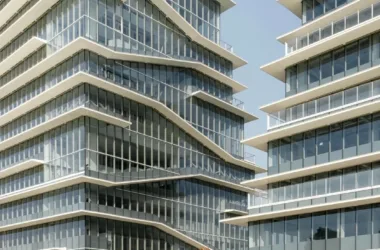
At the building’s core, OMA carved out a triangular prism-shaped volume to create additional courtyard spaces. This design introduces variety and allows natural elements like light and ventilation to penetrate the interior, enhancing the microclimate. The stepped floor edges provide more shared and interactive spaces around the perimeter. To offset the bulkiness of the square volume, the base features chamfered corners that also define the entrances. The top includes a setback that forms an outdoor panoramic viewing platform.
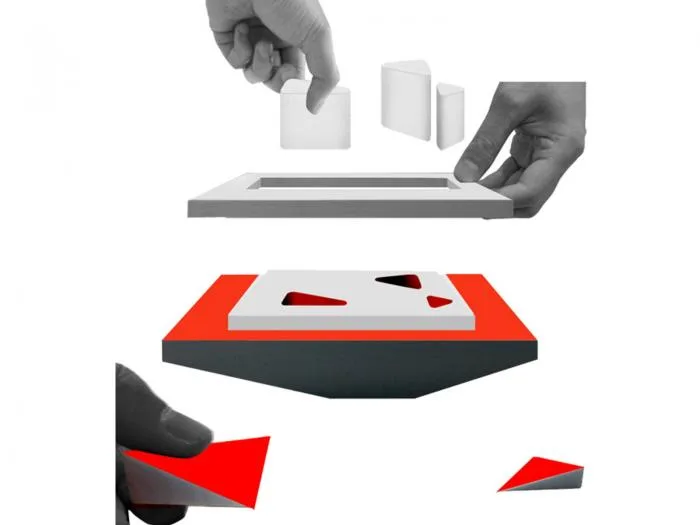
Conceptual analysis diagram
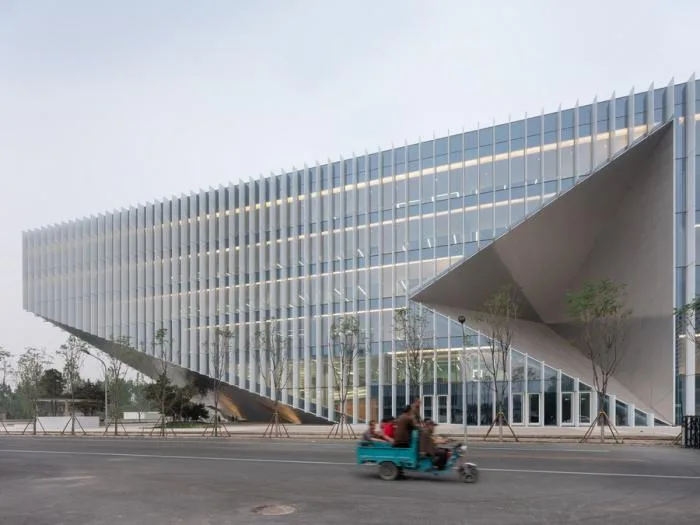
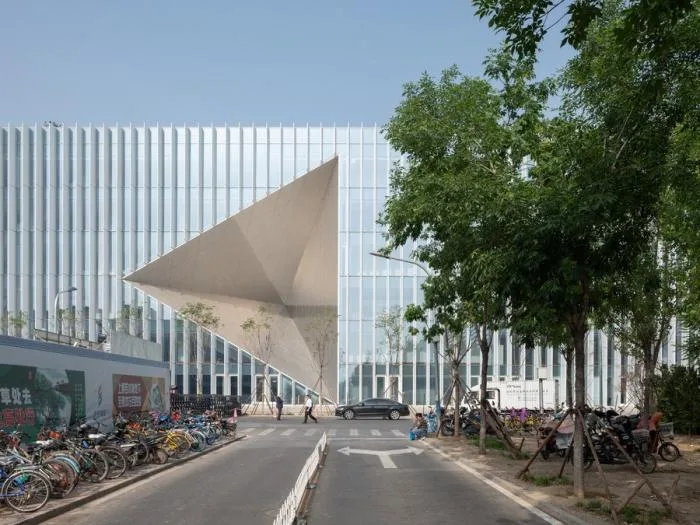
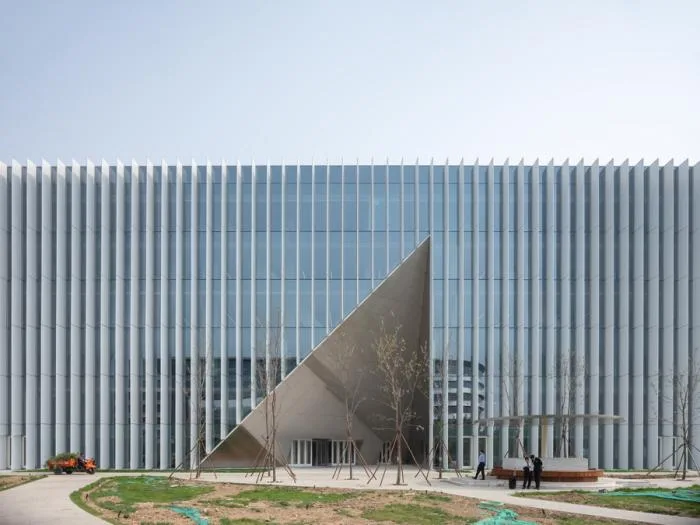
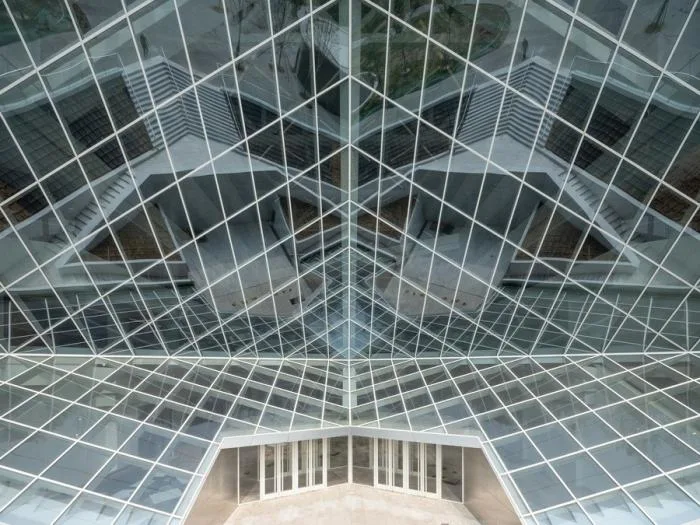
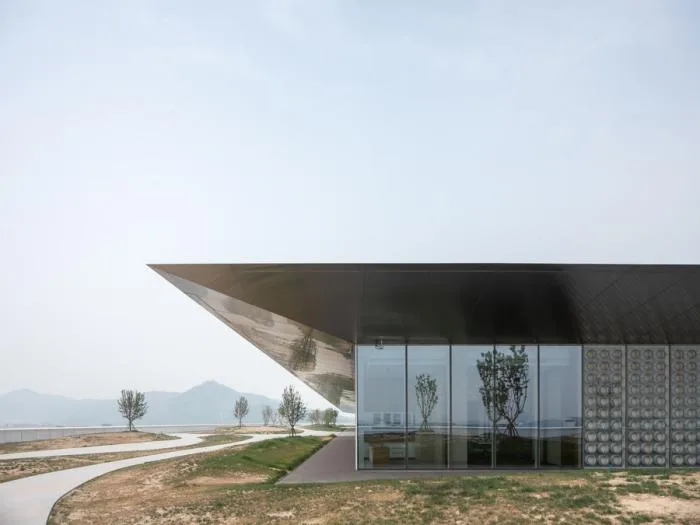
The Tencent Beijing headquarters integrates a variety of urban living experiences within a single structure. It introduces innovative operational models that traditional office buildings or dispersed urban layouts cannot support effectively. This new type of office environment fosters what could be described as boundless “office landscapes,” offering moments of relaxation and unexpected inspiration for its occupants.
Project Information
Project Type: Office Facilities
Location: Beijing, China
Architect: OMA
Year: 2020
Photographer: Ossip van Duivenpole
Partners: Rem Koolhaas, David Gianotten
Associates: Adam Frampton, Ravi Kamisetti
Project Leader: Patrizia Zobernig
Project Team: Kathleen Cayetano, Vanessa Chan, Hin Cheung, Yin Ho, Jedidiah Lau, Kwan Ho Li, Vivien Liu, Kai Sun Luk, Kevin Mak, Cristina Martin de Juan, Arthas Qian, Saul Smeding, Benny Tam, Hannah Zhang, Casey Wang; in collaboration with Helen Chen, Jocelyn Chiu, Stella Tong
Chinese Partner Architect: Beijing Institute of Architectural Design and Research Co., Ltd. (BIAD)
Structural, HVAC, Mechanical, Electrical, Transportation, and BIM Consultants: BIAD, AECOM
Interior Design: WOODS BAGOT
Landscape Consultants: INSIDE OUTSIDE, MAYA LIN STUDIO, MARGIE RUDDICK LANDSCAPE
Curtain Wall Consultants: Wan Shandan (VS-A), Beijing Zizhou Architectural Curtain Wall Design Consulting Co., Ltd.
Studio Consultant: China Radio and Television Broadcasting Film and Television Design and Research Institute
Lighting Consultant: Beijing Ningzhijing Lighting Design Co., Ltd.
Fire Engineering: Tianjin Fire Research Institute of the Ministry of Emergency Management and Fire Protection Research Institute of the China Academy of Building Sciences
Acoustic Consultant: DHV
Sustainability Consultant: DAS DARING
Kitchen Consultant: COMPASS












Must log in before commenting!
Sign Up