
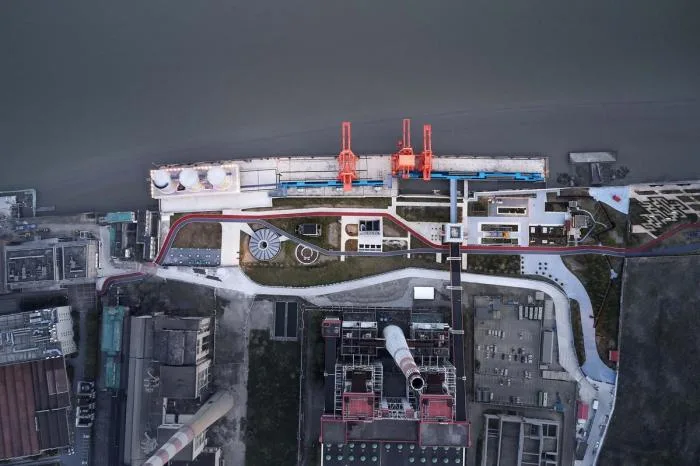
Transforming a Polluted Thermal Power Plant into a Shared Ecological Waterfront
The Yangshupu Power Plant Waterfront Art Space was originally the Yangshupu Power Plant, built in 1913 through British investment. As the Far East’s first thermal power plant, it played a crucial role in Shanghai’s urban development. However, its extensive coal burning caused significant air pollution and environmental damage.
In 2015, as part of the Huangpu River public space project, the power plant was decommissioned and underwent an ecological and artistic transformation. The site evolved from a restricted industrial shoreline into an open, vibrant waterfront space for cultural and ecological engagement. This redevelopment “returned the river to the people,” restored ecological balance affected by coal pollution, preserved the site’s historic spirit, and integrated it into the city’s waterfront rhythm.
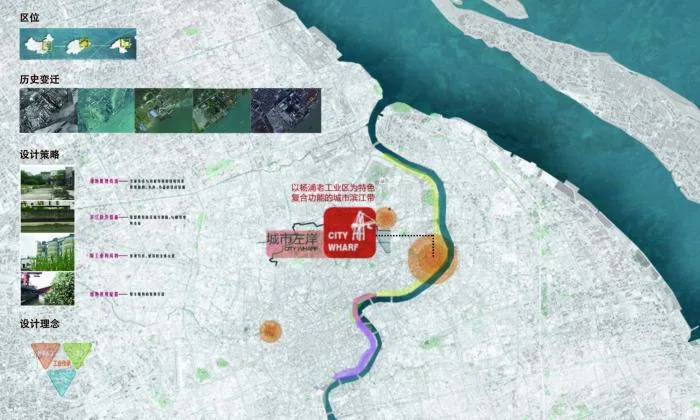
△ Project Location
Design Concept: Embracing History, Innovation, and Native Ecology
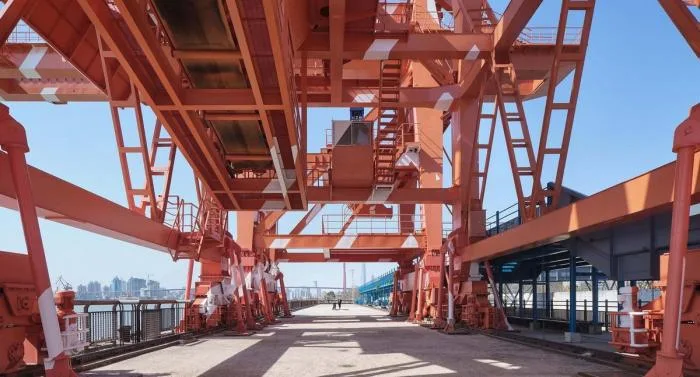
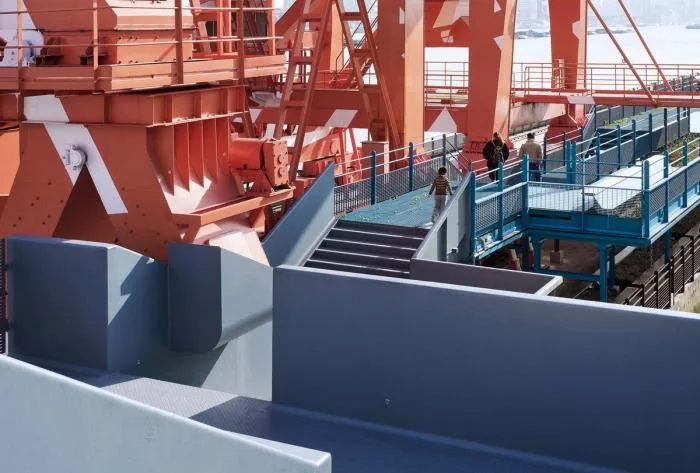
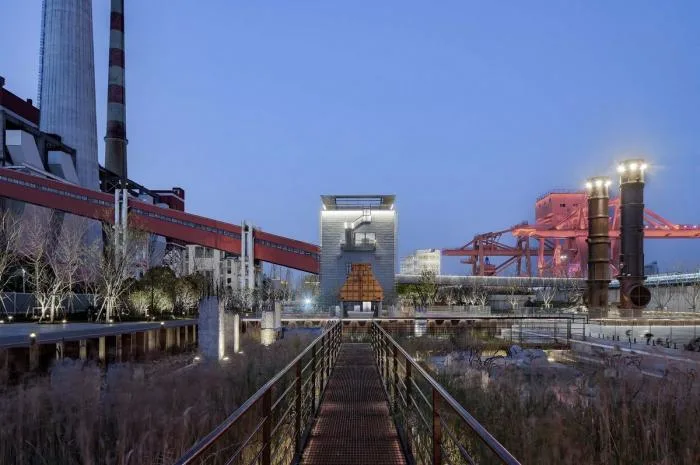
The renovation of the industrial heritage at the power plant site centers on two key elements. First, the design honors the original technological structures: the 105-meter chimney, the riverside crane, coal transport wharf, conveyor belt, clean water tank, wet and dry ash storage tanks, each with distinctive spatial volumes and forms. These relics provide a foundation for capturing the site’s character.
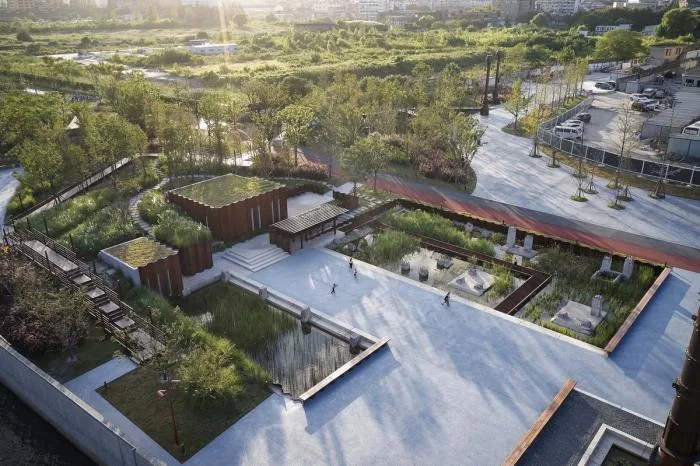
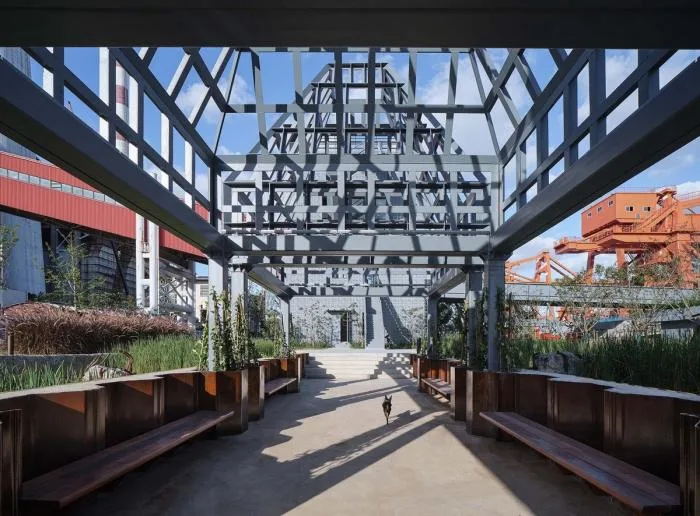
Second, a strategy of minimal intervention and low-impact development was adopted to restore ecology while respecting the site’s original spatial layout and forms. The natural landform was preserved, creating a low-lying wetland capable of collecting rainwater. Vegetation primarily consists of native herbaceous plants and water-tolerant trees such as pond cypress, complemented by subtle steel landscape structures. This approach blends native wildness with industrial heritage to create a unique landscape environment.
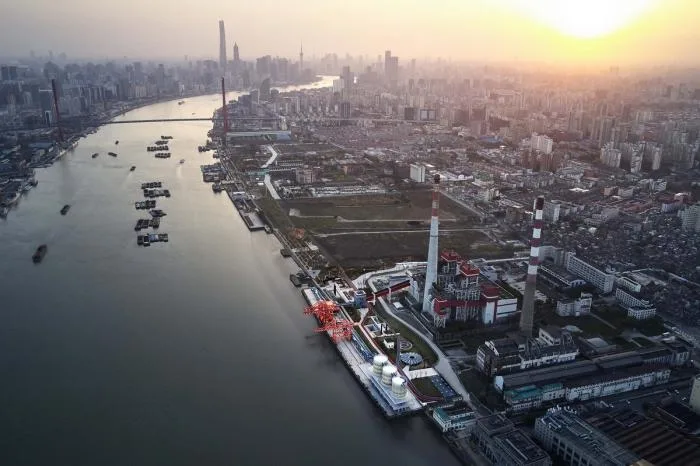
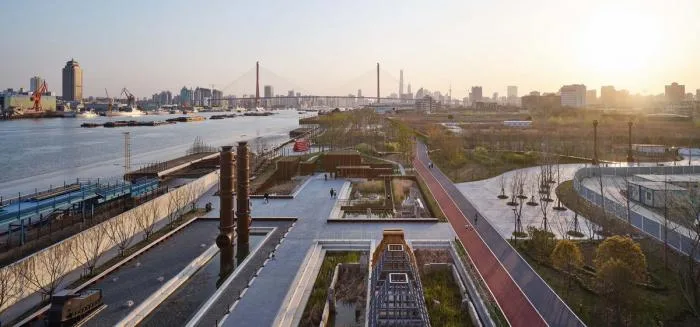
Preserving the Authenticity of the Ruins Garden
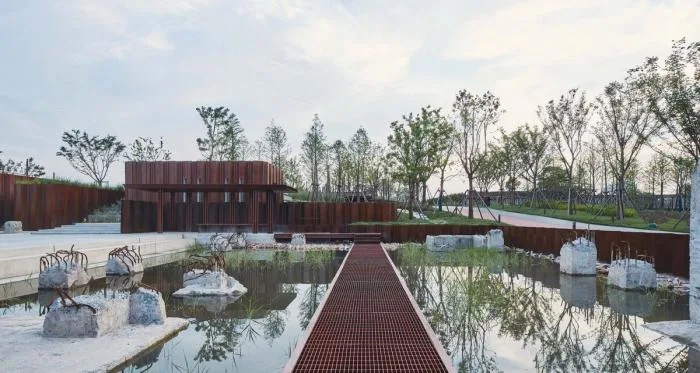
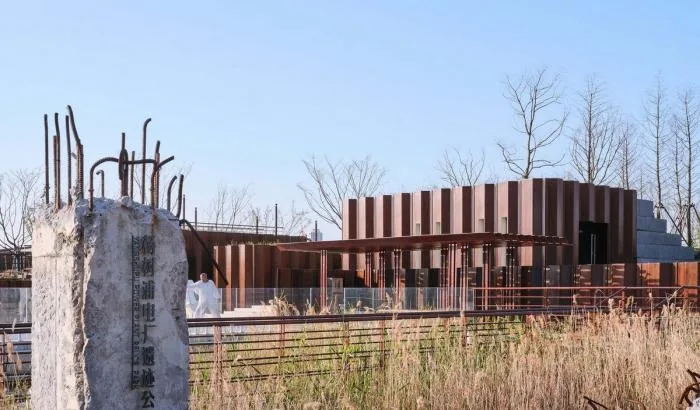
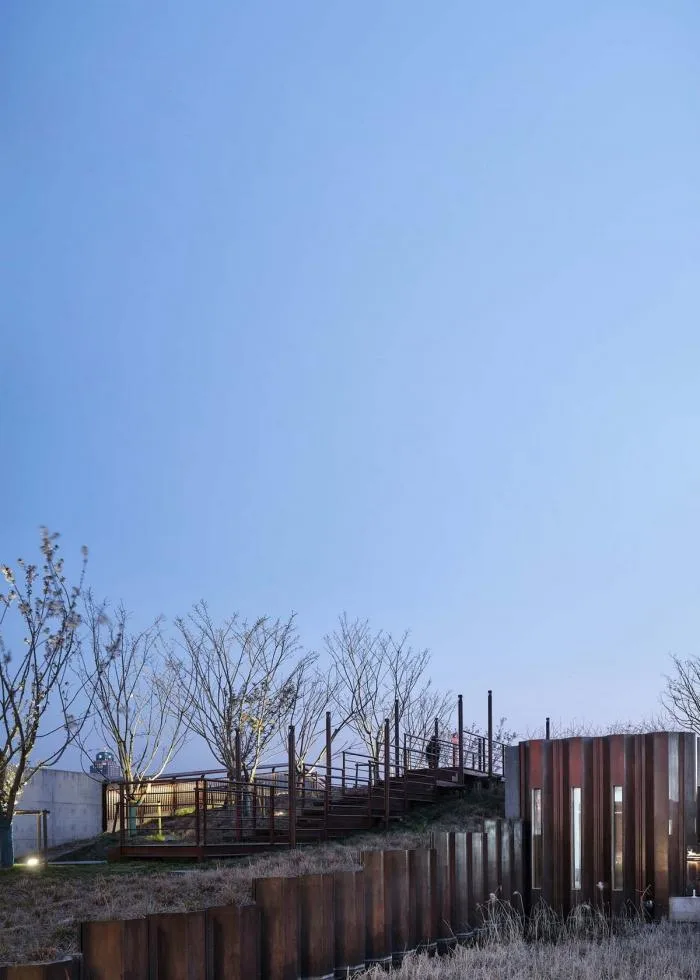
During site intervention, two transfer buildings near the riverbank at the coal transport wharf and an office building were demolished. To preserve the memory of the original structures, a three-sided pond was excavated from the foundation pit, exposing foundations and steel reinforcements, and leveling the area to form a public square. A small hill was created on the western edge using excavated soil, forming a complementary landscape with the pond.
Beneath the soil slope, corroded steel plates that supported the pond foundation pit are repurposed as exterior formwork. A cast-in-place equipment room and restrooms adopt the architectural language of the pond. Three coal hoppers, relocated from other sites, stand upright on one pond as sculptural focal points. The riverside conveyor belt is retained, with its original semi-circular rubber tracks replaced by welded steel plates, covered with soil and planted with flowers, blending industrial remnants with nature.
Ecology Meets Leisure: Water Purification Pool and Coffee Shop
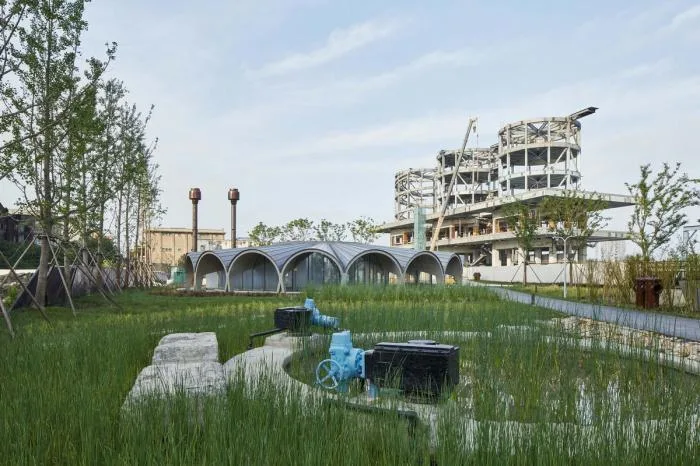
The power plant originally housed water storage and purification facilities. After dismantling the upper structures, two circular clean water tanks remained as foundation pits. One was preserved as a rain garden, and the other transformed into a coffee shop.
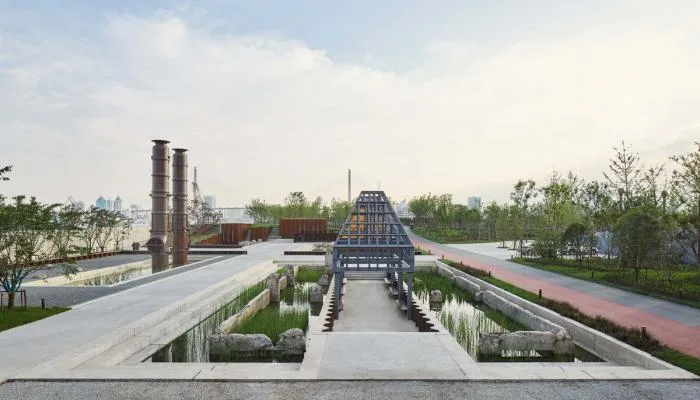
The rain garden foundation is planted with water-purifying grasses and lined with pebbles. It regulates heavy rainfall by storing and delaying runoff before it enters municipal drainage systems. The coffee shop foundation supports a split cone-shaped arch, with a slender column resting on an outer ring foundation arranged concentrically. An open dome at the top brings in natural light and frames views of the iconic chimney behind.
Visitors seated in the sunken water pool café can glimpse the nearby pond-like rain garden through pillar openings while looking up at the towering chimneys, reconnecting with the site’s industrial past.
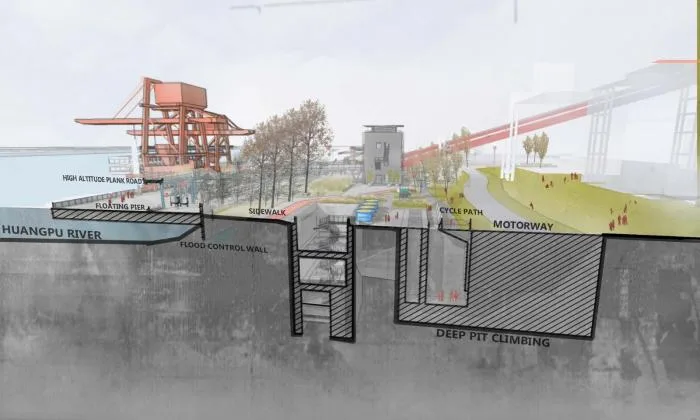
△ Section Diagram
The Gray Warehouse Art Space: A Platform for Diffuse Exploration
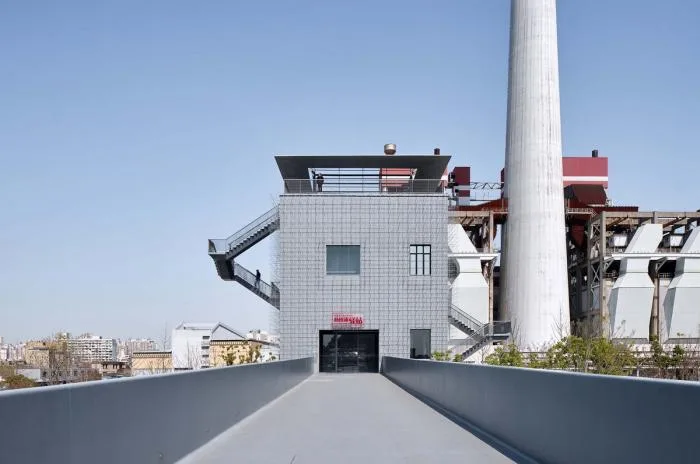
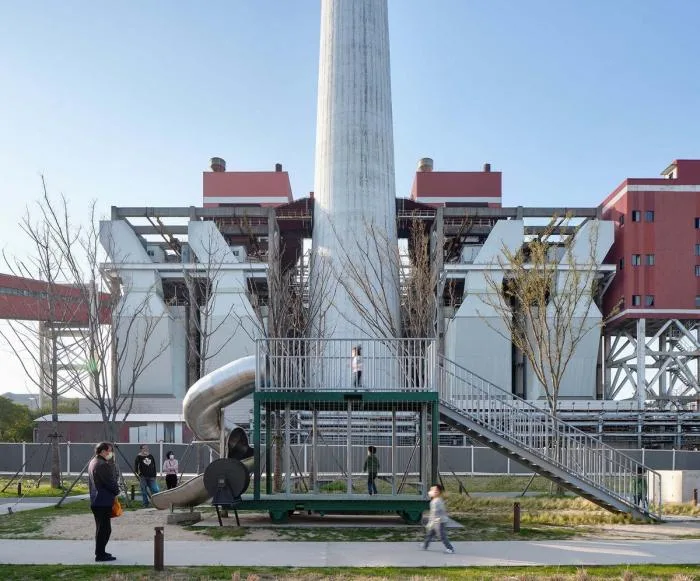
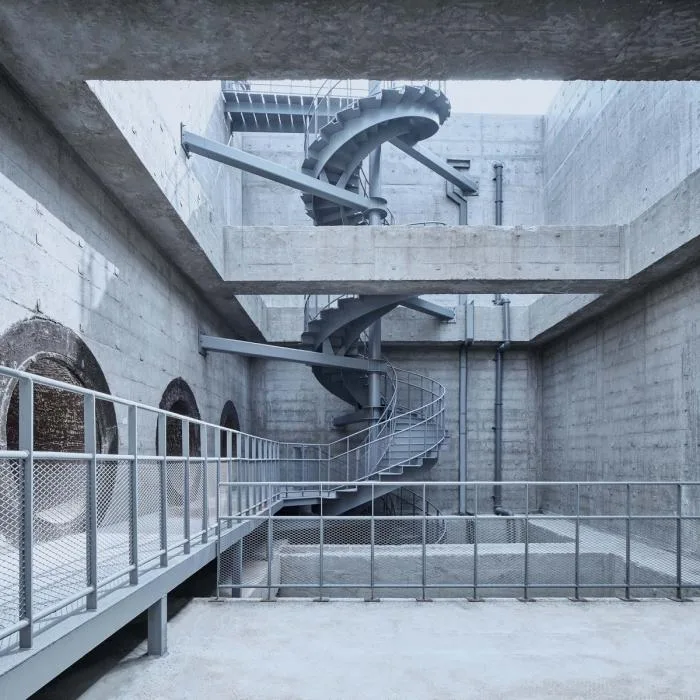
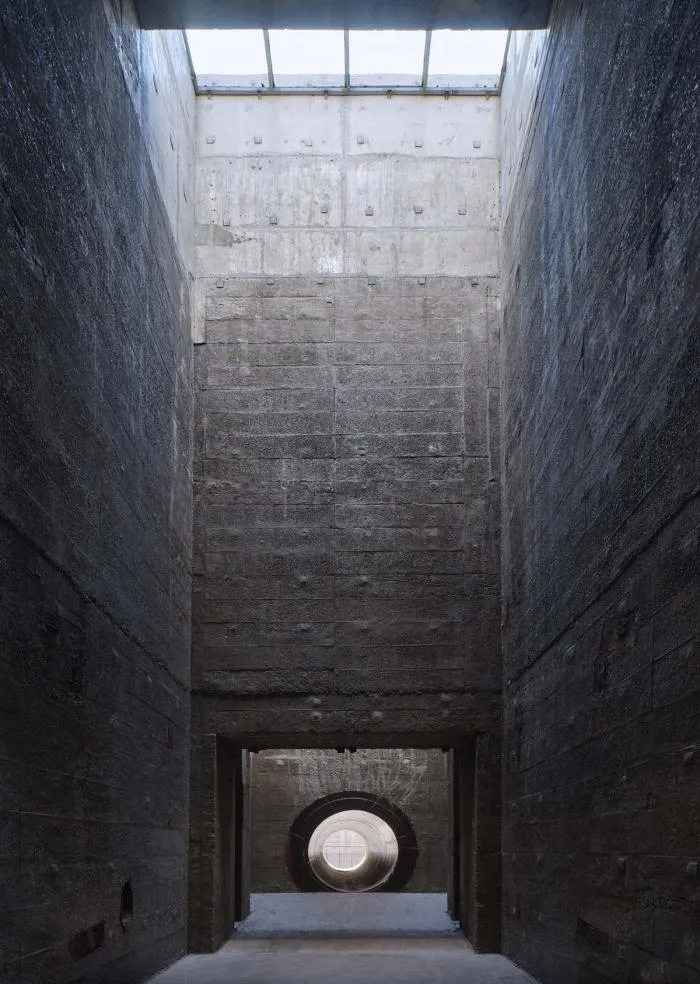
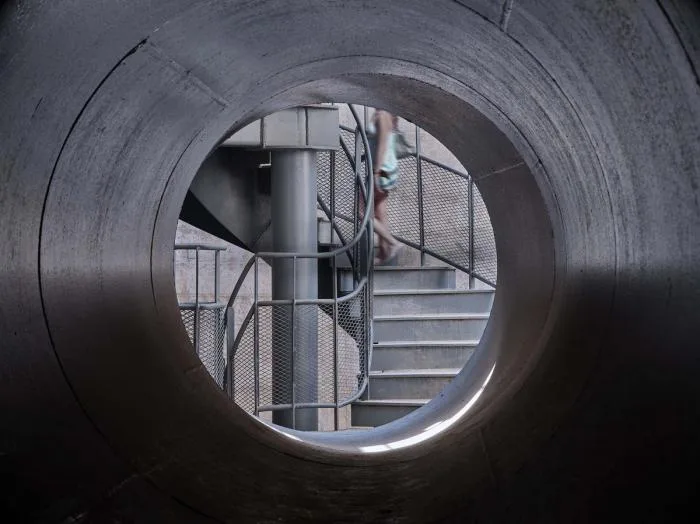
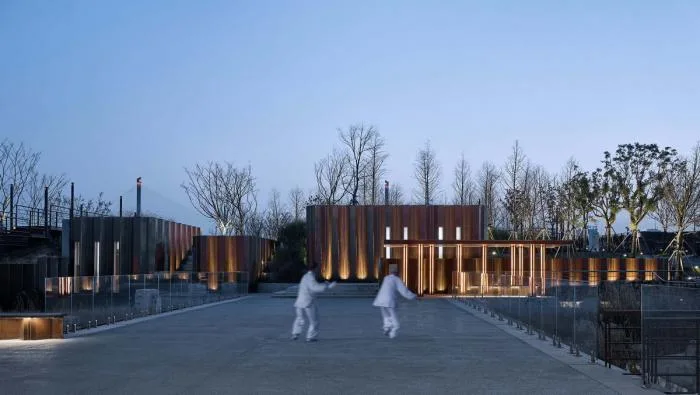
The Grey Warehouse Art Space was originally composed of three dry ash storage tanks near the river. By adding two landscape platforms, these independent ash tanks were connected into a cohesive whole. The 15-meter-high enclosed ash silos were renovated using a hazy interface treatment, creating a continuous path that winds from the concrete base to the top.
Along this roaming path, six undefined multifunctional spaces were inserted, along with a set of folding stairs arranged like plug-ins. This intervention, combined with artworks, fosters an interactive experience that intertwines art exploration with public movement, creating a dynamic spatial dialogue.
Adaptive Landscape Design
The renovation of the entire power plant section follows an adaptive approach, respecting local conditions and natural trends. The deliberate juxtaposition of man-made elements from different eras honors the diverse histories embedded in the site. Microclimates are identified and preserved through limited, low-impact interventions.
Today, the power plant site serves as a platform for dialogue, exploring the global theme of how waterfront spaces can enrich human life.
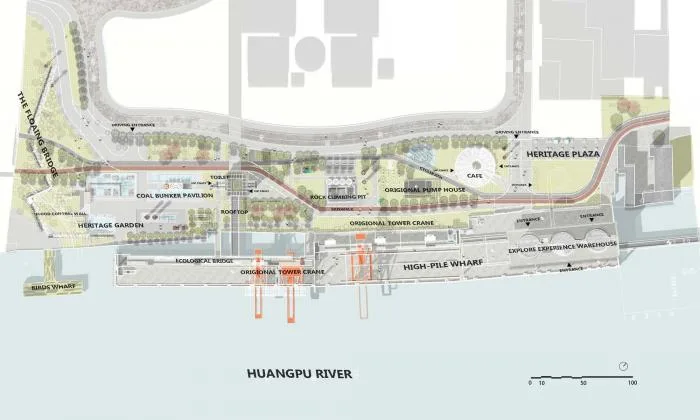
△ Plan View
Project Information
Project Type: Park Renewal
Location: Shanghai, China
Architect: Tongji Original Design Studio
Area: 36,000 m²
Completion Year: 2019
Photographer: Octopus Seeks Architecture
Lead Architects: Zhang Ming, Zhang Zi, Qin Shu
Design Team: Li Xuefeng, Sun Jialong, Li Jingjing, Tao Nina, Wu Yunsong, Liu Xinxin, Li Zheng, Yu Dian (Intern), Zhang Yichen (Intern), Zhu Chengzhe (Intern)
Structural Engineers: Nan Jun, Cao Lingyong, Yang Shuaijie, Zhang Zheng, Li Lu
Equipment Engineers: Gan Zhaohui, Xie Wenli, You Bolin, Zhang Hua
Owner: Shanghai Yangpu Binjiang Investment and Development Co., Ltd












Must log in before commenting!
Sign Up