
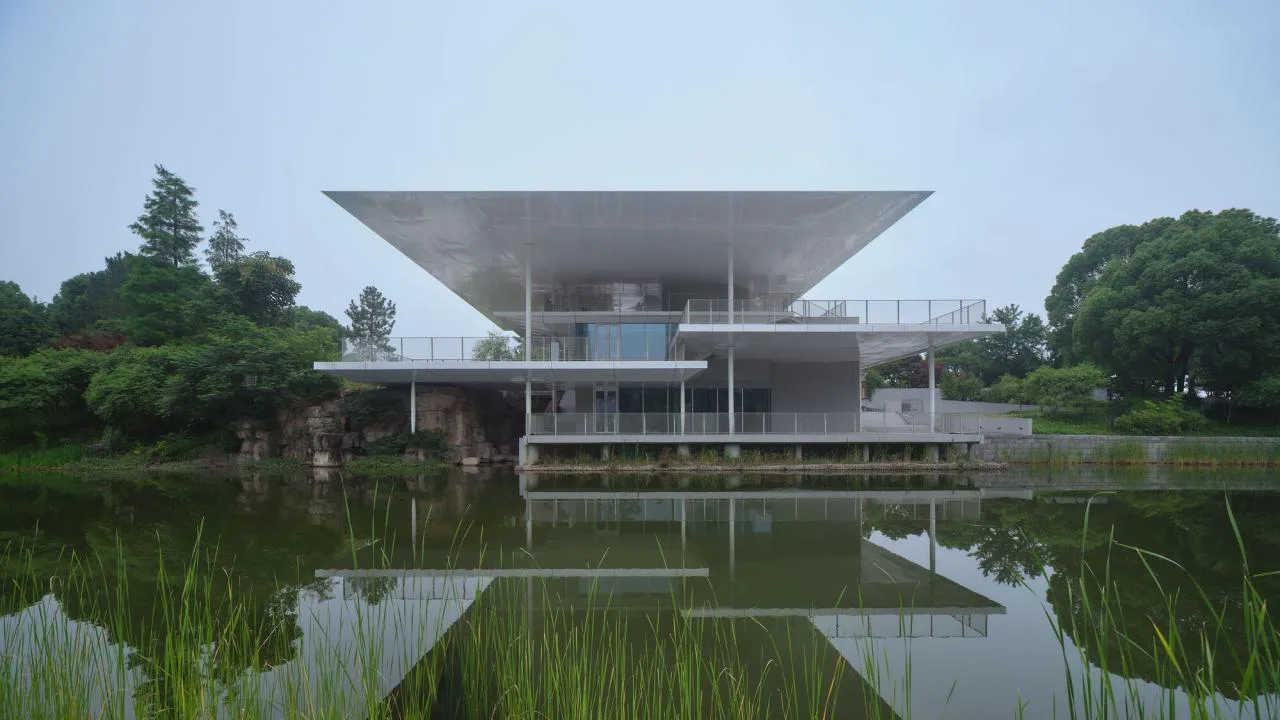
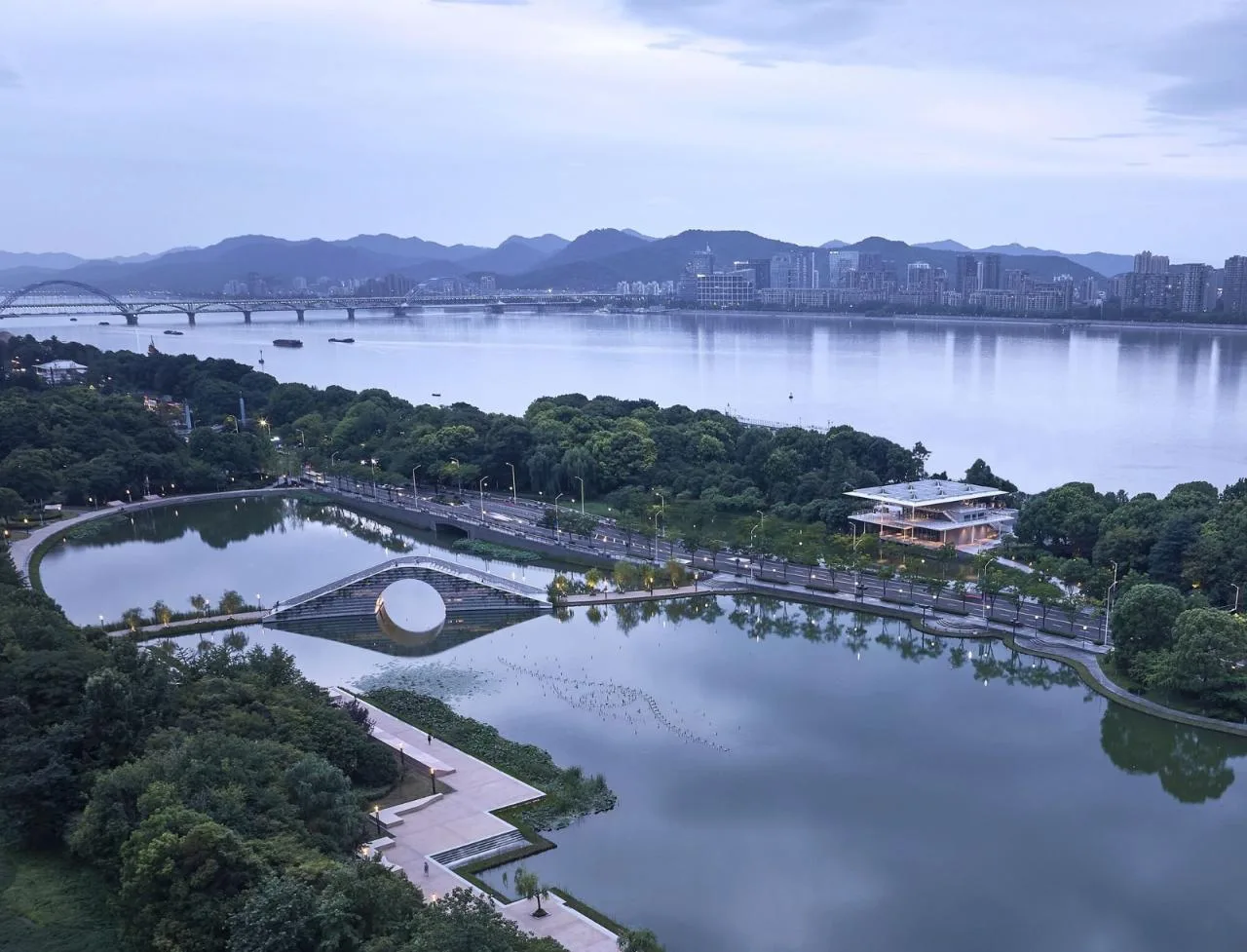
Jianshi Post and Tingyun Post are situated on the south bank of the Qiantang River in Hangzhou’s Binjiang District, positioned north of Wentao Road and northeast of Fuxing Bridge. These sites are part of a 12-kilometer waterfront public space renovation and upgrade project led by the Tongji Original Design Studio in Binjiang District.
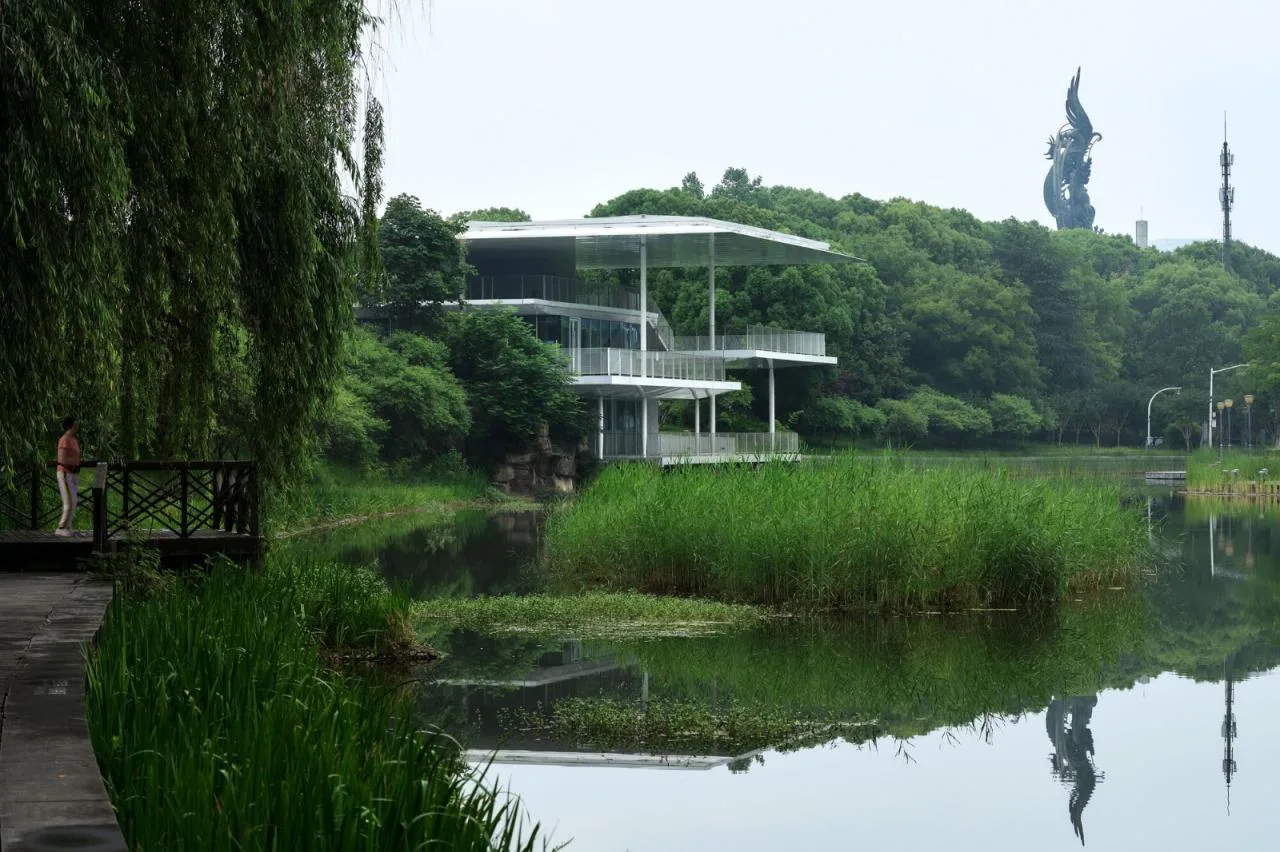
Jian Shi Yi, a self-built holiday garden restaurant renovated in 2004, was surveyed initially. The building featured an aging grid-like metal roof truss and stone-like facade tiles. Exposed structural columns wrapped in stone gave a sturdy appearance. On the site’s north side lies a rockery garden, where lush vegetation nearly envelops the rock formations. When standing by the Qiantang River looking back, the dense greenery almost hides the main building. However, upon reaching the building’s top floor, the rich surrounding scenery offers a delightful surprise—a unique perspective we aim to share with more visitors.
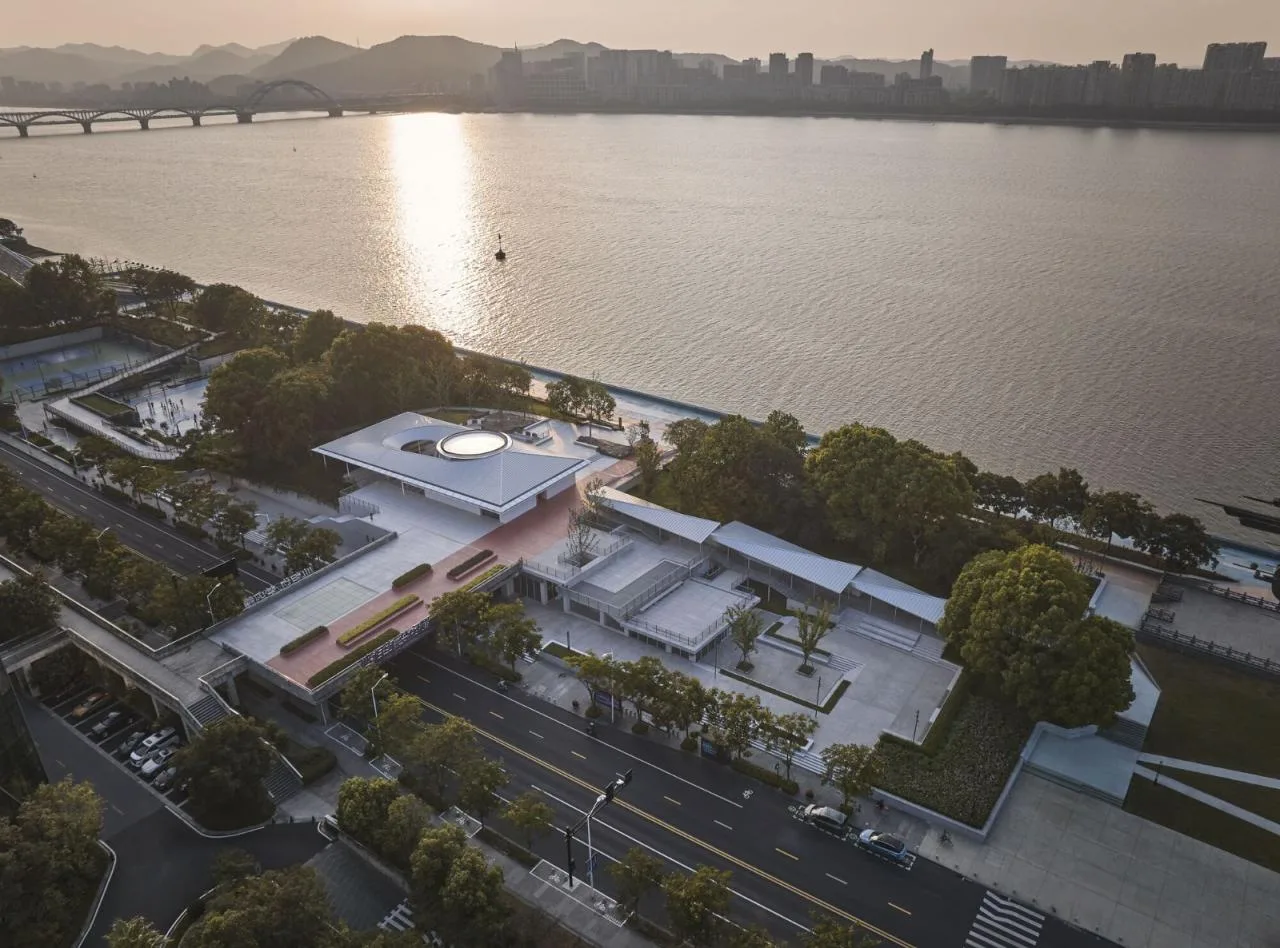
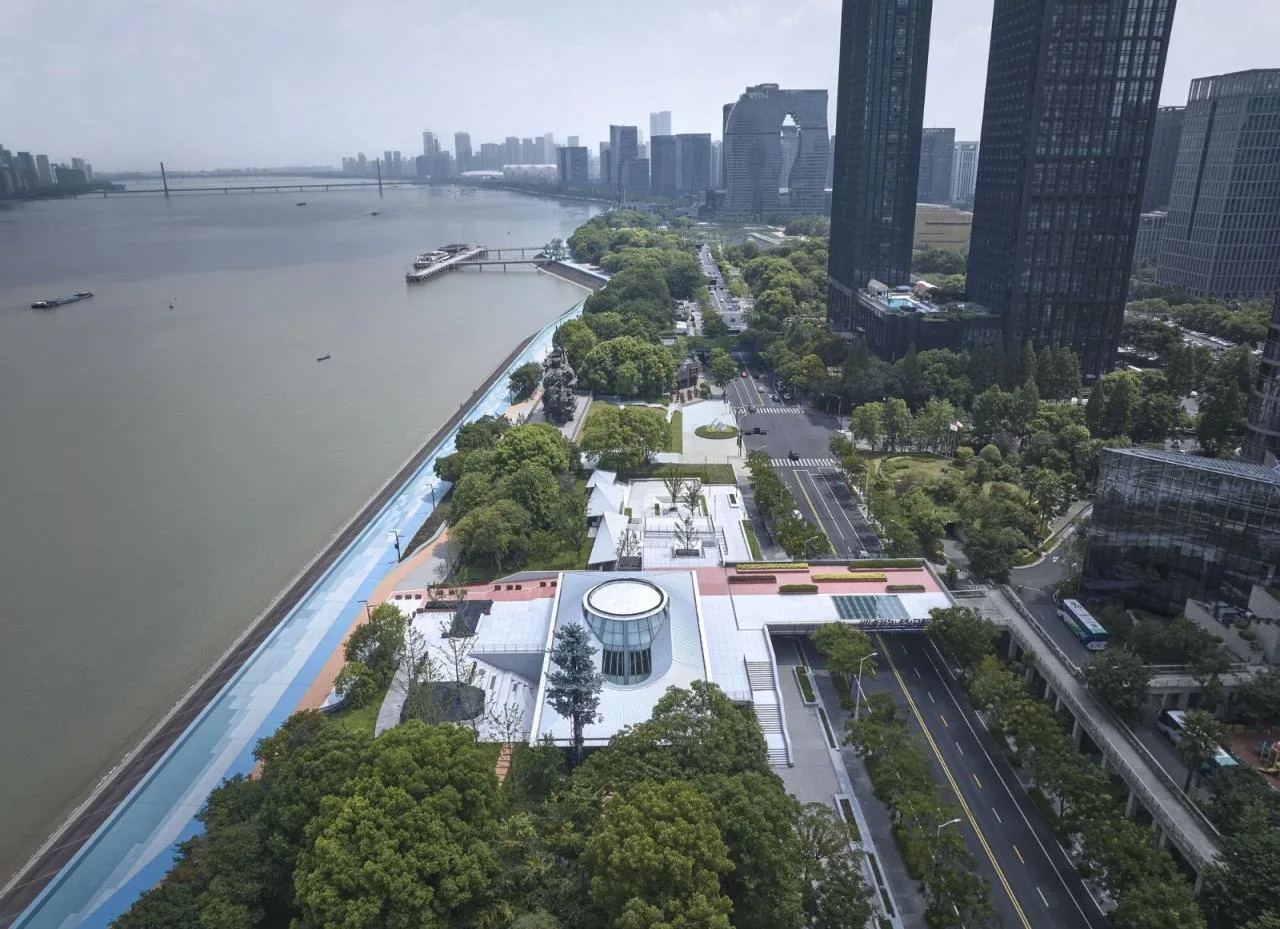
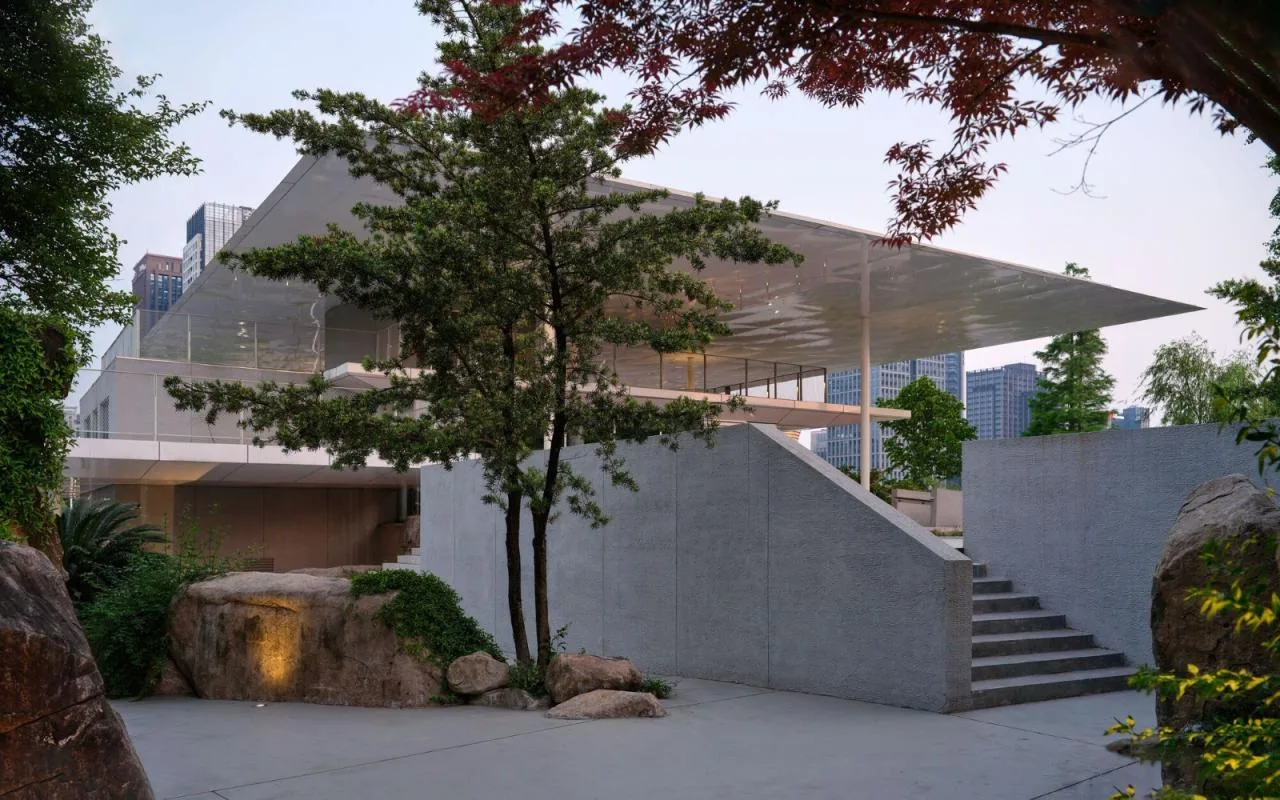
The renovation preserves the building’s original first floor and semi-underground spaces, while retaining the concrete frame and shear walls of the main structure for lateral support. The thick stone-wrapped columns have been truncated above floor level and replaced with shuttle-shaped steel columns. These new columns feature ball joint nodes at the base to minimize their cross-sectional size.
The original grid metal roof truss was removed and replaced with a lightweight metal roof. This new roof uses inverted T-shaped steel beams arranged in an umbrella pattern to efficiently support the cantilever structure. Small steel pipes connect the beams for stability, ensuring a cohesive building facade and overhead view.
By leveraging the existing structure and adding steel columns, landscape platforms have been introduced at various building elevations, creating multi-level, expansive landscape views.
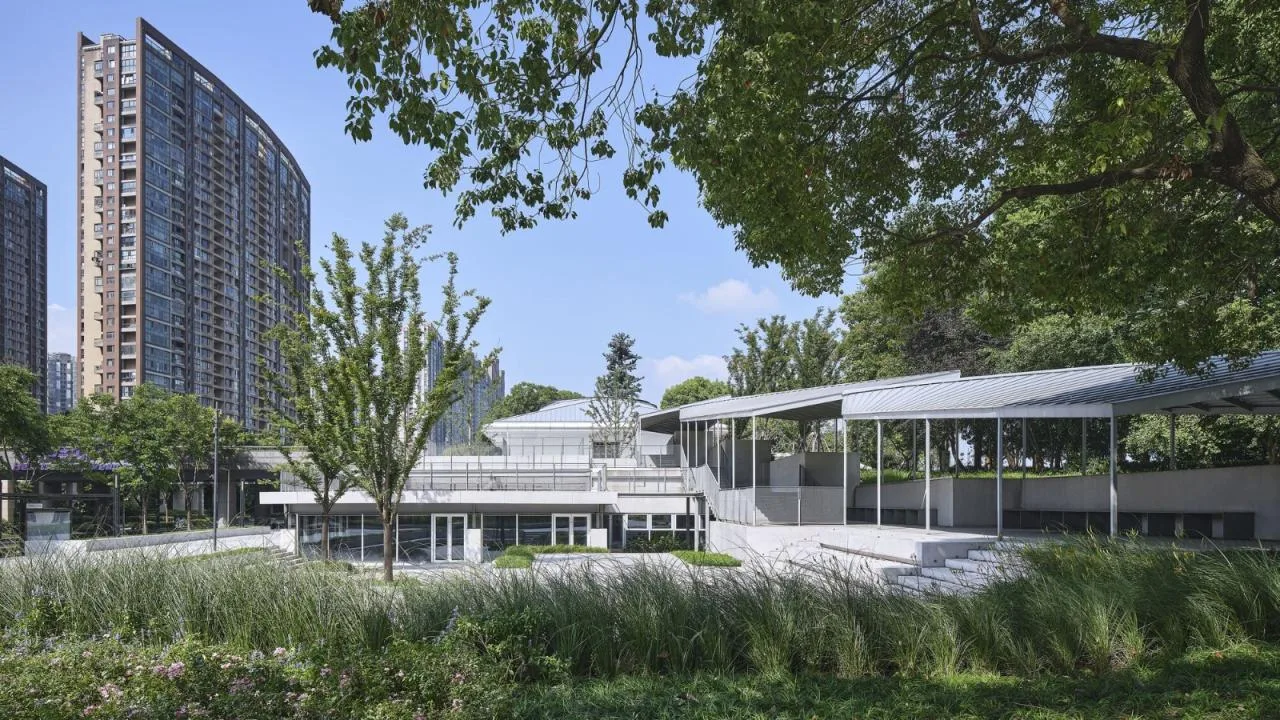
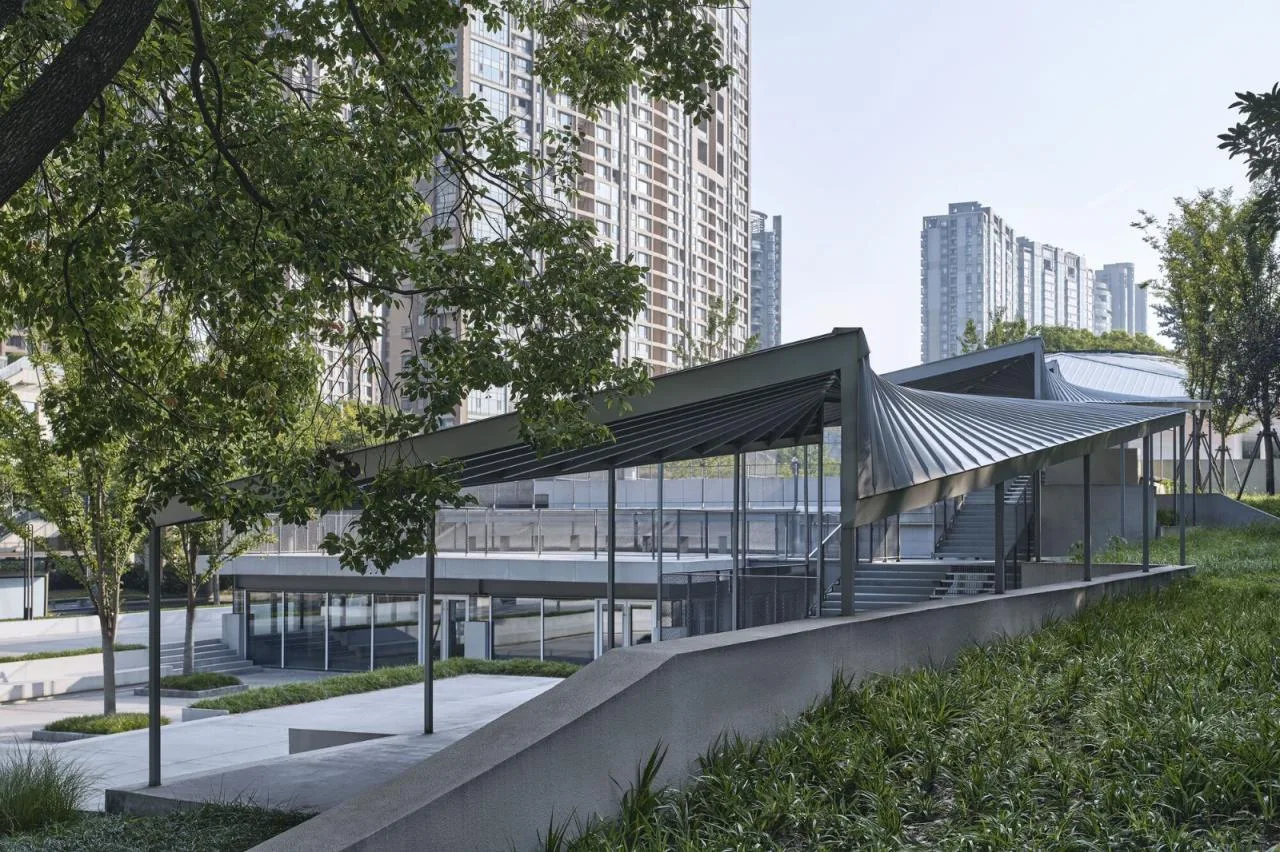
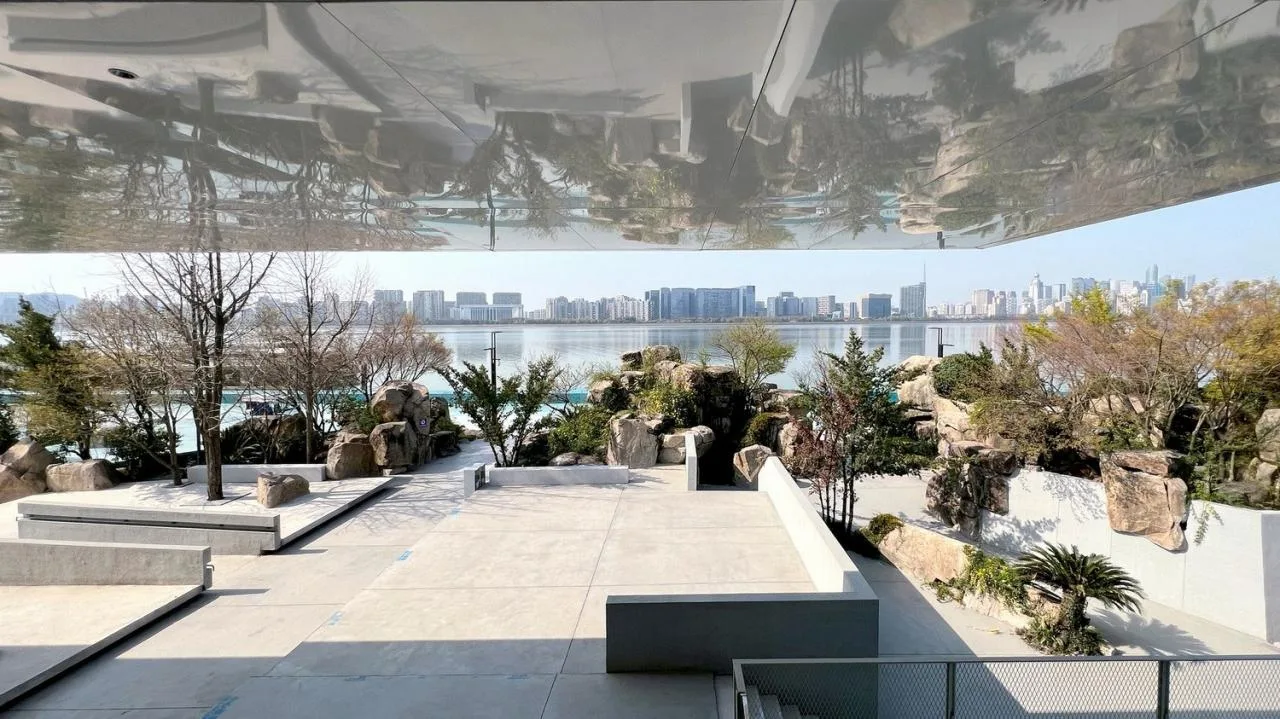
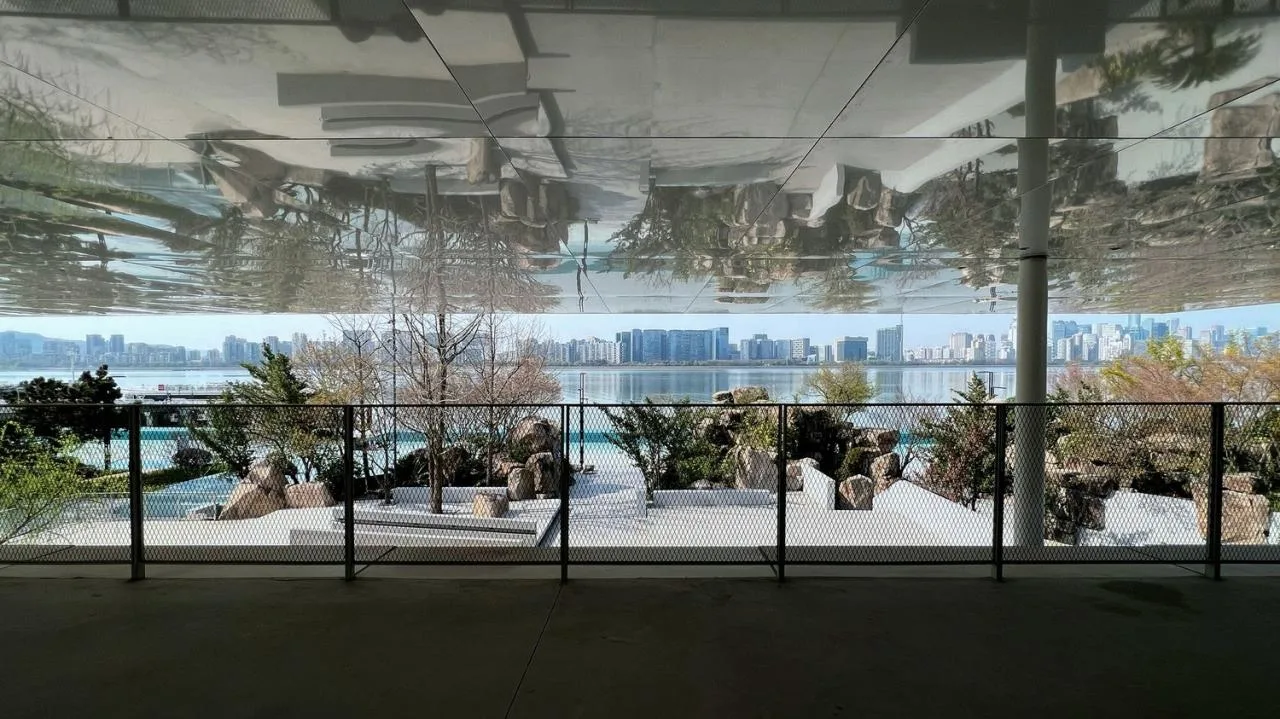
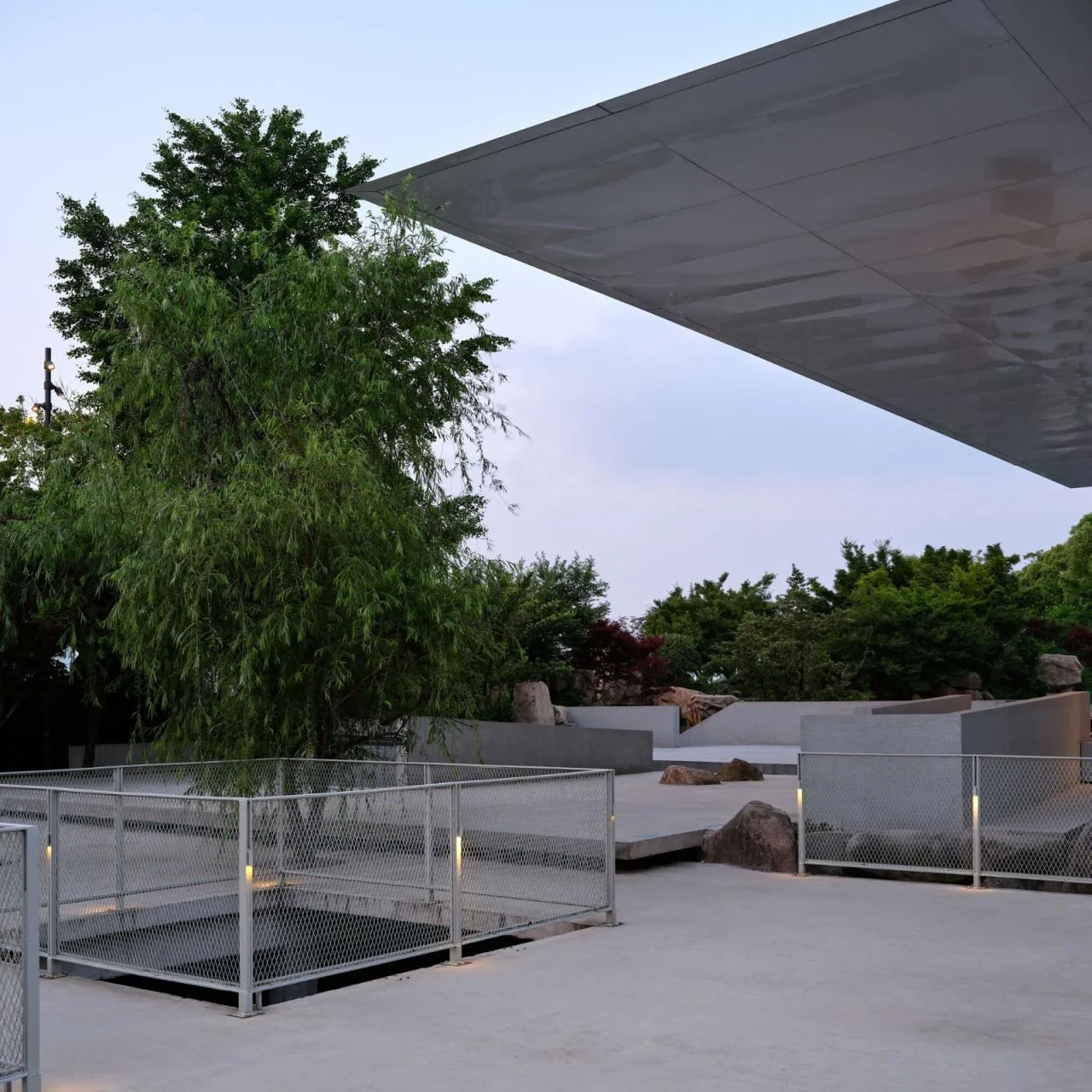
To showcase the lightweight nature of the renovated building and evoke historical memory, granular textured paint replaced the original stone tiles on the walls. The new sections feature reflective aluminum panels, using the roof as a canvas to mirror the changing seasons.
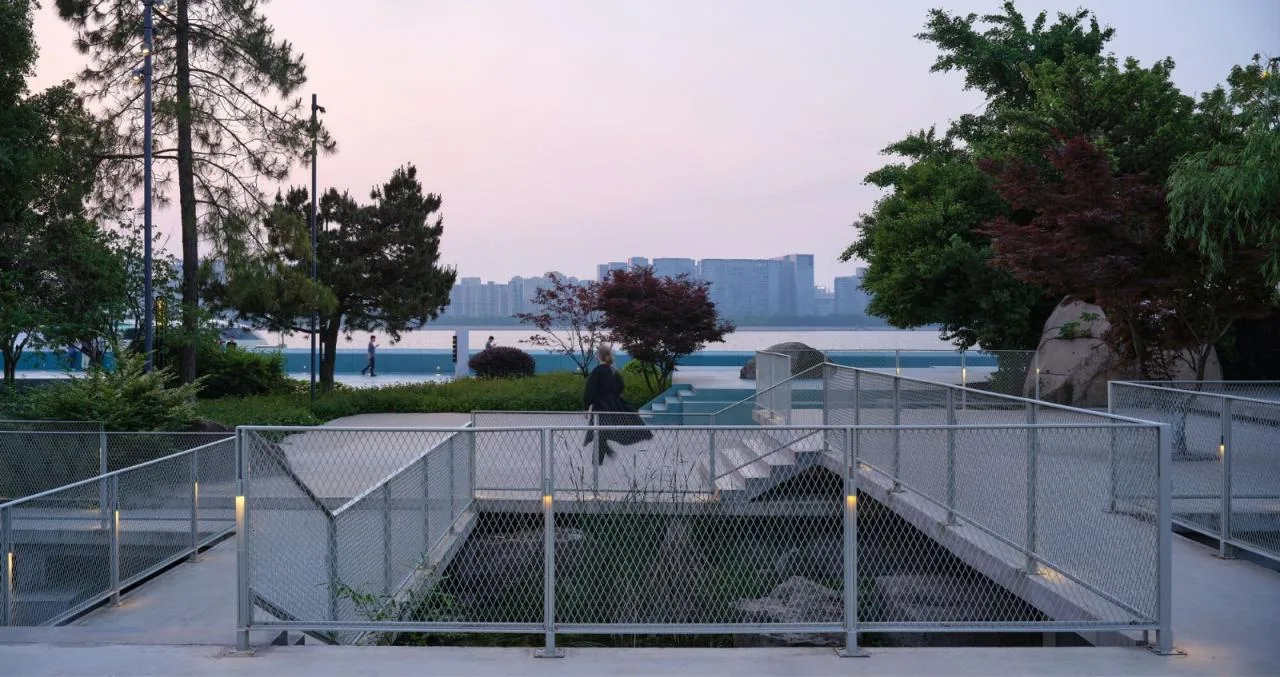
Existing vegetation was carefully managed: vines and weeds were cleared, while high-quality shrubs and trees were preserved. A flat plate system was installed on the original ground, creating a gently descending viewing platform. Openings were designed to accommodate plant growth, and original rockery stones were retained to harmonize with the platform.
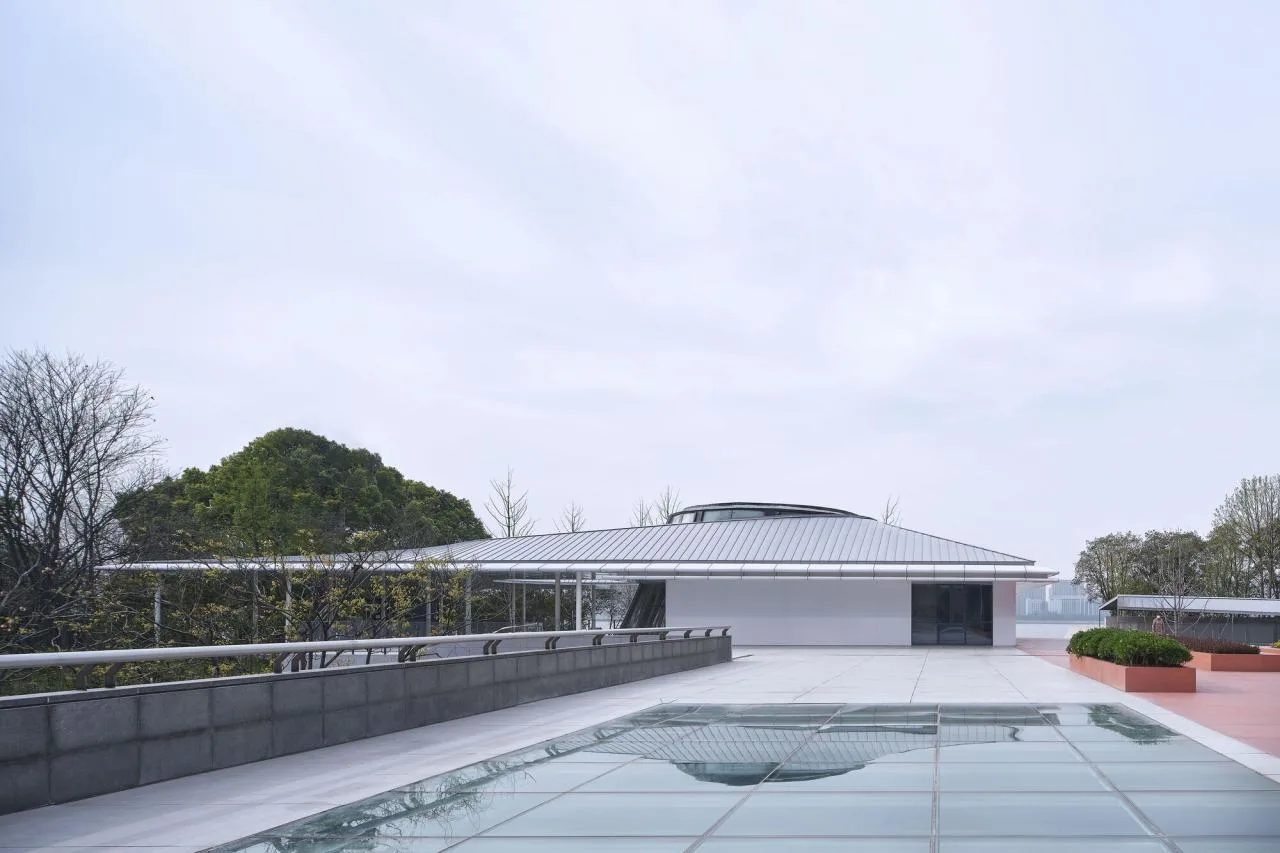
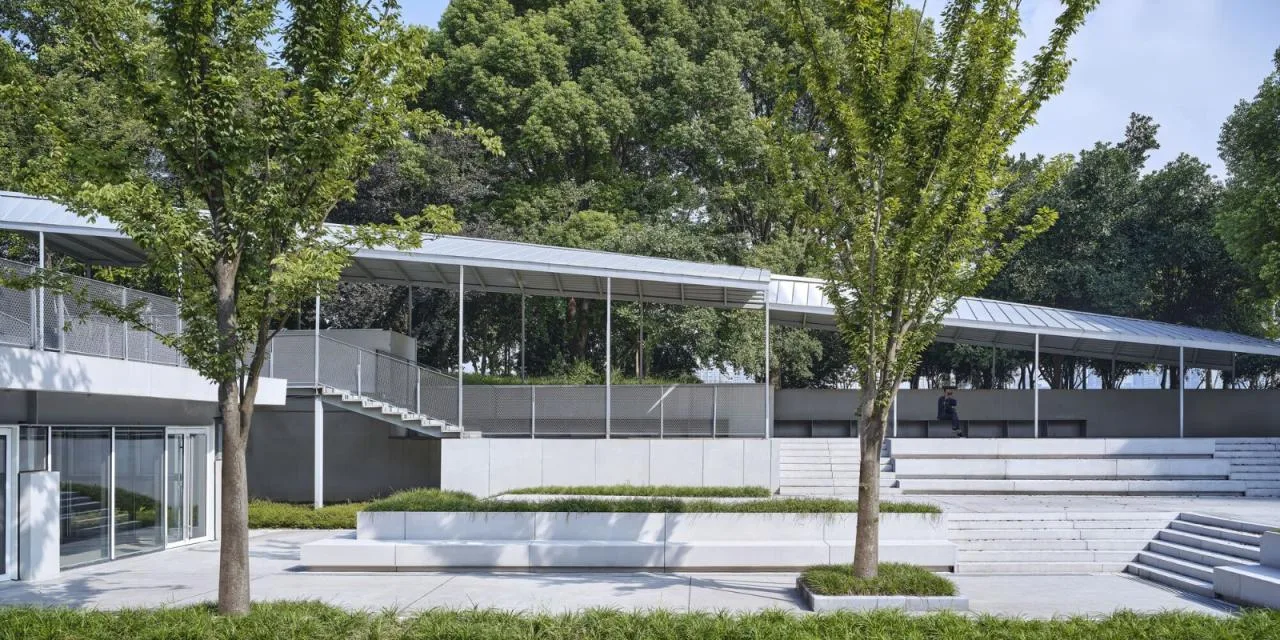
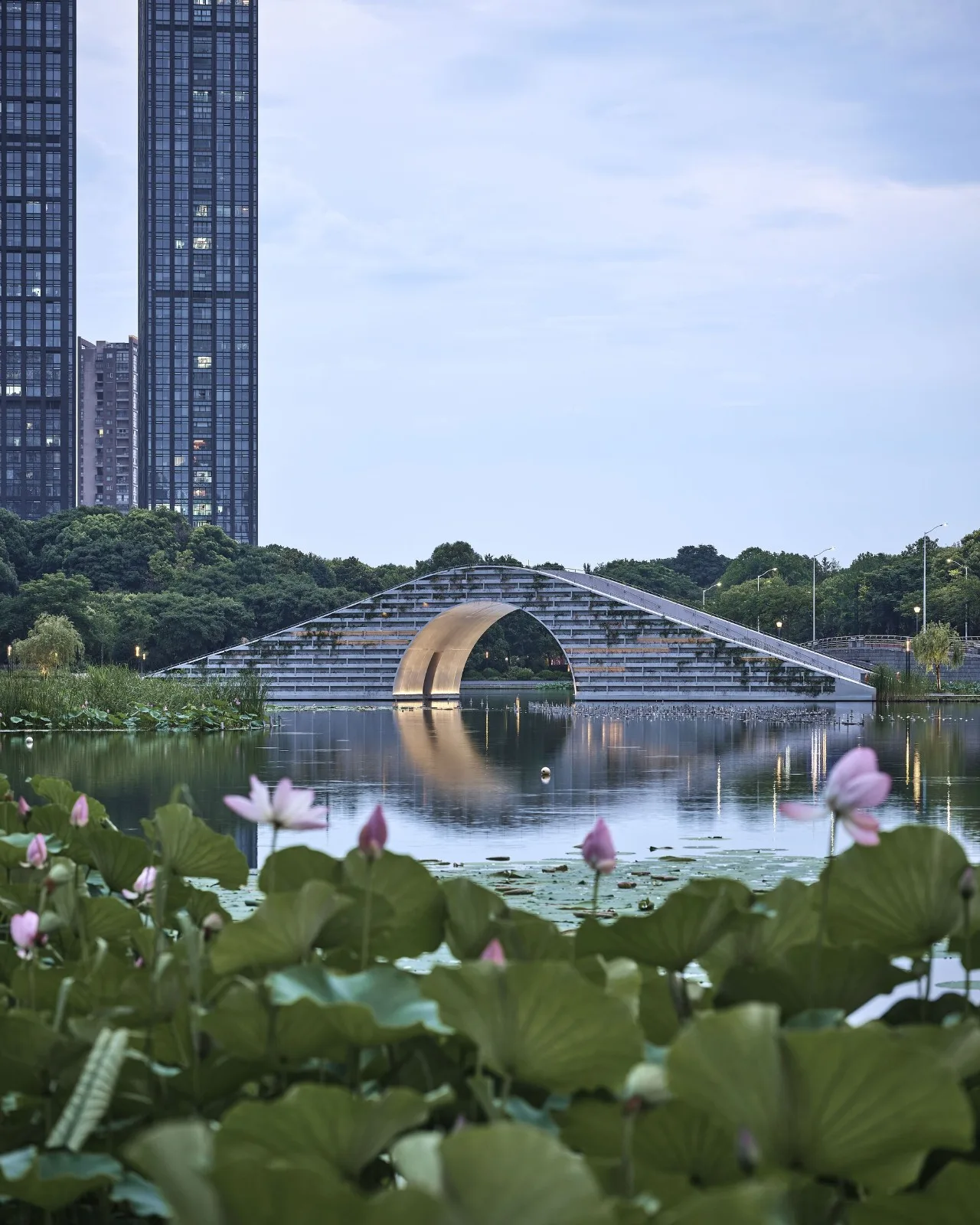
The Green Plant Bridge of Yijinxin, a low-carbon pedestrian bridge located south of Jianshi Post in the artificial lake north of the Hangzhou Low Carbon Science and Technology Museum, required safety and comfort improvements. Originally, the pedestrian bridge had damaged paving stones, an outdated style, and steep steps, posing hazards.
To enhance safety and comfort, the original bridge body was retained while extending the bridge deck to create a more elongated form and gentler step scale. The design reinterprets the traditional Chinese mortise and tenon structure with a modern approach, using aluminum alloy as a skin material. The facade features a series of spaced metal flower box grids and vertically arranged plug-in plates.
Green plants are integrated into the flower boxes, and vertical point-like lighting elements provide illumination at night, achieving a harmonious blend of function and form with a modern Jiangnan style facade.
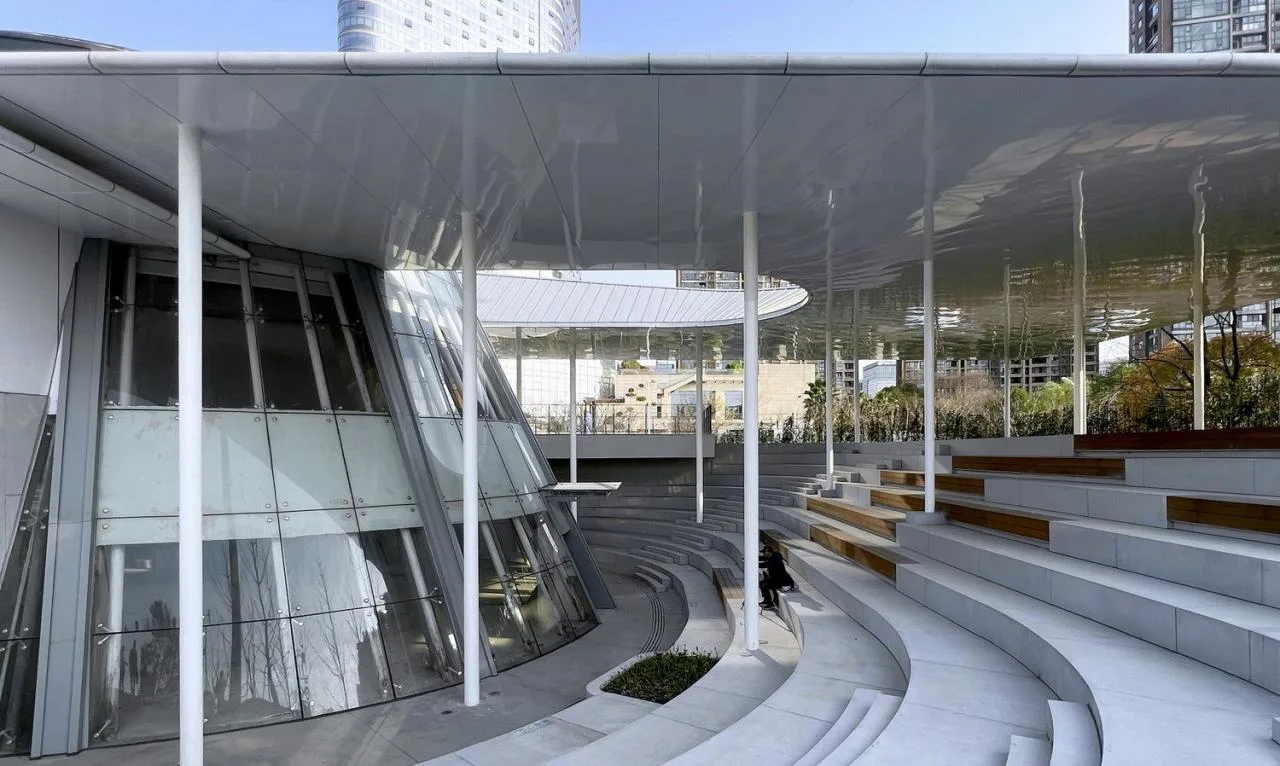
The Rongzhai building, renovated and constructed in 2004, features a circular elevated space on its west side and a landscape building on the east. The terrain’s height difference makes the interior spaces relatively private. The east side indoor area is located entirely beneath the landscape staircase, resulting in poor lighting. Additionally, the staircase lacks sufficient space for people to pause or rest.
This renovation aims to improve the building’s image and provide the public with comfortable and vibrant activity spaces.
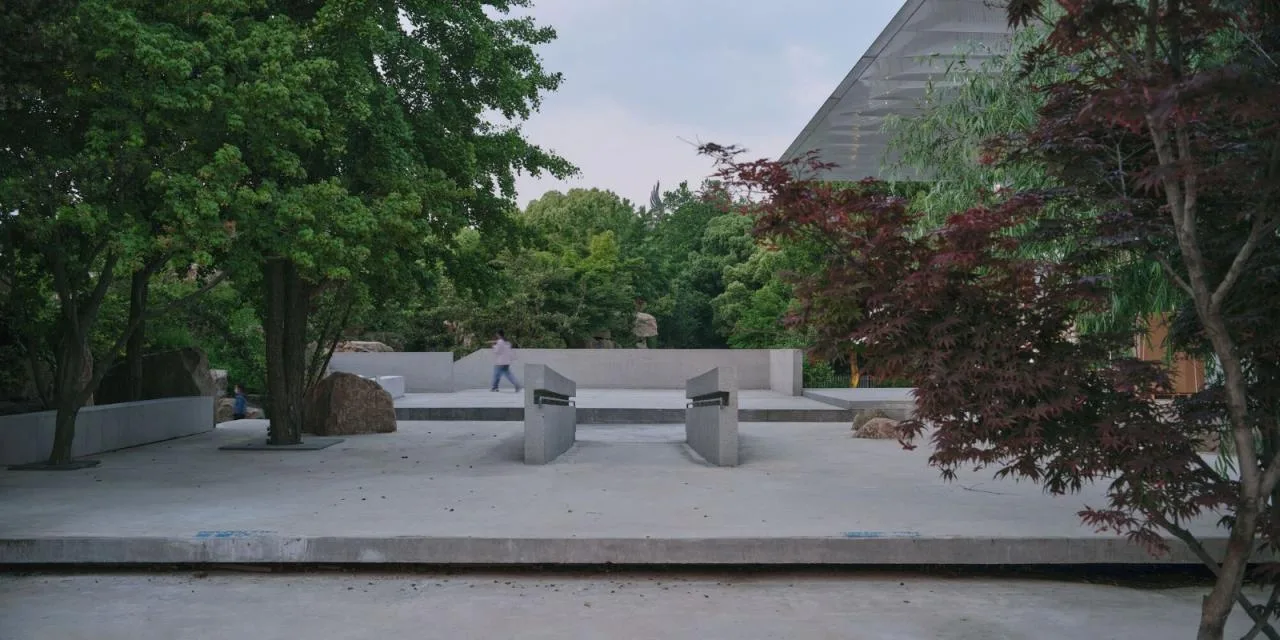
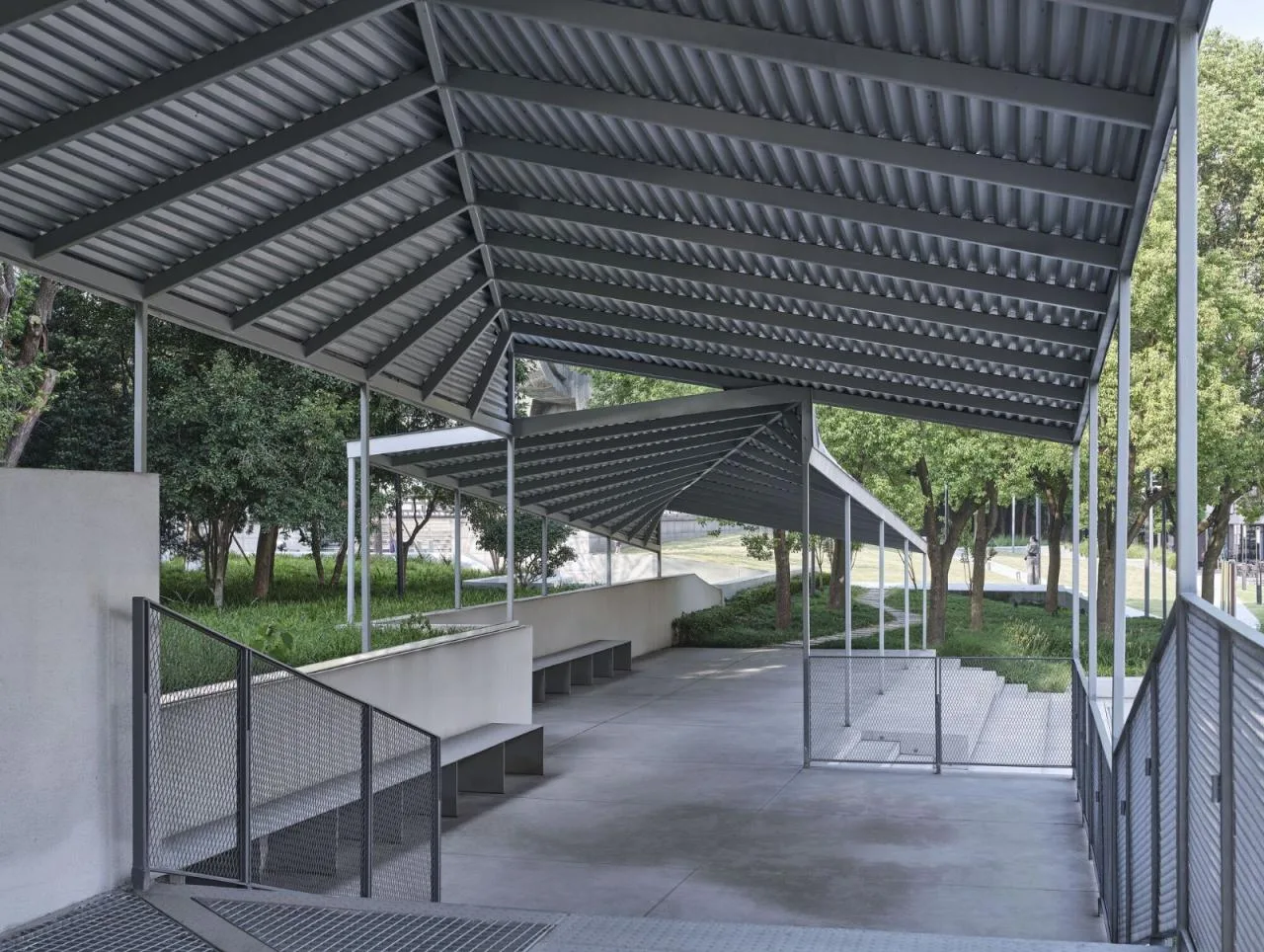
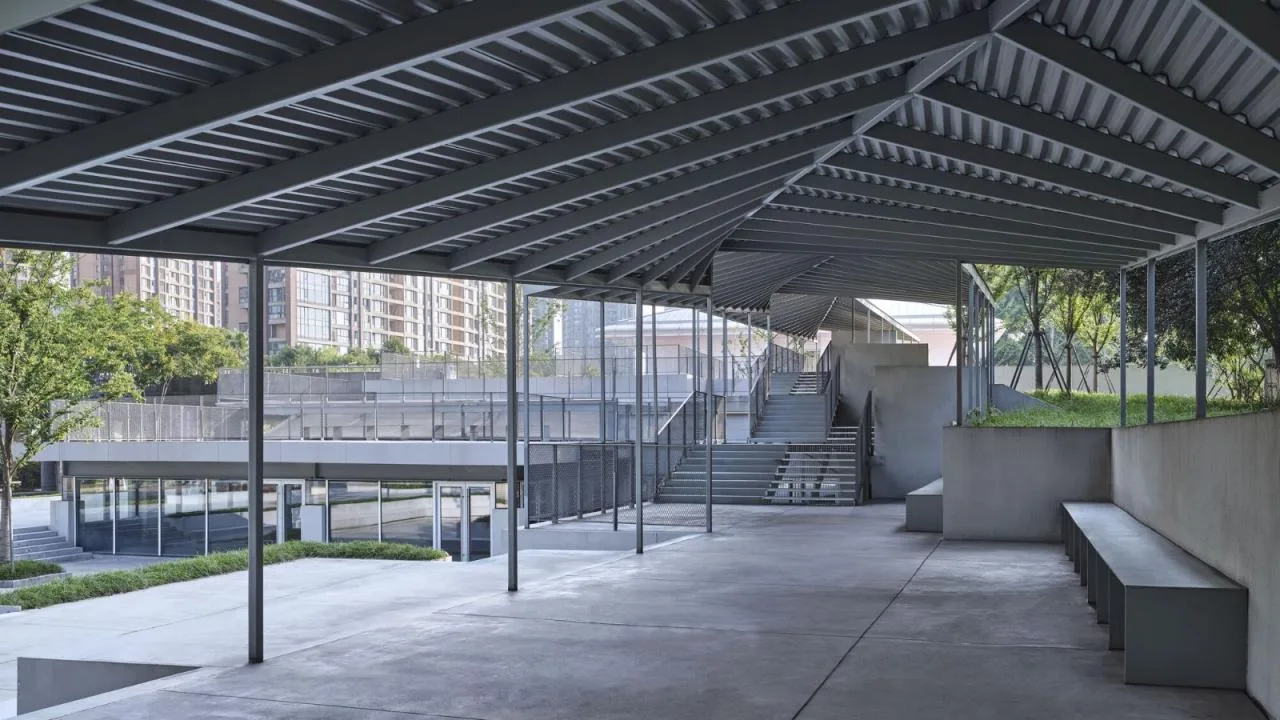
To improve public access and comfort, the enclosed landscape barrier on the west side will be removed, expanding the courtyard space. Combined with roof renovations, this creates a semi-outdoor activity area that attracts riverside pedestrians and local residents to stop and socialize.
On the east side, the original main structure remains, but parts of the landscape steps and floor slabs were removed to form a courtyard that allows natural lighting. This not only addresses the indoor lighting issue but also softens the imposing and monotonous feel of the original outdoor steps.
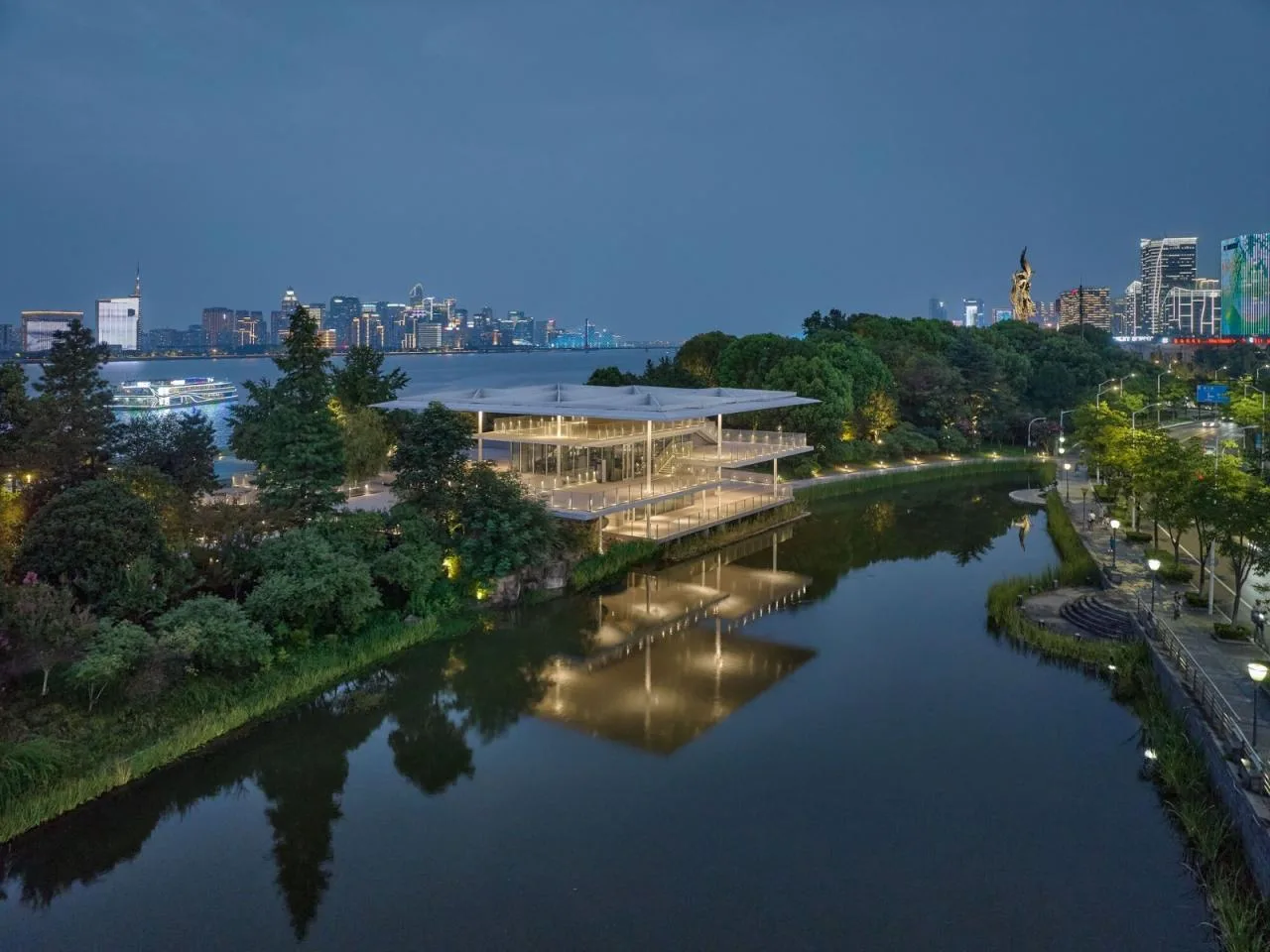
The existing landscape retaining wall is used as structural support for a new three-level pavilion, which rises along three sections of retaining walls. The combination of metal roof, steel beams, solid columns, and landscape retaining walls achieves a lightweight construction, controlling the pavilion’s structural components to a thickness of only 60 millimeters.
Project Drawings
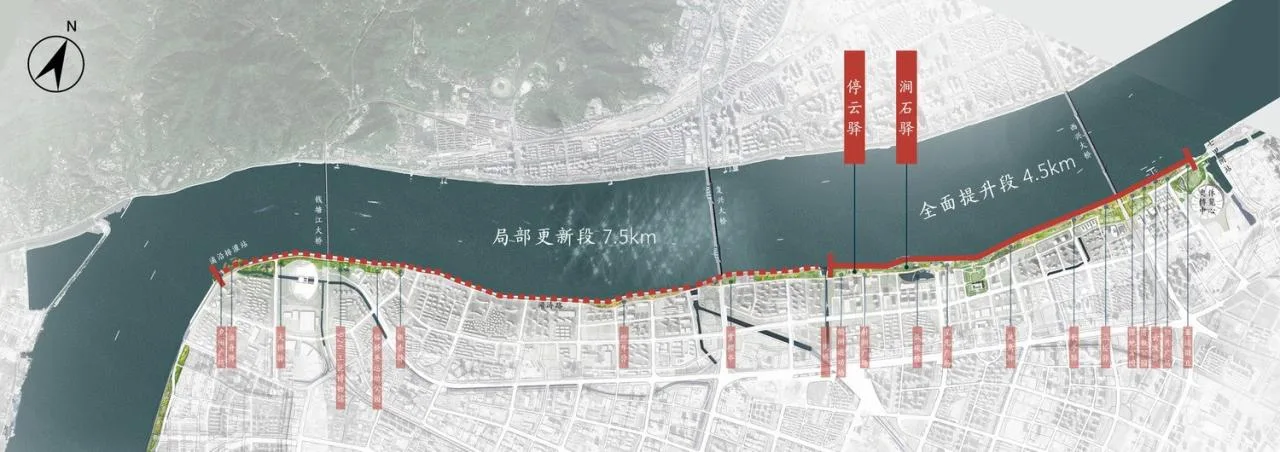
△ Base schematic diagram
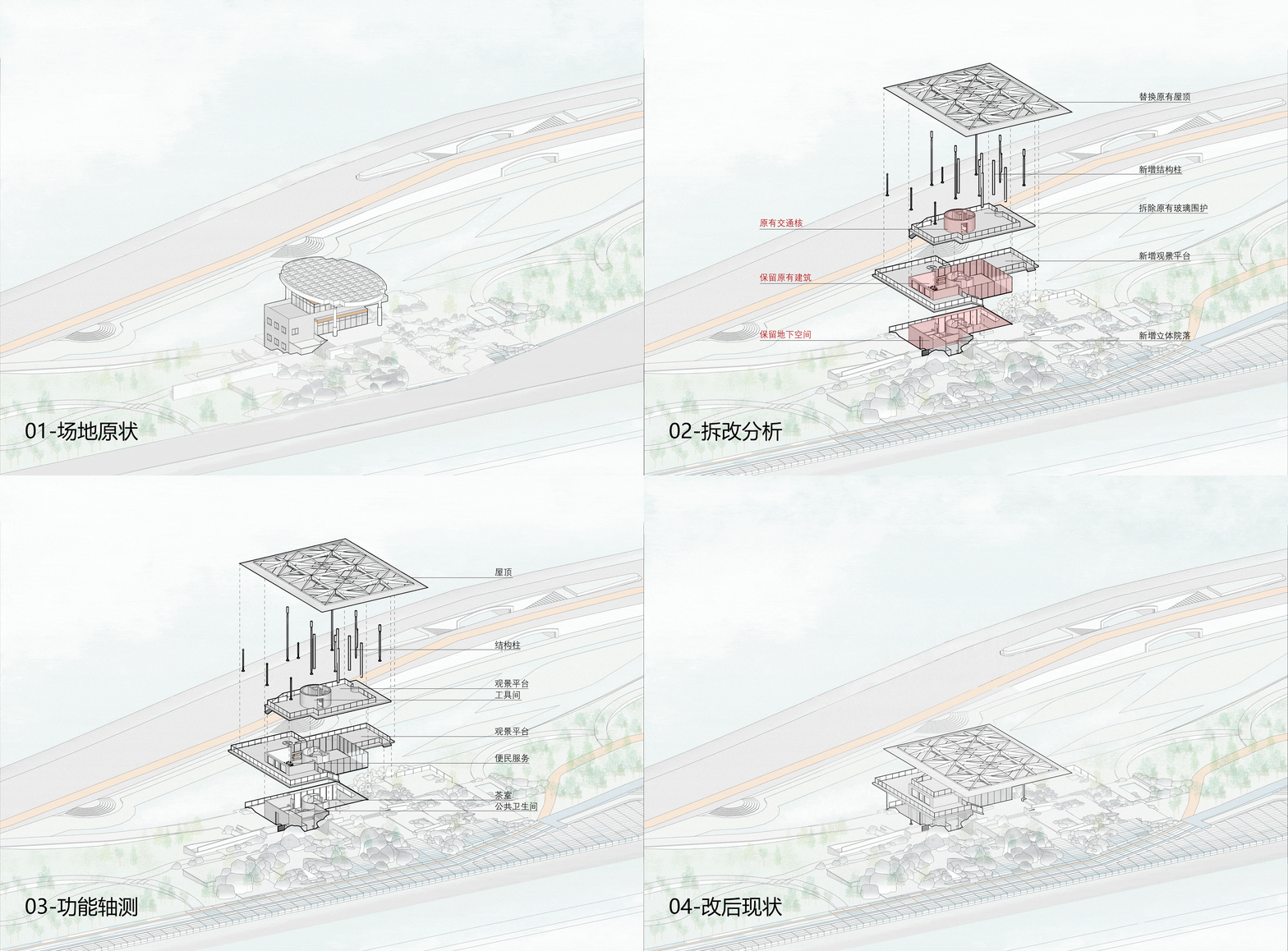
△ Analysis chart
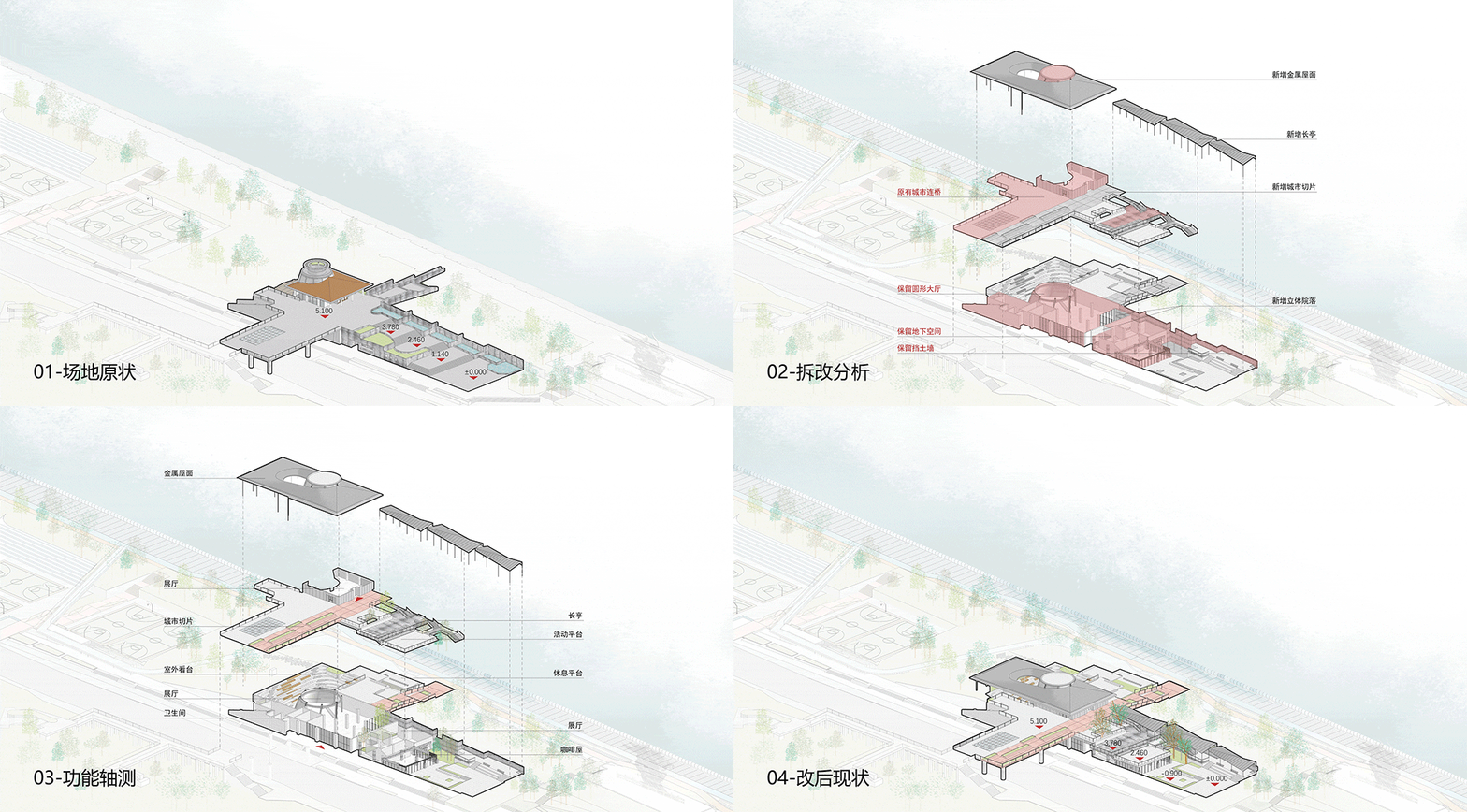
△ Analysis chart
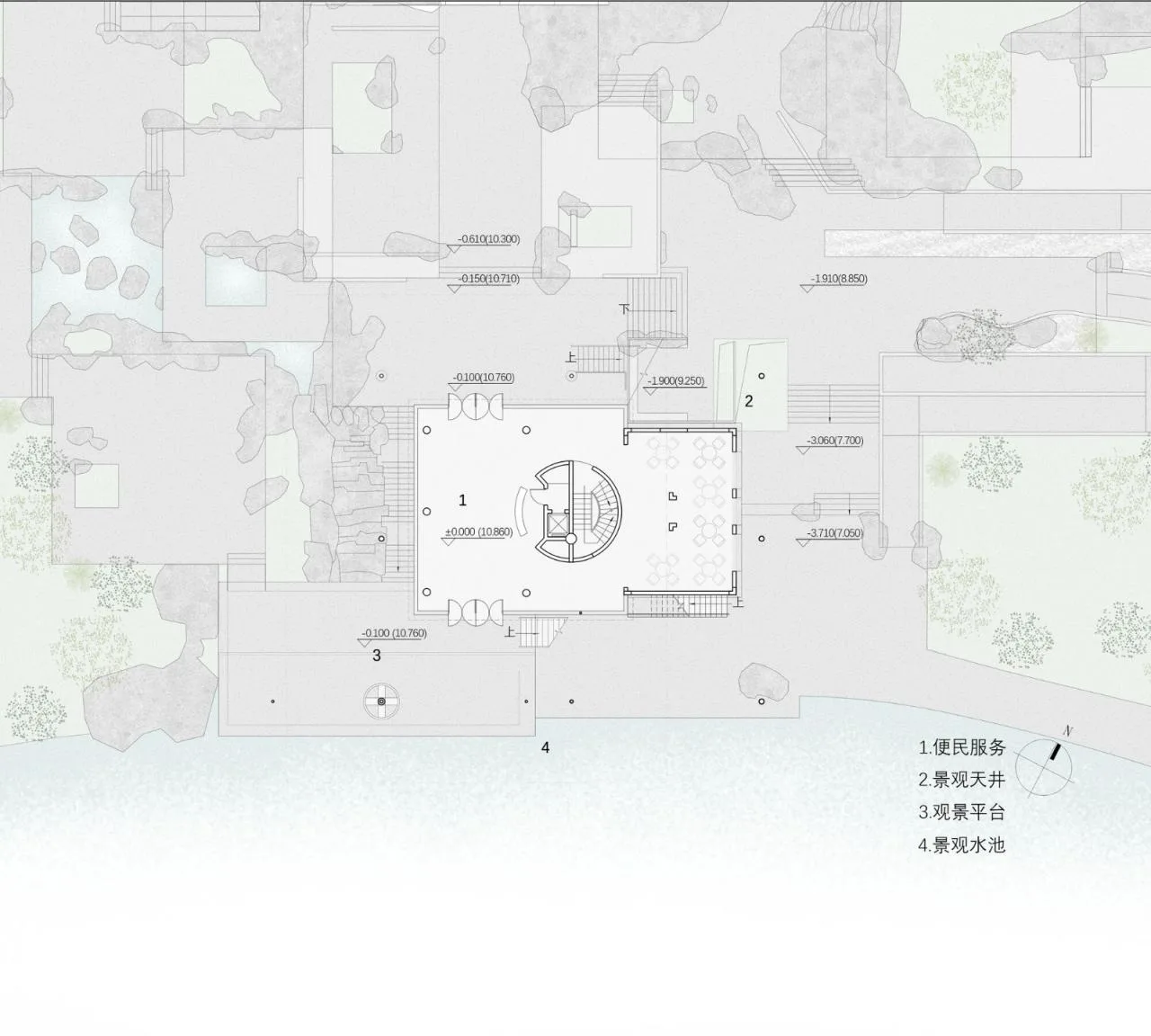
△ First floor plan
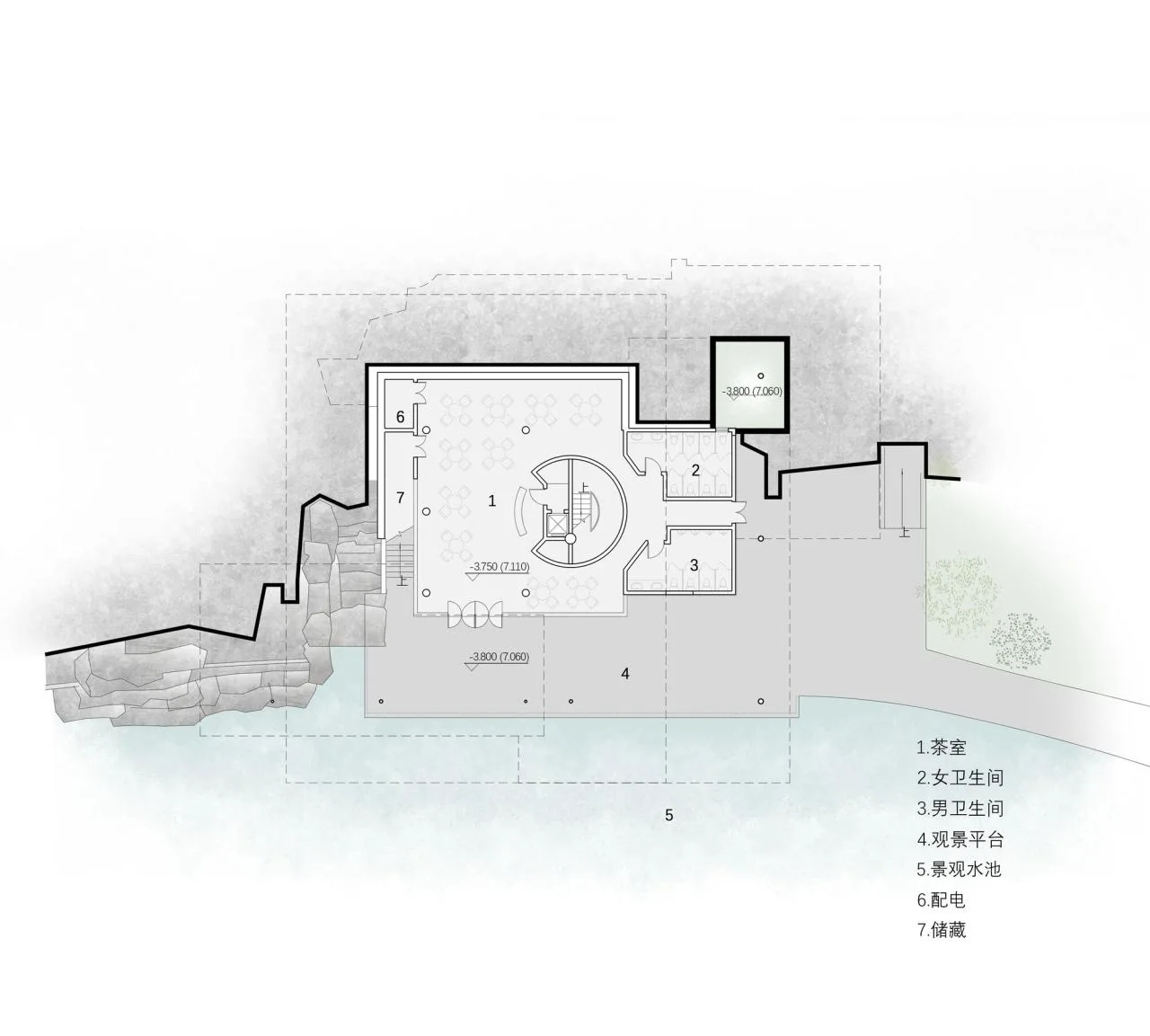
△ Underground floor plan
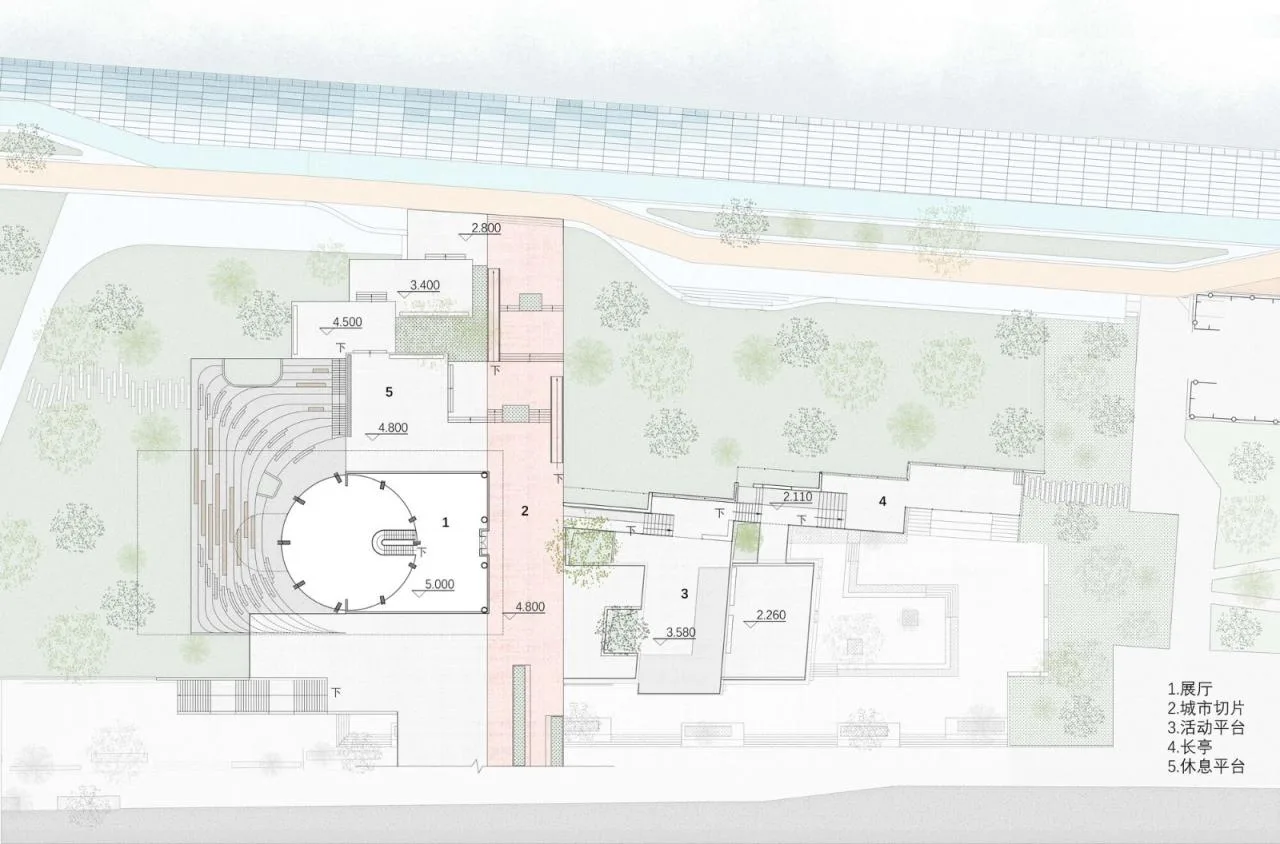
△ Second floor plan
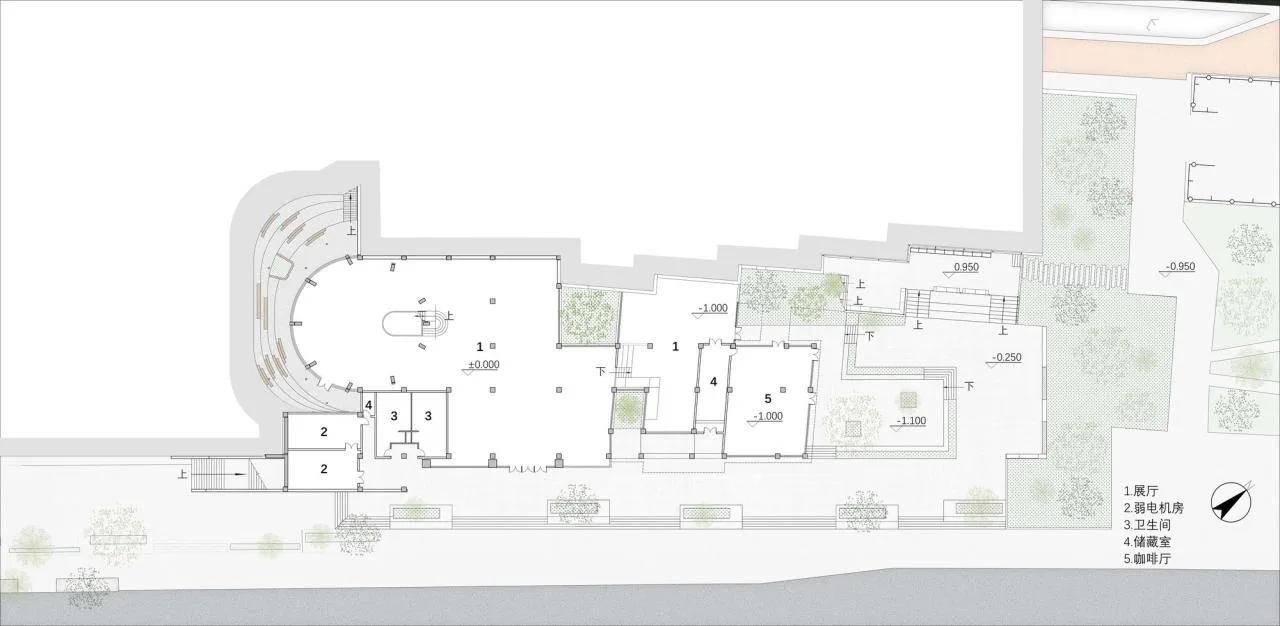
△ First floor plan
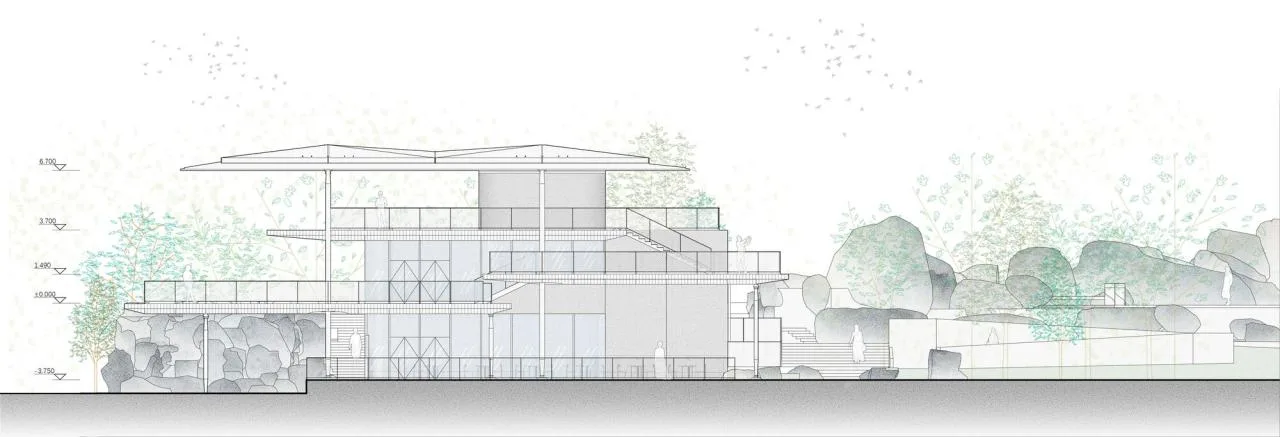
△ Elevation drawing
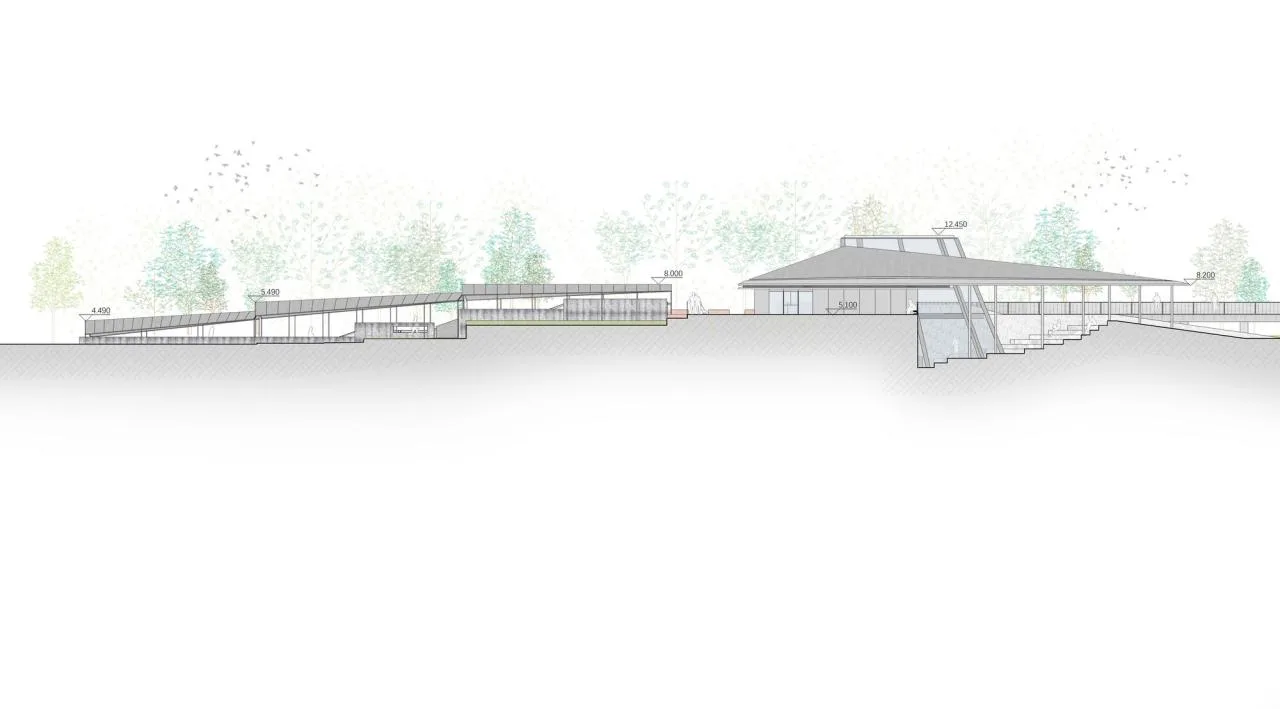
△ Elevation drawing
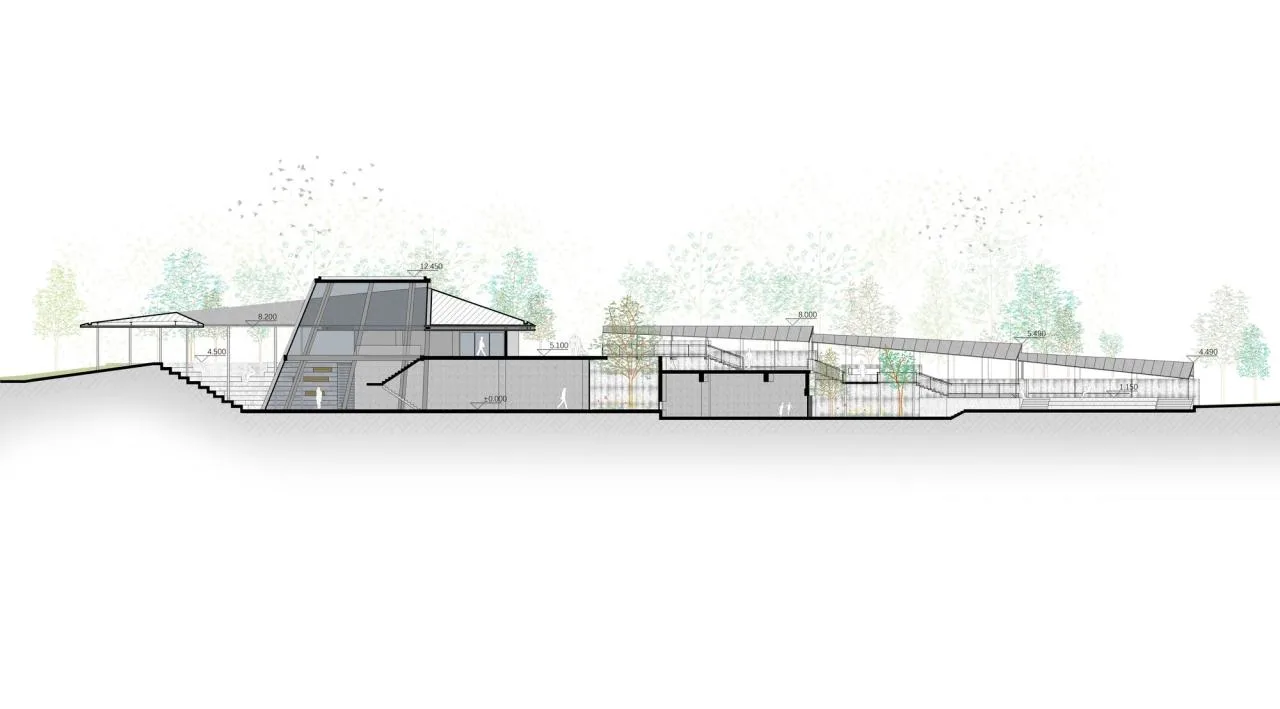
△ Section diagram
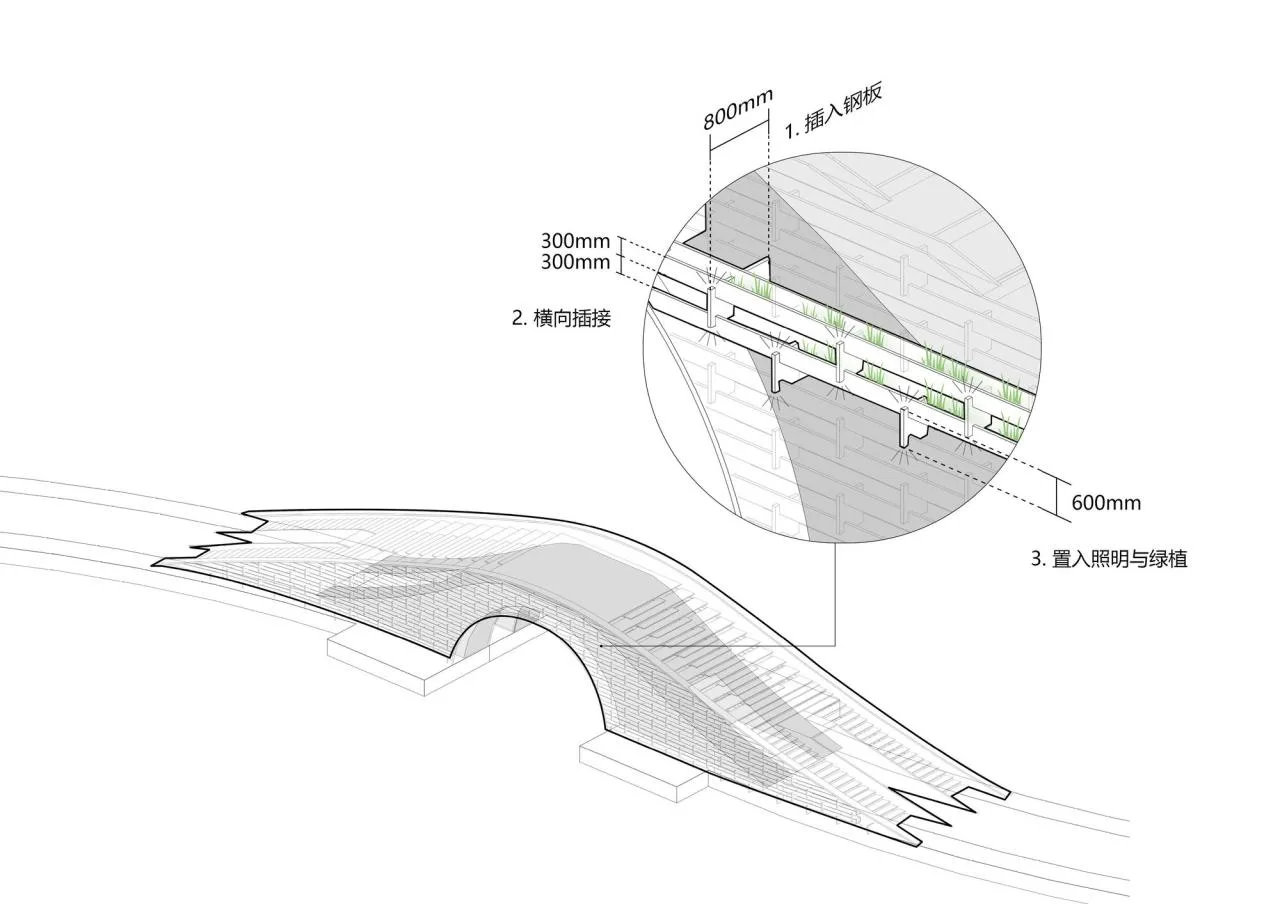
△ Detailed schematic diagram
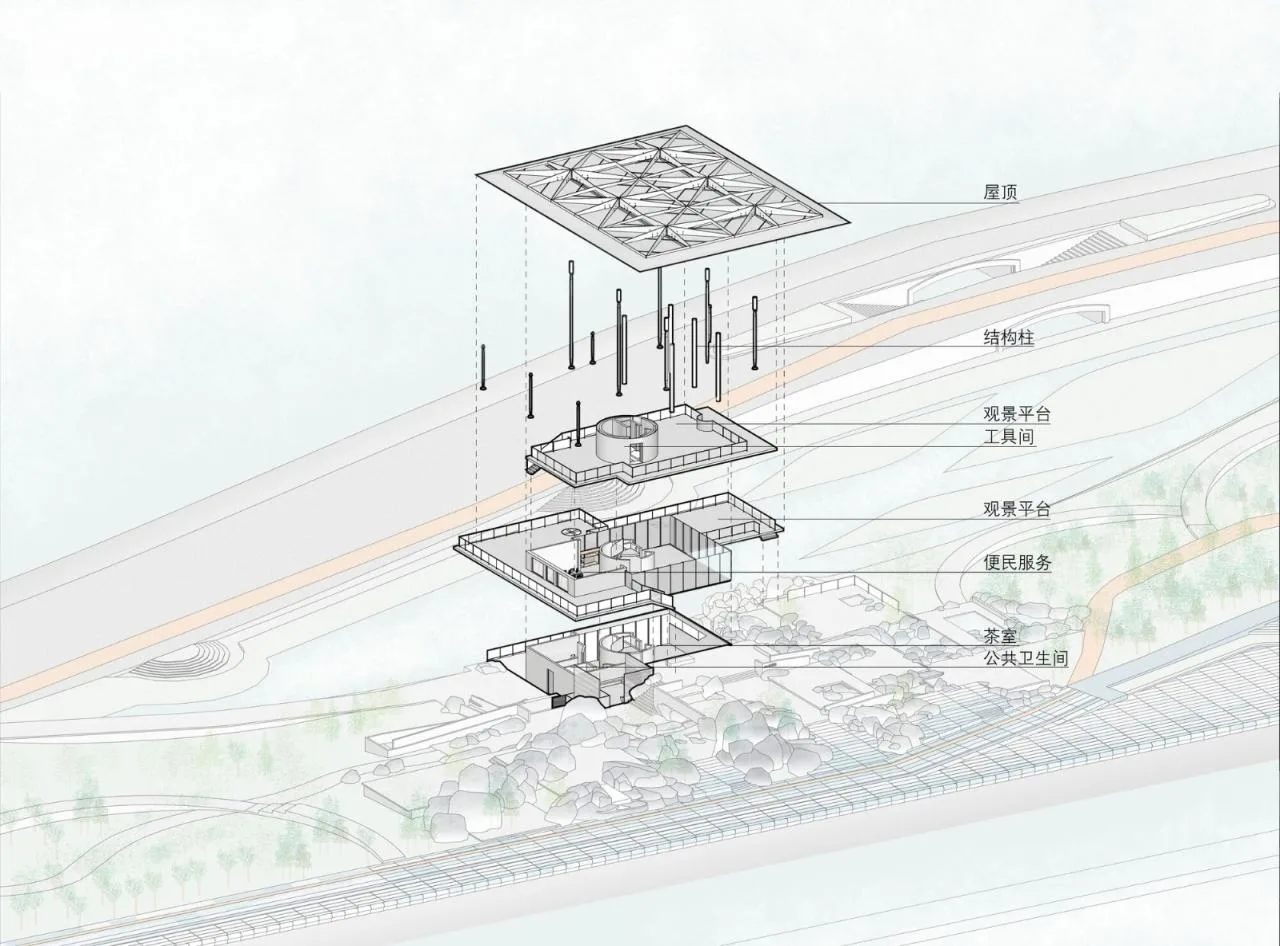
△ Exploded diagram
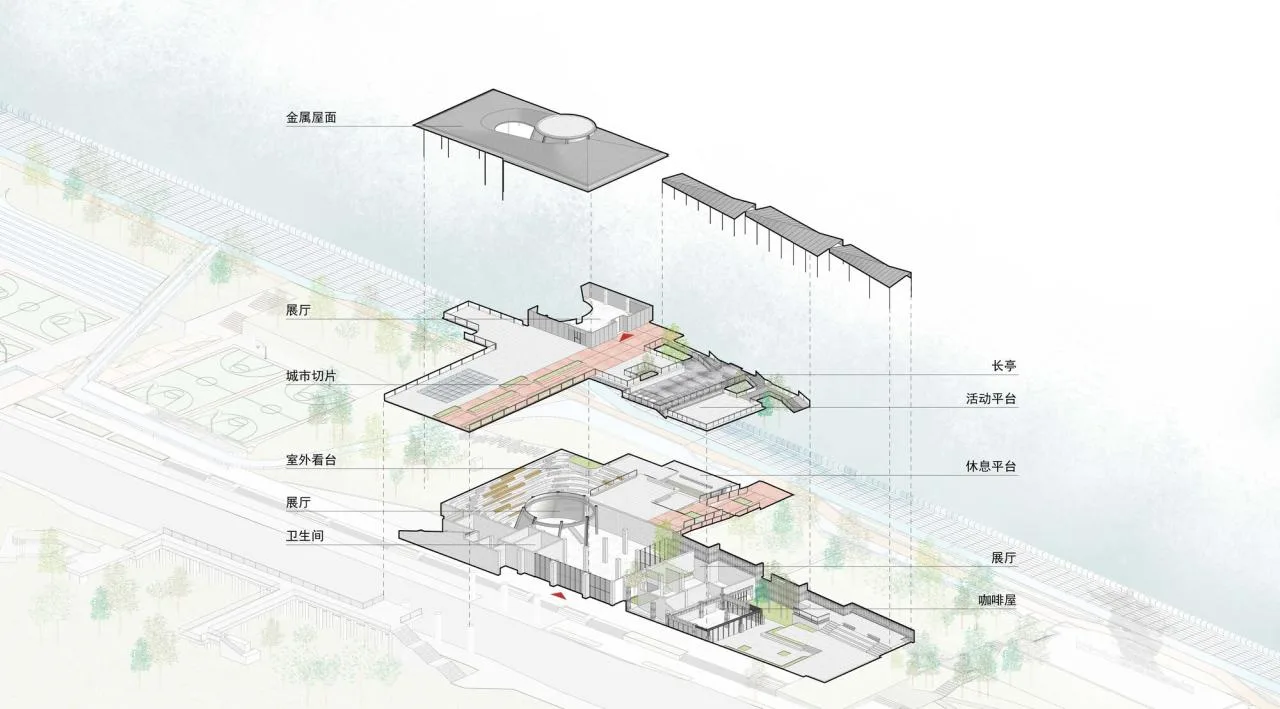
△ Exploded diagram
Project Information
Architect: Tongji Original Design Studio
Area: 1,646 m²
Project Year: 2023
Photography: Zhang Yong, Tongji Original Design Studio
Principal Architects (Jian Shi Yi): Zhang Ming, Zhang Zi, Chen Bo
BIM Design Team (Jian Shi Yi): Zhang Dongsheng, Sun Jialong, Wang Lingyu, Chen Jiang, Wang Minghui
Structural Design Team (Jian Shi Yi): Wu Honglei, Zheng Chaoyi, Huang Dejian, Chen Changjia
Equipment Design Team (Jian Shi Yi): Liu Jian, Jia Min, Zhang Sien, Wang Haidong, Zhang Lulu, Chen Hanqiu
Landscape Design Team (Jian Shi Yi): Li Xiubing, Zou Qian, Zhong Yong, Luo Jian, Su Jinghua
Lighting Design Team (Jian Shi Yi): Yang Xiu, Bian Chen, Li Di, Ma Yue
Technical and Economic Team (Jian Shi Yi): Pang Xiaolin, Zhou Lingjun, Zang Junlong, Chen Xinyun, Tong Zhou, Ge Yuwei, Zhang Chunxia, Cao Yexin
Green Building Team (Jian Shi Yi): Ren Guohui, Xue Fanghui, Zheng Xiaowei, Meng Fanlin
Collaboration and Coordination Team (Jian Shi Yi): Qin Anhua, Huang Jiayao, Zhou Kang, Ma Kai
Principal Architects (Ting Yun Yi): Zhang Ming, Zhang Zi, Chen Bo
Overall and Architectural Design Team: Zhang Xiaoya, Yao Guanjie, Long Ying, Zhao Shuang, Mou Xiaotong, Li Mengyao, Xie Chengying (Internship), Huang Heyunzi (Internship), Ding Junxing (Internship), Chen Ruiqi (Internship), Yang Junyang (Internship)
BIM Design Team: Zhang Dongsheng, Sun Jialong, Wang Lingyu, Yan Zifu
Structural Design Team: Wu Honglei, Zheng Chaoyi, Liu Bo, Lin Chen
Equipment Design Team: Liu Jian, Jia Min, Zhang Sien, Lv Zonghu, Wang Haidong, Shen Hangtao, Chen Hanqiu, Wu Yiqiong
Landscape Design Team: Li Xiubing, Zou Qian, Zhong Yong, Luo Jian, Su Jinghua, Liu Yuke
Lighting Design Team: Yang Xiu, Bian Chen, Wu Yang
Technical and Economic Team: Pang Xiaolin, Zhou Lingjun, Zang Junlong, Chen Xinyun, Tong Zhou, Ge Yuwei, Zhang Chunxia, Cao Yexin
Green Building Team: Ren Guohui, Xue Fanghui, Zheng Xiaowei, Meng Fanlin
Collaboration and Coordination Team: Qin Anhua, Huang Jiayao, Zhou Kang, Ma Kai
Supervision Unit: Hangzhou Tianheng Investment Construction Management Co., Ltd
Logo Design Unit: Yike Design
Construction Units: Hangzhou Binjiang Environmental Development Co., Ltd; Hangzhou Xiaohong Construction Environment Group Co., Ltd
Location: Hangzhou















Must log in before commenting!
Sign Up