
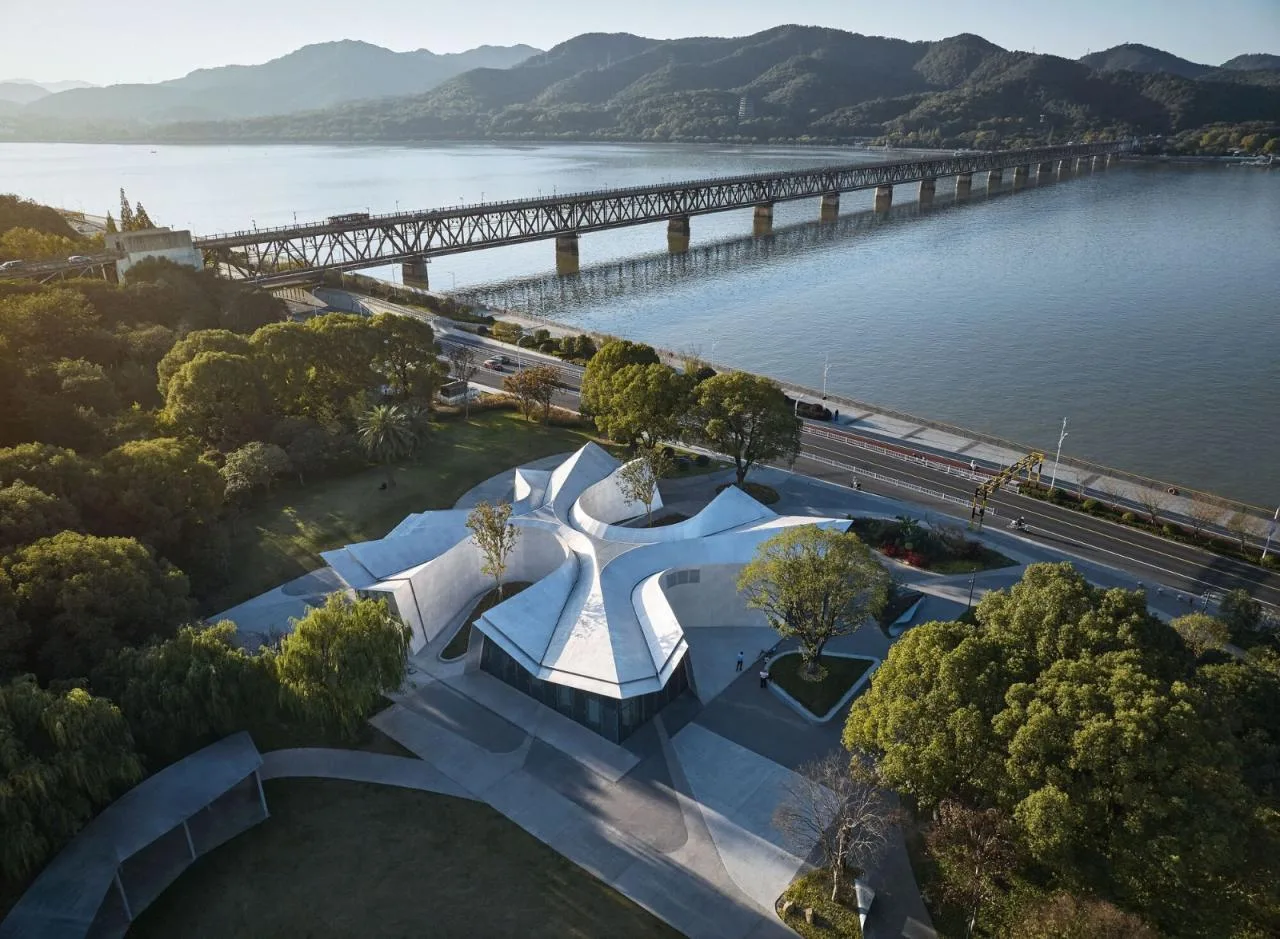
Situated on the southeast side of the Qiantang River Bridge and bordered by Wentao Road to the north, the 926 Craftsman Museum and its adjoining 926 Park offer stunning views of the river and bridge. This site is part of a 12-kilometer waterfront public space renovation and upgrade project led by Tongji University Architectural Design and Research Institute (Group) Co., Ltd. in collaboration with Original Design Studio, located in Hangzhou’s Binjiang District.
The Qiantang River Bridge, inaugurated on September 26, 1937, is a remarkable double-decker truss beam bridge that spans the river. Designed under the leadership of Mr. Mao Yisheng, a pioneering Chinese bridge engineer and founder of modern bridge engineering in China, it stands as the country’s first independently designed and built dual-use railway and highway bridge, marking a significant milestone in Chinese railway bridge history.
Honoring the spirit of craftsmanship, Hangzhou established September 26 as the first “926 Craftsman Day” in China in 2019, commemorating the bridge’s opening day. This initiative promotes the “Hangzhou Craftsman” brand, recognizing over 100 skilled talents annually for their exceptional craftsmanship and quality. The 926 Craftsman Museum was built on the southeast side of the Qiantang River Bridge to fill the gap of a dedicated museum celebrating craftsmanship in Hangzhou. It continues to enrich its offerings by selecting and showcasing local craftsmen.
Adjacent to the bridge, Yiqiao Park serves as a hub for residents’ daily activities, though its facilities have become outdated and its cultural content lacking. While the original management buildings now store miscellaneous items, the large recreational lawn still provides a clear visual corridor to the bridge. To minimize environmental impact, the new museum building is positioned within the original management area and the southern part of the square, preserving mature trees on the east side and forming a vibrant public square for residents.
The building’s site is part of the broader 12-kilometer waterfront renovation project in Binjiang District, separated from the river by Wentao Road. Guided by the principle of minimal intervention, the design aims to gradually transform the public space from isolated spots into a cohesive area that embodies the spirit of craftsmanship.
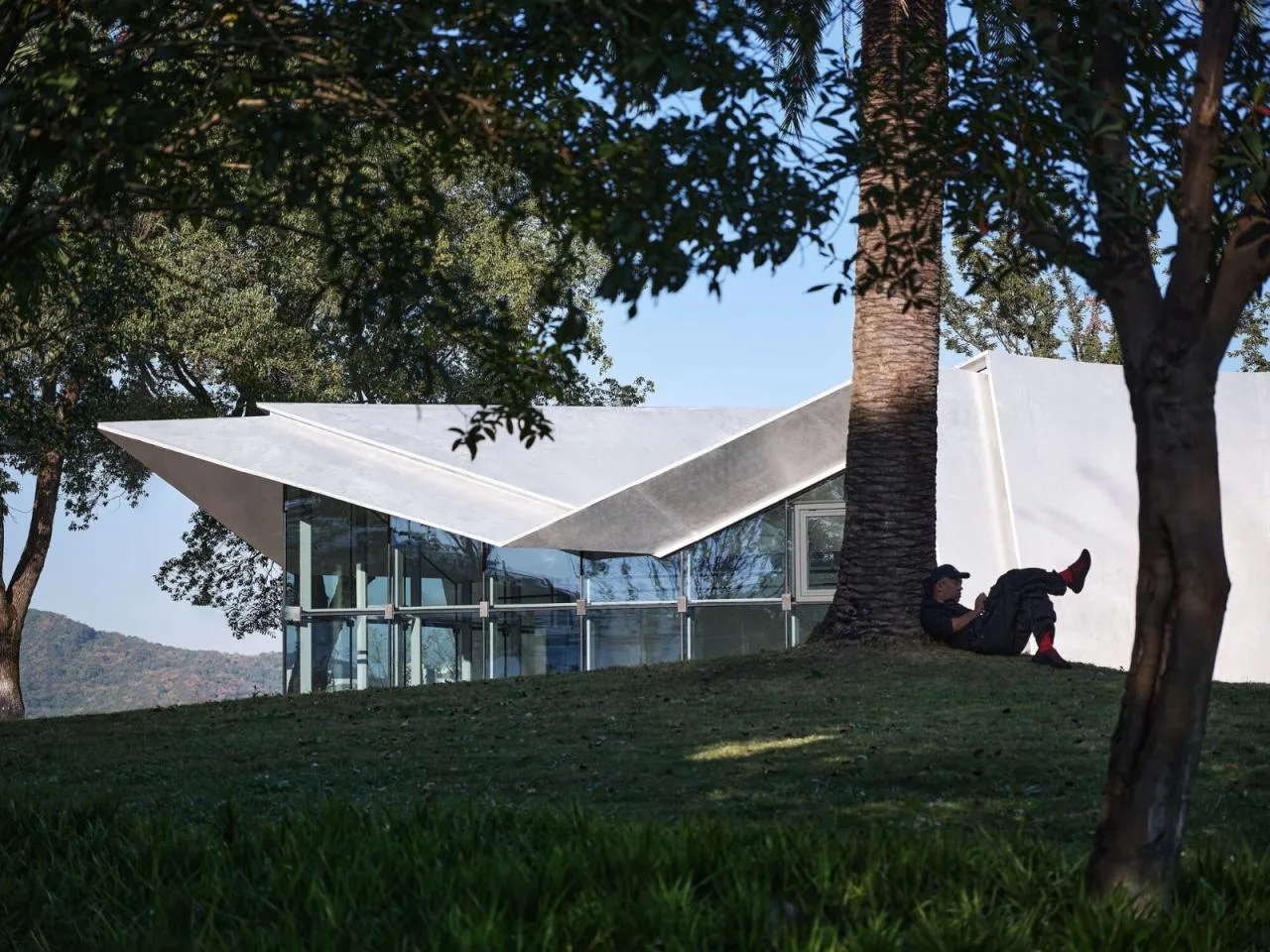
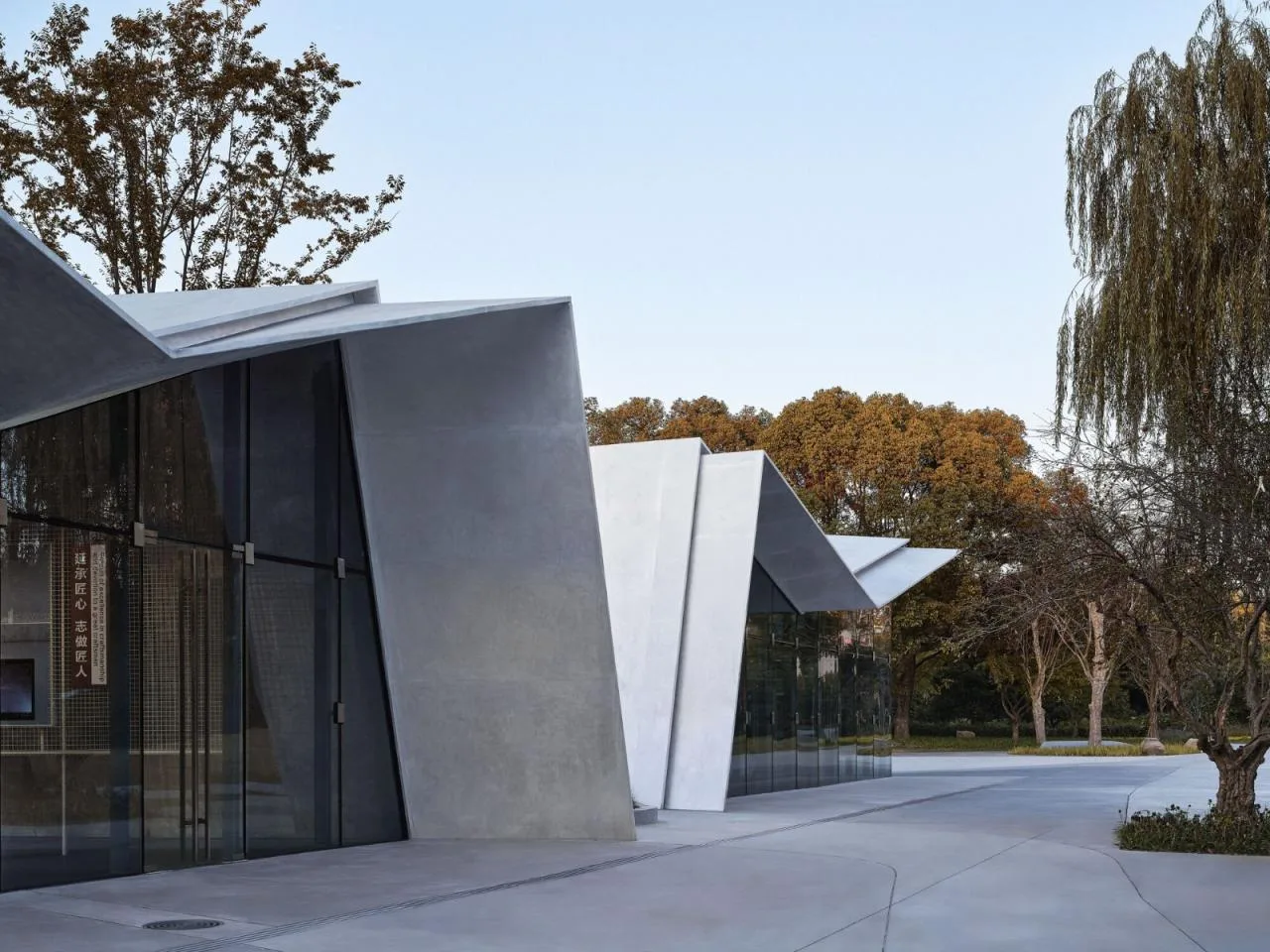
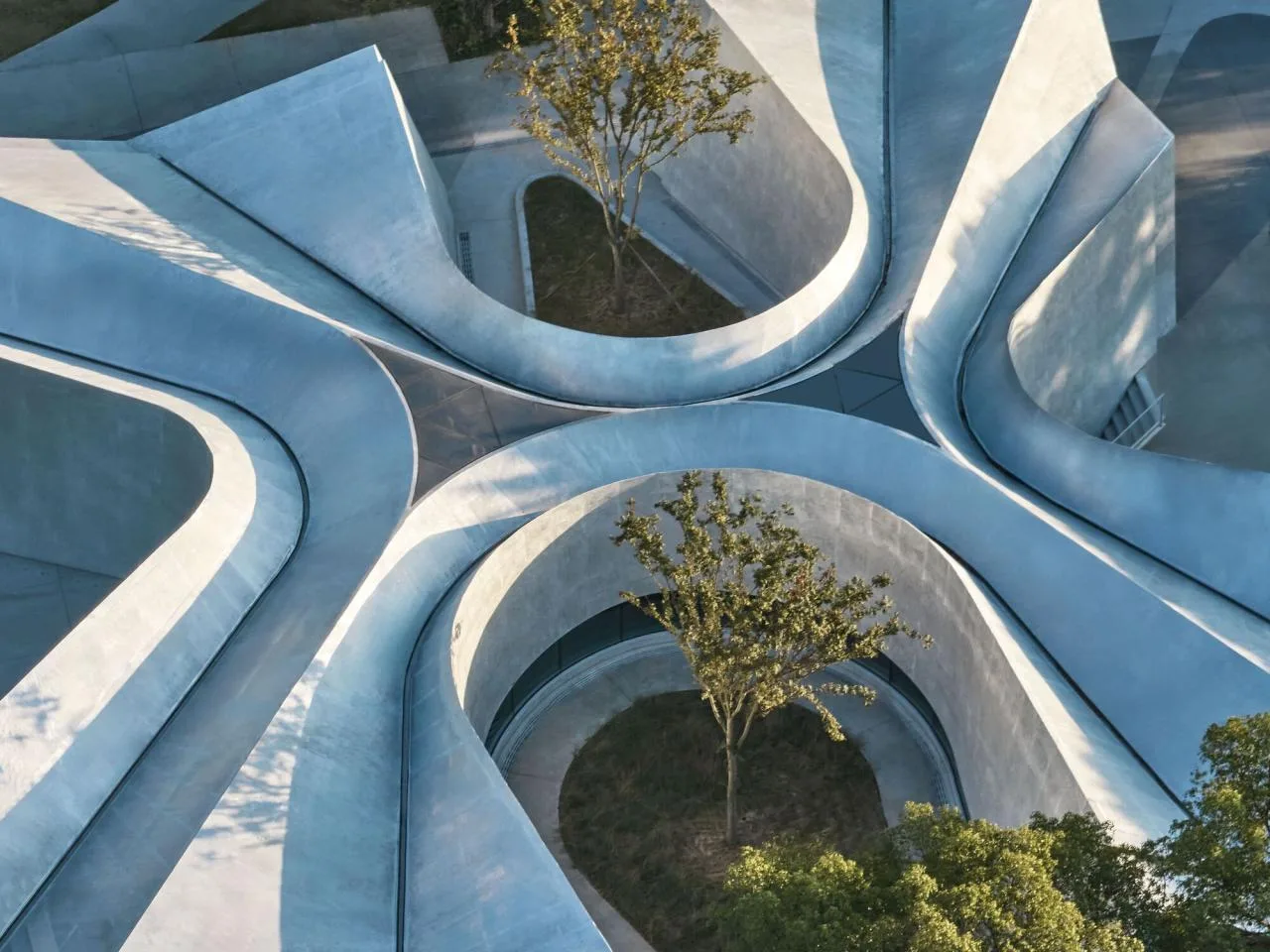
The modern design concept is inspired by the “craftsman’s hand,” shaping the roof ridge to point towards the Qiantang River Bridge on one side and the distant mountains on the other. The ground subtly incorporates the number “926,” reshaping the micro terrain and integrating drainage space, blending indoor and outdoor courtyard areas seamlessly.
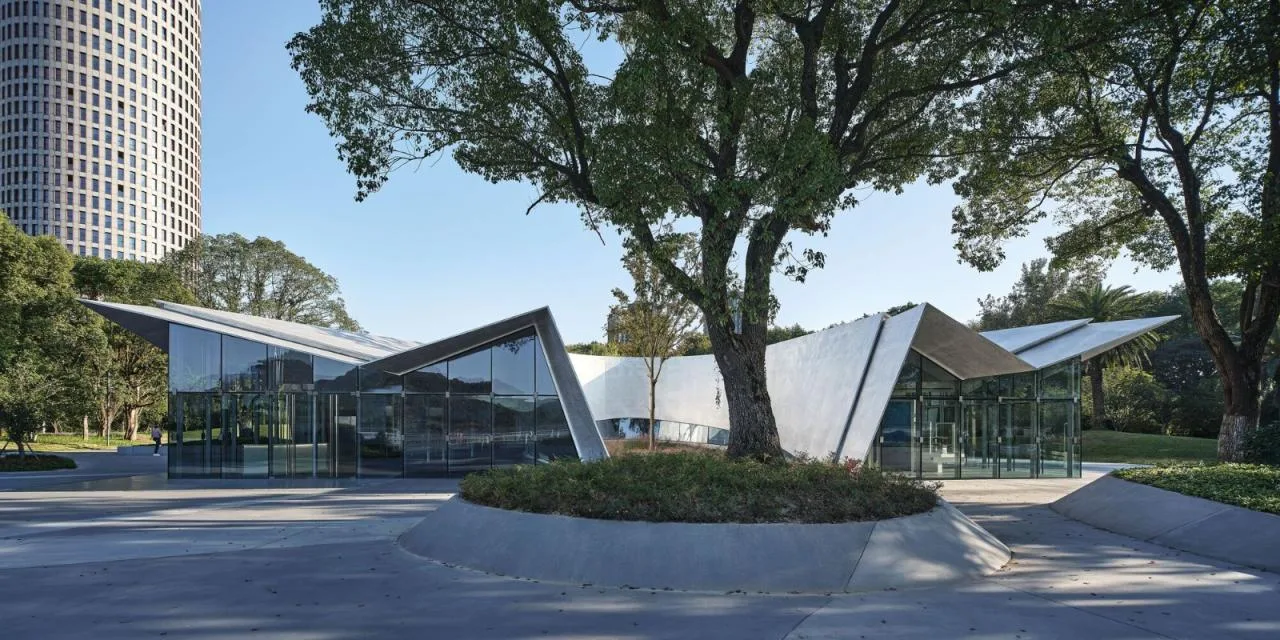
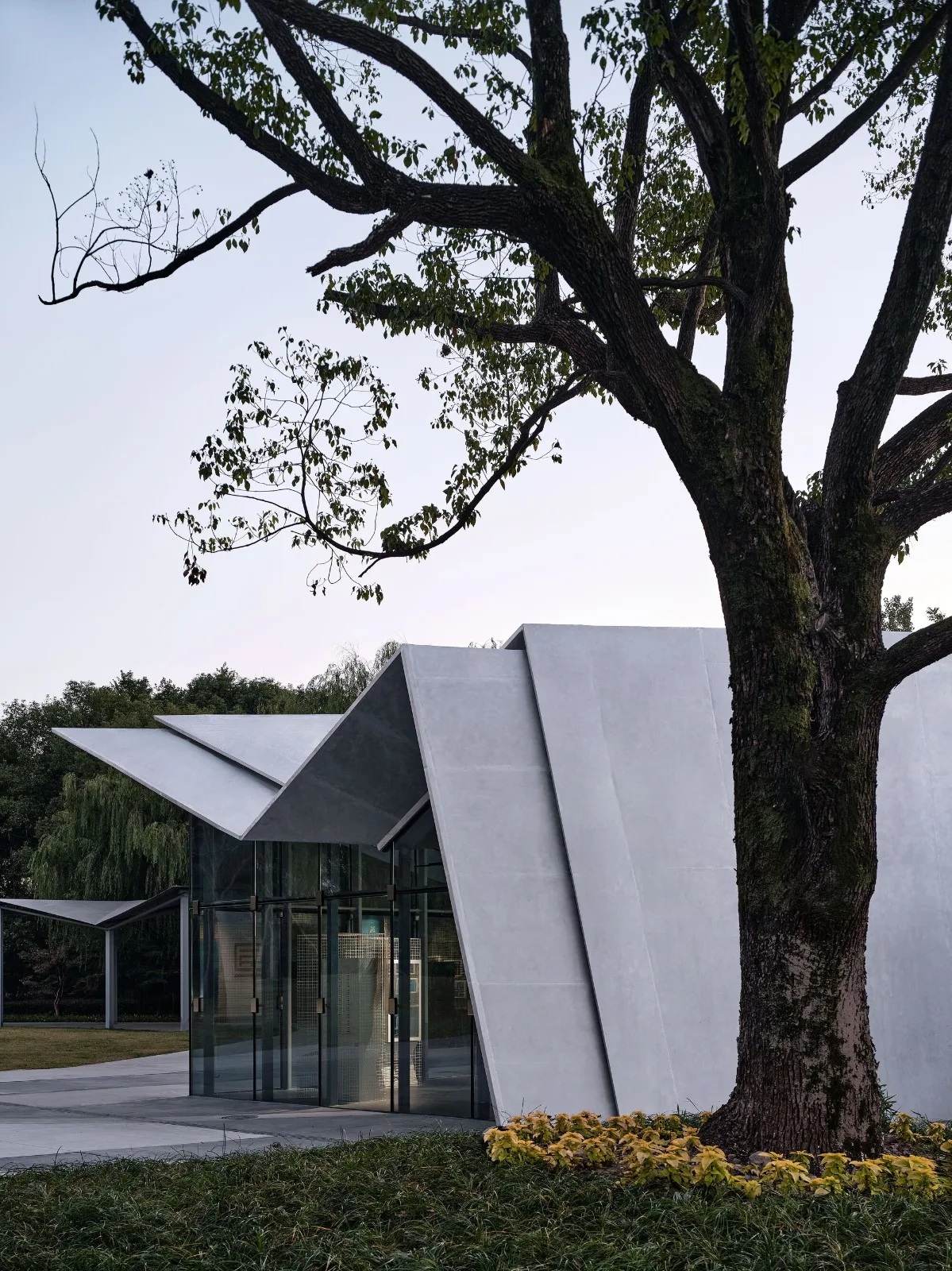
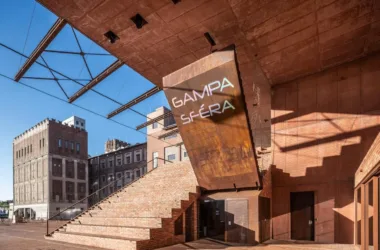
The exterior features double-layer, 6mm-thick anodized aluminum folded panels polished as a whole, produced using CNC technology and influenced by modern shipbuilding methods. The streamlined aluminum walls and roof merge into a fluid form that appears to float like silk along the riverbank. This design pays tribute to the spirit of modern craftsmanship and the historic Qiantang River Bridge, creating a spatial and temporal dialogue between craftsmen of different eras.
The roof’s wrinkled form rises at the eaves on the sides and slopes down to the ground in the center, enclosing the courtyard and interpreting traditional Jiangnan architectural styles in a contemporary way.
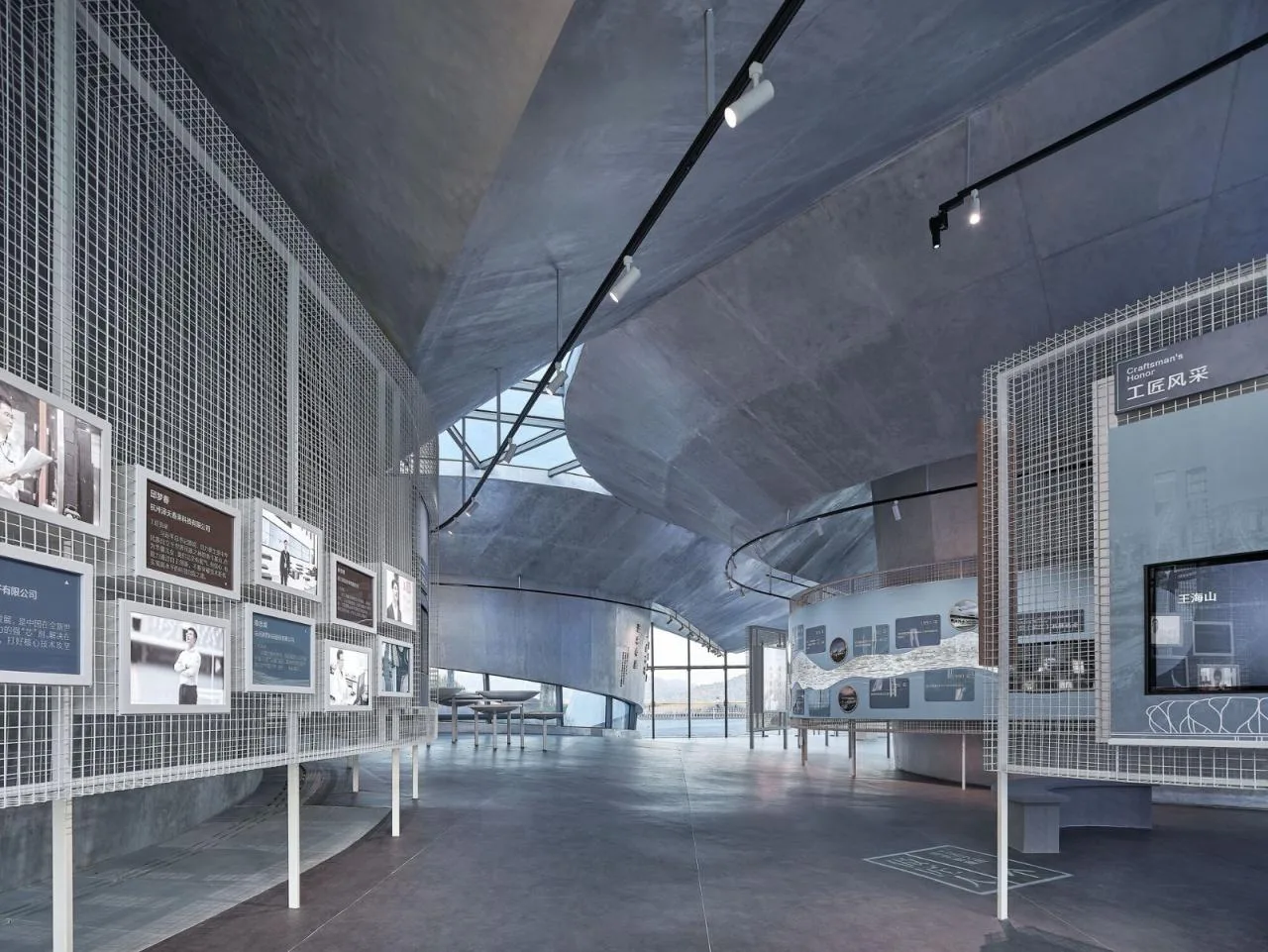
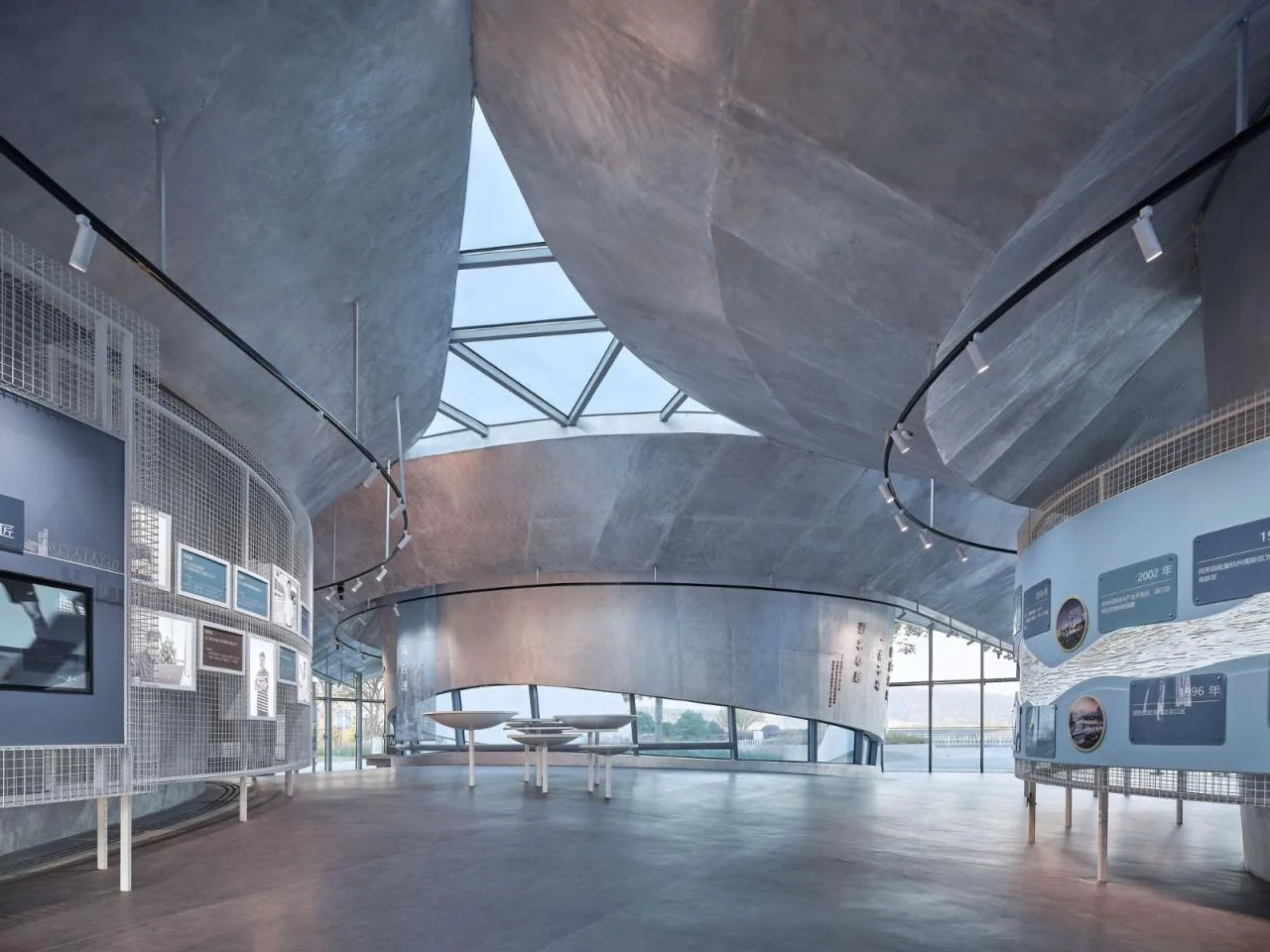
Supporting spaces such as postal services, offices, and equipment rooms are located underground, freeing the ground floor for exhibition space. Only air supply vents are visible at ground level, while the cavities between the double-layer facade accommodate necessary equipment pipelines. This creates a transparent, uncluttered exhibition environment.
The design shapes a rich spatial experience with the aluminum roof: the ridge features four windows facing different directions to frame diverse urban views, while crescent-shaped windows in the courtyard walls rise and fall with the terrain, offering dynamic views of the courtyard and seasonal changes. Additionally, two triangular skylights on the roof serve as visual focal points, bringing shifting patterns of light and shadow into the interior.
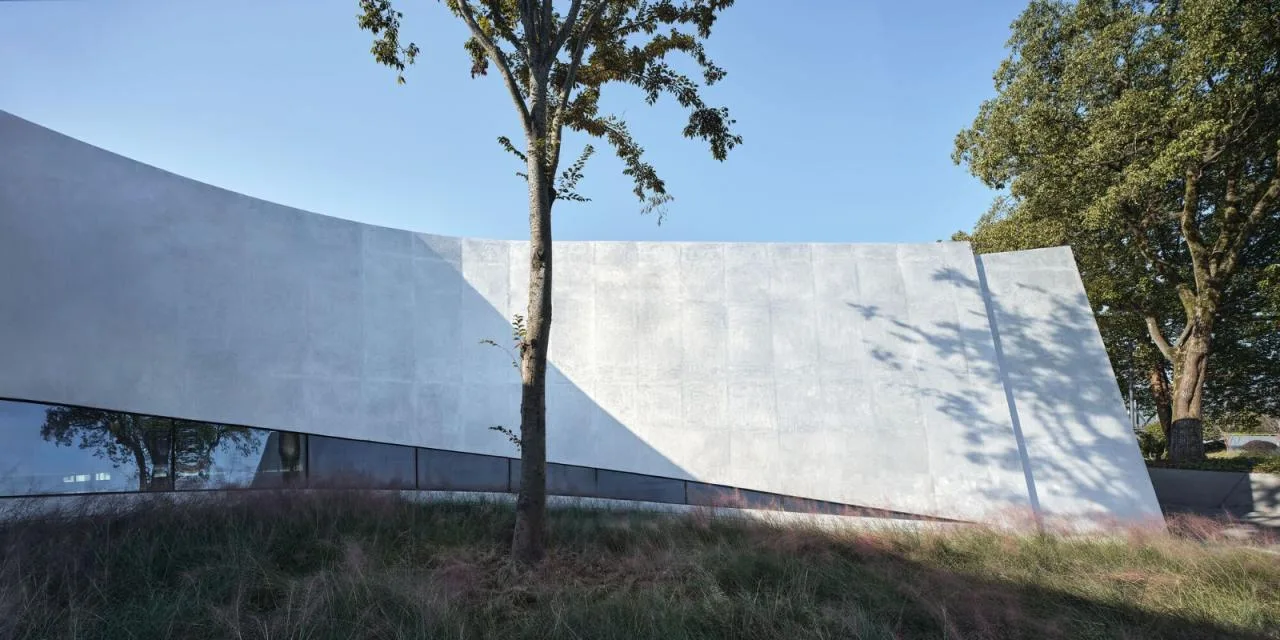
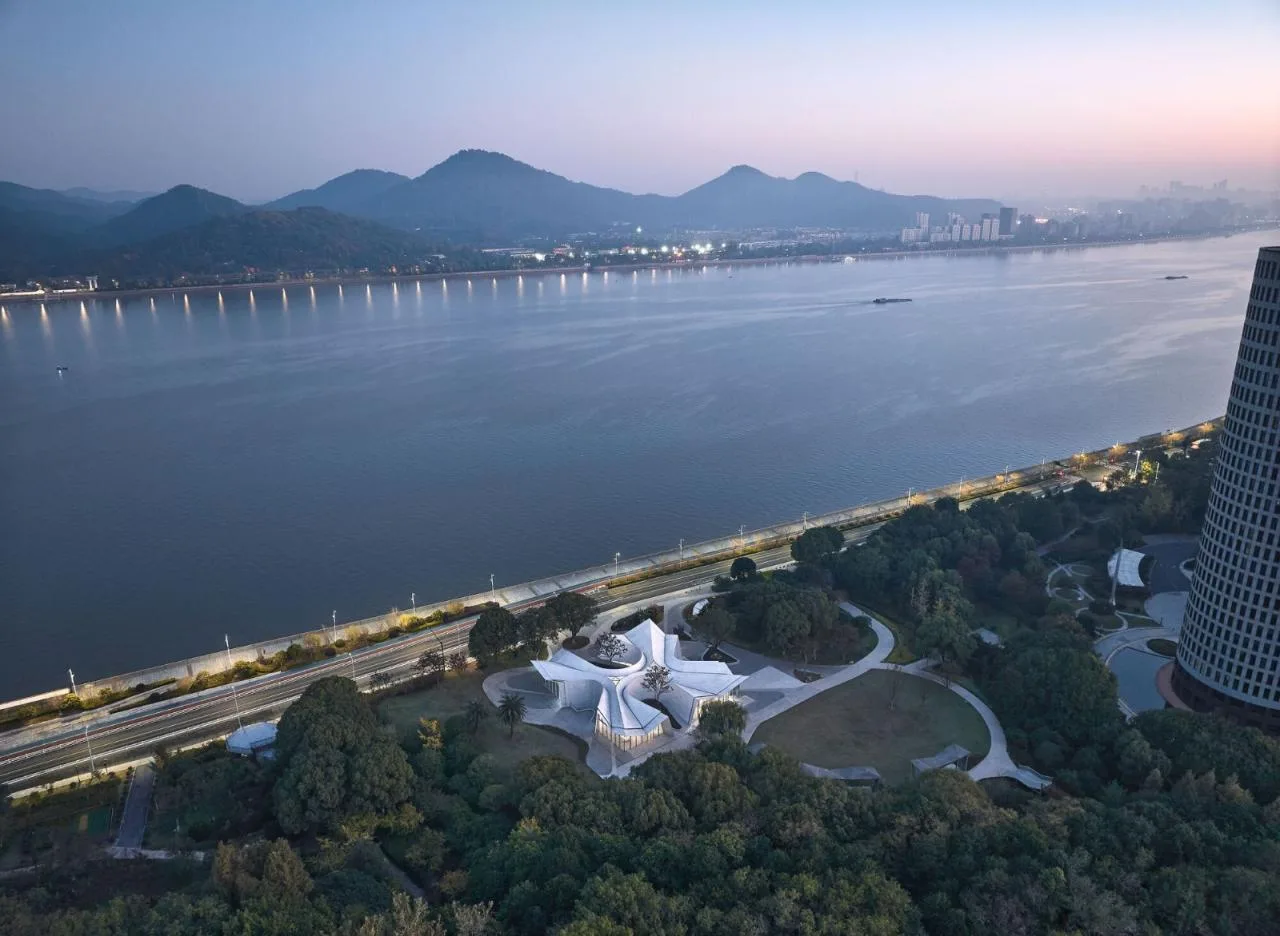
The building measures approximately 35 by 35 meters, covering about 1100 square meters. Its large-span roof is supported by a steel truss system attached to the aluminum panels. Steel columns are only placed at the outermost edges, creating a transparent, column-free interior.
To maintain a lightweight and transparent facade, the curtain wall uses densely arranged slim steel columns spaced 1.5 meters apart. These structural columns have minimal cross-sections (80x160mm or 100x150mm), with steel tie rods only 50mm in diameter between them, ensuring maximum transparency.
This lightweight construction allows fluid spatial experiences, blending architecture and nature poetically. The clean, concise form highlights the craftsmanship of the building’s shell and embodies the spirit of craftsmanship itself.
Project drawings
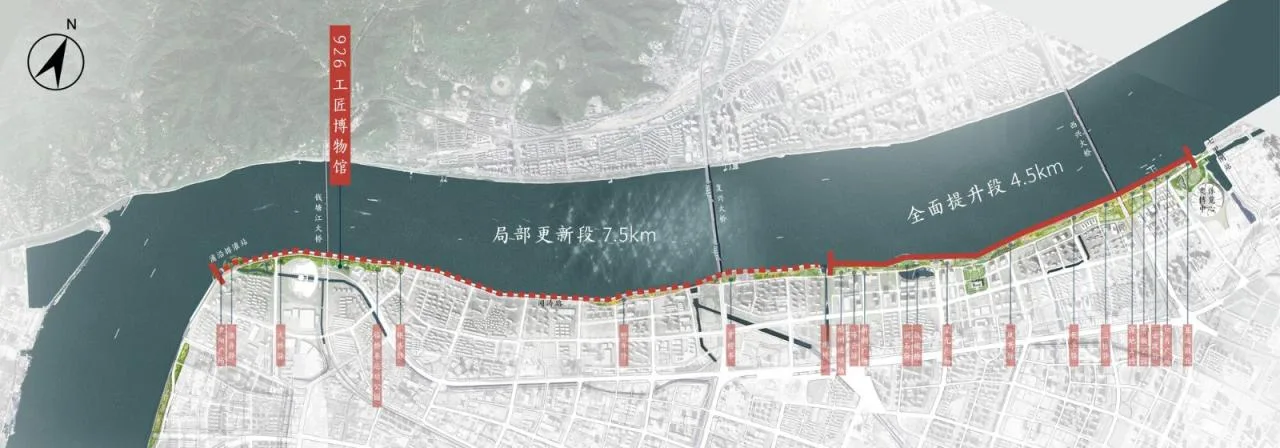
△ Location map
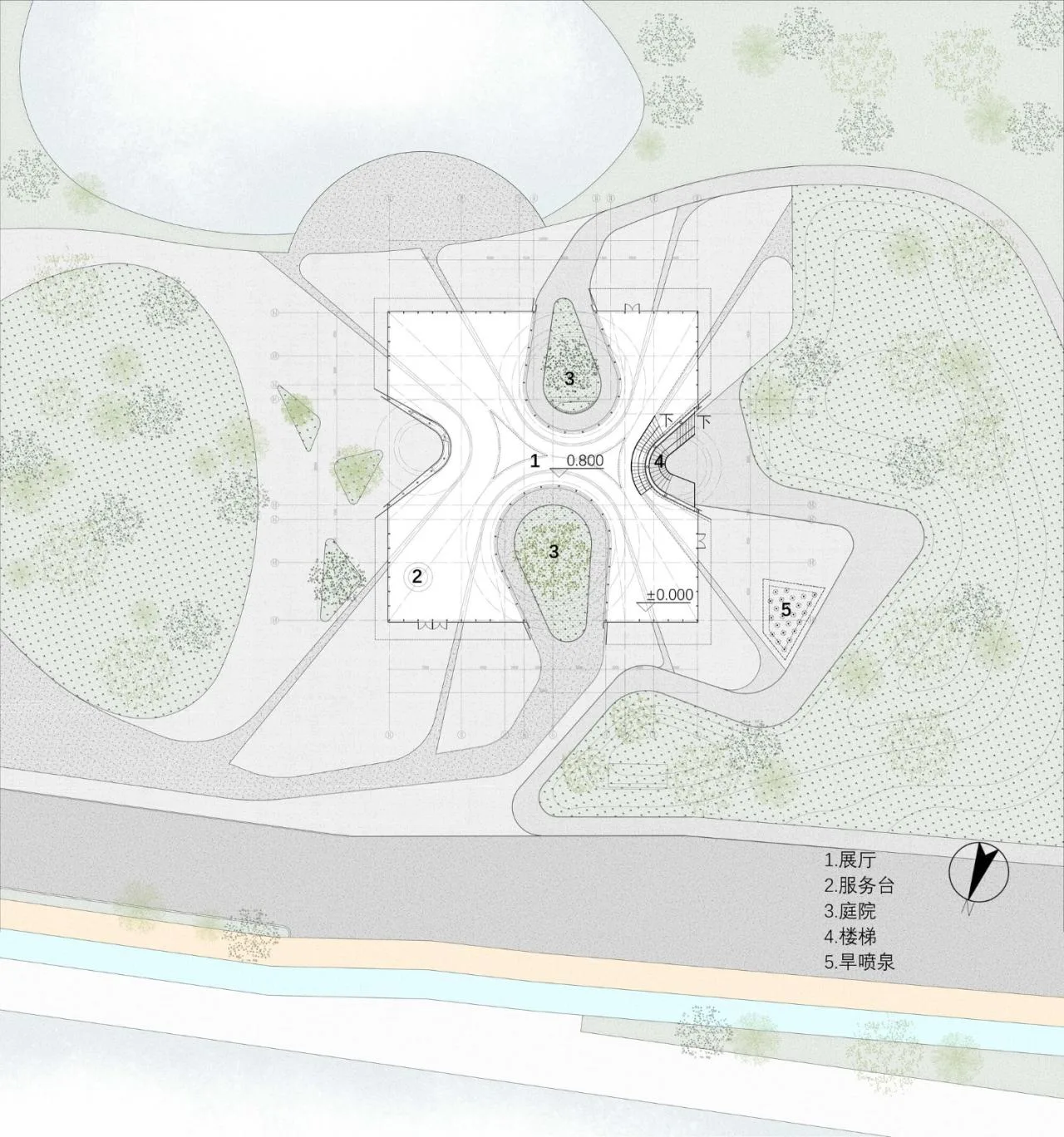
△ Floor plan
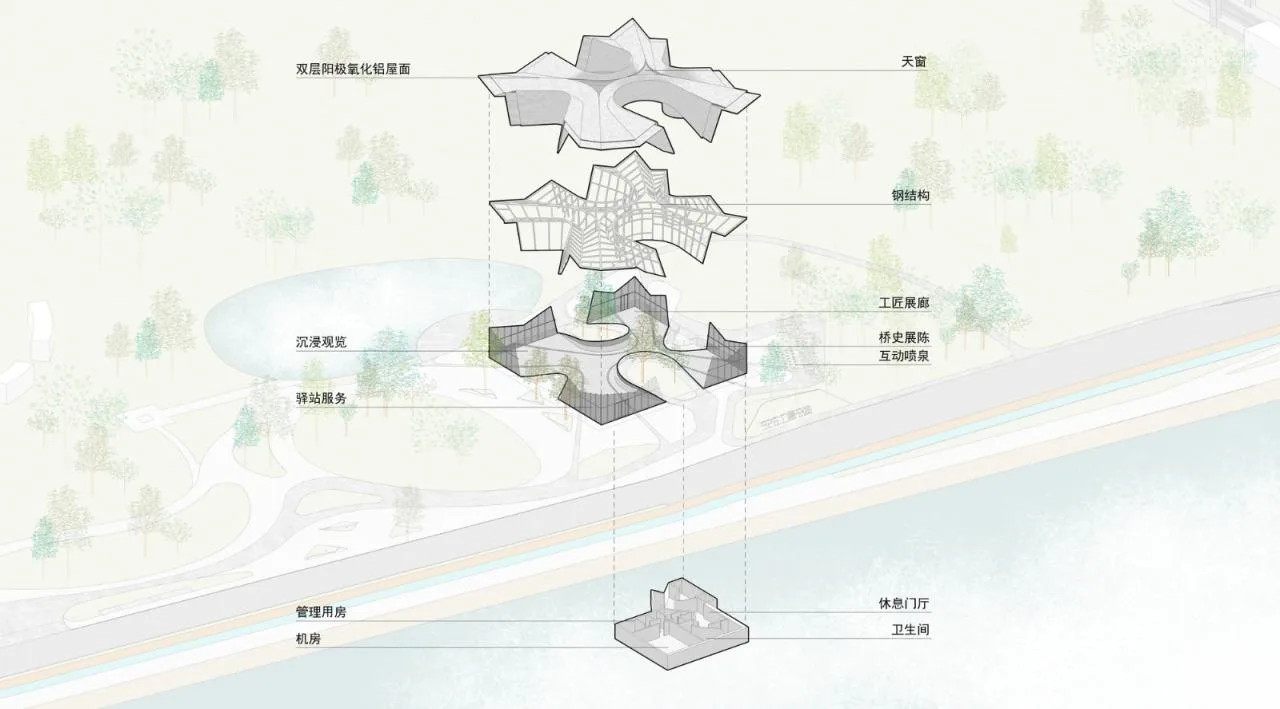
△ Exploded axonometric view
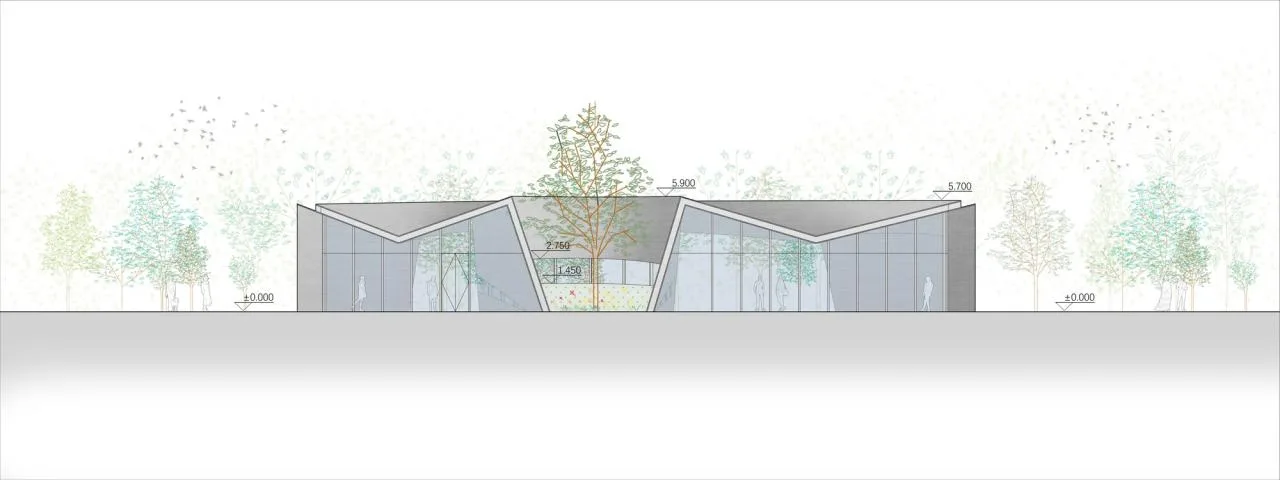
△ Elevation view
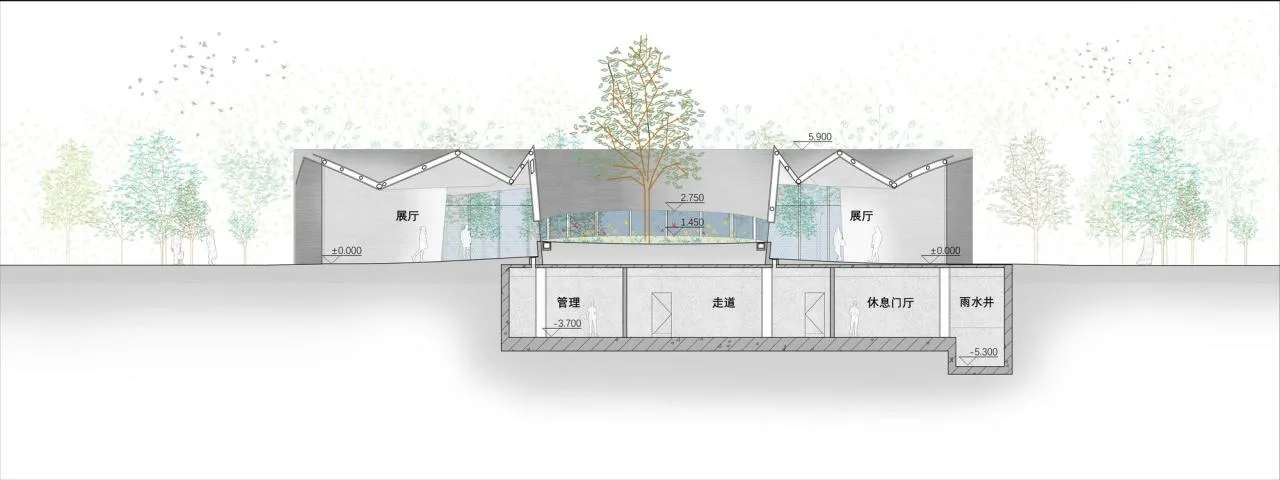
△ Section view
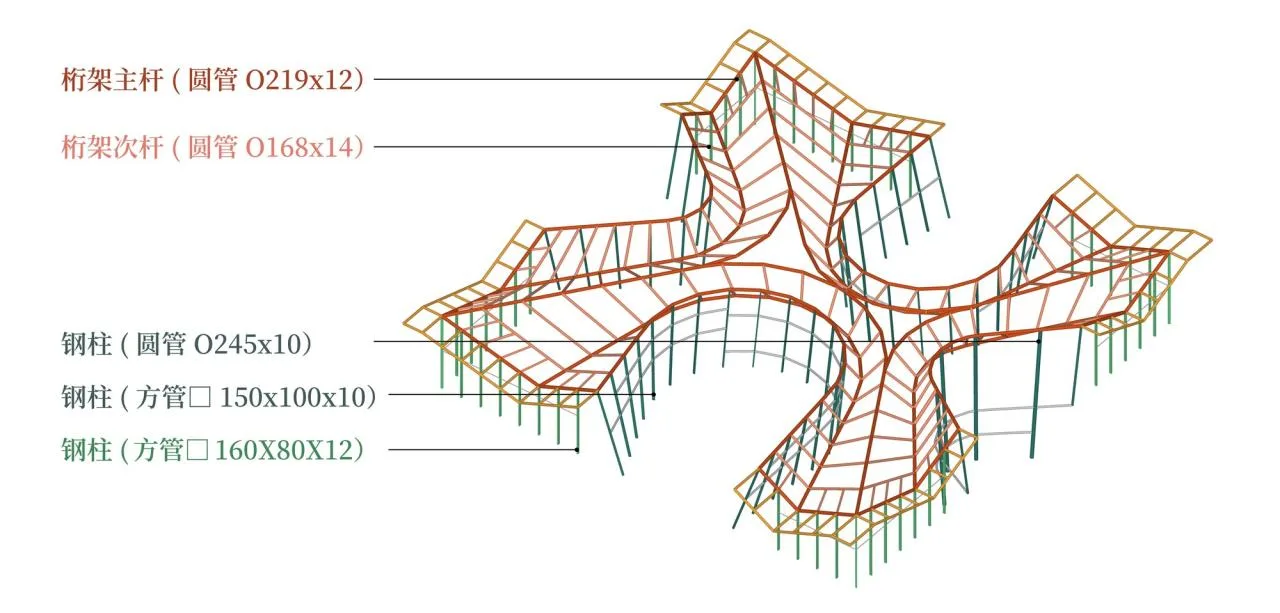
△ Structural diagram
Project Information
Architect: Tongji Original Design Studio
Area: 1148 m²
Project Year: 2023
Photographer: Zhang Yong
Lead Architects: Zhang Ming, Zhang Zi, Chen Bo
Overall & Architectural Design Team: Zhang Xiaoya, Yao Guanjie, Feng Yuqing, Long Ying, Zhao Shuang, Mou Xiaotong, Sun Jialong, Li Mengyao (Intern), Che Yingxue (Intern), Dong Bo (Intern)
Structural Design Team: Wu Honglei, Zheng Chaoyi, Lin Chen, Yan Jiayi
Equipment Design Team: Liu Jian, Jia Min, Zhang Sien, Lv Zonghu, Wang Haidong, Zhang Yujie, Li Yujie, Cai Ting
Landscape Design Team: Li Xiubing, Zhong Yong, Luo Jian, Su Jinghua
Lighting Design Team: Yang Xiu, Bian Chen, Du Yiting, Li Binhao
Technical & Economic Team: Pang Xiaolin, Zhou Lingjun, Zang Junlong, Chen Xinyun, Tong Zhou, Ge Yuwei, Zhang Chunxia, Cao Yexin
Green Building Team: Ren Guohui, Xue Fanghui, Zheng Xiaowei, Meng Fanlin
Collaborative Coordination Team: Qin Anhua, Huang Jiayao, Zhou Kang, Ma Kai
Collaboration & Coordination Unit: Zhejiang Institute of Technology Architectural Design and Research Co., Ltd
Supervision Unit: Hangzhou Tianheng Investment Construction Management Co., Ltd
Construction Unit: Hangzhou Binjiang Environmental Development Co., Ltd
Design Unit: Tongji Original Design Studio
Construction Unit: Hangzhou Xiaohong Construction Environment Group Co., Ltd
Logo Design Unit: Yike Design
Location: Hangzhou















Must log in before commenting!
Sign Up