
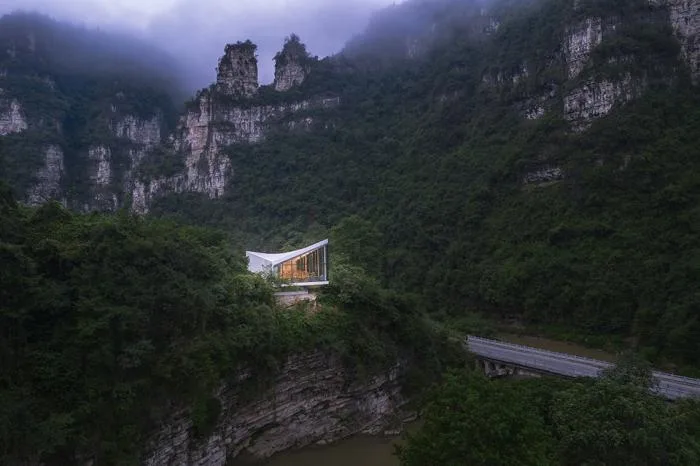
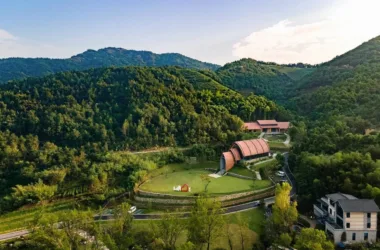
△ Aerial view
Background and Venue: A Unique Location Within an Abandoned Military Factory
The 809 factory is situated in Xialaoxi, a suburb of Yichang, Hubei Province, China, approximately a 30-minute drive from the city center. Originally a third-line military factory, it gradually ceased operations and was abandoned in the 1990s. Covering around 3 hectares with a total construction area of approximately 13,000 square meters, the project aims to transform and repurpose this abandoned industrial site. The goal is to preserve and showcase the original character of the buildings while introducing new functions to revitalize the space and integrate it into contemporary life.
The factory complex is divided into two main sections: the hotel area and the entertainment support area. The hotel section includes a lobby, art exhibition hall, four guest rooms, and a Western-style restaurant. The entertainment section features a reception center, Chinese restaurant, book bar, time hall, parent-child activity center, and the newly constructed Cliff Top Tea Bar. Due to its unique location and lightweight design, the Cliff Top Tea Bar has become one of the most striking buildings within the complex.
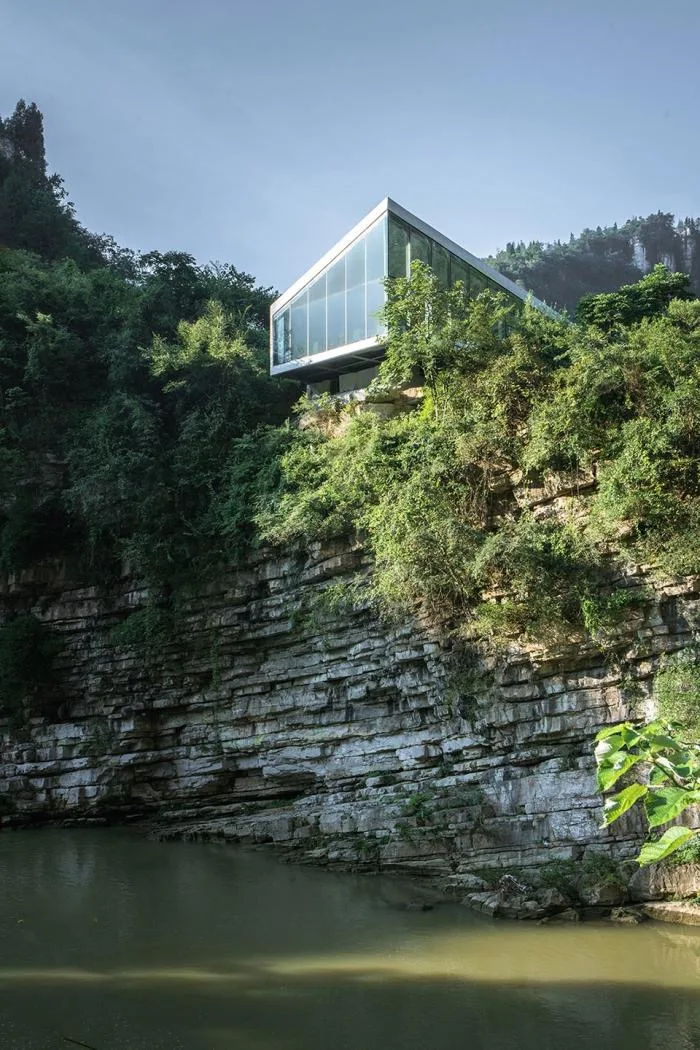
View of the buildings from across the river
The Cliff Top Tea Bar is perched on the southwest slope of the 809 factory site. On one side, a gentle slope connects it to the hotel buildings, while on the other side, erosion from the river has carved a steep cliff characteristic of karst landscapes. This natural environment is exceptionally scenic. From the cliff’s edge looking west toward the upper reaches of the Xialao River, visitors enjoy breathtaking views—one of the rare “stunning spots” on the site. At the cliff’s base, the stream, rocky cliffs, and mountaintop vegetation create a harmonious and picturesque scene.
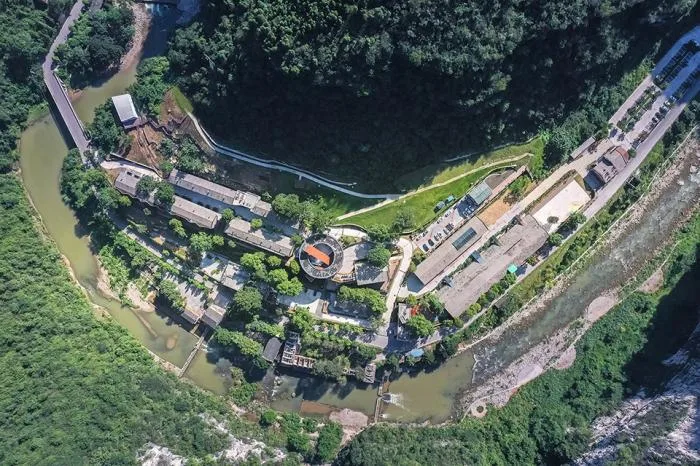
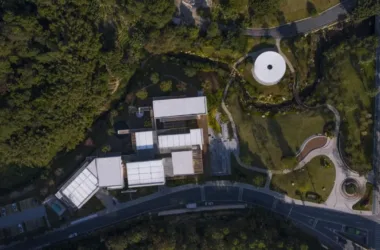
△ Overall park plan: aerial view
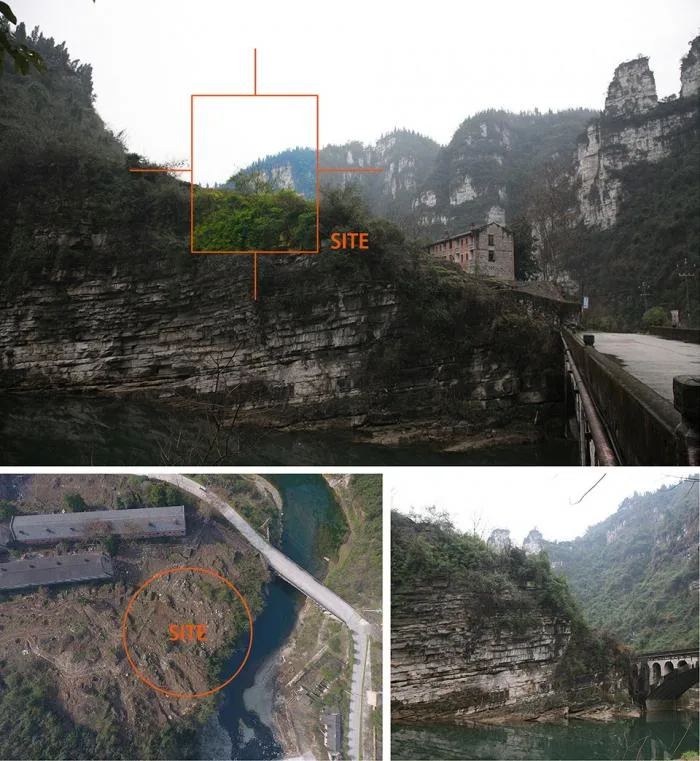
△ Original appearance of the site
The site is located midway up the mountain, at the terminus of the activity flow within the factory area, offering strong privacy. Access from the guest rooms requires ascending a mountain road, adding an element of mystery to the experience. Selecting the precise building location involved positioning it as close as possible to the cliff edge for optimal views while ensuring safety—posing a significant challenge for design and construction teams.
After thorough disaster assessment and geological surveys, the building was set back 3 meters from the cliff edge after removing surface soil. It rests on a solid limestone foundation with excellent load-bearing capacity. This positioning maximizes landscape views while guaranteeing structural safety.
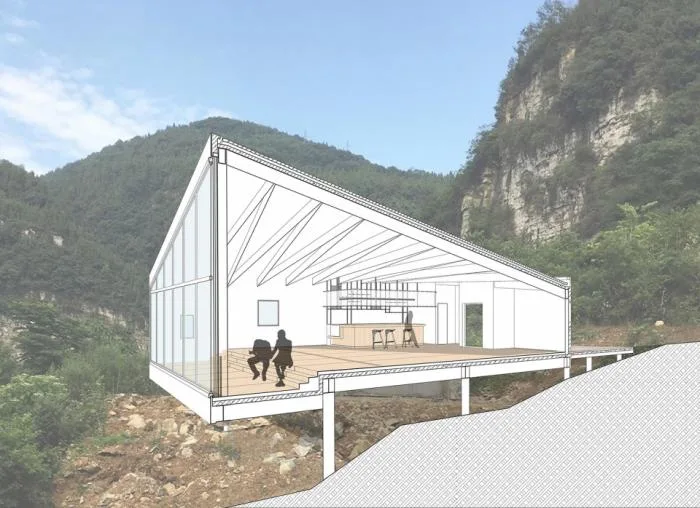
△ Sectional perspective
Architectural Design: Lightweight and Dynamic
In 2016, the owner envisioned creating 50 “eye-catching photo spots” throughout the factory area, with the Cliff Top Tea Bar as the top priority. The design team aimed to transform the factory’s previously dull atmosphere by introducing cliffside buildings that would invigorate the site.
Functionally, the building serves as a leisure tea bar, offering visitors a place to relax, enjoy tea, and take in the views. It is designed as a relatively private and secluded space within the factory complex, taking full advantage of the site’s exceptional natural environment and scenic vistas, thus providing a refined and tasteful living experience.
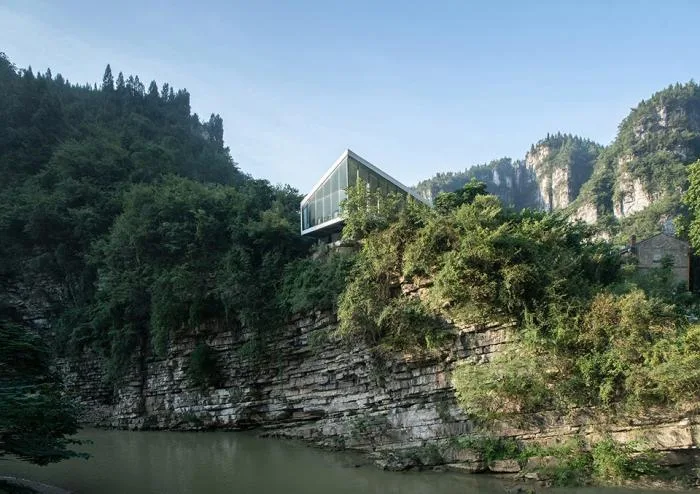
View of the buildings from across the river
The design concept balances two pairs of variables: “complexity and simplicity” and “lightness and heaviness.” The building’s volume starts as a simple rectangular prism, oriented with its long side perpendicular to the cliff edge and extending about 3 meters outward. The cube’s base is supported by steel columns, creating a visual effect of it floating above the cliff.
To enhance the landscape experience from the building’s four viewing faces, the design team raised the heights of the southwest and northeast corners and lowered the northwest and southeast corners of the roof. This transforms the four rectangular facades into four trapezoidal ones—with larger west and south sides and smaller east and north sides—creating a twisted roof surface. This dynamic form enlivens the originally simple block, achieving a harmonious balance between simplicity in design and complexity in visual impact, complementing the surrounding environment.
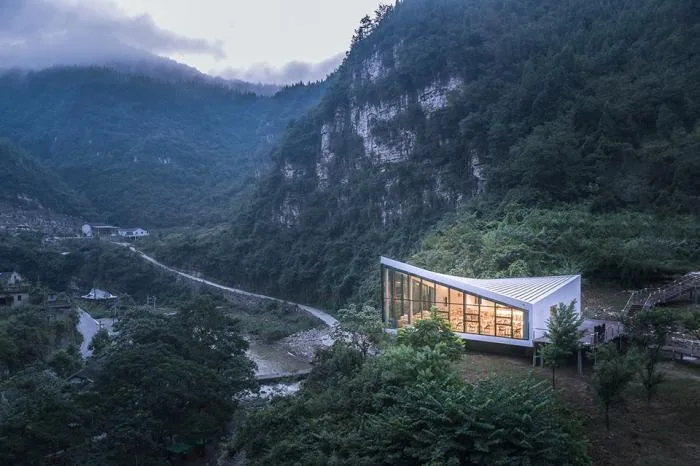
Twisted roof
To express the building’s “lightness” in its environment, the exterior is clad in glass and white aluminum panels. The east and north facades and the roof are covered with white aluminum panels, visually enveloping the structure. The west and south facades feature expansive glass curtain walls, providing uninterrupted views from inside.
The entire building is supported by eight steel columns, with large overhangs on the west and south sides. Shrubs planted at the base enhance the floating effect. The lighting design emphasizes transparency, with light sources concealed behind perforated aluminum panels, creating distinctive nighttime patterns.
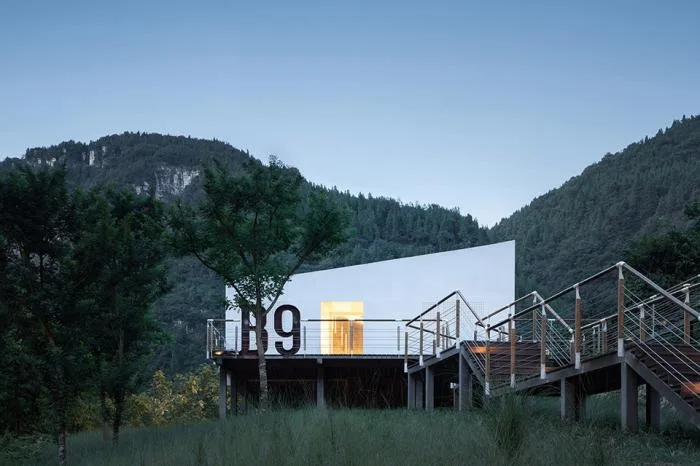
△ Entrance perspective
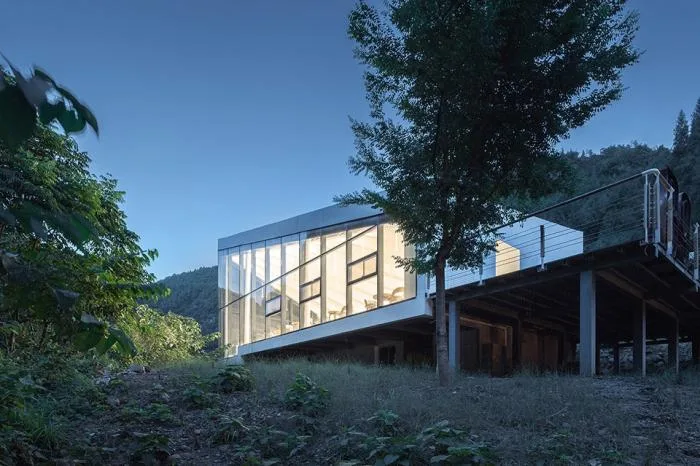
View from the hillside
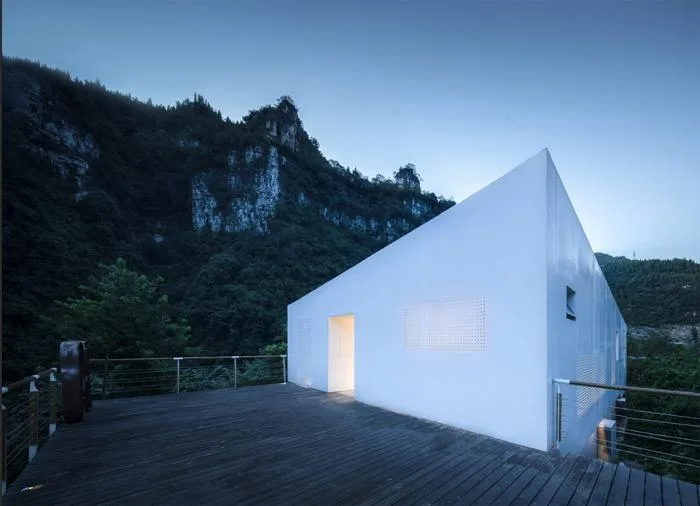
△ Perforated facade
Interior Space: Simple, Fresh, and Unique
The design team prioritized calmness and simplicity for the interior to avoid distracting from the natural beauty outside. The tea bar’s interior features a palette of whites and wood tones, with white walls and ceilings complemented by warm, light wood flooring, creating a comfortable atmosphere.
Sunlight floods the space through the expansive glass curtain walls, bringing the natural scenery indoors. The interior layout includes a tea hall, bar area, bathroom, and utility room. A slight level change near the west side forms a stepped viewing area, dividing the space into intimate zones and introducing visual interest.
Furniture includes cozy fabric sofas and single chairs, enhanced by subtle accent lighting to foster a tranquil and inviting environment.
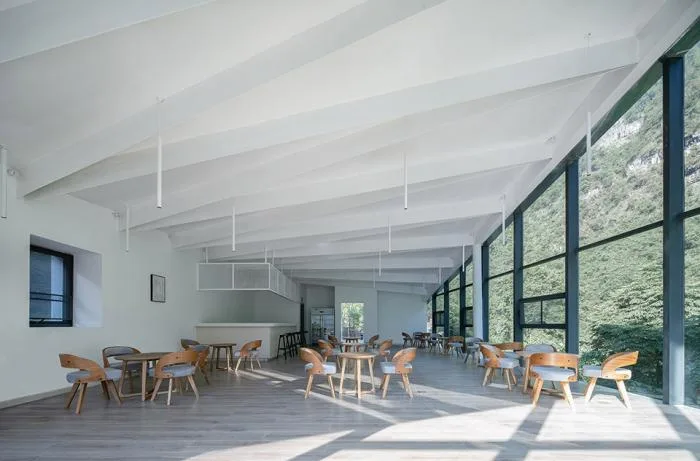
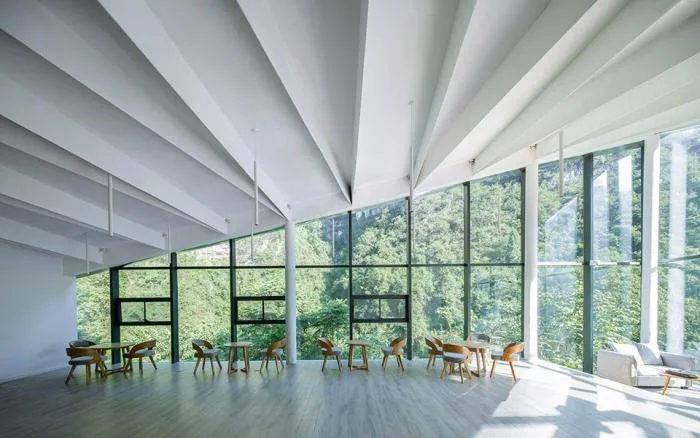
△ Teahouse interior
The exposed roof structure highlights the integration of space and support. Steel plate beams arranged in a “Z” shape follow the roof’s twist, creating a three-dimensional curved surface that becomes the space’s focal point. The design cleverly achieves the twisted roof effect by rotating and arranging straight lines, simplifying structural design and construction.
Each beam is straight but positioned at varying horizontal angles to form the curved surface. This approach is both efficient and practical during construction. The steel beams, spaced at intervals, establish a rhythmic visual pattern and serve as decorative elements. This structural aesthetic motivated the decision to leave the roof structure fully exposed.
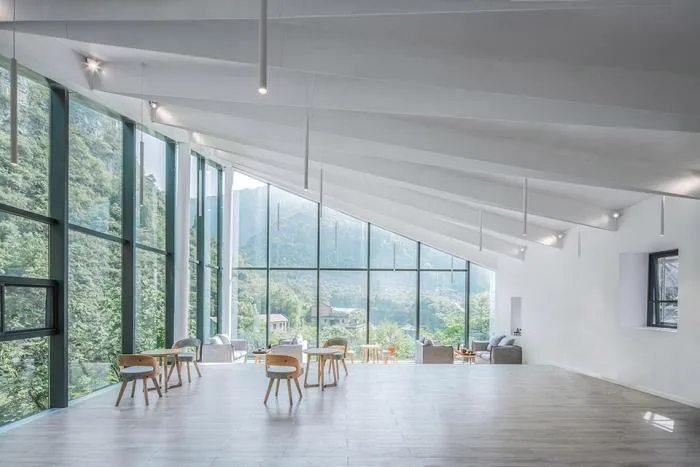
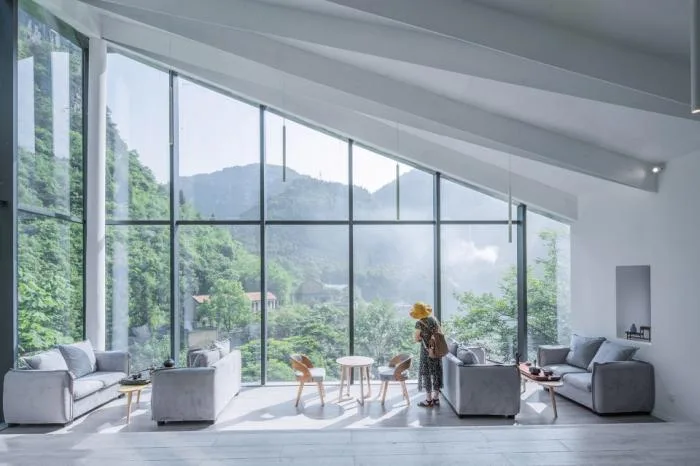
△ Teahouse interior
Construction Process: Integrated Design and Multidisciplinary Collaboration
The Cliff Top Tea Bar is a steel-structured building situated in a complex geological environment. Challenges included designing large-span overhangs, beam-to-column support conversions, and the twisted irregular roof. The twisted roof was both a key challenge and highlight of the project, achieved through close collaboration between architectural and structural teams.
To balance construction order and feasibility, the roof was divided into equal 1.5-meter modules, each split into two opposing triangles along the diagonal. Precise fabrication and assembly of these triangular steel panels created the unique twisted surface.
Instead of traditional I-beams or box beams, the roof is supported by custom-shaped steel plate beams. Both the roof’s axis and diagonals feature 40 cm-high steel plate beams, which not only provide welding points for the triangular steel panels but also contribute to the dynamic rhythm of the twisting roof structure. The roof’s exterior is clad in straight aluminum panel profiles that further emphasize the design concept.
Because the roof structure remains exposed indoors, the placement of lighting fixtures and ceiling pipelines had to be carefully planned before roof pouring, demonstrating the high level of coordination required among multiple design and construction disciplines.
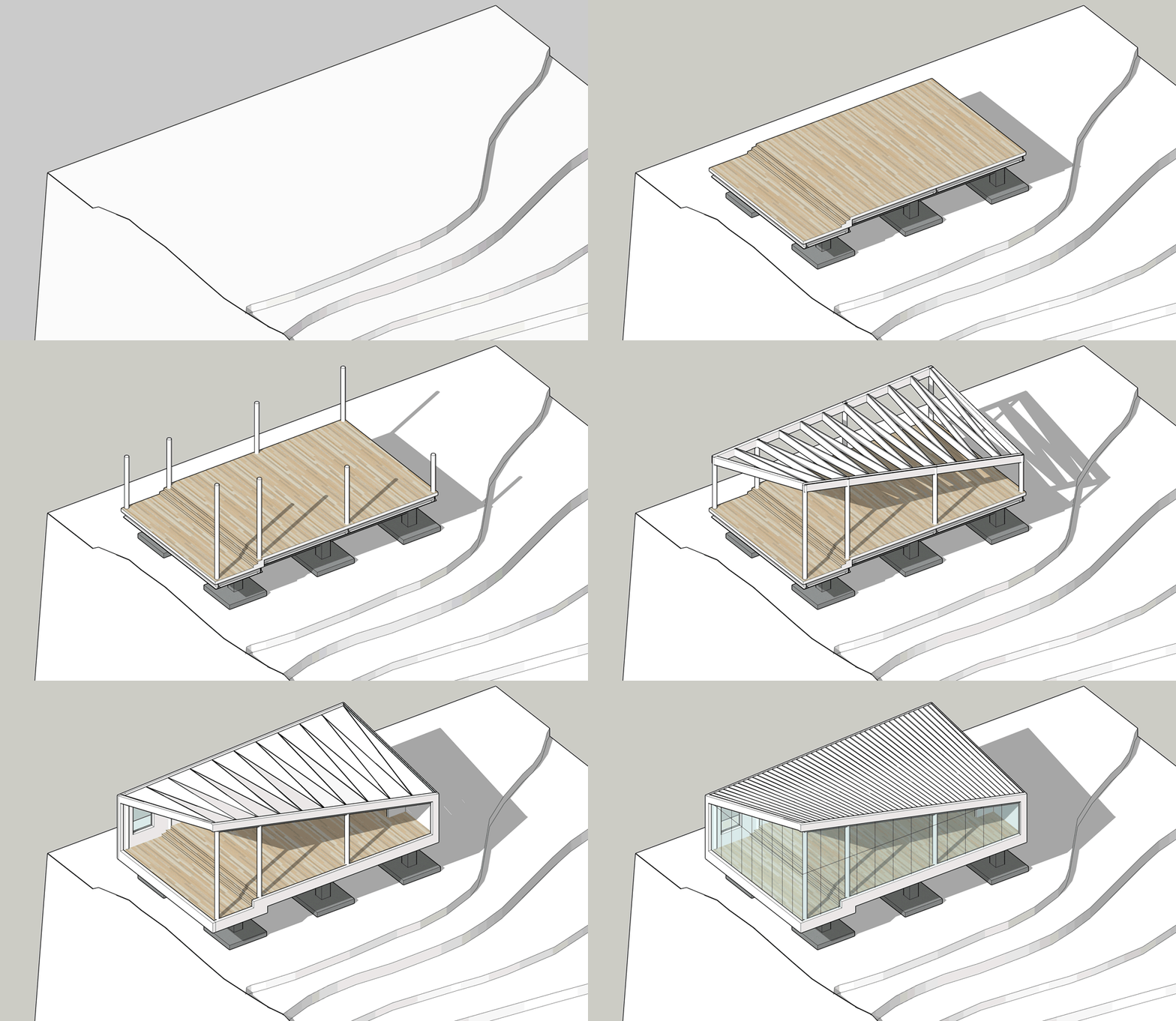
△ Construction process
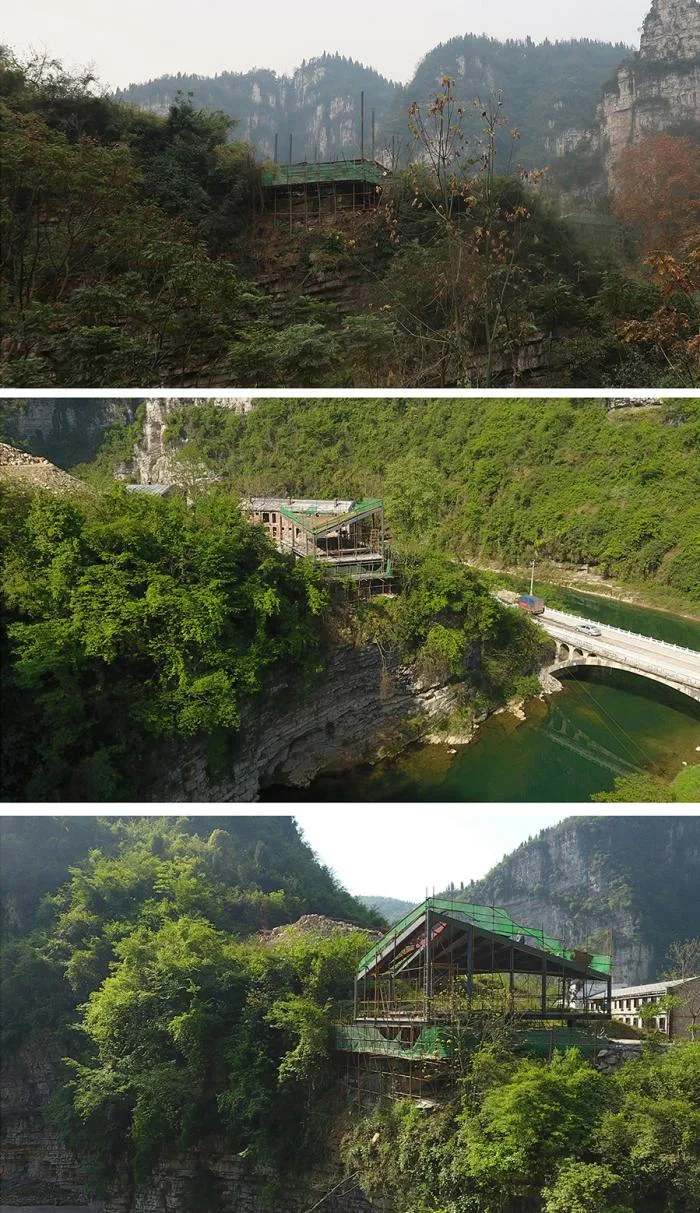
△ Construction process
Conclusion: Architecture Meets Nature, History Meets Modernity
The Cliff Top Tea Bar is Sanwen Architecture’s second cliff-related project, reflecting the design team’s ongoing exploration of the relationship between architecture and the natural environment. Design begins with the geographical and natural context, emphasizing dialogue and harmony between the artificial and natural worlds. Respect for nature and appropriate architectural expression are paramount, aiming for symbiosis between buildings and their surroundings.
The natural environment provides the backdrop and foundation, while architecture adds human presence and serves as a bridge between people and nature.
Located within the historic 809 factory complex, the tea bar’s contemporary design stands out, embodying the design team’s philosophy of balancing cultural preservation with innovation. Protecting rich history is essential, but equally important is activating and renewing the site. The goal is to make the old feel older and the new feel newer through thoughtful design.
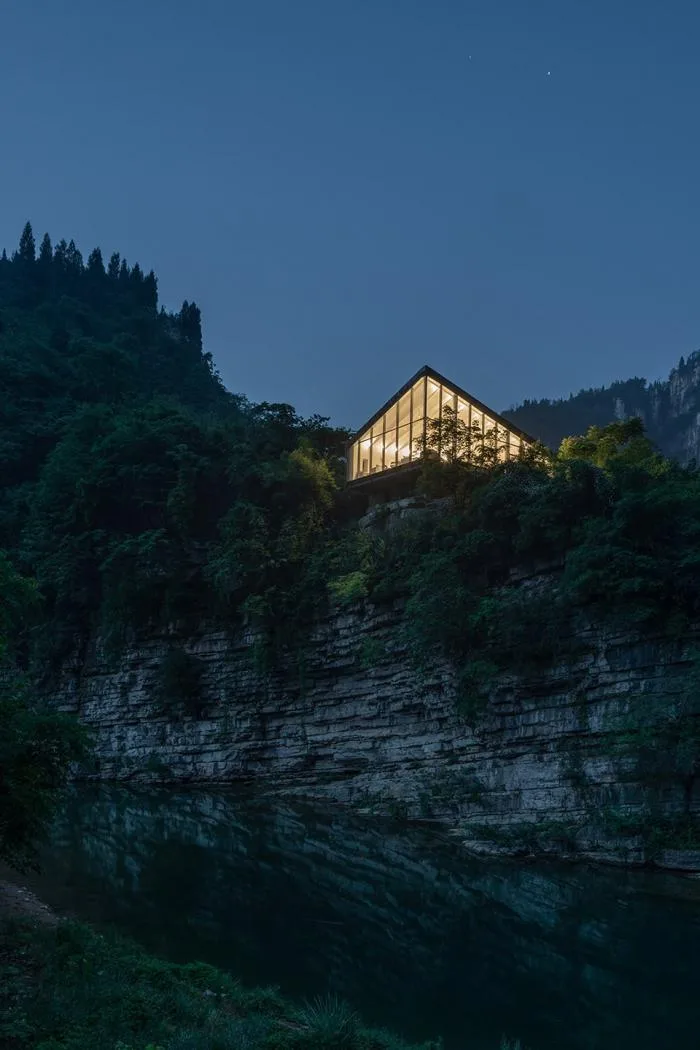
△ Night view
Design Drawings
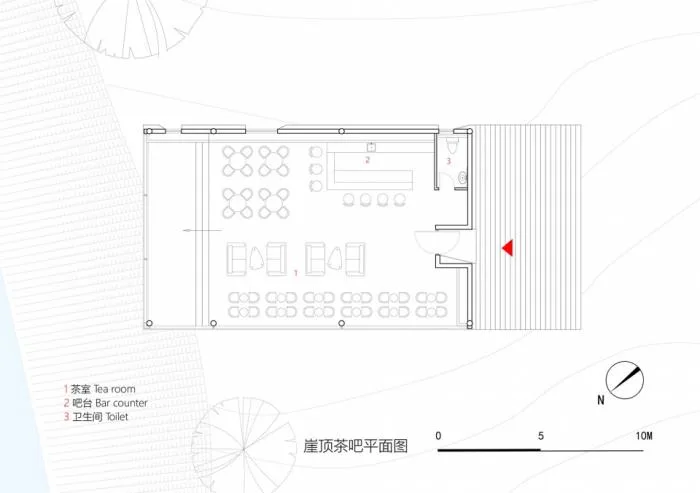
△ Plan view
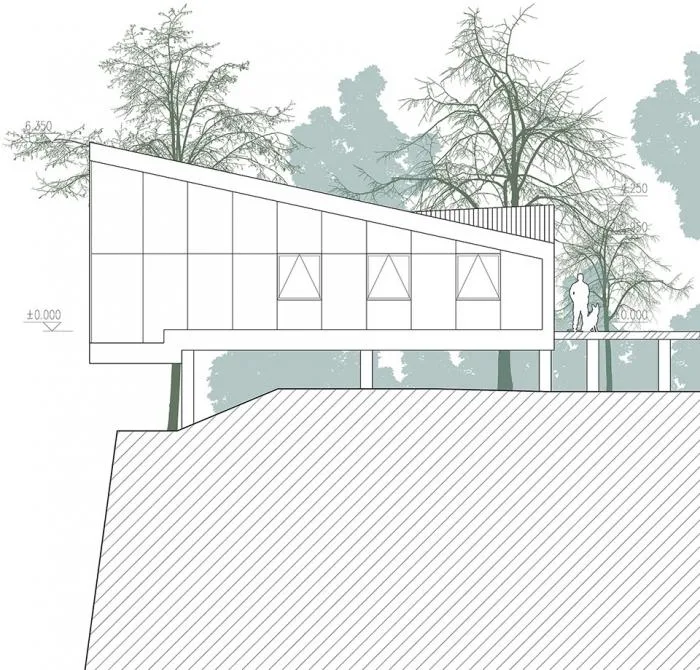
△ Elevation drawing
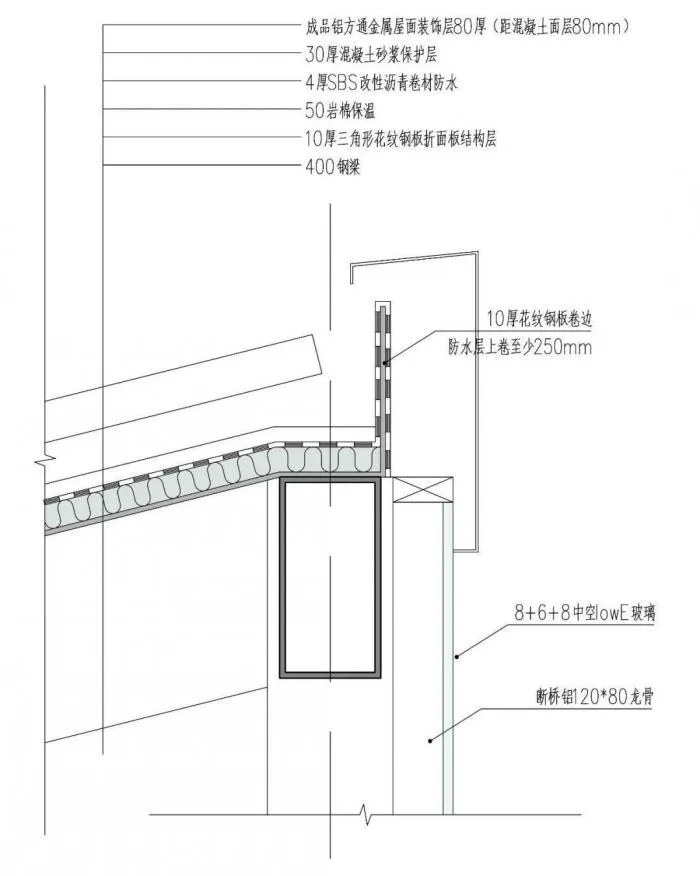
△ Construction details
Project Information
Name: 809 Arsenal Site Renovation – Cliff Top Tea Bar
Project Type: Leisure Service Building
Location: Yichang City, Hubei Province, China
Owner: Yichang Transportation and Tourism Group
Architecture and Interior Design: Sanwen Architecture
Lead Architects: He Wei, Chen Long
Structural Consultant: Pan Congjian
Lighting Design: Zhang Xin Studio, School of Architecture, Tsinghua University
Design Year: 2017
Construction Year: April 2020
Building Area: 120 square meters
Collaborating Firms:
Beijing Huaju Architectural Design Institute Co., Ltd
Beijing Hongshang International Design Co., Ltd













Must log in before commenting!
Sign Up