
Project Background
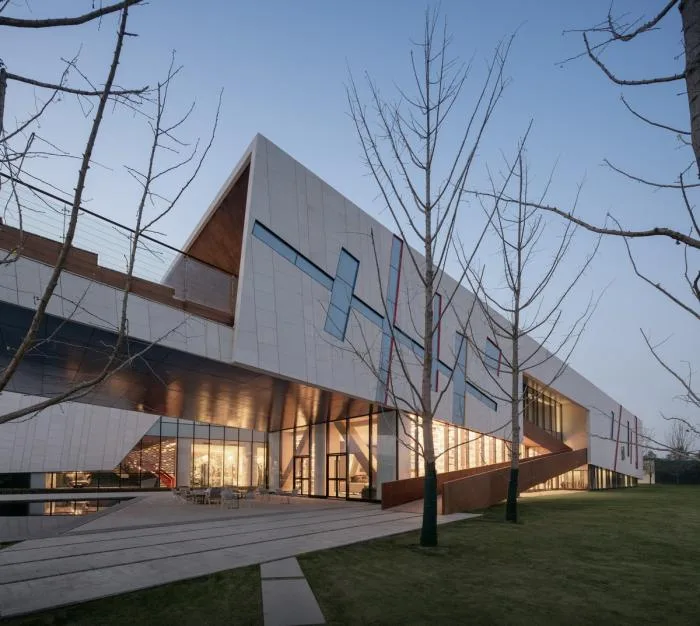
This design project seeks to express the essence of its surrounding context through a formal transformation. Architecture here is viewed as an ongoing dialogue with its environment—both the current physical setting and the continuous thread of history. From an urban development standpoint, Xi’an, the ancient capital of the Six Dynasties, is undergoing rapid modernization, breaking down traditional city walls and establishing a new urban order.
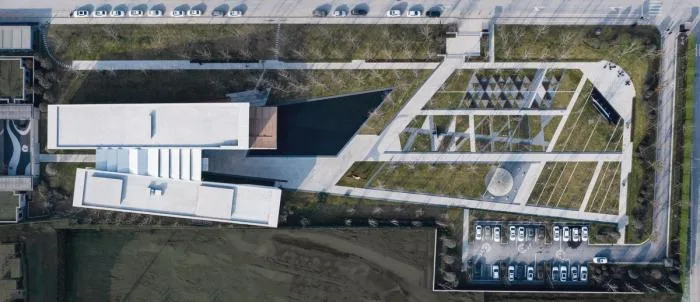
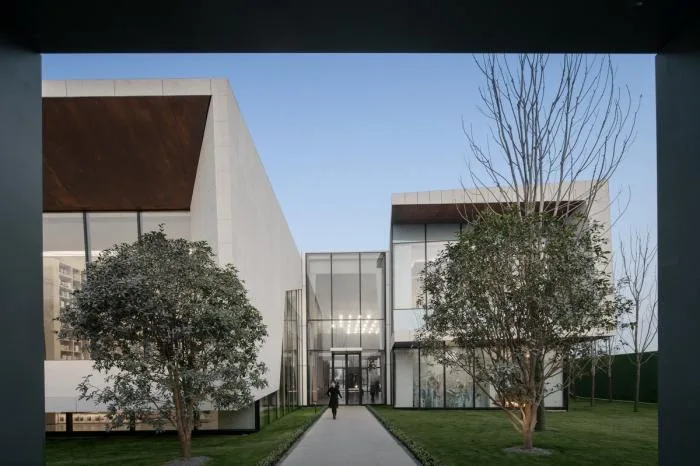
Situated in the rapidly developing Xixian New Area of Xi’an, the project occupies a slender rectangular plot adjacent to the Xixian axis, located at the core node of the energy park’s main axis. Flanked by roads on both sides and bordered by an urban green belt to the east, the building continues the energy park’s axis, integrating seamlessly with the environment. It echoes the Xixian axis, invigorates the site’s historical spatial vitality, and ultimately welcomes visitors as an “urban living room.”
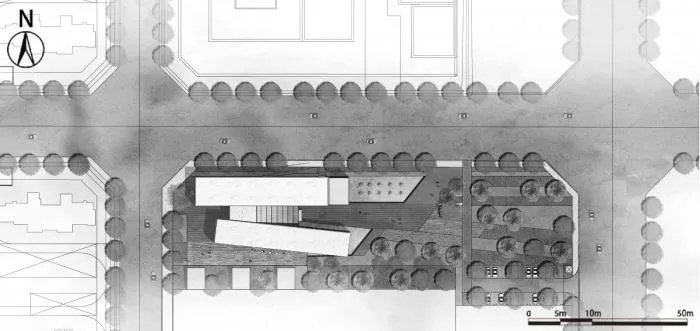
△ General layout plan
Architectural Form and Composition
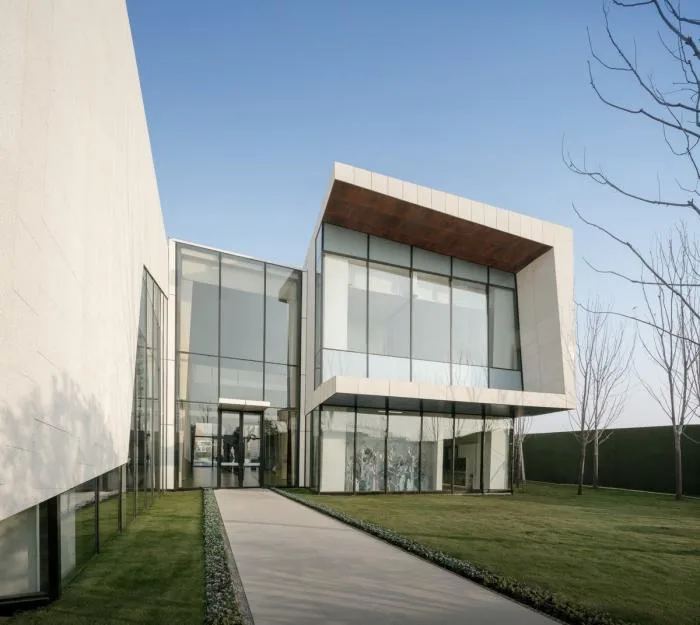
Inspired by Malevich’s abstract paintings, which combine intersecting and overlapping geometric shapes within rectangular fields, the building’s final form consists of three staggered and overlapping rectangular volumes. These volumes sit comfortably within the site’s boundaries.
The interlocking arrangement of three differently sized blocks along the north-south axis breaks the site’s narrow proportions. The central block serves as the main entrance, positioned between the northern and southern rectangles. This configuration reduces the sense of confinement while enhancing building functionality.
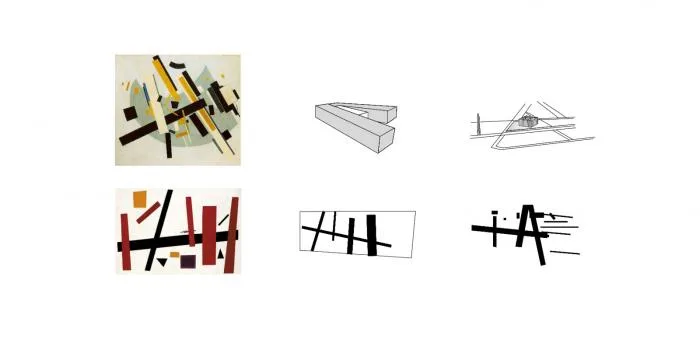
Concept analysis
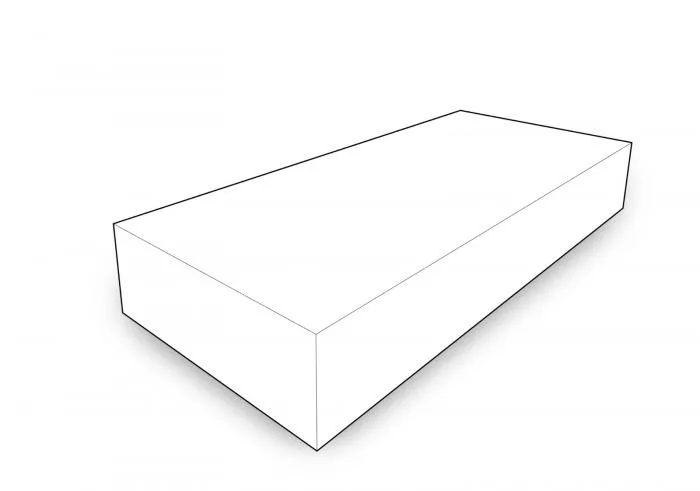
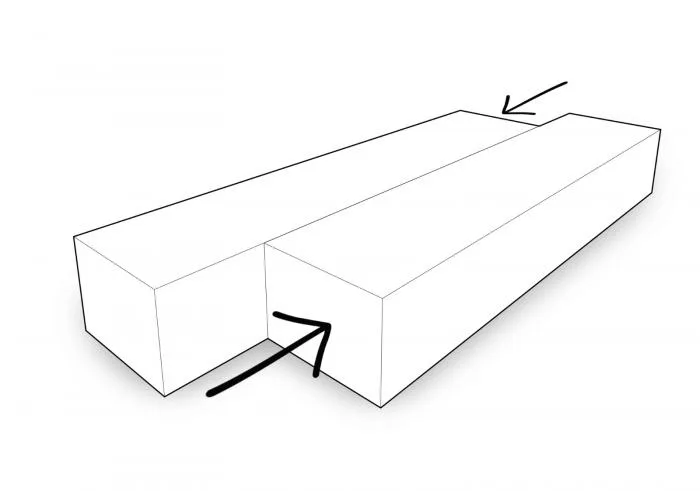
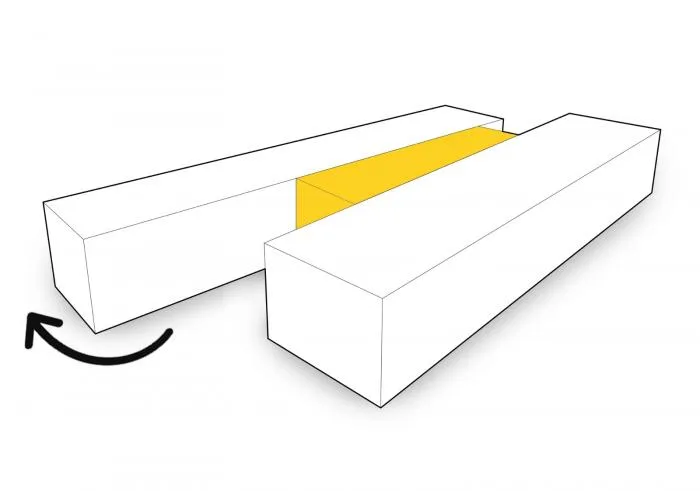
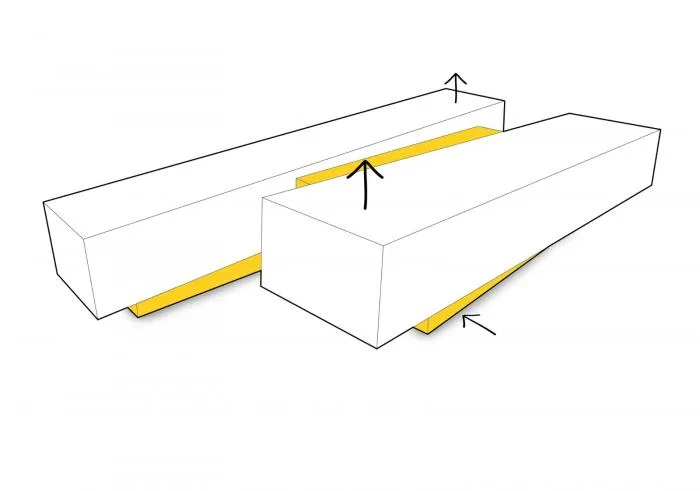
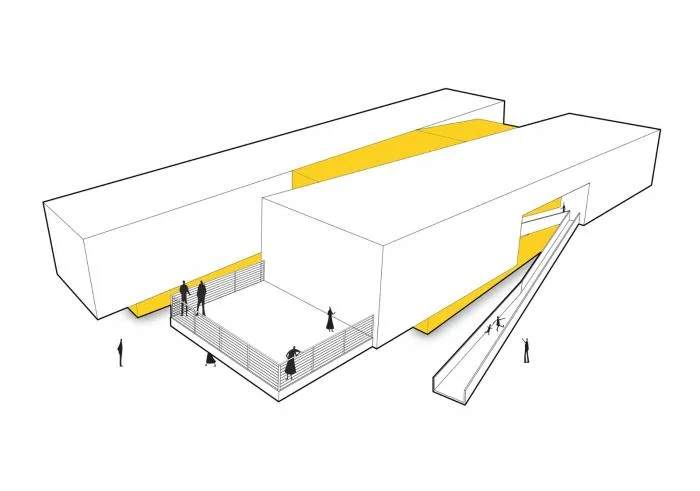
△ Block analysis
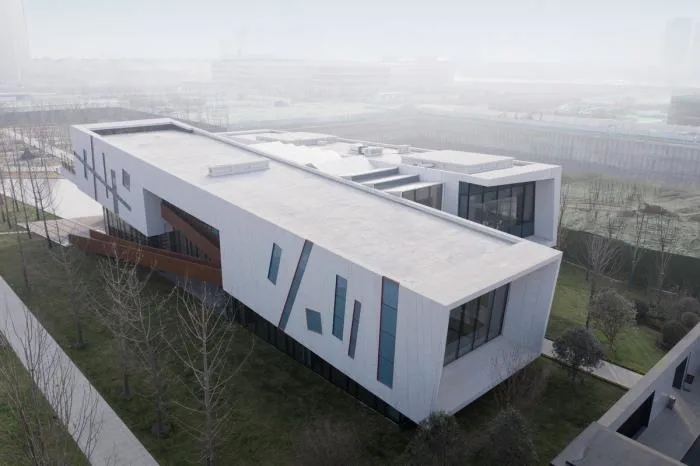
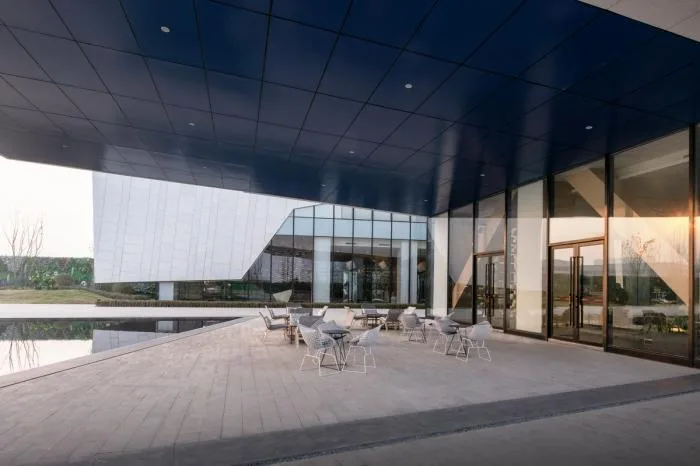
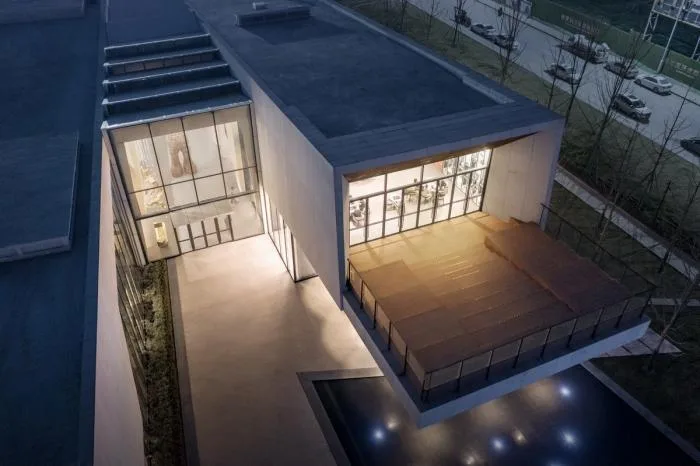
At the east-side main entrance, a large terrace to the north creates a layered, harmonious space alongside the water feature below, fostering an artistic ambiance. A reddish-brown curved ramp guides visitors directly to the second floor, adding playful movement and enriching the facade’s composition.
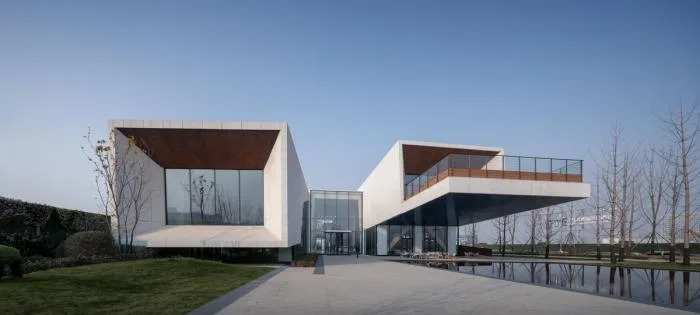
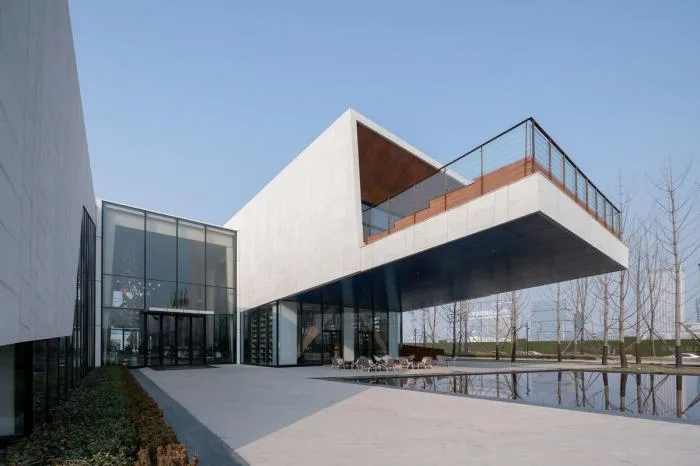
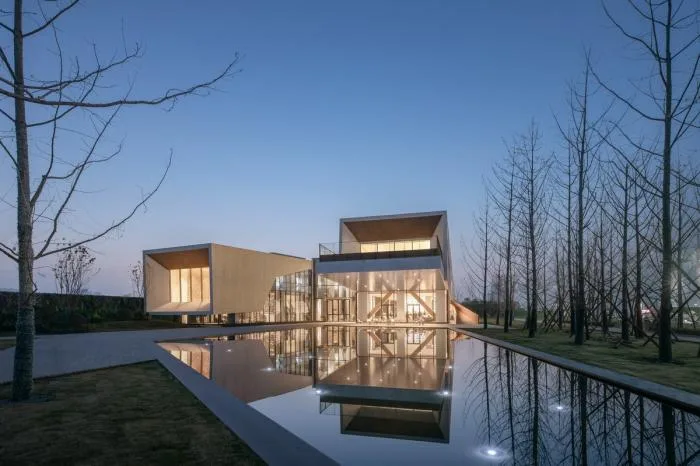
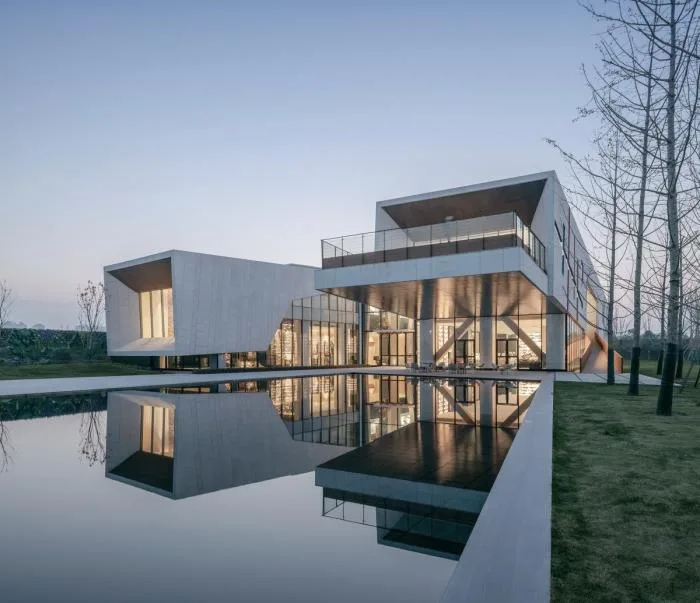
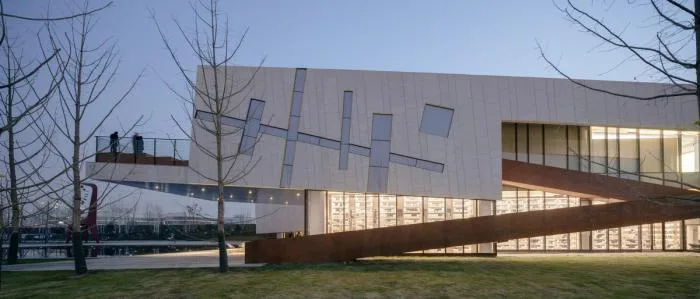
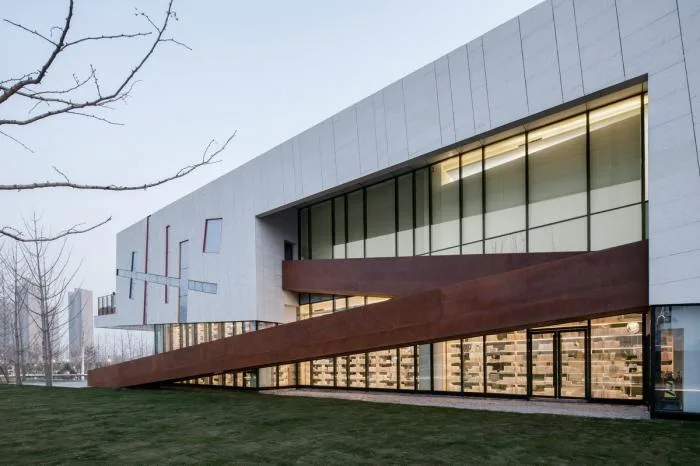
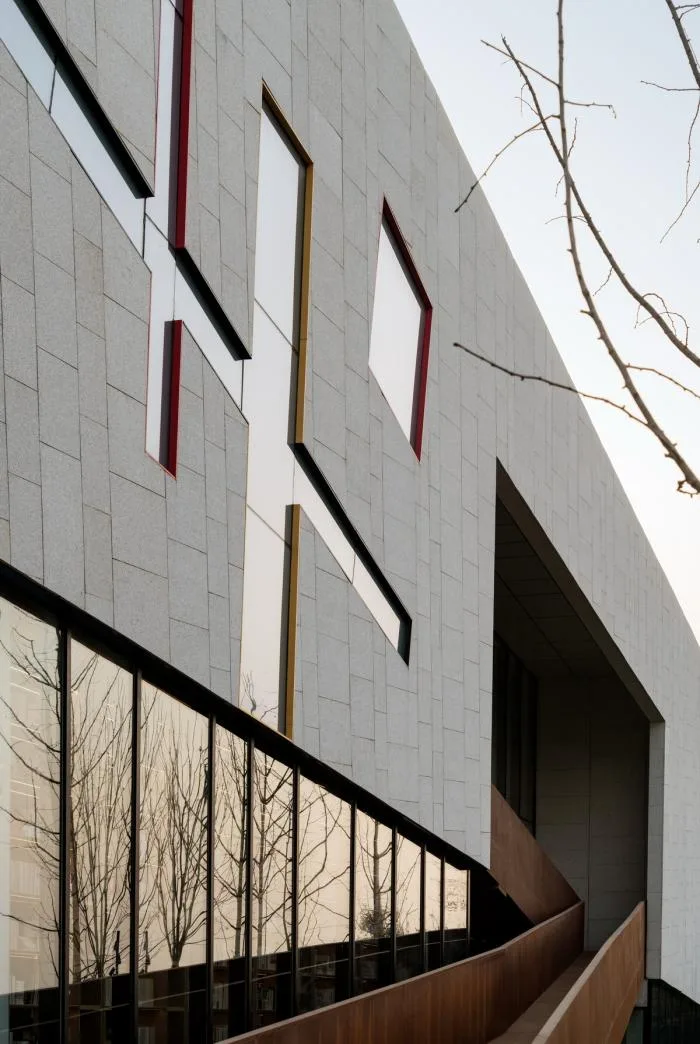
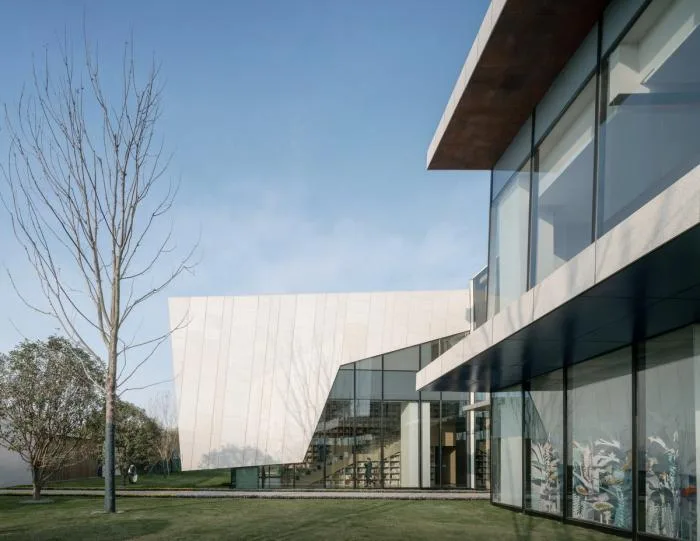
The facade combines “virtual” glass and “real” white linen stone, continuing the inspiration from Malevich’s abstract art. The white linen stone acts as a “canvas,” while the glass windows form geometric shapes, some extending to the roof. Window frames are painted in the three primary colors—red, yellow, and blue—forming a three-dimensional “Suprematist” abstract painting.
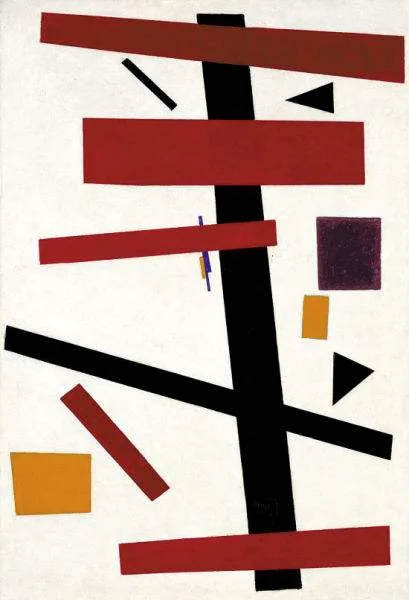
△ Window analysis
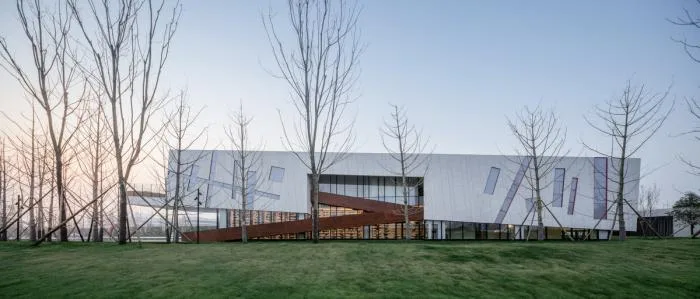
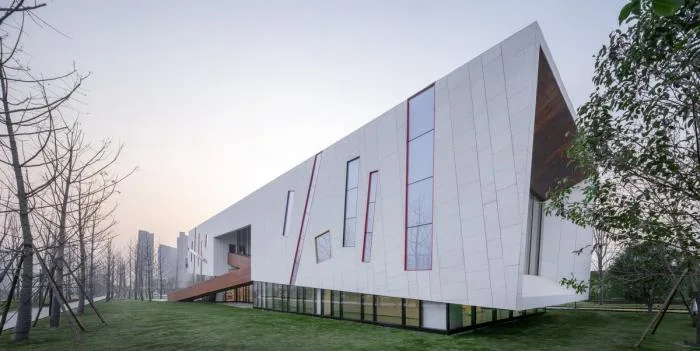
Integrated Spatial Experience
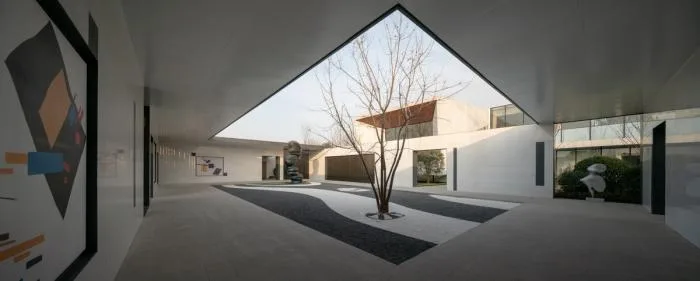
The interior spaces embrace the principle of “supremacy,” creating practical, flexible, and engaging environments. The minimalist architectural form harmonizes with the minimalist interiors to produce a seamless flow of spaces.
The suspended ceiling at the main entrance emphasizes spatial openness. On the south side, the negotiation area is a flexible, fully open space that supports functionalism with feasibility. This transparent area is functionally divided by components, allowing for flexible communication between smaller spaces without interference. This approach supports integration while reflecting the spirit of the place.
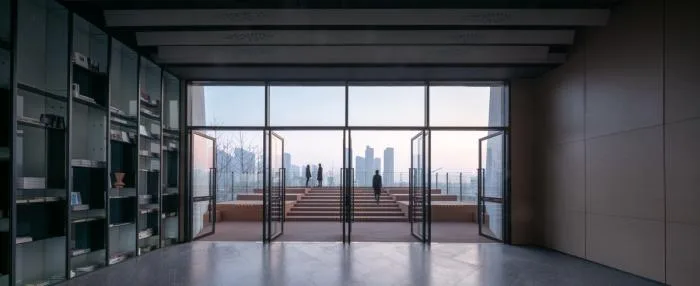
The open book bar connects directly to the distinctive large terrace and reddish-brown curved ramp on the second floor, creating a fluid interplay between indoor and outdoor spaces. The cantilevered terrace uses a stepped design to deliver varied spatial experiences.
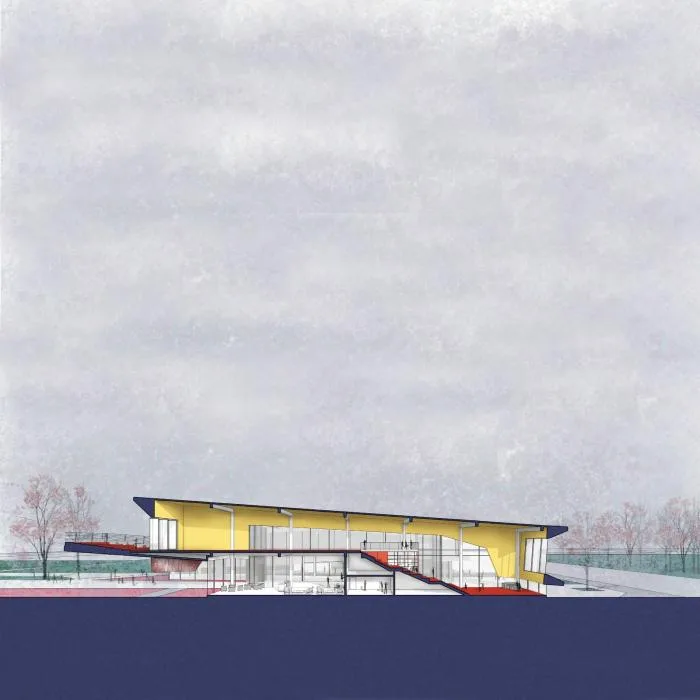
△ Profile analysis
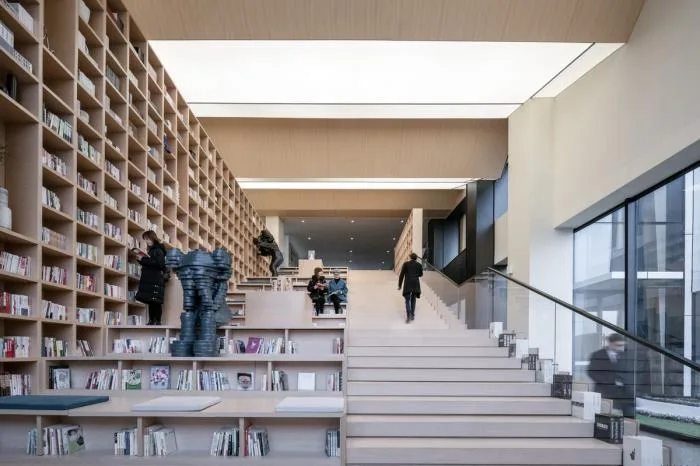
Material Details
The primary material used is white linen stone, featuring a gray-white background interspersed with gray flecks. From a distance, the stone appears as a smooth gray-white surface, while the flecks become more pronounced up close, adding depth and texture.
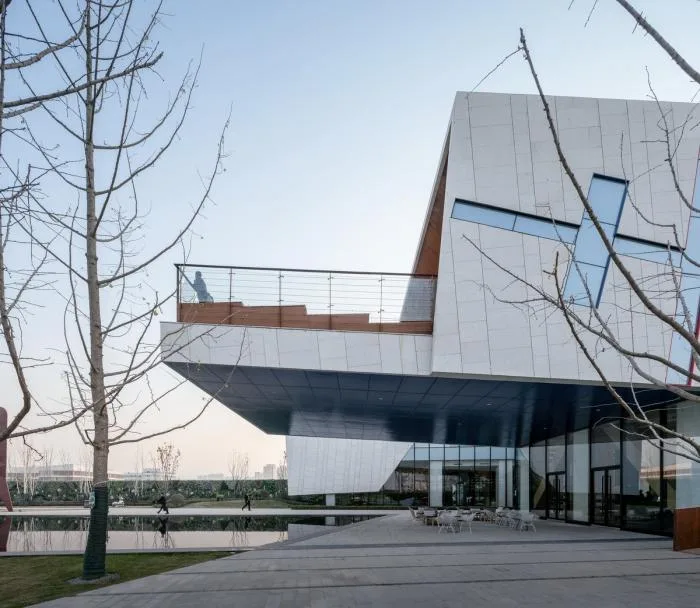
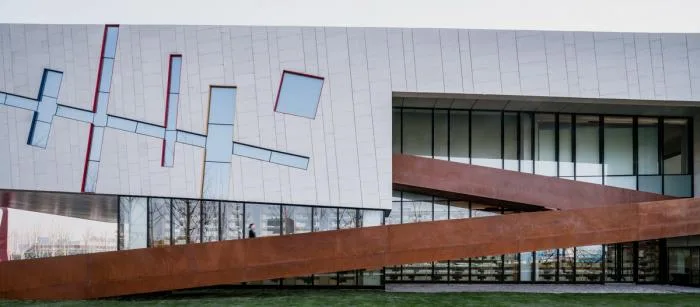
The curved ramp and select facades are clad in weathering steel panels treated to develop a rusted patina. Initially yellowish, the steel matures to a stable reddish-brown color. This material boasts a lifespan 5 to 8 times longer than regular steel, requires no coating, and is environmentally friendly with minimal maintenance.
Over time, the weathering steel develops a golden yellow surface that imparts a warm, inviting tone, enhancing the building’s sense of familiarity and uplifting the overall spirit of the place.
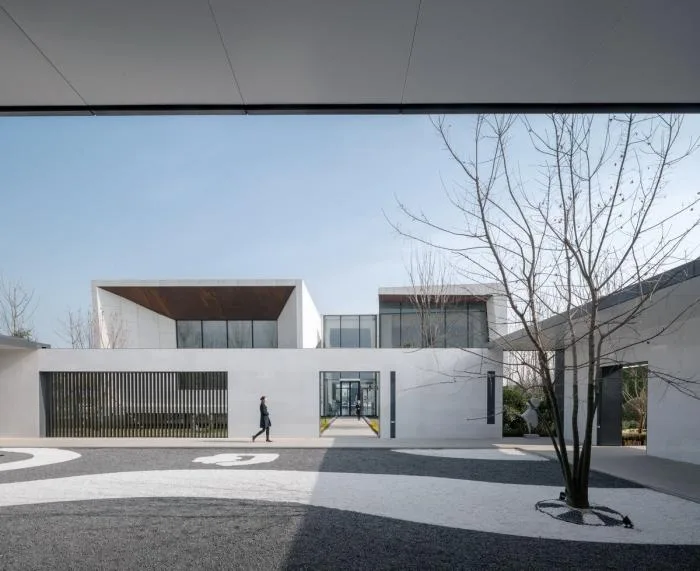
Technical Drawings
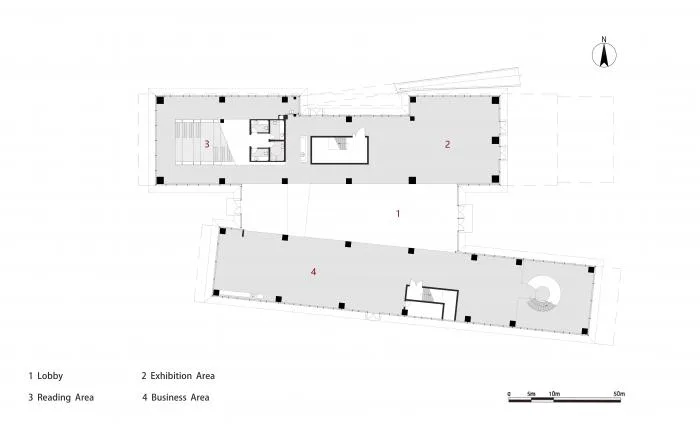
△ First floor plan
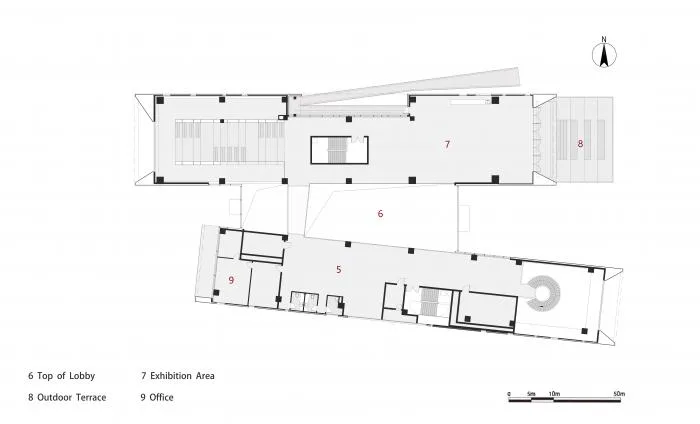
△ Second floor plan
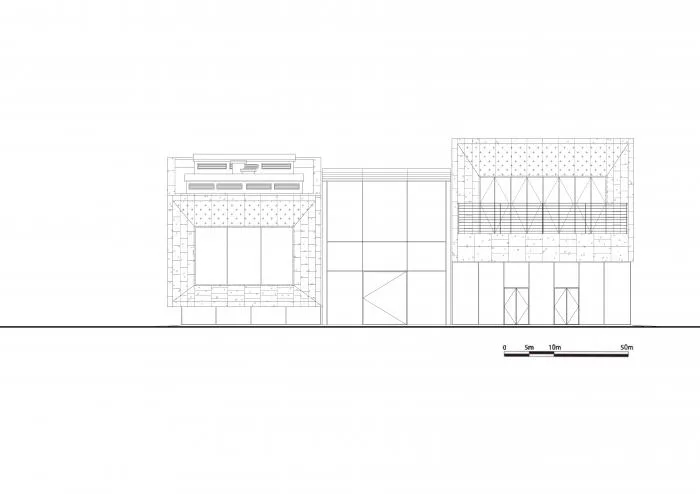
△ East elevation view
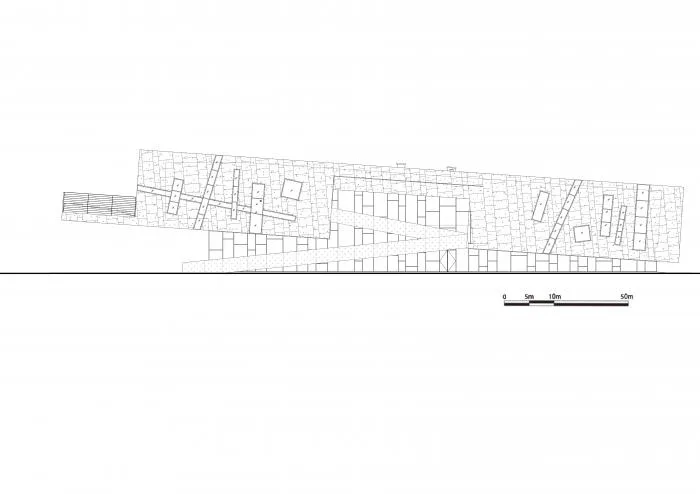
△ North elevation view
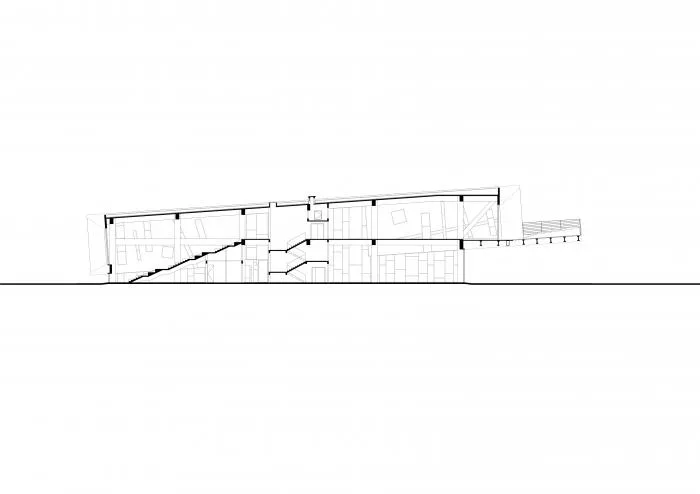
△ Section diagram
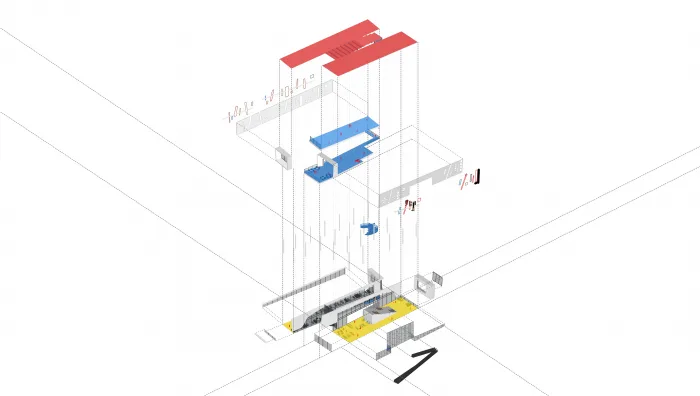
△ Decomposition axonometric diagram
Project Information
Project Name: Xi’an Greenland Energy Art Center
Location: Xixian New Area, Xianyang City, Shaanxi Province
Owner: Greenland Northwest Business Unit
Owner Team: Wang Meng, Xu Miaorong, Chen Mingyu, Zhang Simin
Architectural Design: Shanghai Riqing Architectural Design Co., Ltd.
Design Director: Song Zhaoqing
Design Team: Li Sheng, Liu Zhenrui, Li Yingchao, Zhang Runyang, Yu Mingming
Construction Drawing Design: Shenzhen University Architectural Design and Research Institute Co., Ltd.
Landscape Design: Shanghai Riqing Landscape Design Co., Ltd.
Landscape Team: Zhang Yi, Zhang Ye, Yang Dandan, Wei Meng, Liu Mingkong
Interior Design: Shanghai Jiai Interior Design Co., Ltd.
Building Area: 2,200 square meters
Architectural Photography: Schranimation Architectural Photography












Must log in before commenting!
Sign Up