
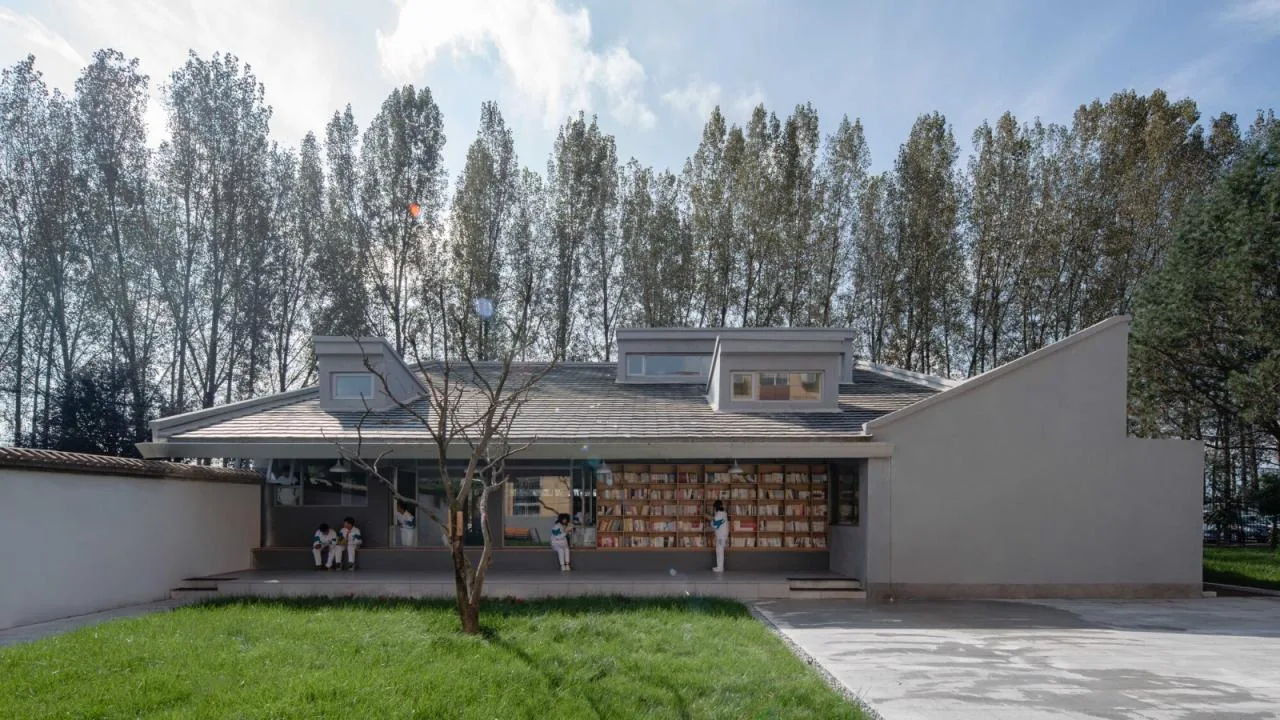
The “Qinfeng Book Pavilion” marks the second “Rural Campus Library” completed under the Shaanxi Hope Project, developed in partnership with the Samsung (China) Semiconductor Social Welfare Project. The first was the “Zhongnan Book Pavilion,” established in 2021. We are honored to continue supporting rural education in Shaanxi by providing cultural infrastructure.
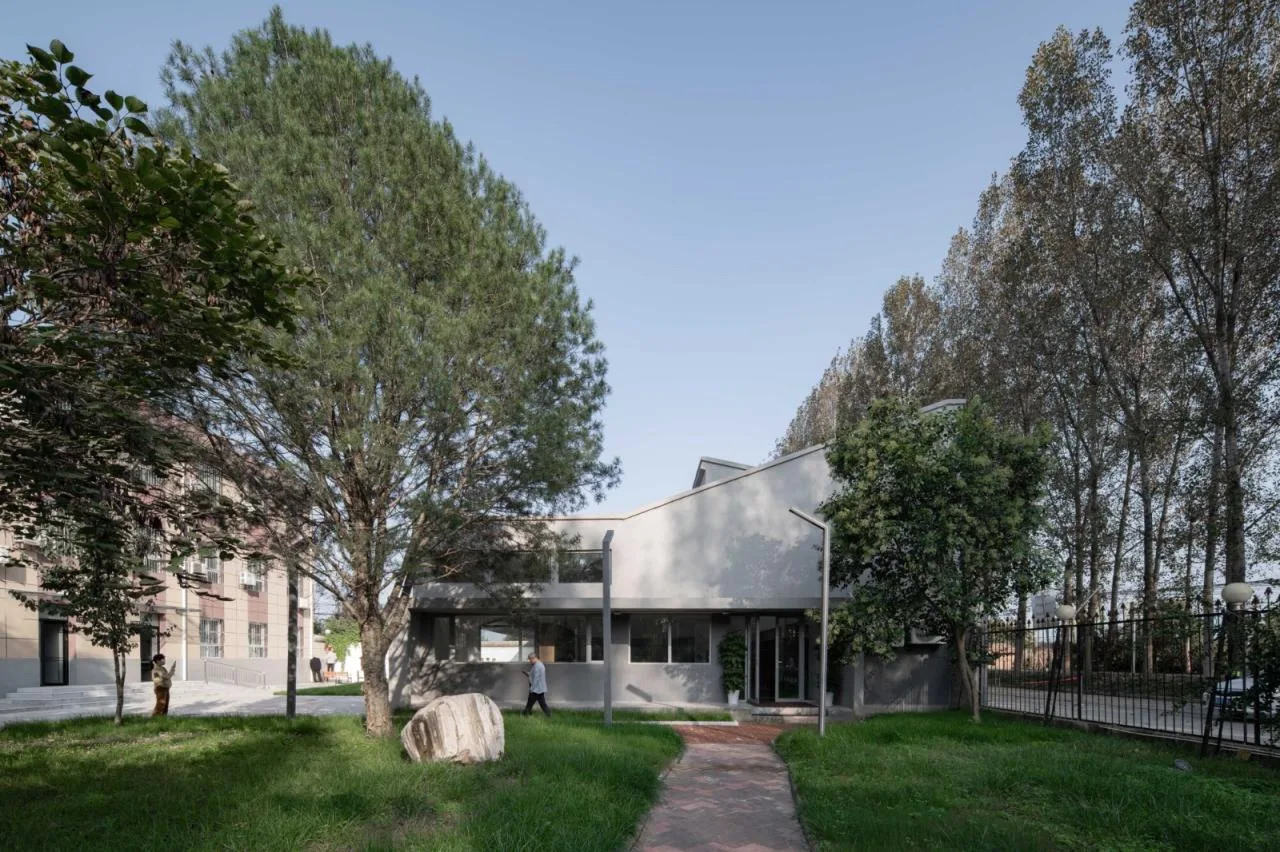
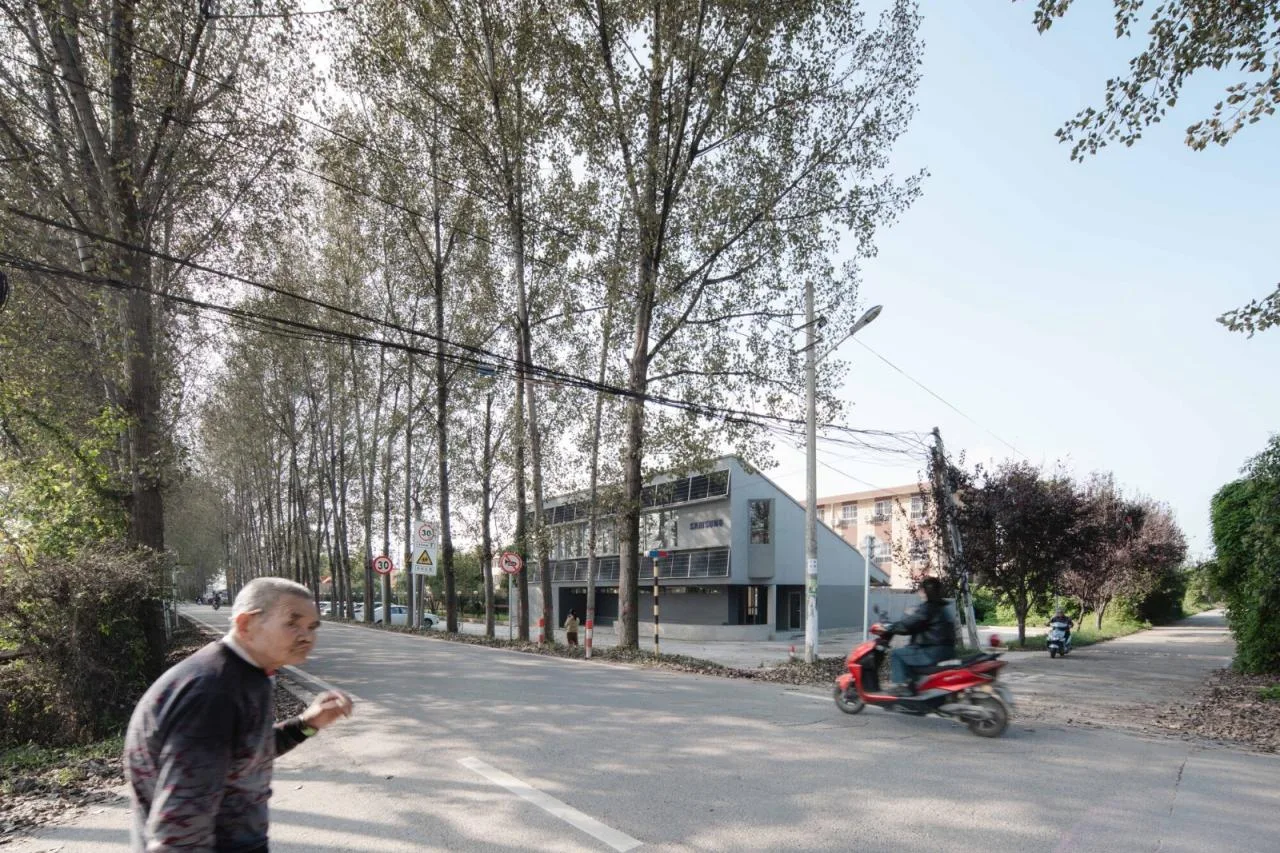
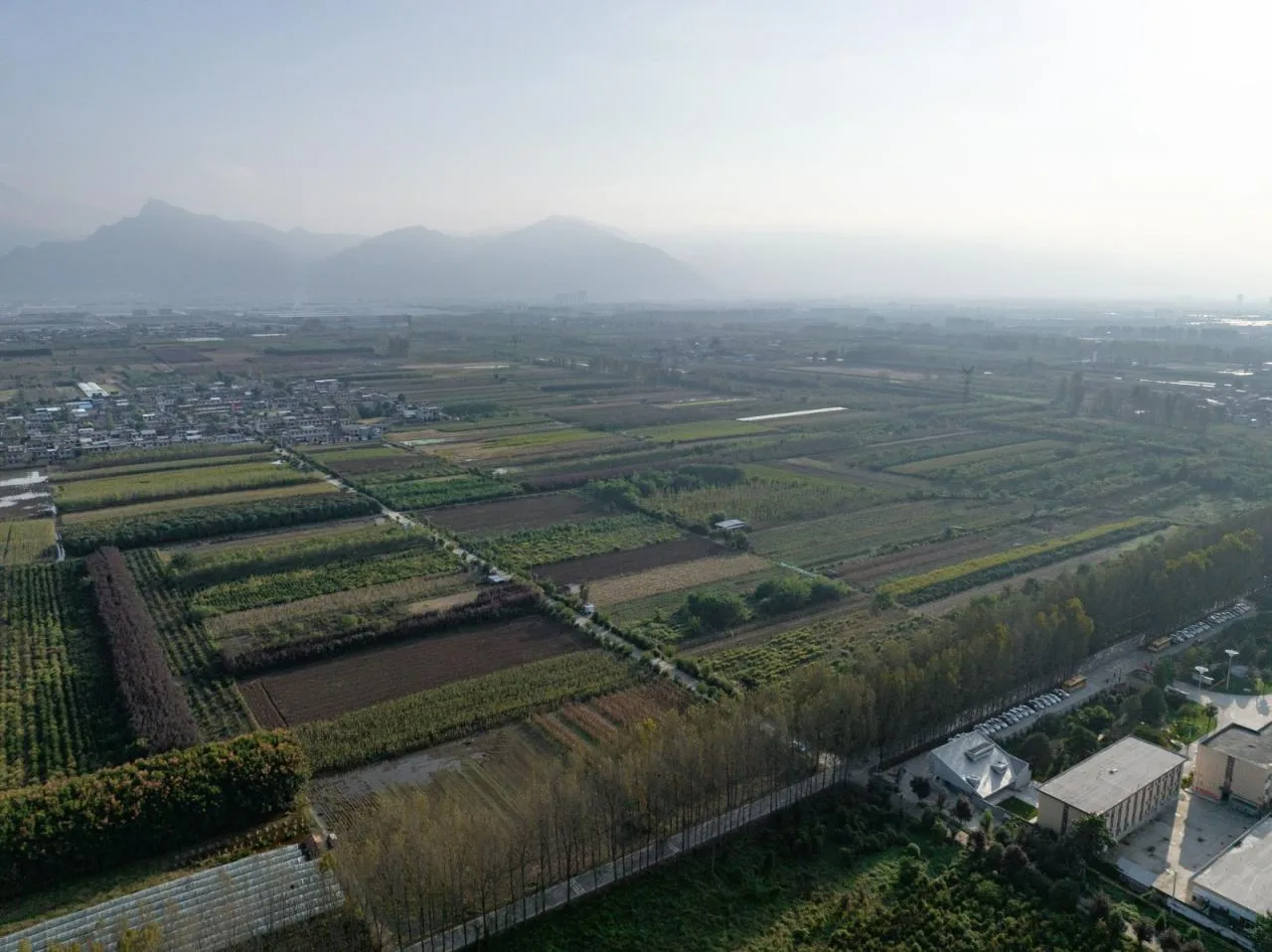
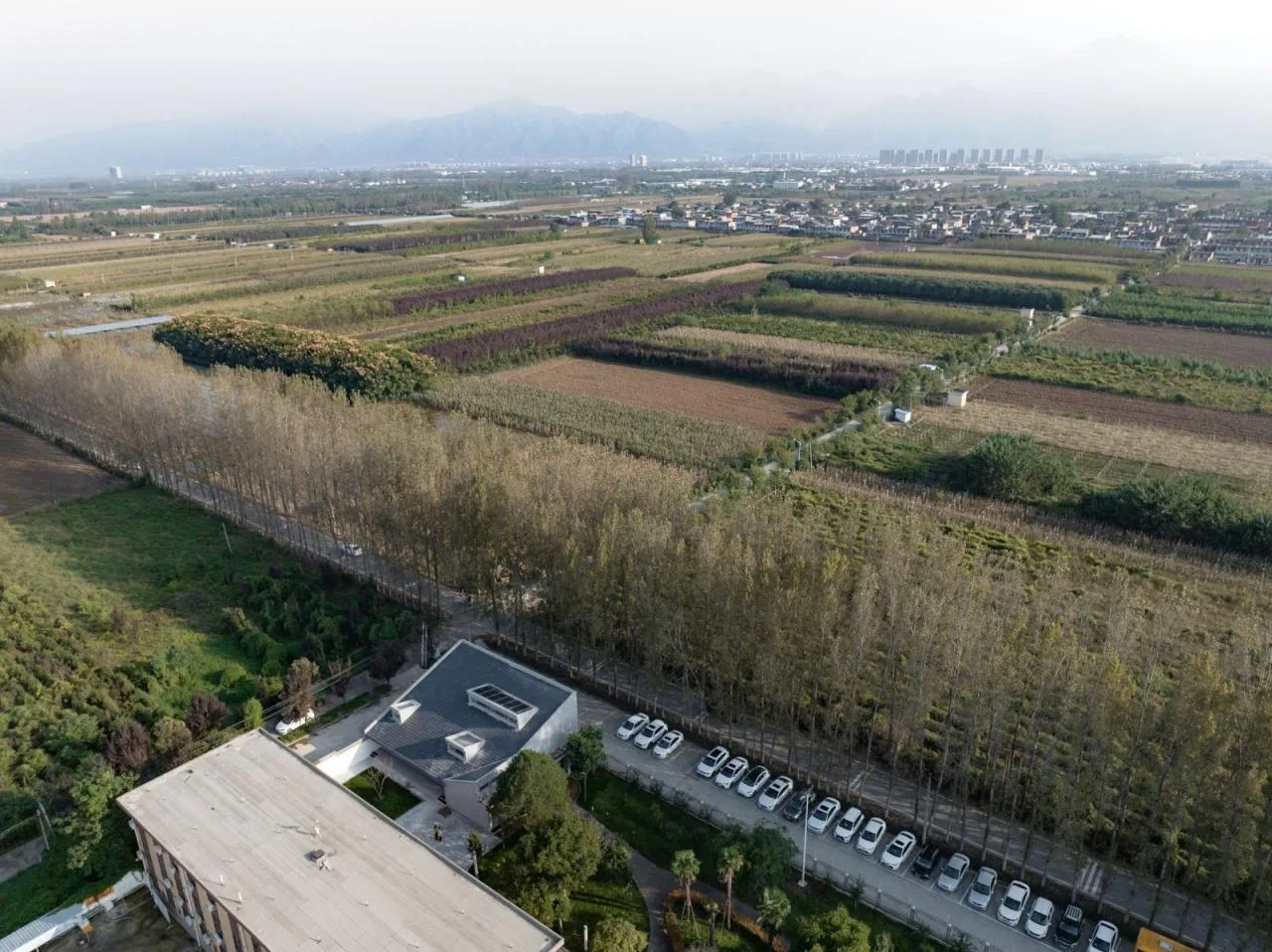
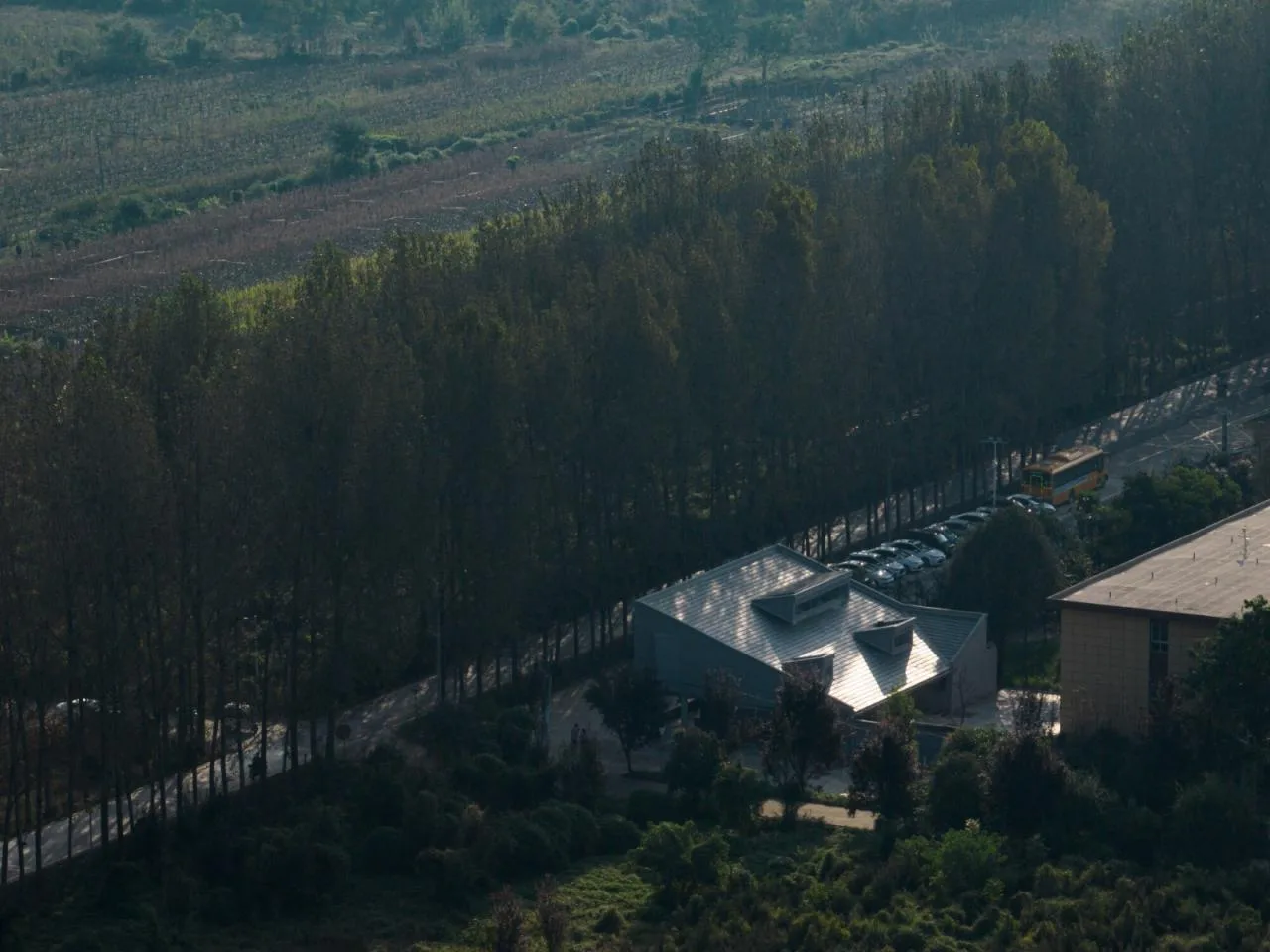
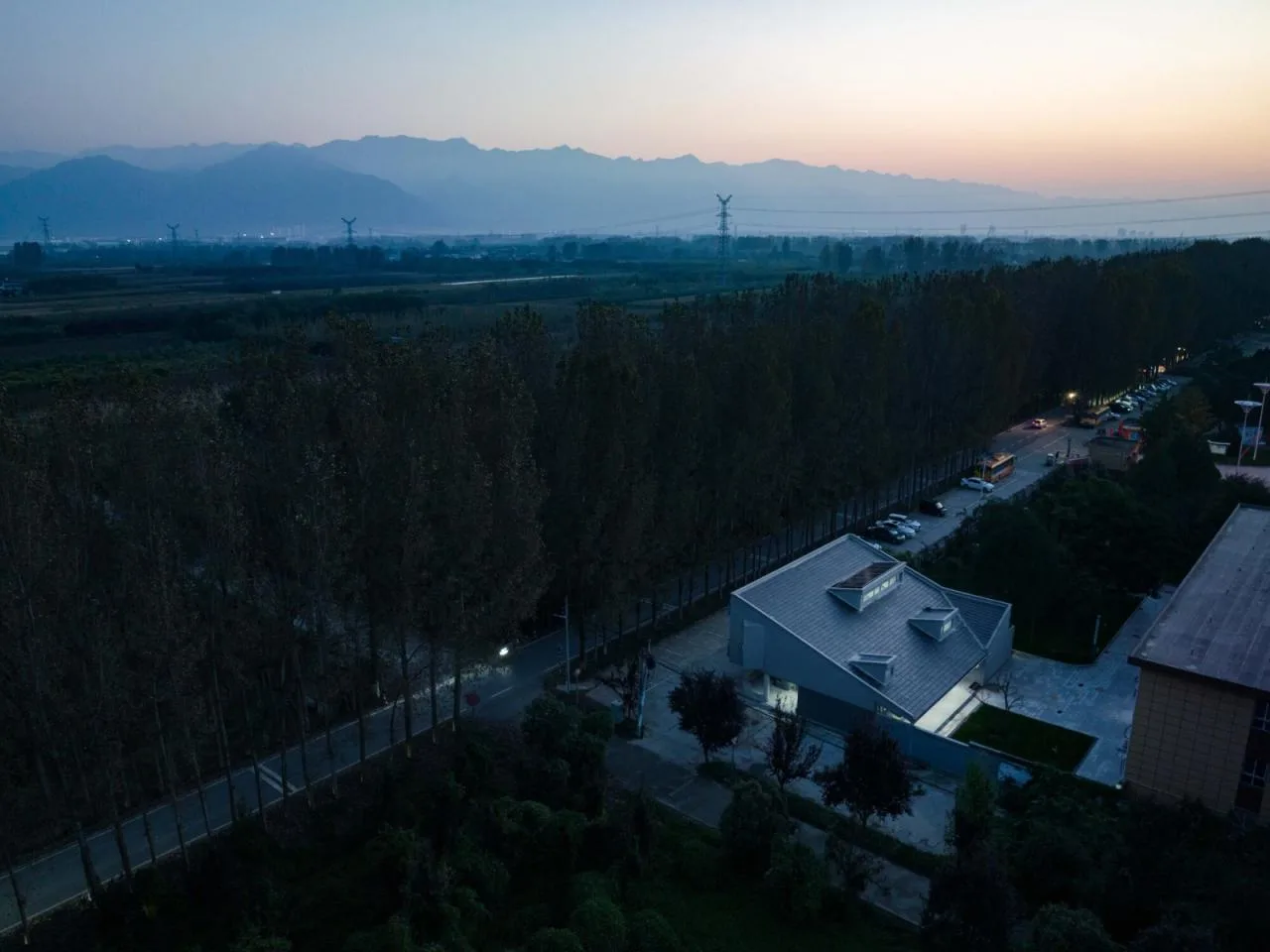
Located within Qinfeng Junior High School in Huyi District, Xi’an, this school was founded in 1996 and renamed as the “18th Junior High School of Xi’an High Tech Zone” in 2020 after merging three rural junior high schools: Qinfeng, Niudong, and Qindu. Surrounded by farmland and scattered villages, it lies near the Qinling Mountains to the south. In this picturesque rural setting, the library’s second phase design not only maintains its integration and harmony with the local environment but also introduces distinct features tailored to specific environmental and functional needs.
This project explores two key values:
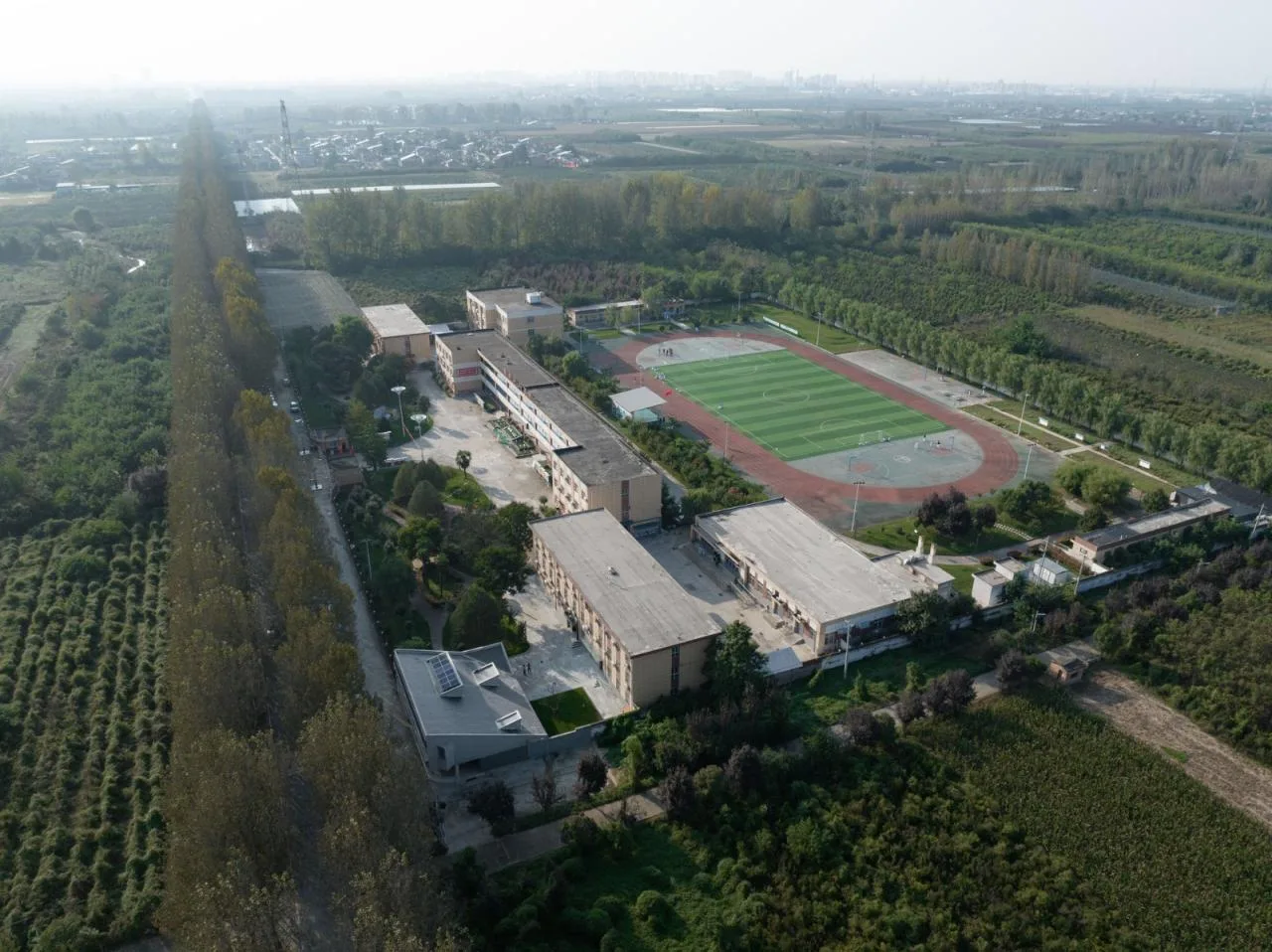
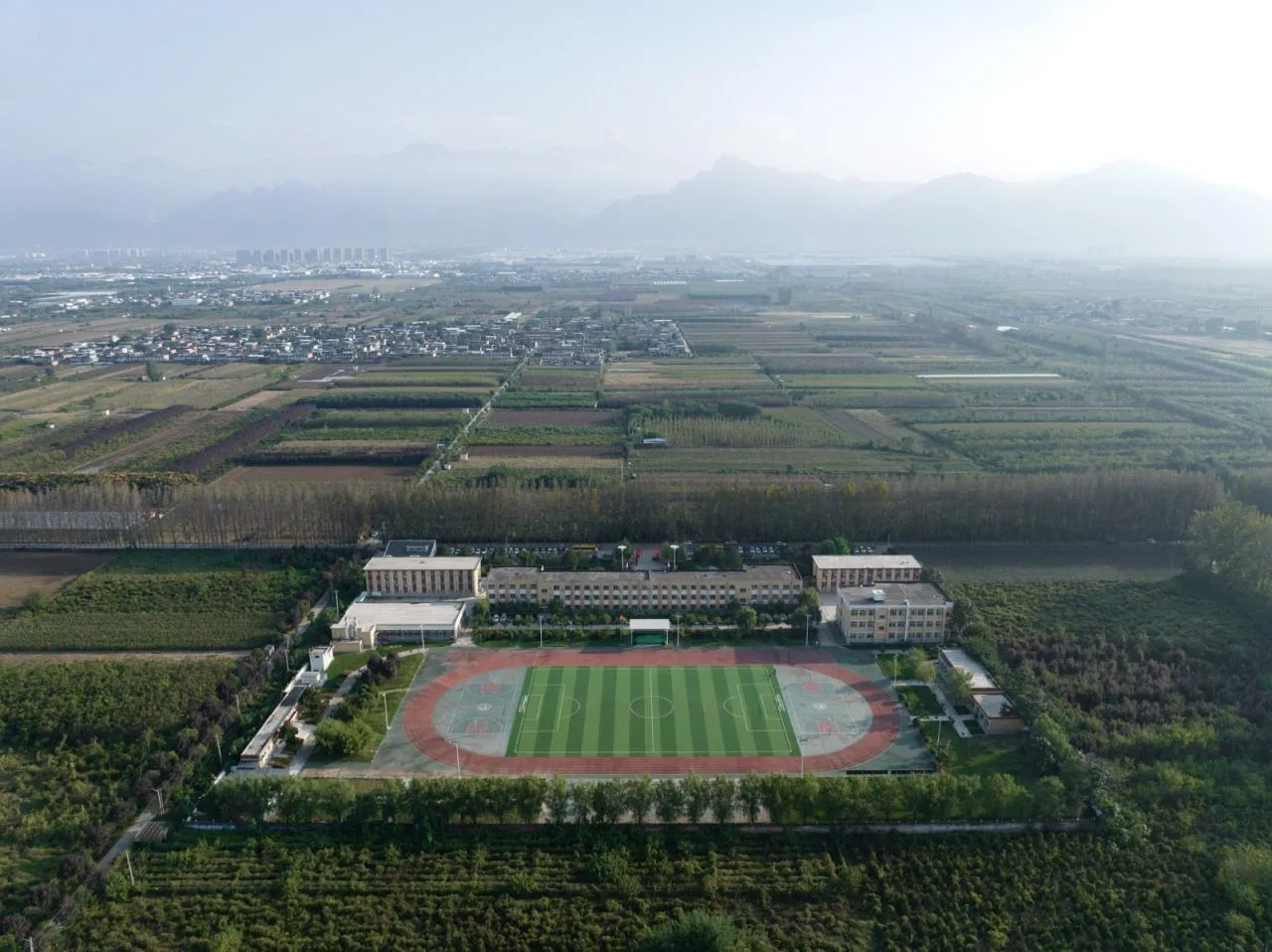
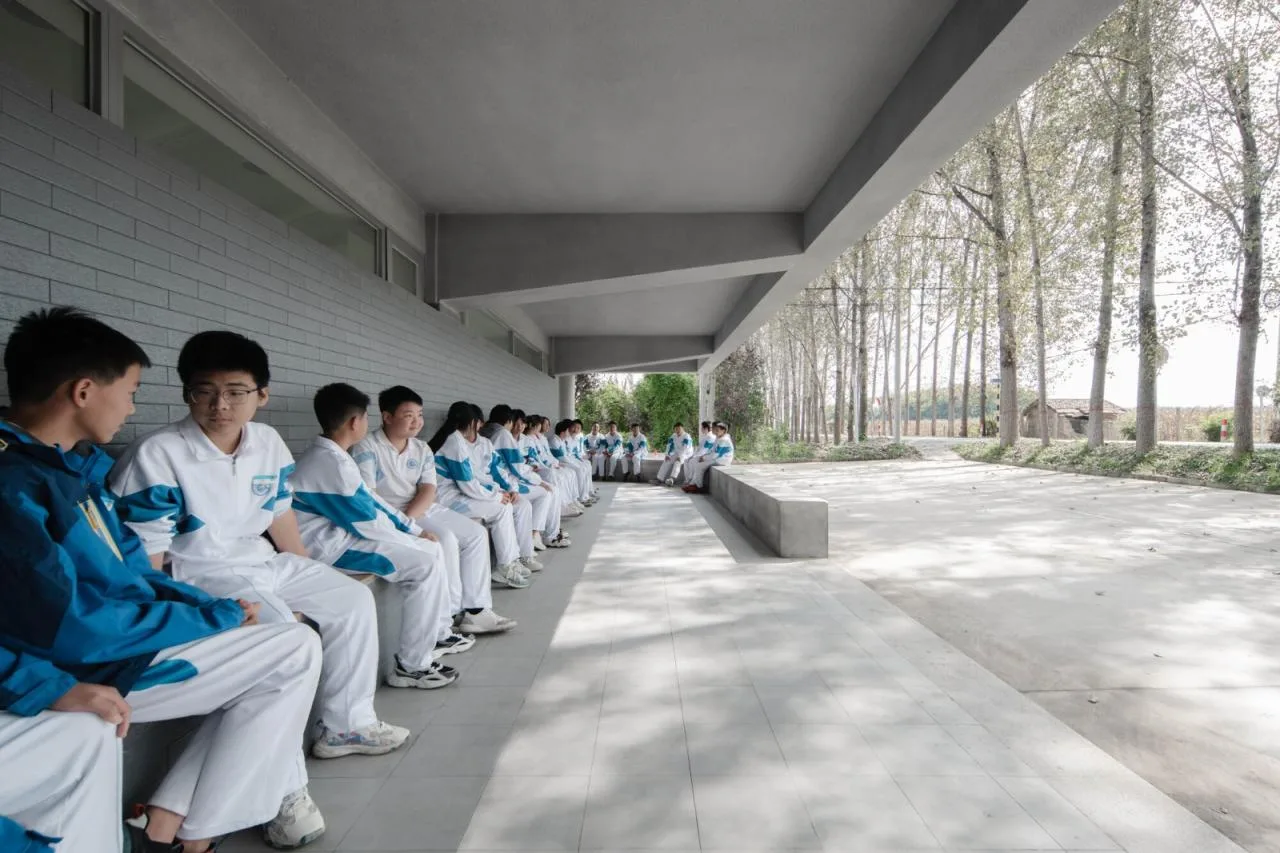
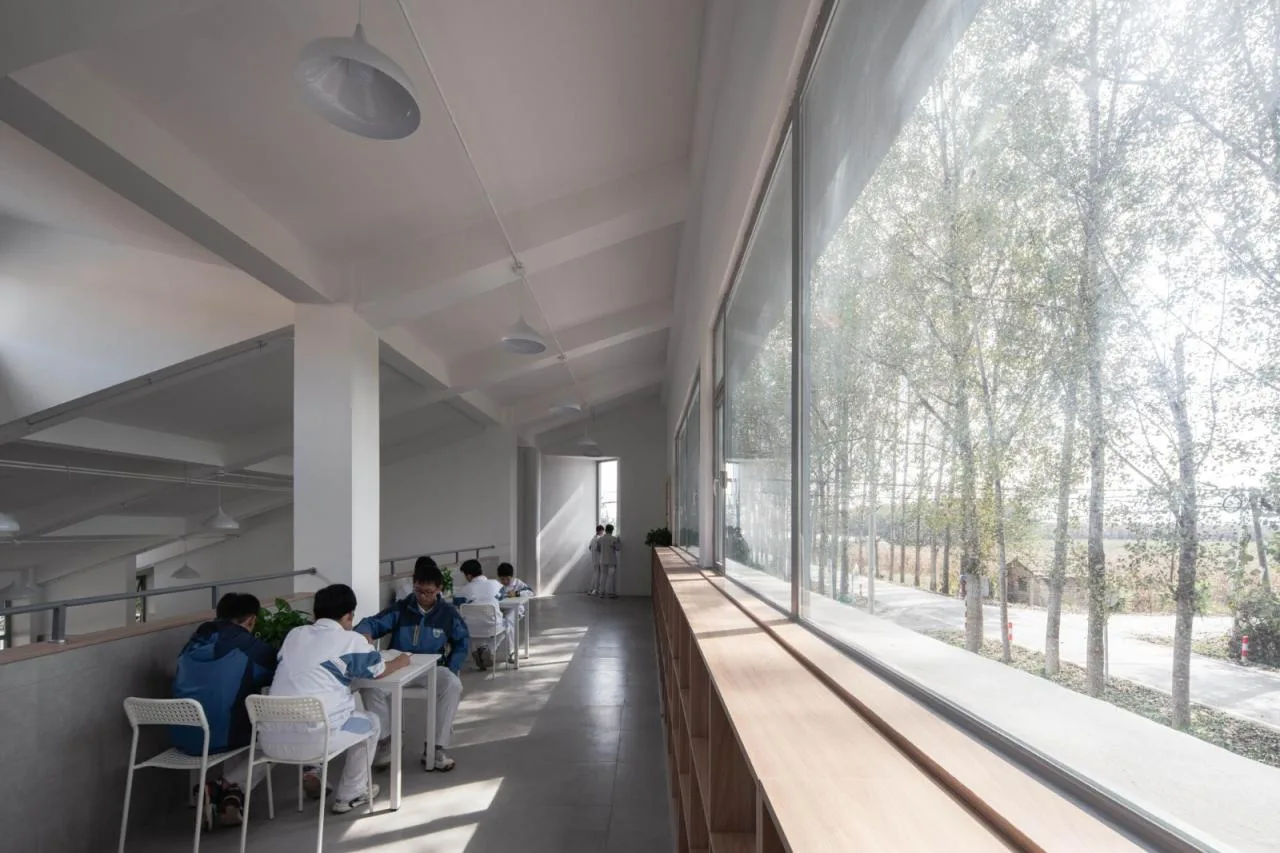
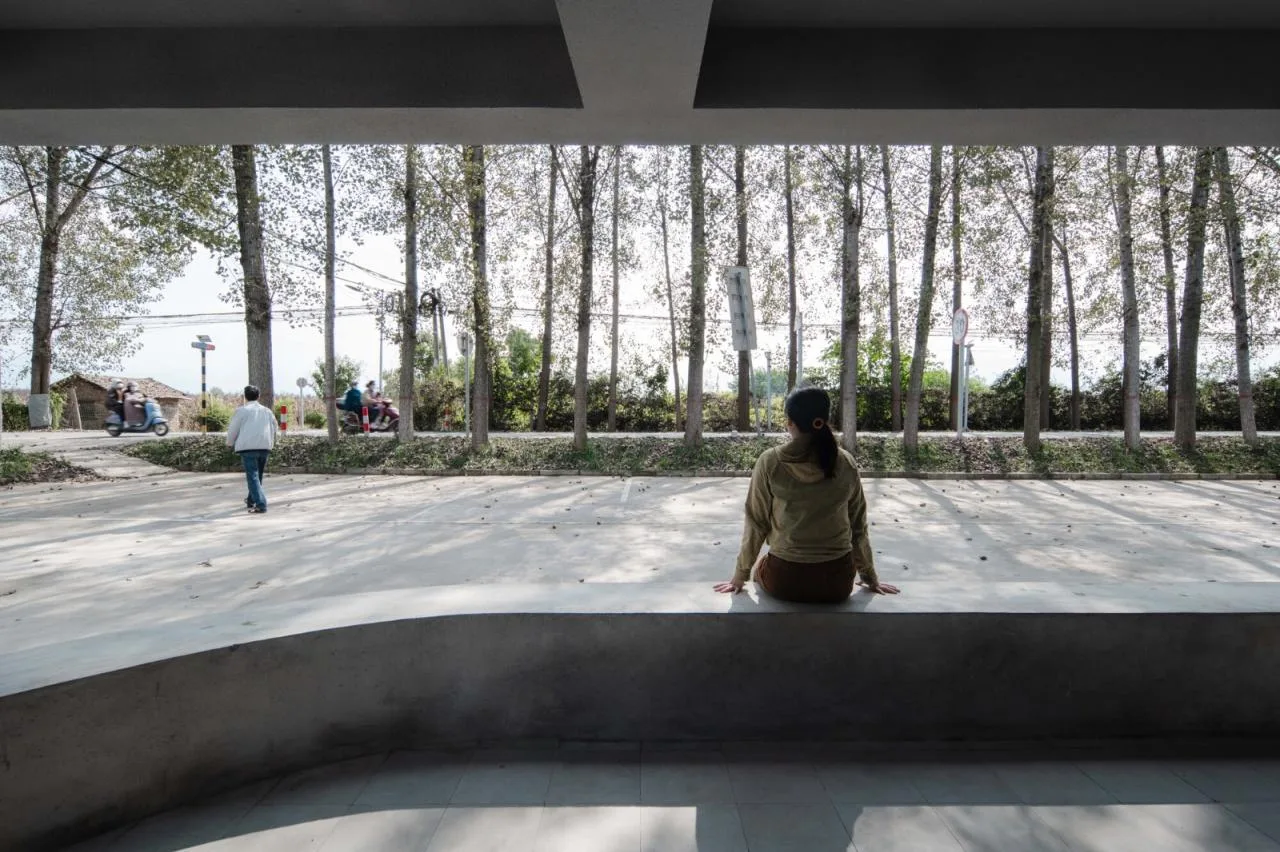
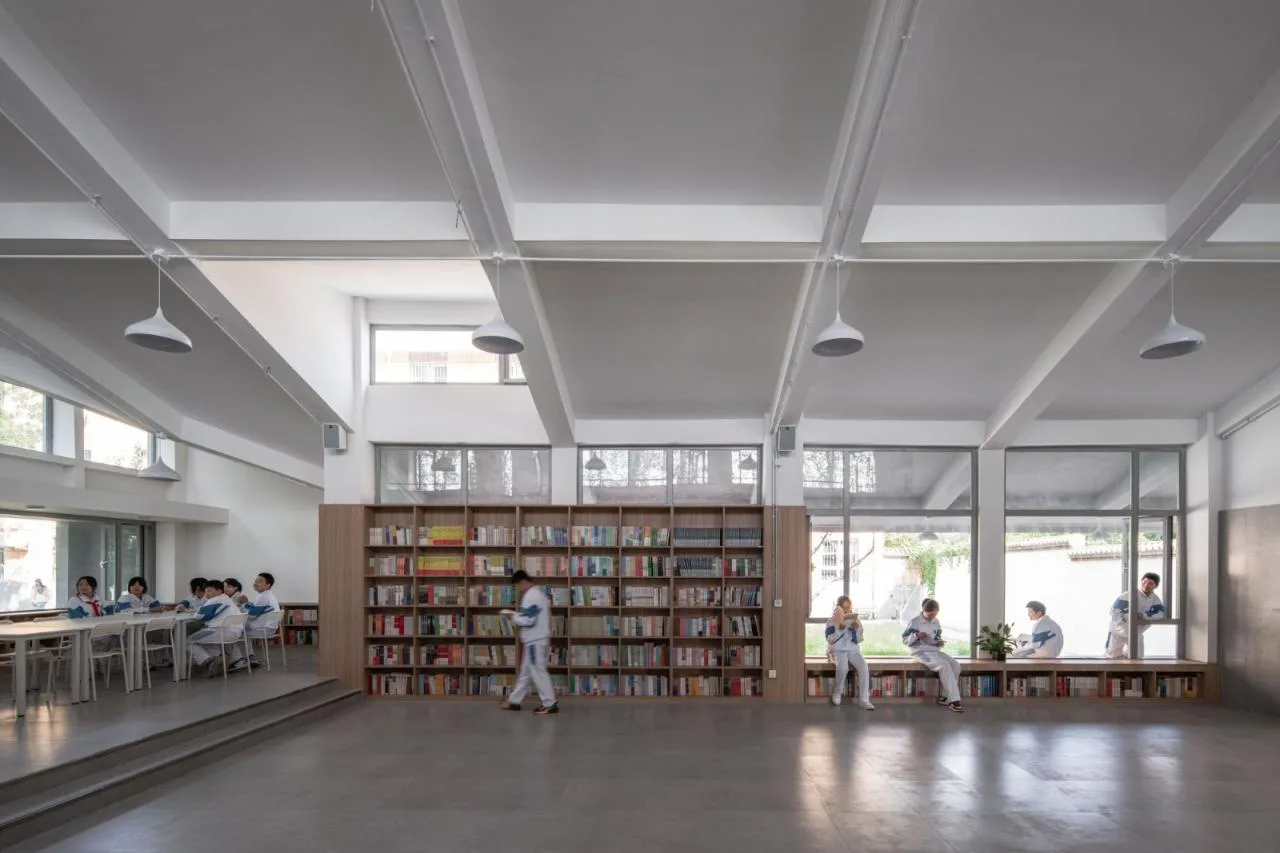
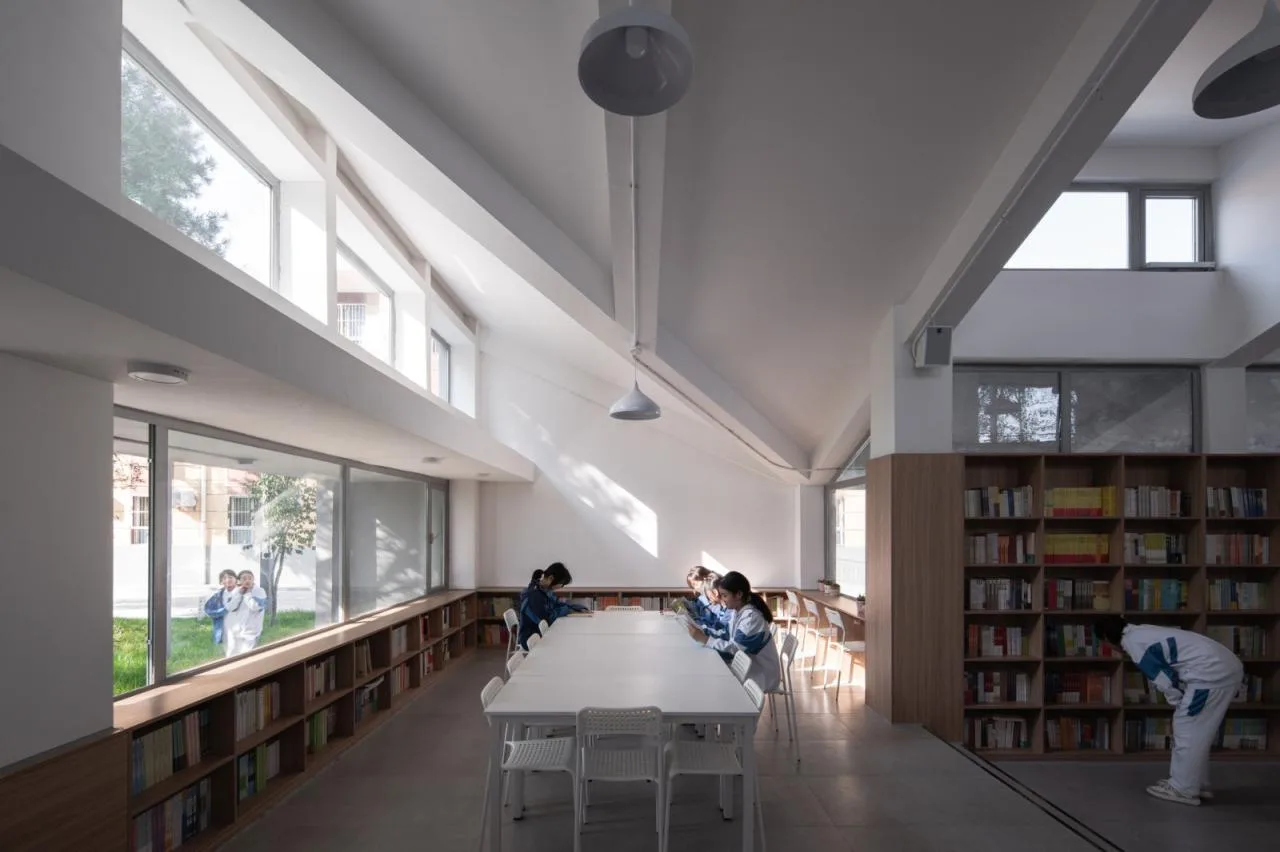
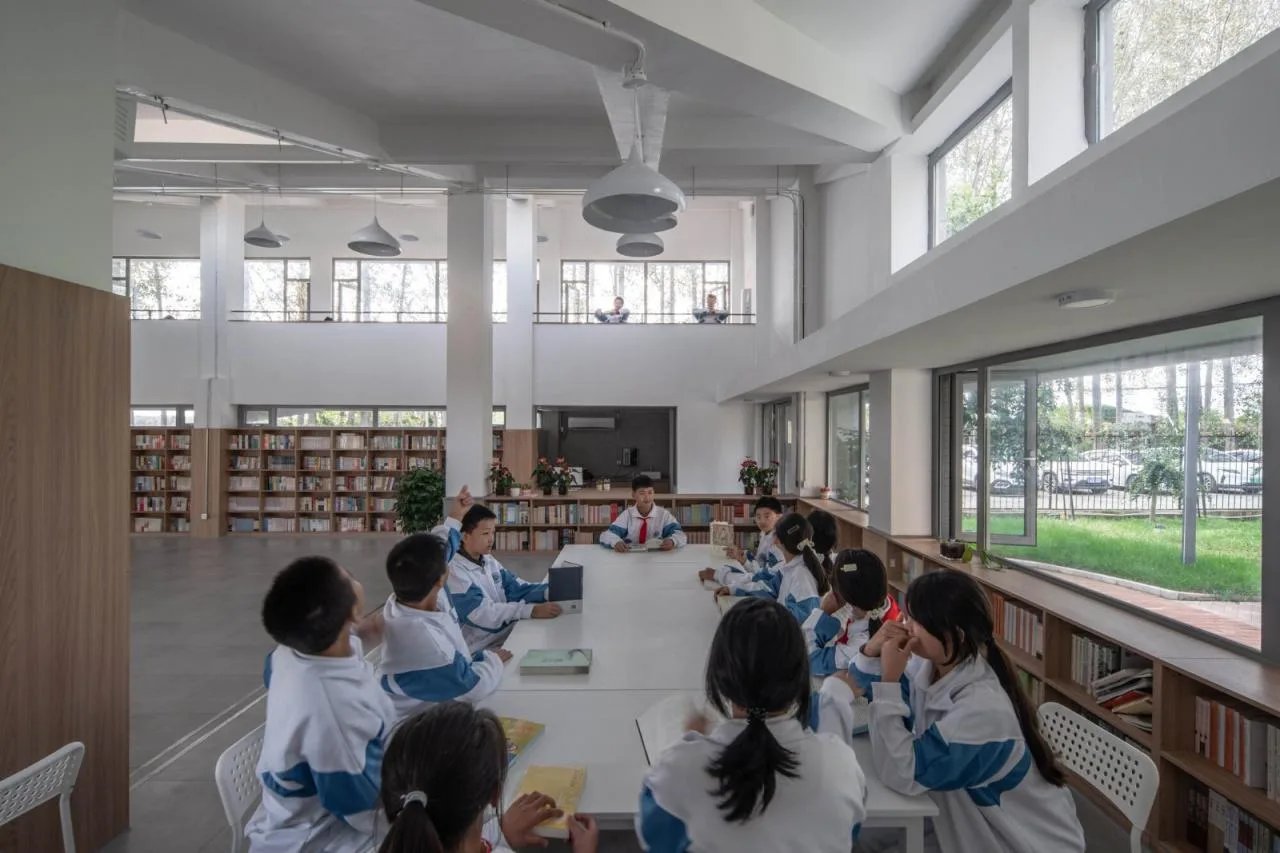
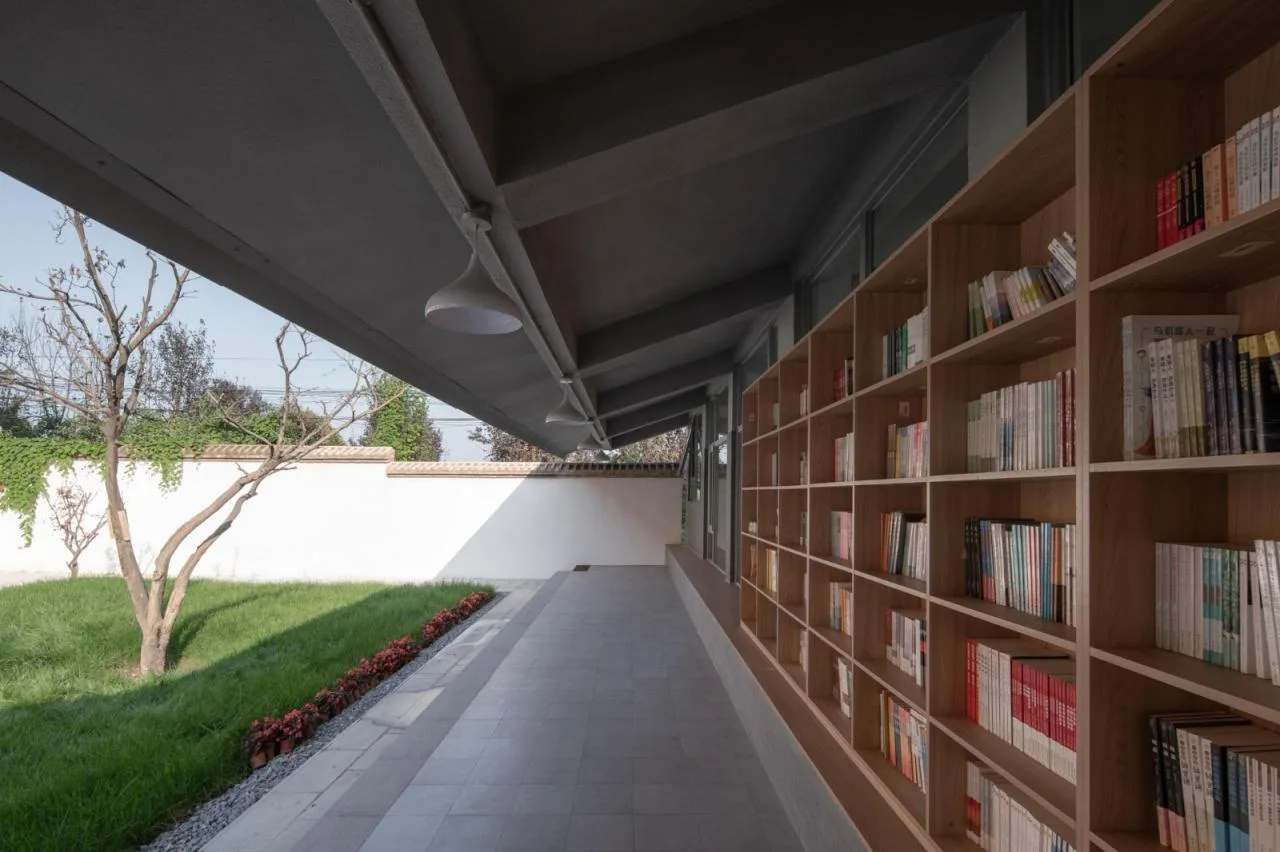
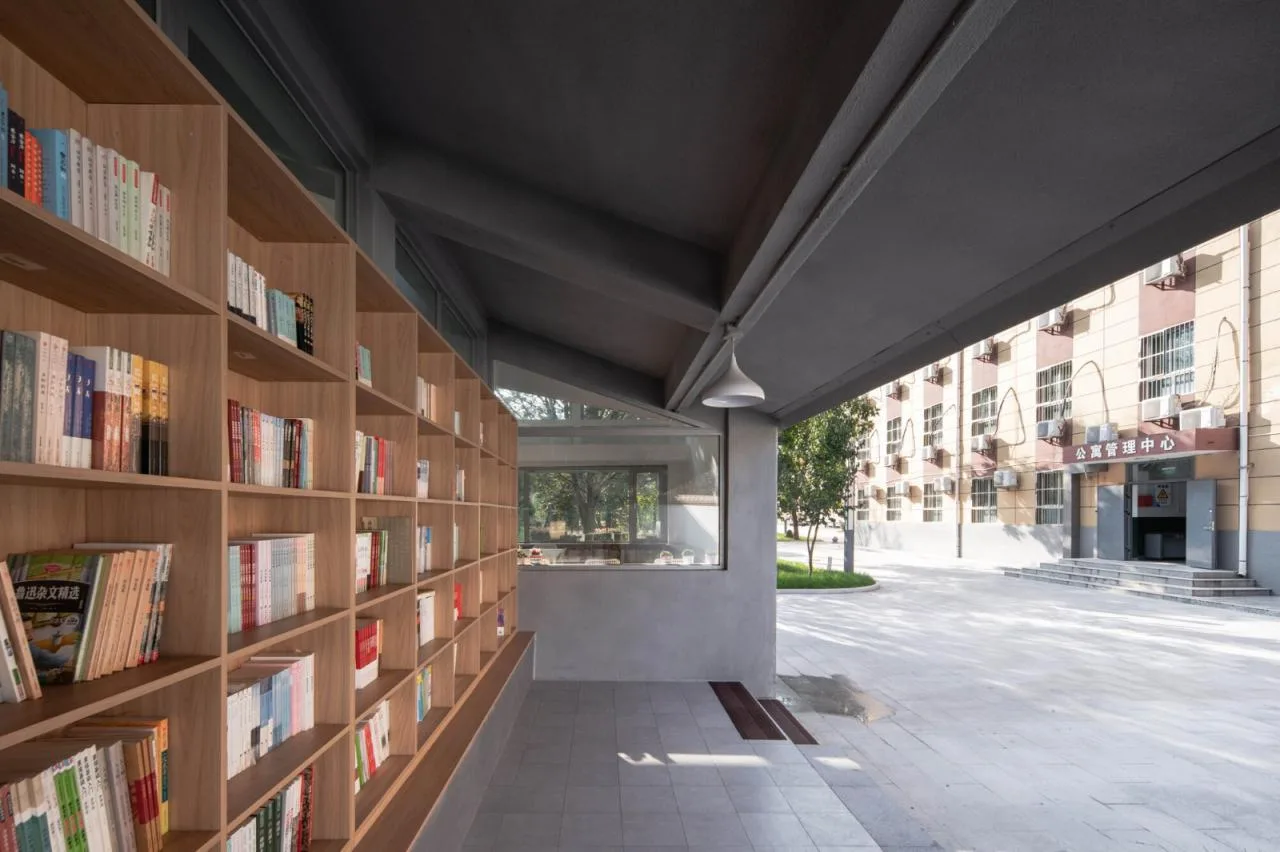
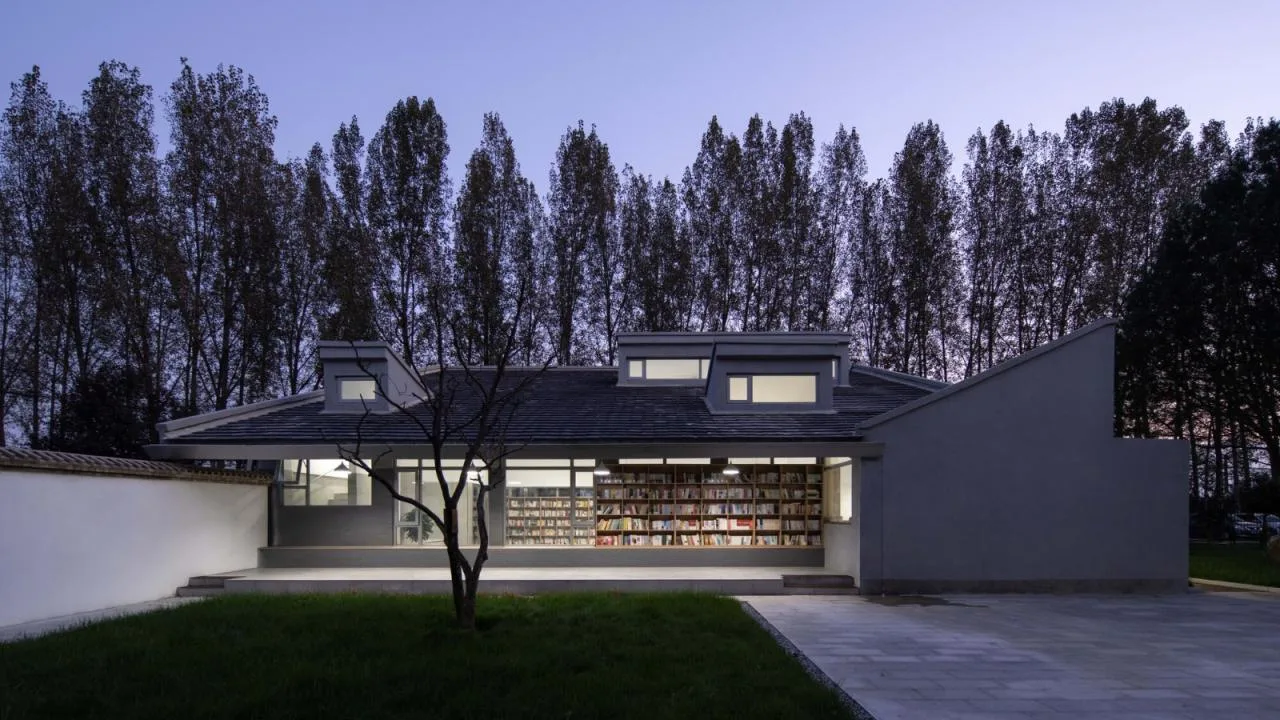
1. The value of open sharing: Positioned at the southeast corner of the campus near two main rural roads, the site was chosen to serve both the school and the surrounding community. The south-facing semi-outdoor eaves and the spacious, accessible first floor create a shared space that actively encourages interaction between campus culture and local villagers. This versatile area can host a variety of activities such as seminars, exhibitions, exchanges, learning sessions, and performances, enriching rural cultural life.
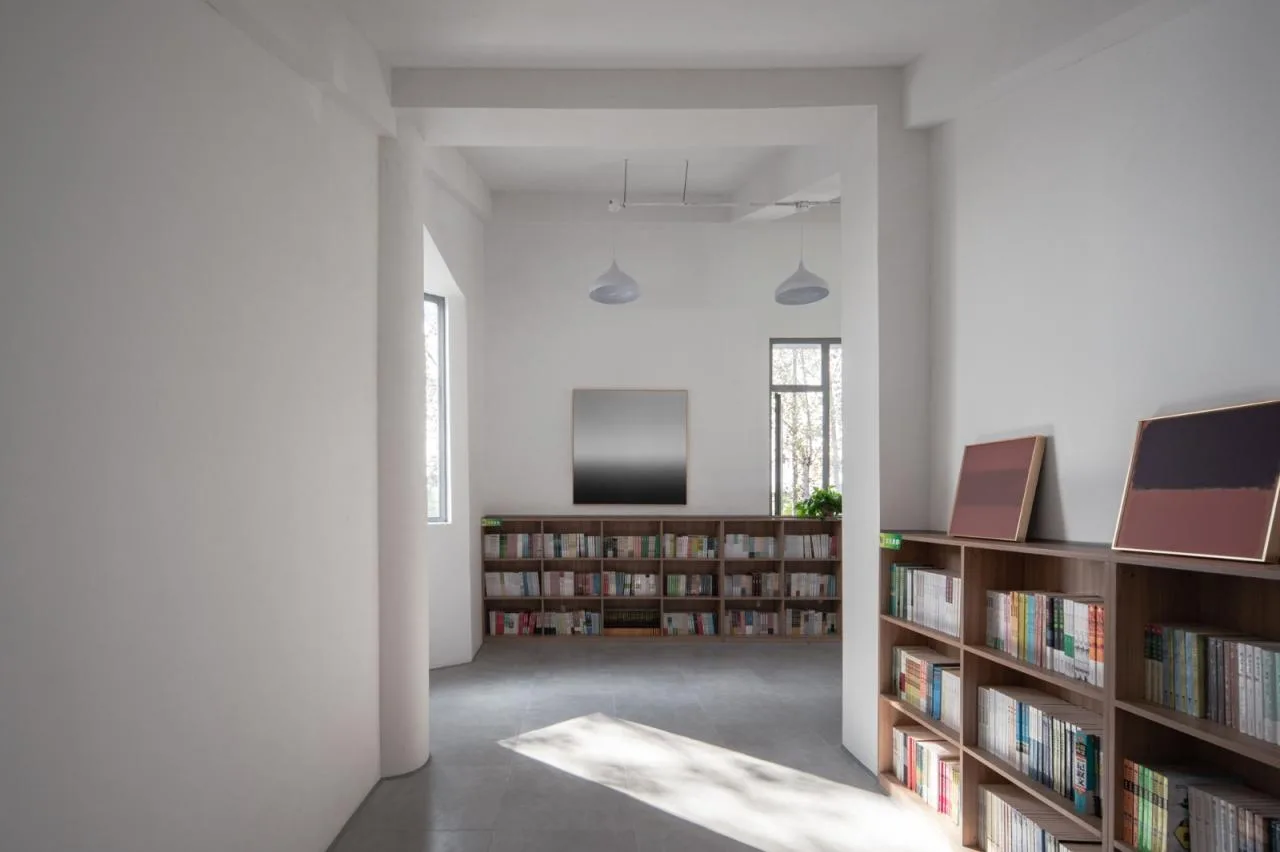
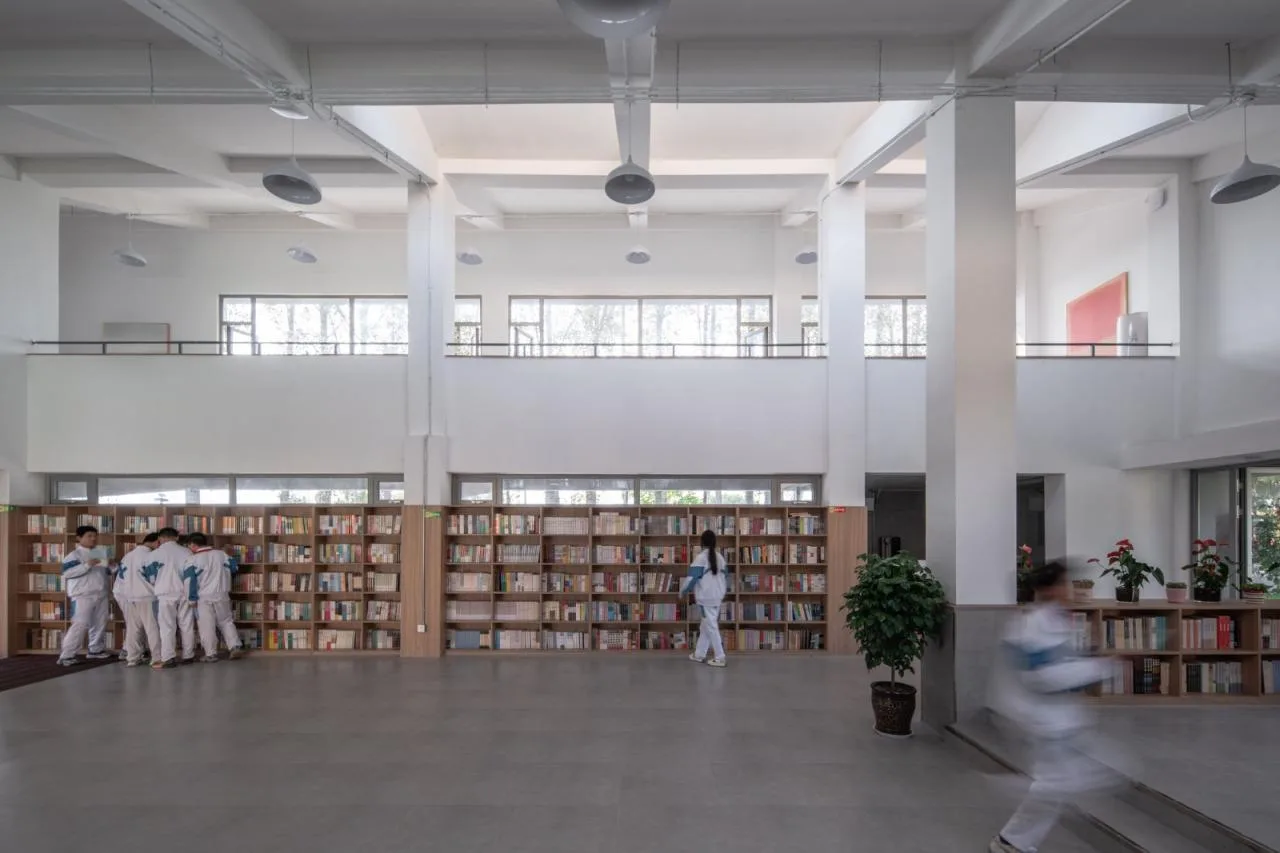
The design emphasizes a multifunctional “small space with multiple uses” concept, achieved through variations in spatial size, level changes, and indoor-outdoor connections. Additionally, the semi-outdoor eaves on the north and west sides align with the nearby student dormitory and landscape, providing teachers and students with much-needed communal spaces.
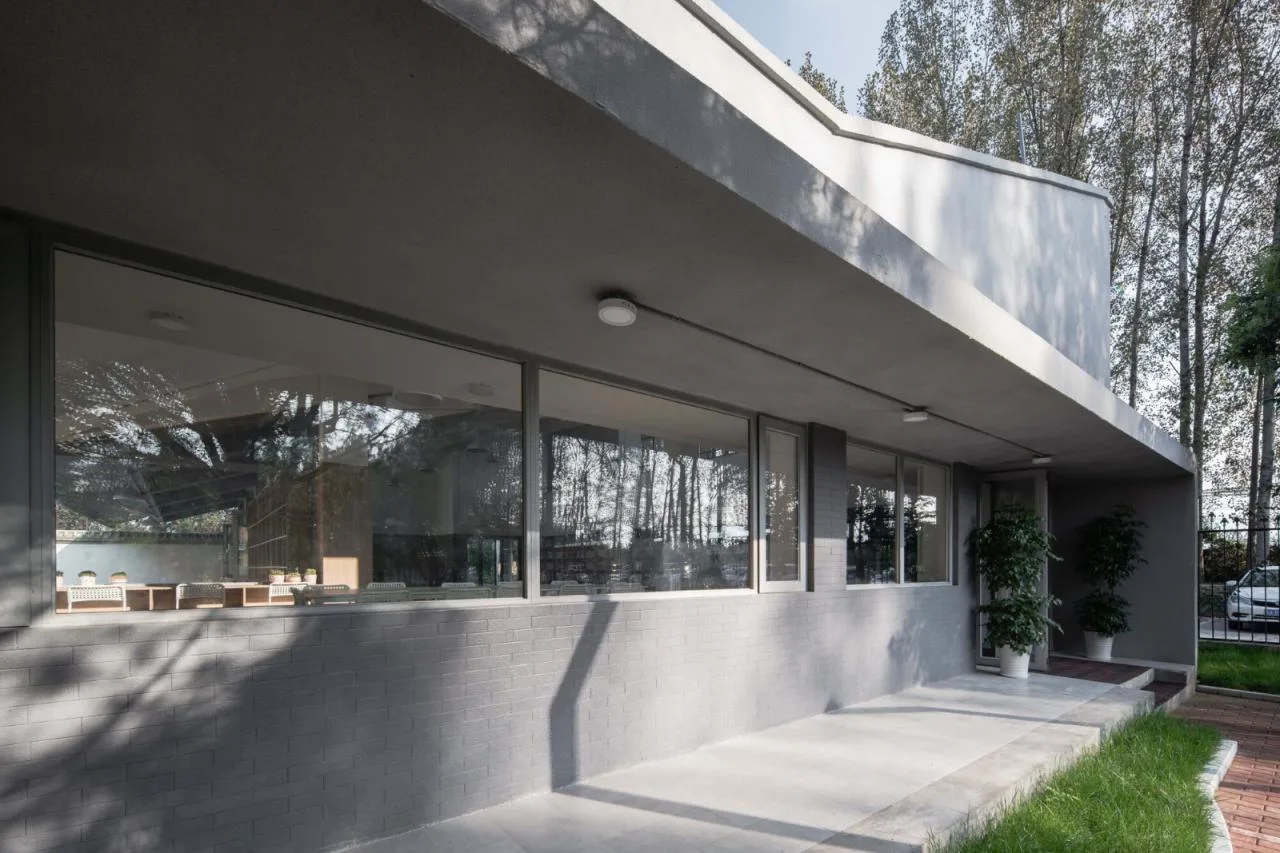
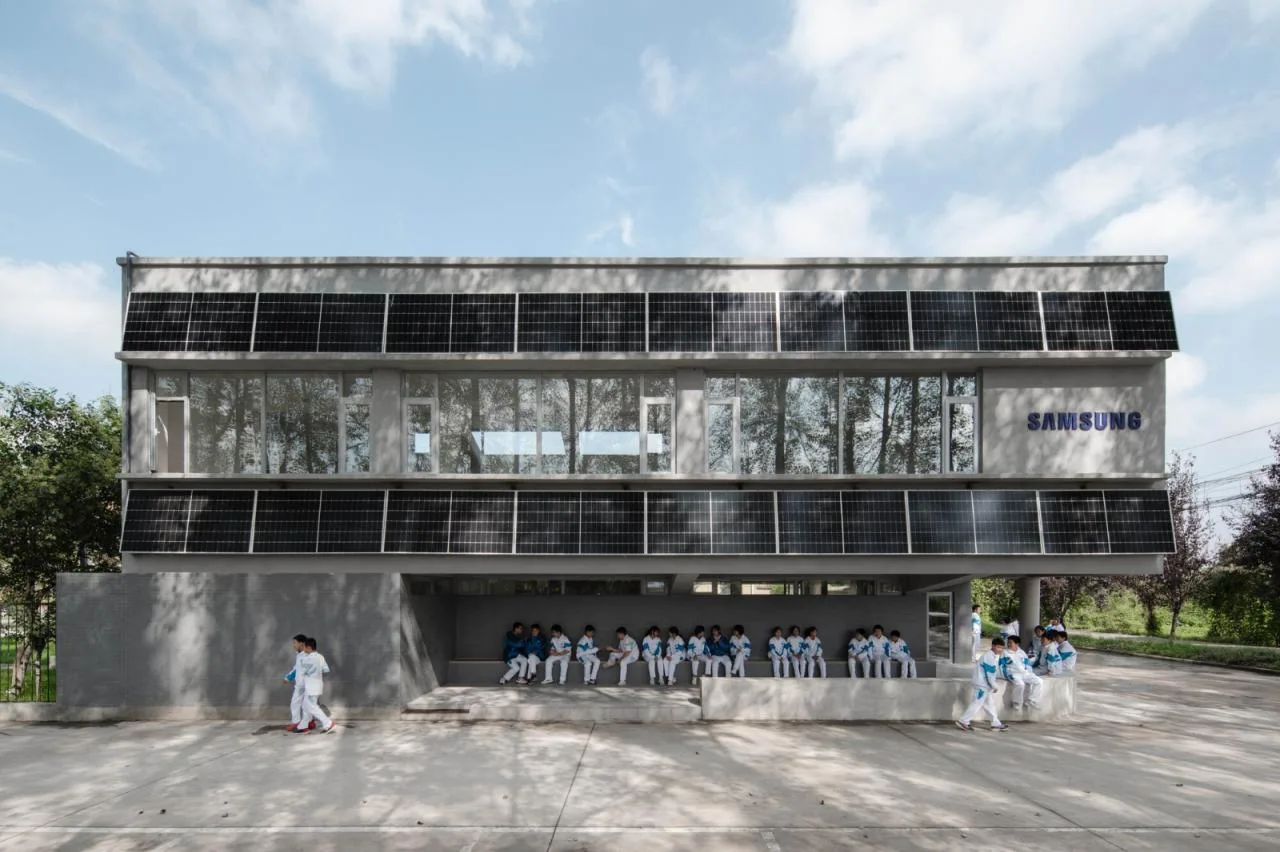
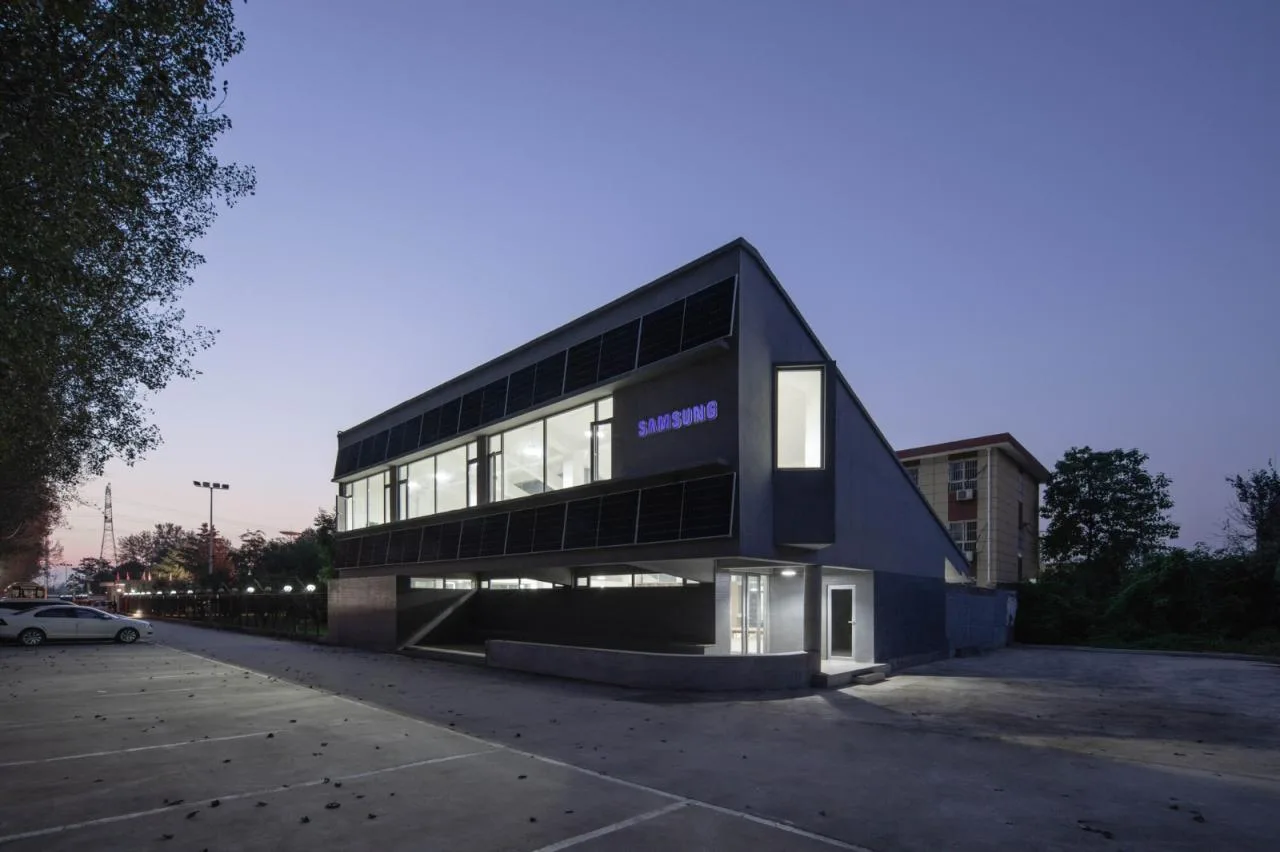
2. The value of ecological sustainability: In collaboration with the Zero Energy and Zero Carbon Building Research Team at Xi’an University of Architecture and Technology, the project explores a low-carbon design tailored to local conditions, making the building essentially powered by DC electricity.
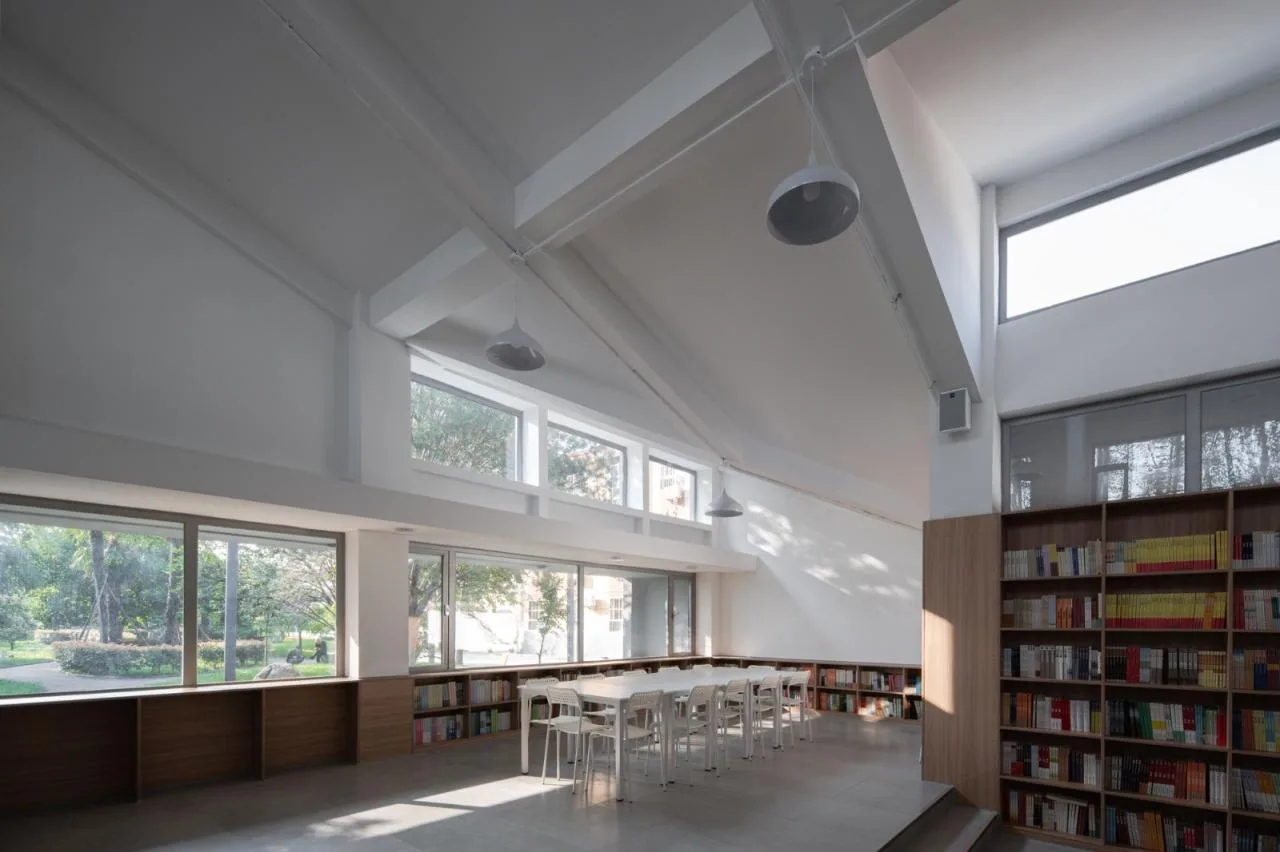
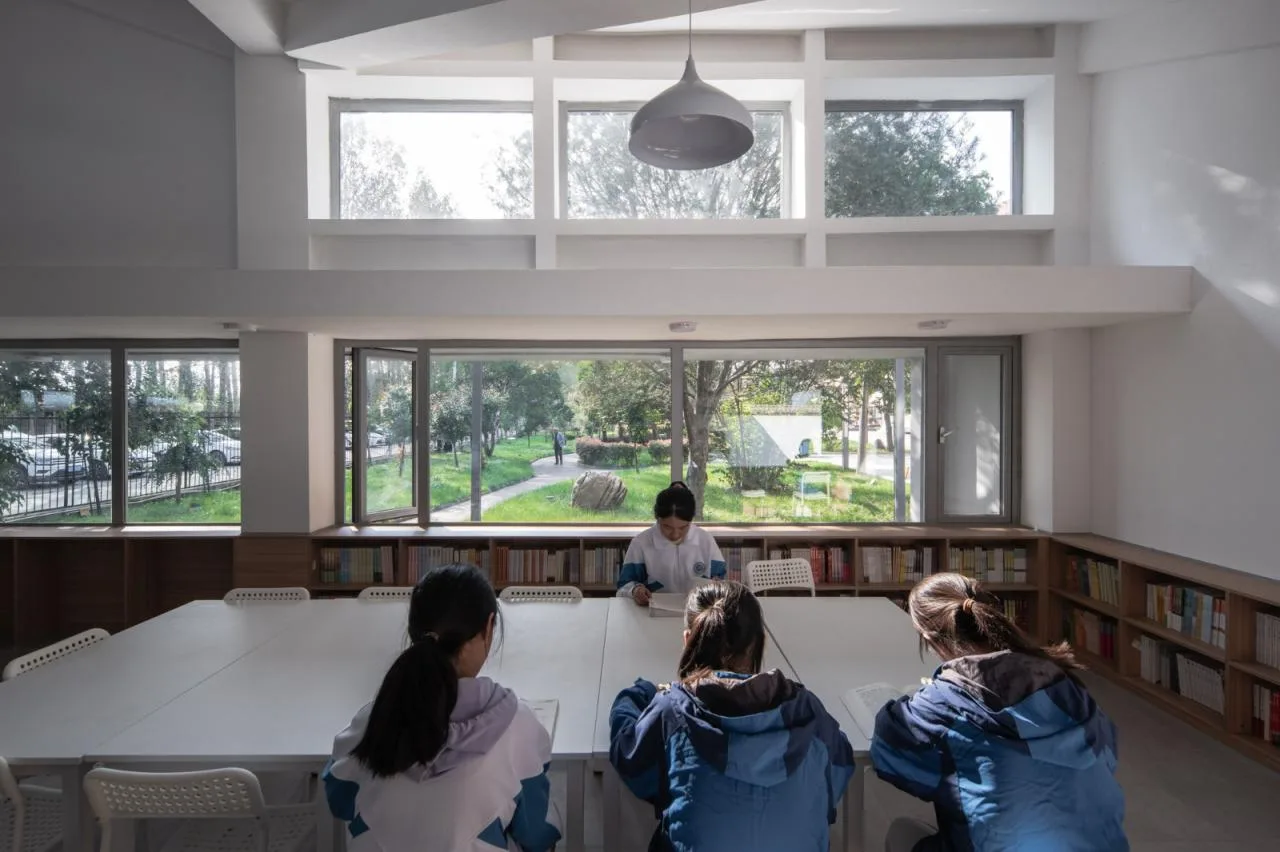
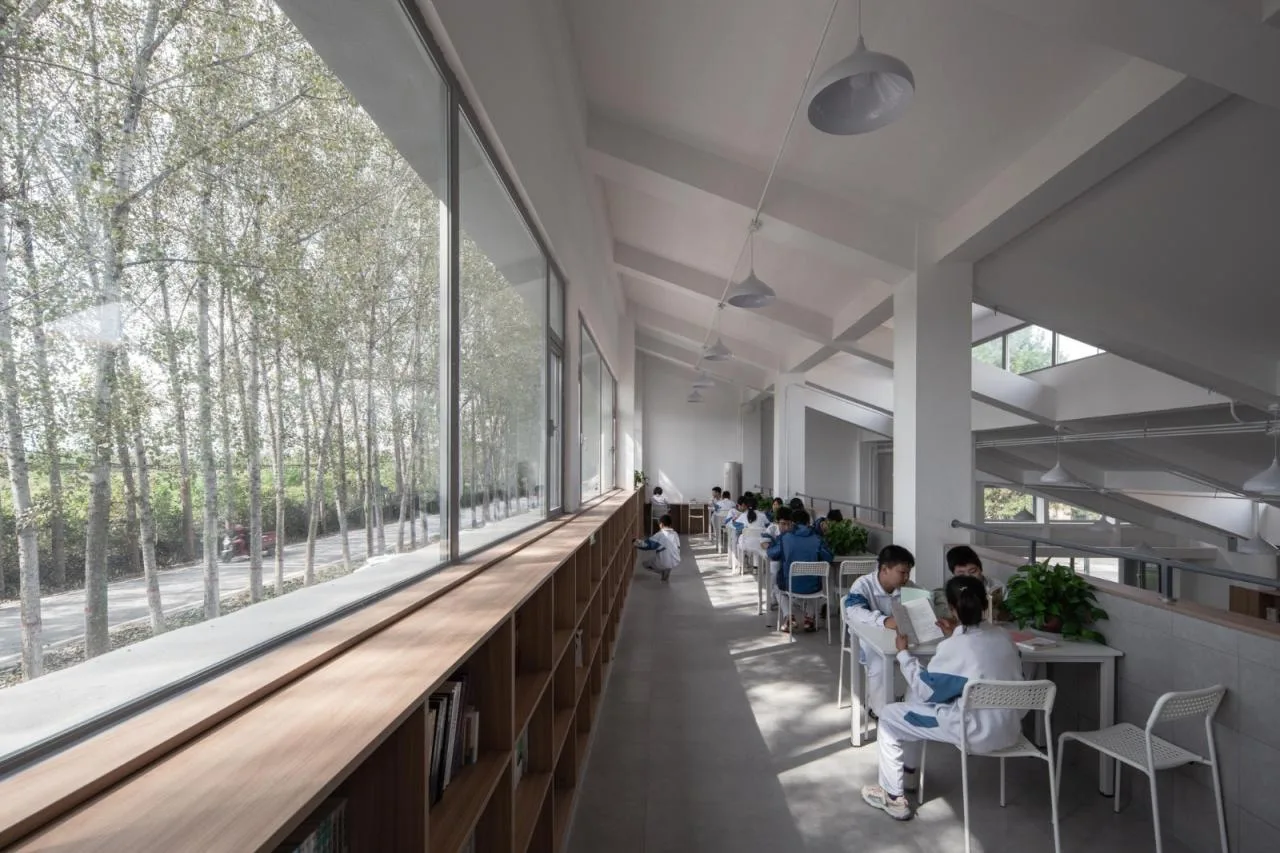
From the initial site selection and conceptual design, the research team worked closely with the architects to implement a low-carbon strategy that harmonizes with the natural environment. The building’s orientation, form, slope, openings, and roof skylight maximize solar gain in winter and promote natural ventilation and cooling during transitional seasons and summer afternoons, particularly utilizing the south-to-north downhill winds. Its single-slope roof avoids shading the north dormitory building, while skylights ensure year-round natural lighting and ventilation inside the library.
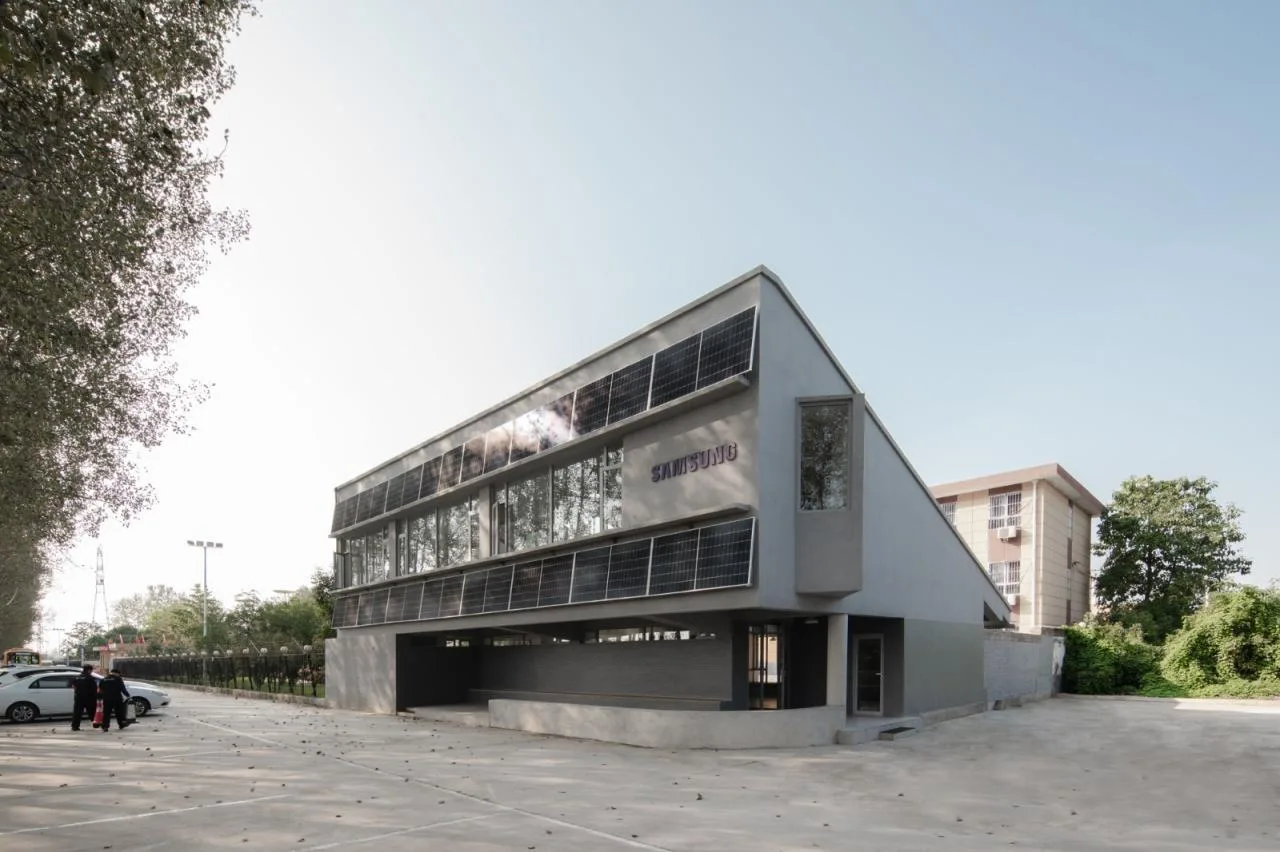
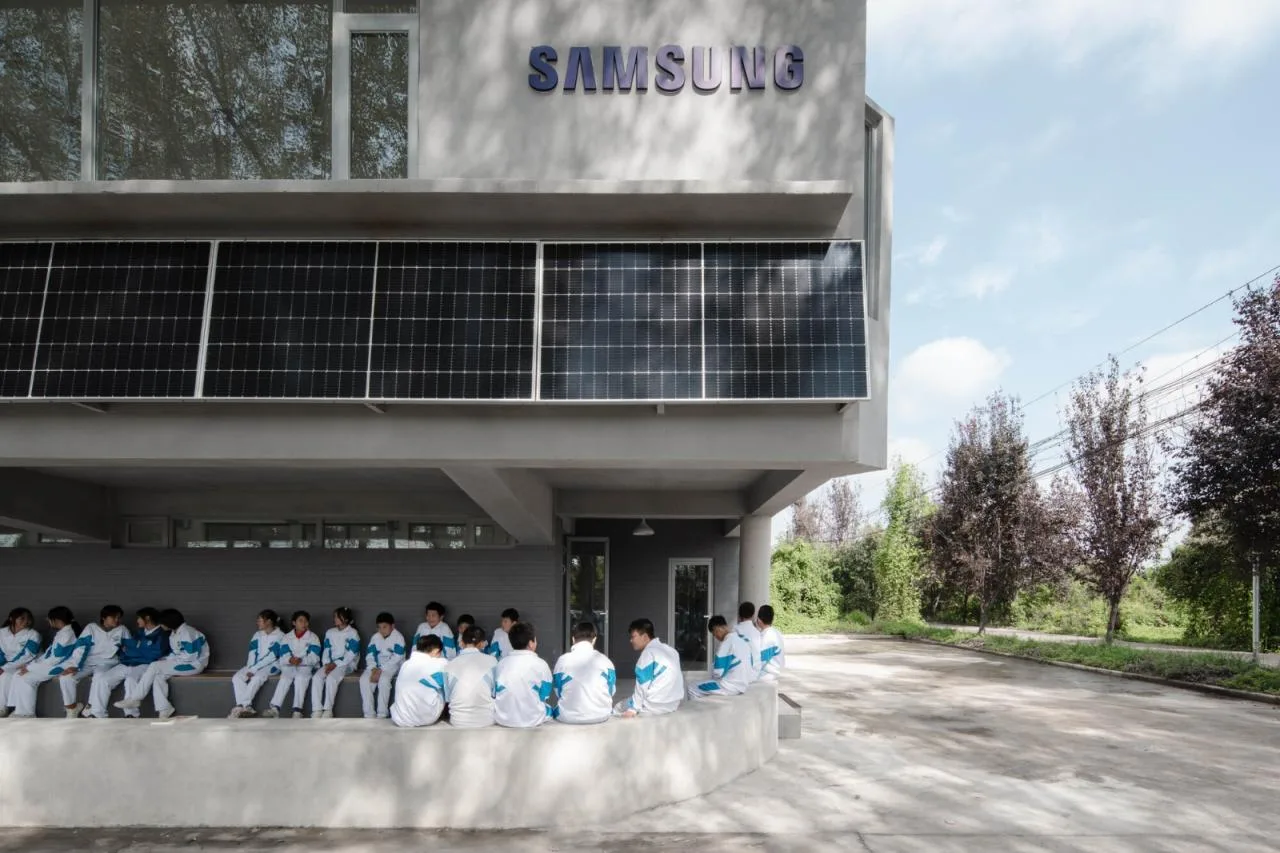
The building’s lighting, multimedia equipment, power outlets, and smart windows are all powered by photovoltaics, utilizing lithium iron phosphate battery packs for energy storage and a 48V DC bus for power distribution. Photovoltaic panels are integrated structurally using embedded parts combined with steel keel connections, balancing aesthetics, safety, and cost-efficiency.
Advanced monitoring systems track solar radiation, photovoltaic efficiency, indoor temperature and humidity, and energy consumption in real time, with data transmitted to the cloud. This provides invaluable first-hand data for the ongoing development of low-carbon building technologies, establishing the library as an important experimental base for sustainable rural construction.
This project reflects achievements from the “Key Technology Research and Demonstration of Zero Carbon Buildings in Solar Energy Enrichment Areas,” part of China’s 14th Five-Year Plan national key research and development initiatives. It also aligns with national and Shaanxi provincial policies promoting zero-carbon buildings and photovoltaic integration.
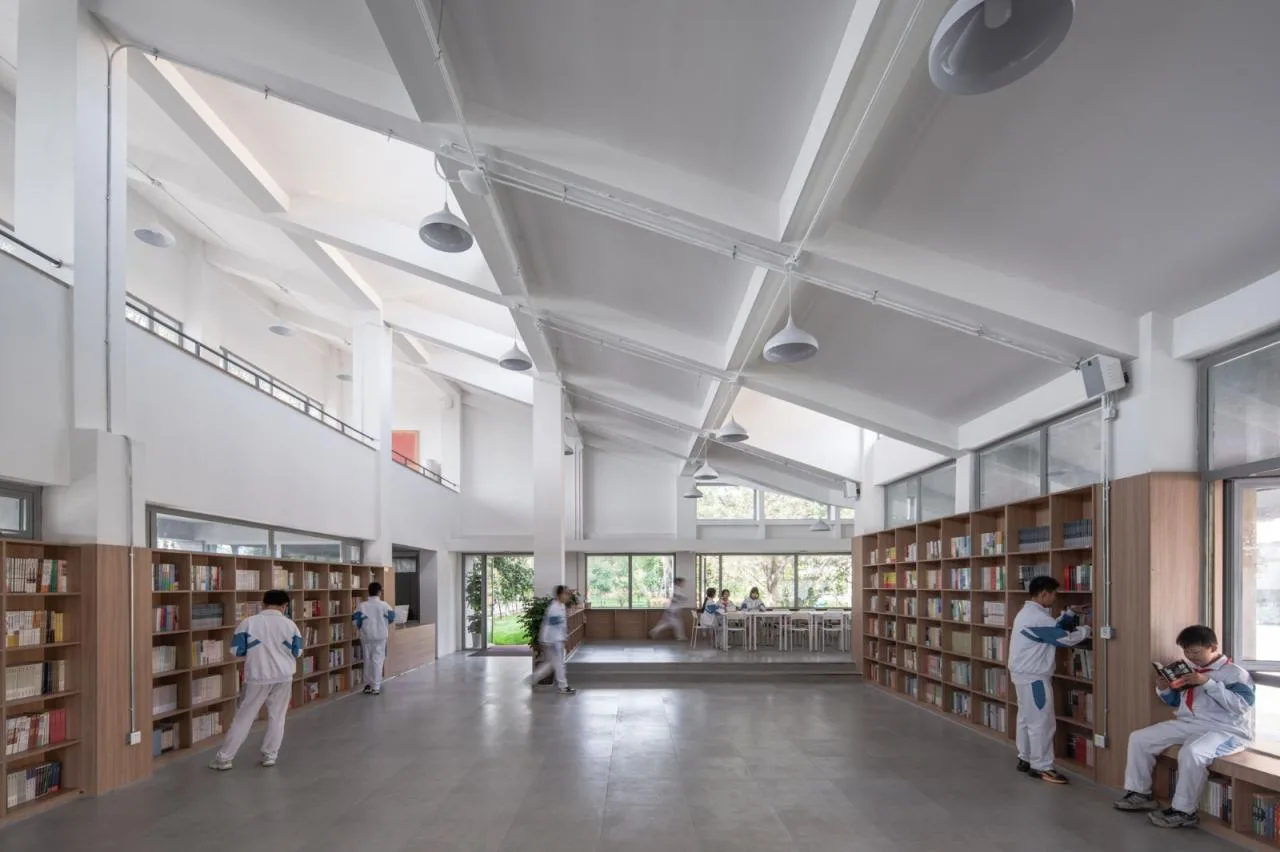
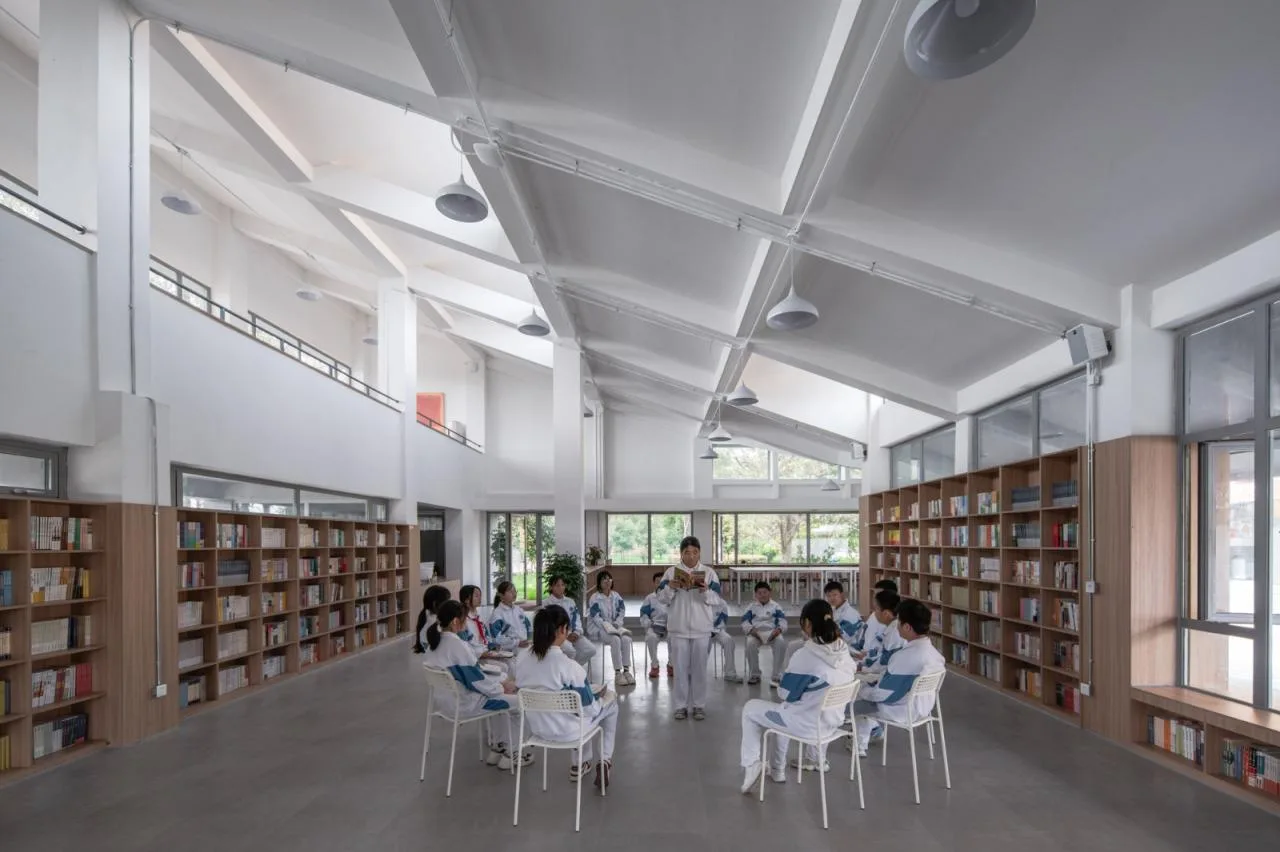
The “Qinfeng Library” is a cost-effective, small-scale campus library, representing a 2.0 version built upon the foundation of the first phase. It expands on the core values of open sharing and ecological sustainability. Despite the challenges and uncontrollable factors inherent to rural construction, this project’s ongoing development will undoubtedly serve as a valuable model for rural development and public welfare initiatives in Shaanxi.
Project Drawings
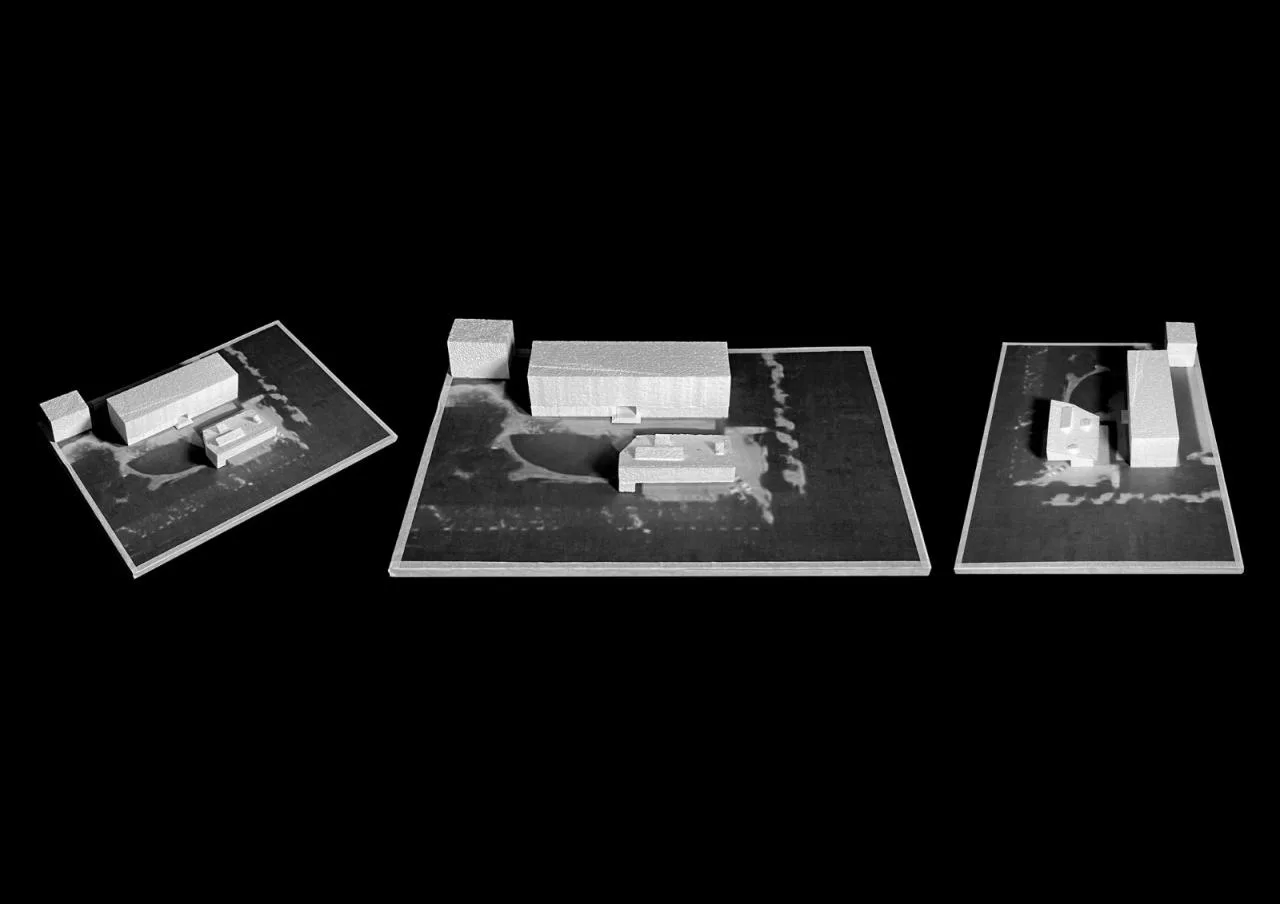
△ Model diagram
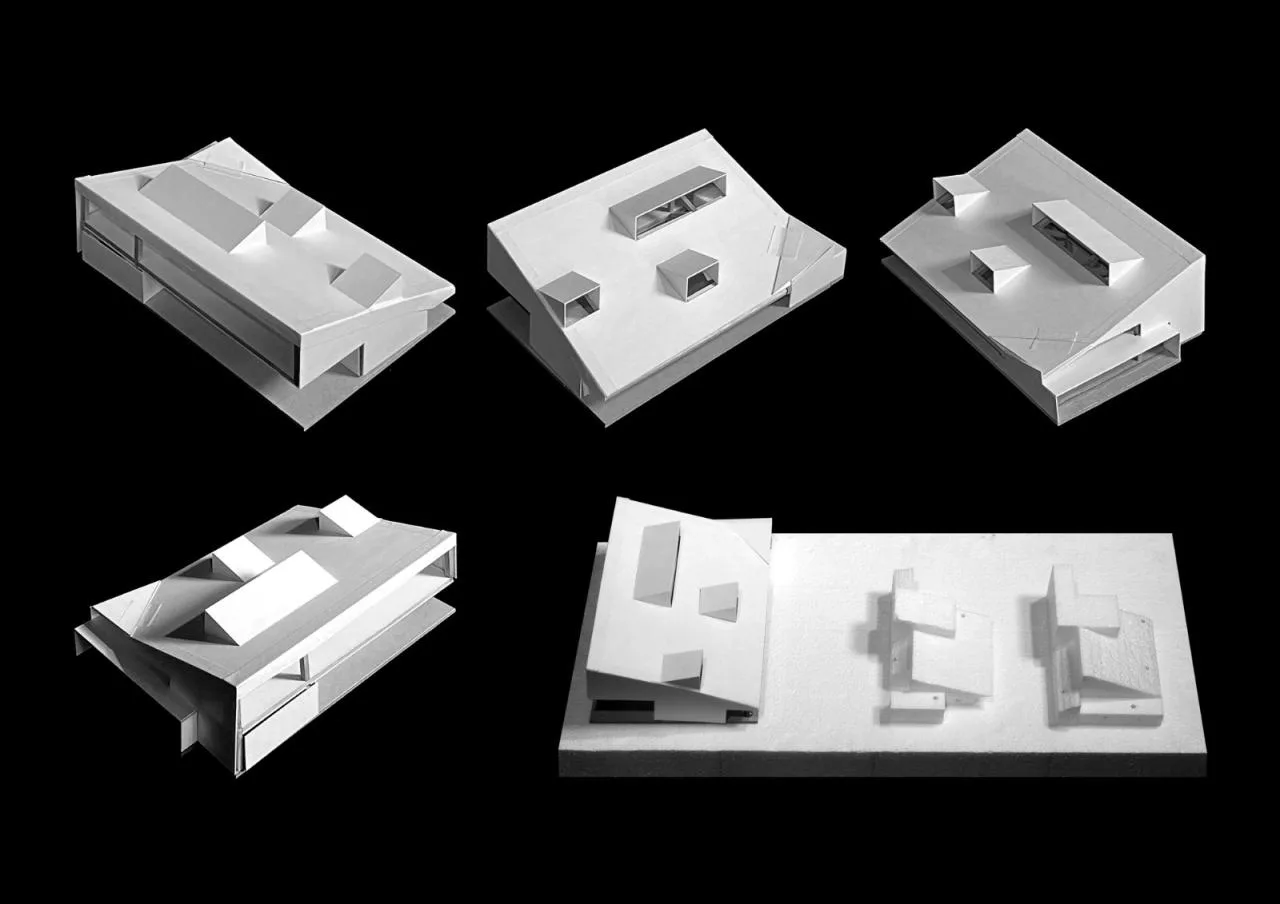
△ Model diagram
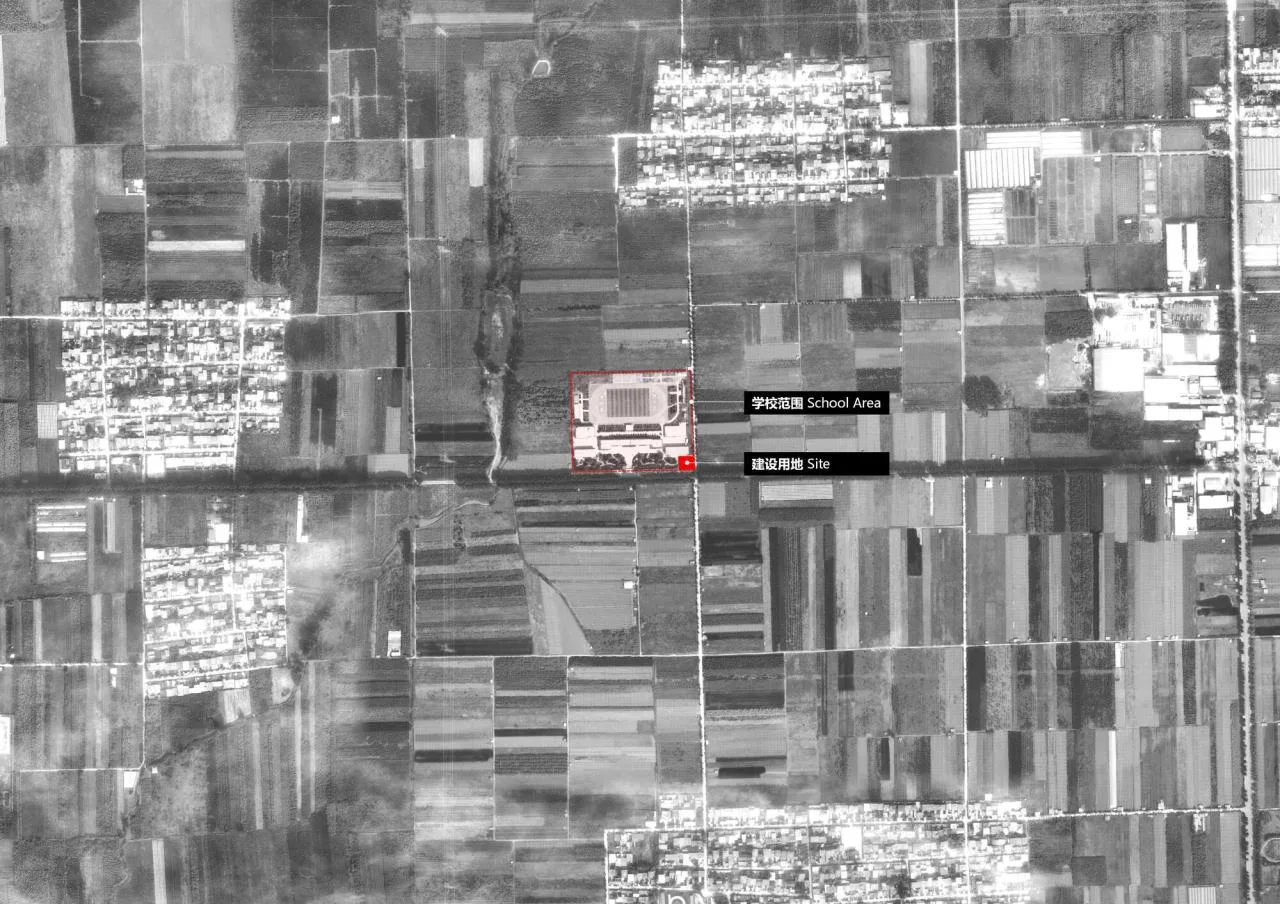
△ Site schematic diagram
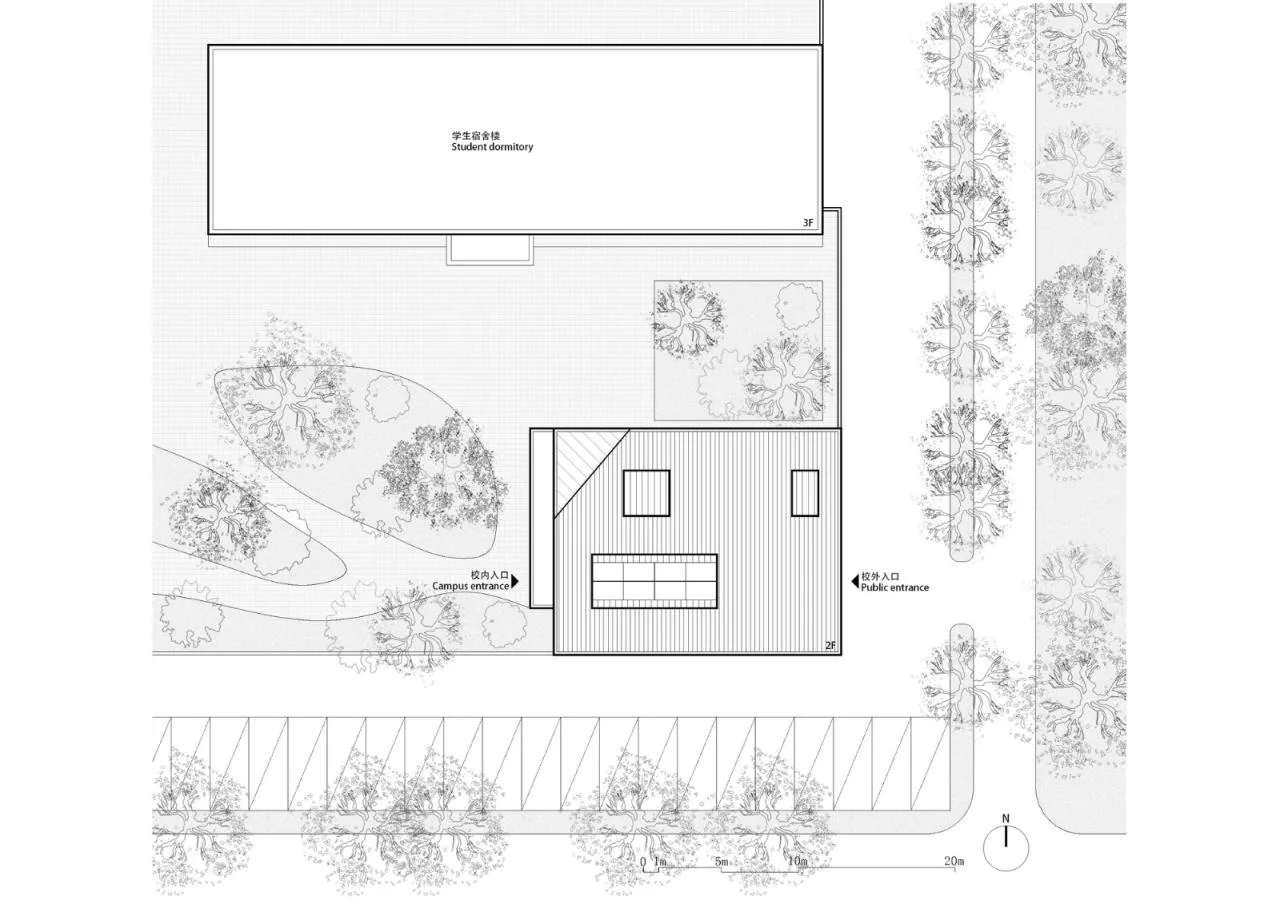
△ General layout plan
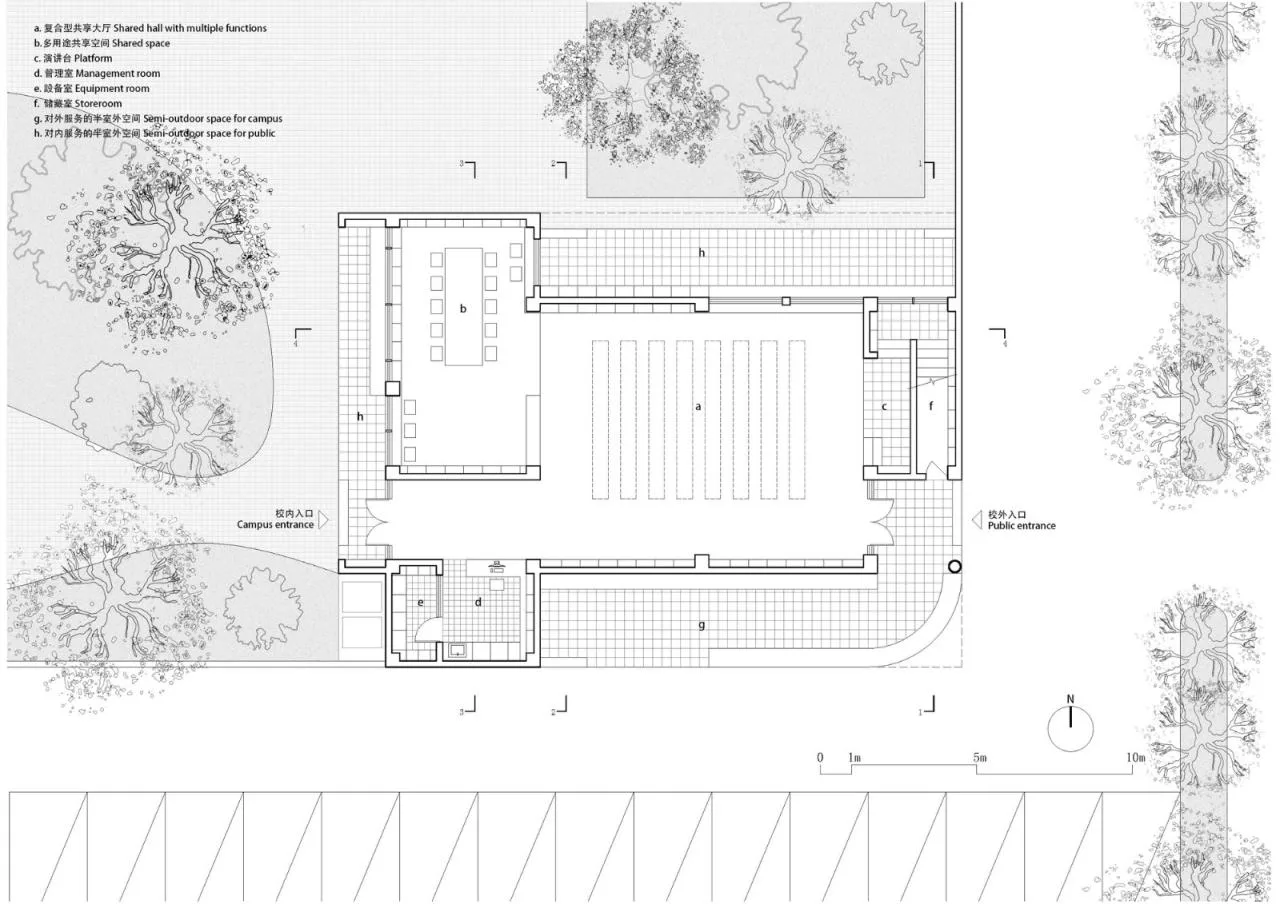
△ First floor plan
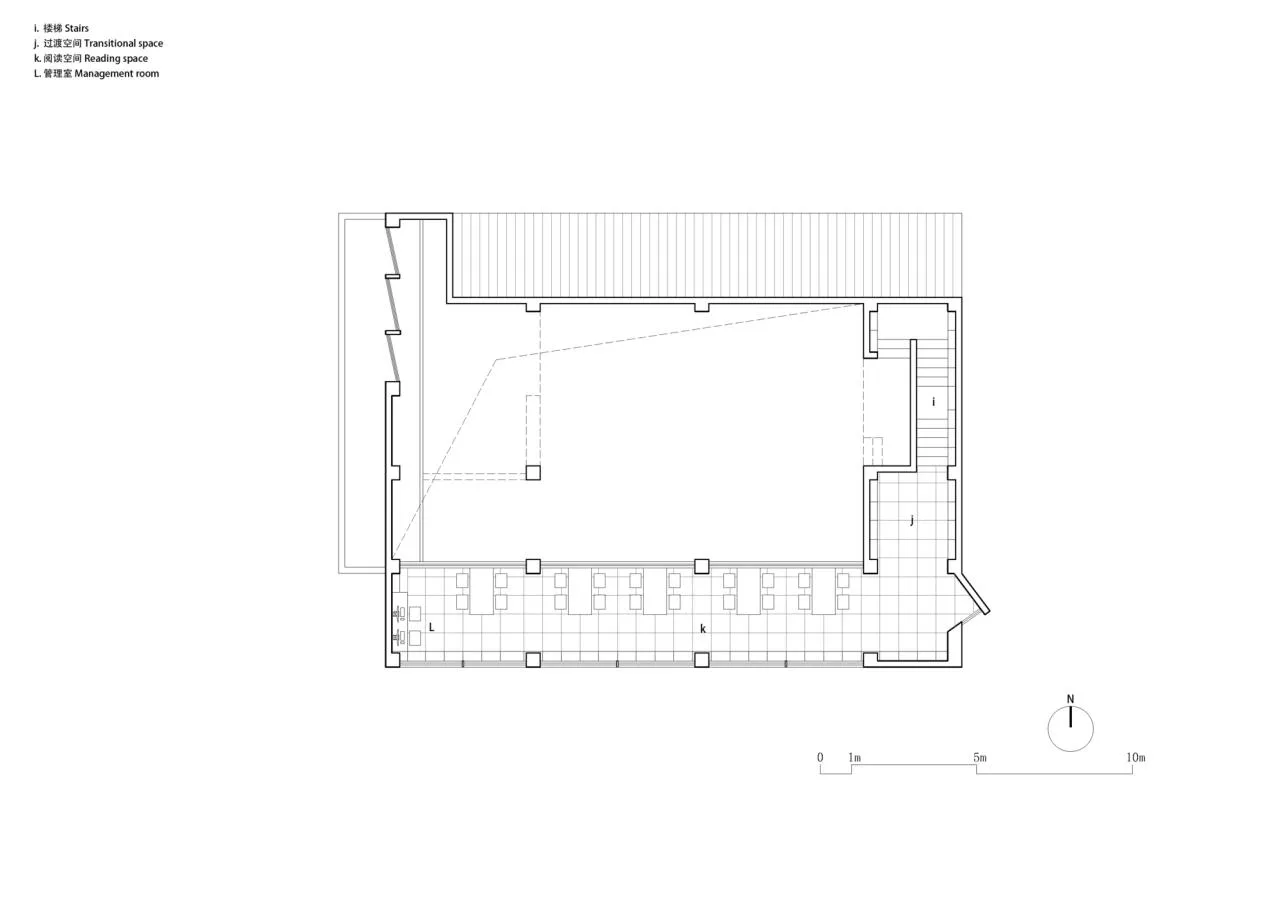
△ Second floor plan
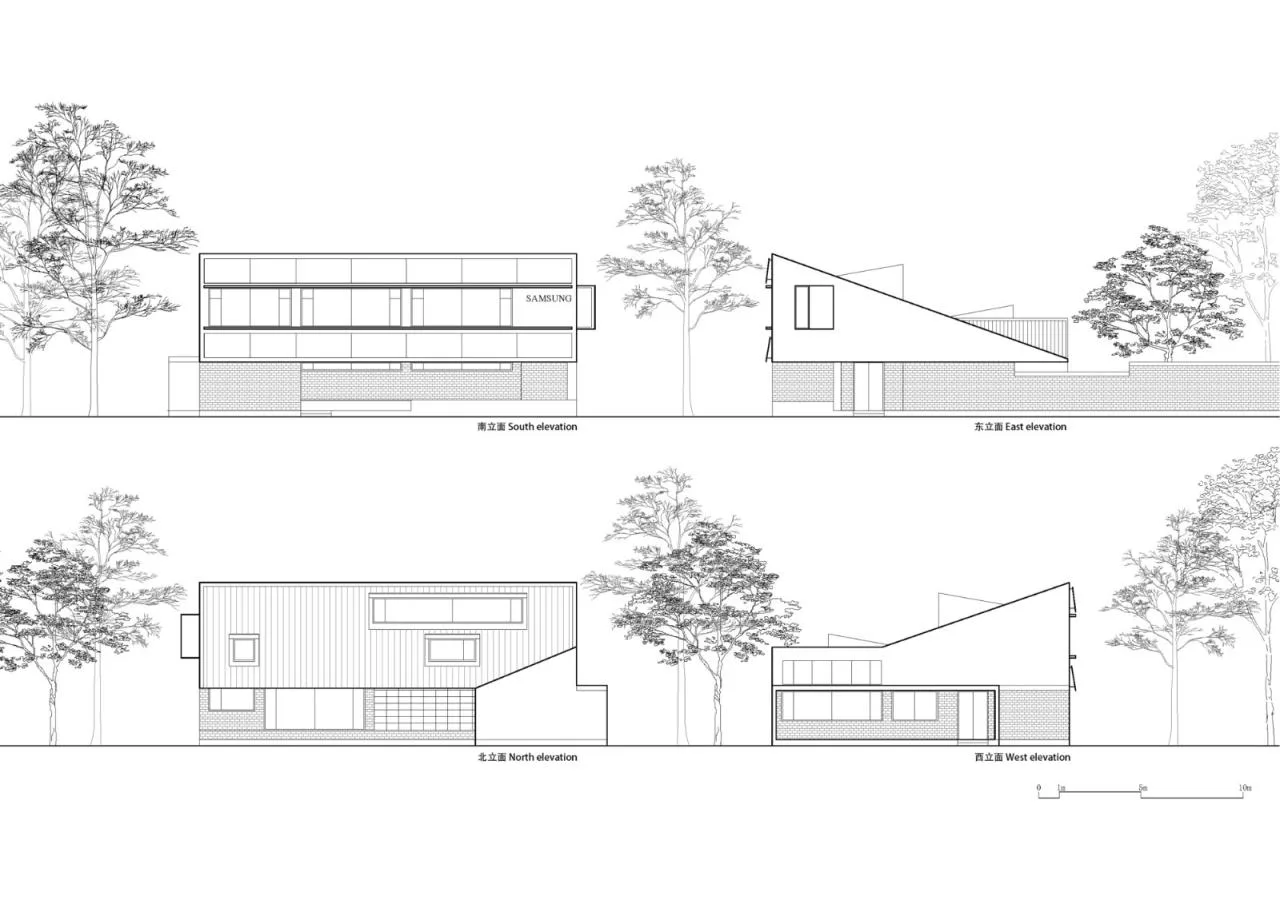
△ Elevation drawing
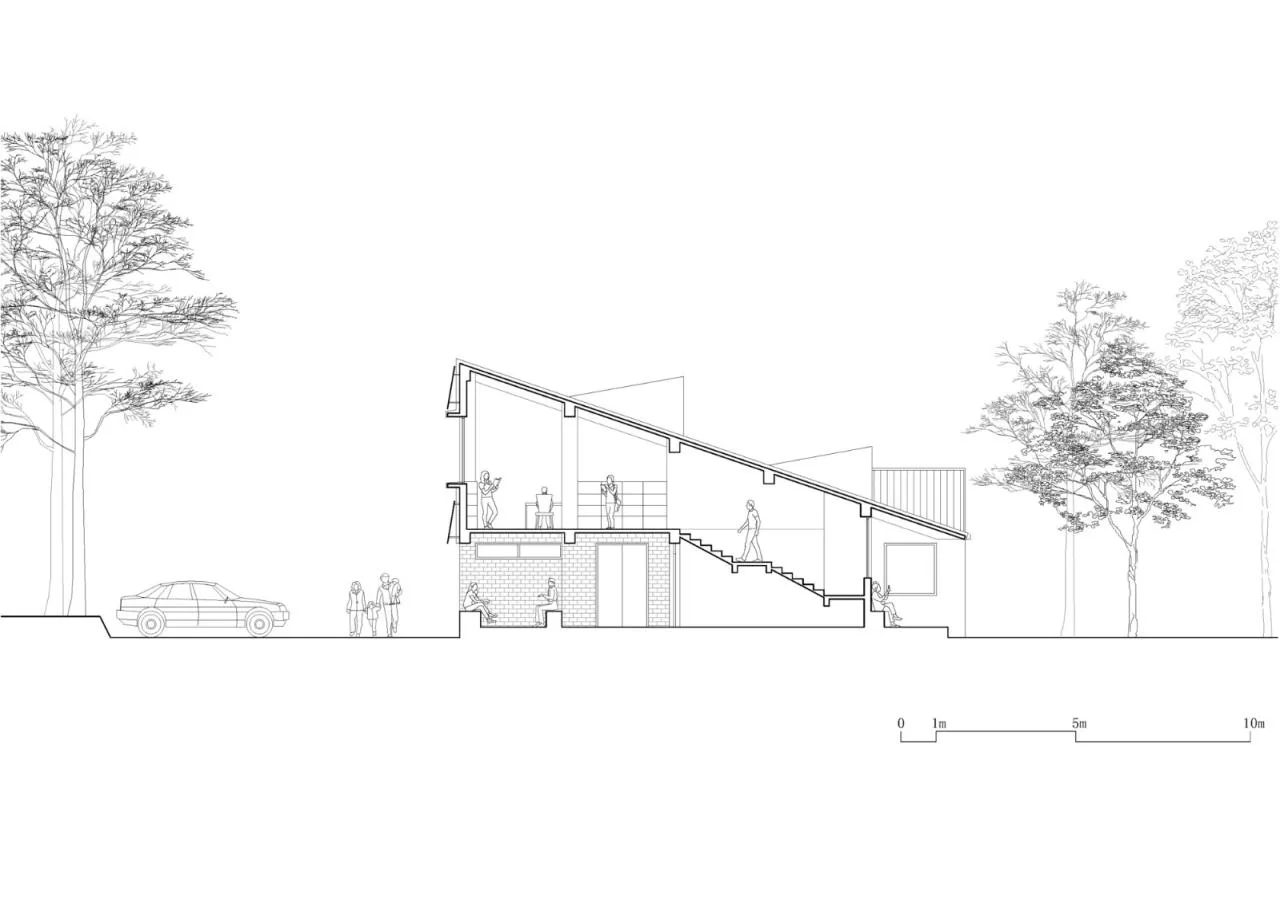
△ Section diagram
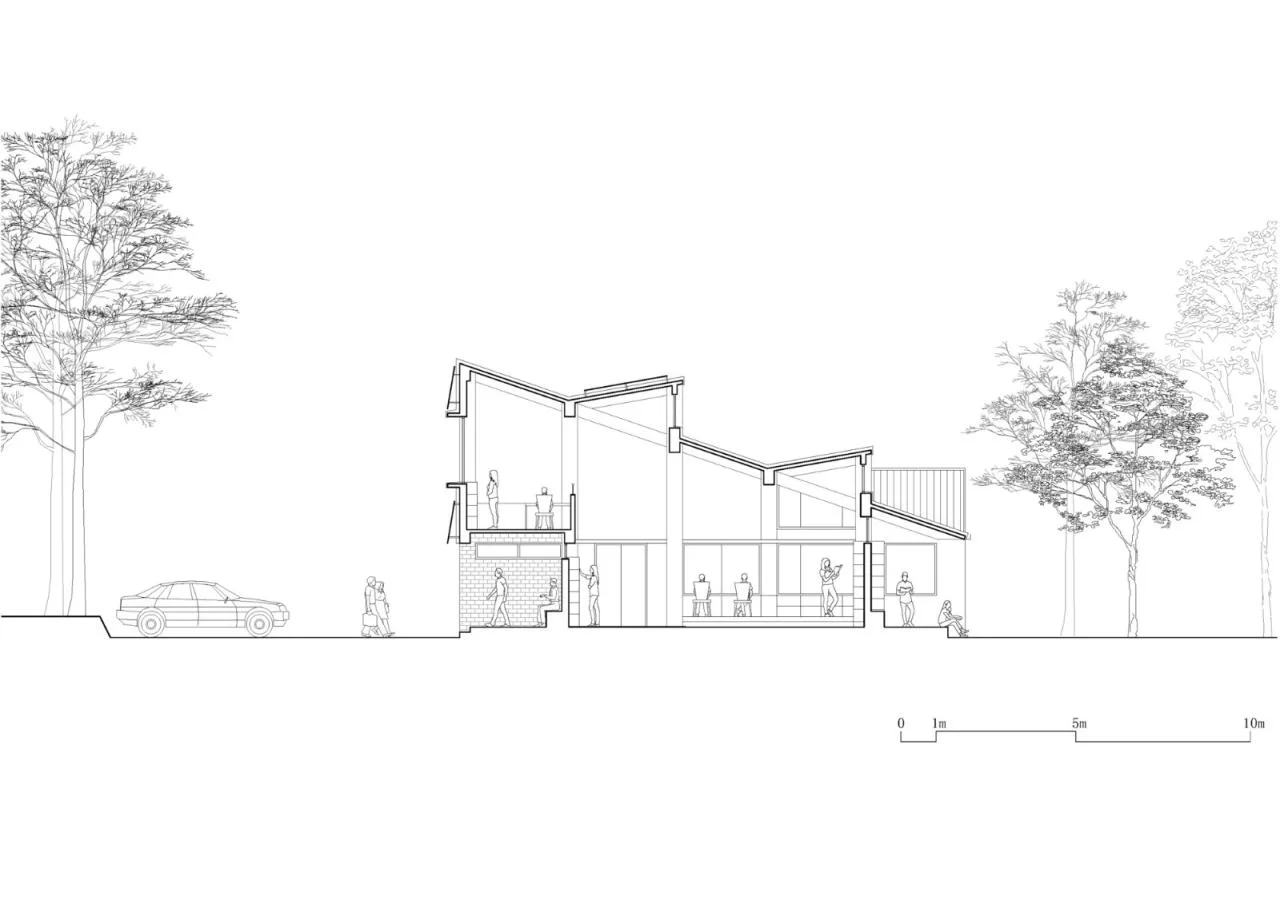
△ Section diagram
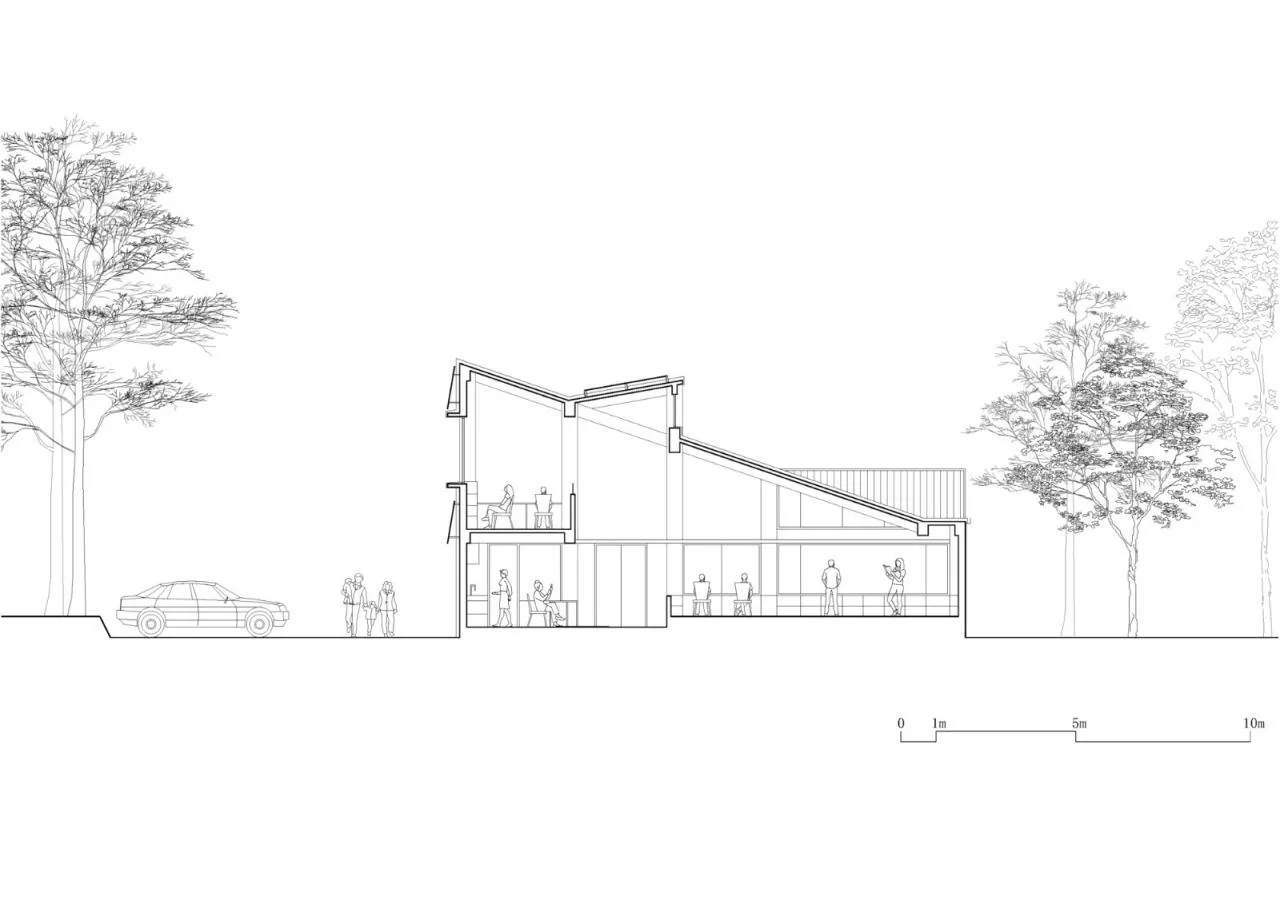
△ Section diagram
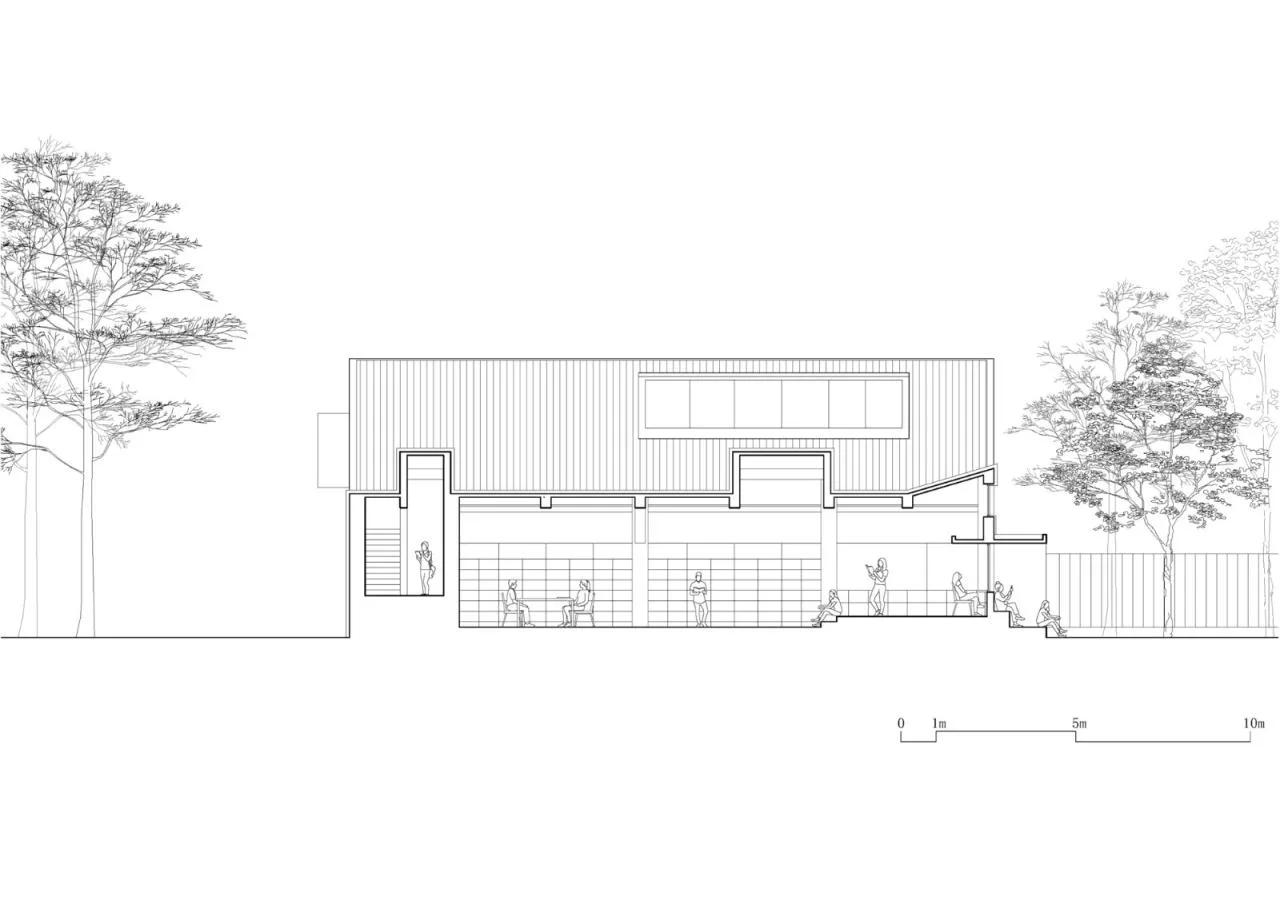
△ Section diagram
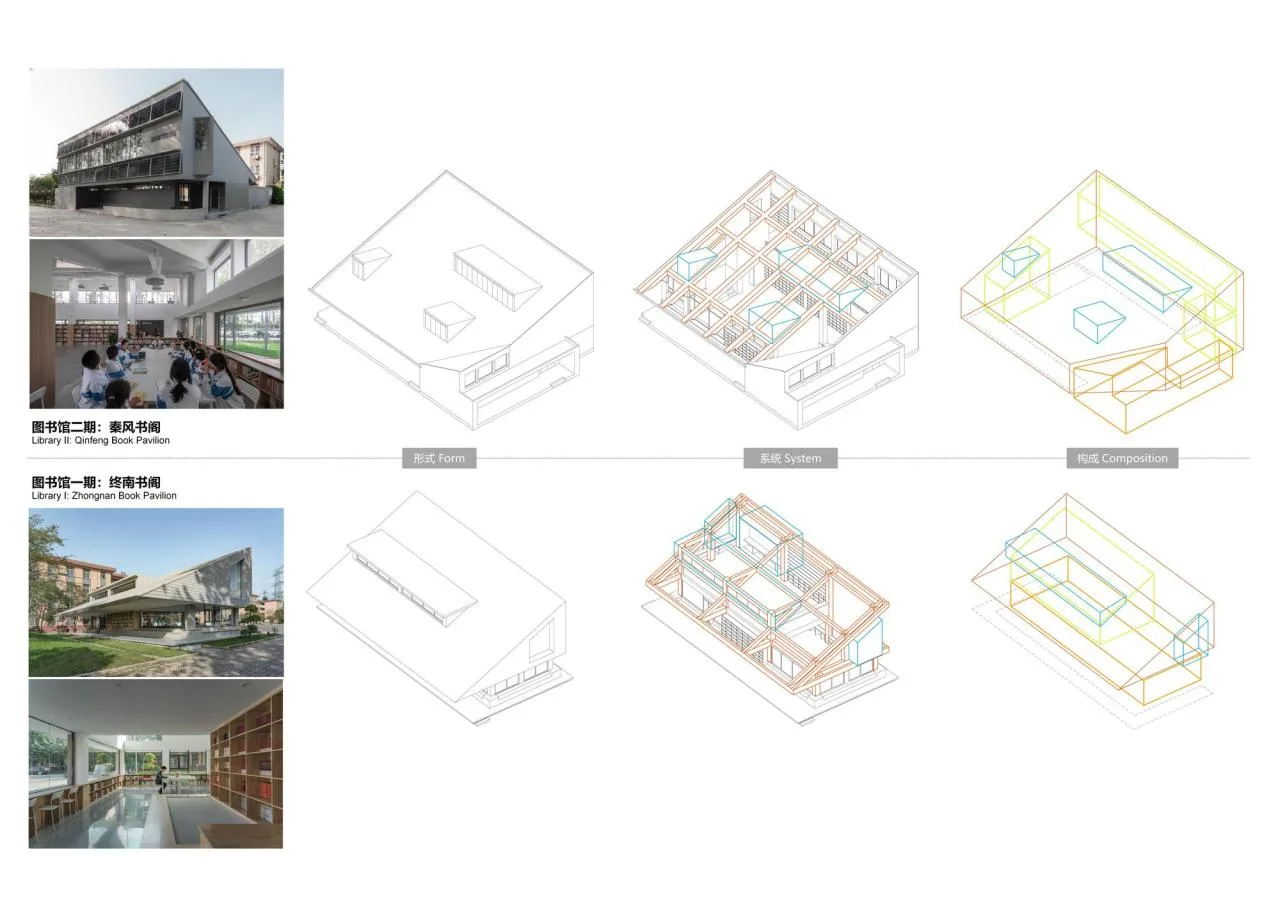
△ Analysis chart
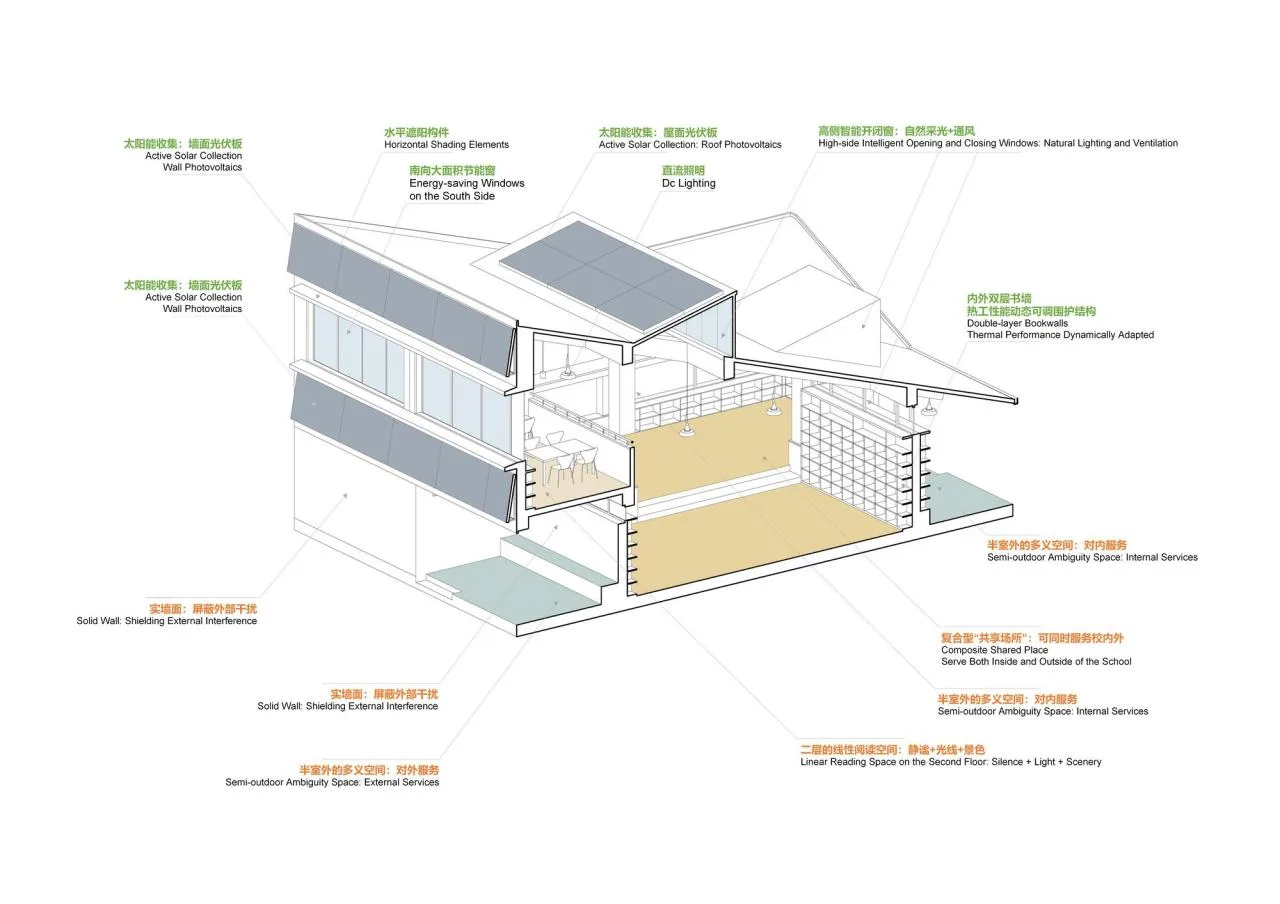
△ Sectional perspective
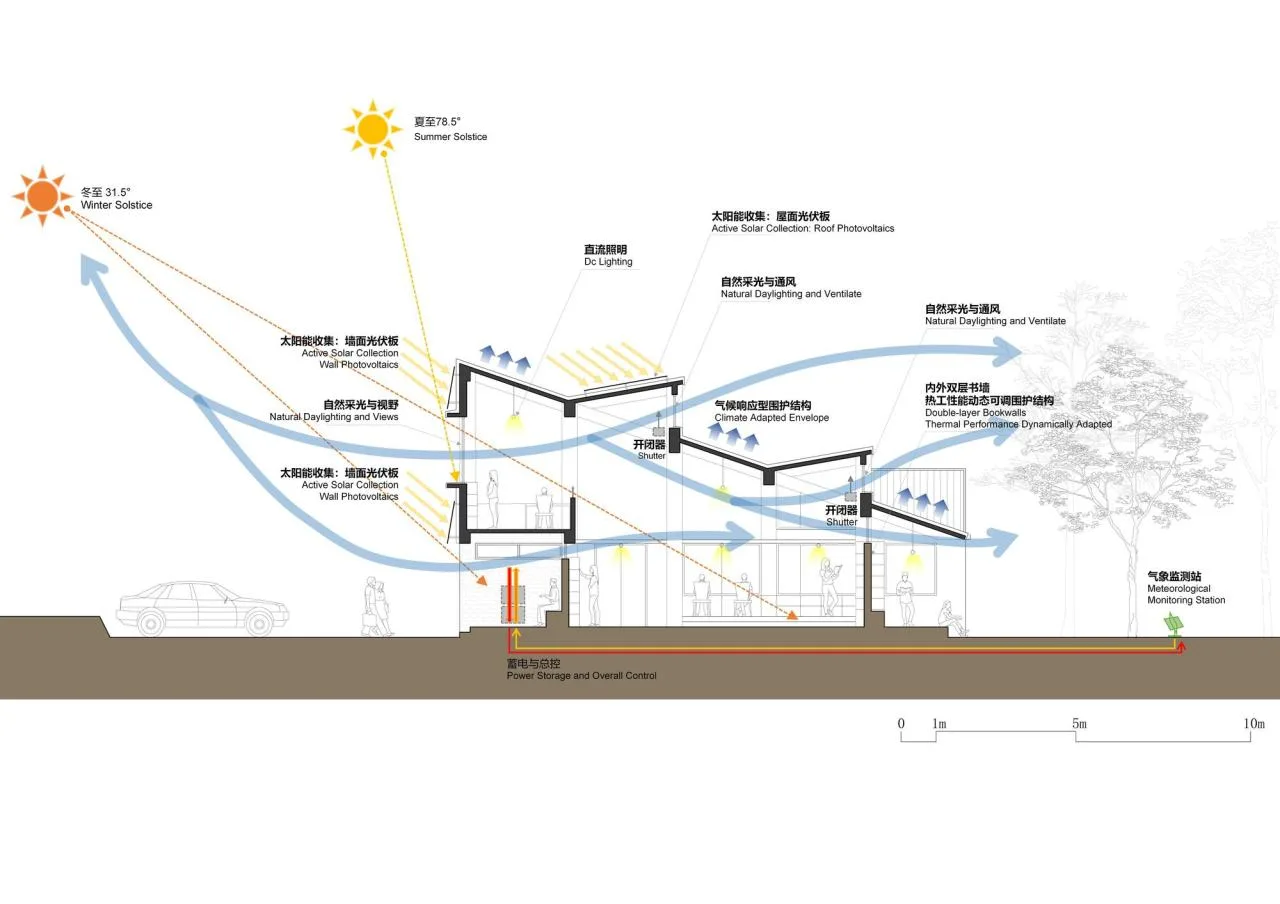
△ Analysis chart
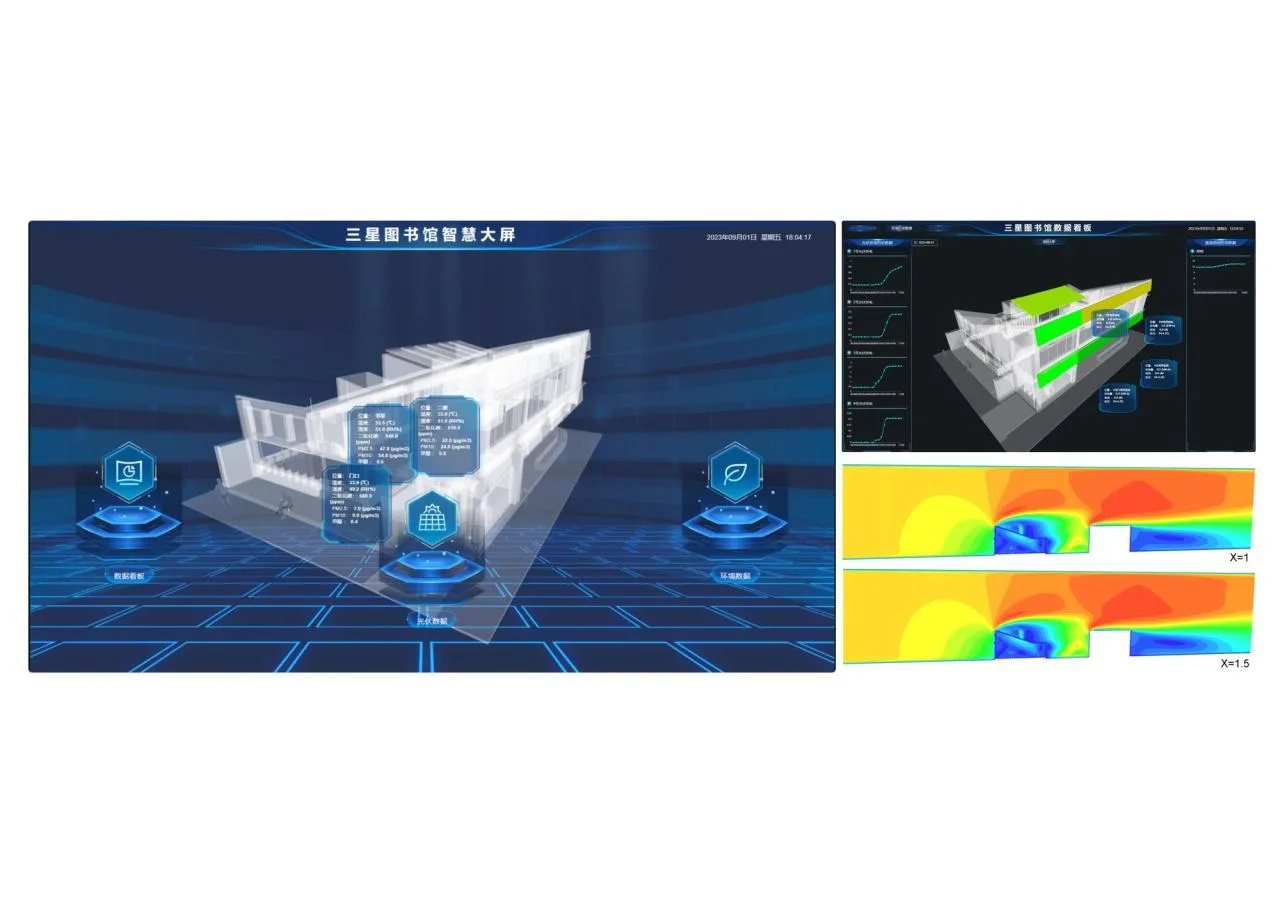
△ Analysis chart
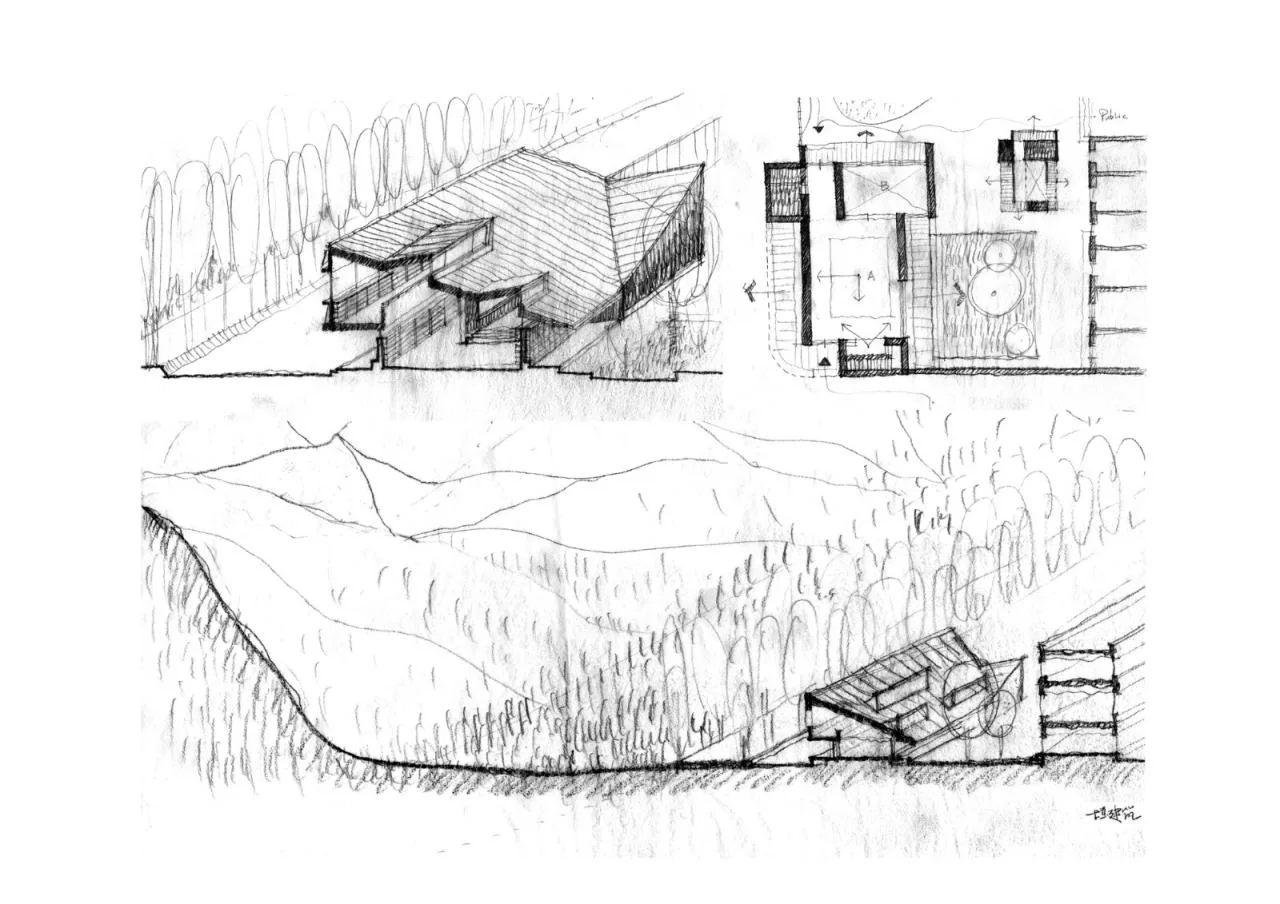
△ Hand-drawn drawing
Project Information
Architect: Yuan Architecture
Area: 350 m²
Project Year: 2023
Photographer: Kong Jinquan
Lead Architects: Wu Rui, Wang Maozhen
Design Team: Liu Zexian, Sha Weiru, Sun Yifeng, Gu Haoran
Structural Design: Bian Zhen
Project Consultants: Ji Nan, Guo Zhen
Technical Advisor: Li Xinghui
Zero Carbon Building Technology: Green Building Basic Research Center of National Key Laboratory of Green Building (Liu Yan, Qiao Yuhao, Feng Hengli)
Building Full DC Technology: Xi’an Bair Information Technology Co., Ltd. (Wu Yanwen)
Client: Xi’an High Tech 18th Junior High School, Samsung (China) Semiconductor Co., Ltd.
Construction Party: Xi’an Zhouzheng Industrial Co., Ltd.
Location: Xi’an















Must log in before commenting!
Sign Up