
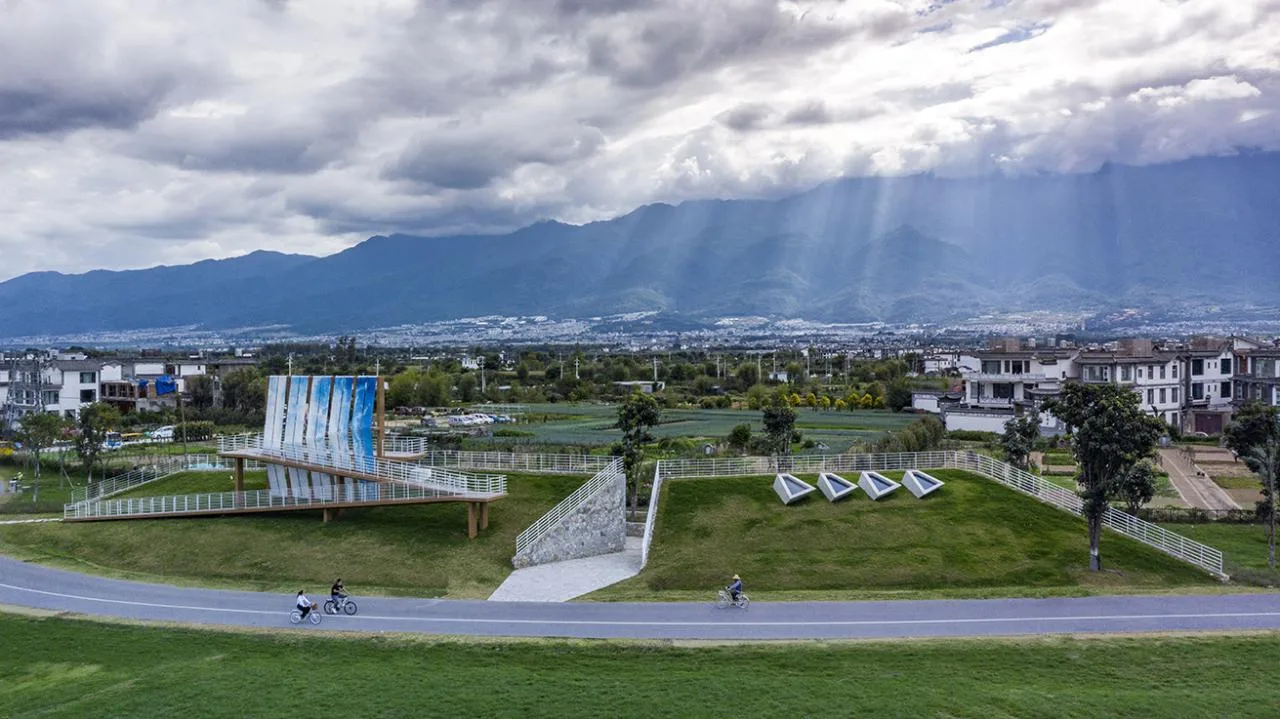
Background and Venue: Cluster Design and the Hidden Basin of Erhai Lake
The ecological corridor around Erhai Lake is a critical initiative for managing the western region of the lake. Illegal structures within 150 meters of Erhai Lake’s Blue Line were removed, resulting in the Haixi Ecological Corridor. This project alleviates the tension between human activity and nature, offering tourists closer access to the lake’s beauty.
To enhance visitor services along the corridor, the local government invited 10 renowned Chinese architects to design clusters of 20 service stations. Sanwen Architecture took on the design of stations 5 and 6.
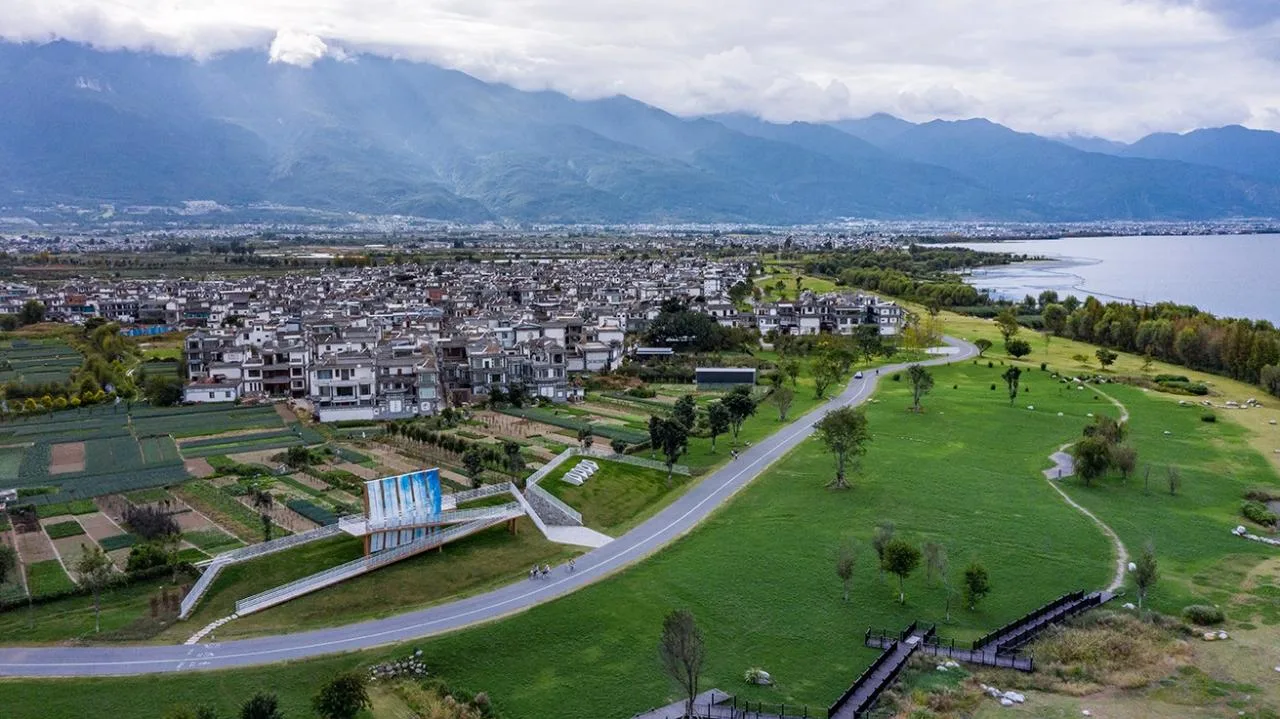
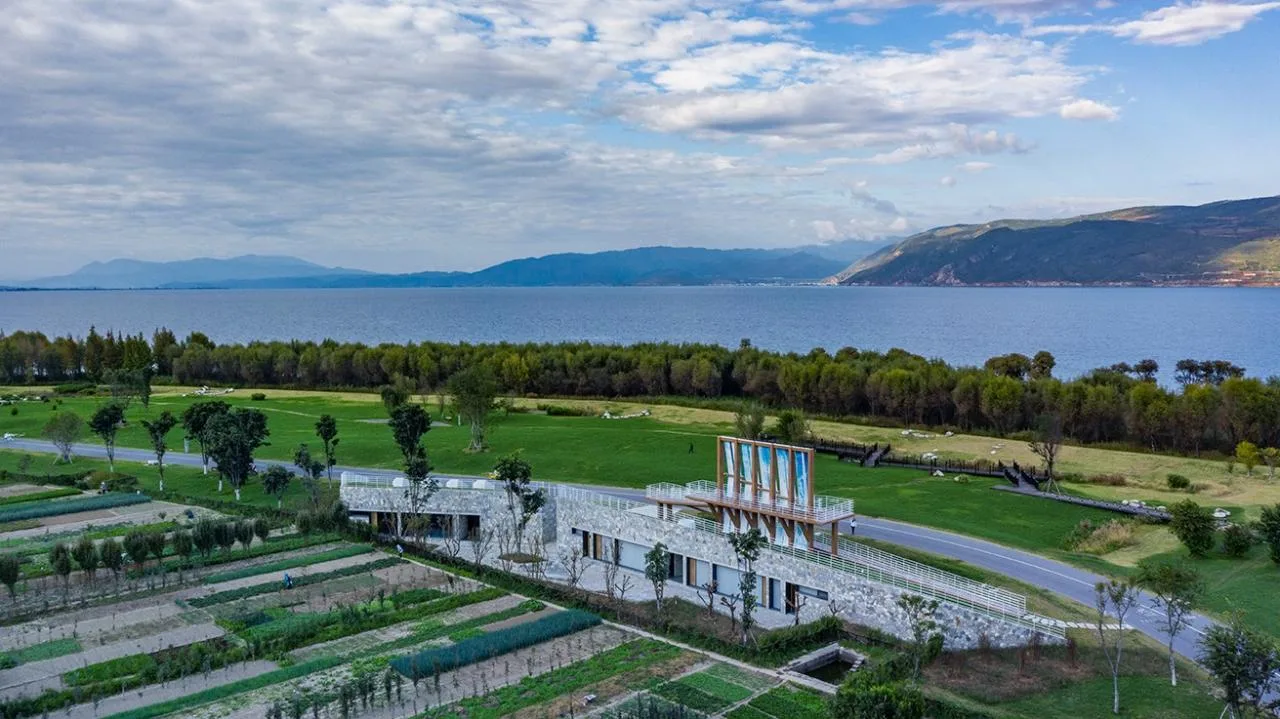
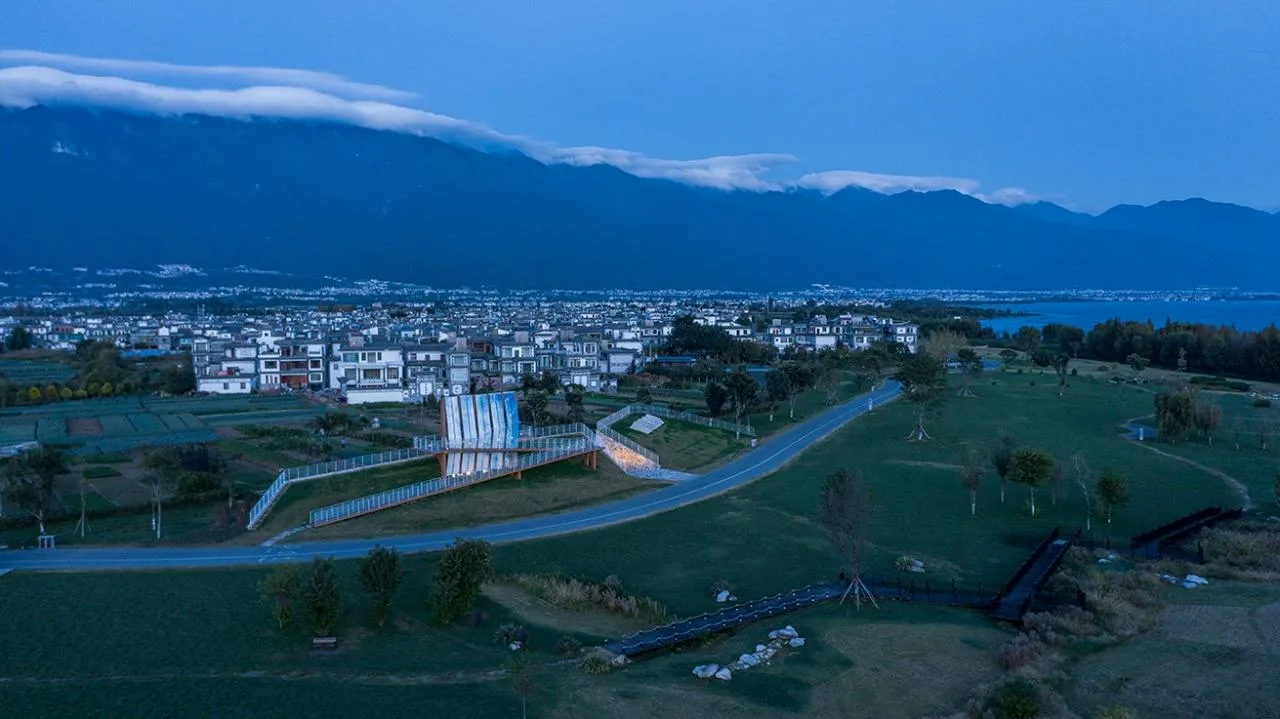
Station No. 5 is situated in Xiajiyi Village, Dali Town, within the Dali Bai Autonomous Prefecture. The site is shaped like a north-south shuttle, measuring approximately 84 meters long and 26 meters wide. To the east, it borders a circular bike lane; across the road lies an ecological wetland and Erhai Lake about 50 meters away. Westward, it neighbors Jiyi Village and expansive farmland, with views reaching towards Cangshan Mountain.
The site itself is a natural depression, about 1.5 meters lower than the adjacent bike lane and farmland. The surrounding landscape lacks distinctive features, with trees partially obstructing views of Erhai Lake—posing a significant design challenge.
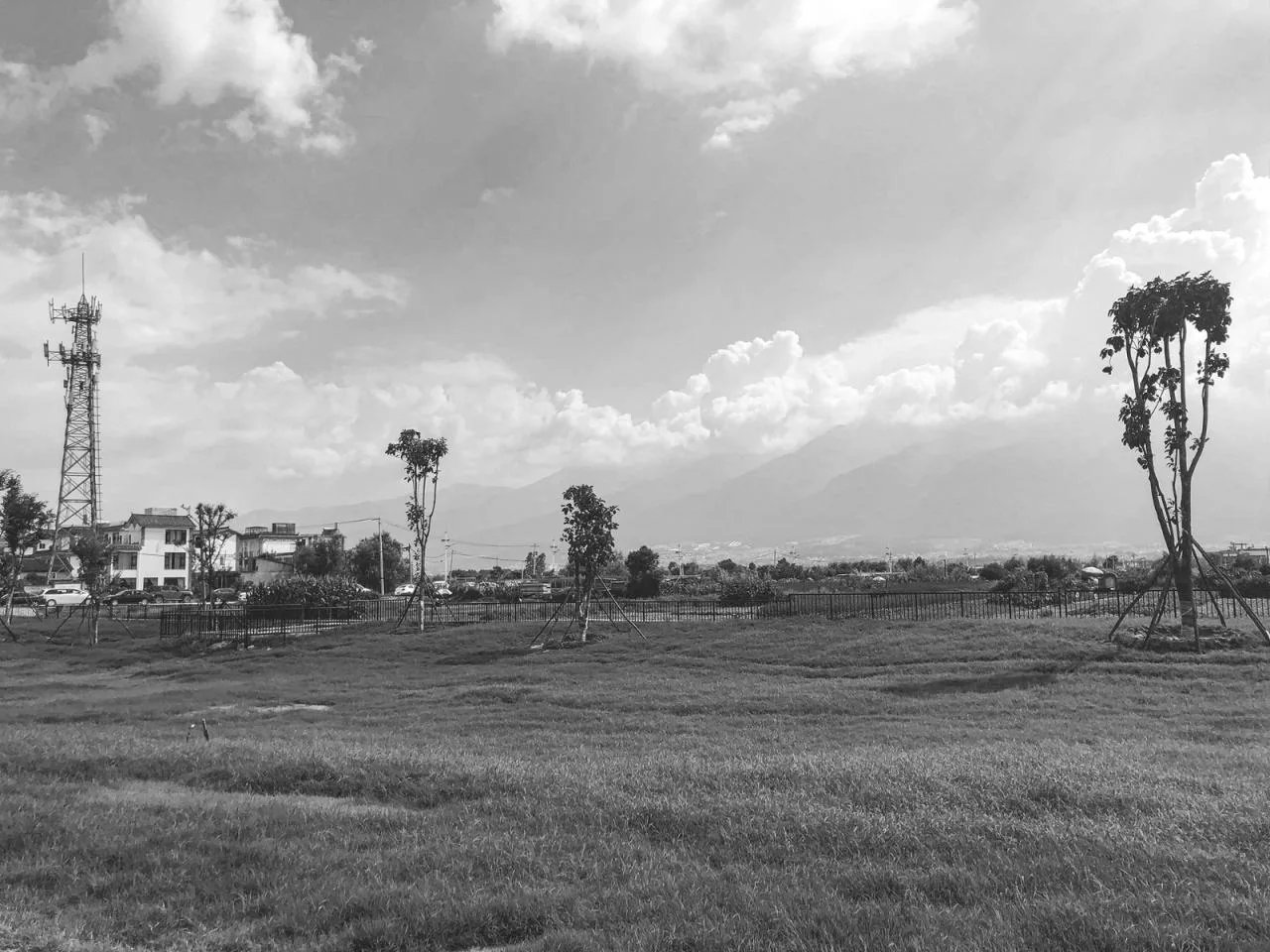
△ Original landform
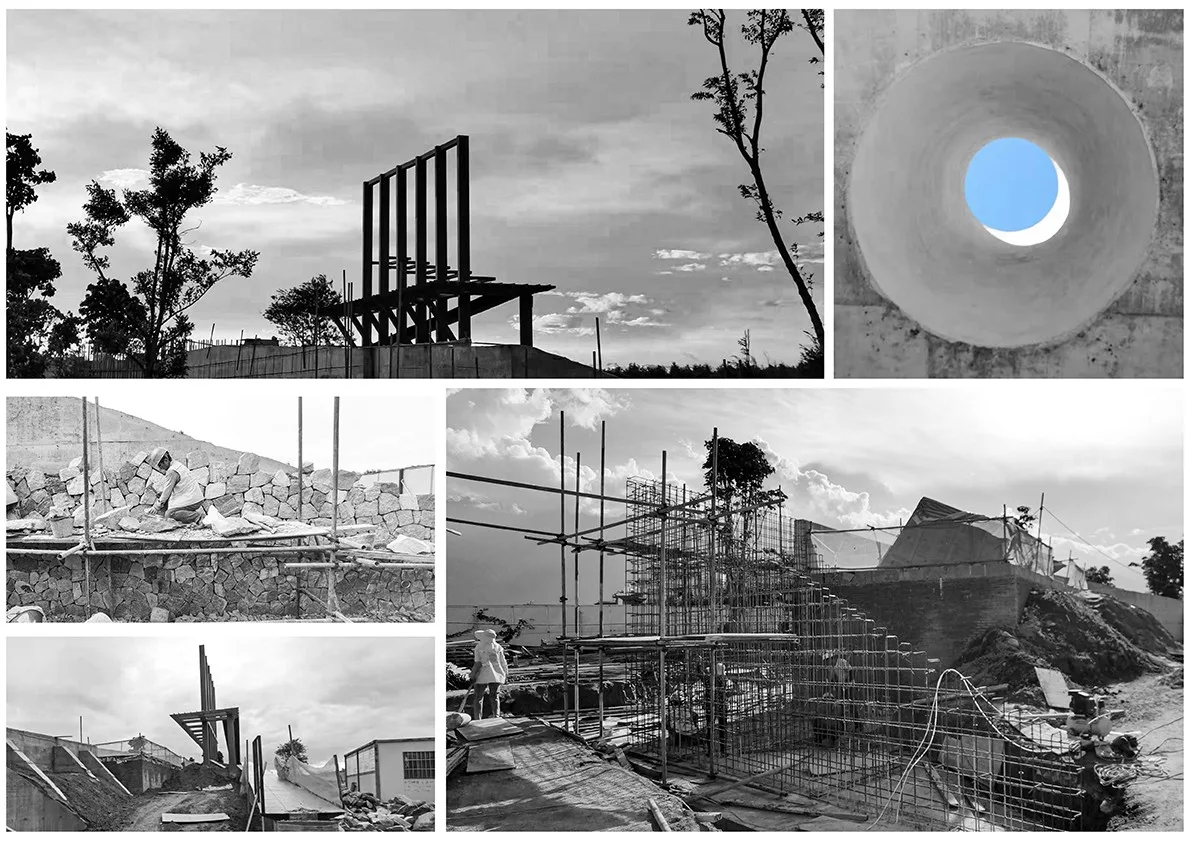
△ Construction progress
Concept: Memories of Bai Fishing Sails on Erhai Lake
This project transcends traditional building forms; it can be seen as a structure or an installation. The design draws inspiration from the traditional sailboats of the Bai ethnic group in Dali. Since the fishing ban on Erhai Lake, these iconic white sailboats have gradually vanished, turning the once scattered sails and uneven masts on the water into distant memories.
Today, traditional sailboats no longer sail Erhai Lake, and many small fishing boats along the shore sit idle. This historic shift deeply influenced the designers, who sought to commemorate the traditional lifestyle of “fishing by the water” through this project.
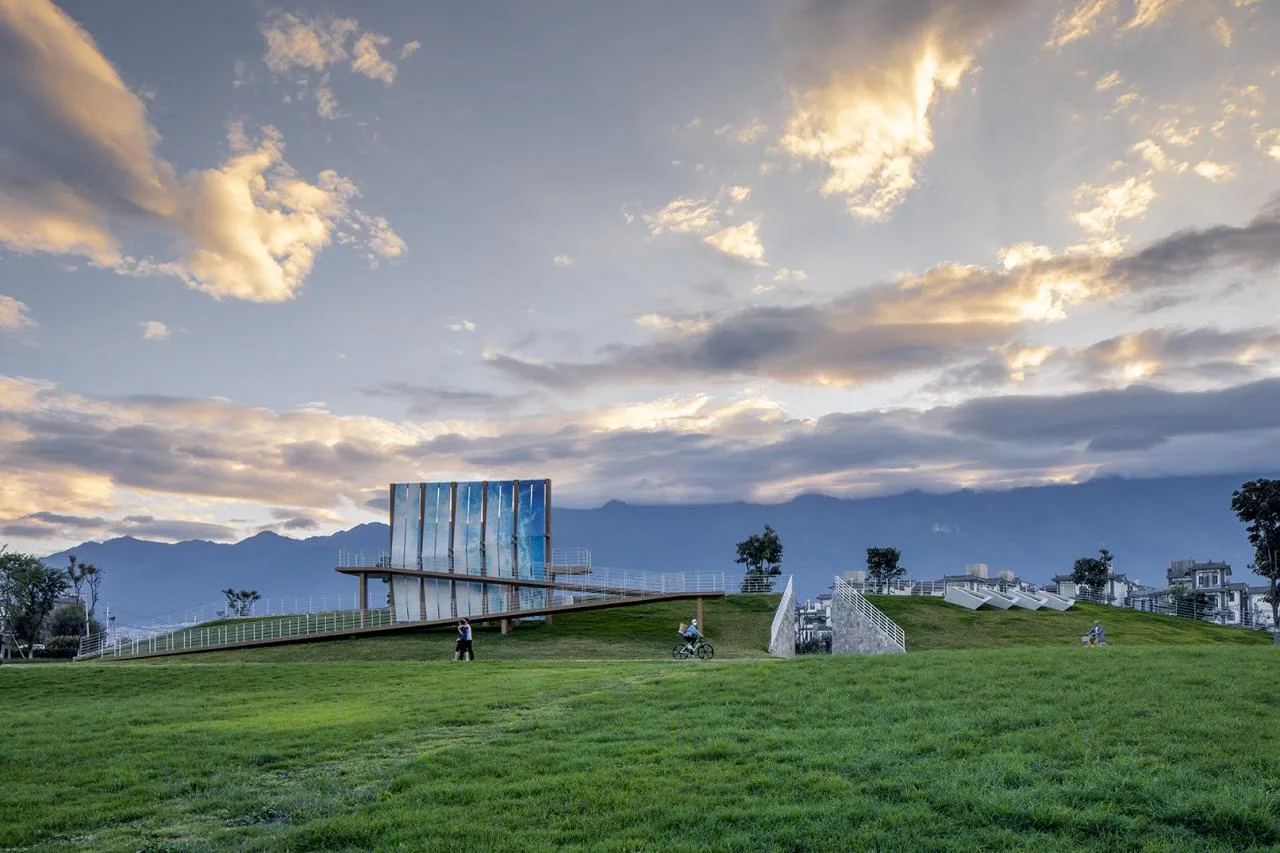
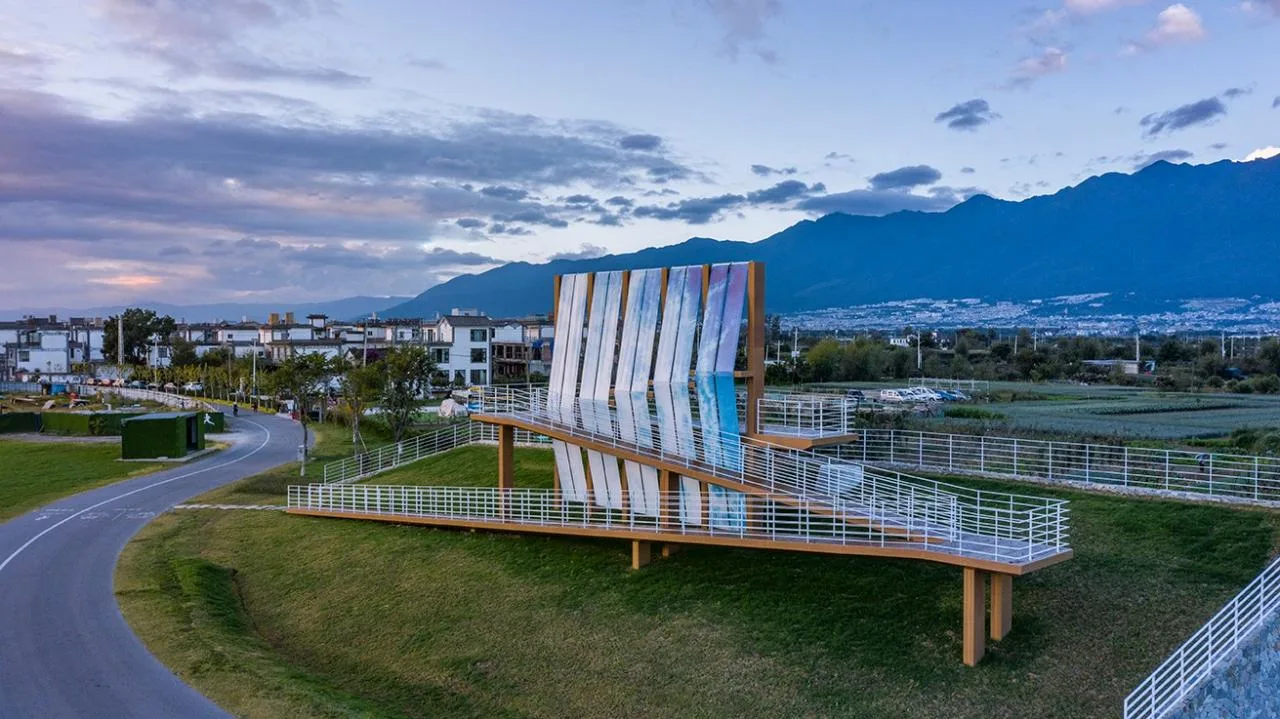
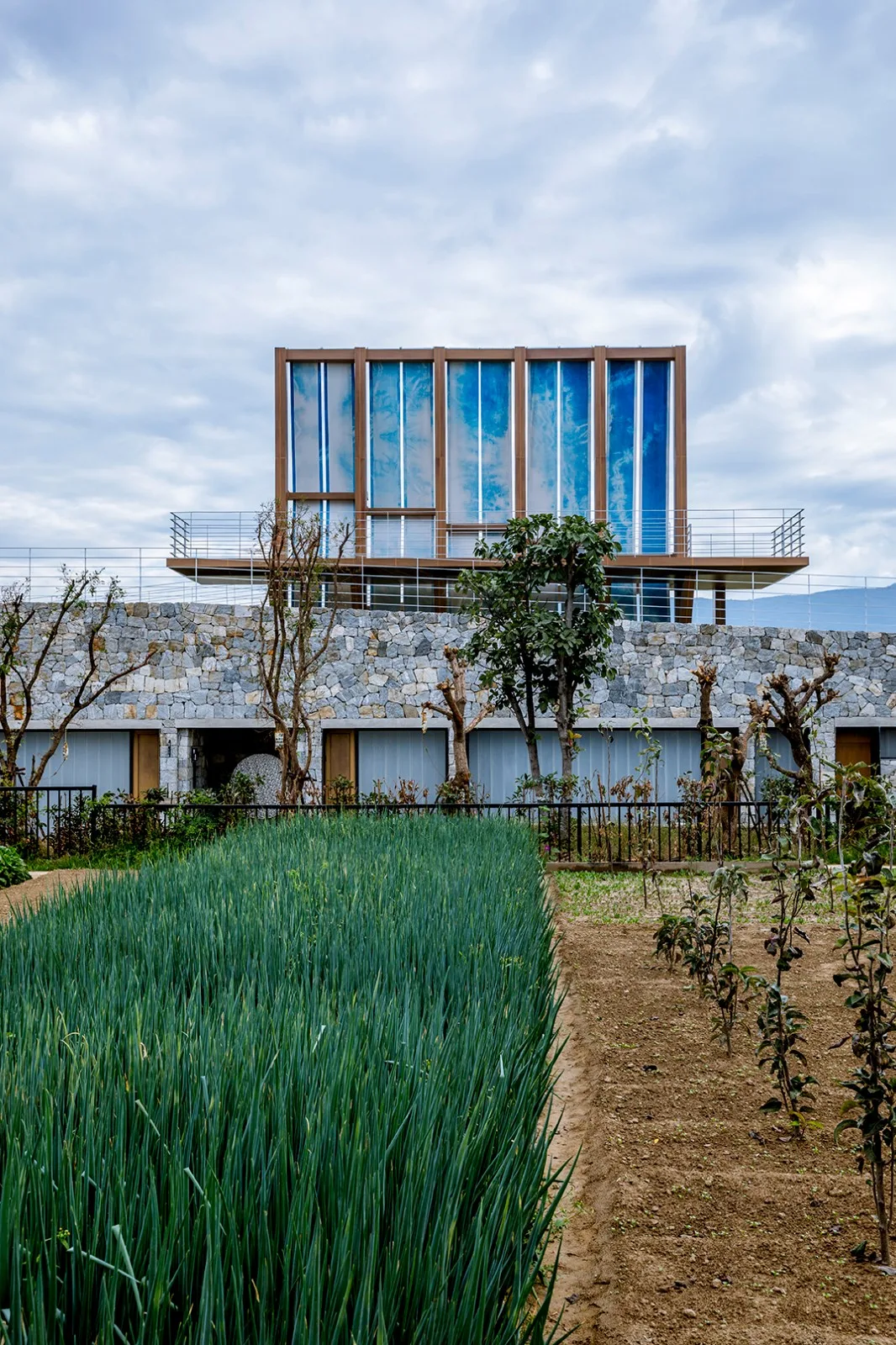
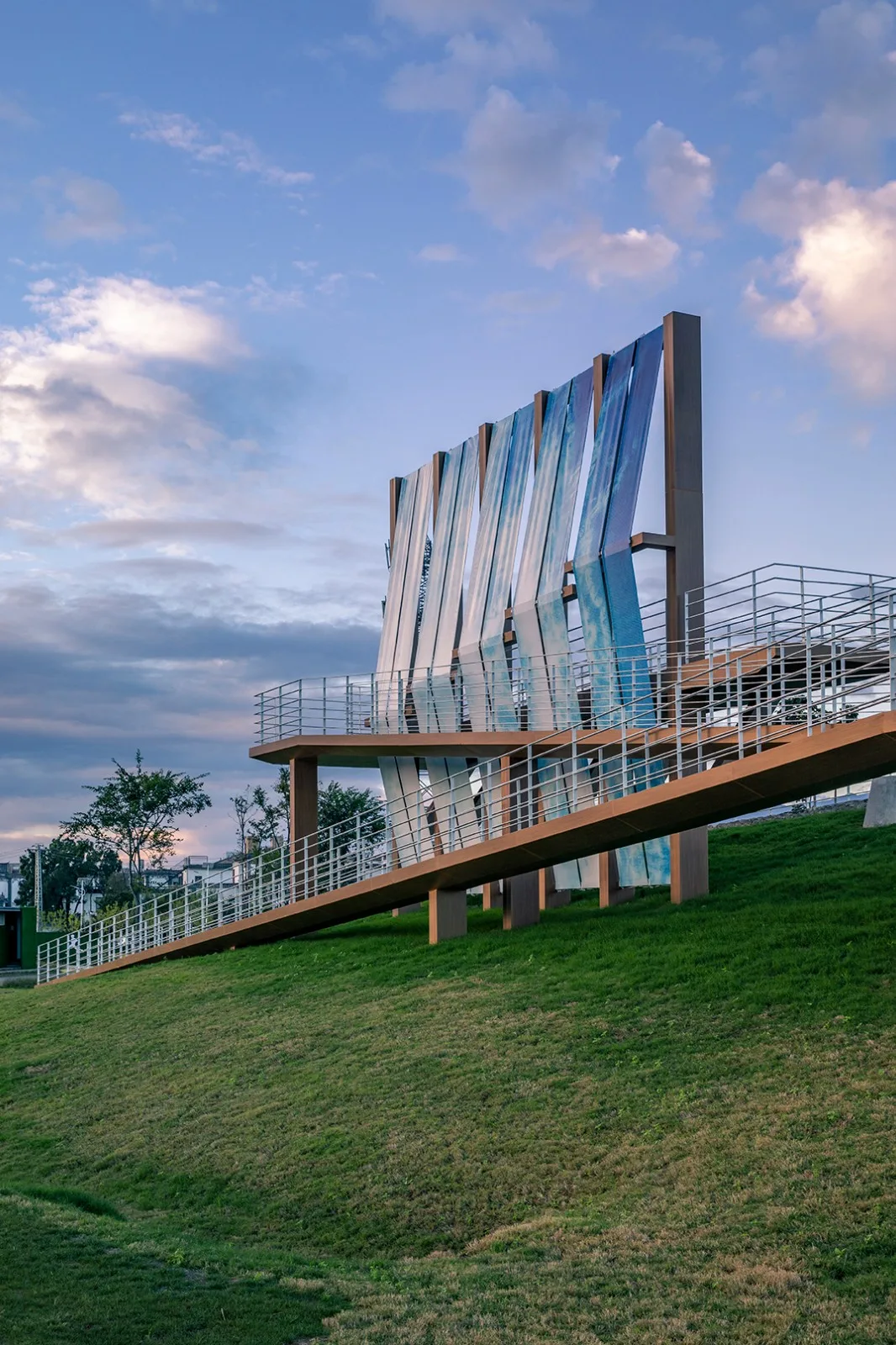
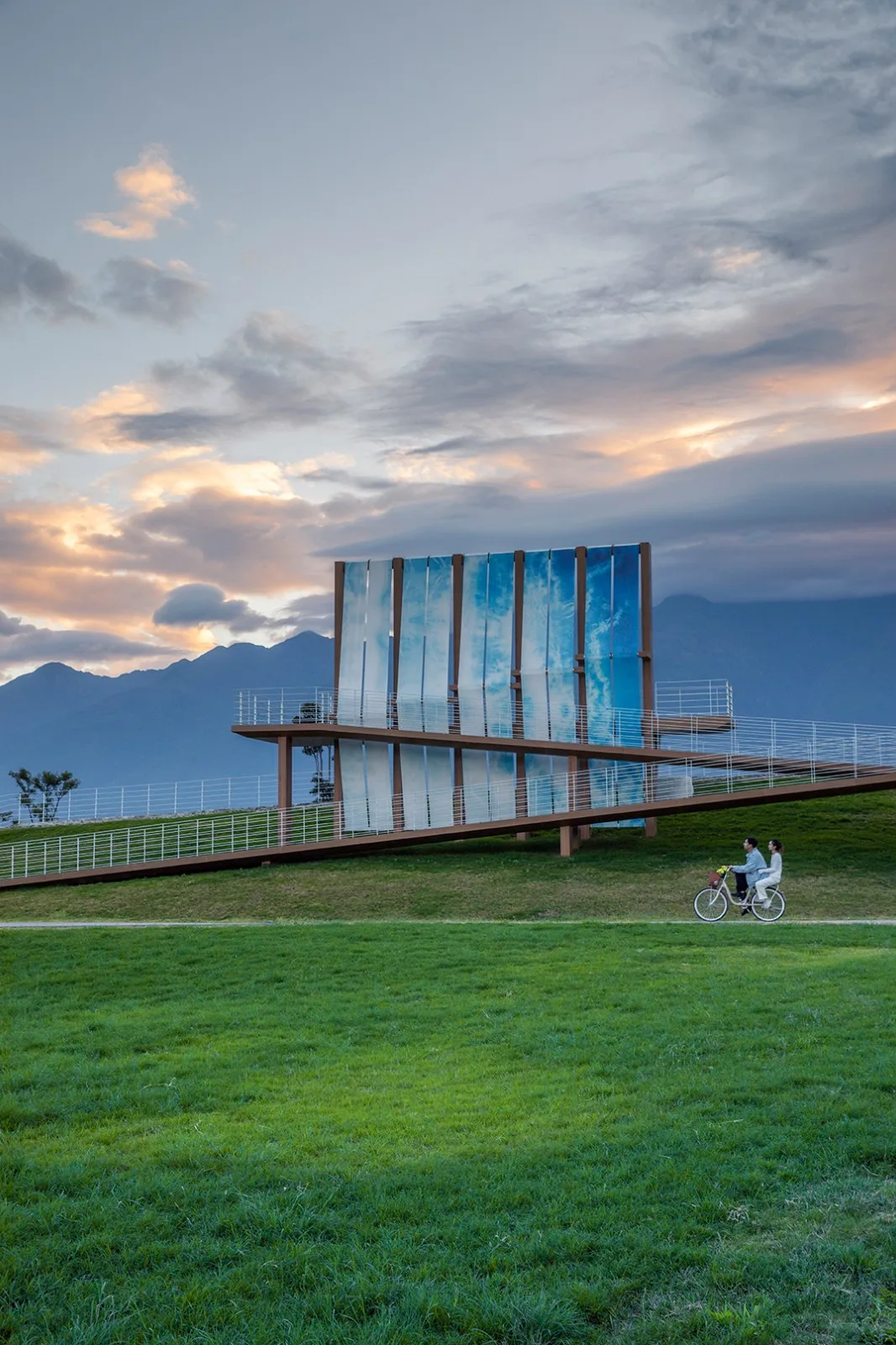
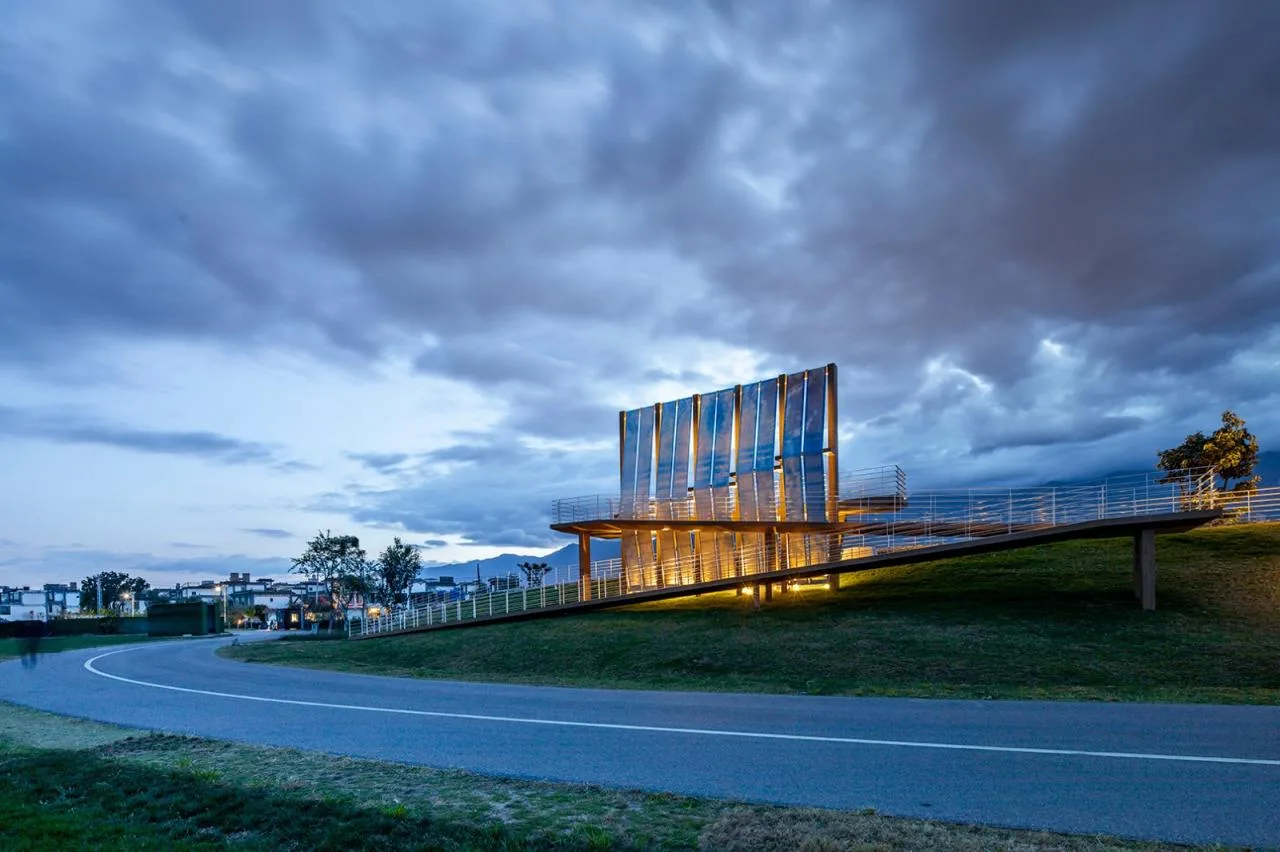
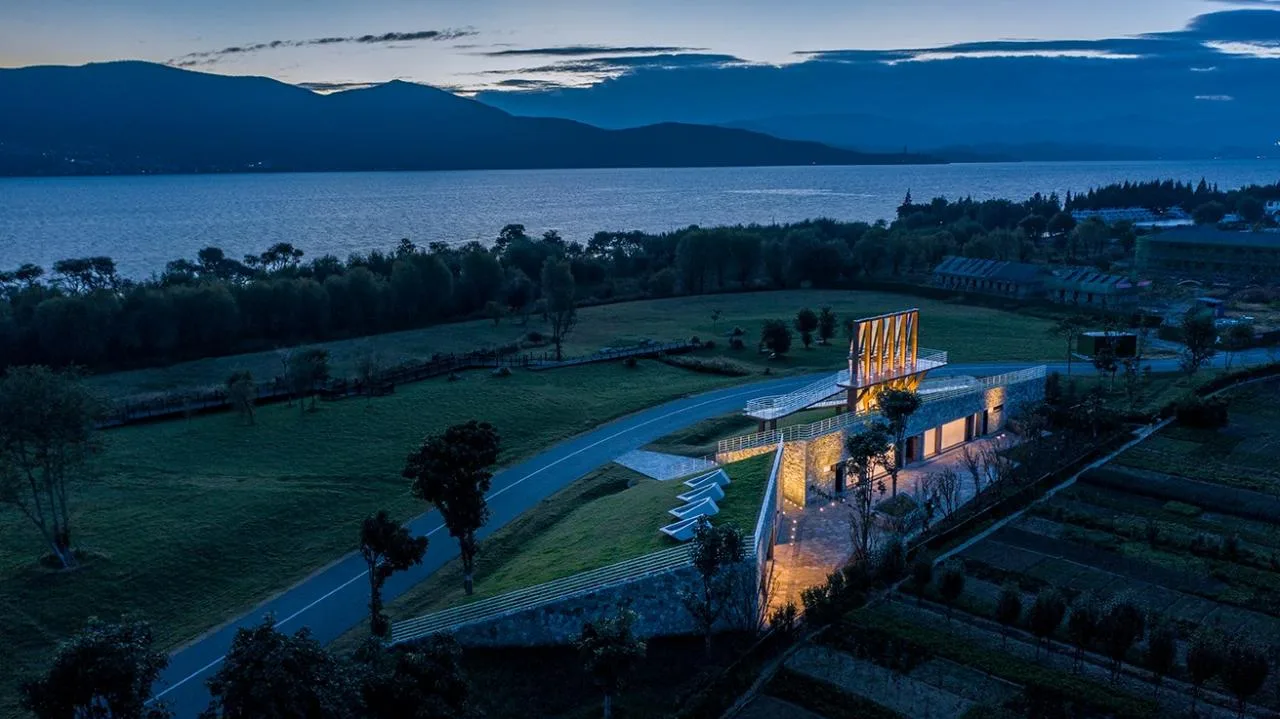
Building on this concept, the designers envisioned “raising a sail by Erhai Lake.” They creatively responded to the site’s topography by embedding all functional spaces semi-underground on the side opposite the lake, camouflaged beneath a soil-covered roof. Visible to visitors is a 9-meter-high, 14-meter-wide sail sculpture standing proudly on the lakeshore.
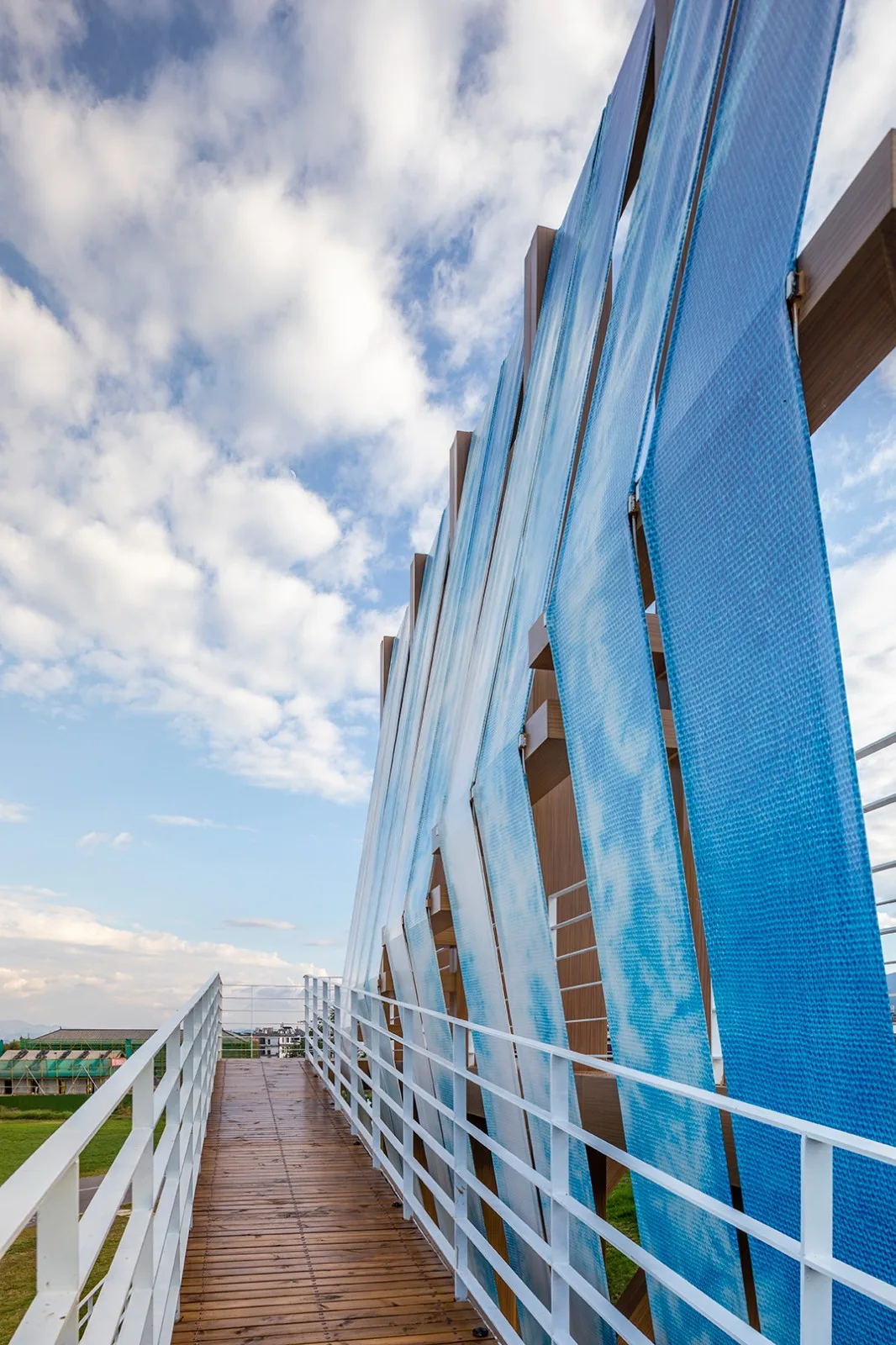
The sail’s fabric features the traditional blue and white tie-dye patterns of the Bai ethnic group, mirroring the Dali sky. The sail is designed to be replaceable, allowing for future changes in patterns that can be combined with various activities, turning the architecture itself into a dynamic medium.
Architecture: Hidden Beneath the Green Hills
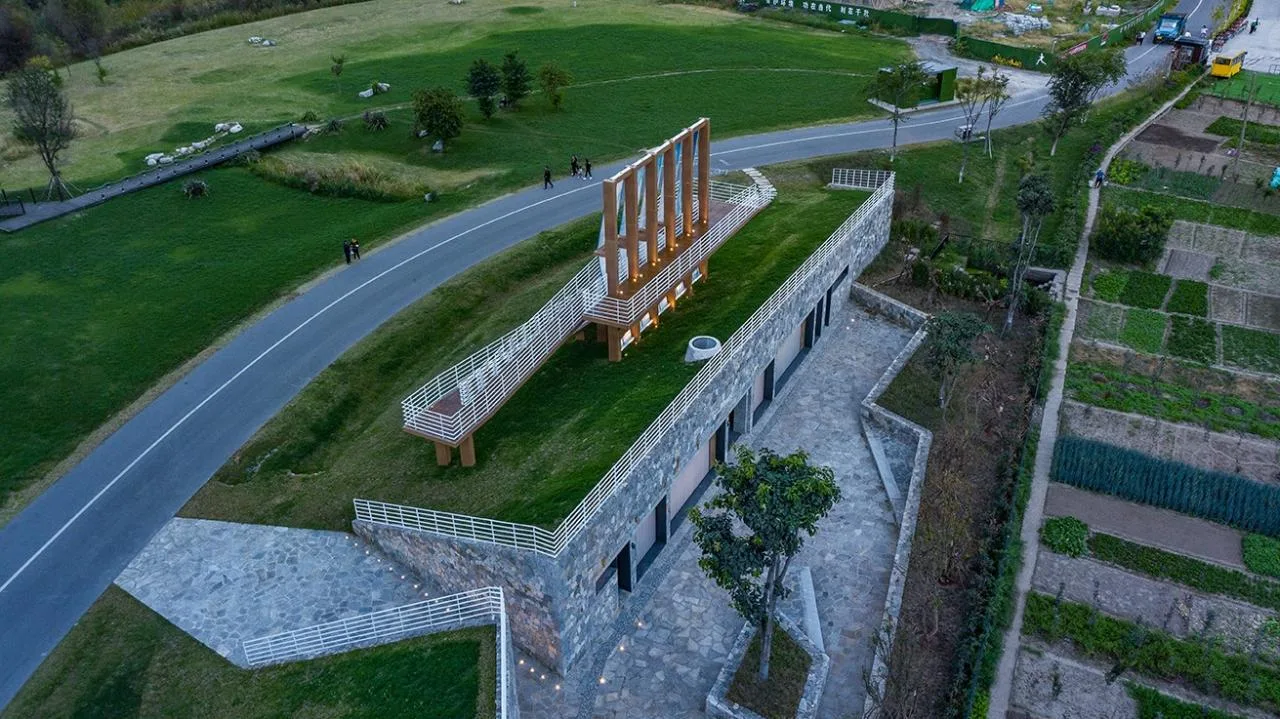
The station consists of three main functional areas: a semi-underground public restroom, a leisure bar, and an observation deck perched on the hill. The design cleverly uses the site’s elevation differences and soil cover to create distinct circulation flows.
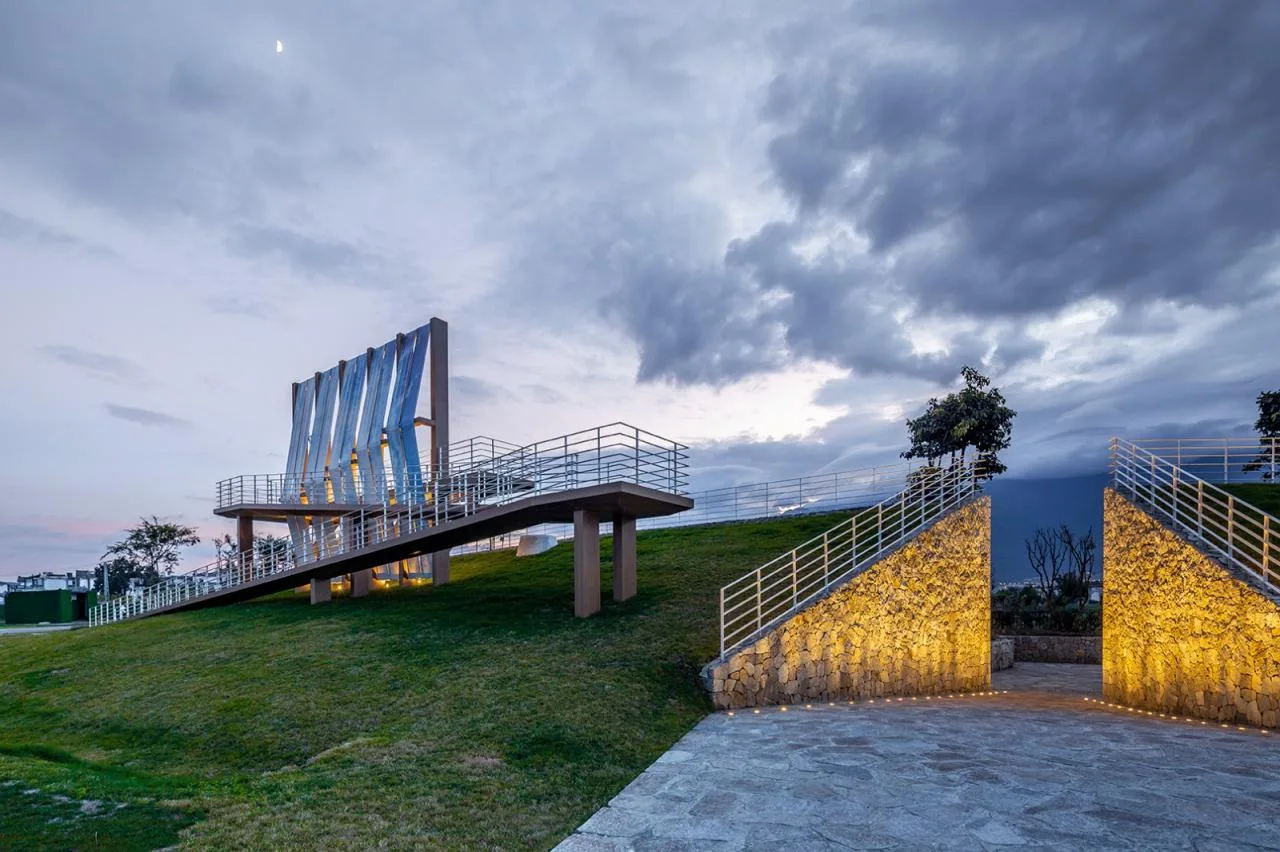
On the east side, near the bike lane, a ramp guides visitors up to the observation deck. The middle section of the earth-covered building is interrupted by a stone wall in an octagonal layout, creating a passageway that leads to an outdoor space facing Cangshan Mountain, as well as to the restrooms and leisure bar. These two routes serve different visitor groups—the high-altitude viewers and those seeking rest—ensuring clear, non-interfering paths.
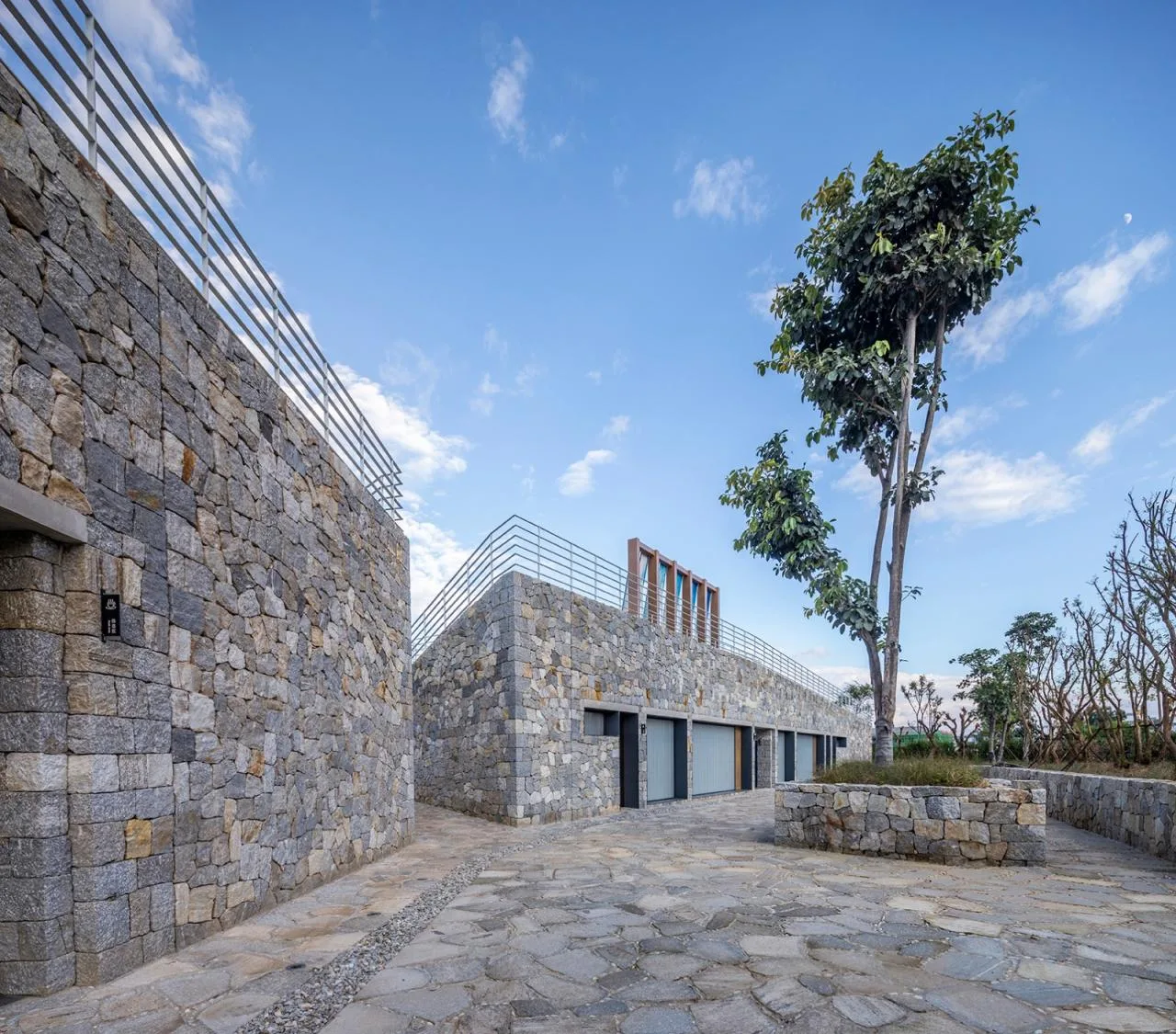
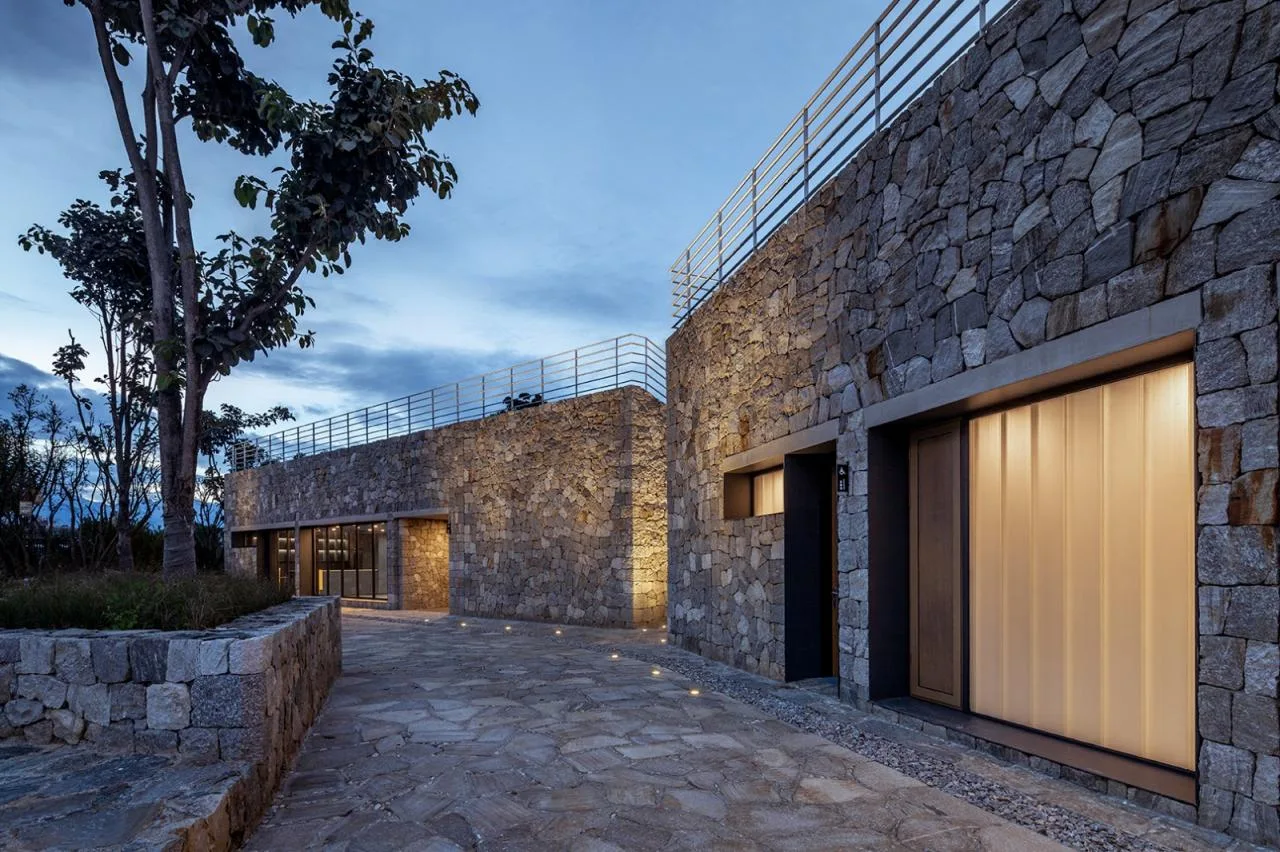
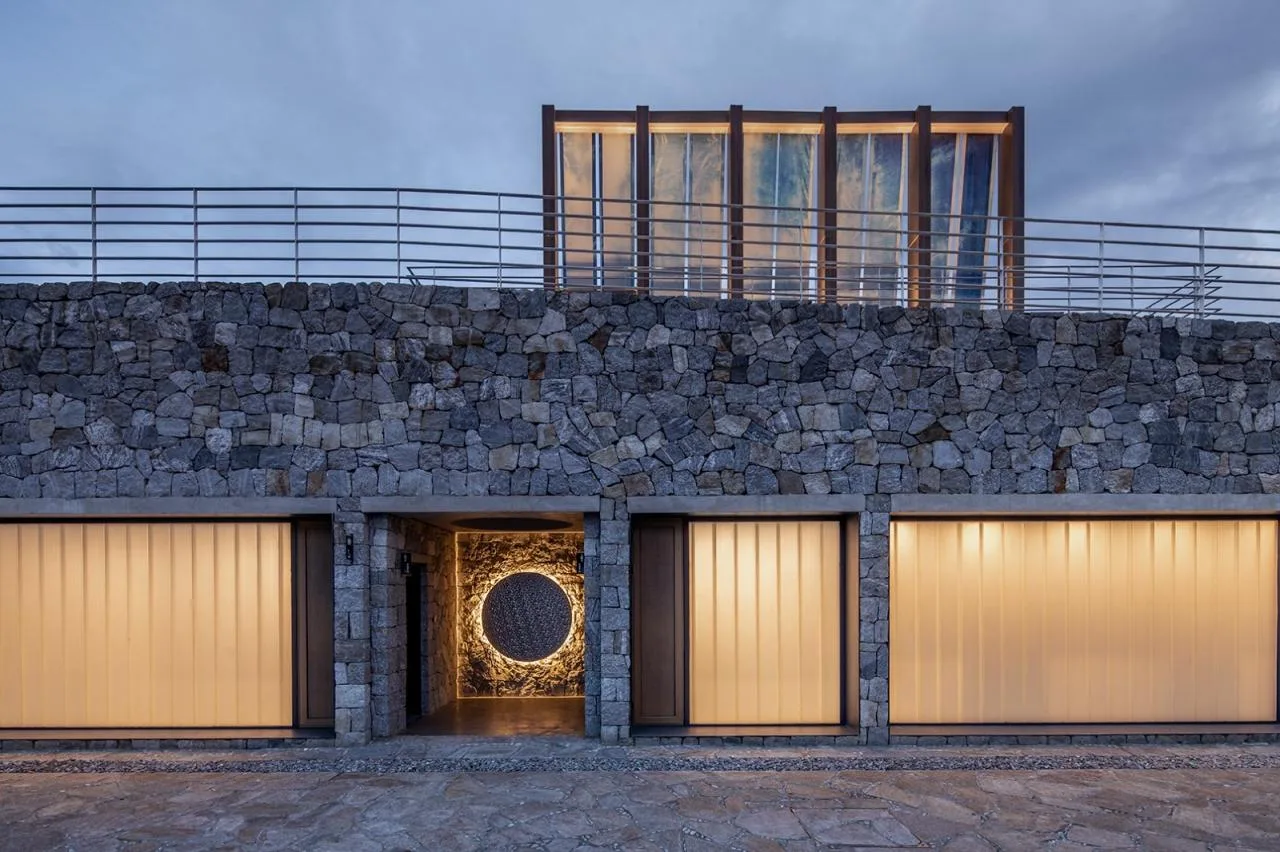
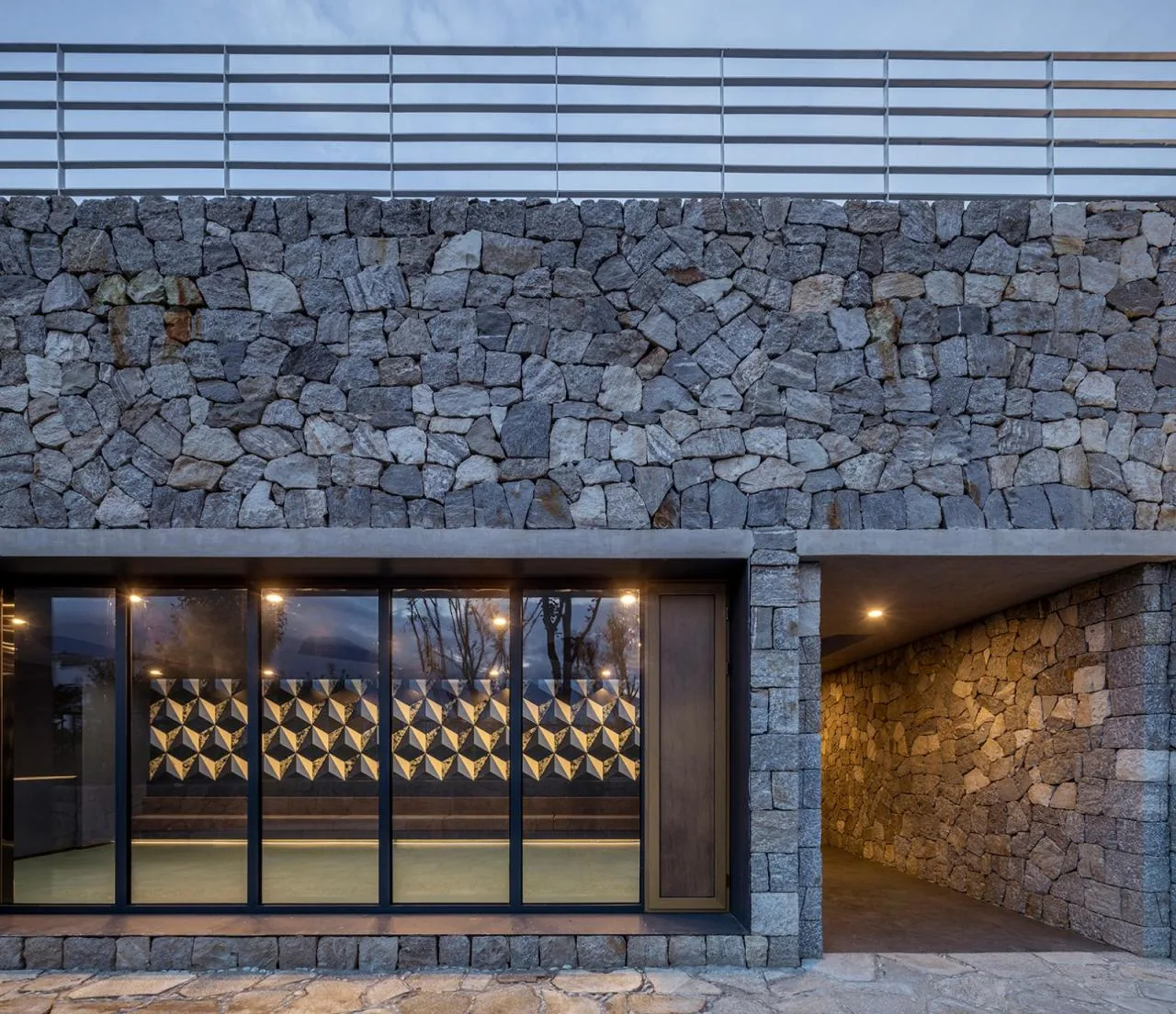
The main functional areas are nestled beneath the hill, with the entrance located on the quieter west side away from the bike lane. The structure is primarily reinforced concrete, while the exterior walls employ local masonry techniques.
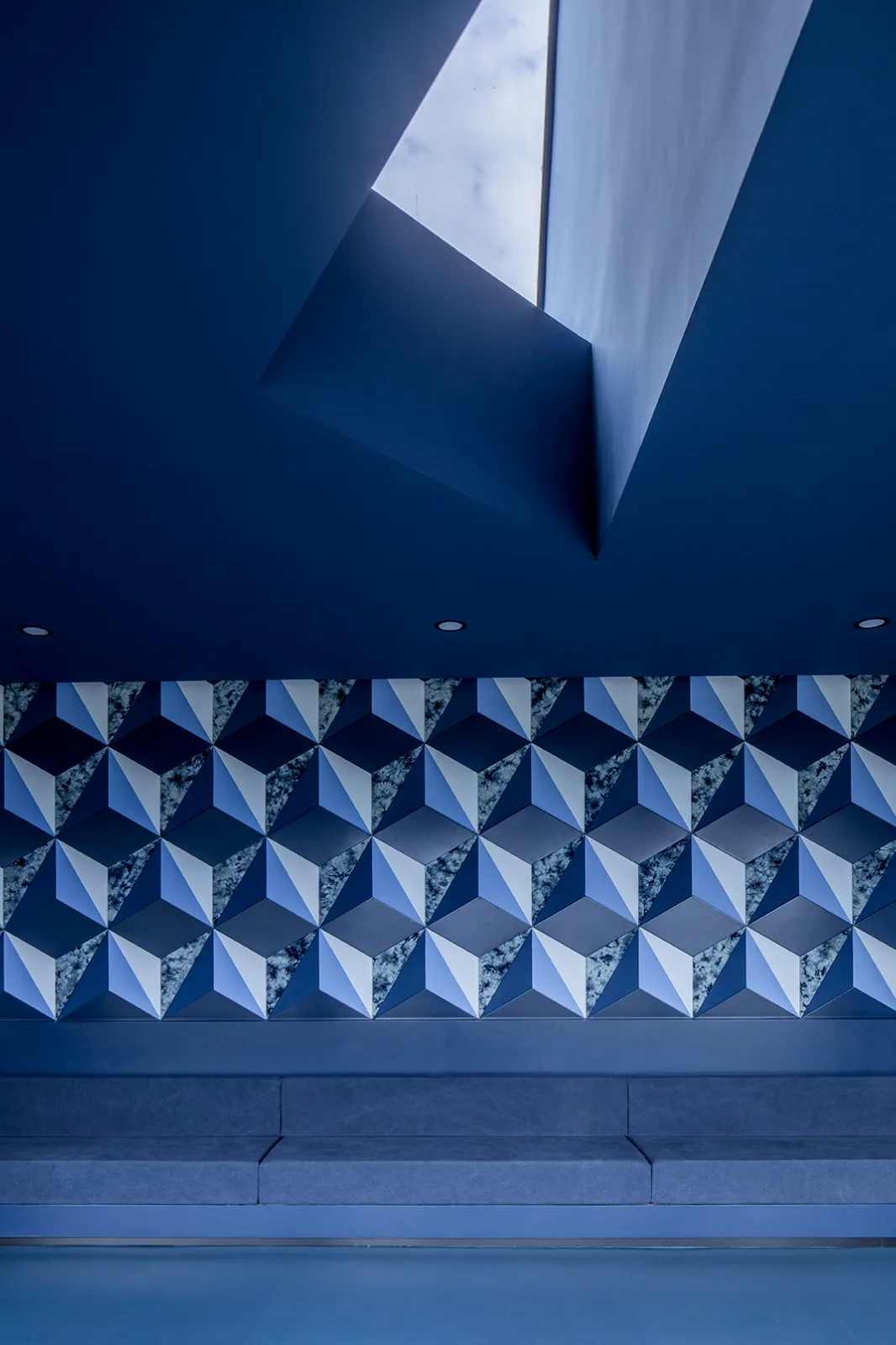
Lighting and privacy are thoughtfully addressed: the restroom features U-shaped frosted glass, while the leisure bar uses highly transparent glass. The wooden window systems allow ventilation without disrupting the building’s external rhythm. Polygonal skylights punctuate the green roof, enhancing interior natural light and adding visual interest to the “hill” form.
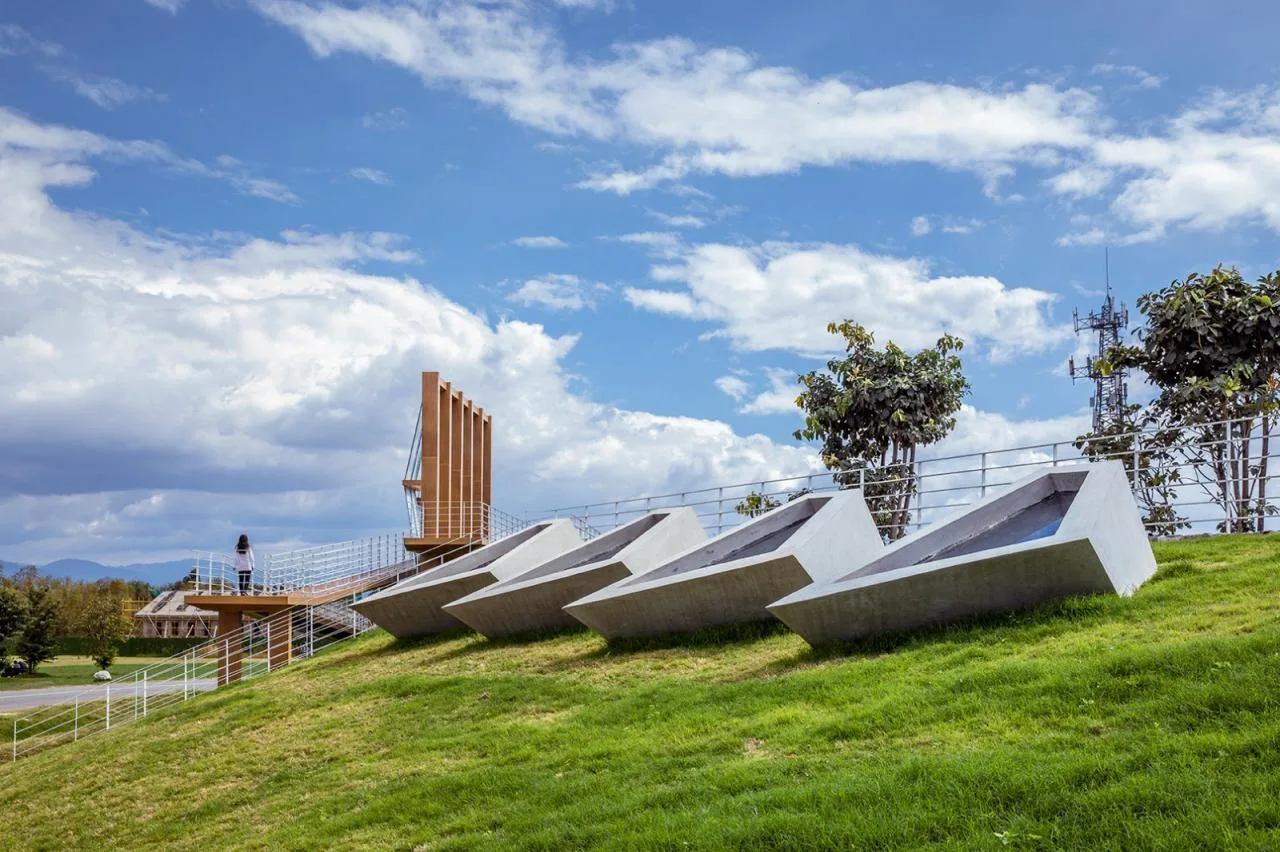
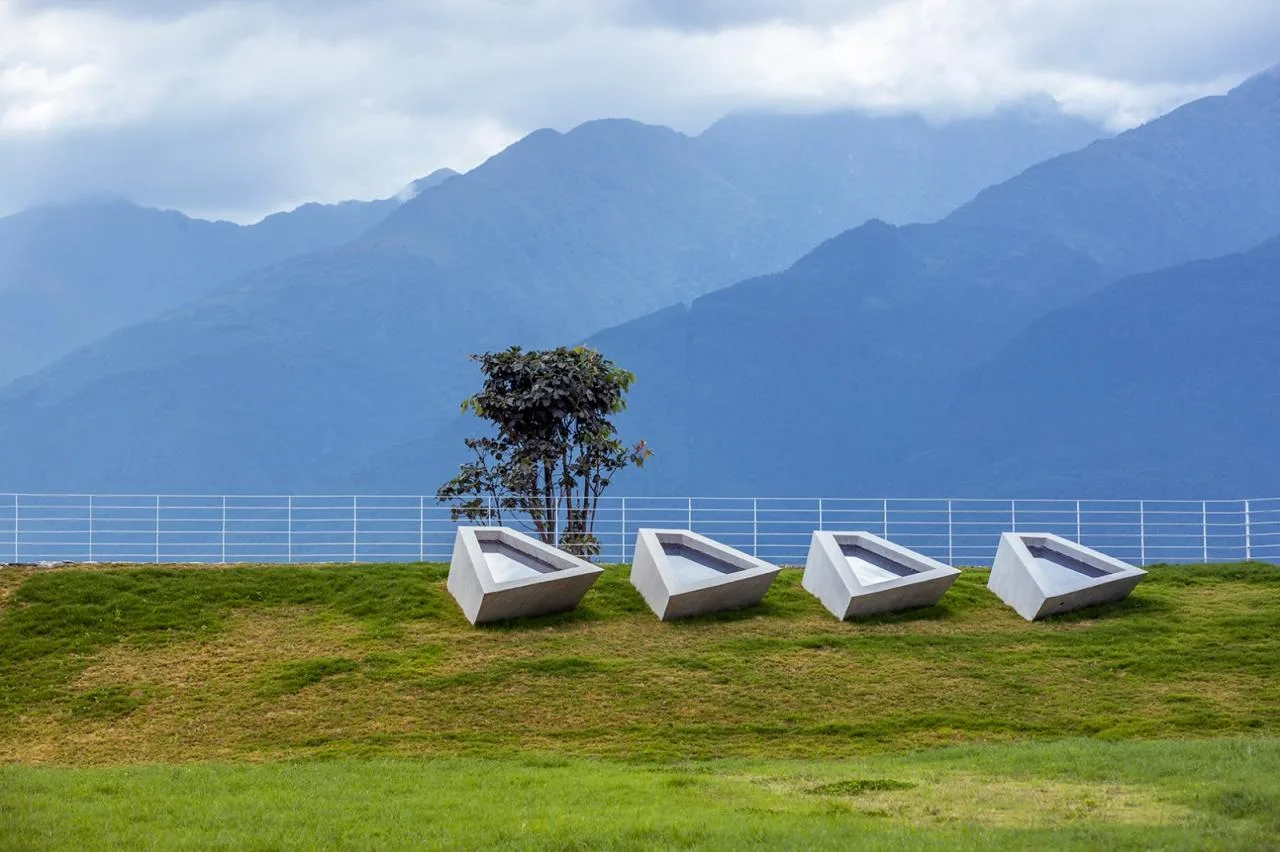
The outdoor terrace on the west side, paved with local rubble and set 1.5 meters below surrounding ground level, creates an intimate enclosure. The design preserved four existing trees, incorporating tree pools that serve as shaded seating areas.
Observation Deck and Sails: Landmarks Overlooking Erhai Lake
The building’s sloped roof creates a small green hill facing the greenway and Erhai Lake, inviting visitors to stroll, relax, or socialize atop it. The observation deck and sail installation rise prominently above this green hill, serving as symbolic landmarks.
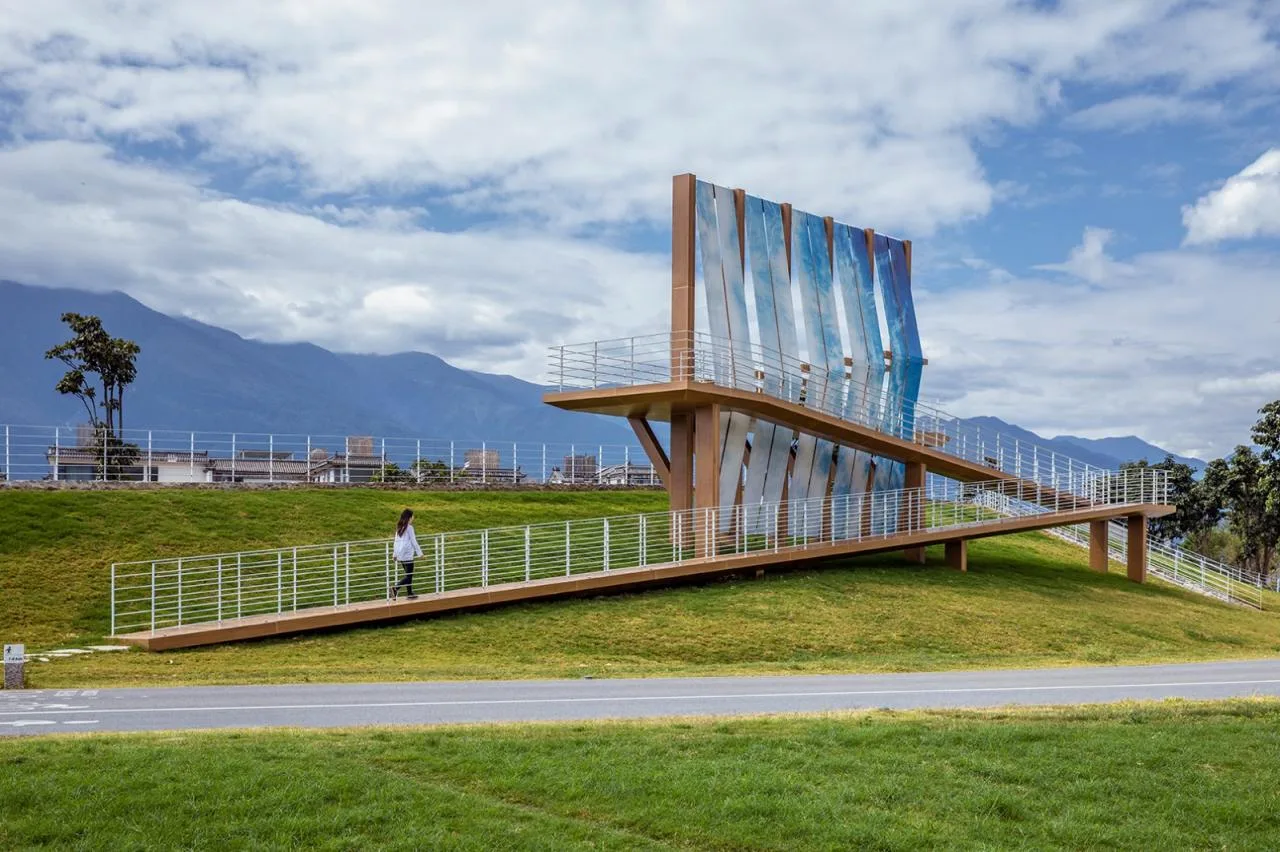
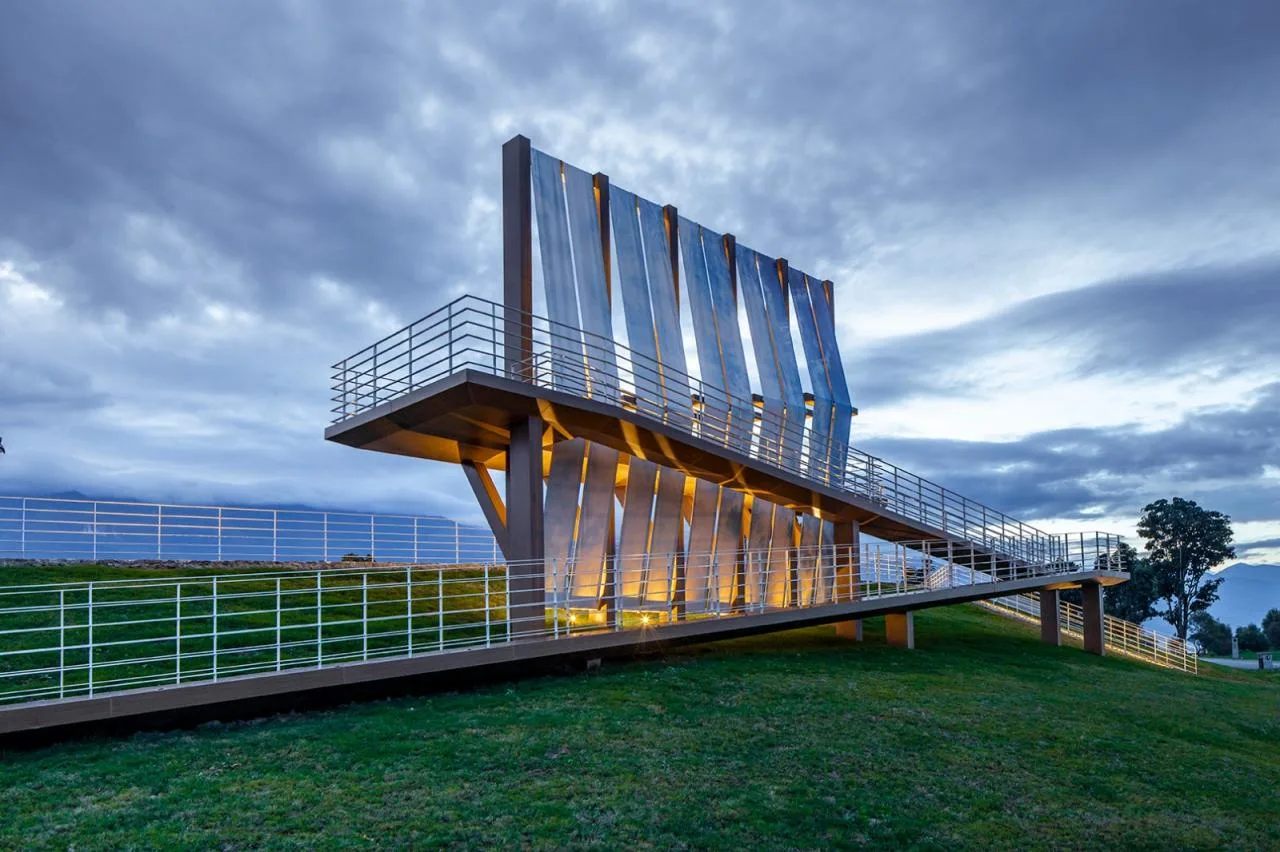
Supported by six steel masts, the sails are crafted from outdoor canvas showcasing ten custom tie-dye patterns, suspended on both sides. Visitors ascend a Z-shaped ramp to reach the observation platform, 6.5 meters high, offering one of the highest vantage points along the Erhai Lake Greenway Park, with panoramic views above the treetops.
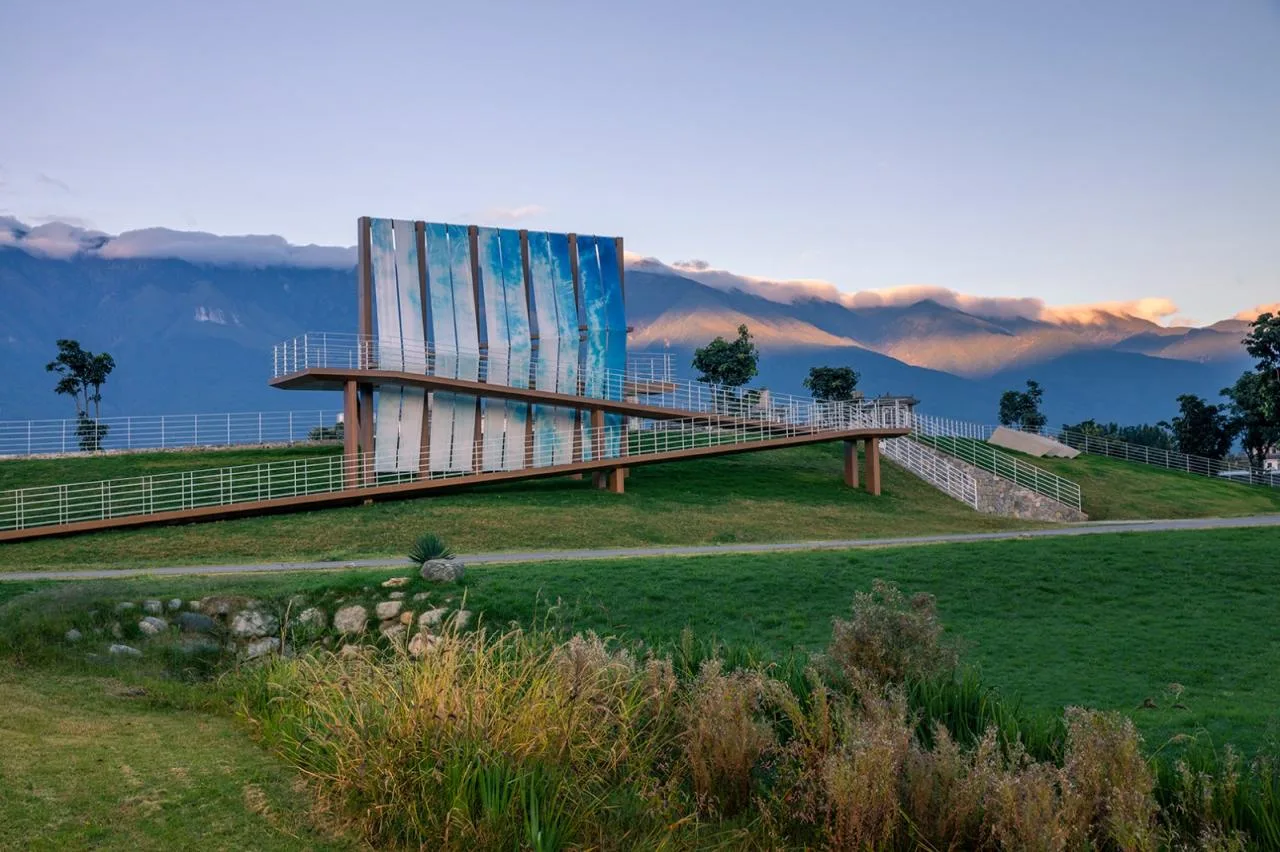
The sail’s design posed significant technical challenges, especially balancing wind resistance with structural lightness. After considering factors like durability, cost, and ease of construction, the team opted against wood for the main structure. Instead, they chose a steel framework clad with aluminum panels featuring wood grain transfer printing.
The observation deck and ramp are supported by single columns, minimizing structural bulk and maintaining a sense of lightness.
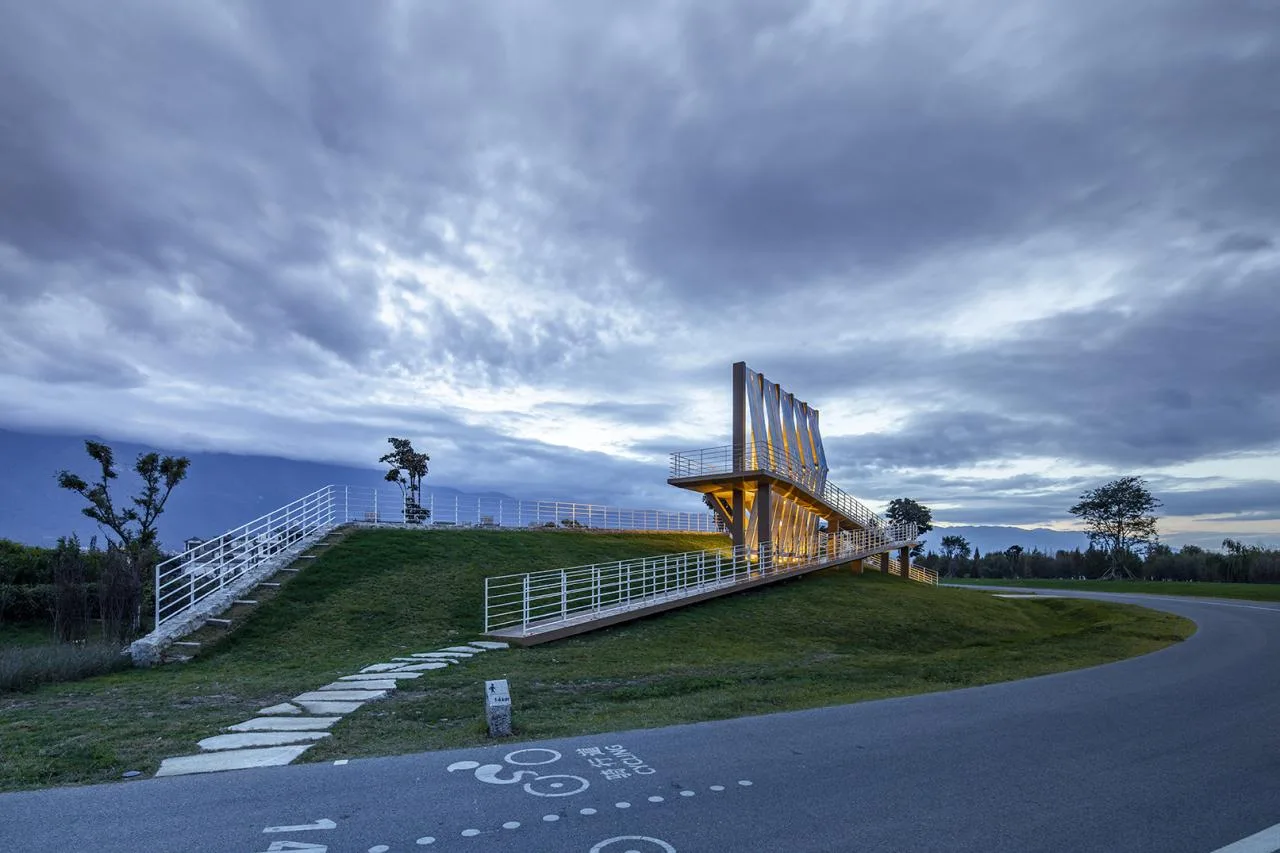
The sails are not simply hung vertically; instead, they are laterally supported at different heights to resist wind pressure while creating a dynamic rhythm and sense of movement. Steel cables are attached on all four sides, securing the canvas and allowing easy replacement in the future.
Interior Design: Vibrant Colors and Dramatic Lighting
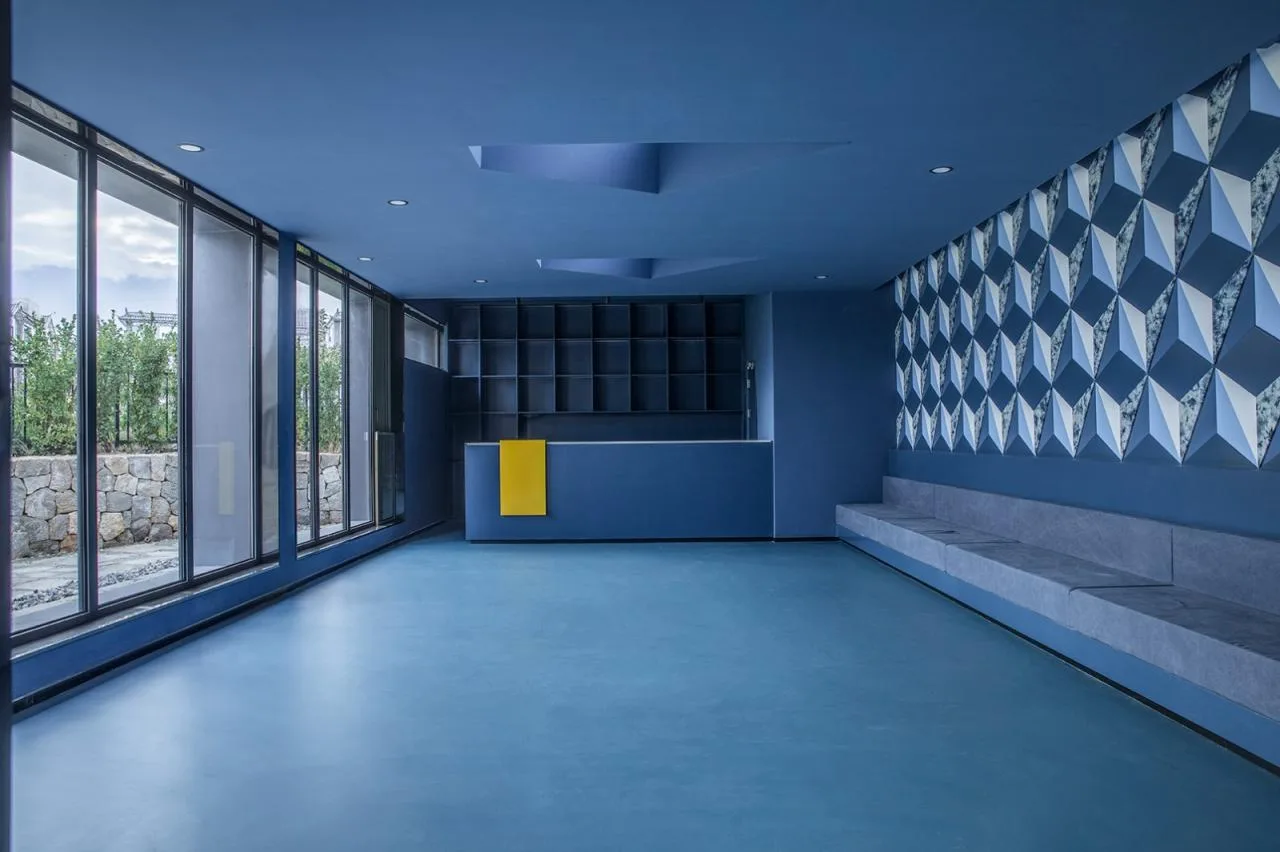
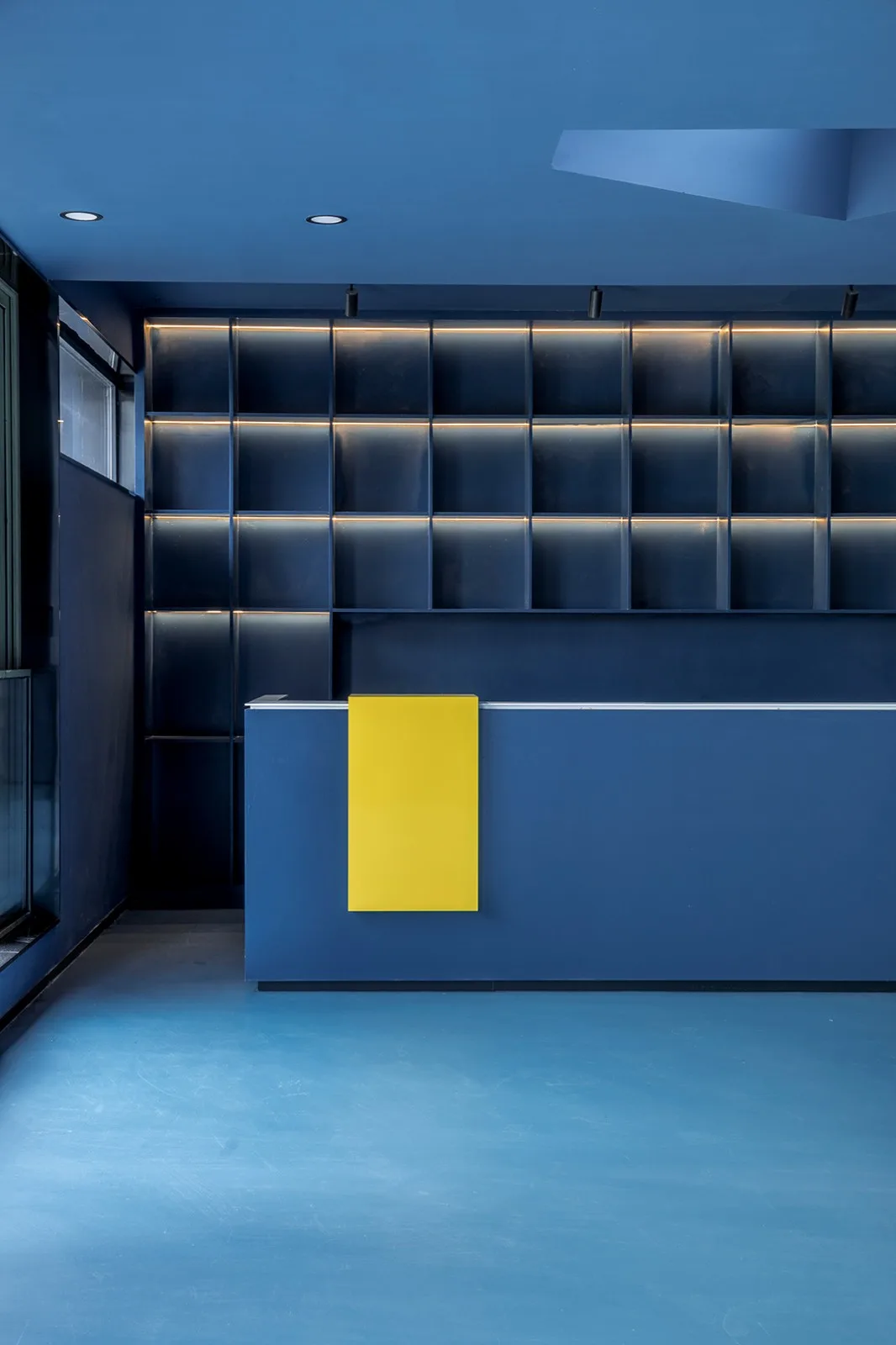
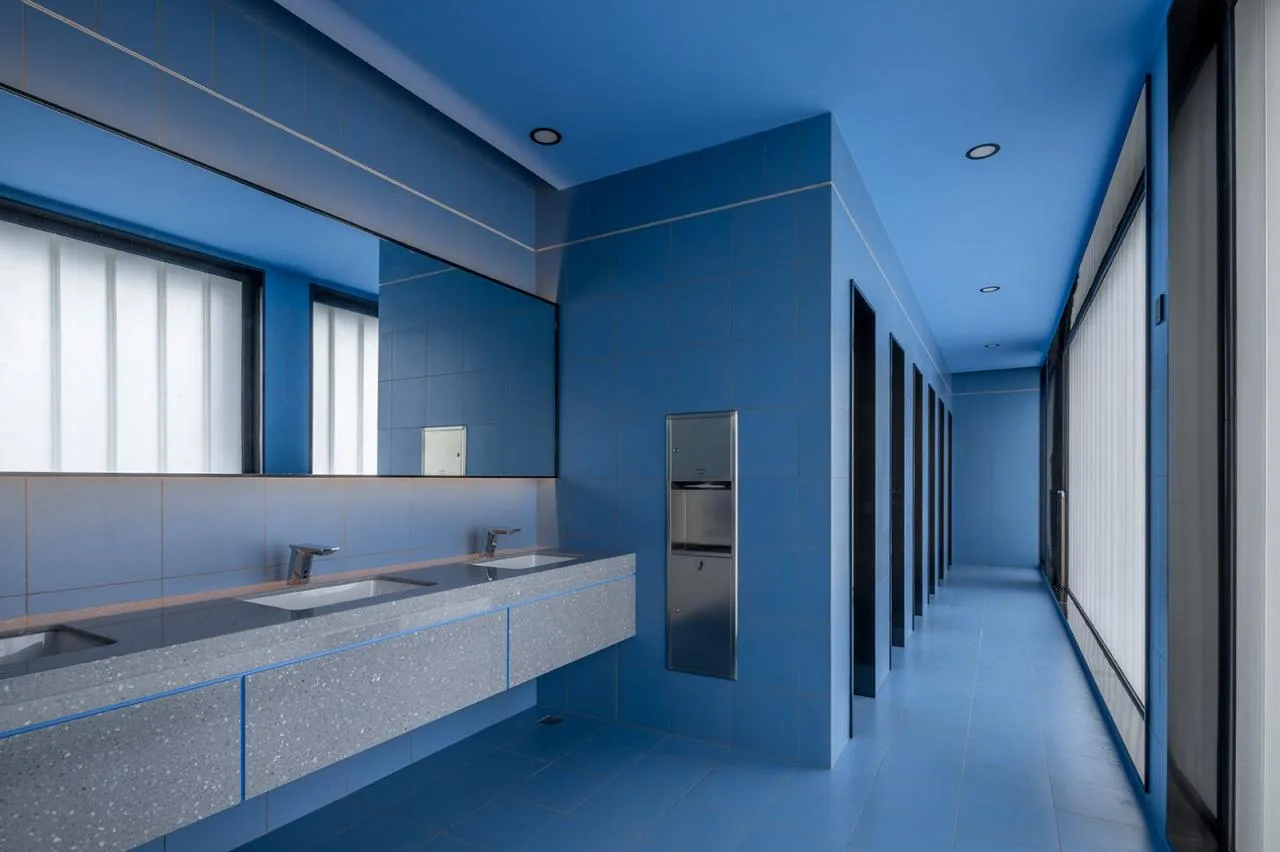
Inside, the design continues the “Bai ethnic tie-dye” theme. The team selected a representative blue from traditional tie-dye patterns to infuse the space with a unique atmosphere through bold color use.
The leisure bar offers simple refreshments for cyclists and tourists. Walls feature traditional tie-dye fabric motifs in blue and white, abstracted in a modern style. A bright yellow accent on the vertical water platform board adds striking contrast and visual interest.
The public restrooms are fully equipped with male, female, maternal-child, and accessible facilities. Blue tiles dominate the interior, complementing the leisure bar’s color scheme.
Lighting and privacy needs led the designers to use frosted U-shaped glass for the facade, creating a hazy translucency that contrasts with the rough cobblestone walls. The team embraced the idea that even public restrooms can be artful, incorporating a circular water ripple installation and a circular skylight at the entrance, where light and circular forms echo each other to enrich the space.
Conclusion: A Vibrant and Relaxing Hub for Haixi
Fengfan Station (Station 5) blurs the line between architecture and art, serving as an installation connected to the water, sky, wind, and people of Erhai Lake.
Sanwen Architecture adopted a transparent, lightweight, and even playful approach for this station. Its design fosters interaction with people, the environment, and events without feeling heavy or imposing. Instead, it openly responds to the site’s natural conditions and historical context, becoming a meaningful connection point between nature and visitors.
Project Drawings
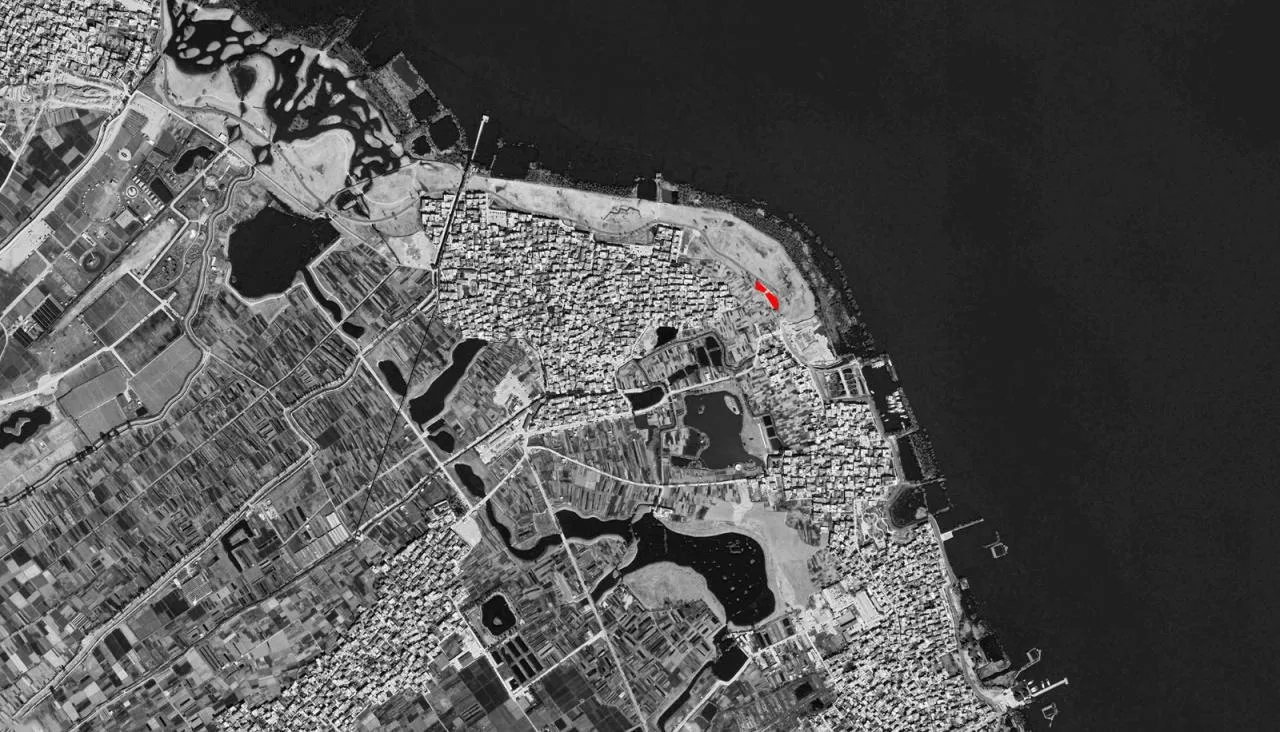
△ Site analysis diagram
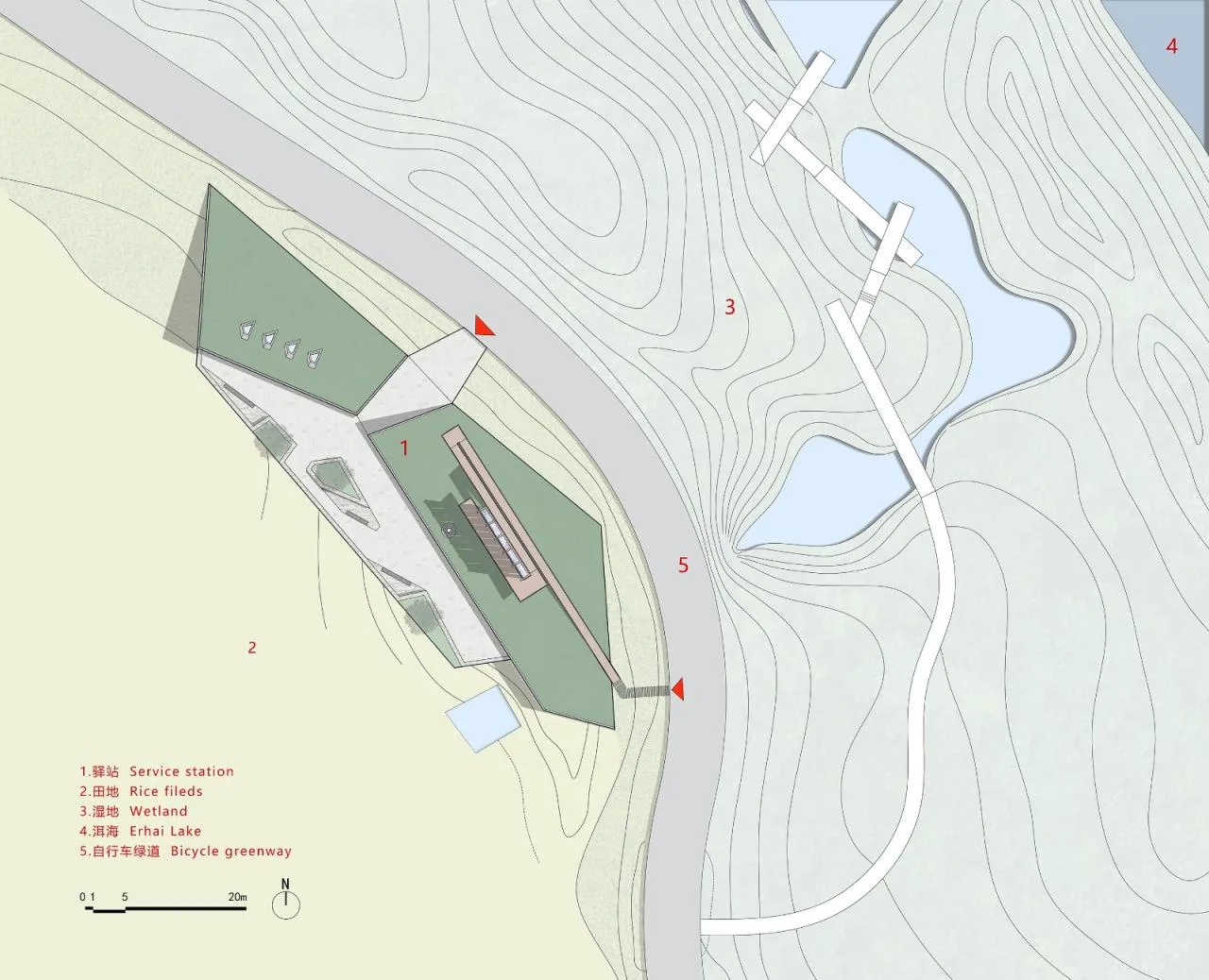
△ Overall site plan
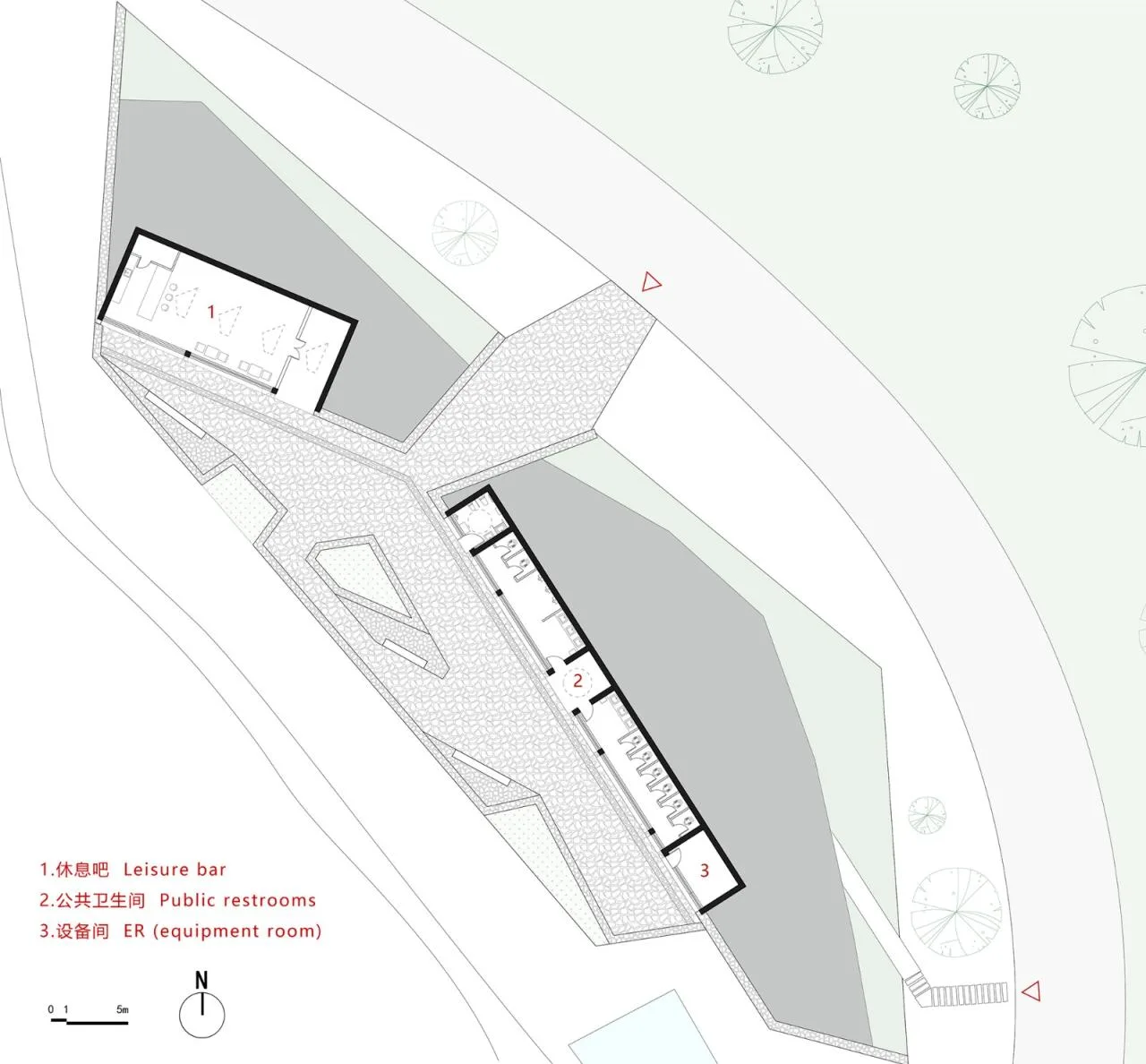
△ First floor plan
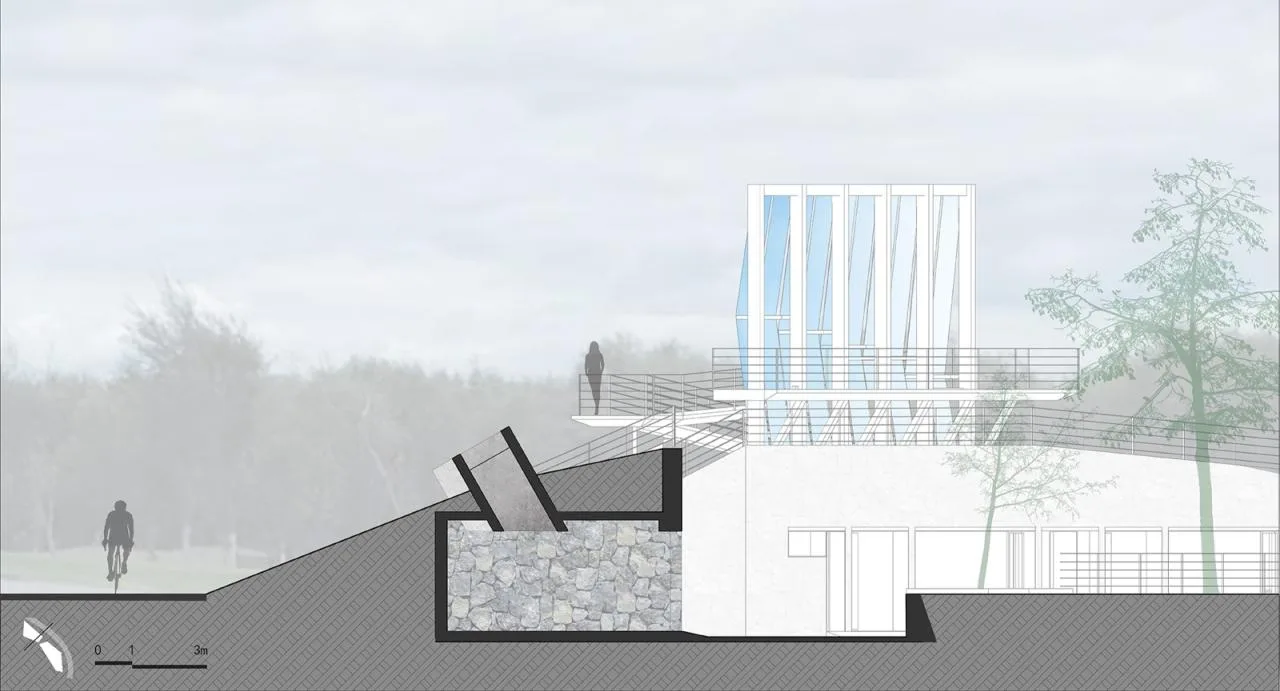
△ Section drawings
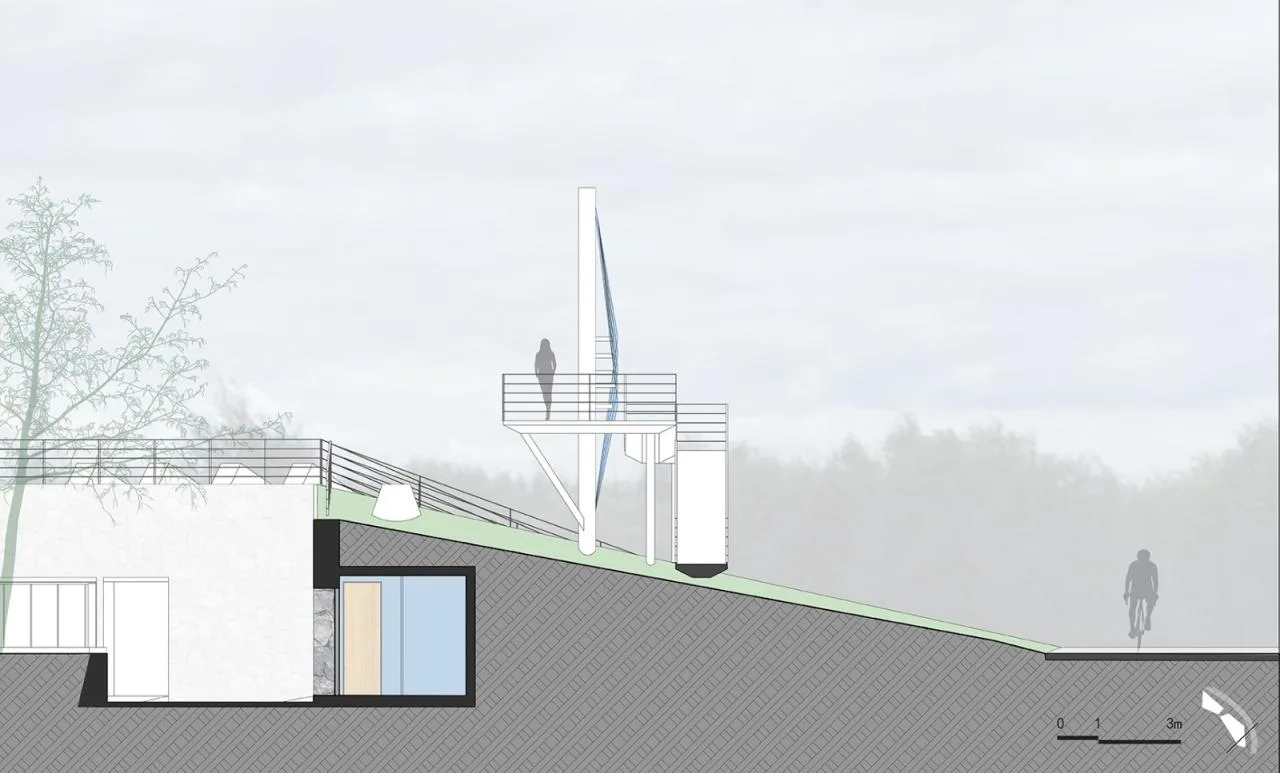
△ Section drawings
△ Generation diagram
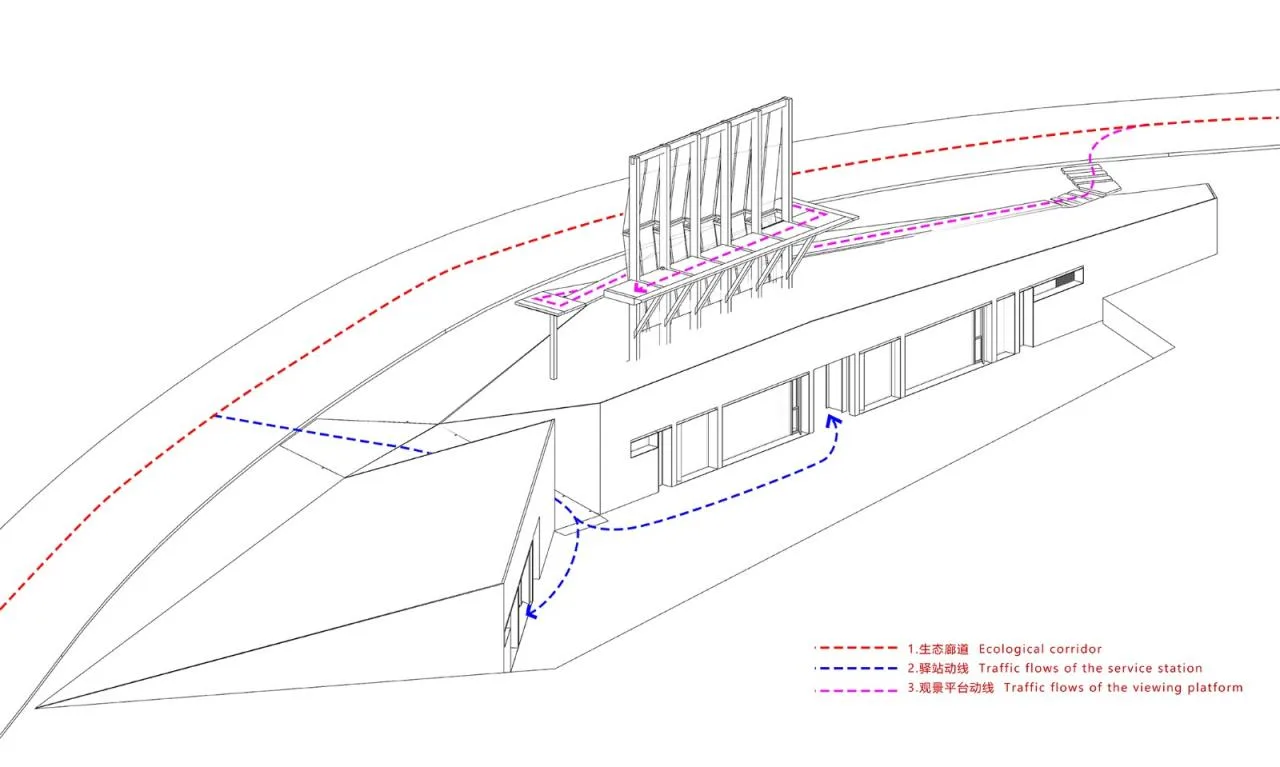
△ Streamline analysis diagram
Project Information
Name: Erhai Lake Ecological Corridor Station No. 5
Location: Dali Bai Autonomous Prefecture, Yunnan Province
Owner: Dali Cang’er Investment and Construction Co., Ltd
Architecture and Interior Design: Sanwen Architecture
Lead Architects: He Wei, Chen Long
Team Members: Wang Ziyi, Meng Xiangting, Wan Yuexiao, Sang Wanchen
Structural Consultant: Pan Congjian
Lighting Consultant: Beijing Yuanzhan Lighting Design Co., Ltd
Lighting Team Members: Qi Honghai, Liu Xianyu, Xu Bing, Chen Wen, Li Qiang, Gan Yunsong
Collaboration Unit: Beijing Huaju Architectural Design Institute Co., Ltd
Design Year: 2020
Construction Start: September 2021
Land Area: 1,500 square meters
Building Area: 195 square meters
Photography: Jin Weiqi, Sanwen Architecture
















Must log in before commenting!
Sign Up