
The current address at No. 2800 Yangshupu Road was once home to the Far East’s first thermal power plant — the Yangshupu Power Plant, established in 1913 by British investors. This historic site is abundant with industrial relics, featuring a 105-meter chimney that stands as a landmark symbolizing ships entering Shanghai Port. Along the riverbank, operational structures such as the crane mouth crane, coal transport wharf, conveyor belt, clean water tank, wet ash storage tank, and dry ash storage tank exhibit unique spatial forms and volumes. These elements hold significant importance within the Yangpu Riverside Connection Project.
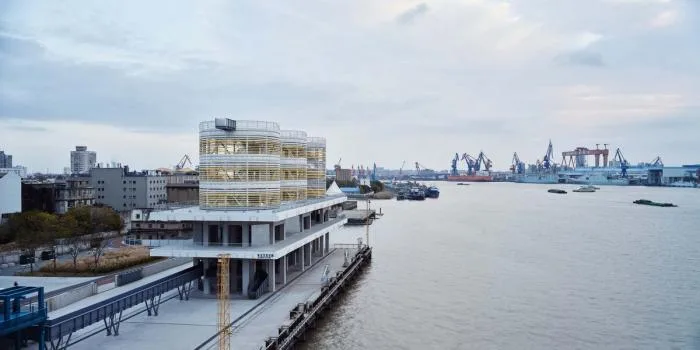
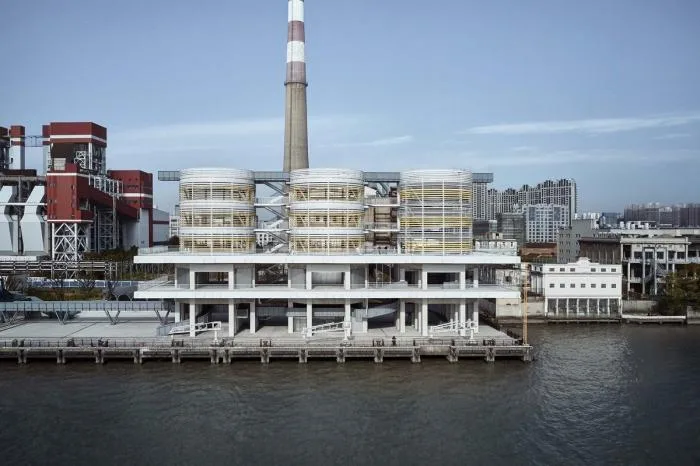
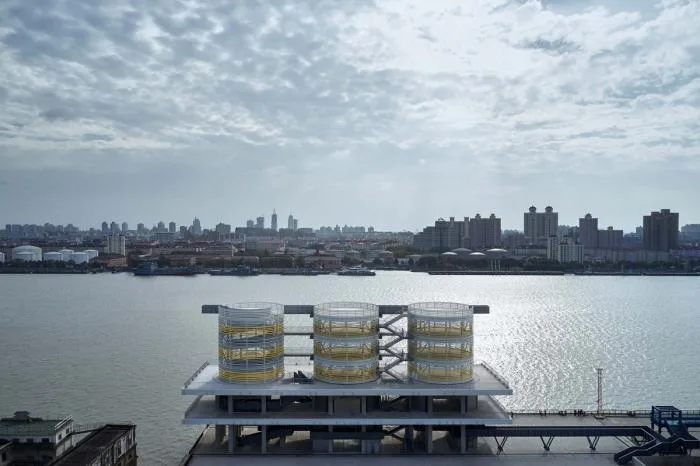
Located on the easternmost pier of the power plant area, the original dry ash storage tank has been transformed into the Ash Silo Art Museum. Renovation plans for the ash silo began in 2015. Due to the uncertainty regarding its future function, the design underwent multiple revisions. Ultimately, the project adopted a flexible and open strategy, guided by art exhibitions, to drive its design and implementation.
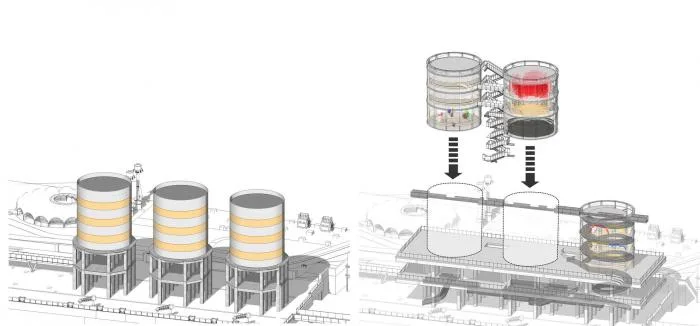
Schematic diagram illustrating the front and rear axle sides before and after the ash silo renovation.
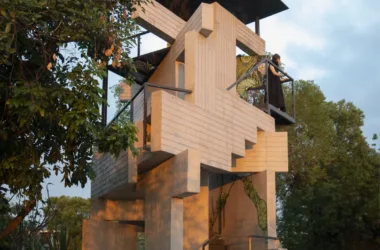
The renovation connected the original three independent ash pots into a unified structure by adding two landscape platforms. The 15-meter-high enclosed ash silo was refurbished using a translucent interface treatment. The entire space was reimagined as a continuous roaming path, winding from the concrete base up to the top of the silo.
This roaming pathway created an immersive experience where six undefined-use spaces were integrated alongside a series of folding stairs arranged in a plug-in style. The inclusion of artwork interventions fostered a dynamic spatial interaction that tightly weaves public exploration with artistic discourse.
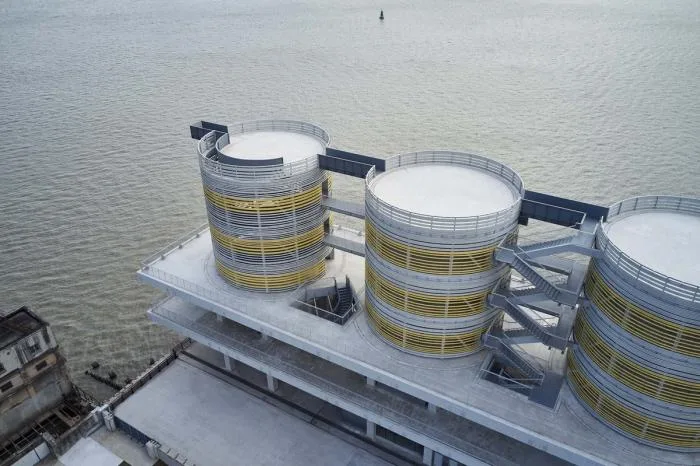
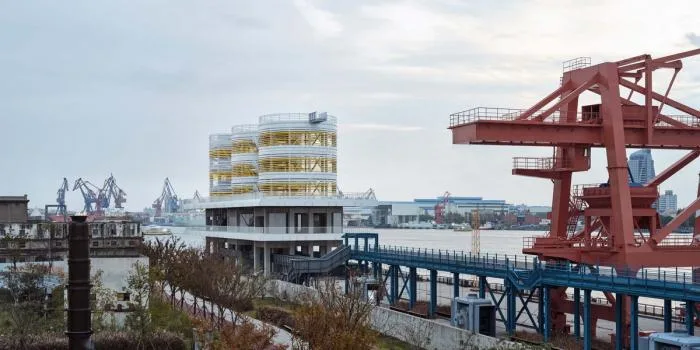
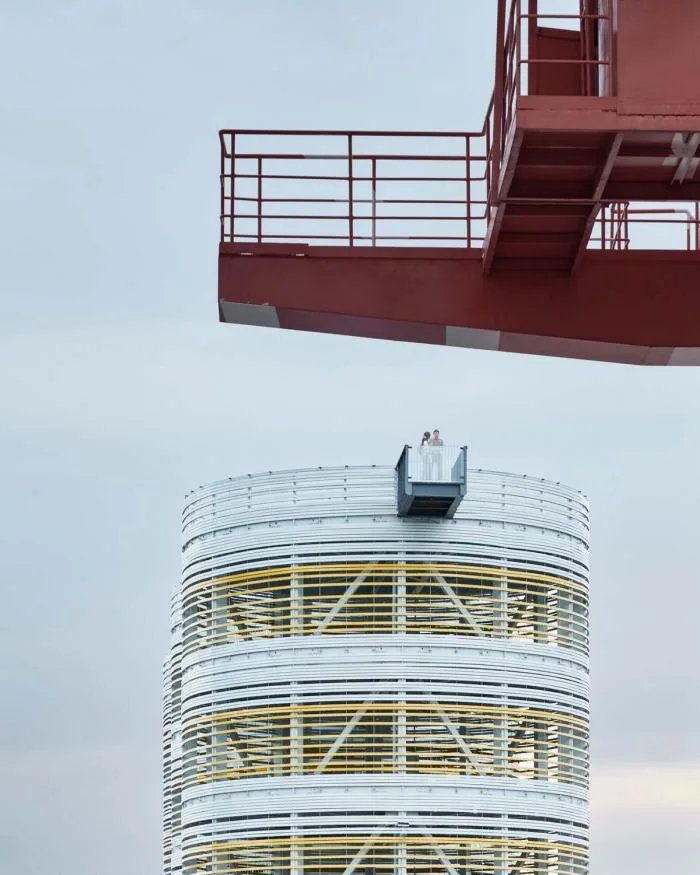
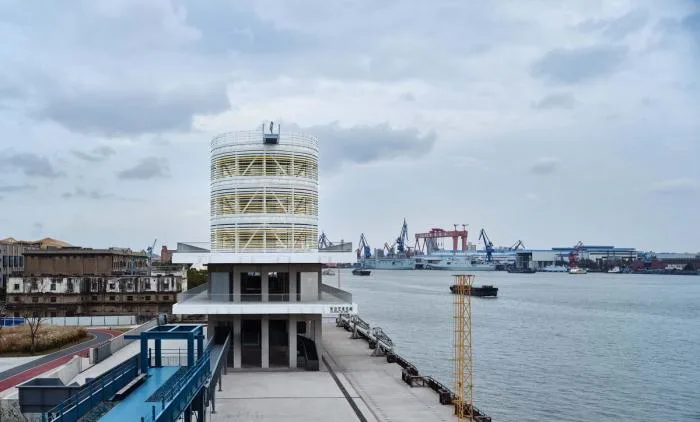
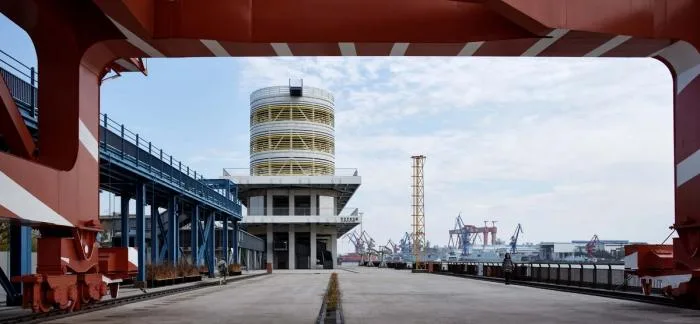
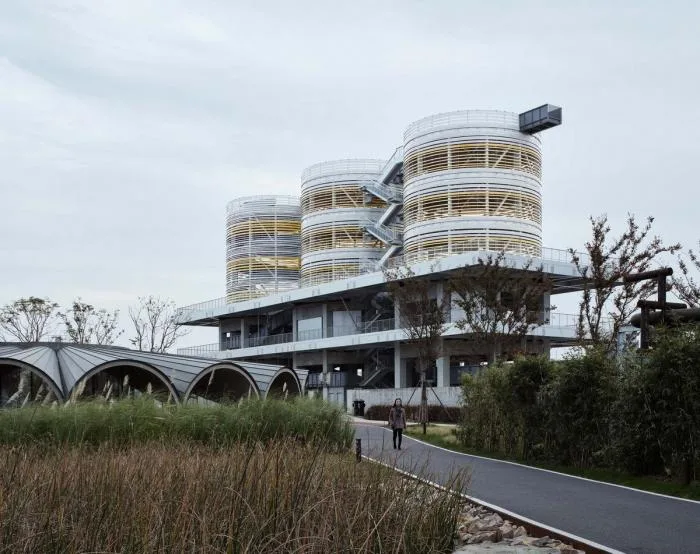
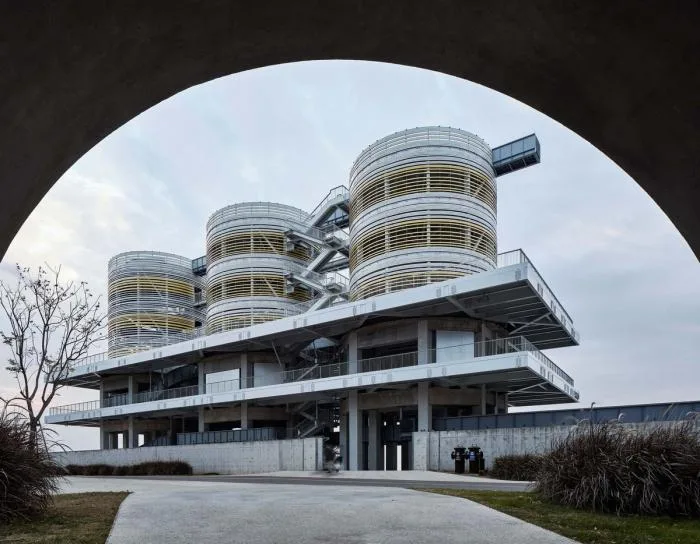
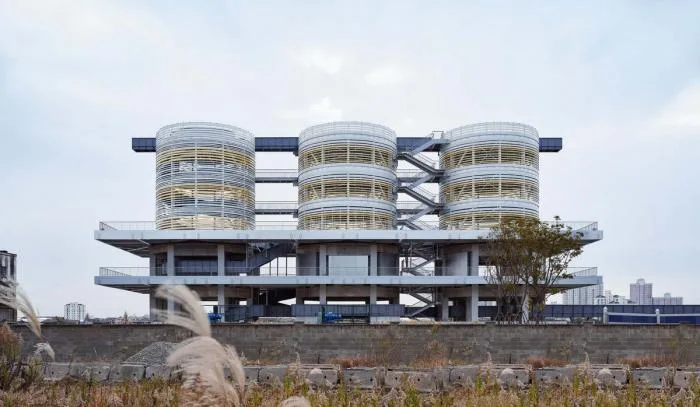
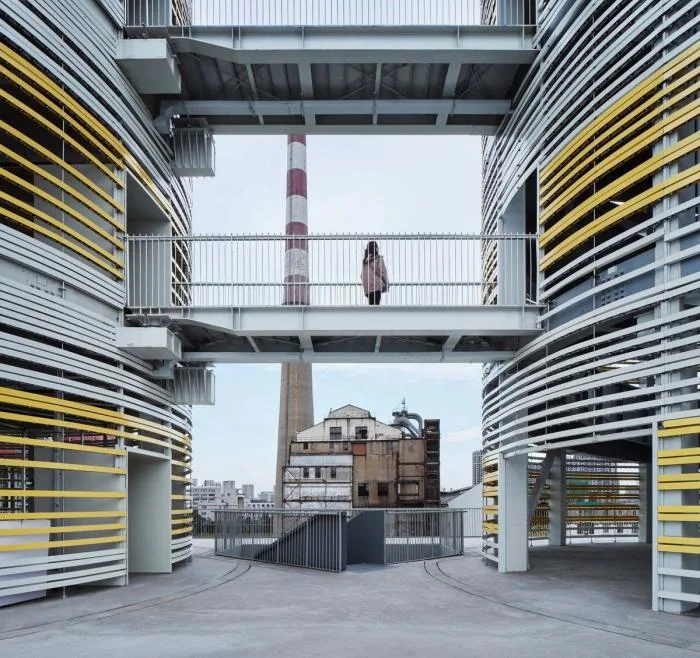
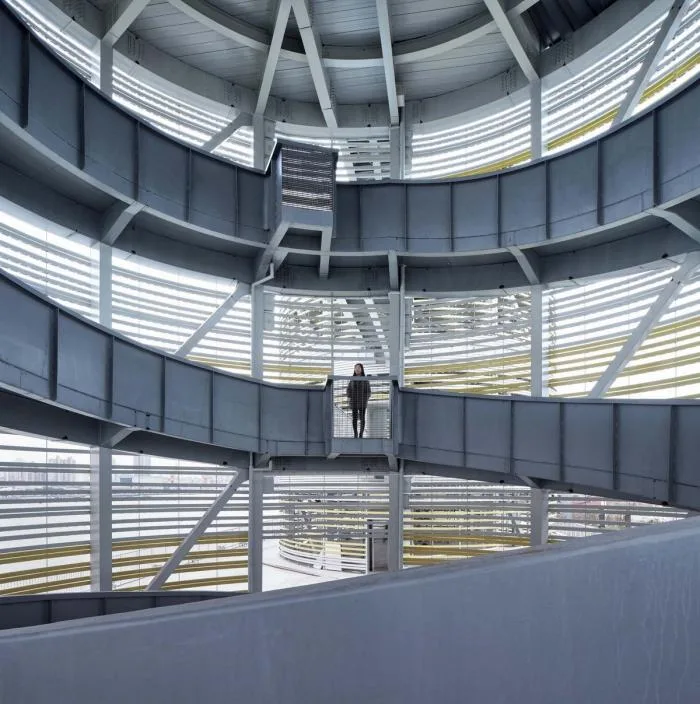
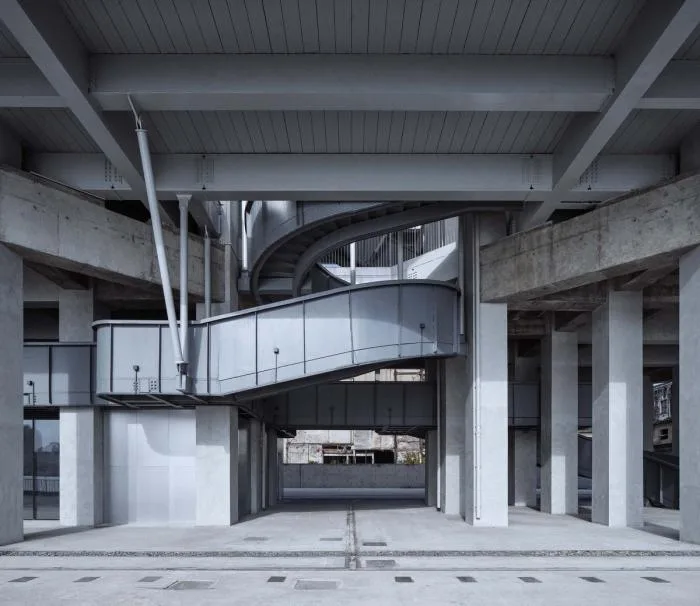
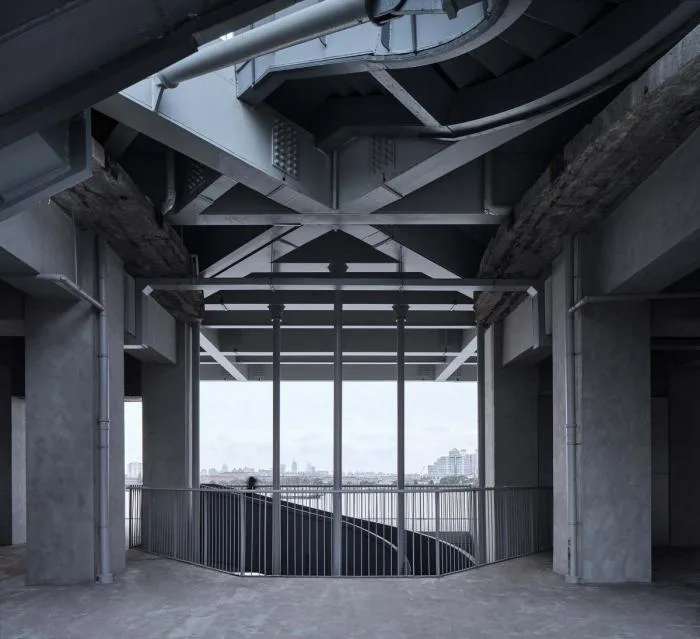
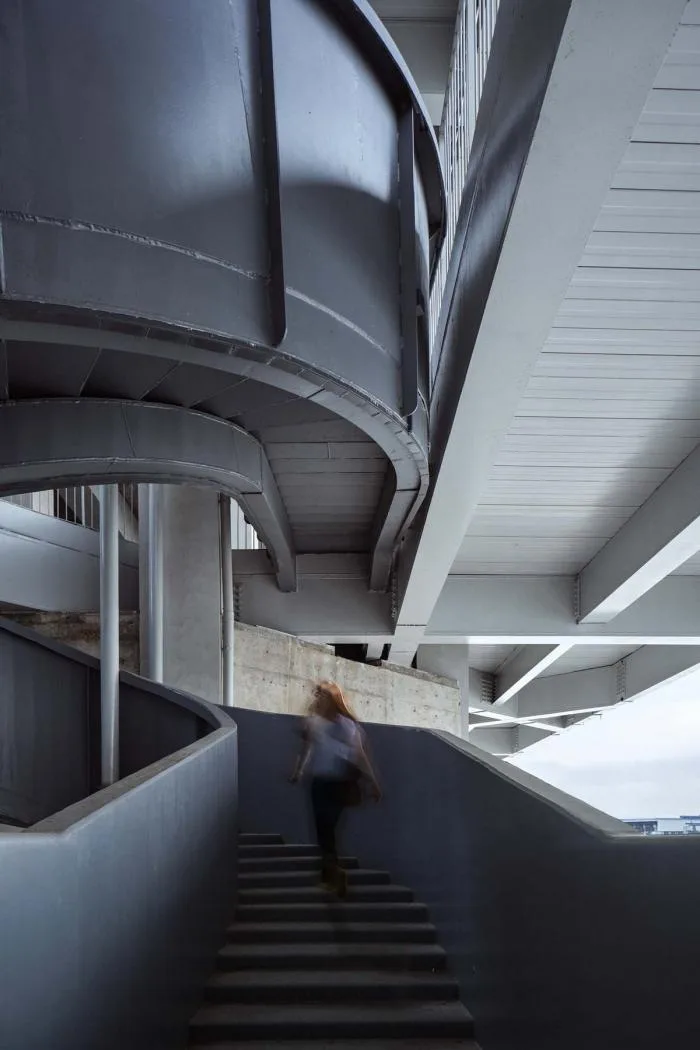
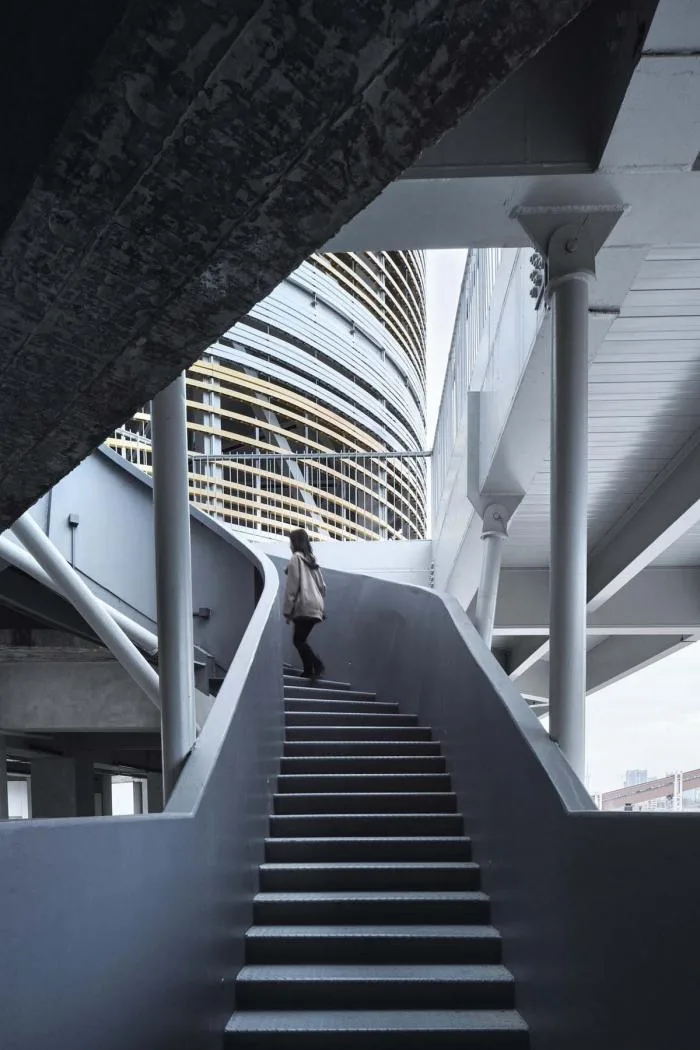
During the Shanghai Urban Art Festival held from September to November 2019, the Grey Warehouse Art Museum was established as the eastern post office. This public art installation was created through the collaboration of Portuguese artist Guimaraes, Japanese artist Qiyou Takahashi, and Chinese designers Han Jiaying and Zhang Ming. It has become a key highlight of the entire spatial art season.
Design Drawings
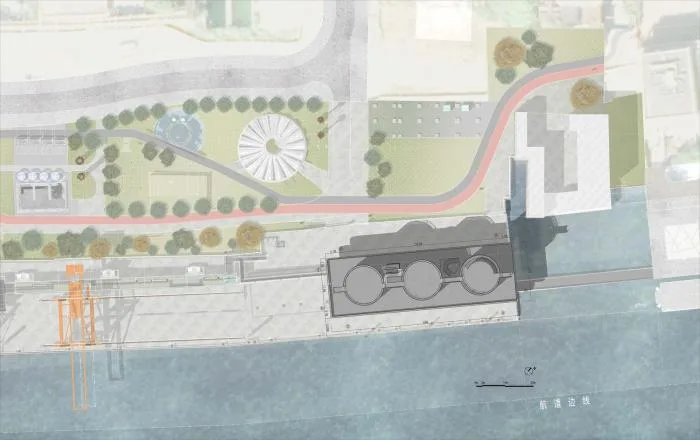
△ General layout plan
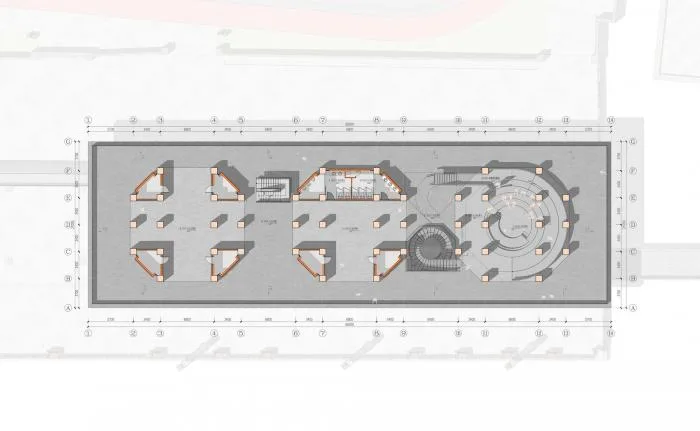
△ Second floor plan
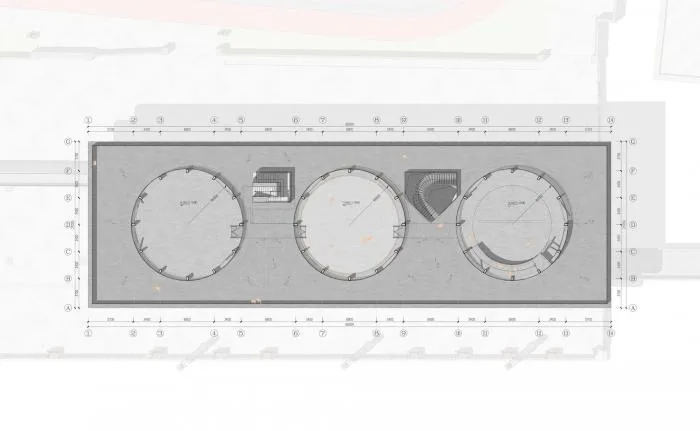
△ Third floor plan
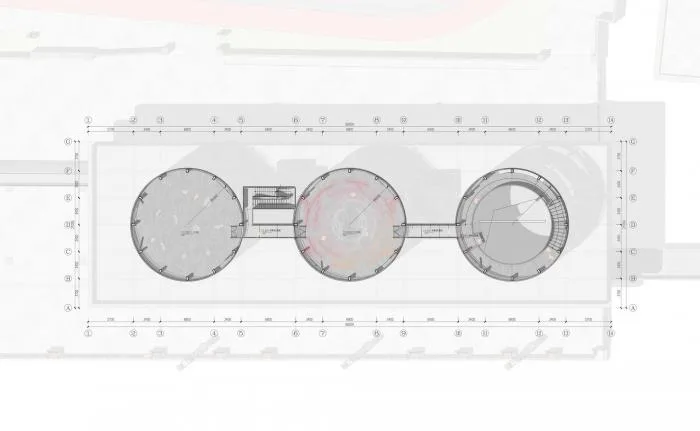
△ Fifth floor plan
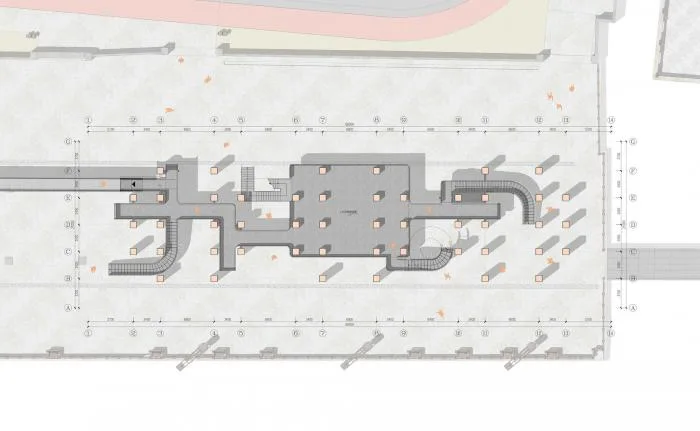
△ Mezzanine plan
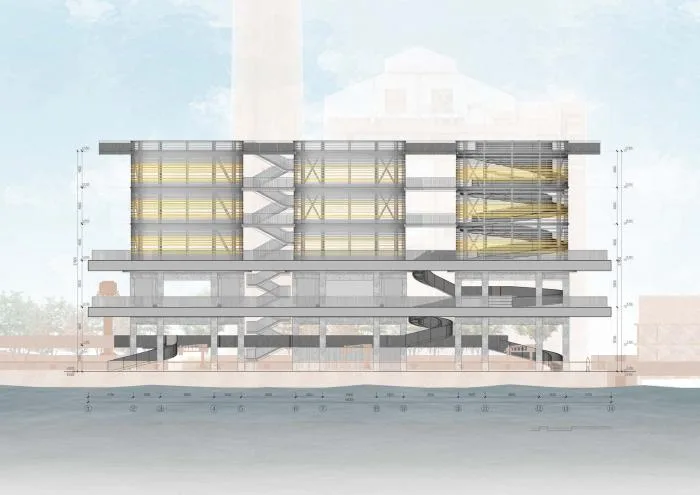
△ Riverside elevation view
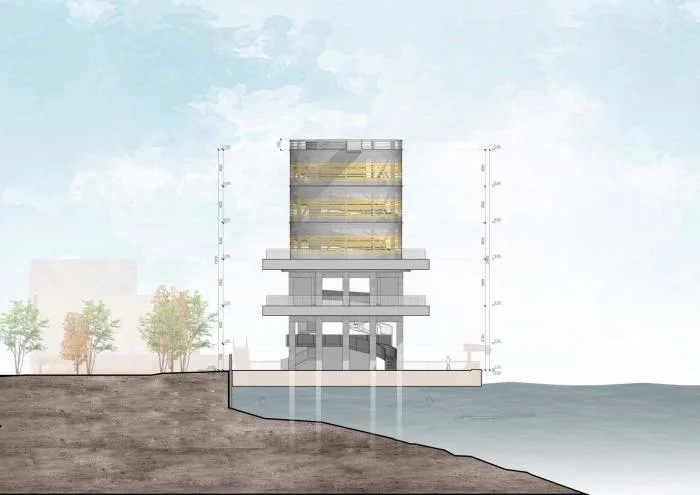
△ Short facade
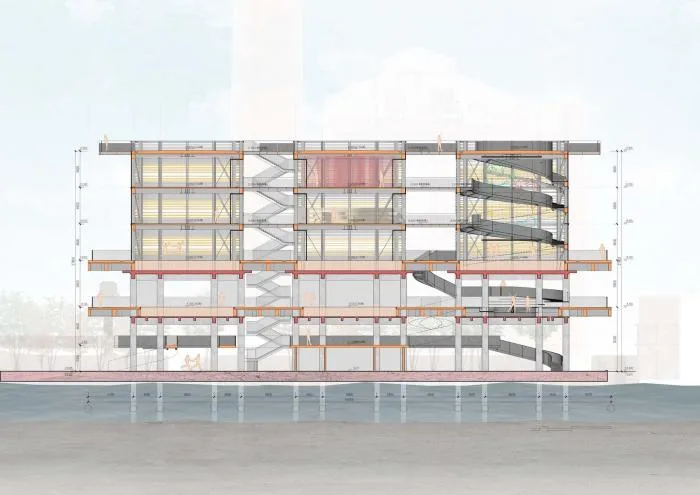
△ Section diagram
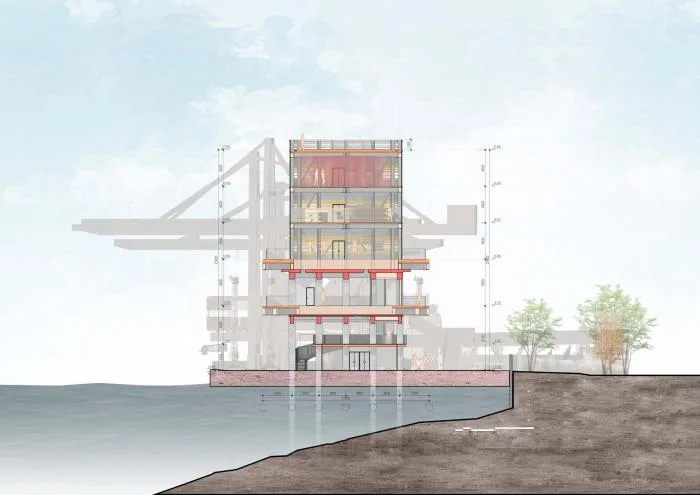
△ Short profile
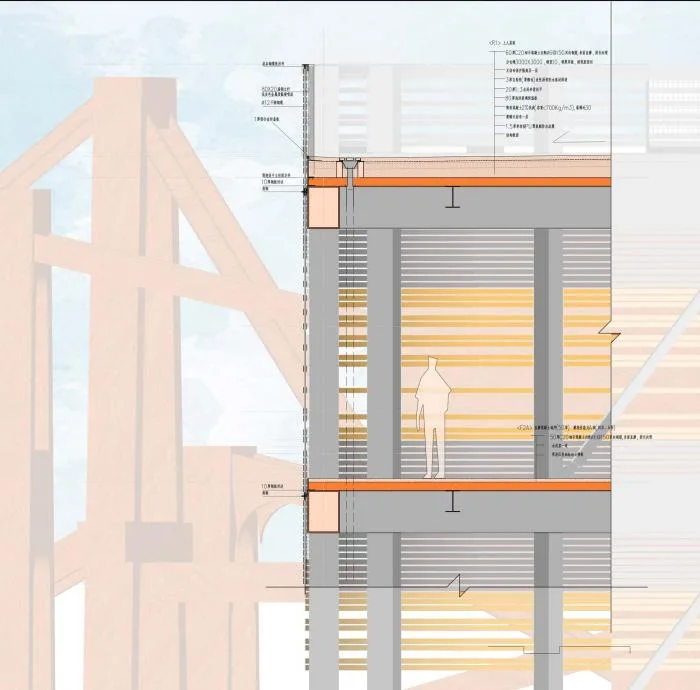
△ Wall Node 1
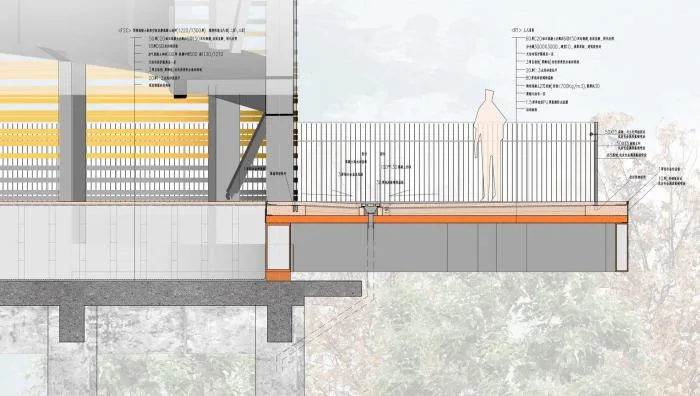
△ Wall Node 2
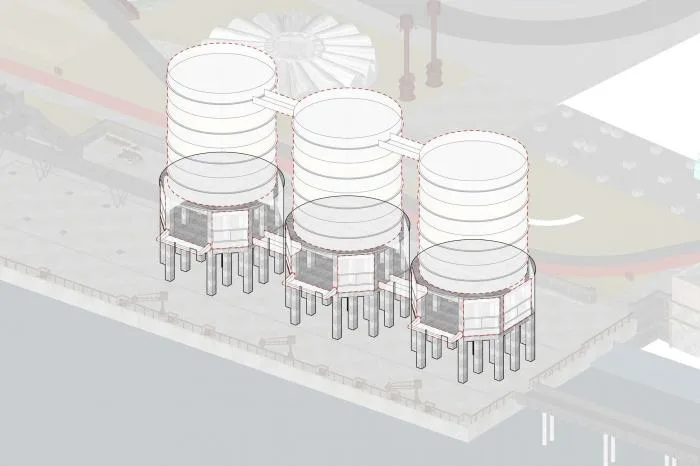
△ Shape analysis diagram
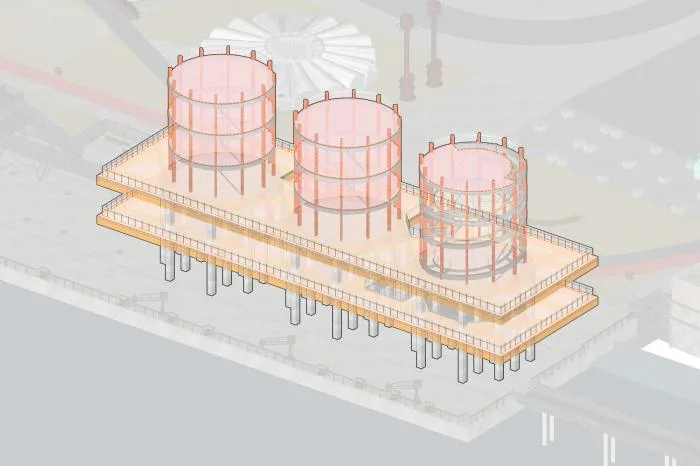
△ Shape analysis diagram
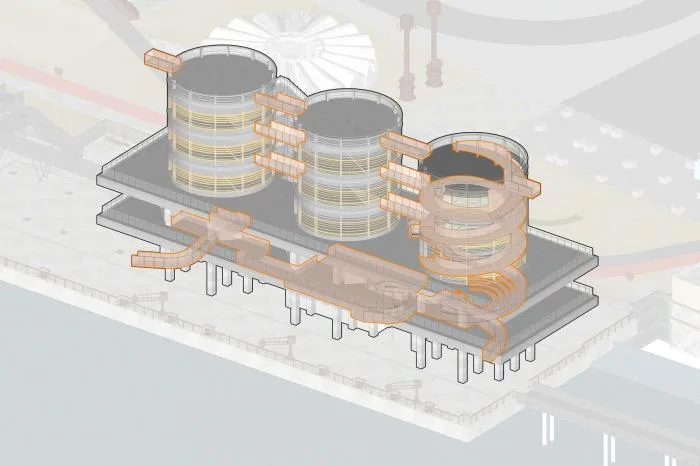
△ Shape analysis diagram
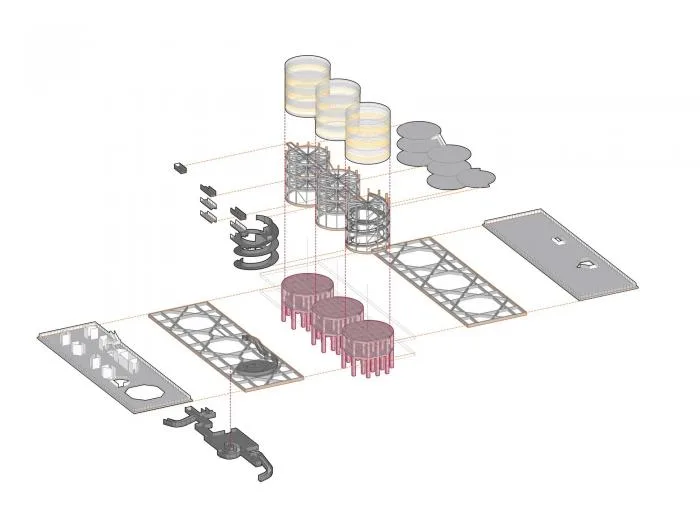
△ Structural explosion diagram
Project Information
Project Type: Art Museum, Renovation Project
Location: Shanghai, China
Designer: Tongji Original Design Studio
Area: 3,840 m²
Year: 2019
Photographer: Octopus Seeks Architecture
Lead Architects: Zhang Ming, Zhang Zi, Qin Shu
Design Team: Li Xuefeng, Wu Yunsong, Zhu Chengzhe (intern), Zhang Yichen (intern), Liu Jingyi (intern)
Structural Engineers: Nan Jun, Cao Linyong
Equipment Engineers: Shi Jinyue, Gan Zhaohui, Zhang Hua
Owner: Shanghai Yangpu Binjiang Investment and Development Co., Ltd.












Must log in before commenting!
Sign Up