
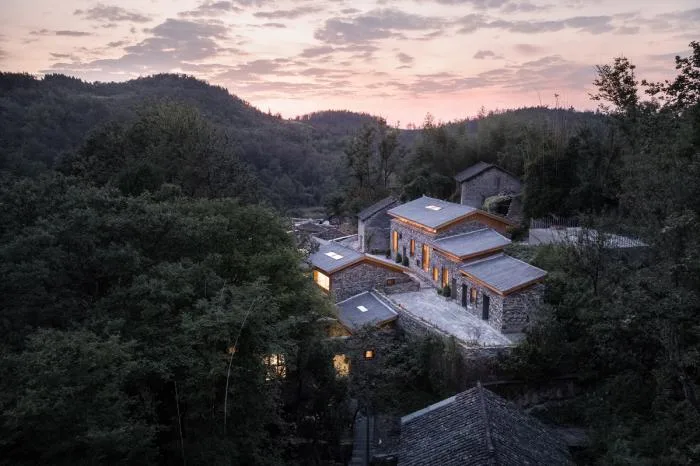
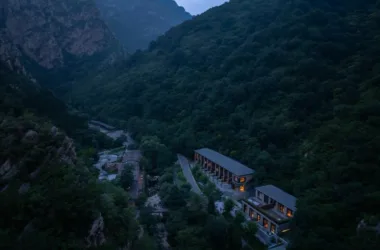
△ Aerial view of the buildings © He Lian
Fenghuang Ancient City, located in the Xiangxi Tujia and Miao Autonomous Prefecture of Hunan Province, is a renowned historical and cultural city in China. New Zealand writer Louis Ayly once described it as the most beautiful small town in China. Known as the “Phoenix of the South, Far from Beijing,” Fenghuang is surrounded by lesser-known natural landscapes, picturesque Miao villages, and a rich, mysterious folk culture in the countryside.
The entire village is nestled along the mountainside, featuring scattered stone houses and winding cobblestone streets. Lush greenery and misty trees envelop the area, creating a tranquil and idyllic atmosphere reminiscent of paradise on earth. Amid the mist and rain, the smoke from cooking fires lingers gently in the air.
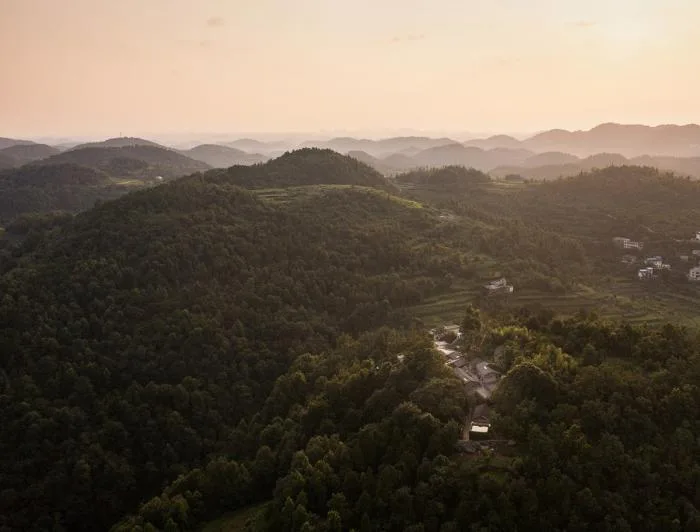
Surrounded by mountains © He Lian
Poverty Alleviation and Public Welfare
The Baimei Village Inn is an innovative public welfare project initiated by the China Poverty Alleviation Foundation in 2013. It aims to combat poverty through beautiful rural tourism, exploring a new “rural tourism poverty alleviation+” model. The project builds a platform connecting rural areas with the outside world, re-evaluates the value of impoverished villages, and creates development opportunities rooted in these communities. Currently, more than 20 villages nationwide participate in this initiative. Fenghuang Lahao Village is one such location, funded by donations from Sinopec.
Invited by the China Poverty Alleviation Foundation, we participated in the entire process, including village selection, overall planning, building renovation, and interior and landscape design. This two-year project allowed us to experience the challenges of rural development firsthand, witness the positive environmental changes our work brought, and deeply understand the social responsibility of architects.
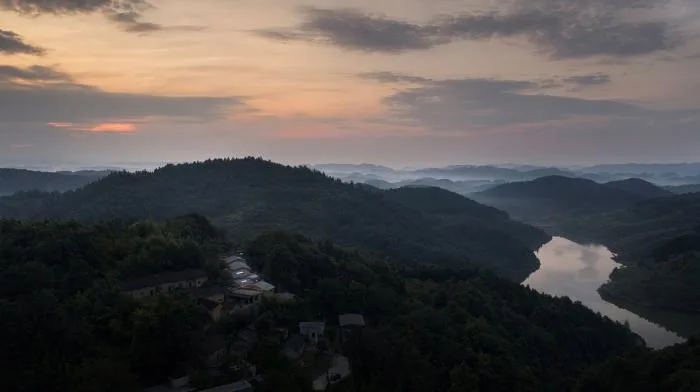
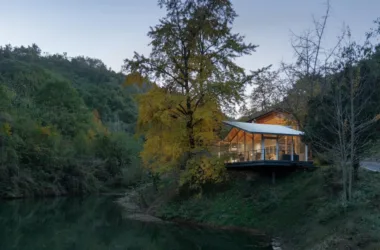
Between mountains and rivers © He Lian
The Rebirth of Settlements
The Lahao Stone House is situated on a hillside with a north-to-south slope, featuring a height difference of approximately 30 meters. The village is surrounded by ancient towering trees and embraced by mountains. The settlement’s layout is incomplete; some houses remain well preserved, others have collapsed, and a few brick and concrete structures built by villagers disrupt the village’s historic texture. When we surveyed the site, Lahao Village had become a “hollow village,” inhabited mostly by elderly residents and children left behind.
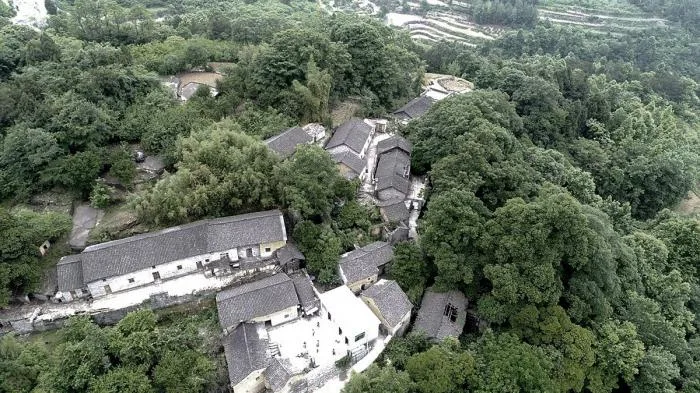
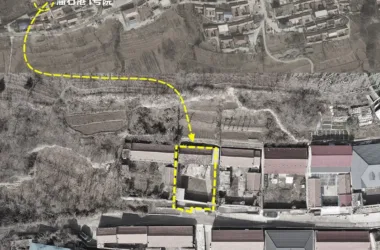
△ Aerial view before renovation © Original Architecture Firm
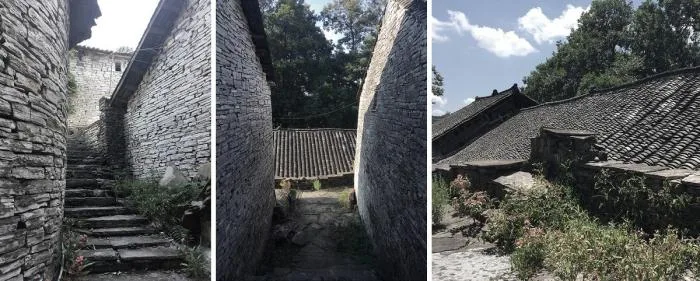
△ Current condition before renovation © Original Architecture Firm
After extensive research and analysis, we selected a northern area of the village with relatively intact old houses as the core for the homestay project. We reorganized the village spatially, renovated infrastructure such as public spaces, roads, and parking areas, and clarified the homestay project’s framework. Twelve houses were chosen for renovation, including public areas and guest accommodations. Notably, the homestay project is designed without walls or strict boundaries, harmoniously coexisting with preserved houses. The village evolves naturally, blending old and new seamlessly.
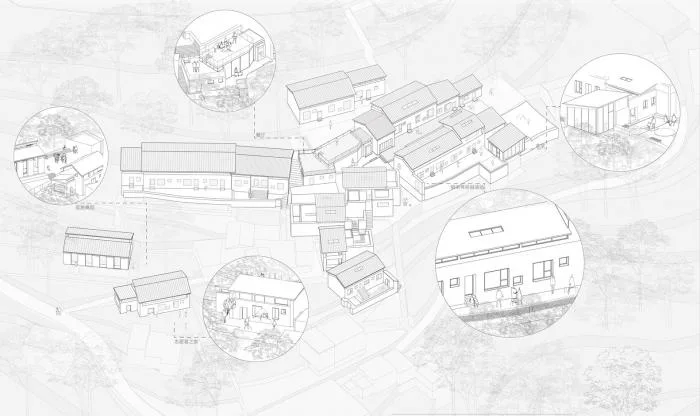
Activity analysis in public areas
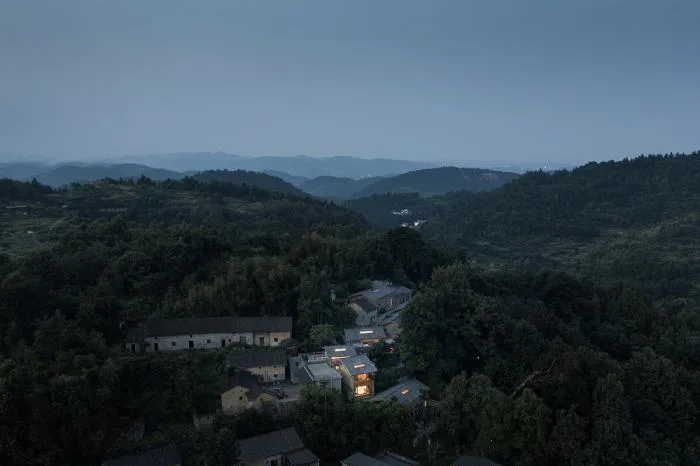
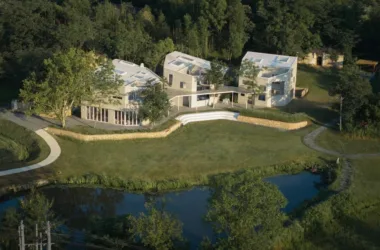
△ Aerial view after renovation © He Lian
Planning and Strategy
The renovation of the Lahao Stone House is guided by principles that protect the original ecological landscape, respect the existing site, restore architectural textures, and minimize environmental impact. Renovations focus on the main house within its existing boundaries, demolishing only attached toilets and chicken coops. Each building encloses a courtyard, where original trees are preserved to ensure privacy while maximizing scenic views.
The houses are connected by stone paths, inviting visitors to ascend stairs and experience winding routes with unique views.

△ Renovation animation
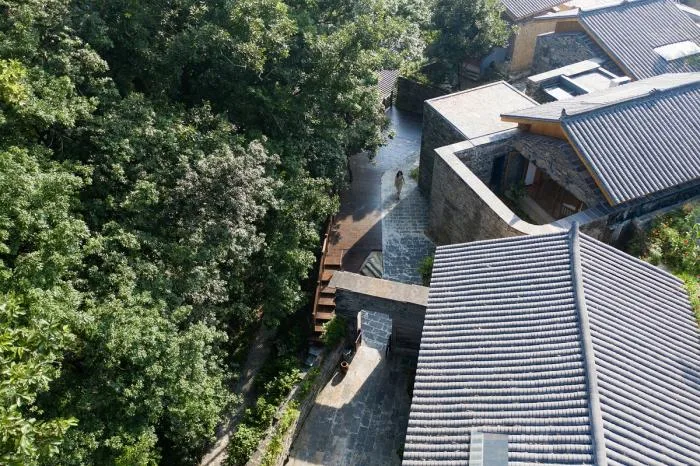
△ Public Trail © He Lian
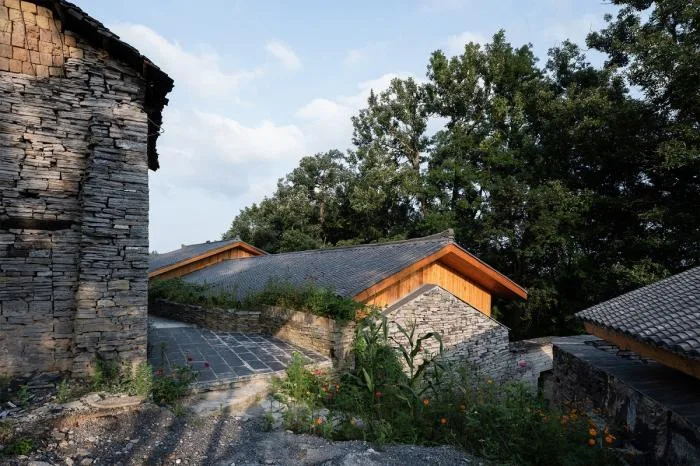
△ Contrast of New and Old © He Lian
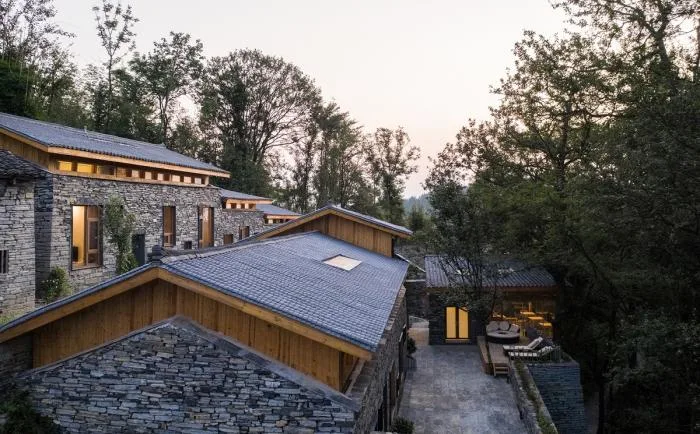
△ Architectural facade © He Lian
Window placements in public spaces and guest rooms were carefully designed to offer unique views of either towering ancient trees or lush distant mountains, varying with elevation. Currently, six homestays have been completed, primarily on the village’s eastern side, with further renovations planned for the future.
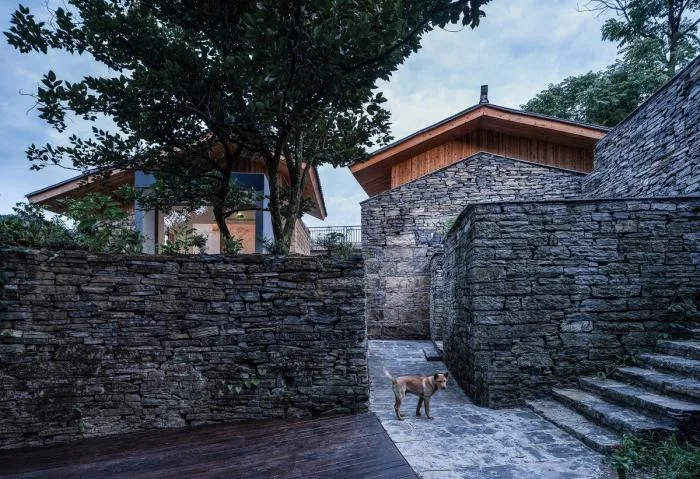
△ Varied elevation layout © He Lian
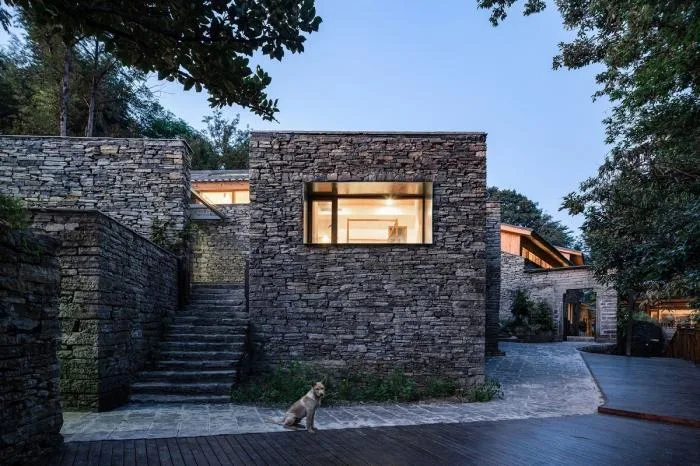
△ Public trail © He Lian
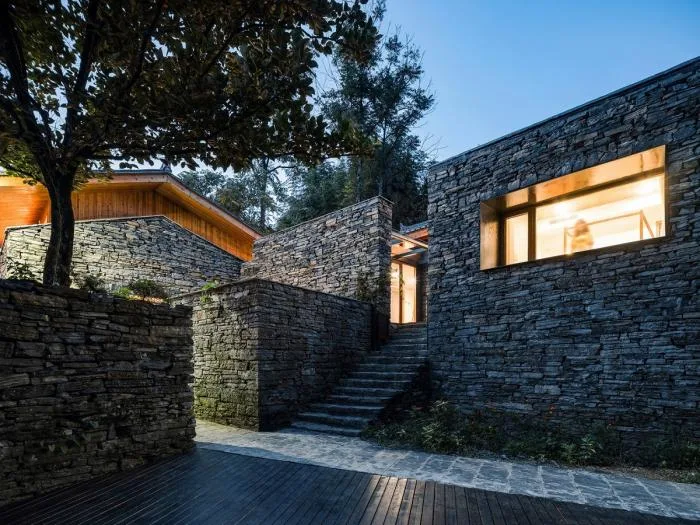
△ Varied elevation layout © He Lian
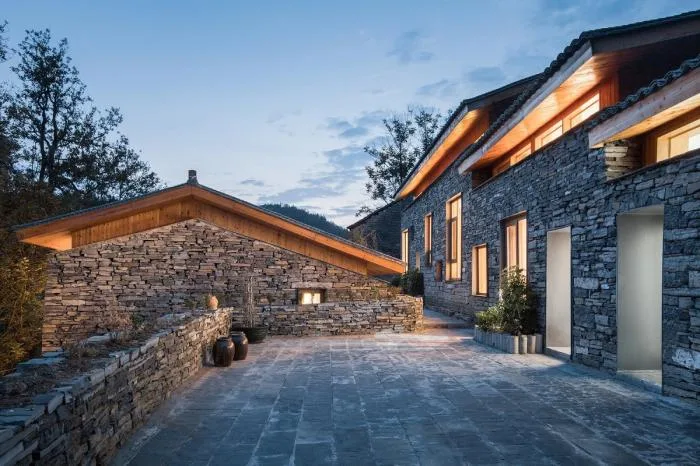
△ Architectural facade © He Lian
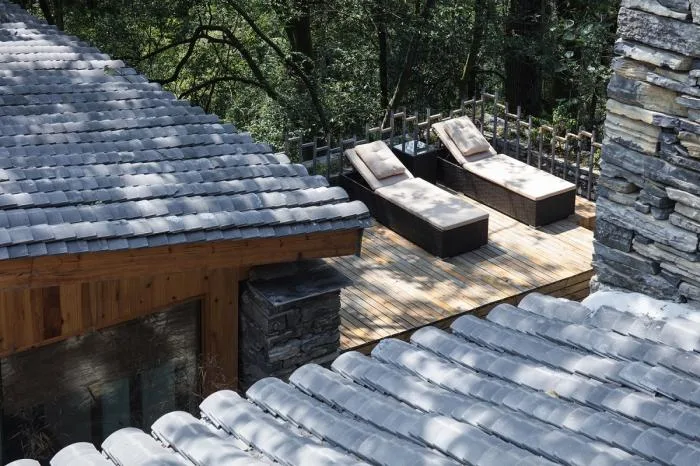
△ Rest platform © He Lian
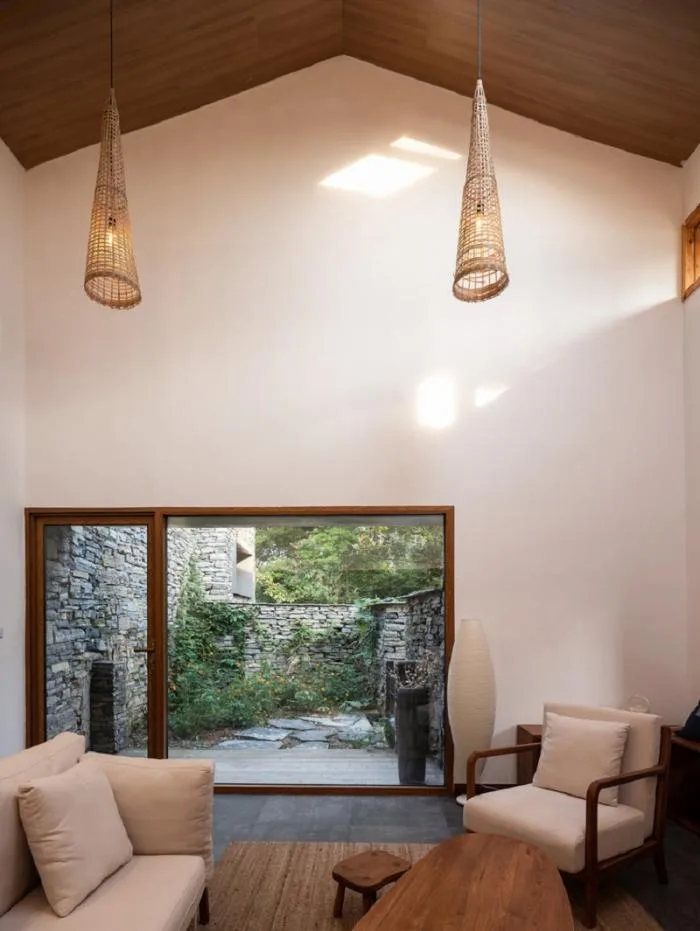
△ Living room interior © He Lian
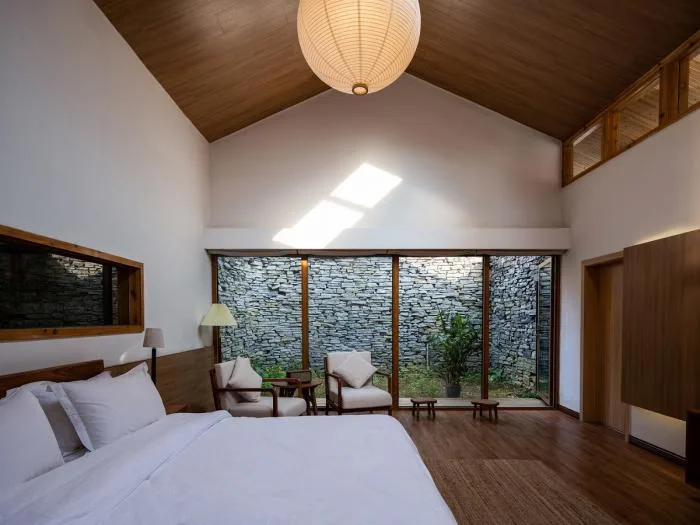
△ Guest room interior © He Lian
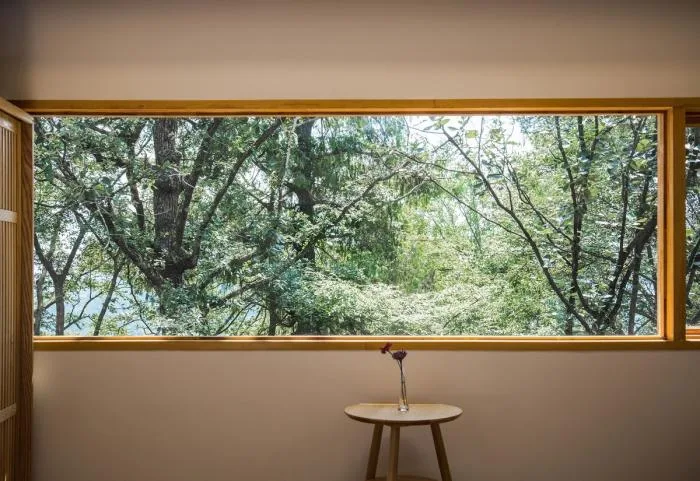
△ Window view © He Lian
Materials and Construction
The stone walls in Lahao Village are a unique dry masonry technique native to western Hunan, constructed without mortar and up to 55 centimeters thick. We renovated only the south-facing stone wall, allowing local stonemasons to rebuild it traditionally, while preserving the other stone walls intact. The south wall’s skylight windows were expanded, significantly improving natural lighting.
Inside the stone walls, a steel structure system was installed, raising the roof by 80 centimeters to float above the stone walls. Side skylights were added at the upper edges of the walls, bringing in more light and views of the surrounding forest. This steel framework, an industrialized solution, addresses rural construction challenges such as site access and precision while integrating organically with the stone walls. This approach fulfills the functional needs of the homestay and creates a striking contrast between old and new, light and heavy, enhancing the village’s dramatic character.
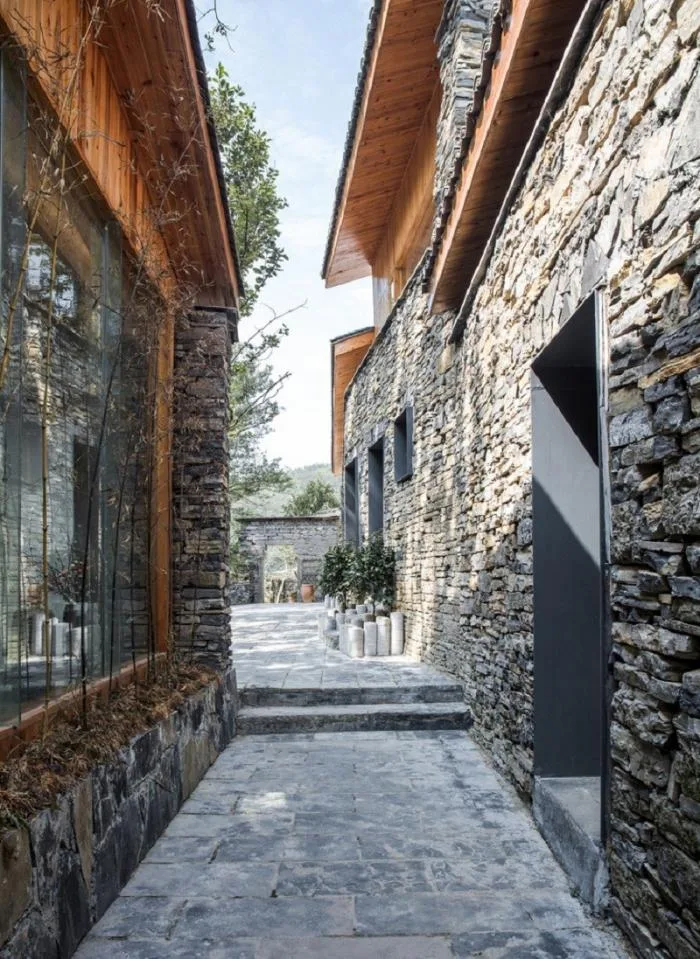
△ Wall detail © He Lian
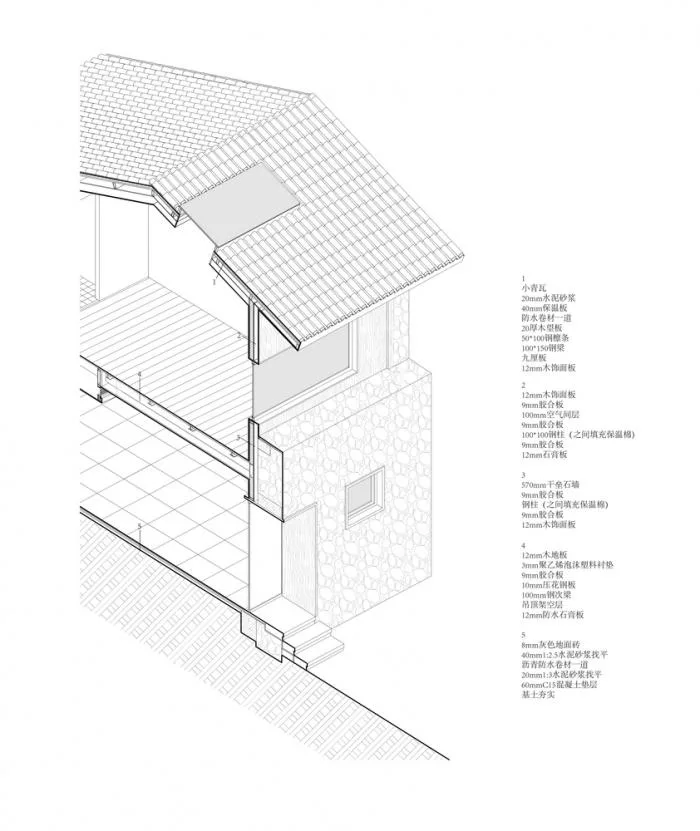
△ Wall axis measurement
Beyond the main building, we applied varied renovation strategies across the site. Houses on the south side of Courtyard 2 retain their original rammed earth brick walls with embedded steel structures. A tea room was expanded on the south side of Courtyard 4, featuring concrete slabs that extend out over the mountain slope. Its exterior is composed of floor-to-ceiling glass, offering panoramic views of the forest and valley.
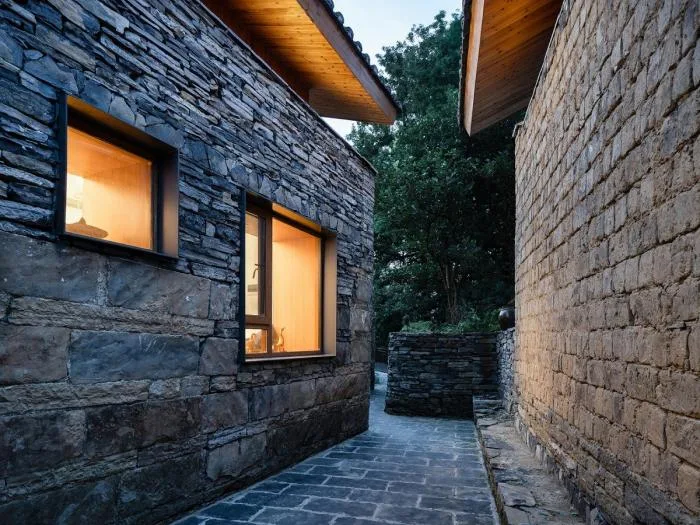
△ Stone and rammed earth walls © He Lian
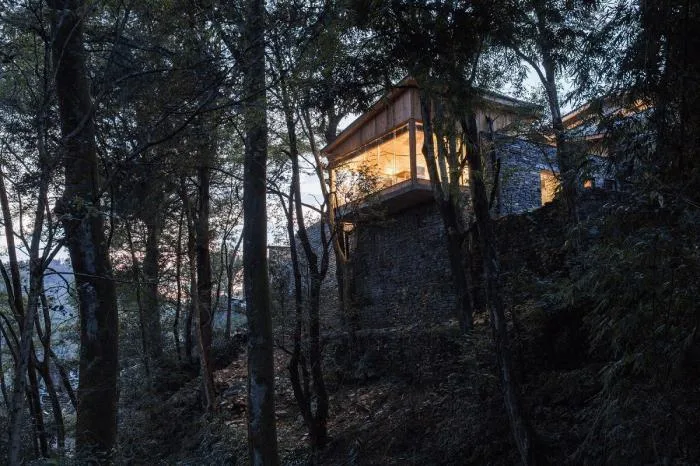
△ Suspended tea room © He Lian
Memory and Experience
Despite the juxtaposition of old and new, the renovation preserves the overall memory of rural life. Stone walls and gates of the courtyards are carefully maintained, with gaps left for planting flowers and greenery on the stone retaining walls. The landscape design incorporates wood salvaged from demolished houses and collected old objects, recycling these materials and embedding them into the cultural context of the villagers’ lives.
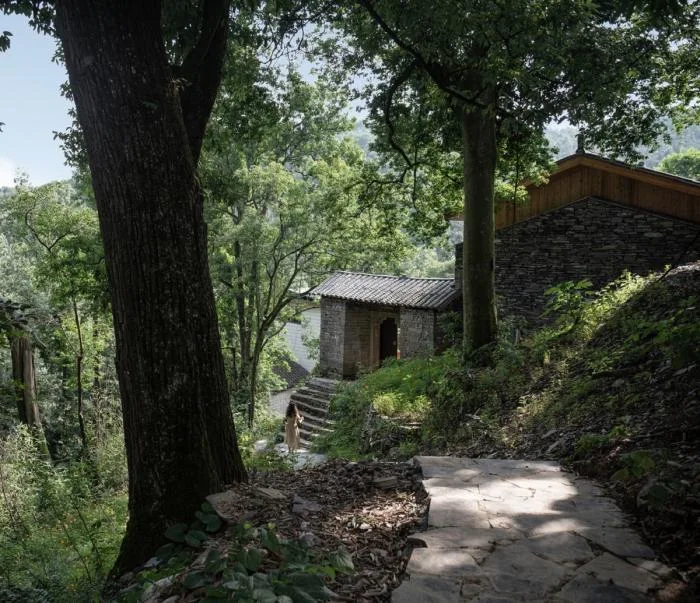
△ Old courtyard gate © He Lian
The Lahao Stone House marks the beginning of the “Rural Tourism Poverty Alleviation+” initiative in Lahao Village. In the future, a series of public spaces and landscapes will be gradually introduced. We hope this renovation strategy serves as a successful example that respects traditional homes and villagers’ lifestyles, while reviving rural memories and emotions, ensuring the continuity of local culture.
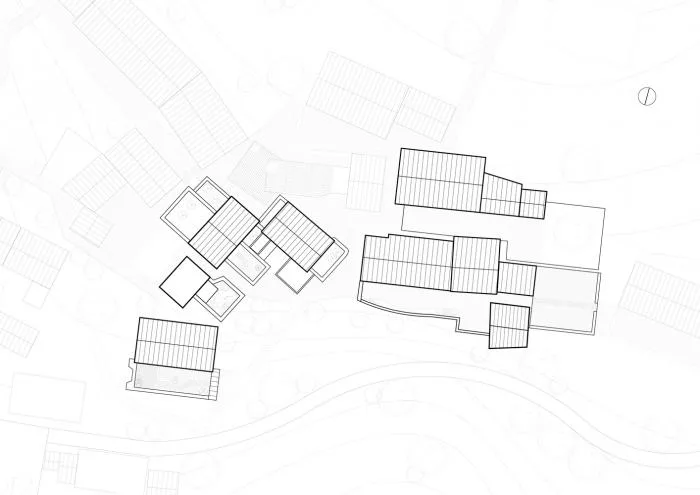
△ General layout plan
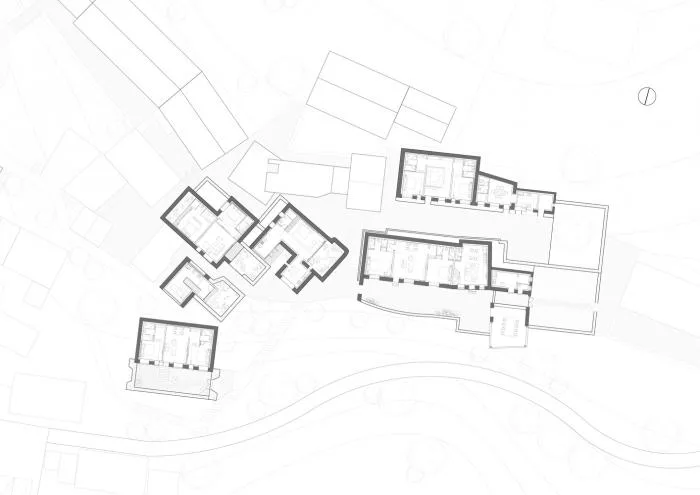
△ First floor plan
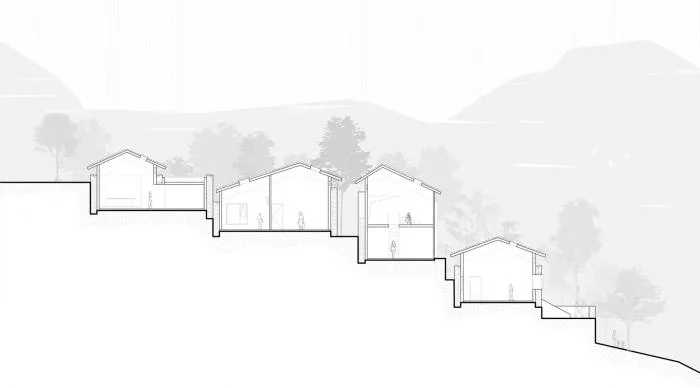
△ Section diagram
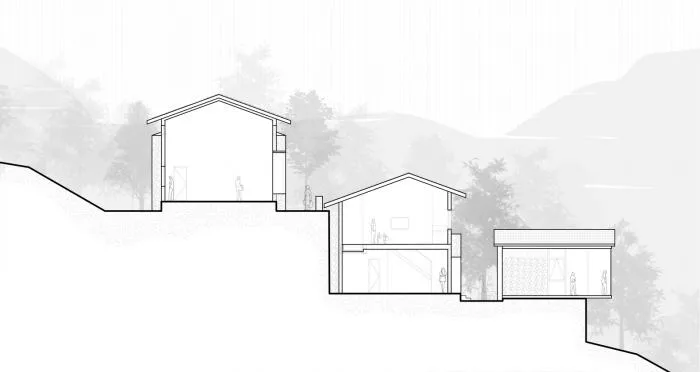
△ Section diagram
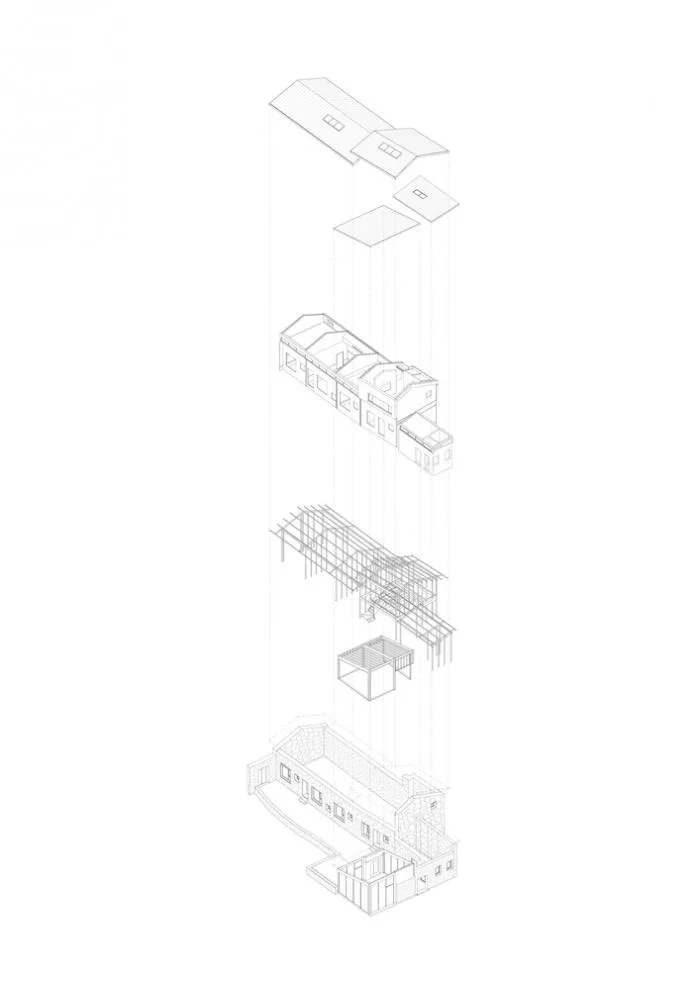
△ Exploded axonometric diagram
Project Information
Project Type: Hotel, Renovation Project
Location: China
Architect: Original Architecture Firm
Area: 822 m²
Year: 2020
Photographer: He Lian
Lead Architect: Zhou Chao
Design Team: Deng Kechao, Cen Zixin, Zhang Hang, Deng Haijuan, Xu Yixin
Principal: China Foundation for Poverty Alleviation
Structural Engineer: Yang Peng
Partner: Advanced Architecture Laboratory – Mu Wei, He Wen, Luo Junxian
Resident Architect: Jinsong Wu












Must log in before commenting!
Sign Up