
In today’s fast-paced commercial development landscape, temporary exhibition halls have become increasingly common. However, after these events, construction waste is often not properly managed, and materials are rarely recycled or reused. This results in significant waste, pollution, and emissions. To address this issue, Nuoyi Design and Research introduced an innovative outdoor, independent exhibition hall for furniture exhibitors at the 2019 Shanghai International Furniture Fair.
Rather than focusing on flashy designs, the architects embraced the raw texture of wood, boldly showcasing its natural quality to emphasize authenticity and pure functionality. This approach also demonstrated sustainable design solutions beyond the event’s duration.
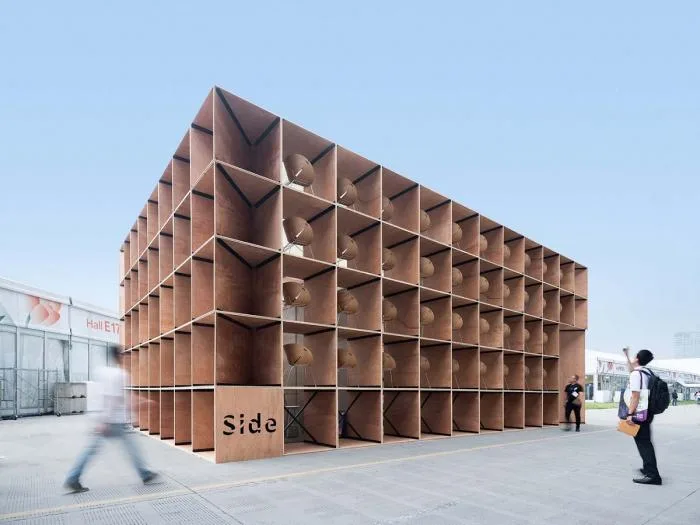
△ Furniture Exhibition Hall S
The primary building material chosen was plywood, a familiar and widely used material in furniture production. After the exhibition, the architect repurposed the plywood into tables, chairs, and other furniture, which were then economically donated to rural communities. This initiative promotes environmental protection while maximizing the utility of each material.
The challenge for Furniture Exhibition Hall S was to maintain a low budget, minimize construction time, and maximize the display space for the client’s products. The structure includes 171 cube units and 30 ground units, totaling 821 plywood panels measuring 1.22 × 1.22 meters each. The design prioritizes cost-efficiency without compromising structural stability, allowing assembly to be completed within 48 hours—significantly reducing time and expenses.
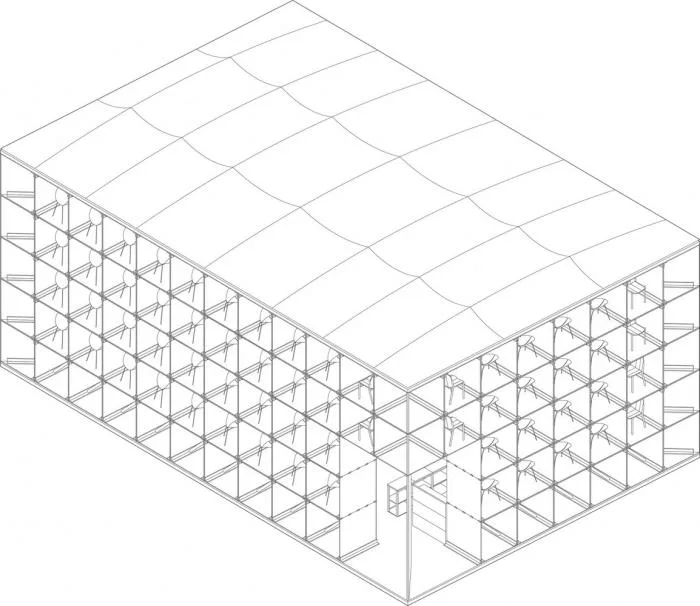
△ Furniture showroom S-axis measurement diagram
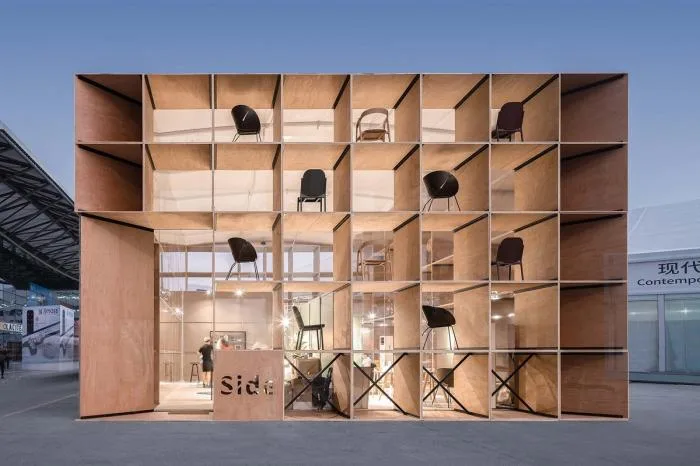
△ Furniture Exhibition Hall S
The exhibition hall’s exterior space is expansive yet underutilized, creating a spacious feel. During the event, the project transformed this area into a vibrant focal point. Beyond serving as a furniture showroom, it offers visitors a comfortable space to relax, cool down, and enjoy the surroundings.
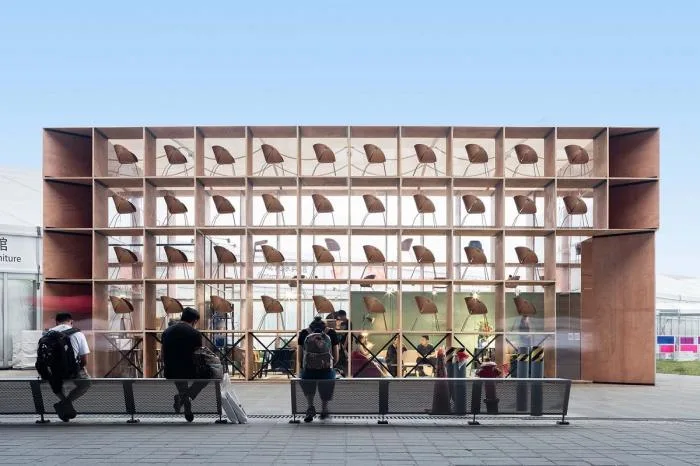
△ Side booth
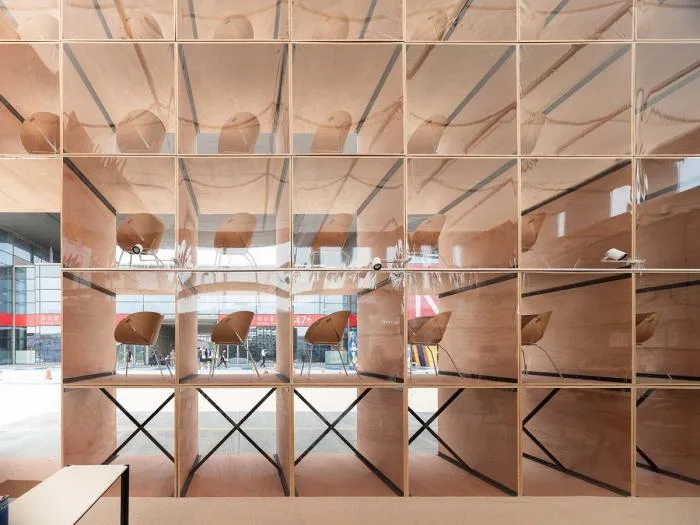
The building’s facade employs two distinct cube forms, with all four sides serving as display windows for furniture. Visitors can view the exhibits from multiple angles—different directions and surrounding floors. The transparent facade allows ample sunlight to enter, while the 1.22-meter-deep windows protect visitors from direct sunlight, creating a pleasant visual experience.
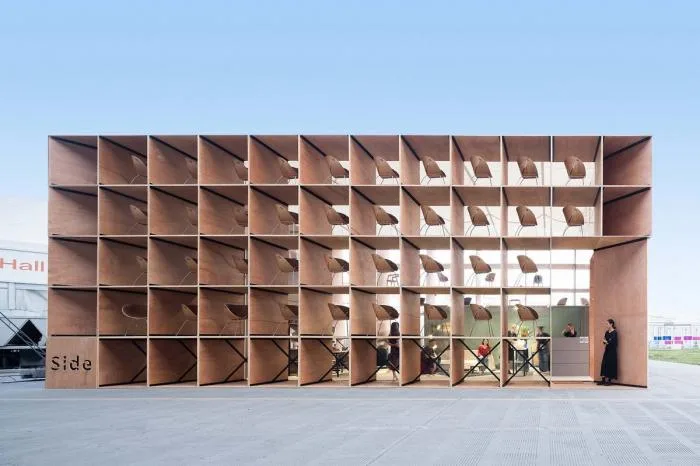
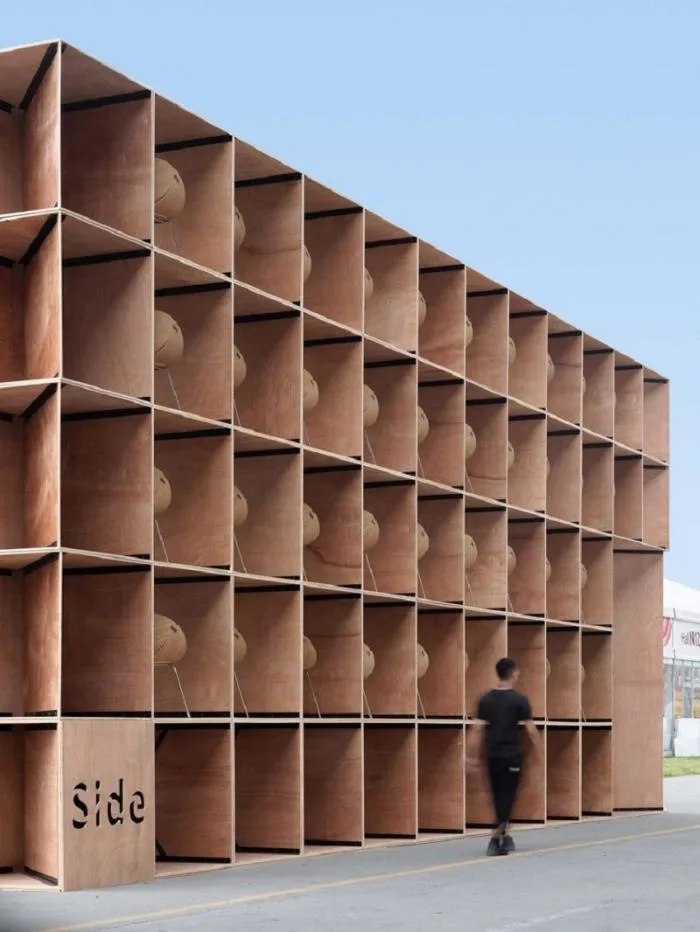
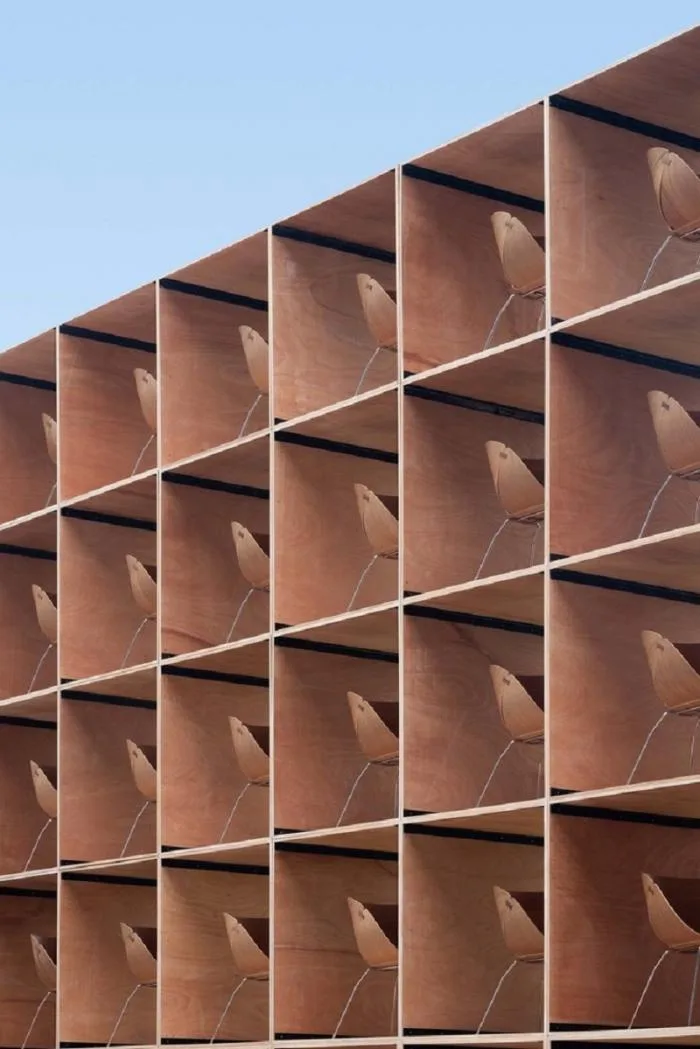
△ Facade
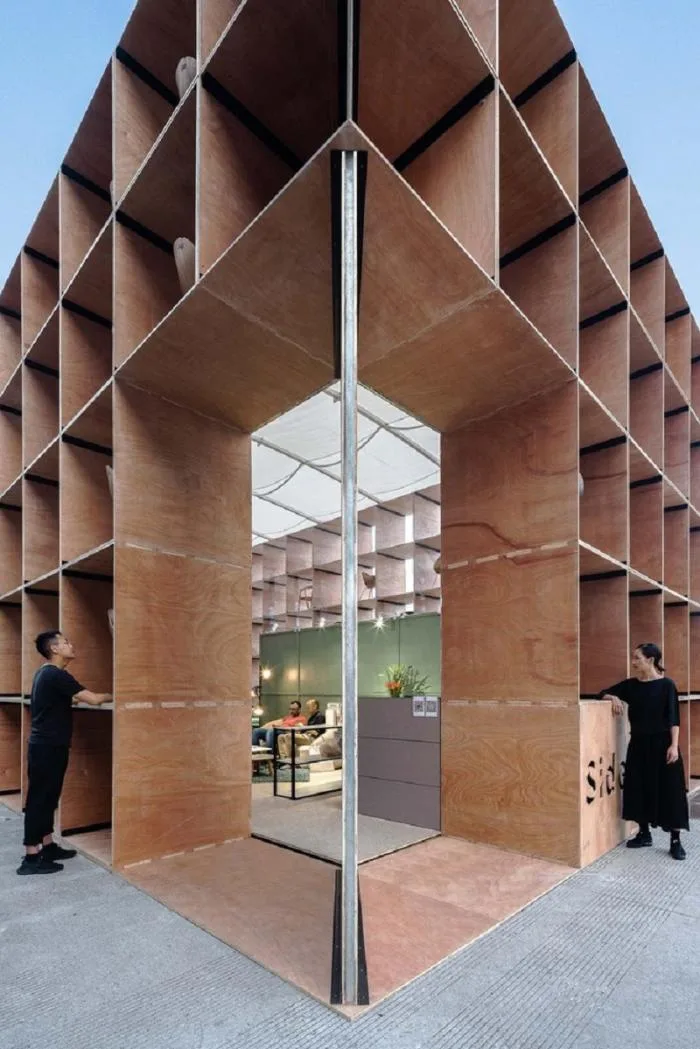
△ Entrance
The main structure combines wood panels and steel elements, while the roof features a hyperbolic design with front and back arch beam steel structures. The open space is spacious and uncluttered, free of supporting columns. The architects believe that embracing complexity in design and construction results in a fresh and comfortable visual experience, imposing zero load on the urban environment.
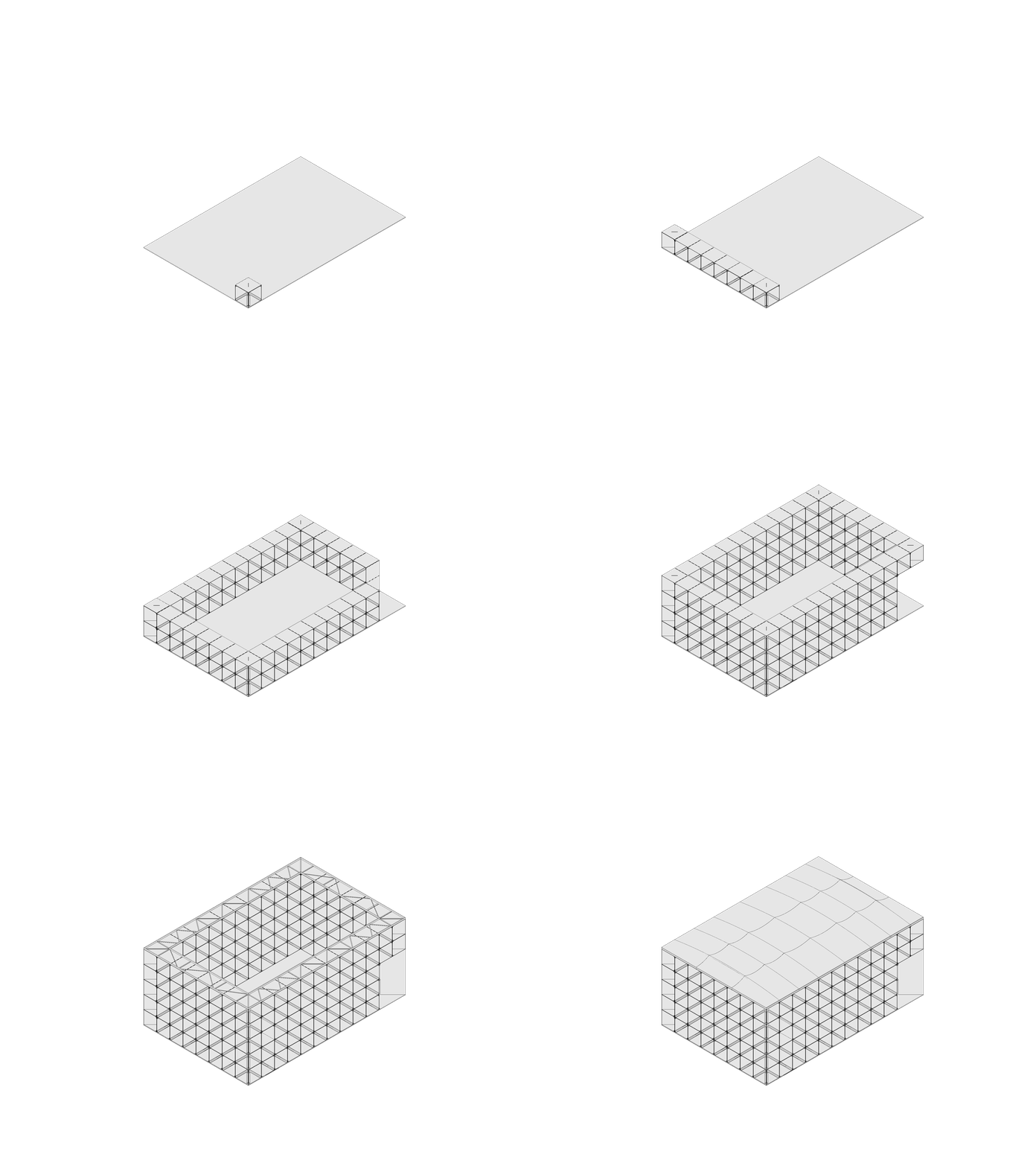
△ Assembly diagram
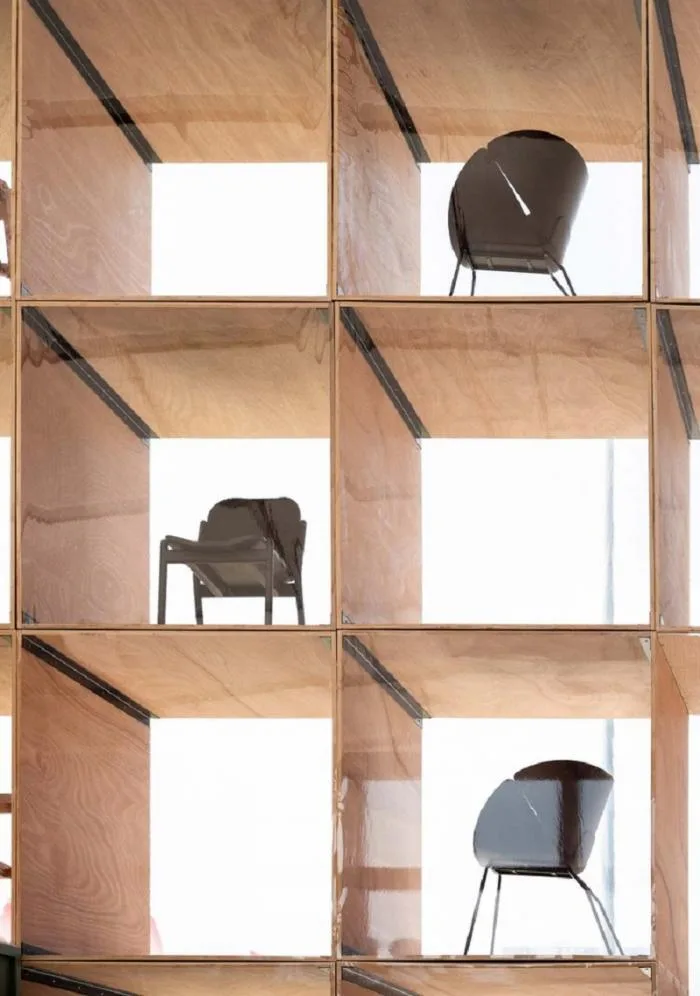
△ Facade
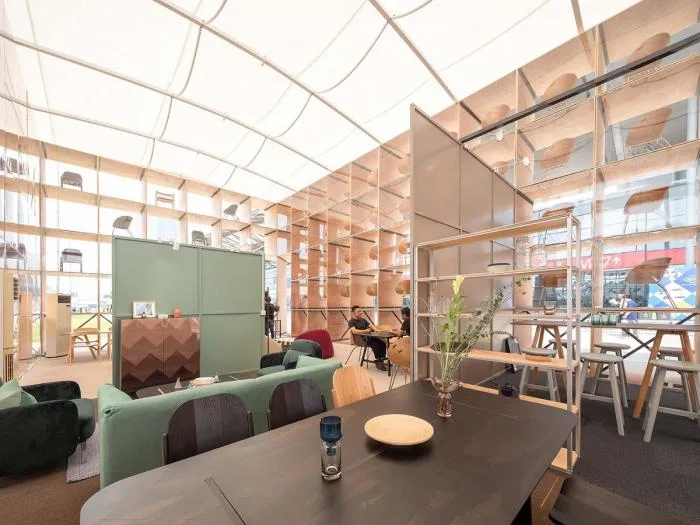
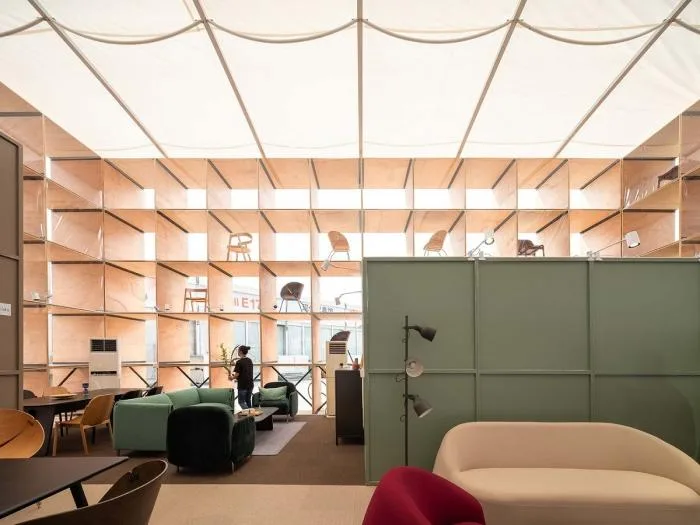
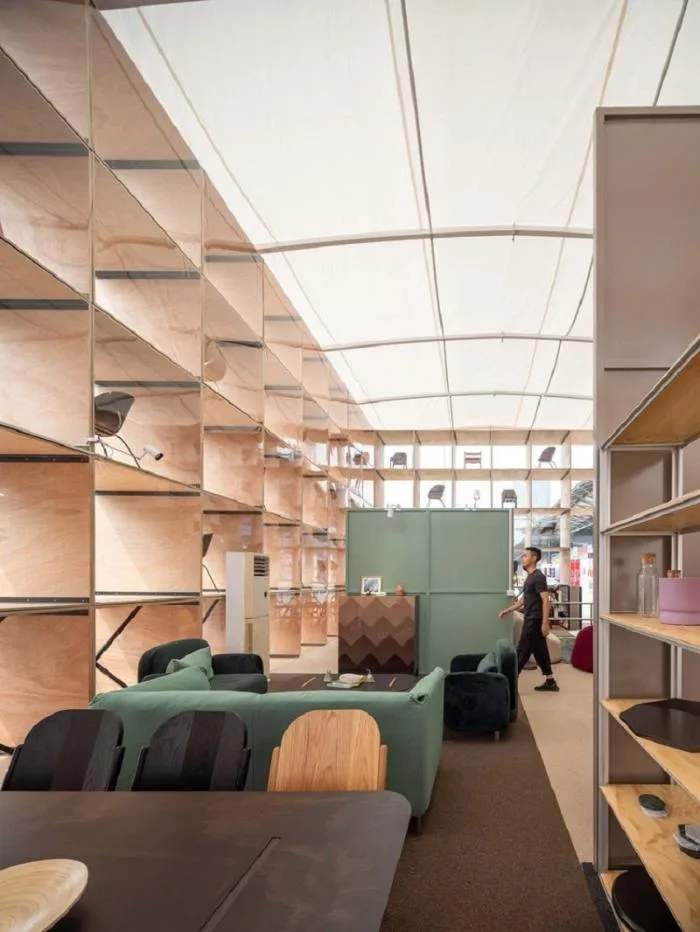
△ Interior
This year, the architects recycled the entire building, creating 410 sets of tables and chairs for nearby rural communities in the most cost-effective manner. Acknowledging the close-knit nature of rural communities where group activities are common, the designers created hexagonal furniture based on board sizes and user needs.
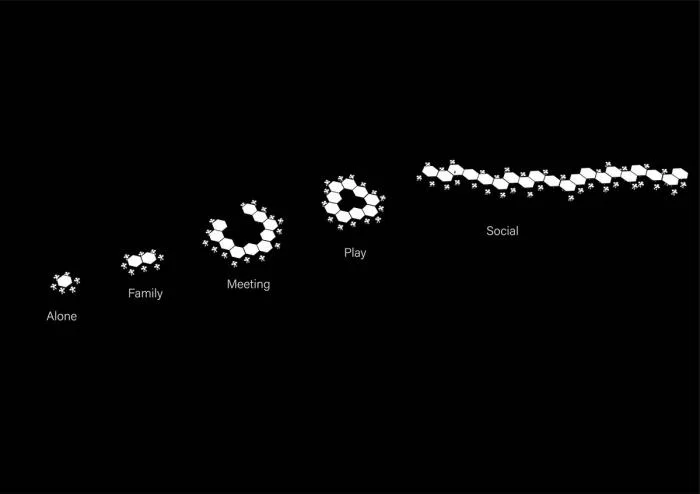
△ Furniture Analysis Diagram
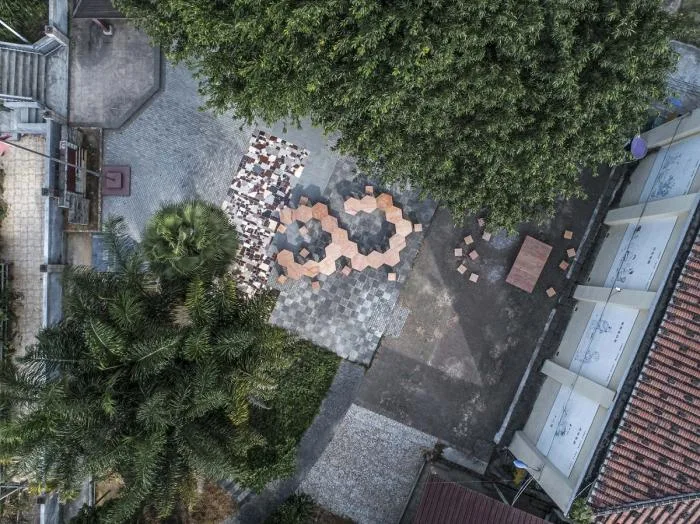
△ Recycling Furniture Combination “C”
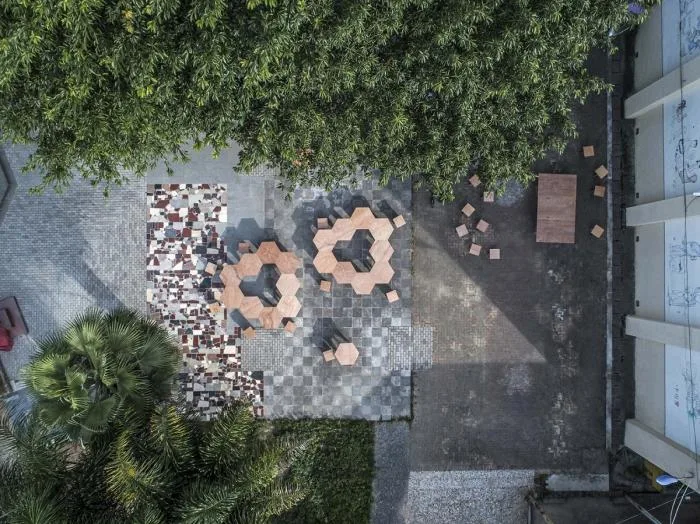
△ Recycling Furniture Combination “O”
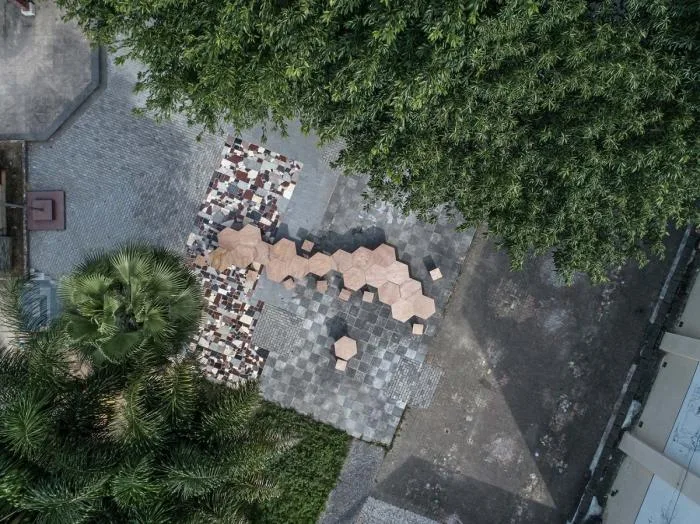
△ Recycling Furniture Combination “L”
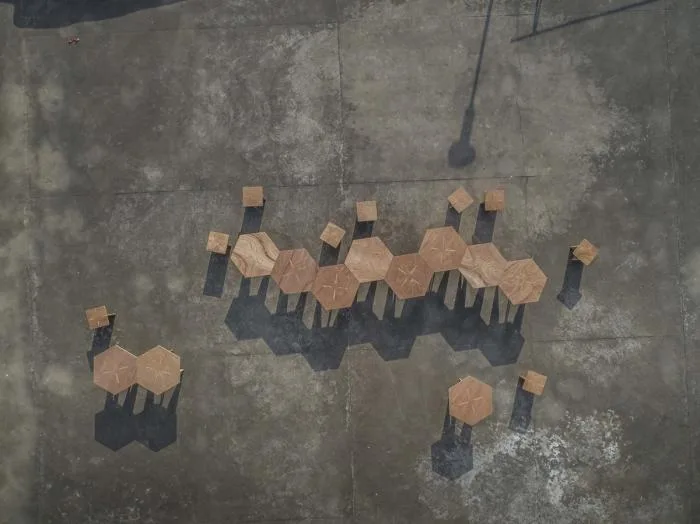
△ Recycling Furniture Combination “i”
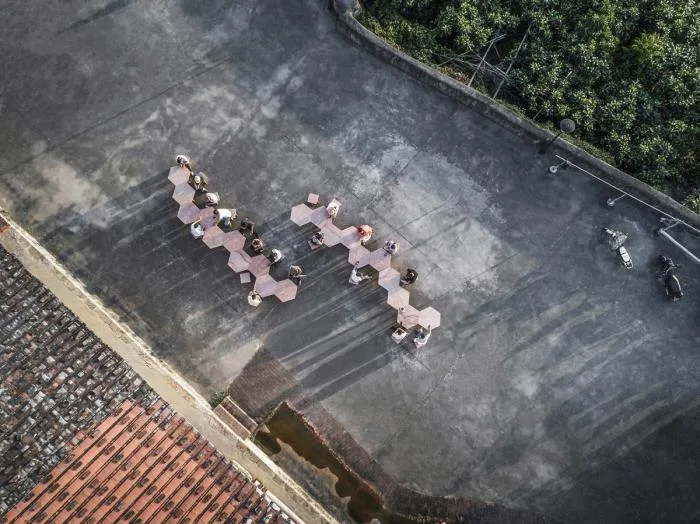
△ Community Event
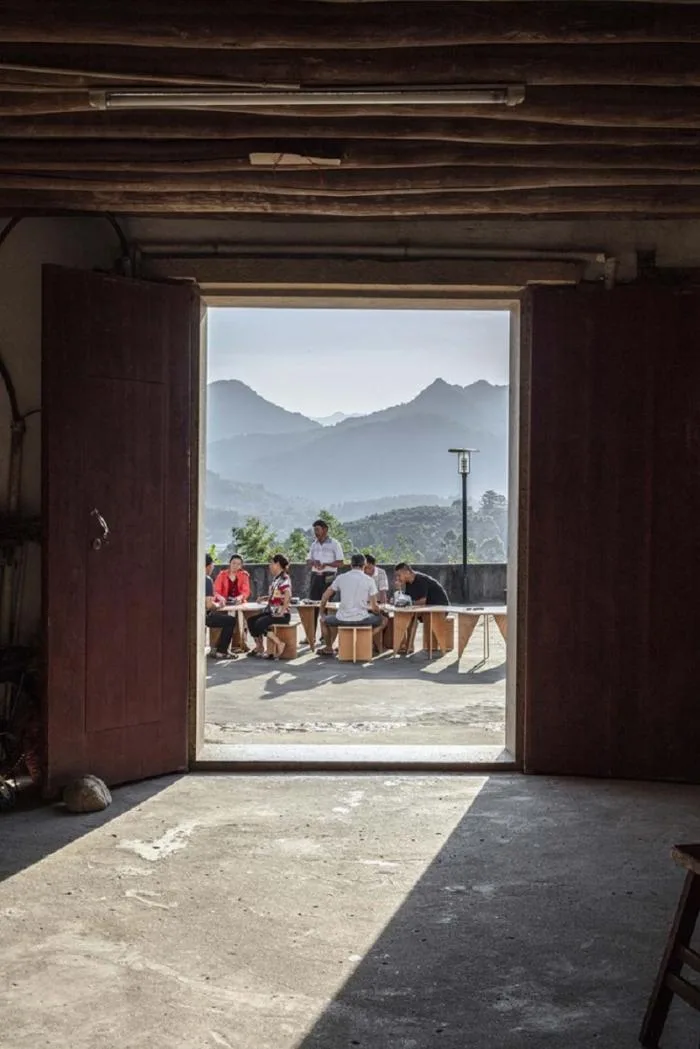
△ Community Event
Each 1.22m x 1.22m plywood panel can be precisely crafted into a hexagonal table or three chairs. The pieces are easy to assemble and are distributed by village committees and community service centers to those in need. Users naturally combine tables and chairs in various configurations, enhancing interactivity and enjoyment while enriching community activities.
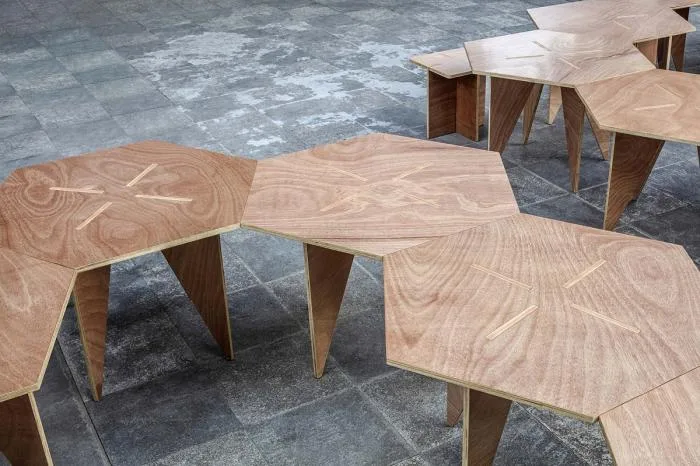
△ Recycling Furniture
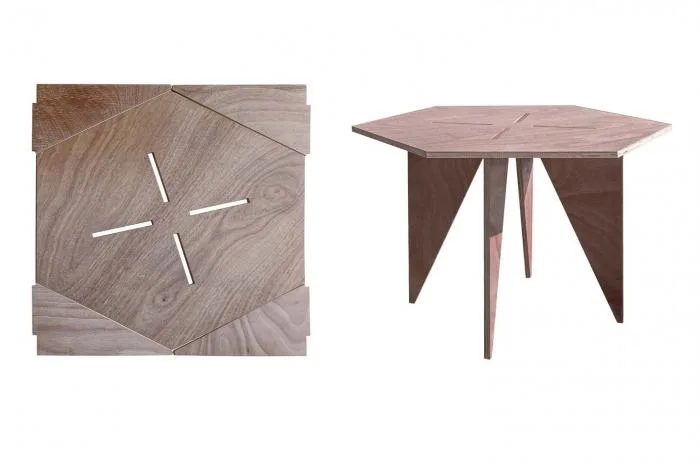
△ Table and chair components
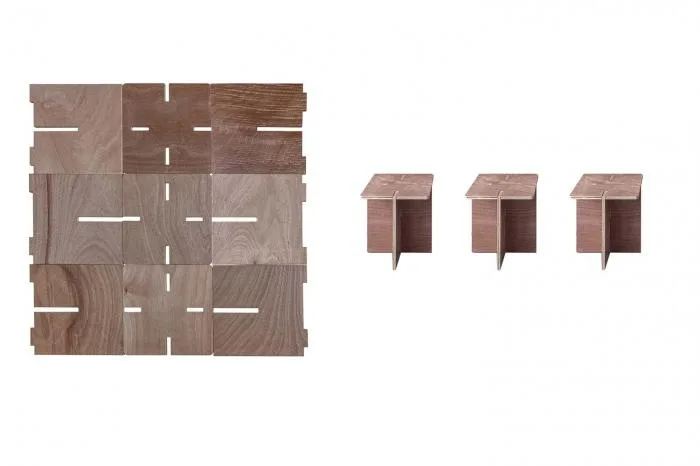
△ Table and chair components
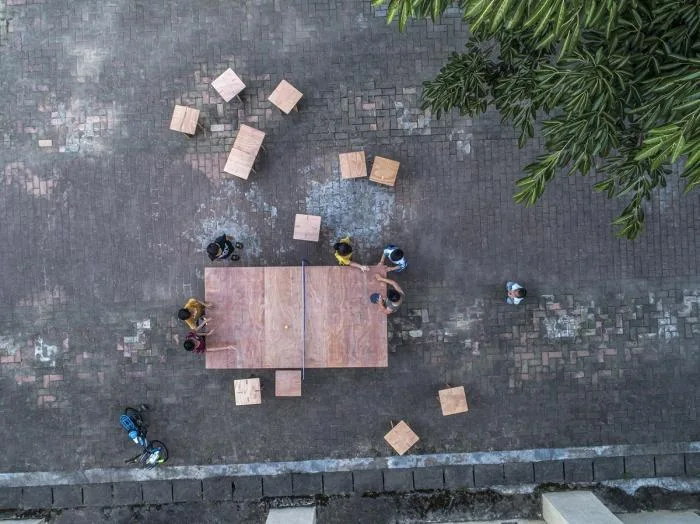
Table tennis table
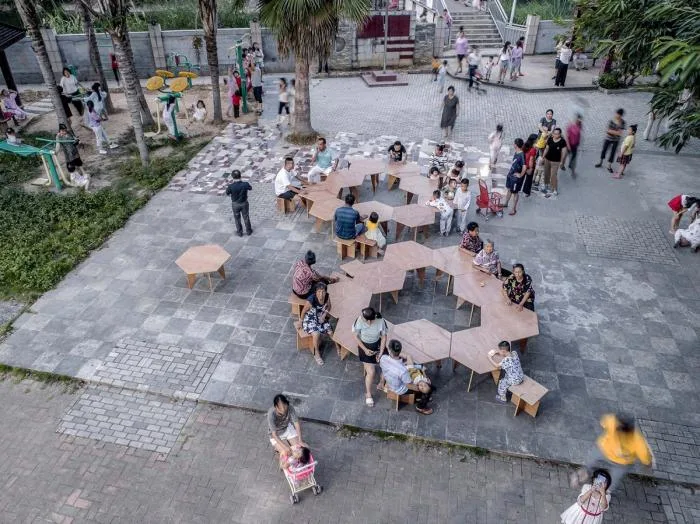
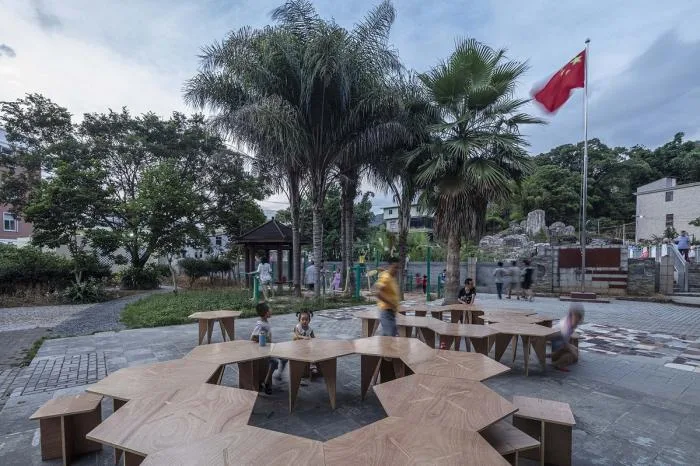
Furniture within the community
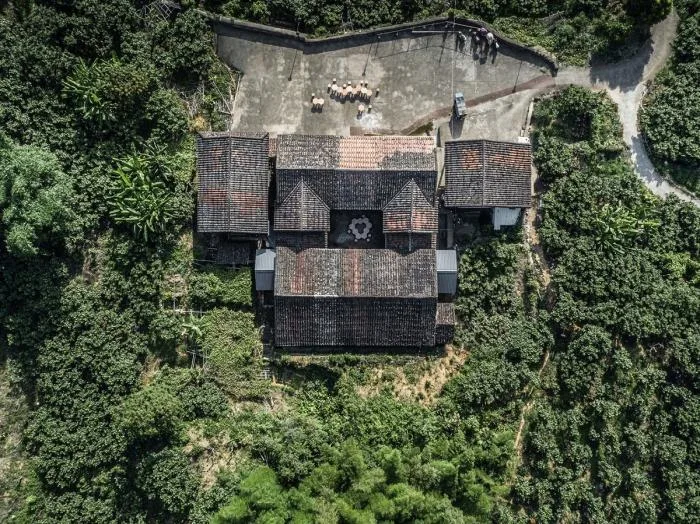
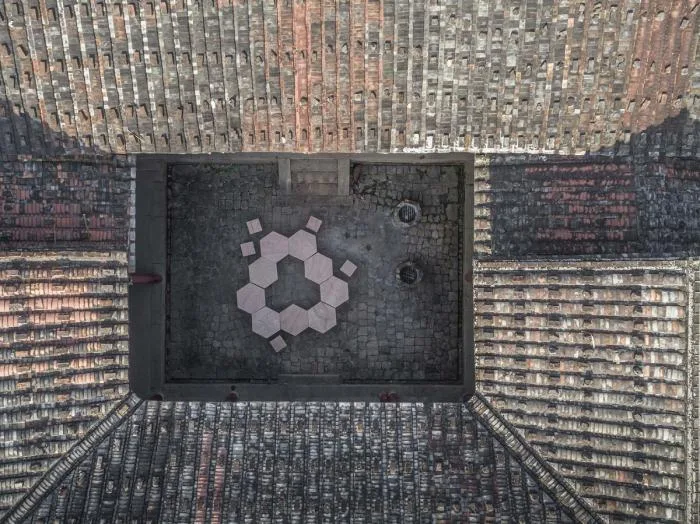
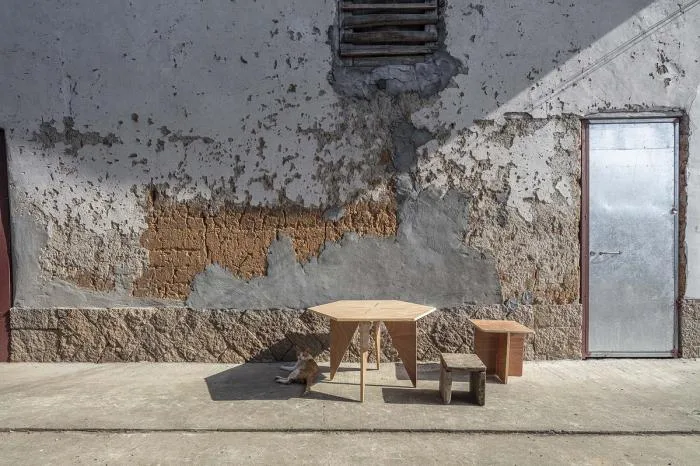
Furniture in the village
Design Drawings
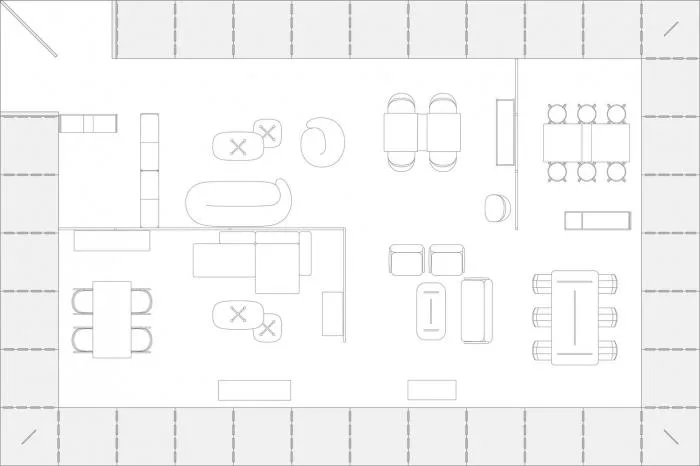
△ Plan view
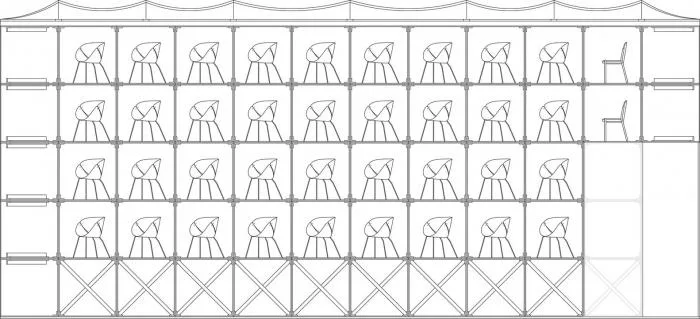
△ Elevation drawing
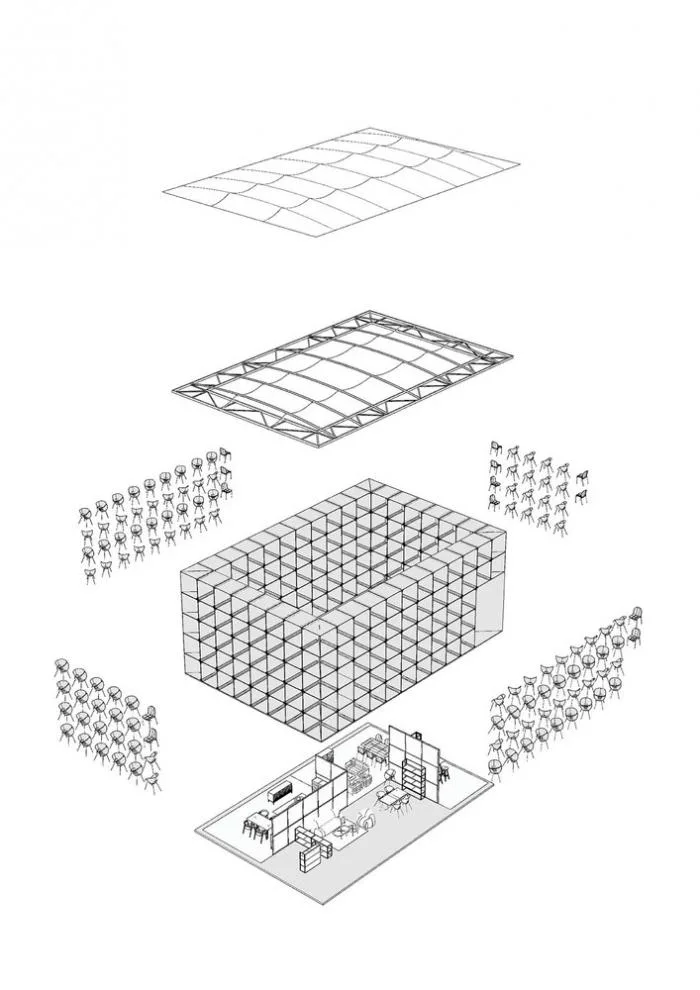
△ Analysis chart
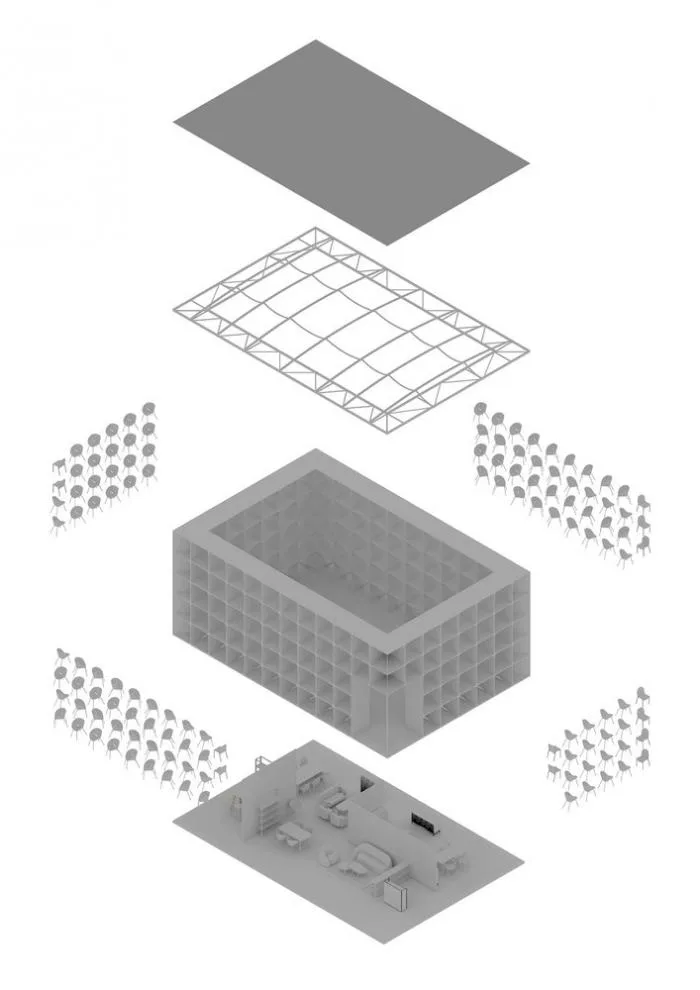
△ Analysis chart
Project Information
Project Type: Exhibition Hall
Location: Shanghai, China
Architect: Nuoyi Design & Research
Area: 150 m²
Year: 2019
Photographers: Shao Feng, Chen Ming
Lead Designer: Wang Zuoqian
Structural Engineer: Wang Song
Client: Side Furniture














Must log in before commenting!
Sign Up