
The yard represents a warm and vivid childhood memory. Over a decade ago, when I moved to Beijing to make a living, what touched me the most were the courtyard houses in the hutongs. The simple greeting, “Have you eaten?” from neighbors filled me with warmth, and the inviting aroma of food in the air felt deeply familiar. This is the essence of childhood—a pure and heartfelt connection between people.
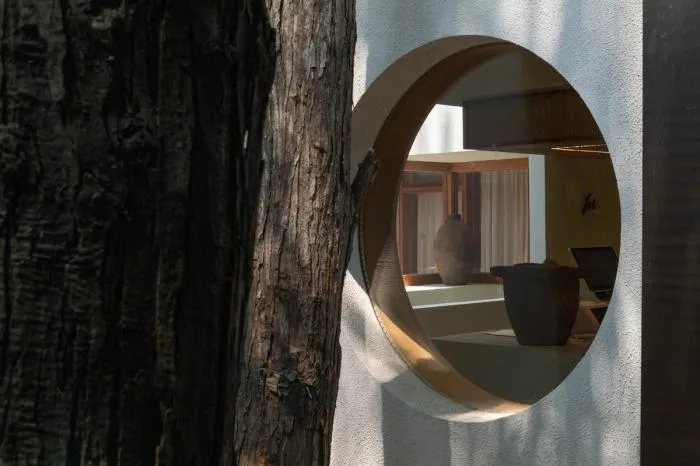
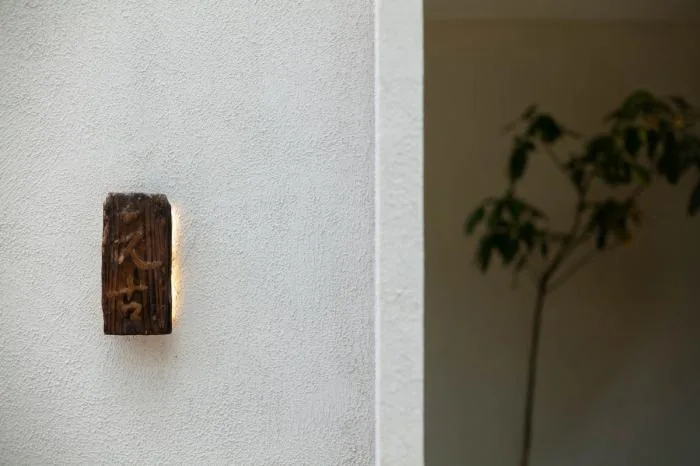
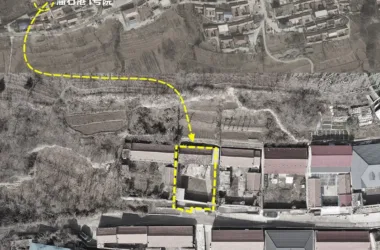
The hotel project is located at No. 10 Liuyin Street, just 200 meters from Houhai (map location). Originally, this was a complete three-courtyard house, but for unknown reasons, it was divided among three landlords. We rented only one section. Although the area is modest (280 square meters), it still preserves a beautiful courtyard layout. The intimate space and staggered eaves instantly convey the charm of traditional culture.
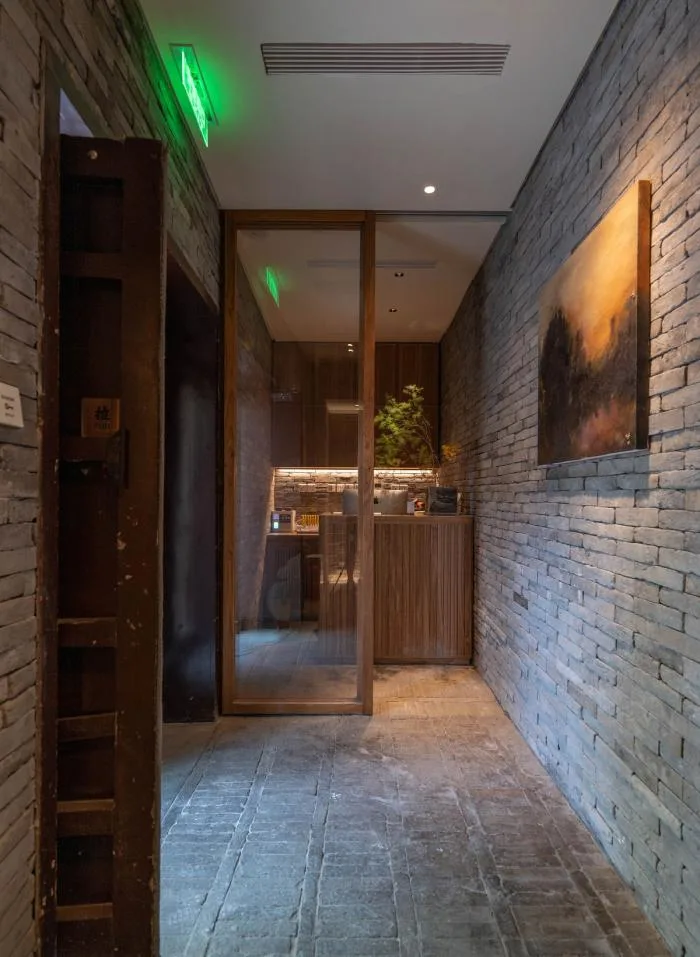
The courtyard is arranged in a U-shape, enclosed on four sides by adjacent walls. Our design requirements included four guest rooms, an afternoon tea area, and a breakfast restaurant. While the functions are straightforward, the limited space posed a significant challenge. At the entrance, a small service desk welcomes guests, followed by four guest rooms. The largest, an inverted room, combines elements of a suite and a regular room. Thanks to its good internal elevation, we incorporated a tatami-style solution, placing the mattress directly on the floor to enhance the hotel’s relaxed, leisurely atmosphere. The other three guest rooms are arranged in a straight line along the left side, each facing the courtyard to offer scenic views. Newly installed French windows bring in abundant natural light, complemented by skylights in the roof, so guests can enjoy daylight even when resting in bed.
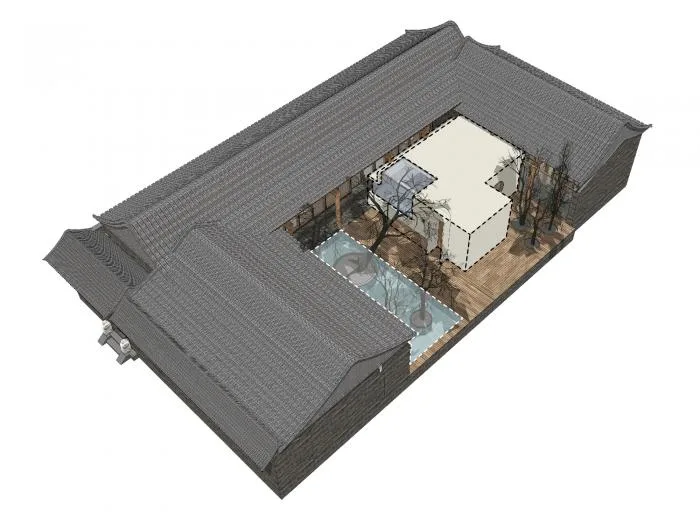
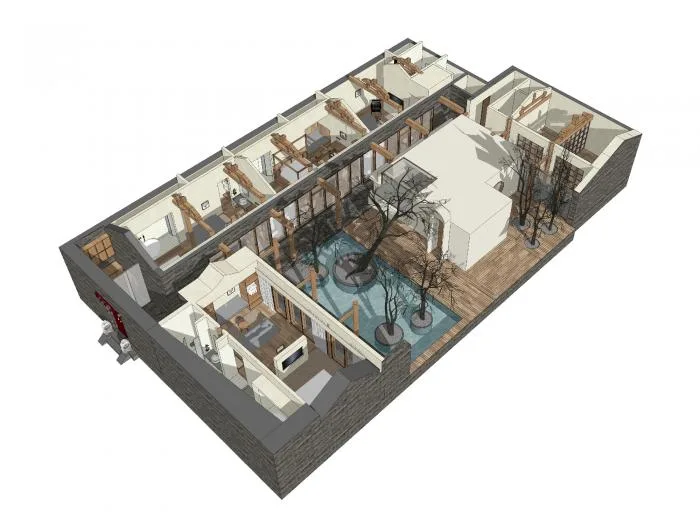
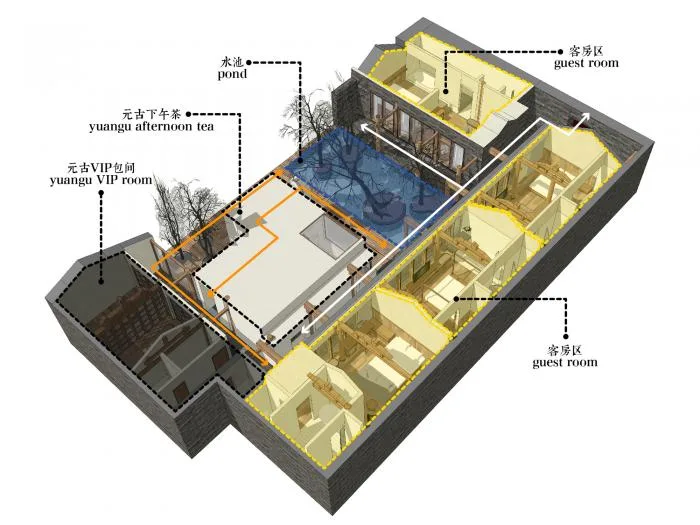
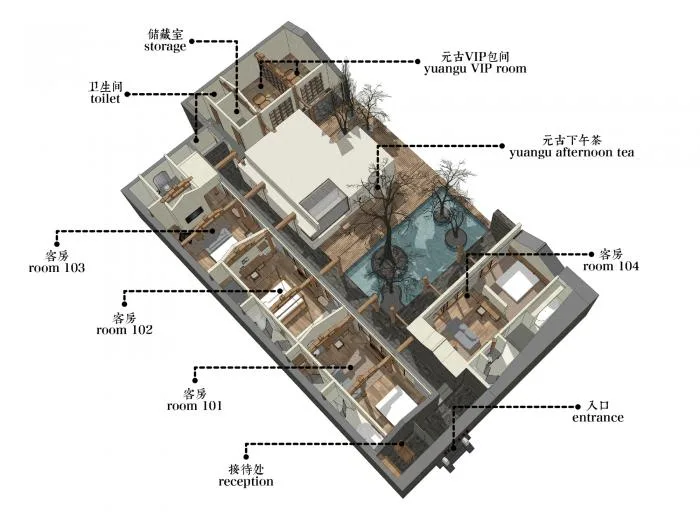
△ Spatial axonometric map
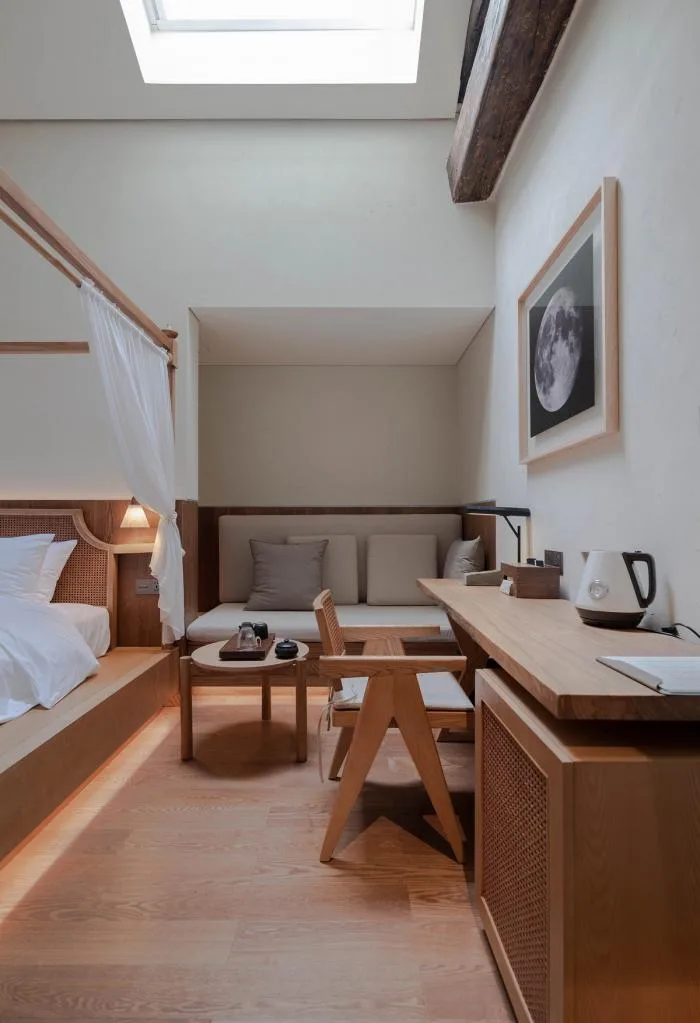
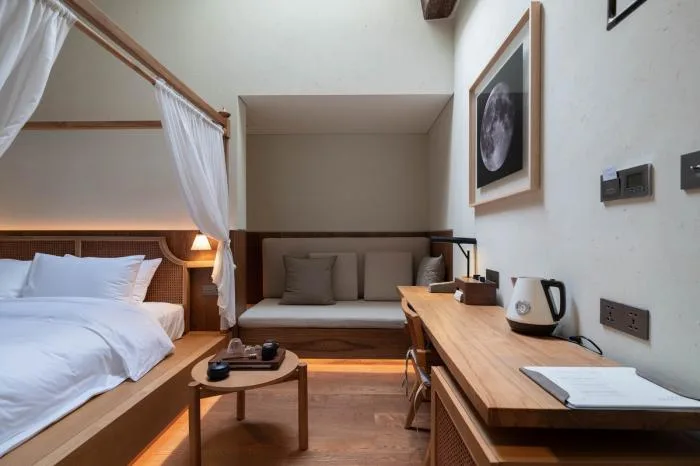
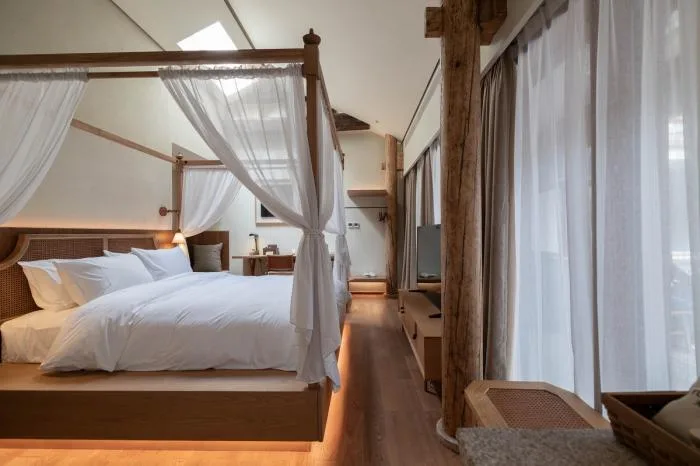
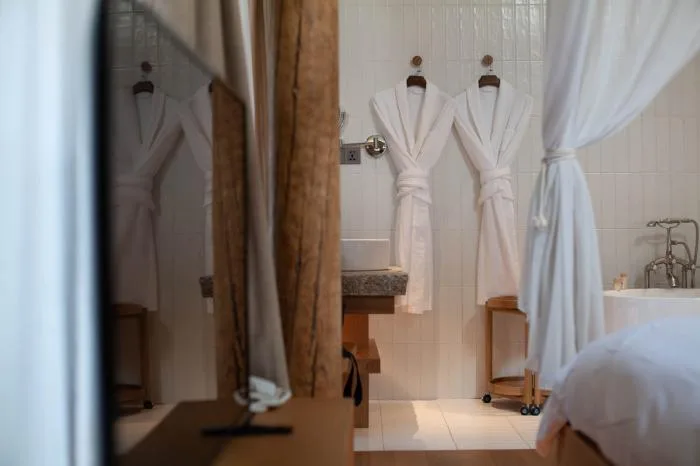
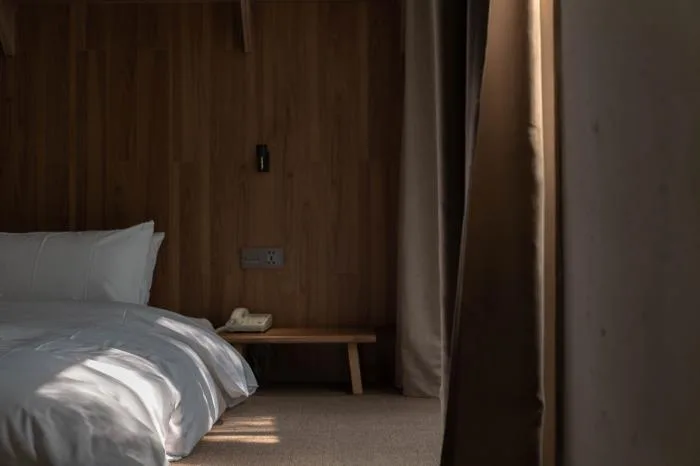
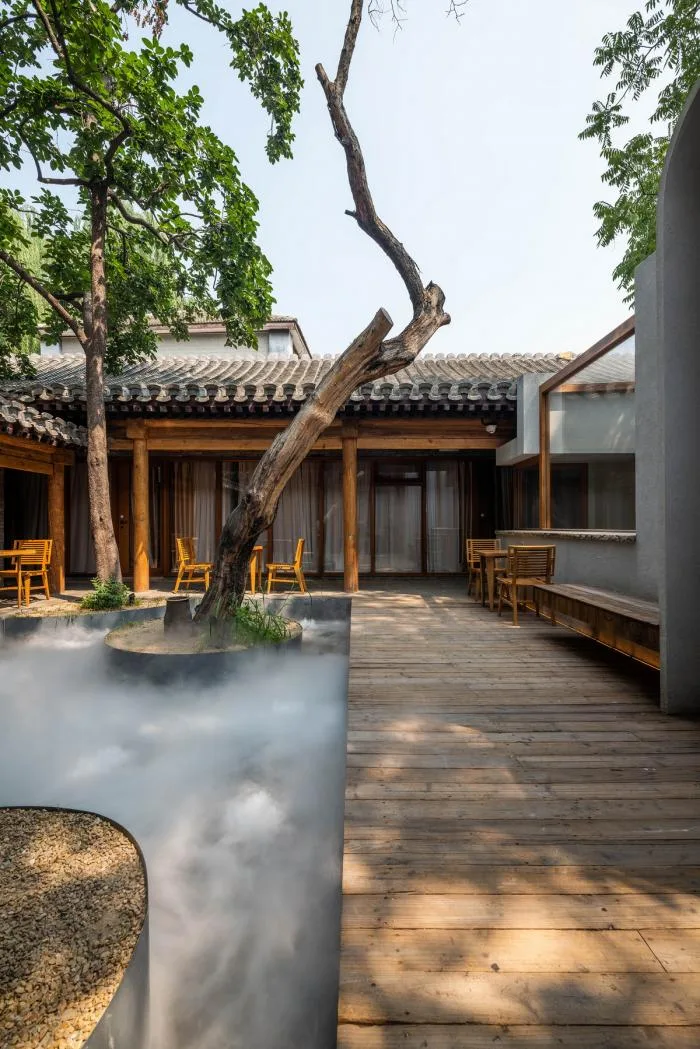
Each of the three guest rooms features a unique floor plan, designed to cater to travelers with different itineraries. Deeper inside the hotel is the functional area, including restrooms and storage, which separates the afternoon tea restaurant from the lodging area. There are two VIP private rooms for afternoon tea, which also serve as versatile spaces. These rooms can be used as separate venues or for small meetings, salons, exhibitions, and more. The remaining area is the courtyard itself, which includes a basement and several ancient trees that harmoniously complement the space.
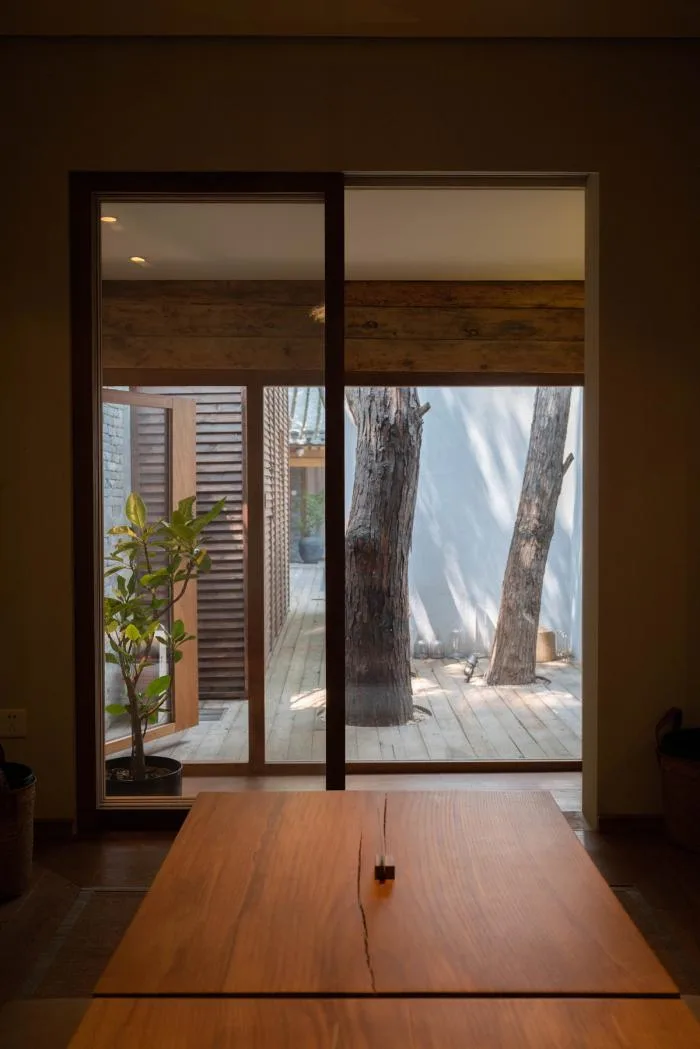
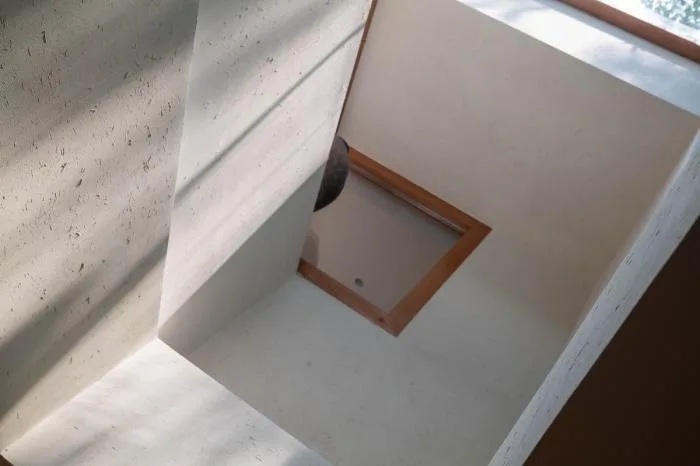
The basement is relatively small, so to maximize efficiency, we added a small structure. This area plays a crucial role—not only supporting the afternoon tea and breakfast services but also connecting the basement with the VIP rooms. Stairs and a skylight bring light into what was once a dark basement, filling the space with warmth and openness. Several ancient trees quietly stand in the courtyard’s center, as if whispering greetings to guests. The courtyard pond was intentionally designed; water is the soul of all things, and with it, our small courtyard gains a spiritual quality.
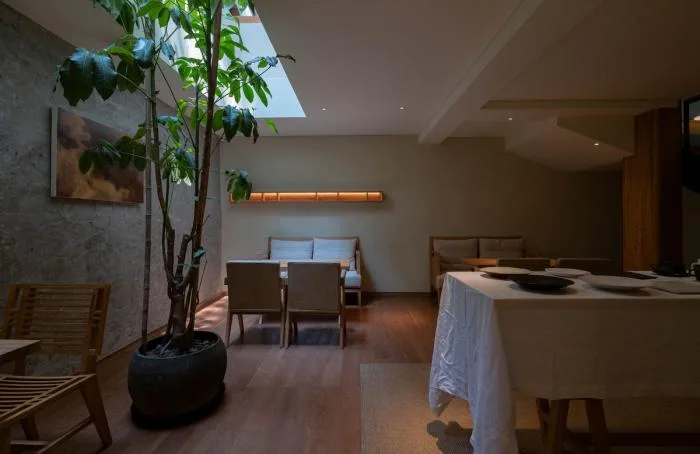
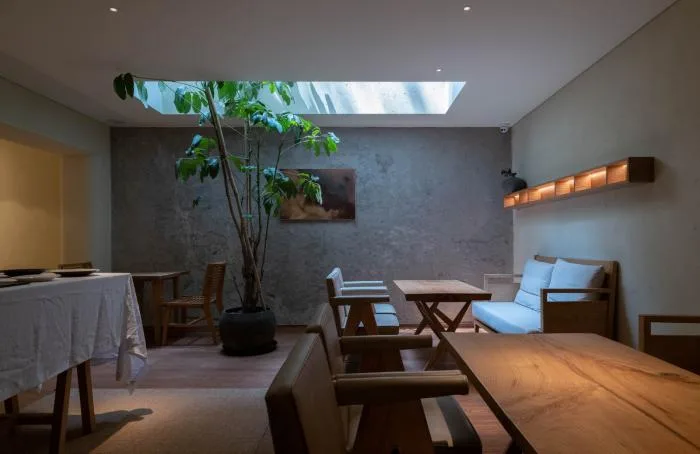
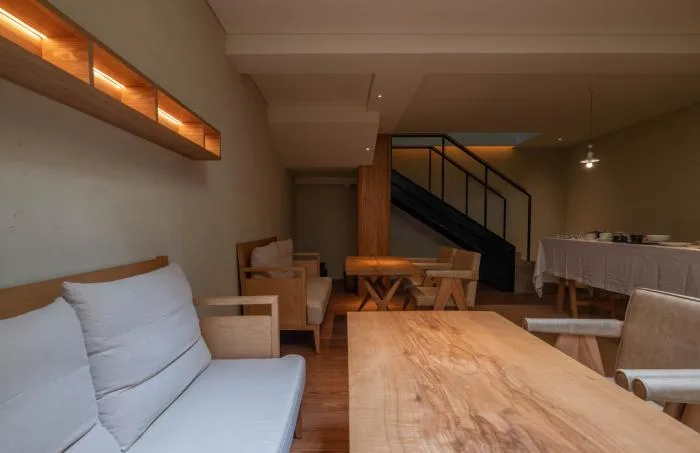
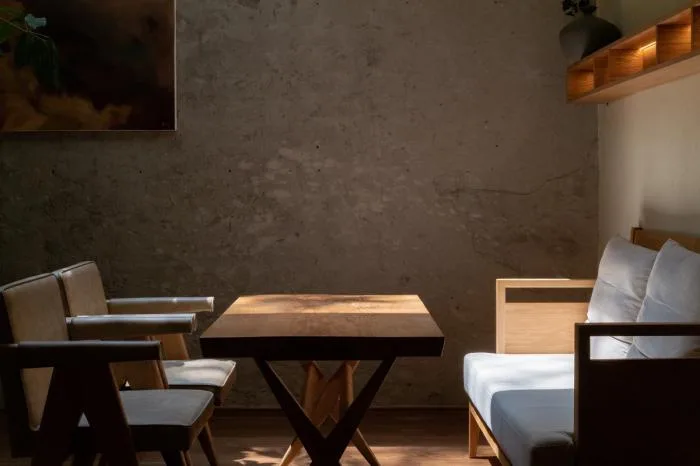
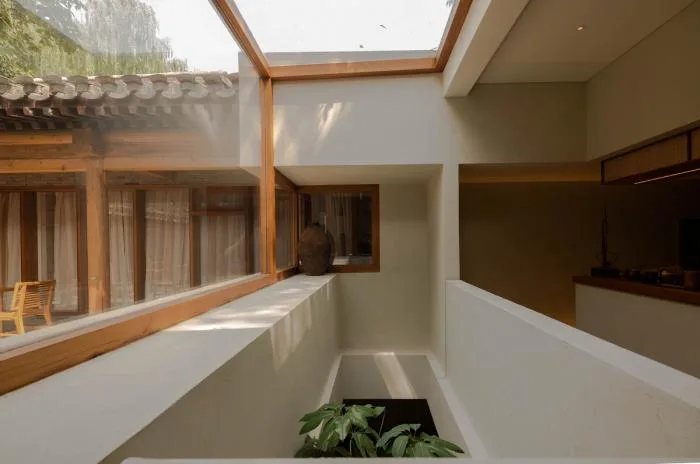
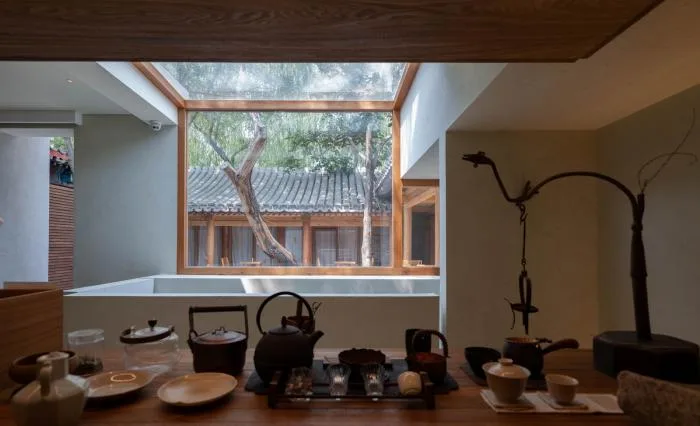
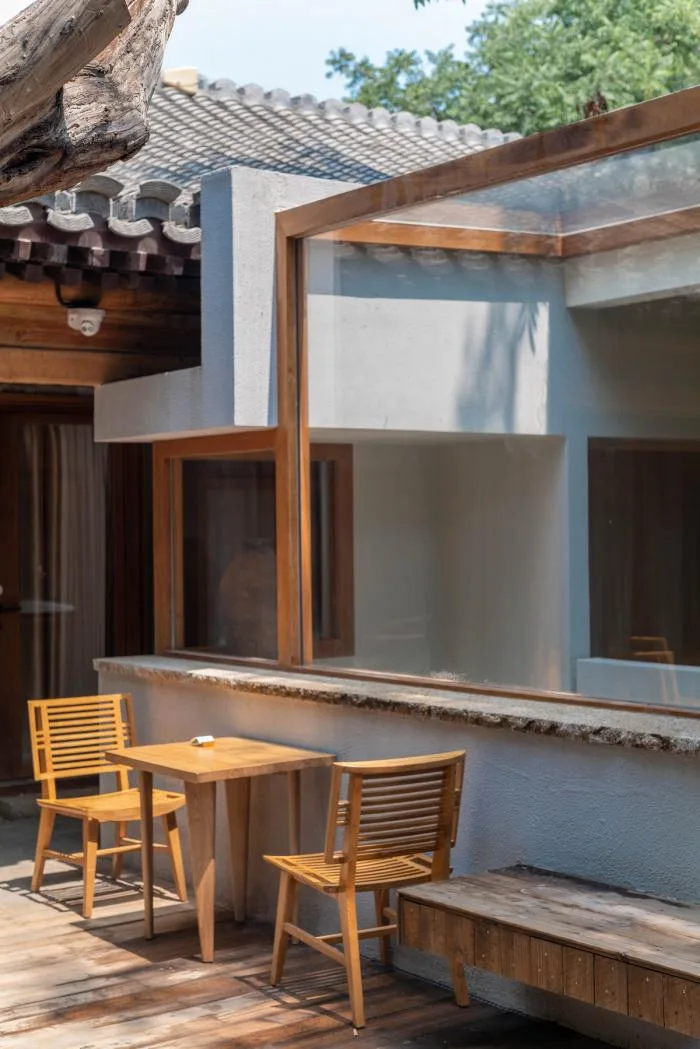
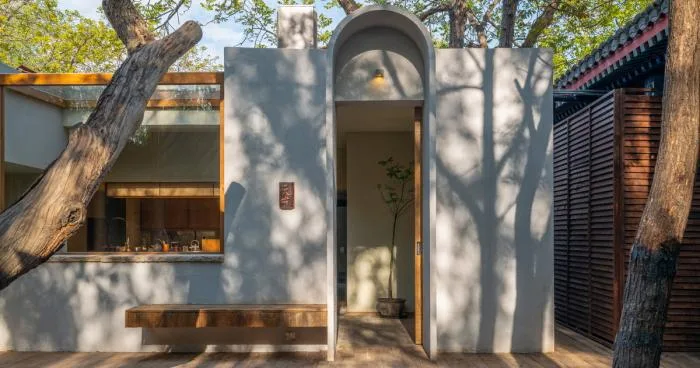
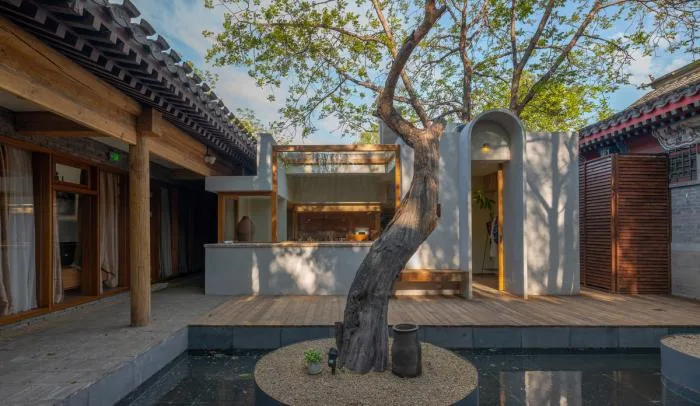
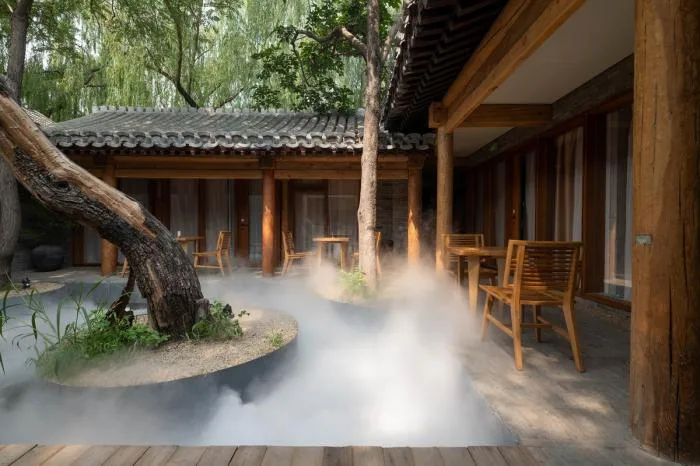
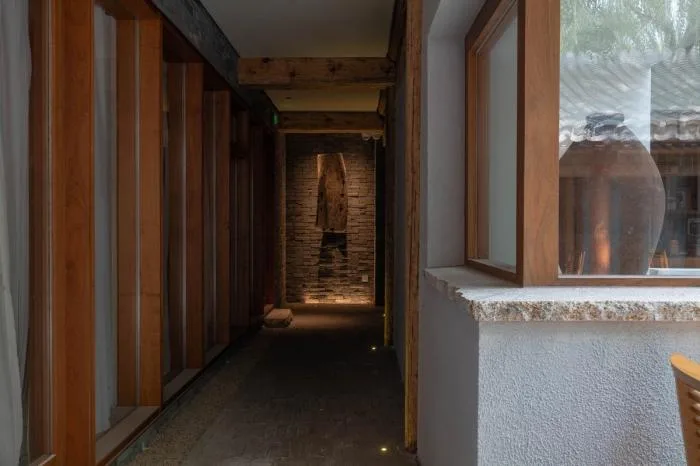
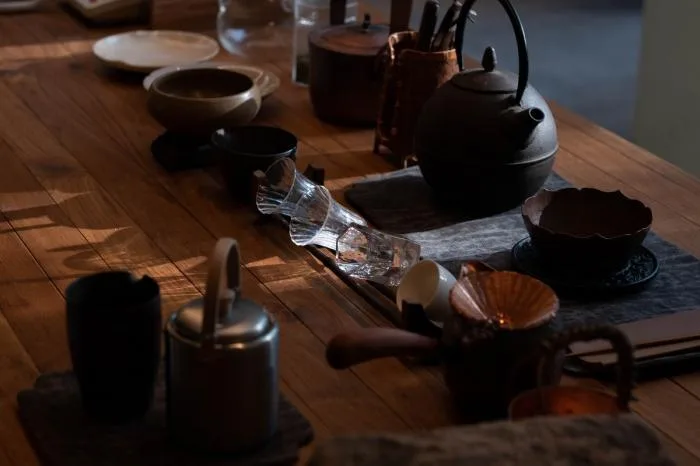
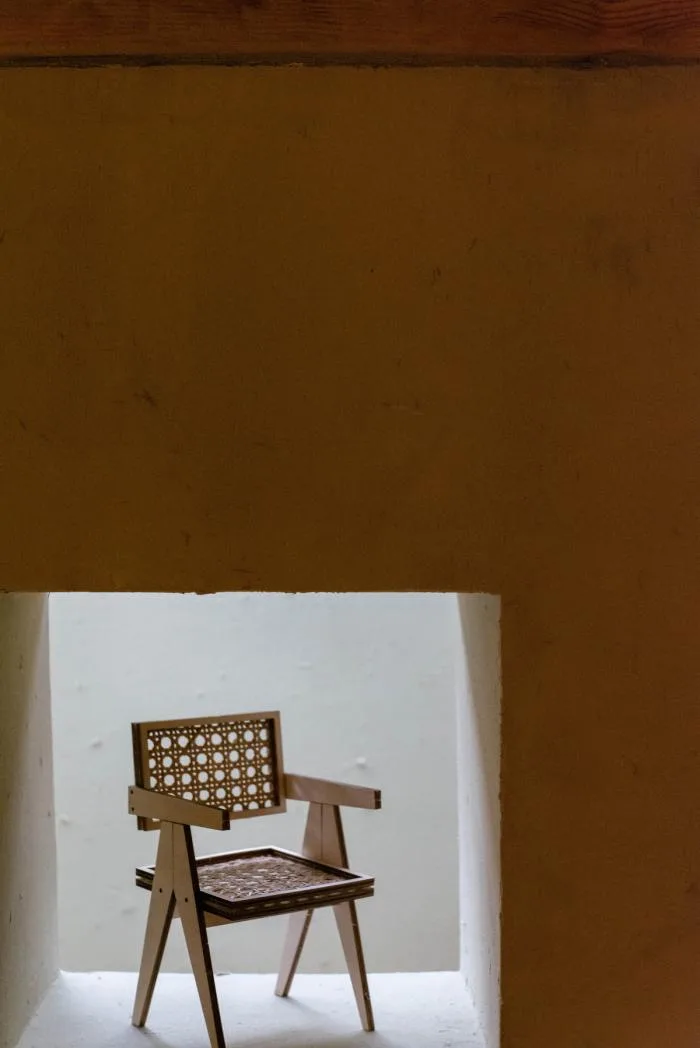
Throughout the design process, we maintained a sense of restraint. Embracing natural flow and simplicity has always been our philosophy. We avoided excessive decoration, focusing instead on the genuine beauty and truth found in everyday life. Life is art, and art is life—this essence lives within the ancient hotel, right here beside us.
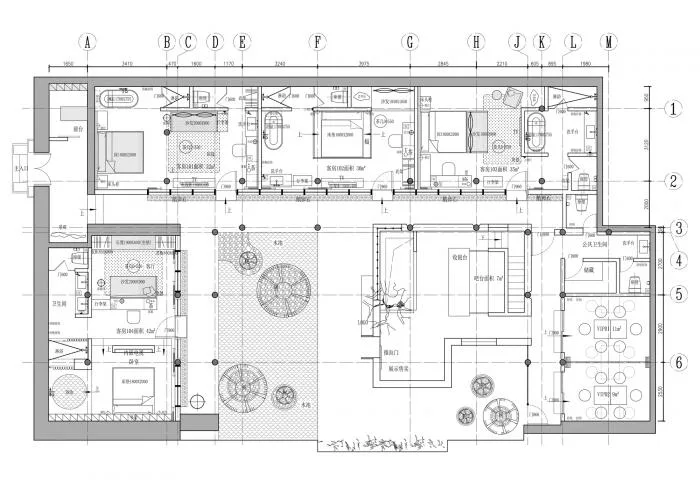
△ Plan view
Project Information
Project Type: Hotel
Location: Beijing, China
Architectural Firm: Yuangu Design
Area: 280 m²
Year: 2020
Photographer: Shuang Zhao
Manufacturers: DIAMAS Lighting, SIKI Lighting
Principal Architects: Fu Xiangfeng, Zhao Shuang, Ma Dongjie, Zheng Yanan, Li Minjian
Client: Yuangu Group
Structural Design: Huazhuang Brothers Huaxiujiang Team
Landscape Design: Yuangu Design
Construction: Huazhuang Brothers Hua Xiujiang Team
Partners: Shike Lighting, Xicheng Lighting












Must log in before commenting!
Sign Up