
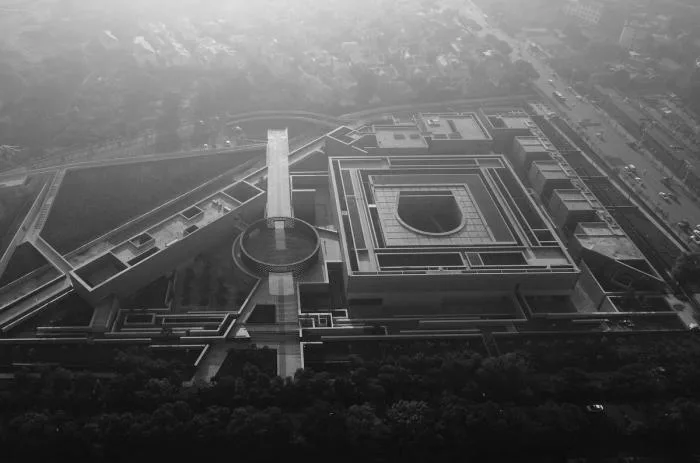
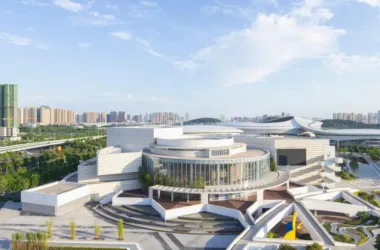
△ Aerial view
Chengde is renowned for its Qing Dynasty imperial palace, the “Summer Resort,” and the “Outer Eight Temples” complex, both recognized as World Cultural Heritage sites. These landmarks give the city a rich and grand historical ambiance. With this context, the primary design principle for the museum was to honor history and nature, integrating the architecture humbly into its environment.
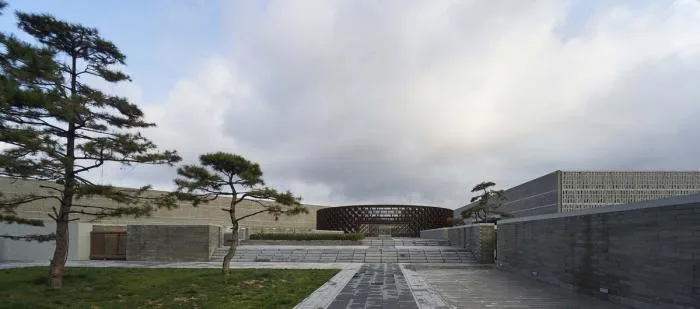
△ Main entrance of the building
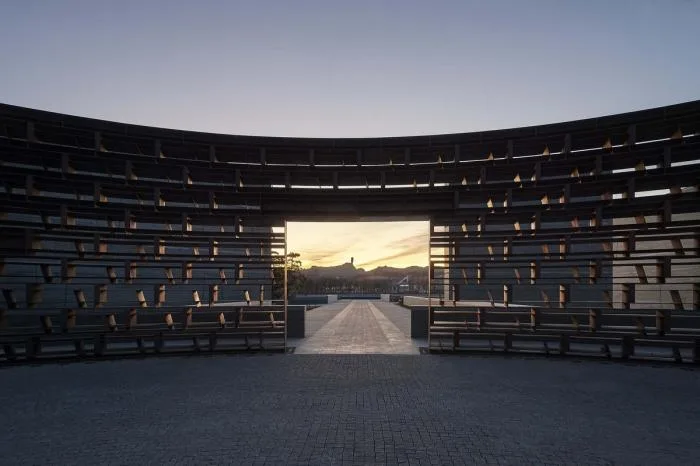
View from the central axis of the entrance square, overlooking “Qingchui Peak”
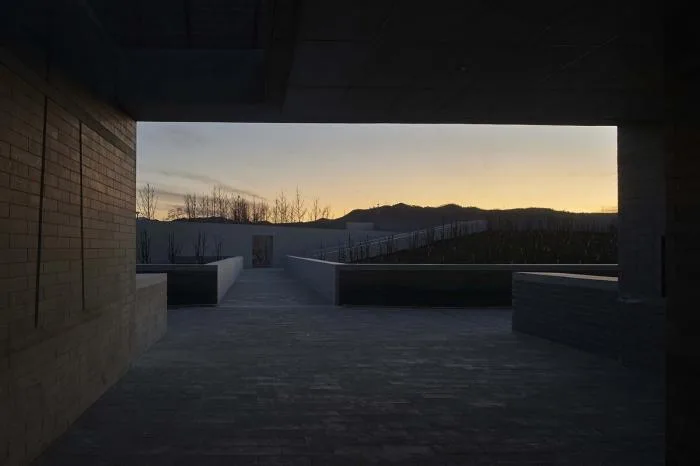
△ View from under the eaves of the entrance
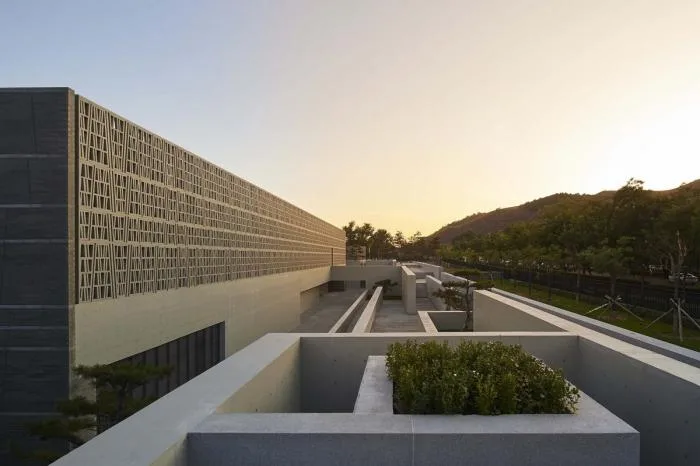
△ View of the sunken courtyard at the venue entrance – main film
The site is surrounded by historic buildings and scenic spots, situated within a third-level cultural relic protection zone. Due to restrictions imposed by the National Cultural Heritage Administration, the Hebei Provincial Cultural Relics Bureau, and other authorities, construction guidelines are strict, with a critical limitation on building height capped at 7 meters.
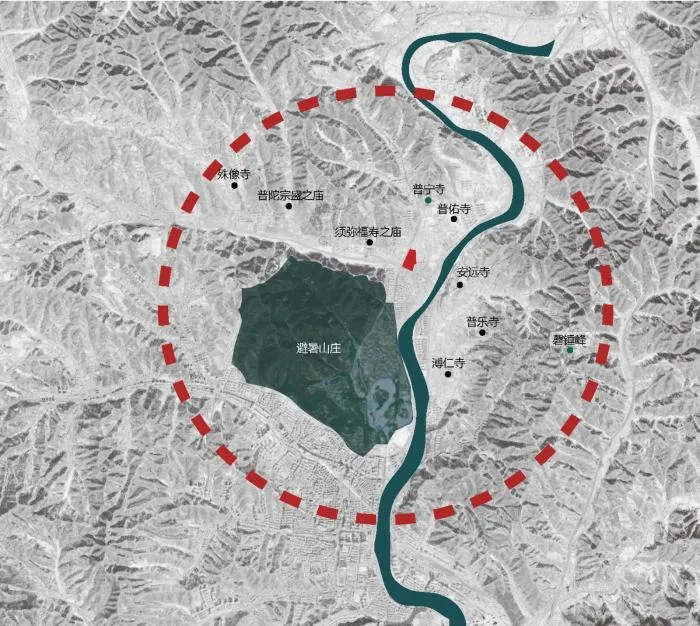
△ Location analysis
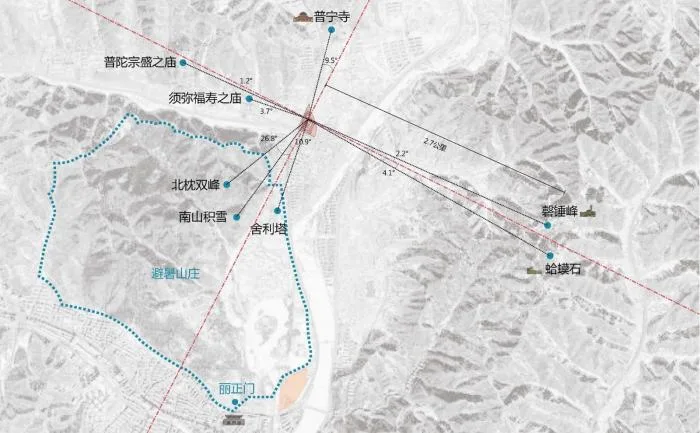
Analysis of Location Relationship
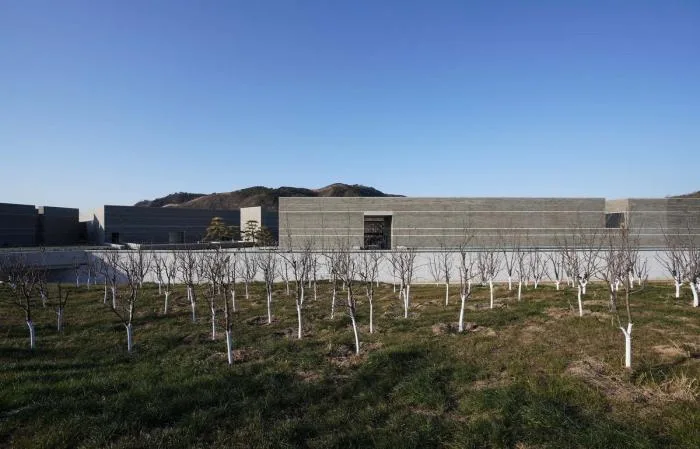
△ Architecture harmoniously integrated with nature
To begin, the construction site was restructured by excavating approximately six meters below the original ground level, creating a sunken courtyard that forms a new ‘ground.’ The building rises two floors above this base, with the above-ground portion restricted to a maximum height of 7 meters, appearing as if it is ‘hidden’ within the landscape. This architectural and courtyard arrangement ensures excellent lighting and ventilation, overcoming the typical sense of confinement found in underground structures. At the courtyard’s edge, a stepped terrace design inspired by local ancient architectural foundations was implemented.
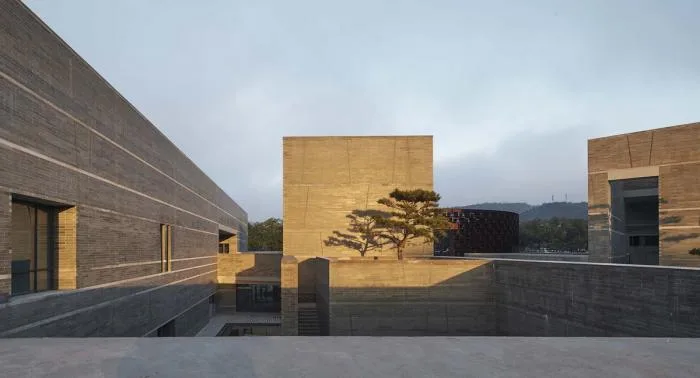
△ “Hidden” buildings
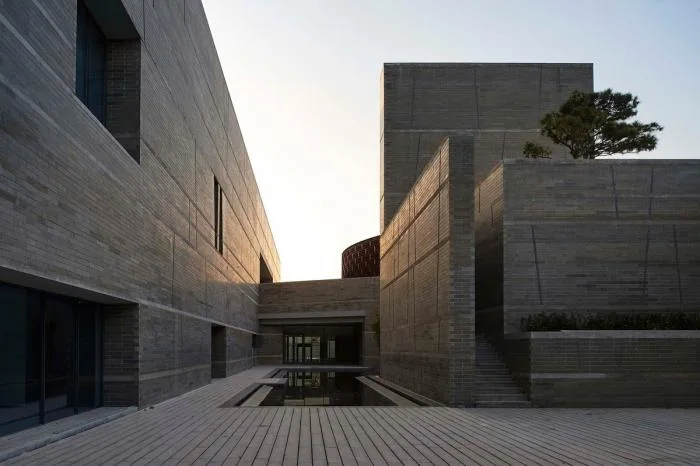
△ Sunken courtyard
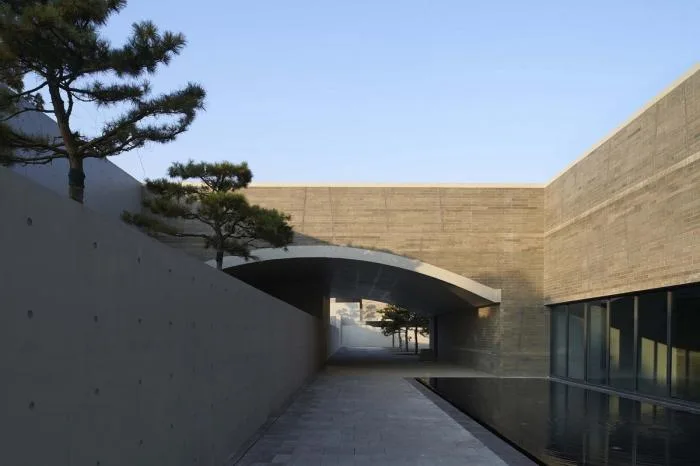
△ “Aerial Bridge Connection”
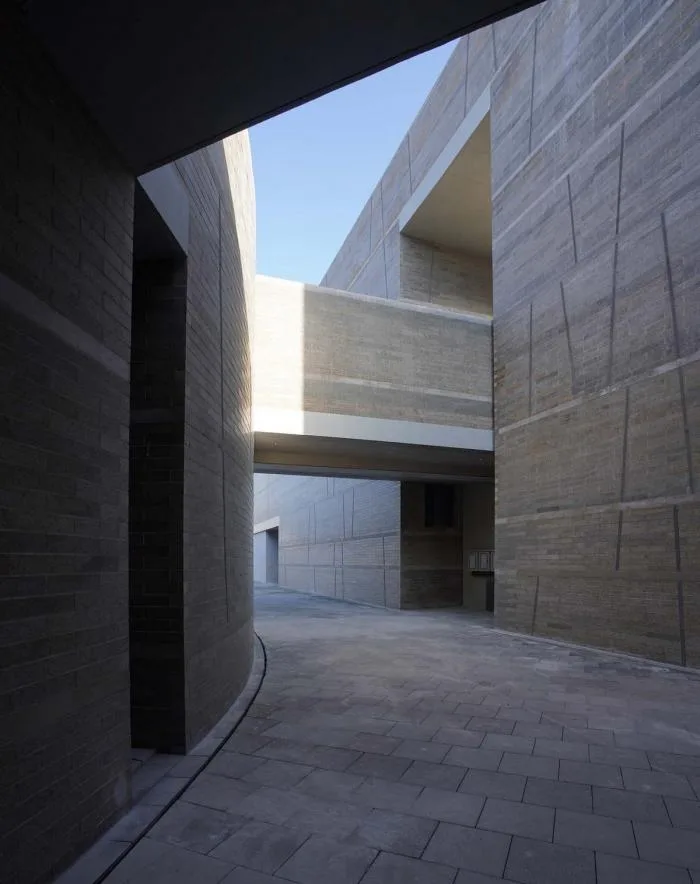
△ “Aerial Bridge Connection”
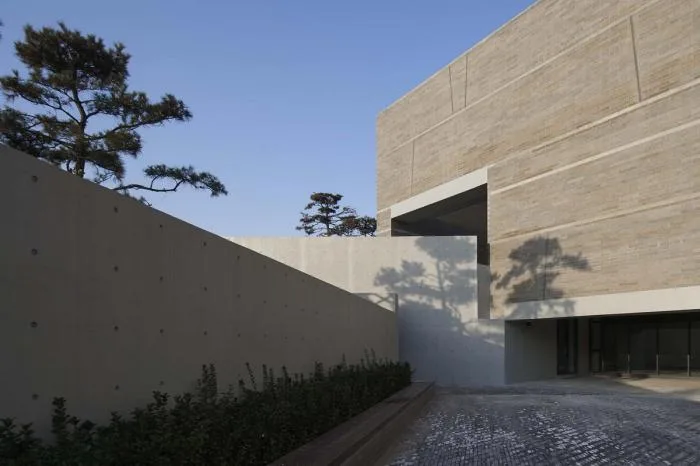
△ Building components
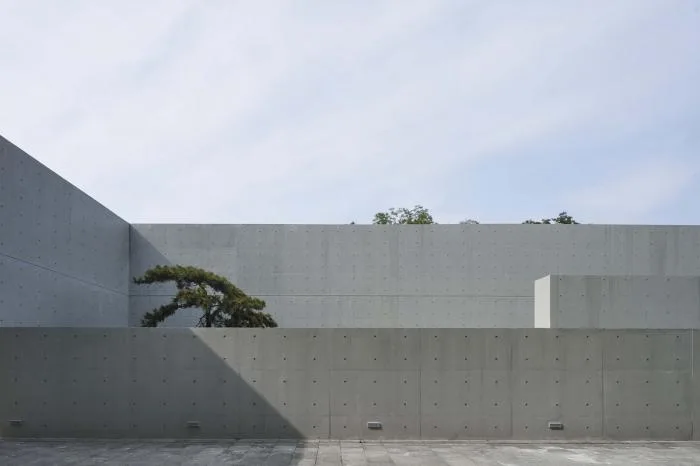
△ “Clear water” wall at the sunken courtyard’s edge
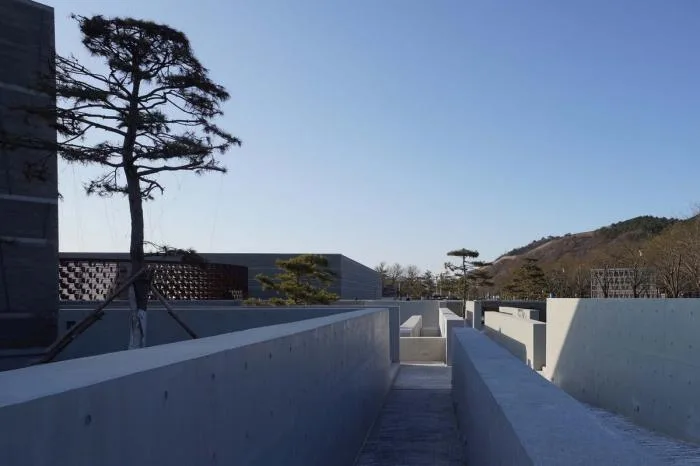
Buildings subtly concealed within the environment
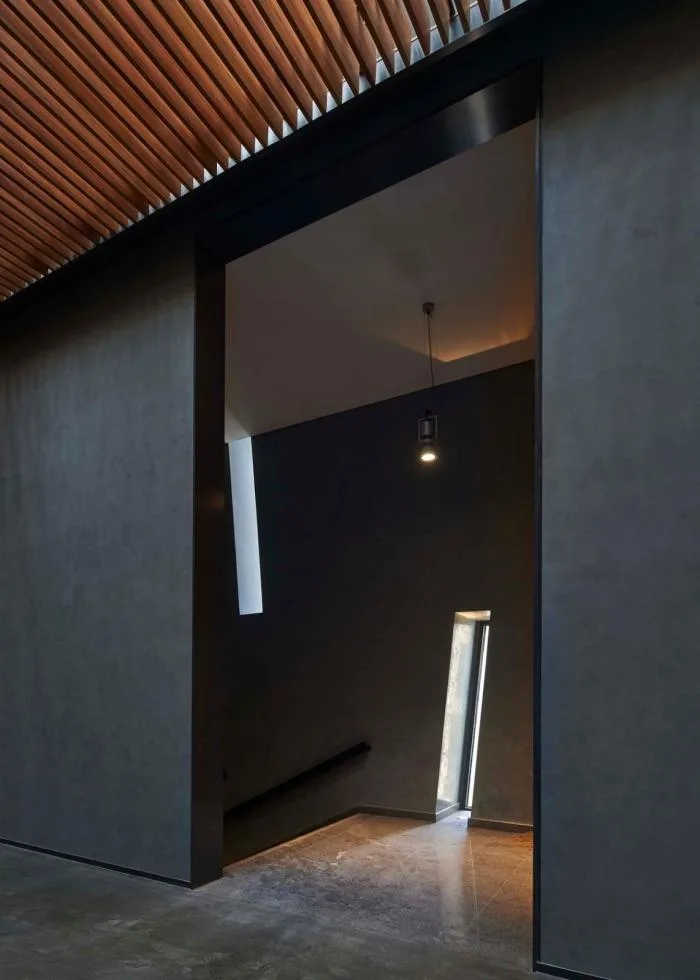
The hidden staircase
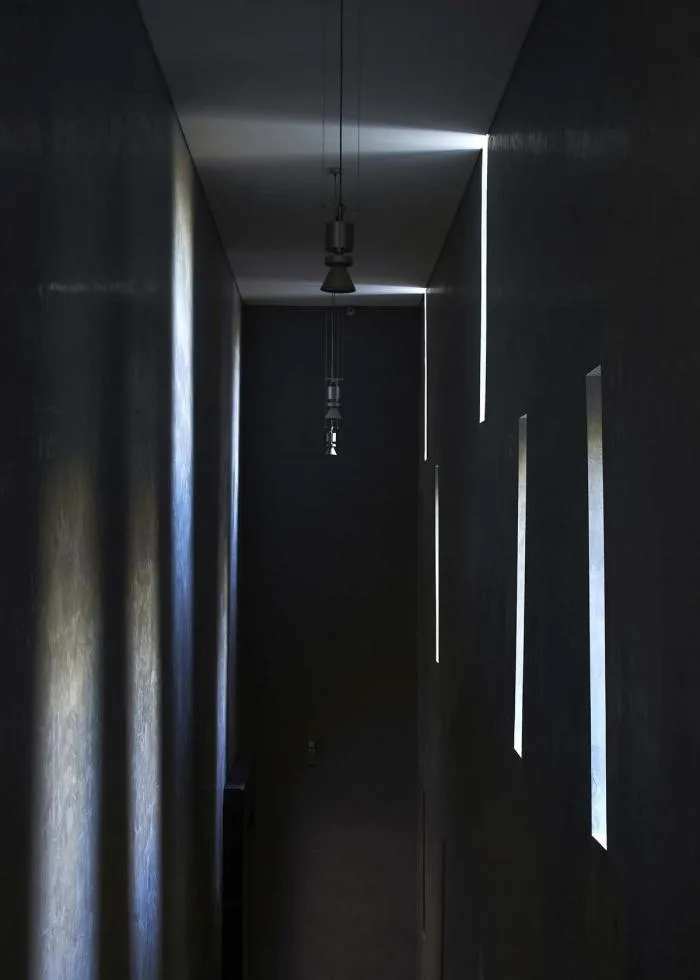
△ Above the stairs
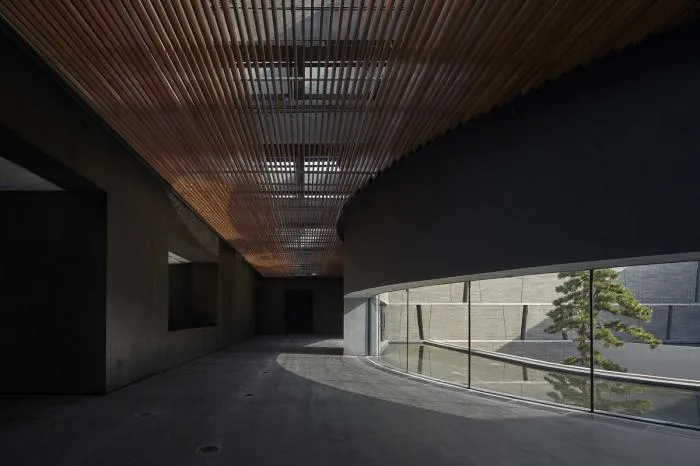
△ View of the inner courtyard from the first-floor exhibition hall corridor
The roof is designed as a viewing platform overlooking the city, merging the “hidden” building volume with its unique surrounding landscape. This design amplifies the building’s function, allowing it to blend into the environment while also reflecting it outwardly. Visitors can explore exhibits below and inward, as well as enjoy views of the vibrant World Cultural Heritage site above and beyond. This comprehensive approach distinguishes the museum from typical exhibition buildings.
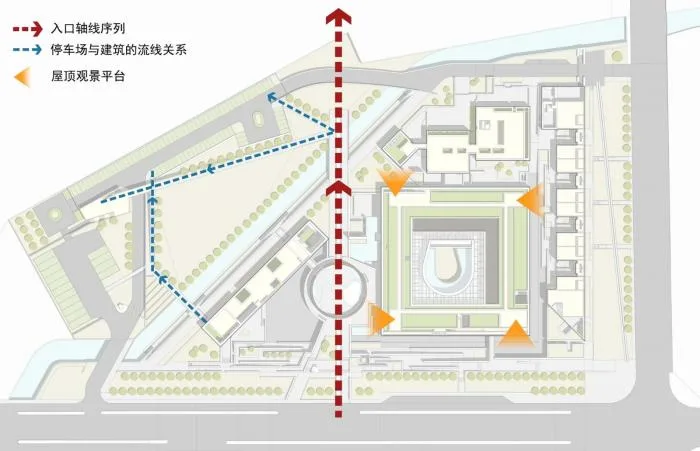
△ Visual analysis
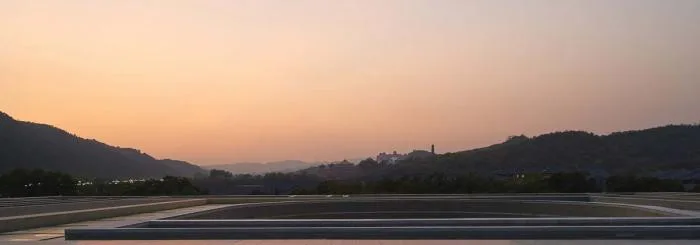
△ Exhibition hall roof viewing platform
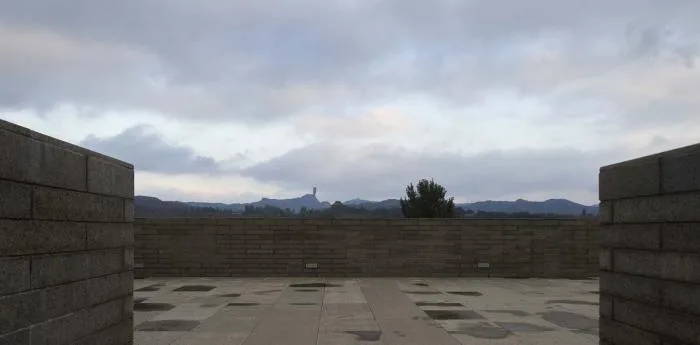
△ Exhibition hall roof viewing platform
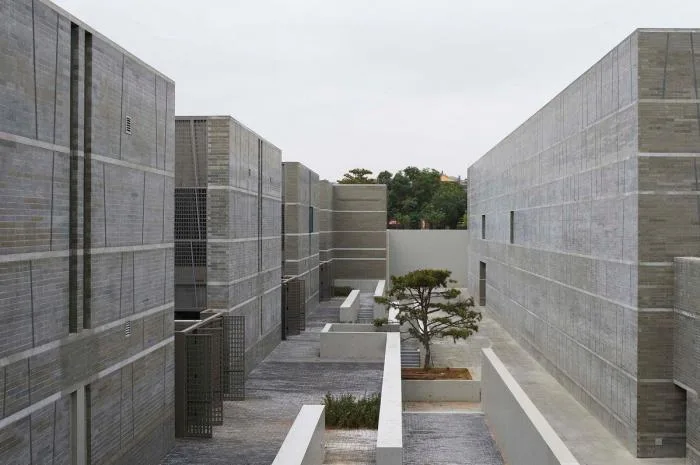
△ Sunken courtyard
At the heart of the building lies a horseshoe-shaped outdoor courtyard, featuring two pine trees symbolizing the villa’s character and creating a serene atmosphere. This space reflects the historical backdrop and artistic spirit of Chengde, embodying the philosophy of “seeing the big from the small,” while remaining surrounded by mountains and forests.
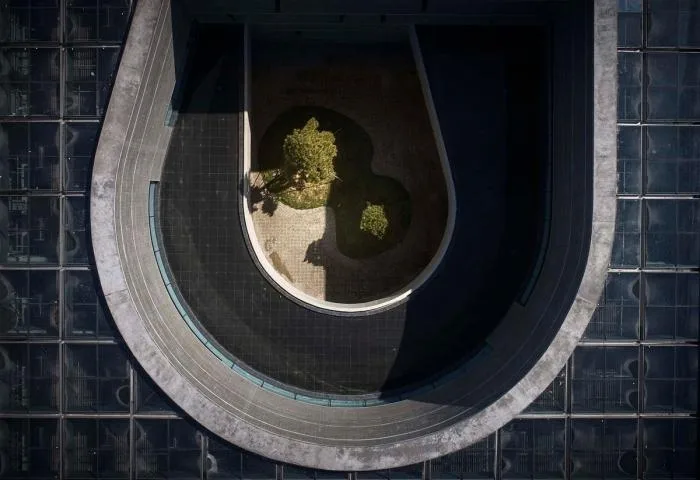
△ Double horseshoe-shaped inner courtyard
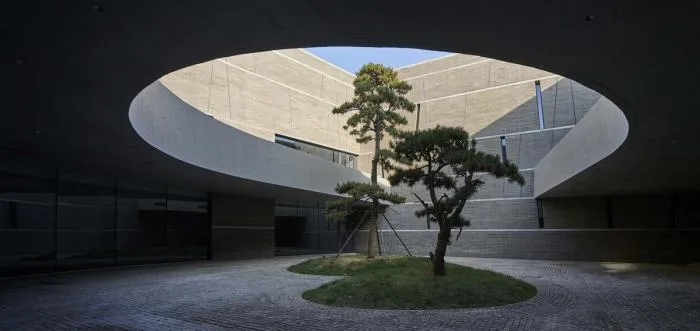
△ Double horseshoe-shaped inner courtyard
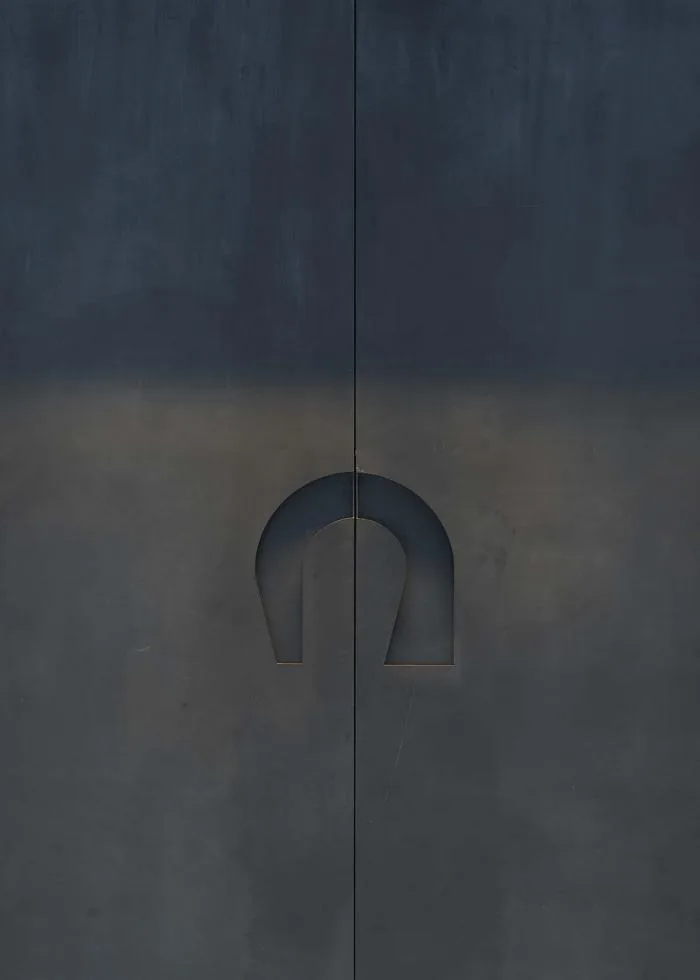
△ Double horseshoe-shaped door handle
The courtyard continues the garden atmosphere of the Summer Resort, offering a comfortable resting space and pleasant walking experience for both visitors and staff.
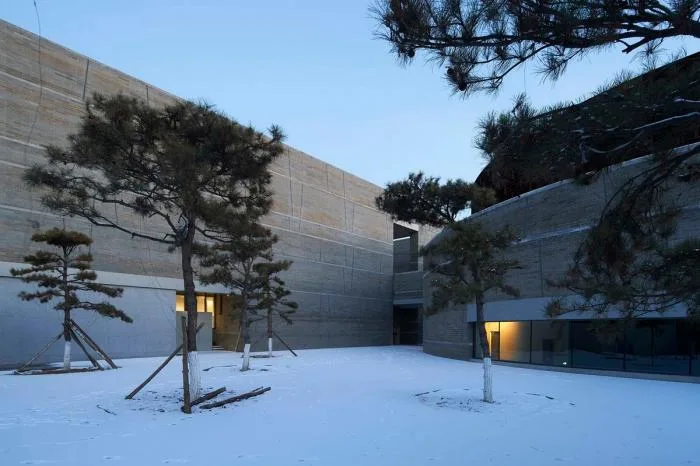
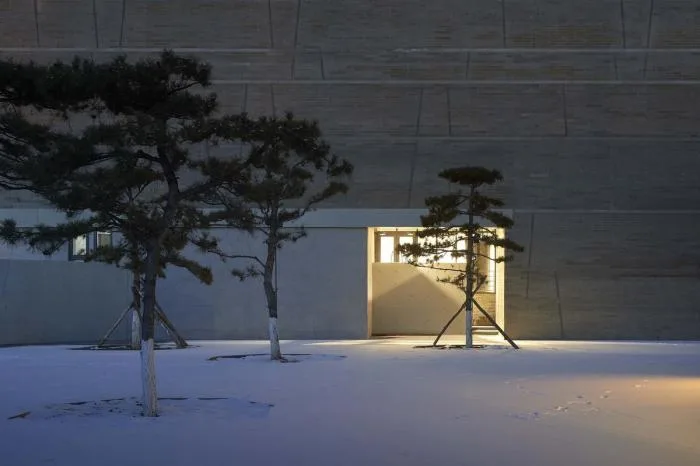
The Chinese pine in the snow, its octagonal tree hole faintly visible
The design draws inspiration from the classic trapezoidal window elements found in the Tibetan-style architecture of Waiba Temple. This motif establishes a fresh design language. In addition to applying inclined concrete lines across masonry walls, the trapezoidal form is directly incorporated into some wall elements.
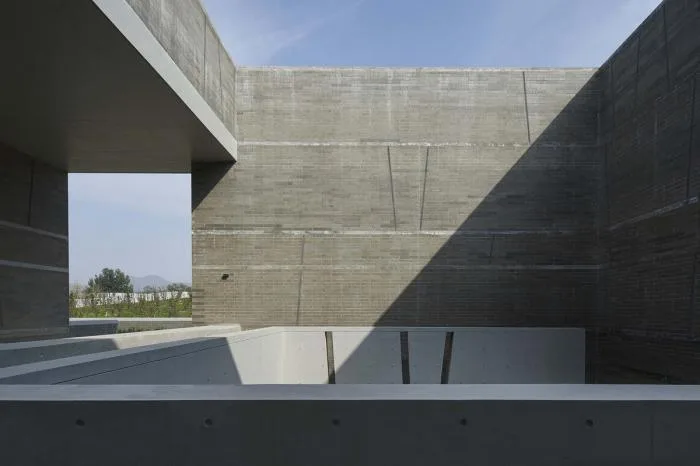
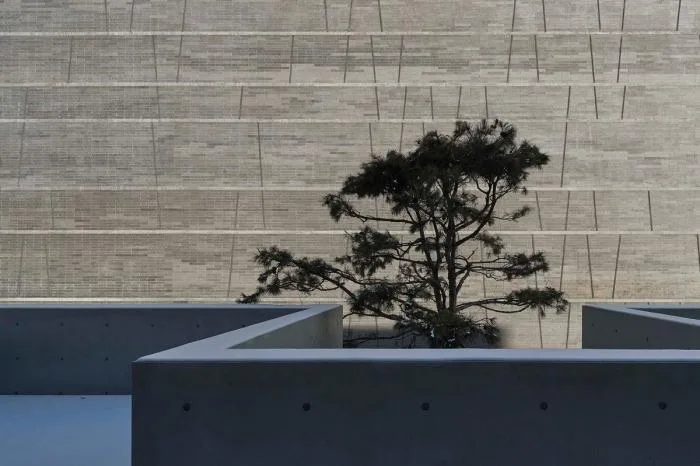
The inclined concrete lines on the walls
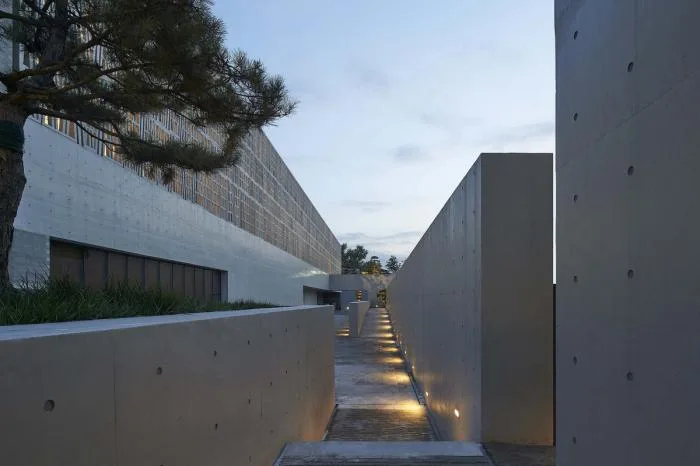
Buildings rising from the “new” ground
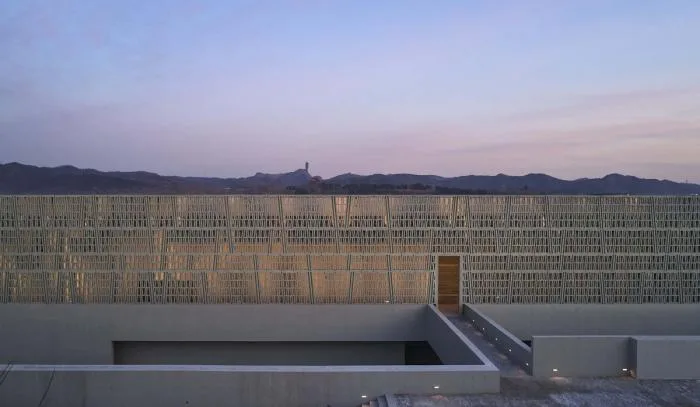
Chengde Museum: Flower grid wall facade with the distant “Chime Hammer Peak”
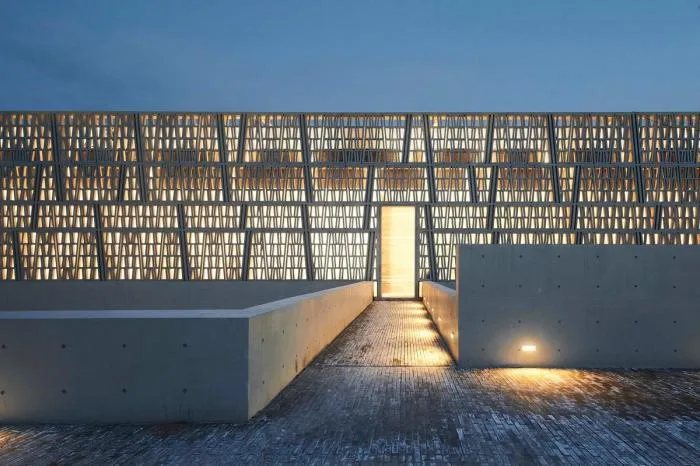
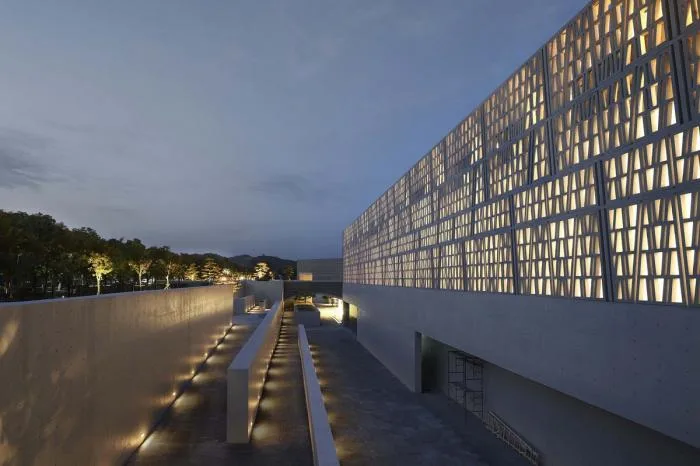
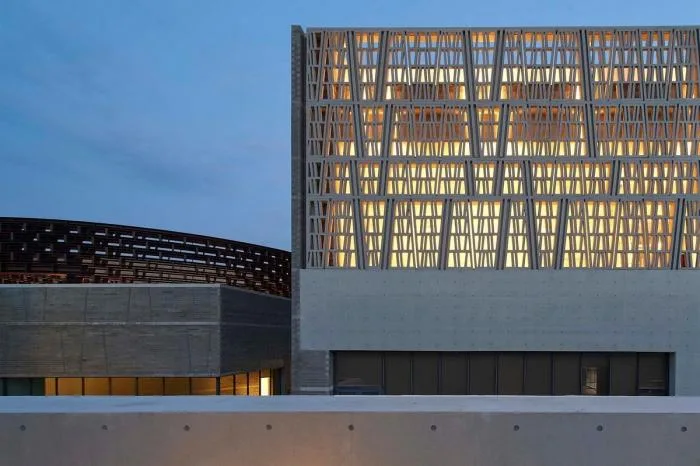
△ Trapezoidal window element
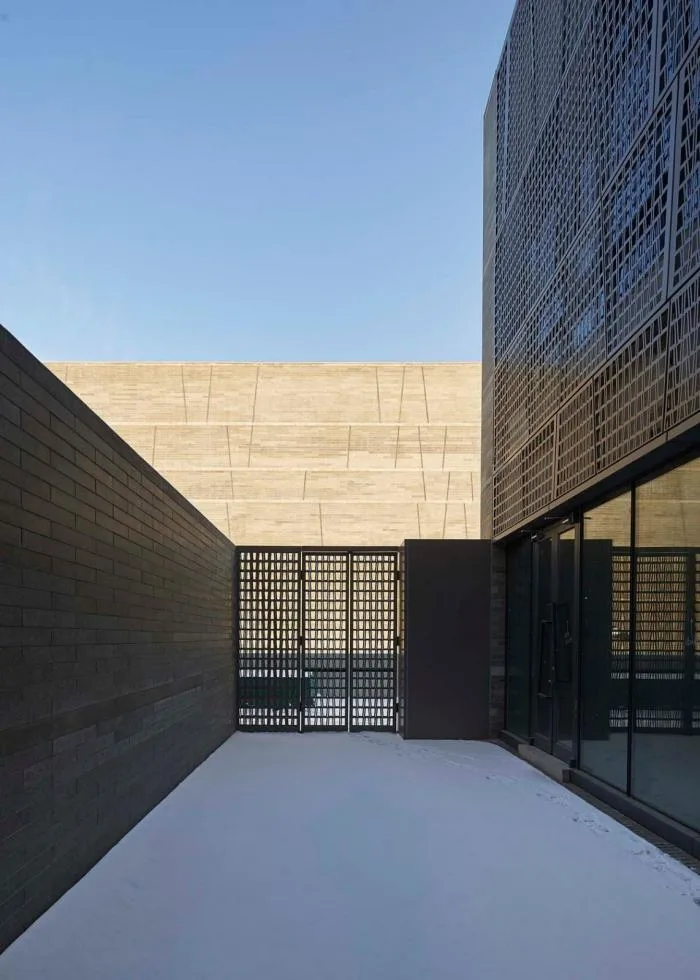
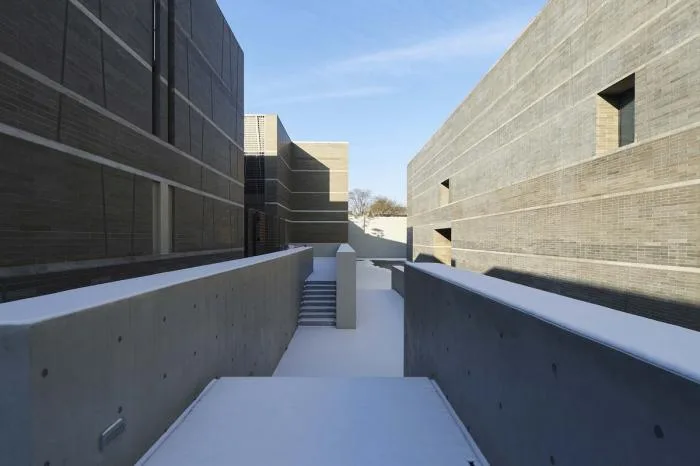
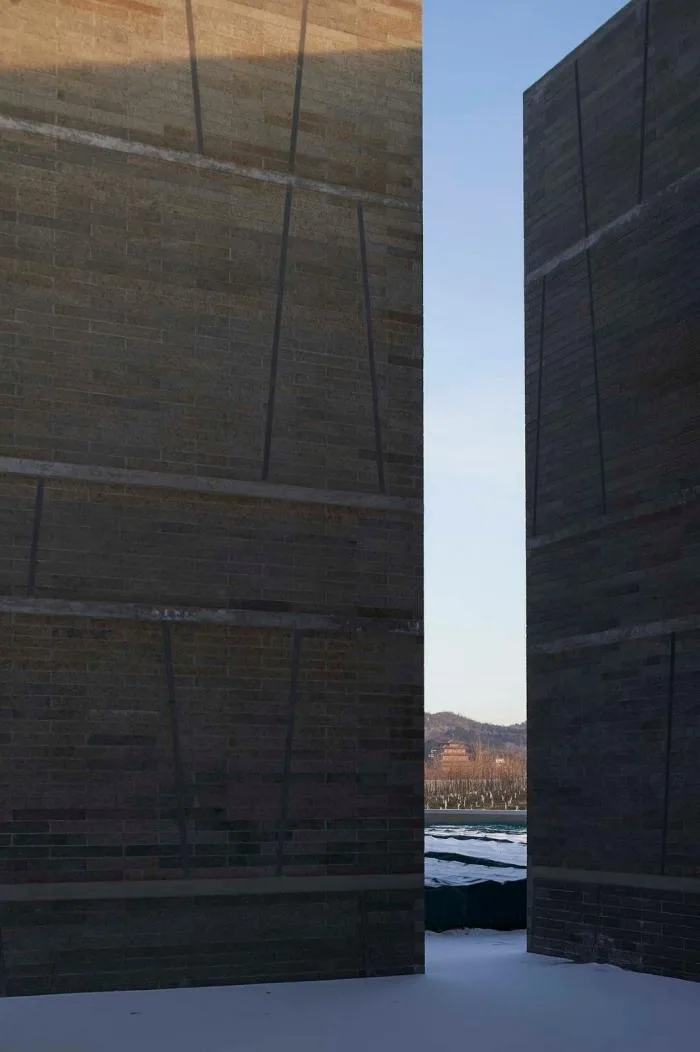
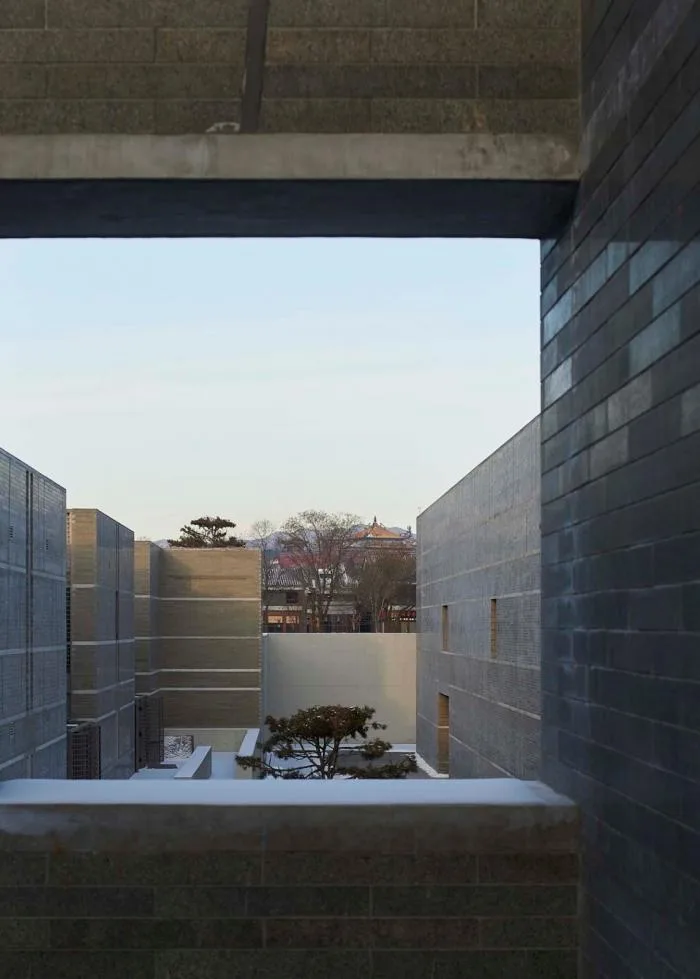
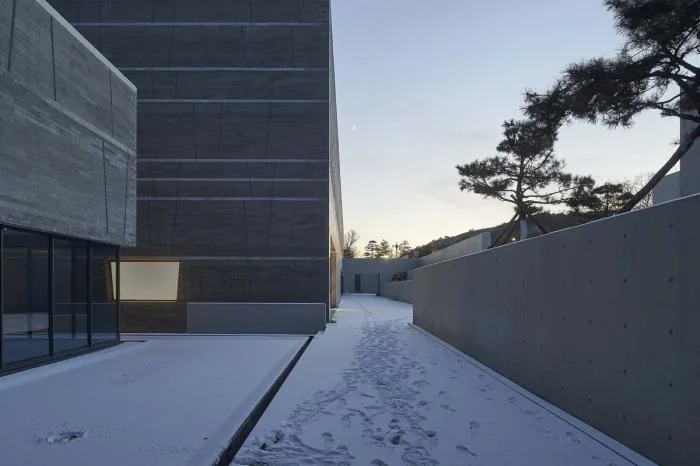
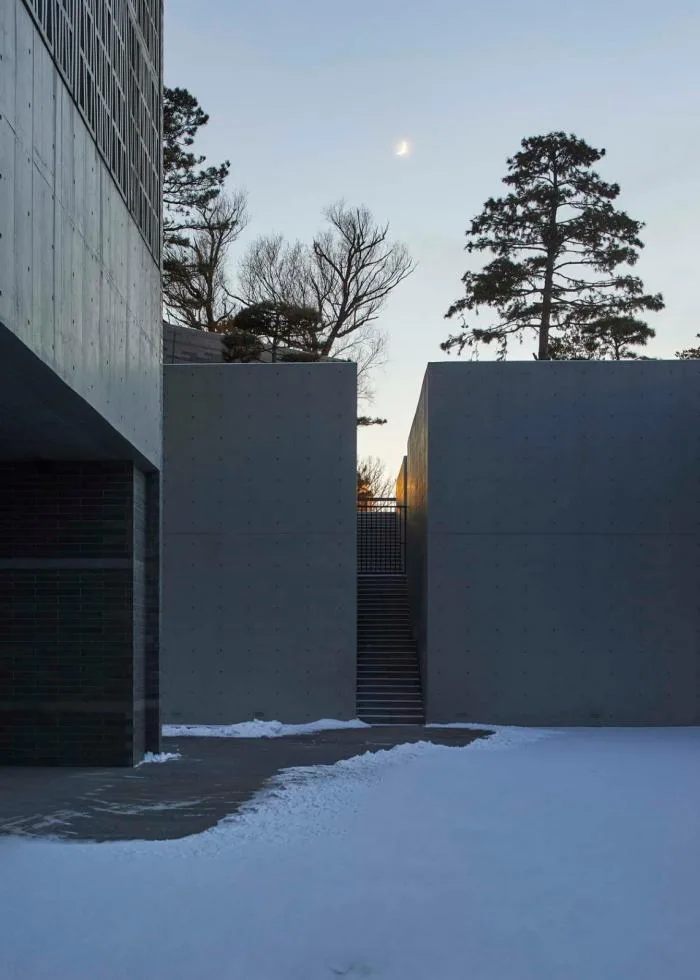
△ Snow scenery in the sunken courtyard
Design Drawings
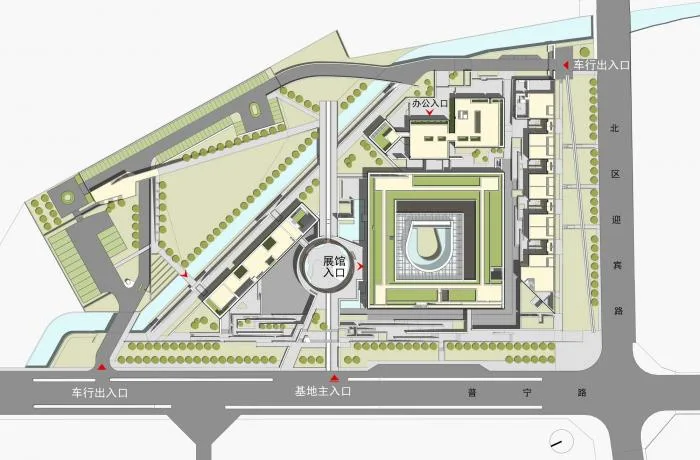
△ General layout plan
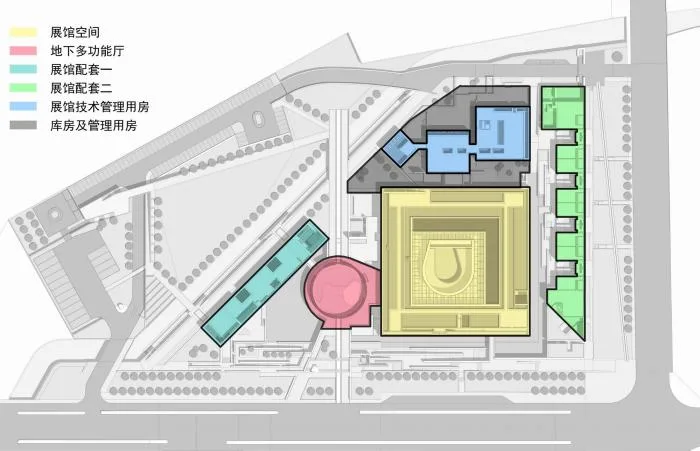
△ Functional analysis diagram
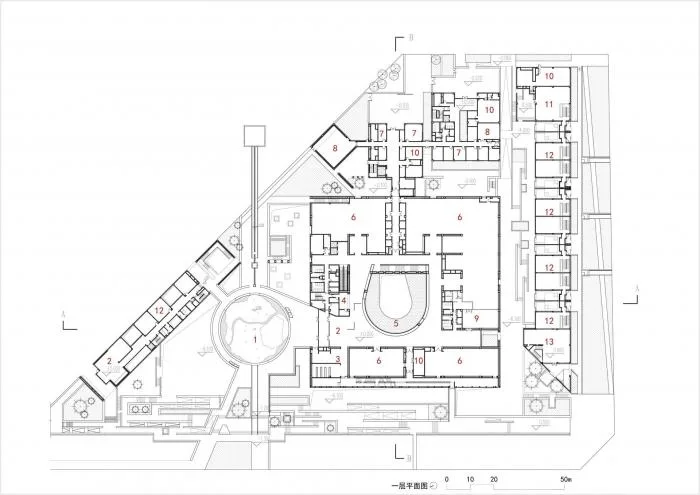
△ First floor plan
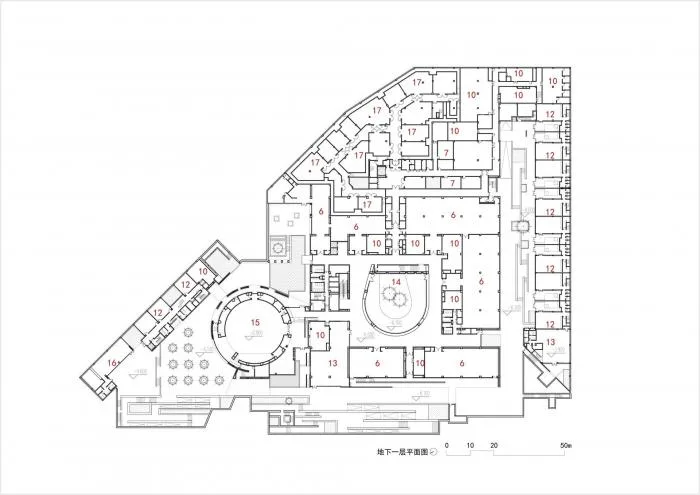
△ Underground floor plan

△ Section A-A

△ Section B-B
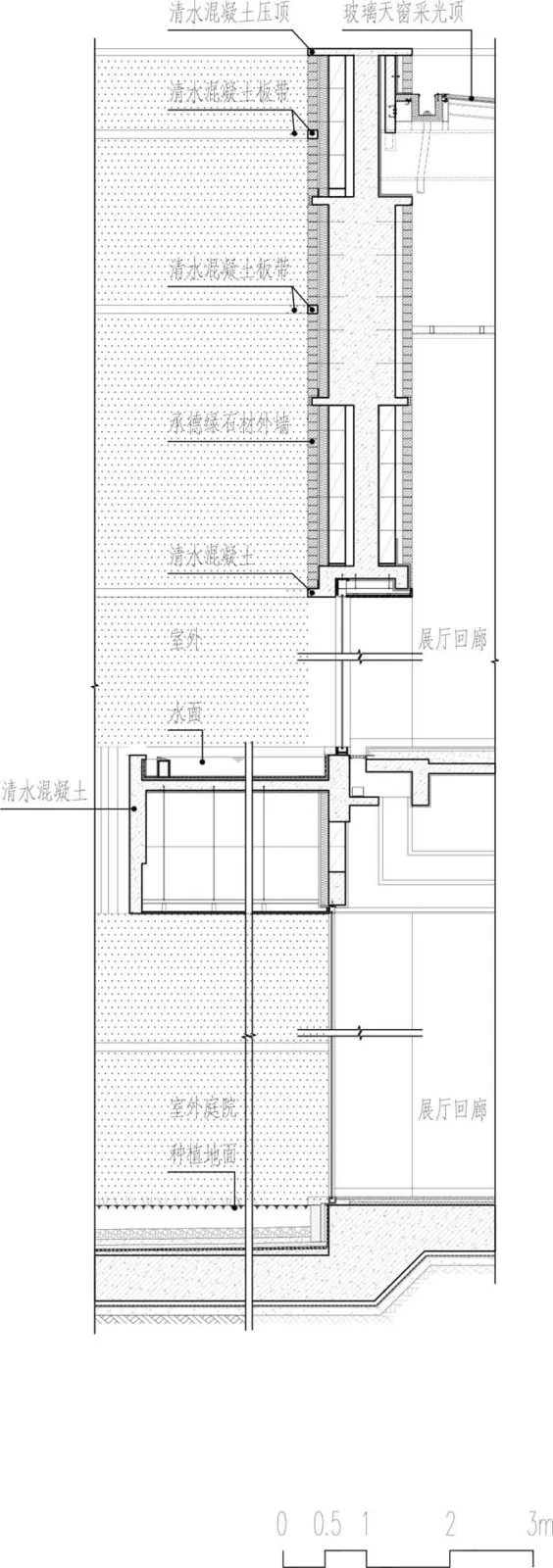
△ Detailed drawing of outer eaves
Project Information
Project Type: Museum
Location: Chengde City, China
Architectural Firm: Huahui Construction
Area: 25,163 m²
Year: 2019
Photographer: Gang Wei
Principal Architect: Zhou Kai
Design Team: Wang Jianping, Tang Min, Huang Yuhui, Gao Hongbo
Structural Engineer: Mao Wenjun
Landscape Designer: Huang Wenliang
Interior Designer: Shen Wei
Author: Lv Junjie












Must log in before commenting!
Sign Up