
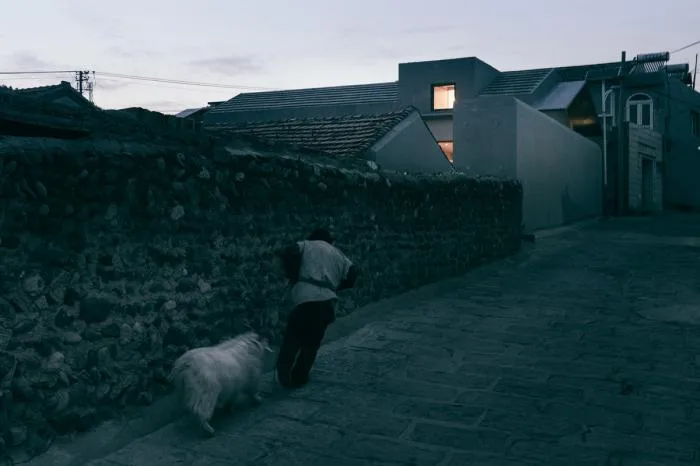
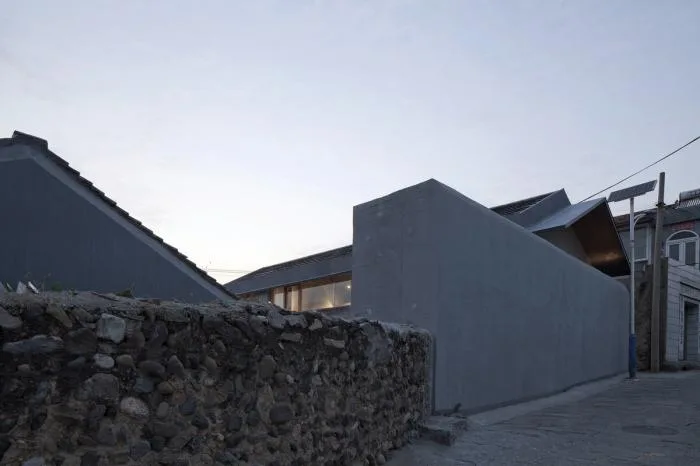
This project is nestled deep within the Taihang Mountains, 70 kilometers west of Beijing. The homeowners, a couple originally from Dashan, have returned to their ancestral village where their parents once lived. After moving to the city 30 years ago, their family’s old courtyard was left abandoned, falling into disrepair with parts collapsed and unstable. Their goal was to rebuild a comfortable mountain retreat.
The courtyard is located in a mountain village that stretches from the valley floor up the slope, near its highest point. Above the courtyard, on a raised platform, once stood a military fortress built during the Yuan Dynasty to station troops—this historical fact gave the village its name, “Junxia.” Walking from the village entrance to the site feels like climbing a mountain, with views at every elevation overlooking the valley. These vistas include Mount Da’an and the Saito River, landscapes that have remained unchanged for millennia.
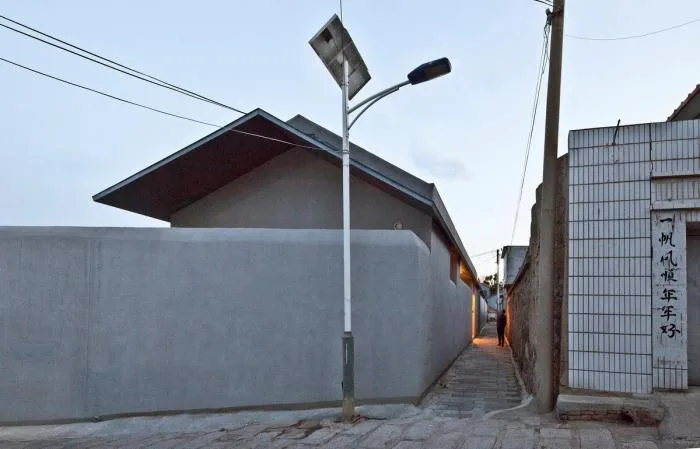
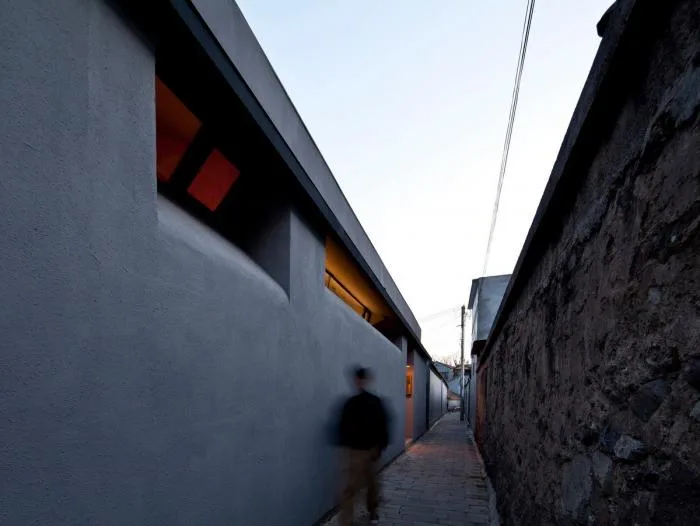
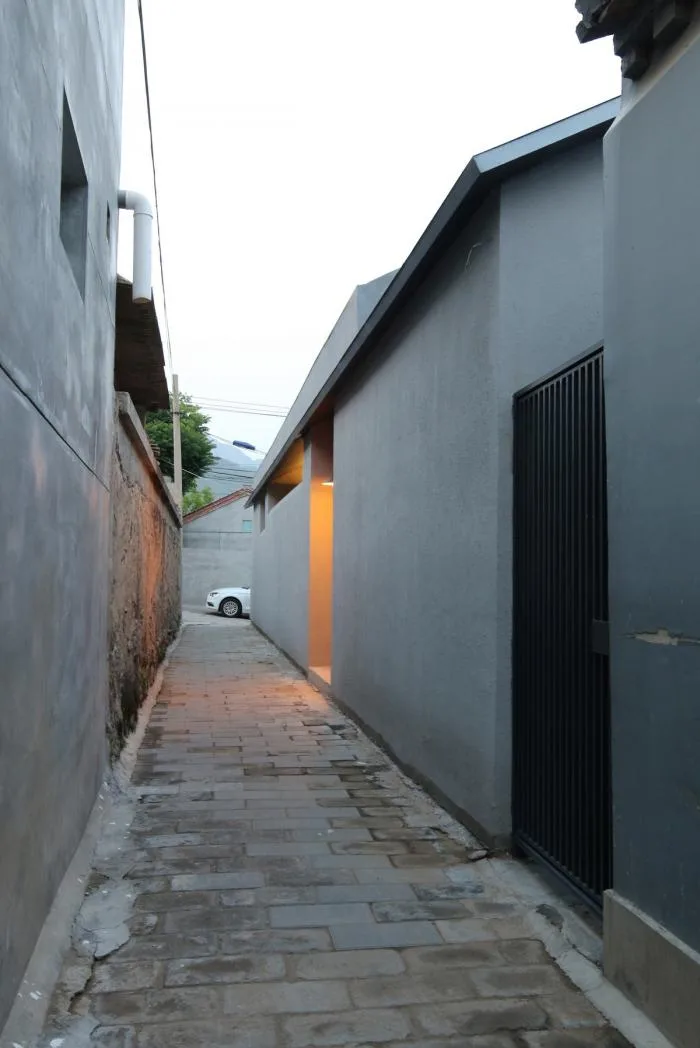
The village is characterized by winding streets of varying elevations, narrow alleys, double-sloped roofs, and low-rise houses with deep eaves—5 meters deep and 3 meters high. Exterior walls are typically finished with stone or cement, contributing to the village’s distinctive look. Our design approach respects this environment; we didn’t seek to challenge it or create something radically new. Instead, the building’s scale, form, and color harmonize with the surroundings, blending seamlessly into the neighborhood while retaining unique features that reflect the residents’ activities and stories.
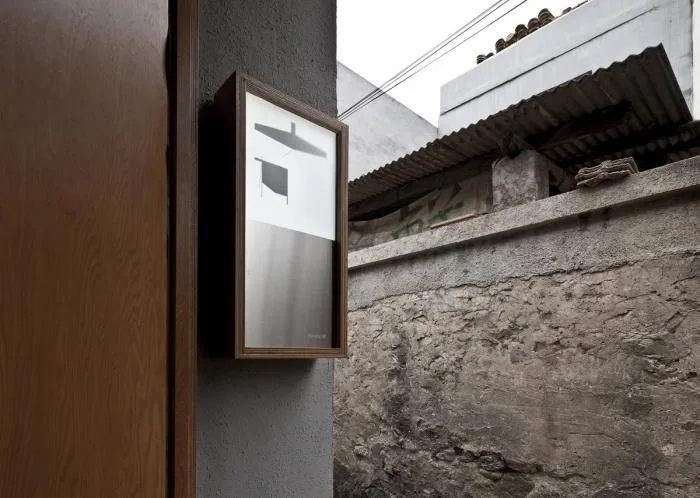
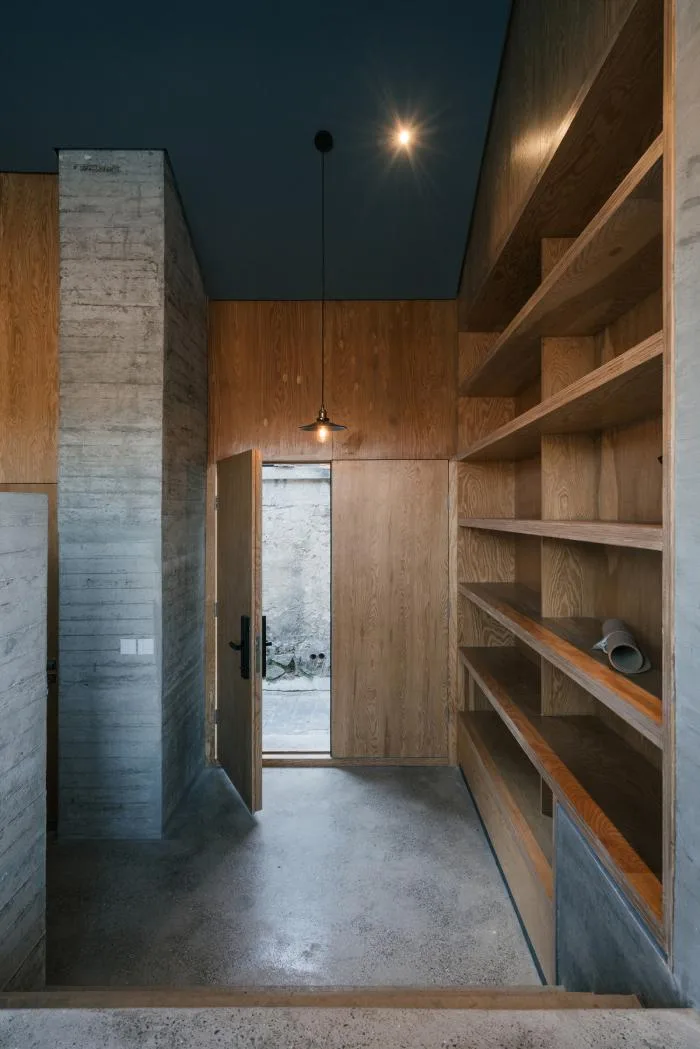
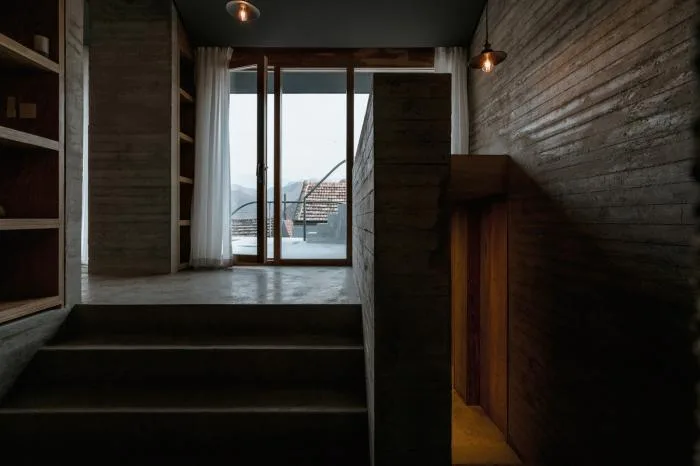
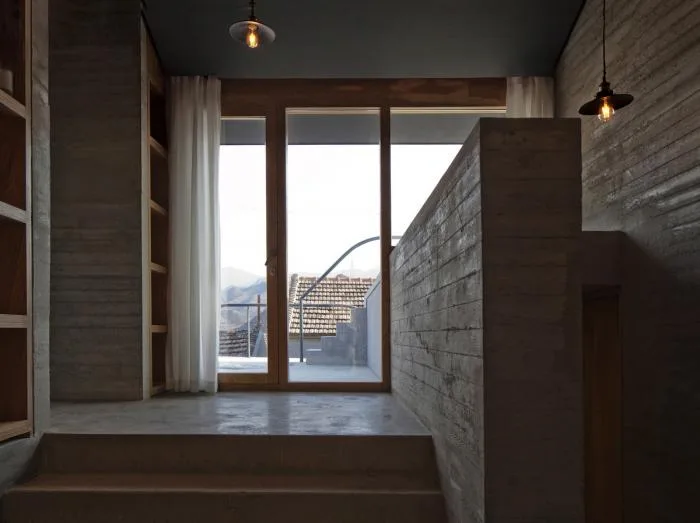
The old fortress has long since vanished, but the abundant sunshine, fresh mountain air, and vast panoramic views make visitors feel as though they are experiencing a timeless place—just as soldiers once did here in the past. This unique experience shapes the entire design narrative. We intentionally blur the lines between indoors and outdoors, and between individual rooms, treating the entire site as a unified, continuous terrain—an endless public platform. To the north lie traditional hutongs and roads; to the south, an open landscape of mountains and canyons unfolds. The southern neighbor’s rooftops vary in height, and our building adapts accordingly, creating a “platform on a platform.” From any corner of the site, visitors can gaze into the distance, where layers of receding mountains become an integral part of the architecture itself.
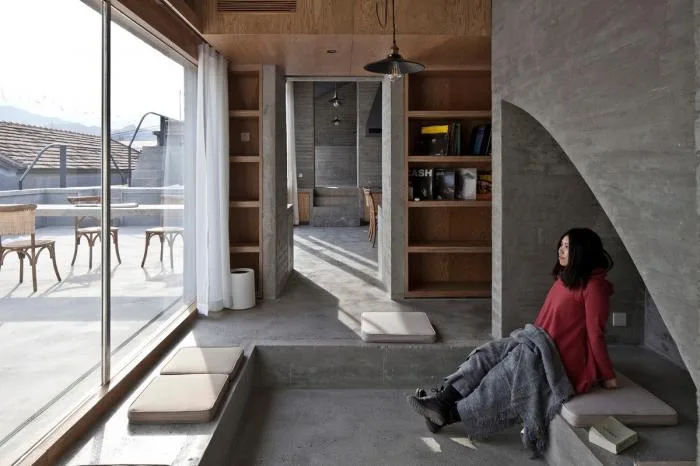
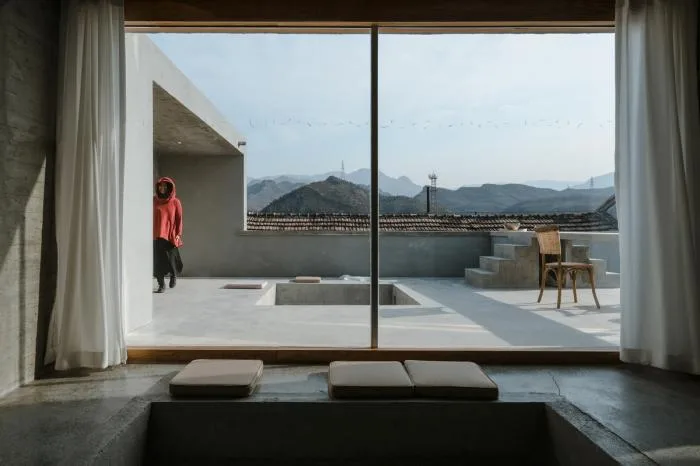
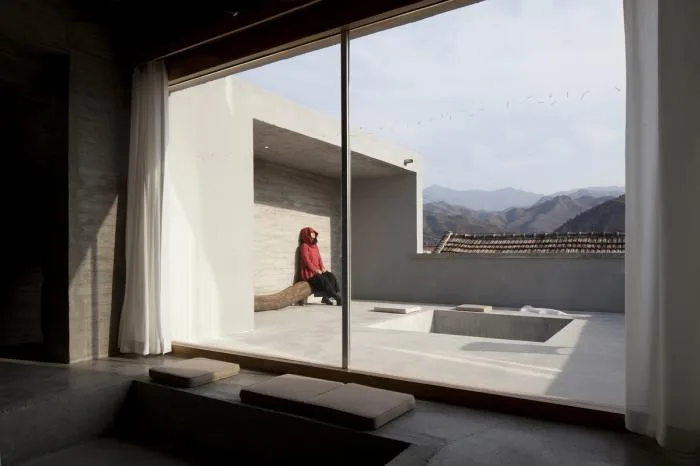
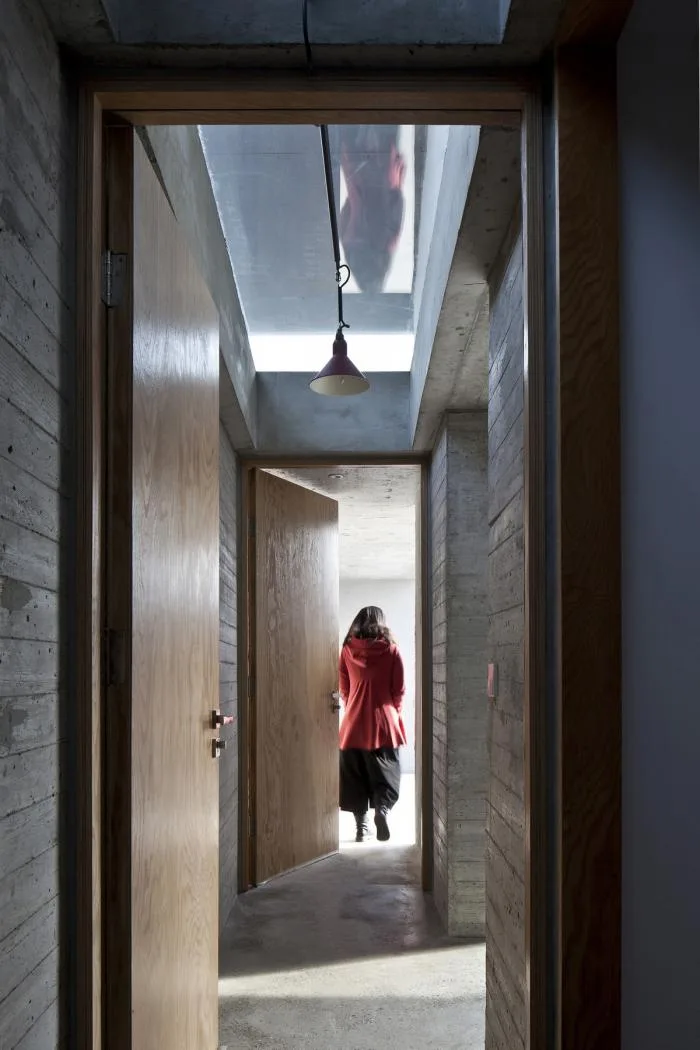
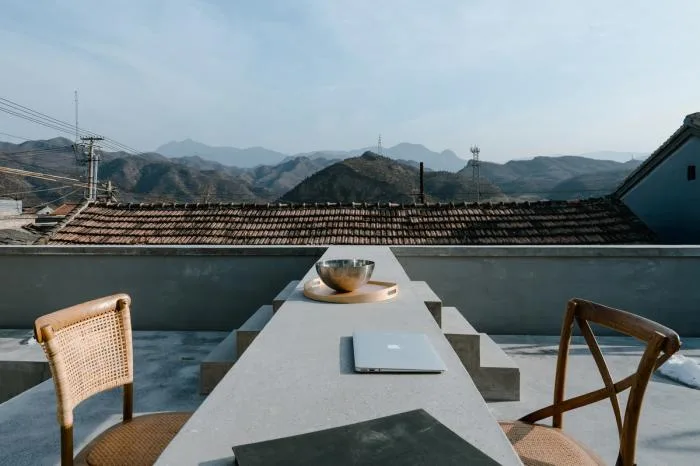
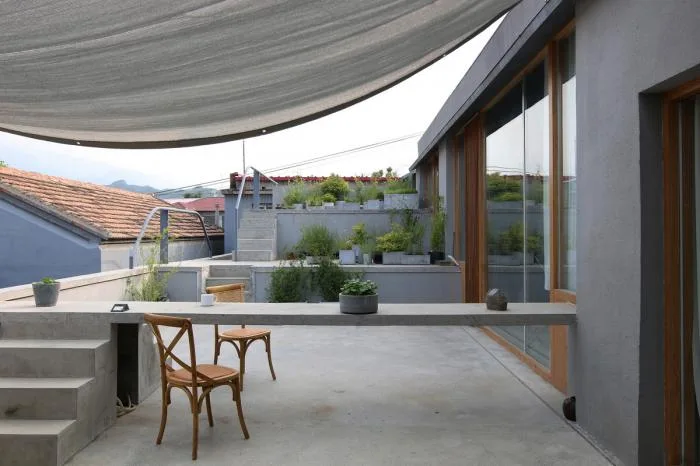
In this terrain of continuous rises and falls, the design seeks to minimize the “wall” as a mere room divider. Instead, a combination of shear walls and storage elements creates a thick, substantial volume. The north-facing wall cannot have windows, so its top curls inward, leaving a gap between the eaves and the wall’s peak. The entrance slopes downward, defying the typical neighborhood rule that rear windows should not face others, achieving true north-south ventilation. This downward-curved wall evokes the image of a tree canopy, offering shelter to the sofa area below. At sunset, when interior lights glow, the light filtering through these gaps softly illuminates the shaded northern alley.
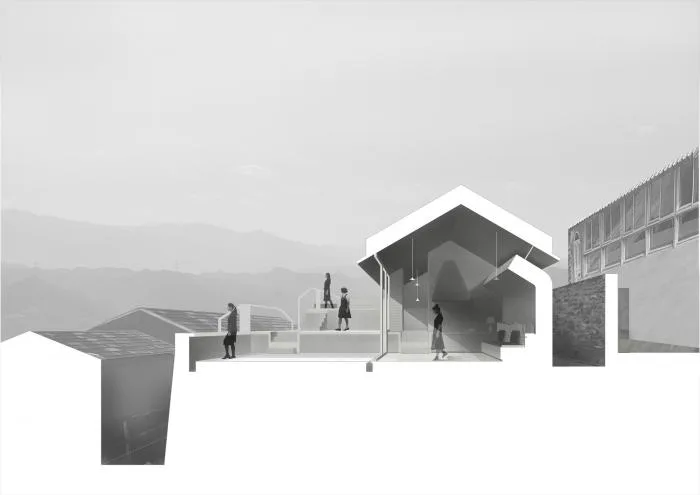
△ Sectional perspective
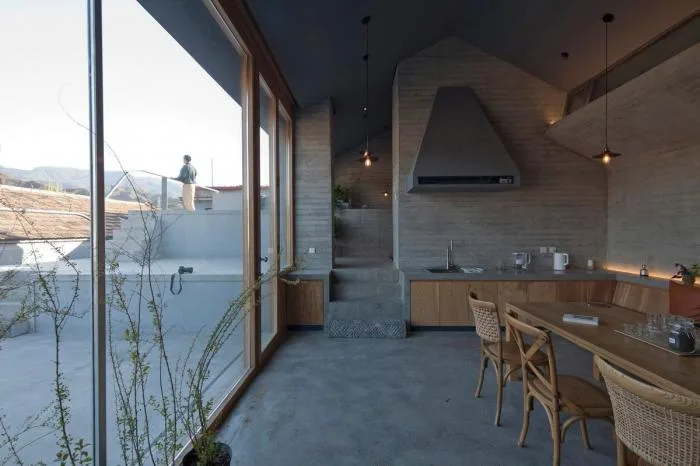
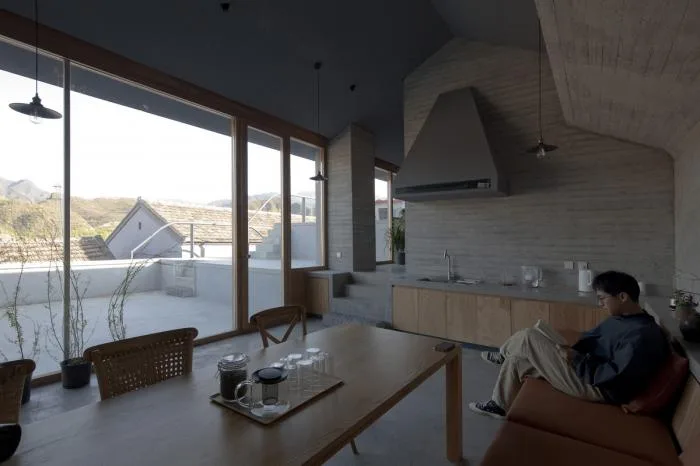
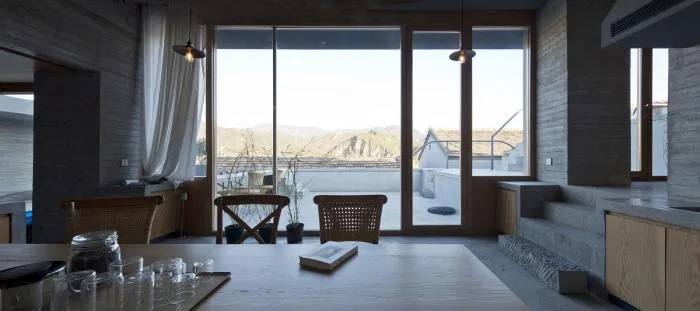
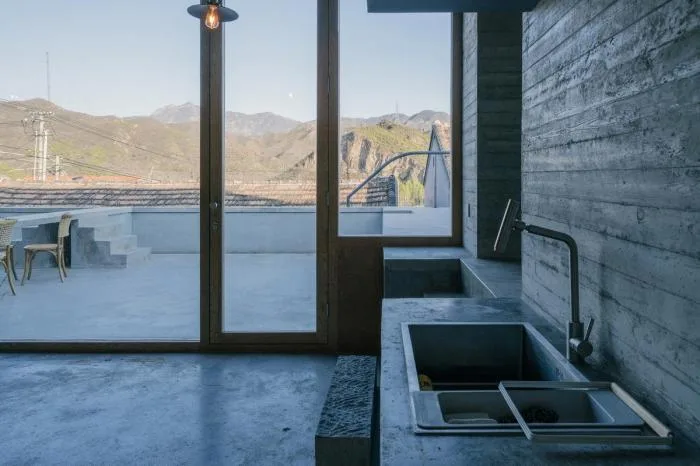
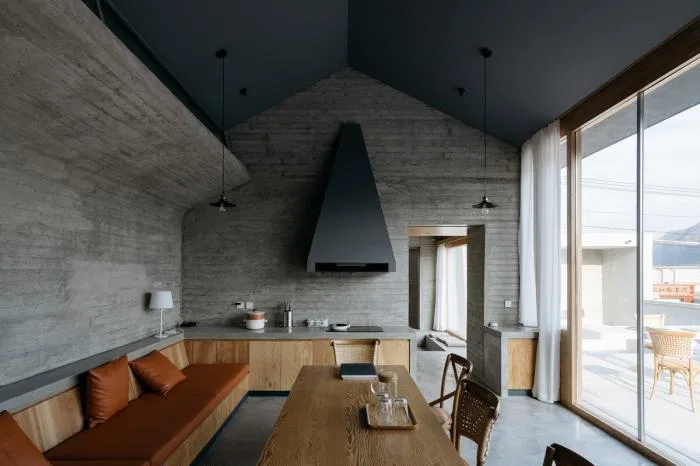
Aside from the guest rooms and bathrooms located in the semi-basement and mezzanine, four distinct spaces emerge between the shifting terrain and partitions. From east to west, the lowest point hosts a small living room beneath the mezzanine, cozy and intimate. Guests can gather around two shallow “pools” dug 300mm into the floor, both inside and outside the house. Moving upward, the main hall combines the kitchen and dining areas, opening directly to the south-facing outdoor space, creating a bright and expansive zone. The design cleverly uses the varying floor heights to integrate functional elements such as kitchen countertops and outdoor dining tables.
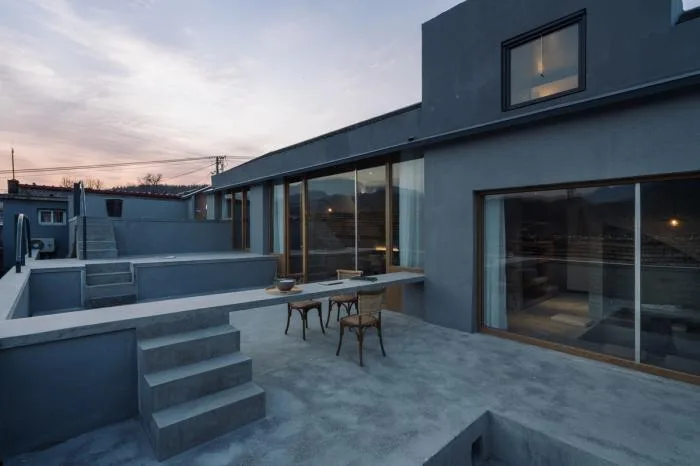
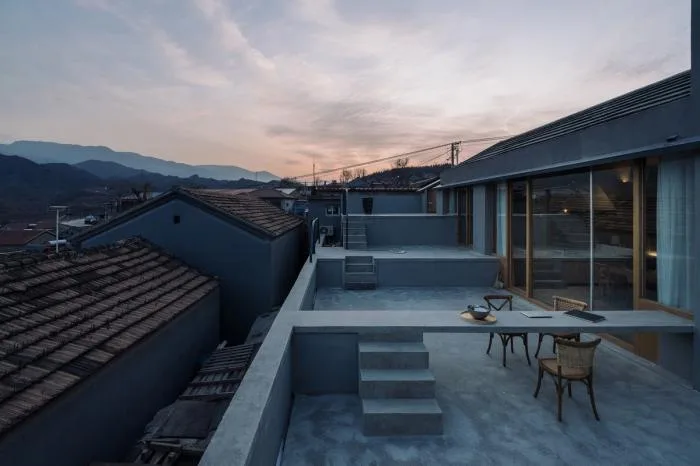
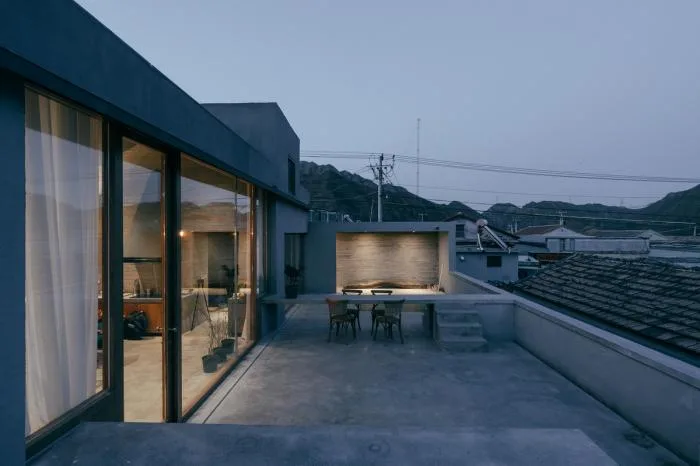
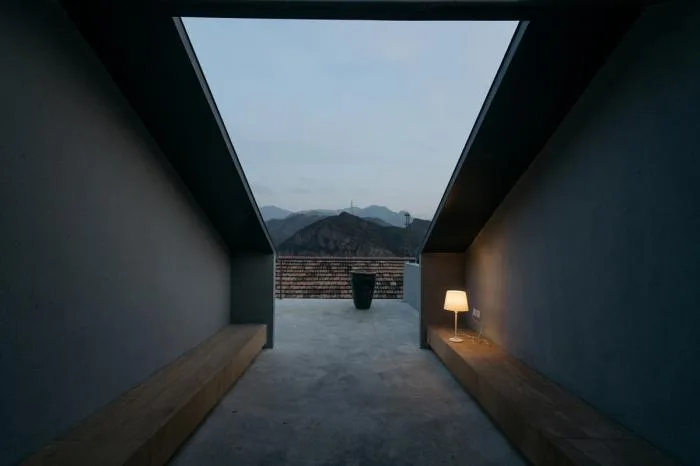
The highest platform sits on the westernmost edge of the site. Due to the rising ground level while the roof height remains fixed, this area cannot be enclosed as a full room. Instead, it is designed as a semi-outdoor space under a low, C-shaped roof. A circular sofa platform invites people to gather around, making this the premier spot in the entire residence—for tea, conversation, dining, or stargazing.
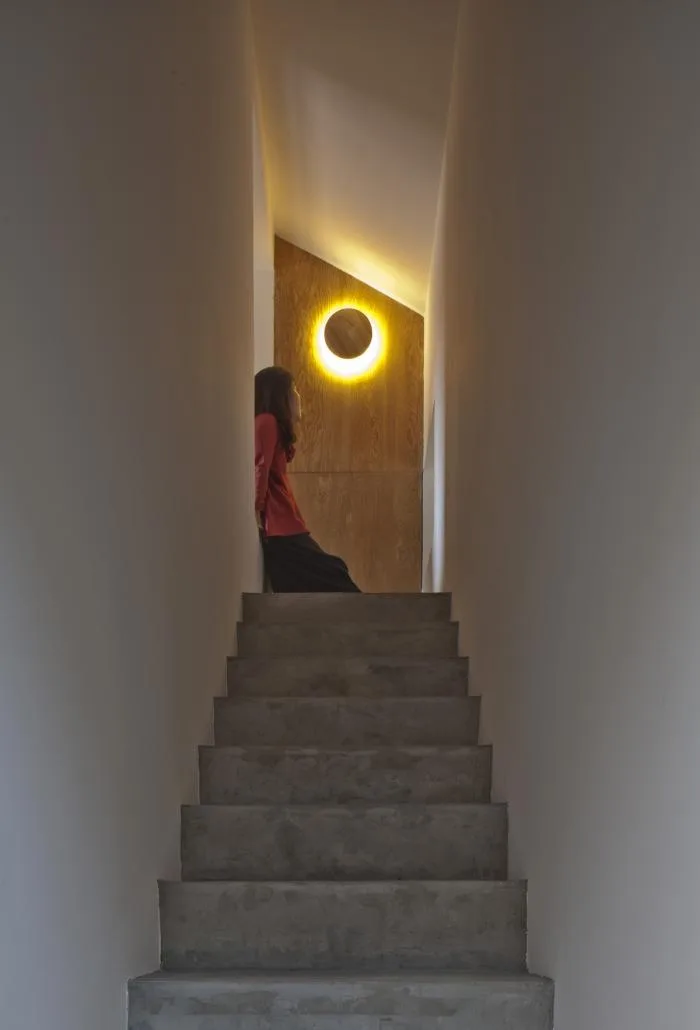
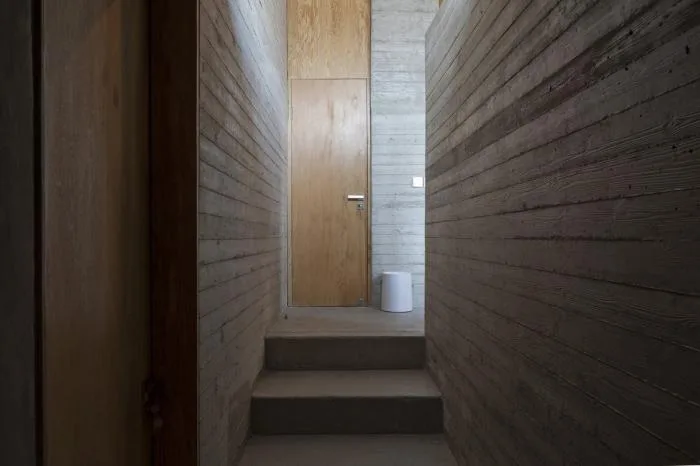
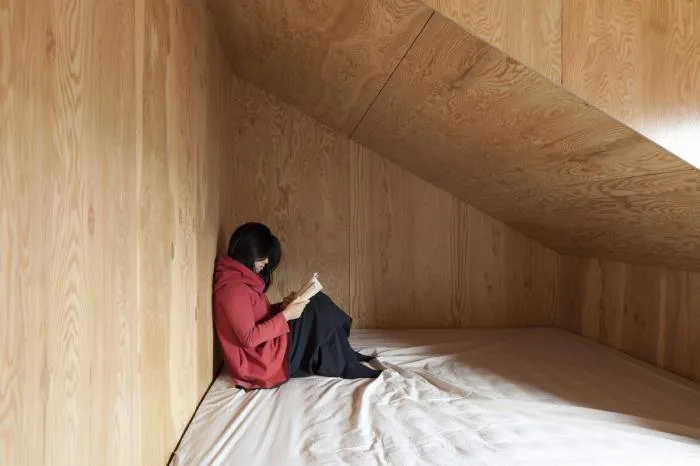
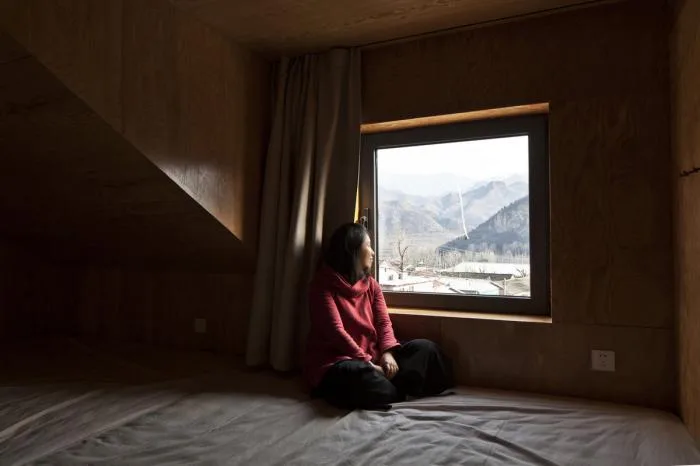
From the public platform, one can access the bedroom area either upstairs or downstairs. The attic bedroom’s square window, positioned at the head of the bed, offers a southern view that feels like peering into the distant horizon.
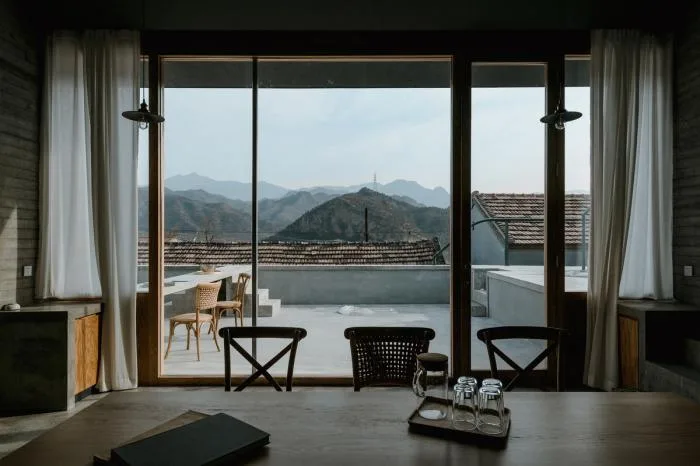
In the mountainous region northwest of Beijing, people increasingly appreciate the value of nature, scenery, clean air, fresh food, and distinct seasonal changes. These form a beautiful dream for urban dwellers seeking refuge. When people return here, they should not be met with an abundance of high-end industrial products or builders’ dreams, but rather a genuine connection to the place.
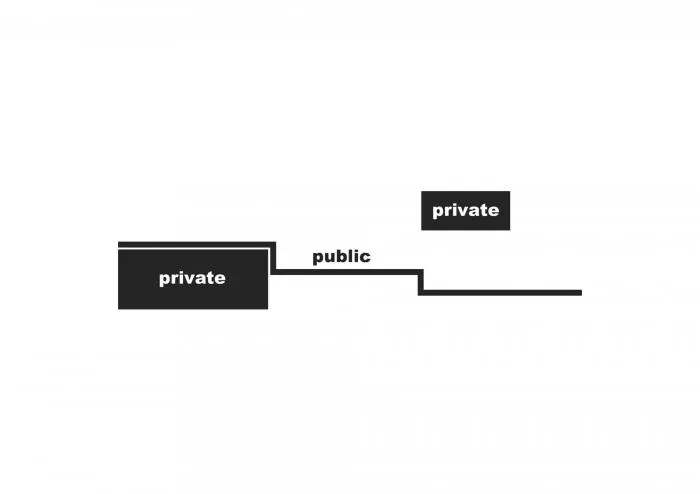
△ Analysis chart
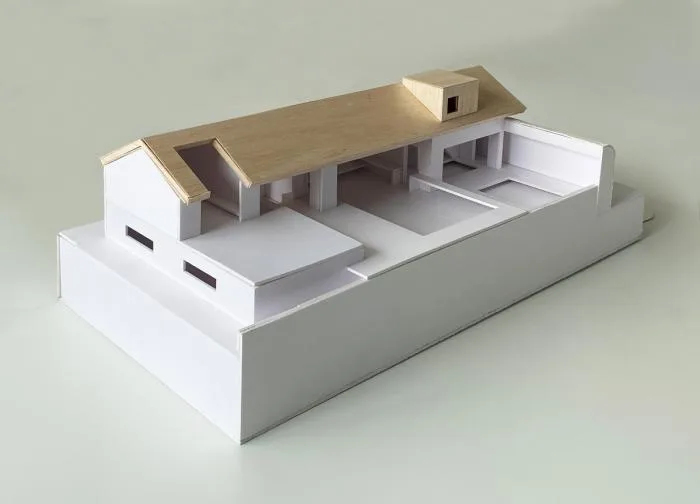
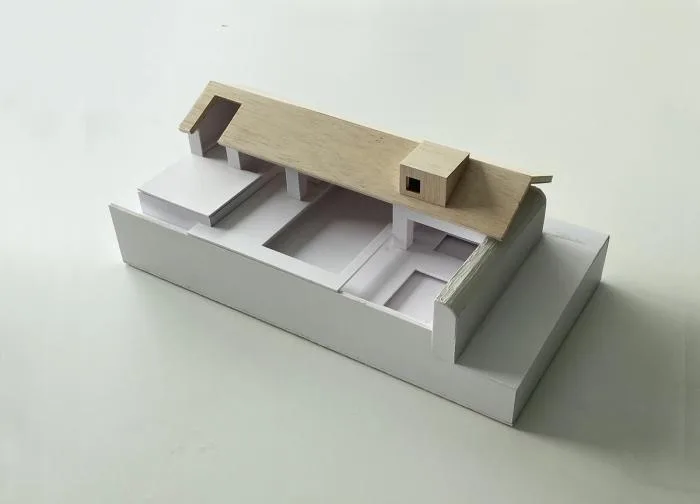
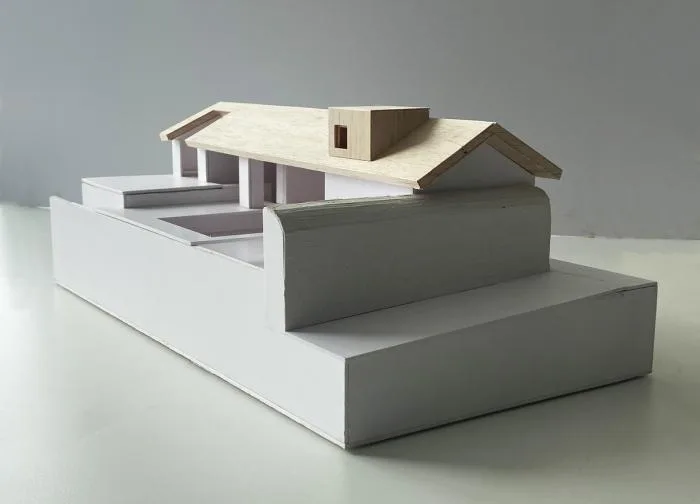
△ Model
As with our other projects, this design explores the concept of coherence. If we set aside traditional ideas of “levels,” “rooms,” and “furniture,” can the entire house be understood as a single, coherent, and evolving terrain? The movements of people across this mountainous landscape physically mirror the area’s form and psychologically evoke a timeless experience unique to this place.
Design Drawings
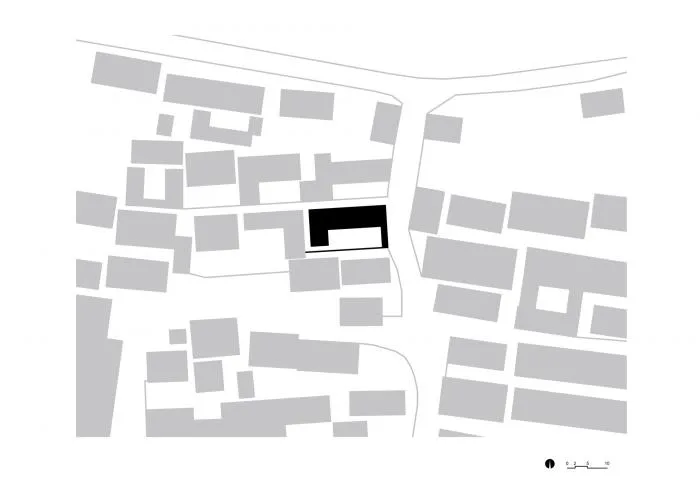
△ General layout plan
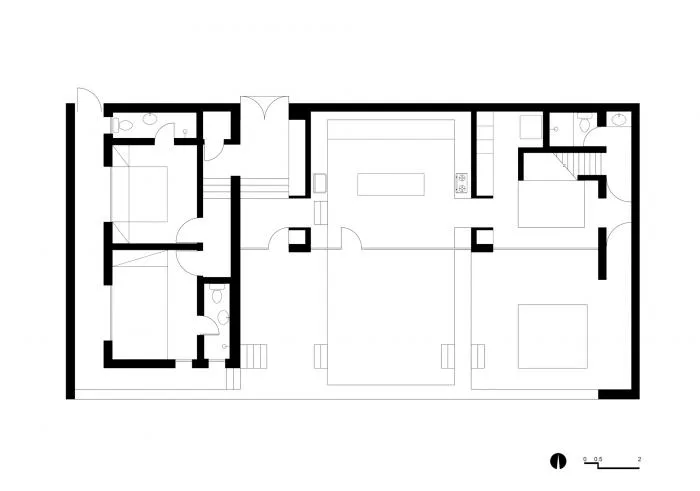
△ First floor plan
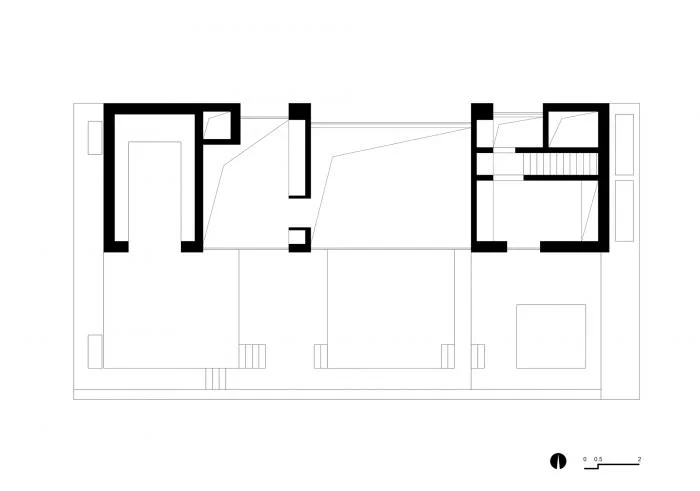
△ Attic floor plan
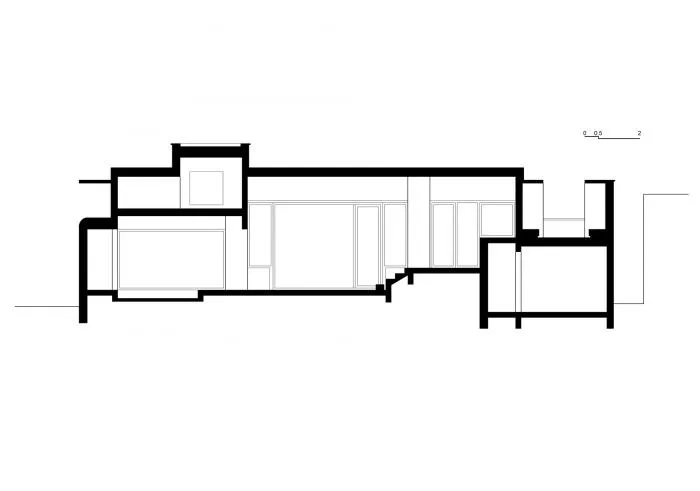
△ Section diagram
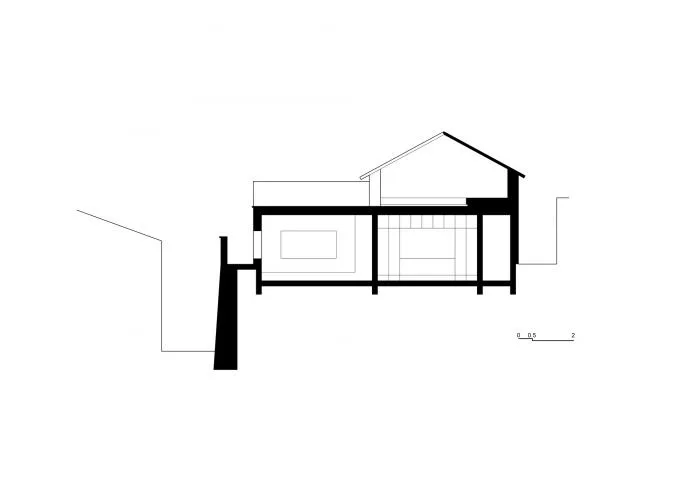
△ Section diagram
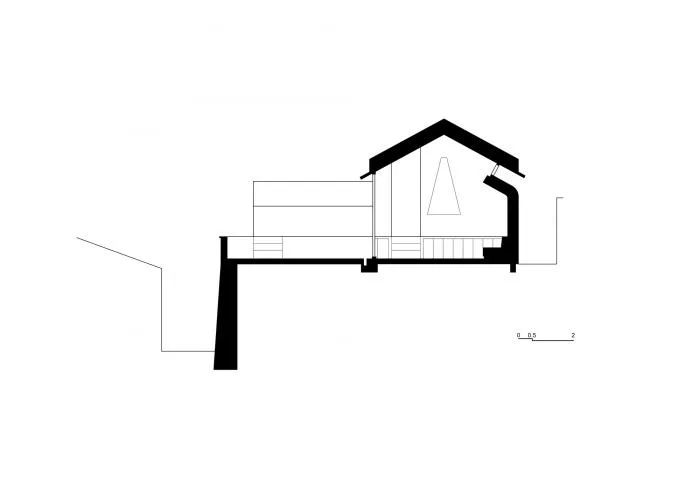
△ Section diagram
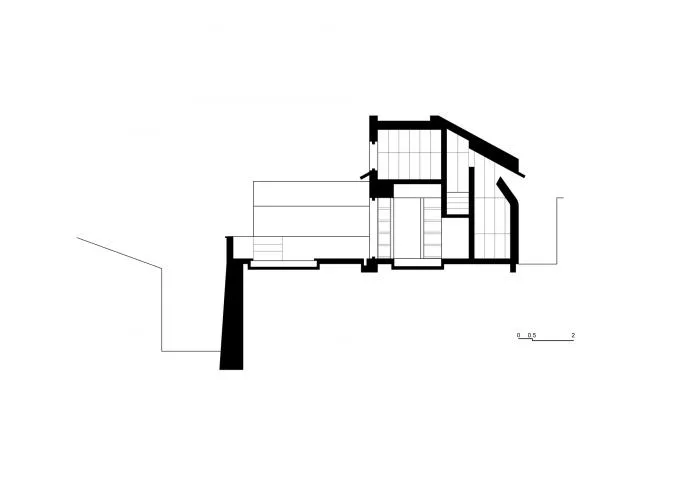
△ Section diagram
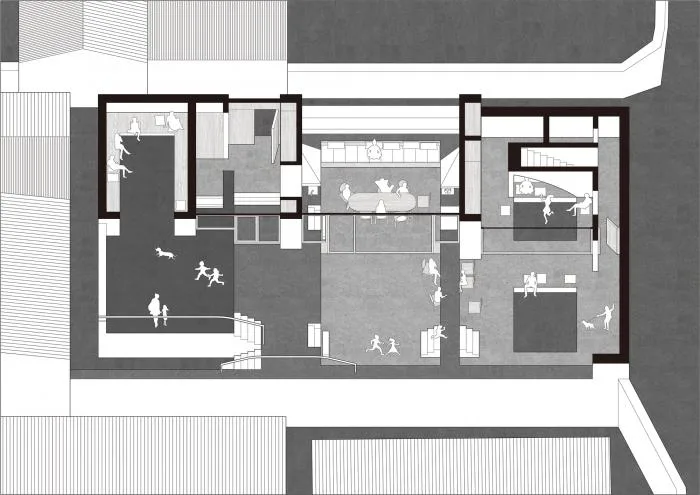
△ Perspective view
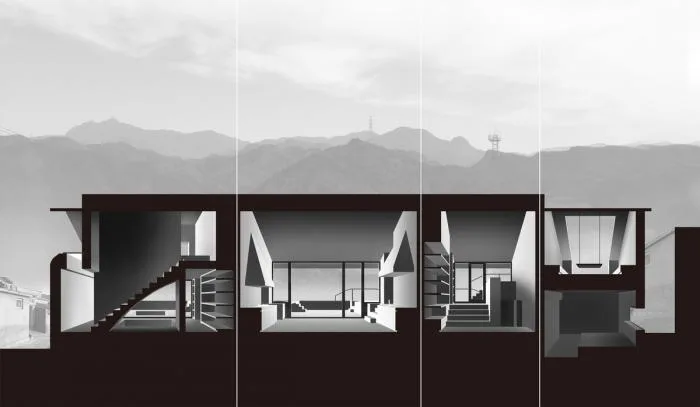
△ Sectional perspective
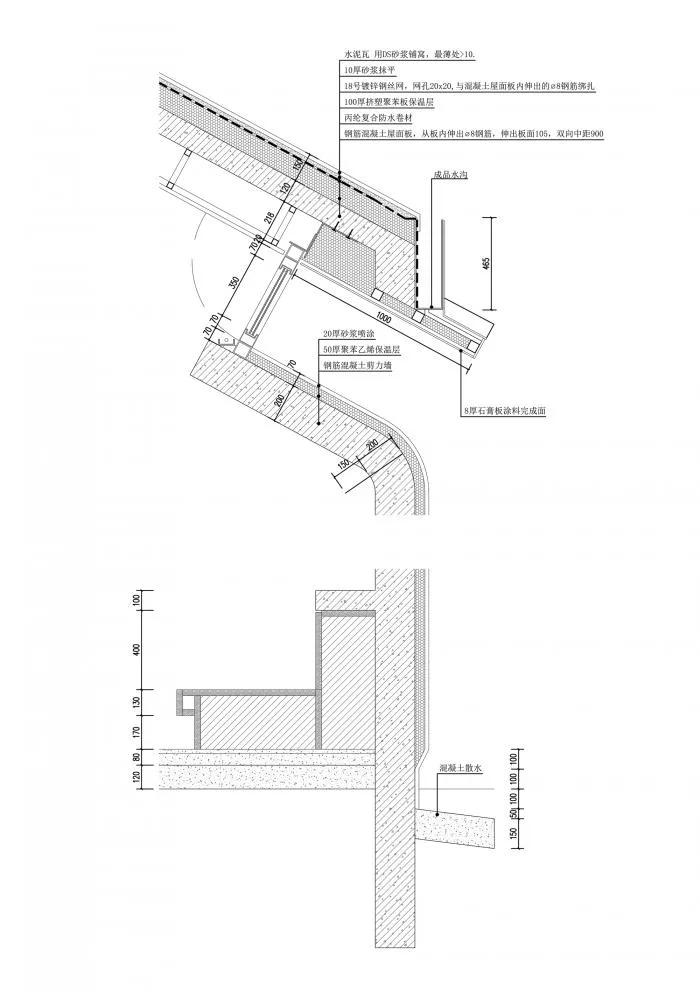
△ Node details
Project Information
Project type: Independent residential building
Location: Beijing, China
Designer: Cha She Office
Area: 156 m²
Year: 2020
Photographers: Cheng Zhi, Zhu Yumeng
Manufacturer: DONGFANG JINGRAN BUILDING DECORATION, DONGFANGGANG INTERNATIONAL WOOD INDUSTRY CO. Ltd.
Lead architect: Cheng Zhi
Design team: Cheng Zhi, Zhang Youjiang, Song Ruiming
Client: Li Meng












Must log in before commenting!
Sign Up