
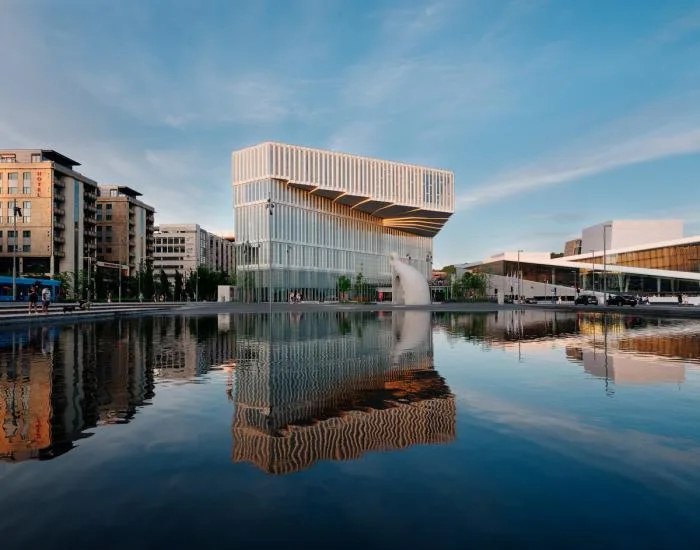
In 2009, the architectural firms Lund Hagem and Atelier Oslo jointly won the international design competition for the new Oslo Library. The competition aimed to create a modern library equipped with innovative facilities. The winning proposal focused on crafting a unique environmental experience through open spatial design, inviting visitors to discover unexpected corners throughout the library.
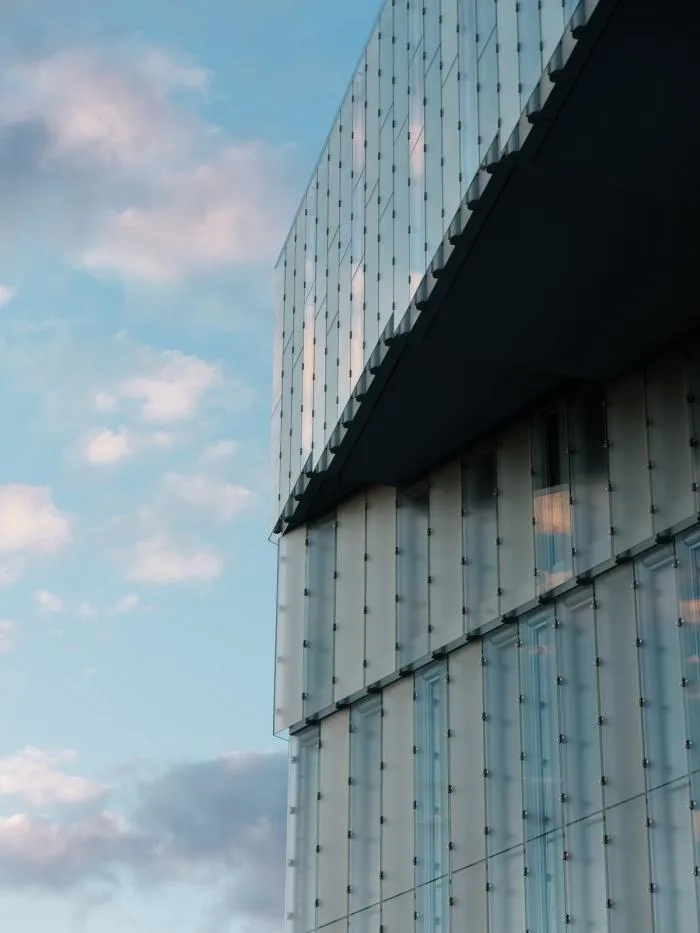
Given the relatively limited site area, the architects avoided stacking too many floors by incorporating cantilevered structures. The library’s first floor extends over the east side of the road, while the fourth floor rises 20 meters above ground, naturally shielding the entrance. Despite the prominent overhangs, the design thoughtfully considers the relationship with the adjacent Oslo Opera House. A specially designed geometric structure supports the cantilever’s underside, ensuring necessary structural integrity.
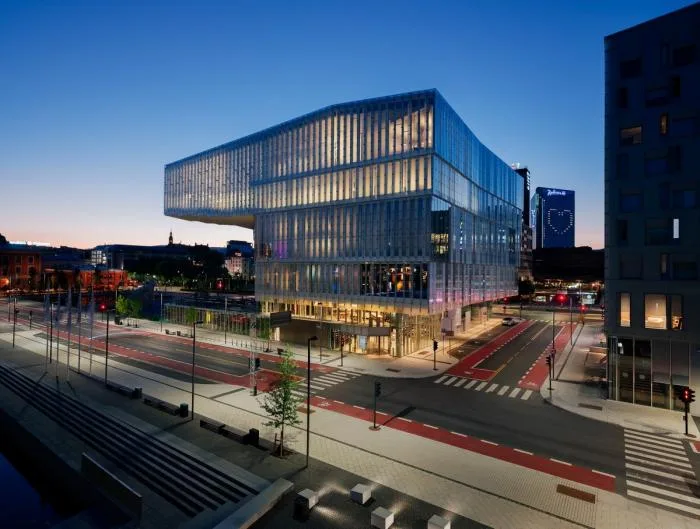
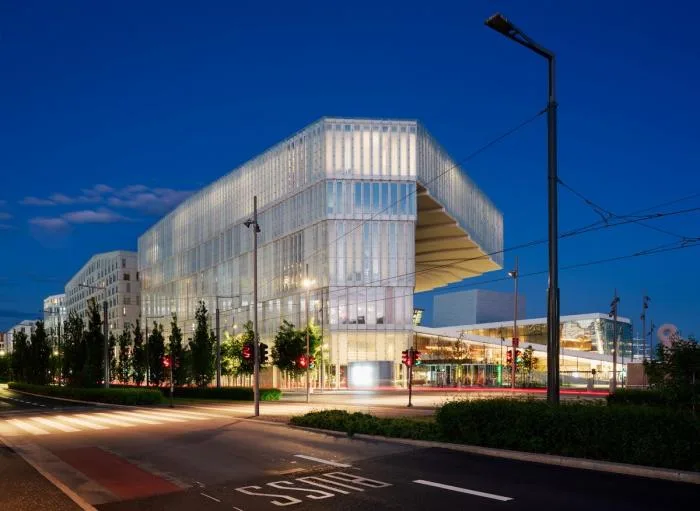
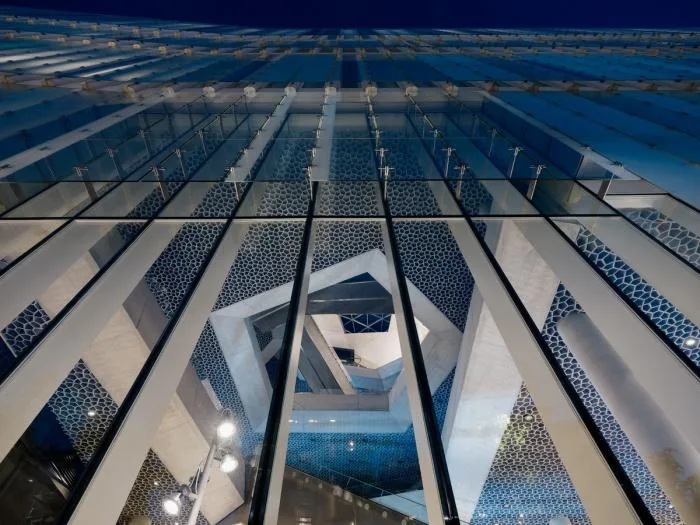
The ground floor facade is designed to be fully transparent, promoting openness and connecting the library with its urban surroundings. The architects established three entrances, each oriented differently to create distinct diagonal axes that offer visitors varied visual experiences. These entrance axes correspond with skylights that illuminate the interior courtyard, enhancing natural light distribution.
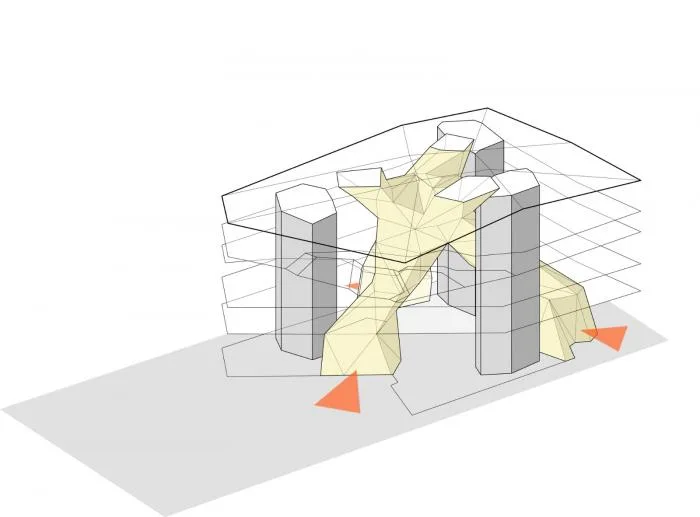
Analysis of Entrance Optical Axes and Core
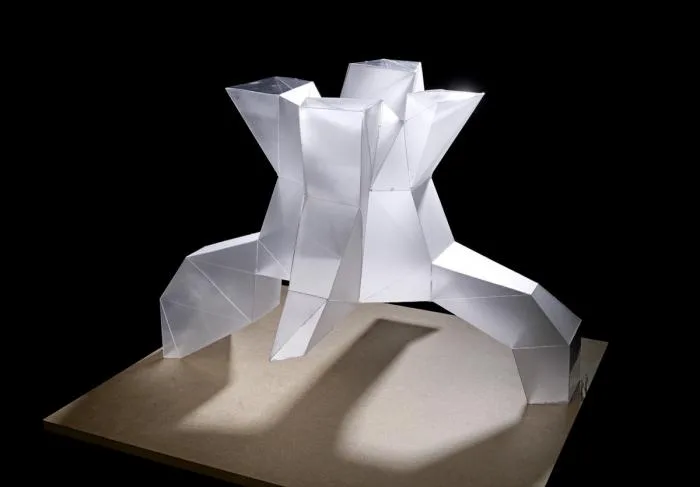
△ Conceptual model of optical axes
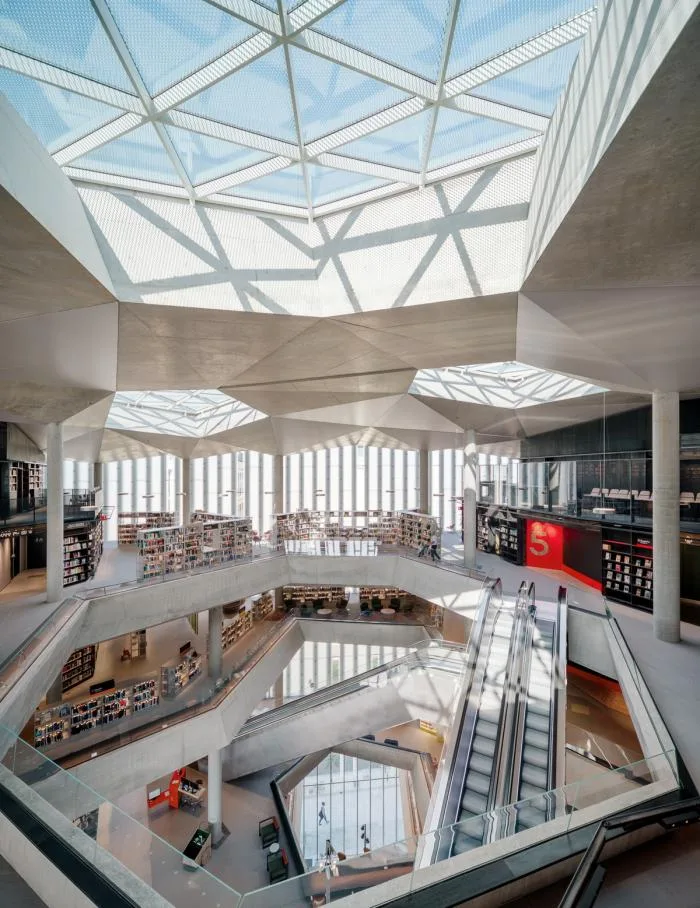
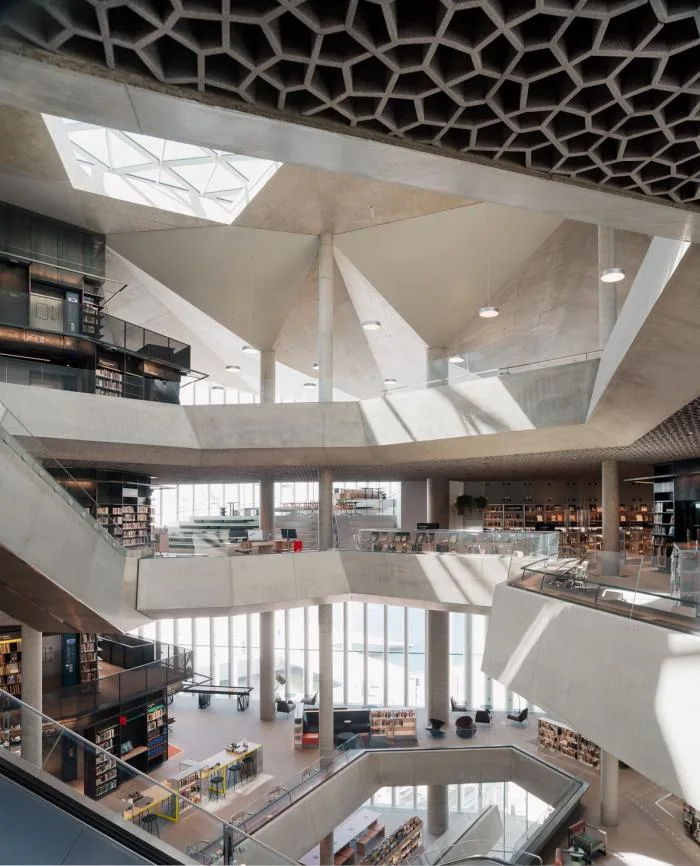
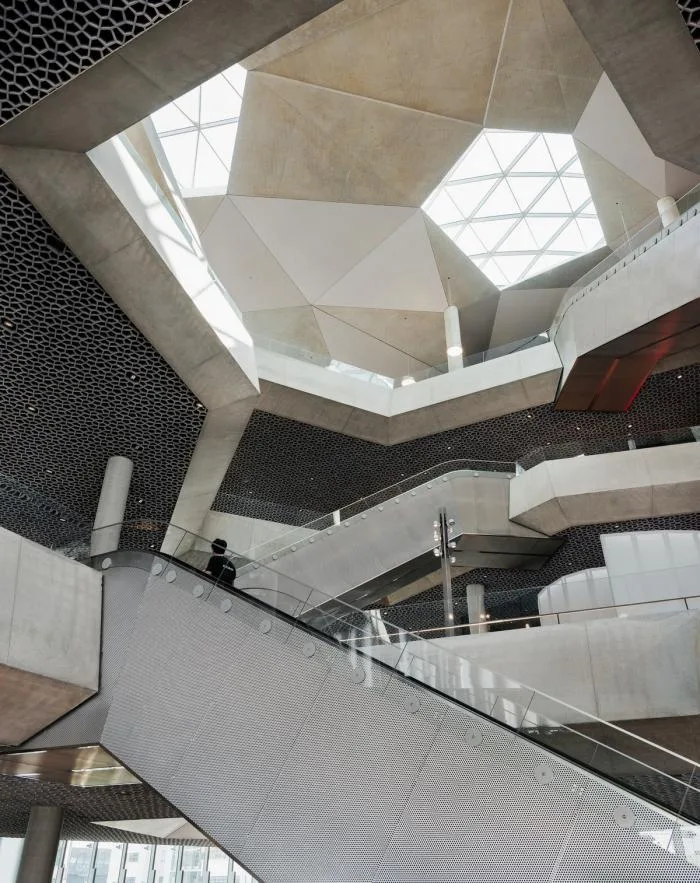
Inside, an open public space accommodates various furniture displays and activities. Enclosed spaces and niches are arranged around three freestanding bookshelves, allowing sunlight to penetrate every corner through the facade’s design.
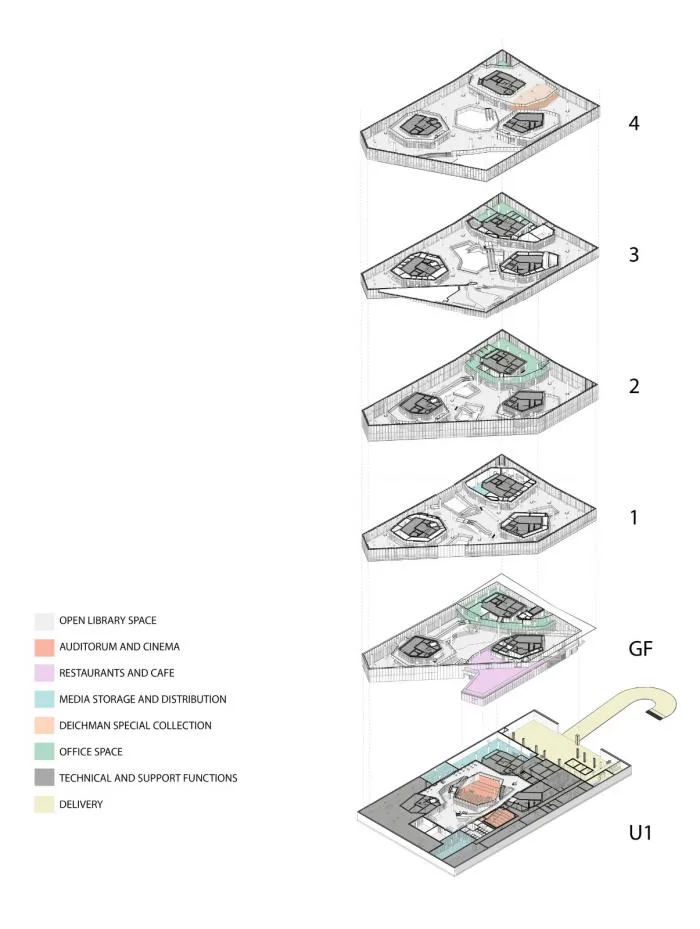
△ Axonometric diagram
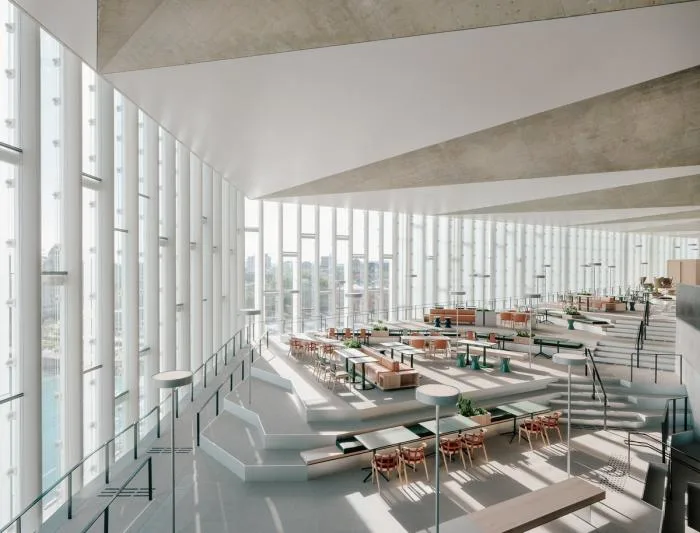
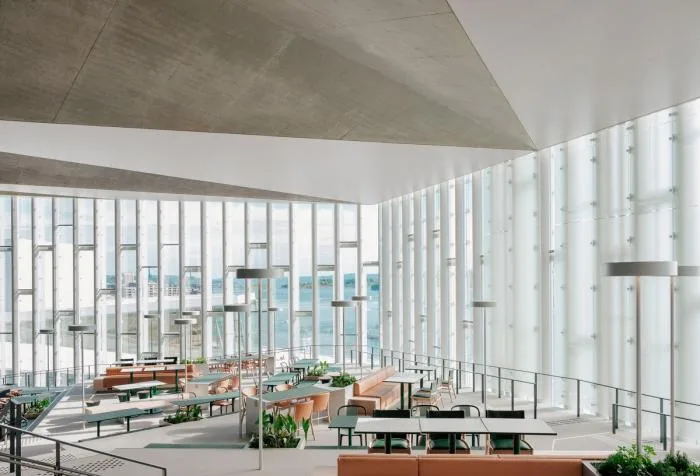
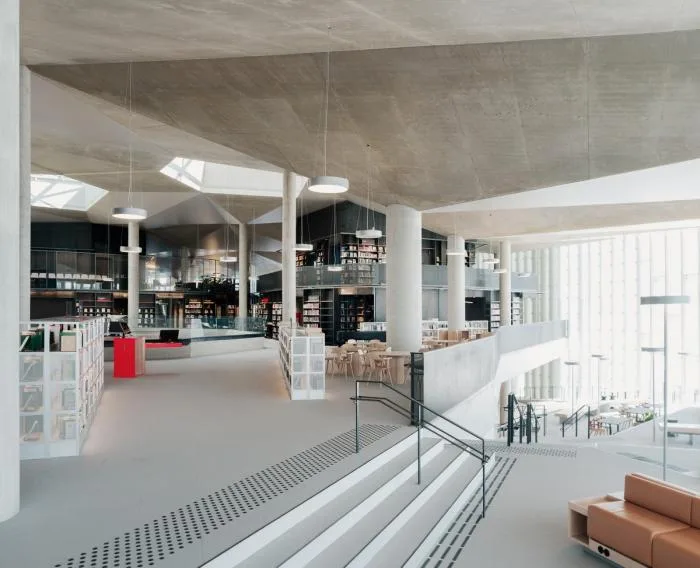
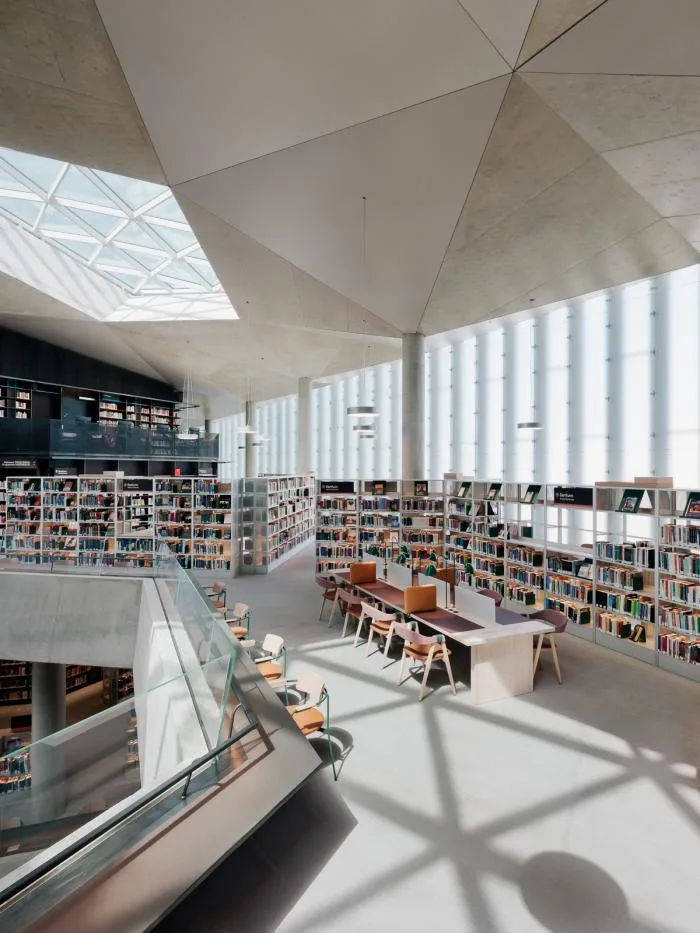
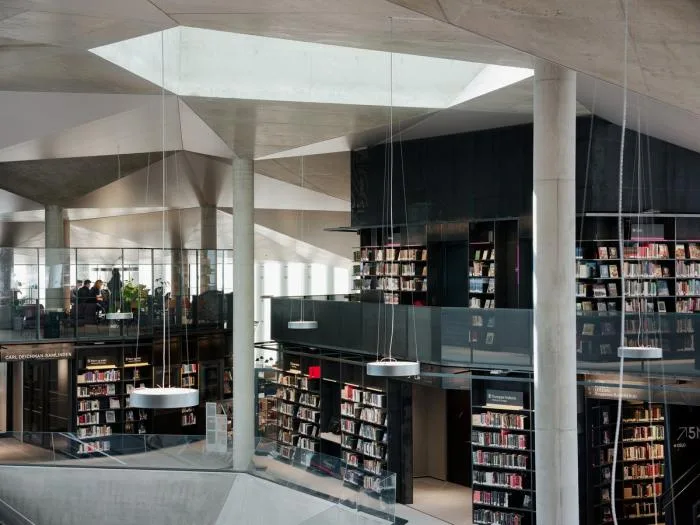
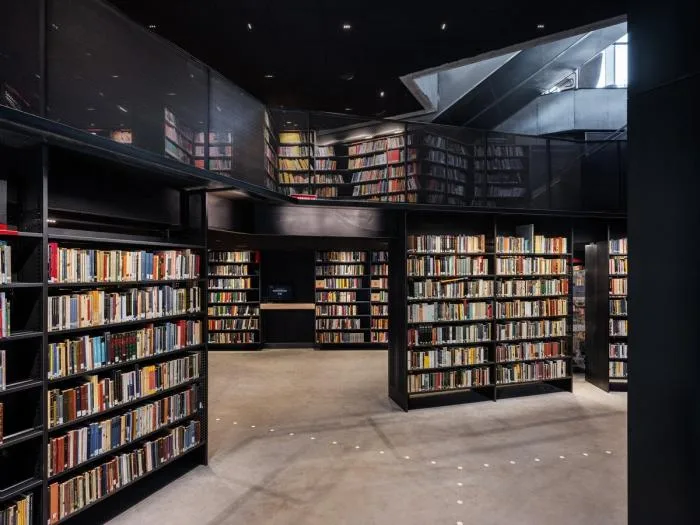
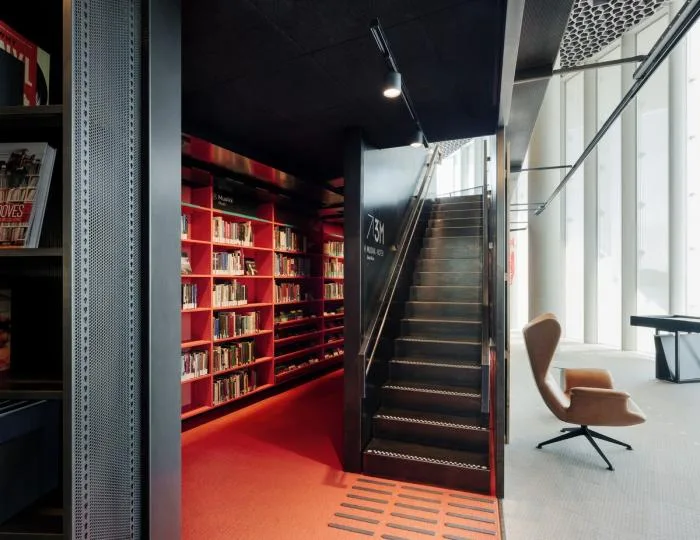
The enclosed spaces and niches are versatile, suitable for temporary exhibitions and various display needs. The architect employed bright, lively colors here, contrasting with the neutral tones used in open public areas. Concrete near the entrance light well adds a distinctive character to the library’s interior.
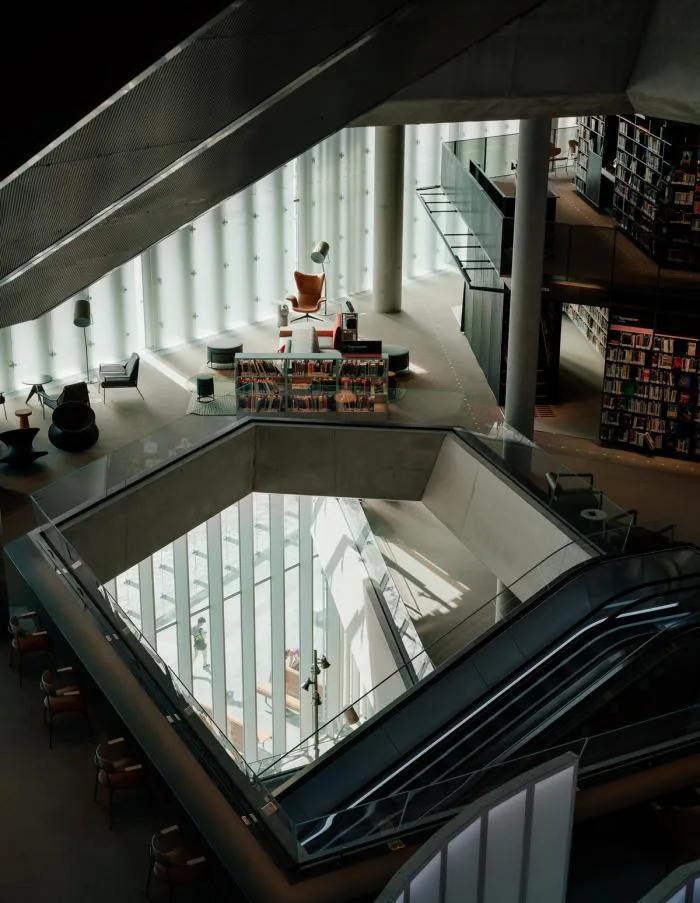
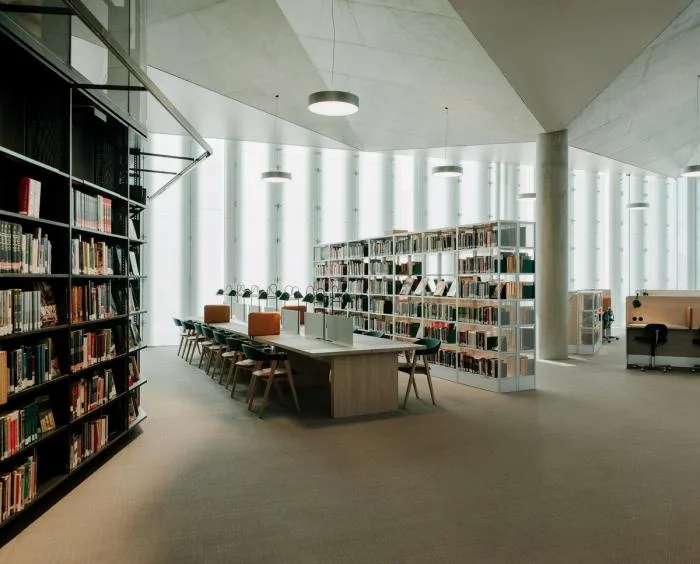
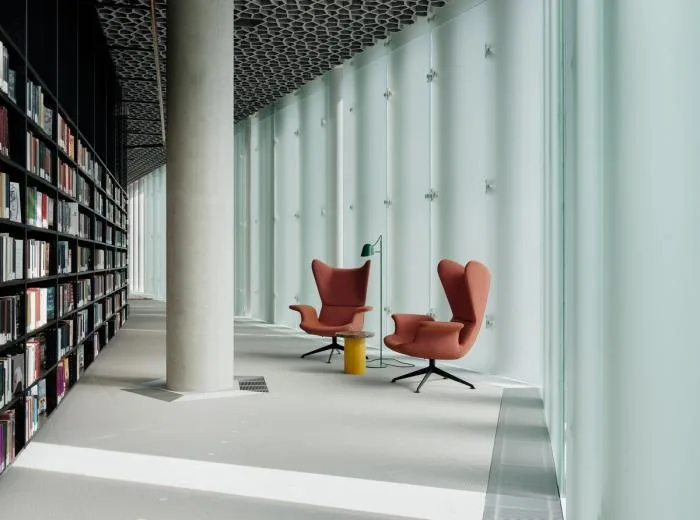
Beyond thermal insulation, the facade design balances adequate natural lighting through alternating insulated panels and glass. This approach filters soft daylight into the interior. The facade can also be closed at specific times to accommodate internal events. The panoramic corner window offers visitors unique views from multiple perspectives.
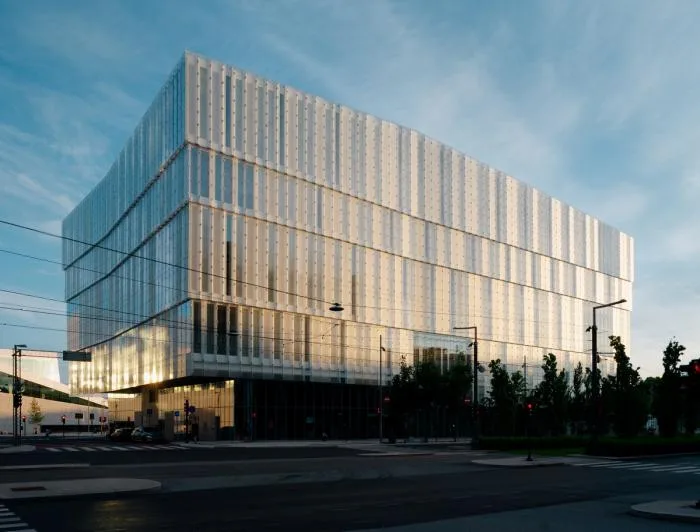
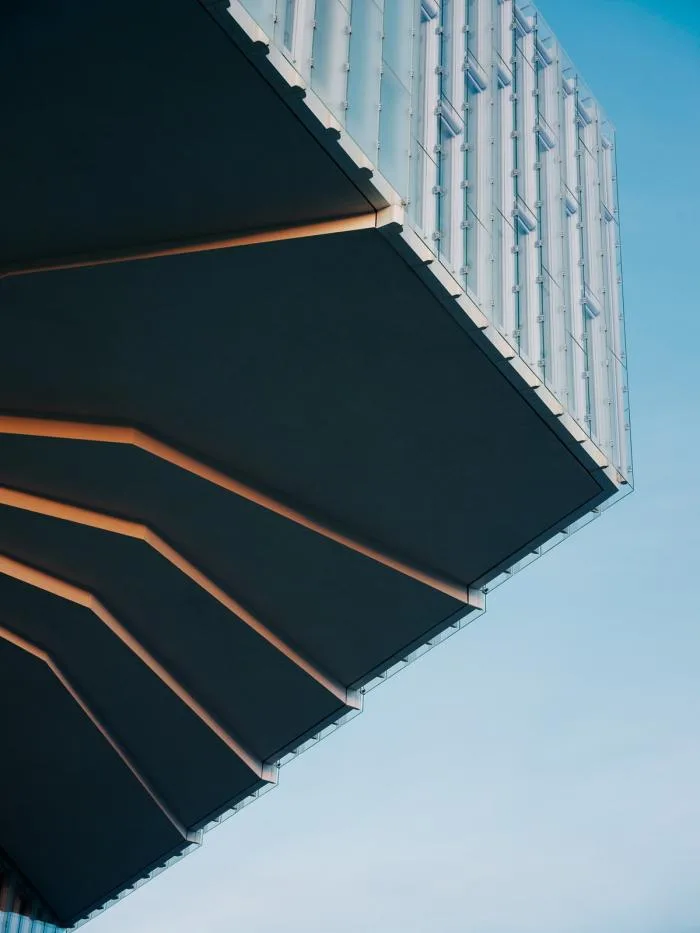
Overall, the Deichman Library exemplifies environmentally conscious architecture. Through innovative facade design, ventilation strategies, and material choices, the architects have created a distinctive and sustainable public space.
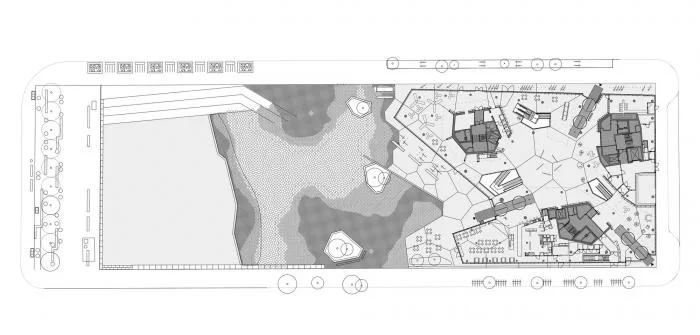
△ First floor plan (scale 1:500)
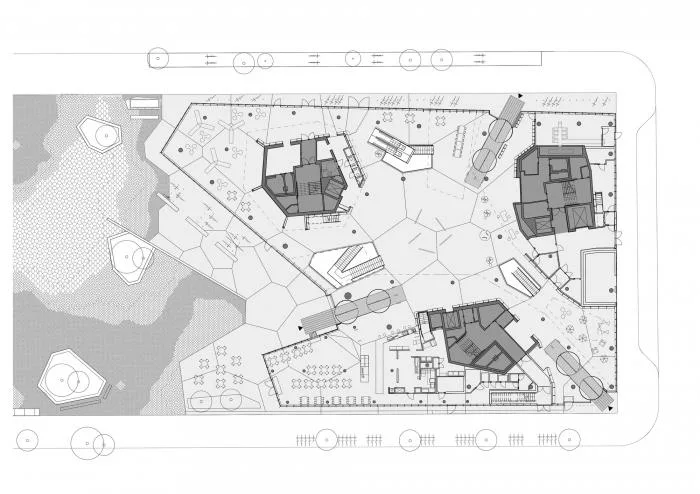
△ First floor plan (scale 1:250)
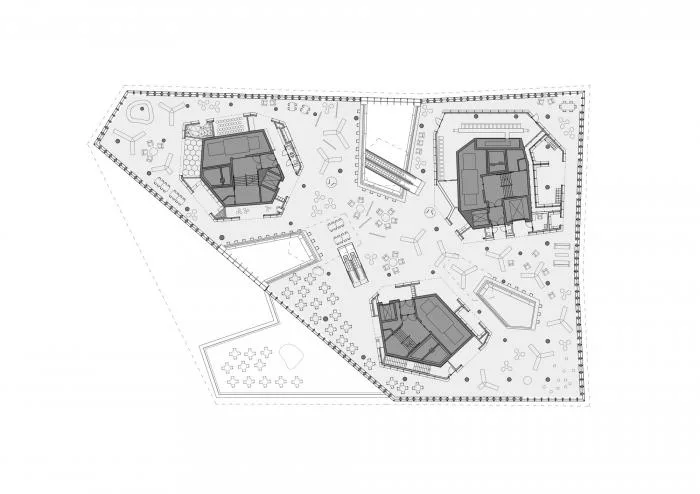
△ Second floor plan
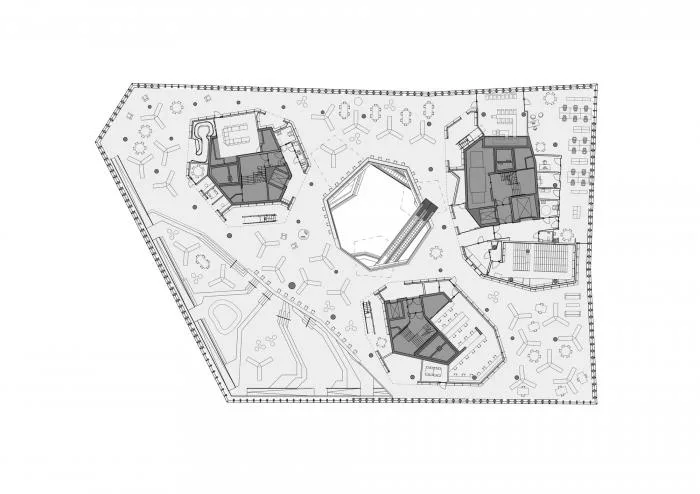
△ Fourth floor plan
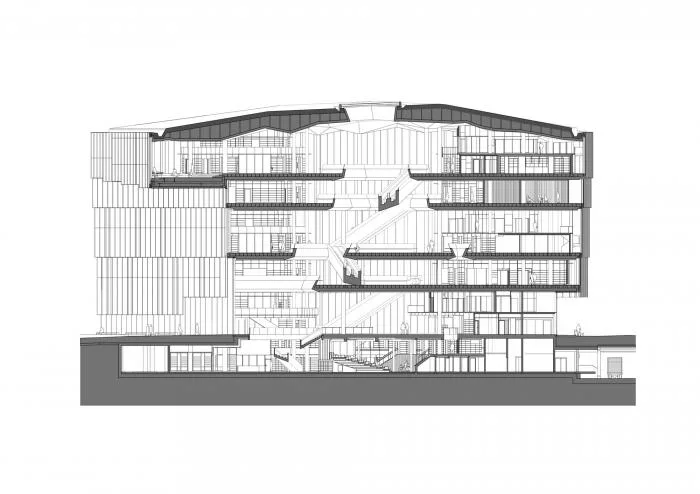
△ Section diagram
Project Information
Project Type: Library
Location: Sentrum, Norway
Architects: Atelier Oslo, Lund Hagem
Area: 19,600 m²
Year Completed: 2020
Photographer: Einar Aslaksen
Interior Designer: Scenario
Project Management: AFRY Advansia
Structural Engineers: Bollinger Grohman and Multiconsult
Project Consultants: Multiconsult, COWI, Rambøll, Asplan Viak/Kan Energi
Exterior Contractor: SKANSKA
Facade Contractor: Roschmann Group
Interior Contractor: AF Byggfornyelse














Must log in before commenting!
Sign Up