
Prologue
The 2019 Beijing International Horticultural Expo has successfully concluded. During the event, we constructed a waterfront pavilion called “Yanbo Xiaozhu,” situated by Guixi Lake. This space was designed for visitors to pause, relax, and appreciate the park’s scenic beauty, while also embodying and innovating traditional cultural and artistic values.
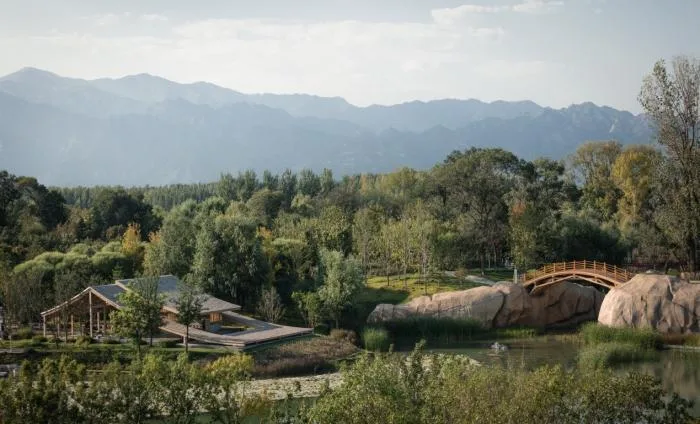
The site gently slopes along the lakeshore, enveloped by lush forests and separated by water. It neighbors the park’s centerpiece, the China National Pavilion. From the second-floor terrace of the pavilion, looking northward reveals distant mountains and lakes framed by layers of forested peaks. Visitors dispersed among the lake’s islands resemble figures in a dynamic classical Chinese landscape painting. Inspired by the traditional Chinese spatial concept, we drew from the works of the master artist Dong Yuan, who portrayed mountains, rivers, forests, pavilions, and boats hidden within his paintings. This led us to develop an artistic design strategy centered on “walking, observing, living, and traveling.”

Dong Yuan (Five Dynasties) – “Waiting to Cross at Xiajingshan Pass”
Regarding the architectural concept, the World Horticultural Expo management emphasized the viewpoint from the north terrace of the China Pavilion’s second floor. From this vantage, the waterfront buildings should blend naturally with the surrounding forest, islands, bridges, and pavilions, while also harmonizing with the distant sea and mountain ranges. Achieving this seamless integration with nature was our design goal. We sought a locally inspired solution guided by the philosophy of natural construction.

Distinctive Roof Design for the World Horticultural Expo
The most imaginative element of traditional Chinese architecture undoubtedly lies in its gardens. Gardening, calligraphy, and painting share a common origin. Rather than isolated structures, gardens are interconnected environments where mountains, water, trees, stones, and buildings borrow from one another, creating independent yet harmonious elements that engage in a continuous dialogue.
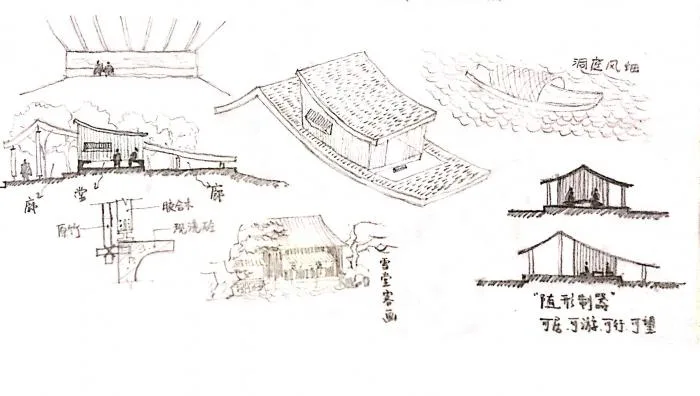
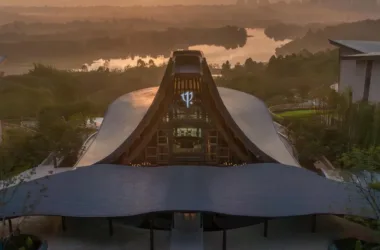
Our design reflects this philosophy by drawing inspiration from the double-sloped roofs found in traditional Chinese landscape paintings. We created a seemingly ambiguous roof that blankets the site like a hillside beside the water, forming a pattern of interlocking ponds. The mountain-facing wall is fully open, revealing a circulation path beneath the building that guides visitors through four distinct spaces: forests, courtyards, bamboo halls, and terraces. From across the lake, visitors appear to enter from their homes, journey through the mountains, and arrive at the water’s edge—immersed in an experience of walking, observing, living, and sailing. The architecture is at once a mountain and not a mountain, a house and not a house, engaged in a dialogue with nature to carve out its own place.
The building is positioned on a slope facing the main road with a standard eaves height, while another slope faces the lake, where the roof extends almost to ground level over the water. The eaves’ height resonates with the distant charm of Yongning Pavilion and the nearby Guiyu Lake.
Wood and Bamboo Construction with Custom Tools
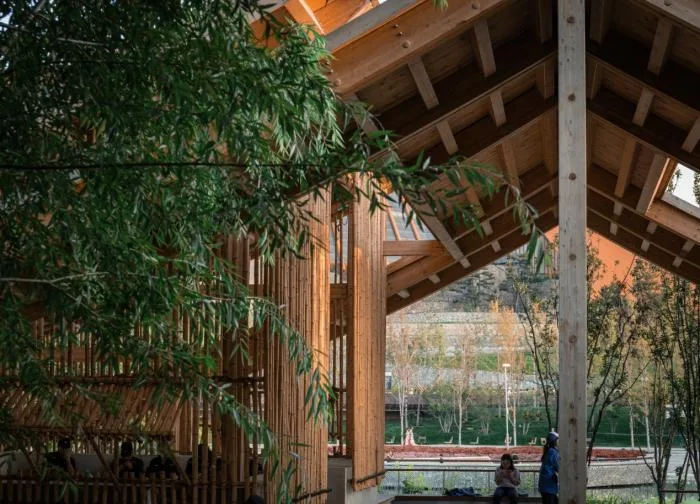
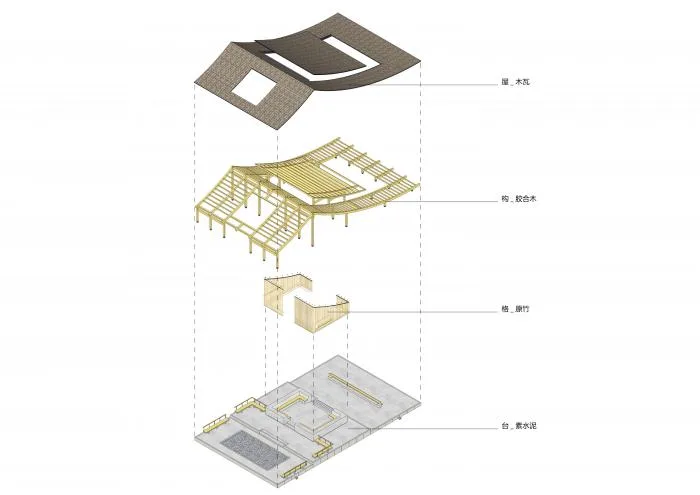
The pavilion’s materials were carefully chosen from natural sources such as wood and bamboo, forming three main architectural elements: wooden frames, bamboo walls, and wooden tile roofs. The structure uses a heavy timber system, leveraging modern glued laminated wood to prevent roof buckling. Beams and columns were prefabricated in the factory and assembled on site to meet the expo’s tight schedule.
Bamboo walls extend from all four sides of the concrete platform, wrapping the space like delicate bamboo curtains. This creates a contrast between the shaded interior under the expansive roof and the bright outdoor environment, allowing the scenery of Linjing Lake to blend visually with the bamboo walls. A modern roofing technique—using wooden boards with waterproof layers and hanging wooden tiles—reduces the roof’s weight compared to traditional methods that use mortar and green tiles, resulting in material savings and a lighter structure.
The construction materials and tools were adapted to the site’s specific needs, outlining the pavilion’s simple and relaxed character with just a few refined strokes.
Peaceful Refuge Amidst the Crowd
Following the Expo’s opening, tens of thousands of visitors flocked to the park daily. The China Pavilion by Guixi Lake, Yongning Pavilion Flower Sea Terraces, and Guixi Theater create a bustling scenic route around the lake. From the second-floor terrace of the China Pavilion, visitors step into the “Yanbo Small Building” and disappear beneath its roof, seemingly detached from the surrounding activity. This creates a tranquil and leisurely atmosphere amid the lively World Horticultural Expo.
At times, standing on its platform, visitors witness the pavilion’s curved, low-hanging form evoke the timeless image of “waiting to cross the mountain pass.” Nestled between the distant mountains and the nearby water, the pavilion resembles a boat or house, gently embracing the waves like a scene from a painting.

△ Concept Sketch
△ Axonometric Diagram
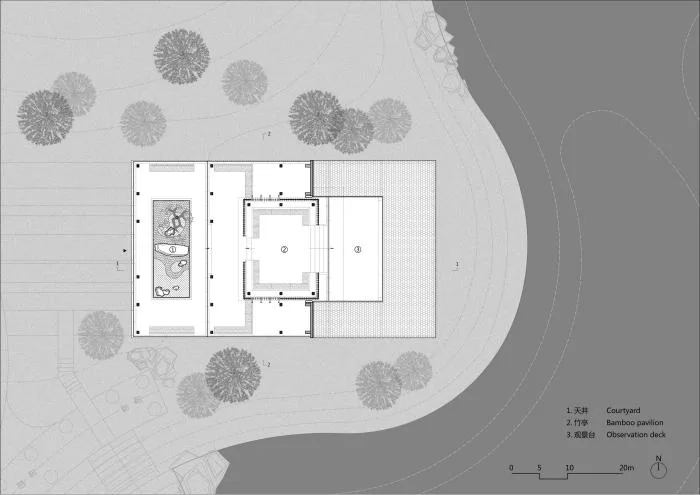
△ Plan View
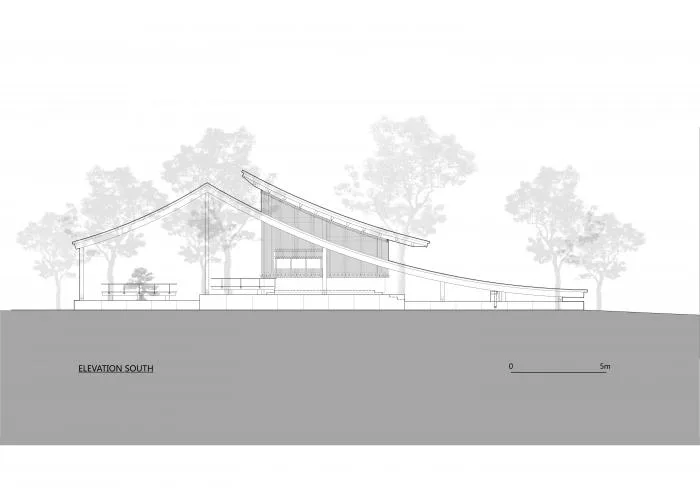
△ South Elevation View
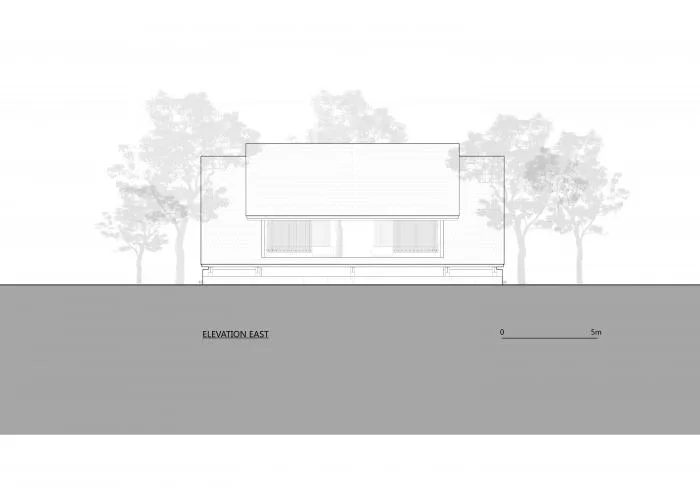
△ East Elevation View
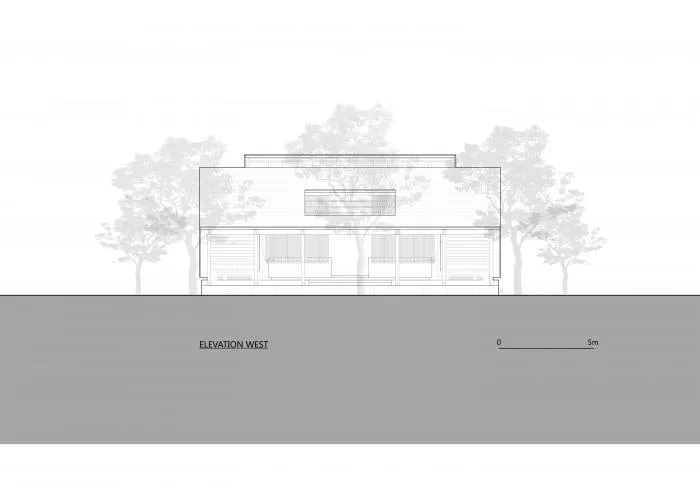
△ West Elevation View
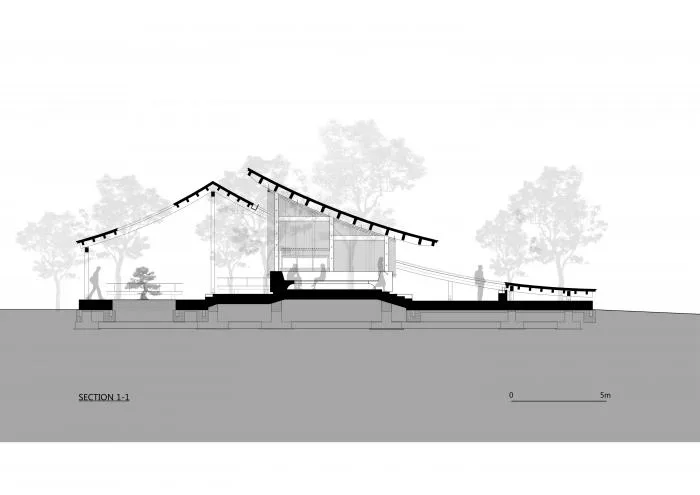
△ Section 1-1
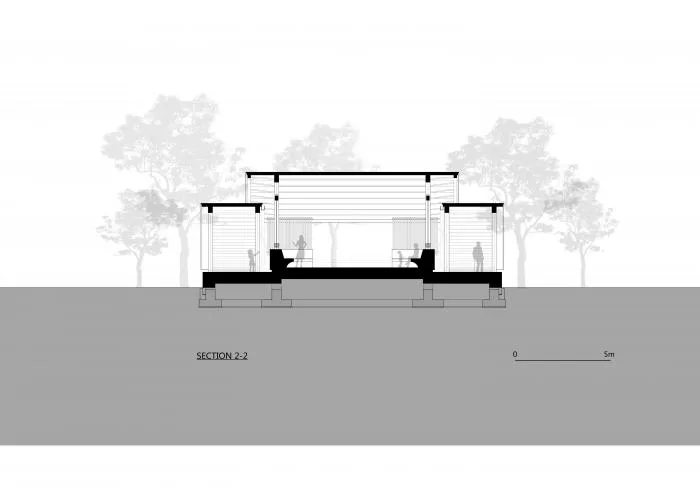
△ Section 2-2
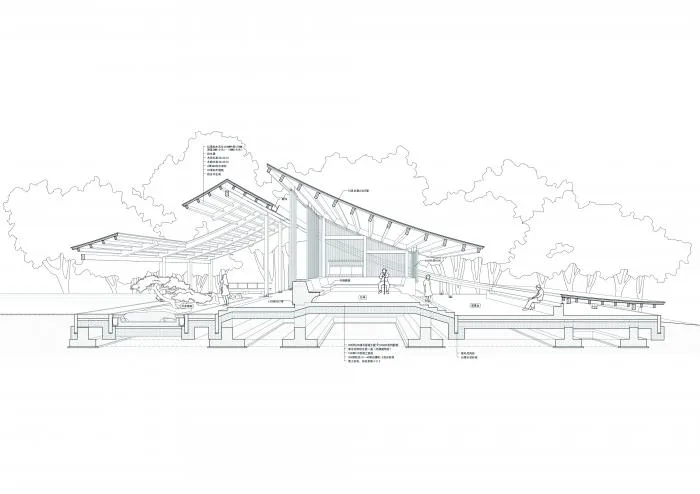
△ Sectional Perspective View
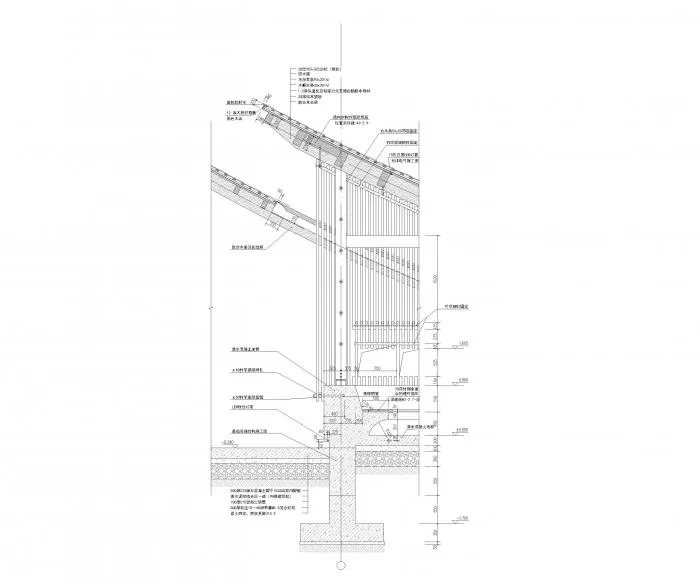
△ Node Details
Project Information
Project Name: “Yanbo Xiaozhu” at the 2019 Beijing International Horticultural Expo, China
Principal Architect: Xing Di
Chief Gardener of the World Horticultural Exposition: Yan Wei
Design Unit: Yan Wei Studio, Beijing Academy of Landscape and Ancient Architecture Design and Research
Design Team: Xing Di, Wang Xing, Hu Zhong, Li Wei, Xia Liangqing, Wang Xian
Structural Design: Tu Zhiqiang
Lighting Design: Li Peiqing, Wang Xing
Creative Support: Ru Shi Architecture (China), Construction Workshop (Japan)
Architectural Photography: Chi Zenglei, Xu Yajing
Project Location: Yanqing World Horticultural Expo, Beijing
Owner: 2019 Beijing International Horticultural Expo Coordination Bureau
Construction Contractor: Beijing Construction Engineering Group
Main Materials: Laminated wood, raw bamboo, plain concrete
Building Area: 420 square meters
Completion Date: April 2019












Must log in before commenting!
Sign Up