
This project involves transforming a three-story old building, located on a nearby street by West Lake, into a Japanese-style restaurant. The material pavilion occupies the second and third floors of the building. While adjacent to the street, it benefits from an independent space that sets it apart. To distinguish it from the surrounding environment and highlight the pavilion’s unique character, we designed a dedicated entrance specifically for the pavilion.
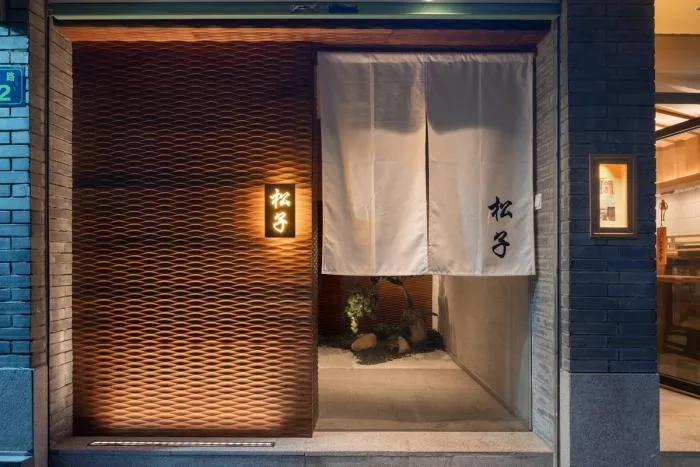
△ Entrance of Material Pavilion
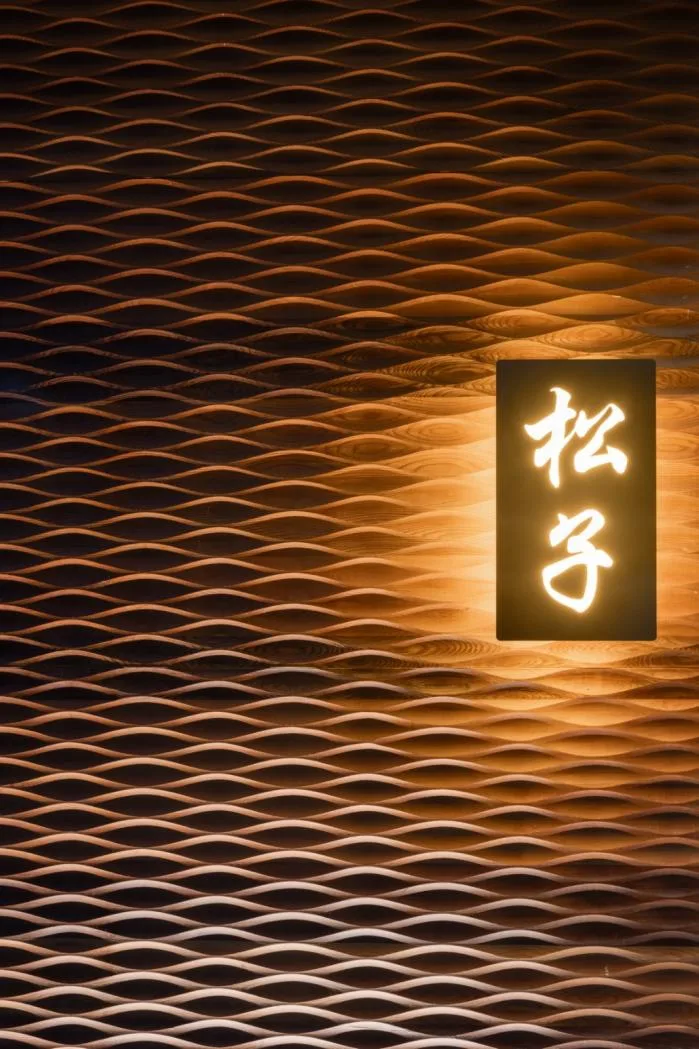
△ Entrance details
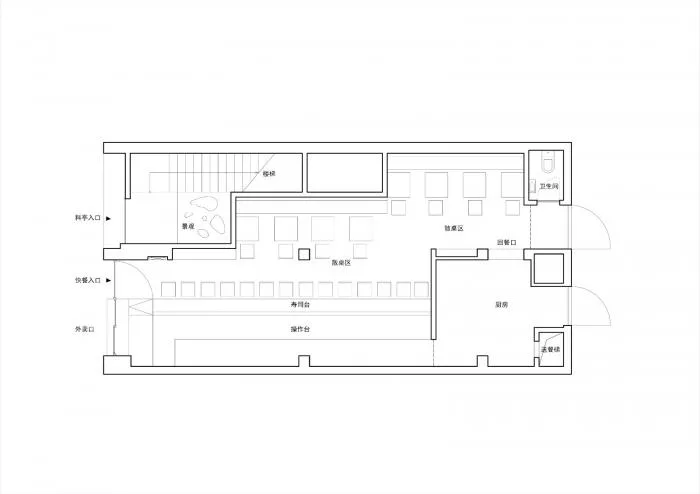
△ First floor plan
The pavilion’s entrance is on the second floor, where the ceiling height is lower, making the entrance wall design crucial to attract visitors. We reinterpreted the traditional Japanese hemp leaf pattern by breaking it down into diamonds and equilateral triangles, then reorganizing these into a double-layer lattice wall. This creates varying visual effects from different angles, while maintaining the hemp leaf pattern as the focal point when seen from the front. Additionally, the shoe cabinet panel features traditional Japanese ‘Mingli’ carving techniques.
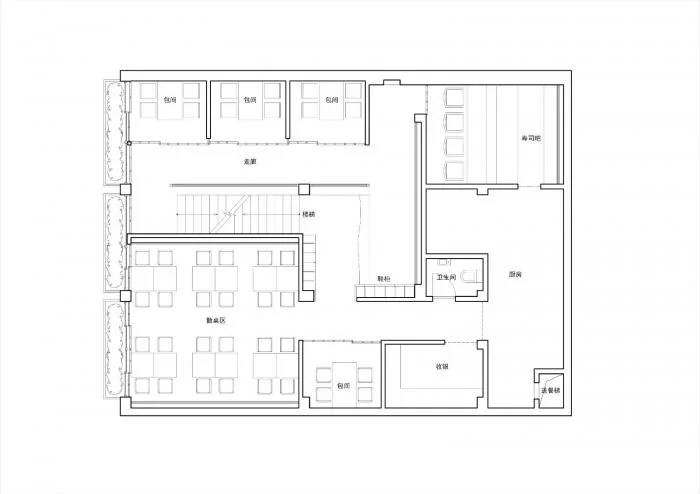
△ Second floor plan
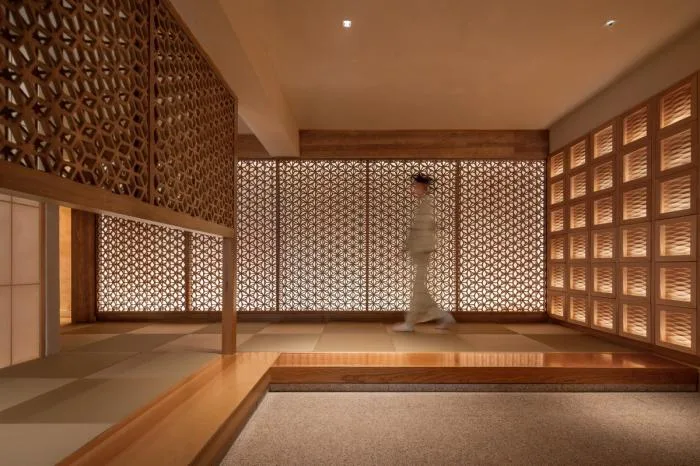
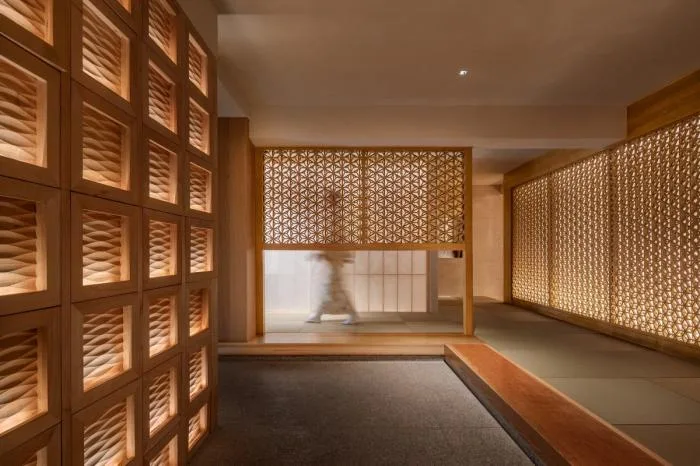
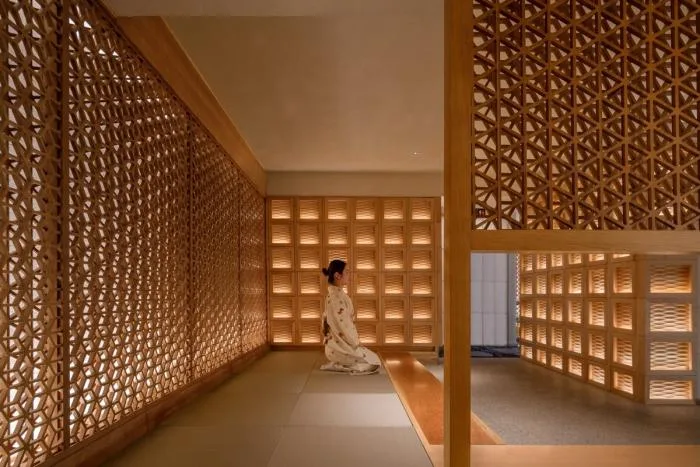
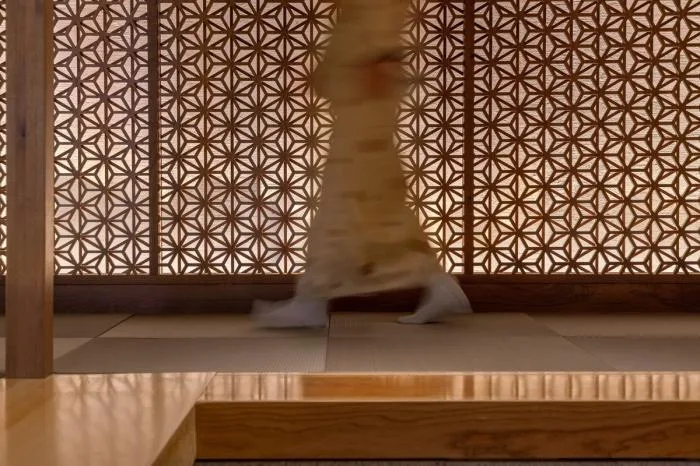
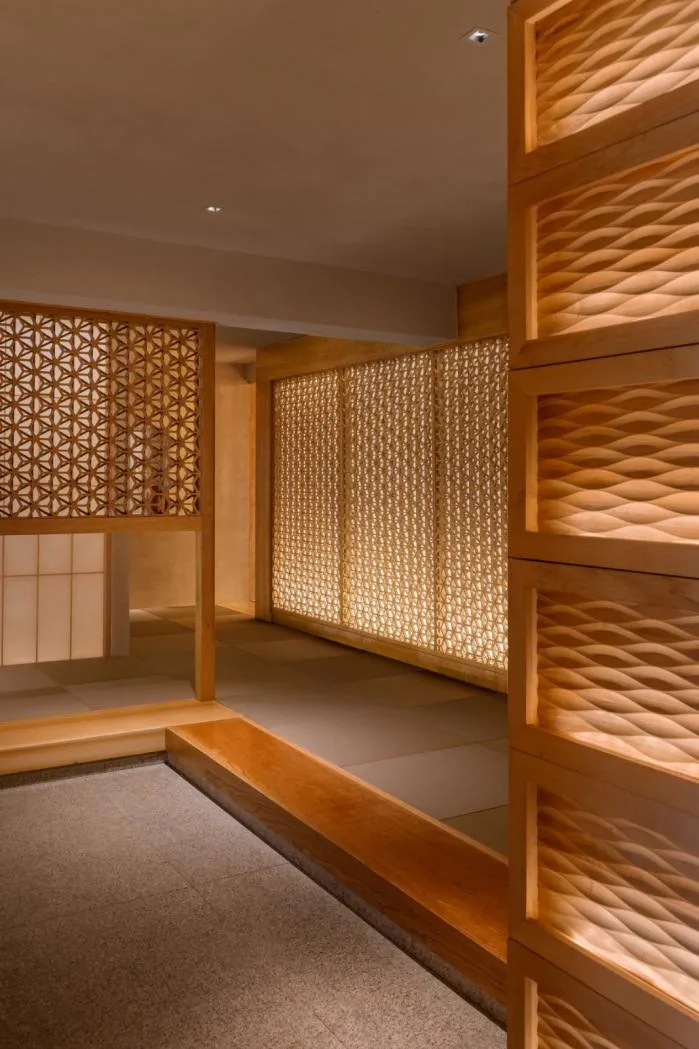
△ Entrance foyer on the second floor
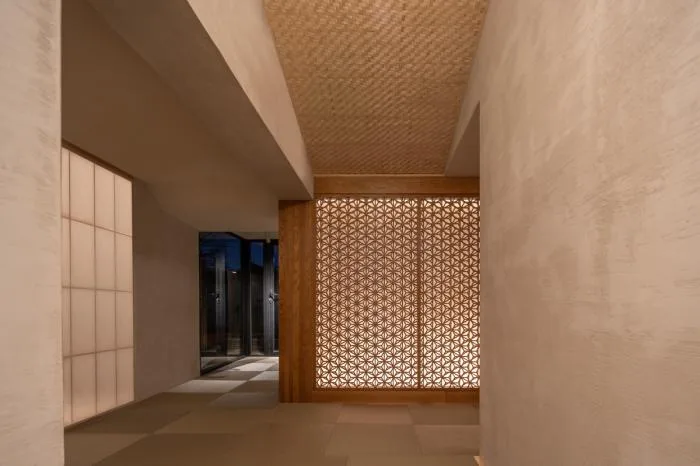
△ Corridor
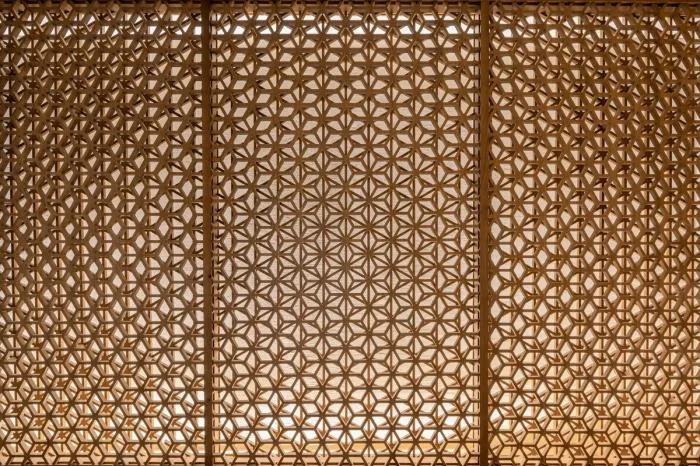
△ Double-layer lattice wall
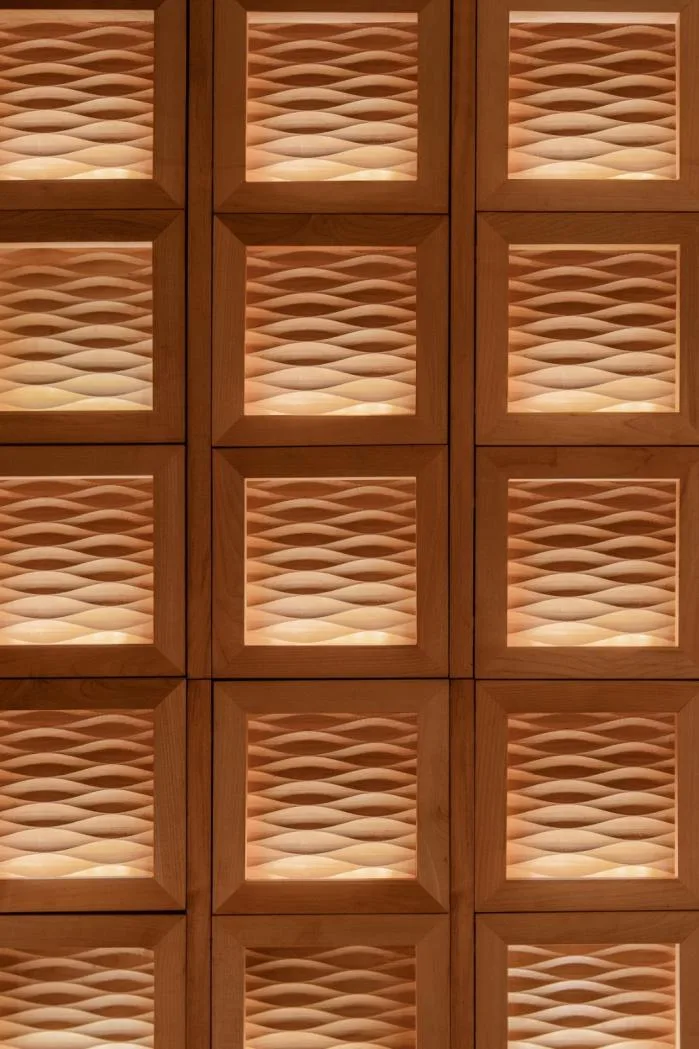
△ Shoe cabinet details
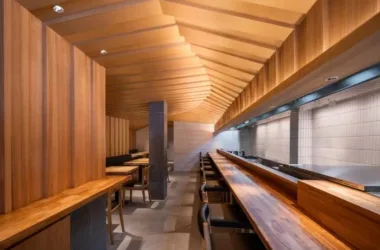
Half of the second floor is dedicated to private rooms and a sushi bar. We incorporated traditional Japanese taiguzhang partitions to ensure privacy while maintaining visual transparency. The other half of the lobby features wooden lattice wall elements on both sides. To balance natural sunlight with shielding the chaotic street views, the entire balcony is planted with greenery and separated by a translucent snow barrier underfoot.
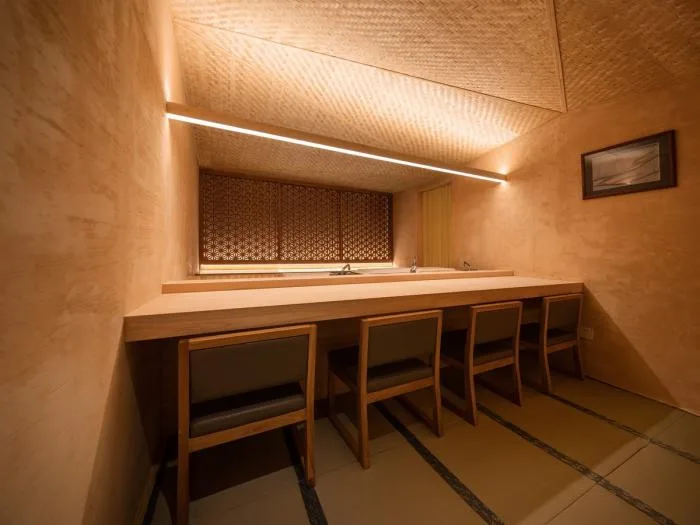
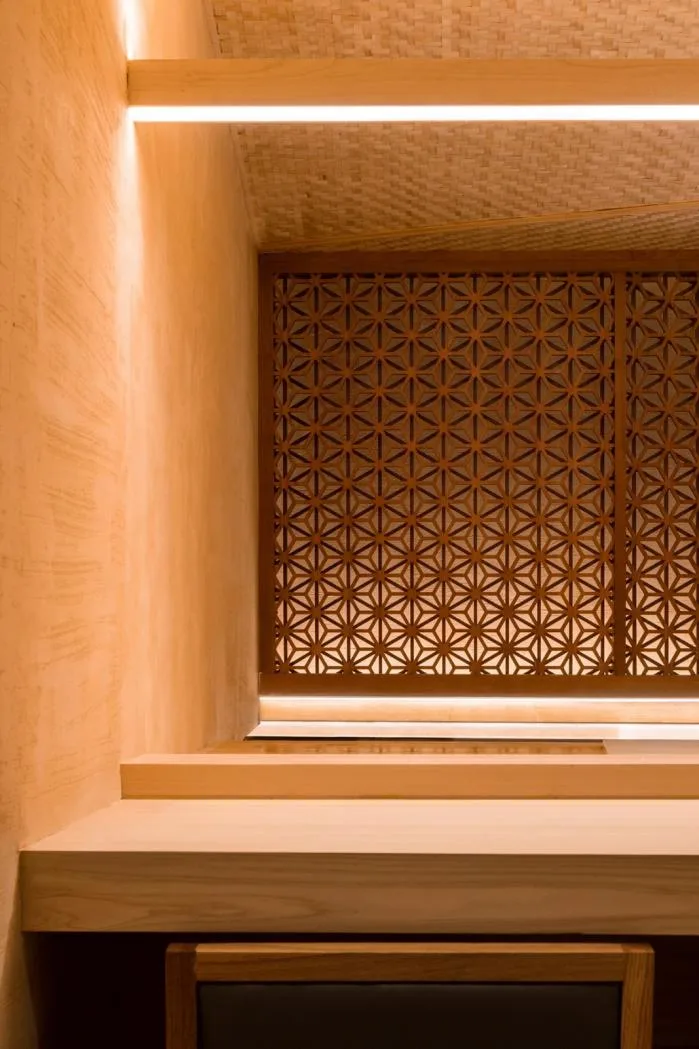
△ Sushi Bar
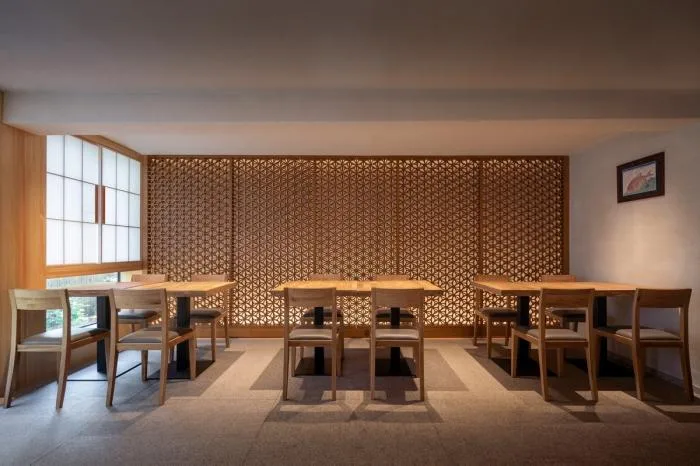
△ Hall
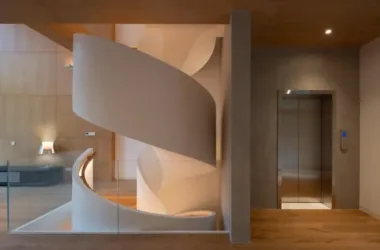
The third floor houses VIP rooms within the material pavilion, providing a quiet and private atmosphere. To take advantage of the triple-height ceilings, we designed decorative cabinets extending from floor to ceiling in each VIP room, complemented by indirect lighting. This design was inspired by Kyoto’s “Shugakukai no miya Kagura”.
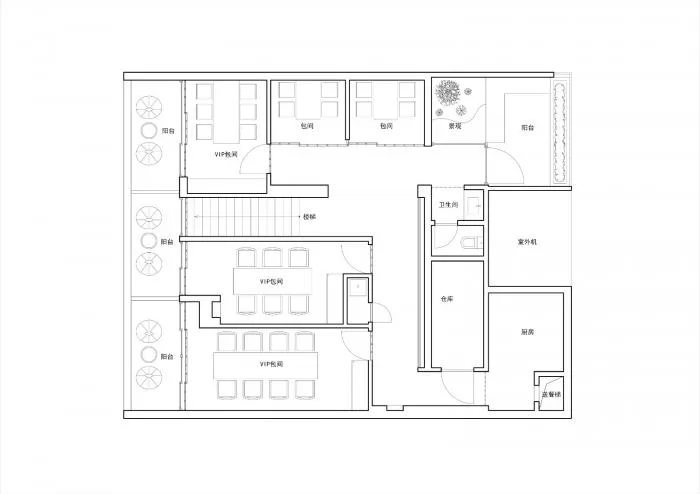
△ Third floor plan
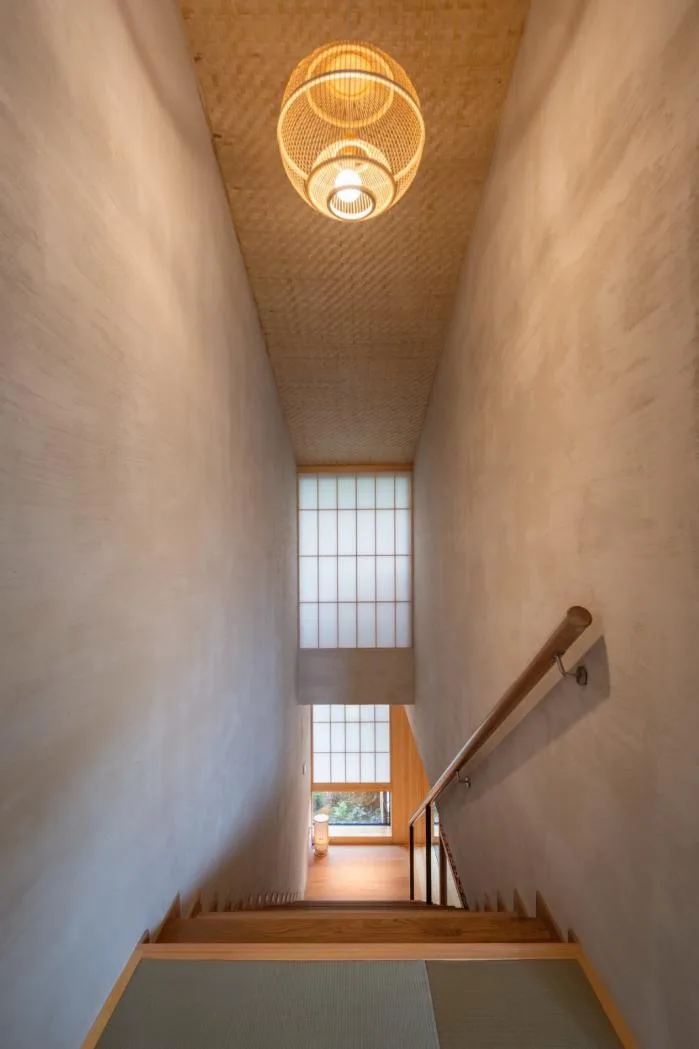
△ Stairs
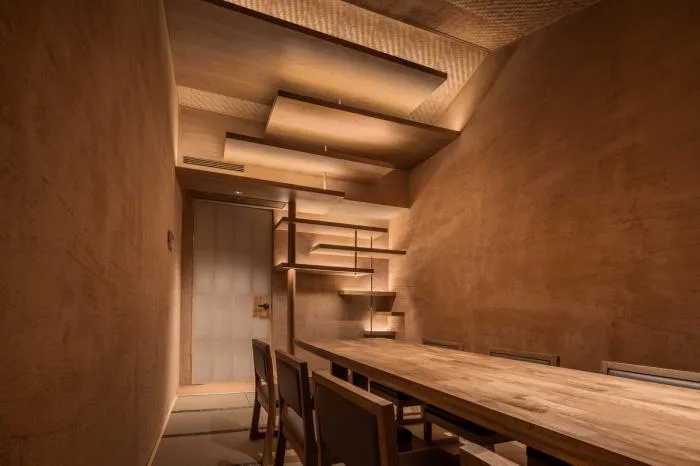
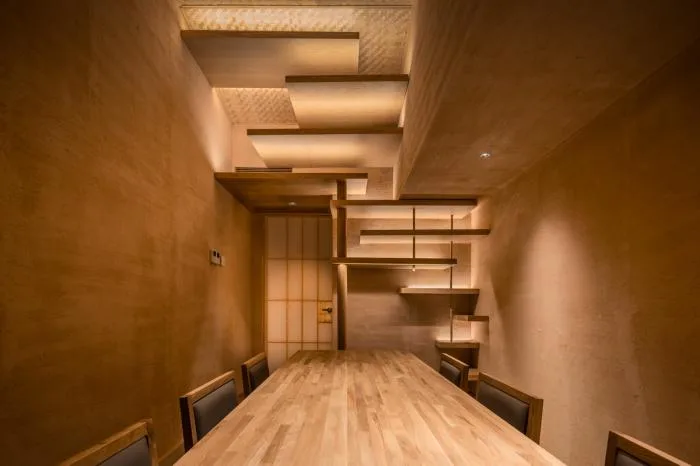
△ VIP private room
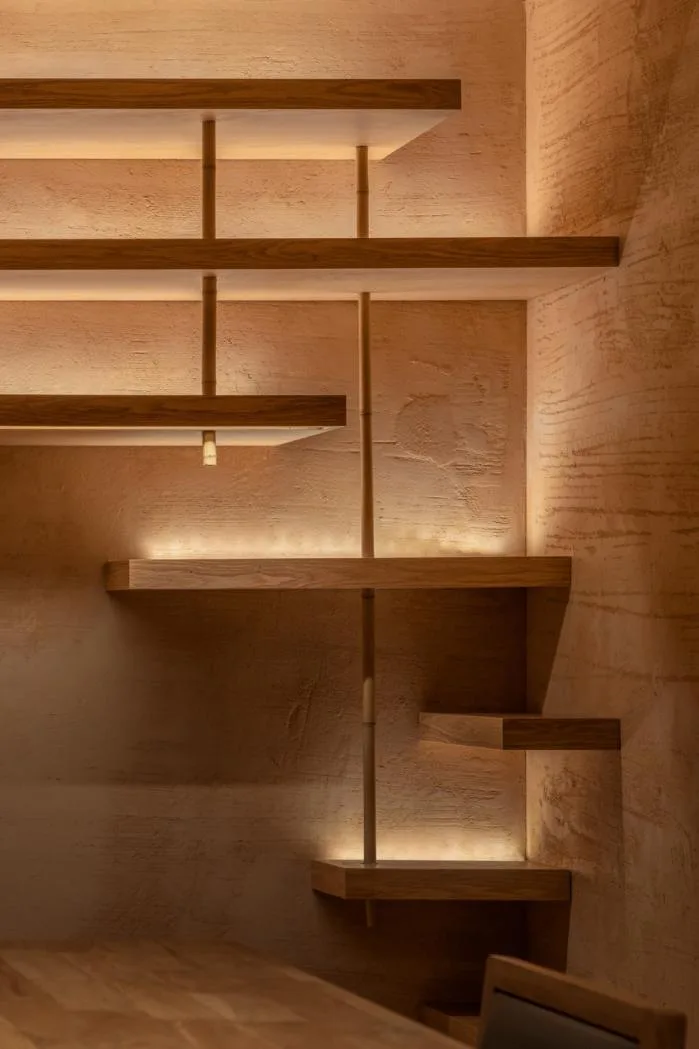
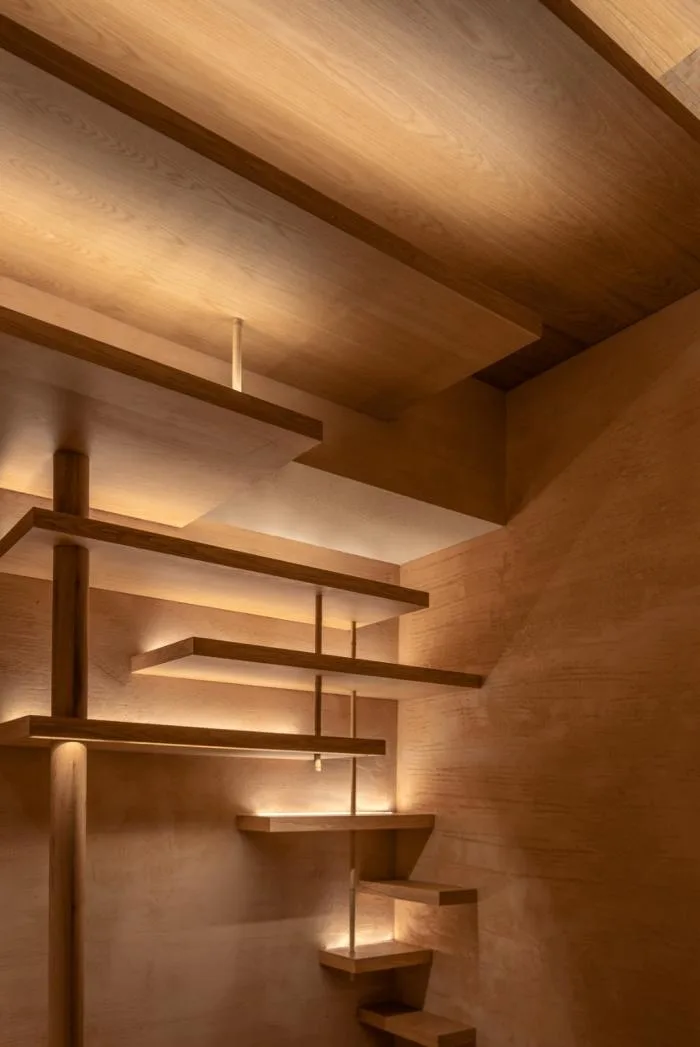
△ Decorative cabinet
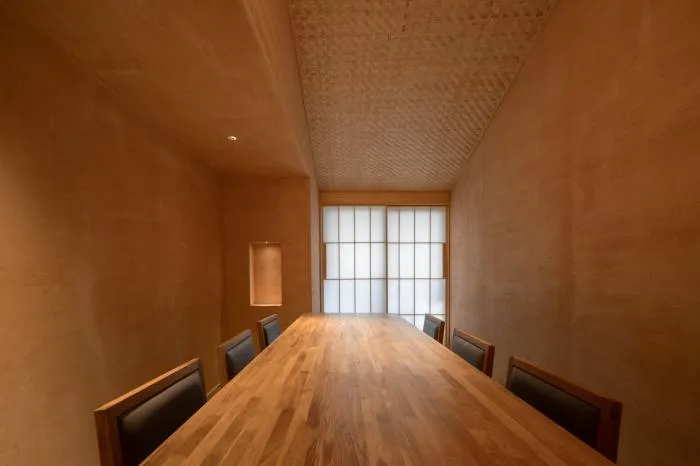
△ VIP private room
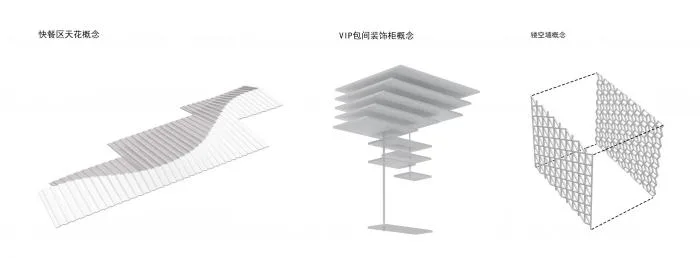
Concept section
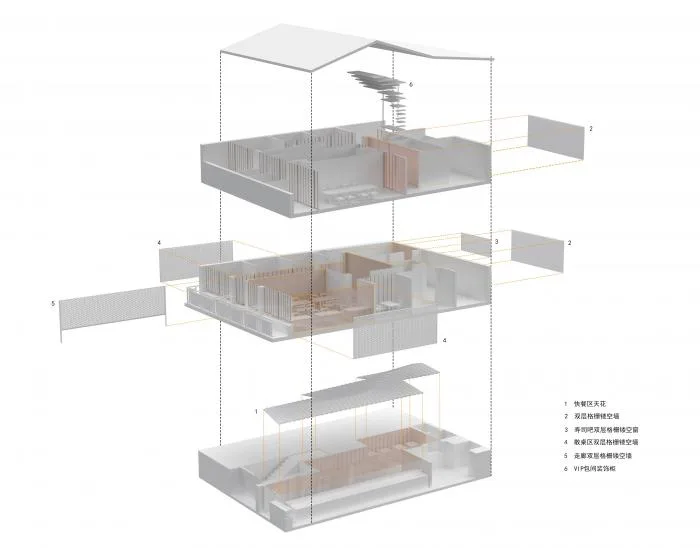
△ Axonometric diagram
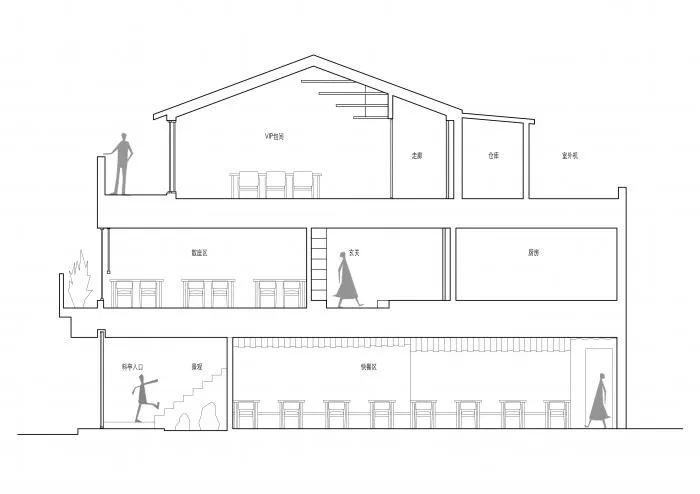
△ Section diagram AA
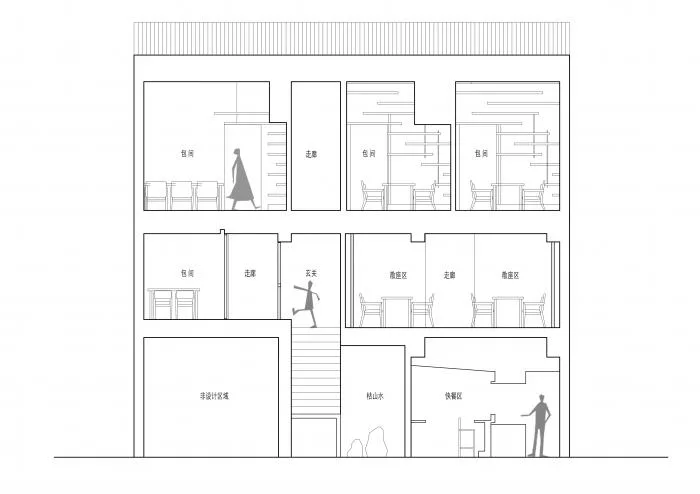
△ Sectional drawing BB
Project Information
Address: Hangzhou, China
Area: 260.2 square meters
Interior Design: Diyoukuang Architectural Design Studio
Design Team: Ti Youkang, Hong Xiuxiu, Luo Shuaipeng, Peng Yaojun (intern), Zhang Silang (intern)
Lighting Design: Ljus Design (Makiko Ishioka)
Mechanical and Electrical Design: Beijing East Intercontinental Technology Consulting Co., Ltd. (Ishikawa Xingming, Zhulin Kexuan, Yamazaki Takashi)
Construction: Hangzhou Fengyuan Decoration Design Engineering Co., Ltd.
Photography: Sensor Observation Image
Completion: May 2020












Must log in before commenting!
Sign Up